Podcast
Inclusive AI Podcast
Hosted by Inclusive AI Lab · EN
The Inclusive AI Podcast is a production of the Inclusive AI Lab at Utrecht University. We incubate global leaders and build inclusive, sustainable AI ecosystems that bridge the Global North and South, ensuring that data, tools, services, and platforms work for all.
12episodes
Episodes
Newest firstAll episodes
Ep. 2 Remix: What is creative?
Jun 10, 202500:39:38Tap to summarizeIn this second episode, we explore a fundamental question for our project: What does it mean to be creative?As technology—especially artificial intelligence—continues to reshape creative processes, how has our understanding of creativity evolved? Can it thrive equally in traditional, hands-on craftsmanship and entirely digital, technology-driven projects?This question is central to our podcast. When we talk about inclusivity, we’re examining how these technologies are redefining creativity on a global scale—for better or worse. Are they fostering a more decentralized creative landscape, or is creative expression becoming concentrated in fewer hands? And as these shifts take place, are they unfolding in the same way across different regions?In this episode, we spoke with:Meera Goradia, from India, co-chair of Creative Dignity, a collaborative network uniting stakeholders in the Indian handmade sector.Charles Hayes, based in Singapore. Charles has worked in creative industries for over 30 years, including as Managing Director of IDEO Asia. His work spans Southeast Asia, China, Latin America, and the Middle East.Season 1 is sponsored by Utrecht Univ. Culture, Heritage & Arts Impact Network and Horizon European Grant project FINDHR (No 101070212)
Transcribe →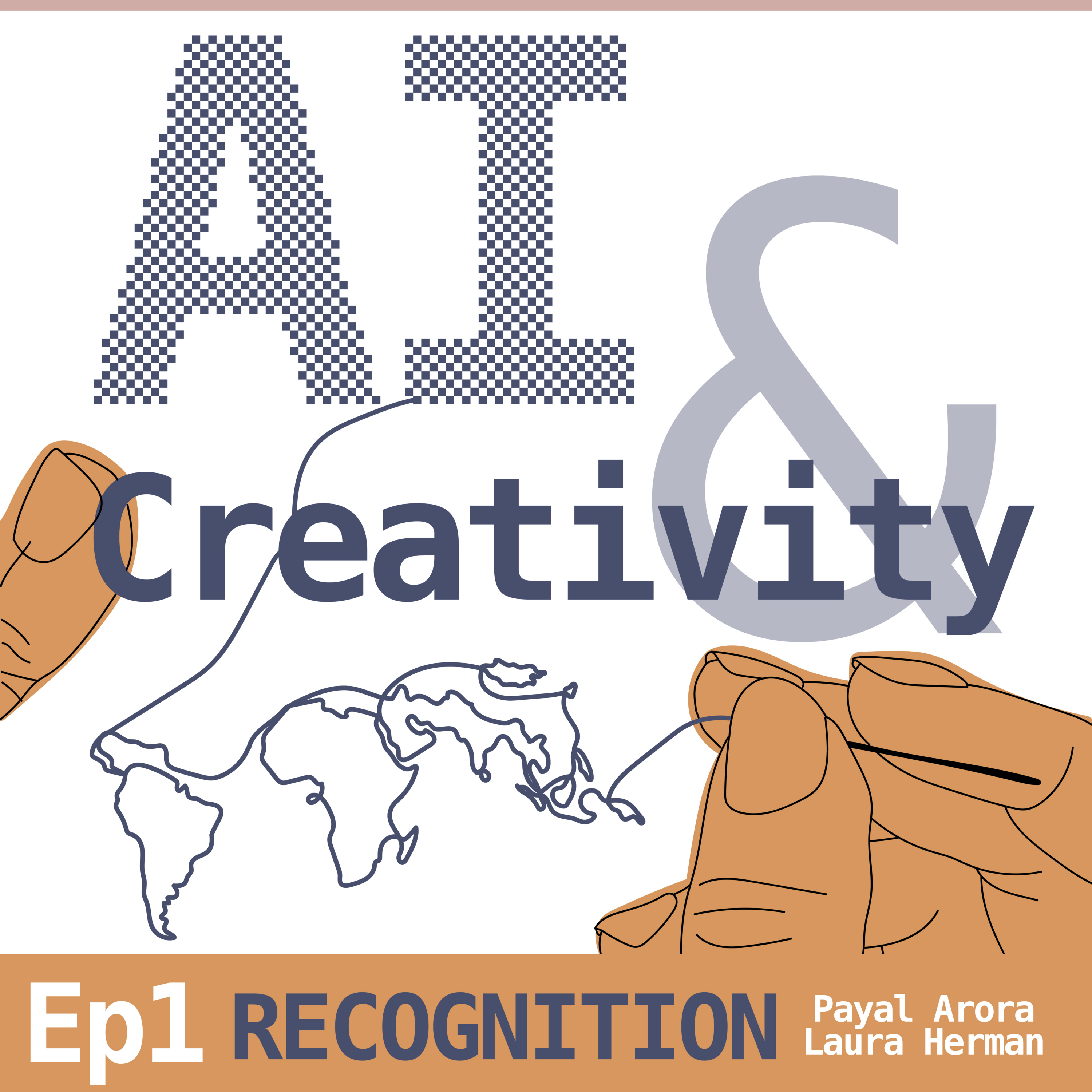
Ep. 1 Recognition: Who is a creator?
Jun 10, 202500:35:03Tap to summarizeIn recent years, artificial intelligence has become a buzzworthy topic, sparking countless questions about its impact on our lives—if it hasn’t already changed them entirely. These conversations have popped up in the media, over dinner with friends, and in debates about regulation.But here’s the thing: AI won’t affect everyone equally. Access to these technologies is uneven, their designs often emerge from specific perspectives, and their consequences in different contexts can be completely unforeseen.One question that frequently arises in these discussions is: Will AI replace us? While this is a vast and complex issue, it can be examined through a more focused lens: Can AI replace human creativity? What about cultural expressions, the value of art, and even the question of who we consider to be a creator?In this first episode, we spoke with: Laura Herman, from the US, based in the UK. Head of AI Research at Adobe and co-founder of the Inclusive AI Group at Utrecht University. She joined us from London to share her insights.Payal Arora, from India, Professor and Chair of Inclusive AI Cultures at Utrecht University, and also a co-founder of the Inclusive AI Group.Season 1 is sponsored by Utrecht Univ. Culture, Heritage & Arts Impact Network and Horizon European Grant project FINDHR (No 101070212)
Transcribe →