← Independent Americans with Paul Rieckhoff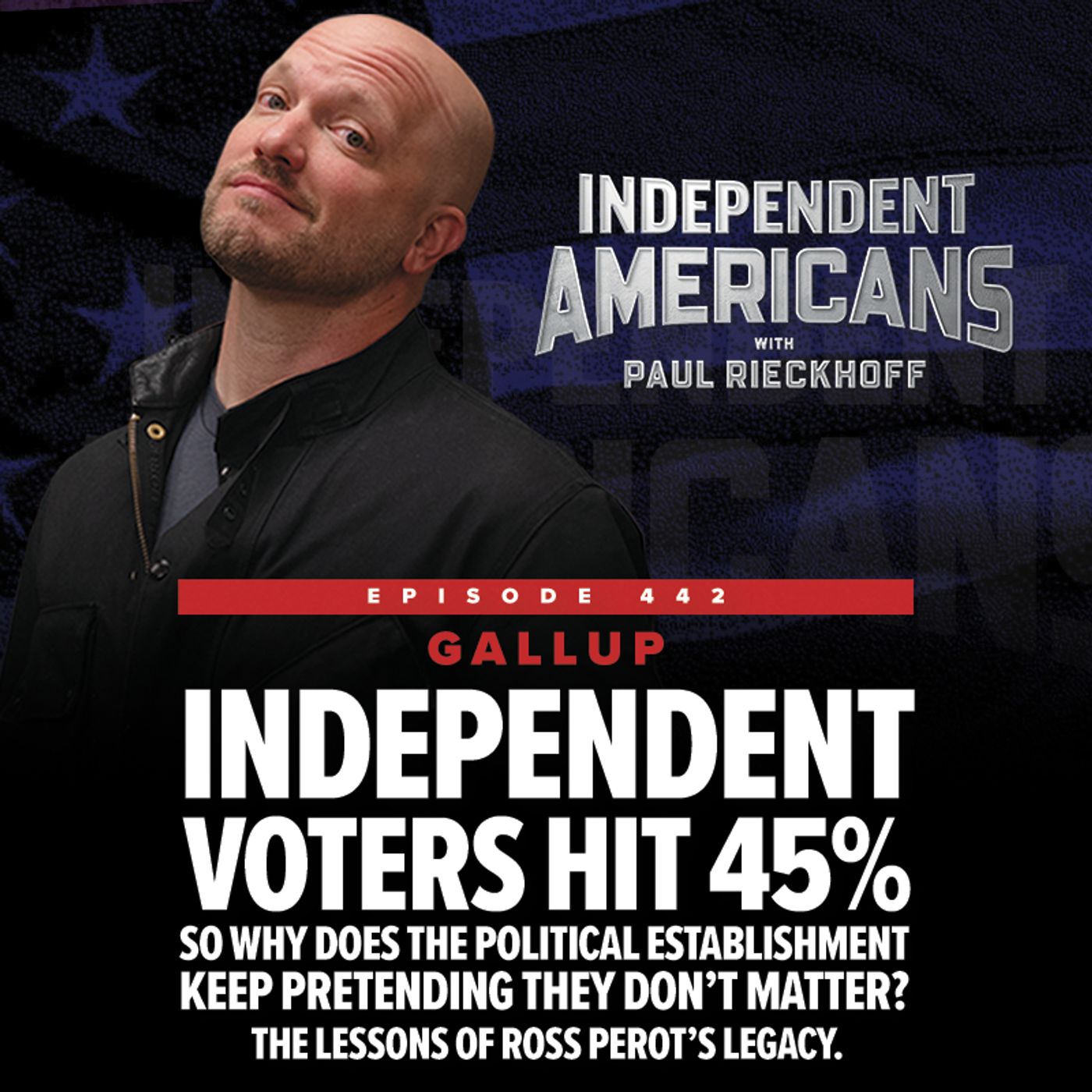
Independent Americans with Paul Rieckhoff
Gallup: Independent Voters Hit 45% – So Why Does the Political Establishment Keep Pretending They Don’t Matter?
00:08:57
In this special episode, Paul Rieckhoff reads an op-ed he co-authored with John Opdycke that challenges the narrative that independent voters don't matter. Despite new Gallup polling showing independents now represent 45% of all American voters—the highest number recorded in modern history—the political establishment continues to dismiss them as "leaners" who are really just partisans in disguise, or "spoilers" who siphon votes from legitimate candidates.
Loading summary
Transcript15 lines
- [00:01]
TaxAct Announcer
Taxact can think of a million things more fun than filing taxes. TaxAct is going to name some now. Sitting in traffic, folding a fitted bedsheet, listening to your co worker talk about his fantasy team digging a hole. Digging an even larger hole next to that original hole. Unfortunately, TaxAct's filing software can't make taxes fun, but TaxAct can help you get them done. TaxAct, let's get them over with.
- [00:30]
John Updike
The question is why, if independents are in fact best understood as partisans in disguise, if independents are too scattered ideologically to come together, if the rise of independent voters is inconsequential, if true independents represent less than 10% of the population, why spend so much energy insisting they don't matter? Lots of things don't matter. They tend to attract battalions of academics and powerful pundits to to convince us why such stridency. Two words Ross Perot.
- [01:19]
Paul Rykoff
Welcome to a special episode of Independent Americans. I'm your host Paul Rykoff. Independents are now 45% of all voters. There was some really news making polling released recently by Gallup that shows the highest number of independent voters recorded in modern American history. But still the two parties are fighting against us. Still, the media doesn't pay attention to us. After all this progress and all this growth, independents are still misunderstood and even dismissed. So my friend John Updike and I put together a piece and I recorded.
- [01:57]
John Updike
It for a special episode that digs.
- [01:59]
Paul Rykoff
Deeper in why the 45% of Americans that are independent is so important. And why does the political establishment keep.
- [02:08]
John Updike
Pretending we don't matter? So here's a special episode on this.
- [02:12]
Paul Rykoff
Issue of why we do matter. Independents are the future.
- [02:16]
John Updike
We're not just moving the needle. We're we are the needle.
- [02:19]
Paul Rykoff
And I hope you enjoyed this special episode of Independent Americans. Stay vigilant, my friends.
- [02:31]
John Updike
Gallup released its latest identification numbers and independent voters are now 45%. Nobody disputes the data, but there are some competing opinions as to what the data means. The official narrative asserts that independents are not really independent. Independents are a have no ideological cohesion and B vote like partisans. To quote pollster Republican pollster Kristen Soltis Anderson, she said, quote, most voters who identify as independents do go on when pressed to say they lean more toward one party than the other, unquote. That's a beautiful trick. Just twist independence arms until they cry uncle and admit they're still part of team Blue or Team Red. These same experts also assert that we independents who run for office are quote, spoilers who siphon off votes away from legitimate candidates. Now this is not simply derogatory. The hidden message of the spoiler argument is that votes belong to the parties, not to the people. Leaders and spoilers What a loving way to refer to the largest group of voters in the country. A different narrative is gaining traction. A growing number of leaders who are engaged in organizing and researching independent voters look at the statistics and see potential. This new narrative allows for the possibility that the small act of distancing oneself from the parties is indicative of something brewing. It doesn't see the lack of a shared ideology as a problem, but rather as an opportunity to bring people together in new ways. And when it comes to how we conduct primary elections, the narrative has changed dramatically. A majority of Americans across party lines now support the right of non party voters to participate in publicly funded primary elections, something we've covered on this show at length. John and I continue. A look at the state of independent politics today reveals that independent voters have not congealed into a single party or organization that's not consistent with the brand or anti brand, whichever you prefer. While the legacy third parties, the Greens, the Libertarians are stagnating, there's a lot of experimenting going on with dozens of groups, candidates and alternative entities exploring how to tap into independence. We see especially strong interest among veterans as voters and increasingly as candidates. There are already five independents running for US Senate this fall, and we expect to see over 100 total this year for races across the country from governor to school board. Indeed, Independent Veterans of America was founded to support candidates that are providing the kind of strong, authentic leadership America is looking for. This is something you know if you listen and watch the show, more to come. The piece continues. Independents are already shaping outcomes at the national level, providing significant margins to Obama, then Trump, then Biden, and back to Trump. But not so long ago, independents came together in a big way. The official story still dominates. The question is why? If independents are in fact best understood as partisans in disguise, if independents are too scattered ideologically to come together, if the rise of independent voters is inconsequential, if true independents represent less than 10% of the population. Why spend so much energy insisting they don't matter? Lots of things don't matter. They tend to attract battalions of academics and powerful pundits to convince us why such stridency. Two words Ross Perot In 1992, independent Ross Perot got 20% of the vote for president. Despite dropping out mid campaign and running a mediocre campaign. He was put on the ballot by an explosion of independent volunteers condemning the major parties for ignoring their economic and political concerns. Perot crucified Clinton and Bush in the debates, and his 20%, while not resulting in a single electoral vote, drove the Clinton Gingrich policy process for a decade. He attracted millions of votes from liberals and conservatives alike. The Perot explosion, a multi ideological independent movement, produced a balanced budget, the Contract with America, and Clintonian triangulation. The D.C. crowd, completely caught off guard by 20 million Americans going off script, has never forgotten the number of independent voters has doubled since 1992, but efforts to marginalize independence have doubled as well. These pundits insist that independents are quote, leaners and spoilers in part to to prevent another Perot explosion. But independents are not victims. We are challenging partisan institutions and customs and insisting that there has to be a better way than maga's orgy of cruelty and the Democratic Party's elitist ineptitude. Yes, independents are not that organized. No, we don't have the resources that the two parties have, but that doesn't mean we're leaners. Every week, 10,000Americans switch their registration from D or R to I. And they do so for a reason. They want to be part of a new political conversation, not perpetrators of partisan demonization. Independents are ready to lead and if you listen to this show, if you watch the show, you are among those independents that are ready to leave or you're independent. Curious. Check out this piece that I wrote. It's linked in the show notes with the great John Updike, and I hope John will join us on the show soon. But take that section I just read and share it far and wide. Remind people that independents are the people's champion. We're not moving the needle. We are the needle. All right.
- [08:23]
Paul Rykoff
If you enjoyed this special episode of Independent Americans, please share it far and wide. Be sure to hit, subscribe and help fuel this independent movement. If you're part of that 45% I.
- [08:33]
John Updike
Just talked about, you're independent.
- [08:35]
Paul Rykoff
Curious. Or if you're a Democrat and Republican and you're tuning in for the first time, this is about all of us and it's about the future of American politics. So share this episode far and wide.
- [08:45]
John Updike
I will see you or hear you or you will hear me again soon. Until next time, stay vigilant America.
- [08:51]
Independent Poet/Artist
Stay Vigilant tells me the left and right are dreams for those without a clue and when you wake up it's time to grow and it's not cool to believe in school but if I can say one thing I've seen the children of the revolution and the good trouble they can bring he says the red and blue are dead and independent is an attitude an island in the sea of rhetoric and aco he tells me the left and right Our dreams for those without a clue and when you wait it's time to grow power by righteous media.