← Industrial AI Podcast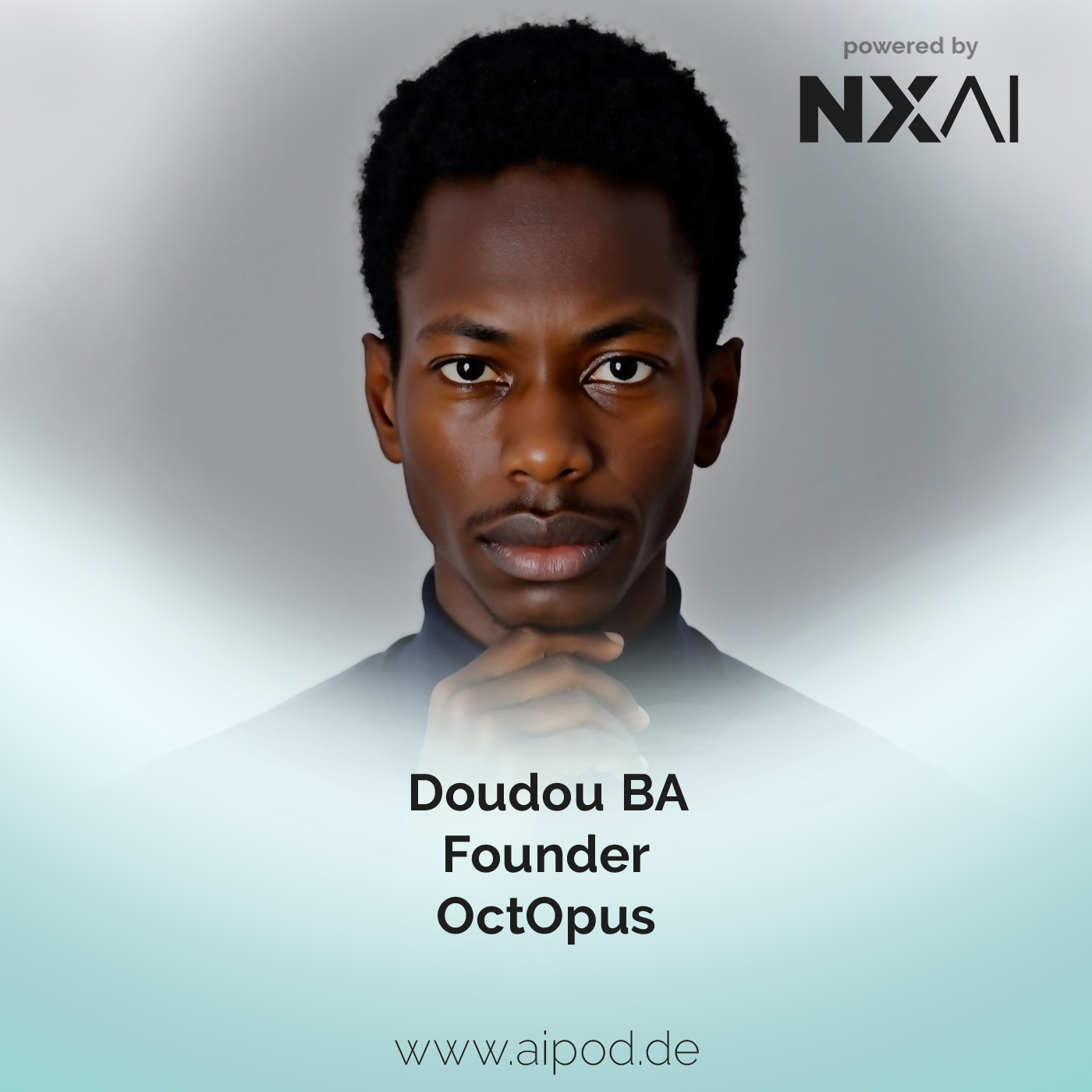
Industrial AI Podcast
Autonomous Data Science!?
00:40:01
Discover how agentic AI is reshaping time series forecasting and empowering business users. Dive into next-gen analytics with OctOpus.
Loading summary
Transcript105 lines
- [00:00]
Dudu Bar
This podcast is presented by nxai, your partner for time series foundation models and physical AI.
- [00:19]
Robert Weaver
Hello everybody and welcome to a new episode of our industrial AI podcast. My name is Robert Weaver and it's
- [00:24]
Peter Seaberg
a pleasure to talk to Peter Seaberg. The five final time that you and I talk. There is one more podcast after this
- [00:33]
Robert Weaver
one before the summer break.
- [00:34]
Peter Seaberg
Before the summer break, exactly. I was going to say that.
- [00:37]
Robert Weaver
No, not the last time. We record this episode, this podcast.
- [00:41]
Peter Seaberg
We are only at. What is the number we're recording here today?
- [00:45]
Robert Weaver
350.
- [00:46]
Peter Seaberg
350. Okay. Yeah, we can easily do another 350.
- [00:51]
Robert Weaver
Exactly. There are a lot of topics. Let's start with the news part. Do you have something hot?
- [00:57]
Peter Seaberg
No, I do not. And I, I think you have to. You start, please.
- [01:01]
Robert Weaver
Okay. There's an interesting news today because our friend Max Welling, he was our guest, I think three, four months ago, raised $450 million. And yeah, he raised a lot of money for European startup. So congratulations to Max and the whole team. Greetings to Amsterdam. But what I found very interesting is that they are now building an AI materials foundry. And that's now a quote with more than four 45 global partners coming together to achieve breakthroughs in semiconductors, clean energy and advanced manufacturing. Leading companies including Meta, Nvidia, Hyundai Henkel, Samsung, Applied Materials and AMD and a lot of lot more companies. A very interesting approach to also establish now a foundry there.
- [01:51]
Peter Seaberg
Yeah, yeah, that's a relatively new thing for me as well. I mean the word foundry for me is from the chip manufacturing where in the past when I was part of this company, intel, and they would always produce exclusively for themselves. And in the meantime, and I think that was one of the, the big top level decisions where some people would support, others would not. But in the meantime they have become a foundry, meaning producing fathers. And I guess the, the number one name most all of us know there is tsmc. I was just looking because I wasn't sure I could use the word Taiwan, but I guess I can. It stands for Taiwan Semiconductor Manufacturing Company. I guess they're the number one, the biggest. And we don't want to go into the politics of what that means, but for that very reason, for example, the United States, but also Europe, you know, Dresden area, you know, everybody have more production capabilities themselves. Yeah, so. So there you go. Very interesting. What does that mean? It means that if CASP AI is going to be themselves or other one using their technology to come up with new materials, then each of these foundries, they maybe are going to use their approach and going to be producing those new materials for even others, I guess. I don't know.
- [03:18]
Robert Weaver
Yeah, I think so. Yeah. Yeah, that's I think the idea. Yeah. Interesting. And what I found interesting because I had a recording with Dunya last week. We will send this episode, I think in a few weeks. And Dunya is a German startup in the same field and they have a totally different approach than Max approach. So be curious about the episode with Dunya coming in the next weeks. Very interesting.
- [03:44]
Peter Seaberg
Yeah, looking forward to. As far as I recall. I'm not sure if that's the cusp AI approach, but it's very similar to. Maybe it's kind of reinforcement learning, kind of telling the algorithm what it is that you want. And was that not the case also with what is that? Is that the Google Daughter from London?
- [04:10]
Robert Weaver
DeepMind? AlphaFold?
- [04:12]
Peter Seaberg
Yeah, there you go. There you go. And isn't the idea like developing the new drug and you take 100 scientists and you take 10 years, years and you need $1 billion and then after 10 years you find out it was the wrong approach. Right. And that's why you start again kind of thing. And instead of that you tell the algorithm what it is exactly that you need your outcome to be. And I believe there was maybe one of. One of those two. So I'm very much looking forward to Dunya as well of what their approach is to tell the algorithm that's the outcome. And you find me, you know how I get to the material, maybe chemistry, I don't know.
- [04:53]
Robert Weaver
That's interesting. A small spoiler because you went into details. Right. So the junior approach is like a little bit. The Neura Robotics approach, building gyms for new materials and not robotics gyms. So building labs to generate data. Because the missing thing in this whole topic when to find new materials is to produce data at the end.
- [05:14]
Peter Seaberg
Oh, amazing.
- [05:15]
Robert Weaver
That's very interesting. And the whole conversation was very, very inspiring. So I think it's the first episode we share after the summ break. Yeah.
- [05:22]
Peter Seaberg
Okay. Looking forward to.
- [05:23]
Robert Weaver
What else do you have or should I go on?
- [05:25]
Peter Seaberg
You can go on. I have to more 2 like finishing background pieces.
- [05:30]
Robert Weaver
Yeah, exactly. And then there's a issue with Sophie and Sophie is a German 30 billion large language model. And the whole community was impressed at the beginning, but then some people looked a little bit closer into the whole thing and it's a copy of Nemotron from Nvidia. Nearly a copy of Nemotron. There are some test leakage data leakage topics there. And this Was really at the end from my point of view it's an embracing fiasco. So they announced something very big. Very big. We have a very big model. It's not instruction tuned so it's more architecture. It's not instruction tuned yet but. But then if you follow a little bit the discussion on X, because on X there's a huge machine learning community discussing the whole topic. I will share the link there. I don't know why they did that and why they had this data leakage in and why they only use a Demotron copy. I don't get it. So it was trained in Munich.
- [06:32]
Peter Seaberg
Who is Sophie then? Is it an organization or a company or.
- [06:36]
Robert Weaver
It's an organization by Fraunhofer and Technik University of Darmstadt, a lot of German universities and stuff like that. And yeah, let's see what's the outcome there. Let's see how it will be used in the industry. So the focus is industrial applications. Let's see what you can solve with this. I think yeah, it's not instruction tuned yet. It's the next step. The guys told the community but at the beginning I was oh yeah, 30 billion large language model. That sounds interesting. And now it's. I'm a little bit disappointed.
- [07:08]
Peter Seaberg
Is that the one that was based on several or all of the European languages or has that nothing to do with each other?
- [07:15]
Robert Weaver
It's not the Euro LLM, it's German and English. Yeah.
- [07:18]
Peter Seaberg
Okay. On Sophie you spell like S O
- [07:21]
Robert Weaver
F I or S O O F
- [07:23]
Peter Seaberg
I S O O F I. Oh, I hadn't heard of it. Maybe there is still this, this thing where specific pieces first get discussed on. On X and then they come to LinkedIn where I typically concentrate on. And maybe some of them don't move there at all.
- [07:42]
Robert Weaver
Yeah, exactly, exactly. What else do you have, Peter?
- [07:45]
Peter Seaberg
Okay, yeah, so as I say I have two pieces of background reading more letting you dear listeners, go into your well deserved holidays if not yet already. You have the first. I'm going to share and I have had them with me for many, many, many months. I could have shared at any time is a couple of quotes from the play R U Russum's Universal Robots. Oh, interesting. That word right now which I strongly suggest each of you reading over the holidays if you haven't yet. So Ruhr R U R is written by. Has been written by Czech Karel CK and the Czech word is Rossumovi uni verzani roboti. It's a science fiction play. 1921. Did you hear that? 1921 that's 105 years old. And in that play, the term robot was first introduced, as far as we know, in Czech language. And that is similar to the word robotan. And that seems to be the word for forced labor or hard work. That's, of course, already important to realize. Now the play takes place in a factory that makes artificial people called robots by robots, by the way. That's also in itself very interesting. Now they're actually less what we've been used to today and what we call industrial mechanical. They are more biological. And still, I guess today we would rather call them humanoids. Now, there you go. I'm not going to spoil the story, but maybe I'm going to share three quotes that just come out of somewhere out of the book. And maybe you get a feeling for what this is all going to be about. In the beginning it says, man is too complicated. A good engineer could make him more simply. I forgot who said that. If it was the writer or one of the characters. Not important, I guess. Though very interestingly, when I was looking at that again this morning, this. This could be said, you know, as a reason against humanoids in factories. Right. It's what I've always been saying. And these days you see hours and hours of discussions about humanoids, number one. And about humanoids in factories. Now, there you go, number two, I'm going to share. So many robots are being manufactured that people are becoming superfluous. It's like, you know, what do we need humans for? So that's where it's getting dangerous, I guess, for humans. And the final one I'm sharing is even more so. In the final quote, we, the first international organization of robots, proclaim man as our enemy and an outlaw in the universe. So I'm going to stop here if that caught your attention. As I suggest. It's. It's rather a nice story, I think. It's a play. It's a play. There's a wonderful picture there. If you look on Wikipedia or elsewhere maybe, which is a play out of the character, you can see how the robots at that time looked like when they were playing the robots.
- [10:58]
Robert Weaver
Perfect. So it's a summary on the beach.
- [11:01]
Peter Seaberg
Yeah, you can. Sure, sure you can. I guess it's going to take a couple of. Couple of hours, maybe, maybe two hours kind of reading through it. It's not as big as what I just finished this morning, which is a crime. What is it in English? A. Tolstoy. Peace and War and Peace.
- [11:21]
Robert Weaver
That was six. War and Peace or Peace and War Peace and war.
- [11:26]
Peter Seaberg
War and peace, I think.
- [11:27]
Robert Weaver
But it's not, no, not, not AI related content here. Peter, please go on with your AI related.
- [11:32]
Peter Seaberg
I'm only saying six. That was so. And then number two, I'm going to share very strongly related, I guess to robots and how we humans, I can make sure that they will not rule against us, which is the three laws of robotics. Right. I think most of you have heard of them. I'm just going to share them one more time with you. There was a reason just a couple of days ago. So it started. And that's from 1942 from Isaac Asimov. Right. He says, number one, a robot may not injure a human being or through inaction allow a human being to come to harm. So you can very nicely relate this already to the book about or the play about robots.
- [12:11]
Robert Weaver
Interesting. I will record an episode today with the Nvidia guys with their new HALOS safety approach when it comes to humanoid robotics.
- [12:20]
Peter Seaberg
Okay. Ask him if they are aware of the. The three robot orders.
- [12:28]
Robert Weaver
Yes.
- [12:29]
Peter Seaberg
Number two then is a robot must obey the orders given it by human beings, except where such orders would conflict with the first law. That's what he always does. He always goes back to the first one. And number three is a robot must protect its own existence as long as such protection does not conflict with the first or the second law. And then a couple of years later, and you know, and, and he's been writing in his time, you know, this is 1942. So again, this is what, 60, 80, 80 years old. Right. He then realized that he should have put a, a law before which the. He then called the Zeros law. And it is a robot may not harm humanity or by an action allow humanity to come to harm. And that's again very interesting that that applies perfectly to the first piece I just talked about. So again, if that's of your interest, those of you that have not yet been reading or looking at, you know, iRobot, for example, great movie is based on his story. So he's been, he's been, you know, writing a lot of what at that time was science fiction. And just to share, my company called Asimovo, it's a play on words, some Asimov Vero, more like the Italian Latin. True. Which I chose at that time as we are living in times of Asimov's ideas coming true. Right. You know, autonomous driving. And I think we're going to hear a lot about these laws. Again, as you know, we. Not that strongly we.
- [14:10]
Robert Weaver
As I record the episode, as you
- [14:13]
Peter Seaberg
do not only that, you know, I think in the industry we haven't necessarily with industrial but again if we're going to continue with the humanoids, which again we, I question at least if we're going to be having them in an industrial environment but if they go outside, I think we're going to be hearing and seeing a lot of these, these laws. There you go.
- [14:34]
Robert Weaver
Perfect, perfect. So let's switch to the main part. I did an interview with Dudu Bar from Sweden. He's a data scientist at Maersk. Maersk is a big logistics company. I think everybody knows the containers Maersk. But he's also an entrepreneur and he's building his own startup and his own ideas. And we talked about his new let's say AutoML Time Series foundation model approach. Very interesting for data scientists. Let's hear what Dudu will tell us.
- [15:09]
Peter Seaberg
Yeah, very much looking forward to. And then we're going to have at least the second one. I think that's Jakub that we're planning. Right. A week later.
- [15:18]
Robert Weaver
Exactly. Last episode before the summer break is Jakub Tomczak with some information with some topics from.
- [15:25]
Peter Seaberg
From the US and then you and I are going to be back in
- [15:28]
Robert Weaver
what about four weeks I guess beginning of September. So first Thursday in September we are back.
- [15:34]
Peter Seaberg
Very good Robert. Thank you very much. Have a great time. Same for you dear listeners. Have a wonderful holiday and hope to have you with us again in latest in four weeks.
- [15:46]
Robert Weaver
Bye bye.
- [15:46]
Peter Seaberg
Thanks. Bye bye Robert.
- [15:48]
Robert Weaver
My name is Robert Weber and it's a pleasure to welcome Doo Doo Bar. Doo Doo. Welcome to the podcast.
- [15:53]
Dudu Bar
Thank you Robert. Welcome. I'm very happy to be here to be joining AI Industrial Podcast live from
- [16:00]
Robert Weaver
Viva Tech in Paris. Before we start talking about Octopus and your topics, please share some impressions from vivatek. What impressed you most?
- [16:09]
Dudu Bar
I mean Robert, vivatech is one of the greatest Europe's tech event. It's huge. I mean you have a lot of people, big people. Yesterday we got Jeff Bezos here we have Yamla. Can we have a really big startups all around the world from Europe, from the America, from Africa, like a lot of tech and startups exhibitors. It's just amazing. Like I do love the ambience here at Viva Tech.
- [16:34]
Robert Weaver
Okay, so you mentioned Zef Bezos. Did he talk about Prometoys or what was the topic?
- [16:39]
Dudu Bar
Yeah, I mean it was a lot from people from blue origin. There's always a lot of topic around the AI and the discussion and, and everything. It was pretty, pretty, pretty fine discussion that we had there from Jeff Bezos.
- [16:52]
Robert Weaver
So from a technical perspective, what was impressive to see some new stuff or is it more, let's see a meet and greet event actually.
- [17:01]
Dudu Bar
I mean it's a great opportunity for a founder like me to meet with potential clients, make your product known, be in the hall of fame and talk to investors and, and a lot of people actually exhibiting. You also discover technology, you also learn, right? Because people doing conferences, you basically get to talk to them and you basically have new techniques, new ways to do it. And you basically, when you're sitting just in your room or your corner and developing some stuff, you might not know what's happening elsewhere. And here is a chance where you see like robbers doing some people doing AI physical, some people building like amazing AI solutions. It's really basically the best way to network and basically learn and share and get your products known better.
- [17:48]
Robert Weaver
Can you share 2, 3 examples what impressed you most?
- [17:50]
Dudu Bar
Oh yeah, the Yanlevel talk yesterday was pretty impressive, right? I mean Jan is someone that we follow. He's one of the pioneers in the AI that we know today. Right. So yeah, listening to him and being in front of him was a great apart in the. Of course.
- [18:05]
Robert Weaver
What was his main message?
- [18:06]
Dudu Bar
I mean, yeah, I know what he's developing right now. Maybe he might be like, it might be a little, you know, in conflicts or contradiction with the current AI solutions that we have, you know, the LLMs and, and the philosophy behind it. Because Jan's position has been clear, right. Over the past years he's been talking about it. He doesn't believe that the AI solutions that we have today are that intelligent. So that's why he's proposing his new methods and methodology with his team. And yeah, I pretty much, I think, you know, we are getting there. Right. Intelligent or super intelligence is, I mean, has different way of perceptions, right. Some people might think, you know, AGI could be something, something that does prediction and some people that might think that oh, just a system that predicts the next word is not so intelligent, right. Probably we need some other system that really understand human and that are human centric and that really answered from the human perspective that have the, the point of view.
- [19:02]
Robert Weaver
Did he tell something about jepa, about his new achievements or some, some technical insights or was it more bashing LLMs?
- [19:10]
Dudu Bar
Yeah, I mean it's, I mean the discussion was large, right. But he talked about it very, very quickly. Right. We had an opportunity to see, I mean to demonstrated what he has like with their own technology and what they have been developing even like in the past with Meta and today, you know, this project that he's running, you know, with the. We're mostly in the computer vision side. Right. But probably I didn't attend a full Yann Leckens pitch. So there was a lot of people and it was crowded. You, you barely get chance to get in, so. But when I got in, yeah, absolutely. It was amazing to see him talk and yeah, a lot of topics that he brought and when it comes to this question about his technology, they are moving fast. I think they are developing great stuff and we are yet to see them. Right. We don't have like clear that light on when they are releasing their solutions. But also one of the solutions that he mentioned. Right. Is that AI for contributors for contribution. Right. So there are some repositories for people like you and me or anyone that would like to contribute in building AI that is safe and for humanity, that will be US centric. So those people can just come up with their own data and use some GPUs and some tech stack and contribute. But basically it's just like GitHub contribution but for AI. So this is some of the solution that he's proposing for now. So let's see how it goes.
- [20:32]
Robert Weaver
Okay, perfect. So let's come back to your mission at Viva Tech. Before we start talking about your solution, please introduce yourself briefly to the listener. Who are you? What do you do? Why do we do a podcast interview with you?
- [20:46]
Dudu Bar
All right, thanks Robert, just for the opportunity. So my name is Dudu, I'm the CEO and founder of Octopus. Octopus, which is an autonomous AI data scientist which transform raw data to business decision and machine learning models. All right, why am I VivaTech? VivaTech is one of the greatest, even here in Europe. So it's a great opportunity for me to exhibit my startup, to showcase, to do some demos, to show to a lot of people, Right. How and what we are building and how Octopus can take the AI revolution and the decision into a next level. Yes. So it's a great opportunity, of course, to meet clients and investors and make your product known by millions of people.
- [21:28]
Robert Weaver
Okay, so let's talk about Octopus. What is it and how does it work? What can it do? Your approach?
- [21:35]
Dudu Bar
All right, sure. Octopus is an autonomous AI data scientist. It basically does the full time job of.
- [21:41]
Robert Weaver
So it's a Claude, It's a cloud for data scientists.
- [21:44]
Dudu Bar
Yeah, it's more like Claude, but it's very much specialized in data science. It knows data science, the entire data science loop, and it only does data science it doesn't do anything else than data science. It's basically your data science teammate or your data science employee. Imagine like an AI that you say, hey Octopus, can you connect to my database? And it just connects to your databricks, right? You tell, hey Octopus, can you connect to my sales data? Can you import it, can you clean my data, transform it, remove some columns, remove some rows, combine or merge my data? Just as you would be doing, like in the data a data engineer would be doing or processing the data or transferring it. Or you say, okay, I want to analyze, I want to know about my sales last month or last week, or what about Octopus? You build a dashboard for me and it does it right? But what's more impressive in Octopus is it can build and train models live for you just by knowing your business question. Let's say if you would like to forecast revenue, you just say, octopus, this is my data set. I'd like to forecast revenue. And autonomously, Octopus will write applied hypothetize, as a data scientist will do, write a code, build and deploy machine learning models. And yeah, it provides very, very accurate and reliable results in a very short time.
- [23:02]
Robert Weaver
So what is the difference to a cloud agent or a cloud application? Is it an AutoML approach? Can you evaluate a little bit more?
- [23:09]
Dudu Bar
Yeah, absolutely. So you see AutoML tools in general, right? They are living in the past, right? It's before the AI era, right? You have a lot of. But it's just a bunch of models, they run in parallel and tell you, oh, okay, this is the best model because it had the best metric. You know, it doesn't tell you about what's overfitting or underfitting. It doesn't really truly understand the job of a data scientist and doesn't reason at all. So if you take tools like cloth code or codecs, they are really good for coding, right? They still need, you know, expert, an expert to sit and give them instructions. So if I, me as a data scientist, right, if I would use cloud code, I would go to cloud code and say, hey, you know, this is my data. I would like a model. I have to give precise instructions so it can write a code for me. But since cloud code is not designed to do data science or machine learning, it would not be efficient, right? It can just write a code for you and maybe you take your code, bring it into a notebook, try to train a model. If it doesn't work, you get back to cloth code and you iterate until you get some reliable models probably and deploy it. But Octopus before you even know what you want to do, Octopus can't guess, understand. Oh, you want to predict this column and let's do it right. And it does it very reliably. What's impressive in Octopus is a non technical person, let's say a salesperson, a managing director, I don't know, a marketing specialist. They can just be data scientists without having like an expert expertise in data science or a background in traditional data engineering.
- [24:40]
Robert Weaver
It's a web application, right? And so what is in the back? It's a combination of LLMs and time series forecasting, tabular data stuff. Can you share a little bit the structure of the solution?
- [24:52]
Dudu Bar
Sure. Octopus, you can access it in live version, right? Octopus.dev Right. It's the server in the cloud, but also you have the option to download it and use it directly in your Mac, right, in the desktop. And basically it can read the data from your laptop and it can use your cpu, your GPU and your own memory, right? And build and train models in your own laptop. But if you talk about the cloud version, you basically can ask Octopus to connect to any of your data providers or your data warehouse. Let's say you have databricks or whatever snowflakes, Microsoft fabric, it can just connect to any of your data flows and basically build and transform your data and analyze it and build models and deploy it. Now when we talk about the stat, Octopus is an agent. Octopus is not an LLM. It uses LLMs. It uses the intelligence of LLMs like it uses the LLMs. It uses the knowledge of LLMs like OpenAI ChatGPT or GPT5 or closed opus right to reason to write the code. But what's more important in Octopus is it knows what model to use that fits with your data set and builds and trains the models on top of that. So it's already embedded, it has knowledge and awareness of a lot of models, like one of the most powerful models today that we have for time series like T Rex XL STM and so on. So it is already aware of the data set, the model that would work on that data set. It directly picks those models and tests them on your data and iterate until it reaches the best model. So right now you could say from a machine learning perspective, you can have from linear regression to more powerful models like Trex or T Rex or maybe Excel stm. And basically it just picks two models and try them and test them and tell you, okay, this is the best model and why it is the best model and answers your business question, right? You Started with a business question and it ends with a decision at the end, not just a score.
- [26:52]
Robert Weaver
But the magic is then the MPC connection to the Kronos, to the Times, FM to Tyrex or whatever.
- [26:59]
Dudu Bar
Absolutely. To all the model families. So there is an MCP server connection, so it's able to actually redirect to the model that it should be choosing. Right. And wire the technology that is there in the back and just train those models directly from the packages it already installs in the service.
- [27:20]
Robert Weaver
So let's assume I share my data and then I get a prediction. Does the model also gives the user interpretation, what does it mean at the end?
- [27:32]
Dudu Bar
Absolutely. Imagine like if you just train a model but it just gives you an accuracy or a result and you don't even know what's the metric, what does it mean, what is auc? You can ask to Octopus, but why? It just doesn't give you a result, but it gives you the entire narrative and answers what it just did, why it did it, what are the hypothesis and the result that it got right. It can explain you okay, the metric, what it means technically or in your business use case. Like what does an AUC score mean? What does an MAPE mean? What is rmse? What does it mean in your business question? So it does the interpretation and after the training of the models it can do the interpretation and you just ask what did you just do and why did you do it? And Octopus can answer all those questions.
- [28:23]
Robert Weaver
You mentioned training, but when you talk about Kronos or Times of M Tyrex, it's a foundation zero shot model, so you don't need to have a training or do you fine tune the models in the back?
- [28:34]
Dudu Bar
Yeah, basically it uses those models and basically it runs them right. So when we talk about products like the foundational model, so basically it can use them directly and run it right, but you probably will need some fine tuning right of those models. So this is where Octopus can actually do iterations on different approaches and try to to see what approach works the best and basically builds and deploys the models at the end. So if you see machine learning right, a lot of data scientists are doing the mistake of thinking that they should start with the model and not the data. But imagine if you have a data set with hundred or thousand rows and you need to do prediction on that data. You probably don't want to go for deep learning models which will only lead to overfitting or the model is just not made for your data set. Right. So Octopus can take the decision on what model to use on that specific case? I believe like on model universality, of course there are models that are very much powerful and that most of the time can work. But I do believe there is only like a model that fits your data and that works really well with your data. Even though some of the models, most of the cases are really good in doing some time of forecasting. Let's say how T. Rex does with time series forecasting.
- [29:51]
Robert Weaver
Okay, so you mentioned data sciences, right? It's also a topic for data science. On tabular data, is it also an option or is it only time series or do you have different domains where Octopus is working on?
- [30:03]
Dudu Bar
So right now Octopus is more focused on tabular data. So be it like time series or prediction or classification task or prediction, any prediction task. Right, but that's the data science or machine learning part, I would say. But above that, beyond that, Octopus does the full data exploration, the data analysis, the causality, the statistics, the studying the data before even choosing the model. And it goes with a full loop of hypothesis. So let's say if it uses the first model family, it goes with a hypothesis and then after the training it says, okay, this model gave me this result, so I'm going to optimize it and maybe add some hyperparameter tooling. And if it doesn't work, it just decides to discard it on its own and choose another family of models and decide to fine tune that model and just take it to the next level. So it does work pretty well for tabular data set mostly, but also unstructured data. Right. We are today more focused on tableau data.
- [31:05]
Robert Weaver
Okay, your focus on unstructured data or tabular data?
- [31:08]
Dudu Bar
Yes, tabular data, but also it does for unstructured data. Right. For instance, if you have PDFs, files or those documents, it can also process and clean your data before it actually does the training.
- [31:20]
Robert Weaver
Okay, but the main pillar are time series foundation models in the background, or am I wrong?
- [31:26]
Dudu Bar
Yes, yes, yes. I mean like main pillar. Most likely we use a lot models from nxai. We do also use, I mean like classical machine learning models. You know, from linear regression to hosting and graduating families. Yeah, so it's a stack of models that is behind so that it decides to choose on its own decision basically without being instructed. But also someone might come with their own benchmark, right? Let's say someone uses LSTM or Excel STM on their data set, right. On their business data and they got some score and they would like to actually improve it. They can just come with their own code and the structure and the business data and just say, okay, this is the result that I've obtained and I would like to boost it, I would like to improve it and Octopus will take it from there, from where you left from your parameters and just improve it and give you better and reliable models.
- [32:18]
Robert Weaver
Okay, interesting. So I'm very interested in this reasoning capability after the prediction, how do you do that? How do you interpret? Do you train the LLM or is that a rag topic or is it a knowledge graph approach? Or how do you handle this reasoning, this understanding? What is the result?
- [32:39]
Dudu Bar
The power of Octopus right now is the brain that it has. Octopus is able to take its own decision and decide it. So basically it's just like I as a data scientist gave my brain to Octopus. How a data scientist should work, how a data scientist should be thinking, how a senior data scientist would be doing in front of this situation or this case or this situation. Basically the full data science knowledge, it has access to it and it can decide. That's the whole brain of Octopus. So of course we have knowledge graph, of course we have the regular time series or tabular data set, of course. But like I think the power is the intelligence, right? And how does it use the intelligence? So today if you see LLMs, right, they know about the world, they know a lot of information. You can ask them about any topic in the world about data science, they can, you can ask about healthcare or finance or anything and they, they are able to answer. But the particularity is Octopus is its specialization. It does data science and it only does data science. It cannot answer your like a question that is out of its scope, right, of a data science or the data that you, you, you gave to Octopus. So basically it remains, everything that it does is connected to your own data. So it doesn't pick anything from the Internet for now we have locked it, right? It doesn't pick anything or doing some rack, but what it's doing is pure intelligence. And the setup and the agentic setup that we gave it that labels it to think before it takes any decision.
- [34:11]
Robert Weaver
Okay, but is it an option when I run it locally in my environment also to implement a rack approach to my data sets so that my people on the shop floor can understand and because I have maybe very specific time series topics that I can train the, the LLM on my approach on my data sets?
- [34:32]
Dudu Bar
Yeah, it does. It actually we have a desktop version that people can just download and install in their, in their laptops and it will use your own CPU and your own GPUs and basically you give it access to your, to your folders basically and rise to install or anything in any package in your, in your laptop. But basically if you ask it, okay, Octopus, connect to my folder that is in my, I don't know, local, local files, right? Basically it can access it and read that data and basically merge them or transform the data and do anything. Any instruction that you would give to Octopus to analyze it to give you some insight or to, if you would like to take a business question, you just come up with a specific business question and it answers it with reliable models and decisions and can build dashboards and, and present you basically the whole information. So of course you can be doing that. But Octopus does Natively already the entire rack that you were talking about, it is already native. It's AI native in Octopus.
- [35:33]
Robert Weaver
Okay, so what is on your agenda? What is on your technical agenda? And from a business side.
- [35:37]
Dudu Bar
So right now we are integrating more and more models, right? We want more powerful models in our stack, right? Because also I mean business, what they want is reliable decisions and fast, right? They want powerful models, they want reliable models and they need to take decisions fast. So Octopus today can, I wouldn't say replace data scientists, but it can be really, really, really good assistant for the data teams as well as the business teams. Let's say a CEO can just go or a marketing specialist or sales just go to their car, you know, while they're driving. They just talk to Octopus in their phone. Hey Octopus, can you tell me how many sales did we do last month or yesterday? Or can you tell me like how many what, what will be our, our revenue next month? And it just writes a machine learning models or train it and deploy it and just gives you the answer, right? It ends with a specific business answer. So I think this is what's the power of Octopus. And we are improving it, right? So what we are doing is talking to our customers, understanding our customer needs and keep iterating from there. Because this product is built for customers and it's actually the customers that gives us feedback and we only tailor it to the customer's needs. So we have a full pipeline today. We have over nine enterprise PoCs that we are running already in Europe and US and as well as in Africa. And we are also doing the B2C side on. We have over 200 users and it's pretty much right, it's cool, right? After three months of lunch, we are gaining attention today at vivotek met a lot of people. People are really interested. You could see like the interest that they had for Octopus directly live from vivotek here in our exhibition. So people are trying it, they are impressed and they are giving their card and they want more and more network. So we talked over 10 customers here already that are willing to partner with us and have a follow up. So. So it's great. And yeah, we will keep iterating from there.
- [37:40]
Robert Weaver
So you're going to a early stage VC fund rounding or what is the idea?
- [37:44]
Dudu Bar
So right now we are very much focused more on the client acquisition and doing the deals. Right. Investment, it can be cool, right? But for this type of business I think, right, we probably don't need VC investment right now. Even though it can help of course boost like trips like here in Viva Tet. Of course you need something to cover it and cover the trees and paying all the stock behind. Right. You have to pay for the cloud and the AI credit users. But I think right, getting to an accelerator like Y Combinator that would really help or any other accelerator that can enable us getting those cloud, getting those credit and partnership with other AI providers, especially teams from NXAI team that would boost and enable us to use your models and actually enable our customers to have reliable models and reliable decisions using Octopus.
- [38:38]
Robert Weaver
Perfect. Dudu, it was a pleasure. Thank you very much for the insights of your Octopus platform time series forecasting approach. All the best and greetings to Paris.
- [38:50]
Dudu Bar
Thank you very much, Robert. But now I will finish with this question. What does Optimus mean? Where does the name come from?
- [38:57]
Robert Weaver
So the octopus has so many arms and so the octopus can handle so many different models and so many different data sets.
- [39:03]
Dudu Bar
Absolutely, absolutely.
- [39:05]
Robert Weaver
And this is why it's called Octopus.
- [39:08]
Dudu Bar
That's a good insight. Right? Octopus is agentic. It can do different tasks at the same time. They are related to data science from data analysis or transforming your data building models. It's agentic. But also, you know, Octopus is one of the most intelligent animals and it has brain and it reasons. Right. But what makes it also special is in the name. There is Octo like Octopus and then Opus is the most powerful model from Anthropic, which is opus 4.8. And that's why actually what what Octopus uses for, for its reasoning, for its brain and for how to decide on what model to choose and, and, and etc.
- [39:43]
Robert Weaver
Perfect. Dudu, it was a pleasure. Thanks a lot.
- [39:46]
Dudu Bar
It was a pleasure, thank you. Robert. Sat.