← Industrial AI Podcast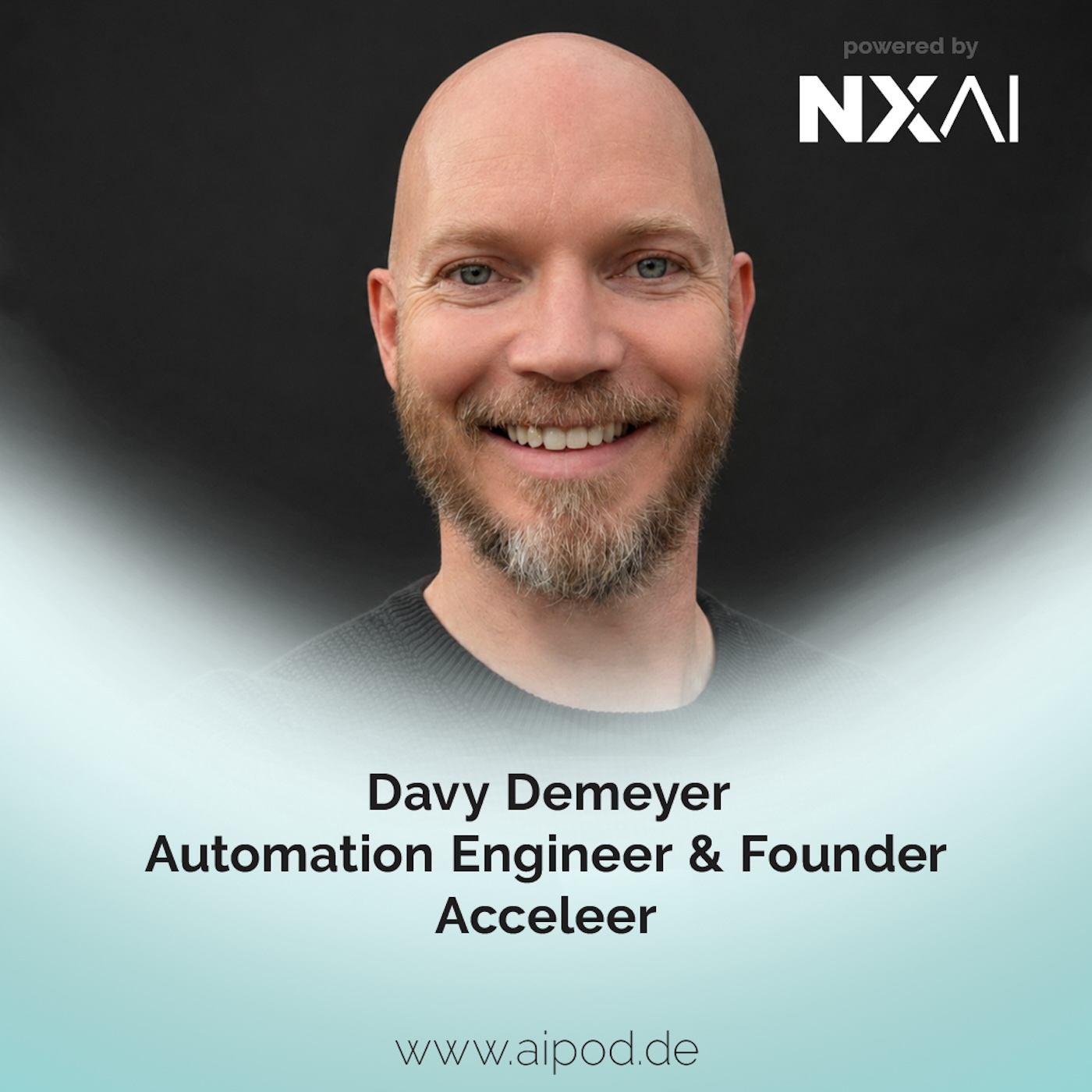
Industrial AI Podcast
Mistral acquires NXAI spin-off Emmi AI / API Calls
00:43:00
Unlocking value beyond APIs—where industry creativity, killer apps, and agentic engineering collide. Are we ready for the future?
Loading summary
Transcript121 lines
- [00:00]
David De Meyer
This podcast is presented by nxai, your partner for time series foundation models and physical AI.
- [00:19]
Robert
Hello everybody and welcome to a new episode of our Industrial AI podcast. My name is Roviba. I'm recording in the rain and I send my greetings to Munich too.
- [00:30]
Peter Sieberg
Peter Sieberg, Good morning, Robert. On the road again, you busy bee.
- [00:36]
Robert
On the road again. Yeah, absolutely. I'm sitting here, I think 50 kilometers from Cologne, so it's a good place to record. I'm charging my car and now I have time to discuss the latest and greatest when it comes to industrial AI with you.
- [00:52]
Peter Sieberg
Okay, let's do that. Why don't you start?
- [00:55]
Robert
I have some big, big news. But before, do you remember what I did two and a half years ago?
- [01:03]
Peter Sieberg
I can assume. I don't know. I have a feeling that I know what you're pointing at. But maybe before I make just a stupid, weird mistake, you tell me.
- [01:16]
Robert
I wrote an email to a guy called Frank Hutter.
- [01:19]
Peter Sieberg
I was thinking of Frank. Yeah, exactly.
- [01:22]
Robert
Yeah, he was two and a half years. He was a professor in University of Freiburg. And I wrote him an email and said, hey Mr. Hudder, I read your paper about this stuff called Tab PFN. Sounds very interesting for me. I'm not familiar with tabular data, but maybe it's interesting for all our listeners in the industrial space. Then we record an episode with Frank. Then we invited Frank and his team, do you remember, to our event AI in the Forest.
- [01:53]
Peter Sieberg
That was at Arbourg, right?
- [01:54]
Robert
Yeah, it was at Arbor. Greetings to the Arbor guys, Greetings to Werner. And there he got some feedback about his idea, its approach and got some real use case feedback. And our listeners there were very impressed by the presentation by Frank. And now he sold the company to SAP. So that's the deal, right? That's interesting.
- [02:16]
Peter Sieberg
Exactly.
- [02:17]
Robert
Absolutely. So I must really underline that our listeners really get the latest and greatest shit when it comes to industrial AI first. So really clearly, because I have a second example. I have a second example. Maybe your comment first on that.
- [02:31]
Peter Sieberg
Well, yeah, yeah. Well, as you say, I do recall. Very, very good. And in the meantime is what you. What you didn't say in the meantime they then established this company, I think the three of them. Right. Not all of the guys. I do recall Frank and one of his right hand guys who was now part of the three people who did actually start the company. But there were a couple of other guys. There were a couple of students there as well.
- [02:59]
Robert
Exactly.
- [03:00]
Peter Sieberg
And it was all very interesting and, and the big, very interesting Thing was, I believe that if we talk about what it is that they do, you know, they talk about tabular data is their business, right?
- [03:12]
Robert
Yeah, exactly.
- [03:13]
Peter Sieberg
And that is not like a new thing. But typically the first thing most of us in an industrial space always look at when we are on the factory floor. We always look at the series data, which for example, Tyrex does, and we'd look at later on as well. And maybe they, they overlap, you know that better than I these days.
- [03:35]
Robert
I believe there's an overlap. But I think Frank and his team are really focused on tabular data and they building foundation models when it comes to tabular data.
- [03:44]
Peter Sieberg
Yeah, exactly. And then again if we look at an industrial environment, for example, you know, and I talk about a little bit later on about test data, that's, that's what we in an industrial environment do exactly the same as well, maybe stronger even in engineering phase at the beginning or when we do tests, when we do tests and we have for example all this time series data, we put them in a database, we put them in an Excel or whatever kind of. That's basically what tabular data is. XY columns. Right. And the data in it. And that was for me it was at least relatively new as a topic. And then they did the company and then. Exactly. What did they do now? They sold it to SAP, right?
- [04:25]
Robert
To SAP, right, yeah, SAP. Because SAP is a tableau company, right?
- [04:29]
Peter Sieberg
Yes.
- [04:30]
Robert
So it's a fit, I think. Absolutely.
- [04:35]
Peter Sieberg
Yeah. Amazing. Huge number. We see 1 billion invest, not the
- [04:40]
Robert
price for the company.
- [04:41]
David De Meyer
It's okay.
- [04:41]
Robert
Yeah, yeah, exactly.
- [04:42]
Peter Sieberg
Exactly. Yeah. I hear, I think we talked about it privately at some point and I think you suggest that. Yeah, I mean. And that's exactly the way that Frank wrote it as well, right?
- [04:51]
Robert
Yeah, exactly.
- [04:52]
Peter Sieberg
There's an investment over of 1 billion over a certain time in, into what the guys have been doing. Yeah. So yeah, amazing. Congratulations.
- [05:02]
Robert
Congrats guys.
- [05:04]
Peter Sieberg
And as you say, you know, stay close to us, come to our Alps or any other, you know, in between year conferences that we do and you're going to learn everything about what is happening in the future.
- [05:19]
Robert
Exactly. And now the second topic. Right. So the same approach. I got introduced to Johannes Brandstetter 2 years ago by Sepp Hocheiter. He told me there's a guy coming from Amsterdam, from Microsoft, coming back to JKU Linz. He will be a professor here, jku Linds. We will build a company called nxai. Then we did an interview with Johannes. Then we invited Johannes to the Alps and with his topic AI for simulation. There he met the SIMCON guys when it comes to injection molding simulation. Last week there was a huge announcement of SIMCON working together with me and this week we got the announcement that me it's a spin off of NXAI is acquired by Mistral. So huge topic. Right. Congratulations to Johannes and the team. I'm very, very happy and a little bit proud to be part of this journey a bit. So again, if you want to get the first shit when it comes to industrial AI, listen to the Industrial AI podcast. We were really. Johannes was very famous in the whole research area. I think everybody knew him but I think in the industrial sector nobody was so much familiar with him.
- [06:31]
Peter Sieberg
Well, he was, I mean Frank, he was, at some point in time he was, was part of Google while Johannes was in the Microsoft.
- [06:41]
Robert
Exactly.
- [06:41]
Peter Sieberg
And he was in the weather forecasting space.
- [06:44]
Robert
Right, exactly. The big Aurora model.
- [06:47]
Peter Sieberg
And I do recall that as long as I've been following him he was still every now and then reporting what the people that he had left. I mean he had co founded that team I believe and he was so excited about and I think that's what SEP has been talking about all the time as well, the capabilities of the models, you know, looking into the future. So weather, air, fluid, it's all about physics simulation I guess that is I guess the overlap and as you say, maybe if he came from, from weather, moving into more the industrial use of physics, I guess. Right. And then he, he found it. So if we do the comparison then to Frank with his team, three people, that's exactly what they did. Three of them as well on our. I guess.
- [07:39]
Robert
No, it was Sepp, Johannes and Albert. They had the idea to found nxai, then they run nxai. Then they recognized, oh we, we need to spin off AMI, then they spin off Emmy. Emmy raised 50 million euros I think last year and now they got acquired by Mistral.
- [07:58]
Peter Sieberg
Amazing. Yeah, yeah, yeah, amazing story. So, well then tell me which, which is going to be the next one?
- [08:04]
Robert
I don't know, I don't. Let's, let's see. Do you have, do you want to, do you want to bet on some companies?
- [08:10]
Peter Sieberg
You're not allowed to say if you're not going to be right. We're going to have legal problems here.
- [08:15]
Robert
Absolutely, absolutely. But you need to listen to the podcast if you want to get the hottest when it comes to industrial. Really.
- [08:21]
Peter Sieberg
Exactly, yeah, exactly.
- [08:23]
Robert
So what else do you have?
- [08:24]
Peter Sieberg
Yeah, we're just going to talk about things now and then, you know, you listen and we're going to see what's going to happen.
- [08:31]
Robert
Exactly.
- [08:31]
Peter Sieberg
Let's see. I think today also from my side the news topics are going to are about money deals, but also the role of humans. So the big thing, very similar I think is to what I see is that OpenAI, they launched a deployment company, Entropic, does something similar. Right. For a native enterprise services company. And I must say this sounds almost like similar. Not completely. I think the two ones that we talked about are they. They sound more like technology, right? In this case they are not technology buys, they are human, you know, buying humans. And that's maybe I thought is very similar to what we learned AWS doing. You know what they have their industrial fund and it all sounds about in this case not only building the AI, large language models. I think if we're going to be talking about large language models, in the end, I don't know, I think we, I'm going to always talk about assistance or whatever, it doesn't matter. Building the technology. And now they realize that not only okay, we provide you services companies out there in the world with the technology. Now they say, you know, we are going to build companies, maybe we buy them. That's what I assume. We're going to buy companies, we're going to buy the humans that are very capable of using the AI and we then as companies are going to provide these services to the market. Which I think is a very interesting development.
- [10:06]
Robert
Okay, that's interesting. It sounds a little bit like they are building some AI integrators for their technology. Or am I wrong?
- [10:13]
Peter Sieberg
Exactly, exactly, exactly. And you know, I don't know what that means as always, you know, for you dear listeners who depending on what it is that you do what you are thinking of doing, maybe today you are exactly that in an industrial environment. Maybe you are the industrial integrator that has put an AI layer on top or you reinvented your company and you put AI at the bottom and the rest of the organization on top of it. Then you are today exactly what OpenAI and Anthropic and AWS and I'm sure many others who follow want to do as well. That means that you are in the same business as they are. So you're going to have now new competition soon or you know, maybe you're going to get a phone call from them, one of these.
- [11:04]
Robert
Exactly. Maybe somebody is getting a phone call. Yeah. What else do you have, Peter?
- [11:09]
Peter Sieberg
Second is price differentiation. I thought very interesting. I'm not into the details of the models. You are very much closer. So you can confirm this or not. I see as an example clothes sonnet becoming 9 times more expensive GPT 5 4, 18 times more expensive. And, and so the whoever the person is, I don't have it here. Looking at this as like the cost spread is like 60x. So what we see is, I think the word is bifurcating. So splitting into two extremes, right. So on one hand is the commodity models. Again I hear because I'm not using all these models. That is not the thing that I do. But I hear about Deepseek and Gwen and some of them maybe you almost got for free these days and on the other end maybe call it the frontier models becoming premium infrastructure. Now in the past I've asked, I've talked about, we have talked about what model are we going to be using. We as humans, we as consumers, each of us consumers. I'm completely convinced, you know, we're going to have our, what I always call, you know, our personal assistant and we're not, I don't think consumers are going to be calling it AI but doesn't matter. Personal assistance and the same as business assistance. That's what they are going to be for me until I change my view and then compare it a lot to buying a car, you know, is that the right thing? Maybe you can say buy something else, buy a chair or. But maybe the value of what it is going to be is it a car or I don't know, maybe it could be. And then today it's very similar. There's a premium car, there's an entry level car. You just said you are loading your electric gear, battery, gas prices. So there's so many ways of looking and deciding what is your available budget. Now I think while all different types of cars, you know, do the job of moving you from A to B and there's all these differentiations. My guess is that maybe with regards to LLMs, I say personal or business assistant choosing what is going to be best for each of us personally or business is going to be by answering does it do the task at hand. So if the consumer just wants to know, you know, how the weather is going to be next week in I don't know, Southern Europe because you know he or she is considering a private trip there, you know, just telling how the weather is going to be and then going there and the weather is like that, that's going to be wonderful. You know, going back to Johannes for example. Right. If you're going to have a very complex engineering and in the Background you have the smartest LML LLM business assistant and it's going to be really expensive. It's going to cost you a couple of hundred. It's going to cost you a couple of thousand dollars within maybe a day maybe that's perfectly okay. Right. So I think the comparison that I saw somewhere and it's you know, maybe you want to rather pay two days an expensive consultant that does the job rather than a lower rate for five days that does not. So that, that's what I see happening in that market now you are very close to at least the technology there. Is that, is that something that you see happening there as well? How do you see the differentia for our listeners happening?
- [14:42]
Robert
Yeah, in the moment I see in the market is that for example the software guys at nxai are only using Claude. Right. So anthropic is the must have and they are always reaching the token limits and the credit cards are burning and so yeah we see that and there will be price discussions and we will see frontier models but they are building like you mentioned Quinn. Quinn I think is a good approach but it's not like a common. Right. So it's more common to use anthropic or to ChatGPT for the consumers and I think we will see two different. We will see specialized models when it comes to Qin or highly individual trained models when it comes to Qin. Open source topics. I know that BMW is using a lot of deep SEQ stuff I think so let's see what else do you have? Peter, I'm a bit in a hurry. I need to go to the customer.
- [15:38]
Peter Sieberg
Sure. Yeah, yeah I jump, I jump two or three, just one or two small pieces. Oh yeah. I mean talking about Claude Cord. 98% of Cloud Court is not AI. 512,000 lines of data and I was perfectly happy with that because what they talk about is they talk about a deterministic harness of. So they say 98% of, of these 512 line thousand lines they looked at is deterministic and only 2% 1.6% they call AI. Now that's a weird. That's, that's an amazing 2 to 98%. I would have thought maybe 80, 80 but I'm, I'm perfectly happy with that if it's 2%. The smart thing that is changing the world today. I'm, I'm so happy with that specific specifically sorry in the environment you're putting pressure on me here that we put it in this deterministic harness because that's exactly what we need. So I'm perfectly happy with that.
- [16:39]
Robert
Perfect. Interesting. And your last news. Testator.
- [16:43]
Peter Sieberg
Test.
- [16:43]
Robert
You said something with test data you have.
- [16:45]
Peter Sieberg
Oh, yeah. But I'm not going to do that because I need more time for that. I'm just going to tell. And then we're going to be talking to Boris. Boris sharing has his book coming out, right?
- [16:55]
Robert
Oh, wow.
- [16:55]
Peter Sieberg
You and I are going to be talking, talking to Boris and it's his Industrial AI From Pilot to Profit. And we're going to be talking to Boris and learn from him what is inside of him, his book.
- [17:07]
Robert
We will have a dinner with Boris this week, I think.
- [17:10]
Peter Sieberg
Right, Exactly. The time that this comes out. We have had our dinner actually already with him.
- [17:14]
Robert
Yeah. Hopefully we got the signed copy there.
- [17:17]
Peter Sieberg
Yeah, exactly.
- [17:19]
Robert
Some pressure on Boris. Peter, let's move to the main part. Testator next time because I'm in a hurry in the main part. Davey is waiting in the main part. And maybe you remember we had a discussion about AI APIs, right? I think two episodes. And Davi sent a comment on your LinkedIn post and then we had a small discussion and then I said, davey, do not discuss it here on LinkedIn. Come to the podcast and tell us what I missed. And we did it. And I think it's a very interesting episode from a user, from an industrial user perspective when it comes to AI APIs. Very interesting. Thanks a lot. Greetings to Belgium. It was a pleasure.
- [17:59]
Peter Sieberg
Looking forward to listening. Thank you, Robert. Have a great time in Cologne and see you soon. Take care. Bye bye.
- [18:06]
Robert
Thank you, Peter. Bye bye. My guest today is David De Meyer from Belgium. Davy, welcome to the podcast.
- [18:12]
David De Meyer
Thank you.
- [18:13]
Robert
Robert, introduce yourself briefly to the listeners. What are you doing in the moment?
- [18:17]
David De Meyer
Yeah, okay, so I've been working in the industrial automation space for about 20 years. So I started as automation engineer and I worked for 20 years with Actaemium. You maybe also know. Yeah, I know because they're one of the biggest system integrators. And the last 12 years with Actinium I spent in China. So I was based in Shanghai. I had a local team of Chinese automation engineers, some software engineers, and we supported multinationals setting up green fields, mostly green fields in China. So pharmaceuticals, food and fine chemicals.
- [18:58]
Robert
So traditional process industry.
- [19:00]
David De Meyer
Yeah, yeah. And I came back to Belgium and also left Actemium two years ago to set up my own company, which is called Axelir. So the name of the company is Axlier and the target is to accelerate engineering. More specific, accelerate industrial process automation engineering.
- [19:19]
Robert
That's interesting. We Will talk later a bit about your company and your approach. But first of all, you listened to our latest episode and didn't want to let my criticism of API stand. We exchanged messages on LinkedIn and then we decided, let's record an episode on the whole topic, maybe for all the listeners, maybe I do a little recap. I was at Hanover Messe and with many of the companies I spoke to, the topic always came up. We have an API, so the customers can do now and we have an API and the customers can do now do AI. And for me that wasn't enough for me and I don't see any business value in this, only to write an API. And then this was your take. What do you think? You said API is a good approach for the first step, or am I wrong?
- [20:14]
David De Meyer
Yeah, so I said my eyebrows were raised a little bit and the end. I also said, actually there's two ways of looking at APIs. One is actually the APIs going towards the models and then the other One is the APIs going towards the industrial applications that we actually want to apply the AI to. So it was not entirely clear. Of course, I only. I was, I was also half listening to the podcast, but it was not entirely clear to me what, what you were talking about.
- [20:48]
Robert
So my point was that I see there's an API and then the guys are telling me, oh no, we have here API for, I don't know, language model 1, 2, 3, 4, 5 and you can now do AI with, with it. And this was not enough for me. Do we have a creativity lack in the industrial sector when it comes to APIs to the model?
- [21:07]
David De Meyer
Okay, so for the APIs to the model, I think the APIs to the models are starting to represent intelligence. So I think you can compare it a bit like you're taking electricity or an industrial plant, you need compressed air. It's becoming a basic utility. So in essence you need access to this. So you need to somewhere get this intelligence. Either you take it from one of the main providers, from anthropic, from OpenAI, or you consider to run it yourself, either still on a private cloud or maybe even locally with one of the open models. But you need these access to the
- [21:48]
Robert
models, but this is not a business model for the companies. Or am I wrong? Because this will be common API at the end.
- [21:55]
David De Meyer
Yeah, so of course if you want to play that game, you need to invest billions. And it's not just a couple of billions, we're talking about hundreds of billions. So if you look at the investments of anthropic and OpenAI, you see that the Chinese companies are trying to keep up.
- [22:12]
Robert
No, I don't mean to build an own anthropic or something, but I think the companies need to think about can I add a value added service to the API? Is there even more? Is there a business model for me not only to provide an API? What is your opinion on that?
- [22:31]
Peter Sieberg
Yeah.
- [22:31]
David De Meyer
Okay, but then maybe first we need to talk about the other kind of APIs. And the other kind of APIs is the APIs towards the industrial applications. And so what do we see? Now if we look at the world outside of industry, we see that the biggest part of AI being applied is going towards coding and engineering. And it's relatively easy to do this because in the world outside of the industrial space, everything is relatively open. So we have access to code, we have access to data, and for applications we have open APIs. Today it's very difficult to imagine applications in the software space that don't have API that's commonly available. Now if we look at the industrial space, it is actually very, very difficult to get access to code, to data and to the APIs. So that was also the part that raised my eyebrows quite a bit because in the industrial space we already have trouble applying the main models because they almost don't have a grip on anything. And we need to take a step back because if you look at the software world, you see that over time software has been being built on top of software, on top of software. And you know the saying, people say, okay, software is eating the world, but we still don't see this in industry. Software is still not eating industry. And it's even before we start talking about AI. So it's very difficult to automate things in industry. If you look at industrial engineering, at industrial engineering workflows, they are very, very manual. We say we are automation engineers, we automate the factories, we aim to make them autonomous. But if you look at our own workflows or engineering workflows, they are almost not automated and they're very difficult to automate. And the main reason that it's like this is because we almost have no interface surface to do so. So that's one of my main concerns. If we start talking about applying AI to industry, we don't even have the basics yet.
- [24:33]
Robert
Okay, so your opinion is that you going this API is a good way to go. To have only to provide an API doesn't matter if you have a value added service and you can sell the API. Is that what you think that they can really sell APIs.
- [24:49]
David De Meyer
Okay. I think in many cases you don't even need an API. So if we look at the basic thing that's running the factories, what is making sure that we can automate factories, that's PLCs, DCS systems. First of all, you don't need APIs for these. They need to have their code accessible. They need to move towards a more modern development workflow and multiple companies are starting to do this. So Siemens, Beckhoff, bnr, Codesys, I believe SQL is also working on something. So these teams, they realize that the future is there. So for accessing code you don't need the API, you just need to have the capability to let your agents work directly on the codes. Then for everything else, yes, you need APIs. And then if you ask what is the business model? That's also a thing that's now in the discussion in the software world. How do you charge for this? Classically people would say okay, we charge for per user. But we're talking then about the subscription model. We're still in the industrial world. We are still in a situation where most companies are trying to switch from perpetual to a subscription model. But we're already a step further in the software world where people are saying the agents are starting to do so much work. How do you measure that? So you will need to figure out something that's more closer to the value that's being delivered. So it's going to be less seed based subscriptions and more value based usage deliverables. And that will probably be different for every type of company because depending on what you offer, it will be different.
- [26:22]
Robert
And what about this creativity lack in the industry? Do you see that or is it only my opinion on that?
- [26:30]
David De Meyer
Yes, I think industry is a bit a closed ecosystem, not looking enough outside of the bubble. It has also been for a very long time not so popular for young people to join. I feel now it's starting to change a bit. It's becoming a bit cooler again to join industry. Yeah, I feel it's a bit a bubble. People think industry needs to do everything in a different way. Well, actually maybe it's 10 or 20% that we need to do in a specific way, but for the rest, 80% that's left, we should actually look more to what's actually happening in the software industry in the main AI applications, what people are doing there. So that's. Yeah, I also think that's an issue.
- [27:11]
Robert
Imagine you own an automation company like Beckhoff or like Rockwell or whatever. What would you offer to your customers when it comes to AI, I think
- [27:25]
David De Meyer
first of all, I think these companies, their business model will change a lot. Because you probably heard also about software defined automation.
- [27:33]
Robert
Yeah, we had an episode with the guys. Yeah.
- [27:35]
David De Meyer
Yes. But software defined automation is also a concept and it's actually starting to work on two levels and that's two income streams for the automation companies. One is the hardware. So the hardware is becoming commoditized. So that will have a big impact on the business model. I think many of the bigger companies also say, look, the hardware will become less important, but you need to get through this transition. And then the second thing is also the software, the basic software layer is also going through a commoditization step, which is normal. So in the software world you also see that over time as a certain layer becomes mature, that it becomes more a commodity. And then companies, they switch to higher levels of value. So if you look at Microsoft and Amazon, you see they, they always keep climbing the stack. The stack. So the automation companies also need to start doing that. And so I don't have the perfect answer, of course I'm also working on my own product, but I think they need to start shifting towards higher levels of value. And again, that's not so easy. Yeah, exactly, because I also understand what position they are in. I think some of them are doing really cool things, but it's still early, but they need to, they will have no choice then to switch because you can delay the commoditization for some time, but at a certain moment you have to move.
- [28:59]
Robert
And I think everybody is looking for the automation AI killer application, or am I wrong? And nobody found it yet.
- [29:09]
David De Meyer
You mean in the automation engineering?
- [29:11]
Robert
Yeah.
- [29:12]
David De Meyer
So what is happening in the software world? Who is building the killer apps? You see, it's all open, it's all open agents. You see, you have codecs, you have cloud code, but you also have open code. That's pretty good. So what is the similar thing in the software world? You see, Siemens has made a demonstration with one of the of these open agents on their new Simatic AX platform and it works well. I know many people who just use regular cloth codes on Beckhov or Siemens. It's a little bit of struggle because again, this code is not always directly accessible, but basically it works. So I think the killer app will not just be on the pure coding because that has already been solved. I think the killer app will be more level, level higher. So I think companies need to look more into orchestration and, and how to manage all of that. Also a coding agent by itself, it's difficult to control. If you, you, you can, with pure coding agents you can go from pure vibe coding to very sort of agentic coding. So if you don't pay attention it's, it's going to be too much vibe coding. So we will need to go to a situation where anything that's adjusted with agents goes through proper version control, goes through proper reviews and goes through proper unit testing. Something we are also lacking a lot in industrial automation. So I think the opportunity is more in this direction and then especially coupled with the specific things that we have in the industrial automation world. I mean by that for example, we don't do agile coding. We have more a waterfall approach. We connect to other engineering disciplines, to electrical, to mechanical, to process. We have to go to the fats, to the sats. So and that's what these main coding agents, they, they don't know all this kind of things. And that's the orchestration or the, whatever you want to call it, the project management tying in, into the entire ecosystem. That's, that's not going to come from outside of industry. That's, that's specific for us. So I think there's going to be a lot of opportunity there.
- [31:19]
Robert
So making code generation industrial grade is, this is the way to go.
- [31:23]
David De Meyer
Co generation industrial grade.
- [31:25]
Robert
Yeah, make it reliable. Deterministic approach, maybe call it deterministic. So this is the way to go for the automation companies.
- [31:33]
David De Meyer
So deterministic code generation, that's what my company is doing. So that's an alternative to. Alternative is complementary to agentic coding. So deterministic code generation means you use a template based approach and even if you delete the code and you regenerate, it's 100% the same. This is something that actually already has been done for multiple decades, but often in smaller teams. But you can also see this deterministic approach when you ask agents to do something for you. Imagine you ask Claude to do some data analysis. You will see that Claude is not going to do it just in his memory. He's going to write a Python script most likely and then this Python script will do all the analysis.
- [32:15]
Robert
In your day to day work, what AI adoptions do you see among customers, what they are doing?
- [32:23]
David De Meyer
It's very early and I see most customers, they're also starting to use the regular cloud codes. Copilot. Copilot is very common because it's relatively easy for companies that on Microsoft they can open the subscriptions and then individual people just try to figure things out. But I see that actually in the industrial space, I see that it's much less than in the software world.
- [32:51]
Robert
Where do you see your business model going? Maybe you can describe a little bit your business model. What are you guys doing?
- [33:00]
David De Meyer
Yeah, so again it's focused on the process industry. So food, pharma, chemicals, and then the engineering workflow and this kind of industries. We start from a P&ID built by mechanical or process engineers. And based on the P and id, we will not do the coding. We will first do a functional description like a specification. And there's a standard. So in batch based process automation, that's ISA88. So the platform that we are building is allowing people to collaborate on this functional description. And so then based on that we do the deterministic code generation. So where I see the future going is that the agents will be more towards the left towards this functional design specification, helping with building that. And then humans can review it or they, they can also make adjustments. But it's much more easy to review a specification than code. Code is very hard to review even if you're a, if you're a software, software engineer. But functional descriptions are easy to review and anybody can review it. So a process engineer or operations engineer or even a smart operator, everybody can work together. So that's where I think it's, it's going. And I also think you have to, you have three things working together. You have agents, you have humans, and then you have tooling, deterministic tooling. And so we need, the opportunity is in this tooling to bring industry specific workflows or calculations or things that need to be managed to this world. If you look for example at the DCS system, there's a lot of specific things in a DCS system, but currently the systems can only be built by humans. They're totally inaccessible by agents. So the future DCS needs to figure out how do you combine this world that the agents can also collaborate with on this.
- [34:52]
Robert
Let's coming back to the APIs, where do you see good AI APIs adoptions? Can you name some players in the market where you really can say, oh that makes sense, what they are offering with the API, what I can do, what the customer can do.
- [35:06]
David De Meyer
Industry or outside of industry? Both words inside of industry. So for the coding, I think I already mentioned them. So it's the newer generation of IDEs built by Siemens or Sematic AX. It's back of PLC which will be released later this year. BNR, who has always been like this and encodesys and I believe Rockwell is also working on something other than that. You now start seeing some applications providing MCPs. I believe ignition is going that direction. I'm not sure if it's in an official mcp. So that's a SCADA system. At the MES layer, I don't see too much yet. I see there's now a few fully new open source. MES is quite popular. That's carbon. I didn't check the details, but they are, they're quite popular. This is not an API, but because they're open source you can let your agents just take, take it and adjust it. And then outside of industry that's actually there's a lot of people discussing about this for. So for example I think this week it was the owner of box.com so it's, it's a content management. So he's also posting a lot on, on X so on Twitter and on, on I think also on LinkedIn or people share it on about on LinkedIn. And these companies still didn't figure out. They, they, they say what I said before. They say we need to go to, instead of a seed based subscription, we need to go to more consumption based subscription. I think it's still, still very early. Companies are still trying to figure it out.
- [36:43]
Robert
Okay, so everybody tries out some POCs here. So you don't see something that we really can say, wow, that's impressive. That runs in the real world, not immediately. Okay, okay. What is on your agenda for the next months when it comes to technology?
- [36:58]
David De Meyer
Yeah, so I'm very much busy with my company. So my agenda is mainly supporting the existing teams and onboarding new teams or trying to get more teams on board. Also my main thinking goes towards on the one hand, how to make it easier to adopt the new workflows and also how to prepare for AI in the future. Because you have to think anything that we build today, if we will be three years further, AI agents will be so much more competent. And I think most people still don't realize how, what actually they can do. And the best way to figure it out is to just give them sometimes things. So really go into the vibe coding or the vibe engineering. So not only a product, but let them do things and see how far you can push them. So it's actually becoming very crazy. So the question is, will these agents be able to run for a longer time by themselves? Because now you do have to give them tasks, you have to review their tasks. So how far are we from them being able to run for let's Say almost a day. And then imagine how your product should look like. Then your product will for a big part be interfacing with agents. And I see a lot of people always say, yes, but you cannot trust agents. But you need to think how do you structure your product, that actually you have full traceability and that you have the checks. And that's the necessary moments a human can come in to review and validate everything. So that's one thing that I'm working on a lot if you ask me what I will do next month. I also saw that I just got an invite from the, what is this, the AI Association. Did you see that one?
- [38:48]
Robert
No.
- [38:48]
David De Meyer
Industrial AI network?
- [38:50]
Robert
No.
- [38:51]
David De Meyer
So I see it's Accenture, Frauenhofer, Siemens, Bosch.
- [38:56]
Robert
Oh, okay. I know the guys. Yeah, yeah.
- [38:59]
David De Meyer
So I think that's also very interesting. I don't know the details yet. I just saw some messages going up and down. But I think there's something like this is needed because so they do say, okay, we want to figure out what are the bottlenecks and if basically what I have now been saying, that's a lot of the bottlenecks in the industrial automation layer. So we need to talk about these bottlenecks and we need to figure out how to get past them coming back
- [39:23]
Robert
to the automation companies. What would you like to see from them in the next months? When it comes to APIs, AI coding agents, what would you like to see from them?
- [39:36]
David De Meyer
Okay, well, okay, maybe three things. So first of all, really make progress with this next generation of IDEs that are really focused on that actually decouple the code so we can actually let the agents work directly on the code. Second of all, anything that cannot be managed directly by codes, Open up the eight APIs as some products have APIs, but they are not documented. So document them. And then the third thing is we need to have a discussion about the standards because we have a big problem with the standards.
- [40:07]
Robert
Why we have a problem with the standards? Can you explain that? Why do we have a problem?
- [40:11]
David De Meyer
So a couple of the key standards in automation. So we have IEC 61131, you're aware of that. We have the ISA standards, ISA 88, ISA 95. And now we have a very new interesting standard which is module type package, which will actually make it easier to connect skits and machines to higher level control systems. Really interesting for pharmaceuticals, chemicals. And so all these three standards, you are not allowed to share the documents and you are not allowed to put these documents into AIs. So if you go to the website of ISA, for example, the first thing you will see is a pop up that says if you put the standard into LLM they will sue you. It's literally on the website. And this, this may be worked before because you, you had to have humans anyway to implement the standards. But now we come to a world of agentic engineering. If the agents do not know the standards, they will not apply the standard. And then the engineers who have have to apply the standard. If they have to choose between something that is known by the agent and something that's not known by the agent, they will choose the things that are known by the agent. So IEC 61131 is a very big issue. It's already very fragmented and we still cannot teach the agents how to handle it. At the same time, I already know teams that are just starting to switch to things like Python. And of course you can say, wow, Python. Oh no, deterministic. And things like this. But these are teams that really know what they are doing and they just say we need to move faster. And it's, it's, of course it's very, very small. But if Automation companies want IEC 61131 to survive, they need to stand up and say, look, this is still the future of automation, and then open up the standards and start thinking about this.
- [41:55]
Robert
So we will see new standards or we will see a standard. Discussions.
- [41:59]
David De Meyer
I prefer standard discussion. I prefer not to bring new standards. Like module type package is a really nice standard. It's not so complex. We could propose, okay, let's make a new standard, but this doesn't help. It doesn't help to go to a new standard because we create fragmentation. So the best thing is that there's a discussion that people understand and say, okay, the standard, this documentation needs to be open so we can apply it to accelerate engineering, both with classical automation and with agentic engineering, but preferably on existing standards.
- [42:29]
Robert
We are living in interesting times and very interesting times. I really appreciated your feedback. Feedback. When it comes to the APIs via LinkedIn on our discussion, I keep my fingers crossed for you and your company. Thanks a lot. And all the best to Belgium.
- [42:43]
David De Meyer
Okay, thanks for having me.
- [42:45]
Robert
You're welcome. Bye bye, bye bye.