← Industrial AI Podcast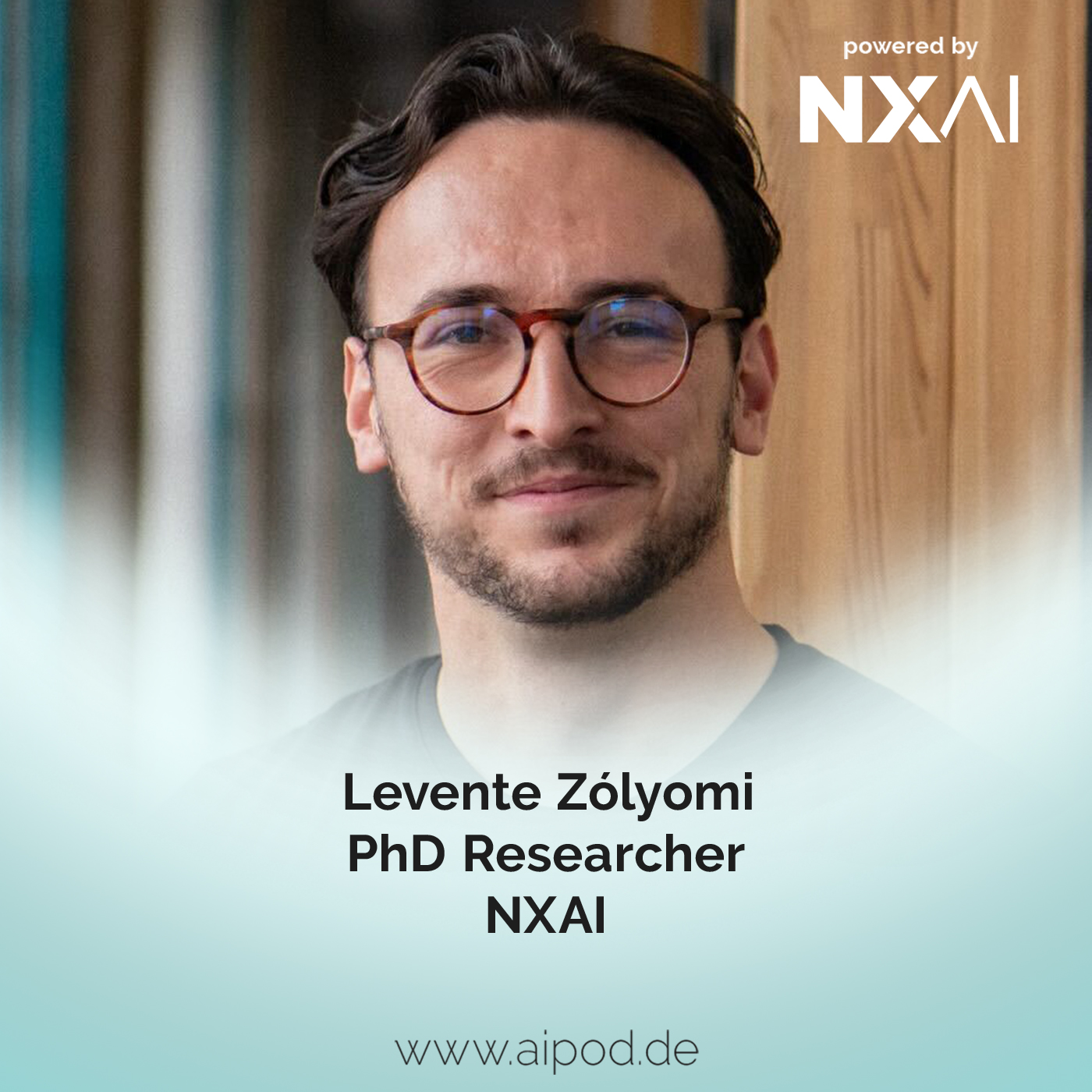
Industrial AI Podcast
TiRex-2 - a multivariate time series foundation model
00:49:53
Discover how TiRex-2 is revolutionizing time series AI for industry. Multivariate, streaming, and more—get the inside story.
Loading summary
Transcript81 lines
- [00:00]
A
This podcast is presented by nxai, your partner for time Series foundation models and physical AI. Hi there.
- [00:20]
B
Welcome to a new episode of the Industrial AI podcast. My name is Peter Seaberg and I'm your host. And today I'm going to be talking to Levente Zomi. I hope I pronounced that correctly. We'll hear in a moment. Levente is a PhD researcher at NXAI, and he and I today are going to be talking about Tyrex 2, more specifically about generalizing Tyrax to multivariate data and streaming. Hi, Levente.
- [00:54]
A
Hello. Hello, Peter. Nice to. Nice to be here. Happy to talk about these topics. Exactly.
- [01:02]
B
Nice for me as well, knowing that you are the specialist on exactly that very topic. Let's start, Levente, by you introducing yourself to our listeners, please.
- [01:14]
A
Yes, of course. So, as you said, I am a PhD researcher at NXAI and I'm also doing my PhD at Johannes Kepler University here in Linz, Austria, under Professor Sepp Hocheiter. We have this nice Time Series research group that I'm a part of. And then, yeah, together with many of my other brilliant PhD colleagues, we were working on Tyrex 2, and I started my PhD about a year or so ago here in Linz. And I'm also been at NXAI for about the same time as well.
- [01:48]
B
Okay, we may be talking about that at the very end, but how long does a PhD take typically? Or, you know, how long is it going to take further until you're going to be ready, study finished?
- [01:59]
A
That depends on, of course, a lot of circumstances, usually between three to five years is the standard here.
- [02:08]
B
Very good. One more, maybe more personal question. Where does your name come from? Has it got to do anything with the wind or not?
- [02:17]
A
It does not have to do anything with the wind.
- [02:19]
B
You know why I asked that? Because I was thinking Levant. Levante, I think, is a. Is a word, a name of a specific wind coming. I don't know coming from where. So if not, then where does it come from? Where does the name originate from?
- [02:33]
A
So I am. I grew up in Hungary and this is actually a very traditional Hungarian name, Levente. It has nothing to do with the wind.
- [02:43]
B
It's just a very.
- [02:44]
A
Okay, it is a coincidence. And there is only one letter difference between the spelling of my name and the wind.
- [02:50]
B
Ah, okay. You know, the one of the wind.
- [02:52]
A
So, yeah, it is quite common.
- [02:55]
B
Very good. Let's start with Tyrex 2. Please give us a very quick overview, introduction, and then we'll move into the separate details of what Tyrex2 is yes,
- [03:10]
A
of course, more than happy to. So Tyrex2 is of course the successor of the original Tyrex model also developed by Nxai and the JKU. And the main pitch for Tyrex 2 is that it's still a Time Series foundation model. It is still in this zero shot forecasting regime, but now the main improvement is that it can now handle multivariate data. It can now handle these covariates that are actually abundant everywhere in industrial applications, but are a lot more complicated to process than just a single signal. And that was the main idea behind Tyrex2 is to expand to this multivariate regime. And also in the meantime, we actually built quite a few nice improvements on top of this already existing strong base of Tyrex 1. That's the high level overview, very good overview.
- [04:06]
B
You gave me about four or five keywords that I'm just going to be asking you about. We're going to be stepping back a little bit. So we all have the same baseline and we'll take it from there. So first question is Tyrex 2, right? Is the follow up of Tyrex. So tell us, what was Tyrex, what is still today Tyrex? And maybe as we were talking like age, how long does TYREX exist?
- [04:36]
A
Yes, of course, let's go into that then. So Tyrex, the original Tyrex model was released in 2025, around May. And this was one of the first Time Series foundation models, and especially one of the first ones that moved away from this transformer architecture that's so prevalent in everywhere. And later on we can get into the detail, why is it so nice that we are using something more efficient than the transformer? But in a nutshell, right, and maybe
- [05:09]
B
we, maybe we talk. Or is that now as we're talking a little bit to the past, But I'll come to it in a minute. Anyway, second question then is Time Series foundation model? Those are two important things again that the majority of the listeners will know about. But remind us, what are time series data? What are time series series data used for? And what are some different use cases? I mean, of course we're talking here we are the industrial AI podcast. I assume that that is one use case. Right. But there's completely other use cases as well. So maybe you talk a little bit about two, three specific areas.
- [05:54]
A
Yes, of course. So time series data is of course in many, many places. In fact, I would say more places than most people would realize. Of course, industry is one to give maybe a bit more specific examples is for example, in manufacturing or in any sort of machinery that has sensors that collects data like the voltage, the rotation speed of a machine or the position or anything like this, and they collect it over time. This is a time series data inherently. And then you can of course then forecast this time series. But then other examples, for example, in the supply chain domain, you can try to forecast the demand for certain items for shipping or the traffic flow when you come to more industrial or sorry, infrastructure settings or admission rates to hospitals. And also the entire financial industry is revolving around time series with the stock prices, the option pricing and all of these are just many, many examples of time series.
- [06:58]
B
Okay, sounds great. Yeah. And I personally have been involved within the industrial space where time series specifically, and we're going to come to that later as well, asking you, from my experience and the algorithms that I was using at that time, two, three more, more words. Just that there's so, so much information on, on what Tyrex2 is share with foundation model. Everybody, you know, talking foundation models and maybe if we have been talking foundation models since, I guess, two, three years, then that was. They were typically related to maybe, let's say words, but you're going to correct that. But now they're related to time series. So what is a foundation model and what specifically is a foundation model when we talk about time series?
- [07:55]
A
Yes, you are very much correct in that instead of words I would say language. But then foundation models definitely originated from the language domain with this Whole GPT and ChatGPT series is what kind of kicked off this line of research. And then applying this concept of having a foundational model that's really understanding a lot, like truly a foundation of a specific domain. In the case of language models, of course, language in general. And then when you apply this concept now to time series, the model that you want to get out is some time series foundation model that you can throw any data into any sort of time series that you have collected and you want to forecast it and then it will be able to just extract the patterns during the forecasting phase already and you don't need to again train it like you would do previously before time series foundation models were taking off, you would have to train a unique model for every time series. You have to be able to forecast it. Well now we have these generic foundation models that can understand time series in general.
- [09:06]
B
Now with language and as you said, starting with OpenAI, I guess three, four years ago, they and many other companies scraped the Internet, you know, kind of used close to all available language, as you said, that was available to us. Is that Then similar does foundation imply that at least you have a huge amount of. So in this case if you say time series foundation, it implies that you have gathered a huge amount. I'm not sure if you can. If there's a minimum by which you can say it's a foundational model.
- [09:47]
A
Yes, that is very much a good analogy that for language foundation models you really had to scrape this web scale data of billions or trillions of words and tokens sometimes for time series. I would say it is a similar setting with one extra, extra caveat that I'm gonna get to in a second. But yes, we do have a large collection of time series, a couple 10 millions 10, 20 millions of time series that we use during pre training. But the unique property of time series compared to language is that you can generate completely synthetic or artificial time series yourself where you have full control on what kind of time series you want to generate and how. And this is also now very much an active research area in this field on how do you generate this data, what you should put in it, because then you practically speaking can have infinite amounts of data which is definitely not. That is in. In language. So the. We do have large scale data extended with these synthetic data sets.
- [10:49]
B
Okay, good. Interesting. Yeah, yeah. Synthetic data has been around for. Not sure maybe also a couple of years from. At least for me. I know that I've been trying to get my brain around it for a long, long time and I did not always understand it. I think there was a very good case when, when we were talking about autonomous driving and somebody was suggesting, yeah, you don't want to have the. And then typically maybe it's the corner cases and the corner case maybe of where a child runs across the street and you have to break. And so you don't want to test the data. You know, you would rather not make that. That choice. So maybe you're going to do a simulation and have a child running that. For me that was a use case that I understood very well. I don't want to go into much detail here, but it' My question always is like if we produce synthetic data, I mean how can. It's almost like turning the world upside down. How can we produce data of. It doesn't matter, medical, financial, industrial, whatever, and still make sure that they are representing our world. Because in the end if you're going to be doing inference, that's real world data. Right. So I'm not sure how that, how that works.
- [12:11]
A
Yeah, I am completely with you on that. That the first time I heard that there is even research on fully synthetically pre trained time series models that are also, I would say quite good performance. Definitely better than what I would expect to something that has not seen any real world time series. But without going too much in depth of the technicalities in general time series and time series forecasting, you just need to understand what patterns appear in your data, at what frequencies they appear. Do they repeat, do they maybe change? Like first you have a large peak and then you have like a smaller peak because it was the weekend or something like that. And you also have trends, maybe something is going up continuously, going down continuously, or it's changing trend. And if you design your synthetic data to have these properties there nicely, all we have to do is just train the model to extract these and being able to recognize them. And later on when it sees some real world data at inference time, then it will just be able to recognize like, oh, I've actually seen this, like it's just a pattern repetition. Now I just have to copy it. And basically that's the high level.
- [13:19]
B
Okay, very good. And then I have two, three more. It's so, you know, what we're talking about for me is so full of abundance of information, so to say, and words that we use all the time. And again, I just want to make sure that the majority of the listeners, I'm sorry for those of you that already know all of it, but I just want to make sure that all of us are going to be at the same level because then exactly what you do. And the next word is the zero shot. And the zero shot means that if I am going to take your algorithm and different from what I would be doing, you know, like 10 years ago when I was involved, more on the side, but nevertheless we would have to train, so we would have to show our algorithm at that time the data that we had and we would have to train the model in front of us with our data. Now, zero shot means that I can just take T Rex 2 and I think you said also Tyrex 1 already was a zero shot and immediately it will have the capability of extending, of looking into the future of where my data is moving to. Is that correct?
- [14:32]
A
Yes, largely. That's the, that's the idea. Zero shot in general is a term used in many places of machine learning now for time series foundation models. What we mean when we say zero shot is that the specific data that you want to forecast, most likely the model has not seen that later on we can go a bit more in depth, perhaps about Benchmarking these, but in benchmarks it's also a big step. When you do zero shot, that means the model has not seen any of the benchmark data that you want to forecast on. And in industry as well, it's a very important capability because most likely, if a company wants to use this, their proprietary data from their proprietary sensors is most likely something that we did not have access to during training, so we did not train it on. So we really have to make sure that this Tyrex model can generalize to these unseen settings, making it effectively a zero shot setting. And yes, you were also correct that the original Tydex was also operating in the zero shot regime.
- [15:37]
B
Yeah. Right. Okay, so is the zero shot, is that the standard operating mode? Can I at all? So as I said, you know, I'm gonna, I'm gonna have maybe. Let's, let's not forget in the end I want to understand how to get access to the Tirex 2. But let's assume I then as a customer have Tyrex and I'm going to start exactly with that zero shot. So I'm going to connect it to my sensors, giving it the data. We're going to talk about univariate, multivariate in a moment and then it will be, you know, showing me where my, my sensors, where my data is moving. The question is, can I, does it make sense to also if I have, let's say one month or whatever, a couple of hours depending if it's milliseconds or days, whatever, is it possible, does it make sense to also train it on data or is it typical that it always works?
- [16:38]
A
But a zero shot, That's a very, very good question. And of course it depends a lot. But in general I would say it does make sense to have some sort of fine tuning because for these foundation models, of course we want to make it super general and the same way that a language model is made to be general for time series models as well. If you already know that maybe you don't want to forecast weather patterns or you don't want to forecast sales patterns, but you really want to apply it to some machinery and sensor data, then we at nxa, we can also help with that. We can fine tune it and it can be further adjusted so it really focuses on the specific patterns and frequencies that you have in your data.
- [17:23]
B
I think I understand that. Good. I continue with my still based questions, but we're going to get close in the next couple of minutes to the specifics of the Tyrex 2.
- [17:35]
A
Still.
- [17:36]
B
There is one that both Tyrex and Tyrex 2 have in common. They are both recurrent XLSDM based foundation models. Now, xlsdm, we didn't talk. But that's the. Maybe you do want to spend just one or two lines on. And then in combination with telling us again what a recurrent model is.
- [17:57]
A
Yes, that's also something that we are sort of very proud of. Kieran Linz, having this XLSTM architecture fully developed here. This is just in two lines. It's a modernization of SEP's original LSTM idea. And this is a sequence processing backbone in high level. Now the main difference I would say, and I'm gonna compare these recurrent architectures to transformers because they are the sort of the most prevailing architecture for most time series models is the main difference is that transformer stores everything in its memory and compares everything to every other time step. Basically on a high level in a recurrent architecture, because we already know that our time series is inherently ordered. We only want to sort of create an architecture that when it sees something, a new time series or a new time step, it just puts it into its own memory. And this memory remains constant in size. And all it has to do is just manage whether I want to store something, whether I want to forget something. But because of this recurrent nature of processing it sequentially, this means that both the storage cost and the processing costs are much, much lower and more favorable, which are then again important in certain deployment scenarios for these models.
- [19:23]
B
Very good. Yeah, we may be coming back to. Because I think the question of memory is a very important one. I think it's at the base of what already just, you know, told in relation to the time the CPU that I need for running my model, if it's sequential or then if it's going to be quadratic. Yeah. And not forget that the m and the LSTM, the original 27, 28 years ago, Sepp and Dr. Father Jurgen here in Munich stands for memory as well. So maybe we come back to that later. Now, the first major difference, I'm not sure the first. I mean it's sequentially. If that's a number one, you can confirm maybe that's also a little bit depending on what interest you each listener have. But where Tyrex was dealing with univariate data, Tyrex2 deals with multivariate data. I believe I know what that is. But why don't you tell us the difference between univariate, varied and multivariate?
- [20:28]
A
Yes, I'm more than happy to. And I would also say that is the biggest change from the first to the second generation of Tyrex. So to explain it best, I would say the original Tyrex could look back on the history of the time series that you, you gave it, but only on itself. For Tyrex 2, it can not only look back on its own history, but it can also now effectively gather information from other time series called covariates or multivariate time series. Meaning that now it just has this whole new axis, this whole new dimension of data that it can have access to and it can incorporate into its forecasts and into the entire forecasting pipeline, which is, I would say, quite a big improvement. And in many, many scenarios with multivariate and covariate data, we can also get into that later what these scenarios are. This will be quite a big difference, I would say.
- [21:26]
B
Yes, that's the follow up to covariates. But then I'm not sure that I did actually completely understand it. I thought it was as easy as univariate is one variable and multivariate a number of variables like as I've typically been used to. You know, maybe you would have whatever hundred signals, you would bring them down through mathematical ways, maybe to 10. But it's not as easy as that. It's not that Tyrex only does looks at one variable. That's not what univariate means.
- [21:59]
A
No, that part you did understand correctly. So univariate means you only look at one variat at a time and you forecast only based on that history.
- [22:07]
B
Very good, very good, very good. Then I did okay? Yes. Okay, yeah. Then, yeah, I can only confirm that, you know, from my little experience, I must say that when I was involved in several jobs, they were typically in an industrial environment be more than one. So I guess maybe many listeners are then also looking forward to be working with Tyrex2 for that reason. Now you already extended it too, which I'm not so certain. But you will tell us that not only does Tyrex2 do multivariate forecasting, it does so with both past and future covariates. What does that mean?
- [22:51]
A
Exactly. So covariates in general are just additional time series that the domain experts or someone who wants to use it knows that they are probably relevant to this target that we want to forecast. And past covariates are just basically covariates that we only have observed up until the same time point as the target. To give a brief example, we want to predict, let's say the traffic flow of a junction and we also have real time data on how Much it's raining at the moment near that village or something. And we know that the more it rains then the more likely people are going to take their cars. They don't want to get drenched. So then we incorporate this covariate and then Tyrex can now look at it and incorporate it into the forecast that okay, most likely now I will increase my forecast a bit because I know that it's going to. Going to, it is raining more at the moment. On the other hand, future covariates are covariates where we also know the future values of them, which to me sounded a bit counterintuitive in the beginning. But I can give also a very brief example on when this is a perfect application case. So let's say you want to forecast your sales for your company. And in retail it's known that before holidays, before Christmas etc. The sales do go up. But we know when Christmas happens. This is already a set in time event and we know it in the future, meaning that we can now give this information to Tyrex as a future known covariate and it's going to know that, okay, I know there is this event happening in the future and leading up to this event the sales will most likely go up, they will drive up. So I will also incorporate it in my forecast that they will increase. That's the main difference between this future known and past covariate cases.
- [24:51]
B
So today defining, well, at least the original choice of what is a potential or a covariate is still a human activity. Is there a correct. I mean, are we. The point is you need to, you. You first need to be a human to understand what is Christmas. And then you're going to say okay, Christmas and then you say okay, December 24th or whatever. But maybe in the future if the in, in a specific environment the model is going to know all these different variables, maybe then the algorithm would come up with, with something, maybe by not saying by Christmas, but saying there is something I see in variable Z which is in relationship to covariates with something else without knowing that it's talking about Christmas. I don't know.
- [25:43]
A
Yes, that is to some extent, yes. You do have to define as a, as a human, as the potential user of Tyrex on what covariates you want to include. But the way Tyrex 2 is built up, it can inherently also decide that from all those covariates that you provided it with, which ones are the ones that are actually meaningfully contributing to the forecast and then put different amounts of Emphasis on that. So it does have some capability to look at it. Of course you can't give it thousand or a million different covariates and then just let it figure it out. That is a bit unrealistic scenario. But in general if you're not sure if this is useful or not, you can just confidently include it as well and then let's. And figure out if it's actually useful or not.
- [26:28]
B
Yeah, I do recall exactly. I may have some years ago given this example, but it was only after, you know, long time the domain experts on the shop floor not understanding why every now and then the quality of the layer on a table was having bubbles. Whatever it was not so it was until they found out it had to do with. With somebody opening a window in the back because they were smoking, I believe. And there was a. So it had to do with. You could say weather or wind or whatever, which you then only by adding a new variable what is. It's almost like is a person smoking or not? Or is it cold or is it out, is it cold outside or. And then suddenly you're gonna see the relationship and you're gonna find out why things happen. Now the Tyrex 2 future covariates, they ensure, I understand strict target causality. Maybe that's the final thing I want you to explain. We talk many, many times about correlation and causality. When you say that the covariance, they ensure the causality, what does that mean specifically?
- [27:43]
A
Yeah, sure, that's also a good topic. So on a high level this strict causality, especially in the future is important because it's of course in time series forecasting we cannot let any future information leak back into the past as that will just make the target too easy for the model. It's just like, oh, I just repeat what I saw already in the future here. This strict causality just means that we are making sure that this future information only enters the model at the appropriate time so there is no leakage of this unwanted future information into the target and then causing these unwanted or spurious correlations that we see many, many times in many different data domains.
- [28:29]
B
That's the word of the famous book, right? Spurious correlations. But that's a different topic. It's a great book that shows all these spurious correlations. Yeah, yeah. I mean I could, but we're not going to do that. I think I could be talking for a rather long time with you on this topic of causality because I have this feeling that there's this huge potential in you Claiming and I'm sure if you claim that, I just take it as it is and, and what that means. But we're not going to do that because we do want to get closer to Tyrex 2 here. So now as we talk about, I have understood the univariate multivariate. I think there was a. Maybe there were already, there are already today a number of multivariate foundation models in the market. Right. And I assume that you are comparing yourself with those and maybe you want to without, you know, making kind of positive statements or whatever. But there is other models in the market and towards the end or from now on we're going to be looking at, you know, how is Tyrex2 doing in relation to these? So maybe you can share some, some base numbers there with us.
- [29:44]
A
Yes, truly. And yes, you are definitely right. This, I would say a couple of years ago when this first time series foundation model area kicked off, everything was univariate. Multivariate is definitely a step above and it's a lot more of a challenging problem to solve. But now there are of course others. So probably the most well known one is From Amazon, this Khronos 2 model, this is a fully transformer based model that does not have this fully causal structure. And that's probably one of the main differences. And the other main difference is that we haven't really talked about parameter counts for these models explicitly. So I just want to mention it briefly that the Chrono 2 model.
- [30:28]
B
Yeah, just tell us, tell us what are the parameters and what is the value of the maybe the end use use of the listener who's going to decide to go for one or the other solution. Also then knowing the amount of the number of parameters.
- [30:45]
A
Yes, surely. So then probably then this other difference lies in the parameter count. And then in connection to this also how efficient can these models be under separate deployment scenarios? So this parameter count is just the number of individual parameters the model has to learn and these all have to be stored on the device and loaded into a fast memory during the inference time. Meaning the lower your parameter count is, then the more restrictive hardware you can run the model on and also the quicker you can get your forecast out, which if you deploy it in a scenario where you have data coming in every second, is very important. Important. So for Tyrax, the multivariate model of Tyrex 2 is 82 million parameters and Kronos 2 has 120 million. So there is, I would say an advantage of Tyrex 2. But what's also something unique is if somebody decides that they do not need the multivariate capabilities of Tyrex. You can turn off those sets of parameters and then this just gets reduced to 38 million, which is then a lot smaller and enables us a lot more efficient.
- [32:03]
B
Okay, now something that is that I just learned, maybe I just never realized, maybe I thought that when you train these models, which can take weeks or months, right, Depending on what kind of CPU you have available, and you gave us the example of the 120 million Chronos2,82 or 38 million for Tyrex2 multivariate or single variant, you say. So the model in the end is the OR contains all these parameters and you load them where you load them in what? In memory, in CPU memory or at time of inference.
- [32:41]
A
I mean, yeah, that kind of depends on the application scenario. Of course in the case of Tyrex we see that many of the applications of tyrex one were on edge devices which have very limited compute capability. So then you would try to load it into RAM or just some file fast memory access. Of course, if you have a GPU available and you want to do inference on that, then these parameters would then live in the memory of the, of the GPU and below.
- [33:09]
B
Okay, typically, right. I don't know what, what is the number that we need to think of then? I mean, so for each parameter you take whatever point something megabytes. So let's, let's say for an average of 100 million parameters you need what kind of. Are we talking gigabytes? Are we talking terabytes?
- [33:28]
A
I would say these are relatively still small scale. And then with some clever engineering tricks, you can shrink this down to I would say under 100 megabytes for something like Tyrex. At least where I'm bringing up Tyrex, of course because we know a bit more on how it behaves under these circumstances. But I'm sure these tricks would also work on generally any model. So it's not that huge compared to something like language models where you have hundreds of gigabytes or terabytes of data just in the model parameters.
- [33:58]
B
Very good. So when maybe a little bit later you're going to be sharing some specific numbers. We were now comparing kind of features or capabilities, I think so. And understand if we for the moment stay at this Chronos tooth. That's why you want to see yourself compared to understand they're both multivariate. They both to the past co convariate also the, the future covariates. What about streaming?
- [34:28]
A
Yes, that's also a very good point. So streaming is in a high level. If this is also something that I think easiest to visualize with an example from, from industry, let's say we are collecting data from our sensors and this sensor is measuring the rotation speed of a machine. But this rotation speed changes every second. We get new data every second and we want to then continuously forecast. What we can do with Tyrex 2 and this recurrent architecture and this fully causal structure that we built is we process the history that we have so far and we do our forecasting. And then whenever we have now a new observation come in, like now we know again 1 second of data or 5 seconds of data, we can just do a single quick step of okay, now we put this new information into our fixed memory enabled by this recurrent architecture and we just do another forecast. Meanwhile, on something like Chronos 2 or any other transformer based model in general that is not fully causal, you would have to recompute a lot more of the past and sometimes your whole past. Again just because you added a tiny bit more information. This is also something that's heavily can influence the inference speed and how quick you can get your forecast in these continuous scenarios.
- [35:48]
B
Because that would again be the quadratic, as you said before, rather than the sequential.
- [35:53]
A
Exactly, it's quadratic. And also just generally you have to then recompute everything again and again. We don't have to recompute things that we already did, we just add things and then we tested it to quite a long horizon, this streaming capability. And it, it remains stable to quite a large extrapolation length.
- [36:12]
B
Now, is there any limitation you gave the example of getting new value for single multivariate variables on a second level? Many times within the industry we have millisecond deterministic values coming in. Is there a limitation from the Tyrex2 algorithmic perspective or is that a limitation that sits more in the architecture of, you know, CPU, GPU, access to memory, etc.
- [36:50]
A
You mean like for when it comes
- [36:51]
B
to the, of going, going below second. So if you gave the example of yeah, every second I get a, a new value and then you say you can every now. And then you, you do the calculation so you have the capability of the streaming. Can that streaming go down also on a millisecond level? So I get, you know, 1,000 values per second?
- [37:13]
A
Of course, yes. Okay, now I know, I understand. Of course there will be hardware limitations as well. If you have data avenue millisecond, I would say at that point just purely loading it into the memory and then Doing this single step might already take longer than a millisecond. So you can't do this update, but you can go, I think quite a lot down on with this.
- [37:34]
B
Okay. And one more I'm going to be asking you, as I said before, I think the importance of memory we're already talking. So what about, I think Tyrex2, I understand, uses a. Or has a constant memory. What does that mean exactly? And what is maybe then the advantage of that in relation to, in this case again, Chronos 2 I can certainly get into that.
- [37:57]
A
So this constant memory is specific to these recurrent architectures compared to transformers. And of course then Tyrex is in this case representing these recurrent architectures. Chronos 2 would represent transformer architectures in general. So what transformers do is every time you get a new data point, it does some computation on it, but it stores that data point in the memory and whenever some future value comes in, it will then compare to that data point again. But then as you add more and more data points, you have more and more things to compare to, which then grows quadratically quite rapidly. Whereas in this constant memory setup, you basically have a fixed size of memory. You can imagine this as a vector or a matrix mathematically, but the key idea is that you only have this fixed amount of storage and the model just learns to decide, okay, what do I need to store? What is it that I don't need to store at this point? But this also means that we are fixing the state size of the memory in the beginning and it cannot grow further than that. Even if you were to compute for a million time steps, you will have the exact same megabytes of memory occupied on your system if you Compare just to 10 time steps. Whereas with a transformer this will grow very, very quickly into something that's not really manageable unless you have a high grade hardware.
- [39:25]
B
Okay, now share some. I don't know how you want to do it. Some numbers, I mean. Well, number one, I think that was already the case with Tyrax is exactly this relationship or this difference between the sequential transformer quadratic. So it's more energy, more cpu, more memory. We know that and that is, that is the same that relationship with Tyrex 2 in relationship those solutions based on Transformer like Anderstein Kronos 2. Do you have any other specific, is there any other specific numbers? Maybe just supporting just what it is that we just talked about. So there's many, I assume many. I know I don't know them, but I know there's many different benchmarks as always. Is there one or two benchmarks you say? Those are the ones that you and the other providers of the Time Series foundation models are looking at and our listeners are looking at. And for which reason are they looking at A or B? And where is Tirex2 in relationship maybe to competitive models?
- [40:40]
A
Yes, I can definitely adjust that as well. So when it comes to these benchmarks for Time Series foundation models, the overarching goals for them is to test on a wide range of different domains and different settings. So we can really see which time series models are truly generalizing in this regard. I would say there are two that we can bring up here. One is gift eval which has been around now for a While and where Tyrex1 also ranked at the time of its release and to this day actually quite much on top of the leaderboard here. We do not fully test for these future known covariates cases or this doesn't test so heavily on the on the covariate side of things. But for example, it tests for a longer context or it tests for a very generic ability to forecast in very different domains. And then this other one is FEV bench which is then much more geared towards having these covariates, these past only covariates, these future known covariate cases, these multivariate cases. And I can say that in Both of these Tyrex 2 is ranking very much on top with the best state of the art models with these Time Series foundation models that are often quite a bit larger in parameter count. I'm talking hundreds of millions or now we are also seeing billions of parameters and we are very much competing with those models at a much, much smaller scale. As I said 80 million parameters that what we are operating with.
- [42:07]
B
Okay, so what would you suggest listeners, decision makers that are interested, that are evaluating, you know that that are not yet inside of these benchmarks. So should they be looking specifically, you know, the majority of the listeners will be in an industrial setting and if it's an industrial setting and we have typically I would think multivariate, but. But who knows, maybe some of you do look at or interested in looking still is is then one or the other benchmark, the more specific one while as if you are going to be talking to people in the financial market, maybe seasonality, retail, another benchmark would be more relevant for them.
- [42:54]
A
So I would say in in general because one of the largest improvement of Tyrex 2 is this multivariate and covariate support and FEV bench is very much much designed to do this. Looking at that will, I would say, give you a better impression on how well we are doing when it comes to these covariate cases, these future known covariate cases, especially that only Fairbench tests for. So that I would say is a good place to start in general. And of course trying it out on your own data is also usually a very nice way to get a good feel on how it actually does behave. Behave.
- [43:30]
B
Okay, that's a good point. Now how does that work? Let's say I. Well, more importantly, one of our listeners says, yeah, that's exactly what I would like to do. Can I test, can I get an evaluation version? Can I get my data to you? Or do you provide me with Tyrex 2 and I can test it myself and then I compare it to whatever other may be possibly interesting for me as well. How would that work?
- [44:03]
A
Yeah, so much like the original Tyrex model where it was available fully openly on hugging face. Tyrex 2 is also available with very similar licensing, similar, very similar terms. But everyone, the main goal for us is so that everyone can try it out and everyone can see what it can do. And of course for any sort of like if you didn't like it or if you think that maybe we can make it somehow even better for your user use case, then NXEI is definitely here to help and then they should definitely get in contact with us as we can definitely fine tune and customize this as well. But the base model is very much available to try out for everyone online. Much very similar setup to Tyrex1.
- [44:51]
B
Very good. Rounding it up maybe. What have we just, just heard from you in the last. Oh, we already talked. Peter always talks for about an hour with the people that I have in my, in my podcast bringing it together. What is in 12 lines? What is Tyrex 2 more than other than what Tyrex has been until today.
- [45:20]
A
So Tyrex 2 is just this next step of the previous Tyrex model that can now incorporate other covariates in its forecast, can now do multivariate forecasting natively retaining very much similar capabilities of Tyrex1 with regards to this constant memory and scaling. And there are also now this multivariate and other improvements that can now make it even more competitive in this benchmark and in this landscape in general.
- [45:51]
B
Sounds great. Before we close, Levente, tell us you mentioned you are based yourself. I believe that's what you said in Linz. Tell us a little bit about, you know, maybe also assuming that that you as a company are looking for Talent and what should they bring? How does your work, how does your, your day working on a product like Tyrex 2, how does that look like? What is the kind of things that you work on and what is maybe the type of people talent where you as a company do not yet have enough of?
- [46:30]
A
Yes, that's a great question. So I am part of the research team. I am also a PhD student. So my day is very much a blend of what a PhD student would do. Reading papers, catching up on new research and then also gathering ideas. But then on the other hand, NXAI's domains, like this time series domain especially is then heavily influencing my research then and then trying to work on things that are then can be made into NXAI's business in general. That's what we do on the research side. And then of course we have very, very good engineers that can then translate these models that we develop into actual customer projects. So I would say if you are interested in that, if you're interested in working with these, with these time series models, or even more so, getting them into real life deployment scenarios, sometimes challenging scenarios, then I would say they should definitely get in contact with us.
- [47:31]
B
Okay. And typically the people around you yourself are people that have come from what, from mathematics, you know, starting with sep. I know who studied here mathematics. I happened to be at the Munich Technical University again last week for other reasons, but I thought of zap at that time. So is that, is that typically mathematics? And as these days, maybe you tell us 1, 2 words about how it works in Lens, is that typically then the, what is that the direction of, I don't know, artificial intelligence, machine learning or what, what typically would you be looking for people bringing with them if they would apply for, you know, possibly working with you?
- [48:18]
A
So the backgrounds of the people are definitely from many, many different places. But if, if you studied something like computer science or data science, or if you worked in the past with machine learning projects with maybe actually hardware level optimizations even, or like a hardware engineer or something like that, that, that would definitely be something that fully fits in. But then yes, as you said also we have people from mathematics and different backgrounds as well. So it's not just fully restricted to computer science or this machine learning and this AI area of studies and expertise.
- [48:56]
B
Very good. And not to forget to mention being close around one of the top researchers in this field, Zap Hoheiter, which I'm sure is wonderful to be working with. Levente, thank you very much for your time. Thank you very much sharing with us the details of Tyrex 2. Thank you very much and good luck. And I would say those listeners of you that are interested. Yeah, you know where to go and Ixai. Maybe you can contact. Contact Leventor directly or somebody else at NX AI.
- [49:35]
A
Yes, more than happy to lent.
- [49:36]
B
Thank you very much.
- [49:37]
A
Thanks for having me.
- [49:38]
B
Bye bye.
- [49:38]
A
Bye bye.