
Podcast
Industrial IoT Spotlight
Hosted by Peter Rohde-Chen, Erik Walenza · EN
The Industrial IoT Spotlight Podcast shines a light on digital solutions that are impacting businesses today. Our mission is to feature the companies that are building the next generation of enterprise technologies, from architecture design to data management to business model innovation.
Our hosts, Peter Rohde-Chen and Erik Walenza, are friends and entrepreneurs based in Shanghai, China. The Industrial IoT Spotlight is produced by Asia Growth Partners, a group of technology experts and business leaders, who help technology companies and corporates navigate technology development, implementation, and adoption in Asia.
Don't forget to follow us on LinkedIn @asia-growth-partners-agp or visit our website at https://asiagrowthpartners.com. You can contact Erik directly at erik.walenza@asiagrowthpartners.com
21episodes
Episodes
Newest firstAll episodes

EP 217 - LTE-M: Long-Term Viability & Strategic Advantages
Mar 24, 202500:28:36Tap to summarizeIn this episode, we spoke with Dima Feldman, VP of Product Management and Marketing at Sony Semiconductor Israel, about the long-term viability of LTE-M technology and its role in IoT connectivity. We explored how LTE-M compares to other cellular IoT standards, its advantages in power efficiency and longevity, and how it fits into the 5G ecosystem. Key Insights: Longevity and Future-Proofing: LTE-M ensures IoT connectivity for decades, with some deployments lasting until 2045. Power Efficiency and Cost Savings: Lower power consumption enables years of battery life, reducing maintenance costs. 5G Integration: LTE-M and NB-IoT coexist with 5G, serving low-power IoT applications. Regional Adoption Differences: LTE-M dominates in North America and Europe, while China and India favor NB-IoT. Industry Applications: Used in smart utilities, logistics, asset tracking, and emerging iSIM solutions. IoT ONE database: https://www.iotone.com/case-studies Industrial IoT Spotlight podcast is produced by Asia Growth Partners (AGP): https://asiagrowthpartners.com/
Transcribe →
EP 216 - Emerging Technologies for a Sustainable Future in Manufacturing
Mar 14, 202500:29:49Tap to summarizeIn this episode, we spoke with Jan Burian, Head of Industry Insights at Trask, about the future of manufacturing, sustainability, and the role of emerging technologies. With a background in consulting at IDC, EY, and Deloitte, Jan shares insights on key trends like automation, AI, and digital twins, and how Europe’s manufacturing sector can stay competitive by accelerating innovation and adapting to material and workforce challenges. Key Insights: • Automation and AI are reshaping manufacturing – The integration of automation and AI is crucial for maintaining efficiency, especially as skilled labor shortages grow in Europe. • The power of data foundations – Successful adoption of Industry 4.0 technologies depends on strong data governance, breaking down silos, and ensuring interoperability between systems. • Hyperautomation and digital twins – End-to-end automation and digital twins are enabling smarter production processes, reducing waste, and improving sustainability. • Material innovation and sustainability – Lightweight and recyclable materials are key to making manufacturing more sustainable and cost-effective, particularly in Europe, where resource availability is limited. • Industry 4.0’s evolving path – Many companies initially overestimated the benefits of Industry 4.0. Now, organizations are refocusing on foundational elements like data management before scaling advanced use cases. IoT ONE database: https://www.iotone.com/case-studies Industrial IoT Spotlight podcast is produced by Asia Growth Partners (AGP): https://asiagrowthpartners.com/
Transcribe →
EP 215 - Revolutionizing Manufacturing and Energy: IoT and AI in Action
Mar 7, 202500:37:06Tap to summarizeIn this episode, we speak with Onofrio Pirrotta, Senior Vice President and Managing Partner at Kyndryl, about the state of IT readiness in industrial sectors. We dive into key findings from Kyndryl’s 2024 Readiness Report, the role of AI and IoT in digital transformation, and strategies for overcoming barriers to scaling innovation. Onofrio shares insights on bridging IT and OT, managing cybersecurity risks, and structuring governance models to drive ROI from new technologies. Key Insights: • The Readiness Paradox: 88% of manufacturers believe their IT environments are best-in-class, yet 55% say their tools are outdated, and only 31% feel prepared for future risks. • Bridging IT and OT: Successful digital transformation requires breaking down silos between IT and operational technology teams to enable enterprise-wide adoption. • Scaling Innovation: Many industrial firms struggle to move IoT and AI pilots beyond proof-of-concept due to unclear ROI and governance challenges. A structured framework with executive sponsorship is key. • Cybersecurity & Resilience: Large enterprises face increasing regulatory and supply chain security pressures. Simplifying cybersecurity tools and adopting a zero-trust framework are top priorities. • AI-Driven Operations: AI is increasingly auto-resolving IT infrastructure issues, reducing downtime and improving efficiency. However, companies must balance innovation with data security and compliance. Resources: • IoT ONE database: https://www.iotone.com/case-studies • Industrial IoT Spotlight Podcast is produced by Asia Growth Partners (AGP): https://asiagrowthpartners.com
Transcribe →
EP 214 - Catching the AI Wave: Staying Ahead in a Rapidly Evolving Tech Landscape
Jan 16, 202500:49:10Tap to summarizeIn this episode, we sat down with David Hirschfeld, Founder & CEO of Tekyz to explore how AI is reshaping the software development landscape, both internally and for client-facing solutions. David shared insights on adopting an AI-first philosophy, leveraging AI for operational efficiency, and integrating cutting-edge tools into products. We also discussed the challenges of deploying AI across industries, navigating geopolitical constraints, and maintaining a competitive edge in an ever-changing tech ecosystem. Key Insights: AI-first mindset: Leveraging AI in operations and products drives innovation and long-term value. Efficiency gains: AI enhances delivery speed, code quality, and testing, improving productivity by up to 50%. Automation: AI tools enable automated microservices and scalable software development processes. Adoption challenges: Larger firms struggle with AI scaling due to complexity and cautious risk-taking. Privacy concerns: Addressing data security and compliance is essential, especially in regulated industries. Staying competitive: Innovating with AI helps companies adapt to rapid technological changes. Explore more industrial IoT insights: IoT ONE database The Industrial IoT Spotlight podcast is produced by Asia Growth Partners (AGP).
Transcribe →
EP 213 - Making IoT Accessible: Plug-and-Play Solutions for Complex Systems
Dec 13, 202400:47:04Tap to summarizeIn this episode, we talked with Chris Baird, CEO of OptConnect, about the evolving IoT landscape and the strategies driving enterprise adoption. Our conversation explored key growth drivers in IoT, the challenges of scaling connectivity, and the technologies poised to redefine the industry, including Edge AI and the promise of 6G. Chris shared insights into how regulatory and environmental factors are accelerating IoT adoption, the impact of turnkey solutions on reducing total cost of ownership, and the pivotal role of simplicity in scaling IoT deployments. Key Insights: What drives IoT growth? Regulatory shifts, environmental needs, and cellular ubiquity fuel adoption. How do you cut IoT costs? Simplified plug-and-play solutions reduce complexity and hidden expenses. Why has 5G underdelivered? 6G offers transformative potential in cost, latency, and scalability. What’s next for IoT? Edge AI enables smarter systems and expands use cases like healthcare and security. Where is IoT thriving? Retail, water management, and medical devices show rapid adoption. IoT ONE Database: https://www.iotone.com/case-studies The Industrial IoT Spotlight podcast is produced by Asia Growth Partners (AGP): https://asiagrowthpartners.com/
Transcribe →
EP 212 - From Legacy Data to Predictive Power: Overcoming AI Challenges in Traditional Industries
Nov 29, 202400:51:41Tap to summarizeIn this episode, we spoke with Zohar Bronfman, co-founder and CEO of Pecan, a predictive analytics platform that integrates machine learning and generative AI to simplify and accelerate AI adoption. Zohar shares how Pecan bridges technical and organizational barriers to help companies harness predictive insights for business decision-making. They discuss the evolving role of AI in industries, challenges faced by traditional companies, and how predictive GenAI can democratize access to advanced analytics. Key Questions Explored: • How does Predictive GenAI simplify AI adoption for non-experts? • Why is automation key to reducing AI project timelines? • How can small-scale AI testing minimize risk and ensure scalability? • What challenges hinder AI adoption, and how can they be overcome? • Why will predictive analytics shape the future of business decision-making? For more information on Pecan and how predictive analytics can transform your business, visit pecan.ai. Industrial IoT Spotlight podcast is produced by Asia Growth Partners (AGP): asiagrowthpartners.com.
Transcribe →
EP 211 - Incentivizing Connectivity: The Block-chain-Powered IoT Evolution
Nov 7, 202400:38:45Tap to summarizeIn this episode, we spoke with Joey Hiller, Senior Technical Director at the Helium Foundation aboutthe transformative role of decentralized networks in IoT. We explored how blockchain incentives power scalable public networks, enabling new applications across urban and rural areas. Joey shared insights into the technology stack, innovative business models, and the challenges of creating reliable and resilient IoT connectivity. Key Insights: • Blockchain Incentives: Microtransactions encourage coverage expansion. • Decentralized Model: User-deployed gateways reduce telecom reliance. • Flexible Coverage: Supports urban and remote IoT applications. • Bundled Connectivity: Predictable costs enable service bundling. • Resilient Design: Decentralized structure ensures reliability. IoT ONE Database: https://www.iotone.com/case-studies Industrial IoT Spotlight podcast is produced by Asia Growth Partners (AGP): https://asiagrowthpartners.com
Transcribe →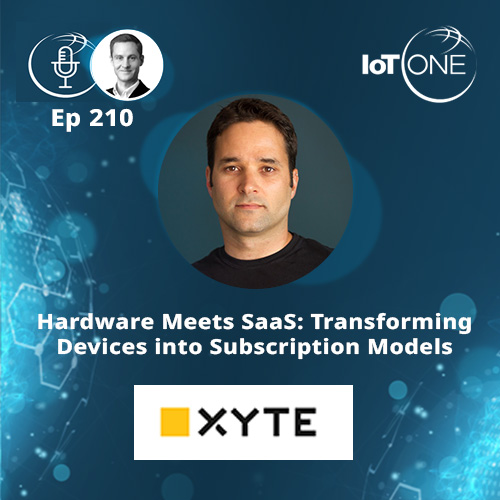
EP 210 - Hardware Meets SaaS: Transforming Devices into Subscription Models
Oct 28, 202400:41:18Tap to summarizeIn this episode, we spoke with Omer Brookstein, CEO & Co-founder of Xyte, about the transformative potential of IoT for device manufacturers and the emerging shift towards service-oriented business models. We delved into how companies can leverage connected device platforms to manage the full lifecycle of their IoT devices, monetize features, and create long-term customer value. The conversation also explored the practical and business challenges of implementing subscription and usage-based models across industries. Key Insights: Subscription Shift: IoT enables manufacturers to adopt subscription and usage-based models for sustained revenue. Business Model Transformation: Moving to service-based models requires cross-functional collaboration and strategic alignment. Empowering Partners: Platforms help channel partners add value, boosting recurring revenue opportunities. Simplifying Complexity: Unified platforms reduce inventory and operational burdens by enabling remote feature management. Future-Ready Flexibility: Modular, collaborative platforms support growth and adapt to evolving business needs. IoT ONE database: https://www.iotone.com/case-studies The Industrial IoT Spotlight podcast is produced by Asia Growth Partners (AGP): https://asiagrowthpartners.com/
Transcribe →
EP 209 - From Code Transparency to Productivity: The Future of GenAI in Development
Oct 21, 202400:28:47Tap to summarizeIn this episode, we talked with Matt Van Itallie about the rapid integration of generative AI (GenAI) in software development and its profound impact on productivity and business practices. We discussed how GenAI is transforming coding processes, the risks involved, and strategies for mitigating those risks. The conversation also covers how organizations can maximize GenAI’s benefits while maintaining security, legal compliance, and developer oversight in high-stakes environments like finance and health tech. Key Insights: • GenAI boosts productivity: GenAI can make developers up to 20% more efficient by assisting with routine tasks and enabling faster experimentation and prototyping. • Security and intellectual property risks: Despite its benefits, GenAI introduces risks, including security vulnerabilities and potential intellectual property issues depending on how the tools are used. • Importance of human oversight: Blending GenAI with human input is critical to ensure code accuracy, maintainability, and long-term security. • Enterprise-grade tools: Using enterprise or pro-tier GenAI tools is essential to avoid exposing sensitive company data and ensure compliance with legal standards. • Structured visibility and management: Organizations should implement clear strategies and tools to track GenAI use, especially in regulated industries, ensuring responsible and secure adoption. IoT ONE database: https://www.iotone.com/case-studies Industrial IoT Spotlight podcast is produced by Asia Growth Partners (AGP): https://asiagrowthpartners.com/
Transcribe →
EP 208 - The Next Frontier in Cyber Defense: AI, IoT, and API Security Challenges
Oct 9, 202400:46:27Tap to summarizeIn our latest podcast episode featuring Jeremy Snyder, Founder & CEO of FireTail.io, we explored the evolving cybersecurity landscape and the crucial role of API security in protecting modern enterprises and IoT devices. 🔐 FireTail is leading the charge in end-to-end API security, ensuring that organizations can safeguard their systems from code to cloud. In our conversation, we dive into the implications of AI in cybercrime, the differences between cloud, on-premise, and edge device security, and the importance of API design in preventing breaches. 🎙 Key Takeaways: • The rise of AI and automation in cybercrime and its growing impact. • Why securing APIs is essential for modern software and IoT ecosystems. • Cloud vs. on-prem vs. edge: How to approach cybersecurity differently. • The importance of proper authorization controls in preventing API abuse. IoT ONE database: https://www.iotone.com/case-studies Industrial IoT Spotlight podcast is produced by Asia Growth Partners (AGP): https://asiagrowthpartners.com/
Transcribe →