← Inevitable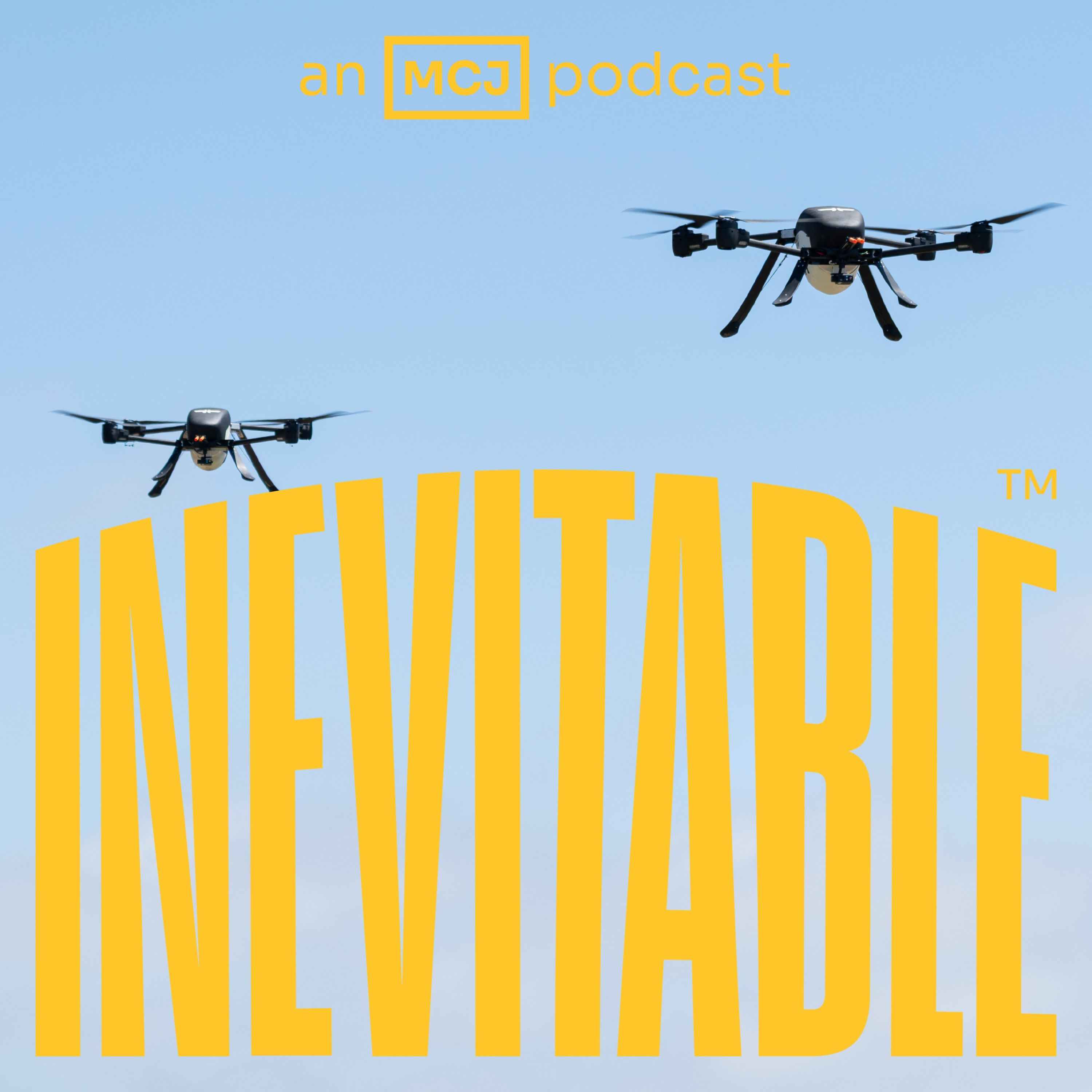
Inevitable
Autonomous Wildfire Suppression with Seneca
00:53:49
Stu Landesberg is Co-founder and CEO of Seneca, a company developing autonomous aerial systems to detect and suppress wildfires before they grow out of control. Designed for rapid initial response, Seneca’s technology deploys robotic aircraft that launch within minutes, helping protect homes, infrastructure, and communities in fire-prone regions. In this episode of Inevitable, Landesberg shares why he left Grove—his first company focused on sustainable consumer goods—to tackle what he sees as a civilization-level challenge: early wildfire intervention. The conversation explores how climate conditions, outdated fire cycles, and insurance market failures have converged to threaten life in the American West. Landesberg walks through Seneca’s approach to changing that trajectory: distributed strike teams of large autonomous suppression copters, built in the U.S., designed to reach fires faster than any existing response method. He also unpacks the product’s potential for mop-up operat...
Loading summary
Transcript86 lines
- [00:00]
A
Today on Inevitable, our guest is Stu Landesberg, co founder and CEO of Seneca. Seneca is building autonomous aerial fire suppression systems, effectively robotic firefighters in the sky, designed to launch within minutes, find wildfires early, and knock them down before they outrun ground response. The idea is to fill a missing layer in our firefighting infrastructure, the gap between engines that can't always get there in time and crewed aircraft that are scarce, expensive and not always immediately available for initial attack. Stu and I recorded this episode just after the one year anniversary of the LA wildfires. And a year later, the physics of the problem haven't changed. Wildfire is still a race against time. And once you miss the early window, you're no longer talking about suppression, you're talking about containment, loss and recovery. In this conversation, we dive into what Seneca is building, how it works in practice, where it fits operationally, and why early airborne response may be one of the most important unsolved problems in climate resilience. From mcj, I'm Cody Sims and this is Inevitable. Climate change is inevitable. It's already here, but so are the solutions shaping our future. Join us every week to learn from experts and entrepreneurs about the transition of energy and industry. Stu, welcome to the show.
- [01:48]
B
Thanks for having me, Cody. Great to be here.
- [01:49]
A
Well, it's great to have you back. For guests who maybe haven't put it together, you were here on the show a couple years ago, back when you were building a completely different company, Grove, which you took public. So congrats. Nice milestone there for you. As a founder, I'm sure I like to start these conversations by acknowledging why now? Like, why are we having this conversation now? I'm sitting here in Los Angeles. It's roughly one year after the anniversary of the LA wildfires, you know, which completely changed this city where I live. And I know you in Northern California experience wildfires all the time. And so here you are, a successfully exited founder who decided to go all in on the wildfire problem. Maybe share a little bit about what you saw and why this is the thing you wanted to do next.
- [02:40]
B
You know, it's interesting you call me a successfully exited founder. I think the mentality of using one's time to use technology to solve the world's most important problems is such an amazing gift. And moving from one project to another project is a really fun thing, but I don't think the mentality ever changes. And when it comes to Wildfire, and it's interesting, it's touched you personally. It's touched me personally in little ways. Like I'VE lost my home insurance and I'm grateful for the California Fair plan to big ways. You know, my father in law's house is only still standing because of the bravery of a bunch of firefighters in Santa Rosa. And when you go deep into this problem, it's a fascinating one. We look at Wildfire, I think often as something that's somewhat random and somewhat hard to control. And once you actually dig really deep, it's exceptional the quality of the people that we have working on this problem. And it's also incredible the amount of opportunity there was to apply technology to it. So the things that really moved me were tools, twofold. The first sort of my first company, for those who don't know, Grove is a sustainability focused consumer and e commerce platform. I've always cared deeply about issues of environmental resilience, sustainability and stewardship. And wildfire is absolutely a environmental problem. It's a human problem and it's also an environmental problem. And then more personally for hundreds of millions of people in the US and internationally, as we're recording this, there are huge fires in Australia, there's huge fires in Patagonia, there's fires around the world. This is a extinction level problem for civilization as we know it in the American west and many other fire prone places in Europe and around the world over the next 20 years. So it's one of those problems that is a real societal problem. It's an interesting climate problem and one that as a human being I want to keep living here. I love being outside with my family and so very motivated to go work.
- [04:48]
A
On this one extinction level in that people won't be able to afford homes in these places anymore because they can't get them insured. Unpack that one a little bit.
- [04:59]
B
Yeah, I mean, I use the word extinction to be deliberately provocative, but it's interesting. So when I first thought of Wildfire, I was like, oh, you know, like it's relatively random. And I know my own home insurance is apparently uneconomic, which is why the state had to step in and subsidize it. But if you look at what's happened over the last 20 years, not just in California, but many parts of the world that are prone to fire risk is we've seen risk levels go up orders of magnitude and we've seen fire intensity more than double, for example, in the last 20 years. And that's caused by a number of things. And it's interesting, in the fire community there's a real disagreement about the nature and impact of climate change. You don't have to be a climate person to really believe this, but it's objectively true that nighttime humidities no longer get as high as they used to. Winds blow faster, high temperatures are higher than they've ever been. All of those things obviously increase fire risk and when the fire is burning, increase the destructive nature. It's also the case that we have done so much suppression over the last several hundred years and really broken the natural fire cycle. And I can talk more about that in a minute. That there's so much fuel across our forests that when there is a fire, it burns much, much more intensely than our ecosystems are used to. And so you get much higher risk fires for a whole number of reasons. And we haven't made real advancements in the technology used to fight fires. We haven't put that much more sort of ground troops to work fighting fires. And so you get this situation where homes are burning down at rates far beyond anything that was true in the past. And if you can't stop homes from burning down, you can't keep home insurance in a free market, because fire, unlike flood, unlike hail, unlike a lot of hazards, it's a total loss. Right? And so if you can't protect homes from fire, you can't have home insurance. If you can't have home insurance, you can't have mortgage financing. And if you can't have mortgage financing, I mean, the American dream and sort of like life as we know it breaks down. And so when I talk about life in the American west being at stake, I very much mean that if you cannot buy a home in the American west, which for most people is functionally impossible without a mortgage, what is this? Half of our country, you know, never mind the hundreds of millions of people abroad who have the same problem. What is that going to look like? So when I look at this problem, I'm like, gosh, we've got 10, maybe 20 years to try to catch up to the rate of growth of fire risk. Otherwise we're going to sort of like, see. See the American Western expansion move backwards. Yeah. And that's just not an actual option. That could be on the dance card.
- [07:52]
A
Everybody get your Canadian visas ready. Right?
- [07:54]
B
And it is burning too, man. It's like the entire west coast, including Canada, is huge risk. Anyway, it's totally fascinating when you play this out five years.
- [08:05]
A
I saw a stat the other day on Twitter or X or whatever you want to call it that said that with the recent rains in California. California, for the first time in 25 years, there's not one mile of the state that is in drought, and our reservoirs are at something like 130% capacity. So how much of the wildfire issue was related to, oh, we had this extended drought that we may be recovered from now, and how much of the recovery that we just had is also because of extreme weather and too much rain, and we're likely to return to drought conditions in the future.
- [08:46]
B
Drought is and can be one of the big causes of fire. Interestingly though, the biggest fires tend to happen in years where there's a very wet winter. And so you get grasses that are normally 12 inches high or 18 inches high, and you get a really high amount of vegetation. And so it's a very wet winter followed by a very hot and dry summer and fall. And those are actually the optimal fire conditions. It's definitely true that after a really good rainstorm, fuel moistures, which is sort of like what you'd call the amount of water in the grass and the soil and the trees. When fuel moistures are low, fire risk is relatively low. But by the mid to late summer, fuel moistures are going to be low. And so the amount of fuel after a really wet winter can make fire risk high. Because if you think about it, let's say the fire starts because somebody's mowing their lawn and a rock hits the blade and a spark hits a piece of grass, and all of a sudden some fire that would have been a modest sized fire because there's tall grass everywhere is going to grow much more quickly and be much more dangerous. So if you had to choose, you know, full reservoirs or not, I think everybody chooses full reservoirs, but that definitely is not a proxy for low fire risk year round.
- [10:07]
A
You mentioned how a fire starts quickly, particularly if there's a lot of fuel around, it can grow very fast. As I understand it, that insight of like needing to quickly identify a fire and put it out as fast as possible is one of the insights that led to you starting Seneca, this notion that how can we help fire services around the country get on these issues quickly? I want to get into what is Seneca? What are you building? So I guess maybe give us the one liner and then we'll get into the physical description of the product and all of that. But I want to start with describing what happens today when there is a fire and how do fire services navigate that.
- [10:47]
B
The one liner for Seneca, which is the company I'm building now, is that we build advanced technology to equip the firefighter in situations that were previously unsafe, inefficient or impossible. Our first product, in practice, you can think about it as a small swarm, or we call it a strike team of five very large autonomous suppression copters. And you could call them drones and you wouldn't be wrong. But people think small things, and these are very large.
- [11:14]
A
These are big.
- [11:15]
B
They're heavy. Yes, yes. They carry over 100 pounds of Class A foam per aircraft. And so across the five of them, you've got 500 pounds of Class A foam. And we shoot that at 100 plus psi, so it expands about 10x. So if you think of 500 pounds of water, it'll play more like 5,000 pounds of water, which is about the same amount of suppression power as you might get from a Wildland engine. And so the reason this is our first product is if you want to solve the wildfire problem and you spend time with the most experienced chiefs and fire scientists, it's all about how do you catch the fire early? Fire grows exponentially, and every megafire started as a spark. What we built, you're like, okay, well, we need to catch the fire early. How do you do it? Well, you got to fly, because if you drive, you're going to take a circuitous route. You got to fly directly there. It, of course, needs to be autonomous, and it needs to be cheap enough, remotely deployable enough, that you can put these out across distributed infrastructure. Excuse me, in a distributed infrastructure way, where you say, okay, we know that there's really high risk in this part of the hills outside of la, where we may not have a fire station, we may not have trucks running all the time, but you can leave a strike team of firefighting aircraft out there, and as soon as you get the first detection signal, up they go. And they can be at the fire inside of five minutes. And if you bring effectively a full Wildland engine's worth of suppression to a fire within five minutes of detection, you've usually got a pretty good shot at. Even if you can't get what's called knockdown or knockout, which is effectively stopping the fire's progress, you can really slow it down in exponential growth. Just slowing it down counts for a lot. So that initial attack is the best shot we have at high risk fires, and the best shot we have at initial attack is through autonomous firefighting aircraft. And so that's what we built.
- [13:25]
A
What's the current state of initial suppression for a wildland fire look like? As I understand it, the Wildland firefighters have gotten very good at detection relatively, you know, a pretty substantial improvement over the last five Years or so with the advent of cameras and AI and the like. But you know this way more than me. And then maybe describe that kind of detection step and then what typically happens today.
- [13:55]
B
So when you think about detection, there are lots of different ways that a fire can be detected and almost all of them are relatively capital efficient and getting better all the time. Cameras you mentioned, but also sensor networks, satellite, and then of course there's hundreds of millions of people walking around with cell phones in their pockets all the time. And that still very much counts.
- [14:17]
A
By the way, a reminder to anyone, if you are driving down the freeway and you see a plume of spoke freaking call 911 exactly. It doesn't matter if you live there or not, just do it, do it. And you can't expect that someone else made that phone call.
- [14:29]
B
Well said. I appreciate you addressing the tragedy. It's not quite the tragedy of the comms, the bystander effect, but once you get that piece of information, you know, take my earlier example of, you know, it's a remote spot outside of LA which happens to have literally the best firefighting force in the world. The best funded, you could argue, the best trained. Chief Fennessy of Orange county, just I think two days ago became our nation's first chief of the federal Wildland Firefighting Service. Southern California has by any measure probably the best equipment for firefighting. Even for them in a remote area, it can take 20, 30 minutes to get a helicopter there. But if you look at, so that's what happens today.
- [15:14]
A
You fly like a, what are these probably 20 or 30 million dollars helicopters over to deal with the problem? Is that, is that right?
- [15:22]
B
30 plus million.
- [15:23]
A
30 plus million dollar helicopters.
- [15:24]
B
You know, if those helicopters are available, and in most places they're not because they're 30 plus million dollars, they require a helipad, they require a helitack sort of like base with pilots in it and mechanics. It's expensive to operate. And so most of the time, and if you think about the Paradise Fire, for example, that fire, there was no helicopter, right? It was a guy who drove out pretty far. It took him 30 plus minutes to get there, maybe more. When he got there, he had to get out of his truck and hike in to go find and assess the fire. And he's probably got a Pulaski, which is a tool they've been using for over a hundred years, that's half shovel, half ax on his shoulder. And if he sees a major incident, what's he going to do with like a, basically a shovel? Nothing. He's just going to radio and say, hey, I need support. And by the time the cavalry shows up, it many hours potentially, and you know, if you look at it at a high risk fire, especially in high winds, the difference between five minutes and two hours could be half an acre, which is something that our product could easily handle. And I don't know, 200 acres, 300 acres, right. Which starts to become what you'd think of as a major incident. Right. A real wildfire. And so the traditional response is it's just much slower than we would all anticipate because people are mostly using trucks and hiking in. And even if you have a helicopter, the expense and complexity of running them means they're very centrally located. You just can't get to stuff quickly. We looked at this whole problem and said, hey, detection is actually pretty good. What is the optimal piece of technology for initial attack? And we went ahead and built that.
- [17:09]
A
How a drone product. And we talk about, you know, with the LA fires, I know what the big issue was. Wind like crazy, crazy wind that day. Can you fly these drones in 50, 60, 80 mile an hour winds?
- [17:23]
B
Of course, it's just a physics problem. The first thing I said is we build products for situations that were previously unsafe, inefficient or impossible. And you know, wind is one of those situations that comes up every single time. If you think about it, people often know where the fire is going to be and they know which direction the wind is going to blow in, not like exactly where. But fire chiefs can say, hey, this is the broad area. And so you can easily station drones, even sort of like upwind of it, so that in the event of a fire, they're moving even more quickly. But there's this really powerful moment when I was doing research for the company, I was down in Orange county meeting with some of the pilots in their air ops division. And I was talking to this gentleman who was talking about 27 years surviving in the sky as he describes it. He's married and he has two little kids. And one of the things that he said to me is, I know there will be days where there are firefighters on the ground whose life may depend on me being in the air. There are families whose homes, whose whole livelihood depends on me getting in the air and trying to save them. And when the wind's blowing 30 to 50 miles an hour, I gotta think about those guys on the ground and I also think about my two kids at home. And you're like, whoa, that is a heavy choice. He's doing that for 12 hours at a time or some incredible test of human endurance.
- [18:52]
A
I live by one of the reservoirs here in la and it was the home base for the helicopters during the. For a while during the Palisades fire. And they were, it was like every two minutes were flying over my house to go suck up water from the reservoir and go drop it on the fire. And, you know, they're flying over mountains and in heavy wind with smoke. It's crazy.
- [19:12]
B
Oh, yeah. And there are too many fatalities every year for helicopter pilots in the fire service. It's a massively dangerous job. So the Seneca product, there's a saying, no one cries when a drone dies. And that's true. And so we always want these products to be sent in because if we can take that human out of the loop, hopefully we can operate in situations that are too risky for humans. But we can also operate right on that borderline where 99 times out of 100, the pilot comes home.
- [19:42]
A
So let's be clear. Right now you're focused on initial attack, right? So in a world where the Palisades fire was already hundreds of acres and there were helicopters every two minutes flying by my house to fill up, that's not a Seneca problem. At least with today's product, you would be focused on that first 15 minutes of when the blaze first happened and trying to put it out so it doesn't become a large blaze.
- [20:03]
B
You know, one of the best things about technology over time is the person who creates the technology has this idea in their head of, here's how it's going to get used, right? Like, I mean, you can think of this as everything from sort of like X slash Twitter to like the Internet, right? Everyone's like cat pictures and turns out, no, that's not exactly what the Internet's going to be used for. But for us, you know, we built with the idea of distributed technology that can get to fires more quickly than anything ever in history, and in that way help to create a new harmonious fire cycle by eliminating the wildfire risk. Right, because you can get there early enough and also being useful in prescribed burns, et cetera. But so you build this piece of technology, but in practice, you then hand it to a customer, to someone who's been fighting fires, and there are hundreds of uses. If you think about the Palisades fire, it was almost certainly a reignition from a fire a week earlier. And so for those who don't know, after fires put out a fire, they do something called mop up. And what mop up is this Is true. Literally the firefighters will walk shoulder to shoulder through the burned out area. Sometimes they'll like crawl through it on their hands and knees and look for warm spots. And when they find a warm spot, they sort of like put it out completely so that if the wind blows, if the weather changes, there's not a reignition event. And if you think about that, makes tons of sense to do, of course, but it is insanely labor intensive to have guys crawling through like the giant burn fields. And if you are in a high risk area like Southern California in high risk weather, and you've got a limited number of firefighters, you have to make rational trade offs of like I've got to active fire over here, I've got guys doing mop up over here. You know, which of those has to be higher priority. And so I think people made really good decisions with the knowledge they had the time. But mop up is just really time intensive. And if you look at that same problem with technology, you say, well, it can easily hover overhead in an aircraft, find the hotspots with an IR sensor, dispense effectively firefighting foam onto those hotspots, which both creates like a little protective barrier and will cool them down. You can fly the same area again in an hour and see if they're actually cool. And you can cover so much more terrain than you could with people. And so the resource intensity of things like mop up goes down. Prescribed burns really important for those of your listeners who are deep in sort of how fire research works. Right, prescribed burns, really important. I talked earlier about the fuel loads on the ground. Right, that's important. And there's a very real, I think, push from many environmentalists like hey, over suppression is bad. Fires historically been a part of the natural environment. All that was true when environmental conditions were different. Right now suppression is important, but in order to do controlled burns, you need to make sure they don't get away. Unfortunately, several of the biggest fires in the last 10 years are escaped prescribed burns.
- [23:14]
A
I visited a family piece of land in New Mexico recently that the burn scar came within 300 yards of the house and it was a prescribed burn gone wrong. Like it wiped out hundreds or thousands and thousands of acres in northern New Mexico.
- [23:31]
B
Yeah, that's exactly right. And the way that often happens is an ember jumps over the containment line and at that point you've now got two fires. And it's really dangerous for a firefighter to go get that second fire because he has to put himself between like live fuel and the fire anyway. So that's a really dangerous fire, but it's actually trivially easy to hit that from the air. But to my earlier point about helicopter cost and availability, you're not going to have helicopters at all these prescribed burns, but the marginal cost of flying an electric aircraft is zero.
- [24:02]
A
So are you already feeling some pull in the use cases of your product from the fire services to not just be first 10 minute suppression, but also to be sort of management of these hotspots and sort of, what was the phrase you called it?
- [24:17]
B
Mop up.
- [24:17]
A
Mop up. The mop up, duty post fire.
- [24:20]
B
We show this to them and it's very cool. One of the things we'll do with fire agencies is we'll come and visit them and we'll bring an aircraft and that's good fun. And then we'll light a fire at our flight range in Petaluma and we'll have the fire agency and wherever we are, Colorado or SoCal or wherever, they'll put out the fire in Petaluma. Through our app. We use an iPad, so the screen is bigger, but you can do it on a phone through the app. They'll put out the fire with like an autonomous aircraft. And it like, it's kind of mind blowing. But you show them this and they're like, oh, well, I could use this for inaccessible areas. I could use this for verification, right? If there's somebody reports smoke on a ridgeline, how are you going to get up there? You got guys like hiking up for an hour potentially, and then they're off. Other calls for however long it takes them. It's really hard. They look at as they can use it for heavy lift operations, right? On a fire, you got to move pallets of water and tons of gear and medical supplies all the time. And we talked about mop up, we talked about initial attack. Most of the firefighting aircraft in the country are not night ops capable. And so at night, traditionally what you did was you hoped that humidity would go up. And you talk to a firefighter day, you say, what do you do at night to fight the fire? I go, we go in there. How do you do it? I have a single spotlight on my headlamp. You're like, that's it. You're like in the forest fighting a forest fire with a headlamp on.
- [25:46]
A
Wow.
- [25:47]
B
And there's no air support. But obviously the robots don't care if it's day or night, Right. The LIDAR doesn't care, the IR cameras don't care. So being night ops capable is Something that we built accidentally would be the wrong word. But it's sort of like an emergent quality of it being a robot that day or night doesn't matter. And so you have all of these really interesting things that fire professionals and utilities and ranchers and HOAs, et cetera, like about the product. When fundamentally we just wanted to build something that would act autonomously, it ends up being that utilities will say, hey, if I've got a solar array and wire fails, I can lose a billion dollars of infrastructure and cause a giant fire. And there's a lot of electrified wires on solar fields and how are you going to get to it quickly? You can't get a fire engine down. Most solar farms in between the panels, there's hundreds of thousands of miles of PG&E wire in hard to access areas. And not just in California, Nevada, Montana, Colorado, et cetera. All of these stakeholders who really care about fire find different ways that they can put to work, sort of like an autonomous firefighting robot. It's fascinating to watch the industry grab the technology and find ways to use it.
- [27:10]
C
Hey everyone, I'm Yin, a partner at mcj, here to take a quick minute to tell you about the MCJ Collective membership. Globally, startups are rewriting industries to be cleaner, more profitable and more secure. And at mcj we recognize that a rapidly changing business landscape requires a workforce that can adapt. MCJ Collective is a vetted member network for tech and industry leaders who are building, working for or advising on solutions that can address the transition of energy and industry. MCJ Collective connects members with one another with MCJ's portfolio and our broader network. We do this through a powerful member hub, timely introductions, curated events, and a unique talent matchmaking system. And opportunities to learn from peers and podcast guests. We started in 2019 and have grown to thousands of members globally. If you want to learn more, head over to MCJ VC and click the membership tab at the top. Thanks and enjoy the rest of the show.
- [28:11]
A
A question I have, you know, you've talked about autonomous. Like these systems aren't. Are they fully autonomous or is there a field operations manager essentially driving them or controlling the swarms from a remote station?
- [28:25]
B
So one of my favorite business isms is like the Brian Chesky seven Star Experience. You know, as we talked about, I'm a consumer founder originally, so I think about what would be the seven star experience for some firefighting robot as opposed.
- [28:40]
A
To a five star? Like seven star is like.
- [28:42]
B
Yeah, exactly. Exactly. Right. Five star.
- [28:44]
A
Way, way, way better.
- [28:45]
B
Yeah. So what's a Five star experience, like oh well, you know, I can like use the like the joysticks and control it and it does what I expected to do and you know, it can dispense on the fire and help me target or whatever. Actually it's really hard to sort of like by hand to target, especially in the wind. So maybe that's a four star experience. Three star experience is like it takes up but it's like not super reliable and sometimes I feel unsafe because again, these are like 12 by 12 multi hundred pound aircraft. You put your arm in the propellers, you'll lose it. They're big machines. So a three star experience is like took off, sort of did what it's supposed to do. Four stars, you can pilot it, right?
- [29:22]
A
Three star experiences. You drove this 100 pound machine up and you were trying to save a home and it drove itself through the roof of the home and now you got a real problem.
- [29:30]
B
Well that's probably a one star. Okay, but so like a five star experience is like, oh like it's got guidance to help you fly it and it like helps find the fire and you can like do that and then you need to be a pretty trained pilot, but you can land it. So what's a six star experience? A six star experience is probably that, well, you don't need to be a trained helicopter pilot because there's a shortage of helicopter pilots. You don't need to be a trained helicopter pilot. And instead of costing $15,000 an hour to operate like most helicopters that's basically free to operate. And instead of being hard to find the fire, it can use the sensors on board and do a bunch of calculations to get a pretty good shot at the fire and to account for wind reasonably well. And so it sort of feels like magic to the pilot. It's that easy to use. And then what's a seven star experience? A seven star experience is that it can connect automatically to dispatch and as soon as it knows where the fire is, the aircraft to just take off autonomously will fly there. They know the no fly zones, the stuff that you're supposed to fly around, they'll fly to the waypoint. Probably you don't know exactly where the fire is, right. Somebody calls in, there's a fire on the hill, and the aircraft is smart enough to say, hey, I can use my onboard sensor package to see the smoke autonomously, navigate to the fire and give the pilot in command the ability to override or make changes or change the view. But the aircraft will just autonomously go and knock out the fire. And an eight star experience is it gets there and it can tell the difference between a spot fire, which is sort of like you can think about a spot fire as being like sort of like a fire that's a circle and not that big, almost like a giant burn pile type fire, and an early start in like a grass fuel model which will have like a fire front. You know, if the prior is you want to sort of put out a spot, this is like you want to put out a line and the aircraft will know the difference and coordinate themselves. And a nine star experience is that that aircraft then lands, recharges and refuels. And anyway, some of that stuff is in the future and we can't do it. But you know, we can get from, you know, the five star experience you might be used to, from using a DJI drone or whatever, up to a six or seven star experience. Right. And that's why there's so much autonomy built in. It's absolutely human, pilotable, and a pilot can always override for safety. They can override for any number of reasons. But fundamentally to deliver that seven star experience where you can take someone with safety training plus 5 or 10 minutes of training on the app, and if they have the right certifications, which take a few hours to get, they can now control a strike team of aircraft really effectively that goes above and beyond and starts to feel like magic. It's a seven star experience for the customer. It's also much, much more effective. So anyway, yes, there's a really high amount of autonomy, even though we keep a pilot in the loop.
- [32:26]
A
Before you just answered all the seven star sort of experience items, the next set of questions I was going to ask you about is like, what is it about Seneca that is unique from buying an off the shelf drone and retrofitting it with some kind of payload to do fire suppression that you couldn't just use a DJI drone from China. I have to imagine fire departments are experimenting with these things. You know, it sounds to me like one of the big value adds that you're bringing is the software package and the controls and building solutions directly for firefighting into the UI that these fire departments are building. Because they're not software companies, they're not able to build all of those controls themselves into their solutions.
- [33:11]
B
There's two points here. The first is you should think about these as small helicopters, not drones. Right? So the camera drones that DJI is well known for, there are a number of other folks who make are valuable tools. They're really Sort of a different class. This is more like a firefighting helicopter than it is a camera.
- [33:30]
A
And again, maybe on that point we didn't even really describe the physical product, but we said they were heavy, but they take multiple people to move them. Maybe describe the layout of them quickly.
- [33:39]
B
For folks, go to seneca.com, check it out. But they're large quadcopters and they carry. The overall weight is somewhere between 250 and sort of 350 pounds. You know, they carry like I talked about 100 plus pounds of class A foam.
- [33:55]
A
The bodies are what, a few square.
- [33:56]
B
Feet wide, 12 by 12. When the arms are all the way out, you know, when they take off, they're loud and imposing and it's a helicopter taking off carrying a few hundred pounds. It's sort of like a little bit more than the footprint of like a Volkswagen Beetle, if you think about it that way. It's not shaped like a car, but it's basically that footprint, almost like a parking space is, if you think about the size. Yeah, they're quite imposing. And so they're very different than the camera drones. We also have just made an insane choice as a society to let China control our drone infrastructure. Right. There's almost no version of the world and we're getting smarter about this. There's no version of the world where autonomous aircraft are not more important than they are today. There's no version of the future that doesn't see more drones of every type. And we need to get good at building those in this country. Just P0 the Chinese supply chain, I'll describe it as unreliable for many number, like any number of reasons. But even just as someone who loves the country, we have to be good at building these in the U.S. can you imagine? There's a big fire, you're relying on this technology and for whatever reason, there's some entity abroad that can just prevent our most critical technology from functioning. I mean, give me a break. That can't possibly be how we're going to build actual resilient infrastructure. So, I mean, we're very proud to make it in the US and very proud. I don't want to describe it as a side quest. Right. This is a core part of our reason for being is sort of like American resilience. And I think a real part of that is how do we get good at this industry in the U.S. on.
- [35:34]
A
That side of things, I mean, such an important topic. You're manufacturing and assembling in the U.S. are you able to source your supplies to Build this from the US Are you still relying on China for most of the motors and things that you need to actually assemble the drone, the aircraft? I will no longer call it a drone, as you've described it, the autonomous suppression copter.
- [35:56]
B
Exactly. The autonomous suppression copter, yes. Don't call it a drone. It gets offended. It depends on how deep in the supply chain you look. If you think about when you buy a motor even from an American company or a battery with an American supply chain, at some point did some of the rare earths or some of the magnets come from China? People may say no, but maybe they came from Cambodia, which doesn't mean some of the physical metals you just cannot get in this country. Mercifully, most of the thinking and sensing components you can. And so we have a very NDA compliant, sort of beyond NDAA compliant approach, which is not just made in America, but proactively. We will source to the fullest extent possible, every component from the US and in the very few cases you can't, will source from allied nations. But you know, you think about a company like Nvidia, clearly an American company, some of their chips are made in Taiwan. And so there's a very global supply chain. But there's also no question that, you know, this is an America first product.
- [37:03]
A
So that may mean that right now your total bill to materials is more expensive than it would need to be, but you probably also are not seeing selling to extremely price sensitive buyers, is that right? It's not like you're selling a commodity product here.
- [37:19]
B
Like, it depends on how you think about it. It's as expensive as it needs to be to deliver the level of reliability that our customers are counting on us for. It's like nobody would buy a smoke detector that they're like, oh, by the way, this is controlled by an entity that you may or may not like your country, and in a pivotal moment, they could potentially turn it off. And relying on foreign technology in a world that is geopolitically unstable is not that dissimilar. So I would say that sure, there are cheaper products on the market and they feel less expensive until they don't work, and then they're much, much, much more expensive. And so, like, there's an expression that quality is free for those willing to pay for it. And I think that in a product that in many ways really is the difference between life or death, you have to build that reliability is more than worth it. And that means not just, hey, does the software work? But is that reliability built into every step of the supply chain.
- [38:21]
A
If you take that logic further out, you have started with a target market where you know there's urgency and you know there's not really a solution on the market and you're building an American made large flying vehicle. Do you see there being dual use implications for the company in the future where it's not only used for fire suppression but is used in defense broadly?
- [38:50]
B
You're not the first person to ask about that. But when I look at the fire issue, there's trillions of dollars of American real estate at high fire risk. Today that number is going to go to tens of trillions. And I think about the best way that we can protect this nation is to protect its communities. And it is almost certainly not lost on terrorists and our adversaries that the Palisades and Eaton fires, the LA Wildfire complex that did a heck of a lot of damage with a couple of matches, basically they weren't sort of started with a match, but you know what I mean.
- [39:27]
A
Yeah, it creates a roadmap for arsonists who want to do a lot of damage, that's for sure.
- [39:31]
B
When I think about the most important things for our country, to me, protecting the American west from fire. And look, there's a big fire in New Jersey last year, right. Like. But protecting the high risk places across our nation from fire is to me at the top of the list. And I don't think there's a company better positioned in the world to make that impact. And unlike many of the other problems that you look at, hurricanes or floods or many of the geopolitical things, you sort of cannot solve them with technology. But fire actually is a problem where you can use technology to. I don't want to say you can 100% solve it, but you can get damn close. You know, for the people listening to this podcast who are thinking about like, what field should I come work in? Fire is one where incremental technology can help turn the tide on this more than almost any other thing. So a Seneca.com careers hiring across the board. B I know I'm not doing my job if I don't make sure to throw that out. For sure it's a great company. You should come work for it. Amazing. I tap dance to work every day. Could not love working on this problem more. When I think about our focus. I am really privileged to get to serve the country in this way and I view it as a absolute P0 problem and one that we're going to be able to make very real progress on in the next several years. Right. Not just in our lifetime, but like in the next couple turns to the crank.
- [40:55]
A
Let's go from that down to a few more specifics about the company. You are selling the product as a physical piece of hardware today to fire departments. Like what does the actual business model of Seneca look like right now?
- [41:11]
B
So different customers want to operate it differently. But the product, as you said, it's the physical product, it's the basic module is five aircraft strike team and then either a mobile launch vehicle, which people can use to sort of transport the aircraft to high risk locations. You can move them from mop up. We talked about all that before or so remote launch deployment, where you can put this out in the field in your high risk places. We bring our own WI fi, we bring our own solar power. And so as soon as there's any type of incident, they autonomously dispatch and cover the sort of surrounding 50 square miles in certainly under 10, but in many cases under 5 minute response time. You know, the customer set is, as I mentioned, it's fire agencies who tend to be. They're fire professionals. Right. So they're the tip of the spear. They're the Michael Jordan in the category. But also you see utilities, some of the most forward thinking HOAs which have really want to protect their residents and also are in really high risk areas. And then there's distribution and generation on the utility side. You know, we got a call from a rancher in New Mexico who just stumbled onto our website and was like, hey, you know, I have 10,000 acres, I've got no way to keep it safe.
- [42:24]
A
I hear of high value agriculture, like vineyards and stuff. I would assume are interested in this technology too, but it sounds like you would allow groups like that to operate them. Is there a airspace regulatory issue with that?
- [42:38]
B
Yeah, we navigate all of the airspace stuff. It totally is a very interesting web. But I'll say first shout to the faa. We found them to be great partners. I feel like the FAA has a reputation for being challenging. We found them to be great collaborators and we recognize that part of our job is handling the complexity of who gets priority in the airspace. How do you make sure you operate safely around manned apparatus and in a coordinated fashion. And so that's part of the value that we bring to our customers.
- [43:08]
A
The last thing you want is a private citizen driving one of these things into a Fire Service $35 million helicopter during an active incident. Right. Like that would be a disaster.
- [43:18]
B
There are so many ways in which that would be. I don't want to call it impossible, but just like the sort of aviation where five or six things would have to go materially wrong for that type of incident to ever happen. Maybe seven or eight or ten things would have to go wrong for that type of thing to ever happen.
- [43:35]
A
It does happen with stupid camera drones today, which is just, well, they don't.
- [43:38]
B
Have any of the protections. I mean, I don't need to run through, but there's like 10 layers of deconfliction to make sure that there's never an incident, especially, God forbid, a civilian. But like, even between a capable firefighter pilot and manned apparatus. To the earlier point about sort of like what is the eight star experience? It's hey, I can put one of these in a place and trust if I'm a helicopter pilot that I understand how it's going to behave. It's not going to overlap with me in terms of flight path, it's not going to come into my flight envelope, et cetera, et cetera. I'll always know where it is. There's lots of different elements to that. And in general, like, would we let a utility buy? I mean, of course, right? It's good. Utilities start fires that create a hugely disproportionate amount of the overall damage. Of course we want those folks having them and so do the fire agencies. The more density we have of early response, the better for everyone.
- [44:33]
A
What does scaling up look like for you?
- [44:35]
B
So it's an interesting question. Scaling up can mean a bunch of things. The first is it all starts with really great people. And I have long believed that valuable mission attracts the best talent in the world. And I think fire is something that have touched so many people personally that we've been lucky to find many of the most talented people I've met in my life feel called to see if we can use technology to reshape humans interactions with fire. You know, scaling is all about the right people first and foremost, and we're really lucky to have an exceptional team. The second thing I would say is we're really committed to building in America. You know, our production facility and our office are right next to each other and our flight range is 20 minutes up the road and all of those are just outside San Francisco. We are scaling to a point where we can produce certainly a double digit number of aircraft in house in California by the end of the year. Sorry, double digit number of aircraft a month. And we're doing all the stuff, buying the machines, hiring the people, building the test protocols to make sure that we can do that. So we've gotten really, I think a better reaction from our customer groups than we could have hoped. And so now it's about making sure that we can deliver for them the seven star experience product. It should be, one of my friends says, a jaw dropping customer experience. We have that effect today and we want to make sure that people have that experience every time that a Seneca aircraft is deployed.
- [46:07]
A
And where are you today in terms of deployment? Are there fire agencies who have actively purchased and have them on the ready or are you in manufacturing and initial delivery mode on your first set of orders?
- [46:19]
B
So we've flown in partnership with agencies in California, Colorado, Wyoming and a number of other states. We will see them on fires for the first time this summer. We can't yet talk about exactly where, but we certainly do know where the first handful of deliveries are going and I am excited to talk more about that in the coming weeks.
- [46:41]
A
And you announced, I think last fall, like you guys raised a big chunk of capital before the company had even been announced. Like you basically built the initial business in stealth. Maybe describe a little bit about how you financed the company to date.
- [46:55]
B
That's right. So in October we announced a $60 million startup financing which is the largest venture capital around ever in fire technology. The partners we have there, you know, a big shout to my partners at Convective Capital, Caffeinated Capital, first round transition bullpen. Oh my gosh, I should read through the like whole list here. But we're lucky to have really an extraordinary set of capital partners, many of whom I've worked with before for many years. And you know it's interesting when you look at especially aviation based technology companies, a lot of them are second time founders. Right. You've got Elon and I'm not comparing myself to Elon, but it certainly helped in SpaceX that he had a track record and capital partners who were able to back him and sort of the confidence and risk appetite to take that kind of bet. And you look at what Anduril has done, right. Palmer Luckey similarly had a really great base of experience to raise a really good capital base and the risk tolerance to go into aviation. And I think we're lucky to have a lot of those same ingredients here in a really, really experienced founding team. My co founder on the technical side, Nick Foley, he sold his last company to Uber and we're able to bring in enough capital that we can move really aggressively and be well resourced to take the right risks to build the best product in the world. And also make it the best place to work for the brilliant technologists who have their choice of problems.
- [48:23]
A
You mentioned Anduril, and that's how I think of you a little bit, is like you're building the Andoril of firefighting. Is that a terrible analogy?
- [48:31]
B
That's a fine analogy. We also think a lot about Palantir, right, who's done a really nice job on the software side in particular, and you mentioned it. We think of ourselves more as a software company than a hardware company, but it's sort of like, is your brain or your heart more important? I don't know. And so we look at what's been done for the military, I should say, in partnership with the military, by forward thinking Silicon Valley companies. And we say, gosh, those folks, men and women of the military, put their lives at risk to protect the way of life that we all enjoy. But interestingly, fire has done more to harm American cities than any foreign adversary in the last 50 years. Firefighters are also asked to put their lives at risk. And we need to bring them the same type of innovation as we've seen for our armed services. And that's a big part of the thinking.
- [49:24]
A
You know, one thing we haven't even hit on is the emissions impact of fires. You know, you talk about it's harm to American cities, but when we talk about climate change as well as I understand it, these giant megafire, I mean, fires have been around, you know, since the dawn of time. But these giant megafires are a new phenomenon and from an emissions perspective have a notable footprint.
- [49:47]
B
Yeah, I mean, fires today are not the same as fires 100 years ago, indigenous fires, or if you were ever in like in Australia and the Outback, you see the really low intensity fire that's sort of like almost always burning. Those are really, really different than the mega fires of today. And so there's a lot of different stats. I think I've seen somewhere between 8 and 20% of global carbon emissions come from wildfires in California. All of the energy improvements of the last 20 years, I think, get wiped out like every wildfire season. If wildfire was a country, I think it'd be like the third biggest emitter behind China and the US. We deliberately do not position or think of ourselves as a climate company. One of the really wonderful and interesting things about wildfire is it's one of the few places where dealing with the symptoms also helps deal with the cause. And so to the extent that you believe that increasing climate, excuse me, carbon emissions leads to a warmer climate or lower Humidities, especially nighttime humidities, et cetera, et cetera, then reducing the carbon emissions from wildfires can also help. Reducing wildfires. You're dealing with a symptom, but also the elimination of that symptom helps to ameliorate some of the real root causes in terms of temperature and humidity change. It is a very real emissions issue. And, you know, I feel like emissions get all the attention when it comes to environmental stuff, but habitat loss, the chemicals and poisons that flow into our water every single time that there's an event, you know, the cancer rate among firefighters is 20 times or something. Insane number. The normal population, I can't even imagine. These are dangerous things. They're very real.
- [51:29]
A
I am nervous to go to the beach in Malibu right now because I still don't know exactly what's going on with the water there. There are way more coyotes in my neighborhood now than there were a year ago, I assume because they've lost a lot of habitat. I'm seeing these things in my real life, given the fire that happened here a year ago.
- [51:48]
B
Nature is powerful, man. We can act like we are more powerful, but nature's always more powerful.
- [51:52]
A
Stu, this has been super interesting. Anything else we should have hit on that we didn't talk about?
- [51:58]
B
I talked a little bit in the very beginning about how, like, we've got a relatively narrow window to solve this problem. But I also think that's a blessing if you believe that necessity is the mother of invention. And no pressure, no diamonds, whatever. Silly saying you use. It is absolutely the case that you gotta go long humans. Like, you gotta go long humans. We are not going to lose this fight. And if you believe that it is the work of the next couple of years, that is going to be the defining work of. Of solving this problem that I think will affect every person in the US Whether we like it or not, in the next decade. And there are a relatively small group of people who are devoting their life force to this problem right now in a way that we know the secret that it's going to be a bigger problem in 10 years, and like, fuck, this is the time to work on it. And it feels like such an incredible privilege to get to work on a problem at this scale, at this moment and know, hey, you know, we are. If we do our job really well, the bad version of the future doesn't come to pass. You can really bend that arc. So it's that urgency and that scariness. Like, if you believe in humans, if you believe that we can, like, build things that change the future, then that urgency can actually be a really good thing. And it's something that energizes me every morning when I wake up and come to the office. And it makes it a real privilege to get to work on this problem. And I suppose actually the final thing that I should say is the other thing that makes it such a privilege to get to work on this problem is the men and women of the fire service and the folks who work in fire related positions inside a bunch of the utilities and other big companies, but especially the firefighters. I mean, those people are true heroes. Building a product that serves that group of individuals who are, to a person, self sacrificing, kind, community oriented. You ever meet a mean firefighter, it's like, my gosh, these people are incredible humans. You know, every time I present to a group of firefighters, I've never really risked my life the way you all have. Anyway, it is a really wonderful community to be a part of and really urgent and exciting work. So I appreciate you having me on to talk about it.
- [54:10]
A
Well, thanks for dedicating yourself to solving this problem for all of us.
- [54:14]
B
Privilege Stu.
- [54:15]
A
This has been awesome. Thank you.
- [54:17]
B
My pleasure.
- [54:19]
A
Inevitable is an MCJ Podcast. At mcj, we back founders driving the transition of energy and industry and solving the inevitable impacts of climate change. If you'd like to learn more about mcj, visit us at MCJ VC and subscribe to our weekly newsletter at Newsletter MCJ vc. Thanks and see you next episode.