← Inevitable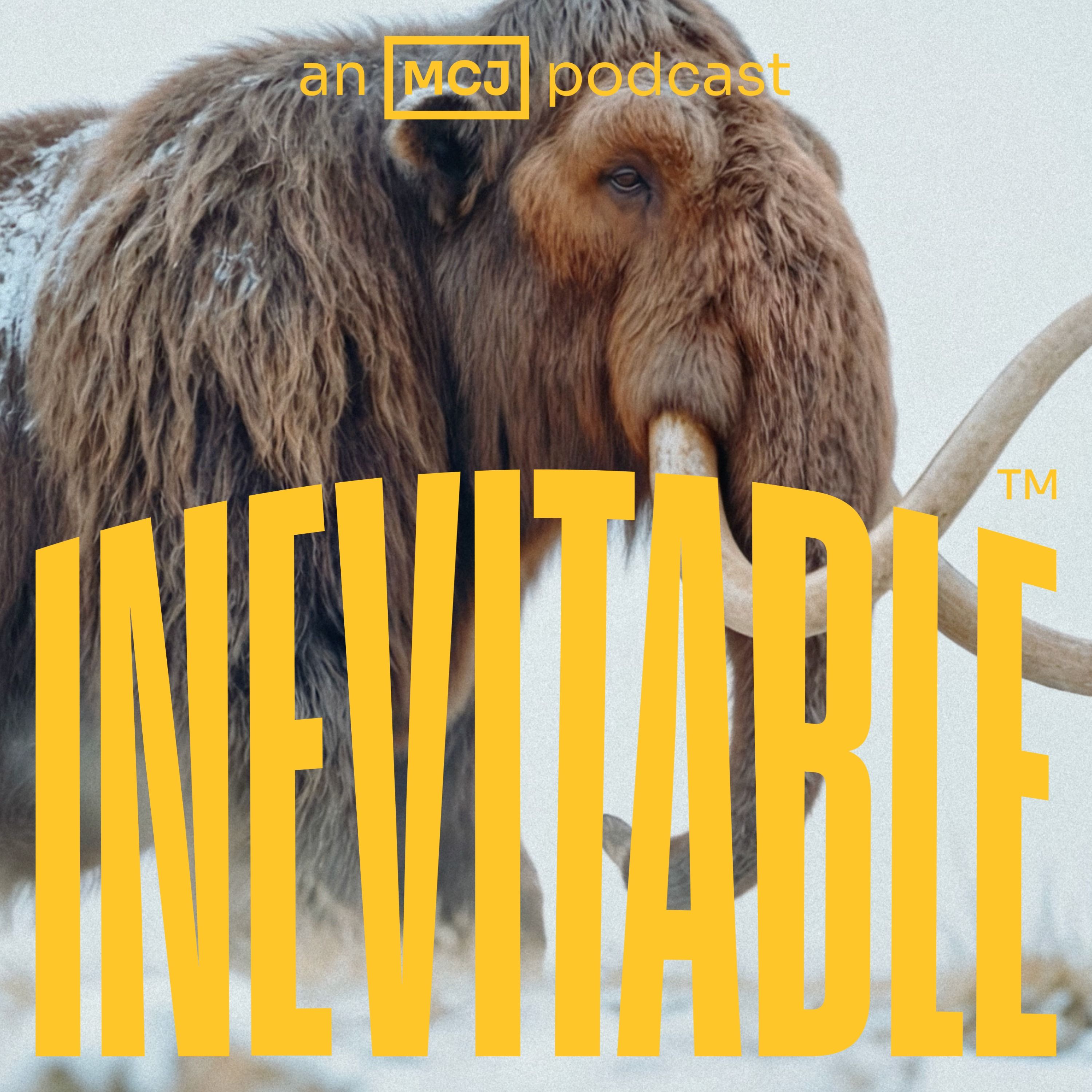
Inevitable
De-Extinction as a Platform Business with Colossal Biosciences
00:46:05
Ben Lamm is CEO and Co-founder of Colossal Biosciences, the world’s first de-extinction company. Colossal has raised more than $400 million at a valuation north of $10 billion to bring back extinct species using synthetic biology and genetic engineering. Just this year, the company unveiled the first dire wolves born in 12,000 years, created woolly mice with mammoth-like fur, and remains on track to see woolly mammoth calves by 2028. This conversation explores Colossal’s end-to-end platform approach, from ancient DNA recovery to multiplex genome editing, and why Ben sees de-extinction not just as science fiction come true but as a venture-scale business that spins out companies, partners with governments, and raises profound ethical questions. We cover polarizing public reactions, the conservation potential of rewilding keystone species, and how synthetic biology and AI are accelerating breakthroughs once thought impossible.
Loading summary
Transcript130 lines
- [00:00]
Cody Sims
Today on Inevitable, our guest is Ben Lamb, CEO and co founder of Colossal Biosciences, the world's first de extinction company. Colossal has raised over $400 million at north of a $10 billion valuation to bring extinct species back to life using genetic engineering, synthetic biology. Just this year, they successfully birthed the first dire wolves on Earth in 12,000 years. Three pups named Romulus, Remus and Khaleesi. They've also created woolly mice with mammoth like fur and are on track to have woolly mammoth calves by 2028. I will pause to let all of that sink in before I continue. We're living at a time when the science fiction we grew up with is actually happening around us. I don't need to point out the obvious Jurassic park plotline and what Colossal is doing, but it's impossible to not do so. De extinction fusion breakthroughs, self driving cars, quantum computing, cloud seeding, glacier refreezing, carbon capture. Technologies that were crazy or totally theoretical ideas when I started working in tech now are showing up all over the venture landscape. Ben exemplifies this shift. He and I have known each other for over a decade. Back when he was building gaming and creative studios, he's had five successful exits before diving into synthetic biology with zero prior biotech background. What fascinates me about this conversation is how Ben is building a venture scale business around what could have been pure research. Colossal isn't just bringing back extinct species. They're creating a platform that spins out companies, licenses IP and works with governments on conservation projects. And it also raises bigger questions. What is the role of breakthrough technologies in solving climate and biodiversity challenges? How should we think about R and D relative to deployment of known solutions? What risks are involved in technology that has great potential and also can deeply disrupt the known order of things? Regardless of what you think of what Colossal is doing specifically, synthetic biology is clearly happening. And AI and quantum computing are only going to accelerate progress in this field. So I'm of the mind that we need to understand it better. In this conversation we also explore the polarizing nature of this work, the dual use implications, the ethical questions and how you lead a company generating such intense reactions. But also what it means to be pushing the boundaries of what's scientifically possible. From McJ, I'm Cody Sims and this is inevitable. Climate change is inevitable.
- [03:12]
Ben Lamb
It's already here.
- [03:14]
Cody Sims
But so are the solutions shaping our future. Join us every week to learn from experts and entrepreneurs about the transition of energy and industry.
- [03:30]
Interviewer (possibly a host or co-host at MCJ)
Ben, welcome to the show.
- [03:31]
Ben Lamb
Hey, thanks for having me you and.
- [03:33]
Interviewer (possibly a host or co-host at MCJ)
I have known each other for, gosh, I don't know, 12, 13 years, something like that.
- [03:37]
Ben Lamb
An eternity in startup world. So probably like 6 to 700 years in startup world.
- [03:41]
Interviewer (possibly a host or co-host at MCJ)
When we met, you and I were both doing totally different things than we're each doing now. You by an order of magnitude doing something different. So we're going to get into a little bit of your entrepreneurial history and journey and all that. But I want to start with, I think just frankly, like, drop the shock and awe on us. You guys are trying to bring back woolly mammoths, you have brought back dire wolves, and you, oh, have created this like new species of mouse in the process. Like walk us through the big hitters. We're going to start there and go downhill from there. Probably on the interview.
- [04:14]
Ben Lamb
So colossal is the world's first de extinction and species preservation company. And our goal is to build out the end to end system so that we can help preserve existing life through things like biovaults and others, as well as open source technologies for conservation and then also have the end to end system that we can bring back some life. Right. The goal of reintroducing them back into the ecosystem and whatnot. And so now we have publicly four flagship species like the woolly mammoth, the Tasmanian tiger, also known as the thylacine, the dodo and the moa. We just recently announced that with the Ngi Tahu Research Center, a part of the Maori Tribal organization in New Zealand, as well as Sir Peter Jackson who made Lord of the Rings. It's not a terrible job that we're working on here, right? And then earlier this year it was funny, we're at south by Southwest and we launched and announced the woolly mouse, where we took and edited, you know, all of the coat, the mouse equivalent of the coat color and coat texture and coat length genes from that of a woolly mammoth into that of a mouse. And made the woolly mouse, which is objectively super cute, we made about 36 of them. We took two of them out of the vivarium and showed them to the world, named them Chip and Dale, which was just dumb and stupid. And they got like crazy popular. And so I remember at south by, everyone just losing their shit about Chippendale. And I was like, well, they're going to really lose their mind about our dire wolves. And so then fast forward three weeks later, four weeks later, we showed the world the first dire wolves that have existed in 12,000 years, which is insane.
- [05:47]
Interviewer (possibly a host or co-host at MCJ)
And so wait, you can't move on from that. That is fucking insane.
- [05:52]
Ben Lamb
It's not.
- [05:52]
Interviewer (possibly a host or co-host at MCJ)
We have a show here where we can say whatever we want. I usually try not to drop F bombs, but like what the hell.
- [05:58]
Ben Lamb
Yeah. You know what we showed is that on our mouse project that we built a computational biology core, we built cellular engineering core, we built an ancient DNA core, built a genetic engineering core, and we built a very big animal husbandry group. And so we showed that this end to end system for implementing edits based from our computational analysis of ancient genomes or existing genomes can work and can work really quickly. And so the direwolf project was only an 18 month project. So we went from a 73,000 year old skull and a 12,000 year old tooth to puppies in 18 months, which was crazy. We got hundreds of billions, literally hundreds of billions of media impressions, like 22, 25 thou, I don't even know anymore. We stopped looking 25,000 plus stories, which was crazy and it was insane. I actually told our board and our investors, you know, this is going to be 20% positive, there's going to be zero neutral and it's going to be all 80% negative. Giant Pleistocene wolf and all kinds of things, right? And so what was interesting is when it came out, it ended with 68% positive, which is insane. I don't feel like you do anything in America right now and get more than 50% positive. I feel like 50% positive is a new 100% positive, like the 90s, right. So I feel like that was pretty interesting. And then only 5% negative and then the remaining delta was all neutral, which was crazy.
- [07:18]
Interviewer (possibly a host or co-host at MCJ)
Do you consider this the world's first successful DE extinction?
- [07:22]
Ben Lamb
I do. This is the first time that ancient DNA, we've mapped ancient DNA to their closest living relative and engineered those lost genes into that of a living species. Right? And so it's the world's first DE extinction, right? And what's crazy is even on the 5% negative it ended up being a weird like almost like not religious like religion, but it became this like weird philosophical like debate. And even in those articles people were like, well the science is amazing and it's absolutely magic what they did. But we're mad that you like, is it a dire. Was it something else? Is it.
- [07:57]
Interviewer (possibly a host or co-host at MCJ)
I mean it reminds me of like, I was probably college age when like, was it Dolly the lamb first happened where they like grew a lamb out of a petri dish or whatever?
- [08:04]
Ben Lamb
The cloning of Dolly, she was magic. Because if you look at what they did in Edinburgh, the cloning like the tools that they were using were insane. I mean, it was like trying to, like, make a car with nothing but, like, a screwdriver. Now, like, it's insane. The technical achievement of Dolly, I still think, while it was a very popular story around the world, I still don't think it really got the credit it deserved on the miraculousness of that project, given the tools and technology. Like, now Colossal is actually invented and developed technologies around cloning using AI robotics, computer vision, and lasers. I mean, so we're like, drilling holes into cells and moving things robotically. They didn't have any of that when they did Dolly. And so Dolly was a true miraculous feat. So what was crazy, though, is we launched the direwolves.
- [08:50]
Interviewer (possibly a host or co-host at MCJ)
Those are puppies. I've seen them howling right.
- [08:53]
Ben Lamb
Like they are now. I mean, they're not as puppies anymore. And so that's going to be.
- [08:56]
Interviewer (possibly a host or co-host at MCJ)
My next question is, like, where do we go here with these? And kind of why I was at.
- [09:01]
Ben Lamb
The preserve, I guess about, like, three or four months ago. I haven't been up there in, like, three or four months. I've been busy. And it was the last time that I think that I will be unattended in the preserve because, you know, Ramus and Remus are two boys.
- [09:14]
Interviewer (possibly a host or co-host at MCJ)
You definitely don't want the story of Colossal CEO Ben Lamb torn apart by wild dire wolves. Yeah, that wouldn't be a good ending.
- [09:21]
Ben Lamb
I wouldn't be as happy, probably. And I was there, and I was interfacing with Khaleesi, our girl, and she's, like, at the time, like a big Labrador kind of big puppy. But now. But, you know, Ramus and Remus are now. And this is great. You know, it's not good if you want to, like, go pet them, but it's good for their animal welfare. They're starting to exhibit all the normal traits of, like, wild wolves, Right? Their heads down when they're looking at you, they're a little skittish. Like, if you move too fast or make too much, they'll jump. And they're not just coming up to you and, like, you know, wanting to be petted. And I bottle fed Ramulos as a baby for quite some time.
- [09:53]
Interviewer (possibly a host or co-host at MCJ)
Are they technically siblings?
- [09:55]
Ben Lamb
Sort of. So Ramos and Remus are technically siblings, but Khaleesi is not. So we say she's a sister, but she didn't come from the same lit. They all came from different litters. And Khaleesi came from a different cell line. Right.
- [10:07]
Interviewer (possibly a host or co-host at MCJ)
Do you have to keep them separated so they don't breed.
- [10:09]
Ben Lamb
So we did for a long time and we just announced this in August. We just did the integration of Khaleesi in the pack. We're certified by American Humane Society. We work with 10 full time care people just on the direwolves in there on a 2000 acre secure ecological preserve. And so we spent through the time of like socializing her with Romulus and socializing with Remus and putting them together, then separating them. We have a really great animal welfare and care team that spent all of the right times and now they're fully integrated, which is pretty awesome. And we can monitor certain things like estro cycles and whatnot and prevent, you know, we're not letting them breed, so we're containing and managing them.
- [10:47]
Interviewer (possibly a host or co-host at MCJ)
Why dire wolves? I mean, other than. It's incredibly cool, like why.
- [10:51]
Ben Lamb
So a couple reasons really. We had these three flagship species, mammoth, thylacine and dodo.
- [10:56]
Interviewer (possibly a host or co-host at MCJ)
Thylacine is the like Tasmanian wolf, Tiger. Excuse me?
- [10:59]
Ben Lamb
Yeah, Tasmanian tiger. But it is a marsupial. So they all have different challenges. Right. And so when you're building this end to end system, you know what was great about the mammoth genome is that we've got 100 plus genomes in different very old, ranging from about 1.5 million years to about 3,000 years ago, 3,500 years ago. So we have different mammoth genomes. Right. But there's a lot of them in the editing. On the mammoth is actually not as encumbersome as that on the dodo or on the Tasmanian tiger or thylacine project. Just because there's less genetic divergence between an Asian elephant and a mammoth than there is between a fat tailed dunnar and a which is the closest living relative to the Tasmanian tiger or thylacine. So there's all these projects have different issues, but on the mammoth side you've got 22 month gestation, so literally nearly two years. And you're born with a 300 pound baby.
- [11:49]
Interviewer (possibly a host or co-host at MCJ)
Hard learning cycles, I guess, for a startup.
- [11:51]
Ben Lamb
Yeah, exactly. Right. But what's great about the thylacine is, is it's about a 13 and a half day gestation, even though it's a marsupial wolf because it ends up being started as about the size of a grain of rice as a joey and then it grows from that, as a lot of marsupials do. They grow ex utero in the pouch. So it's super cool. Right. But there's lots of different challenges. Even though the core fabric across all these species that are mammalian based are the same and about 75% of it's the same for birds. The later stage gestation is very different in birds and in mammals. We're working on these projects. We got additional capital, people were excited and we started looking at what species can we do. And we don't have like an exact checklist. It's like you have to do X, Y and Z to meet the checklist. It's like, is there a reason to do it? Like, is there a cultural reason? Is there an ecological reason? Is there an indigenous reason? Can the technologies in the pursuit be helpful to that of current conservation? And direwolves checked a lot of them boxes, right? So we went and met with a bunch of indigenous people groups and you know, we had four or five different tribal partners for the direwolf project specifically. And they were telling us stories on their sovereign land about the great wolf and how they think their people actually coexisted with the last of the dire wolves. And they called them the great wolves. And they talked about how they were had a mane and had white fur and all this other stuff. And so it was really interesting. And then there hasn't been a massive success with the red wolf recovery program. And so red wolves are the most endangered wolves in the world. And they're like the only wolf, the only wolf species that is endemic to just America, right? And there's been hybridization with coyotes and all kinds of stuff, but there's really. The program's a little stale at best. And so we said, well, wow, there's kind of a sister species that we could help out by working on this. Maybe there's tools that can be helpful to the red wolf, which we actually develop some, including a non invasive cloning technology where we could isolate these things called endothelial progenitor cells, EPCs and clone from them. They're like not like full stem cells, but they're partially reprogrammed. So they're also great. We found for biobanking. And so this has now kind of opened up a whole new window of how conservationists can use this technology to clone mammals in a non invasive way from an animal world.
- [14:00]
Interviewer (possibly a host or co-host at MCJ)
This was as you're exploring the red.
- [14:02]
Ben Lamb
Wolf issue, as we're working on the.
- [14:04]
Interviewer (possibly a host or co-host at MCJ)
Direwolf on the dire wolf, okay.
- [14:05]
Ben Lamb
So we started working with these EPCs, right? Because it's very non invasive. You didn't have to take skin samples or biopsies or hurt the animal, right? So it's like just get into blood like we all do every day. So that was interesting. So we were like, oh, we can help red wolves with this. We can open source this cloning technology to help wolves. We can do population genetic studies around wolves. We built kind of really cool, like a pan genome for wolf populations, which is really interesting. So we did all that work and then we're like, okay, this makes sense. But then it's like, is it possible? And so if you go to La Brea Tar pits, you see all these dire wolves, right? You see like thousands of skulls, but all of those, due to heat and acidification in the tar, don't have any viable DNA. And there's only been one sample, like six years before us that ever produced any viable dire wolf DNA. They had got about 0.15% of the genome. Now we got about 13 fold. So we got a hundred percent of the genome 13 different times. And you kind of need to be above ten fold.
- [15:01]
Interviewer (possibly a host or co-host at MCJ)
And I heard you say this is where you, like, you guys found a wolf skull in like an archive somewhere and were able to drill something out of a tooth.
- [15:07]
Ben Lamb
We resampled that one tooth that produced only 0.15. We were like, well, we know it has some DNA, so let's start there. And then we found another skull at a museum, in an archive museum. And it had been found at the front of a cave, at a cave riverbed section. And so we're like, okay, well, it wasn't found in La Brea. And it's the only other one that we kind of saw out there that kind of fit where great DNA could be. And we actually worked with a museum. We actually took part of the petrous bone, which is this very dense little bone inside the inner ear. And it's a great DNA storage vessel because it doesn't change much and it's super dense. So therefore, like microbes and other things don't get into it. So that that DNA is endogenous, meaning it's from that animal most times. So we did that and then we ended up getting a great genome. And we had what most people kind of missed when we announced this was there's 50,000 plus years of genetic divergence between our direwolf samples. There's actually more time between that than the most recent sample and wolves today. So we got to really then zone in from an AI and computational analysis perspective, what genes really made a direwolf a direwolf.
- [16:13]
Interviewer (possibly a host or co-host at MCJ)
I mean, think of 50,000 years of human evolution, right? Like, that's astounding. Amount of time, really.
- [16:18]
Ben Lamb
Amount of time. And so you can really understand what's fixed some People didn't understand this. And this is part of that 5% that wanted to just argue because, you know, they had nothing better to do. But we actually got to understand. So, like, Colossal knows more about what makes a direwolf than anyone else. Right. It's like you go look at skulls and morphology all day long, but it's like we know genetically more than anyone else because we had, you know, 500 times more data than anyone else in the world that ever had had about dire wolves.
- [16:45]
Interviewer (possibly a host or co-host at MCJ)
I still am not quite following what led the direwolf to jump to the top of the list above. You mentioned the mammoth had this long gestation cycle, but the dodo and the thyrocine, I maybe don't.
- [16:54]
Ben Lamb
The mammoth, thylacine, and dodo, those were all in process. Right. We didn't start with the direwolf. We actually started with the mammoth. Then we had the thylacine, then we added the dodo. And so none of those projects have gone slower or whatever. These are just new resources. So when we got additional capital, because our investors were pretty happy with the progress on mammothylacine and dodo. So when we got that capital, we had this big ancient DNA summit where we said, what species should we work on? We made a list, and direwolf was on the list. And it checked a lot of the boxes. But we kind of pursued a couple of different species in parallel. And what was interesting about the direwolves, it ended up having an indigenous component. It had a component to red wolves. There were several papers that came out about the importance of wolves for ecosystems. We ended up getting the DNA, and so that was another piece. Right. And then we thought, well, from an education perspective and a kid's perspective, direwolves, like most people, thought they were mythical creatures. Right. People thought they were Game of Thrones or, you know, one of these shows or Magic the Gathering or World of Warcraft. So when we were, like, having this ancient DNA summit, we kind of came back and looked at all of our findings, and the direwolf was the only one that we kind of, like, were looking at that checked every single box.
- [18:08]
Interviewer (possibly a host or co-host at MCJ)
Or you could have said chupacabra or jackalope or something.
- [18:11]
Cody Sims
Right.
- [18:11]
Interviewer (possibly a host or co-host at MCJ)
And it's sort of like. But no, but these were actual animals that, like, roamed the earth with humans.
- [18:16]
Ben Lamb
Yeah. We want to stick to species from a de extinction perspective that existed.
- [18:21]
Interviewer (possibly a host or co-host at MCJ)
Maybe go back. You know, I mentioned at the start, you and I have known each other for many years. We met when I was at techstars running Disney startup accelerator, and you were building a creative studio called Creative Moon and a game studio called Team Chaos. I think exited both of those businesses.
- [18:37]
Ben Lamb
Yeah, Accenture Bot, Chaotic Moon and then Zynga Bat in Chaos.
- [18:41]
Interviewer (possibly a host or co-host at MCJ)
And you've had many other exits along the way as an entrepreneur, but certainly it didn't come from the world of biology. Synthetic biology, genetics, genomics. Walk us through how in the world you started this company.
- [18:56]
Ben Lamb
If anyone hates the company, they should blame George Church, not me, right? Like it's his idea. Like, I just was like, I was bored and interested. So I built a handful of software companies in gaming, in consumer tech.
- [19:09]
Interviewer (possibly a host or co-host at MCJ)
I mean, you and I have hung out in San Francisco at GDC before, which is again a very different world than what we're talking about here.
- [19:15]
Ben Lamb
I was working on AI before is as sexy as today. Like, people are like, why didn't you just go build an AI company? I was like, all right. And then I built a conversational intelligence platform. So we got a precursor to large language models that we also work with Disney and others on, which is pretty cool. And then I built satellite defense software. And so the consistent thread across all that was technology software. And then also all the systems that we're doing were self contained systems models. Right. And so while I didn't come from biology very much, like when I had to learn a lot about defense and all the nomenclatures, they speak their own language in DoD, right. And so learning all of that biology is really no different. And so I'm one of those guys that doesn't have a lot of hobbies. And so when I get interested in something, you know, I try to look at things from kind of like a break things down and try to understand at least the elements. So I don't need to know everything about genome engineering, I don't need to know everything about all these different projects. I just need to know the core attributes so that I can ask the right questions. And I think I'm pretty good at asking good questions.
- [20:14]
Interviewer (possibly a host or co-host at MCJ)
So George Church, your co founder, was like, hey, if I could solve one problem in the world, it would be bring back woolly mammoths.
- [20:19]
Ben Lamb
I asked him that question. I was on a call with him because I was really interested at the intersection of AI access to compute synthetic biology. We have to engineer life and then even eventually quantum, right? And so how does that like matrix of things come together and what can I do for humanity? So we had this really interesting brainstorm for like 25 minutes. And then I was like, great, because I was thinking about what I was going to do next? You know, hypergiant was growing and doing quite well. And so I was like, what could I be interested in? I'm really interested in this idea of genetic engineering. I said, well, if you had one project, he started telling me all this interesting things this lab was doing. You had unlimited capital, what would you do and why?
- [20:56]
Interviewer (possibly a host or co-host at MCJ)
He's a synthetic biologist. Like, just make sure I understand.
- [20:59]
Ben Lamb
Yeah. So George. George, he's 6 foot 7. He has narcolepsy. He's the head of genetics at Harvard, and he's arguably probably one of the smartest people on the planet. A lot of the original genome reading technologies and writing technologies were all George. And so it's all George's work. He's like the father of synthetic biology. So I'd say, yeah, he's a synthetic biologist, but I think he really can help create the field. And so he told me he'd worked to bring back mammoths and other species to reintroduce them back into ecosystems. Why? Well, because what's interesting is that when you remove a keystone species from these ecosystems, they start to degrade, right? So large herbivores, keystone predators. When you remove them, that ecosystem has this ripple effect.
- [21:41]
Interviewer (possibly a host or co-host at MCJ)
That's the whole red wolf problem that you were talking about, right?
- [21:44]
Ben Lamb
This is the reintroduction of wolves in the Yellowstone. They track, like, how the reintroduction of wolves back in the Yellowstone has, like, reshaped rivers because of the reintroduction of wolves. Now, the elk and all of the other large herbivores are less sedentary. There's actually healthier populations because predators feed on the young, the old and the sick. So there's less population issues in terms of sickness. They migrate. So then the actual, like, plant life along riverbanks actually grow. And then that gives you all the materials that beavers need to create dams, which creates deeper lakes, which actually create in ponds, which. Which actually creates different flows of rivers, which also brings in deeper, cooler temperatures. It brings in different fish species that birds feed on. So the ripple effect of, like, removing wolves in 1925 and reintroducing them in 1995, 70 years later is vastly insane. So there's all these rewilding things. And so.
- [22:34]
Interviewer (possibly a host or co-host at MCJ)
So why the mammoth of all the keystone species? You know, humans have wiped out a lot of megafauna, right?
- [22:40]
Ben Lamb
The mammoth, for a lot of reasons, right? I'd say one, it does capture the imagination, right? And so most people think of mammoths as, like, dinosaurs, and they think they went extinct like 65 million years ago, but they didn't it always blows people mind when I tell them this. We as humans were building the pyramids while mammoths were roaming the Earth. That's kind of a crazy thought when you have kind of that duality in your brain. So one, it captures the imagination, right? People are excited. We go look on every extinct list besides dinosaurs. People were like, oh my gosh, I love mammoths. So that's number one. Number two is elephants are under attack. There's many reasons why elephants are going extinct. And one of those is actually a vaccine that we helped develop to cure a disease called EEHV, which kills about 20% of elephants every year. It kills more than poaching, more than anything. And also human elephant conflict. Putting us encroaching on their land and having human elephant conflict. Well, if we make mammoths and we can make a whole lineage of elephants and put them back into large areas that have low population density, you don't have that issue. You also don't have the issue of eehv. If you cure ehv, which you have worked to do, which is pretty awesome. And our vaccine is actually being tested right now in elephants and is conferring resistance to this disease. So if Colossal does nothing else, our development of this vaccine will save more elephants than all of elephant conservation in human history. And then lastly, elephants in these large herbivores are massive carbon sinks in themselves. They're also huge environmental modifiers, right? So they knock down trees in Africa and other parts of the world that are low carbon sequestration. They just kind of know they trample the dirt and they actually compact the dirt in Africa. But also they're really, really great at defecation and spreading of seeds, grasslands and whatnot. So it was forecasted, and many people have been modeling that the Mammoth Steppe ecosystem, which was a very vibrant ecosystem, was a major carbon restoration.
- [24:36]
Interviewer (possibly a host or co-host at MCJ)
Were mammoths mostly natively in the Arctic region? Like, that's what I have in my head.
- [24:41]
Ben Lamb
Everyone thinks Ice Age, right? So the two misconceptions about mammoths are they only lived in cold places, which is not true. There were Colombian mammoths that went down in the forest. There was a pygmy mammoth that actually lived in Greece and in Sicily. It's crazy, but there was a large distribution. And what people also don't realize is that we're in, it's called the Holocene. Before this, in the Pleistocene. People think that the Pleistocene era was just the Ice Age, right? But there were these interglacial periods during that of natural global warming and natural global cooling that literally were warmer than today. And so a lot of mammoths actually traverse very large migratory patterns.
- [25:18]
Interviewer (possibly a host or co-host at MCJ)
I guess that's why they would have been in L A, in the La Brea Tar Pits.
- [25:20]
Ben Lamb
Right, exactly right. And so there was huge disbursement of from very temperate forces to even tropical forests all the way up to the minus 20, minus 30 tundras.
- [25:32]
Yin (partner at MCJ)
Hey everyone, I'm Yin, a partner at MCJ, here to take a quick minute to tell you about the MCJ Collective membership. Globally, startups are rewriting industries to be cleaner, more profitable and more secure. And at MCJ we recognize that a rapidly changing business landscape requires a workforce that can adapt. MCJ Collective is a vetted member network for tech and industry leaders who are building, working for or advising on solutions that can address the transition of energy and industry. MCJ Collective connects members with one another with MCJ's portfolio and our broader network. We do this through a powerful member hub, timely introductions, curated events, and a unique talent matchmaking system, and opportunities to learn from peers and podcast guests. We started in 2019 and have grown to the thousands of members globally. If you want to learn more, head over to MCJ VC and click the membership tab at the top. Thanks and enjoy the rest of the show.
- [26:33]
Interviewer (possibly a host or co-host at MCJ)
I came into this thinking, oh well, the permafrost is this huge carbon sink and like this tipping point where if it melts, it's going to release all this methane and you know, we're going to be in deep trouble. Is there any truth to like, oh, mammoths can help with that in some way.
- [26:47]
Ben Lamb
There is some debate in the side because I always want to acknowledge both sides. Right. And there's even data with some of our scientific advisors. What everyone generally agrees is that a ecosystem that's absent large megafauna and absent life is a degraded ecosystem. So what everyone agrees is that the reintroduction of mammoths and other cold tolerant megafauna back into the Arctic at the right density levels will help revitalize that ecosystem. And that ecosystem in itself will be a better carbon sequestration.
- [27:18]
Interviewer (possibly a host or co-host at MCJ)
Just to be clear. So mammoths were not wholly endemic to the Arctic regions, but there were Arctic mammoths. The ice age vision is actually accurate.
- [27:26]
Ben Lamb
Yes, very much so. There were also woolly rhinos, There were woolly mammoths. There was actually this thing called the Siberian unicorn, which was like a weird rhino that only has one giant horn. There was actually a very biodiverse ecosystem in that kind of mammoth steppe, which we now call the tundra.
- [27:42]
Interviewer (possibly a host or co-host at MCJ)
How much of the company's focus. I know in the early days I think I heard you talking somewhat, or maybe you and I had a conversation about there was a sort of climate carbon credit sort of climate impact portion to why do the mammoth.
- [27:55]
Ben Lamb
Yeah, absolutely. And so I mean all the species that we look to reintroduce, there is a biodiversity credit carbon model to it. From a long term annuity perspective that actually gets insanely lucrative. Right. But you really have to get to certain density levels and rewilding plans. So we set up these groups that include governments, indigenous people groups, ecologists, conservationists and even the public at large for each of our species that we're working on and have quarterly meetings because the rewilding plants in some cases will take longer than the actual genetic engineering.
- [28:27]
Interviewer (possibly a host or co-host at MCJ)
Well, I mean we haven't successfully rewilded very many active species. So clearly there are challenges to rewilding.
- [28:34]
Ben Lamb
Conservation is massively under attack. Right. It's massively underfunded, massively under attack. It's forecasted that we can lose up to 50% of all biodiversity in the next 25 years.
- [28:43]
Interviewer (possibly a host or co-host at MCJ)
How do you think about that trade off of the need to rewild existing life versus recreating past life. Surely you guys have had to suss this out.
- [28:53]
Ben Lamb
My view is it's an and not an or. And I think a lot of people, and I understand it if you're in certain academic circles or certain conservation circles where you've always struggled to raise enough capital to make somewhat of an incremental difference. Right.
- [29:06]
Interviewer (possibly a host or co-host at MCJ)
I mean I was reading like the current conservation funding worldwide is like, I don't know, 120 ish billion and the gap is like hundreds of billions of dollars annually.
- [29:16]
Ben Lamb
Hundreds of billions of what you actually have to do. Right. And so the only way you can bridge that gap is through innovation and technology. Right. So like you can change all of hearts and minds of the world. Seems pretty hard to do. Or you can to change long term consumer behavior. I think you can over generations. But we're going to lose so much in that time period. And so the way that we think about it is if we're creating bio vaults and putting samples on ice, it's a lot easier to clone those than to do a complete rebuilding of an extinct species. Right. That's a important thing. And then we have to innovate these technologies. And so my view, which is weird from a CEO of a de extinction company, or maybe the only de extinction company, I tell people, you guys should keep doing what we're doing in conservation. 99.9, 9, 9% should keep doing what we're doing, conservation, because we know conservation works. It just doesn't work at the speed of which we're eradicating species and changing the planet. So what I'm saying is we are that 0.0001% of like we're just a safety net and our model may not work. It's very expensive to bring back species. Our hope is that in the development of this system and the refinement of the system and the open source of the technology stack of this system, more governments and more non governmental organizations around the world can leverage these tools to make an accelerated leap into some of these new innovations that could help kind of shorten the speed of species recovery. Right.
- [30:34]
Interviewer (possibly a host or co-host at MCJ)
With the theory of change being if you focus on those keystone species that have been missing from these ecosystems, it should dramatically accelerate change is what I'm hearing you say.
- [30:43]
Ben Lamb
Exactly. And for us, it's funny, you go talk to all the top elephant conservation groups which we work with, they'll tell you nobody really cared about ehv. Nobody really cared about saving elephants. Besides us, like in sometimes the scientific community, where the conservation community gets in and we work with many of them, they get into an echo chamber where they really care.
- [31:01]
Interviewer (possibly a host or co-host at MCJ)
Us meaning them, not us meaning Colossal.
- [31:03]
Ben Lamb
Yeah, yeah, exactly. But like that group cares, but like how do you activate it in Ohio or a parent in LA or someone in Europe. Right. And so what's been interesting about what's happened with Colossal is because the halo effect of these flagship species has gotten so much excitement around, not just STEM and the technologies, but, but as an overlay into the conservation benefits. And so all of our partners say that their funding has gone up outside of what we've given them because we're bringing more attention to these critical issues.
- [31:35]
Interviewer (possibly a host or co-host at MCJ)
Okay, so helpful context, you guys have raised hundreds of millions of dollars. I think you said your most recent valuation was north of $10 billion. This is a venture business. Like what's the business model?
- [31:47]
Ben Lamb
So we have a couple, right? And so a couple of things that are interesting is our first kind of phase of development from a business modeling perspective was not incubator, new brain incubators, not incubators, but more of kind of like strategic problem solving that we have to have in the system. And then we can look at kind of what are the healthcare or the industrial applications of it.
- [32:08]
Interviewer (possibly a host or co-host at MCJ)
So an R and D spin out.
- [32:10]
Ben Lamb
Model kind of R and D spin out model. Right. And it's like very much like going the moon. Right. Lots of stuff. Was developed on the path. Right. And so if we spin out a handful of companies and those companies are all billion dollar plus opportunities, well then everyone as an investor in Colossal gets a free flyer on stuff that's not even on the balance sheet. So we spun out three companies, two of which we've announced. The third we have not. The first one is a computational biology company called Form Bio which we're working to use AI and a bunch of tools for drug discovery. As well as it's weird, it's like drug de extinction. We're also taking failed drugs that have failed from different biotechs at different points of their clinical trials. We're taking them, we're putting them into our system and then we're saying oh well this drug actually if you made these three little tweaks, this drug could pass clinical trials or this could pass a manufacturability hurdle. Because sometimes you have drugs that are incredible but they cannot pass a certain hurdle in manufacturability where they are no longer. They're not viable to be made so that the company can make money. Not our companies, but the drug companies. So we have successfully, we're not talking about it yet, but that company, Form Bio has successfully helped several drug companies and biotech companies resuscitate or resurrect or de extinct drugs that are pretty interesting for human healthcare.
- [33:31]
Interviewer (possibly a host or co-host at MCJ)
So synthetic bionative drug discovery and IP platform somewhat is kind of what I'm.
- [33:37]
Ben Lamb
Hearing and really trying to help identify what went wrong in their failures. Right.
- [33:42]
Interviewer (possibly a host or co-host at MCJ)
It's like a Hollywood studio that like options like failed scripts.
- [33:46]
Ben Lamb
Yeah, it's really cool. Right? Like it's cool thing. It's like the only issue with some of those things is that they take long lead times because then you gotta put the drugs in the market. They can be five plus years. You have to be kind of thoughtful on your business modeling. But that company's doing great. The second one was Breaking is a plastic degradation company where unlike a lot of plastic degradation companies out there, you have to separate the plastics, you have to pre treat them. A lot of times the chemicals they're putting on them are worse than the plastics in the first place. And then a lot of them actually make microplastic, they just make smaller pieces of plastic. Right. Which is actually worse than the original plastic. We worked with the Wyss Institute and Don over there, who runs it, who's incredible and they had discovered a microbe that created an enzyme that actually. And the reason we named the company Breaking was it actually breaks the Chemical bonds of plastic creates carbon and creates biomass. It's really interesting for water treatment. It's really interesting for composting. It's really interesting for textiles.
- [34:42]
Interviewer (possibly a host or co-host at MCJ)
How did that come out of your research at Clusal?
- [34:45]
Ben Lamb
They came to us and they said, we have this microbe. We don't really know how it works, this microbe. We don't know how to accelerate it. Right. How do we take something that breaks down in 800 years? How do we have it break down in 20 months? Right. Or less than two years? And then how do we eventually get it down to 22 days? How do we get to like 22 hours? We took that research, put it into our system. We built a very large AI and computational biology core here at Colossal. And so we looked at, okay, let's understand this. We were able to map it out, understand the exact genes and understand the exact enzyme that were being made that caused this chemical reaction of breaking the carbon bonds.
- [35:16]
Interviewer (possibly a host or co-host at MCJ)
How do you decide what to say yes and no to that? Wouldn't necessarily feel like that's down the fairway for you.
- [35:23]
Ben Lamb
If it fits with kind of our core thesis of environmental remediation, helping biodiversity, helping ecosystems, those biodiversities are going to go into that. Plus are there applications where our technologies could directly apply? Then we are interested in that, right? So we took that and then, and then we've used synthetic biology and directed evolution to accelerate its hunger for eating this plastics. So we're making the enzyme more efficient and we're making the microbe duplicate much faster.
- [35:52]
Interviewer (possibly a host or co-host at MCJ)
To the doomsday scenario is it accelerates so fast that it just eats all plastic around the world.
- [35:58]
Ben Lamb
We put it within bioreactors. Right. So it is contained.
- [36:01]
Interviewer (possibly a host or co-host at MCJ)
Sorry, I had to go there.
- [36:02]
Ben Lamb
We get a lot of like ink utility investor in Colossal. We get a lot of conspiracy theories.
- [36:07]
Interviewer (possibly a host or co-host at MCJ)
Okay, so there's the spin out. And I'm sure, you know, it sounds like there'll be more of those sort of underway.
- [36:12]
Ben Lamb
Two of our three spin outs are already valued north of $100 million. And they're babies, like in their company life cycle. And then also from a core business perspective, we're now working with governments. It's kind of like open source, like, you know, open source software. Right. So it's like if you like create open source, you say any nonprofit can go use this, any government can use it. That's great. A lot of people will take that. That's awesome. But then if they're going to go, say if they're going to go out and say hey, we want to go apply this at like an enterprise level with like open source software. A lot of times they'll go hire the for profit of that open source software company. You'll implement like think of like Red Hat or others, right?
- [36:47]
Interviewer (possibly a host or co-host at MCJ)
WordPress, right?
- [36:48]
Ben Lamb
All these guys, right? And so this is my software brain working in Biolog. So we open sources. Well, governments are now coming to us. We have three governments that we're working very closely with where they've come to us and said we've spent x hundreds of millions dollars to save these species. There's applications culturally for us, there's applications to ecotourism, there's all these applications to it and we're not making a lot of progress. And you guys can come in and do engineering genetic diversity. You guys can help us produce more of these specific species. And with the fees they pay us, which are large, they still end up saving hundreds of millions of dollars. But more importantly, they save decades and they get better products, meaning that the animals are better products, they have more engineered and genetic diversity. There are healthier lines of things.
- [37:30]
Interviewer (possibly a host or co-host at MCJ)
And this is for both de extinction projects and for existing conservation projects.
- [37:35]
Ben Lamb
Just extant species, they're not extinct species, existing species. So we're not working on any de extinction projects for governments at this time.
- [37:43]
Interviewer (possibly a host or co-host at MCJ)
I mean the de extinction, it seems like, has created incredible brand awareness for you as a very young company. High amounts of media impressions and awareness that I assume drives this pipeline of R and D even for the existing species.
- [37:58]
Ben Lamb
So not to jump back to the R and D side, but we are delivering 95 plus edits at a time in multiplex editing. No one else on the planet is doing that. When I say these are nonlinear repeats, so other people are doing the same thing over and over again, but we're doing 95 different changes on the genome at the exact same time. We're also, to our knowledge, we've synthesized some of the biggest pieces of DNA and inserted it 3x more than anything that's ever been published. And then even our art, we have an artificial womb team. So even the precursors to our artificial womb, we're developing tools and technologies that could have massive applications to human healthcare. So like we actually have a media that we've patented that allows as well as a hydrogel and microfluidics device in a camera system that actually gets embryos to develop further healthier. And so if you go to an IVF clinic, they kind of look at most people that aren't doing like the PGT level of testing. They're looking at the morphological or like physical attributes of those embryos at a couple days of development. But if you can grow them out two weeks, you actually learn a lot more. And if that morphological grade is better, we have a media that makes that better and makes for healthier embryos. The embryo doesn't fix a genetic anomaly or an aneuploid cell or anything like that, but for a healthy embryo, makes them grow better and faster and farther along. So that's actually great from a morphological perspective, a hatching perspective for ivf. So we think that just that subset of our larger artificial womb technology could be transformative for human health care.
- [39:23]
Interviewer (possibly a host or co-host at MCJ)
Do you draw a line there as a company in terms of working on human health?
- [39:28]
Ben Lamb
We don't do anything with humans. At Colossal, if there's all the technologies that have application to humans, will license or spin those out.
- [39:36]
Interviewer (possibly a host or co-host at MCJ)
So it sounds like the IP licensing, whether it's open source or a licensed model, is also a big part of the business model.
- [39:43]
Ben Lamb
Huge part of the business model. And then long terms, you know, we're now working with governments around government, which.
- [39:48]
Interviewer (possibly a host or co-host at MCJ)
Is, by the way, that's a classic biotech business model. Right? Like that's how biotech companies work, is.
- [39:52]
Ben Lamb
A very normal business model. But then there's two other things are pretty interesting based on the amount of views that we get and the amount of excitement that we get. There's educational opportunities for kids and curriculum with countries. Like we're working with a country right now on building curriculum that'll go into schools. There's a fee on that and whatnot. We're also working with.
- [40:09]
Interviewer (possibly a host or co-host at MCJ)
So you have a media business or a media education business.
- [40:12]
Ben Lamb
I guess it's not like Mr. Beast level. Right. But I think it could be. I think that it will always be dwarfed by the technology business. But there will be that layer to it that's interesting.
- [40:23]
Interviewer (possibly a host or co-host at MCJ)
I imagine there will be a nonprofit ecosystem that should crop up around the things you build. For example, when the mammoths are ready to be reintroduced, it would seem there should be a nonprofit effort to help oversee the rollout and management of that.
- [40:38]
Ben Lamb
We also launched, in addition to Colossal, we launched the Colossal foundation, which we raised $50 million for. And so we're basically seeding universities works about 17 different universities and about 60 different conservation partners where we're funding the application of our technologies into their specific nuanced species sets they're working on as well as rewilding plans.
- [40:59]
Interviewer (possibly a host or co-host at MCJ)
Let me take the other side of the question here, which is like everything you just described, you're describing it as positive for animal health, positive for human health. There's also a potentially clear dual use problem here where it could also be used to develop bioweapons or things like that. Like, you know, you mentioned the CIA is an investor in your business. Like, how do you navigate that side of things?
- [41:19]
Ben Lamb
We keep the intelligence community and others in the government very updated with our progress, right? Because, I mean, look, the reality with computational biology, AI and synthetic biology being able to engineer life is there's a lot of bad stuff that can come from that, right? I think we're doing things right. We'll probably make a lot of mistakes and fuck up and we learn every day and we try to do better. But the reality is that I believe that synthetic biology, powered by AI and quantum, is significantly more powerful than nuclear weapons or anything else that we could ever think of. So I think that the US has to lead in that in the world. We also can't put the genie back in the bottle, right? Like, we can't just go put the genie back in the bottle and say, oh, synthetic biology doesn't exist.
- [42:00]
Interviewer (possibly a host or co-host at MCJ)
It's the AI debate. It's like, you know, it consumes all this energy and so isn't it, could it be bad? And it's like, it's happening, it's going to happen. What are we going to do about it?
- [42:09]
Ben Lamb
That has to occur, right? I'm an eternal optimist. I'm like, for a long time, I'm always like, yeah, everything's possible, it's amazing. We should just go do it and we should all work together and it should be a utopia. I'm pretty optimistic about stuff.
- [42:20]
Interviewer (possibly a host or co-host at MCJ)
That is. The criticism here is like, oh, these are just some like Silicon Valley tech bros, like, doing stuff because they can, but like, should they, right? But it's going to happen anyway. So, like, how do you do it the right way?
- [42:29]
Ben Lamb
I think that we have a moral obligation to innovate and build technologies and to create as a species. And I think this is just another canvas to paint within. And I do think that the applications to the, to painting of this canvas will create opportunities for debate and regulation and all these things around, like humans and weapons and other things. But I also think it'll have a halo effect of like inspiring the next generation. A little kid goes and sees a mammoth back in the Arctic or even sees a video of a real man that's not AI generated of a mammoth. They're going to be blown away. And I think that's really awesome. They may Want to say, oh, I want to go be a geneticist because of that. There's a lot of people that work at Colossal, but also are in the field of genetics that are household names in the scientific community that became geneticists because of Jurassic Park.
- [43:15]
Interviewer (possibly a host or co-host at MCJ)
Oh, amazing.
- [43:16]
Ben Lamb
That's just a fact. And so that doesn't mean that they wanted to make a dinosaur, but it inspired them at the right age. And so that's something that we care a lot about. And then if you can do something that also has a halo effect to conservation, I think the impact in creating value and also inspiring the next generation. That is a pretty interesting Venn diagram.
- [43:35]
Interviewer (possibly a host or co-host at MCJ)
I mean, it feels like you're building a company that may be among the most polarizing companies I've seen in a long time, where the reaction is either that's fucking cool or that's fucking terrifying. Pardon my language. I guess you mentioned the direwolf reaction was largely positive. But, like, how do you navigate that as a CEO?
- [43:53]
Ben Lamb
I think anytime you're doing something big and bold, you should be transparent and try to educate. So we spend a lot of time, like, on this. Like, we could just all be in the lab keeping our mouth. We have plenty of funding. We don't need to have these conversations, but we try to put it out there and answer the questions and try to be as transparent as possible. That doesn't mean everyone's going to like everything we're doing, doesn't mean everything's going to like everything we say. But at the same time, you know, I still think that we try to have this attitude where we have the conversation. And there's certain, like, media outlets, for example, that absolutely hate us, that have done hit pieces on us, then weird hit pieces on me. And, like, I'm not even from your field. I don't know why you hate me so much. And like, where we've gotten emails on the same day from two journalists at two competing publications that have the same questions on the same day that our competitors, right? It's like cnn, Fox News on the same day. It wasn't them, but it's like them sending you the same thing on the same day, like, this feels a little contrived, guys. If you could have spaced it out like a couple hours, it would have been less. But even with that, like, we still talk to them and we still respond to them. Even we've had people like new scientists that have, like, misquoted our chief science officer and said things that she didn't say. And we know that because we have the recording of the call. But even with that, we still talk to them because we still feel, we feel like there's an obligation to answer questions that because we don't want people to be fearful. And I think that through transparency and through education, people will not be fearful of these technologies. They'll understand it more. And what we found is our job is to really educate. It's not to persuade.
- [45:19]
Interviewer (possibly a host or co-host at MCJ)
Well, Ben, we could keep going for another two hours, I'm sure. I know you got to jump. I really appreciate you making the time fascinating to learn what you're doing. Great to catch up with you and looking forward to following the journey along.
- [45:30]
Ben Lamb
Great. Thanks so much, man.
- [45:31]
Interviewer (possibly a host or co-host at MCJ)
Thanks, Ben.
- [45:32]
Cody Sims
Inevitable is an MCJ Podcast. At mcj, we back founders driving the transition of energy and industry and solving the inevitable impacts of climate change. If you'd like to learn more about mcj, visit us at MCJ VC and subscribe to our weekly newsletter at Newsletter MCJ vc. Thanks and see you next episode.