← Inevitable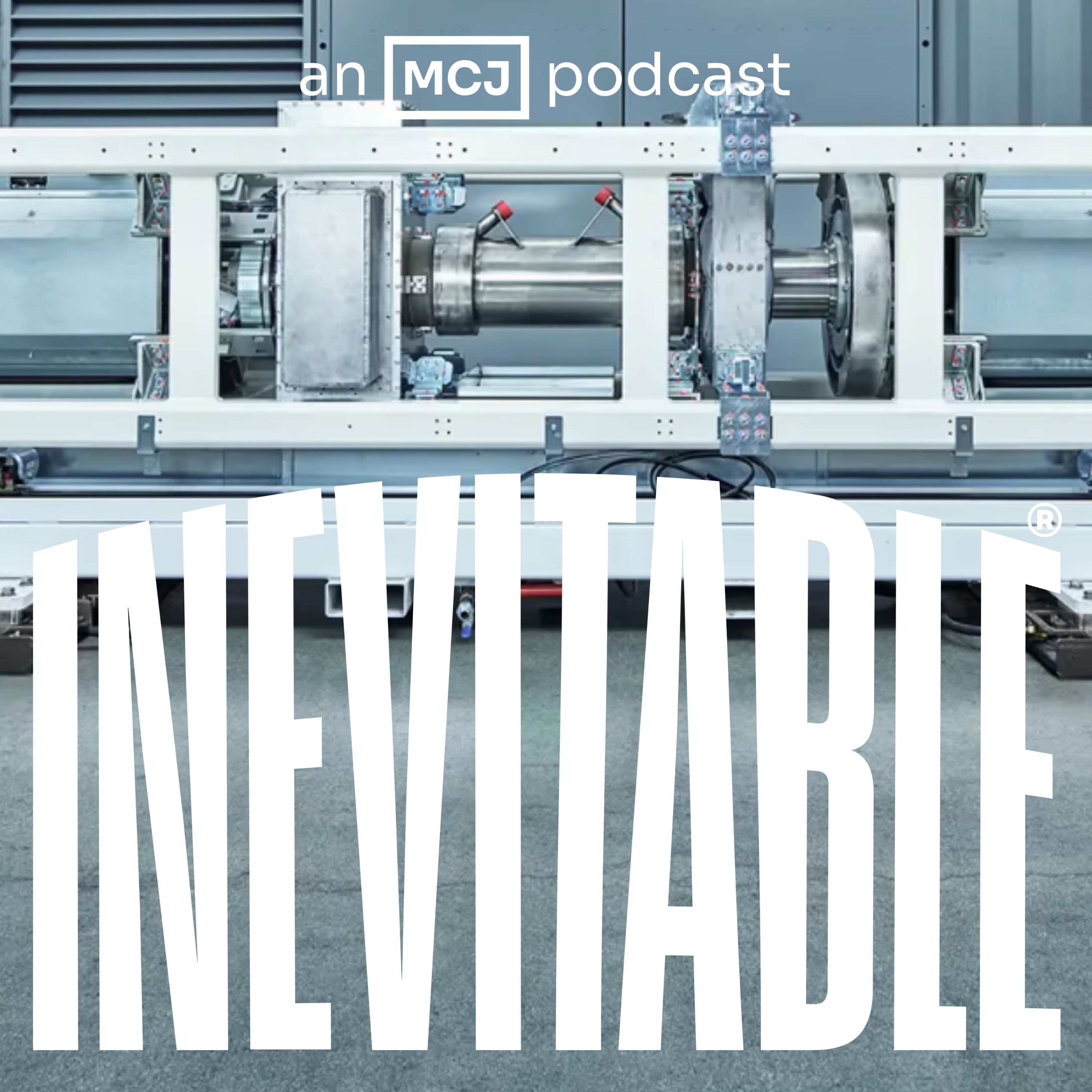
Inevitable
How Mainspring Energy Turns Fuel Into Power Without Combustion
00:30:05
Shannon Miller is Co-founder and President of Mainspring Energy, a company developing a new category of power generation technology called the linear generator. Mainspring’s systems generate electricity through a low-temperature, flameless chemical reaction that converts fuel directly into electrical power. Shannon has been at this for about 15 years. She started the company on technology she developed while earning her PhD in mechanical engineering at Stanford, and took it from a lab experiment through commercial deployment to hundreds of megawatts in development and running in the field. Mainspring closed a $258 million Series F in 2025, led by General Catalyst and has raised more than $800 million to date. In this episode of Inevitable, Shannon explains how Mainspring’s technology differs from traditional gas turbines and fuel cells, why modular and fuel-flexible generation is becoming increasingly valuable, and how the growth of data centers is reshaping energy infrastructure...
Loading summary
Transcript82 lines
- [00:00]
A
Today on Inevitable, our guest is Shannon Miller, co founder and president of Mainspring Energy. Mainspring builds a linear generator. Most ways to make electricity from fuel either burn it through combustion or run it through a fuel cell. Mainspring takes a third path, a low temperature flameless reaction that drives magnets back and forth through copper coils. And that motion makes electricity directly. It is modular and factory built. And it runs on natural gas, biogas, propane, ammonia, or hydrogen, switching between them without changing the hardware. Shannon has been at this for about 15 years. She co founded the company on technology she developed While earning her PhD in Mechanical Engineering at Stanford. And she took it from a lab experiment through commercial deployment to hundreds of megawatts in development and running in the field. MakeSpring closed a $258 million Series F in 2025 led by General Catalyst, and the company has raised more than $800 million to date. Developers and utilities are scrambling to fill the power demand gap. And a generator that installs in months instead of years sits right in the middle of it. From McJ, I'm Cody Sims and this is inevitable. Climate change is inevitable. It's already here, but so are the
- [01:30]
B
solutions shaping our future.
- [01:33]
A
Join us every week to learn from experts and entrepreneurs about the transition of energy and industry.
- [01:44]
B
Shannon, welcome to the show.
- [01:46]
C
Thank you. Very excited to be here.
- [01:48]
B
Why don't you start from the top?
- [01:50]
A
What is Mainspring Energy? Yeah.
- [01:52]
C
So MakeSpring started about 15 years ago based on technology out of Stanford University. And we work on building a new type of power generation system called a linear generator. So we make electricity from fuels based on things like natural gas, but also hydrogen, biogas, propane, ammonia. And our customers really value things like high efficiency, low emissions, very strong dispatchability and strong flexibility.
- [02:19]
B
Now, when I think of a generator, I think of a backup power source like a diesel generator or a natural gas generator. But you are doing something different than that, as I understand you are closer to a baseload power source.
- [02:31]
C
Part of what our customers like is the flexibility. So we can help run prime power, baseload power, but we can also dispatch to run firm solar, so run more intermittently to fill in the gaps. For solar and wind, we can provide resiliency so we can switch to be backup if needed and run as a microgrid. Typically, people aren't buying us just to run backup, but they like the flexibility that they might start using us as prime power running all the time and then transition to run us more as a backup generation system.
- [03:02]
B
You've Got all these different potential use cases you can serve. We're in a very unique moment in the power consumption curve right now, I guess, for lack of a better term. Where are you seeing demand come from today? In its heaviest pull, obviously.
- [03:18]
C
Data centers and utilities are a huge pull and we always knew that utilities, at least, would be our end market. I think the data centers have obviously been a surprise. We started the company focused on commercial and enterprise and industrial customers, helping them save money on their electricity, reduce their carbon, increase reliability and provide resiliency. We started there, we spent a lot of time testing and building our generators and really getting exposed to all these different use cases. And now we're really seeing this amazing opportunity to scale very quickly with utilities and data centers. So we have hit the market at exactly the right time.
- [03:54]
B
So part of meeting that moment at
- [03:56]
A
the right time, I guess, is a leadership change.
- [04:00]
B
And you all have some quite recent news there. You've been building this company from the start and are just moving into this new role.
- [04:09]
C
So, absolutely, we did just recently announce a leadership change. About 18 months ago, when we did our last round of funding, we brought on a new investor, general catalyst, and part of that was Tom Linebarger joined us as chairman of the board. So I've been working with him for the past 18 months. His prior role was actually running Cummins. And so he had a lot of experience building manufacturing energy products and really scaling industrial companies. And so I realized we came on the board, he added tremendous amount of capacity as an operator. I really, really enjoyed working with him. And I realized that part of meeting the market where it was is to actually help the company scale faster. And so it took me a little while to convince him, a couple months, but eventually he said yes. He just brings decades of experience and really could help us. He also was really aligned on driving to lower carbon solutions, which is something he championed at Cummins. A huge part of what we are focused on in mainspring. So we're only a few weeks in now, but it's been fantastic working with him. And I can already see how it's going to help accelerate the company from an operations seat.
- [05:10]
B
I mean, Tom obviously lived this at Cummins, as you said, from an operations seat. What have you discovered is genuinely the hard part of scaling a hardware company through a demand spike like this without something breaking?
- [05:24]
C
I think it's getting all of the pieces aligned together. So I think it was keeping all the trains on the same track because you have to align your demand with your supply. You have to manage Working capital, you have to manage investors, you have to have all of those pieces tied together and one can be out of front of the other. And so I think that's the experience that he really brings, obviously depth in manufacturing, depth in customer relationships, depth in investor management and capital allocation. So really excited to have him join.
- [05:55]
B
And how are you spending your time
- [05:57]
A
in your new role going forward?
- [05:59]
C
I'm going to be mostly focused on more internal operations, so continuing to work with sales, engineering, operations and product development to help us meet the moment and deliver for customers.
- [06:09]
B
And with the data center use case, is it primarily for off grid, behind the meter power, or where are they finding you most appealing?
- [06:18]
C
It's exactly like you were saying. You start as a microgrid off grid behind the meter, where you can help get them power faster than the utility might be able to get them power. And then most customers want to actually be connected to the grid. And so eventually you connect to the grid, maybe it's three years, maybe it's five, maybe it's eight. Connect to the grid and then you have a system that's very flexible so you can run peak load shaving, demand charge management. You can be a resource for the grid to provide resiliency, you can be a resource for the data center to provide resiliency. And so that flexible use case is something that customers really like and I
- [06:53]
B
assume most of that is nat gas today.
- [06:56]
C
There's a lot of natural gas for sure that that's ubiquitous in the United States. We also do a lot of biogas as well, but I think many of our customers, we do landfills, dairy, wastewater treatment facilities that have biogas. Most of our customers like the fuel flexibility of our system though, and many of them like that. They can ultimately transition to run on things like hydrogen. It's a huge part of the value proposition for many of our customers.
- [07:21]
B
Awesome. I want to come back to the fuel flexibility and essentially, as I understand it, they're potentially paying a little bit more for an option in the future to switch to different fuel sources as their needs change or as the fuel available to them changes. I want to come back to that though, and it might be helpful before we dive too deeply into all of that, just to go back to the product a little bit, describe what's in the box from fuel into electricity out, like what does it actually look like? And then maybe for us to think about that as compared to a turbine obviously from a natural gas perspective or an electrolyzer from hydrogen perspective, and just think about how it compares to some of the other setups that I'm more familiar with, and I assume most of our listeners are probably more familiar with.
- [08:07]
C
Yeah, absolutely. So we essentially took power electronics or advances in power electronics, the same power electronics that are used in solar inverters, wind inverters, batteries, EVs, and redesigned the generator from the ground up. And so we took a lot of the mechanical systems and replaced them with power electronics and software. So what you get is something that's a lot simpler, a lot more reliable, a lot lower cost, and a lot more flexible than a traditional genset. Essentially, the way it works is we actually have basically these two big tubes. We call them translators because they translate or oscillators, oscillate back and forth. We put magnets on them. Those magnets go through a set of coils and that produces electricity just the same way a rotary generator produces electricity. It's just moving linearly. And so essentially you get linear motion, creates electricity directly. We put in a fuel, we react it. That drives the pressure up, the pressure pushes those translators, and that's how we produce the power.
- [09:02]
B
No combustion happening. And also not really electrolysis in the classic sense either then, is that right?
- [09:08]
C
Yeah, there's no electrolysis, there's no combustion. There is a chemical reaction. We're still getting the energy out of the bond of the fuel, but we're doing it at a much lower temperature without a flame. And so when you don't have that flame, you don't have the high temperatures that pull the nitrogen in the air apart, which creates NOx emissions. The linear generators produce very, very low NOX emissions and allows for better permitting because of the way that we do the chemical reaction.
- [09:34]
B
So even in a natural gas scenario, then I guess you would have cleaner local air quality in that you wouldn't have knocks. You're still emitting CO2 from an emissions perspective, but you're not creating local pollution in that regard. Is that the way to think about it?
- [09:49]
C
The knocks are very low. There's no particulates either, which is a big thing with asthma and local air quality, for sure, there is still carbon. If you put natural gas in, the carbon is directly proportional to your efficiency. So if you have higher efficiency, you have lower carbon emissions. And that's one of the other value propositions of the technology versus a traditional engine or turbine is higher efficiency. While there's still carbon, it's much lower than what you would get out of a traditional technology.
- [10:16]
B
What actually comes out in a natural gas use case, for example, you're putting roughly CH4 in what's coming out on the other end if there's not a substantial, you said there is a chemical reaction. So there's some molecular change happening to the molecule there.
- [10:30]
C
Yeah, so there's still, there's CO2 and essentially a little bit of water vapor. Mostly it's air going through some CO2, some water, and that's it.
- [10:38]
B
So if I'm a data center developer and I'm trying to get time to power, which is what everybody's focused on today, what does installing mainstream look like? Some amount of modularity that also is at play here, versus a single turbine. A, you probably can't get a turbine quickly enough today. But B, even if you could, one of the advantages, as I understand it, of mainspring is that you may have multiple units that are deployed to a single location and you have sort of modular control over each of them, as opposed to a single 30 megawatt turbine or whatnot.
- [11:13]
C
Yeah, it's exactly right. It's a modular system. Part of the innovation that came out of that work that we did at Stanford was that you get essentially higher efficiency, lower emissions and better dispatchability than a hundred megawatt turbine, but at 400 times smaller scale. And so what that means is you get all the benefits of a factory built modular system. Normally in thermodynamics, bigger is better, slow heat transfer, everything gets a little bit better as you get bigger. That'll be the same thing for linear generators too. As we make a bigger version, it will also get better. But what's nice is we sort of leapfrogged the incumbent technology and have those higher efficiency, lower emissions at the smaller scale. And so then you get to take advantage of all the benefits of modularity. So it's a factory built system, you can ship it to the customer and install it much more quickly. There's not a lot of on site work that has to happen. You can get high redundancy with a small amount of overbuilding. So if you want three nines or four nines, that's a term the data centers often use to describe how high a reliability they want, you can do that with a lot less overbuild. If you have a small module, you can also build the exact amount that you want. So if you want 75 megawatts or 320 megawatts, you can build exactly that. You don't have to build in increments of 50 or 100 megawatts. And then like you said, the other benefit is the maintenance cycle. So you don't have to take. If you have a 50 megawatt turbine, if you take the whole thing down to do maintenance, you have no power. And if you have 50 megawatts of MainSpring, the probability that you have 48 megawatts at any one time is really high. There's a huge number of benefits to that modular design that turn out to be really beneficial to utilities and data centers.
- [12:49]
B
Right now your systems are 2 megawatts each, roughly then 250 kilowatts.
- [12:53]
C
So a quarter megawatt.
- [12:54]
B
Oh, got it. Okay. And how does that modularity compare to. We talked about it with a large gas turbine, but we're also seeing substantial amount of fuel cells getting deployed into data centers today. Like how do you compare relative to the electrolysis side of the equation?
- [13:10]
C
Yeah, so fuel cells similarly have that modular benefit as well. And I think people have realized how valuable that is for the reliability and never down maintenance. That uptime has been really important. So I think people have started to realize how important that is. Fuel cells definitely have that capability. The fundamental technology underneath it is very different. The chemical reaction is happening on a catalytic surface and so some really great benefits for customers. But also one of the things that is different about the two technologies is the linear generator can really dispatch very well. So it turns on and off more quickly than a solid oxide fuel cell, which is more of a ceramic machine. And then the other piece that's really helpful is the fuel flexibility to be able to put in different things like natural gas, propane, hydrogen, and be able to switch between those fuels without changing the hardware.
- [14:01]
B
I mean, one of the things we've seen with a lot of these data center projects in particular is the time to power question. Having to have a roadmap of the various generation sources that you are going to use at the data center, Starting with a local behind the meter off grid source and then eventually getting to grid connected. And even within that off grid source, there may be a, a roadmap of different off grid resources that you're building. There may be. You have a nat gas turbine that's on backorder, you're doing some on site solar and storage, maybe you do some fuel cell generation. How are you seeing mainspring fit in that roadmap? What are the pros and cons of a developer who's contemplating installing you? As they're thinking about maybe they're going to use a little bit of all of the above at their data center, they're not going to choose one path that's exactly Right.
- [14:53]
C
When most of these sites are, some of them are 2 or 3 gigawatts, I mean the size is really impressive. And so at those sizes you're often going to have a CCGT or something that's really designed to run baseload power, very high efficiency and not turn on and off very often. That's kind of the baseload part. And then they also often want something that's more flexible, that can ramp up and down, turn on and off quickly. It's if there's solar on site and there's also just variability in the load of the data center. And so having something that can ramp to support different profiles is also valuable. And so we often are coming in paired with larger systems CCGTs to do more of the ramping capacity. Although we are looking at somewhere where the main power gen as well. And so it really just depends on the size of the site. You know, most combined cycles are typically 400 megawatts or above. So if you're doing a 2 or 300 megawatt data center, you may not have a combined cycle CCGT.
- [15:51]
B
Combined cycle gas turbines.
- [15:52]
C
Yes.
- [15:52]
B
And do you see a use case where people install you initially as primary power and then start to use you as essentially peak and or backup power over time or once they're using you, they come to rely on you as the primary power gen source?
- [16:08]
C
We're still in the early days. Most of our customers, they're either still in the process of installing or they still haven't gotten grid power. So they're still using a snap first category where we're prime power. But I think ultimately the hope is that they connect to the grid and can benefit from the solar, the wind, the low cost, whatever happens to be available and then be able to use linear generators to reduce peak loads and peak pricing.
- [16:33]
B
And that's that flexibility story, I guess you were saying, which is because you can be dispatchable, your system isn't designed to have to run continuously. So once they do get grid power, you can serve as essentially an on site peaker power generator.
- [16:48]
C
That's exactly right. And I, I just really think that this is the way the grid should be operating. Fantastic opportunity to use the data centers to build out this additional infrastructure that can offer reliability and lower costs to help make the grid more robust over time.
- [17:02]
B
Besides that sort of optionality to go from primary power to peaker or dispatchable you've talked a few times about, there's also the optionality of different fuel sources. Why does a project need to think about that, like, what are the use cases where, and maybe you even already have some, where a customer has started using you with one fuel source and then proactively switched to a different fuel source over time. It seems to go against the deeply planned nature of most power projects to think, ah, few years from now, look, this is cool, we could just switch over to a different fuel source like that doesn't seem like that is something that would happen often, but it's a core feature of what you guys are offering. So I'm trying to understand the rationale of a developer and why they might want that flexibility.
- [17:47]
C
We have some applications, so we're working with a utility where the gas gets diverted for heating in the winter. You want to make sure heating works before power. And so in that case you want to have some other fuel that you can use. And this customer is looking at propane. So they've got propane on site, 24 or 48 hours of propane, and that can fill in if the gas gets diverted for heating. So it's a really nice backup from that perspective. There also happens to be data centers that can't get firm gas. And so they might get gas 364 days a year or have a few days a year where there's just no gas availability because of some extreme weather event. And so having the on site propane is a really low cost way to manage that risk and have high reliability. So that's one of the main use cases we're seeing today. The other one is transitioning to hydrogen or cleaner fuels over time. Many customers are looking at 2040 or 2050 net zero carbon targets and looking for ways to make sure that they can hit that. And by transitioning to cleaner fuels, whether it's hydrogen, synthetic fuels, syngazes, blends of different fuels, they have a lot of optionality with our system to not get locked into just natural gas. And so I think that's another piece. We're doing a project with National Grid Ventures later this year to run on hydrogen and they see natural gas and hydrogen as a good combination to help provide both reliability and lower carbon. Hydrogen is drinking too, because it's not just around the carbon piece, but you can also make it on site. It was solar and so if you really want to make sure that you are robust to pipeline issue, you can make the fuel on site with solar. And that can be really helpful for reliability.
- [19:28]
B
Yes, super interesting. And hydrogen in theory can also serve as a long duration energy storage solution if you can produce it on site, store it on Site and then combust it. Or in your case, I guess, generate through it.
- [19:42]
C
Yeah, exactly. Your prime power gas facility becomes a long duration energy storage facility over time.
- [19:49]
B
I wonder if a lot of the on site solar, as I think about what does the stack look like in the future, will be used less for actually powering the compute facilities at these data centers, but will instead be used for powering the long duration energy storage solutions on site.
- [20:06]
C
Yeah, and as you bring on things like nuclear, and I know those are still several years away, but fission, fusion, all of these things are super exciting and they're primarily baseload and they're not necessarily distributed near where the load is. And so those are another option for making these fuels in times when you're not using a lot of power and then using those fuels to then provide power in peak times when you really need it and provide that reliability.
- [20:31]
B
In oil and gas production today, typically you're having to flare gas at oil wells. Is there a use case where you could use a linear generator like yours to actually create power from that gas that would otherwise just be burned?
- [20:48]
C
We are, and there's, I think most of the flaregas folks have transitioned to make data centers now. So there are a number of folks that we talk to that are building data centers now with that same use case and technology. So we are looking at those and we can use the flare gas. And part of the value is if it's not super high quality, we can still convert it into electricity versus just flaring it, which has really got no value.
- [21:17]
B
Okay, so we've laid out at least helping me understand sort of the why is behind your solution. I think ultimately in power, long term things come down to cost. Right now in the short term things may not come down to cost because it comes down to time.
- [21:30]
A
Right.
- [21:31]
B
Can you get on site up and running and permitted faster, which is probably the thing that matters the most to a lot of these developers today. But let's talk about cost and compare your system to a turbine or to a fuel cell. How should a developer be thinking about the installation of mainspring relative to one of the more traditional solutions out there?
- [21:52]
C
Yeah, cost is the number one driver. Even today people still really care about costs because when you're buying an asset, you're planning to use it for 15 or 20 years and so you're locked into those costs for a long time, so people still really value it. There's three parts to cost, so there's upfront capital, there's the efficiency which drives your fuel cost and Then there's a service cost to all of these technologies. And so because of the simple design, service costs are low, because of the high efficiency, fuel costs are low. And then CapEx is the last piece. And we are, we're also very low on CapEx because of the simple design of the system. We don't have a lot of complex parts or complex manufacturing processes and we don't have fancy materials or fancy metals in it that are required to make it work.
- [22:39]
B
And do you qualify for tax credits today?
- [22:41]
C
I think we do. We qualify for a 30% tax credit similar to a fuel cell.
- [22:47]
B
Talk about how you've capitalized the business. You guys have raised quite a bit of capital into the company today. Has most of that been proving the technology, scaling up, manufacturing baseline us on where you guys are today. You're quite a mature company in startup land. And then describe where you've been able to start to see scale.
- [23:04]
C
Yeah, it takes a fair amount of capital to build these new technologies because energy has been around a long time. The technologies we're competing with are very old, very mature. And the thing that drives cost on the upfront capital is really volume. You have to be at high volume. And so that's the place where we're really starting to see the costs come down as we scale up in volume. And that's a key part of any energy technology. So you're right, we've raised a fair amount of capital. The technology was really a lab experiment when we started, so there was a lot of work to do to take it from a concept to a working product. And then as you get to a working product, then you really need to design for manufacturability, design for easy production and lower costs.
- [23:48]
B
Series F, I think stage company right now, the last round was General Catalyst, Amazon Climate Pledge, dcvc, Temasek Khosla. You have some heavy hitters involved in what you're building.
- [24:00]
C
Yeah, we have a number of fantastic financial investors and then also a number of great strategics. Folks like Nextera, ap, Michelle, Chevron, links at Amazon and all of those folks have helped take the technology from the early days to the scale that we're at today.
- [24:17]
B
What do you feel like you still are proving in the market today?
- [24:21]
C
So the next phase for us is really scaling to the hundreds of megawatts. We've been doing the fives and 10 megawatts. We're now going into hundreds. And the thing that's really key for hundreds is having project financing support because when you get to hundreds of megawatts it's hundreds of millions of dollars people are used to paying for their electricity as they use it, not paying for 15 years worth of electricity all up front. So you need to have project financing ability to really hit that scale.
- [24:48]
B
When you say hundreds, meaning you're signing individual deals in the hundreds or you're getting to the hundreds of annual production scale of your units.
- [24:55]
C
Both. Both.
- [24:57]
B
Yeah.
- [24:57]
C
Yeah. Because you need for those data centers that are hundreds of megawatts, they often use more than one technology, but they still want something that's at scale to be able to support their data center and growth.
- [25:10]
B
We spent a lot of the conversation talking about how data centers are buying. How are utilities changing how they're buying? We talked about data centers really need to buy up quickly, get power going even while they're waiting for interconnect. And you can be a, essentially a bridge to that for them. Utilities obviously have a different motivation. What's driving their purchasing behavior today.
- [25:32]
C
So the utilities we've been working with are typically in the public power side. So they are in the 50 to 200 megawatt range. And that's been a good size for us starting. We have typically been solving capacity plus energy projects. It's interesting. Capacity is really this backup capability where you're providing power when it's needed. Energy is more continuous. You're providing energy at the lowest cost. And what's interesting is many of our customers are seeing that they can get both out of our technology because it's low cost and high efficiency. One that we are working on is a Utah municipal power agency we announced earlier this year that's a 48 megawatt project. They needed capacity, but I think they're going to dispatch us more than a traditional peaker because our efficiency is so high. They liked that we had low emissions so we could permit and put our units closer to the town to avoid transmission and distribution costs and outages. So you're going to get higher reliability by being closer. They liked the modularity of the system. If they'd bought a 50 megawatt turbine, they'd have downtime and we avoid that kind of situation. And they liked that the heat rate is going to be more flat over the curve. So if you have a 50 megawatt turbine and you're running 25 megawatts, your efficiency is going to be a lot lower versus our system where if you're running 25 megawatts, your efficiency is going to be the same as at 50 megawatts. Those are all the benefits that they liked and many of our customers like about the technology, so. And then of course speed to power is the other value proposition. So being able to get something before 2030 is a nice improvement as well. We can still hit those timetables and can continue because we don't have a unique manufacturing process that takes 12 or 18 months to build that specific process. We can scale fairly quickly with our customers.
- [27:20]
B
What do you think the power generation of the future looks like? If you know, let's go 10 years out, how do you see things different than they are today?
- [27:32]
C
I hope that there's some fission and fusion in the mix. Obviously I think geothermal is going to be fantastic. I think what Fervo is doing is super exciting. And there's a number of other companies obviously too. Those are baseload power solutions. And I think that's going to be a part of our mix is centralized grid. I think we're going to have a lot of solar still and some wind because those are really low cost. And then I think we have fuel based dispatchable generation that's locally installed to help make sure that we have high reliability. And it can run for prime power for weeks. If we have a grid outage, it can run as long duration energy storage for hours or days. And you get a lot of flexibility out of that type of technology that can provide both the reliability and the low cost to firm those other technologies and provide the reliability that you need with such a broad grid that we have.
- [28:24]
B
Amazing. Well, Shannon, anything else I should ask or any other major areas we've missed chatting about and always, regardless of that, and if there are ple, you know, let's, let's jump in and tackle them. But always, also always good to hear where you need help or support right now.
- [28:39]
C
We're excited to be growing. So you had mentioned before that you help people find folks that want to join their company. So love, we're always hiring and looking for great engineers or folks that just are passionate about power and about providing a lower cost and higher resiliency and lower carbon grid. So that's something that we really are always looking for.
- [28:59]
B
So that's great. Where are you building the team today?
- [29:02]
C
We're based in California, but we do have our sales and installation and field service. Things like that are all distributed across the U.S. great.
- [29:11]
B
Well, this was a lot of fun as you and I were chatting about at the very start before we hit the record button. I've been following you guys on the news, but you and I hadn't actually even met before this recording so really great to hear what you're working on and thanks for jumping on here and sharing more about it.
- [29:26]
C
Absolutely. We're really excited. I've been listening to a number of your podcasts. So excited to finally get to join, so thank you.
- [29:33]
A
Inevitable is an MCJ Podcast. At mcj, we back founders driving the transition of energy and industry and solving the inevitable impacts of climate change. If you'd like to learn more about mcj, visit us at MCJ VC and subscribe to our weekly newsletter at Newsletter MCJ vc. Thanks and see you next episode.