← Inevitable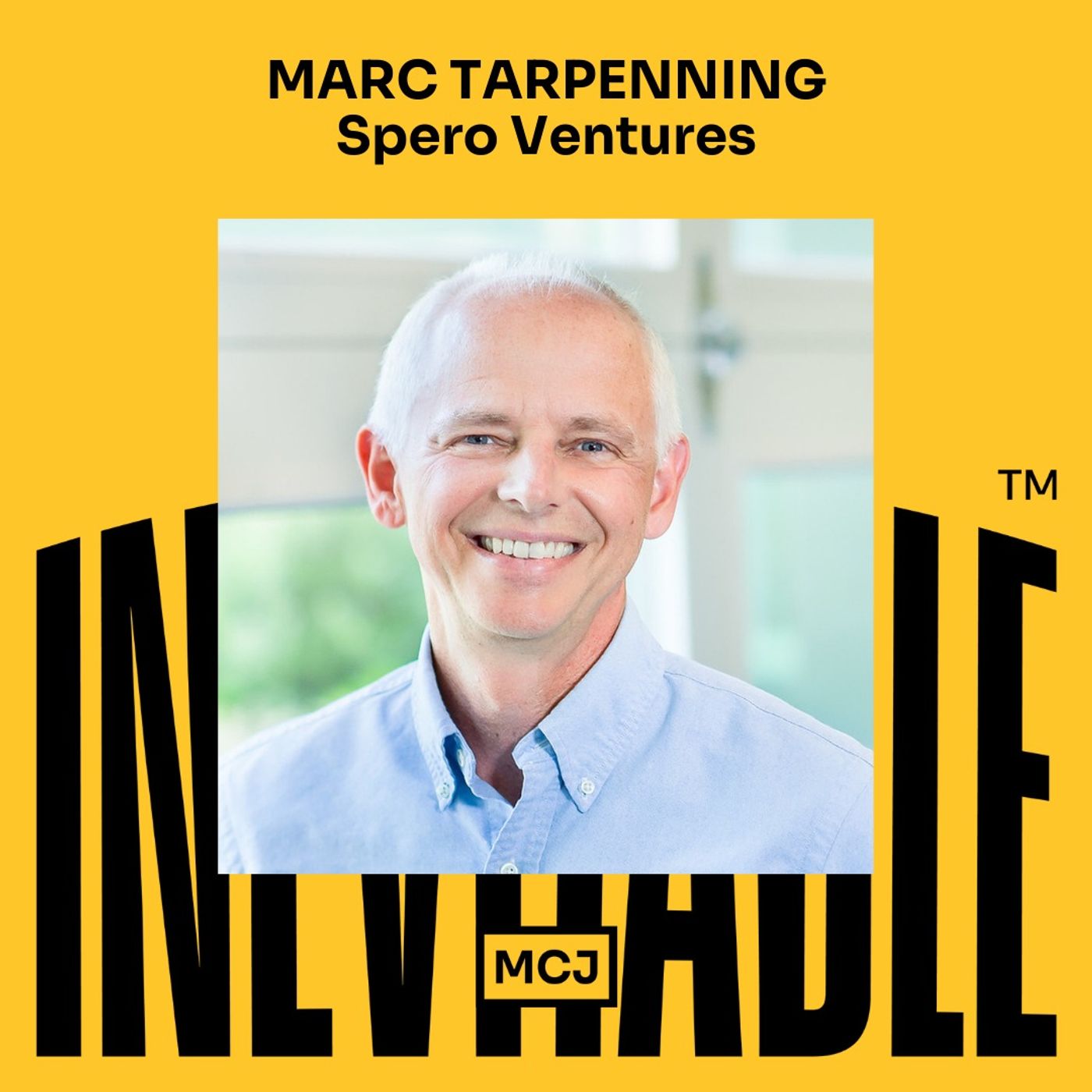
Inevitable
How Tesla’s Roadster Sparked the EV Revolution with Marc Tarpenning
00:56:06
Marc Tarpenning is Co-founder of Tesla and a venture partner at Spero Ventures. In 2003, Marc and Martin Eberhard saw two signals: GM killed its beloved EV1, and Californians snapped up Toyota’s Prius despite its compromises. They realized the market was ready for an electric car that was better than gas, not worse. Their breakthrough: 7,000 off-the-shelf laptop batteries powering a sports car that outran a Porsche and drove over 200 miles. The Tesla Roadster was born, before Elon Musk joined the company. Marc shares how his time in Saudi Arabia exposed him to oil dependence, how NuvoMedia taught him about the pace of battery improvement, and why a software mindset helped Tesla out-innovate incumbents. Now at Spero Ventures, Marc backs founders building solutions that are both economically compelling and environmentally vital, and explains why, to him, EVs have already won.
Loading summary
Transcript145 lines
- [00:00]
Cody Sims
Today on Inevitable, our guest is Mark Tarpenning, co founder of Tesla and venture partner at Sparrow Ventures. Mark co founded Tesla in 2003 with Martin Eberhard after observing two things. GM had just recalled and destroyed all of their EV1 electric cars, despite loyal customers fighting to keep them. And wealthy Californians were buying Toyota's first hybrid Prius in droves, despite it being basic and frankly, pretty ugly just to reduce oil consumption. Mark and Martin realized there was a market for an electric car that wasn't a compromise. One that was actually faster, more fun to drive, and ultimately better than gas cars. Their key Insight was using 7,000 off the shelf laptop batteries to build a sports car that could accelerate faster than a Porsche while delivering over 200 miles of range. As we all now know, this led to the launch of the Tesla Roadster and the rest is history. And what some may not know is that this was all before Elon Musk joined Tesla as CEO. Mark's path to Tesla was shaped by unexpected experiences. Years working in Saudi Arabia early in his career gave him a front row seat to America's oil dependence. And his first startup, nuvomedia, taught him that lithium ion batteries were improving exponentially. After leaving Tesla in 2008, just as the first Roadsters shipped, Mark spent the next decade serving on his local school board, focusing on his community. Now at Sparrow Ventures, he's investing in founders building sustainable solutions that are economically compelling in addition to being environmentally beneficial. Mark and I talk about his pattern of spotting breakthrough technologies just as they become viable. How bringing a software mindset to automotive let them iterate faster than traditional automakers, and why he believes EVs have already won. From MCJ, I'm Cody Sims and this is inevitable. Climate change is inevitable. It's already here, but so are the.
- [02:17]
Interviewer (possibly MCJ host)
Solutions and shaping our future.
- [02:20]
Cody Sims
Join us every week to learn from experts and entrepreneurs about the transition of energy and industry.
- [02:31]
Interviewer (possibly MCJ host)
Mark, welcome to the show.
- [02:32]
Mark Tarpenning
It's great to be here.
- [02:33]
Interviewer (possibly MCJ host)
All right, I'm going to jump in with a question that I can guarantee you you're not expecting because I was doing some reading about the early days of you meeting the person who would become your co founder at Tesla, Martin Eberhart. And what I saw was you guys really bonded in the early days by playing Magic the Gathering. And as a fellow late 90s magic the Gathering nerd, I wanted to start the conversation there and hear what those late night sessions were like and how in the world you guys decided to become co founders together. And I know it wasn't over Tesla, originally, it was your prior business, but what did that feel like? What did that look like? Share some of those moments.
- [03:11]
Mark Tarpenning
Wow, I was not expecting that. So Martin and I met because my high school buddy and actually college roommate worked for him at a company. And then as we were meeting socially, we ended up getting into this, the Gathering game, which turned out to be really crazy because for those not familiar with the game, it's one of these games where it's a card game where you build your own deck, but then the rules change constantly because the cards that you play change the rules of the game. So you're always trying to change the rules, obviously for your benefit and against the other players. And it just has a lot of funny strategy to it. And of course, it's brilliantly designed to want you to buy as many cards as you possibly can. So we would be up late with a bunch of us. It wasn't just Martin and I. It was four or five of us playing this crazy card game. And then a week later we'd be back at it. But of course, everyone had gone out and tried to get different cards in the interim and had reshuffled their deck. And it was fun.
- [04:02]
Interviewer (possibly MCJ host)
I think of it as almost like chess with comic book characters or anime like characters. And then this throughput of energy resource constraints, which is a cool way. It's a beautiful game design.
- [04:14]
Mark Tarpenning
That's a funny thing because you're always resource constrained in that game. The energy is constrained as well as the number of actions you can take is constrained.
- [04:21]
Interviewer (possibly MCJ host)
And then how did the entrepreneurial pursuits come out of that?
- [04:24]
Mark Tarpenning
Well, I had always been fairly entrepreneurial growing up at a time when computers were not that common. So if you were a total electronics computer head. When I was a teenager, I knew everybody who had a computer in Sacramento, which had like half a million people. And when a lot of my dad's business associates would come and say, oh, can you come over and fix this? Or could you explain to my admin how a computer works, what she's supposed to be doing? So I was doing all this consulting as a 14 year old, so it felt very natural to not end up working for a big company. And then my first job out of college was working for a giant company. But that was not intentional at all. I actually was not looking for a job at all. And I got tracked down.
- [05:05]
Interviewer (possibly MCJ host)
That's not what most college grads say. I wasn't looking for a job and.
- [05:08]
Mark Tarpenning
Oh, I accidentally got one while I was in college. I was doing a bunch of consulting Basically I was working part time for these various companies and charging at the time a lot for it. So when I finished college, I was so burned out graduating and working and so I went to Europe with some friends and unlike everybody else, I did not have a plan after that. I thought, I'm just going to hang out in Europe for as long as possible. But then when I checked in with my parents, because it was at a time when there weren't cell phones or anything, so you actually called places and not people. It was kind of a weird time, hard to imagine now, but anyway, so I called my parents just to check in and they said, hey, this guy has been calling every day, you gotta call him back. And then he bribed me to come home and start working on a project, which is the project that I ended up going to Saudi Arabia on.
- [05:52]
Interviewer (possibly MCJ host)
Tell more about that. You spent some time early in your career in Saudi Arabia. What was the experience there?
- [05:58]
Mark Tarpenning
Yeah, well, I happen to have been an expert in an obscure computer language, weirdly, and they really needed that. There was a project in Riyadh in the capital that was hugely behind schedule and hugely over budget and it's a complete disaster. Textron is a company, it's a giant multinational, had a group of misfits that fixed these things that didn't like process and didn't like stuff that got in their way and they deployed them on projects that were messed up. They recruited me to come and be one of the misfits and fix this project which was supposed to take, I think they said, well, just three months and I was there for six years.
- [06:34]
Interviewer (possibly MCJ host)
And I'm going to skip around a bit and I'm going to come back to that because I do want to talk about then how you jumped into being a founder and an entrepreneur, but let's bring it to today and help people understand the work you're doing now. And I want to talk about a common co investment that we have together in a company called Tello, which going to get all into the Tesla story with you and everything, but feels like quite a full circle moment. 20 years after you guys created the Roadster, here you are investing in another crazy EV automotive startup. What brought you to that place in life?
- [07:06]
Mark Tarpenning
Well, that's a really good question. I see a lot of EV startups and there have been quite a few since Tesla motivated largely because of Tesla's success, I think. And Tela was the first one that to me made a lot of sense. Part of it is that it is easier to start a company well I think it's easier to start a company in general now, but even something as complicated as a hardware company that's doing real hardware, you know, like cars and stuff, it's better because you get to focus on only the things that matter. We had to invent so many things at Tesla that we just didn't care about at all. Electric air conditioning and electric power steering. We had to invent that because it didn't exist. And now all that stuff is off the shelf. And that is awesome. Which makes it so that you can develop really interesting niche products that don't have to sell millions of units in order to recover your capital costs. So I think it's a really exciting time in the automotive industry in general because you can have really interesting cars again, that for a long period you couldn't make anything if it didn't sell a million a year.
- [08:07]
Interviewer (possibly MCJ host)
For folks who aren't familiar, maybe describe tell. I mean, I could do it, but I'm going to hear it from you. So describe Tello and what got you excited about it in particular.
- [08:14]
Mark Tarpenning
So Tello makes, and you gotta go to the website, they have some great videos and stuff of their vehicles. They make a very compact pickup truck basically that's quite cleverly designed so it can become a pickup truck and haul a whole pickup truck full of stuff, or you can fold a couple of things and now it's a four passenger little car. The great thing is it's the size of a Mini, so it really is compact. It really does fit into parking spaces in the city, for example, which turns out to be a big deal. And it's electric, quick and it has great range and all the stuff that a modern EV you'd expect. And I think it's quite a compelling vehicle.
- [08:50]
Interviewer (possibly MCJ host)
And you'd known one of the founders, Forrest north, since I think the early days of Tesla, Is that right?
- [08:55]
Mark Tarpenning
Oh yeah. We hired him in the first year probably at Tesla and then he was with us for a year or two, I think.
- [09:00]
Interviewer (possibly MCJ host)
I've heard you talk about how you like to invest in things that are building more of a Star Trek future than a Blade Runner future. Can you unpack that a little bit?
- [09:09]
Mark Tarpenning
Wow, you really had to dig for that quote. Yeah. Well, think about Blade Runner. A couple of things I really liked about Blade Runner, but largely it was a place you didn't want to live. And as entrepreneurs we actually create the future. When you're building a new product, by definition you're creating something that doesn't exist because otherwise you wouldn't build It. So you're building that future. And I want to be involved in companies that are building a future that we all want to live in. And the Blade Runner thing, I mean, the flying cars would be cool, but other than that, it was a grim movie. So the idea of Star Trek future, where you have resource abundance, where everyone is treated well, and there's lots of interesting stuff to go do, that's the future that I want to create.
- [09:48]
Interviewer (possibly MCJ host)
Well, you've had your part in doing it quite a bit. And so let's maybe now take ourselves back in time. You were in Saudi Arabia playing the Gathering with this guy Martin. I don't know if your magic games were in Saudi Arabia or whatnot, but.
- [10:02]
Mark Tarpenning
That was after Saudi Arabia.
- [10:04]
Interviewer (possibly MCJ host)
Okay. I assume it's all around the same amount of time. And you had this vision for a company that basically, as I understand it, was the Kindle. 15 years or something before the Kindle was invented. Unpack how you got there. I mean, that was like seeing a vision of what reading and books and everything might look like in the future and executing on it for quite a good outcome for yourselves, even if ultimately the company didn't realize itself into what Amazon ultimately built.
- [10:30]
Mark Tarpenning
That's an interesting thing. So I was in Saudi forever and then came back to Silicon Valley and was looking for something to do. And as one does, you go to a bunch of parties. And actually the very first party I went to, I got offered a job to do disk drives, which I knew nothing about, but they actually turned out to be super cool because they had a mechanical aspect and a analog aspect and a magnetics aspect. And then their firmware, which is my specialty, and have all kinds of power requirements and power saving. There's a lot going on in them. So I started doing that. And the first one was so much fun. And the second one was, and I love factories, and I'm in the clean room looking at a drive or whatever and trying to figure out what's going on with the factory process. Really neat after the third one. And I got really good at them and I was just freelancing, so I had all these offers to go and do the next one, the next one, the next one, they're all the same. And actually Martin and I both went to something called discconnect, which is the big hard disk conference. And it was so dull that I thought I was just going to collapse right there. And as we're walking out, I mean, we were literally saved by an espresso cart that was there. Oh, my God. We're not going to make it. And then it was an espresso cart. So we walk out and we say, we just can't do another one of these. This is the end. And we started looking for what to do next. And we looked at technologies that were just emerging, so things that were just barely good enough, but. But we're continuously getting better. So we knew that if we could make a product that was compelling now, that the tailwind would be with us, that every year it'd be easier. And if we waited too long, if it was easy, then everyone would be doing it and we wouldn't have any advantage. So we looked at a bunch of different things, and one of those was we had seen what we'd heard of display technology. I mean, it's ridiculous now to think about, but at the time, flat panel displays didn't really exist. There was no color flat panel displays. And the ones that that were black and white had such poor contrast ratios that if you rendered anything with any detail, you couldn't read it very well. I mean, you would never want to read a book that way. But we had heard that there were some new technologies coming out that were better. So as an experiment, we went to Japan, which had all the best displays, and we looked around and got intros to every display manufacturer and found one that was good enough, just good enough. And it was actually, at the time, remarkably beautiful. And we knew this is the beginning of having displays that actually are usable for reading. So we figured we'd make an electronic book that you could store many, many books in, because we traveled a lot. So that was the impetus.
- [12:57]
Interviewer (possibly MCJ host)
So actually just to understand that. So did you start with the problem you wanted to solve, or did you start with the technology insight and say, oh, I think I see how this could be used differently.
- [13:07]
Mark Tarpenning
So we had a variety of different fun product ideas, but we wanted to find one where the technology was going to enable it. And so electronic books was one of them. So we had the defining thing there, or the critical path is a display that's good enough. So we had to go do that. From the disk drive industry, we knew that something remarkable was happening and that the disk drives were getting fast enough that the data going onto the head and coming off the head was fast enough to keep up with this new MPEG thing for video, so it'd be possible to actually record video onto a hard drive, which, again, this all sounds ridiculous, but in the 1990s, that was really technically not possible. But from the hard disks, we knew it was Just now possible. The very cutting edge drives were fast enough consumer drives. I mean, the supercomputers could always do it. And so we looked at making digital video recorders, but neither of us had TVs and we thought it's funny to do that and we don't watch tv, so it didn't seem to work. We looked at multiplayer video games because the Internet is all dial up modems, but there was some little bit of broadband. We thought, oh, maybe if we could make something work with multiplayer games if we get the latency down, then as that improved, as our connectivity improved. So we looked at all kinds of different things, but the one we settled on was this display. We saw the display, it was just like, oh my gosh, this is going to change everything.
- [14:21]
Interviewer (possibly MCJ host)
And so you decided to go after now the category of ebooks, but that was not a category, that was a thing you guys were inventing. And the company was NuvoMedia. You ultimately, you built it for a few years and then had a sizable exit.
- [14:35]
Mark Tarpenning
Yeah, the exit was great. Yeah. So it turned out we were selling books. We had done all the deals with the publishers, which was part of the fun. We wanted to go to New York and meet publishers and authors and that was part of the game. That was all great fun. And then out of the blue, totally out of the blue, actually an acquisition offer came from Gemstar TV Guide, which at the time was the largest publisher really in the world because of TV Guide, which we didn't believe the offer at the beginning. And then as we got to know them, we understood what their plan was and thought, oh, okay, that's actually not crazy. And they acquired us in 2000, which was convenient because the dot com bubble was just about to burst.
- [15:11]
Interviewer (possibly MCJ host)
Oh my gosh. Quite good timing for you.
- [15:13]
Mark Tarpenning
It worked out. Yeah.
- [15:15]
Interviewer (possibly MCJ host)
And I wonder any lessons you've learned from. Obviously at that point they acquired it. There was a market correction that was significant, but they also didn't necessarily have a lot of the infrastructure around them that Amazon later did have when it went to commercialize Kindle. Any lessons that you took away from what happened to Nuvomedia after you sold it that have helped inform further entrepreneurial efforts on your end.
- [15:40]
Mark Tarpenning
It was a funny thing though. I mean, Gemstar TV Guide at the time was run by this crazy but very interesting character named Henry Yuen, who had just exactly the same number of shares as the other shareholder, which was Rupert Murdoch, except Rupert actually didn't have as many shares, but he did this incredibly tricky dog deal after our acquisition and Took control of Gemstar TV Guide by having one extra voting share than Henry.
- [16:03]
Interviewer (possibly MCJ host)
Sounds like the plotline of succession.
- [16:05]
Mark Tarpenning
It was really crazy. And Rupert ultimately killed all the digital publishing and ebook projects at the time. And he quite famously said on a newscast at the time, he says, no one will ever read on a screen. So he kills the project. And then what was great was about 10 or 15 years later, somebody sent me a news clip of him being asked about that specifically because he went on to say how newspapers were going to be the dominant form forever because they're so cheap to make and they're so easy. And he's a newspaper guy. And they asked him about that exact quote and he said, yeah, that was a mistake. I missed it. I shouldn't have killed all those things. I thought, oh my gosh, that was great.
- [16:38]
Interviewer (possibly MCJ host)
Listen to your engineers, people.
- [16:40]
Mark Tarpenning
Yeah. But once you sell the company, they bought it fair and square and they can do whatever they want with it, so you can't look back. And that freed us up to go do other things.
- [16:48]
Interviewer (possibly MCJ host)
Well, and another big thing you did do, you spent a few years between that exit and co founding of Tesla. What were you spending your time doing?
- [16:57]
Mark Tarpenning
Oh, actually I was working for an Internet plumbing company. It was called packet design and it was doing deep router stuff. Judy Estrin, who is the CTO of Cisco, a friend of mine had started it right in 2000, right as the world was falling apart. And she said, you got to come over and help me out here. And it was great fun. And I learned all about how the Internet actually works and how the plumbing works, which I didn't know about. Super great people, interesting place, but bad timing in terms of an Internet plumbing company during the dot com catastrophe. So they ultimately didn't do very well.
- [17:28]
Interviewer (possibly MCJ host)
And that led you to start brainstorming where did the EV problem come from? I was trying to do a little bit of history myself. And like, I remember the movie who Killed the Electric Car? But I think that was way after Tesla was founded.
- [17:40]
Mark Tarpenning
Yes, it was. There's an interesting story about that. So anyway, at 2002ish, the Internet plumbing thing, my attention span's not very long. So Internet plumbing deep dive got really into that and then it's like, wow, I, I understand how all this works. We have these products, it's a difficult market anyway, so by this time ready to go do something else, something new. And Martin at that point resurfaces and we're trying to think of what to do next. And he was really interested in electric Cars, but then there weren't any. The EV one got crushed. Literally, they all got crushed.
- [18:09]
Interviewer (possibly MCJ host)
That was the GM attempt, which I think they lobbied California to overturn some clean air laws, and all of a sudden there was no regulatory market to support it.
- [18:18]
Mark Tarpenning
Yeah. And they only leased their vehicles. And all of them were in California.
- [18:22]
Interviewer (possibly MCJ host)
Plotline of a great documentary, who Killed the Electric Car? For anyone listening who hasn't seen that movie, it was from 2006 or something. Right around the same time as An Inconvenient Truth came out. It's a great film and it's an.
- [18:33]
Mark Tarpenning
Example of, as a company, what you should never do. Because gm, for the first time in their recent history at least, was selling into the very most economically advantaged people in California. It only was available in California, and it was only rich people who leased these things, even though they weren't particularly expensive leases. But it was only rich people who really wanted them for whatever reason. And so when they canceled the leases, when they got the laws rewritten so they could kill the thing and they got rid of all the electric cars, they canceled the leases and crushed them. And many of these people sued and they put their lawyers from Wilson, Sonsini or whatever trying to keep their leases. But GM said, absolutely not. If you read the fine print, we can cancel anytime and crush your car. Just as an entrepreneur, if you're selling something that your customers love so much that they're willing to spend thousands of dollars of their own money on lawyers to try to prevent you from taking it away, to take that away and crush it in front of them, they're never going to forgive you. You're never going to sell another car to them or another product. I mean, only GM would think that was a good idea. So Toyota had exactly the same deal, and they did exactly the same thing. And they were the only other company that made decent electric cars. When their customers went and said, oh my gosh, we love these things, they said, oh, okay, well, you can just buy out the lease. We weren't planning on that, but everyone seems to love these cars. So you can buy out the lease and we'll come up with a deal that allows it to be serviced because we want to keep all our customers happy.
- [19:55]
Interviewer (possibly MCJ host)
So you were involved in, like, seeing this happen in real time. Do you have friends who had an EV1?
- [20:00]
Mark Tarpenning
Oh, yeah.
- [20:00]
Interviewer (possibly MCJ host)
Okay. So you were living their drama as they were navigating this.
- [20:05]
Mark Tarpenning
Many of our early customers told us these stories of throwing the bodies of their lawyers down, trying to prevent their cars being taken because the first question that we would get asked is, do we own this car or is it going to be leased?
- [20:17]
Interviewer (possibly MCJ host)
Well, this is after you started Tesla, but I'm saying before you even had the nugget of insight, did this happening in real time inform you that oh, there might be a market here for.
- [20:24]
Cody Sims
Us to do this thing?
- [20:25]
Mark Tarpenning
Exactly. That was very inspiring. About the same time that Prius had launched in California and it was only in California and they were losing money on every Prius and it immediately began to eat into Lexus sales. And the Prius was on their Echo platform, which is Toyota's very, very cheapest platform. And they didn't expect it to be eating their Lexus sales.
- [20:44]
Interviewer (possibly MCJ host)
And those first Priuses were really ugly here.
- [20:47]
Mark Tarpenning
They were ugly, they were super bare bones. But Toyota, when they saw the demographic of who was buying them, as soon as they could retool, and it takes them a little while, but I mean as soon as they could retool, they, the next model year, maybe the model year after that, had all these luxury upgrades that you could buy because they understood. And it wasn't because people were trying to save money. I mean because gas was free, it was like a buck a gallon or whatever. People were doing that because they wanted to reduce their oil consumption for whatever reason, whether it was for geopolitical things in national security, environment, whatever. And we thought between the Prius people and our experience with the EV1, there is a market for something that would be high performance and nice and electric and people would buy it. That was our premise.
- [21:31]
Interviewer (possibly MCJ host)
How much for you was it? And it's probably a blend of all of these, but techno environmentalism of like, hey, we can be hackers and build this electric thing that these big companies have just decided to kill and walk away from. How much of it was purely market? Cold hearted capitalist? I see people want to buy these things and no one's making it for them. And how much of it was just your own engineering itch to scratch or some other factor? Is there a blend of these things that got you decided to go work on this?
- [21:58]
Mark Tarpenning
If it had just been like, oh, we're going to make gasoline powered sports cars or whatever, we would never have done that. So I was concerned at that time we were importing nearly all of our oil and having been in the Middle east for so long, that's just not a good place. There's lots of interesting things in the Middle East.
- [22:14]
Interviewer (possibly MCJ host)
Interesting. So truly informed by your on the ground experience.
- [22:17]
Mark Tarpenning
In Saudi, I wanted to reduce our oil consumption purely from Economics and national security just. I thought it was wrong for the US to be consuming so much oil. And then I've always been a radical environmentalist. So oil is a disaster on so many different dimensions at the same time that to be able to do something to change that would be amazing. So when Martin was saying, hey, you know, what about electric cars? Which I thought was insane initially as a business, that's when we really began to dig in as to is there a market for it? Because if you want to actually make something that moves the needle, it's got to be better, it's got to be compelling in some dimension that people were willing to buy. Because if it's just good for the planet, well, that's great, except people might buy one or two cars, they might buy one, but after a while they're going to get tired of just being good for the planet and fail. You want to make a product that actually is compelling, that people want and by the way, is better for the planet in some dimension. So we really, with electric cars, it was so clearly a win for energy. So much more energy efficient, just in general. It obviously can be completely carbon neutral, which is huge. It solves the whole national security problem at the time before fracking changed the equation. And it's super fun to drive. I mean, they're just way more fun to drive and they're more convenient and they don't break down and all those dimensions are so much better. And I thought, well, this is super exciting. And the batteries again, were just barely good enough, but they were getting better all the time.
- [23:41]
Cody Sims
Climate change emissions wasn't super topical then yet.
- [23:45]
Interviewer (possibly MCJ host)
So this was more just oil is bad. We see oil spilled, Exxon Valdez, et cetera. We see the environmental disaster of oil more so than emissions and weather patterns and all of that.
- [23:56]
Mark Tarpenning
It was just beginning. The data was coming in that it was looking like climate change was really happening and that the CO2 concentrations were problematic. But you're right. In 2003, this was not settled science yet, but there was enough indications that it was like, well, because the consequences of getting this wrong are so high, rational people should reduce the amount of CO2. Their lifestyle, CO2 should be reduced. Because this looks like it might really be a problem. And if it is, by the time we figure out whether it really, really is, the train will have way left the station. You're not going to be able to change the trajectory very much.
- [24:29]
Interviewer (possibly MCJ host)
You said batteries were just good enough. And I think you guys had a real insight that led to how you developed the initial batteries for the Tesla Roadster. Can you talk through the early battery math that you did and what you actually built the product with?
- [24:46]
Mark Tarpenning
So Martin and I, coming from consumer electronics, from our ebook days, we had seen batteries get better. Every generation of battery was better than the previous one. It was cheaper, lighter, more energy. Whatever the metric was, it was always better. So lithium ion had just come out. They were still really finicky. I mean, they're still kind of finicky, but they were really finicky then. And actually our very last ebook that we produced, the last model, had lithium ion cells. And we're like, wow, these are a lot better than the nickel metal hydrides that had preceded them. So if you do the math, with the best cells that you could buy, which were these things that are called 18, 6, 50s at the time, and those were like fat double A's, and every year they get cheaper and better, Martin just said, well, what if we bought a whole bunch of those? And I said, well, this is insane. It's going to take thousands of them. And the manufacturing dealing with thousands of those things is going to be a nightmare. But it turned out actually that was the best deal because we couldn't afford a billion dollar plant to build different cells.
- [25:38]
Interviewer (possibly MCJ host)
And by the way, there wasn't yet a Catl or BYD making these cells to order.
- [25:44]
Mark Tarpenning
Nobody. Sony invented lithium ion cells. So Sony made some and Panasonic and Samsung and a few other Sanyo, maybe a few other players, but very few was the one thing they all made. So the great part is that there was competition. So that had the best price performance ratio of any of them. And when you added that up, it's about 7,000 cells for a roadster.
- [26:03]
Interviewer (possibly MCJ host)
Just to be clear, these were just consumer electronics. These were not custom made for any vehicles or anything like that.
- [26:09]
Mark Tarpenning
Exactly. At the time they were in every laptop because laptops were big at the time they were in camcorders. That's a thing. Before there were cell phones and stuff, there were these camcorder things. And so everybody had fuse cells. So when we just with the spreadsheet said, well, what kind of car could we make? What range could it have? How heavy would it be, how many cells would it take, which dictated the cost. And that turned out to be we could just make a compelling car. We could make something like a roadster that had incredible acceleration, which was a metric that people pay for. So it was great. It'd be quicker than in the internal combustion engine car for the price by far and every year the cells get better and cheaper. So the major cost component of our product got better and cheaper without us having to do anything every year, and had been getting better and cheaper for 30 years. So there was an enormous history of getting better and cheaper. So we figured if we can make the economics work with the existing cells by the time we're in production, the economics will even be better. And as we grow, the tailwind will even be greater. And maybe if we grow big enough, we can influence the direction of those cells in a way that would really be beneficial for electric cars.
- [27:15]
Interviewer (possibly MCJ host)
So it sounds like you had some techno economic analysis that the math could work to at least build one of these things or a few of them, and that they would actually work and you could manufacture them.
- [27:26]
Mark Tarpenning
Well, a few thousand.
- [27:28]
Interviewer (possibly MCJ host)
Okay, a few thousand, great.
- [27:29]
Mark Tarpenning
A few thousand per year. That was a very small volume, but we figured a few thousand a year we could do.
- [27:33]
Interviewer (possibly MCJ host)
You had some degree of market validation that people wanted this because you had this GM EV1 phenomenon where people were suing GM over the right to keep the car that they had leased. And I assume you didn't yet have a full picture understanding of the amount of global infrastructure that would need to be built to charge these things and move them around. Or were you starting to think about that as well?
- [27:56]
Mark Tarpenning
We spent six months or nine months working on the business plan we wrote, the last business plan ever written in Silicon Valley, as far as I know, because now you just do a slide deck and just go. But we really tried to figure out all the dimensions that we'd have to do, like, how are you going to service it? Where are you going to sell it? How are you going to sell it? Turns out as we explored that, we decided, oh my God, we don't want to do dealerships for a whole variety of reasons. But along the way, the charging, how are we going to charge them? Because there's no charging infrastructure, what the connector is going to look like. Which has its own bizarre story, which is why Tesla's charger connector is different than all the others, although now everyone's switching to the Tesla standard. But we had to do all of that before we were ready to go raise money. Because all of those questions are quite valid. We had to have answers for everything.
- [28:38]
Interviewer (possibly MCJ host)
You self funded the first few years though, didn't you?
- [28:41]
Mark Tarpenning
The first year. But this is an expensive project. So the moment that we were sure we were going to do it, we had to raise real money. And that's in fact how we met Elon. Because he was an investor in Series.
- [28:50]
Interviewer (possibly MCJ host)
A. Yeah, I was going to get there. So you had this vision. The Roadster as we know what it became. That was you and Martin who ultimately defined what that Roadster product looked like.
- [29:00]
Mark Tarpenning
Yep.
- [29:01]
Yin (MCJ Partner)
Hey everyone, I'm Yin, a partner at mcj, here to take a quick minute to tell you about the MCJ Collective membership. Globally, startups are rewriting industries to be cleaner, more profitable and more secure. And at mcj, we recognize that a rapidly changing business landscape requires a workforce that can adapt. MCJ Collective is a vetted member network for tech and industry leaders who are building, working for or advising on solutions that can address the transition of energy and industry. MCJ Collective connects members with one another with MCJ's portfolio and our broader network. We do this through a powerful member hub, timely introductions, curated events, and a unique talent matchmaking system, and opportunities to learn from peers and podcast guests. We started in 2019 and have grown to thousands of members globally. If you want to learn more, head over to MCJ VC and click the membership tab at the top. Thanks and enjoy the rest of the show.
- [30:03]
Interviewer (possibly MCJ host)
You talk to almost any electric hardware startup today and their go to market is we're going to build a fancy expensive one for niche customers to prove that it's awesome and then we'll make it more mass market over time. I mean, obviously people call that the Tesla launch playbook. Now did you also have the vision of we were going to build cheaper and more mainstream cars over time as well, and you wanted to prove that this thing could compete next to a Porsche? Was that the goal?
- [30:27]
Mark Tarpenning
From the start, we didn't know exactly what the next car would be, but we knew there was going to be a next car and we didn't know was it going to be maybe a small suv, was it going to be a sedan of some kind? The sedan market is incredibly competitive and you have to be in high volume. So the barrier to entry on that is really quite high. Just in terms of tooling. It's hundreds of millions of dollars of tooling after you have a design and everything figured out. So we knew we couldn't start there. We had to start with something we could actually make. So we didn't really know what our options would be for the next car. But what we did know, we were going to learn a whole ton from the Roadster, which we did, that the next car would be more ground up EV based on whatever we learned, which we learned a ton. And we just didn't know exactly what form it was going to be. But the idea was always to get into larger production because as you produce more, the prices go down. And we really wanted to drive the price point down.
- [31:22]
Interviewer (possibly MCJ host)
How and why did you start with the super fancy sports car we just talked about? The Prius was this nerdy looking hybrid thing. The EV1 was a pretty basic car. How did you just decide to go to this high end initial product?
- [31:35]
Mark Tarpenning
Because the image of electric cars was golf carts, maybe the EV1 and the Prius was this goofy looking thing that was only available in California. And when you looked at it, when you looked at, we're going to make this electric car, what's an advantage that we have? What is superior in the market? And one of the things is that electric is incredibly good at acceleration. But if you design the car right, the best acceleration possible, better than any internal combustion engine car can get.
- [32:02]
Interviewer (possibly MCJ host)
The best ride at Six Flags here in Southern California is full throttle, which just starts out, just shoots you off from the beginning and it's amazing. It reminds me every time of wow, Electric has incredible acceleration.
- [32:14]
Mark Tarpenning
It really does. And even parenthetically, Caltrain, which is the train service from South Bay to San Francisco just electrified this last year. And their express service, not European Express, but express service here between San Francisco and San Jose, when they went to electric, they added three more stops and reduced the time by 17 minutes. But the top speed never changed. It's entirely because they can accelerate so much faster out of the train stations that they made back 17 minutes, including with three more stops. So we looked at what kind of car would be compelling and we really wanted to change the image of electric cars. We knew it was going to be expensive because it's going to be low volume. We can't make a Toyota or anything. So if you're going to do something low volume, it's going to be expensive. Who are people that are going to be willing to pay for something that's expensive and it better be better in some metric? Well, acceleration is one. And it turns out that for whatever reason, the faster the zero to 60 miles per hour, zero to 100 kilometer an hour time, the quicker you get there, the more people are willing to pay 2/10 of a second, they're willing to pay like another 50 grand. It's the most insane thing, but there's a ton of customer data that supports that. So we figured if we could make and the math works out that it would be relatively easy to make a rear wheel drive sports car. Relatively easy. It was a nightmare. But anyway, that would go 0 to 60 in less than four seconds, which at that time was just about as quick as the fastest production car you could buy. For a lot more money. For hundreds of thousands of dollars, people were buying those cars, I mean, not a lot. So we would come in at $100,000 price point. So it'd be relatively inexpensive if you wanted that performance. And it was all electric and you'd never have to go to a gas station again, and you'd never have maintenance intervals again. It'd be better in all dimensions. But that was the thing, that was the hook that got the gearheads excited about the product in a way that a golf cart just isn't going to do.
- [34:04]
Interviewer (possibly MCJ host)
And today you can buy additional acceleration purely via software, which is incredible. Did you have the vision that ultimately it would become this deeply software defined vehicle, or did that come later in the product's evolution?
- [34:16]
Mark Tarpenning
I'm a software guy. So it was Andreessen's quote, software eats the world, or whatever. That is really true. So we saw that all along in the car industry, as we would work with the old school, if you will. They're very much mechanical heads. And at the time, the traction control on a BMW was a hydraulic computer. It was a fascinating device. I mean, it had lots of little valves and it was craziness. But we did it all in software. And that software really, really makes a difference. So an example of that, just to show you the old school versus new school, is there are these test tracks all over the world that are standardized that the car industry uses, and they can test in hot climates and cold climates and on these cobblestone racetracks and everything else. And they're expensive, but they're standardized. And one of those happens to be a lake in Sweden that freezes over in the winter and you do your cold weather testing there. So anyway, there are these standardized test tracks all over the world, and there's a frozen lake in Sweden where you do your traction control on ice. And all the companies do their testing. There's. And you reserve your times and you go up there, you drag your car and your team up there and professional drivers drive around on the ice. The cars are instrumented like crazy and then you make your tweaks. So I sent my software team off with a car and they went there and Mercedes is right behind us and Volvo is the next one over, whatever it is. So we spent a few days there, they spent a few days there, get all the data back, and then we scheduled another run and another run and we just iterate as you might imagine. And we iterate every couple of hours and by the end of about three days it works great. Traction control is totally dialed in. So they come home, it's normal. So we are working with our contract manufacturer, which at that time was Lotus, that makes sports cars. They see this report and they see the video actually driving around and everything, and they call an immediate halt to the project because we are clearly scamming them.
- [36:07]
Interviewer (possibly MCJ host)
Because you're able to make tweaks on the fly so quickly, they're used to months, long iteration cycles.
- [36:12]
Mark Tarpenning
It's supposed to take all winter. You do the thing, you grab the data, you then send it to your vendors. You go back to Stuttgart, think about it, you change it all, you go back up to Sweden and you do this over the course of the entire winter. And we'd done it in about three days because we used software. We actually just software changed it. And that kind of thing we totally believed in. Software eventually consumes everything in that way. Because the reason why your hard disks are so cheap and can store terabytes is. Is because the actual hardware is terrible. But the software is fixing it all in real time. And it's playing all kinds of games on every aspect of that hard drive to make it. So you don't need to have super precision hardware and super precision everything else in order to read and write bits. We'll just fix it in software. Cars are like that now, but at the time that was just beginning to happen.
- [37:02]
Interviewer (possibly MCJ host)
So you brought up Elon and mentioned that he was an investor in the company, I think at the Series A level. And that was when he first started getting involved. Maybe talk about how you guys met him, what the initial engagements were like, and ultimately what led him to decide not only does he want to be investor, but he wants to come in and help run the company.
- [37:20]
Mark Tarpenning
So I don't want to show you exactly how we met him. Martin and I had run into him when he spoke at a Mars conference, actually put on by the Mars Society, which is a group advocating colonizing of Mars. And this was before he had founded SpaceX. So this is like 2001 probably. And we thought, wow, he looks like a pretty interesting character. So then we had him in our minds as to who he was.
- [37:41]
Interviewer (possibly MCJ host)
He had at that point had his success with PayPal, I think. Early on.
- [37:45]
Mark Tarpenning
Exactly. But he was not well known. We'd never heard of him until he was speaking there. We thought, he seems kind of cool. So we went and said hi to him, whatever. And then a couple years later, when we were doing Tesla through the grapevine, basically we heard that he was interested in alternative energy and especially things that changed the carbon equation and the energy equation. So we're like, okay, well that sounds good. So we reached out through our connections and he said, come down. So we went down to the original SpaceX office and one of the great things about pitching Elon at the time was a lot of times we'd say, hey, we're going to make this electric car. It's going to be a sports car, it's going to have this huge range. And it was considered pretty crazy. The VCs or whoever would go, uh huh. Okay, that's wacky. Thank you very much. But one of the great things about pitching Elon was we're in the original office there and he is building a rocket ship in the background. And I thought, well, he's not going to throw us out because the idea is too crazy. It's just not going to happen. So he really got it immediately. He peppered us with questions over the course of the next five or six days. And I think we went down one more time in person and he said, okay, I'm in for series A. And we're like, awesome. And he was the lead. We had a couple other VCs that had said they would follow, they don't lead. So they said they would put in Monet and some other people. So once we had a lead, we were able to put the round together pretty quickly.
- [39:01]
Interviewer (possibly MCJ host)
And he wasn't a vc. He's leading with his angel check. This is his money, correct?
- [39:06]
Mark Tarpenning
He was a big angel check for angels. It was a big check. And then he came to the board meetings and was always really helpful and very supportive of the mission and was aligned with what we were doing. So it was great. And it was like that the whole time. I mean, he cared about the car obviously, and would come and check it out. I think he liked coming up and seeing the board meetings and seeing something progressing, that he was having a lot of trouble at SpaceX at the time, getting his motors to work and stuff. I think it was a relief for him to come up here and see something that was advancing at a somewhat planned rate.
- [39:35]
Interviewer (possibly MCJ host)
And then what was the process for him moving into the CEO role? And then ultimately, obviously you moved out of the company, unpack that period of time.
- [39:43]
Mark Tarpenning
So as we were going into production on the Roadster and production, as Elon later said, I'm in production hell. And I'm like, oh yeah, Remember that as you go into Production, even on something that's relatively low volume. This is a saying in the car industry. It takes 4,000 parts to make a car, but only one part to not make a car. And it's really true. There's a lot going on to get into production. And we had had some hiccups along the way with a stupid thing which we had outsourced, which was a mistake to outsource, but it was something we thought the car industry could do, which turned out to not be the case anyway. So as we got into production, Martin really felt that we needed somebody who knew a lot more about production, running things. And we were looking around for CEOs, and we actually found a great CEO. But he was only interim because he was the former head of Fluxtronics and he had grown that from a relatively small contract manufacturer to giant company. And he was only available for a short time, though, because he was starting his own thing in the fall. So he says, oh, I can do this in the summer. So Michael Marks came and joined us and became the CEO on an interim basis. And he was great. All him and his buddies do is production. So immediately he had people there helping with the production issues and stuff. It's just a lot going on at one time. So that was great.
- [40:53]
Interviewer (possibly MCJ host)
By the way, it reminds me of just six or nine months ago as the Tello guys were getting their initial version to production, and in talking to Jason and Forrest about it, they had all these like, OG Tesla guys that were friends of Forrest's or Jason's just showing up at the manufacturer. Not employees of Tello, but just helping out because they loved it and because it was fun and interesting and it was a challenge. And I picture a little bit of the same thing from what you're describing.
- [41:21]
Mark Tarpenning
Absolutely. Michael Marks, I think he was an angel investor actually, in the first round, so he wanted to see it, but he was get so into it. And it was the same deal. You get his friends to show up, and it really helped. But he was only interim. So then he went off as planned. And then Martin and Elon by this point were having some kind of falling out. And you can talk to Martin about that. I'm not going to get involved in that. But then the board found another CEO, Zeb Drory, who had been the founder of Monolithic Memory back in the day, and he was not a good fit for the company, I didn't think, but the board was into it and he was going to be the new permanent CEO. So I worked with him, and as we got into production. We were just delivering the first roadsters. I had three little kids at home and my wife is a professor and very, very busy. And I'm thinking this is a great time to exit because we're delivering the first product. All of our teams are switching over to sedan, which had been a small project, but now everyone was switching over to the sedan. I would have to make a new commitment for years.
- [42:14]
Interviewer (possibly MCJ host)
That was what would become the Model S, I suppose.
- [42:17]
Mark Tarpenning
Yeah, that was the Model S. So we were all switching over to that. I was like, I don't really want to make a commitment for the next five years doing that. So I left. And I wasn't so into the CEO, but the board was super supportive of him. And then a month later, the board fires that CEO and I'm like, okay, well, that's the right thing. And then Elon became the CEO, and by this point he was really stepping up his involvement because he had a lot of money invested personally in the company and things were not going that well. I mean, they were going, but we were going to have to raise money.
- [42:44]
Interviewer (possibly MCJ host)
And again, and he was still CEO of SpaceX at the time. He decided to just add to his plate.
- [42:50]
Mark Tarpenning
He founded SpaceX, he's the CEO of SpaceX. So yeah, he just decided, oh, I can do two, which is a little insane now.
- [42:56]
Interviewer (possibly MCJ host)
It's like everyone just, oh, yeah, of course Elon does too. Of course Jack Dorsey does too.
- [42:59]
Cody Sims
But at the time that was a.
- [43:01]
Interviewer (possibly MCJ host)
Pretty non normal thing.
- [43:03]
Mark Tarpenning
Oh, it's super not normal. I still don't see how it's possible to do it, but he somehow pulls it off and he had the vision. He always was super supportive. So it was a good choice.
- [43:12]
Interviewer (possibly MCJ host)
Backing up as you were talking about how you guys were approaching manufacturing and you talked about, oh, we outsourced this one component that ended up causing a problem, blah, blah, blah. Now, today you hear people talk about the school of Elon, which is basically heavy vertical integration, owning the supply chain, owning everything. Soup to nuts. Did Tesla start that way or did he bring that culture into the company after he took over?
- [43:36]
Mark Tarpenning
So Elon's not soup to nuts, really. It's only other things that matter. So early on, Martin and I said, what are the things that actually make a difference in the car? And that's the drivetrain, obviously. It's the thing that makes the car go that we wanted to make sure that we completely owned all of that technology. We didn't want to outsource any of that because that's the thing that is Our special sauce is the thing that's the most important thing. So what we didn't want to do is be experts in steering wheel manufacturing or whatever because there's companies that do that or rear view mirrors or anything else. There's companies that specialize in that. So we really wanted to make sure that anything that was crucial to the car, we controlled and we understood and we developed.
- [44:18]
Interviewer (possibly MCJ host)
But not even just the car. We talked earlier about the charging models.
- [44:21]
Cody Sims
And the dealership model and all of that.
- [44:23]
Interviewer (possibly MCJ host)
When you talk about the vertical integration, it's the whole ecosystem.
- [44:25]
Mark Tarpenning
I think that's true too. It's everything that touches the customer. We wanted to control that. And the thing that makes the car go. We didn't think initially we used a contract manufacturer to screw the car together initially because we couldn't afford to buy a factory or anything. But also we didn't think we could add any value to putting a car together. People have been doing that for 100 years. They should know how to do that pretty well. So again, it was just every dollar that we were raising, we wanted to make sure that it went to something that was important. The one thing we discovered though, there was lots of things that we just assumed that we could source that didn't exist. Electric power steering, electric air conditioning, all these other things that we had to do. But as soon as we could get rid of those things, as soon as Bosch was making electric air conditioning, we're not going to be doing that ourselves because they're really good at that. That's what they do is that kind of thing. So those things we discarded. So it isn't unlike the Model T or whatever with Ford where they're taking in iron ore and coming out with a car on the other side, it's a much more nuanced and select, is that you want to control all the things that are the main cost drivers, but also are the technology that keeps you ahead.
- [45:32]
Interviewer (possibly MCJ host)
Fascinating. I mean, you look today to the interior of these cars and you have one flat screen panel and you control everything on the car there. So all of the traditional knobs and dials and everything in the dashboard are completely gone. And I think that's a good example of what you just said.
- [45:46]
Mark Tarpenning
I personally want a few more tactile things. I think that driving requires some tactile controls.
- [45:51]
Interviewer (possibly MCJ host)
So there we have a wish of the co founder on the modern Tesla. So after you exited, you spent a good chunk of time, almost a decade in your community doing school board work and leaning in locally. It seems like before now you doing this work you're doing with Sparrow where you're leaning in on the investment side. Any big salient takeaways from your time, maybe focusing more inwardly, focusing more on your community, working in education, engaging in. I don't know if you're doing mentorship or working with folks in that regard, but it seems like a period of reflection that you went through at that moment or decompression. I don't know.
- [46:28]
Mark Tarpenning
I like to think it was this planned reflection. It was much more that I was home, you know, I left Tesla and my wife was working, and so I would pick up the kids and everything. And I loved that and allowed much deeper time in the town that we live in. And then I was involved almost immediately, actually pretty much immediately in a campaign to get the parcel tax renewed for our local school. And then that led as soon as that was over and that was a special election. A bunch of the other, largely the moms that I'd worked with, because it's mainly moms who do all this, said, oh, you know, there's the school board election is coming up. You should really run for one of the spots on the school board. I thought about it and I'd always been interested in local politics and I thought, well, that's actually pretty cool. I've got three little kids in a school and it's a K8 district, it's a sweet school, and it's small enough that I could understand it. So, yeah. And then it turned out that the whole local democracy thing is fascinating. It really does work. I think the further you get away from the local, the less it works. And it also really told me that if you show up, you can make something happen almost at any level. If you want to get involved in politics, if you just show up, you can make something happen.
- [47:33]
Interviewer (possibly MCJ host)
It's funny, you hear people all the time saying so and so is leaving their job to quote, unquote, spend more time with family. But it sounds like you really did it. You left the role and dove into where your kids were in school and engaged in the community and got involved. And I love the message of if you show up, you can actually get engaged and involved in local politics. On that note, obviously there's a lot going on in politics today, and EVs have been, I would say, a victim of current politics. Where is the state of the revolution from an EV perspective? It felt like we were on this inevitable path. I still think we are. We obviously have just hit a bit of a speed bump in terms of tax Credit removals and federal policy support. But curious how you think about all of that.
- [48:15]
Mark Tarpenning
EVs are inevitable to go with your program. They're so much more efficient, tremendously more efficient. I mean, a gasoline powered car, a really good one, is 17% efficient, which is why you have to have all this way to get rid of heat. Because almost all your fuel is just wasted in the form of heat. And if you want to test that, just disconnect the cooling system of your car and start driving it around and see how long it takes until it just melts into a puddle. It's only a few blocks. And it's because almost all the energy is wasted. Whereas EVs are incredibly efficient. They're in the 90% efficiency of converting energy into motion and they don't have a maintenance interval. There's no fluids to replace or belts or timing belts or any of that nonsense. So they have this enormous uptime and you never have to get gas. So as a convenience, they're incredible. They're more fun to drive, they're cheaper to drive once you get over the capital cost. And that comes down every year. So there's going to be a moment relatively soon where you can imagine you walk into an unsubsidized room to see the car and you'll have two cars, one of which the performance will be much higher. It won't have a maintenance interval. It'll be much cheaper to drive per kilometer, per mile. And oh, by the way, it's electric. And they'll be the same price. We're already there in China, China is there, and we will be there relatively quickly, which I think is in some ways why certain parts of the country are panicking a little bit, because it's just better in all dimensions. So it is inevitable. I mean, at the moment, the US sales for EVs are going to probably be down this year. I think they'll resume probably next year. And in Europe they continue to go up. In Asia, they are going through the roof, which is awesome. So they're going to be the dominant new car form in most countries probably in the next few years because the price is just getting better and better. The internal combustion engine is pretty much optimized out. It's not going to get a lot cheaper because they've had 150 years to make it as cheap and as high performance as possible. And electric cars are so just getting started and they're so much easier to build. That's the other thing, is that the manufacturing on them is so much simpler. That you've got to believe that they're going to just end up being, in the end, cheaper and better in all dimensions.
- [50:16]
Interviewer (possibly MCJ host)
Mark, one thing we should probably do is acknowledge a little bit of the elephant in the room, which is Tesla, Elon Musk. They've been in the headlines a lot lately, not always positively. What's your take on where Tesla is today?
- [50:30]
Mark Tarpenning
So, first off, remember that Tesla is the most valuable car company on earth by far. So any criticism that I make is like, well, clearly it's been working, it's a thing. But buying cars is both a practical decision but also an emotional one. The car has to appeal emotionally to you. And that is really clear that some of Elon's antics have hurt sales. That's just a fact. And they're going to have to get over that. And I think they will. I mean, ultimately, if you make a better product, that kind of wins in the long term. But at the moment, I would hope that Elon will dial down his political activism because it's entangled in the brand in a way that it just shouldn't be.
- [51:11]
Interviewer (possibly MCJ host)
Do you think it is impacting Tesla's ability to be good for the planet just from a product perspective in any way?
- [51:19]
Mark Tarpenning
Well, we want to sell more EVs. The planet needs a lot more electric vehicles and to an extent that it turns people off of EVs in general, which I don't think is probably happening. But like, that's a bad thing in a way that it helps competitors grab market share. That's bad for Tesla, but it's not necessarily a planetary impact because ultimately EVs win. So we want to make that happen as quickly as possible.
- [51:47]
Interviewer (possibly MCJ host)
You've seen the company go from a spreadsheet to, like you said, the world's most valuable automaker by far. If you had one piece of advice for the company, if you could walk into, you know, the boardroom or whatever and say, you know, really we should be doing this. Is there anything you would want to see different right now other than Elon and his political activism, which you already said?
- [52:08]
Mark Tarpenning
There's a few things. The Tesla models right now are a little old in the tooth. You know, they really need to introduce some new models. I would have really liked to have seen a low cost entry level sedan, particularly since they're vertically integrated on the battery, which is the most expensive part of the vehicle. They should be able to pull it off better than nearly anybody. Love to see that expansion of the market. Now part of that is just you want to sell a lot more EVs even if the margin isn't as good. So you help the planet that way. But clearly the focus on the autonomous taxi thing I suspect is probably a good long term idea. I mean, I love Waymos in San Francisco. I use them whenever I'm there and they're fantastic. So I get that Tesla wants to be part of that mix, but it does appear that the eye has been taken off the ball on the models and there's a bunch of UI things and other things I think they could fix with the models that they have.
- [53:01]
Interviewer (possibly MCJ host)
I'm going to assume you drive a Tesla today.
- [53:03]
Mark Tarpenning
Oh yeah, yeah. I'm on my second Model S. My first one I had 120,000 miles on and it was really, really early in the serial numbers. By the time of 120,000 miles, although it worked perfectly and the batteries were fine and everything was great. I really wanted all wheel drive and I really wanted all the new features. Traded it in and got a new one and I have almost 90,000 miles on that one.
- [53:26]
Interviewer (possibly MCJ host)
How often do you use full self driving? Is it a thing you enjoy?
- [53:30]
Mark Tarpenning
I don't like it. I mean it's great.
- [53:32]
Interviewer (possibly MCJ host)
I use mine all the time. For what it's worth, I love it.
- [53:34]
Mark Tarpenning
Well, so all of my friends think I'm crazy, that I maybe I just don't drive that much or something.
- [53:39]
Interviewer (possibly MCJ host)
I don't know, I'm a crappy driver. So maybe that's why I like it.
- [53:43]
Mark Tarpenning
This is one of the arguments is that self driving just has to be better than the average driver. But because 80% of drivers believe that they're way above average drivers, you know, it's a difficult emotional thing.
- [53:54]
Interviewer (possibly MCJ host)
Well, I can attest that I am not, so I'm happy to use it. We started the conversation Talking about the EV1 and GM's initial efforts there and their own self inflicted killing of that product line. Only to then watch Tesla come up from the side and now be worth multiples of what their company is worth today. Which I'm sure makes you as proud as can be.
- [54:14]
Mark Tarpenning
I gotta love that.
- [54:15]
Interviewer (possibly MCJ host)
When you factor not only the domestic phenomenon, but also ultimately the Chinese phenomenon all around the world, do you think relatively long term or medium term, even the US traditional auto manufacturers can compete? Are they going to get their act together enough to compete or are they going to continue to fight it?
- [54:33]
Mark Tarpenning
Oh, I think they're going to get their religion. I mean, I think Ford already quite famously split the company a few years ago into legacy Ford and Ford, which is an EV company or will be. So I think Ford gets it. The legacy companies, they have a lot of infrastructure costs and other things that will slow them down. I think it's going to be hard for them to just switch, but they're going to be around for a long time, I think, and that's fine. And also, not all cars will become electric. I mean, I think that there's applications for obviously these big diesel trucks and everything else. Those are going to be around forever or at least for a long time. If all passenger cars or most passenger cars are electric, that would be just fine with me.
- [55:10]
Interviewer (possibly MCJ host)
Mark, anything else we should have talked about today? This has been fun, wide ranging. I appreciate your willingness to go in the wayback machine with me and I learned a ton just about again, things that have changed the way we live our lives and where the world is going. Anything else we should have covered?
- [55:25]
Mark Tarpenning
I think we covered enough and it's been really great fun.
- [55:29]
Interviewer (possibly MCJ host)
Well, I appreciate you making the time. Thanks so much.
- [55:31]
Mark Tarpenning
No, thank you.
- [55:32]
Cody Sims
Inevitable is an MCJ Podcast. At MCJ, we back founders driving the transition of energy and industry and solving the inevitable impacts of climate change.
- [55:46]
Interviewer (possibly MCJ host)
If you'd like to learn more about.
- [55:47]
Cody Sims
Mcj, visit us at MCJ VC and subscribe to our weekly newsletter at Newsletter MCJ vc. Thanks and see you next episode.