← Inevitable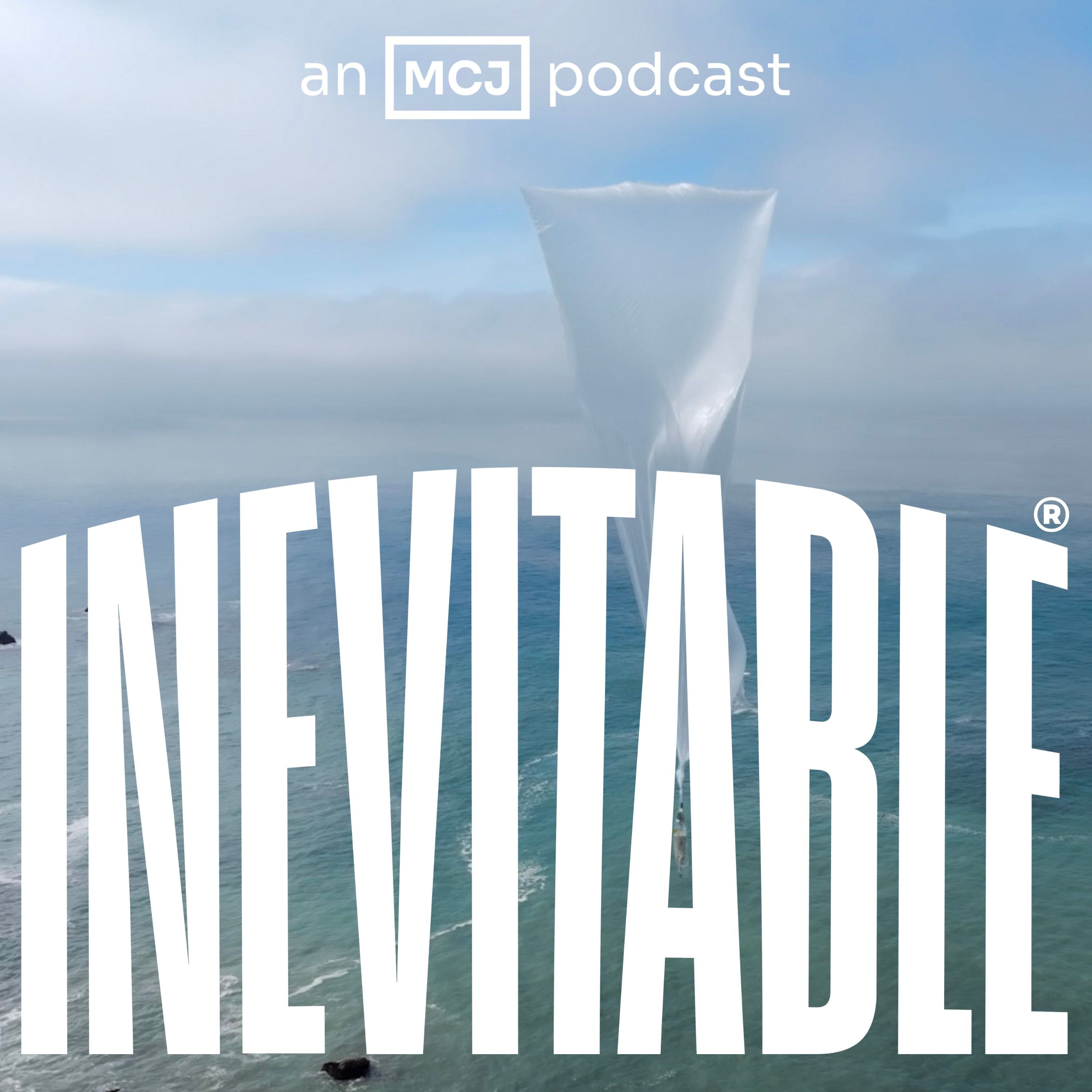
Inevitable
Improving Weather Forecasting with WindBorne
00:38:17
John Dean is Co-Founder and CEO of WindBorne, a company building next-generation weather balloons and an AI-powered forecasting layer to improve global weather prediction. WindBorne’s balloons can stay aloft for weeks — collecting critical atmospheric data across oceans and remote regions where traditional weather infrastructure doesn’t reach. In this episode of Inevitable, Dean explains why weather forecasting has remained largely unchanged for decades and why better data—not just better models—is the key to improving weather predictions. Our conversation explores how WindBorne’s balloon constellation captures atmospheric data at a global scale, how AI models like WeatherMesh translate that data into more accurate forecasts, and why extreme weather and infrastructure gaps are creating urgency for better systems. Dean also shares how the company makes money across data, forecasting, and insights—and his long-term vision of building “a planetary-scale nervous system.”
Loading summary
Transcript87 lines
- [00:00]
A
Today on Inevitable, our guest is John Dean, co founder and CEO of Windborne Systems. Windborne develops next generation weather balloons and an AI powered weather forecasting layer on top of the data they collect. Before this conversation, I'd never stopped to think much about weather balloons at all. This type of invisible infrastructure is fascinating to me. What I learned in talking with John is that the technology we use to understand the atmosphere had changed very little in decades, at least until Windborn. Satellites have improved by leaps and bounds, and AI is now dramatically improving forecast models, but the actual in situ data we collect from inside the atmosphere itself. The ground truth that all these models depend on has largely been the same story since the 1950s. A balloon rises for two hours, pops and falls back to Earth. Windborn's insight was to fix that. Their balloons fly for weeks, navigate autonomously, and cover the 85% of the planet, mostly ocean, where traditional weather observation simply doesn't reach. The why now is real. Extreme weather is intensifying. Federal cuts have created new gaps in US observation infrastructure. And for the first time, AI models are good enough to actually turn better data into meaningfully better forecasts. John co founded the company in 2019 out of Stanford. This is a conversation about what becomes possible when decades of improvement in sensors, batteries, satellite communications and AI converge on a problem that nobody thought to revisit. From mcj, I'm Cody Sims, and this is inevitable. Climate change is inevitable. It's already here, but so are the solutions shaping our future. Join us every week to learn from experts and entrepreneurs about the transition of energy and industry. John, welcome to the show.
- [02:21]
B
Hey, thanks Scott. Good to be here.
- [02:23]
A
There's this category of infrastructure that modern life largely depends on, but people don't think about. There's everything from the power grid to GPS to undersea cables. And honestly, I think weather balloons and weather forecasting fall on that list as well. Every day, hundreds of balloons launch around, and honestly, until I was researching this episode, I had no idea any of that was out there. Before we even dive into what windborne is or any of that. Why is weather observation so invisible and how does it work?
- [02:57]
B
Yeah, it's a great question. Yeah, I mean like 7 or 8 billion people on Earth and pretty much every single one of those at least once a month is going to interact with the weather forecast at some point in time. Before I started Windborne, I never really thought about, oh, like, where does that forecast come from? How is it made so very high level? Weather forecasting historically has been very much done in the public sector. By government agencies. And when I say forecasting, I mean both weather observation and weather forecasting itself. And so I'll start with the observation piece. So if you want to know what the weather's going to be over the next two weeks, you have to know what the current weather is everywhere in the globe. That seems kind of trivial. If you're like over land, you say, oh, you can look outside and see there's clouds and outclouds. But you have to quantify that, you have to take actual measurements. And then the challenge is that Earth is this massive system. Only 30% is lands, only 15% is actually populated lands in terms of area. But you need to know the entire planet because if you wanted the weather a week from now, the weather over the ocean is going to influence that.
- [03:43]
A
Weather of the ocean is like the major cause of what happens to weather on land. Yes, yeah.
- [03:49]
B
For most severe weather events, that's the case even in the whole picture. And so this is mostly done historically by government agencies, although it's been now switching to kind of more public prior partnership because of companies like Windborne. But as the backdrop, you basically need observations. There are kind of three categories of observations. There's surface stations, there are in situ atmospheric observations, primarily collected through weather balloons. And then there's satellites. I'll jump into weather balloons. So weather balloons are like one of the key backbones for weather observation. Every day around the planet, more than a thousand traditional weather balloons, they're called radiosondes, are launched every day. So for a visual picture, like an oversized party balloon, they're made of latex. You launch them over land, they rise for about two hours, they reach their maximum altitude, they pop just like a party balloon would, and they fall back down. And you have a little sensor payload that relays temperature, pressure, humidity and wind speed and direction. In that time, this was started back about like 70, 60 years ago.
- [04:36]
A
I had no idea. Weather balloons have a two hour half life or not half life.
- [04:39]
B
A two hour full life. Yeah, it's full life. Yeah, that's right. And the reason why is that they rise and they pop. As they rise, the air pressure decreases, balloon gets bigger and bigger and bigger. Eventually it bursts and comes back down and you get one, what's called sounding of data. So it's a vertical profile of the atmosphere. It's like three dimensional information and that's like the core state of the atmosphere. You need this because ground station tells you the surface conditions and satellites tell you some of the information in the atmosphere. But satellite, you get A two dimensional picture, right? You're outside of it, you're looking into it, and the atmosphere is very thin relative to where you are in space. And so you can kind of like observe some properties. But if you want three dimensional high, the accurate information, you have to basically drag a sensor package through the air itself. And, and historically these traditional weather balloons were the best way to do that. WOMB does this kind of thing, but with long duration balloons that fly for two weeks rather than two hours. But to go back to how weather forecasts are made, all these data sources are collected mostly by government agencies and then they're used in weather models. Traditionally this is done with a physics based model. So imagine you're kind of like simulating the atmosphere. We've seen a video of like a physics simulation of like hair moving around, the kind you might use in a visual effects studio. Imagine that, except scientifically accurate, simulating physics over the entire Earth. Now this is extremely computationally intensive because Earth is huge. You need to simulate these physics at very high resolution. You ingest all the data for the current weather, you do something that's called data assimilation. That's saying, hey, given all these observations of different types, what's my best guess for the weather over this uniform grid? And then you simulate it forward in time and both steps, the forecasting and the assimilation, both very computationally intensive with traditional physics based simulation methods. And then once you have that, you then can run a bunch of additional analysis layers and you basically send out that information through APIs, through radio, through airports, all these other distribution methods to get forecasts to the public. So if you open your smartphone and you look at a weather forecast from Google, Google does some of their own weather forecasting, but the bulk of the work is actually being done by government agencies that make things relatively freely available and then broadcast to the public and to private companies through various means.
- [06:26]
A
Whether forecasting historically the brunt of bad jokes about how bad I guess it is, do you expect even without adding a bunch of new data points, which Windborne is trying to do, to that mix. In this age of AI, should weather forecasting just natively get better regardless?
- [06:44]
B
I think it would. I think the amount of improvement you'll see just from AI alone will be less than the amount of improvement you'll see from adding in AI plus better data sets because there's still a data limitation problem. You can have the smartest AI model in the world, but if it doesn't know the initial conditions accurately, you're going to have inherent error in what you're doing. And we'll get into AI forecasting. But AI based forecasting is still using physics. It's just that the AI model learns how to simulate physics better than a handwritten model. So at the end of the day, you still need to kind of like run all the physics, whether it's AI or whether it's explicitly code, that's simulating physics and you need the good initial conditions. But also, that being said, even when we have perfect AI and we have perfect observations, there is an inherent unpredictability and chaos in weather. And so I predict that for the end of time, humans are going to complain about weather forecasts. They might get 3x better. We all love complaining. That's how the society gets better. And so the complaints will always keep coming. It'll always be the brunt of jokes. That's just how it is.
- [07:31]
A
Well, we're going to complain about the weather even if we don't complain about the forecast.
- [07:34]
B
That's true, that's true.
- [07:35]
A
Also dealing with a world where extreme weather has increased substantially in the last decade plus. And so regardless of the forecast anticipating a weather event, it sometimes is struggling to anticipate the extremity of said event. Is that correct?
- [07:50]
B
That's totally correct. There's so many parameters to predict in a weather forecast might seem simple operating the weather, but like think about how many numbers it takes to quantify that over the earth and at these high resolutions. It's a lot of things to predict.
- [08:00]
A
And just from my own knowledge, what's the role of the local weather person, the person on the local news, are they actually doing calculations?
- [08:08]
B
So the way to think about this, especially if you're like AI pilled, you're very affording an AI. So the models predict the physics based models and even to some extent the current suite of AI based models, they predict weather in a very generalized way. But there's gonna be local terrain effects that affect the weather patterns. And what that human being is doing is they're kind of taking their human intuition and applying it on top of the output of the model. That's actually really valuable work because the current state of these models, they don't have enough training data to train off of actual ground truth observations to kind of have all these historical events. But if you think about a human being that lives in some town in the rockies, they've spent 50 years of their life seeing weather patterns and making correlations. And the human brain is a great predictive engine. So you can take the output of a physical model and correct it being, oh, it's always wrong in the same way here because the model doesn't have enough compute, enough smarts to correct itself. By the way, that will change. As AI is better and better at forecasting and we get more and more data, eventually the human will have no real utility in aiding on the forecast. But at this point in time they absolutely do. And the last part though is the value of the weatherman is just communicating to other human beings. Humans like listening to humans talk. It's entertaining, it resonates in a way. And so I think there's always value in the human beings communicating to other humans. That will never go away, but the role will change a bit.
- [09:14]
A
You mentioned satellites and the ability to observe from above. Obviously we've seen an incredible penetration of satellites in the last decade as well. Starlink veo everything. Can we not solve this problem just by continuing to invest in space based technologies?
- [09:29]
B
Satellites have been awesome. Like the biggest improvement in observation in the past 30 years has come from space. Satellites are definitively one of the critical pieces of weather forecasting. The challenge is the laws of physics simply do not allow you to measure with high accuracy the temperature 2 km above the ground beneath clouds. You can measure all sorts of awesome things using a ton of different techniques, they're all pretty cool. But you can't measure things precisely at high resolution. And so you always need ground truth data as well. But I would say to date we're not quite there yet, but we're getting close to the limit of like saturating what satellites can do. There's still actually more room for improvement, but we've getting close to collecting all data you can from space. But the laws of physics are now your bigger limiter. But then if you look in situ sensors you have in the atmosphere, we're still not even close to that limit yet because we don't have sensors everywhere yet.
- [10:10]
A
One last understanding question and then let's dive into what you're building. You've emphasized how important government and public private collaboration is in this space. And yet over the last year there's been very serious cuts to, at least in the United States government funding around noaa. How impactful is that in our understanding of weather forecasting?
- [10:32]
B
There's actually a bit of a misnomer on this towards NOAA have primarily been towards academic research and climate research. You know, forecasting the climate over a long term, improving weather forecasting. What's the weather gonna be over two weeks? Weather and climate are related, but they're kind of Two separate things. In a way, weather is extremely bipartisan. I was in D.C. last week, I was talking to congressional staff about a number of policy items related to budgeting and to weather policy. If anything, you almost get more support from Republicans than Democrats. Only because Southeast has the most severe weather in the country and that's most United States. And so there's been chaos going on in the US Government that caused some problems for NOAA on their weather forecasting side. But there is no political will to cut and reduce weather forecasting. If anything, I'd say it's actually increasing. It's the academic side and the research that's really getting hit hard. They're kind of two separate things.
- [11:16]
A
So the extrapolation of whether trends over time into understanding climate change has been cut severely, as I understand it. But the daily two week forecasting infrastructure is largely intact.
- [11:27]
B
That's right. And actually on that last point too, about what's been cut, the most damaging thing about cuts to some of these programs is I actually don't believe it's the lack of new research. Like, to be honest, we have lots of research. The problem is those Systems that these PhD programs, all the grants, they produce smart, educated human beings. One of the goals of academia is not research, but it's to produce amazingly qualified people that can go work in industry. And so the thing I'm actually most worried about is not what's the next like two or four years. I actually think there won't be a big change in the end. The thing is like what do you do 10 years in the future when you have a missing generation of scientists and engineers? That's actually, I think the biggest thing, the undervalued part of a lot of this stuff is we need a system. You want a factory that produces educated people and that's what academia does. That's actually the real risk that I see. And that's true beyond weather and climate.
- [12:06]
A
We're seeing that right now in other parts of the economy, whether it's industrial, build out, nuclear, et cetera. We just don't have the skilled workforce because we didn't invest in it for the last 10, 20 years.
- [12:16]
B
It remains to be seen what the right balance is in academia and where the funding should go. On the very positive side, at least I'm an optimist. Public private partnership, which is a great way to do weather forecasting where you have the government funds that it's for public good, but private companies do it better and cheaper than government can. That has exploded recently. There's Way bigger budgets for that. I'm very optimistic with that front. So at least there's been a positive policy change in the last couple of years.
- [12:35]
A
Okay, you described the traditional weather balloon. These thousand sites around the world that are launching these latex like balloons into the atmosphere for two hours to collect in situ data. Where did you see an opportunity to improve that and what led to starting Windborne?
- [12:50]
B
A thousand of these traditional balloons are launched, they fly for two hours and they pop. The thought as an engineer is like, well, what if we just made them fly longer? The reason why they pop is they rise too much. What if you like had a way to vent gas and then okay, well if you do that, the problem is it'll rise, it'll level off, and then whenever nightfall comes, the balloon will cool down, it'll lose some lift and it'll fall back down. So it's like, well, what's the simplest way to keep it aloft? Oh, you add ballast, some mass like sand that you can drop and now you can go up and down. Your duration is finite. But if you do this, you can get much more data per balloon than you could otherwise. And it's low cost. All these different methods you can use to make balloons stay off longer. But before windborne, they were all expensive, heavy, and they made the balloons not really scalable. So when we started Windborn is because we were working on long duration balloons, not start a company, but literally for fun. So my background, I did my undergrad at Stanford, I worked at SpaceX for a summer. I was really interested in aerospace and I still am. I love space. That's why I like say great things about satellites. But if you're in college and you want to do hands on engineering, you can't really do rockets or satellites on a student budget or timeline. I did rockets for a little bit. Rockets are really fun to work on. But the problem is the cool parts about rockets are like when you can have guidance. Once you do that, it becomes a guided missile and then you get it restrictions. So you can't do anything fun with rockets on student budget. Also the university risk management, it doesn't like it. But balloons are safe, they're low cost and they're almost space. So we're like, okay, we're flying these balloons. Boyfriends made them fly longer. Because it's not fun to only have two hours of data and then just doing that. By the time I was graduating, we had a flight that lasted five days and like landed in Morocco. I think we broke the latex endurance Record. And we're like, wow, this is interesting. But again, we weren't trying to start a company at the time, we were just doing it for fun. But then we were looking at this and we're like, wow, like a thousand of these weather balloons launch every day. Our balloon platform is like 10x more cost effective. Hmm. If we build out the system. And then Also, okay, only 15% of the world has accurate weather observations, but you need a hundred percent for per forecasts. The biggest source of error in forecasting is lack of initial conditions over oceans. We could just solve this problem. It'd be cheaper, we get more coverage. And so we started the company.
- [14:32]
A
Surely there have been attempts at longer duration balloons and using a ballast to radically discount what you're doing. This isn't rocket science. Right. It's sand in a, in a balloon.
- [14:41]
B
Yeah. The key is that only recently was it possible to have a balloon with a lightweight avionics package that could fly for weeks at a time and, and communicate back to the ground. In the 1980s, you tried to build this. The avionics package that would power the balloon would weigh multiple pounds. The problem is the heavier you are, you pose a threat to other objects in the sky. There's a different set of clearances that make it not scalable to fly all around the world. And two, the costs go up. And so basically, you can think of Windborne as taking all the technology in this smartphone and applying it to a balloon. And now you get to a weight where you can get long duration, endurance and the economics workout. So that's really all it takes. And going back to what we said, there's a quote, it's like a phrase that everyone used at SpaceX back when I was there, but which is, it takes a lot of smarts to design something dumb that works. And that is the philosophy of Windborne. Some startups and some companies like, say, oh, we have this super hyper advanced technology. It's like, no, we've spent five years optimizing everything to be as dumb as possible. And that takes a lot of smarts. And once you do that, you can now scale it into oblivion and have tens of thousands of balloons aloft at all times. Got it.
- [15:35]
A
So there's a real why now? Which is that the technology that you rely on is now light enough to enable you to do this, which allowed you to have the insight of, oh, if we can correctly figure out weights and levers of creating the right ballast system here, it's actually technically possible.
- [15:51]
B
Now a fun anecdote of this is. So we started the company before COVID actually just around when Covid happens. And the biggest problem for long duration is that we had to use non rechargeable batteries. So that actually capped our endurance to like five days. Basically. It was fundamental because any rechargeable battery could not work at low temperature and the atmosphere is very cold and you don't have enough power to heat up the thing to keep it aloft. During COVID there were advancements because the battery supply chain around delivering cold vaccines to make rechargeable chemistries that can work at very, very low temperatures. We have instantly adopted that. Now our balloons are rechargeable. So we have a balloon that's aloft, that's been aloft for I think over seven months right now. That's of course required to charge our batteries. That wasn't possible five years ago.
- [16:26]
A
Describe a windborne balloon. What am I looking at? You launch from Palo Alto or whatever. What happens over the next 50 days? 100 days?
- [16:35]
B
So rather than flying for two hours like a traditional balloon, we actually can fly for months. Our average endurance is around two weeks. And the reason why our average endurance is lower than this max endurance is that balloons are going up and down using vent and ballast. So the key part of our balloons that make them useful is that they can stay aloft for a long time. They're very low cost and very scalable, and they can go up and down. You have to descend and ascend through the troposphere to collect that weather data. You can't just sit in the stratosphere, you have to go up and down. And that's what makes them unique. And so right now we have, as we're speaking, we have roughly 250 balloons aloft at all times. We're launching balloons from about 13 or 14 permanent launch sites. Some of those are based in the US Some of them are based overseas. We have a launch site in Korea, for example. So every day we're manufacturing balloons in Palo Alto, we're launching from our launch sites and then we're navigating in the Constellation. They fly for about two weeks on average.
- [17:15]
A
And you call it a constellation. Are they talking to one another in addition to the ground?
- [17:19]
B
They will in the future. Right now they're using the Iridium satellite network, so it goes balloon to satellite to ground. And by the way, that ability to have a lightweight, low cost satellite modem is a very key part of what made this whole technology possible.
- [17:31]
A
Talk about that mesh. What are you learning from that aggregate collection that you're getting.
- [17:35]
B
Yeah. So the constellation collects this ground truth weather data all over.
- [17:38]
A
By the way, you call the constellation Atlas, is that right?
- [17:40]
B
That's right. Atlas is the name. So the balloon itself we call the global sounding balloon. And then you fly lots of them and you have this constellation called Atlas. And constellation is the right term, especially when you kind of compare it to satellites. Think of a satellite constellation, you obviously have a lot for a long time, same as what Wimborne does. Like Atlas is the product, not the individual balloon. And individual balloons aren't that useful, but they're very useful when they're all used together. And so to your question, we're flying balloons all over the globe. We fly them into hurricanes, we fly them into atmospheric rivers. So this gives us ground truth data that we use to initialize weather models and create more accurate weather forecasts.
- [18:08]
A
And through this weather forecast, I know you had a win, which was you actually predicted a hurricane before other traditional weather models did. Can you maybe walk us through that story?
- [18:17]
B
Now that we've been operational for a couple of years now, there's dozens of hurricanes that we predict. One of the most interesting case studies actually probably still my favorite case study to date, it was an in hindsight case study, but we used Weather Mesh, our AI based weather model. I haven't really gotten into that yet. And what we just saw is like you do a back test, which is the kind of the best test for weather model. Basically saying, hey, the model is trained up to a certain date cutoff in the time afterwards. We're going to back test it, run it using the initial conditions that we had back then and see how well do we do on hurricane ground tracks. And what we see is AI models like Weather Mesh can reduce the ground track error of hurricane by about 50% on average. So we roughly cut the amount of error in terms of location forecast or where the hurricane would go down by a factor of two. And then over the last couple of years, the last two hurricane seasons, we now run that model live. That goes to some of our customers in cruise hurricane forecasting.
- [18:58]
A
From a data coverage perspective, what are you able to collect by staying aloft for so long that is so different from these thousand sites a day that are launching traditional balloons?
- [19:09]
B
So it's the same data. It's temperature, pressure, humidity, wind speed and direction. But you have that data now all over the earth and especially in remote areas. We've flown balloons into the eye of a few hurricanes. Now we can actually get data inside the hurricane. We fly them over Oceans. There is a phenomenon called atmospheric rivers which brings a lot of rain to the west coast of the United States. We can fly a balloon in and around those rivers before they make landfall. That allows us to better quantify the humidity content, the amount of moisture in their storms to better predict where they're going to go.
- [19:34]
A
Picturing the movie Twisters with all of the, like little things that are flying around inside the tornado and able to see what's going on in the tornado. I know it's not quite that. That's where my mind goes.
- [19:43]
B
A good kind of visual picture is not weather related. But imagine if you had an image and you only had little pinpricks in parts of the image where you actually could see the pixels and then the rest of the pixels were black. And you ask, what is this image showing you? Very hard. What Windborn does is windborne, fills in all the pixels all over the globe so there aren't these gaps. Because currently, before windborne, we only had adequate weather observations over 15% of the planet. That's where there's land and where there's enough humans to actually launch balloons every day. Yeah.
- [20:07]
A
So you're flying over ocean too, I presume?
- [20:09]
B
Right now we're flying. We basically cover the entire Northern Hemisphere, most of the Arctic as well. And then we also just recently opened a permanent launch site in New Zealand, and now we're getting down in the Southern hemisphere as well.
- [20:17]
A
At what height are these flying? And talk to me about FAA safety. I know you all had a recent incident that I assume was quite severe and probably took a lot of your time navigating. Maybe share a bit about that. But also just talk about how you think about the safety aspects of flying objects through commercial airspace.
- [20:35]
B
With the incident that happened where a plane ran into a window balloon. Because their balloons are lightweight, they don't produce significant damage to the aircraft. So there was no depressurization events and the plane was able to make a safe diversion. So you get a cracked windshield.
- [20:46]
A
It cracked the windshield. And the pilots had like glass fragments flying at them. Right? There was an incident for sure.
- [20:51]
B
Yeah. But the key part is you want to make sure that you're not introducing any kind of significant threat to the rest of human life. And ultimately, planes are designed to run into lightweight objects. So there are dozens of bird strikes a year. And so this goes to regulations. If you're flying a balloon that's above six pounds, you now pose a significant risk to aircraft upon collision. So the type of coordination you have to do with the FAA and the airspace approval you need is, becomes very intense and you have to fly what's called an ADS B transponder on the balloon so that planes can kind of see its location in the sky. But if you're below six pounds, which windward is now far below six pounds, the F8 deems it to be not a significant risk to aircraft. And the reason for this is because there are about, I think 100 million birds or 40 million birds in the Northern Hemisphere that are lost at all times. There's only going to be dozens of balloons. And so we fly our balloons through the entire atmosphere, we fly up the stress and we go back down through the troposphere. And so we do share the airspace with planes. But the design of the platform is to be if an object strikes the balloon, the balloon disintegrates and can't deliver very much energy. So if you had a six pound ball of lead on the balloon, that would do serious damage. If you have a 6lb bag of sand in a very like thin plastic covering, when that gets hit, the sand goes sideways and disperses. You don't make a significant impact. And so for the United flight that hit a balloon. So there's basically kind of levels of damage to our windshield. I would expect that if a future incident were to occur, which is unlikely given some of the changes that we made, it would still crack the windshield, but it'd be only the outside layer in that incident. The inside layer also, it's called spalling. It cracked and that produced shattered glass. There's still a pretty decent margin between that happening and getting depressurization, which is where you actually introduce more significant risk. But that's still more than kind of what I deem acceptable. And so we made a bunch of changes to kind of further spread the mass of the balloon. And then over the long term, the balloons will get lighter and lighter. So on launch, I think they're about three to four pounds total. In the long term, you'd measure in grams or ounces, so we'd be sub £1 at that point. No one quantifies how many insect strikes there are per day by aircraft. Every aircraft is going to hit, I don't know, thousands of insects in every flight. Once you get small enough, you transmit zero energy. And that's kind of the direction of the platform. Going here to clarify real quick, there's an NCSP investigation going on about the incident. They filed a preliminary. We worked with them on day one. So basically, the second we heard about it, within eight hours we conduct the FAA and the ntsb. That stands for the National Transportation Safety Board. So they will make the final determination about what happened. Right. So after it happened, we assumed, hey, it looks like a windmorn balloon. I think their preliminary report confirmed that. But I just have to clarify, I'm not the source of truth on like what happened. The source of truth on the incident is the ntsb. And so I would direct anyone interested into reading the preliminary report from them. Or the final report will come out maybe in about a year from now, or I guess six months now, because it's been a while since the incident. The reason why I'm quite minding that is that the NTSB does not like when anybody shares information that could cause misinformation about it.
- [23:13]
A
Yeah, it makes sense. It's an active under investigation item, it sounds like. And by the way, I think you guys originally recognized this incident happened. No one knew it was a weather balloon. And you sort of put your hands up and you said, oh gosh, we think that might have been us, right?
- [23:25]
B
Yeah, yeah, yeah. I saw people on Twitter talking about how like it might have been a space meteor before. I'm a CEO, I'm an engineer, I'm a tent person. I have a deep attachment to the truth. And so whenever I see something online that's wild speculation, I'm like, man, I should probably just correct the record here. When we first saw it, we didn't know it was a wimbor balloon for it. It took some time for us to confirm it was us. Obviously I'm not going to go post something and then add the speculation, but once you were kind of confirmed it was us, we sent that report to both FAA and the ntsb. And then within a day I was like, okay, like it was likely a wimbler and balloon because. And the reason that's important to me is ultimately like, I would rather not do what Wimburn's doing than make a significant safety hazard. So it's important to get the information out there that, hey, all these balloons in the sky, Wimbledon's not the only one flying these balloons. It's important that we adopt safety standards and in my personal belief is that balloons are slightly under regulated. I wish there was a better framework for this. We go above and beyond what we're required to do by the faa. In general, I just wanna be transparent about safety. At the end of the day, Boomer's vision is to fly millions of balloons aloft at once to produce better weather forecasts that will save human lives. But we're only gonna do it if we do it in a safe manner. And so by being transparent, you improve safety.
- [24:20]
A
Thanks for sharing all that. I wanna pivot the conversation a little bit and understand the business you're building. Maybe walk us through the business model from first principles. Who's paying you? What are they buying? Is someone paying you to launch the balloons? Are they buying data from you? Describe how the company works economically.
- [24:35]
B
Yeah, so Womborn has kind of like three layers of our business. So the first layer is the data collection and the business model. There is data as a service. So no one buys balloons from Windborns. They buy a subscription data feed from Atlas, the Constellation and the primary customers there are government agencies. Then you have layer two, which is our AI based weather forecasting that we where we use our balloon observations, we also use all the other observations that are publicly available from, collected by and paid for by government agencies, like for example, traditional weather balloon satellites. And we do AI based weather forecasts and we also build AI based weather forecast tailored to certain customers. So like we will build a weather model that's specific to customer data for customer need. And the last layer is we build Insights products around our weather forecast. So we sell an API weather forecast to a few different hedge funds, people that buy and sell commodity futures, whereby there's a big impact. And then we're also doing and working on selling weather forecast to utilities for disaster mitigation. So the idea is the core of the foundation of the company is data collection. But we don't want just to collect data, we want to collect data. We also want to make the data as useful as possible. And the way you do that is you forecast and then you build Insights products around that.
- [25:32]
A
And your initial customers were on that first product you described, which was government agencies actually actively buying data from you. Everybody from Noah to I believe branches of DoD and whatnot. Can you expand on how the other two have grown?
- [25:48]
B
Revenue, by the way, still mostly data as a service, by the way. That's actually the chunk of revenue I'm the most excited about growing over the next few years. Windward's mission is to build this planetary nervous system where we have this Constellation Atlas. The balloons are aloft all over the globe collecting weather data. Also when the balloon lands, by the way, they still work on the ground. I think we have probably around 130 years of flight data at this point. We have like 70 years of ground station data after the balloon lands. And so completely think of the company as like building this planetary Nervous system selling the observations from that is a great business model. Like we'll do other things in the future, but that's actually still growing rapidly. And so most of our revenue is still as a service, whether on the AI based weather modeling side that's also grown pretty rapidly in the last two years. We didn't have a business model around that two years ago. Now we do and now we're doing a few million a year doing tailored weather forecasts for a couple different customers. This is still very government heavy. And then on the API side that's also pretty brand new and we've seen like pretty great growth and traction there. But kind of like where I focus on it as a CEO is I want to build that foundation really well. If you think of SpaceX for example, SpaceX now does satellite for Starlink, but they spent, you know, over a decade perfecting the foundation of space, which is the launch industry. That's what I'm also doing with my work.
- [26:44]
A
The data layer is more of a public good where you can build a business building a public good. The bespoke APIs and everything probably have very targeted commercial use cases that are looking for edge and looking for proprietary insights from you.
- [26:58]
B
That's right. And there are some public good angles you can do with AI based modeling. So for example, a policy that I have that I've been advocating for is so NOAA has adopted public prior partnership. NOAA being the National Oceanographic Atmosphere Administration, NOAA has adopted private data like Windborne's operationally, but they still don't collaborate with private companies on the modeling side itself. In the long term, I would like to be a modeling partner of NOAA where Wimborne's running our AI based model weather mesh for public good, paid for and funded by Noah. I think that's also really important.
- [27:24]
A
But indeed on the data as a service model, it would seem like every new customer you add is almost pure margin because you have a fixed infrastructure cost of the balloons themselves and you're just finding more subscribers to the data that your constellation creates.
- [27:38]
B
That's right. Except at the same time we're also flying more and more balloons at any given point in time. If you look at the total margin of Constellation Atlas, it'll be fluctuating. Right, because we'll scale balloons up a bunch of and then we'll get a massive contract for it. So it'll change over time. And the general goal is to keep scaling out this. We're trying to double our data collection per day every six months essentially.
- [27:53]
A
You're collecting data that is directionally different than the traditional weather balloon. We talked about the traditional weather balloon as a single point geographically up and down, whereas you're traveling horizontally across the globe. Do those data pathways interact with one another, or are you building a completely separate view of planetary intelligence?
- [28:15]
B
I would say we're filling the gaps and we're getting more data, but it's kind of the same type of data. Imagine you have an image in front of you and you only can see 15% of the pixels in the image, and most of it's just black. What Wimbledon is doing is we're filling in all those other pixels and we're able to fill in the existing pixels from much lower cost. And so it's like we're not doing any totally, like, new type of observation. At the end of the day, the atmosphere can be summarized pretty well by temperature, pressure, humidity, and the wind speed direction that summarizes the state of the atmosphere. But you just want to do that more cost effectively and in more locations. And that's what Atlas solves.
- [28:45]
A
On the bespoke API side, I assume energy trading is a big use case. Wind in particular is the largest driver, I think, of volatility in our energy markets globally today.
- [28:54]
B
Well, it's actually wind and then also temperature, because temperature drives the demand side a lot. Wind and then cloud cover drive the generation side. When you get to natural gas, you get some other factors as well. If you're trading the price of electricity, a 5% edge in your forecast compounded over time, can give you huge margins. And by the way, also in the finance lens, so many people think like, oh, what's the point of improving margins for traders and hedge funds? Like, what good does that do? It actually does help the grid itself. The most efficient grids in the world are the ones where you can trade on futures because that allows the grid to dynamically allocate demand. So if you convert the weather better and then people can trade with a better edge, that actually does drive grid efficiency as well. So it's a really important area.
- [29:30]
A
I presume utilities also, and grid operators in theory, should be using data like this, or probably are.
- [29:37]
B
Yep. And that likes to have. Right. So when I think about data that I think about weather observations, they're using forecasts from Born, which goes through our AI model. And for utilities, there's a number of reasons why weather forecasting matters. A big one also is outage projection. So when there's a severe weather event, power lines go down, you have outages, and One of our goals working with utilities over the next year is we want to take the mean time to fix an outage. We want to drop that in half. And you can do that if you know where the severe weather is going to be. You can pre deploy your crews in the ground to fix utility poles ahead of time. And utility companies do this already. The problem is when the forecast is wrong, you have massive reallocations, you spend a lot of money deploying crews to the wrong location and your average restoration times go up. With better weather forecasts, we could chop those in half. And that's one of the goals of our utilities products.
- [30:15]
A
For you as a CEO, how have you evolved your own learning running the business, from a technologist building balloons and understanding what's possible to now understanding the needs of large energy traders and large grid operators.
- [30:27]
B
So it's been pretty interesting. And like before we start rimboard, right, like you mentioned at the beginning, there's always things our utilities in our everyday life we never really think about, right? So weather forecasting, I didn't really think about that often. Just like you mentioned undersea cables, that's the backbone of the Internet. But no one thinks about it very often. And now it's kind of top of my mind to me how important it is for every business, how much should impact people's lives. Back when we were founding the company, that was one of those thoughts where we talk to some people and we're like, wow. Weather forecasts affect almost every industry and bad forecasts are a problem everywhere. I will say, by the way, one funny thing I've learned being a Bay Area resident, now founding Memorial, is that the Bay Area is not the ideal place to be when you want to be interested in weather. Our weather in the Bay Area is far too boring. It's too sunny every day. So you ask me, hey, John, how much do you personally use weather forecasts? Not nearly as much. I grew up on the East Coast. I used weather forecasts way more. Back then. I didn't think about it. Now I think about it, but I'm like, hey, if you look behind me, it looks the same almost every day. So it is better. Actually. Our meteorology team is mostly not based in the Bay Area because meteorologists don't want to live where the weather's boring.
- [31:18]
A
For the most part, the coldest winter I ever spent was summer in San Francisco. That was Mark Twain.
- [31:22]
B
Yeah, that's true. And it's always consistent too. One anecdote is I have been using weather forecast a lot more recently, myself. So after the United incident, I decided that as a company that's operating in the sky, it's important for myself to also be a pilot, to understand the risk dramatically as an individual. So I'm actually currently in the process of getting my pilot's license. And so even in the Bay Area, that is a field where every single day you're tracking the weather forecast. It affects everything about how you're flying planes, especially, you know, when you're getting certified, you do vfr, which is only visual, so you can't fly into clouds. And so now I'm using weather forecast much more often than I used to, even though I live in the Bay.
- [31:50]
A
You were talking earlier about how advancements in technology that are exogenous to you have led to the ability to do Windborne. That's not a frozen moment in time. These chips, these sensors, everything is continuing to get smaller, lighter, more powerful. What does that mean for you over the next five or 10 years of building this business?
- [32:10]
B
This is by far my favorite and most exciting part of the company. So in the last five years since we started Windborne, we haven't actually changed the platform all that much. We've done some tweaks to it. We've kind of made it fly longer. We haven't actually tried to optimize the cost of the platform too much. Just for some rough numbers. Every flight we do the total cost of that flight. If you include the labor to manufacture it, the launch, the lifting gas, the communication credits, it's a little over $1,000 per balloon. As a comparison point, a traditional weather balloon costs $400 to launch. So every day you only get two hours of data and you spend 400 bucks and you launch a thousand every day. That's what mankind does. We're only a little more than double the price. We get about 100x more data, but we haven't actually put effort into like making it cheaper per balloon. And the biggest bottleneck there is communication. The Iridium satellite constellation I think was launched in the late 90s, could be off on that, but about 30 years ago now that's like half the cost of the platform. It's also half of the mass driver as well. The mass budget of the platform based around this as Starlink now is global engineer with satellites. The other small constellations there also are much better networking chips. So the Bluetooth chip on your phone allows for low power Bluetooth, which you actually can use over long distance as well. All these comm technologies has now made communications much more scalable for a low cost, cheap platform. And so that's the biggest thing they'll improve on the next few years. We'll be doing more balloon to balloon mesh networking and we'll be talking to satellite constellations that are far less expensive to talk to. So this will drive down the cost of flight dramatically. The only thing that's gotten much easier with AI is hasn't happened quite yet. In 2025, we saw AI like complete so much of software development. So no one at Windborn really writes code manually. Software engineers are still very useful, but they're kind of managing the code. They're not writing the code, they're managing how it's deployed. They're thinking holistically. I believe the same thing is going to happen within chip design. Ship design itself will also get eaten by software where basically you can go from idea to a silicon design, silicon fab by a lab. The verification will be done by AI rather than engineers and it'll greatly accelerate development time. What we're going to do is we're going to be developing custom chips and taking a $500 or $400 bomb cost and making a $20 chip that's also, you know, the size of like a small insect. And so this completely neutralizes any kind of risk to any kind of aircraft. My saying there is, if there is a future strike to Emerald Balloon, it'll be a cosmetic damage only. It'll be like, you know, scraping a bug off your windshield. And the cost per balloon will go from $1,000 to $20. This allows us to build this like true planetary scale nervous system. And if you think as a technology as it's very satisfying, silicon manufacturing is the most advanced and efficient manufacturing process that we have. If you can design your own silicon, you can put nerves all over the planet for tiny a very low cost. And so six months ago I said, hey, our vision is we're going to have 10,000 balloons aloft. We have 250 today on a log scale we're actually getting pretty close to that number. You know, it's like going from 10 to 100 is about as hard as you're going from 100 to 2,000. But I think our long term goal is now having about roughly a million balloons all times in the server system because the technology is that scalable.
- [34:49]
A
John, I love the vision. Where do you need help? For anyone listening that's interested, what should they do?
- [34:55]
B
Yeah, so I think mainly for us, I mean, top talent's always important for growing a business. And so AI is Changing the workplace a ton. But I'm still very pro human talent of all forms. If you're interested in working on technology where you can literally go outside and launch a balloon, that balloon will fly all around the globe. So it's cutting edge technology, it's global, we're helping the entire world. We're producing better weather forecasts that don't just help companies. But right now, as we speak, our balloons are feeding into Noah's weather forecast called gfs. And so if you're looking at weather forecast, Windborne balloons are already improving it. So you want to do a mission that's actually helping humanity and you're working on technology. Wimborne's a great place to work. We're very AI forward and I'm a big believer in teaching people and learning. And so like if you're a fresh out of college and the job market is terrible, but you want to work somewhere cool, you can come to Windborne. We'll train you up on how to use stuff. You'll grow very fast over a year. And so I think talent is probably our number one need right now.
- [35:35]
A
John, this has been a great conversation. Thanks so much for sharing what you're up to. Any final takeaways that we should cover?
- [35:40]
B
Yeah, I think the last thing I want to add is if you think about how like AI is changing the world, I think there's a lot of fear around how AI will change the world. Which by the way, I love using AI. I'm very optimistic. But the fear is also very real. There's a lot of negatives of is my job going to be displaced by AI? What does the future look like? What I think it's important to think about as a species is what are the areas where AI is just a net good, where there's just no downside. Improving weather forecasts by using AI is just a pure net good for the world. There is no downside in replacing an expensive to run physics based model with a lower cost, lower power usage model. With AI, it's really important to say, hey, how do we take this technology to the future and how do you make sure we're working it for good? Those applications I think are really important.
- [36:16]
A
I would underline what you just said by also saying, and you're also innovating on the physical infrastructure necessary to make those AI models sound. You're not just rerunning models on existing data, you're improving the data on top of it.
- [36:31]
B
That's right. And I think if you're kind of soul Searching of like, what company do I want to build right now? It's hard if you're building a software only business because you don't know what the world's going to look like in software in the next three years. AI could rewire everything. But if you're working on a physical real world asset that's being distributed on the globe like Wimborne is with this nervous system of balloons, no matter how smart AI is, you need that ground truth data. And so no matter how the future world's wired, you're going to want the nervous system. And that's why Wimborne's mission is so compelling to me. It's like I want to go to bed every night knowing what I'm working on is actually going to be useful in the future. And the unfortunate part is like in a lot of areas of software, it's like you don't know what it looks like.
- [37:01]
A
You never know. My very first job out of college was in the dot com boom and a year later the plug was pulled on that company and like all my work was gone. It's not a great feeling. Whereas you're building stuff that hopefully can stand the test of time.
- [37:13]
B
What was the company building?
- [37:14]
A
It was a pre Google era search engine.
- [37:16]
B
Okay, well did anyone use technology got developed in the future business?
- [37:19]
A
I'm sure it did. There's some solace there. But still being able to actually go to the website and enter it into a domain and see the thing I worked on and have it not be there was pretty upsetting.
- [37:29]
B
The reason why I say is like I always think it's important. Like any given company, there's all these different risks that could happen. As long as you're working on tech that will bring the world forward, that's what makes you feel good. And then everything else is the icing on the cake. I love it.
- [37:38]
A
Well John, thanks so much for taking the time. Great to get the update on Windborne and congrats on all that you've been doing.
- [37:43]
B
Awesome. Thank you.
- [37:45]
A
Inevitable is an MCJ podcast. At mcj, we back founders driving the transition of energy and industry and solving the inevitable impacts of climate change. If you'd like to learn more about mcj, visit us at MCJ VC and subscribe to our weekly newsletter at newsletter MCJ vc. Thanks and see you next episode.