← Inevitable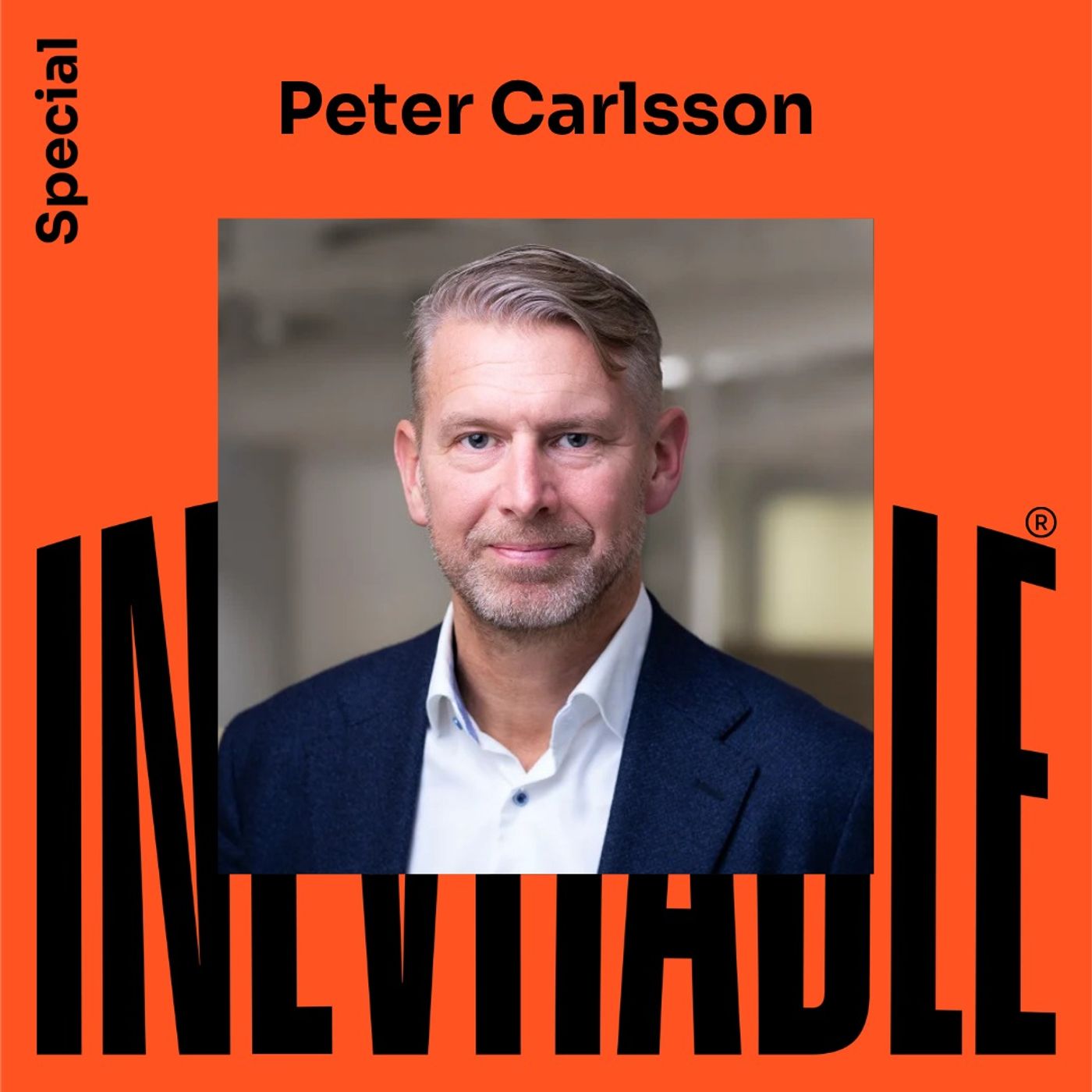
Inevitable
Lessons from Peter Carlsson after the Rise and Fall of Northvolt
00:37:17
Peter Carlsson is Co-founder and former CEO of Northvolt, the European battery manufacturing company that raised more than $13 billion to build a homegrown battery supply chain for Europe, before filing for bankruptcy at the end of 2024. Before Northvolt, Carlsson spent more than a decade at Ericsson building global supply chains and later served as VP of Supply Chain at Tesla during the launch of the Model S. In this live episode of Inevitable from the AENU Summit in Berlin, Carlsson reflects on the rise and fall of Northvolt, the realities of competing with China’s electro-industrial stack, and what Europe still gets right in manufacturing and innovation. Peter breaks down why batteries became strategically essential to Europe, what operational challenges slowed Northvolt’s scale-up, and how changing EV markets, policy shifts, and financing pressures compounded those problems. Carlsson also mentions his new ventures: Aris Machina, an agentic operating system for manufacturing a...
Loading summary
Transcript75 lines
- [00:00]
A
Today on inevitable, we are live at soho house in berlin at the anu summit. And our guest is Peter Carlsson, co founder and former CEO of Northvolt and now co founder of Aris Machina. Northvolt was Europe's most ambitious industrial startup. A company that raised over $13 billion to build a homegrown battery manufacturing base for the continent before filing for bankruptcy at the of 2024. In the months that followed, Peter Co founded RS Machina, an agentic operating system for manufacturing built in part on the data and hard lessons from Northvolt's factory floor. Before Northvolt, Peter spent over a decade at Ericsson building global supply chains during the early mobile phone boom and served as VP of supply chain at Tesla during the launch of of the Model S. I'm here in Berlin because our hosts Ferry and Fabian Heilemann and the a new team invited me and I jumped at it. From where I sit, Europe faces some of the most complex industrial questions of anyone right now. The continent has to decide where and how to compete or partner with the Chinese electro industrial stack, which is getting better, faster and cheaper every day. On top of that, nobody knows yet what AI is going to do to our workforces and economies or where to embrace it and where to pump the brakes. And then there's Europe's old ally, the United States, which let's be honest, is unpredictable at the moment. From McJ, I'm Cody Sims and this is inevitable. Climate change is inevitable. It's already here, but so are the solutions shaping our future. Join us every week to learn from experts and entrepreneurs about the transition of energy and industry. Peter, we have a lot to cover. Welcome to the show.
- [02:18]
B
Thank you.
- [02:19]
A
So you spent your career learning how the best factories in the world work. Then you tried to build one in Europe. What were your key takeaways from Ericsson and Tesla and what assumptions from that did you carry into Northvolt?
- [02:33]
B
The Ericsson days was pretty interesting as a young quality engineer. Basically we were going in a transition from analog mobile phones, brick size into digital phones. And we knew that the market is going to be from 50, 100,000 phones to millions and hundreds of millions of phones. And we were out searching for the supply base for that. And during that search I had the opportunity to visit the hundreds of factories seeing the emergence of a lot of manufacturing in Asia. And also one of the big learnings, as you walk into a factory, a really well functional factory is normally incredibly calm. It's almost contradictory, but there is a pulse, there is a calmness where everybody knows exactly what to do in order to get optimal output. And when you see a factory floor where people are running around doing certain things, you feel high energy, but actually many times it's low productivity.
- [03:35]
A
So from the stories I've heard, I wouldn't describe the Tesla factory as being particularly calm.
- [03:41]
B
It wasn't in the beginning and it took a long period of time to get to that level, level of precision and structure. It was absolutely crazy. And one story around starting a factory on software was that Elon absolutely wanted to get rid of the SAP system that Tesla had implemented. So he hired a bunch of people to develop his own warp system. And a couple of months before the launch of the Model S, he was like, we were sitting in regular reviews and the software teams, Elon was looking at them and saying, is it ready to implement? And they were saying, yes. And then he looked at us on the manufacturing and supply chain. Is it ready to implement? Absolutely no. And then a month or so before it's, fuck it, we are going to implement it. And then we implemented this warp system and actually the whole ramp we were running on Excel, nothing worked.
- [04:38]
A
On that note, I had a portfolio company just post yesterday that they have built all of their entire stack using AI. They decided to fire all of their SaaS companies. Hopefully it works.
- [04:50]
B
Yeah, exactly.
- [04:53]
A
Was there anything at Tesla that you really feel like you couldn't have learned
- [04:56]
B
anywhere else how to build and approach something that is incredibly complex? We were approaching, you know, the largest industry on earth, the automotive industry, with a couple of hundred guys, and we were competitors, were having hundreds of thousands of employees. And the fact that size doesn't matter if you can maintain speed and the quality of the individuals that you operate, you just need to break down the problem in pieces structured enough and get everybody so ingrained in the mission that you get significant over performance and then you can basically achieve pretty much anything. And that was a big revelation for me.
- [05:43]
A
So you leave Tesla with this map of how the best factor in the world work and then you decide to go build one in Europe. What made you think we can do that here?
- [05:52]
B
Actually, at that point of time, some of the best factories in the world were definitely here. If you look at some of the critical value chain. And however Europe is and was both incredibly committed to the Paris Treaty, which required us to decarbonize in three decades in Europe. And that's not possible without decarbonizing transportation, not possible without decarbonizing energy generation. And in order to do that, you need massive storage of energy capabilities where batteries is one part. And Europe did not have value chains in that you have orta, you have saft, but it was small players in the global scope. So if Europe should be able to do that and also maintain an edge in this, Europe needed to build these champions.
- [06:48]
A
I guess take us back to 2016 and maybe give us the one minute Northvolt pitch. You just gave us the situational sort of structure of like why from a mission perspective, you felt it was important. What were you pitching at the time when you first started the company?
- [07:01]
B
The fundamentals came back is if the automotive industry, which is 90 to 100 million vehicles a year, should decarbonize, the world is going to need dependent on size, but at that point of time, somewhere between 100 to 150 gigafactories. And some of these needs to be in each region because it requires just in time concepts, et cetera. So we were looking at that and what we saw was that we can't compete with Asia on energy cost, but what we can compete is on energy, specifically in specific regions of Europe, like Northern Europe. And if you do a vertical integration, because batteries and battery supply chains are incredibly energy intensive, just to produce a cathode towards a Battery, you require roughly 80 kilowatt hour to produce 1 kilowatt hour of battery. So if you combine this, if you do this vertical integration, you do it at scale and you do it in an energy setup that is favorable, where you have energy costs at €2 cents per kilowatt hour, then you could actually offset the whole labor arbitrage. And in the outcome of this, you could also produce the greenest battery on earth, where a carbon footprint would be 20% of the equivalent Asian one.
- [08:25]
A
That was the strategy. And so it sounds like being able to offset the more expensive labor in Europe by building an economy of scale around energy would be the answer there.
- [08:36]
B
Yes.
- [08:37]
A
So take us then to 2024, tell us what had been built at the company's peak and ultimately what happened. I know it's a lot to pack into a couple minute response here.
- [08:47]
B
Internally, obviously we estimated that we need to get to an OE, a target OE of roughly 84%. And starting a factory, getting all the equipment, and specifically in order to succeed, we also needed to have an edge on our product. So we made, if we look at the products we did, they were roughly 5 to 10% better performing than the best Korean and Chinese. And that translated into some producibility challenges because we were stressing the process windows and the Combination of these two made us behind roughly a year behind our plan on ramping up. And when you're consuming a lot of material that costs a lot of money of money, and in this situation, then the kind of external factors are swinging heavily where Donald Trump comes into us, the whole ira, the whole investment. Regarding green transition, you're seeing a dip in EV adoption in Europe. The European carmakers goes into crisis mode. And you're also at that point of time into a transition of the European Commission. So there is really no leadership there at that point of time. We had all the external factors against us when we were facing our value of death.
- [10:21]
A
And I'm hearing there were certainly some challenges around trying to scale too fast, some internal operational challenges. Sounds like there's some timing challenges and we can pick apart as well. And then there's the structural challenge of like from the start, were you trying to fight an unwinnable fight with China? And I'd love to maybe go through each of those a little bit. And here you're thinking about each of them. On the internal operational side, you had what, six factories going at the same time? Is that not true?
- [10:49]
B
That is not true. All our focus was on building that gigafactory in Khulevjo, but the fact was that factory was fully booked out until 2033. And then our customers were, as they were building up their portfolio of electrification, obviously they wanted their main suppliers to be able to follow on the platforms. So we need. And they were already planning beyond 2030, etc. So what we needed to do was we needed to put stakes in the ground to show how we would be able to grow with them later on in the adoption. And since you have pretty long lead times just with environmental permits, site selections,
- [11:38]
A
ground permits, that stuff takes a while.
- [11:40]
B
That part. We put down stakes in the ground in northern Germany, we put down stakes in the ground in Canada and started the preparation. But we wouldn't have triggered the major investments and we never did until we had solved the first factory. So that's a misconception that, that we were building six factories.
- [12:01]
A
It's helpful to understand this because as future entrepreneurs are trying to build their next version of a scaled manufacturing instance, like the lessons learned they can get from you are invaluable. Curious what you would do differently on the operational side if you were going back and talking to yourself in 2021 or 2022 in that regard.
- [12:23]
B
Obviously there are small things, but there was a point between end of 2023 and beginning of 24 where we were looking at the situation, we were looking at different market conditions, et cetera. And we could do a reasonable wood cutting or trimming of the hole set up in order to increase Runway and save cost, or we could chop down all the different branches. And the problem that we were sitting with at that point of time was that we were sitting with very large take or pay orders from different customers that was enabling our project financing.
- [13:06]
A
These are giant OEMs, right? Auto OEMs.
- [13:08]
B
Giant OEMs that went out of the way to give us the revenue, the contracted revenue flow that the banks required to lend us the money for this. So where we were sitting was like, if we really start cutting the branches here, then we will be in breach of these contracts. In the situation where the automotive companies were, that would mean very likely that they would not accept us renegotiating take or pay agreement because the situation had definitely changed. That would basically default our project financing. So in one way, okay, should we cut harder, knowing that the whole house of cards could fall apart, or do we do a trimming? A pretty severe trimming. We were cutting 25% of our expenses outside the gigafactory. Do we do a trimming and bet that we can later that year fill up the barns with some additional funding? We did that bet, and in hindsight, obviously that bet didn't fall out. Which of course leaned me to say, okay, we should have cut more of
- [14:25]
A
the branches and maybe restructured the OEM contracts as part of it, potentially. I'm just trying to think, if you were a founder whisperer, what would you go back and tell yourself, Yes, I want to talk about some of the sort of, I would call them, broader structural challenges that it feels like Northvolt lived in. We're not going to spend this whole conversation on Northvolt, but I think this is really important context for the conversation we're having overall about building in Europe. You launched in 2016. I think at that time, Catl was growing rapidly, but still young. The battery market was more LG Panasonic at the time, if I remember correctly.
- [14:59]
B
It's funny, between from the day we Launched, which was 2017 to 2024, CATL grew from 13 gigawatt hours to 230 gigawatt hours during those years. And we're being accused of not being too aggressive. So obviously, over 13 factories, you can
- [15:21]
A
build fast and big. So the question I have is they obviously really grew when ultimately they pioneered LFP as a chemistry and you guys had started and built the company on the bet. That NMC was going to be the Future, as the OEMs were starting to shift over to LFP shortly thereafter. In retrospect, do you feel like you were maybe even doomed from the start given those underlying market developments?
- [15:46]
B
No, I don't think we were doomed from the start. And I still believe there is a piece of the market that will continue be high performance batteries on nmc. And actually, unfortunately, if you look in a mature market, let's say 2040, when you're starting to equalize the market, if you look at the equalized cost of recycling NMC very efficiently, the gap between prime materials and recycled materials and the gap between LFP and NMC is actually going to be reduced pretty significant in a fully recyclable economy. So I don't think NMC is dead. But with LFP came something that the market really needed, that they needed lower cost, both for energy storage but also for entry mid size vehicles. And the Chinese during that period of time they managed to improve the LFP performance now roughly 30% as well as really drive the supply chain, super efficient and thereby really reaching a new level of cost per kilowatt hour.
- [17:06]
A
Now on the supply chain. I know one of the projects you're working on today is Sonder Labs, which is a sodium ion chemistry battery. Maybe you can tell us a little bit about that. It seems like that is finally a battery chemistry that potentially can be free of the Chinese supply chain, which NMC clearly is not free from the Chinese supply chain at all.
- [17:29]
B
No NMC and lfp, it's basically impossible right now to produce anywhere in the world without being dependent on Chinese supply chains. When we looked at the LFP coming into the market, we recognized we're not going to have an edge on this technology. We're going to be dependent on Chinese supply chains and our cost of manufacturing for this specific chemistry is going to be higher than the Chinese. So our only benefit is us being in Europe and that's not good enough. So then we started to look at alternative chemistries focused on sodium and specifically a chemistry, because sodium has also different branches like NMC and lfp. For lithium, sodium have three or four different branches. We looked at one called pba and what we realized there and what we really liked was number one, the cost of atoms. If you compare any lithium battery with the cost of atoms of a specific sodium battery, which is basically salt based or an anode made of hard carbon, it is significantly lower. So eventually when you have tuned in very efficient supply chains and reached a scale, it will be Cheaper. The second benefit is that it's inherently safer. Lithium is a very reactive material, but sodium is not as reactive. With right designs, a lithium battery will go into thermal Runway at roughly it starts to react at 60 degrees, but at 120 degrees your separator melts and you go into a thermal Runway. You can design a sodium battery to withhold 300 degrees. This really makes a matter in very harsh environments, et cetera. We took a bet on sodium. We never got it all the way.
- [19:18]
A
This was at Northvolt.
- [19:19]
B
At Northvolt, yeah. We never got it all the way to scaling. But when Northvolt unfolded, I thought it was too important not to continue this work. So together with the leader of the R and D team, his name is Andreas Haas, we then continued and created Sonder Labs. And right now, for example, we're working with India. Because one of the beauty of sodium batteries, you're not dependent on Chinese supply chains. The ammonia and salt, etc. That you need, you can basically find everywhere, which means that you can build up efficient supply chains in every region.
- [19:56]
A
Though the Chinese battery manufacturers are also trying to go build it. So they may just think they have enough economies of scale now that surrendering the supply chain control may not matter. I guess we'll see.
- [20:06]
B
We will definitely see. The China is actually betting on a couple of other sodium branches of technology. The thing that I do think is since China have already won the LFP war, they are not necessarily going to drive the sodium implementation. There might be a few Chinese companies, but the major ones, they're not going to drive this because they already have the LFP. So I think the driving factor for sodium beyond 2030 will need to come somewhere else. And there I think India is going to be an interesting alternative.
- [20:45]
A
So when you look at China, we've hit on this. They've cornered the supply chain for current battery chemistries that are at scale. They now have a very skilled workforce. They clearly have built factories at scale more aggressively than Europe or the US have been able to do. They're innovating rapidly on now production, autonomy and automation. You hear of these like dark factories that are building their new EVs and batteries, I presume, and they have scale with their own domestic auto industry and large scale Bess industry for storage, utility scale storage. So the question I have is, given all of that, and this is within the last 10 years as we have established, does it make sense for Europe to try to compete head to head here or should Europe aim to partner and build on top like this is a classic macro level build by partner conversation. We can start with battery specifically, but how should Europe think about this?
- [21:43]
B
There is a couple of things. First and foremost, fundamental innovation is still something. We are ahead both Europe as well as the US and to some extent Japan and Korea fundamentally in innovation. We are significantly better than the Chinese then and even on the battery industry.
- [22:02]
A
Innovation meaning new productization of things, real innovation.
- [22:06]
B
Because if you look, I mean LFP was invented in Canada, NMC was in us, Japan. All these fundamentals have been invented somewhere else. Sodium is also John Goodenough. But to take it and execute. The Chinese are fantastic and they now have the most impressive factories. So they haven't.
- [22:29]
A
You were just over there, right?
- [22:30]
B
Yeah, I was watching the Mr. Big line, which is an ESS factory doing every battery cell is 628 per hours. It's 11.5 kilograms. Each line is 15 gigawatt hour and it's a kilometer long and it's highly automated. Par to par on that. We cannot compete. So that's on commodity high volume. Start working with the Chinese. But then I think from a European point of view, there is new innovation coming up in Europe that I think is really exciting. Save some of the infrastructure that we've created on the R and D side. There are a couple of centers of excellence that I think is really worth saving. From a European point of view, save maybe one or two assets that we build up to help industrialize some of these new technologies while let the rest partner up with China and then stay consistent supporting. And then 2030, 2035, we will see result of that and that will drive new innovation.
- [23:42]
A
So it starts at science and R&D, 100%. On the factory automation side, where you said they're running circles around the rest of the world right now. Really, it sounds like some of the insights you had on what wasn't working in the Northvolt factory have led you to your next new company. Aras Machina. Can you maybe unpack a little about your learnings and how that led you to start something new?
- [24:06]
B
We were fighting for years as we were starting up this factory between having a Chinese installation team. Primarily there was also Koreans and Japanese, but of the blueprint. And our operators were.
- [24:21]
A
You were sitting on Chinese OEM equipment in the factory, like trying to figure out how to use it.
- [24:25]
B
Exactly. And our process engineers were standing over the shoulders of the Chinese installation engineers and the maintenance guys were looking at this. And then on the other hand, we had actually been very proactive in the sense that we said, we're going to build our own, our own manufacturing execution. So we're going to force every equipment vendor to upload the APIs and we're going to build a cloud based setup. So I knew when we were standing there and we were having challenges in the factory and I was asking the process engineers, what is your problem and what does the data tells you? You could see that somehow they weren't using, they didn't have access to the data. And that's when I called up Sid to the factory. I put him in a large conference room.
- [25:17]
A
Sid, your co founder at RS Machina. He's here in the room for folks listening. He's pointing at a guy sitting in the front row. So thank you, Sid.
- [25:24]
B
No, I mean, he was my head of digitalization. I put him in a large conference room with a couple of other guys and I said, you're not leaving this room until I see every data point on these walls that we're drawing from this manufacturing setup. Three weeks later and we started to argue about the format and is this really necessary, et cetera. But three weeks later we had everything in a very large conference room, like huge Ishikawa diagrams. And it daunted on me. Oh my God. On the floor we are running a control plan of two parameters per process because that's the operator's cognitive capability. While we were staring at roughly 13,000 parameters per produced cell and we started to develop tools. But it was really on that evolution that we then continue building on what Ares is doing, which is trying to drive a pathway from an operator driven to a computer aided manufacturing.
- [26:24]
A
I heard you say before, I think you and I had a conversation prior to this where you told me on the floor they were watching something like 60 to 70 total parameters, but the system is actually creating 13,000 per cell that you are trying to navigate. And I assume that's not unique to Northvolt, that is happening in manufacturing, in anywhere, in any type of industry.
- [26:45]
B
We've been building quality systems and production systems for decades, where the fundamental bottleneck or the simplification is what is the cognitive capability of my maintenance engineers or process engineers or manufacturing engineers. And so we have simplified things down to finding a way where, for example, watching two critical parameters, measuring the statistical process performance of those determine whether my process is stable or not. Not really fully understanding whether some of the other hundreds of parameters off track or not. And that's the opportunity that now comes with the agentic systems and machine learning.
- [27:31]
A
So earlier on you had said one of the disadvantages in building in Europe is that the labor is more expensive. As we move to AI enabled factories, does AI make the labor's job better or does it start to remove the need for the labor?
- [27:47]
B
I think at the starting point you can create a system that allows a factory team constantly to be constantly online on what is the most important thing in order to drive productivity yield and the process output higher. So you can get significantly higher output with the same team. When you really then start to trust the team and when you start trusting the data, obviously you can also start then looking at at self adjustments that will require some adjustments also probably on the PLC level, on the machine level, et cetera.
- [28:25]
A
We're seeing big tech companies do mass layoffs in pure software. So I guess the question is, do you think that's going to start to happen in manufacturing as well as AI gets adopted?
- [28:36]
B
I think the starting point it will be that it will drive competitiveness again. We will get higher productivity per head and we will thereby we'll be more competitive and we will be able also to bring new products into manufacturing faster because we have this inherent knowledge.
- [28:55]
A
So there may be some labor displacement, but ultimately if it brings competitiveness back to our factories, it's better for the economy, which in the end should be better for labor.
- [29:04]
B
Exactly.
- [29:05]
A
So I'm curious, on the hardware and manufacturing side, we've talked about China obviously as competition. On the software side, how do you think that Europe should think about data sovereignty? Right now a lot of these models are owned by American companies. Maybe you're writing your software using Claude or you're uploading your data to Microsoft AI or a Google AI Gemini or whatever it might be. How should Europe think about local sovereignty of that data? And if Europe doesn't, does it just create the China hardware problem? Again, on the software side, you can
- [29:42]
B
look at it from many different angles. One way of looking at it is actually when I was in China a couple of weeks ago, suddenly everything that I had on my computer stopped working. My Google Clouds and everything stopped working. You basically went to an infrastructure that
- [29:57]
A
Google's not so popular there.
- [29:59]
B
No, and Facebook and Apple and pretty much anything. But I was still demoing the stuff that we were doing for a couple of Chinese players and they were incredibly interested because this is also an area that is new for them. But in order to do that, we would like to have the structure that we build, but we would have to change some of the LLMs operating these systems to min max or to Deepseek, et cetera. And so in One way I think you can build flexibility between different regions with different models. On the other hand, I do think certain sovereignty and certain dependency on the mega scalers is concerning. But sovereignty cannot be on expense of losing efficiency. We need to be careful there.
- [30:53]
A
We've seen it play in other industries, we've seen it in media for sure where some companies went all in on giving Google or whomever access to everything and it didn't work out very well for them. And some walled garden themselves, it also didn't work out very well for them. So you, you have to find the right middle ground which is going to be I think the management challenge of the next decade for most large managers.
- [31:14]
B
Yeah, but we also see that for example, when we started to apply some of these LLMs on very complex manufacturing data, they were useless, they were hallucinating and wasn't efficient at all, reading time series, et cetera. So I think as we're going into this field of real industrial and other applications, I think we will also see a number of new versions of models and systems I.e. evolutions of where we are today that is even more fit for these different applications. And there, for example, ETH in Zurich just came out with an LLM for time series. There is a whole bunch of interesting thing going on. So let's build on what we're doing now.
- [32:03]
A
Really good shifting gears slightly. I've heard you say that Northvolt was created so Europe could avoid in batteries. What happened with solar? The innovation originally happened in the west and then the scale and the economics ended up in China and China ended up owning really the production market there ultimately with batteries, that is pretty much what has happened at least as we've established so far. A is this recoverable? And I think you already answered that to some extent. And then B, what's the next frontier where this trend could happen again that we need to be thinking about first
- [32:36]
B
and foremost, I think there is a big difference between solar and batteries because batteries are an enabler of so many other industries and it's basically replacing the combustion engine in so many different industry verticals. So the implications of not being a technology leader in fields where Europe has a very strong foothold today, that long term implication is pretty dire if I should be honest. So I definitely don't think we're ready to give up and we shouldn't be ready to give up the race. But we will have a period where we will definitely need to adopt. Learn from the Chinese. If you then look forward, I do think for example that industry automation and the combination of software is an area which is have machine building and precision building and has always been a foothold of Europe.
- [33:38]
A
Europe's amazing.
- [33:39]
B
Exactly. And if we can evolve that building software enabled precision machining, I still think that's a very important area going forward. But then you get into new area. For example, Germany is very strong on fusion, for example. I think that's going to be a super important technology a decade, maybe two decades from now. But it's going to be very important that we as a society with capital, regulation, et cetera, makes everything paving the way for these breakthroughs.
- [34:15]
A
Ferry started out the morning saying clean energy is national defense. Right. And like talking about locking up fusion supply chains and whatnot, given what we've seen happen in batteries, feels like that would make sense from a sovereignty and control perspective. All right, my very last question for you, hopefully on an optimistic note, which is we enumerated all these structural advantages that China has built. Where does Europe actually win? Where are the structural advantages in Europe? You talked about precision machining as one of them, but what are the structural advantages in Europe that are things Europe should be doubling down on?
- [34:48]
B
Number one, innovation. Combining innovation with deep skills in different areas is still something we could really build on where we have really strong institutional capabilities of education and on innovation, that must be the foundation. And then we need also to look ourselves in the mirror and basically say, if we should compete with China, can we have all these rules that we have in Europe? Could we have these timelines for environmental approvals? Can we have all this regulation? Because, for example, if you take a battery factory, it is three and a half times more expensive to build a battery factory in Europe than it is in China.
- [35:37]
A
You could argue regulations are market power in Europe, but I also hear you saying they also make things a lot more expensive.
- [35:44]
B
There is definitely so that a European battery factory is not three and a half times better or safer than a Chinese one. And there we actually also need to break down some of the own limitations we have set for ourselves.
- [36:01]
A
Peter, very last question. I know I said my last one was the last one, but just to wrap up, what do you think a healthy European industrial economy looks like in 10 years?
- [36:09]
B
I'm still optimistic. I think Europe as an innovation, Europe as a starter, specifically around hardware, around the green transition. If we take the last couple of years and see them as a little bit of a setback, a little bit of an adjustment going forward, I think we have really good opportunities.
- [36:30]
A
I want to thank you for coming. Appreciate you for sharing your knowledge you've lived through a ton. You've lived through many entrepreneurial dog ears in the last few years. And thanks for sharing what you've learned with all of us.
- [36:42]
B
Thank you.
- [36:45]
A
Inevitable is an MCJ Podcast. At mcj, we back founders driving the transition of energy and industry and solving the inevitable impacts of climate change. If you'd like to learn more about mcj, visit us at MCJ and subscribe to our weekly newsletter at Newsletter MCJ vc. Thanks and see you next episode.