Podcast
Infrastructure Connections
Hosted by Infrastructure Connections · EN
A knowledge-sharing podcast brought to you by the Infrastructure Sustainability Council.
Follow and join us on our next episodes!
18episodes
Episodes
Newest firstAll episodes
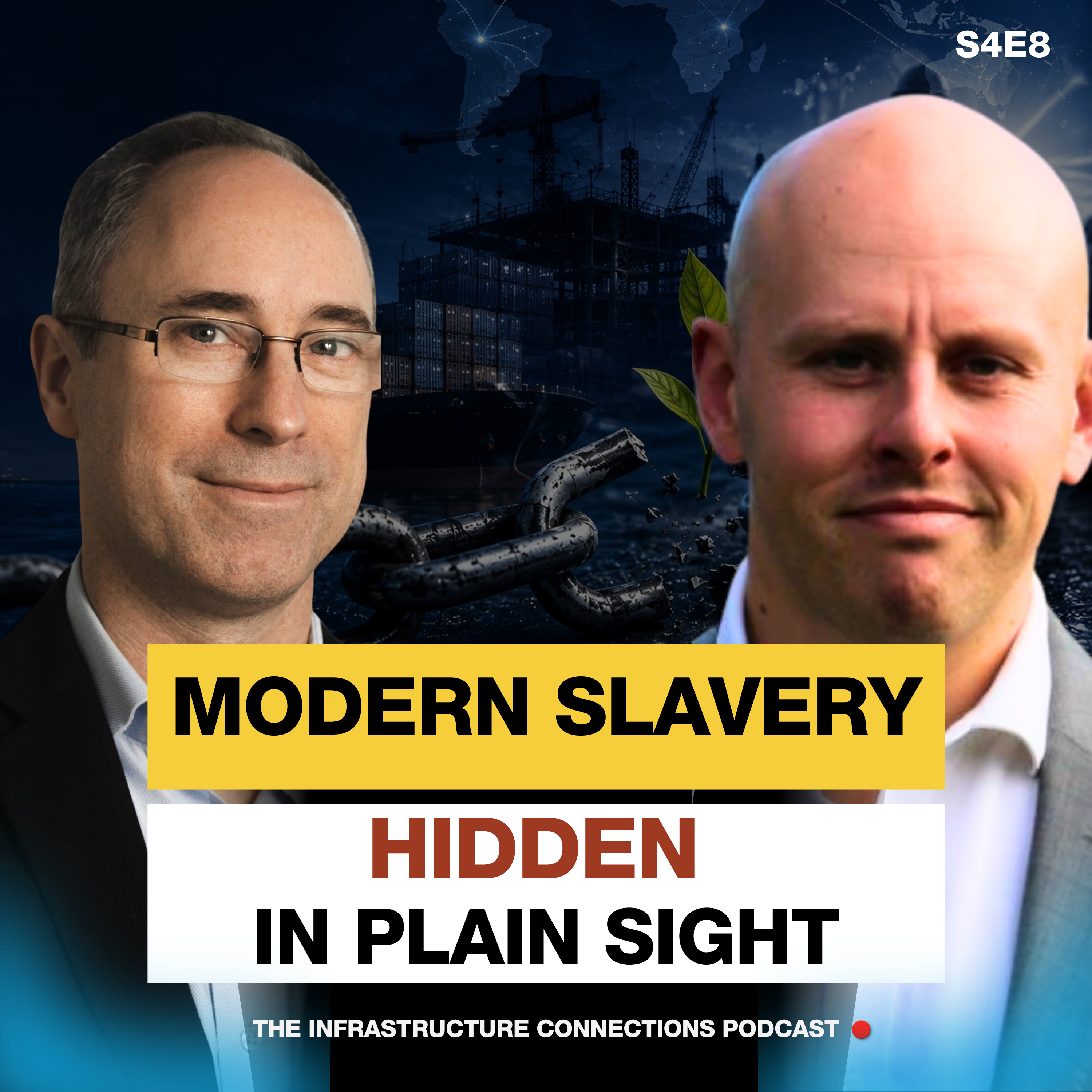
S4E8 - Beyond Compliance: Addressing Modern Slavery w/ Cam Bower
4d ago00:22:05Tap to summarizeModern slavery isn’t just a global issue—it’s happening in our own communities and supply chains. In this episode of Infrastructure Connections, Cam Bower, Managing Director of AME Investigations and former police detective, about the hidden reality of modern slavery across Australia and New Zealand. The conversation explores how exploitation can occur in industries including construction, infrastructure, hospitality and agriculture, why migrant workers are particularly vulnerable, and the warning signs organisations should never ignore. We also examine the role of ethical procurement, supply chain due diligence and stronger accountability in preventing exploitation. Whether you’re a business leader, procurement professional or simply interested in creating more responsible supply chains, this episode offers practical insights into recognising risk, protecting vulnerable workers and building a more ethical future. “You shouldn’t need legislation to decide whether you’re going to be a good citizen.” – Cam Bower 👉 We'd love to hear your feedback, share your questions or comments below. 👉 Like & Subscribe so you won't miss out on our upcoming episodes! 👉 Keep up to date with the Infrastructure Sustainability Council: Website: https://www.iscouncil.org/ LinkedIn: / infrastructure-sustainability-council #podcast #infrastructure #sustainability #buildingtomorrow #modernslavery #humanrights #ethicalsupplychains
Transcribe →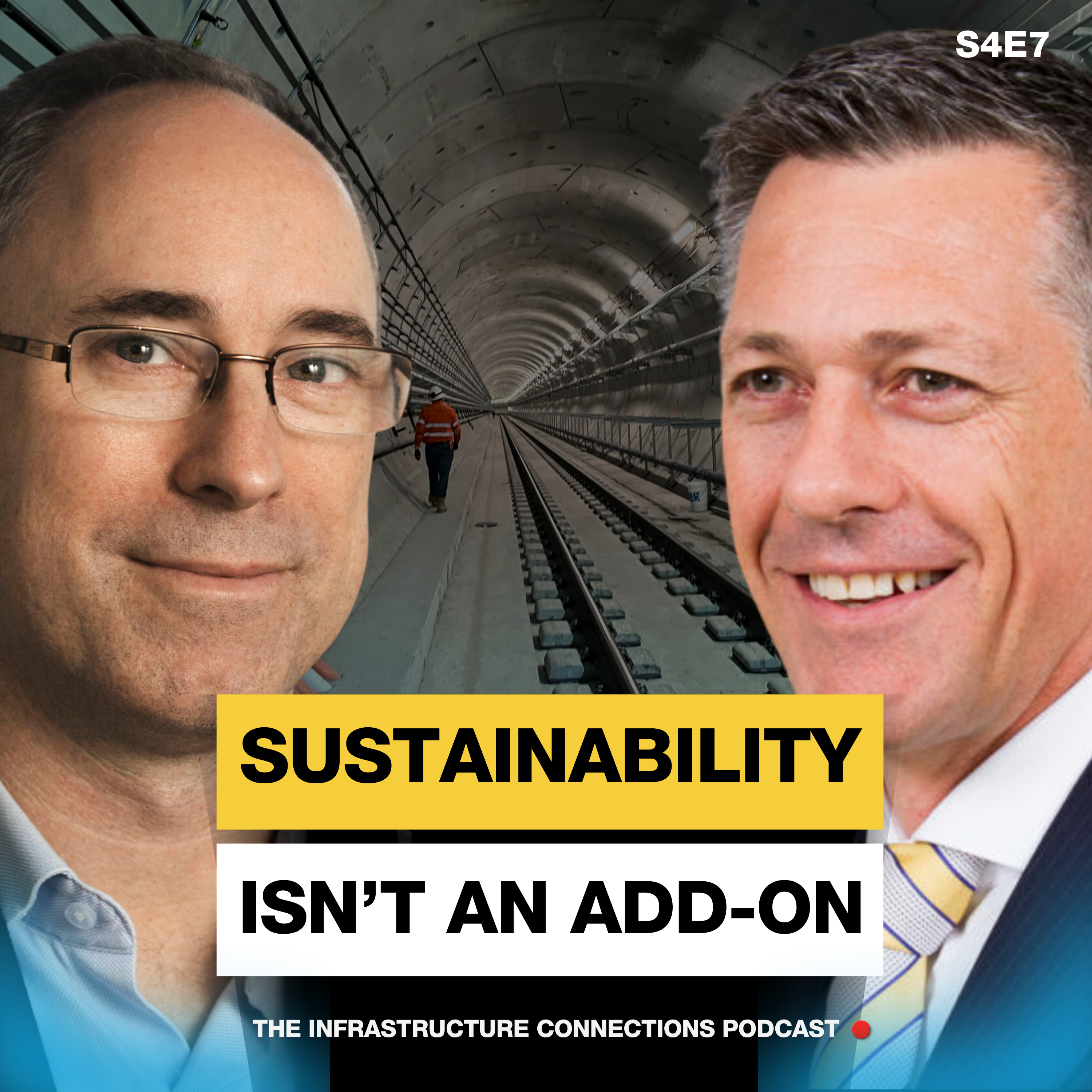
S4E7 - Sustainability by Design: Lessons from Cross River Rail w/ Graeme Newton
3w ago00:18:24Tap to summarizeIn this episode of Infrastructure Connections, we speak with Graeme Newton, CEO of the Cross River Rail Delivery Authority. Graeme shares how sustainability was embedded into the Cross River Rail project from the start — through procurement, leadership, innovation, and long-term design thinking. The conversation explores how the project delivered sustainability outcomes through initiatives such as recycled materials, resource efficiency, community engagement, accessibility, and independent IS Rating validation. Graeme also discusses the challenges of delivering a major infrastructure project through uncertainty and how sustainable thinking can create environmental, social, and economic benefits for the future. 👉 We'd love to hear your feedback, share your questions or comments below. 👉 Like & Subscribe so you won't miss out on our upcoming episodes! 👉 Keep up to date with the Infrastructure Sustainability Council: Website: https://www.iscouncil.org/ LinkedIn: / infrastructure-sustainability-council #podcast #infrastructure #sustainability #buildingtomorrow #leadership #innovation
Transcribe →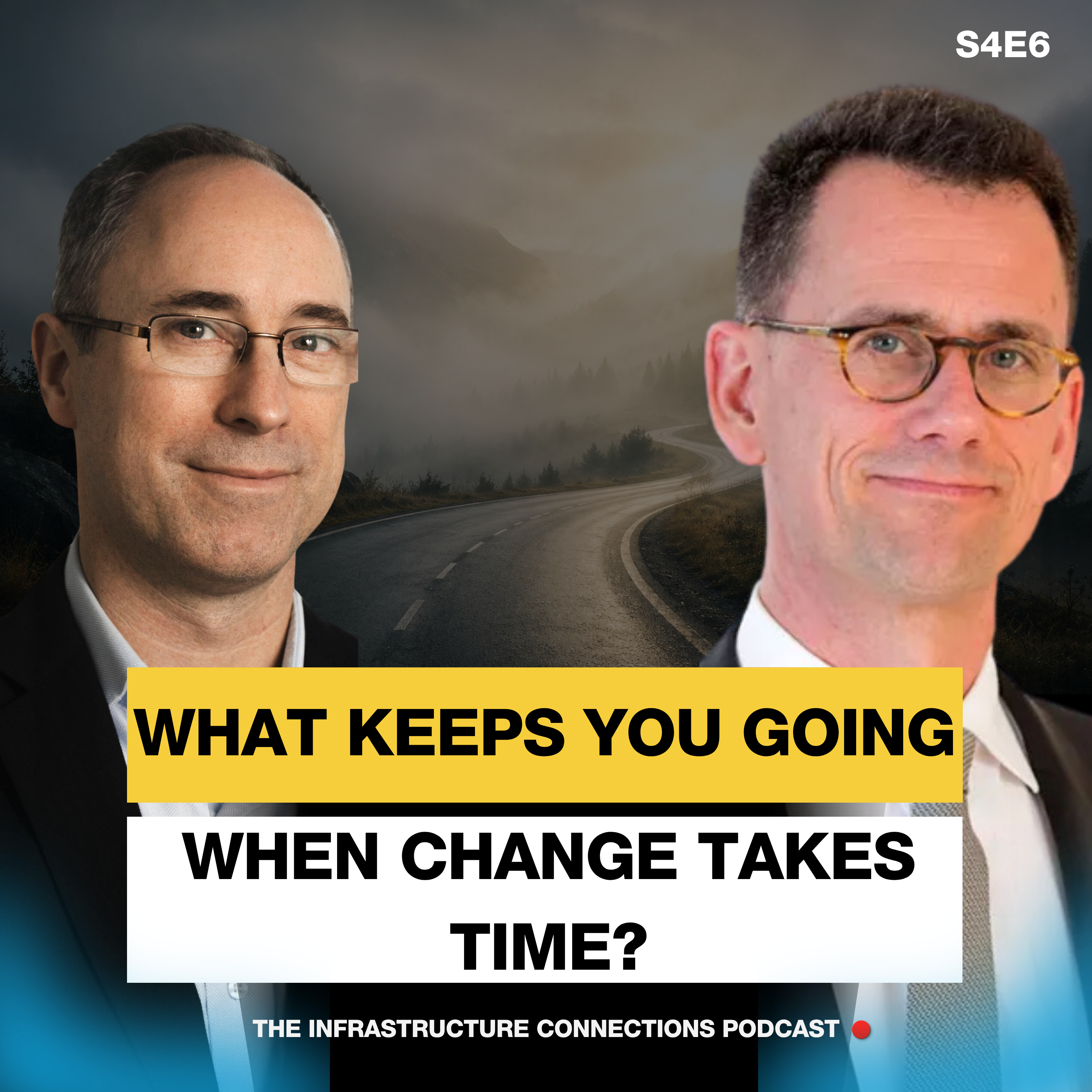
S4E6 - The Power of Purpose w/ Richard Boele
Jun 2500:25:00Tap to summarizeWhat keeps people motivated when progress is slow, outcomes are uncertain, and challenges keep evolving? In this episode, Richard Boele, Chief Purpose Officer at KPMG, explores the powerful role of purpose in sustaining energy, resilience, and long-term commitment to change. He explains the difference between purpose—your unique contribution and who you can’t help being—and impact, the outcomes you’re striving to achieve. The conversation explores how reconnecting with personal purpose can help individuals stay motivated through uncertainty, while aligning personal, team and organisational purpose can unlock collaboration, engagement and a greater sense of meaning at work. Whether you work in sustainability, leadership, organisational change, or simply want to find greater meaning in your work, this episode offers valuable insights into how purpose can help people navigate complexity, maintain momentum, and drive lasting impact. 👉 We'd love to hear your feedback, share your questions or comments below. 👉 Like & Subscribe so you won't miss out on our upcoming episodes! 👉 Keep up to date with the Infrastructure Sustainability Council: Website: https://www.iscouncil.org/ LinkedIn: / infrastructure-sustainability-council #podcast #infrastructure #sustainability #buildingtomorrow #purpose #leadership #resilience #meaningfulwork #whatispurpose
Transcribe →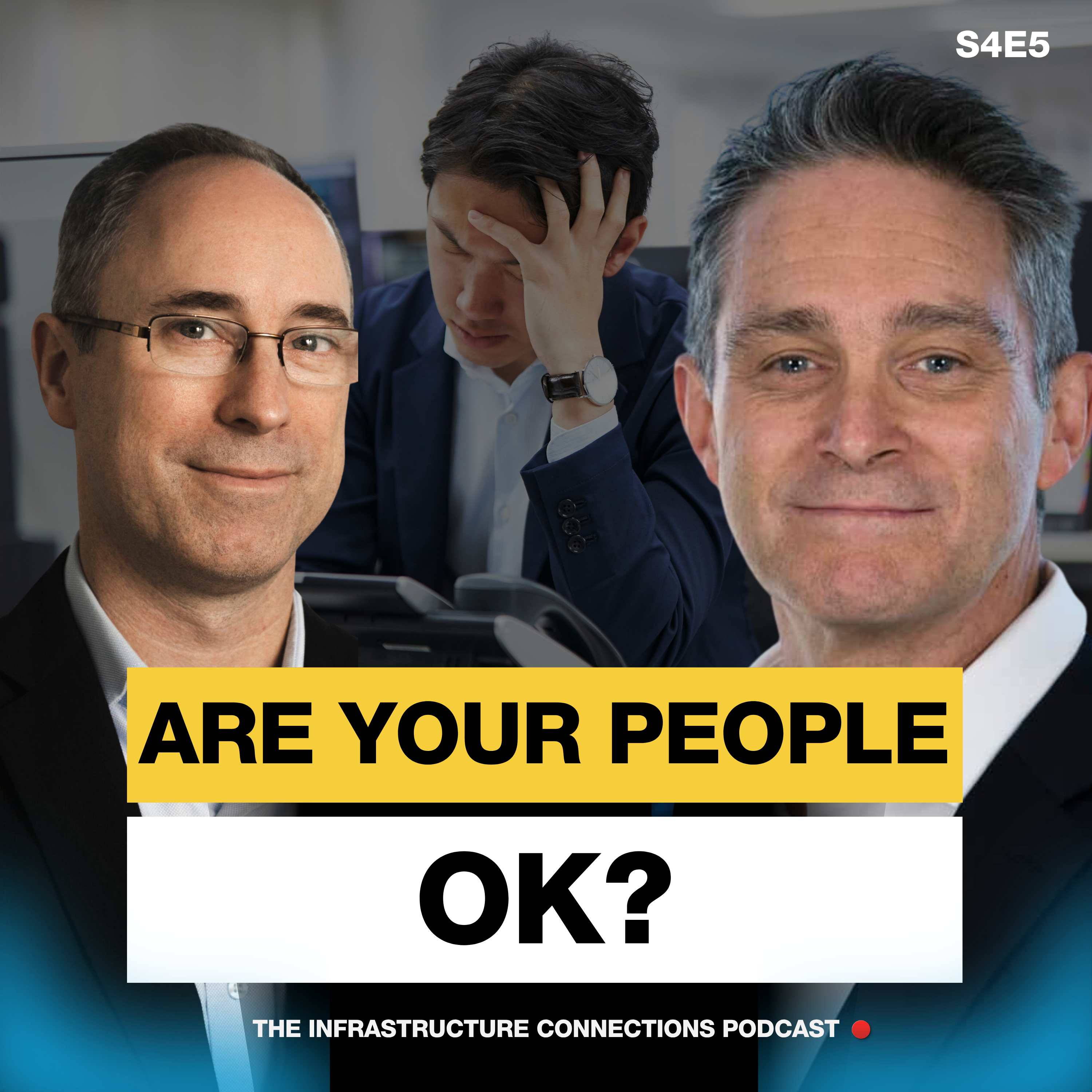
S4E5 - Great Leaders Care w/ Graeme Cowan
Jun 1200:20:25Tap to summarizeHow do great leaders show care, encourage teams struggling through tough times, and boost performance? We invited Graeme Cowan to speak at our IS Connect 26 Brisbane Leadership Breakfast. Graeme is the Founding Director of R U OK? and host of The Caring CEO podcast. He is also the author of the book Great Leaders Care. Graeme shared his knowledge gained from 20 years helping leaders build resilient teams where care and high performance thrive together.He shared the Great Leaders Care mindset: "Self-care isn't selfish, it's the foundation. Fill your own tank first, and you become far better at spotting and supporting the people around you who are struggling. Crew care is about building psychologically safe and resilient teams. And red zone care is having the confidence to identify and support someone who is struggling.""Construction carries some of the highest rates of psychological injury and suicide in Australia. Not soft care. Strong care."👉 We'd love to hear your feedback, share your questions or comments below. 👉 Like & Subscribe so you won't miss out on our upcoming episodes! 👉 Keep up to date with the Infrastructure Sustainability Council: Website: https://www.iscouncil.org/ LinkedIn: / infrastructure-sustainability-council #podcast #infrastructure #sustainability #buildingtomorrow #sustainableprocurement #procurement #sustainableinfrastructure
Transcribe →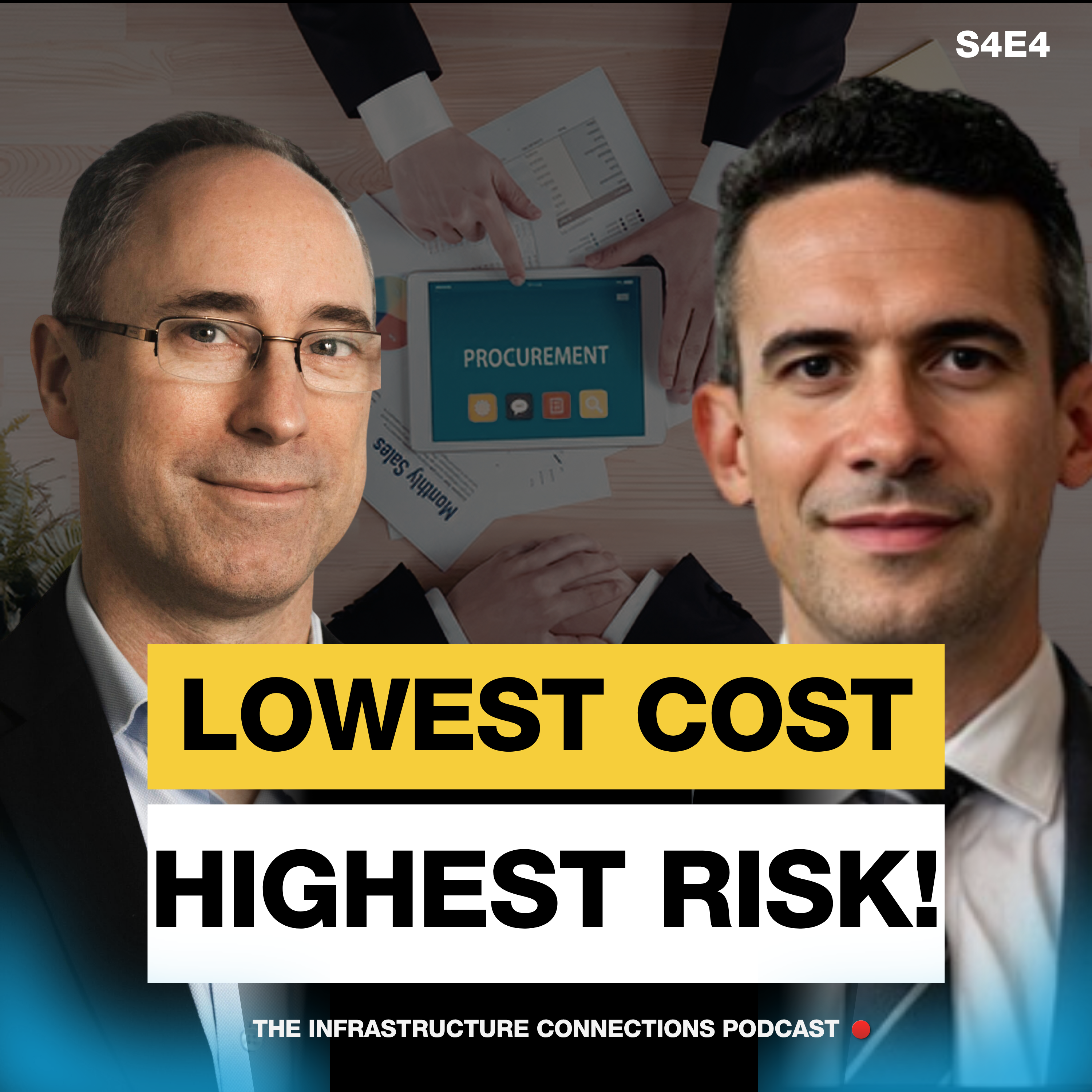
S4E4 - Beyond Cost: The Future of Sustainable Procurement w/ Richard Martin
May 2800:22:55Tap to summarizeHow can procurement move beyond cost-cutting to become a catalyst for better infrastructure outcomes? In this episode, we’re joined by Richard Martin, Executive Director at ConnellGriffin, to explore the growing role of sustainable procurement in shaping the future of infrastructure delivery. The conversation examines why sustainability is often introduced too late in the procurement process, and how earlier integration during planning and decision-making can unlock stronger environmental, social and long-term economic outcomes. Richard also discusses the importance of aligning policy, procurement and project delivery, adopting a whole-of-life (TOTEX) approach to value, and using procurement as a system-level lever for decarbonisation and innovation. From government ambition to industry implementation, this episode highlights the challenges, opportunities and practical shifts needed to rethink how infrastructure is planned, sourced and managed across its full lifecycle. 👉 We'd love to hear your feedback, share your questions or comments below. 👉 Like & Subscribe so you won't miss out on our upcoming episodes! 👉 Keep up to date with the Infrastructure Sustainability Council: Website: https://www.iscouncil.org/ LinkedIn: / infrastructure-sustainability-council #podcast #infrastructure #sustainability #buildingtomorrow #sustainableprocurement #procurement #sustainableinfrastructure
Transcribe →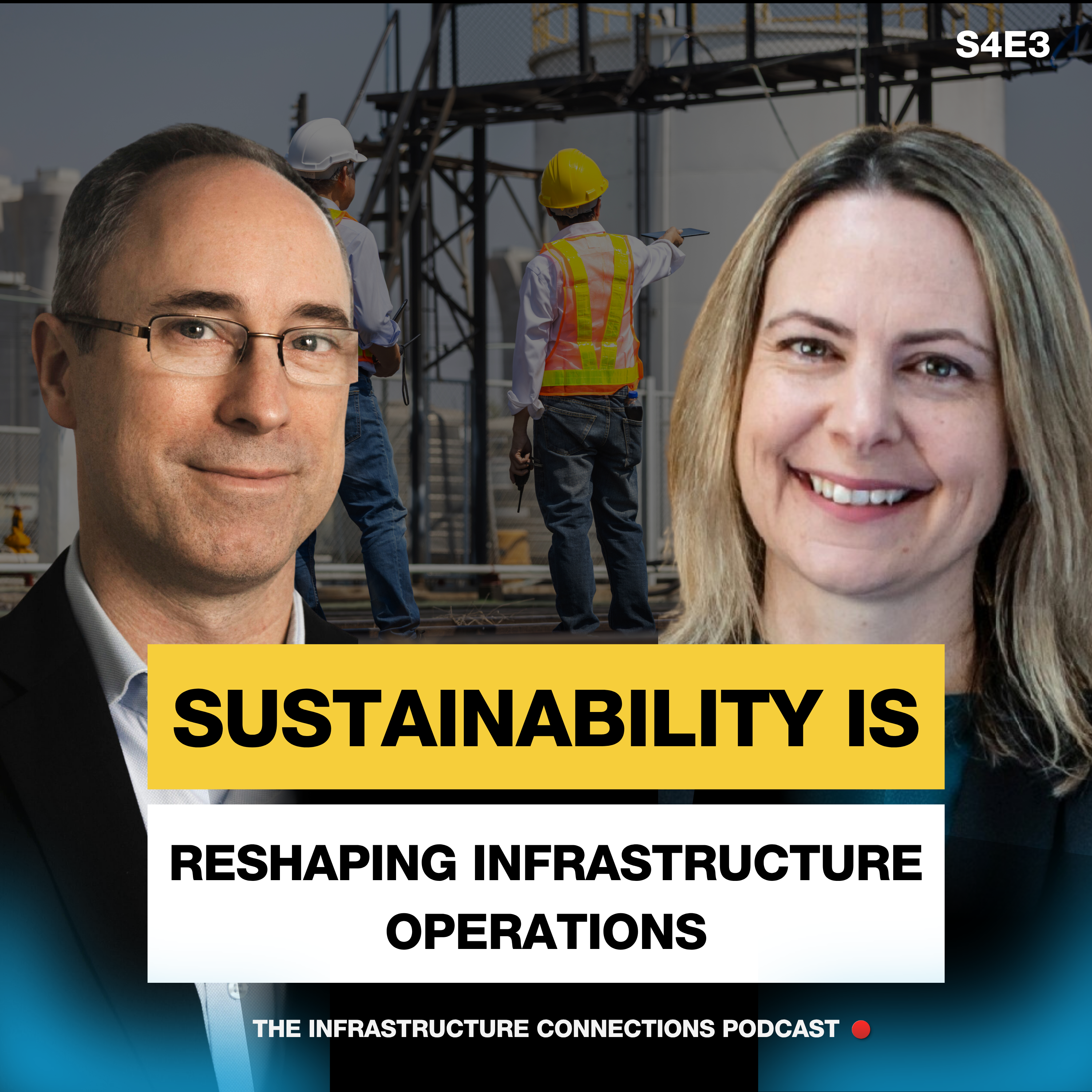
S4E3 - Sustainability isn't a department anymore w/ Alexandra Monson
May 700:24:19Tap to summarizeHow do you move sustainability from a standalone function to something embedded across an entire business? In this episode of Infrastructure Connections, we explore how sustainability is being integrated into infrastructure delivery at every level—from strategy and governance to operations, technology and culture. The conversation examines the growing shift from compliance-driven sustainability to long-term value creation, and what that looks like in practice across large-scale infrastructure and asset management. Joining the discussion is Alexandra Monson, Group Manager - Sustainability at Ventia as she shares how Ventia is embedding sustainability into decision-making through climate transition planning, integrated reporting and science-based emissions targets. The episode also explores the role of innovation and emerging technologies—including AI-enabled asset management, fleet transition and data-driven planning—in improving resilience, reducing risk and delivering more proactive infrastructure outcomes. This episode unpacks: Embedding sustainability into business strategy and operations Decarbonisation and climate transition planning in practice How AI and data are reshaping asset management Building capability and resilience across supply chains Why sustainability is everyone’s responsibility—not just one team’s As infrastructure owners and operators face increasing environmental and operational pressures, this conversation explores what it takes to create systems that are more resilient, efficient, and future-focused. 👉 We'd love to hear your feedback, share your questions or comments below. 👉 Like & Subscribe so you won't miss out on our upcoming episodes! 👉 Keep up to date with the Infrastructure Sustainability Council: Website: https://www.iscouncil.org/ LinkedIn: / infrastructure-sustainability-council #sustainability #infrastructure #infrastructureconnections
Transcribe →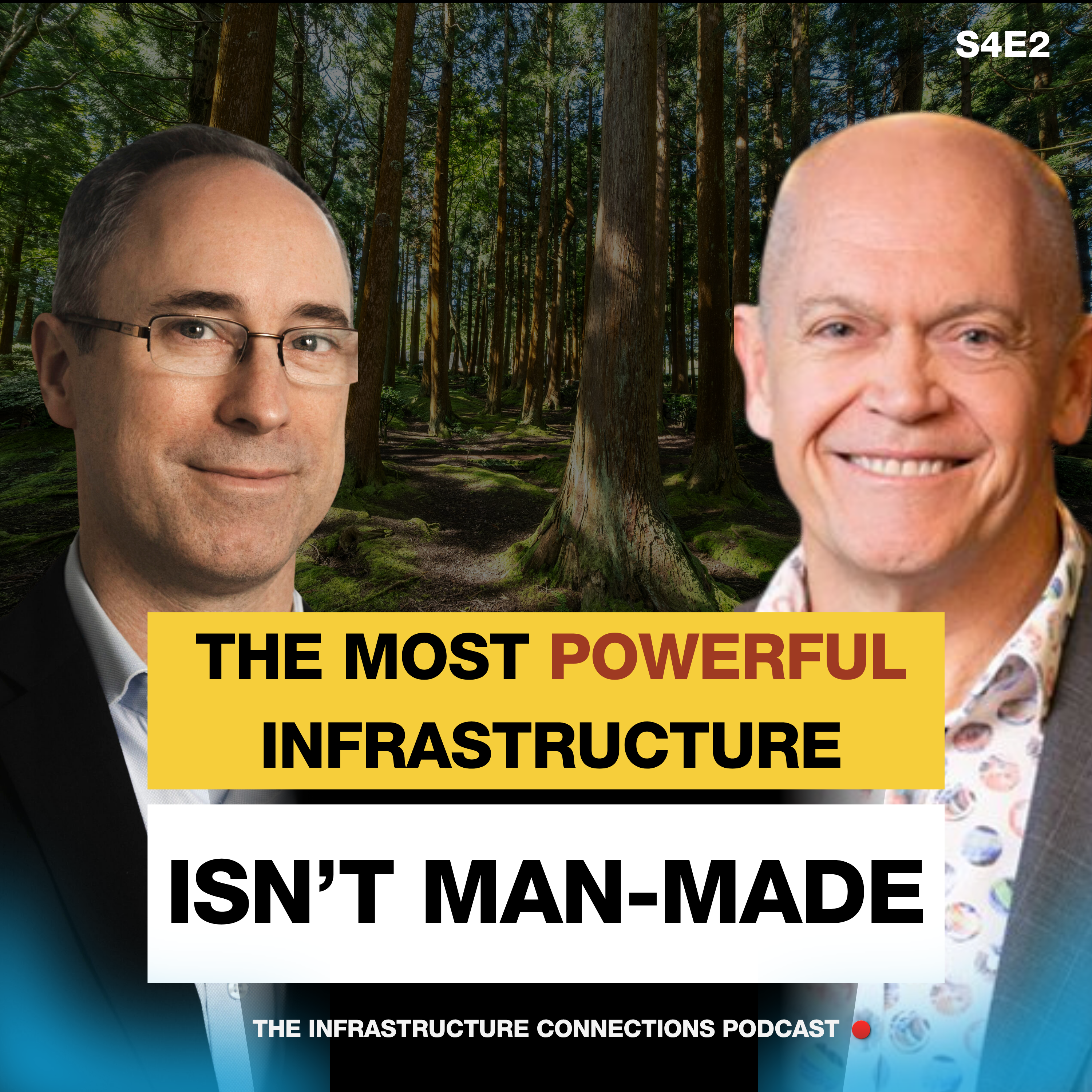
S4E2 - From Grey to Green: Rethinking Infrastructure w/ David Carter
Apr 2300:34:32Tap to summarizeAs climate pressures intensify, the way we define infrastructure is being challenged. Increasingly, attention is turning to the role of natural systems—from wetlands and forests to rivers and marine environments—as essential components of resilient infrastructure. In this episode of Infrastructure Connections, David Carter, Executive Chair at Beca and Guardian of the Aotearoa Circle, shares insights from New Zealand’s Natural Infrastructure Plan and the growing movement to integrate nature into infrastructure planning from the outset. Drawing on practical examples, the conversation explores how nature-based approaches can complement engineered systems, deliver long-term economic value, and support the regeneration of ecosystems. Rather than focusing solely on conservation, this episode examines a broader shift toward regeneration—and what it means for communities, economies, and the future of infrastructure.👉 We'd love to hear your feedback, share your questions or comments below. 👉 Like & Subscribe so you won't miss out on our upcoming episodes! 👉 Keep up to date with the Infrastructure Sustainability Council: Website: https://www.iscouncil.org/LinkedIn: / infrastructure-sustainability-council #podcast #infrastructure #sustainability #buildingtomorrow #natureininfrastructure #greeninfrastructure #naturebasedsolutions #sustainableinfrastructure
Transcribe →
S4E1 - How much does infrastructure cost and how much are we willing to spend? w/ Geoff Cooper
Apr 900:34:25Tap to summarizeHow much does infrastructure cost? We spoke with Geoff Cooper from the New Zealand Infrastructure Commission, Te Waihanga about their National Infrastructure Plan to find out. We learned some interesting things. New Zealand spends more on infrastructure than most OECD countries. The infrastructure spend averages 5.6%, swinging between 5% to 7%. Renewals run to 60 cents on the dollar. Right now, with aging infrastructure, maintenance and renewals are the megaproject New Zealand can afford. Rather than just look at what we want or need, the National Infrastructure Plan dug through the past 100 years to determine what we historically feel comfortable spending. We have far more projects we want than money we want to spend. As governments change and infrastructure priorities shift with them, everyone is looking for certainty. There is more certainty than we'd like to admit. "Nothing is more certain than maintenance and renewals." The aging population is equally certain. This changes our infrastructure needs dramatically, from shrinking cities to reduced emphasis on land transport as commuter numbers drop, lower school enrollment, and higher health care needs. Then there are the major shift happening that we need to recognize Decarbonization means a renewed investment in grid infrastructure and generation. Higher fuel prices mean higher prices for city centre development and falling values for developments outside the city centre. Click this link to read the National Infrastructure Plan for fascinating insight on where we're headed: https://tewaihanga.govt.nz/national-infrastructure-plan 👉 We'd love to hear your feedback, share your questions or comments below. 👉 Like & Subscribe so you won't miss out on our upcoming episodes! 👉 Keep up to date with the Infrastructure Sustainability Council: Website: https://www.iscouncil.org/ LinkedIn: / infrastructure-sustainability-council #infrastructureconnections #infrastructure #sustainability #investment #finance
Transcribe →
S3E12 - Infrastructure Finance w/ Alex Ayscough
Mar 2600:27:22Tap to summarizeCan investors make a return on sustainability? "We see really good value creation investing in sustainability," said our guest in this episode of Infrastructure Connections. Alex Ayscough is an Investment Director at the infrastructure investment firm Morrison. "I think sustainability provided investment opportunities for us, and a lot of other infrastructure investors as well." Alex holds a Master of Applied Finance from Macquarie University, a Bachelor of Business from the University of Technology Sydney, and is a graduate of the Australian Institute of Company Directors. She focuses on originating new investment opportunities and managing infrastructure assets across Australia and New Zealand. She also serves as a Director on several infrastructure-related boards, including Transgrid and Altogether Group. Alex was named Infrastructure Investor's 2024 Rising Star in Infrastructure Finance, saying, "Sustainability is both a driver of investment and foundational to long-term value creation." The ISC is focused on both valorising infrastructure sustainability and providing the framework to achieve it. In order to realize gains, proponents need to incorporate sustainability early, long before they start looking for funding. This allows funding institutions and private investors to align their own internal sustainability KPIs with the projects they invest in. This helps ensure that the projects carry through with sustainability initiatives and realise those returns. "What we've seen is that those more nebulous physical risks of climate change are translating now into very real commercial and financial risk. They are now starting to form much more a part of the core due diligence on a new investment." Sustainability can provide core value creation and returns through a strong focus on: Economic Environmental Governance Social Infrastructure is more than an investment in concrete and steel. It's an investment in our collective future. 👉 We'd love to hear your feedback, share your questions or comments below. 👉 Like & Subscribe so you won't miss out on our upcoming episodes! 👉 Keep up to date with the Infrastructure Sustainability Council: Website: https://www.iscouncil.org/ LinkedIn: / infrastructure-sustainability-council #infrastructureconnections #infrastructure #sustainability #investment #finance
Transcribe →
S3E11 - Road Ecology w/ Ben Goldfarb
Mar 1200:28:27Tap to summarize𝗪𝗵𝗮𝘁 𝗸𝗶𝗹𝗹𝗲𝗱 𝟭𝟬 𝗺𝗶𝗹𝗹𝗶𝗼𝗻 𝗮𝗻𝗶𝗺𝗮𝗹𝘀 𝗹𝗮𝘀𝘁 𝘆𝗲𝗮𝗿 𝗶𝗻 𝗔𝘂𝘀𝘁𝗿𝗮𝗹𝗶a?Ben Goldfarb found that roads are "the leading direct human cause of vertebrate mortality on land." More than hunting, wildfires, dams, and urban habitat loss combined. The costs are enormous. According to the @Insurance Australia Group Limited (IAG) animal-vehicle collisions cost Australia $7 billion every year through: • Vehicle damage • Towing and insurance costs • Human hospital bills • Almost 150 human pedestrian deaths each year • Road repairs But the real damage to animals and the environment is invisible. • Lost access to breeding grounds • Lost access to food sources • Impeded migration • Biodiversity loss as seeds fail to cross roads • Reductions in fertile females • Starvation • Functional extinction • Species extinction There is good news. Australia is increasingly leading the world in wildlife crossings, building: • Arboreal bridges • The Crab Bridges of Christmas Island • Koala log bridges through underpasses • Flying squirrel poles. Road ecologists continue to find ways to reduce the impact of roads on our environment. 𝗧𝗵𝗲 𝗰𝗼𝘀𝘁 𝗼𝗳 𝘁𝗵𝗶𝘀 𝗶𝗻𝗳𝗿𝗮𝘀𝘁𝗿𝘂𝗰𝘁𝘂𝗿𝗲 𝗽𝗮𝘆𝘀 𝗳𝗼𝗿 𝗶𝘁𝘀𝗲𝗹𝗳. 👉 We'd love to hear your feedback, share your questions or comments below. 👉 Like & Subscribe so you won't miss out on our upcoming episodes! 👉 Keep up to date with the Infrastructure Sustainability Council: Website: https://www.iscouncil.org/ LinkedIn: / infrastructure-sustainability-council #infrastructure #podcast #infrastructureconnections #sustainability #crossings #roadecology
Transcribe →