
Podcast
Innovate and Elevate
Hosted by Sharon Kedar, MBA, CFA · EN
Join Sharon Kedar, Co-Founder of Northpond Ventures, as she has candid, in-depth conversations with top doctors, scientists, and trailblazing innovators.
Innovate and Elevate is the podcast where the pioneering ideas and leading-edge discoveries that redefine human health are explored. Behind every revolutionary method and device is a human, or humans, daring to make the impossible possible.
Sharon, an investor at the forefront of science-driven venture capital, talks with these change agents about how they are rewriting the rules in their fields - from human health and longevity to breakthrough diagnostics and therapeutics.
Featured by Harvard’s Wyss Institute, this podcast delivers the sophisticated, knowledgeable, and essential insights you need to understand how innovation impacts our lives.
Because Humanity Deserves Better.
Sharon Kedar is Co-Founder, Partner of Northpond Ventures. She is also a human health advocate and has been invited to and spoken at notable institutions and events nationwide, including The New York Stock Exchange, The White House, ARPA-H, and Harvard University.
“This new podcast is just what I needed- a platform to learn about health and innovation. I just listened to the first episode hosted by Sharon Kedar, a true pioneer for women. The amazing thing is that this podcast delivered with such humanity. I was glad to hear women leaders talking about real world things like women helping women, balancing our lives, advancing our careers, and prioritizing our health. It was fascinating to learn from Dr. Rexrode that women’s healthcare is often just a trial for doctors (lack of women based tests) and how frustrating that is for doctors. I loved hearing from these two top experts and can’t wait to tune into more episodes. And I plan to recommend this show to women and men! Finally, the pregnancy example really hits home and was a perfect motivator.”
“It’s hard to find helpful and insightful content that is easy to understand. This podcast does that and should be considered on a par with Dr Andrew Huberman’s podcast.”
“The dialogue was engaging and informative without feeling overwhelming. Both Sharon and Dr Rexrode are so knowledgeable in their fields. I can’t wait to see who the other guests will be!”
23episodes
Episodes
Newest firstAll episodes
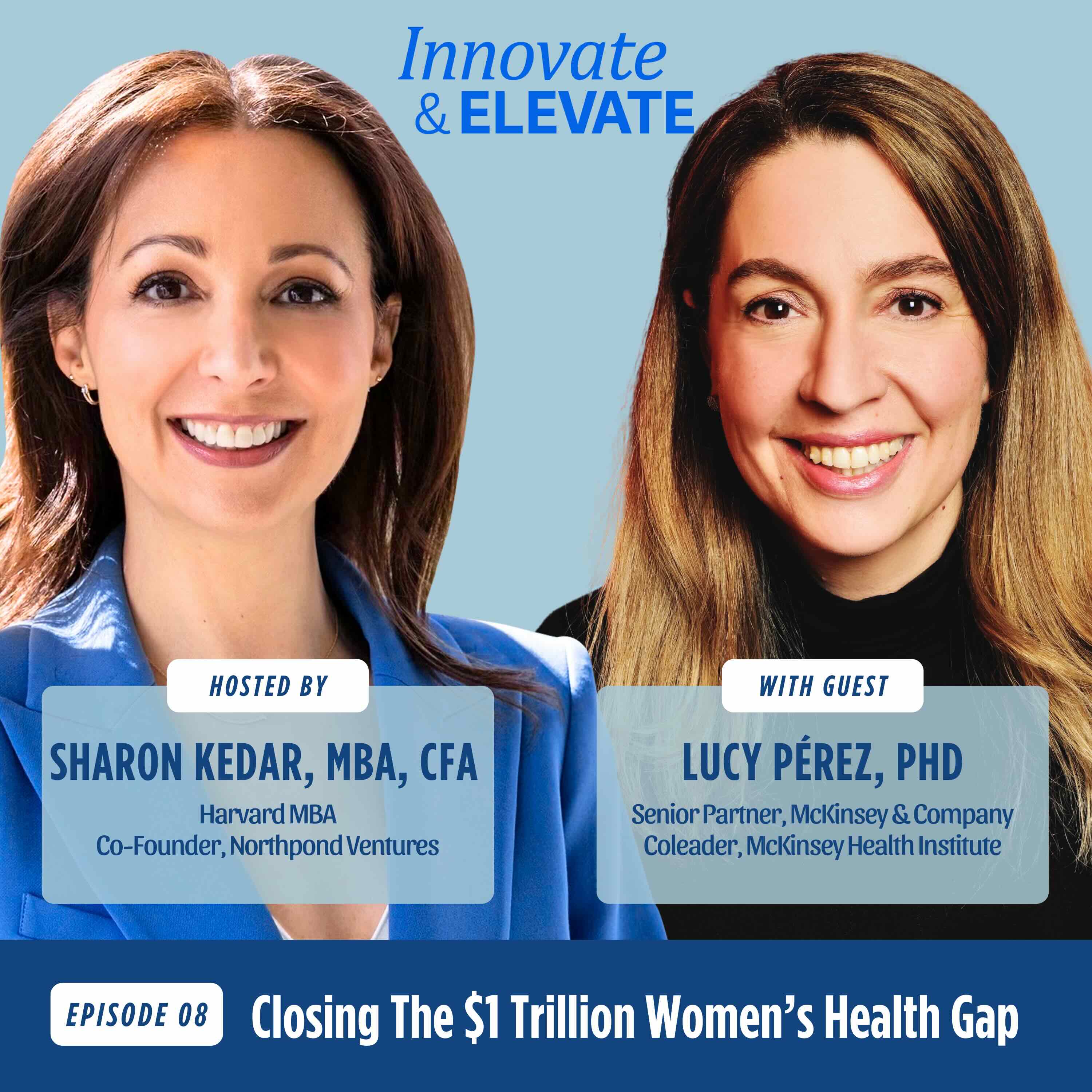
Closing The $1 Trillion Women’s Health Gap with Lucy Pérez
Jul 2, 202400:27:35Tap to summarizeIn this episode of Innovate and Elevate, Sharon welcomes Lucy Pérez, a Senior Partner at McKinsey & Company and Coleader of the McKinsey Health Institute. Lucy is also coauthor of the groundbreaking report, "Closing The Women's Health Gap: A $1 Trillion Opportunity to Improve Lives and Economies," copublished with the World Economic Forum. Sharon and Lucy discuss the report’s key findings and the significant economic and social benefits of closing the women's health gap.Lucy shares that closing the women’s health gap could add an astounding $1 trillion to the global GDP annually. This economic boost would come from healthier women having fewer missed workdays, increased productivity, and less time spent on unpaid caregiving duties. She highlights that women, despite living longer than men, spend more time in poor health, particularly during their most productive years (ages 20-60), which has considerable economic implications.A major challenge in addressing women's health is the shocking underinvestment in research. Currently, only 1-2% of R&D dollars are dedicated to women's health issues, excluding cancers. Lucy emphasizes the need for increased funding and better understanding of sex-based differences in medical research. Conditions like cardiovascular disease and autoimmune diseases often present differently in women, necessitating tailored approaches to diagnosis and treatment.Lucy provides actionable advice for how individuals can close the women’s health gap, including ways to be proactive in healthcare interactions, raise awareness about women's health issues, and support initiatives aimed at closing the health gap. She also underscores the importance of leveraging real-world data to drive innovation and improve health outcomes, advocating for strategic partnerships and increased funding to address health inequities.Episode Outline(02:13) What Is The Business Case For Investing In Women's Health?(07:50) Understanding Sex-Based Health Differences(11:43) When Women Are Healthier, Everyone Benefits(18:06) Opportunities for Women's Health Research, Development & Funding (25:01) How Can We Contribute to Closing The Women's Health Gap?Additional Resources:Closing the Women's Health Gap: A $1 Trillion Opportunity to Improve Lives and EconomiesConnect with SharonConnect with Sharon on LinkedIn: Sharon KedarLearn more about Innovate and Elevate innovateandelevatepodcast.comSubscribe to Innovate and Elevate on YouTubeJoin the newsletter to receive the latest episodes in your inbox: Innovate and Elevate NewsletterConnect with Lucy PérezFollow Lucy Pérez on LinkedIn: Lucy Pérez This podcast is produced by the women at The Wave Editing
Transcribe →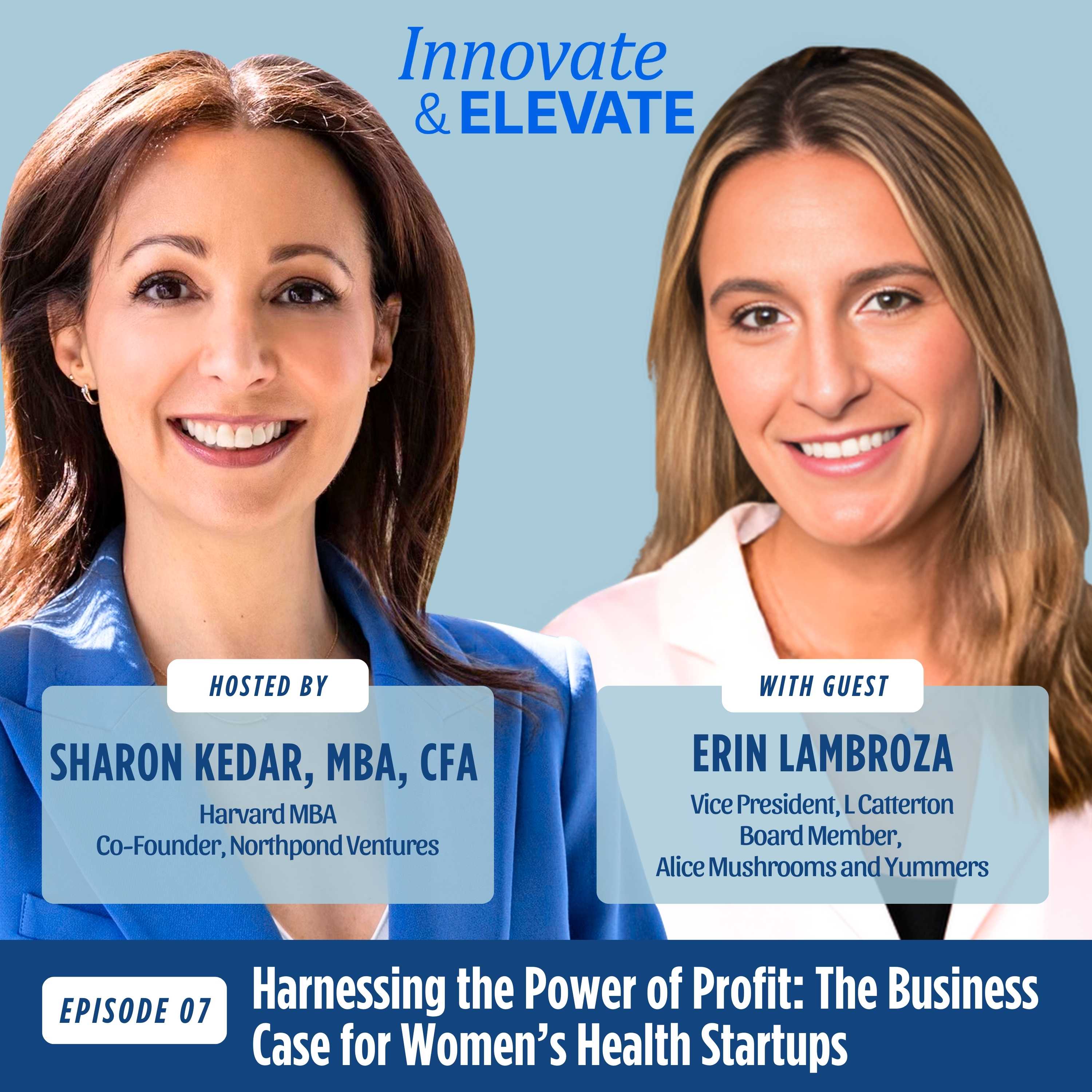
Harnessing The Power of Profit: The Business Case for Women’s Health Startups with Erin Lambroza
Jun 18, 202400:16:16Tap to summarizeIn this episode, Sharon is joined by Erin Lambroza, Vice President of L Catterton, a consumer-focused private equity firm. Erin holds Director roles on the boards of Alice Mushrooms—a functional health supplement business pairing chocolate with the power of adaptogens from legal mushrooms; an unannounced beauty and wellness platform providing solutions to women who are navigating menopause; and Yummers, a pet food company founded by “Queer Eye” stars Jonathan Van Ness and Antoni Porowski alongside the former CMO of Petco.In this conversation, Erin and Sharon discuss what makes a women's health company fundable and how to navigate the challenges in this space. Erin brings her extensive experience in early-stage investments with a focus on health and wellness to provide invaluable advice for founders and investors alike.Erin emphasizes that the success of a women’s health startup relies on the same factors as any other sector: a growing market, scalable growth, and demonstrated product-market fit. She highlights the importance of understanding unit economics, ensuring that the business model is sustainable and profitable, especially after the first year in the market. The conversation also touches on the historical challenges in women’s health, such as underinvestment and the lack of viable exit paths, which make fundraising particularly difficult. Erin notes that overcoming these obstacles requires innovation at the research level to build a foundation for profitable businesses.The episode delves into the historical context of women's health, revealing that women were excluded from clinical trials until 1993, resulting in a significant lack of comprehensive data and chronic underrepresentation in healthcare research. Erin also discusses the origins of the word "hysteria" and its longstanding impact on the perception of women's health issues. This historical lens underscores the need for deliberate and targeted innovation in areas such as autoimmune diseases, Alzheimer's, and cardiovascular disease, which disproportionately affect women.Erin offers practical advice for founders, emphasizing the importance of surrounding oneself with the right people who genuinely support the mission, being receptive to investor feedback while synthesizing advice from multiple sources, and seeking strategic, active capital rather than passive investment. Her insights provide a roadmap for founders looking to make a meaningful impact in women’s health.Episode Outline(01:56) What Makes a Women's Health Business Fundable? (04:49) The Audacity of Profit (08:53) Beyond Bikini Medicine: Addressing Innovation in Women’s Health (12:06) You Are Not Alone: Common Challenges All Startup Founders Face Connect with SharonConnect with Sharon on LinkedIn: Sharon KedarLearn more about Innovate and Elevate innovateandelevatepodcast.comSubscribe to Innovate and Elevate on YouTubeJoin the newsletter to receive the latest episodes in your inbox: Innovate and Elevate NewsletterConnect with Erin LambrozaFollow Erin Lambroza on LinkedIn Learn more about L Catterton Learn more about Alice Mushrooms Additional ResourcesThe New Menopause by Dr. Marie Claire Haver Scipher Kyverna NYSE Women's Health Summit This podcast is produced by the women at The Wave Editing
Transcribe →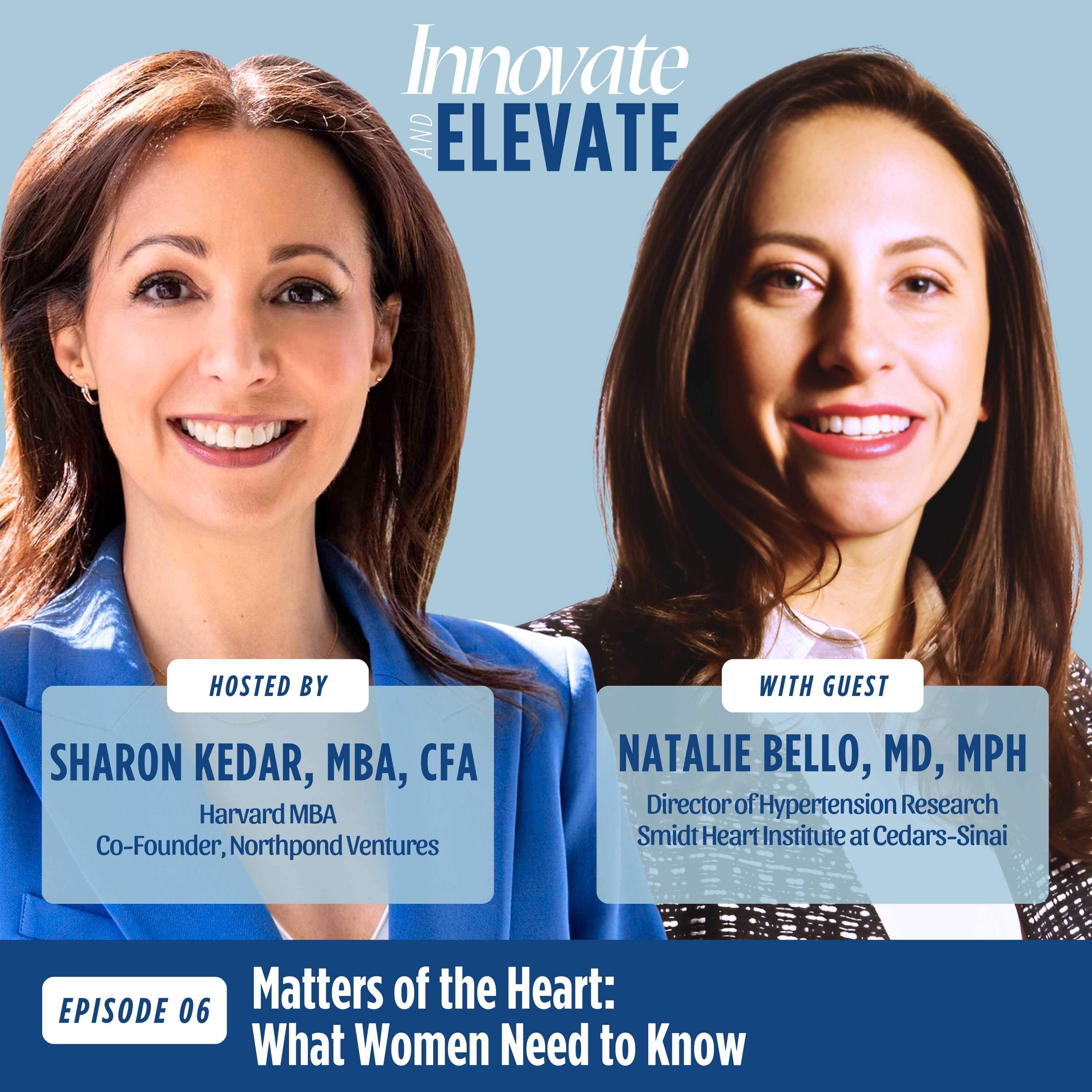
Matters of the Heart: What Women Need to Know with Dr. Natalie Bello
May 30, 202400:18:50Tap to summarizeIn this episode, Sharon is joined by Dr. Natalie Bello, Director of Hypertension Research, Staff Physician and Associate Professor of Cardiology at Cedars-Sinai Medical Center.After learning that 80% of heart disease is preventable in medical school, Dr. Bello decided that focusing her career on helping people stay healthy, optimize their risk factors, and live long lives was an easy choice to make. Hypertension, also known as “The Silent Killer,” is a leading global contributor to heart disease. A common myth is that heart disease disproportionately affects men when, in fact, it is the number one killer of both men and women. This misinformation has major consequences, namely that women experiencing chest pain wait 29% longer in the emergency room to be seen by a doctor than their male counterparts. Dr. Bello shares that just because a woman doesn’t present their pain the same way as a man doesn’t mean that they aren’t experiencing the same pain. Being your biggest health advocate is the best way to regain your agency in heart health. Sometimes, for a woman, that may look like firmly declaring that your chest pain has brought you to the emergency room, stating your risk factors and that you must be treated for potentially having a heart attack.Dr. Bello recommends the tests for anyone with chest pain or interested in improving their heart health, like an EKG, troponin, stress test, or angiogram. In order to assess personal risk factors, the Pooled Cohort Equations to Prevent Heart Failure (PCP-HF) or PREVENT are most used. Dr. Bello then discusses the mechanics of hereditarily passing down heart conditions between genders and the importance of increasing the number of studies on pregnancy’s impact on the body. Episode Outline(00:55) Meet Dr. Bello(01:35) 80% of Heart Disease Is Preventable(05:14) PSA: Women Wait Longer in the ER With Chest Pain(12:46) Knowledge Is Power: Know Your Hereditary and Gender-Specific Risk FactorsConnect with SharonConnect with Sharon on LinkedIn: Sharon KedarLearn more about Innovate and Elevate innovateandelevatepodcast.comSubscribe to Innovate and Elevate on YouTubeJoin the newsletter to receive the latest episodes in your inbox: Innovate and Elevate NewsletterConnect with Dr. BelloFollow Dr. Bello on LinkedIn Additional ResourcesWomen and Black adults wait longer to be seen in the ER for chest pain By American Heart Association News PREVENT Online CalculatorASCVD Risk Estimator App How Heart Palpitations Led Oprah to Discover She Was Approaching Menopause This podcast is produced by the women at The Wave Editing
Transcribe →