
Podcast
Innovation Tales
Hosted by Alexandre Nevski · EN
Innovation Tales explores the human side of digital transformation. Hosted by Alexandre Nevski, a seasoned expert in enterprise tech and innovation, each episode features candid conversations with leaders tackling real-world challenges—from leveraging AI to rethinking workflows.
Packed with actionable insights and lessons learned, this podcast is perfect for senior managers, team leads, and executives seeking to drive meaningful change.
Subscribe now and visit innovation-tales.com to explore more episodes and resources that inspire transformation—one story at a time.
10episodes
Episodes
Newest firstAll episodes

Strategic Automations: Freeing Time and Scaling Business with Aarti Anand
Sep 1600:27:27Tap to summarizeIs your leadership team unknowingly caught in an "expensive hobby" – drowning in $10-an-hour tasks while million-dollar strategies wait? Aarti Anand, an entrepreneur who champions escaping the daily grind, joins Innovation Tales to share how to reclaim this critical time. Discover a powerful framework to strategically automate internal operations and ensure every leader focuses only on work that either "lights them up" or "prints money" for the business. Key Takeaways Systems First, AI Second: Establish clear, repeatable systems before introducing AI. Automation scales effective processes but only amplifies chaos if your foundation is weak. Automate Internal Operations: Prioritize automating routine internal tasks to free leaders from low-leverage work, allowing them to focus on high-impact, strategic initiatives. Use the "Drip Matrix": Identify which tasks energize you or enrich the business. Keep those, and strategically delegate or find an automation solution for everything else.
Transcribe →
From Tasks to Agents: Redefining Business Process Automation with Tuhin Chakraborty
Sep 200:29:15Tap to summarizeWhat if you could free your team from those repetitive, soul-crushing tasks they've endured for years, not through complex coding, but through AI that learns by observing? This episode features Tuhin Chakraborty, CEO of Mimica AI, discussing the power of task mining to identify exactly where automation can make the biggest human impact. Key Takeaways Task mining offers objective process understanding: Unlike traditional manual methods that rely on subjective viewpoints, task mining provides an objective, data-backed view of processes, leading to clearer insights and easier consensus. Task mining is foundational to agentic automation: Understanding current tasks through mining is the first step towards building agentic AI that can learn by observation and reproduce tasks without explicit programming. The future of work involves a hybrid human-AI workforce: The immediate future will see humans and AI agents working together, with humans handling complex, intelligent tasks and agents performing routine, mundane activities.
Transcribe →
Ambient Listening and Digital Therapeutics: AI in Healthcare with RJ Kedziora
Aug 1900:30:52Tap to summarizeThe tech world loves the mantra “move fast and break things,” but in healthcare, the thing you break could be a person. So, how do you drive innovation when the stakes are life and death? This episode features RJ Kedziora, co-founder of Estenda, who shares invaluable lessons from the front lines of digital health. Key Takeaways AI-powered tools like ambient listening scribes are revolutionizing clinical workflows by significantly reducing "pajama time"—the after-hours administrative burden—freeing up clinicians to dedicate more valuable minutes to direct patient interaction and care. Ethically harnessing AI means focusing on augmenting human capabilities and expanding access to care, while proactively managing risks such as inherent bias and ensuring that technology complements, rather than replaces, vital human connection and trust. Shifting focus from traditional time management to actively managing personal energy—as outlined in concepts like "Productive Harmony"—can unlock higher productivity and help leadership and their teams sidestep burnout, fostering a more sustainable approach to achieving strategic goals in Digital Transformation.
Transcribe →
AI in the Legal Field: Challenges and Opportunities with Dr. Don Simmonds
Aug 5, 202500:27:35Tap to summarizeWhat if you could automate 80 percent of your team's most tedious work without an army of developers? That’s not a hypothetical from a tech brochure; it's the real story of Dr. Don Ray Simmonds, a trademark attorney who was drowning in paperwork and losing precious family time. In this episode, we unpack the low-code blueprint he used to build an AI assistant that reduced a full day's work into just two hours, creating a new revenue-generating business in the process. Key Takeaways Leverage low-code platforms to build powerful, revenue-generating AI solutions without needing extensive technical expertise, focusing instead on solving a specific, high-value business problem. Implement practical guardrails, like rigorous real-world testing and human review, to prevent AI hallucinations and ensure the accuracy and reliability of automated, client-facing documents. Protect your intellectual property in the AI era by meticulously documenting your prompts and creative inputs, creating a body of evidence to establish your significant contribution to the final work.
Transcribe →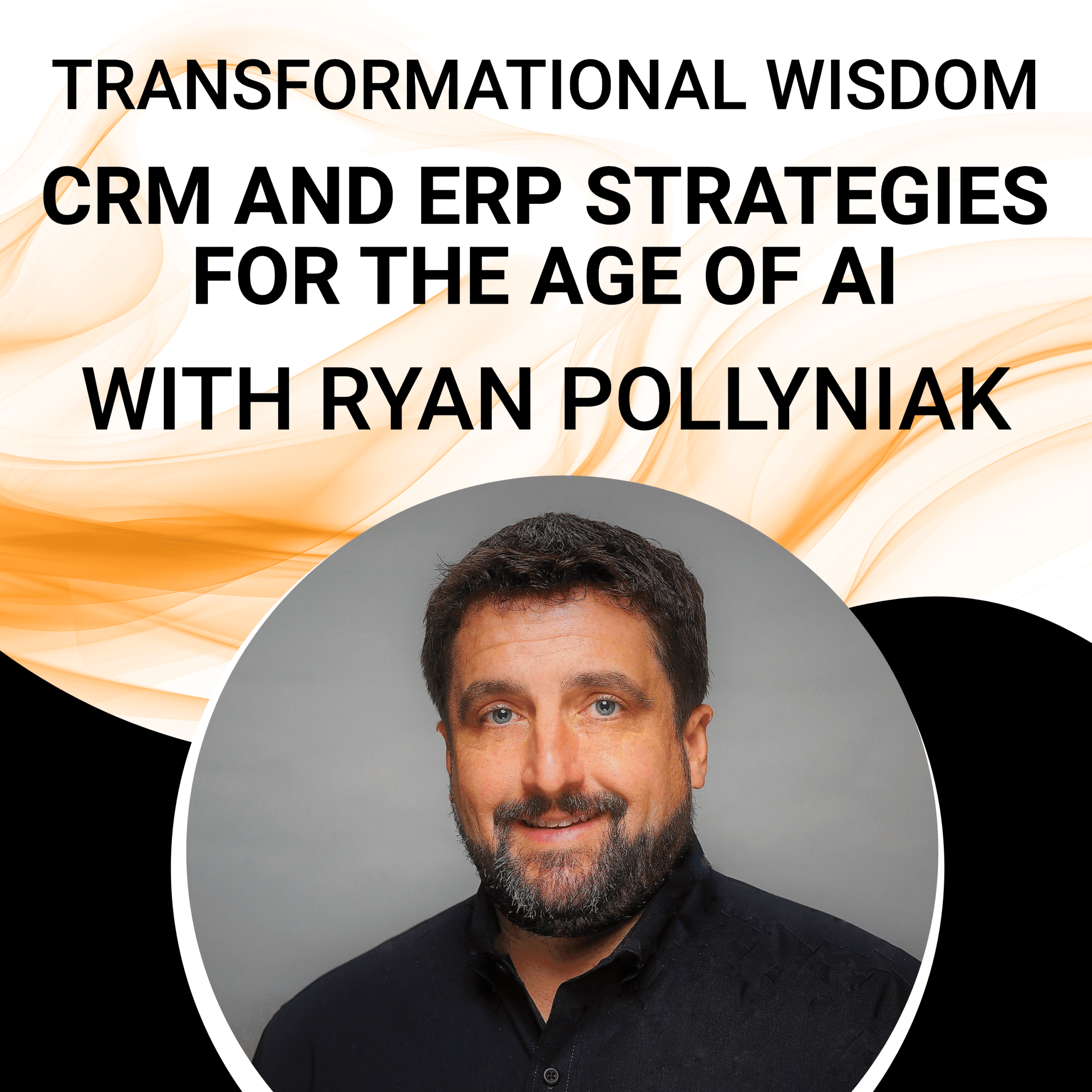
Transformational Wisdom: CRM and ERP Strategies for the Age of AI from Ryan Pollyniak
Jul 22, 202500:28:45Tap to summarizeBeyond the dazzling headlines of Generative AI, a familiar hurdle from past tech rollouts like CRM remains: genuine user adoption. If your organization sees GenAI primarily as a technology challenge, you might be missing the crucial human equation. Join us on Innovation Tales as host Alexandre Nevski and guest Ryan Pollyniak, a seasoned sales professional, share frontline stories and hard-won lessons on navigating the people-side of digital transformation, ensuring your initiatives inspire action, not resistance. Key Takeaways Prioritize People in Every Tech Initiative: Successful Digital Transformation, whether with CRM or AI, depends more on genuine user adoption and addressing the human impact than on the technology itself; understanding personal motivations and ensuring a clear "What's In It For Me?" (WIIFM) for employees is paramount. Executive Sponsorship and True Partnership are Non-Negotiable: Visible Leadership, unwavering executive buy-in, and a collaborative approach with implementation partners are essential to overcome resistance, manage change effectively, and prevent costly deviations from strategic goals. Approach AI Strategically, Starting with Data Readiness: While AI and Machine Learning offer transformative potential, organizations must first ensure their data is clean and aggregated, then strategically integrate AI to solve specific business problems rather than adopting technology for its own sake, focusing on both tactical efficiencies and long-term strategic insights.
Transcribe →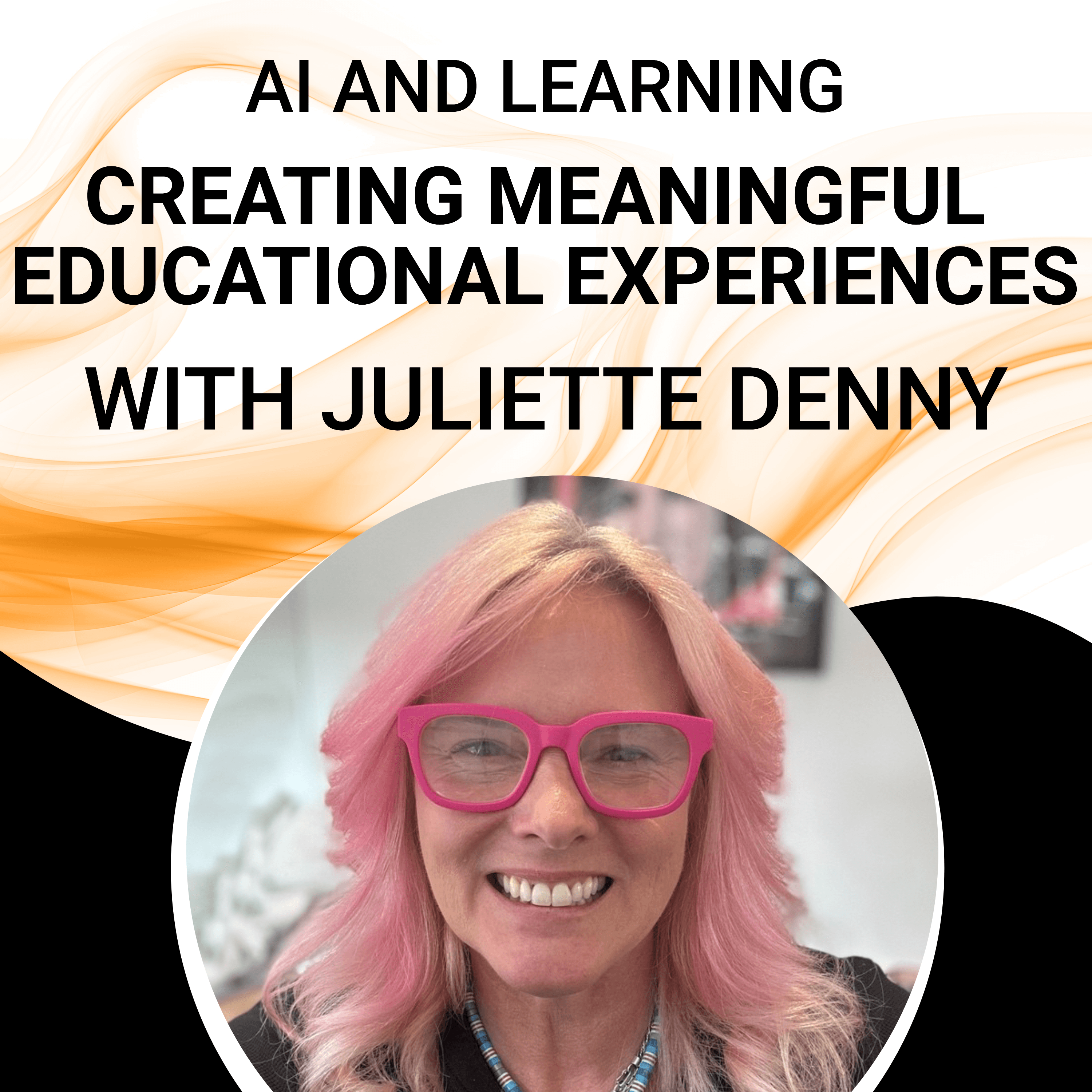
AI and Learning: Creating Meaningful Educational Experiences with Juliette Denny
Jul 8, 202500:29:22Tap to summarizeTraditional learning methods often struggle to keep learners engaged—rigid formats, passive content, and a lack of personalization. But could AI offer a better way? In this episode of Innovation Tales, we sit down with Juliette Denny, a trailblazer in learning technology, to explore how AI is revolutionizing education and corporate training. From gamification to personalized learning at scale, Juliette shares how her latest venture, Zavmo.ai, is rethinking engagement and unlocking human potential. Key Takeaways Personalization Unlocks Engagement and Retention By tailoring learning to each individual’s interests, job roles, and goals—rather than delivering generic content—organizations can capture learners’ attention more effectively. This personalized, context-rich approach helps sustain focus and ensures new knowledge is internalized. AI Must Pair With Sound Pedagogy While large language models enable automation at scale, true impact comes from combining them with proven instructional frameworks (like Bloom’s taxonomy). Relying on AI alone risks inaccuracies or shallow learning; curating high-quality content and applying neuroscience-backed design ensures outcomes remain rigorous and meaningful. Educators Remain Central—Technology Amplifies Their Role AI-driven tools don’t replace teachers or trainers; instead, they free them up to focus on deeper mentorship and creativity. By automating repetitive tasks and personalizing content, AI allows educators to guide learners more effectively while honoring the timeless basics of how the human brain learns and retains knowledge.
Transcribe →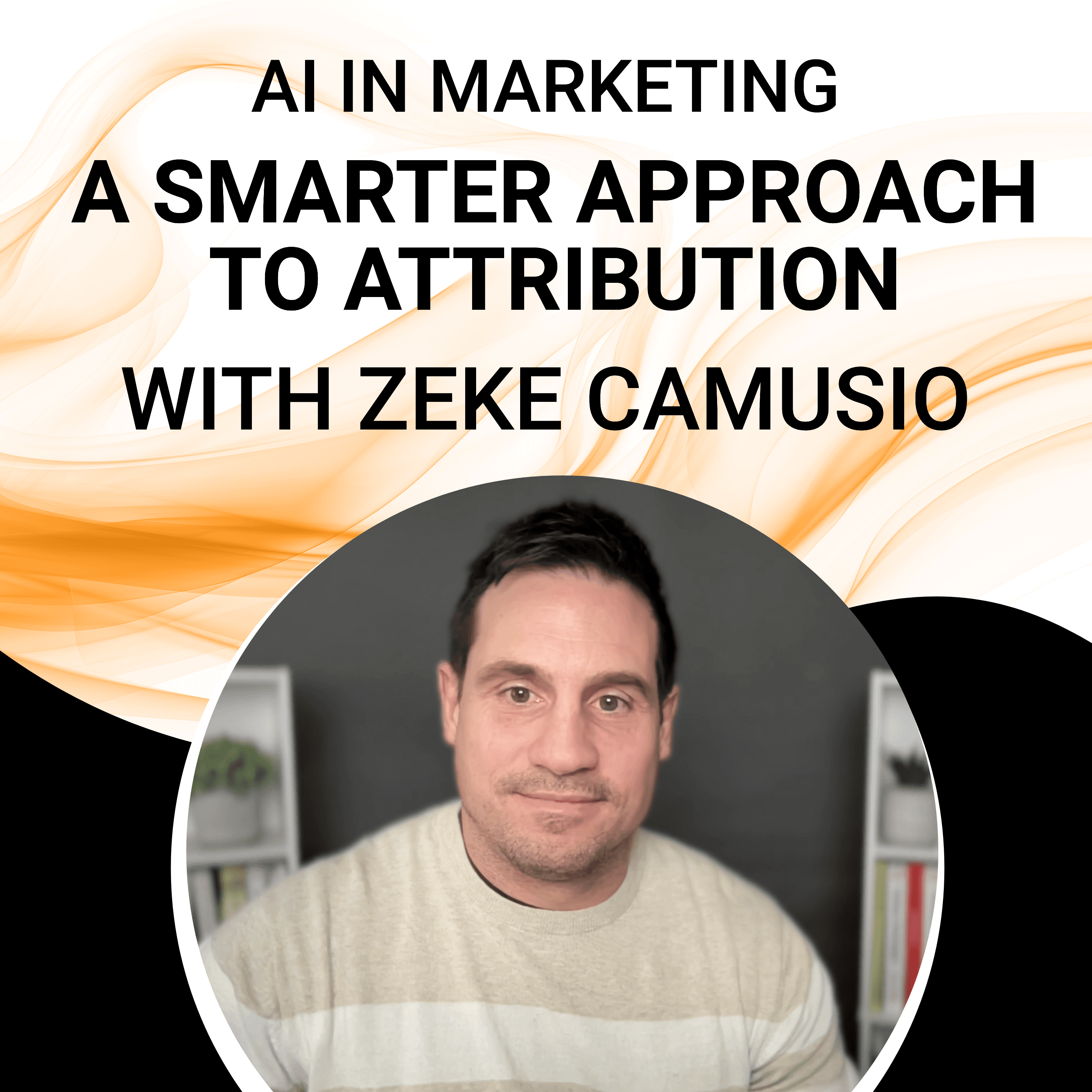
AI in Marketing: A Smarter Approach to Attribution with Zeke Camusio
Jun 24, 202500:28:13Tap to summarizeAI is revolutionizing marketing—but not the way you think. Forget flashy automation and mass content production. In this episode, Alexandre Nevski and Zeke Camusio, founder of Data Speaks, explore how AI is transforming marketing by improving accuracy and access to real insights. Learn why traditional attribution models fall short, how AI-driven experimentation uncovers what truly drives revenue, and why better data—not bigger budgets—is the key to smarter marketing decisions. Whether you're in marketing or just fascinated by real-world AI applications, this episode will change the way you think about data and decision-making. Key Takeaways Data Accuracy Over Volume: Rather than simply pushing out more ads or content, the real power of AI in marketing comes from precise measurement. By focusing on reliable, experiment-based attribution (instead of blanket tracking), companies gain clear insights into which channels actually drive revenue. Experimentation Trumps Guesswork: The podcast highlights the importance of testing changes in spend (what they call “designed” or “natural” experiments) to see the true impact on sales. It’s not about tracking individual users, but about measuring how each channel responds when budgets shift. AI + Human Insight: While AI handles massive data sets and delivers real-time insights, human judgment remains vital. AI surfaces patterns and opportunities, but people bring strategic context and relationship-building—essential for turning raw analytics into business growth.
Transcribe →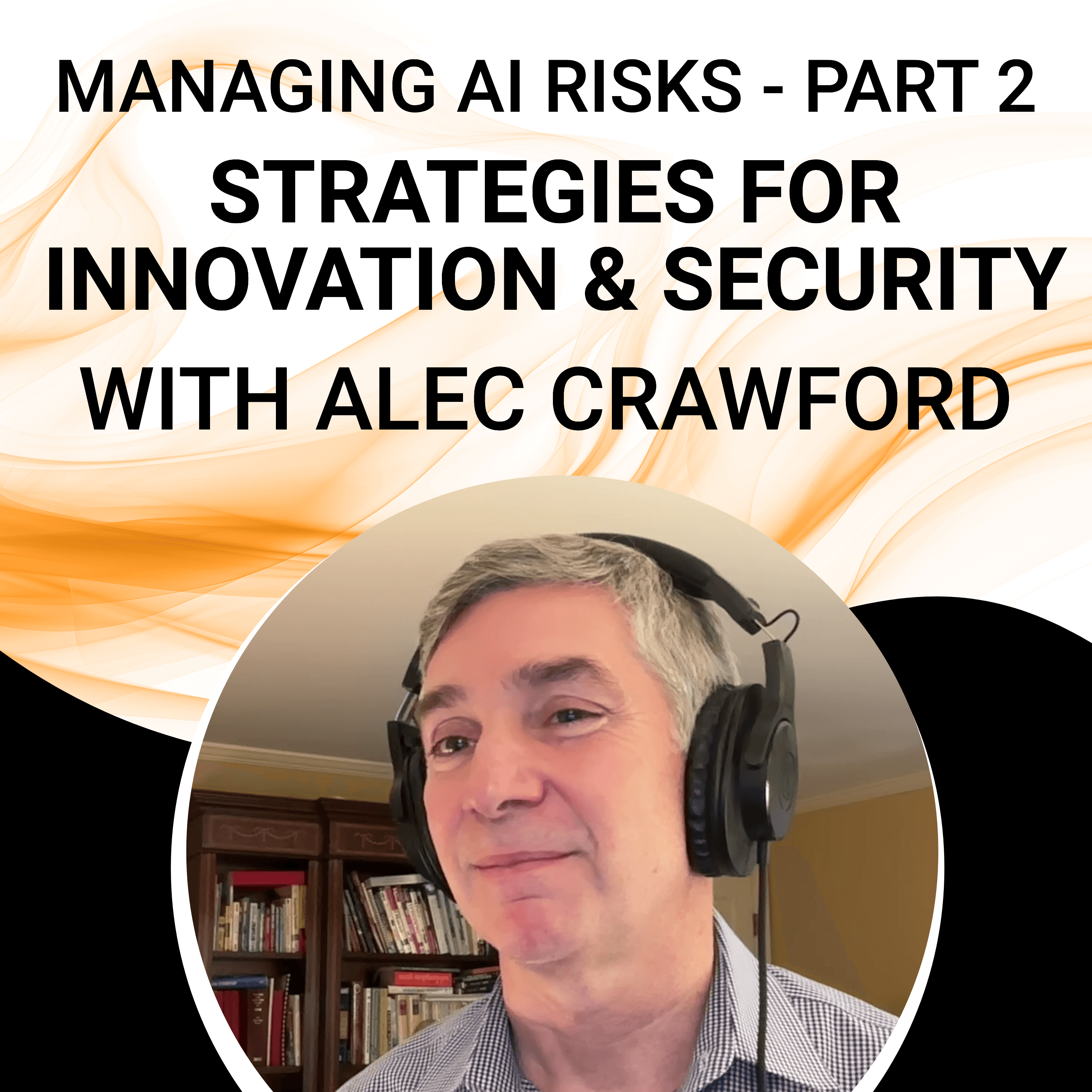
Managing AI Risks: Strategies for Innovation and Security Part 2 with Alec Crawford
Jun 10, 202500:24:49Tap to summarizeIgnoring generative AI isn’t an option—but in high-risk environments, a simple ChatGPT subscription won’t cut it. True enterprise adoption demands security, governance, and a platform built for compliance. In this episode of Innovation Tales, we welcome back Alec Crawford, founder of Artificial Intelligence Risk, Inc., for part two of our conversation on AI security. This time, we dive deeper into how businesses can deploy AI safely, from on-premise security to multi-tiered authorization and real-time compliance monitoring. Key Takeaways AI Security and Governance Are Non-Negotiable – Enterprises handling high-risk AI applications (such as in healthcare and finance) must implement on-premise or private cloud solutions, enforce role-based access, and utilize encryption and activity logging to ensure compliance with strict regulatory requirements. AI Regulations Are Complex and Evolving – From HIPAA in healthcare to state-specific AI laws like Colorado’s AI Act, businesses must navigate a patchwork of AI regulations. The NIST AI Risk Management Framework is emerging as a widely accepted compliance standard that simplifies regulatory alignment. AI’s Ethical and Global Impact Matters – Beyond compliance, organizations must address AI’s broader societal implications, including job displacement and economic divides between wealthy and developing nations. The Global AI Ethics Institute plays a key role in shaping discussions around ethical AI governance and responsible innovation.
Transcribe →
Managing AI Risks: Strategies for Innovation and Security with Alec Crawford
May 27, 202500:26:04Tap to summarizeWhen did you first realize AI was going to change the way we work? Long before ChatGPT and today’s AI boom, Alec Crawford was already deep in the field—surviving the second AI winter and pioneering predictive analytics. Now, he helps businesses navigate the hidden dangers of AI adoption. From building neural networks at Harvard to founding AI Risk, Inc., his journey is packed with insights for business leaders looking to embrace AI without falling into costly pitfalls. Key Takeaways AI adoption comes with significant security, compliance, and governance challenges that organizations must proactively address. Not every AI use case is worth pursuing—businesses should evaluate whether traditional models or non-AI solutions are more effective. Strong AI governance, risk management, and cyber-security strategies can prevent costly mistakes and protect sensitive corporate data.
Transcribe →
Beyond Tools: AI Literacy as the New Business Imperative with Fahed Bizzari
May 13, 202500:27:10Tap to summarizeMost companies say they’re adopting AI, but let’s be honest—are they truly transforming, or just collecting expensive tech demos? So how do leaders turn AI into a real competitive advantage instead of another experiment that never scales? In this episode of Innovation Tales, Alexandre Nevski talks with AI strategist Fahed Bizzari, who helps companies move beyond AI hype into real, measurable impact. Key Takeaways AI is not just a tool—it’s an evolving intelligence that requires strategic integration, not just technical adoption. Successful AI implementation depends on executive buy-in, identifying high-impact use cases, and ensuring AI enhances human roles rather than replacing them. Adaptability and AI literacy are critical for businesses to stay competitive in an environment where change is accelerating.
Transcribe →