Podcast
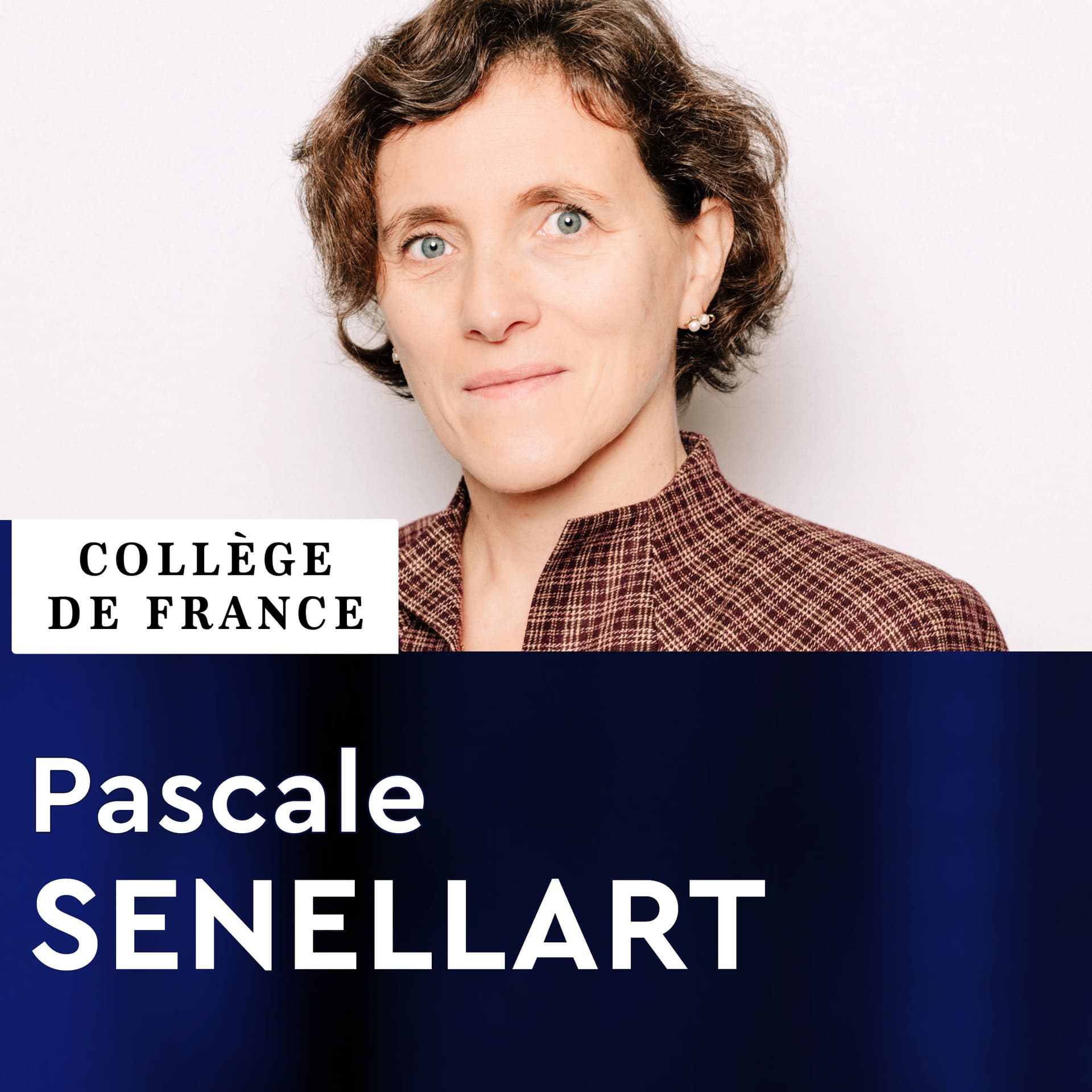
Innovation technologique Liliane Bettencourt (2025-2026) - Pascale Senellart
Hosted by Collège de France · FR
Présentation de la chaire
La chaire annuelle Innovation technologique Liliane Bettencourt, créée en 2006, marque la volonté commune du Collège de France et de la Fondation Bettencourt Schueller de mettre en valeur l'importance des travaux qui doivent être consacrés à l'innovation technologique.
Technologies quantiques émergentes
La révolution des sciences et technologies de l'information au XXe siècle n'a exploité qu'une infime partie des concepts introduits par la mécanique quantique. Depuis deux décennies, une seconde révolution technologique se prépare, basée sur des concepts subtils et fragiles tels que l'intrication et la superposition quantique. La capacité de manipuler des systèmes quantiques dits « élémentaires » est au cœur de ces développements ouvrant la voie à des applications variées : ordinateurs capables de surpasser les supercalculateurs actuels, réseaux de communication sécurisés par les lois quantiques, ou encore capteurs mesurant gravité et champs magnétiques avec une précision inédite.
Biographie
Pascale Senellart est directrice de recherche au CNRS, au Centre de nanosciences et de nanotechnologies, université Paris-Saclay. Elle mène ses recherches à l'interface entre la physique du solide, l'optique quantique et les nanotechnologies. Elle étudie les boîtes quantiques semi-conductrices, des nano-objets composés de milliers d'atomes qui se comportent comme un seul et peuvent ainsi émettre des photons un par un. En 2017, elle cofonde la startup Quandela, qui développe et commercialise des sources de photons uniques afin de soutenir le développement des technologies quantiques. Aujourd'hui, Quandela développe les premiers calculateurs quantiques à base de lumière.
Pascale Senellart rejoint le CNRS en 2002, elle est directrice de recherche en 2011 et professeure chargée de cours à l'École polytechnique depuis 2014 où elle enseigne la mécanique quantique. En 2020, elle participe à la création d'une formation aux technologies quantiques sur le campus de Saclay. Elle consacre aujourd'hui 30 % de son temps au conseil scientifique auprès de Quandela. Ses travaux ont été récompensés par la médaille d'argent du CNRS (2014), le grand prix Mergier-Bourdeix de l'Académie des sciences (2021), le grand prix Jean-Ricard de la Société française de physique (2023).
Elle est élue membre de l'Académie des sciences en 2022 et de l'Académie des technologies en 2024. Elle est membre du Conseil présidentiel pour la science depuis 2023.
19episodes
Episodes
Newest firstAll episodes

Colloque - Hugo Defienne : Quantum Imaging with Entangled Photons
4w ago00:40:12Tap to summarizePascale SenellartChaire annuelle Innovation technologique Liliane Bettencourt (2025-2026)Collège de FranceAnnée 2025-2026Colloque : Light-based Quantum TechnologiesPascale Senellart, chaire Innovation technologique Liliane BettencourtColloque - Hugo Defienne : Quantum Imaging with Entangled PhotonsRésumé Entanglement stands as a foundational resource in quantum technologies. Lacking a classical equivalent, it theoretically guarantees superior performance over classical systems, provided it plays a non-trivial role in the underlying process. However, in the field of optical imaging, demonstrating the indispensable nature of entanglement remains a significant challenge. Most current applications rely on optical correlations derived from entangled states - features that can often be emulated by classical sources - rendering entanglement a sufficient, rather than strictly necessary, component.In this presentation, we explore imaging scenarios where entanglement becomes a critical and non-trivial asset. Specifically, I will discuss recent experimental studies utilizing entangled photon states to image through scattering media, highlighting regimes where quantum entanglement provides a definitive advantage over classical alternatives. And, as a nod to the foundations of quantum mechanics, the presentation will be illustrated with the mandatory pictures of cats!Hugo Defienne Hugo Defienne's research focuses on quantum optics, imaging, and complex media. He is a researcher at the CNRS at Sorbonne University in Paris, where he heads the Quantum Imaging Paris group. He completed his doctoral thesis at the Kastler-Brossel Laboratory in Paris, where he studied quantum optics in disordered media. He graduated in 2016 and then turned his attention to quantum imaging in his postdoctoral research at Princeton University and then at the University of Glasgow. He became a lecturer in Glasgow before returning to Paris in 2022 to set up his own group at the CNRS thanks to a grant awarded to early-career scientists by the European Research Council.
Transcribe →Colloque - Anaïs Dréau : Single Color Centers for Silicon-Based Quantum Technologies
4w ago00:41:14Tap to summarizePascale SenellartChaire annuelle Innovation technologique Liliane Bettencourt (2025-2026)Collège de FranceAnnée 2025-2026Colloque : Light-based Quantum TechnologiesPascale Senellart, chaire Innovation technologique Liliane BettencourtColloque - Anaïs Dréau : Single Color Centers for Silicon-Based Quantum TechnologiesAnaïs DréauRésuméCapitalizing on the success of the microelectronics and integrated photonics industries, silicon is the material that has generated the most scientific interest for quantum technologies and offers currently the greatest diversity of integrated quantum systems. Recently, in 2020, a new type of physical systems in silicon has emerged for quantum applications: individual color centers. These fluorescent point defects can be isolated at single defect-scale using low-temperature confocal microscopy, and emit single photons directly at telecom wavelengths, suitable for long-distance propagations in optical fibers. Furthermore, some of these defects are also coupled to an optically detectable electron spin that could be used to store and process quantum information.
Transcribe →Colloque - Hugues de Riedmatten : Quantum Memories for Quantum Networks
4w ago00:44:23Tap to summarizePascale SenellartChaire annuelle Innovation technologique Liliane Bettencourt (2025-2026)Collège de FranceAnnée 2025-2026Colloque : Light-based Quantum TechnologiesPascale Senellart, chaire Innovation technologique Liliane BettencourtColloque - Hugues de Riedmatten : Quantum Memories for Quantum NetworksHugues de RiedmattenRésuméThe distribution of entanglement between the nodes of a quantum network will allow new advances e.g. in long distance quantum communication, distributed quantum computing and quantum sensing. The realization of large-scale quantum networks—also known as quantum internet—will require quantum repeaters to enable quantum communication over distances much longer than the fiber attenuation length. The nodes of a quantum repeater are matter systems that should efficiently interact with quantum light, allow entanglement with photons (ideally at telecommunication wavelengths) and serve as a quantum memory allowing long-lived, faithful and multiplexed storage of entangled quantum bits.
Transcribe →Colloque - Adriana E. Lita : Development of Superconducting Single-Photon Detectors for Quantum Information Applications
4w ago00:42:28Tap to summarizePascale SenellartChaire annuelle Innovation technologique Liliane Bettencourt (2025-2026)Collège de FranceAnnée 2025-2026Colloque : Light-based Quantum TechnologiesPascale Senellart, chaire Innovation technologique Liliane BettencourtColloque - Adriana E. Lita : Development of Superconducting Single-Photon Detectors for Quantum Information ApplicationsAdriana E. LitaRésuméSingle-photon detectors are a key enabling technology for the realization of light-based quantum information applications. These devices operate at the fundamental limit of electromagnetic signal strength, which places stringent requirements on their performance. The quest for an ideal single-photon detector aims to combine as many of the following performance metrics as possible: near-unity detection efficiency, ultra-low dark count rates, fast temporal response, and photon-number-resolving capability, all across a wide spectral range. In this presentation I will review the development and latest performance records achieved by single-photon detectors, with a focus on superconducting detectors such as Superconducting Nanowires Single-Photon Detectors (SNSPDs) and Transition-Edge Sensors (TESs). I will highlight how these detectors have redefined the state-of-the-art and conclude by showcasing representative applications in quantum information science and related fields.
Transcribe →Colloque - Alexia Auffèves : An Energetic Perspective on Fundamental Processes in Quantum Optics
4w ago00:44:05Tap to summarizePascale SenellartChaire annuelle Innovation technologique Liliane Bettencourt (2025-2026)Collège de FranceAnnée 2025-2026Colloque : Light-based Quantum TechnologiesPascale Senellart, chaire Innovation technologique Liliane BettencourtColloque - Alexia Auffèves : An Energetic Perspective on Fundamental Processes in Quantum OpticsAlexia AuffèvesRésuméFor the emerging field of quantum energetics, a crucial motivation is to understand how quantum features impact energy and entropy exchanges in the quantum realm. Energetic footprint of quantum coherence and entanglement, irreversibility of quantum measurement and decoherence are typical research topics in the field. By staging simple interacting systems like atoms and photons, quantum optics provides a convenient scenery to study these effects. In this talk I will present a new framework to analyse energy and entropy exchanges in quantum optics, and apply it to elementary mechanisms: spontaneous and stimulated emission, coherent driving, driven-dissipative dynamics. I will showcase a few recent experimental results to illustrate the operationality of this framework before concluding on the impact of this research on the energy cost of quantum technologies.
Transcribe →Colloque - Antoine Heidmann : Listening to the Universe with Quantum Light: Quantum technologies for gravitational-wave detection
4w ago00:33:39Tap to summarizePascale SenellartChaire annuelle Innovation technologique Liliane Bettencourt (2025-2026)Collège de FranceAnnée 2025-2026Colloque : Light-based Quantum TechnologiesPascale Senellart, chaire Innovation technologique Liliane BettencourtColloque - Antoine Heidmann : Listening to the Universe with Quantum Light: Quantum technologies for gravitational-wave detectionAntoine HeidmannRésuméGravitational waves have opened a new way of observing the Universe, but their detection relies on laser interferometers operating at the very edge of what quantum physics allows. Quantum light — and in particular squeezed states — has become a key resource for improving detector sensitivity and overcoming quantum noise. This presentation highlights how squeezing and frequency-dependent squeezing are implemented in gravitational wave detectors such as LIGO and Virgo to enhance gravitational wave detection over a broad frequency range, and illustrates how quantum technologies developed for sensing play an essential role in fundamental research.
Transcribe →Colloque - Christine Silberhorn : Scaling Photonic Systems for Quantum Information Processing
4w ago00:45:22Tap to summarizePascale SenellartChaire annuelle Innovation technologique Liliane Bettencourt (2025-2026)Collège de FranceAnnée 2025-2026Colloque : Light-based Quantum TechnologiesPascale Senellart, chaire Innovation technologique Liliane BettencourtColloque - Christine Silberhorn : Scaling Photonic Systems for Quantum Information ProcessingChristine SilberhornRésuméPhotonic systems represent a promising physical platform for realizing quantum computing, offering low-noise operation, room-temperature compatibility, and access to inherently high-dimensional optical modes. A key challenge for scaling these systems into practical quantum processors is the realization of engineered quantum light sources, efficient multiplexing schemes, and reconfigurable photonic circuits within compact architectures.
Transcribe →Colloque - Serge Haroche : Rydberg Atoms Interacting with Light: From Bohr's Atom to Quantum Simulations
4w ago01:02:35Tap to summarizePascale SenellartChaire annuelle Innovation technologique Liliane Bettencourt (2025-2026)Collège de FranceAnnée 2025-2026Colloque : Light-based Quantum TechnologiesPascale Senellart, chaire Innovation technologique Liliane BettencourtColloque - Serge Haroche : Rydberg Atoms Interacting with Light: From Bohr's Atom to Quantum SimulationsSerge HarocheProfesseur du Collège de France, Administrateur du Collège de France (2012-2015)
Transcribe →Colloque - Light-based Quantum Technologies - Introduction
4w ago00:05:24Tap to summarizePascale SenellartChaire annuelle Innovation technologique Liliane Bettencourt (2025-2026)Collège de FranceAnnée 2025-2026Colloque : Light-based Quantum TechnologiesPascale Senellart, chaire Innovation technologique Liliane BettencourtIntroduction
Transcribe →Séminaire - Tracy Northup : Quantum Interfaces Based on Ions and Photons
Feb 2400:57:01Tap to summarizePascale SenellartChaire Les chairesCollège de FranceAnnée 2025-2026Tracy NorthupProfessor, University of Innsbruck, Department of Experimental PhysicsSéminaire - Tracy Northup : Quantum Interfaces Based on Ions and Photons
Transcribe →