
Podcast
Inside Outside Innovation
Hosted by Brian Ardinger, Founder of Inside Outside Innovation podcast, InsideOutside.io, and the Inside Outside Innovation Summit · EN
Inside Outside Innovation explores the ins and outs of innovation with raw stories, real insights, and tactical advice from the best and brightest in startups & corporate innovation.
Each week we bring you the latest thinking on talent, technology, and the future of innovation. Join our community of movers, shakers, makers, founders, builders, and creators to help speed up your knowledge, skills, and network.
Previous guests include thought leaders such as Brad Feld, Arlan Hamilton, Jason Calacanis, David Bland, Janice Fraser, and Diana Kander, plus insights from amazing companies including Nike, Cisco, ExxonMobil, Gatorade, Orlando Magic, GE, Samsung, and others.
This podcast is available on all podcast platforms and InsideOutside.io. Sign up for the weekly innovation newsletter at http://bit.ly/ionewsletter. Follow Brian on Twitter at @ardinger or @theiopodcast or Email brian@insideoutside.io
32episodes
Episodes
Newest firstAll episodes
Portfolio entrepreneurship, AI research, and brain development with Brian Ardinger and Robyn Bolton
Dec 1600:14:54Tap to summarizeOn this week's episode of Inside Outside Innovation, we talk about portfolio entrepreneurship, how AI tools are transforming market research and new brain research that indicates adulthood starts later than you think. Let's get started.Inside Outside Innovation is the podcast to help innovation leaders navigate what's next. Each week, we'll give you a front row seat into what it takes to grow and thrive in a world of hyper uncertainty and accelerating change. Join me, Brian Ardinger, and Miles Zero's Robyn Bolton. As we discuss the latest tools, tactics, and trends for creating innovations with impact. Let's get started.Podcast Transcript with Brian Ardinger and Robyn BoltonAI Driven Innovation Trends and Founder Mindset Shifts[00:00:30] Brian Ardinger: Welcome to another episode of Inside Outside Innovation. I'm your host, Brian Ardinger, and with me, I have Robyn Bolton from Mile Zero. Welcome, Robyn.[00:00:34] Robyn Bolton: Thank you. Great to be here.Great to have you, again. This is episode 3 43 ish. We're excited to continue to talk about innovation. There's always something new and exciting to talk about.[00:00:45] Brian Ardinger: Anything going on in your world this week?[00:01:04] Robyn Bolton: I feel like this week I'm going to be spending at grading finals papers wrapped up my corporate innovation course at Boston College, and everyone submitted their finals and that's all great and they're done. And I'm now just looking at a stack of virtual digital stack of papers.[00:01:21] Brian Ardinger: At Nelnet this week we've got our Spark, which is our monthly gathering of folks. We find some interesting project and give them opportunities to sit on stage and talk about what some of the new things that are building out there. That's an opportunity to get our movers and shakers in the same room and share what's going across the different business units. So we're always excited for our Spark this week. Those are some of the things that are happening in my world. [00:01:44] Robyn Bolton: I'll happily come out and go to your Spark event, and you can grade papers. [00:01:46] Brian Ardinger: You're welcome anytime. We've got a lot of things to cover today. We've got three articles that we've curated over the last week or so. The first one we want to talk about is everyone's a founder now and it's from every, and it's a YouTube channel, and it's an interview with Henrik WerdelinPortfolio Entrepreneurship and AI Agents Reshaping StartupsAnd Henrik is a person who started Pre-Hype, started BarkBox, and he has got a new company called Audos. It's a platform that helps people use AI agents to turn ideas into profitable companies. This particular YouTube video in this interview was talking a lot about some of these new tools and how it's really changing the landscape of startups and can apply to corporate innovation as well. With these new tools, Henrick was talking about this idea of portfolio entrepreneurship, so the idea of a new breed of entrepreneurship that's shepherded in by AI.Where founders build family of products or services around the same customer instead of like one moonshot idea. So rather than coming up with Facebook and building that out, there's an opportunity now for entrepreneurs to create maybe more single, double, triple types of companies around a core set of customers that they know and can work with.And it's a variety of different projects and services that can serve that particular marketplace versus the traditional model of venture capital that we've seen out there kind of shooting for the moon. [00:03:02] Robyn Bolton: It's a really interesting video and I encourage people to go watch it. They talk about a lot in this video and you know, some of the ones that I wanna highlight, and you've already touched on this is one, what he's building with Audos. Going back to our last episode where we talked about the Mad Lib. I actually went over to Audos and you can fill in a Mad Lib for your business idea and I think in 10 minutes it built a fully functioning website, videos, everything. It was amazing. I have no idea how to edit any of it or do anything but like just the speed at which you could take a mad lib and create something that looked like a viable business was astounding.Deep Customer Focus and the Rise of Multi Product FoundersHe also talked about, as you mentioned, the importance of picking a target customer and one that you want to serve for 10 years. And he talked about with BarkBox, it was all about serving the dog owner, and most people would talk about, oh, well, you did BarkBox. Now do Meow Box, now do whatever box. And he's like, that wasn't going to work. They went from BarkBox to basically like airplanes for dogs to other things. And it was always the people who are gonna win in this new kind of world are the ones who go really deep on a very specific customer.Then kind of where this all started of the portfolio entrepreneur. He did a great job calling out VCs. Mm-hmm. And saying, Hey, VCs will tell an entrepreneur you have to go all in on one idea. Don't you dare get distracted with a portfolio. And yet the VCs are there being like, here's our portfolio and is a great point. [00:04:39] Brian Ardinger: Yeah, and I'm seeing more and more folks, I've been having conversations about like startup ecosystems then. And it used to be where you'd have a players and they'd have to find a team and build out something from that perspective. And now an A player can use these platforms like ADOS to vibe code and kind of get things up and going. And they don't necessarily have to raise money.They don't necessarily have to go through the 10 year journey to get to an exit before they're actually profitable in that. You know, these tools allow you to, if you have some insight, some access to customers, something like that, you can start quickly. You can start making progress and, you know, maybe you don't have the billion dollar exit, but a nice a hundred million dollar exit that you built yourself might be a nice little, way to play this particular game that wasn't possible necessarily before AI and some of the new tools and, no-code stuff that's available to you now.AI Powered Personas and Synthetic Research in Market Insights[00:05:28] Robyn Bolton: Yeah, I don't know too many people who would turn their noses up at a hundred million or even a $10 million exit. [00:05:33] Brian Ardinger: Zuckerberg did. But other than that, well.... Let's see. The second article on our list today is from HBR. Harvard always seems to put out some good stuff, but their article in the Harvard business reviews called the AI Tools that are Transforming Market Research.This was an interesting take on how AI is impacting how research is done. And so the interesting things that they're talking about are some of the new ways that people are using AI to create a variety of different personas and a digital twins and using the AI as a way to interact and kind of mimic or facilitate what used to be something you'd have to do with actuarial customers or creating the real thing before you could actually get some feedback on it. And AI is allowing you to create these synthetic personas and digital twin types of scenarios that speed up the learning process when it comes to work...
Transcribe →
AI questions, value propositions, and industry veterans with Brian Ardinger and Robyn Bolton
Dec 900:14:35Tap to summarizeOn this week's Inside Outside Innovation, Robyn and Brian sit down to talk about the AI question that no one wants to answer, the power of a good value proposition, and why industry veterans are building tomorrow's billion-dollar startups. Let's get started.Inside Outside Innovation is the podcast to help innovation leaders navigate what's next. Each week we'll give you a front row seat into what it takes to grow and thrive in a world of hyper uncertainty and accelerating change. Join me, Brian Ardinger and Miles Zero's Robyn Bolton. As we discuss the latest tools, tactics, and trends for creating innovations with impact. Let's get started.Podcast Transcript with Brian Ardinger and Robyn BoltonOpening Reflections on Innovation and the Year Ahead[00:00:30] Brian Ardinger: Welcome to another episode of Inside Outside Innovation. I'm your host, Brian Ardinger, and we have Robyn Bolton, our co-host from Mile Zero. Welcome, Robyn.[00:00:53] Robyn Bolton: Thank you. Great to be here as always.[00:00:55] Brian Ardinger: We've got the number of different articles we're going to talk about today. As everyone knows, this podcast is about giving the real insights of what's going on in the world when it comes to innovation. What's going on in your world? [00:01:07] Robyn Bolton: It's funny, it's time of year, so kind of feels like everyone is both wrapping up and gearing up, trying to bring things to a close. So, we can all effortlessly and go on the holidays, but January we'll be here before you know it. And so people are already starting to think about what's going on with AI in 2026, and what does the new world of work look like?[00:01:29] Brian Ardinger: I'm looking forward to my inbox being filled with the best things that happened in 2025 and what to look forward to in 2026, and like kind of year-end wrap stuff that you get. It's interesting times, especially like on the investment front, you know, a lot of things slow down at the end of the year as people start planning for it. I kind of love and hate this time of the year from the standpoint of, gives you some time sometimes to do that stuff that you don't always have time to do and remap what you're going to do for 2026. [00:01:55] Robyn Bolton: Yes. And speaking of the emails, wrapping things up. Spotify's Yearend rap came out I think a couple days ago, so also getting a lot of those in the old inbox.[00:02:07] Brian Ardinger: Alright, well let's get into it. We've got a couple of articles to talk to today. The first one that we came upon was from KP Ready. It is called the AI Question. Nobody wants to Answer and KP does a good analysis. He basically says, is the juice worth the squeeze when it comes to AI. And I think a lot of people are asking that question right now.You know, as more and more enterprises, you're hearing about more and more experiments, more and more people using the technology, and you're getting conflicting results and feedback on is this really paying off. All the money that's being spent into ai, all the things that we're doing around it. Are we seeing the returns and when will we see the returns?You know, from my understanding and what I've seen, the question is not like, will we receive returns, but when and how do we get through this exploration phase so that we can be effective with using the dollars and the time and the resources around this to actually find the value that's created. And so let's start with that particular article. What was your thought on it? Is the Juice Worth the Squeeze? AI ROI and Experimentation[00:03:04] Robyn Bolton: There's always this level of uncertainty around new technologies of is the juice worth the squeeze? Are we gonna get ROI? When are we going to get ROI? Running lots of experiments, but it definitely seems like AI has kind of amplified that. I actually just wrote a blog post asking, like, did your AI strategy, was it developed by the underpants gnomes?And just in case there, we have listeners who don't know who the underpants gnomes are, they're from South Park, and basically their business plan is phase one, collect underpants, phase two, question mark, phase three profit. And it just seems like there are so many AI startups, companies, experts, consultants, et cetera out there who have become underpants gnomes. And kind of just have this like, hi, put it on top of everything, and profit, and no one's kind of slowing down to kind of like, well, do we even need AI? How do we need it? Like, what makes sense here? [00:04:04] Brian Ardinger: I think a lot of people are not necessarily thinking. They feel the pressure to start doing something with AI, and so they start immediately deploying and doing things without looking at, well, is this a particular area that really would benefit? Or could we create real value if we can get this right? And they oftentimes overlook some of the other kind of hidden costs when you talk about it, deploying technology that's new or different.And I think more importantly, how it affects the culture of the people deploying it. So, you've got the, you know, the data infrastructure costs, you've got the integration complexity, you've got the change management, ongoing maintenance, all these kind of hidden costs when you're dealing with a brand new technology that you don't necessarily know.And some of the things I saw in the article that were interesting and I've seen in real life too, is how you can kind of maybe think through this process of, you know, which particular project should we deploy and that? Don't be afraid to kill experiments quickly if you're not seeing ROI in a particular area, you know, maybe shelve that particular idea and focus on one that is showing some value to it.Don't focus on having to deploy it everywhere, all at once. Again, try to find the particular areas or the particular people that are more willing and able to make those steps. And then thinking about that, you have to build everything yourself.I think that's another place where I'm seeing a lot of brand new tools and folks out there that are trying things that have already built some things that maybe you can go out and purchase and buy and experiment rather than having to come up with your own team to do and make all the mistakes that they're probably already going through it and made that tool in the first place.[00:05:00] Robyn Bolton: So, all great advice, and I just want to underscore the people aspect is you have people who are going to use this, people that you hope will benefit from it. Some people who will be resistant, and so don't underestimate the people, the human. AI interaction and all of those dynamics as part of the rollout, the implementation, the change management, all of that.Sharp Value Propositions in the AI Era[00:05:30] Brian Ardinger: All right. The second article is from our good friend Ben Yoskovitz. He always puts out some great stuff. His article on his substack called Focus Chaos is called the Real Differentiator in the AI era, A sharp specific Value proposition. Ben talks about how a lot of folks are falling into particular traps of, again, thinking that, well, I've got AI so hot, I'm going to be deploying AI, and let's go out there and build a startup around that, and without thinking about, well...
Transcribe →
Handwriting, Hype & The Future of Innovation with Ardinger and Bolton
Sep 200:20:36Tap to summarizeInside Outside Innovation is the podcast to help innovation leaders navigate what's next. Each week, we'll give you a front row seat into what it takes to grow and thrive in a world of hyper uncertainty and accelerating change. Join me, Brian Ardinger, and MileZero's Robyn Bolton as we discuss the latest tools, tactics, and trends for creating innovations with impact. Let's get started.Interview Transcript with Brian Ardinger and Robyn BoltonBrian Ardinger: Welcome to another episode of Inside Outside Innovation. I'm your host, Brian Ardinger, and today we have a brand-new format. If you've been listening to the podcast for the last eight or nine years, every week I bring in an amazing guest to talk about innovation. I thought we'd try to mix it up and innovate on the format itself. And for the next few weeks, we're gonna have a guest host.My guest host is Robin Bolton. She's been a guest on the podcast a couple of times in the past. She spoke at our Inside Outside Innovation Summit in 2022. She's the bestselling author of Unlocking Innovation, founder of MileZero, and a good friend. So, Robyn, welcome to the show. [00:01:03] Robyn Bolton: Thank you so much. I'm so excited to be here and co-hosting. [00:01:06] Brian Ardinger: We need to innovate. We need to eat our own dog food. So I figured after all these years of interviewing amazing people about innovation, we'd mix it up a little bit, and every week we'll try to bring you some insights into innovation from what we've seen in the field and use it as a way to get your feedback from the audience as well.One of the things we thought about is to talk about innovation and what we're seeing, and so one of the things we do, both Robyn and I publish a newsletter, and we're constantly running into new information sources and new people, new insights into what's going on. Thought the first thing we're going to do is talk about the article of the week or what we've been reading.We have both called together a, a couple of different articles to start the conversation. Since people may not have heard you on the podcast in the past, why don't you give a short intro of how you got into the innovation space and some of your background? [00:01:58] Robyn Bolton: I was lucky enough to get into the innovation space kind of as it was forming, which now saying that makes me feel very old, but coming straight out of university, I went to work at P&G and it's when they were doing the very first iteration of creating new products and new brand teams.And so straight out of school went into a brand team that was working on a new business, and that new business eventually became Swiffer. I got to experience the life of a corporate innovator and all the scars and all the great stories that go with it very early on.Then, you know, a couple meanderings later, you know, meandered into Arkansas, the Walmart sales team meandered up to Boston to get an MBA, meandered over to Denmark to work for a big consulting firm. Then I ended up back in Boston and had the pleasure of working with Clayton Christensen at his firm. Spent almost a decade there working across a ton of industries, tons of different types of organizations, but always on innovation.Then, about six, seven years ago, went out on my own, started MileZero, and you know, have continued the innovation adventure since. [00:03:15] Brian Ardinger: We've talked a lot about some of the past things that you've done and the ability that you have to work across different aisles, to work in the corporate innovation space from the trenches. I think a lot of people talk about innovation, have seen it in various formats, but not necessarily the depth and the breadth that you've seen it. So that's where I'm excited to have you as a co-host on the shows. [00:03:35] Robyn Bolton: Thank you very much. I'm really glad to be here and talking about all this because it's a tough time out there for innovators. You know, whether you're in a company, you're in a startup, you know, you're an entrepreneur, it's tough times and there's always a way through. I think we're relentless optimists, maybe sometimes delusional, but relentless optimist. So it's great to be chatting about it. [00:03:58] Brian Ardinger: One of the articles you sent over was CNBC has come up with a Disruptors 50 List, the top 50 disruptive companies out there.[00:04:06] Robyn Bolton: Anyone hears a list of innovative companies and immediately our heads go to AI and CNBC delivered on that. You know, their number one disruptor is a company that's actually in the military and defense system space using AI. Number two is Open AI. I mean, it's just all the usual suspects, but what caught my attention was that there were actually non-AI companies on there.It was exciting to see that. So, there was Thrive Market. You know, full disclosure, I'm a member of Thrive Market and basically, it's kind of like a membership to get discounts on what's essentially kind of Whole Foods online. But they’re, I think in the top 10 of the Disruptors 50 list and because of their supply chain.So, it was great to see something that you could easily consider pretty old school, grocery online, to be in a a Disruptor's 50 list. So, there were some other examples of that that I was just like, alright, okay. Like where the traditional guys were hanging in there. [00:05:10] Brian Ardinger: The one that stood out to me was Fruitist, basically innovating on the ancient art of fruit, creating now blueberries the size of your head, and things along those lines. And again, I think it points to the fact that every company has the ability to be an innovator, even in an industry that's been around literally since the beginning of time. How can you do things differently, build things differently, create different types of value in such a way that it disrupts the existing players in the market. [00:05:37] Robyn Bolton: And that you don't have to just go all in on AI. We should all be getting more conversant, but AI and innovation are not synonyms. [00:05:48] Brian Ardinger: It'll be interesting to see how this plays out. I think in the article it also talked about how the top 10 are largely AI companies and the top five have a valuation of under 500 billion, which I guess is combined total valuation of the past list.And so the amount of money that's being thrown into the pit of AI, it'll be interesting to see who actually comes out on the other end. And if all the dollars being spent are really being spent wisely, we'll see. But it's definitely, yeah. Obviously driving markets, driving everything that we're talking about right now. So that's important to keep in the conversation but know that it's not the only way to innovate in the world. [00:06:22] Robyn Bolton: There are plenty of other ways and you know, the valuations of people far smarter than I look at that and I'm like, you know, I remember the.com boom and bust. I also remember the internet coming out, so you know, we'll see. As you said, we'll see. But there's still lots of opportunity. [00:06:39] Brian Ardinger: And it's driving value. I mean, there's actual revenue with these companies, unlike dot.com when it came out, so it's a little different from that perspective. I'm sure this is not th...
Transcribe →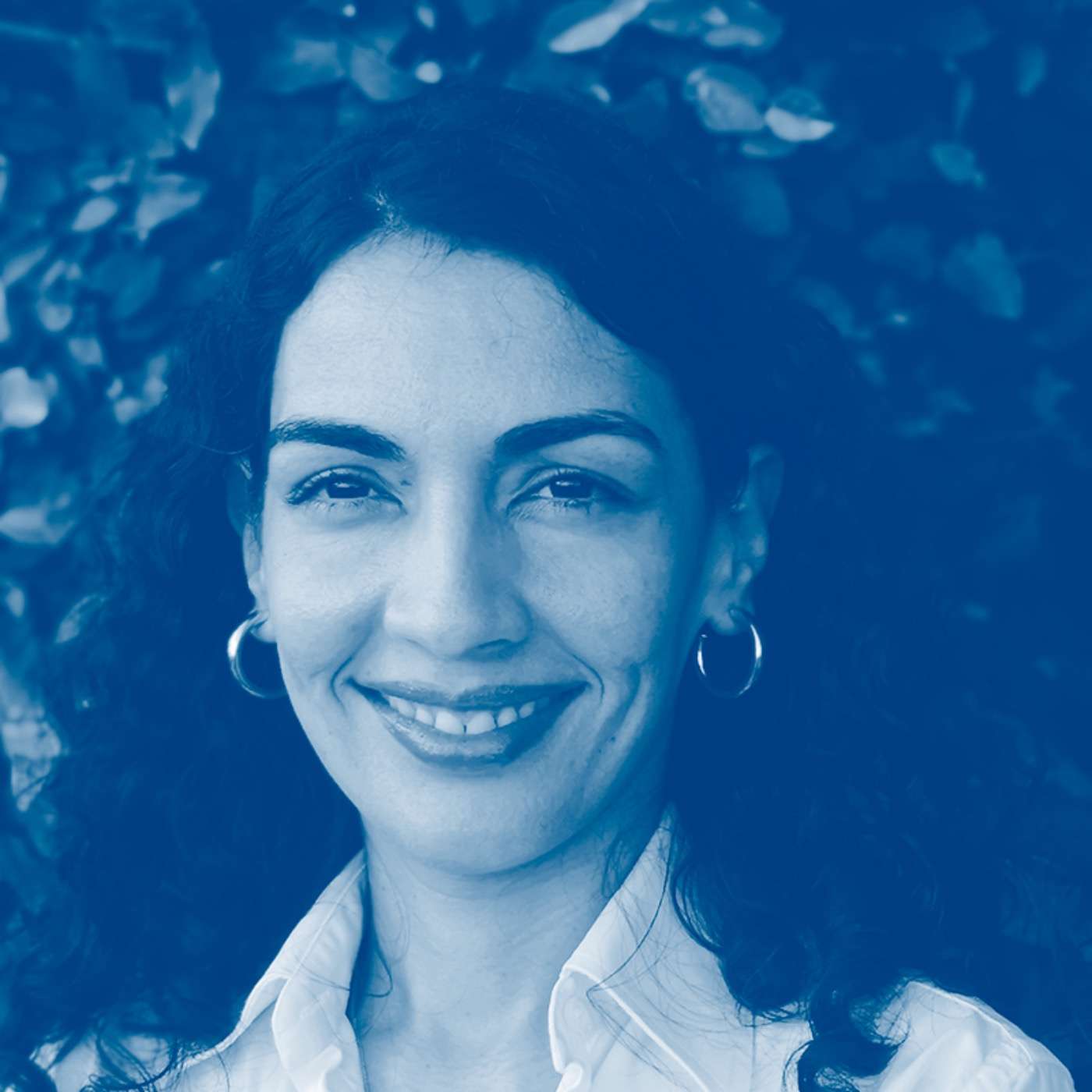
Lead, Align, and Build what matters with Radhika Dutt, Author of Escaping the Performance Trap
Aug 1900:23:18Tap to summarizeOn this week's episode of Inside Outside Innovation, we sit down with Radhika Dutt, author of the upcoming book Escaping the Performance Trap. Radhika and I talk about the challenges with traditional OKR systems and how companies can break free from the performance theater to create a better way to lead, align, and build what matters. Let's get started.Inside Outside Innovation is a podcast to help new innovators navigate what's next. Each week we'll give you a front row seat into what it takes to learn, grow, and thrive in today's world of accelerating change and uncertainty, join us as we explore, engage, and experiment with the best and the brightest, innovators, entrepreneurs, and pioneering business. It's time to get started.Brian Ardinger: Welcome to another episode of Inside Outside Innovation. I'm your host, Brian Ardinger, and as always, we have another amazing guest. Today we have Radhika Dutt. She's the author of a new book called Escaping the Performance Trap. Welcome. Radhika Dutt: Thank you, Brian. It's great to be here again. We talked a few years ago. [00:00:58] Brian Ardinger: I should say welcome back. Yes, the last time you were on, I think it was episode 273. And you had your first book that came out, which was Radical Product Thinking. And when you said you're writing a new book, and it focused on things like OKRs and goals and how people are misusing that. I said, hey, we need to get her back on to talk about some of the things that she's seeing. So welcome back to the show. Let's get started refreshing the audience a little bit about your background and, and how you got here. [00:01:24] Radhika Dutt: Yeah, my background is I started as an engineer. I did my undergrad and grad at MIT. I started companies and I later went to work at bigger companies and it, it was in so many different industries from broadcast media and entertainment, advertising, robotics, even wine. Oh, and telecom was in there too. Government agencies. It was all over.And so, the one common theme in working across all of these industries, working all of these, at different sizes of companies, the one common theme was I kept seeing the same set of product diseases over and over, and I was learning hard lessons in terms of how do you build good products and avoid these product diseases?And so that's what led me to write the first book Radical Product Thinking: The New Mindset for Innovating Smarter. And It's been fantastic, like so many people have read it. It's become the staple when people are building products. And what's most satisfying for me is that really a lot of people describe it as it has changed their mindset, that now they apply product thinking to all sorts of things, even to parenting, to personal life, et cetera.So that's been wonderful to see. Right. But that it's a philosophy of how do you think systematically about products being vision-driven as opposed to iteration led, and let's just throw things at the wall and see what sticks and keep iterating. It was this vision-driven approach. How do you envision, what is the problem you're trying to solve? The end state you wanna create. And how do you systematically drive that change?So, what brings me to the second book? A lot of people who wrote to me saying, you know, just how helpful Radical Product Thinking was, there was also a set of people who wrote saying, you know, I love what you're saying in Radical Product Thinking, but what do I do in my organization that sets all these goals and OKRs and I have all these short term deliverables and that's what I have to focus on.I can't do all of this long-term vision driven stuff. And this question came up to me so many times, I realized we really do need to tackle it. And for a long time, by the way, I was seeing the downsides of goals and OKRs, but for so many years I just didn't know how to articulate for people, why should you stop using goals and OKRs?What's the, what's the problem with them? But most importantly, even if I could say, look, don't use OKRs, the question was always, well. It's the devil I know. What are you proposing instead? You know, I didn't have an answer until I started trying this new approach and it's worked so well and that's what's driving me to write this new book, Escaping the Performance Trap.[00:04:03] Brian Ardinger: What is a performance trap? What are you seeing and how does that show up in organizations and teams? [00:04:09] Radhika Dutt: You know, whenever I talk about the problem with goals and OKRs, people instantly identify one thing, which is we've all been in these monthly cycles where every month for our monthly business review, oh, what are some numbers we can show so that we can show, look, we are achieving these results, things are going well.What actually happens, right? Is for leaders, you think, oh, I'm seeing these numbers. My team is being rigorous in terms of metrics. You wanna see the numbers, you want to see rigor, you want to see progress. But what you're seeing is an illusion, because what happens is teams are showing you numbers to say, Tada, look, I achieved whatever you wanted.What is actually happening in ways that you can't see is whenever there are bad metrics, the incentive is to sweep that under the rug. To not show you the bad metrics. And the reality is you learn more from these bad metrics, quote unquote, because those are the numbers telling you what's not working, what you actually need to do to course correct.So as a leader, you don't always get the clear view. And one example I'll give is I was working at Avid. Where every movie in Hollywood that won an Oscar was made using AVID's video editors. Such a fantastic number, right? Like every, hundred percent of all Oscar winners, et cetera, used avid. It turned out that our market was getting commoditized. That competitors like Apple and Adobe were entering the low end and even encroaching the middle end.And so, for us, we kept going further up into the high-end niche, and that's where we were really focusing to be able to make our targets. If you looked at the targets and numbers, everything was looking great, and it just seemed like all we had to do was keep focusing on just whatever we were doing. We were going to hit the numbers, right?And this is what I see often. This approach works until it doesn't work. What you want in the team is not the incentive to show you what's working, but rather have those open discussions to learn, experiment, et cetera. [00:06:20] Brian Ardinger: That's a great point and, and I see this a lot in corporate innovation types of teams. They set OKRs at the beginning of the year and you know, especially in innovation where you don't necessarily know what you're building or why you're building it, and things pivot, and change based on what goes on during the year. Oftentimes they don't go back and reevaluate, you know, what are these metrics that we're looking at and are these the right things to measure?And, and so I see a conflict a lot of times, especially in innovation where, again, it's not necessarily a here's the business model. We know how to exactly execute it and it's more systematic and, and certain. But when you're dealing with new product development or innovation areas where there's naturally more uncertainty, having and picking at the beginning of the year, here's the one thing that we're going to look at. It almost puts you in a bind from day one.
Transcribe →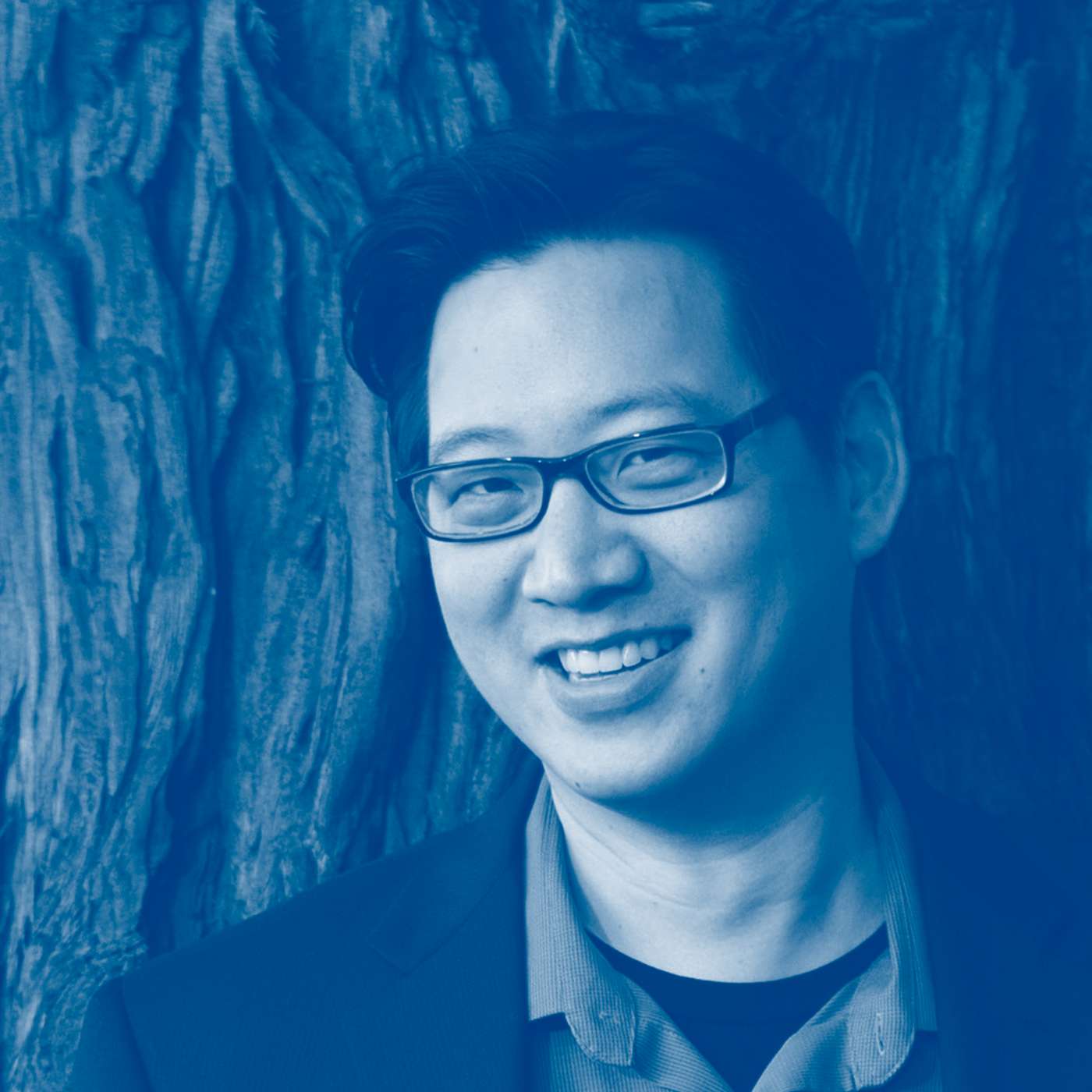
Product Design Empathy and Context with Wayne Li, GA Tech Professor and Author
Aug 12, 202500:25:21Tap to summarizeOn this week's episode of Inside Outside Innovation, we sit down with Wayne Li, author of the new book, Design Empathy and Contextual Awareness. Wayne and I talk about the changing landscape of design and some of the important concepts needed to make better products and services. Let's get started.Inside Outside Innovation is a podcast to help new innovators navigate what's next. Each week we'll give you a front row seat into what it takes to learn, grow, and thrive in today's world of accelerating change and uncertainty. Join us as we explore, engage, and experiment with the best and the brightest, innovators, entrepreneurs, and pioneering businesses. It's time to get started.Welcome to another episode of Inside Outside Innovation. I'm your host, Brian Ardinger, and as always, we have another amazing guest. Today we have Wayne Li. He's the author of a new book called Design Empathy and Contextual Awareness: Frames of Reference for the 21st Century Creative. Welcome, Wayne.Wayne Li: Hi, Brian. Great to be here.[00:00:59] Brian Ardinger: Wayne, it's great to have you back. Why don't you give a little bit of refresher of who you are and where you've been? [00:01:04] Wayne Li: Happy to do so. It's been a wonderful journey up to this point. My background is degrees in fine arts and in engineering and product design. Wasn't always a professor, right?I started, besides my collegiate career, working at design firm such as like IDEO product development and Design Edge in Austin, Texas. And then wound up working at Ford Motor Company and Volkswagen as a car designer. So started out as a vehicle engineer doing chassis and body systems. Helping to actually design the infrastructure of a car and then moved into the studio where you draw and sculpt cars.So, for listeners who are interested in that, in that side of the business, you're thinking about the aesthetic of the vehicle, the psychology of the vehicle, its placement in society, and how people use it. People in today's parlance is user experience, right? The user experience of a car. I was at Ford for five years.At Volkswagen I was in the electronic research unit and then I wound up graduate school on the west coast at Stanford University. Was doing what they call interaction design back then, which is human machine interface. What is the interior of the car, how do the controls work, how does the interior look?And so they have an electronics research lab in Western California right in the Northern Bay area that couples with their advanced studio in Semi Valley in Southern California helping design advanced concept cars and things like that. Stanford's work was creating this philosophy, you now know it's called design thinking.Or human-centered design. So that was the very first initial work into how to understand how your creative process incorporates different aspects of your mind. In design thinking, they look at triple Venn diagram, so they look at technology, which is like the engineering side. They would call that say like feasibility. And then they have like the business circle, right? Which is, can we make this, can we produce it? Can we sell it for a profit? Now it would be like it's viability. And then there's the desirability or usability side, which is the art or the, the human element. Do people like it? Is it beautiful to look at? Is it easy to use? All those kind of psychological principles. So, Stanford helped to kind of create that philosophy.Then after that really got into the academia space. I did dabble after graduate school for five years, working at Williams Sonoma as part of the creative staff at Pottery Barn. Home decor products, furniture, all those types of things where we're part of that creative process.Wound up teaching. Taught at Stanford for seven years, and now I'm at Georgia Tech. They've kind of pulled me from the west coast to the east coast. So I've set up a design thinking center here called the Design Block Innovation Design Collaborative. Stanford's where we said that we were the founding class of, was the Hasso Plattner Institute of Design, which now people know as the D School. Helped kind of set up a similar center here at Georgia Tech, and I've been teaching here for almost 15 years now. It has been a wonderful journey to shepherd students and creatives and young professionals, and I do consulting on the side, so I do work with Fortune 500 companies to figure out their business processes and things like that, their product mixes, that type of thing. Design strategy, product management, all that good stuff. [00:03:54] Brian Ardinger: You cover so much. Again, you've been in the trenches. You helped teach. One of the reasons I wanted to have you back on is the fact that I think you can give a lot of insights into the real world stuff. Not just, you know, what's happening today and student perspective and that.But I wanted to dive into your new book. There's a lot of design books out there. Obviously, design has gotten hotter over the years and it's always been a topic that's, I think, super important for early-stage innovation, to really understand what problem you're solving and then the practical steps of trying to solve that particular problem.So, the book's called Design, Empathy, and Contextual Awareness. Talk about what that actually means. Contextual awareness. I think a lot of people don't think of design as the context around that. [00:04:35] Wayne Li: There's two parts of this, right? So, one is if you think about the customer themselves and the infrastructure around them. So, design empathy is really leveraging all aspects of interest empathy.We talk about in the book that there are different types of empathy. There's compassionate, there's cognitive, there's emotional, and there's compassionate concern. Utilizing all three in tandem to actually inform your ideas is one way of thinking about design empathy. And then what are those techniques?You're designing a baby stroller. How do you get into the mindset of a haired parent or how do you go and method act yourself at age two? Part of that is like there are method acting techniques, there are interviewing techniques, there are field observation. The way I like to look at this book is kind of think of it in thirds, right?I know that when I wrote the proposal to write the manuscript, I was like, there'll be some things that are kind of anecdotal. Anecdotes of me being a designer. And then learning things that I think other students of design or creative professionals, so whether you're a third-year university student in industrial design or architecture, or you're a first-year creative professional. Like a music producer or just, or first-time software creator, right. The making developer.This book has something for you because it's got a little bit of that Malcolm Gladwell anecdote faith. You're like, what? I did not know that about the field of design. So that's one part of it, and that includes interviews and things like that.We've got an interview with the co-founder of IDEO, David Kelly. We got an interview with the head of design products at Royal College of Art, Christina Choi. So, there'll be like anecdotes about, you know, things like that. Then, then there's a third business case studies. So you're like, why did this product win and this product fail? Like why did the Nintendo, we work so well with underdeveloped hardware, right? And beat...
Transcribe →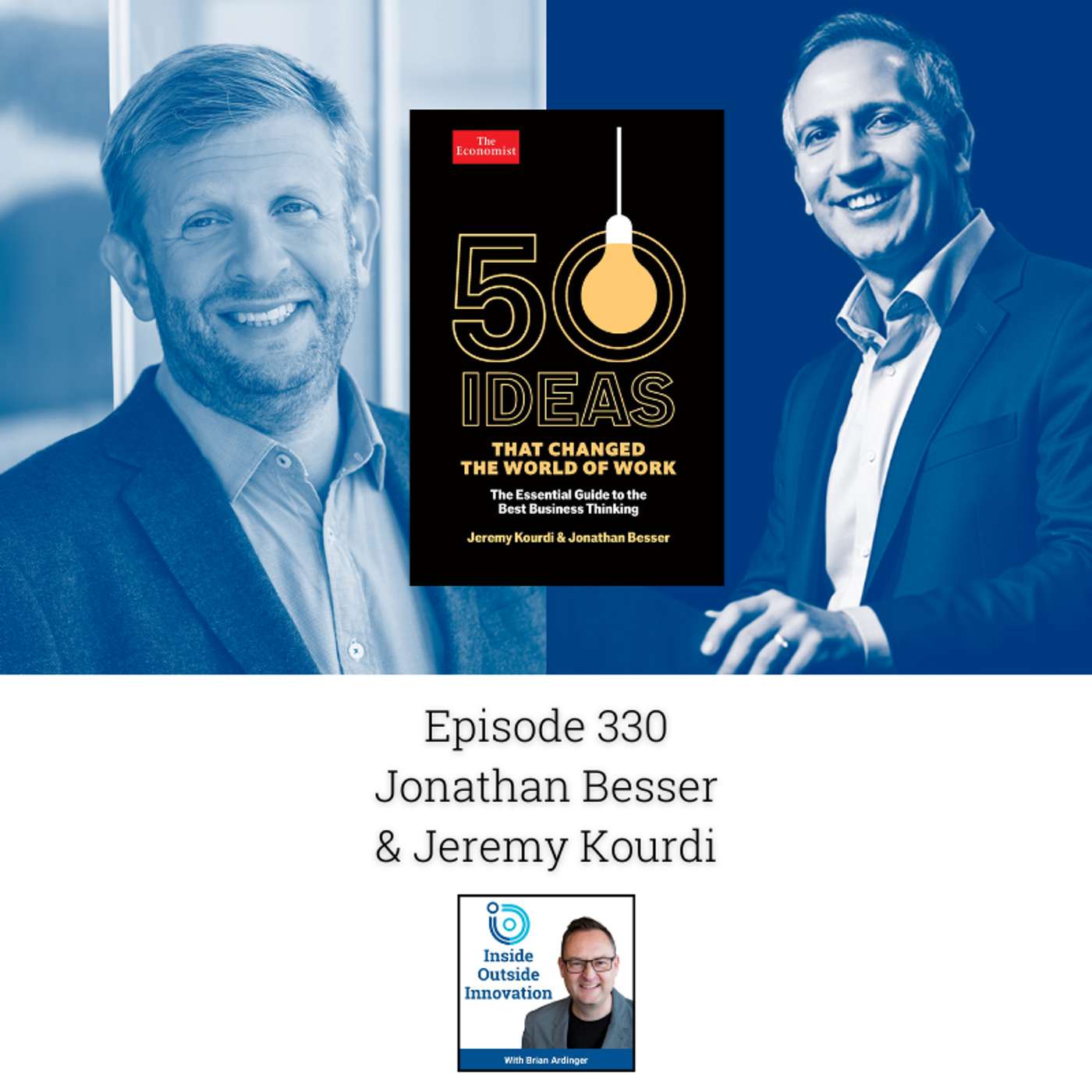
50 Ideas that Changed the World of Work with Jeremy Kourdi and Jonathan Besser
Jun 3, 202500:21:30Tap to summarizeOn this week's episode of Inside Outside Innovation, we sit down with Jeremy Kourdi and Jonathan Besser, authors of the new book, 50 Ideas that Changed the World of Work. From the Growth Mindset to Business Model Canvas, we delve into their guidebook for some of the key concepts, models, and frameworks that are shaping business leadership and workplace dynamics. Let's get started. Inside Outside Innovation is a podcast to help new innovators navigate what's next. Each week we'll give you a front row seat into what it takes to learn, grow, and thrive in today's world of accelerating change and uncertainty. Join us as we explore, engage, and experiment with the best and the brightest, innovators, entrepreneurs, and pioneering businesses. It's time to get started.[00:00:50] Brian Ardinger: Welcome to another episode of Inside Outside Innovation. I'm your host, Brian Ardinger, and as always, we have some amazing guests. Today we have Jeremy Kourdi and Jonathan Besser, authors of the new book, 50 Ideas That Change the World of Work. Welcome guys. [00:01:02] Jeremy Kourdi: Hi, Brian. [00:01:03] Brian Ardinger: I'm excited to have you guys on because the title alone got me intrigued to reach out to you the 50 Ideas that Changed the World of Work. And when I got a copy of it, it, it did open my eyes to all the amazing work that has gone on over the years talking about innovation and workplace dynamics, and leadership. And you've decided to take on the amazing work of like, how do you tackle this mass body of work that all these other people have put together and put it into a book of your own.[00:01:31] Jeremy Kourdi: The first thing is to do it with someone. You'll know this, Brian, you'll certainly appreciate it. That life leadership business, certainly innovation is easier if you have someone that you understand, that you know, that you respect, crucially, that you have a great connection with. I always say one of the great things about rapport and connection is that that then means you can disagree, you can challenge, you can push back. And the other person that you are challenging or disagree with knows you're on their site, knows where you're coming from and appreciates that. [00:02:04] Jonathan Besser: I mean, you know, Jeremy and I have known each other for a number of years. We've worked together, we've collaborated, we've disagreed agreeably, we've argued along the way. But yeah, hopefully 50 Ideas is is the output from that discussion, from that partnership, from working together and I think is a different angle that people will enjoy and use. It'll stand the test of time. [00:02:24] Brian Ardinger: What I liked about it is, again, you talk about emotional intelligence, growth mindset, blue ocean strategy, SWOT analysis, business model canvas. I mean, the list is, is again, 50 plus, first of all, to pull that together, how did you decide which particular ideas were the ones most worthy of going into a book and, and what was the process of pulling that together?[00:02:45] Jonathan Besser: There was kind of a mental all wrestle as you went through. You know, I think Jer and I started with, with a, a long list. And yeah, with the help of our publisher and long discussions between the two of us, we whittled it down to what we thought stood the test of time. You know, what do people want to hear and what would be useful to people from, you know, Sun Tzu's Art Of War, which is centuries old, right through to some of the more modern concepts like Lean In. Samberg's Lead In is very, you really very new.And the the pieces that come in between. That help you understand the, the intention is to give people perhaps the reference book and as a first starting point. You know, the book can be one that is, you can dip into, you know, I just heard about NBTI, let me go into, yeah, to have a look at that chapter, this great reference book, to also the book that feeds through from the 50 different chapters coming through that builds upon concept and idea and references back to itself as it goes along.It was a collaboration of what we both thought. And you know, Jeremy and I have known each other a long time. We've worked well together over all those years, and it was really the way that it came together. We had a lot of synergy and not too much disagreement. [00:03:48] Jeremy Kourdi: The themes we have, I think, are absolutely on the mark, and they, you know, as Jonathan alluded to, as you alluded to Brian, they come out really strongly. And what really interested me was some of those themes. So, you see the rise, particularly over the last 30 years of psychology. Business and leadership. So really not just understanding your customers, which used to be the thing in the eighties and nineties perhaps, but currently it's getting to a level of customer understanding, empathy, customer experience, is the new frontier there.Getting to a level of that insight really, that's really valuable. So, psychology, and not just relating to customers, but for decision making, neuroscience, coaching, something like growth mindset. So, psychology is a theme that goes through it. And balance with that is rigor and the use of data, particularly whether that's in things like assessment tools for promotion and succession, or career development, or again for innovation. You know, what is our data telling us and have we got the balance right between art and science, between intuition and data? And that's another theme that kind of comes up. [00:04:56] Brian Ardinger: What I liked about it, it brings together both classical models and, and modern innovations like you talked about. It reminded me of things that, you know, oh yeah, I studied that back when I got my MBA decades ago. But it was still relevant today, but I hadn't looked at that. Or thought about that particular model in a while. And so, I think... [00:05:12] Jeremy Kourdi: Interesting that there's a new context. So, if it's not a new idea, then it's certainly deserving of a new context. So, something like looking after customers is not new. I think frankly, as I sit here in the Uk, that issue needs to come again. You know, the. Service we get from our financial services organizations, maybe globally, certainly in the UK from banks, insurers is, you know, was better in the past than it is now. I think they've kind of been out flanked by technology or the need to drive down costs or shareholder value. Other issues which have changed the world of work, but then they've kind of not adapted customer experience and customer focus to the new context and to take banking as an example, I think there's more that can be done there. So new ideas, but as you say, Brian, kind of perennial ideas in a new context. [00:06:04] Brian Ardinger: Some of the ideas maybe have been overlooked and deserve to come back to be at least studied again, and that. Are there particular ideas within the book that you think are more relevant in the disruptive times we're living in today?[00:06:16] Jonathan Besser: I think they all have relevance. I think there are different pieces. You know, we, we are working in a smaller, faster, quicker, narrower frame with the world the way it's changing with geopolitics, with all the elements that are feeding into it. We got news that's you know, that's appearing on the second.<...
Transcribe →
Innovator's Journey and Mapping your Progress with Robyn Bolton, founder of Mile Zero and author of Unlocking Innovation
Mar 4, 202500:20:39Tap to summarizeOn this week's episode of Inside Outside Innovation, we sit down with Robyn Bolton, author of the new book, Unlocking Innovation. Robyn and I talk about the Innovator's journey for unlocking architecture behaviors and culture of innovation and ways you can measure and map your progress. Let's get started.Inside Outside Innovation is a podcast to help new innovators navigate what's next. Each week we'll give you a front row seat into what it takes to learn, grow, and thrive. In today's world of accelerating change and uncertainty. Join us as we explore, engage, and experiment with the best and the brightest, innovators, entrepreneurs, and pioneering businesses. It's time to get started.Interview Transcript with Robyn Bolton, Author of Unlocking InnovationBrian Ardinger: Welcome to another episode of Inside Outside Innovation. I'm your host, Brian Ardinger, and as always, we have another amazing guest. Today we have Robyn Bolton. She's the founder of Mile Zero and author of the new book, Unlocking Innovation: A Leader's guide for Turning Bold Ideas into tangible results. Welcome, Robyn. Robyn Bolton: I am so glad to be here. Thank you. Brian. Brian Ardinger: Thank you for coming on the podcast. We've been friends, and long-time listeners of the podcast and newsletter from Inside Outside should be familiar with some of your work. You came out and spoke at our Inside Outside Innovation Summit in 2022, but since then you've got a lot of stuff that's happened. So, I wanted to have you on the show to talk about your new book that's coming up today. Yeah. And talk about innovation. And maybe a little bit of background on how you began your innovation journey. Robyn Bolton: So, I began my innovation journey purely by luck straight out of undergrad. After graduating from undergrad, went to work at P&G in brand management and was put on the team that was developing some new cleaning products. And a year after joining the team, we launched Swiffer. So, I was part of that kind of amazing journey of corporate innovation. And all the experiences and the scars and, and all of that. And then kind of fast forward a bit, moved up to Boston, got my MBA, did some consulting work in one of the big firms, but then spent almost a decade at the firm that was founded by Clayton Christensen.Nearly a decade immersed in not just disruptive innovation, but all the different types of innovations that companies do and the challenges that companies face. And then since 2018, have been running my own firm. Mile Zero, which has continued to focus on corporate innovation and really supporting the leaders and the teams who are doing that hard work.Brian Ardinger: You do some great writing and that. If you've followed our newsletter, I try to find the best articles every week to disseminate to our audience, and you come up there fairly regularly. Stuff that I want to... Robyn Bolton: I am always quite honored. Brian Ardinger: Let's talk about writing. So, you have a new book out called Unlocking Innovation. What made you decide to write another book on innovation and what is the secret nugget that you wanted to talk to your audience about? Robyn Bolton: So, I resisted writing a book for a long time because it's like the last thing this world needs is another book on innovation. But eventually I broke through my own resistance 'cause you know, in reflecting on my career in innovation, I realized that like, hey, the Innovator's Dilemma came out in the late nineties and in the 30 years since that happened, the results, the success rate of corporate innovation has not changed. And all that's changed in 30 years is we've kind of had this innovation industrial complex get created of consultants, guilty books now guilty, articles, all this stuff that's grown up, but it hasn't changed the success rate.And I got curious as to why that is. And I think it is because, and this is what the book focuses on. Is that we've tend to take a really siloed approach to innovation. You know, we come in like, you need this team structure, or you need this process, or this governance, or on the other end of things, you know, we need to build a culture of innovation.And the reality is, is you have to take a much more holistic approach, which I call the ABCs, that you need to have the architecture of innovation to the process structure strategies. It's necessary, but not sufficient for success. You also need to be really focused on leadership behaviors and how leaders are interacting with innovation teams, how they're supporting innovation.And you need a culture that, at least at the very beginning, isn't resistant to innovation. So, you need to be working on all three of these things, all of the ABCs all at the same time, but in different ways as the team progresses. Brian Ardinger: I think one of the challenges you find with that is oftentimes if one or two people have been given the mantle of the person who has to figure that out. And this is very difficult as a director of innovation or whatever you want to call those folks to be able to move that battleship in in the right direction a lot of times. Robyn Bolton: Yes, absolutely. And it gets even harder when, you know, you look at the research and I think it's something like 90% of innovation teams get shut down within three years. Yeah. So, you're tasked with moving a battleship or an aircraft in three years, and you know, we all know that three years doesn't mean you actually have three years to produce results. You have to produce results really in two years so that you're able to keep working in year three before you get shut down.So, it's this crazy short period of time that you have to produce results and you're working on something that is really a long-term investment. So you have all of these contradictions that as someone who's in charge of innovation, you've gotta grapple with. Brian Ardinger: Well, and I think the biggest challenge is the fact a lot of folks don't really understand how difficult that exploration process is to find a winner, quote unquote. In your book, you mentioned a stat, something like one in 50,000 incubated ideas ever reach a million dollars in sales. And so, you think about those types of odds and the types of shots on goal you have to consistently make to explore through that maze of crazy new, bad ideas, to find one or two that actually starts getting traction and making it Robyn Bolton: Yeah, exactly It, you know, when you think of, okay, I need incubate 50,000 ideas to get one that makes a million dollars, and oh by the way, the resources allocated to innovation are usually like two people and $10. Yeah. So, the odds are very much stacked against you. But I also know, I mean, you and I both know as innovators, like that doesn't deter you.You see the potential and you're like, no, we can figure this out. We can do this. And so, this book is very much written for those folks who are the rebels, the realists, and the fixers who are like, no, no, no. We see the potential. We could do this. We're going to give it a shot. Brian Ardinger: We talk a lot about finding the curious and the restless within your organization that have more of the tool set skill sets, mindsets around innovation. Knowi...
Transcribe →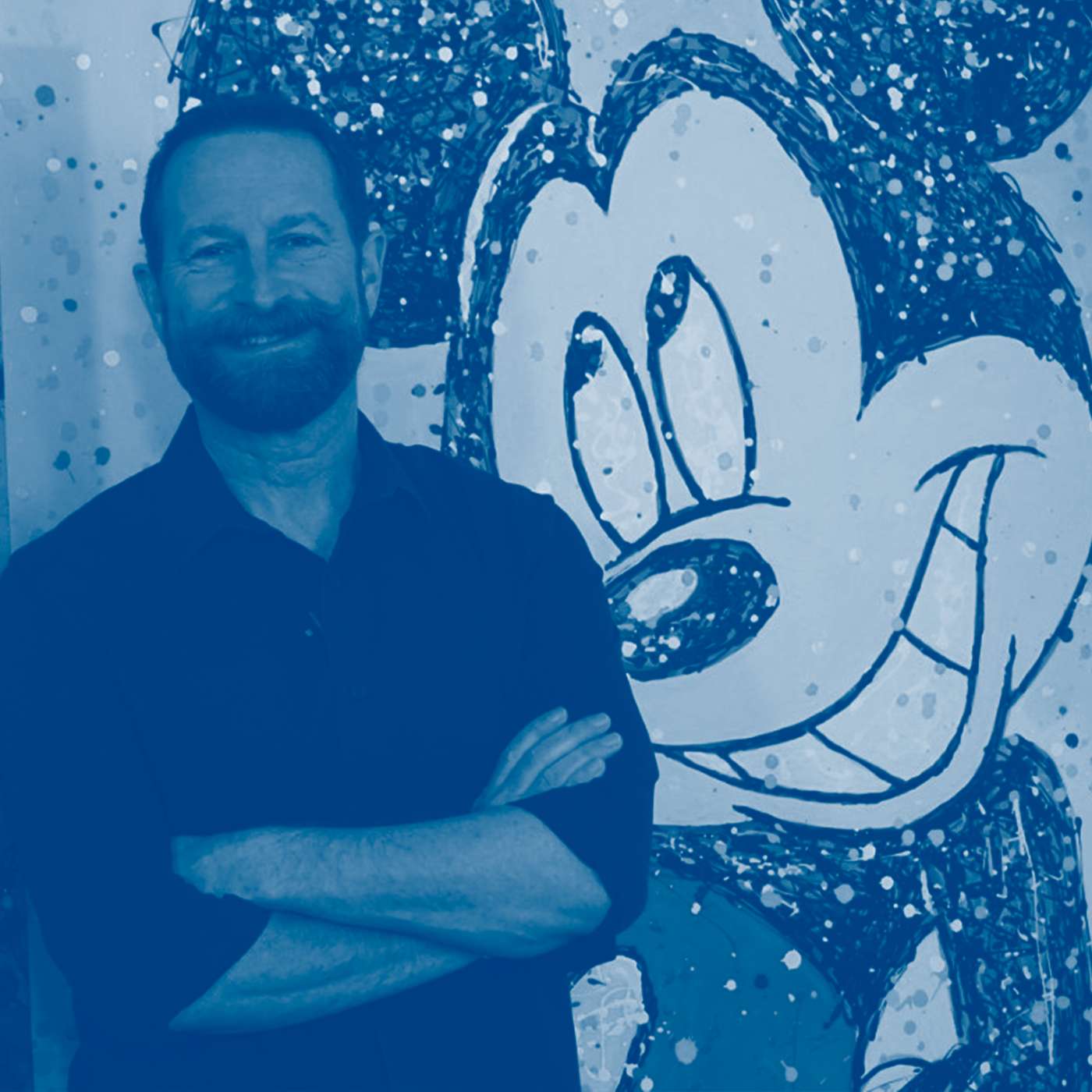
Duncan Wardle, Disney's Head of Innovation and Creativity & Author of The Imagination Emporium
Dec 3, 202400:22:24Tap to summarizeOn this week's episode of Inside Outside Innovation, we sit down with Duncan Wardle, former head of Innovation and creativity at Disney, and author of the new book The Imagination Emporium. Duncan and I talk about his recipes for innovation and common tactics you can use to make your life and work more creative and inventive. Let's get started. Inside Outside Innovation is a podcast to help new innovators navigate what's next. Each week we'll give you a front row seat into what it takes to learn, grow, and thrive in today's world of accelerating change and uncertainty. Join us as we explore, engage, and experiment with the best and the brightest innovators, entrepreneurs, and pioneering businesses, it's time to get started.Interview Transcript with Duncan Wardle, Former head of Innovation and creativity at Disney and author of The Imagination EmporiumBrian Ardinger: Welcome to another episode of Inside Outside Innovation. I'm your host, Brian Ardinger, and as always, we have another amazing guest. Today we have Duncan Wardle. He has spent 30 years as the head of innovation and creativity at Disney and is releasing a new book on December 10th called The Imagination Emporium: Creative Recipes for Innovation. Welcome Duncan. Duncan Wardle: Thank you very much for having me actually straight, I wasn't head of innovation and creativity for 30 years, but I actually started as a coffee boy in the London office. Brian Ardinger: Let's start there. Obviously, you spent a lot of time at Disney and that. Let's talk a little bit about the journey of how you learned everything about innovation and creativity.Duncan Wardle: Very first assignment. Basically, I, I was taught persistence. I called that office every day for 27 days to a lovely lady by the name of Julie who was on the reception desk. There were only 16 people at Disney in, back in 1986, and now there's 3000. She got so fed up with taking my phone calls, they made me coffee boy. So, I used to go get cappuccinos from my boss down the road. About three weeks into the role, I was told I would be the character coordinator. That's the person that looks after the walk around characters at the Royal Premier of Who Framed Roger Rabbit at the Odeon Leicester Square, in the presence of the Princess of Wales, Diana. I was like, oh, what do I do? They said, well, you just down at the bottom of the stairs, Roger Rabbit will come down the staircase. The princess will come in along the receiving line. You either greet him, or she'll blow him off and move into the auditorium.How could you possibly screw that up? Well, that's the day I found out what a contingency plan was because I did not have one. A contingency plan would tell you if you're going to bring a very tall rabbit with spectacularly long feet down a giant staircase towards the Princess Wales, one might want to measure the width of the steps, before the rabbit trips on the top step, it's now hurtling like a bullet at torpedo speed, head over feet, directly down the stairs towards Diana's head, where upon he was taken out in midair by two Royal Protection officers who just flattened him. This very famous picture on Reuters of Roger going back like this.Two secret service heavies, dude's diving towards him in a suit and a 21-year-old PR guy in Disney at the back. Going, ah, shit, I'm fired. So, I got a call the next day from a person called a CMO from LA. I didn't even, you know, I was like, well, what's a CMO? I thought he was going to tell me I'm fired. And all I heard was that was great publicity.I was like, wow, who knew? And so, I built a career on having mad audacious, outrageous ideas. But I got 'em done. So, I convinced NASA to take my son's Buzz Lightyear doll into space for the opening of Toy Story. He served 18 months on the International Space Station, the longest consecutive astronaut in space. I'll have, you know. I stole a Turkey from the White House on Thanksgiving Day, took it to Disneyland, happiest Turkey on Earth. So I got to do some of the crazy, just mad ideas with Pixar for new storylines and Lucas films and, and Marvel and. One of the biggest challenges is when you are on the outside looking in, oh, they're so creative, it's still a corporation, right? It still has processes and everything else. So I was tapped 10 years ago, and the boss said, right, you are going to be in charge of innovation and creativity. To which my exact response was, what the hell is that? He said, well, I don't know exactly. We just want to embed a culture of innovation and creativity. Everybody's DNA. So, I tried three models. Number one, I hired somebody who knew what they were doing and said, make me look good. Number two, I thought I'll create an innovation team. What could possibly go wrong? I'll be in charge of it. Well, no. Nobody outside of legal does legal work. Nobody outside of sales does sales work.So, if you have an innovation team, you've subliminally said to the rest of the organization, Hey, you're off the hook. These people have it. Number three, we did an accelerator program, which worked to a certain extent, but we only were touching 0.02% of our population. So, I said, right. What if I create a toolkit that has three principles, takes the BS out of innovation and makes it less intimidating for normal, hardworking, busy people.Makes creativity tangible, for 50% of the people who don't like ambiguity or gray, but far more input, make it fun. Give people tools they enjoy using, then they'll use and when we're not around. So yeah, Brian Ardinger: Love the stories. One of the things that. You think of Disney, and most people out in the real world think of Disney as one of the most creative, innovative companies out there, and yet even they said, we need somebody to take care and help us figure out creativity and innovation within our rank-and-file folks that are at Disney. How did that process come about? Why did Disney think, well, we need to be more creative or innovative when everybody looks at them as one of the key people that does it well. Duncan Wardle: Think about the theme park division, right? I was with theme parks for a relative, some of my career. And you've got third generation cast members. Their moms and dads work there, the grandparents work there, and this is the way we do it here. And trying to change that culture was like trying to move the Titanic. So, we did, we created this toolkit. Eventually we were training it. We made it so impactful. We had a three and a half year wait list for a voluntary two-day training course.So, I thought, and then they gave me the Jiminy Cricket, bronze, thank you for 30 magical years of service statue. And I looked at it, I thought, shit, I'm nearly dead. So, I thought I better go do something else. So I left. I wasn't quite sure what I was going to do. I went home to Colmore and sat in the pub for six months and felt sorry for myself and thought, what the hell have I just done?I thought, you know what? I got to write a book. And the reason I love doing things I don't know how to do. And I thought, okay. And I said to the publisher, I said, it's not a book. He said, well, why is it not a book? And I said, well, because nobody reads books. They're always on the bookshelf. We don't have time. We are busy people. So, I thought, okay, how do I create an innovation toolkit, but make it accessible to normal, hardworking, busy people who have deadlines and everything else? Wel...
Transcribe →
Immigration's Importance for the Innovation Economy with Dave Brown, founder of Brown Immigration
Jun 18, 202400:19:15Tap to summarizeOn this week's episode of Inside Outside Innovation, we sit down with Dave Brown, founder and managing partner at Brown Immigration. Dave and I talk about the innovation economy and the importance of immigration, and the impact immigration policy has on its success. Let's get started. Inside Outside Innovation is the podcast to help new innovators navigate what's next. Each week we'll give you a front row seat into what it takes to learn, grow, and thrive in today's world of accelerating change and uncertainty. Join us as we explore, engage, and experiment with the best and the brightest innovators. entrepreneurs and pioneering businesses.Podcast Transcript with Dave Brown, founder and managing partner at Brown ImmigrationBrian Ardinger: Welcome to another episode of Inside Outside Innovation. I'm your host, Brian Ardinger, and as always, we have another amazing guest. Today we have Dave Brown. He's the founder and managing partner at Brown Immigration, where he works closely with emerging companies, VCs, and private equities to solve immigration challenges. So welcome to the show, Dave. Dave Brown: Thanks for having me, Brian. Great to be here. Brian Ardinger: Dave, we've known each other as friends and poker players for a while, but I wanted to have you on the show, because we've occasionally had these conversations about how does the law fit into innovation and specifically the law that you focus on, which is the immigration law. Let's start by giving a little bit of background of the things that you work on. Dave Brown: Of course I'm happy to share. You know, the interesting thing about me, I think that draws a lot of the clients we work with is I'm originally from Canada. I was actually a lawyer sitting in Toronto doing a lot of inbound US immigration for startups, companies, founders, and found a special someone who's a US citizen. She was getting a PhD at Stanford.So, I made a decision since I was supporting all these clients and companies in the Bay Area. That I'd actually moved to the US and so I came here at the end of 2000 and spent about five years in the Bay Area supporting a lot of founders’ companies there before finding myself moving to the Midwest here where my wife originally came from.But the through point in all of this is that I've been dealing with a lot of individuals over the years who have started companies in a wide variety of tech spaces, and there are a lot of interesting people I've worked with over the years. Brian Ardinger: Obviously immigration, you hear it in the news, and I think there's a lot of misconceptions and misunderstandings what, what immigration is and how does it play into the tech space and that. So, tell us a little bit about the messaging that is out there in the media about immigration and what are the different nuances around that? Dave Brown: Yeah, I guess I would say that the messaging is just wrong to start with. It's unfortunate, and I think that this narrative has been kind of fostered as immigrants or the other, that they're bad, that there's some negative element associated with bringing people into this country. Which is amazing to me because this country is completely founded on immigration and this country, quite frankly, wouldn't exist without immigration in the way it does today.So, the, the current media blitz is bad, and the thing quite frankly, I'm concerned about is it impacts a lot of what we do. You know, when I run into someone, people always seem to think that I'm dealing with someone at the border. That's someone who's trying to sneak in and take someone's job. And the reality is, is we're all about innovation, right?You know, the people you talk to in this space, they're all about creating something new, creating something that didn't exist before. When I think about my own journey, I've got a firm with about 50 employees that wouldn't otherwise potentially be employed in this space if I didn't immigrate to this country and decide I wanted to start the firm.And every day I deal with people who have decided to come to the US to make that choice. And they're kind of fearless. You know, they've already made that choice. They're just going to uproot their family and come to the US. They're comfortable with the idea that they're going to start a company that may never make any money, that may never go the direction they hope it will go.But they're kind of fearless and they're willing to do that. And that's really what we need. And if you look at the history of this country, this country's been founded by immigrants who have made that step and, and really pushed in that direction. Brian Ardinger: If you think about in a lot of the big companies that we think about, Google and others, were founded by those who immigrated here to the United States. Let's talk and unpack a little bit about the visa policies. I think we hear, you know, words like green cards and H1B visas and that. Maybe tell us a little bit about what's the visa policy in the United States now, and how do people get here? Dave Brown: The first thing I would say is the visa policy is woefully inadequate for the size of our economy right now. Most of the laws that we deal with and interpret and use to support our clients have been in existence for four or five decades, some even longer than that. And, and at that point, our economy was less than a fifth of the size of our current economy. Our population was about a hundred million less. And so, we really need to revamp our immigration rules.Really, the legislation itself. But obviously what my job is, is to try and get the best result for someone despite what the challenges may be. And so, there's still tools in the toolbox. We still find a way to make things work. And definitely if we're dealing with someone who's very highly regarded in their particular field, very highly educated, that does open up options for things like the O1 visa, that's a visa for someone who's an alien of extraordinary ability.And I will say that the thing that we've seen more recently, because it, you can look at what happened under the four years under the prior administration and kind of juxtapose it against this current administration. There were a lot of kind of things that were put in the system four years ago that didn't really make any sense.That made things harder for people to come in and to maintain status. And we, we had people, quite frankly, who we filed to extend their status. And they were denied on the extension when there was a longstanding policy that if there's no material change and the government had already made a decision that this visa is appropriate, that they shouldn't suddenly say no to an extension of that same visa.And so, when Biden came back into office, he reinitiated that policy. So, we don't have those kind of weird disconnects when we extend. That's just one example of the changes. Brian Ardinger: In a case like that, so, so let's say a person comes to the United States to get a degree, wants to stay on as working in AI or working in the tech sector and such, what does that process look like?Dave Brown: So, most people who come and get a degree, they have an ability to get a work permit immediately following their degree program. And if they're in a recognized STEM program, science, technology, engineering, or math, they're el...
Transcribe →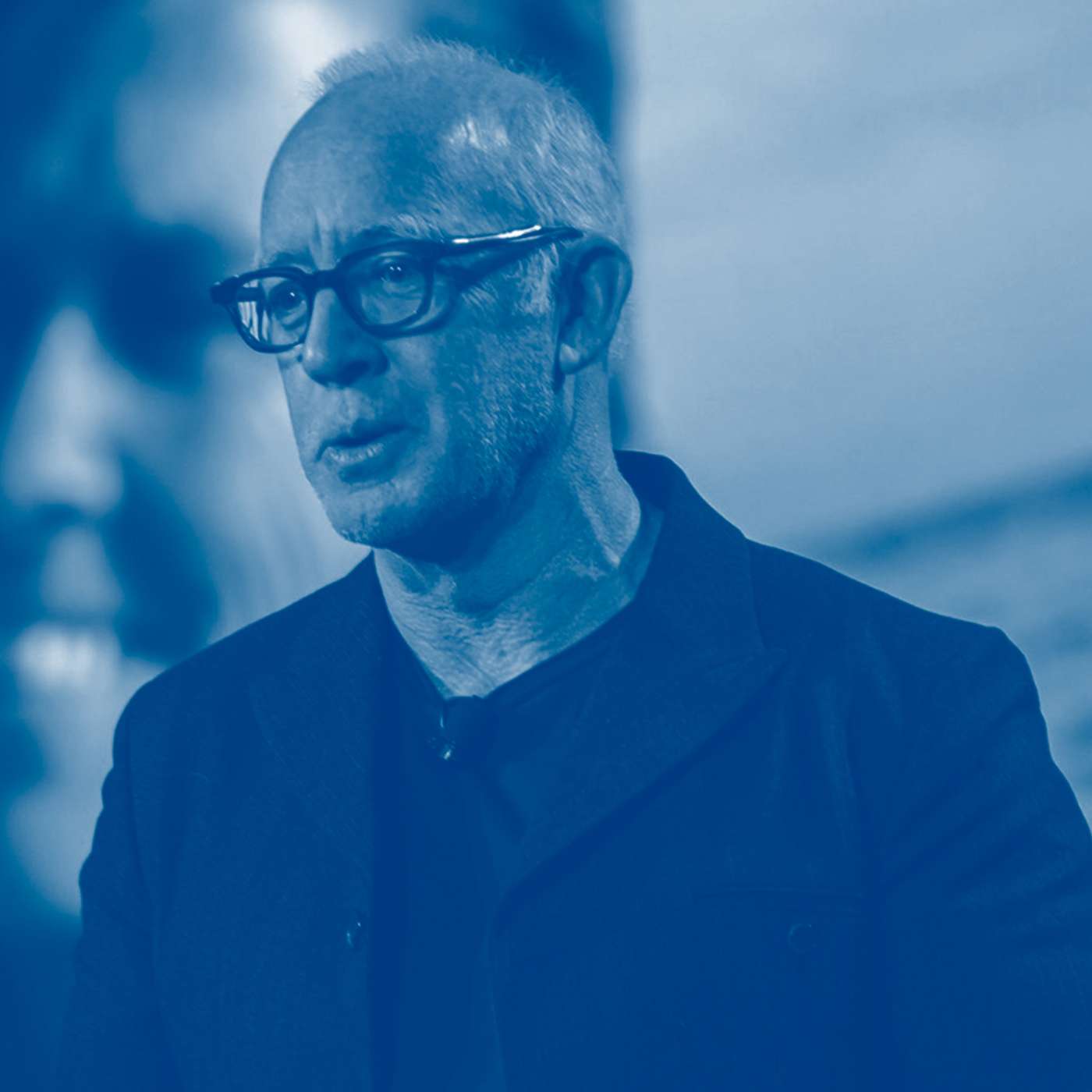
Shifting landscape of global talent with John Winsor, Open Assembly CEO
May 28, 202400:22:23Tap to summarizeOn this week's episode of Inside Outside Innovation, we sit down with John Winsor co-author of the new book, Open Talent. John and I talk about the shifting landscape of talent and tools and dive into what companies need to do to adapt and thrive in a new global marketplace for talent. Let's get started.Inside Outside Innovation is the podcast to help new innovators navigate what's next. Each week we'll give you a front row seat into what it takes to learn, grow, and thrive in today's world of accelerating change and uncertainty. Join us as we explore, engage, and experiment with the best and the brightest, innovators, entrepreneurs, and pioneering businesses.Transcript of Interview with John Winsor, CEO and founder of Open Assembly and Co-author of Open TalentBrian Ardinger: Welcome to another Inside, outside episode. We are here today with another amazing guest. Today we have John Winsor. He is the CEO and founder of Open Assembly and Co-author of the new book, Open Talent: Leveraging the Global Workforce to Solve the Biggest Challenges. Welcome to the show, John. John Winsor: Hey, thanks, Brian. Psyched to be here. Brian Ardinger: I'm excited to have you on for a couple different reasons. One, you've been at the early days of experimenting in this whole world of talent, you know, before covid, before people knew what remote work was and that you've been an advocate for that. I think you started your career in the creative space.You built Victors and Spoils, which was the first creative agency that was built on crowdsourcing principles. You've started Open Assembly and that, so what's this term, open talent, and what does it mean to you? John Winsor: You know, I think people got confused and when we were doing research on it, you know, I started using kind of what I would call alternative, you know, talent models way back in the eighties.Because I owned a magazine, I couldn't afford to I have a bunch of editors and writers, so I had the readers write a lot of the stuff, and so it worked out really, really well. I sold one of the magazines, Women's Sports and Fitness to Conde Nast, and it was a, you know, pretty a great win. But what we're talking about is we're talking about really the digital transformation of talent writ large.And so, we believe that there's this kind of seismic shift between companies that set the terms of employment because there's more supply than there is demand. Today, there's more demand than there is supply. And so that's just kind of basic economics that, you know, especially in tech these days. I mean, Korn Ferry says there's 85 million jobs that will go unfilled by 2030.In the tech world, it's going to cost companies $8.5 trillion. I suspect that's going to be reduced a bit just because of, you know, generative AI and things like that. But my sense is that's still a big deal. We're excited about that. So, one of the things we started talking about, I kind of used the term back in the day, co-creation.And that was an idea that came out of the magazine work where the customers were actually co-creating, and I coined that word in a book called Beyond the Brand 2002. But as things got going, you know, we started using the word crowdsourcing and then obviously gig got big. But I think gig is a misnomer in that gig to me is all about having somebody be told by, usually by an algorithm of where to work and when to work. You know, I need to pick up, you know, Brian at the airport at this time. Whereas, you know, open talent is really a mixture of freelance. We kind have three legs to the stool in this kind of digital transformation of talent at the higher end. It's building external talent clouds, building internal talent, marketplaces, and then open innovation capabilities.Brian Ardinger: Very interesting. Let's talk about, you've written a new book called Open Talent. Yeah. And it's leveraging some of these new things that we're seeing out there. What made you decide that now's the time to kind of summarize this and help people figure this out? John Winsor: Because Harvard Business Review asked me to write a book. We started this journey, you know, I was at Harvard, but we had a thing called the Crowd Academy. We were about to gather the hundred, you know, top thinkers about these kinds of alternative, you know, hiring practices. And essentially what happened was that we started a conversation, Balaji Bondili, Dyan Finkhousen, Balaji's from Deloitte, Dyan Finkhousen from GE, and Steve Rader from NASA just on a regular basis.And then as Covid hit, you know, John Healy had joined the group from Kelly and said, hey, instead of making these kind of monthly and private, let's make these open to the world. And about 4,000 people came to the calls. So. There seemed to be a really a need for figuring this stuff out. And then obviously trying to frame that up and that group was really, really, our community is really, really important to figure out what the idea of a networked organization should be. What's the framework? All those things. And, and we felt like one of the things that wasn't happening in the market is that there are thousand platforms out there that are doing this great work. But the problem is, is like if you look at adoption of other things, let's say cloud computing, for an example, cloud computing, you know, the big guys got together, and they decided on common language and common process.And you know, all of a sudden it was cloud computing. The name was the same across companies and across platforms. And adoption was easy. So for customers, it was really easy to say, okay, I can kind of get what it is, I can start exploring it. Whereas in this kind of freelance open talent space, everybody says it's something different.Gig, freelance, open talent, everybody uses a different process. There's always compliance and security stuff. Some companies do it, some companies don't. And we really wanted to kind of build that framework for the industry to just to create, you know, a higher amount of adoption from enterprises. Brian Ardinger: Obviously with Covid and that there's been a rapid shift for people paying attention to this. So, you know, I, I've been in this innovation space talking a long time, and you talk about disruption and five years ago, 10 years ago, it was like, yeah, yeah, I get it. Disruption may happen. But then you have something like covid and literally everybody's life is somewhat changed or altered. So, it, it becomes more in the forefront. And now we're coming out of it to a certain extent and folks are now trying to figure out, do we go back? How do we move forward? What are you seeing from your corporations out there? It's like, how are they trying to navigate the the new way? John Winsor: Yeah. It's really hard, right? It's a generational change. I mean, I think that if you put the hat on of a guy my age, 64, and you've been running a company for a long time, you know your cultures is having your people around you and seeing face to face.Yeah. And having meetings. If you're a millennial that grew up on your phone, you know, and you've been in the job market for a couple years, you don't really care. You know, you're going to like work where you want and how you want. And so I think there's this big dynamic going on, you...
Transcribe →