Loading summary
Transcript66 lines
- [00:06]
A
Welcome to the Insightful Investor Podcast, a weekly series that seeks to share industry, investment and market insights. We define insights as concepts that are counterintuitive, widely misunderstood or underappreciated. In other words, unique ideas that you probably won't hear elsewhere. I'm Alex Shahidi, the host of the podcast and Co CIO of Evoke Advisors, a leading investment advisory firm. Learn more about our show@insightfulinvestor.org
- [00:39]
B
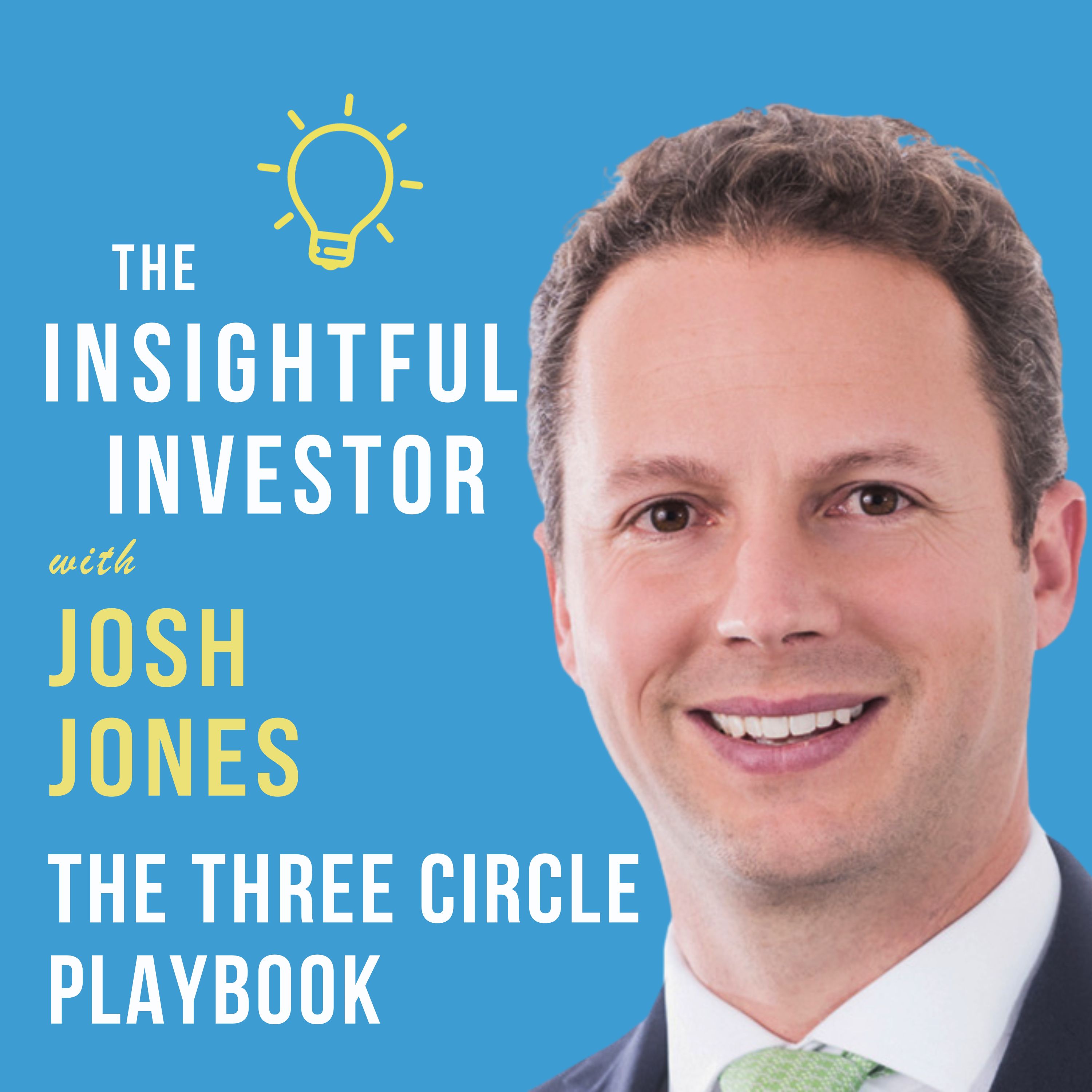
my guest today is Josh Jones of Boston Partners, a firm with $125 billion in assets as of 93025 and a 30 year track record of disciplined bottom up value investing. All the things we're going to talk about today. Josh oversees international and global long short portfolios and brings a uniquely data driven, fundamentally grounded perspective. I'm thrilled to have him here to share his insights. Welcome Josh.
- [01:05]
C
Thanks Alex. I'm excited to be here to speak with you today.
- [01:08]
B
Let's go back to kind of the early years. When did you first realize you love picking stocks and what moments that you can recall pushed you from a consulting mindset to a hands on investing career?
- [01:22]
C
Yeah, so I guess there were kind of nuggets of it. I mean I, I dating myself here but I graduated from high school in 2000 so that was, you know, around the peak of the tech bubble. I remember kind of following the stock market and just being excited about it, but I obviously had no idea what I was doing back then. And then I, I actually interned with Boston Partners between my second and third year at university. I went to Bowdoin College in, in Maine. So a liberal arts background with a focus or major on economics. I knew I enjoyed economics but I didn't have kind of a traditional accounting finance background just with the liberal arts focus. But I really enjoyed my time at Boston Partners and I kind of at that point just the combination of economics, human behavior, started to trade my own little portfolio, follow the stock market. But when I graduated From Bowdoin in 2004, I know still didn't really know exactly what I wanted to do and so I, I thought maybe eventually I'd want to go to business school and I actually joined Cambridge Associates, which is a financial consulting firm and it was a great place to kind of you had, you know, I got a lot of exposure to a lot of smart people and in that role it was, you know, more asset allocation. So it was meeting with a lot of different managers, got lens into private equity, debt, public markets. I mean I, I pretty quickly realized that my passion was still the public markets. Over, you know, the private markets. And at that point it was, you know, so we're a year and a half into that. In 2006, an opportunity came up to rejoin Boston Partners basically as a junior analyst. And so I took that, that was January 2006. So I'm, I'm 20 years into my Boston Partners career. And that, that was really kind of the genesis of it.
- [03:09]
B
How would you describe your investment philosophy and what common component of that would you exclude that many investors you feel wrongly include?
- [03:20]
C
At Boston Partners, we're fundamental value investors. I like to think about it as, you know, ultimately, if you think about investing, there's a spectrum of what people are trying to do. Everyone's ultimately trying to make money outperform the stock market. There's just different ways you can take advantage of effectively dislocations. And at Boston Partners, we're big believers that your starting point should be value, that, that ultimately you should pay the right price for businesses. But inherently, and we're very data driven in that process, we focus on trying to incorporate quality and momentum into the process. And that is, it's really a discipline for avoiding value traps, which are kind of the notorious risk for value investors. So we take a very probabilistic approach to the market in the sense that we're very data driven, which I think has some big advantages, and happy to talk more about that. But ultimately it's trying to focus on the data deciphering where those opportunities are in the market in terms of kind of the best combination of value quality and business momentum and incorporating that into our portfolio. You know, in the context of kind of deemphasizing what some investors overemphasize. Everyone loves a good catalyst, but I kind of think it's a little bit of an overused term in our business, particularly with a lot of the very leverage short term money in the market. Everyone's kind of talking to the management teams, figuring out what the next quarter is going to be like. And ultimately, increasingly we're paid for duration with just how efficient markets are. So we think about momentum really as business momentum. But again, you'll come across catalysts here and there, but I think sometimes investors kind of overplay that angle in terms of what they're focused on.
- [04:57]
B
Do you feel that markets are inefficient in general and do you think a lot of that has to do with the fact that humans are inefficient?
- [05:05]
C
I mean, that's really what drew me to the stock market to begin with, is just this confluence of of, of economics and numbers and data with a human emotion twist. Right. So it's, I guess, what's always fascinated me, and it still looks true to this day, is oftentimes the data doesn't change, but the market's interpretation of the data changes. So you can have the same data and the market can be euphoric about it or really depressed about it. And there's always kind of an exposed narrative as to why, but I don't know, to me, the data doesn't change. Why should the interpretation of the data change? So I think as long as humans are making decisions, that kind of behavioral bias or emotional bias just comes into the market. It creates efficiencies. I think that's as true today as it was 40 years ago when computers weren't trading the market. And I think, you know, even if you look at the influence of kind of algorithmic trading, all the quantitative trading in the market, you would think, well, maybe computers aren't emotional, right? So if someone's writing a program, it shouldn't be emotional. But a lot of the, the computer programs are written to exploit kind of the historical behavior of the market. And because of it, a lot of them are programmed to exploit momentum, which is in some ways a human behavior effect. So, you know, I mean, we've looked at some of the studies where investors have run kind of AI optimization programs through, you know, data sets effectively, and oftentimes they want, the AI model wants to emphasize momentum even maybe more than a human would. I don't think things have changed. And I. That, you know, that's. Obviously we're fortunate enough to continue to produce alpha. And I think if markets were efficient, that wouldn't be the case.
- [06:39]
B
I guess part of it is we can see past data, but a lot of investing has to do with what our predictions are of future data. And I guess emotion has to factor in somehow into that analysis.
- [06:52]
C
Yeah, I mean, I think you hit the nail on the head and it's ultimately the future's unknowable. And so, you know, we're all in the business of attempting to predict the future, but again, it's hard to predict the future. So really what we're doing is we're kind of trying to take past data and patterns and extrapolate that. And so if you think about, you know, you think about momentum, which is what we're, you know, and to some degree we're trying to incorporate that combination value. But there's two ways to think about momentum. One is, I think the way most people Think about it was just price momentum. The stock's going up, it's working. The other is business momentum. And that's really how we try to discern it in the sense that a management team may lay out expectations, 5% revenue growth, 20% margins, and then they report their quarters and revenue growth is 7%. So it's better than expected. And that to us is business momentum, it's rate of change. So the business is performing better than expected. And that's again kind of a mechanism for generally if things are going better than expected, oftentimes that persistence continues. And inversely, in the same sense, if you have a business where things are starting to go wrong, I think sometimes investors anchor off the historical data set. It used to be a good business with good returns on capital, used to grow a lot, margins compress, they miss revenues and everyone says, well it'll go back to being a good business and then the trend continues and that it erodes. So it's that anchoring effect, it's the historical precedence that leads to expectations of what the future will be. And then the way it differs is it creates those biases and emotion, but just, just changes in business fundamentals effect.
- [08:34]
B
And which parts of your process do you feel are more timeless and which parts must adapt as markets and I guess competitors evolve?
- [08:44]
C
Yeah. So I still think that when you look at the stock market, the three main attributes that you can effectively exploit as an investor are effectively value, quality and momentum. Right. And as I've always joked, you know, we're, we're trying to incorporate all three of those in our portfolio. There's rarely a perfect three circle stock. And there's certainly you would never talk to an invest a professional investor that says, you know, we like to buy low quality businesses where things are going wrong at a really expensive price. So everyone's doing some kind of different shade of gray. You know, we tend to start with price because we think that's important. And I keep still believe that paying the right price is timeless. I don't think that will change. And then incorporating kind of quality and momentum into that process is still also in a sense timeless. There's different ways and kind of factors that feed into that, you know, that we've looked at over time. We do a lot of quantitative front end modeling. So we blend quantitative research and a team of quantitative analysts with fundamental analysts. And basically our quantitative analysts once every four or five years will take our factor based model and they'll take them apart. It's like taking the, the engine of a plane off and testing all the pieces to make sure it's still working. And they'll test new factors. And it can be changes in the way R and D affects, you know, fundamentals, the way we think about different kind of management signals. And some of that kind of can change if data sets improve. There's just new ways to exploit data to ultimately get to what we think is a fundamental factor. And that kind of goes back to your comment is, you know, a lot of the data and information is backward looking. You're still trying to extrapolate that into the future. So if there's anything that changes that make it more efficient. But then you see, you know, you see relationships like for a long time in the pre 2000 earnings revisions were in from 2000 to 2010 earnings revisions didn't really work. In the more recent period that's been more of a momentum market, earnings revision has worked. So some of these things are, they can be kind of regime oriented and come back in favor, but it can also be kind of in a confluence with, with other things and how you're kind of tying the factors together. I mean, I. One of the factors that we've been kind of using more recently is like an idiosyncratic beta factor basically. Is the stock behaving the way it has normally or is it changing? And there's information there, right. If you think about your, your average stock, where the company's doing well, they're hitting numbers, the business is doing well, the stock is performing, the market's comfortable with the story, and then all of a sudden a fight breaks out in the sense that investors are starting to kind of think about a situation, maybe risk is popping up, there's a change in trend, the stock will start behaving differently. And that can basically be kind of a situation where you can get ahead of changes in price momentum. So it's really just testing those different factors to see what can effectively make the timeless part of investing or we could still exploit it. So again, I think the focus on value, quality and momentum as main factors that to some degree, again, every investor is trying to exploit different elements of them. A growth or momentum investor, they really just want good businesses with definably good momentum and they don't care about the price they're going to pay. And inversely, you have deep value investors that don't care about quality, they don't care about momentum, they're just trying to buy the cheapest stuff in the market. They're catching the proverbial falling knife. Everyone's kind of operating within that realm. It's just really kind of where their focus is in and then it's kind of on the margin. What tools are you using to basically exploit kind of finding that angle? And then I, you know, the, the discipline around what you're doing it.
- [12:19]
B
Would you talk about your emphasis on filtering over forecasting?
- [12:23]
C
Yeah, I guess our take is that if you think of it, ultimately we're building our portfolios on a bottom up basis as many kind of fundamental investors are that are trying to stock pick and add value through stock picking. I think this is kind of my take. Just an observation. It's to some degree anecdotal, but if you think about a lot of fundamental investors, that's humans going out scouring the universe looking for ideas and, and oftentimes what they're doing is they're meeting with management teams, they're hearing the story and the management teams are out. They want their stock to go up, that's how they're getting paid. And there's, you know, they've got a slide deck and a presentation as to how you should think about investing in the company and what their story is. And so investors will say, okay, I like this story, it sounds really good. And then they'll go back and do the due diligence as to kind of fact check that information, create an investment thesis and make their decision or at it. That's again a kind of anecdotal. But a lot of that's what's going on for a lot of fundamental investors. If you think about human behavior, human behavior is, you know, we're just biologically wired towards stories and narratives. It's just how we're wired. The issue with that is that a lot of times investors decide they like the story. It's created a bias where they want to kind of get the data to fit to confirm that the story sounds good so they can go, go ahead and invest in what is a good sounding story. And it just can create risk. So our big focus is really starting with the quant data and letting the quant data tell us where the opportunities are and then going through and doing the due diligence and kind of thinking about the story. And so it's, it, it sounds really simple, but there's kind of power in, in letting the data tell us kind of where to go. And so you know, you could have a situation where our quant model is saying, look, the valuation of this, the stock is good, the profitability is good, estimates keep getting revised up, things seem to be going well. And inherently, that probably means there's some skepticism in the market because if you've got good value and good fundamentals and things are getting better, it usually means there's a narrative as to why you shouldn't pay attention to that. So the data is telling us, look, think about this. It's a, you take this situation seriously, analyze it, and it may be that the model is, you know, missing something. It's, you know, again, the, the model is probabilistic. It's not deterministic, but it puts us in a position to kind of think from a contrarian standpoint. And inversely, you could have a situation where the stock is, the story's really good. You know, the stock may even be going up. But the quant model can say, hey, look, there's extreme valuation, poor profitability, numbers keep getting revised down, so the market's just sticking with the story. But the data's quite risky. And that keeps us out of, you know, a lot of stuff that, that I think investors create errors on. And, you know, as it relates to our long, short products, what we've actually found with our quant model is, you know, the quant model is really effective at finding winners in the market. I companies that are going to outperform, but it's even better at finding failure companies that are likely to underperform the market. So it produces, it has a really high hit rate in terms of failure identification with a high alpha tail. And effectively what it's doing is it's modeling the behavior that, that a lot of investors do to make mistakes, which is they buy into the story without looking at the data, without confirming the information, and they get into risky situations. So one of my favorite economics professors in college used to say, take a complex situation and simplify it. And so if I've kind of said to investors, and they're trying to kind of understand our process between the quant work and the fundamental work, you know, if I had to only take one of the two in the long side, I take our fundamental analysts. On the short side, I actually take the quant model because it's just so good at identifying failure. And I, I think, I, I think again, that relates to the fact that you can't sit down with a management team and say, why should I short your stock? Right? Give me a good story for why your stock's going to go down. It's usually they're selling a good story and the data is saying otherwise. And that's why the quant models were so productive that way. So you know, that was maybe more detail than you wanted to, but I think it's, it's really important to kind of how we bridge them together and work through that, that information flow to kind of keep a really disciplined process.
- [16:24]
B
You mentioned three market anomalies that you feel will have persisted. Low price beats high price, business momentum works and quality works. Why do you feel these persist?
- [16:37]
A
It's a good question.
- [16:38]
C
And I, you know, I think just to kind of provide context, I think in terms of value, you know, I think sometimes the world breaks these factors down into value versus growth. But I think it's an important distinction to say, look, growth is a component of value. So earnings growth is something, it's a part of valuation. So I've always thought about it as you and you alluded to, so I kind of wanted to emphasize it. It's, it's whether you're, if you're a value investor, you're generally buying lower multiple stocks, higher yielding stocks. And if you're what the market defines as growth investors, you're willing to pay higher multiples for companies to buy into that. I think the value anomaly works largely because I still think businesses are ultimately competitive over time. That when you have a high yielding stock or a low PE stock, the market is overly discounting kind of the problems. And oftentimes businesses or management teams can be fixed, situations can be turned around. There's cyclical situations where things mean revert and inversely, really high price stocks are signals that the market's placing a high emphasis on returns and growth. And oftentimes the market's good at ultimately coming in and kind of eroding that competitive advantage. So you know, and there was a long period of time where the consumer staple stocks were kind of darlings and you know, we've seen some of that unwind in the last five or six years. They used to be 25, 30 times earnings businesses because the market said they had tons of pricing power and could grow and good margins and competitive modes. And you know, we've seen pretty disastrous returns from a lot of those stocks for a while is they've seen margin compression, deterioration in their growth rates and as a result the multiples have compressed. So as it relates to value and you just look at the history of the stock market. You know, generally stocks over 30, 35 times P, they have a pretty high failure rate. We can talk about it, but the Max 6, I call it the Max 6, I exclude Tesla, but do they've kind of defied that. They're quasi monopolies. So you know, they're maybe they're a bit of anomaly, but. But ultimately that's why I think value works. You know, quality I think just works. It's less that I. If you think about really high return on capital businesses, companies that consistently out earn their cost of capital, there's not a ton of them and the market's pretty good at identifying them. So to me a lot of the quality data that comes through, a lot of it is kind of rate of change. And it's also just the market every once in a while when it's in a speculative behavior, people are willing to speculate on low quality companies and that usually unravels. So if you just have a persistent quality buys, you'll tend to kind of avoid that. So you're basically avoiding failure. And I think to some degree if you take businesses, we're on them. And I think quality is something that also should be analyzed on the margin. And this is to some degree momentum. Whereas if you have a lower return on capital business, where on the margin things are improving, return on capital is going up, it's super productive. If you have a high return on capital business run the margin returns are compressing, that can be a destructive situation. So it just. There's a rate of change there that I think is important. And then I think momentum is kind of. We were talking about earlier that that persistence there is just because of its ability to kind of help the market extract from what has happened to what is happening and trying to kind of differentiate that bridge basically.
- [19:52]
B
But isn't it hard to get all three meaning you may find a. A company with strong business momentum and high quality. So those factors may be strong, but maybe the price isn't exactly what you're looking for. How do you deal with that?
- [20:05]
C
Yeah, it's. We tell our investors, prospective investors that are like look, there's no perfect three circle stock. And so the way we kind of think about it is everything in our portfolio, because we're value investors has to have a value angle. So you really won't see stuff like 30, 35, 40 times earnings where we're just paying through the nose to just buy quality momentum. But oftentimes the bigger positions in our portfolio won't necessarily be the cheaper stocks. The markets we have some stuff 15, 16, 17 times earnings where the international portfolio that I run on average is 12 times earnings. So they're actually in the continent, irrelevant to the market. They're still reasonably priced. They're really high quality businesses with Definably good momentum, but they're not the cheapest stocks in our portfolio. And then kind of the smaller stocks in our portfolio, I kind of call them the two circle stocks that hopefully will turn into three circle stocks. So they have more of what you would kind of think about as a deep value profile. So much cheaper, but we're giving up some quality and momentum. The way I kind of think about it is I could have five new ideas from five different analysts and they come in and they said, we run a quantitative screen here actually for, you know, really good valuation, decent fundamentals, but negative momentum, I. E. The stock's out of favor. Quantitatively, they've done some due diligence and they've come to conclusion that the reasons the business has been under pressure and is super cheap is about to change. You know, management's going to start fixing the certain issues, improve margins, you know, revenues are going to go up, that kind of thing. So what they basically done is they said, look, I've got a stock with significant upside, but it's got more of a devalue profile, right? Could be 40 to 50% upside, a target price. But I'll immediately say, all right, I know that looks like a lower probability event, I. E. The business is slightly lower quality and it has negative momentum. But I say, look, I. It's a, it's a very reasonable thesis. And I, I say I've got five of those from five different analysts. I say, I'm, I may agree with all five of you and what I'll do is I'll take half of a percent in all five positions. And I, I think at that point what I need to know is we're probably not going to get all five of them right. Again, deep value investing is a big payoff, but lower probability of hit rate. Hopefully we're right on three out of the five. And what I need to do as a portfolio manager is recognize the three out of the five that we're getting, right. I. E. The stocks. The data points have started to confirm the thesis. The stocks have traded up 10 or 15%. That means that momentum is improving. That's, you know, from our original target price, they could still have 25, 30, 35% to go. Those are stocks we're actually adding to, making bigger positions because there's still good upside, not as much as we originally went into it, but still quite hit and momentum's improving. So it's effectively that thesis is being de risked. And the other two out of five are persistently good upside to Target price but broken thesis which those are just stocks that are value traps. So you know, in any given year there's going to be stuff we get right, there's going to be stuff we get wrong. You know, you hope on average we're getting more right than we get wrong. And the faster I can figure out as a portfolio manager what we're getting wrong, get it out of the portfolio or shrink it to a really small position and wait for the timing to be right and add to the stuff where we're getting right, the better off we've been. And that's to me also I think what's been productive about Boston Partners is, you know, you think about your average value investor, they can be a stubborn bunch. There's value here like I, I should sit and wait it out. But statistically if you look at the data, you really shouldn't. You're just falling trapped to value trap. So you should really kind of focus on. It's, it's again easy to identify value. It's, it's hard to find the value that's going to work. So kind of getting in that mind frame and not being stubborn is a really important part in my opinion about investing.
- [23:48]
B
So I understand that you tend to avoid big macro calls in terms of your, your analysis. So how do you navigate potential major regime shifts without becoming a macro forecaster?
- [24:00]
C
It's a fair question. So the way I kind of simplify it and just, just my observation over time, I think if you think about investing in three buckets, at least in the, in the equity markets, the first one is you get your stocks right, but you get the macro wrong, you'll still make money over time, you'll make alpha. The second one is you get the macro right and you get your stocks wrong. You don't want to be in that bucket because it's just the business failure company struggling. Even if you're kind of getting the themes right, you'll actually underperform if you kind of look at the data. And the third is you get your stocks right and you get the macro right, you'll make a lot of money. Ideally you're kind of in the third bucket so we have to have opinions. But I think just given the kind of prisoner's dilemma of those three, you want to get your companies right. So our focus is on getting the companies right, getting it right on a bottom up basis. But you know, we'll form opinions about the world. I just won't. You don't want to get in a position where you're saying I, I think this trend is happening, I think it's really important and I'm going to force this on my positions. The positions really have to reflect what we think ultimately work, which is, you know, value, quality and momentum. But if we can kind of identify what's going on in the world and get that in confluence with the bottom up, it's super productive. I think you look at a few trends in the last few years. We went through that period where interest rates were declining right in 20 and that was a difficult period for our firm. 2018, 2019, 2020. And as rates were going down, the market said this is a duration effect, which in itself is fine. If your cost of capital is going down then you can expand multiples. But it didn't really pass the litmus test because we saw high mult businesses going up and we saw cheap stocks going down in absolute price. Now if, if cost of capital is going down, everything should be going up even if you duration affected. So yes, you can get more multiple expansion on longer duration businesses but you shouldn't see multiple compression in lower stocks. So if you, if you kind of think about the trend and then think about it on a bottom up basis, it should litmus test in the sense that it should make sense. And if it doesn't, we tend to avoid it. And we said look, we will enter investors and so what's going on doesn't really make sense. If you look at the data periods like this have gone on in the past and but we're going to kind of avoid what we think is ultimately a mistake that proved to be right. And now and a common kind of question we get is, you know, reflecting on that period, would you do anything differently? And I still would say kind of no because you, you know, if you look at the data I could have said well I think this goes on for three years. So I'm going to go out and buy super high multiple businesses where you're really overpaying for them. Because I think it's going to go on for three years and then it goes on for 12 months and it unwinds and you've impaired capital. And I think that's a bad decision. So we kind of try to focus it from a risk standpoint, say all right, where it makes sense, we'll continue to try to kind of protect capital and do well through these periods. But ultimately when things mean revert, we'll tend to make more money than we'll give up during those periods. And that's a discipline we've kind of experienced over time. So again, relating to kind of that question, I think it's important to kind of understand what's going on. I think sometimes investors overemphasize, you know, we don't pay attention to the macro at all, which I think is silly Now. I think there's some really important things going on in the world right now. But I, I think just from the context of, you know, the macro is hard to get right, it's hard to get the timing right and then again if you're getting it right but you're getting your companies wrong, it really just doesn't matter.
- [27:29]
B
And, and of course the macro perspective feeds into your bottom up analysis as well. So they're related in that regard.
- [27:36]
C
Yes. So I mean for a while it was pretty obvious that when the, you know, the, the, the BOJ was in a, in a kind of a rate suppression environment where the yen would weaken, there was an explicit policy and our investors expect to earn dollar based returns. So we're going to be really price sensitive to owning effectively local yen businesses in the sense that we need to make enough money in local yen terms to compensate for that yen weakness. That wasn't necessarily I, I, I think about that as kind of it is a top down element but it's important because it's in it's impacting how of thinking about companies and picking stocks.
- [28:10]
B
You talked about quantitative as well as qualitative analysis. Where does the quant screen formally hand off to the analyst? At what point?
- [28:19]
C
Yeah, so basically the way the quant model works is we have a quantitative analyst, they've built and maintained a proprietary quant model and effectively that data is rerun weekly and our processes, I kind of think about the analyst work is twofold. One is maintenance research. So this is, you know, they'll constantly get a list of the stocks in our portfolios that are approaching target price and those are stocks where they have to kind of revisit. It could be a buy thesis that's worked. Stocks approaching target price, they could be downgrading their recommendation to whole but continue to hold. Business has got good momentum initially conservative charter price or it could be we've got a buyer recommendation and there's some information that comes in and changes their thesis and they have to go through that, digest it, change their recommendation and you know, speech with portfolio managers about that's all in the context of maintenance research and then it's new idea generation. So the analysts are expected to review the quant model on a weekly basis. For new ideas. And then the portfolio managers were active idea generators. I spend a good bit of my day kind of reviewing again the same stuff, what's approaching target price in the portfolio, what may be the value traps in the portfolio, then looking for new ideas. And it's reviewing the pump model. Having been an analyst at Boston Partners, you know, pretty much all our portfolio managers have been, I'm very proficient with the quant model and then kind of going through it and there may be two or three ideas that I think are interesting and what the quant models, it really kind of helps you dive in quickly on kind of what, what, what what the factors are. And it's, it's again as we've spoken about, it's not as simple as just kind of the confluence of all three factors. We can run screens in our bot model for value with fundamentals, but negative momentum or value with momentum. And if I can see kind of what the quant model is telling me at the data, I can then pretty quickly dig into the company and usually I can do enough due diligence even as a portfolio manager to say hey, I think this is a legitimate three circles idea. And then at that point I would hand it off to the fundamental analyst to do extremely thorough due diligence. And they're effectively doing the same thing on a weekly basis. So they'll go through the bot model, they'll start to look at the idea to kind of then determine whether it kind of the quant model is leading them in the right direction. And if they think so, then they'll decide. And usually we, we basically our director of research sets a weekly agenda and the analysts are reporting on that new idea generation. And it's usually I, I hop on with all my analysts and they'll say I'm going to look at company XYZ and I'll say can you also look at this company? And at that point they're going to, going to basically fully put the quant model aside and dig in and do very thorough fundamental due diligence. So you know, modeling the company annual reports, industry research, meeting the management team, everything that you would think of that incorporates very thorough fundamental due diligence to ultimately create a thesis.
- [31:06]
B
Are there any aspects of the three circles that you feel are either counterintuitive or non consensus?
- [31:14]
C
It's really to me thinking about momentum as business momentum is really powerful. So you know, I, one example is just, you know, I run our international equity. A year ago Europe was super out of favor. It's like a four standard deviation event from a valuation standpoint. You know, Trump had just been elected. Everyone thought he was going to really punish non US markets. The dollar had rallied. And what was interesting in our quant model is that the quant model actually said there was without, with, with the exception of price momentum, there was really good momentum in those businesses. So the businesses were doing really well but the market had a narrative on a top down basis why they shouldn't. So I think our focus we, you incorporate a little bit of price momentum in our momentum factors but a lot of it is really on business momentum which is really kind of rate of change and I think it's a really nice and subtle way. I don't think a lot of investors think about it. I think they, they simplify momentum as just the stock working or is it not? And if you could go in and say, well the stock's not working but business momentum is quite good. And the quant model actually kind of confirms that with certain other signals that we use. There's subtleties there that I think are quite powerful. And it also just creates the right mindset for investors or analysts to think through and say, hey, I know the stock's not working, but the business is doing quite well. And that's usually when that happens, it's quite productive.
- [32:40]
B
I suppose that's also a good way to avoid the deep value trap, right? Meaning, meaning you're looking at the underlying business fundamentals and not just the price.
- [32:50]
C
Yes, exactly. And it's, that's, you know, you can see businesses where if they're persistent, you know there's value there, but they're persistently kind of missing numbers or things are going wrong. I've learned quite humbly in my career, it's, it's generally better to pull the trigger and get out faster than to try to be patient. Generally when things are going wrong, they tend to get worse than you expect.
- [33:13]
B
So we talked about how humans can be inefficient and have these biases. Are there any practices that, that you use to help counter the narrative and confirmation bias?
- [33:24]
C
I usually kind of ask the analyst just to really dig in on incremental numbers. Even when you train analysts to think about the world very numerically. I think it's very easy to just get caught up in the story, especially when you, you know, I, I, I think there's expertise in having sector based analysts, but I think even when you do they can still kind of still get sucked into the narrative. So I spend a lot of time talking to the analysts about the numbers. If this is true, why are the numbers doing this? If the numbers are really good and you're telling me things aren't that great, why are they keep beating numbers? So it's just kind of constantly mentally checking the narrative with the numbers and thinking about it from a different perspective really kind of forces the thinking. And I, to me that's really kind of the most important thing in terms of just kind of making sure there's no confirming biases, there's no narrative biases, that kind of thing.
- [34:16]
B
Yeah, storytelling can be very compelling.
- [34:18]
C
Yep.
- [34:20]
B
So I know Boston Partners suggests alpha is strongest potentially when markets overreact. What kinds of overreactions do you look for and how do you exploit those dislocations?
- [34:31]
C
Yeah, so I mean, I think, you know, some of the sectors that we've done really well in are sectors where you actually have higher quality businesses. But oftentimes cyclical sectors like industrials has been a really good sector for us, particularly in international, over time. And you think about the international markets, there's a lot of great industrial businesses in Japan and Europe. And it's always something's going wrong in Europe, something's going wrong in the world. People don't like the macro, there's a dislocation and you get these incredibly high quality businesses on sale. And you know, ultimately economies grow over time. So you get to these points where people kind of get really negative and you can exploit that. So it's, and even in, in sectors like materials, you know, investors really have oftentimes a low threshold for pain and cyclicality. And you take like chemicals companies, you know, we're not heavily invested in them today, but there's been times before they can be great businesses and they're an integral part of the economy. So but just because they're cyclicals, again, something goes wrong on a top down perspective and the market tends to overreact and you create a lot of opportunities. So I, it's to me, a lot of it comes from the top down and the way the market just again, behaviorally overreacts and it creates an opportunity to own what can be again, cyclical businesses. But higher quality companies that generate good returns, grow, generate lots of cash flow and oftentimes those businesses are really good at kind of countercyclically investing. So they go through periods where they overinvest and periods where they underinvest and that creates a lot of opportunities. You know, we're seeing it metals and mining today, there's been a lot of underinvestment For a long time. They're historically very difficult businesses. But you know, if you're underinvesting and your return on capital goes up and the market doesn't buy into that, you can exploit that.
- [36:15]
B
Is that one of the reasons you're bullish on metals?
- [36:18]
C
Yeah, I mean the metals to me is a super exciting space. I mean to caveat it, I used to be our energy and metals and mining ales before being a generalist. So it's a, it's a space I've kind of watched for a long time. But I think, think, you know, in some ways energy and metals and mining are simple cycles. They're historically kind of five to seven year cycles of overinvestment and underinvestment. And you can just measure by measure that by capex to depreciation. So the rate at which companies are reinvesting in their asset bases, the rule of thumb is when they're reinvesting at high rates of reinvestments over 2 times CAPEX or depreciation, you generally want to run from the hills or just kind of run away from the sector that they're going to destroy returns. And when they're under investing, the market is usually coming out of cycle where they've destroyed capital and the market's frustrated with them and usually things tighten. What's kind of unique about the metal space right now is we have some really big kind of things percolating up. One is they've been through an underinvestment cycle. There's, you know, I mean everyone's read kind of what's gone on with. It's hard to build a new copper mine, but then you have this weird dynamic where China's gone around and kind of controlled a lot of these supply chains. So like I, I was just meeting with a small little company that produces tungsten and 80% of the world's tungsten is coming out of China and China's not exporting it anymore. And it's a critical mineral. You know, you've seen the US government go ahead and list all these critical minerals that they need to rebuild stockpiles. So there's, you have this confluence of underinvestment in just from a normal cycle standpoint with some really weird things that have gone on in supply chains in terms of how China's just kind of controlled them and then the geopolitics at play. So it's playing out to be a really big metal cycle. Personally, I think it's going to be substantially bigger than what people even kind of Expect now. And we've seen some really big moves in these markets and I think it may get to the point where companies start to come out and say, hey, we're having a hard time getting raw material. It'll start affecting supply chains. And then you take the other angle and just gold and silver and you know, some of the kind of monetary changes that we're seeing with how central banks accumulate gold as a reserve asset is putting pressure on the debt markets. So I think, and you're seeing gold kind of tracking lockstep with the Japanese yen or the yields on Japanese government bonds. So you over hit demand from a monetary standpoint and then just kind of the supply chain dynamics of these minerals and it just, it's just setting up for being one of the biggest, the biggest metal cycles of all time, in my opinion.
- [38:52]
B
Do you feel like we're near an inflection point in demand for alternative store holds of wealth like gold?
- [38:58]
C
I do. I mean I, I think what's interesting about gold is I, you know, to me it's always, it's, look, it's, it's, it's in some sense you could say it's as Warren Buffett said, it's a pet rock. Right. It doesn't yield over maybe 50 or 60 years. You, we'd be better off investing in businesses that grow and generate profits. I don't disagree with that. But it's also a physical element that's been around for multi millennia and survived a lot of fiat currencies. So the people that have said, all right, and there's clearly kind of a debt based finance is pretty out of control in some sense. I mean you look at interest costs as a percent of gdp. They're, they're basically on the verge about earning nominal gdp, which is not good. But I think there was fatigue in that thesis post GFC because everyone kind of thought that would be an issue. And then we saw kind of quantitative easing. But quantitative easing at the time, it was through what ended up being a strong dollar cycle. It was in that period deflationary and there was a lot of recycling of foreign capital into the US markets. So it dampened volatility and added liquidity or kind of the same thing and really kind of helped the market. But what changed in the pandemic was there was more government deficit spending and you saw just much bigger inflation dynamics. And now you have kind of this deglobalization trend and now capital, you know, all the capital recycling, you know, the US runs a big current account deficit runs A big federal deficit and the funding of that from foreign countries is starting to go away. The BRIC countries are buying gold in terms of their kind of reserve accumulation. And then you're seeing interest rates go up in Japan, and Japan's kind of ground zero for all this. Rates went down in Japan first, and everyone kept saying they would never go lower, and they continued to go lower. And then everyone said, well, it's a Japan problem. And then it was a Western world problem when we saw rates go down, you know, zero to negative. And now rates are going up in Japan. And to me, they're just kind of a step ahead of everyone. So as rates go down, if you're in a secular bear market for bonds, I think that will create demand for real assets. And I, I also think if there's, you know, as the market has said, well, if we get qe, that I'll just buy the nasdaq. And that's what worked last cycle. When you're. You're doing qe, you're just getting kind of financial repression. Right. Like, it's just. And the money can go wherever it wants to. So it could go into hard assets. I kind of think it will. So, you know, on paper, it's been a. Last year was a huge year for gold and silver, but just from where we've been from asset and asset allocation standpoint, it could go a lot higher. I mean, I, I think from some of the estimates I've seen, you know, allocations to gold are still sub 1% of your average investor, and they peaked in the 70s, around 5, 6%. Those are big numbers. So if you kind of buy into those trends, you know, certainly could go on for a lot longer than what we've seen.
- [41:54]
B
An interesting data point that I always find fascinating is gold, you know, shiny yellow metal has outperformed the S and P over the last 25 years.
- [42:03]
C
Yeah. And it's been a really good cycle for the market. So. And I've always kind of looked at gold and said, like, again, kind of that, you know, if you do, I have to hold it for 50 years. And on the last 25, you would have been well off doing it. But I would still think you'd on average, want to own stock. But you go through periods of real stress, the 1930s, the 1970s, and there were, you know, it was a huge alpha generator. And we've, we've been actively investing in some of the gold miners. And the gold miners undoubtedly are very difficult businesses. You're taking a room full of rock Crushing it down to a gram of gold. The operating leverage is huge. They operate in difficult jurisdictions, but. And they historically destroyed a lot of capital. But because they had destroyed a lot of capital, the capital allocation is a lot better today. At some point they may change that decision, but the companies are focused on productive minds that are low cost. They're trying to manage risk, just generate cash and the margins are just astronomically high. And we have businesses on 25% free cash flow yields with the management committed to returning capital to shareholders. So that's the market saying they don't even buy into the gold price. And that's again, you go into periods of stress that can be a huge alpha generator. And I'm a little bit more bearish on the market this year and that's part of the portfolio we're still super excited about.
- [43:21]
B
Do you believe that non US markets are generally less efficient than US markets?
- [43:26]
C
I think when you look at markets, I mean, I just. It's been a while since I looked at the data, but the last time I, I saw there was three to four times the amount of fundamental analysts per market cap in the US market than there are in non US markets. So just in the sense that it's kind of the most developed, biggest capital market in the world. We're where everyone's trying to get an edge. It still generally looks to me like the US is the most efficient capital market. But I don't know, then you look at situations like how Tesla's valued and I guess you could question that. Generally I would say the US is still kind of the most efficient capital market in the world.
- [44:01]
B
So if we look at US Mega Cap that, you know, those companies dominate while international markets generally trade at a discount, what do you think could flip the leadership and what could invalidate that thesis?
- [44:15]
C
Yeah, so when you break the S&P 500 down, there's a couple interesting ways to look at it. Right. One is what's happened obviously is with the. And everyone knows this. So with it, with the. With the. Again, I'm. Can I refer to it as the Mag six? I kind of. Tesla's just its own beast, if you will. The Mags. You know, Nvidia is an incredible company. Microsoft's an incredible company, Google's an incredible company. They're very good companies. High returns and capital, lots of cash generation. They defy gravity for a long time, but they are kind of monopolies and the US government has effectively allowed them to exist. Doesn't look like that's going to change. But what's happened is because they've done so well and you've had all this money go into passives to just participate, which naturally makes sense. The returns have been really good and the cost of entry is low. It's also brought up the valuations of everything else. So if you look at the S&P494, you're paying on average 18 times earnings for them. And the rate of earnings growth is low single digits. So the economics of those businesses actually for the price you're paying aren't that great. So to me, the entire US market is just riding on those stocks. Not literally from their, their way to concentration. It's just those dynamics. Like I don't think the rest of the market can really bail them out in terms of again the rate of earnings growth versus what you're paying for them. So then you kind of have to say what happens with those stocks. And I, you know, there's a sheer element of just their pure size, right? Their, their how big they are to just the economic out of the world. It's hard on the margin to continue to earn rents. I think what's unique about the AI cycle that's very different than the kind of the cloud and the, the cycle before was the incremental mar. Free cash flow margins when Microsoft was growing in the last 10 years, when meta was growing, when Google were huge. So the, the rate of cash generation per incremental dollar of revenue was, was exceedingly high. And that's ultimately what allowed them to compound. What's different about AI is it's properly capital intensive. You're looking at rates of capital investment at like four to five times depreciation. That's like what energy companies were when they were really behaving badly from a destroying capital standpoint. So I think there's just much bigger question marks about how efficient AI is. I don't have any doubts that it's going to have a big impact on our lives over time, but we may have to transition to more efficient AI. And you look at that, to me, Google's kind of the winner, I think. And I think Nvidia could really stumble at some point because they're still just selling chips. And I, I still think there's issues with OpenAI and how they fund it. So all it would take would be Nvidia stumbles, that takes some wind out of the market. And then, you know, Microsoft kind of personally I think it's a good business here, a great business, but I just, the, the growth story could slow and they don't have an incredible AI product. So all you would need is a little bit of crack there to take a little bit of wind out of the US market. And at the same time I still think we're going to go through a dollar weakening cycle. So if you look at like the international that I run, it's on 12 times earnings for 12% expected earnings growth. So you have a really good combination of again to me 12 times earnings for 12% earnings growth is much better than the S&P494, 18 times for like 3% earnings growth. That should be a winning combination over time. But what's held that back for the last few years is the market's been kind of pulled into the US market for the mega cap stocks and the dollar strength. And as the dollar strength weakens, I still think that trend continues. I think Trump's pursuing a weak dollar policy. Real rate differentials would still suggest the dollar is expensive and it tends to mean revert over time. So if returns are better to non US stocks from a dollar standpoint and you have attractive economics and then you get a crack in the mag 6 kind of exacerbate a trend that I think slowly started last year. I mean the international was up 40% last year, slightly more and that was a year where that big US tech stock still did well. So you get into an environment where that the dollar trend accelerates to the downside and they get cracked. You could see kind of big changes.
- [48:20]
B
So is your sense that the AI driven concentration has gone too far and we're near the end of that cycle?
- [48:28]
C
It feels a little frothy. I mean I just the rate of data center build in terms of what it's doing to electricity prices versus what the company's kind of expected return on investment. It just looks like we could have an air pocket. I think it's just one of these things where it's. The answer's never black or white, it's always a little gray that the trend is real. But we've over extrapolated. There's too much spending and we need a digestion period. And that digestion period, you know, could. It doesn't take a lot to put some of those big tech stocks down 25, 30% and that would really kind of knock the market around.
- [49:06]
B
And how do you distinguish truly AI enabled firms from companies with AI? Heavy narratives but little, you know, profit and loss evidence.
- [49:16]
C
I mean I wish I had a perfect answer for you. I mean so far it looks like Google's kind of doing the best job with integrating an AI model that's actually economically efficient. But even there, it's kind of hard to understand what they're generating on a I and how it will actually eat into their traditional search revenues. So, you know, like, we're using, I'm sure as everyone is, we're using Gemini and looked at the models. But I. How it kind of the value proposition versus the rate at which a lot of these companies are spending to me is still kind of questionable at this point. So I think what will be interesting is what, what are businesses willing to pay for these AI models versus what, what it costs these companies to run. You know, run. Run the AI models for the companies is, is, is again a big issue. But I, right now we're at the point of investment where the, where the tech companies are saying, look, we have to build an AI backbone and testing and that's causing all this chip demand and data center demand because if we don't, you know, the rate of kind of competitiveness in, in, in the tech world where if you're left behind, it just destroys your entire company. So again, we're going to go into this transition where we kind of get. Everyone has a model and now it's like, all right, who has an efficient model and what are its business uses? And I still think we're in the early ending to that.
- [50:31]
B
And it seems that maybe some of the winners of the AI innovation cycle are not tech companies. They're all the other companies that learn to use AI and to increase efficiencies and grow their business faster.
- [50:45]
C
Yeah, and I think that's where, you know, healthcare has been through a really tough patch and it's been kind of a poor sector for a while. I mean, to me that would be a very obvious way where AI starts to really kind of positively impact, you know, return on R and D and you're not paying for it for the healthcare companies. So I think it's a sector we're, we're certainly digging around in a lot more. The only thing that I kind of, you know, at least as it relates to international, it's less relevant for our US There's a lot of the healthcare companies are big dollar earners and I, and it's probably come across a big dollar barrier. So, you know, that, that, that, you know, the US healthcare system obviously is a, is a huge system. But, but again, I, I think AI there is, is a big deal.
- [51:28]
B
How are you positioning portfolios amid, you know, these rising geopolitical tensions that we're Facing and, and how do you do it in a way where you're, you know, try to protect against the downside without missing the upside?
- [51:41]
A
Yeah.
- [51:41]
C
So I think like if, you know, it was generally our take a year ago that Trump would be a little bit more aggressive on tariffs than people thought. This would be a more populous presidency. So we spent a lot of time just thinking about, you know, supply chains, like talking to industrial companies and making sure that they could kind of manage through their supply chains. And so there's an element of, you know, there's businesses there that we really like that are benefiting from electrification trends. So trends that are just kind of naturally occurring within the economy, in the economy, but can manage through some of those geopolitical risks. So we spend a lot of time understanding if companies have supply chains out of China, how much revenues they source there. So in some sense it's an ability to kind of express both basically the underlying kind of economics of the business, but also just risk adjust for what is effectively uncertain policy. It's never perfect. It's always an exercise in just kind of discipline around, just doing your due diligence, understanding the companies, understanding how the management teams are thinking about things and risk, but trying to kind of maybe not get caught up too much in all the geopolitics. And then, you know, I guess our general take is that the crazier this stuff gets, the better it is for some of the metals markets, which is. So you focus your portfolio that can benefit there and then, yep, cyclical parts of your portfolio that are just benefiting from trends that we think can kind of earn through some of those cycles where the management teams again have kind of hedged those risks. And ultimately it's, you know, that's, that's been working so far. I'm sure we won't get everything right but, but it's just trying to kind of think, think, think ahead and just be open minded.
- [53:22]
B
The other dynamic that we're experiencing is global central banks are diverging in their, in their policies. How do you feel the shifting rate regimes influence relative value between US and international markets?
- [53:36]
C
To me this is, it's a big deal. If you look at the developed markets in terms of the FX markets, you know, predicting currencies is hard, but, but ultimately currencies are trading off of kind of real rate differentials and current account deficit surpluses and it's in em. If you think about the world dollar vis a vis em, current account deficit surpluses are a big deal in the developed markets. It tends to be more real rate differentials that are driving it. So you know, quite simply, if you go back to 2010 post GFC, the dollar was actually quite cheap on a real rate differential basis versus a basket of pounds, euros and yen. Is it like a two standard deviation event to normal? Normal would be kind of real rate parity. And that was back then everyone said they, they loved em, they hated the dollar, the US dollar, they hated the US stock market. And you know, you want to step up and buy the US market and you got a tailwind from the dollar and non US markets relative to the US market didn't look that great and they had a headwind currency headwind now that's unwound. And you know, coming into last year we were at a 4 standard deviation event from valuations in non US markets versus the US market. So very extreme even relative to their normal discount.
- [54:55]
B
And the narrative is the other way
- [54:56]
C
and the narrative's the other way. And the currency was at the US dollar because the US economy had been so strong, the Fed had raised rates so much that the dollar was about a two standard deviation of expensive on a real rate parity basis to its normal trend. And I think about that as mean reverting. So again, I think Trump wants a, he's focused on middle America and bringing manufacturing back and that's, he wants a weak dollar. He said the rest of the world is ripped off the U.S. economy or the U.S. or the U.S. i mean, so that's what he's doing and so he's weakening the dollar. And I just simply put, when you've got good valuations and good fundamentals abroad and that tailwind of a weaker dollar, it's just really productive. You do have to then focus on where companies generate revenues and where their cost bases come from because U.S. economy's big. And so if you're a big dollar earner and you're in Europe and you know you're going to see translational negative earnings revisions from, from your dollar sourced earnings. So those are all things we're really focused on. But I again I think this is a big trend. I don't see why it's going to change. And I, you know it's like you look at like a year ago and everyone was really negative on Europe and they said the US growth is better. But I was like the US is running like a 6% deficit, Germany's running a 1% deficit. If Germany runs a 6% deficit, GDP growth will be a lot better there. So you have to kind of look at this stuff. And it's, you know, Japan, like I said, it's a, it's a big deal. It's been really good for their market, but they've had a really weak end and now they've got spiking interest rates and that, that can reverberate everywhere in the world. We've seen, we've seen, you know, August, it was August, not last year, but 23 or 24, excuse me, where we saw kind of that the market reprice a little bit of the carry trade and you saw that. So you get into a cycle here where, you know, Trump gets his way with a new Fed governor and they're aggressively cutting a lot more than the market's discounting and they're getting slow rate rises in, in Japan and you're going to have kind of capital that gets pulled back into Japan away from the non US markets. So it's, there's a lot of things changing in the world. And I, you know, I think this context of, yes, I get that middle America has been gutted, but the U.S. if you look at the U.S. economy, it's very dependent on the equity markets, right? I mean, household net worth in Europe to the equity market is only about 20%. It's only about 10% in Japan, but it's up to like 50% in the U.S. so it's, you know, the U.S. market goes down and it negatively impacts the U.S. economy much more than it does in non U.S. markets. And so all that capital that's generally been recycled from the rest of the world into the US Stock market has created a wealth effect that's supported the economy here. And you're already seeing some Danish pension funds just came out and they're upset about what's going on with Greenland, that they're going to start pulling their treasury investments. We've seen the bricks do it. And this just the way the capital's recycled, it, it impacts markets. So if you have a negative wealth effect from what's going on, that's structural and it puts pressure on bonds ultimately that will have to be financed out of the, you know, the bank reserves in the US economy, which crowds out the equity market. So you could go into a long secular bear market. I don't, personally, I don't think you see something like a, a big crash unless you had a really big geopolitical event like a, you know, China takes Taiwan or something like that. But you could really derate the market slowly over time or you have a lot of up and down like we saw in April last year. You go down, you go back up, you go down and slowly over time, you know the market's flat over five or 10 years or low single digit returns. And in real terms it's much worse than that. I would expect bonds to be even worse. So just the capital dynamics in the world are I think much more conducive to that kind of outcome than they have been in a long time. And I think that's a big risk for investors. I think your average investors, you know, that's where passive could end up hurting. You know, we run along short, had good returns for the last four or five years and a half. Pretty excited about it because that kind of environment, it would be great for that fund.
- [58:59]
B
It is interesting. A lot of the cycles that you described are self reinforcing and they continue until they hit extremes and then they self correct and then the self reinforcing goes the other way and it just does feel like we're at an inflection point among a lot of those cycles.
- [59:16]
C
Yeah, I mean this bond markets are like 40 year cycles, right? It was yields were up until 1980, they were down for four years, 20, 20. We may be in the early innings of a really long kind of rising interest rate environment. So I the world's always changed, right? It's always evolved. But in some ways it's, it's not different. That's what makes it fun.
- [59:37]
B
And it goes back to what you said in the very beginning. Humans are pretty inefficient and they influence markets all day long.
- [59:44]
C
Yep.
- [59:45]
B
Well Josh, this has been fascinating. Thanks for taking the time, sharing your insights and all of your perspectives. I appreciate it and know our listeners do as well. Thank you.
- [59:55]
C
Great. Thanks Alex. I really enjoyed our conversation. I appreciate your time.
- [59:59]
A
Thanks for listening. We hope you enjoyed this episode. Please visit our website@insightfulinvestor.org to access past shows and learn more about our podcast. If you have questions, feel free to email us@info insightfulinvestor.org and if you enjoyed the discussion, please subscribe to this podcast to ensure you don't miss future episodes. And don't forget to forward today's conversation to others you think would enjoy listening. Important Information this podcast is provided for informational purposes only and should not be considered legal, tax, investment, or business advice. It is not a solicitation, recommendation or endorsement. All opinions expressed by participants are their own and do not necessarily reflect the views of the the Evoke Advisors Division of Mai Capital Management, LLC or evoke its affiliates or any companies mentioned information shared has not been independently verified by MAI or its affiliates. MAI Capital Management, LLC or MAI is registered with the U.S. securities and Exchange Commission SEC, which does not imply any particular level of skill or training. Certain information contained herein has been obtained from third party sources and such information has not not been independently verified. No representation, warranty, or undertaking, expressed or implied, is given to the accuracy or completeness of such information by any person. While such resources are believed to be reliable, EVOKE does not assume any responsibility for the accuracy or completeness of such information. EVOKE does not undertake any obligation to update the information contained herein as of any future date. The content is intended for a general audience and does not constitute a recommendation to buy or sell securities or adopt any investment strategy. Any examples or scenarios discussed are illustrative, only involve risks and uncertainties, and do not guarantee future results. Non traditional assets carry significant risks and may not be suitable for all investors. Decisions should be based on individual objectives, risk tolerance, and circumstances. Statements herein are general and may not reflect an individual's or entity's specific circumstances or applicable laws which vary by jurisdiction. Further, Speakers views are personal and may differ from Evoke and MAI recommendations and are not specific investment advice and do not consider client objectives. Risk tolerance and diversification Guests may have current or past relationships with EVOKE and mai, its affiliates, or the host, including as clients, service providers, or business partners. Participation does not constitute an endorsement or testimonial. No compensation has been paid or received for guest participation unless disclosed. MAI and its affiliates may have business relationships with entities mentioned in this podcast, which could create potential conflicts of interest. These relationships may include advisory services, investment management, or other arrangements. MAI seeks to manage such conflicts consistent with its fiduciary obligations and policies.