← InsTech - insurance & innovation with Matthew Grant & Robin Merttens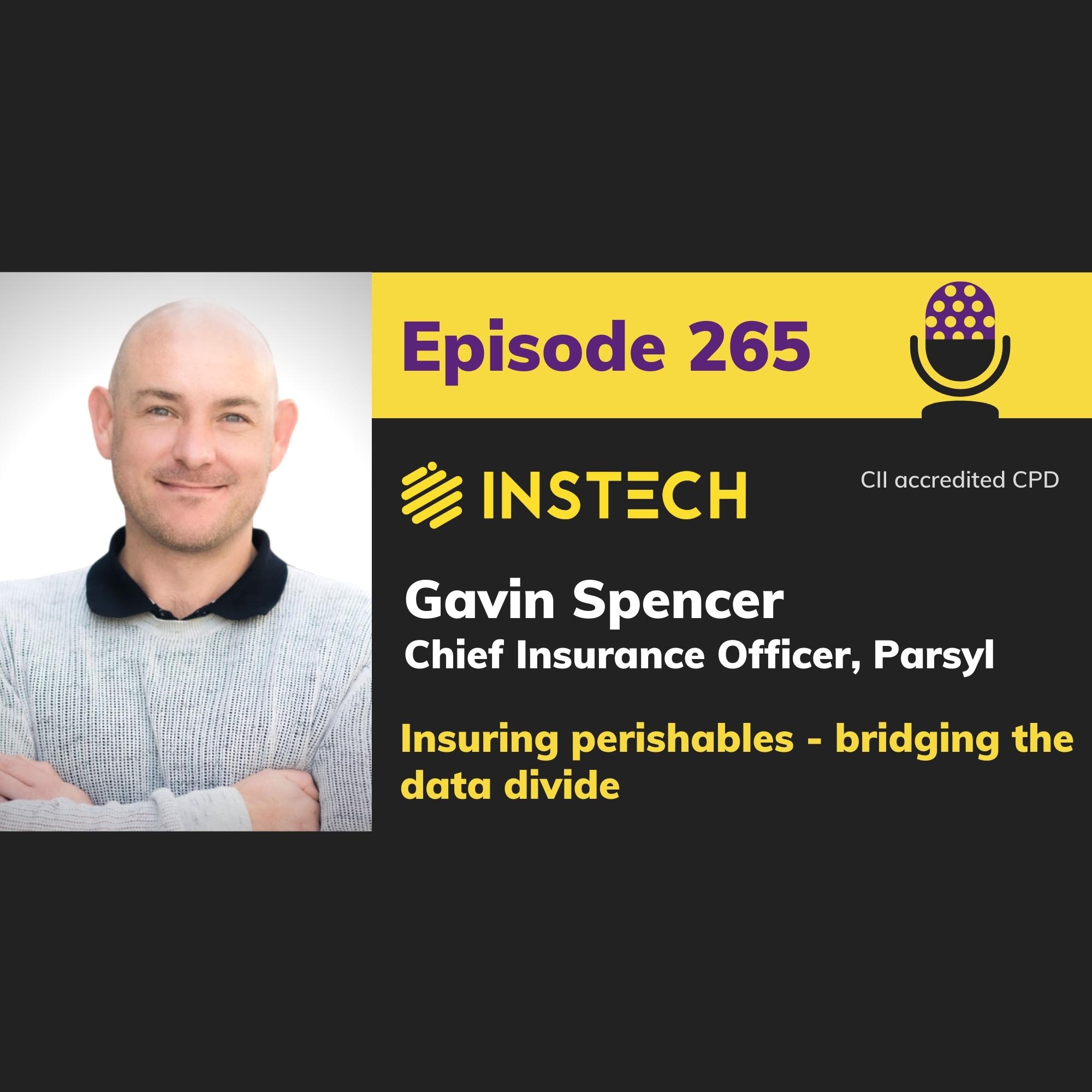
InsTech - insurance & innovation with Matthew Grant & Robin Merttens
Gavin Spencer: Chief Insurance Officer, Parsyl: Insuring perishables - bridging the data divide (265)
Loading summary
Transcript54 lines
- [00:08]
Matthew Grant
Good morning, good afternoon, wherever you are. Well, after a hot, late summer, it seems appropriate. This week's episode is about a company where heat too hot or too cold can cause a loss to the product it's covering. Matthew Grant here, but Robin is at the sharp end today talking to Gavin Spencer of Parcel. Now this takes us back to the roots of instec, when we launched a company to help startups share their views with the world. Parcel represents many of the aspects of behind the enthusiasm for the idea of insuretech back in 2016. Data centric new solutions, a founder with a mission. So it's no surprise that the company has survived and thrived. I spoke to founder Ben Hubbard for episode 123. Robin picks up the story with Gavin to find out what happened next.
- [00:55]
Robin
Gavin, hi. Welcome to the Instep podcast.
- [00:58]
Gavin Spencer
Robin, great to be here. Thanks for allowing us the time and inviting us on.
- [01:01]
Robin
No, look, it's our pleasure. So you joined Parcel a year ago as Chief Insurance Officer. So where are you speaking from?
- [01:08]
Gavin Spencer
I'm currently in the East Bay of sunny San Francisco.
- [01:12]
Robin
And I can't quite trace your accent. You could be a Brit, but there's a bit of, I don't know, a man who's lived abroad for a long time.
- [01:19]
Gavin Spencer
Yeah, exactly that. I always say that marine insurance has given me the chance to travel the world. And the last 10 years or so, I found myself here in the United States, principally in San Francisco, but before that, most certainly a Brit born in East London.
- [01:31]
Robin
Well, we call you a Cockney.
- [01:33]
Gavin Spencer
I think dad would be very proud.
- [01:34]
Robin
That's one question that occurs to me immediately before we get going. So let's first tell everybody what you do. You're the chief Insurance Officer, active underwriter of Syndicate 1796. That first question that obviously comes to mind to me is how can you be an active underwriter of a syndicate based at Lloyds when you are talking from East Bay, San Francisco?
- [01:56]
Gavin Spencer
It's a great question and actually a question that even Lloyds questioned themselves with a year ago as we became the first syndicate to have an active underwriter that was based overseas. So ultimately, I have two roles, as you mentioned. When I'm here in the us, I perform the role of chief Insurance Officer of all of Parcel's insurance activities, which include a binder operation here in the US and the syndicate in London. And then when I'm in London, my pure role is active underwriter, dealing with all the regulatory financial decisions that need to be made for the operation of the syndicate. Alloyds.
- [02:27]
Robin
Do you Flip backwards and forwards quite regularly.
- [02:29]
Gavin Spencer
I do. Very regularly. Yeah. So about every six weeks I'll be in the UK team that with all the other global travel that we tend to do as a global insurance operation which is personally and professionally somewhere that I've always enjoyed doing business and I, and I miss and, and any opportunity I get to come back for pie, mash and liquor is, is always a positive for me.
- [02:47]
Robin
Can't take the cockney out the boy. Now look, you're standing on the shoulder of the giants in the sense that Ben Hubbard, the CEO and co founder of Parsley, was on this podcast back in January 22. It follows therefore, that I don't want to spend too much time talking about the early life of Parcel and the story of Parcel and how you got formed and so on. If anyone wants that, they should go to podcast 1, 2, 3123 but before we do anything, we should probably remind everybody of what Parcel does. And here's my summary for you to critique. Parcel is a combined cargo insurance and monitoring solution for essential supply chains in and health. And by leveraging supply chain data from many sources, Parcel delivers comprehensive insurance coverage, all while helping customers better understand and manage their own risks. And then of course you've mentioned before, you actually also are a full stack insurer. You underwrite policies globally via Lloyds Cover holder and Syndicate 1796. And then you've also got a consortium. You launched Essential, which was the first consortium that Lloyds focused on perishable goods. That sounds quite a lot, but is that a reasonable summary?
- [03:53]
Gavin Spencer
It's a great summary and it sounds like a lot because it is a lot. And principally to boil it down, we are an insurance company, full stack insurer, that believes in the power of data to better ensure the risks of these very fragile commodities. And the reason we focus on those commodities is we do believe in a better world for everyone, that you can receive the medicines you need and the foods that you eat in exactly the manner that you expect them to be received in.
- [04:17]
Robin
That leads me neatly to my very first question, because we've come across this issue quite a lot recently and I'm keen to get your observations. You're a data laid syndicate. You're effectively using devices IoT to create real time information about where goods are, the state they're in, anything that might have happened to them. So you're producing an enormous amount of data in near real time and yet you're knocking around in a marketplace place that has traditionally, I don't know, looked at these things Once a year on 35 points of data. And, and it's used to a relatively static way of analyzing. How do those things knock together? Have you, has it been an issue?
- [05:02]
Gavin Spencer
It's a challenge. The honest answer is, I think personally it's a challenge for myself and the team, hugely experienced group that have been doing this job many years in the traditional sense. To come to a place like Parcel where you're challenged to leave your bias at the door, really trust that data, help understand that data and really accept that data to teach you a different way of doing the job that you thought you did pretty well is certainly a challenge. I think that the power that comes with that is the ability to understand risk to a far greater extent than you were ever capable of before.
- [05:36]
Robin
That's interesting. Do you find you've got too much data? So the reason I say that, as I was very influenced by an article I read during the weekend about farmers and one minute there was no data 20 minutes ago, but now their tractors give them data and their agronomist tells them what they need to plant and they've got soil samples and weather predictions and environmental targets to meet and so on. And good old Mr. Farmer now doesn't know where to turn because he's being told so many things with so many data sources that he can't work out what he should be doing and what he should rely on. Is there an element of that about underwriting these days?
- [06:13]
Gavin Spencer
It's a great analogy and I think it's exactly the same. And I think we as underwriters here at Parcel feel a bit like those farmers sometimes. And the reality is for us is that you could give me all the data in the world and I wouldn't necessarily understand it. It's a lot of numbers, it's a lot of information. And for a traditional underwriter, maybe that's not particularly useful. The real secret source of what parts of has been able to do is translate, as I say, the math into English. So translate that raw data through our data team into insights, insights that we can use in a visual imagery to better understand risk and associate them with a more traditional policy. On one hand, I would say the data is entirely overwhelming for me and my colleagues and us in the insurance profession. But I think we found a way to, to really maximize that opportunity into a language that we can understand, that we can allow to be impactful in our day to day jobs.
- [07:09]
Robin
So tell me how that works in practice. I'm thinking about you doing your underwriting and you're getting all this data, you're getting all this real time data, but how do you actually do your job? In other words, at some point somebody sends in a risk. Run me through the process that you go through in understanding, selecting, pricing that risk.
- [07:28]
Gavin Spencer
Yeah, so very traditional on the front end, we work with brokers. 99.9% of our business is undertaken with brokers. They'll send in that traditional version of a submission with all the information that every underwriter in the market would expect to receive. We take that information and then we start to overlay that information with the data sets that we accumulate. Let's use a real example of a fruit risk. We write a lot of fruit, especially out of Latam and Africa. We use a model that was developed, proprietary model called the low hanging fruit model, named obviously by our data team. No irony there. What effectively that allows us to do is to take all that traditional information and then layer it with information that we as underwriters wouldn't have. So it builds in information around seasonality, it builds in information around origin and destination and how we overlay that with seasonality, production, different periods of farming and harvest, for example. So effectively now we're taking information about the robustness of the product itself and how that would then follow through the supply chain. We can augment that with third party data from the third party supply chains that we wouldn't normally have visibility in. So working with cargo owners who own the blueberry, for example, we wouldn't know how the cold storage facility in Idaho processes, packages and distributes. Now we have visibility into that facility so we can start to understand every step of the journey what the risks are inherently to those commodities. The great thing about that is whilst we're interested in past performance because it can be indicative of future issues, what we really do is start to use predictive analytics and start to understand what the likely risk is for the next 12 months that we're actually on risk for. Not what the risk was for the last five years that we had no interest in.
- [09:16]
Robin
I know you've got lots of data scientists working behind the scenes who do that for you.
- [09:20]
Gavin Spencer
We have a phenomenal team. We actually have a very lean team, six members, incredible skill set all the way from professors at schools, all the way through to genuine rocket scientists, as we would say in the, in the layman's terms. So not a large team, but very efficient team. And I think there's always a desire from a company like ours to continue to invest in those game changing divisions that other insurers wouldn't necessarily have access to.
- [09:45]
Robin
Thank you for the low hanging fruit model. I think the. We might come back to that sometime. So talking of which, one thing that has happened since we last spoke to Ben is that you've launched Essential and you talked about food. This is a consortium at Lloyd's that focus on perishable goods. Tell us about that. I'm interested in this sort of origins and then who's in it and how's it going?
- [10:08]
Gavin Spencer
Yeah, it's one of our proudest moments was being the first real insuretech to launch and lead a consortium. I think we had a key idea when we started writing commercial business in May last year that a consortium would be a great way for us to scale and really grow at Lloyds. The key there is finding the right partners. And I think what's been very attractive about us is that we bridge outside of traditional cargo markets. So all the followers or the majority of followers on the Essential Consortium are smart trackers. People, again that are very interested in data from an actuarial standpoint and really want to back leaders in the market. I think we arrogantly, some would say, but I think fairly confidently would say we've become a market leader in food and beverage and life science and pharmaceuticals. So it was a natural progression for people to come to us and say, okay, we'll invest in you with capacity, continue to write what you write on a much larger scale. So ultimately we have designs to be the largest perishable cargo insurer in the world. Doing that with key partners is always going to be far more successful than trying to do that alone and at parcel. We talk a lot about taking our key partners on that journey. We want to give them some insights. We don't give anyone the secret sauce of how we do the job, but we certainly want to take them on the journey with us and help them understand how we look at risk so that they can continue to support us in that future journey.
- [11:27]
Robin
You talked about smart trackers. Are they writing that purely algorithmically or is there an element in which you're referring everything and they'll take the ones they want. How does the consortium work in terms of binding?
- [11:40]
Gavin Spencer
Yeah, so we've been really empowered by our partners. So we have full binding authority. It's full lead. We don't refer anything in the structure of the consortium agreement, obviously anything that might be not core appetite or something else. We might talk to our partners about whether they would like to do that with us. But anything that's core in those activities. I mentioned of life science Pharma, food and beverage, full delegated underwriting authority. We've been very trusted. We've shown them how we do what we do. I think that's excited them. Most of them do work on the algorithmic underwriting and that kind of portfolio management from the statistical analysis. We're really excited about those partnerships. We've had some of those partners since day one and they've continued to grow with us. And some of those partners actually sit across our portfolio. So not just on essential, also support our binder, also participate in our reinsurance structure. So some really key partners that we're very proud of.
- [12:28]
Robin
Anyone you can name or is happy.
- [12:29]
Gavin Spencer
To be named, well known partners that people are aware that work with us. People like Renre for example, Renaissance Re. We have very close relationship with them. Key partners on our reinsurance side and a big supporter of innovation and they've been very keen to support. Another one that we were really excited to do some work with was score. We have a great relationship with them. We know they've been wanting to deploy more innovation. So to have them want to support people like Parcel was truly exciting for us and obviously is a significant brand in the insurance market.
- [13:00]
Robin
You mentioned in there that you share information with your consortium partners. Please tell me that you don't send them a monthly bordereau on a spreadsheet as your way of doing that.
- [13:11]
Gavin Spencer
The irony is not lost on me. There are certain requirements of reporting that we are required to do and one of them is to send a monthly board row. But that is not how we share our data with our partners.
- [13:23]
Robin
I can't believe it. But I'm going to go back to the good stuff. So look, you mentioned you were insuretech and we would be very pleased to have you give yourself that particular terminology. But one of the things, and he says, speaking from some experience that would drive me mad as a startup, nimble, fast moving company, is regulatory requirements. At Lloyds, they are by repute incredibly onerous. Are you involved in all that? Is that as hard a work as I think it might be?
- [13:53]
Gavin Spencer
I think yeah, for myself. So I've been in the industry now for 24 years and this is my first time really leading a syndicate and being really participating with the PRA and the FCA and working obviously within the Lloyds regulatory form. It's incredibly challenging and it's incredibly challenging for innovative companies that maybe don't have the background of a traditional Lloyds syndicate. I would say this in both a positive and a negative. I think Lloyds has some Natural challenges that they talk about publicly of how they want to be more relevant and how they want to continue to grow and be the focal point for insurance globally. I think to do that, they have to embrace innovation. And I think there has been a huge desire from senior leadership such as John Neal, Patrick Tierney, Dawn Miller, with a real focus on bringing innovation to the market. The challenge there is when you actually bring it to the market, best will and good intentions aren't always enough to get you through the process that exists. And I think what we find is Lloyd's is built on repeatable regulatory returns that are fine if you're at a scale or a size or a maturity that allows you to do that. It isn't necessarily a structure that fits an innovator and a genuine startup. So there have absolutely been challenges there, I think. Have there been times where we question whether we should be a Lloyds syndicate or a traditional company insurer? Of course. But I think you come back to the basis that if you can be successful at Lloyds, if you can mitigate some of the challenges from a structured perspective, there is such huge value to the global brand and the licensing permits and how you can go to market across the globe, that Lloyds is a fantastic opportunity for a company like Parcel. And we continue to receive a lot of support from Lloyds via our managing agency. But certainly we do feel like the innovator that's breaking down some walls. So hopefully it should be easier for some of the people that follow us in the future.
- [15:49]
Robin
You talk like someone who's the oldest child in their family. I always felt like I broke things down to my brother. He got to stay up late, but I'd done all the hard work by then.
- [15:57]
Gavin Spencer
We do have some anecdotes where we actually got a phone call from another innovator who had just launched a siability on the reinsurance side and they wanted to ring us and thank us for being the first ever overseas active underwriter, because it had opened the doors for them to have an overseas active underwriter. And whilst feeling like a compliment, it did bring back all the scars of having to go through the process in the first point that they didn't have to deal with. We certainly understand that.
- [16:23]
Robin
Tell us, what's a siab?
- [16:25]
Gavin Spencer
A syndicate in a box.
- [16:26]
Robin
We've covered a lot of ground there, but what we haven't done is, as a sort of trading update, give us a sense of progress since Ben was on. Are you pleased with how things are going? You must be growing. I've been Just delighted for sort of progress report.
- [16:40]
Gavin Spencer
Yeah, absolutely. I think we continue to be extremely encouraged by the progress we've made this year. We're going to 5x compared to last year in terms of our growth as a startup business. We have incredibly ambitious targets that we want to grow to and I think we continue to do that in a way that we believe is extremely sustainable and profitable for the future. I wouldn't say I'm surprised at our success. I'm aware how long it takes to build a business in this industry and I think that we have already performed at a level that has exceeded our initial expectations. We're excited about that, we're excited about where we are, we're excited about where we're going to go to. And obviously it's given us the opportunity of not only building a portfolio of business, but building a phenomenally talented team both in London and here in the US that's going to allow us to continue to scale and grow.
- [17:23]
Robin
Now, the cynics listening in again is saying Anyone can grow 5x because you just write any old rubbish and then you grow and then it all comes back to haunt you. But presumably you, your growth is of carefully selected business and your underwriting results are reasonably satisfactory.
- [17:38]
Gavin Spencer
Yeah, absolutely. So we're very firm about the rules of engagement in terms of the business that we'll write. Effectively, everything we do is underpinned by the data. So it can't just be an individual's opinion. Therefore there are some additional guidelines. Obviously, as a new syndicate, we have quite heavy oversight from Lloyds, so there's a lot of expectation around performance in terms of our profitability and decision making with our loss ratios. We are a single digit loss ratio currently. Now, again, the cynics will say, you're an early stage business, there's going to be deterioration. And we agree with that. Absolutely. But even with that deterioration, our models predict that we will be substantially lower than the industry benchmark for loss ratio performance in cargo. And again, that's something that we're very proud of and something that we believe the data will continue to support for the entire growth of Parcel.
- [18:24]
Robin
You can come back and tell us about that next year because we are desperate for people to come with models which show that by being data centric and by being being better in the way that they manage and monitor risks, they can produce a better underwriting result. And there's so far quite a lot of early stage businesses with models similar to yours in whatever classes of business. The theory is good. The results haven't yet necessarily justified the hype. So you could pioneer in that as well, if you like.
- [18:53]
Gavin Spencer
We'd love to and we'll continue to strive for that. I think the exciting thing about some of those other models is again, that ability to convert that data into insights and then be able to share those insights long may continue.
- [19:02]
Robin
So tell me a bit about the future plans. Any other classes you're going to go into? Anything on the horizon that you'd like to tell everyone about?
- [19:09]
Gavin Spencer
I think the reality for us is that we're in a position now where we want to continue to execute against our plan now and we want to focus on the areas that we've always focused on, the industry verticals that we continue to focus on. In terms of immediate future plans, we want to continue to grow essential. I think for anyone that's looking to partner with an innovative syndicate that wants to provide capacity, that wants to jump on this exciting journey, there's always those opportunities and we'd love to have those conversations. As for the longer term future, I think we'll be governed by the data and the more data models that we can build and the more information it will allow us to look at supporting what we call the essential supply chains in the future. So does that look like a diversification of coverage? Does that look like building new distribution cycles for areas of the world that are less served? Absolutely. They're all things on our radar. Ultimately, we want to become the largest perishable insurer in the world and support our mission to create confidence in the supply chains every everywhere that we can touch. So certainly ambitious growth plans, but at the moment really focusing on executing to be the best we can in our chosen field.
- [20:10]
Robin
Right now then, how about you personally? Are you going to continue to flog backwards and forwards us to the UK every six weeks when you've now got a head of claims? I know that will help. What's your focus?
- [20:22]
Gavin Spencer
Personally, as I say, I've been doing this industry now about 20, 24 years and I don't think I've ever been as excited about as an opportunity. I think what we're doing here is real change, real innovation. I'm incredibly excited by my team on a daily basis. I think what they bring as individuals and as a unit makes my job a lot easier. I always think I'm pretty privileged to be able to, despite the carbon footprint, be able to jump on a plane and be in the UK and the US every other week if I need to be. So I think for me, just continue to enjoy the journey. Continue to learn. I think you learn so much when you're operating in a privileged position as an active underwriter. Just continue to enjoy it, to be honest with you.
- [20:58]
Robin
We'll send you a website to which you can buy your carbon offsets for your travel plants. We've got some of those on the locker as well. This is my last question because I'm very keen to go back to where I started around kind of dynamic risk pricing. How do you think this plays out? And the issue I'm raising is at one end of the spectrum we have companies like you, truly digital, lots of data sources have built a digital business in which you can assess in real time. You're making use of lots and lots of data. You've got predictive models. At the other end of the spectrum, there are still these underwriters that are using spreadsheets and 30 points of data and they look at the risk just occasionally. Who wins? Is this Darwinian? Is it just inevitable that the more data you have, the more you can predict, the more likely you are to win?
- [21:50]
Gavin Spencer
I think there's a beauty in the hybrid right now. And the reason I believe in that is that everyone that works in the marine insurance market feels like they're special because we work in the oldest form of insurance and we do it our way and we've always done it that way. And I think we've also been the slowest and the laggard end of the spectrum for change and innovation. I think there is a natural evolution from that. I think you need to be the individual, you need to build those relationships in terms of distribution, you need to understand how to execute a deal. But you can only be better if you embrace the data. And I think that's the reality. And people that are not willing to embrace the data, people that are not willing to trust the data, I think those people are the ones that are going to get left behind. I think there's a natural progression for everyone in terms of their growth cycle. I think data is the key to the future. It will continue to be more powerful and we see that with recent innovations around ChatGPT or other AI methods that are going to continue to impact our industry. And I think everyone gets a choice. You can resist it and you can believe in yourself and continue to do it the way you've always done it, or you can accept that there are innovations that support you and help you and not see it as a fear. And I think that's going to improve our industry no end, long term.
- [23:04]
Robin
Yeah, I think you've given us our strap line. So Parcel wants to be the biggest perishable insurer in the world. Is that what people should take away?
- [23:11]
Gavin Spencer
1,000%.
- [23:12]
Robin
Good man. Gavin, it's been an absolute pleasure. Good luck with everything you do. Parcel is a great success story. Thanks for your support for Instec and we'll get you or a colleague back here in 18 months time. You can give us another progress report.
- [23:25]
Gavin Spencer
Robin, always enjoy it. Thanks so much and really appreciate the support from yourself and the team over at Instec.
- [23:31]
Robin
Our pleasure. SA.