← Intelligence Squared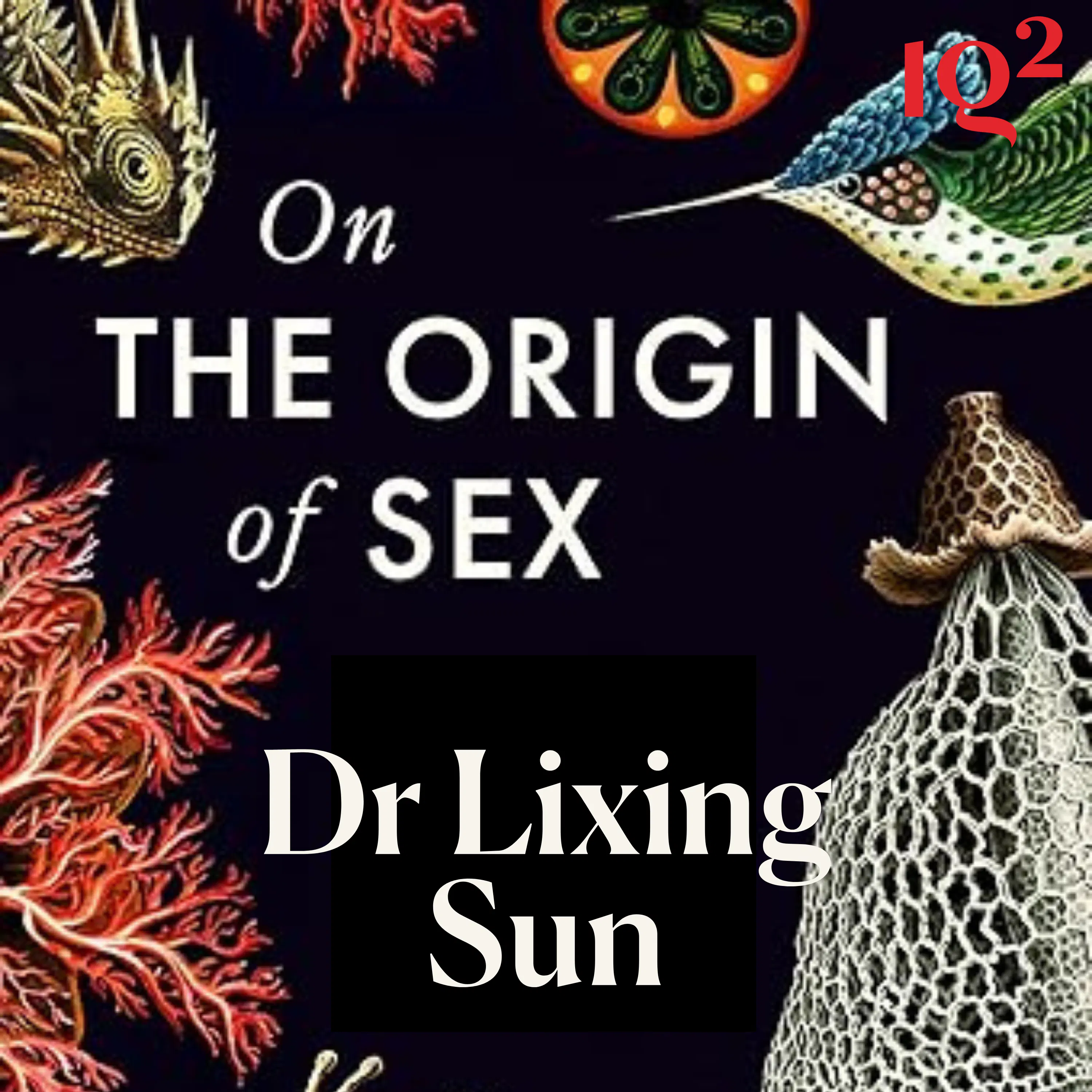
Intelligence Squared
How and Why did Sexual Reproduction Evolve on our Planet? With Dr Lixing Sun
00:39:10
Loading summary
Transcript56 lines
- [00:00]
Dr. Li Xing Sun
How many discounts does USAA Auto Insurance offer? Too many to say here. Multi vehicle discount, Safe driver discount, New vehicle discount, Storage discount.
- [00:09]
Commercial Announcer
How many discounts will you stack up? Tap the banner or visit usaa.com autodiscounts restrictions apply.
- [00:16]
Dr. Ganesh Taylor
So good, so good, so good.
- [00:18]
Commercial Announcer
New spring arrivals are at Nordstrom Rack stores Now. Get ready to save big with up to 60% off rag and bone, Marc Jacobs, Free people and more.
- [00:28]
Dr. Li Xing Sun
How did I not know Rack has Adidas?
- [00:30]
Dr. Ganesh Taylor
Cause there's always something new.
- [00:31]
Commercial Announcer
Join the Nor Club to unlock exclusive discounts. Shop new arrivals first and more. Plus, buy online and pick up at your favorite Rack store for free. Great brands, great prices.
- [00:42]
Mia Sorrenti
That's why you rack welcome to Intelligence Squared, where great minds meet. I'm producer Mia Sorrenti. Before sex evolved on our planet 2 billion years ago, all reproduction happened asexually. So why and how did sexual reproduction evolve? On today's episode, Dr. Li Shing Sung joins Dr. Ganesh Taylor to explore the biological advantages of sexual reproduction, the differences between sex and gender, and the variety of ways in which our planet is populated. Together, they discuss the fascinating, varied and complex ways reproduction happens across the natural world. From whiptail lizards capable of immaculate conception, to clownfish and bearded dragons who regularly switch gender roles. Let's join our host, Dr. Ganesh Taylor, now with more.
- [01:32]
Dr. Ganesh Taylor
Welcome to intelligence squared. I'm Dr. Ganesh Taylor, Chancellor's Fellow at the center for Reproductive Health at the University of Edinburgh. Our guest today is Dr. Li Xing Sun, Distinguished Research professor in Behavior and Evolution at Central Washington University. He is the author of a fascinating new book on the origin of sex, the Weird and Wonderful Science of How Our Planet Is Populated, which has been described as a thrilling biological detective story. Two billion years ago, before sex evolved on our planet, all reproduction happened asexually. But why and how did it evolve so? From whiptail lizards capable of immaculate conception to clownfish and bearded dragons who regularly switch gender roles, the book explores the fascinating, varied and complex ways reproduction happens across the natural world. Welcome to Intelligence Squared. Leaching.
- [02:31]
Dr. Li Xing Sun
Thank you, Ganesh. Nice meeting you.
- [02:34]
Dr. Ganesh Taylor
Yes, you too. So I'd like to start with just a very open question, which is what motivated you to write this book? Now, at this particular time, there are
- [02:48]
Dr. Li Xing Sun
two one is that since 1994 when Matt Ridley published his book bestseller the Red Queen, there has not been an overreaching book and sort of like with also some materials surrounding the topic of sex, sex development and sexual selection that has not been written for the general audience for more than three decades So I think that is the first motivation. The second motivation is that you look at today's debate about sex and gender. There are so many confusion, so much confusion, so many misconceptions around. I think it's better for us to have a clear scientific understanding as to the state of the art information so that we can be more objective, more constructive, instead of taking sides very quickly with very old information. These are the two motivations for this book.
- [03:58]
Dr. Ganesh Taylor
Amazing. I couldn't agree with you more. More science and more knowledge is usually the way forward in any given conflict anyway.
- [04:06]
Dr. Li Xing Sun
Yeah, you think about it, you will have pretty much, because you are in this field as well for the last three decades, breakthroughs in the study of the origin of sex and sex development and sexual selection. Pretty much major breakthroughs every week, if not every day, published in major scientific journals. And that part of information has not much of it has not sink into the public understanding yet.
- [04:36]
Dr. Ganesh Taylor
Yeah, that's completely true. The science really does advance very rapidly and it is important to help facilitate the sort of expansion of that knowledge beyond the academic boundaries. Obviously, as you said, I'm in this field, so I'm a bit biased when I think that this is a fantastic book and it's a fantastic thing to have done. But I hope that our readers, your readers and our listeners today will also find it to be full of fantastic examples from all kinds of animals and species, but also help them develop their thinking on the subject. That said, I'd like to start with a very contentious question as well. Namely, I heard that males are pretty much useless. I mean, in multiple contexts. I've heard this statement, obviously. But in fact, even in your book you sort of talk about the fact that the use of males in many species seems to be very time limited. And so I wondered if you could tell us a little bit about this idea of when do males come in useful in the context of sexual reproduction? And maybe to make it nice and simple, basically, what's a few pros and cons for sexual versus asexual reproduction?
- [05:50]
Dr. Li Xing Sun
So, one thing, it's a very interesting question I've been asked. In terms of efficiency, males are useless indeed. But males are around for a reason. So for asexual reproduction, the efficiency is high. You have one female, or let's call it the female, but basically an asexual individual. One individual becomes two and two becomes four. So and the four becomes eight and all the way and the growth will be exponential. So it goes fast. But if you undergo the sexual reproduction now there's a problem Every generation you have to produce male and female. So basically at least half of your energy is wasted or material is wasted on producing males. But males are around for a reason. One reason is that, well, males could produce genetic diversity which could counter the accumulation are bad mutations in the asexual lineage. That's the one. The second one is that while you have genetic diversity and that is a natural solution to fight against parasites and pathogens, which is everywhere in nature, without genetic diversity, there is no way you could do that easily. I think these are the two reasons for males to be around and evolve successfully.
- [07:25]
Dr. Ganesh Taylor
So that's fantastic to hear so explicitly and clearly. I think this argument for why sexual reproduction evolved as being something related to strengthening a species ability to resist pathogens is something that is not very much well known in the wider public. So why don't we talk about that a little bit? What is this concept about and yes, what is the concept about?
- [07:57]
Dr. Li Xing Sun
Yeah, the idea is behind it. It's a red queen hypothesis, which is based on the classical book by Louise Carroll, Alice in the Wonderland. Basically it is the arms race between parasites and hosts. For both of them, they needed to try to stay one step up on the other because it's a dynamic change. When parasites are more successful, the host will go down. When hosts are more successful and the parasites will go down. So it's a dynamic arms race. So that is so called the red queen is about in this arms race, one party try to stay above the other and vice versa. And one way to do so is by generating the genetic diversity. Without genetic diversity you cannot stay in this game because everyone would be devoured or everyone would die without being able to survive the change of the other side. It's also like a play chess. So like a plateau, you have to change your strategies based on others move.
- [09:17]
Dr. Ganesh Taylor
Yes, that's exactly right. So in the book you explain it also very clearly, this idea that when organisms only rely upon asexual reproduction, it means that the offspring are effectively clones are exactly the same as the parents. And so then you end up with issues that you just alluded to here as well, which is this sort of accumulation of mutations. If I understood you correctly in the book as well, this is a referral to a scientific concept called Muller's ratchet, is that correct?
- [09:48]
Dr. Li Xing Sun
Yes, that's correct. It's named after the geneticist by the name of Herman Joseph Miller, who was from the famous fly lab run by Thomas Hunter Morgan.
- [10:03]
Dr. Ganesh Taylor
Ah, yes, yes indeed. A very famous lineage amongst biologists. So this is the idea right this is the central idea that is now sort of emerging out of evolutionary biology for why sexual reproduction evolved. It's that asexual species basically accumulate mutations which are deleterious and make them sensitive to pathogens, right?
- [10:29]
Dr. Li Xing Sun
Yes, that's exactly the case.
- [10:32]
Dr. Ganesh Taylor
I think many people will be familiar with the. Now you'll correct me if I'm wrong about this, of course, but I believe that the Irish potato famine, for example, is an example of what happens when a species is completely, I was going to say isogenic, but the same when many individuals in a population are identical, they're all as sensitive as each other to the insult of a pathogen and then that can lead to real issues or in certain cases extinctions. Is that, is that also correct?
- [11:03]
Dr. Li Xing Sun
Yeah, exactly. It's in agriculture, the monoculture, chasing for the highest yield is dangerous because lack of genetic diversity, once you have a pathogen strikes and then things like that could happen. Actually, even today in some of the highly productive banana plantations and rice breeds as well, they also suffer these pathogens. So the Rosa is important.
- [11:31]
Dr. Ganesh Taylor
Yeah, it is important. It is important. Of course. Also, I think a lot of people will forget that when we talk about sex. Most people just sort of think about humans to begin with. We're very human centric generally. But it's easy to forget that it's not just humans, it's not other animals, it's plants, it's bacteria. Like everything that is alive has to propagate. Right. So to summarize, the take home message that we got from this is basically the function of males is to introduce genetic diversity. It's a sort of shuffling of genetic material to help keep ahead in the arms race, or the red queen effect as we call it, against pathogens and to maintain ourselves against the sort of challenges of living in an environment where things are out to get us, basically. And as you also alluded to, okay, so let's say we accept that sexual reproduction is better than asexual reproduction, but it comes with its own challenges. Right? And as you alluded to, finding a mate is a really tricky business. It doesn't matter if you're a human being or a seahorse. Right? It's a tricky business. And so I wondered if you could give us maybe your favorite example of some very extreme lengths to which an organism goes to to find its mate. I'm sure you have many examples in the book, but which one is your favorite one?
- [13:01]
Dr. Li Xing Sun
Actually, I have not written into this book. It's angler fish. Angler fish, the deep sea fish that there are about 200 species. The reason I did not write into this book is because in my previous book I talked about the anglerfish, about the lasso nature book. So I think, well, let's let my readers have some more diversity. So anglerfish are these deep sea fish. They live in the bottom of the sea or ocean. There are about 200 species. And the interesting thing about that is because it's totally dark, it's difficult for for males to find the females. So the males are very small, probably about 10% of the female body size, probably even smaller. But it's so difficult for males to find the females. They swim around. Once they detect a female around, they bite into the female's body and then fuse their body circulatory system, blood vessels with the females so as to get the nutrients from the female, being a parasite on the female as well. And in the meantime their eyes degenerate, their fins get lost and their internal organs got reabsorbed into the body because they are useless except the gonads. They only use the gonads to produce sperm and sort of like living spawn factory. And they could provide encore for female. When females lay eggs, they release a sperm. So these are the most fascinating groups of animals where males go a long way to find females.
- [14:52]
Dr. Ganesh Taylor
And one of the big themes I think that came out of your book was also this exploration of the difference and the connection between sex and also gender. Right. And I wondered if you could just tell us what your take on your understanding and definition of those separate concepts are and what the relationship between them is.
- [15:18]
Dr. Li Xing Sun
Yeah. As we both know, that biological sex is defined by the gametes produced. Small gametes male, large gametes female. So males produce sperm, females producing eggs. So that's a biological consensus, at least most of us agree with that. But gender is different. Gender does not have a clear biological definition. It's more about social definition currently. But I tried, in my book, I tried to make gender as comprehensible as well. But sex and gender are connected. I don't know where sex ends and gender starts, but sex and gender are two very different concepts. If sex is defined based on the size of gametes produced, gender is not. Let me give you an example. In these clownfish and also in some of others, swamp eels, they change sexes. The males could change into females by producing either sperm or egg. In clownfish, of course, when they are small, they started as male. And when they grow up to the top of the hierarchy, they switch into female. From sperm producing male to egg producing female. And that is biological sex. Gender is different gender, you do not change sex. It's still the same. But the roles, the structures associated with these roles, being, performing as a more masculine or feminine or taking the kind of different roles would change. And that's gender. That gender does not involve the change of producing eggs or sperm, but. But the roles can change the typical stereotypical, especially human centric views of being a feminine gender versus masculine gender. So I think much of it is not only sociological or social roles, but also related to human perception of being. Whether this is the feminine or this is masculine.
- [17:40]
Dr. Ganesh Taylor
Yeah, that's exactly right. I mean, I think it's always important, as we said at the start, more science helps, like an appreciation for how other species organize themselves. Should it be an inspiration to us all to consider the sort of structures that we create as human beings? Right. Or the flexibility within the systems we create? Let's put it that way.
- [18:02]
Dr. Li Xing Sun
Exactly. Evolution does. And then you look at the Chicana, for example. Eight species of Jacanas in the world. Jacana birds. These are water birds. Sometimes they call the Jesus Christ bird because they can walk on the lily pads. It feels like they're walking on the water. But you look at the Jacanas, seven out of eight species where the gender roles are totally reversed. Males, well, still females lay eggs. Females. Right. Males produce sperm, but males make nests, males hatch eggs, males take care of the chicks, while females goof around and protecting a territory containing several males with very little investment. So you could see the male and female, the traditional human centric male and female roles are totally reversed. Yeah, so that's the changing gender, but not changing sexual.
- [18:59]
Dr. Ganesh Taylor
Yeah, completely, completely. Follow that.
- [19:07]
Quince Brand Representative
Whenever I switch my closet from my bulkier winter wardrobe to my spring and summer set of clothes, I like to take that as a moment to kind of reset. And this is a great time to pare my closet down to the essentials. But that means that each of those pieces have to live up to the wear. And that's where Quince comes in. Because they make beautiful everyday pieces using premium materials like 100% linen, organic cotton, and super soft denim with styles starting around $50. Their spring pieces are lightweight, breathable and effortless. And that same focus on materials carries over into their accessories, like their leather bags, which are made from 100% woven Italian leather and honestly look way more expensive than they are. I've been absolutely loving the two pairs of jeans that I've gotten from Quints. I'm seriously considering getting at least one more pair to round out my closet. Quince works directly with ethical factories and cuts out the middlemen so you're paying for the quality and not brand markup. So refresh your spring wardrobe with Quince. Go to Quince.com Intelligence for free shipping and 365 day returns. Now available in Canada too. Go to Quince.com intelligence for free shipping and 365 day returns. Quince.com intelligence starting or growing your own business can be intimidating and lonely at times. Your to do list may feel endless with new tasks and lists can easily begin to overrun your life. So finding the right tool that not only helps you out but simplifies everything as a built in business partner can be a game changer for millions of businesses. That tool is Shopify. Shopify is the commerce platform behind millions of businesses around the world and 10% of all e commerce in the US from household names like Gymshark, Rare Beauty and Heinz to brands just getting started. Shopify has hundreds of ready to use templates that can help you build a beautiful online store that matches your brand's style. And you can tackle all the important tasks in one place, from inventory to payments to analytics and more. No need to save multiple websites or try to figure out what platform is hosting the tool that you need. And if people haven't heard about your brand, you can get the word out like you have a marketing team behind you with easy to run email and social media campaigns to reach customers wherever they're scrolling or strolling. Start your business today with the industry's best business partner, Shopify, and start hearing. Sign up for your $1 per month trial today at shopify.com realm. Go to shopify.com realm that's Shopify.
- [21:50]
Commercial Announcer
At Energy Trust of Oregon. We know it isn't easy the tremendous weight of today's operating costs, working in cold drafty spaces with inefficient heating systems or under lights that have seen brighter days. But we also know how to help you upgrade those systems, lower those costs and meet the demands of your business with smart energy efficient solutions. Find cash incentives@energytrust.org Energy Trust of Oregon More power to you.
- [22:20]
Dr. Li Xing Sun
Ryan Reynolds here from Mint Mobile with a message for everyone paying big wireless way too much. Please, for the love of everything good in this world, stop with Mint. You can get premium wireless for just $15 a month. Of course if you enjoy overpaying, no judgments. But that's weird. Okay, one judgment anyway. Give it a try@mintmobile.com Switch upfront payment
- [22:42]
Commercial Announcer
of $45 for three month plan equivalent
- [22:44]
Dr. Ganesh Taylor
to $15 per month required intro rate,
- [22:45]
Commercial Announcer
first three months only, then full price plan options available, taxes and fees extra.
- [22:48]
Quince Brand Representative
See full terms@mintmobile.com.
- [22:55]
Dr. Ganesh Taylor
I mean, it is remarkable how many different sort of setups exist in biology basically for ensuring the survival of offspring. And just to be really explicit about this, right, I mean, unfortunately or fortunately, however you want to look at it, these discussions around biological sex and the systems that evolve to enable them, it is all about productive production of offspring. It's about reproduction. Essentially. One of the questions I was going to ask a little bit provocatively was do we actually know why sexual reproduction actually only involves two individuals and not more?
- [23:37]
Dr. Li Xing Sun
The interesting thing about sex is that, well, you can reproduce directly, but because of sexual reproduction you don't need to reproduce directly. Because in that kind of situation most people do not realize when you have, you can reproduce in terms of finding another gamete. But however the sex breaks down the genome every time the genes of one sex or individual of one sex is actually associated with genes from another individual. And every time it reproduces like that. So basically in comparison with asexual reproduction, you do not have change in the genome. Sort of like as I talked about, you are stuck in the champion team. You try to do the best in the champion team. All these genes work together to be the best in terms of passing down their genes to the future. But once sexual reproduction is involved now the game is totally changed. Because every time the genes are being distributed to different communities, different genomes, so the genes gain freedom. These genes gain freedom. They don't have to cooperate with others. Cooperation is one thing. They can do other nasty things, such as cheating, such as even killing of other genes for their own interest. And that's the idea of Dawkins, the selfish gene. Now the genes can become to be selfish, actually become to be self serving. It's individualized genesis. So now you could see things will be totally different. Now to make the most copies of genes in the future, you can reproduce directly or you can help your relatives to reproduce. That is King Selection developed by Bill Hamilton, which was popularized actually by Richard Dawkins himself. So you can reproduce directly or you can help your genetic relatives to reproduce successfully as long as you can promote the most copies of the genes in the future. Now the game is totally changed. You don't need to reproduce directly. And lots of birds, for example, it has been found more than 300 birds spend the first year as adult in helping their parents to raise their younger chicks. And in these bees and wasps and ants, 30,000 species and one of the most successful animals, vast number of individuals do not reproduce. I mean, more than 95% of these individuals as workers or warriors without reproducing and their reproductive organs never mature. But they basically cash in the indirect reproductive success by delegating the reproductive role to the queen.
- [27:00]
Dr. Ganesh Taylor
Yeah, I mean, it's a really interesting thing that we just take for granted in biology, these kinds of concepts like kin selection. Again, I think for people reading this book, they will find it very interesting to hear about these concepts where, you know, there are so many examples in the animal kingdom of organisms, exactly as you say, that never actually get to reproduce of their own accord, but they have strategies and they exist to ensure the reproductive success of their siblings or family members in general. And it really, you know, again, to take a very human centric point of view for a second here, how many people who are older siblings know the burden of their parents asking them to look after the younger siblings? Right. It's something that is very much within even human cultures. Right. The other example in your book that I found really interesting was where you talked about so fraternal siblings that are male, female, in the same uterus. The females tend to go on to have fewer offspring in their life as well, statistically. So if you are a twin, a female twin of a male twin, you are more likely to have fewer offspring. There's some really wild statistical correlations out there, right?
- [28:20]
Dr. Li Xing Sun
Yeah, that's another major discovery in recent decades. They found in Nordic countries based on the church held statistics data. And they look into that. They found among these fraternal twins, the if the women or the daughter or the female sibling tended to be less likely to get married. And if they do, if they did, because it's past the historical data, if they did, they had fewer offspring. So apparently they were masculinized by the embryos, by their male siblings, the androgens during embryonic development.
- [29:11]
Dr. Ganesh Taylor
Wild. And the reason why I flag this is because I think people often think of, when we talk about genes interacting with the environment, we think about the environment as this thing being outside of the human body. But of course, humans carry their offspring in utero for nine months and that is an environment effectively during that time. And there's increasing public awareness about that and thinking about the effects of the maternal environment upon fetal growth during that time. That I thought was interesting to pick up also in your book that said, obviously you talk a good amount and your specialism is also in sexual conflict. A lot of the book talks about these very Dramatic sexual conflicts. I wanted to ask you to explain to the listeners, you know, what does sexual conflict in this context mean and why does that matter? In the context of talking about biological sex and reproduction and all of this stuff, could you tell us?
- [30:14]
Dr. Li Xing Sun
Yeah, the sexual conflict is based on the conflict of interest. What is good for male is not necessarily good for female and vice versa. So there is always this conflict around whenever there is a conflict of interest. Interest, I mean the fitness interest. This also speaks for why the monogamy is rare in animals. Monogamy is rare. Monogamy is a fine balance when the male and female interests coincide, but most of the time they don't. So you have conflict of interest. But this is well known. But nowadays what is less well known is that even the genes conflict as well. And genes that are good for the female may not be good for the males. So they actually fight for their own interest. And that falls very nicely with Dawkins selfish gene theory and the one particular thing that has been discovered since the 1990s, mainly led by the Harvard biologist David Haig. And he found that, well, the effect of the genes from mothers and the fathers could fight with each other. It matters whether a gene is expressed versus not expressed. So in the children, the maternal gene or paternal gene often shuts off the effect of the gene from the other party. So that conflict is always existing. Sometimes they called it intralocus conflict or sometimes called interlocus conflict. The jargons could be very, very complex. But that genetic conflict reflects the interest conflict between males and females. So that's wildly existing.
- [32:21]
Dr. Ganesh Taylor
Yeah, but I was going to say. But ultimately. So what's interesting about this, of course is so on one hand, you know, there's this picture that emerges from Dawkins's idea that we are just sort of walking bags of genes that are sort of, you know, conflicting amongst themselves within us. But also then through sexual reproduction are in conflict with our partners. But ultimately the parents have to cooperate, presumably to raise offspring. So how does this sort of. There's this complex picture that emerges. On one hand there's all this conflict. On the other hand, there has to be cooperation, surely. And sexual reproduction is a form of cooperation. Right.
- [33:03]
Dr. Li Xing Sun
It's just the two sides of same coin. Eventually everything conflict or cooperation, you have to. To be moderated by how successful your reproduction is. If cooperation is better, cooperate. If conflict is better. Well, conflict. So they are the same, different sides of the same coin. So that's the reason the behavioral patterns can be so diverse, because the situations are different conditions are different. So that's exactly. We look at evolutionarily different strategies in different ways and they turn out to be. Well, yeah, they are the different sides of the same coin.
- [33:56]
Dr. Ganesh Taylor
Yeah, that's a beautiful way of putting it, talking about using different strategies depending on which context. One of my favorite terms in the book that you used to was the flip flopper, which beautifully captured this idea of an organism that flip flops between using sexual or asexual reproduction, depending using the right strategy for the right condition. And I just wanted to say how much I enjoyed reading that concept there. And I think that if you could comment a little bit on how prevalent is this sort of idea that species can sort of alter their strategies depending on context within the animal kingdom. Is this a very rare occurrence or is this actually surprisingly common?
- [34:43]
Dr. Li Xing Sun
Well, it's surprisingly common in smaller, simpler organisms such as aphids, such as Daphne, water fleece and these organisms and many others as well, the smaller, more simplistic organisms. It's a flip. Floppers are quite common because asexual reproduction gives them efficiency. They can reproduce very quickly, expand very quickly. And for everybody who has a garden, typically you have aphids all over because they undergo asexual reproduction from spring to fall and to autumn very, very quickly. But when winter comes, they switch back. This is such a perfect solution in invertebrates, most of them cannot do that nowadays. They have found the asexual reproduction. Eighty or more species, invertebrates, but invertebrates, your body is getting more complex and your body adapted to other factors, such as eking out a living by fighting out your own space of niche and compete more effectively. So your body gets more complex, but at the same time, as a side effect or probably inevitable, you lose the flexibility of switching back to asexual reproduction. So you got stuck in sexual reproduction. I think that's the reason why it's so much rarer in vertebrates and complex organisms that you don't find that they can flip flop around.
- [36:24]
Dr. Ganesh Taylor
Yeah, I mean, reproductive systems are complicated, right. As we know. And you talk about also beautifully in the book. And so this idea that some organisms can do that is really interesting, of course, but we as vertebrates, like many other animals, cannot sort of switch that much between or cannot switch between our sexes. However, I thought it was really interesting that you sort of framed this idea that gender allows us to sort of bridge that dichotomy, basically that distance. So, yes, maybe our gametes and our sexes are different from each other and that's not something that we can alter. But by Having a sort of gender layer, as it were, of information and behaviors and all that stuff, we can close that gap. Could you tell us a little bit more about that? I thought that was a really fascinating concept.
- [37:19]
Dr. Li Xing Sun
Well, that's my idea about gender adaptivity. Gender development is adaptive. You assess a condition. You cannot change your sex of being male or female, but however, you can change the roles associated with being a male and a female, and that is gender. So you can pick up some of the typical female features or you pick up some of the typical male features while being the opposite sex. So gender gives us the flexibility to adjust to a changing, unpredictable conditions.
- [37:55]
Dr. Ganesh Taylor
The last thing I wanted to ask you was just if you had one message to give to your readers or today's listeners, you know, what is that one thing that you would like to have your readers walk away from this book with? Is it to change their minds? What is the message?
- [38:11]
Dr. Li Xing Sun
The message is that sex is a far more complex issue than reproduction. Only sex for reproduction is the most simplistic understanding. Since there has been sex on earth, everything has changed. And from reproduction to indirect reproduction to break down the genome, the genes, the genetic communities. And then as a result, you have all sorts of newer strategies, structures arising, adding the kind of vast amount of diversity. And I believe sex, once it was created, it gains its own life, sometimes beyond the control. I think sex has its own life. I'm thinking about it. Probably I will write another book about these complex, chaotic roles. Sex has been played in our natural world. So I would say, well, in the future we will understand a lot more about sex and keep an open mind and be ready for new surprises from scientific discoveries in the future.
- [39:35]
Dr. Ganesh Taylor
Absolutely. Thank you. Li xing. That was Dr. Li Xing sun, author of on the Origin of Sex, which is available now online and in Stores. I'm Dr. Ganesh Taylor. You have been listening to Intelligence Squared. Thank you for joining us.
- [39:56]
Mia Sorrenti
Thanks for listening to Intelligence Squared. This episode was produced by Ginny Hooker and it was edited by Mark Roberts. For ad free episodes and full length recordings, you can become a member@intelligencesquared.com membership and to join us at future events. You can see our full events program and buy tickets@intelligencesquared.com attend. You've been listening to Intelligence Squad.
- [40:20]
Commercial Announcer
You're jamming your favorite song and while you aren't missing a beat, you could be missing a signal from your body. It's an SOS from your kidneys and it doesn't sound like music at all. It's silent high blood pressure, type 2 diabetes and other risk factors can quietly stress the kidneys, leading to negative impacts on the heart. That's why you should ask your doctor about a simple urine test called uacr. Most miss the signal for hidden kidney disease and related heart heart risk. You shouldn't visit detectthesos.com today to learn more.
- [40:50]
Mia Sorrenti
Thanks for joining us.