← Intelligence Squared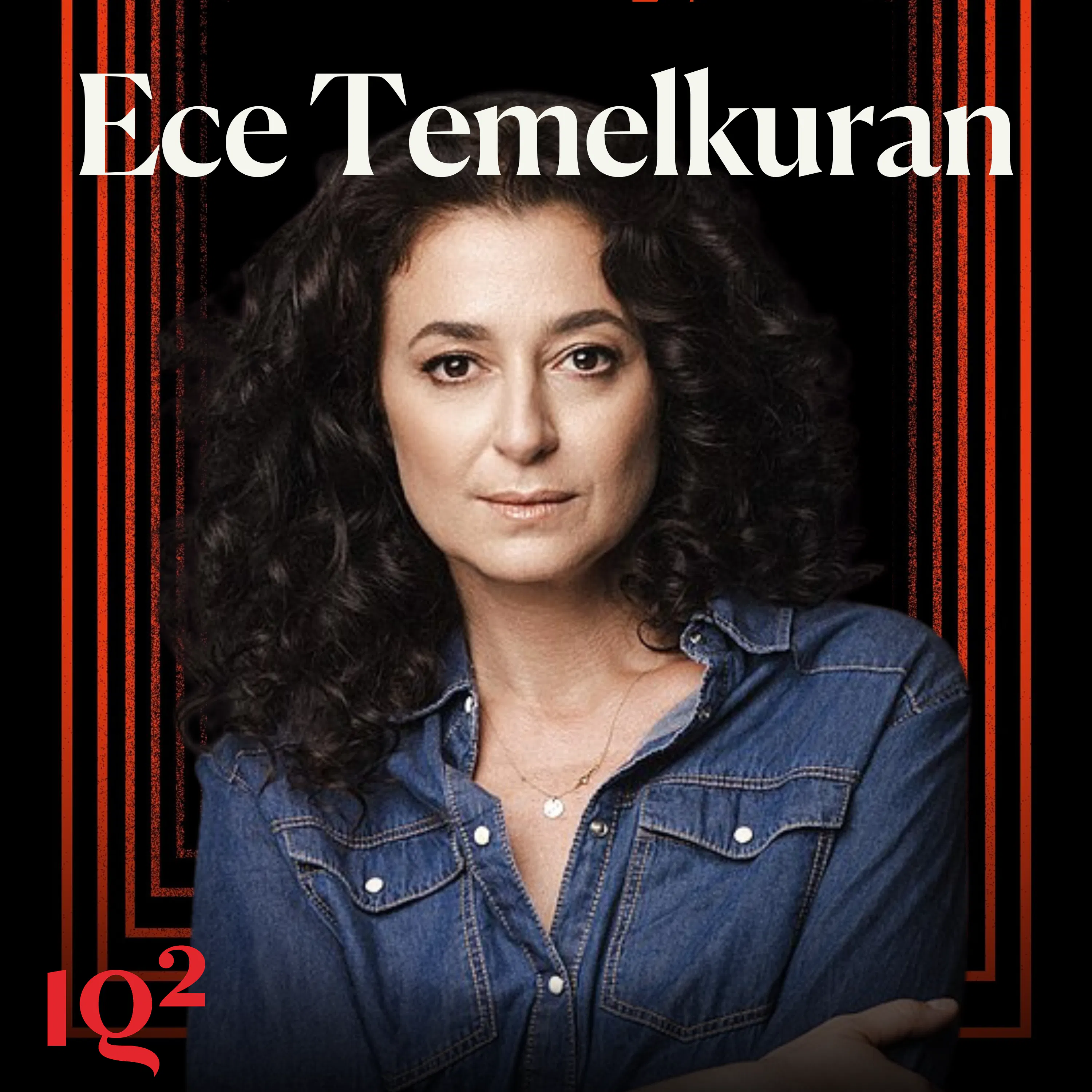
Loading summary
Transcript48 lines
- [00:00]
Narrator/Advertiser
This episode is sponsored by the Planet Visionaries Podcast Planet Visionaries is back with a new season hosted by Alex Honnold, who you might know from his incredible solo climb of the 3,000 foot El Capitan in Yosemite national park this season. You can hear him in conversation with people who are not just imagining a better future, but actually building it. Here at Intelligence Squared, we love conversations that explore real solutions and real progress. In this podcast, you'll hear from scientists, explorers, activists and storytellers from around the world who are reshaping the future in practical and inspiring ways. In an upcoming episode, Alex speaks to Chris Tompkins, a conservationist and former CEO of Patagonia who has dedicated her life to preserving millions of acres of land across South America. In 2017, this vision led to one of the largest private land donations ever when her foundation gifted an area that the size of Denmark to Chile to create a new national park. What makes this show so compelling is that it highlights the human side of climate work. It's not just policy or numbers, it's people taking meaningful action to create a better world. Listen in to be part of the movement to reimagine our planet's future. In partnership with the Rolex Perpetual Planet Initiative, this is Planet Visionaries. Listen or watch on Apple, watch Spotify, YouTube or wherever you're listening right now. This episode is sponsored by indeed. You just realized your business needed to hire someone yesterday. How can you find amazing candidates fast? Easy. Just use Indeed. When it comes to hiring, Indeed is all you need. Stop struggling to get your job post seen on other job sites. Indeed Sponsored Jobs helps you stand out and hire fast. With Sponsored Jobs, your post jumps to the top of the page for your relevant candidates so you can reach the people you want faster and it makes a huge difference. According to Indeed data, Sponsored Jobs posted directly on indeed have 45% more applications than non sponsored jobs. Sometimes the hardest part of hiring is just working out where to start. Indeed makes it clear, simple and quick to reach the right talent. Plus, with Indeed Sponsored Jobs, there are no monthly subscriptions, no long term contracts, and you only pay for results. How fast is Indeed in the minute I've been talking to you. 23 hires were made on Indeed according to Indeed Data worldwide. There's no need to wait any longer. Speed up your hiring right now with Indeed and listeners to this show will get a $75 sponsored job credit. To get your jobs more visibility@inn Indeed.com intelligencesquared just go to indeed.com intelligencesquared right now and support our show by saying you heard about Indeed on this podcast. Indeed.com intelligencesquared terms and conditions apply. Hiring Indeed is all you need.
- [03:12]
Producer Mia Sorrenti
Welcome to Intelligence Squared, where great minds meet. I'm producer Mia Sorrenti. Today's episode is part one of our recent live event with writer and political thinker ECE Tamil. Kuran Eshe Temilkuran is the award winning Turkish author who was forced into exile for her critical views of President Erdcan. She is best known for her books how to Lose a Country and its follow up Together, which explore how the world's democracies are sleepwalking into authoritarian and how we might be able to defend democracy and learn the lessons of resistance across the globe. Temulcohan was joined by podcaster and journalist Coco Kahn at the Kiln Theatre to discuss the global rise of fascism. Let's join our host Coco Kahn now with more.
- [04:00]
Host Coco Khan
Hello, hello, hello. Thank you, Margarita. And thank you everyone for joining us this evening to talk about how fucked we all are. God, it's a delight to be sat next to ECE Temul Khurram, one of the, I would say, most interesting, exciting, beloved, influential political thinkers of our times. You've drawn comparisons to David Graeber, Yanis Varoufakis, you know, she's a big deal. So I need to make sure that I don't basically turn this into therapy for progressives. Because really what I want is for you to give me and this audience some hope because it's been, it's tough out here as your book, which we're here to talk about how to Lose a Country deals with. So let's just kick off. How are you feeling today? You feeling hopeful?
- [04:50]
Guest Ece Temelkuran
Here we go. Hello, welcome. I mean, like in a weekday, you came to see a person talk about two persons talking about fascism. So, you know, probably you're not in your best mood.
- [05:05]
Host Coco Khan
I mean, it must be because I was thinking in my intro I should have mentioned that how to Lose a Country has become a classic. It's considered, I mean, it's strange to say that because it's what, 10 years old? Less than.
- [05:15]
Guest Ece Temelkuran
No less. Less than 2019.
- [05:19]
Host Coco Khan
It's considered to be, you know, up there like a sort of seminal text. How does that feel having. Having written this thing and this and only becoming more relevant?
- [05:33]
Guest Ece Temelkuran
Well, it's not a, you know, nice feeling because when you write these books and when you write, when you say that fascism will come to you and then the fascism starts creeping into countries, you cannot say, well, I told you so. And also when your predictions come true, sort of, and when they are dark, you cannot indulge yourself in your success, so to speak. But speaking of hope, you know, I don't believe in the word hope. And you know, I wrote a sequel to how to Lose a Country Together, and it starts with this. I don't believe in the word hope because it's too fragile for our times. And we can do better than hope. And what we lost is not hope. You are not here because you lost hope. You are here. Or we are all here because we have to. We need to refresh our faith in ourselves, in each other, and in politics. What we lost is faith, actually. So I'm feeling faithful, okay? Oh, okay.
- [06:32]
Host Coco Khan
You're feeling faithful.
- [06:33]
Guest Ece Temelkuran
And that's the plan tonight. Let's, let's, you know, feel more faithful.
- [06:38]
Host Coco Khan
Okay, well, can I get an amen?
- [06:40]
Guest Ece Temelkuran
No, no, I'll do it. Don't worry. Give me 45 minutes.
- [06:44]
Host Coco Khan
We will definitely talk about, obviously, how to Lose a Country, but also together a Manifesto against the Heartless World and your upcoming book, Nation of Strangers. So we'll try and cover all of those. Let's just start with a bit of bio. Right. So, you know, whenever you read a review of how to Lose a Country, they often talk about you in exile. It's a very specific word. You've been exiled. It's a very heavy word, very grand word. And I expect that for people currently living in a country going through a kind of populist slide, I'd include Britain in that. We might go, oh, exile.
- [07:19]
Producer Mia Sorrenti
That, that's too.
- [07:19]
Host Coco Khan
But that couldn't happen. It's almost a bit alien. So I wondered if you could just explain the circumstances around this.
- [07:27]
Guest Ece Temelkuran
First of all, I hate the word. I never use the word myself, but it's always used for me. And, you know, I gave up fighting against it. So actually I wrote the new book, the Nation, you know, Nation of Strangers because of that insistence on the word exile, because we're all going to be exiles very soon anyway. But that's a long story. So exile is a problematic thing because of many reasons, but the reason I hate the word most is it is. It gives you certain aristocratic flare among the other people who lost their homes. So, as if my story is more interesting than any other refugee, I am asked about my exile them constantly. And it has become the most important thing for many people in the Western world. However, yeah, I, Yeah, I actually exiled myself in 2016 from Turkey because there were too many threats, but it was like, normal for people like me, I wasn't the only one. So I said, yeah, fear is freezing my mind and I have to think and write. So When I was 44, in 2016, 43, I went to Zagreb and I changed my language to English. I started writing in English. How to Lose a Country is actually my first English book. Thanks to my editors. It's readable.
- [08:50]
Host Coco Khan
It's very readable. You do, you're being very modest.
- [08:52]
Guest Ece Temelkuran
Thank you. It's not false modesty, by the way. I have to underline that. So the thing is, there are so many people now losing their homes for different reasons. It is almost embarrassing to talk about the exile. And also, yeah, I feel like a windbag when that word is used to describe me, I think.
- [09:15]
Host Coco Khan
But let's. Just because you said you self exiled and I just want to dig into that because I think it's something that is going to happen increasingly, particularly to journalists. You were a journalist at the time and I mean, you all tell it better than me.
- [09:32]
Guest Ece Temelkuran
No, the funny thing is. Sorry to interrupt. In 2016, I left the country and when I'm, you know, suddenly I was on stages and people were asking me, like I was telling, you know, I had to leave Turkey. And then, what can we do for you? Americans, British, French, French do it best, actually. Whatever. Those very people now, you know, trying to find refuge in other countries, in Canada, in Italy, in Spain, in Athens, in Greece. So it's funny. It's not funny, it's tragic, but it is, it proves my point. There is nothing interesting about exile. You know, if the rise of fascism is global, which I think it is. Yeah.
- [10:22]
Host Coco Khan
I suppose the idea that dissident voices, journalists will be the. But people say that they're the first to be chased out, but I don't necessarily know if that's true. Do you think that is true? Is that the first mark?
- [10:37]
Guest Ece Temelkuran
Absolutely not. All of them, the ones who are trying to tell the truth and be on the right side of the history. Yes, they are, because they are the easiest target and they are the most powerful people who can actually fight against fascism. That's why they're going first, that is. And it's easy to make people hate them.
- [10:58]
Host Coco Khan
Okay, so you are a journalist. There's inordinate pressure put on you to silence you. You leave, you're in Zagreb, that's where you start working on this book. And now you're an outsider to your own nation. Does that give you clarity or is that just painful? Do we require an amount of exile them to see our countries for what they are?
- [11:24]
Guest Ece Temelkuran
Well, that's a hard question, I think, you know, many people living in London, sitting in their living rooms, they already feel like British people. I mean, they already feel like they're living in another country. They're feeling like strangers in their own country. Their country is strange to them. Who was that? Angelina Jolie or Julia Roberts? One of them from someone from Hollywood, I think. Angelina Jolie, who said, I don't recognize my country anymore. This is a strange country now. I thought I should have sent a copy, but it is exactly that. You don't have to leave the country. And that pain, I think, is shared by many here. Even though you're in London, in your home, just by watching the tv, just by hearing the news, you can suddenly feel somehow a breakup with your country.
- [12:22]
Host Coco Khan
Yeah, no, I suppose that's the loss, in a way, of losing the country, a country, obviously. I've been reading this book ahead of us meeting and so it's been in my handbag as I travel through my life being a journalist. And I had a appearance on television on a couple of days ago. I won't say what I. I felt being on the show, that the show was inherently right wing show. I'm a left wing, so I knew it was going to be tough. I knew it was going to be. I mean, you always kind of know, being a progressive journalist, that it's going to be tough when you go into those spaces, but you figure it's worth it. Even if you change one person's view, it's worth it. You get shouted at for a bit, but whatever, it's fine. And, you know, they give you a croissant at the end and journalism's tough, so, you know, it's good to get breakfast. And they had his phone in section. And just the topic that we were all exploring was the ceasefire and Trump's role, which I found extremely patronizing anyway, because we're only talking about Trump and there's other countries involved and everyone can't even bring themselves to say the word Palestine. But nonetheless, this is the topic we're talking about. And one by one, British people are phoning in and they're saying, you know what? I think Trump's all right. And it just was. I felt this chill. It's happening, it's happening. You know, there was nothing about the people phoning in that made me think that they were extreme in their perspectives. They seemed quite ordinary. They had quite, you know, voices that sounded like they might appear on Radio 4 and they would say, well, you know, I had my doubts about him because, you know, he's a bit of a scoundrel and he lies and he's corrupt, but actually, I think he's okay. And in one sentence you say scoundrel, corrupt, whatever, but I think he's okay. And it really gave me the chills having read this book. That is a really long way of saying, when did your chills begin? When did you know? When did you have that feeling of, oh, God, no, this is serious now. We're looking down.
- [14:21]
Guest Ece Temelkuran
Well, I'm like, women in general, I think, in any country, like, operate like canaries in the mind when it comes to fascism. They sense the change of hair air very quickly, you know, oftentimes better and sooner than men, because men, I think, not all men, obviously. You know what I mean? Don't get me canceled here. I mean, like, in their genes, it is imprinted in their genes to find a way to have to make a new deal with the new regime, new status quo women. When status quo change, it's first women who's hunted down. So they kind of have this in their genes throughout history, imprinted that, you know, oh, something is happening, and it might not be good for us, and it's usually not good for women. So my chills began in 2002. Oh, wow. Yeah. Because I was a journalist, I was a writer, but I was doing real journalism. And that was the time when Recep Tayyip Erdogan was coming to power. So I went through the country, I don't know how many cities, and I talked to the new supporters of this new party. And that was when I understood, this is not a party, this is something else. This is a movement. And there is a distinction that they are mentioning, they're underlining, which is like, we are not one of them. Me referring to the politicians. We are clean. Which happened in every country in the United States, in here, in all of the European countries. We are above and beyond politics. This is not about politics. We are coming to clean the country. We are coming to make things right and so on, to drain the swamp. So there is this. It all begins like that. It starts with a movement, creating a movement. And then, of course, they're manufacturing victimhood to gather, to consolidate the crowd. So they are giving you a victimhood, and then you're taking that victimhood, and then you're becoming part of the group, part of the movement. And then immediately you associate with the leader, and the body leader embodies the entire movement after that. It's so easy, you know, after first power seizure, it's so easy to stay in power. So my chills begin in 2002, which, you know, I had a reputation then being paranoid. So did Cassandra. So finally, you know, it was 2007, actually, the second turn. The thing is, the thing that you mentioned, actually, he's okay. That normalization begins quite early. And people. This is the funny thing about fascism. It makes people fall in the line before being. Before they are being forced to. Like, you know, they are not forced to being in the line. Nobody forces this guy to say Trump is normal, but he says it because there is a sense of power. So this is becoming powerful. So I have to side with it. It's an emotional thing and it's mostly it's about politics of emotions. By the way, what's happening today. And I call it fascism, Some people call it right wing populism, some people call it authoritarianism. And so I have a funny story about that. Remind me. So, yeah. That normalization happens so fast, and then on you find yourself, am I really being paranoid? But then we passed that age, I think, you know, in 2016, this country and United States was at that stage, like, are we paranoid or is this something really horrible? We passed that stage. And my funny story is about that. This, this book. I wrote this book in 2018. It was published 2019, and it was published in 12 languages. And the subtitle was the, you know, the country Seven Steps from Democracy to Dictatorship. None of my European editors agreed with me. When I wanted to do the subtitle, seven Steps from Democracy to Fascism, they said, come on, it's not that bad. It's not going to be that bad. I'm like you. Well, of course, in Turkey, you're a Muslim country, there are so many arguments, not from editors but from other people as well. You're exaggerating it. Like, how many years later now, five years later, or. Yeah, four years later, all of my European editors said, let's change the subtitle so that normalization on one side happens so fast for some people, but for some other people who are in this room as well, the realization of the fact also happened quite fast.
- [19:23]
Host Coco Khan
Why do you think that word scared them so much?
- [19:27]
Guest Ece Temelkuran
I've been asked this question, especially by white, established academic males. And then I go into, into these long discussions, like historic ideological, political discussions. And I can do that if you want, but it's really boring.
- [19:44]
Host Coco Khan
Not show me.
- [19:45]
Guest Ece Temelkuran
No, this academic discussion is really boring. But the thing is, I've been having this discussion since 2016, actually. On several stages in several countries. And very recently, it occurred to me what the answer is. In Germany, again, a white male, established, asked me, why do you call it fascism? And Germans are quite jealous about fascism, by the way. No, seriously, they don't want you to use the word. It's like the patent is, you know, we have that. You know, we know what it is you're teaching us. Anyway, so this white guy, this German guy, amazing guy, by the way, he was an amazing guy. He asked me why you call it fascism? And then it just. And I was on stage and it occurred to me, and I said, you're not calling it fascism because once you call it, you have to do something about it. So don't ask me why I'm doing this. I have to ask you why you are not calling it fascism. Because there is that as well. Because when you say right wing populism, oh, it's like, we're going to fix things here and there. You know, Trump will die or whatever. Erdogan cannot live forever, so this will be over. It's just a wave. And then it also gives you the sinister chance of saying, oh, there's, of course, there's the left wing populism as well. These are narratives, these are narrative plays. These are narrative games. And once you kind of weed out the fancy curtain of that narrative, you see, actually there is this. It's an ideological stance not to call this fascism.
- [21:25]
Host Coco Khan
I just wanted to add, when you said, oh, you know, people play these mental gymnastics and they think, oh, Trump will die. Are we on my podcast, everybody comes.
- [21:36]
Guest Ece Temelkuran
To that at some point. But then I have to remind everybody, Franco ruled for 40 years. I always remember this.
- [21:43]
Host Coco Khan
Thing is, it's not absurd. We, on my podcast, we covered the Conservative Party Conference. And that is one of the things the Conservative Party are currently saying. Their big rival was Nigel Farage and they are saying, well, he could die. He drinks a lot of pints, he smokes, so we could be back and be a good opposition. You have this much moment being like, okay, wow, this is what democracy is pinning their hopes on, that the populace eat too much and die?
- [22:16]
Guest Ece Temelkuran
No, that helplessness comes over you at some point. It comes because you see that there is no political solution. And I have a serious answer about this. But I'm a smoker as well, and smoking has taken me to very low points in my life. But the lowest was to smoke with Nigel Farage in Denmark. I'm telling you, I didn't have the lighter. And he was the only guy who Was smoking. So he actually. And next day we were on stage together, we had a fight.
- [22:45]
Host Coco Khan
But yeah, just trying to take that in.
- [22:50]
Guest Ece Temelkuran
The thing is the helplessness at the end, they're going to die anyway. That kind of thinking, it is not a joke. It comes to you because you intuitively or rationally know that there is no political solution within the current game setup. So you think that, oh, they must die in order this to change. And you are right to think that because, yes, in the current setup, in the current liberal democracy setup, no, there is no way that we can get rid of them. And, you know, you don't like Trump. Oh, you're going to have a better Trump next time, like a more intelligent one. So it is not like getting rid of these guys. And it's not about dying anyway. The problem is we have to change the system and we have to make people understand that this system cannot work anyway because democracy, if it doesn't put social justice at the center of, doesn't work. It becomes a theatrics of itself and nobody takes it seriously. What's happening today, Trump or whatever, it doesn't matter. This is a systemic failure and it should be treated like that. And that systemic failure goes back to decades ago, in 1970s, which everybody was made to forget. You know, it's as if we chose this. As if we chose this liberal democracy that doesn't put social justice in its center. No, it happened. It started with Ronald Reagan and Margaret Thatcher. They said, there is no alternative. And some other guys told about end of history, end of ideology. Oh, you know, wonderful. We got rid of ussr so we don't have to think about social justice anymore. And neoliberalism rules. And this is the natural state of humankind anyway, so everything was cool. This perfect marriage between cutthroat capitalism and this, you know, benign kind of democracy. So they thought that this was the perfect combination and everything will be fine. But people knew. And everybody's talking about how they love democracy now, like in all these fancy panels and conferences. Oh, we love democracy. Why do you love democracy? Why would you love it? You know? Yes, please go vote. Why would people vote? You're telling them that you can decide your own destiny, blah, blah, blah. But with this one vote, they cannot change the one thing they want to change. Their salary or their pension plan or whatever, their livelihood. Since they cannot change their destiny through democracy, why would they believe in it? And why wouldn't they believe a guy who says that this whole system is corrupt and I'll be your guy and by the way, let's not be naive. All these people, they're not ignorant. They know how horrible Trump is. They are disgusted by this guy as well. They know he's dumb or whatever. And everybody knows Erdogan or Putin, especially Putin, is not the most beautiful human being, but they know that the system is corrupt. So they want their bad guy in the house making the decisions. And I told you about this creating a movement and associating with the leader. So when the leader comes in power, it's our guy. He's bad, but he's our bad guy. This whole thing is easier than it is. I mean, like, we, I don't know how many panels, how many conferences are, you know, organized, how many NGOs are running right now and millions of dollars are going to democracy, let's make people love democracy, and so on. If you cannot change one single fact, which is there is no social justice in this system and we're bringing social justice, you cannot change anything. You'll just have better Trumps, really.
- [27:16]
Advertiser
This episode is brought to you by Progressive Insurance. Do you ever think about switching insurance companies just to see if you could save some cash? Well, Progressive makes it easy. Just drop in some details about yourself and see if you're eligible to save money. When you bundle your home and auto policies, the process only takes minutes and it could mean hundreds more in your pocket. Visit progressive.com after this episode to see if you could save Progressive Casualty Insurance Company and affiliates. Potential savings will vary. Not available in all states.
- [27:51]
The holidays mean more travel, more shopping, more time online and more personal info in more places that could expose you more to identity theft.
- [28:00]
Producer Mia Sorrenti
Theft?
- [28:00]
Advertiser
But Lifelock monitors millions of data points per second. If your identity is stolen, our US based restoration specialists will fix it, guaranteed or your money back. Don't face drained accounts, fraudulent loans or financial losses alone. Get more holiday fun and less holiday worry with Lifelock. Save up to 40% your first year. Visit lifelock.com podcast terms apply.
- [28:21]
Kay Jeweler's early Black Friday sale is happening now. Get up to 50% off Black Friday deals and up to 40% off everything else. Don't miss this sale. Start your season with savings only at K exclusions. Apply ck.comexclusions for details.
- [28:42]
Host Coco Khan
I mean, I, I was thinking about democracy and very again, I feel ridiculous even talking about it. But one of my sort of frustrations about the conversation around democracy is that as you put it so eloquently, the democracy that we have all experienced has not been a real democracy. In many ways, you can get into like, the weeds of like, the electoral system or whatever. But fundamentally, at the end of the day, when you go and put your vote in, you don't feel that you've changed your destiny or the destiny of the country, really. So that's the heart of it. But it is strange how it. There's like, the narrative about democracy is very, very powerful to some people. I find it crazy when people in America talk about being a great democracy. I'm like, guys, you didn't give black people the vote for a very long. How long have you been a democracy? Because I would say you've not been in democracy that long. Even here in the uk, when did women get the vote? That's half the nation who didn't get. Are we sure we've been doing democracy for thousands of years? I feel like we haven't given it. Give democracy a chance. You know what I mean? Do you think democracy is a banner that people can be enthused by, or should we just drop it? Let's not try and convince people democracy's great. Let's invent something else. What do you think?
- [30:03]
Guest Ece Temelkuran
Well, that's why I wrote together, actually. After I have to Lose a Country, I depressed people enough. So I thought maybe do something nice as well. Maybe it's not democracy. It's, you know, maybe we shouldn't be talking about democracy as such. Maybe we should talking. We should be talking about other things which are closer to our hearts because. What. You know why we are talking about loss of democracy? Because neoliberalism has eaten up democracy. Because the main contract of democracy says everybody is equal and you are equal before the law and so on. And then what does neoliberalism say? There's no equality. Yeah, exactly. Winner survives and so on. So there's a main contradiction that. Very roughly put, so neoliberalism has eaten off democracy. That's why we are seeing all these techno giants, like filthy rich people, siding with Trump. That was the good picture of what happened to democracy inauguration in Capitol Hill. I don't know if you remember Trump with Zuckerberg, with Elon Musk and this and that, like Jeff Bezos. It was like, picture like, you know, if anybody asks what happened to democracy, this happened to democracy. These guys literally swallowed the whole thing because there's this incredible gap between the rich and the poor. So they became too powerful. So maybe we shouldn't be talking about democracy as such, but we should be talking about how this political corruption runs so deep that it became a moral corruption. Neoliberalism even for those of us who are against, you know, this whole system, even we are contaminated by it a little bit. So there is nothing outside the system, so to speak, very clean or uncontaminated and so on. So maybe we should look deeper to change the politics. Maybe we should be talking about moral transformation. Because all this frenzy, all this mess, political mess, creates a confusion. And then you start forgetting what you were for because you constantly say no to this, no to that. You're trying to stop something, something horrible to happen. You begin forgetting what you stand for. So what are those main values like human dignity? We want to believe in ourselves, in humankind, in politics. We want people to choose dignity over pride. We want people to choose friendship. We want people to choose radical love in politics. So maybe those concepts, I thought, when writing together, can gather enough people to fight against what's coming. One and also it can refresh our understanding of democracy. Because without that moral transformation, what we will reproduce is almost the same thing that we had before. And also we don't have the chance to go back to business as usual. This is really unlike everybody, I think somehow knows it even without knowing it. There is no going back. There is no going back to 1990s where there is this radical centrism. You know, you will love this. You. There's no going back to Blair or whatever when everything seemed normal. You see, it was like, you know, this is the system. It's going to be like this forever. There will be no political antagonism. There's always going to be the center and so on. There's no going back to that. Interesting times are coming. It's going to be awful, of course, but it's also going to be fun, Seriously. Because one thing about crises, they crystallize things. They crystallize the evil and they crystallize the good. And then it's good. We have to know that big part of our struggle is, you know, we are a little bit defeated. We have to know that. And this is also good because it makes us humble. And then it makes us think about, like, how am I going to survive? And then it brings us to the right question, which is, with whom am I going to survive? And then finally you can understand that we can understand that we have nothing else, each other. That's it. Which is the most beautiful thing. So then you can love people and you can bring love into political sphere, which we need a lot. When I speak about love, people think that I am this hippie hugging trees and so on. I'm talking about very real politic thing here when I speak about love. Because without loving each other, without showing compassion and care for each other, we will not be able to stop this what's coming. One and second. I think we need that humility to understand the depth of the question and therefore the depth of answer that this situation calls for. That's why I think it's going to be an interesting time and we're going to see ourselves in a different image. Crises are good. You know, when I was a journalist, I was in war zones and so on, in Beirut, in Iraq. You know, those wars is the biggest crisis. Then you have the chance to be a hero. This life we're living, this life doesn't give us the chance to be a hero. This life doesn't give us the meaning that we can sacrifice something for. We forgot that word. That's why I say neoliberal morality kind of creeped in all of us. We will need to make some sacrifices, but we will have better friends. We will have amazing time. We are going to find each other. We are going to be in solidarity and it's not going to be. We're going to be in solidarity because it's chic. We're going to be in solidarity because our lives will depend on it. There is a very dear friend in the audience who is a journalist. We were talking with him and then with Masha Gesam from New Yorker the other day, same conversation happened. Both of them are Jews. And I said, you know, when you're reading Second World War, I'm a Second World War nerd, old British man. And me, I'm watching all I read. And anyway, so when you're reading about Second World War, especially intellectuals, you have this sense of like, you know, bloody run away, get out of the fucking country already. Like, why are you still in Germany?
- [37:05]
Narrator/Advertiser
Go.
- [37:06]
Guest Ece Temelkuran
You know, Walter Benjamin, Adorno, Hannah Arendt. And I asked both of them, do you think we are at that stage now? Like, you know, 20 years later they will read about us and they will say, like, are you idiots? Like, you know, why didn't you? But then, and this happened in both conversations. There's a romanticism to it as well. We're living history, so whatever we do, it will count. Nobody will have the luxury of being ordinary, which is awesome. I think only those people who have kids. Yeah, it's harder for them. But then kids. I grew up in a leftist family. It was all depression. I'm like, horrible. But then I listened to amazing stories and those stories made me. I don't think I'm a fabulous thing. But it is those stories, real stories about pain, about sacrifice, about solidarity, about friendship. It gives you some structure or substance in life. And it gives you, I think, the most important skill, which is to differentiate between what is important and what is not.
- [38:23]
Producer Mia Sorrenti
Thanks for listening to Intelligence Squared. This episode was produced by me, Mia Sorrenti and it was edited by Mark Roberts for ad free episodes and full length recordings. Become a member@intelligencesquared.com membership and to join us at free future events, why not head to intelligencesquared.com attend to see our full live events program. You've been listening to Intelligence Squared. Thanks for joining us.
- [39:03]
Advertiser
It's okay not to be perfect with finances. Experian is your big financial friend and here to help. Did you know you can get matched with credit cards on the app? Some cards are labeled no Ding Decline, which means if you're not approved, they won't hurt your credit scores. Download the Experian app for free today. Applying for no Ding Decline cards won't hurt your credit scores if you aren't initially approved. Initial approval will result in a hard inquiry which may impact your credit scores.
- [39:31]
Host Coco Khan
Experian.