← Intelligence Squared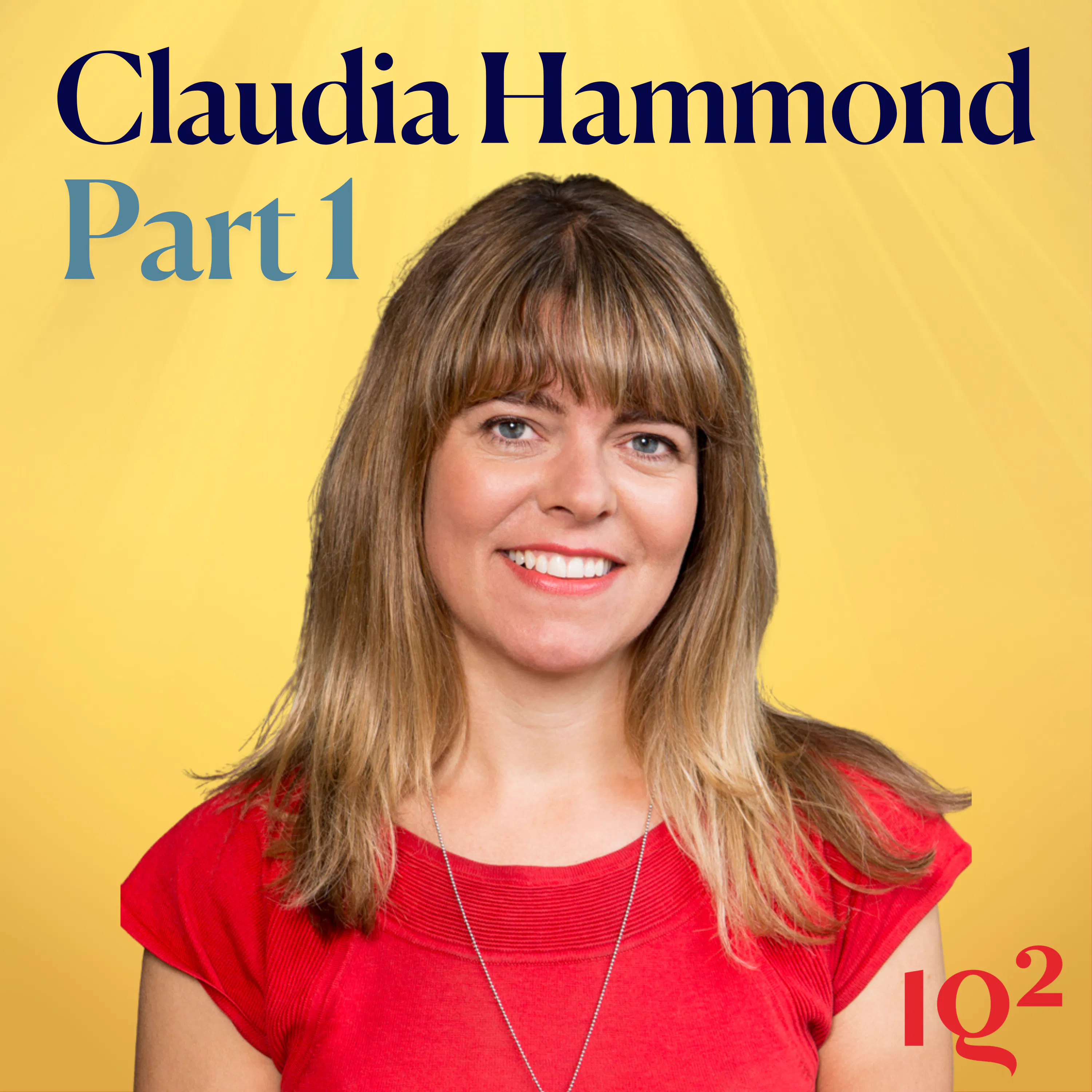
Intelligence Squared
How To Take the Pressure Off and Live Well, with Claudia Hammond (Part One)
00:35:20
Loading summary
Transcript39 lines
- [00:01]
A
I'm Alex Honnl, professional rock climber and founder of the Honl Foundation. I wanted to let you know about a brand new season of the Planet Visionaries podcast in partnership with the Rolex Perpetual Planet Initiative. This is the podcast exploring bold ideas and big solutions from the people leading the way in conservation. Join me in conversation with the likes of climate champion Mark Ruffalo, biologist and photographer Christina Mittermeier, and one of the most successful conservationists of our time, Chris Tompkins. Join us on Planet Visionaries wherever you get your podcasts.
- [00:31]
B
Five years ago I was paying $65 a month for my subscriptions. Today those Same subscriptions cost $111 and I don't even use half of them anymore. That's why now I use Rocket Money to manage my subscriptions for me. The app gives you a list of all your subscriptions and reminds you of upcoming payments so you're not hit with any surprise charges. On top of that, it also sends you alerts when subscription prices go up, so you always know the price you're paying. If you decide you no longer want a subscription, you can cancel it right from the app. No customer service needed. And the best part is, Rocket Money even reaches out and tries to get you refunded for some of the money you lost. On average, people that cancel their subscriptions with rocket money save $378 a year, and overall, Rocket Money has saved its members $880 million in canceled subscriptions. Stop wasting money on things you don't use. Go to RocketMoney.com Cancel to get started. That's RocketMoney.com Cancel RocketMoney.com Cancel welcome to.
- [01:32]
C
Intelligence Squared, where great minds meet. I'm producer Mia Sorrenti. Today's episode is part one of our recent live event with psychologist and broadcaster Claudia Hammond. Hammond joined us recently at the Kiln Theatre to discuss how to take the pressure off and live well. We all know the feeling of overwhelm, that sense of having too much to do and too little time. Drawing on her new book Overwhelmed, Hammond spoke to host Dr. Radha Modgill about how psychology and neuroscience can help us live better, avoid fatigue and manage the demands of modern life. Let's join our host, Dr. Radha Modgill, now with more.
- [02:14]
A
Well, thank you everybody and it's really lovely to see so many of you here. Congratulations for making it out of your doors on such a horrible rainy night. And as Ginny said, we know there's been some train delays so people might come in and out, but we're so pleased to have you here. It's going to be a really great evening. When I was standing on the train platform waiting for my train in the rain, I thought, gosh, I need this talk tonight. So hopefully all of us are going to leave with some great tips and advice and that is because we are joined by the brilliant Claudia Hammond and we're going to talk all about her book for about 15 minutes and then we're going to have 25 minutes of questions from all of you. So please, as we're talking and I'm chatting to Claudia, think about the kind of questions you want to ask. This will be recorded and it will be going out on the Intelligence Squared podcast, so just be aware of that. But as we're talking, just think about any questions or any kind of issues you want to bring up in the questions and answers. That would be really great. So without further ado, I want to introduce Claudia. Many of you obviously all know Claudia Hammond. She's the presenter of BBC Radio 4's long running series, all in the Mind, which covers psychology, mental health and neuroscience. And I was lucky enough to be on an episode with Claudia in Cheltenham Festival and I loved it. I've been an avid listener and it was really great to be on the show with her. I'm sure you've all heard it before. She's the award winning author of six books exploring psychological and medical research and how that can help us in our everyday lives. And she's also written some incredible books, the Art of Rest and the Keys of Kindness, to name a few. She's Visiting professor of Public Understanding of Psychology at the University of Sussex as well. And we are going to talk all about this rather precious book, Overwhelmed, how to Take the Pressure Off. And it's a true delight to welcome. So please put your hands together for Claudia Hammond.
- [04:10]
D
Thank you for that very lovely introduction. That's very nice, very nice to be here and especially as it is such a horrible night out there. But we'll forget about that while we're in here.
- [04:17]
A
Yes. So, Claudia, this book, the Word Overwhelmed, I saw it on the title cover, I just thought, God, we all need this. I suppose it builds on some of your other books, the Art of Rest, for example. But tell us, why did you decide to write a book about this topic and why now?
- [04:35]
D
Yeah, it's because I do think there's something that feels very overwhelming about life in the 21st century. You know, I'm not pretending that life wasn't terrible at many times and it's not all terrible now, but There does seem to be something where a lot of people are feeling they've just got too much to do and too little time, and that it is just somehow all too much. As you mentioned, one of the books I wrote was about rest and all the evidence about why resting, like wakeful rest, is important. And I've been really struck by how ever since I wrote that book, people have come up to me after events a bit like this, or at book festivals or science festivals or outside broadcasts. And they said that one insight from that book has made a difference to them, which is knowing that rest is good for you and that rest is good for your mental health and not something to feel guilty about doing. And that really got me thinking that if, if there's one thing like that that's a finding from within psychology that can make a difference, what are the other findings that might make a real difference to people and that might make us feel less overwhelmed? And I started looking around for what those might be. And what I've put together is In a way, 16 chapters on the 16 things you need to know in order to feel less overwhelmed.
- [05:46]
A
Yes, definitely. As I was reading it, I don't know if anyone else has read it as yet, but as I was reading it, I felt instantly calmer. I think when you're writing a book about overwhelming, the last thing you want to do is make the reader feel even more overwhelmed. Here are loads more things to do on top of everything else you've got to do to try and cover or sort out your overwhelm. But I found it really calm. It's got a great structure. Just tell us. It's a mixture, isn't it, between personal anecdotes, some scientific studies as well, and then it's got some practical tips at the end of each chapter. Why did you choose to sort of structure it like that?
- [06:21]
D
Yeah, I mean, to me, in all the stuff I do, I'm really interested in the evidence and looking at that evidence carefully to see what does work and what doesn't, and, you know, not making up self help, if you like. And so it was really important to me to include some of the actual studies. And I just think they're really interesting. You know, they get people to do kind of extraordinary things like, you know, suddenly sing a karaoke song that everyone else is going to judge in the room and think we won't do that now, and things like that. And so there are some really intriguing studies, but also I wanted to work out, well, what can we learn from those? And actually put into practice, too. So there's lots of. Lots of these are, you know, techniques that are used, say, in cognitive behavioral therapy, but also just techniques that have come about through research over the years that people have done. And so I wanted there to be those takeaways and things we can put into practice. And then, yeah, there are stories as well, because we all like a story and I like stories.
- [07:12]
A
And so, yeah, well, I was gonna say stories and kind of strange studies are the way I always remember things. I'm like, why did they do that? So tell us, what's one of your sort of favorite sort of personal anecdotes or stories from the book? Give us a little sample of one of those.
- [07:27]
D
Oh, gosh, there's so many. I mean, and some of them, they're not all about me. Some are about, you know, their stor. About other people too. But there is a story about how I like tonight I knew I was coming here, which was lovely, and knew that I'd be doing this and have known for a while I'd be doing this. But there was an occasion when I was in the crypt of St. Paul's Cathedral because I'd been invited to the opening of an exhibition of paintings by people with brain injuries. And so I went to have a look round and it was really interesting and there were some really amazing pictures there. And I was literally just about to go when I heard a tinkling on a glass. And the organizer was obviously going to say a few words and I thought, oh, I'll stay for that. That might be interesting. Anyway, the organizer said just a few words and then to my surprise, suddenly said, but now I'm going to stop because I want to hand over to the main event for this evening, which is a talk from. And I thought, oh, how interesting. Who's it going to be from? You've guessed it from Claudia Hammond. And I said, what? What? Me, I miss. It's like, it's kind of. I have dreams like this. And so suddenly and everyone's, you know, CL expectantly and thinking, I've prepared a talk, which I hadn't at all. But what I did do is one good thing about stress, because we probably talk about this. Not all stressful moments are bad and not all stress is bad, is that it does narrow your thinking. It stops you thinking about how am I going to get home and what shall I eat later on and things like that. It does concentrate your mind on that moment to allow you to completely make up what I was talking about at that point, which I kind of got away with. But the reason I found that so interesting is that there are plenty of experiments that psychologists have done over the years using something called the Trier Social Stress Test. And that test is where you get somebody in a situation a bit like that and you suddenly tell people it's really mean. You suddenly tell them with no notice that they've got say one minute to prepare a talk and that this talk will be evaluated. And what makes it even worse than the situation I was in where everybody sort of smiled nicely was that the people who are watching you are told not to give any expressions at all. Not to look sympathetic, not to look interested, just to look completely blank and stern. And so that's a very difficult thing to endure. And so there's lots of experiments about this. And the reason there are experiments about this is to put people in a stressful situation and see how they can deal with that stress. And one of the ways is to turn that stress to their advantage. They tell people to say out loud just before they have to do it, I am excited. And compare with the people who say I am calm. They actually deal with it better and perform better and are evaluated as having given a more confident and competent talk. So we can stressful moments like that, we can really turn to our advantage by reframing them and thinking the reason this feels stressful is because I want to do this really well. And actually this is going to help me do well and help me perform, if you like.
- [10:23]
A
I think that's really helpful because I think when most of us hear the word stress, we automatically go somewhere negative, don't we? And we use the word stress. I mean, stress is really, it's a sort of biological word, isn't it? Stress hormone is our cortisol hormone. But like you say, stress is actually, it's got a purpose to it, it's got a use to it. So is overwhelm when we just get too stressed? What is overwhelm to you? What is it?
- [10:45]
D
Yes, because in a way. So overwhelm isn't a word that's used in research wise. You know, there isn't a diagnosis that is overwhelmed, but it is something people talk about a lot themselves. And so in a way I think overwhelm is stress, but it's when it kind of feels it's too much and that there are too many inputs, there's too many things coming in and that you find it hard to relax and deal with those things. And that will vary from moment to moment. You may have one day that feels overwhelming. And then the next day could be all right. And it's very much. It's not an illness, if you like. It's just something emotional that all of us can experience.
- [11:21]
A
Yeah. But if we don't, and we allow that to happen continuously, I suppose we get burnt out. High risk of depression, anxiety, all kinds of other things. That's why we're all here tonight, to learn. So one of the chapters, I'm going to go into a few of the chapters now and dig a dip deeper. One of the chapters is about news, overwhelm and overload of news. And I think all of us in this room probably feel that way. I definitely have lately. And I swing between kind of using different methods, so choosing when I kind of look at news, how I look at the news and why I'm looking at the news. But more lately I've just completely not looked to the news, which I know.
- [11:57]
D
In your book you say is not.
- [11:58]
A
A great thing to do. Tell us about news overload and how that kind of impacts our sense of overwhelm.
- [12:06]
D
Yeah, it's certainly something that we can find very overwhelming. And particularly, you know, there's ever such a lot of bad news in the world at the moment. And so it can feel like, you know, every time you look at the news online or turn on the radio or the tv, that more and more bad things have happened. And so, yes, some people will feel the only way to deal with that is to avoid it. And altogether, the Reuters Institute found in a study in 2024 that 4 in 10 people now say often, or at least sometimes avoid the news in order to not feel overwhelmed by it, because you can just feel this rush of negativity. But I think there's a few things to remember there. I mean, one is it's partly, you know, I used to work in news, and so I'm interested in it and like it. But also I do think we need to know what is going on in the world or we need to. Or what is going on near us. You know, we need to be able to decide who to vote for or, you know, what needs to be done, whether there's something that we can do. But. And to stay so to stay informed is, you know, think a good idea. And sometimes people will say, oh, but the news is just. It's too negative. They should be, you know, reporting more good news. And every so often, people try doing good news programs. And there are some, you know, there's some good news podcasts and so on. They are never as popular and never last as long as the bad news, if you like. But I think also it's partly about how we look at the news. You know, the news, it isn't aiming to sum up the state of the world on any given day. So in fact, there are amazing figures about the number of children worldwide that under fives that come out of poverty every day. And it's in the hundreds of thousands. And that's sort of amazing. But it's not about the state of the world, it's about what is new and what has happened that we might need to know about and what is significant. And so you can't keep reporting, you know, nobody was murdered in London last night. That would be great, and that's probably true. But you can't keep saying that every single day. There is loads of good news every single day, but inevitably there's going to be more of it that's negative. And so I think it is a question of doing exactly what you're doing and choosing very carefully what you're listening to or watching or reading. You know, which sources it is and when you're going to do it. And one of the things that many people find helpful is to say turn off the news alerts on their phones or watches. Because unless you're a journalist or doing a job or maybe a politician where you absolutely need to know straight away what the news is, does it matter if you don't find out for three hours what is happening in another country at the moment? If you are going to find it out in the end, it probably does. So you don't need to keep being interrupted with negative things all day long. And so it's a question of choosing. It may be once a day, it may be twice a day that you want to know what's going on, choosing which source to do it, and maybe looking more in depth at something. You're looking for a long read somewhere or listening to a podcast about something that's a bit more in depth if you know that you get made to feel anxious by the news. But I think it's a question of looking at the patterns that you feel and noticing, trying to literally observe how does this make you feel? How does it make you feel, feel physically? Does it make you feel anxious the moment you turn it on and wonder, you know, what bad thing has happened? Now if it does, then start to notice when you can, how you can consume it less or consume it in different ways. Now, of course, that's some of it will just come up on social media all the time. But if you don't click on those things, the algorithms will soon start showing you something else instead. So you can make it avoid those that way as well. And be intentional about your consumption of news.
- [15:34]
A
I'd say yeah. So a lot around boundaries. And I think that thing about how you're feeling before, after, and why you're looking at the news, because I know with me, if I'm a bit bored or if I'm in a bit of a low mood, I will almost sort of self sabotage and go and look at more bad news. And I'm thinking to myself, hang on, why am I doing this? So that kind of link of our behaviors to our feelings and our emotional state. And I suppose also about debriefing after you've seen some news. We talk a lot about debriefing for children, young people, after they've been on social media if they've seen something distressing. And yet as adults, we don't encourage each other to debrief. And I think that's something which might tie into how overwhelmed we feel.
- [16:17]
D
I think that's very true. And there's some fascinating research by a psychology professor called Roxanne Cohen Silver, who's in California. And she's done research around very serious, big, terrible news events like terrorist attacks and so on, and about what people consumed and how they then felt about that. And she did an extraordinary study after the Boston marathon bombs, where two bombs went off at the Boston Marathon in 2013 and people were killed. And it was an absolutely appalling situation. And she found that the people who consumed six or more hours a day of news about it, and this is interesting because it's back in 2013, but people could watch the pictures online or on rolling news, 24 hour TV. The people who consumed six or more hours a day of it were much nine times more likely to experience acute distress than those who only watched one and a half hours a day. And some people found themselves going back to it and watching it, watching it again and again. And she even found, and this is just such a staggering finding, I think she even found that there was more acute distress experienced on average by the people who'd watched six hours or more than by people who were actually there witnessing it. And one of the reasons for that, in a way that comes into the debrief, one of the reasons for that is that she says, because for the people who were there, there was a beginning and a middle, a terrible middle and an end. And the end was that maybe they Helped somebody else. Maybe they saw other people helping people or they got out themselves, they were rescued or they got away. There was an ending in the end and it was over. And for the people who are just watching it again and again, it's not over. It's always stuck in that middle bit again. And they don't get the bit where it's over to help them process and deal with it. And so I think watching these things again and again can have a real impact on us. And, and research has shown we are more likely to do it when we're already feeling bad. So Tali Sharat, who does really interesting research on things like this, she found that if people were already feeling low, they were then more likely to doom scroll and then more likely to feel low again afterwards. So I think it's a question of watching what you're doing while still being able to stay informed. Which can be done.
- [18:26]
A
Yes. And stopping the self sabotage, which we're all guilty of. Moving on to a different topic that's in the book. I'm gonna just ask for a hands up. So this is about procrastination. So if people don't mind, oh, there's someone already with their hand up. They're not honest. That's really helpful for everyone else. Would anyone mind just sticking a hand up if you feel you procrastinate or you have a tendency to be a prosecutor. Oh, wow, okay. I think we've got about 70%. That's just a rough approximation. So this will be helpful then for all of us. So Claudia, tell us about procrastination. Sometimes we frame that as laziness. People are often told, aren't they, when they're growing up, oh, you're lazy, get on with it. Stop kind of messing about. But tell us what you found about procrastinators. And also tell me about this amazing phrase called swallowing the frog.
- [19:27]
D
Yeah, people might have heard of that phrase, swallowing the frog. And the phrase comes from a motivational speaker called Brian Tracy who uses that phrase. But there is research showing that one of the ways to overcome procrastination is doing the difficult thing first. So before you open your emails in the morning, you do the job you really don't want to do. That is your work job before you. And the trouble with opening emails is you tend to get given some more work to do in a way by doing that. So it is also satisfying to get something out of the way first. So that's swallowing the frog. But procrastination is interesting because we tend to see it as a. We might think of it as a time management problem, but there's really interesting research from Durham University by Fuchsia Siwa and she's done loads on this where it's actually more of an emotion management problem. And so often the thing you procrastinate about is often the thing you don't want to do for some reason because you are scared of it or makes you feel uncomfortable, or you're afraid you won't do it very well, or it's just unpleasant and so you put it off. It tends to not be the most straightforward things that you put off. So it is worth having a look. Is there something that is constantly on your to do list again and again that is there for days and weeks, years even, that just stays there. And in my case I had on my I have a To do list app, which I really recommend them. It's so helpful because I know I don't have to worry about remembering those things. They're all written on the app. But one thing that stayed on there for ages was writing my own will, which I knew I ought to get around to in the end. But honestly, it stayed on the list for about two and a half years because I would just always put it off and do something else instead. And that's because it's uncomfortable, you know, thinking about your own passing and about or who you might leave stuff to and what about the order they might go in. So then it forces you to think about everyone else dying as well. It's just. It's no fun. So I was putting it off because it made me feel uncomfortable. And so it's not uncommon to do that. But often we really beat ourselves up about procrastination and that's not actually effective. So there was a study done in the States where they got students who had procrastinated so much that they'd failed to revise for their exams. So they didn't do very well in their exams, but they weren't their final exams, but they didn't do very well in them. And then they looked to see whether they still blamed themselves for this or whether they forgave themselves for it. And they actually found the people who forgave themselves for having procrastinated were more likely to revise the next time and actually get on with doing it. So beating yourself up about it isn't something that works, but there are all sorts of strategies from the research that you can try. So one is to think about, is this thing emotional? What is it? I don't want to do about it. To accept that some jobs will have unpleasant parts to them. But are there nice bits you can look forward to as well? People often talk about breaking them into smaller parts, so it doesn't seem like such a massive thing you've got to do. And also thinking about them in really concrete terms rather than abstract terms, thinking, well, what are all the bits of this? And are any of these fun bits? So maybe you've got to arrange a party, which is quite a big thing to arrange and can feel overwhelming because you want to get it all right, you want to be really good. But maybe there are some fun bits of that, like, I don't know, picking the music or something like that that you can then think, well, that is one bit I can at least look forward to. And you can do things like if there's something, you know, where you always procrastinate at and don't get round to, you could link it to something fun. So I like the research from researcher Katherine Milkman, and she calls this paper I Like Academic Papers with Good names. She calls it holding the Hunger Games Hostage at the gym. And what that means was they got people to go to the gym and listen to an audiobook of the Hunger Games, but they agreed only to listen to the audiobook if they were at the gym. And I've tried this myself with running, and I find really good podcasts, drama podcasts that have got really good cliffhangers. But I only listen if I'm running. So then I want to get round to knowing what it is. And so I'm more likely to go running again sooner. Or there's things like if, then strategies. These are very well evidenced within psychology, where what you do is you decide that. Say it's running again. You decide, I want to go running three times a week, but I was supposed to go today and it was raining. So you decide if it's raining, then what I'll do instead is to, I don't know, do some weights at home or to do something else. If fitness is what you're trying to do, but you will decide in advance what it is you'll do if you're tempted to procrastinate. So you can plan around your own procrastination, but don't beat yourself up for your procrastination.
- [23:57]
A
I like that a lot. I like those tips. And maybe also if we procrastinate about one particular thing, maybe we just don't want to do it. Maybe it's not for us. We take On a lot of stuff from other people. A lot of things, oh, I should do this, I should do that. And sometimes if we're not doing it, there's a reason. So maybe we can also just let.
- [24:13]
D
That go, which totally. And if you look at your to do list, you know, I'm a fan of lists, but if you look at your to do list list, maybe there are things you don't have to do on that list. And maybe, maybe you're putting off doing a good thing because you want to wait until a time you feel less overwhelmed to do the thing you really want to do, whether it's, you know, join a choir or learn gardening or do something that you would really like to do. Sometimes there's a temptation to think because there's this. We know from research, even in two days time, we believe we'll have more time than we do now. And there's no reason to think that what does that.
- [24:46]
A
Well, we're not Doctors who or Marvel characters.
- [24:49]
D
There's no reason to think that we're have any more spare time on Thursday. We really won't. And yet there's a real temptation to do that and to believe our future selves will be more organized. And I don't want to disappoint you by telling you they probably won't be. Unless you're going to change.
- [25:02]
A
You're describing me perfectly. So over Christmas, I wasn't very well and I kind of shoved a lot of things I had to do onto a particular day when I returned from not being so well. And I then looked at this day, I still wasn't feeling my best. I looked at this list of things on this day and I thought, thought, I don't actually need to do any of these things. I'm just making myself do them. And if I just deleted them, nothing would happen. Nothing bad would happen. So why am I making myself so Sometimes we're our own worst enemy, aren't we, when it comes to that?
- [25:31]
D
It's true. And also, I think a lot of what I talk about in the book is acceptance that we need to accept ourselves for who we are and that that's fine and that we're good enough and that we don't have to be perfect and that our to do list will always be with us. And I know that might sound defeatist, but even if you get through it all, there'll be new stuff on it tomorrow. And actually, a to do list is just a record of what's happening. In a way, it's a sign of a busy life and that there's things people want you to do that you all wanted, which is nice, maybe, but that you don't necessarily have to do all those things.
- [26:04]
A
So I did one of those personality questionnaires a long time ago and it told me that I was a completer finisher. So I liked completing tasks, and it's true. But I remember the day my dad said to me, you will never ever finish work. Like it'll always come. And I was thinking, oh my God, that's awful. Why do you have to tell me that? Just let me live in the hope that I can eventually finish things. But that was actually really helpful to me because I thought, well, I can't keep going at this rate or this speed. I have to stop. Because like you said, it just never ends, does it? We have to end it for ourselves in a way. The next thing I want to move on to is one of my favorite subjects in the world, which is nostalgia. Because I'm really interested in how, you know, at times overwhelm or stress, we tend to go back to watching programs we used to watch when we were younger and happier times, music. We want to feel comforted by the familiar and the old. So tell us how nostalgia can help us when we're feeling like it's all just too much.
- [27:01]
D
Yeah, nostalgia. I like nostalgia as well. Nostalgia is really interesting and I think sometimes gets a bit of a bad rep. But actually there's evidence showing that we turn to it naturally if we're feeling lonely or reduced, dejected or cold. And nostalgia can do all sorts of things for us. It can raise people's self esteem, it can improve people's mood at that moment. And one of the reasons is it, it connects us with our earlier selves which can give life, show that there's a kind of course through life and give it, give it some meaning and put you in touch with your younger self, which is still you, which is, you know, in there somewhere, and put us in touch with that. And so there've been all sorts of. I love some of these experiments where they. Again, some of these are quite mean. There's a study in China where they. They got people to think about a nostalgic event. So they get to think for a few moments about something that makes them feel nostalgic. So this might be, I don't know, you know, a gig they went to with their friend when they were really young that they really liked. Something like that. And they get to maybe write about it for a few minutes and Think about it or a holiday that they really enjoyed in the past. And then they get a really, like a sort of boiling hot probe. It's not going where you see it.
- [28:08]
A
Sounds like a really meaning smell.
- [28:10]
D
They put this on their arm. They just put this on their arm. And it doesn't, you know, it doesn't scar, but it's really hot. And I'm glad about that.
- [28:18]
A
Everyone else is as well.
- [28:19]
D
They look to see how much they can withstand of this pain. And actually if they've just been doing the nostalgic story rather than just writing about any story, then they can actually put up with more pain. And so it seems to almost have an analgesic effect. There's also studies I love with couples where they get couples to think about or to write about a moment that was romantic when they were together. And after they've done that, people then say they feel better about their relationships, they feel more optimistic, they feel less likely to want to leave, which is nice. And it can make a real difference of people. And there's also studies looking at it when people have depression. And we know that when people have depression, they will actually often find it harder to access those positive memories, to even recall positive memories. If you say to somebody, you know, can you. Can you tell me about 10 different positive memories? That can be quite a hard thing to do. But there have been studies where people have been encouraged with help to come up with those memories, to really flesh them out a bit, and then to almost have them as a resource, to almost have in their minds a box of those memories to remember those memories. Or you could do it by putting, you know, relevant photos on your phone, but really thinking about those times that make you feel good. And of course, nostalgia is a bittersweet emotion. And, you know, it used to be considered in the 19th century and 18th century, kind of considered a psychiatric disorder. And it was worrying, seen as worrying. Now it's seen as something, I think, much more cozy. And in order to keep the positive side of it, it's really useful to, particularly if somebody is feeling low, to pick events within the last five years so that they still feel congruent with who you are now, if you like. Because what you don't want is people to feel worse if they're thinking, oh, well, 20 years ago everything was so much better and wasn't it better then, but to actually think of things that are a bit more recent. So nostalgia is, I mean, you know, TV programs, producers know this. You know, there's plenty of programs that are Trying to get us to feel nostalgic because it is something that we can really enjoy, so it is something we can turn to, to feel less overwhelmed.
- [30:26]
A
I think we saw a lot that during the pandemic, didn't we? With lots of, like you say, crafting programs, slow programs, people watching friends again, all kinds of things to kind of just feel like a sense of familiarity. I want to move on, I suppose now to one area, I think of everyone's life, which always feels overwhelming, but possibly even more so now. It's the way we work and, you know, more people working from home, you know, work going on 24 hours a day, people working across time, different time zones. How do we kind of find our boundaries and how do we stop or reduce the feeling of overwhelm from work?
- [31:02]
D
Yeah, and I think definitely tech has made it harder when it comes to work because and obviously lots of people work from home now, some of the time at least, or maybe all the time. And those boundaries between home, home and work can start to blur. And from the research that started being done when people started working from home during the pandemic, people were often inclined to, it shows that, to carry on working because there was no why stop at a particular moment at least if you've got your journey home in the end, you've got to go out in the rain and get that train and get home. And so it kind of can force you to stop, whereas if you're at home, you might not stop. And then of course, there is the always on culture of being able to be contacted all the time. And I think lots of workplaces are now trying to come up with ways of doing this. And I think that there is some evidence suggesting that younger people might be getting better at this actually, and of saying, well, I'm not going to be looking at my emails after a certain time. And obviously it would depend on your job or people using delayed send on their emails. Although as I discovered, the app's got to then be open for it to send it or it doesn't send it. So you have to be slightly careful with doing those delayed ones or just putting in the title of yours so that other people don't have to feel pressured by it. An email for tomorrow, you know, not for today. But also resisting having a quick look at your email once. There's nothing you can do about it anymore. So absolutely not checking your email last thing at night, because you could get an email that really annoys you for half the night and there's nothing you can do about it until the morning and it'll probably all get sorted out in half an hour anyway. And that is one thing that is worth looking at when something when you're really stressed out by something, and particularly if something is keeping you away that might be a short term thing, is to look and count to see how long is it before this thing resolves itself. And sometimes it can actually be the next day or two days later. And then it wasn't worth you literally losing sleep over that and being satired worrying about it. And so there are lots of different strategies that I talk about for how to how to worry less because I think the blurring of work life boundaries can be one thing where people people.
- [33:10]
C
Find themselves worrying thanks for listening to Intelligence Squared. This episode was produced by Ginny Hooker and it was edited by Mark Roberts. For ad free episodes and full length recordings, you can become a member@intelligencesquared.com membership and to join us at future live events, head over to intelligencesquared.com attend to see our full live events program. You've been listening to Intelligence Squared. Thanks for joining us.
- [33:52]
A
New Year, New Me. Cute, but how about New Year, New Money? With Experian, you can actually take control of your finances. Check your FICO score, find ways to save and get matched with credit card offers giving you time to power through those New Year's goals. You know you're going to crush start the year off right. Download the Experian app based on FICO scoring model offers an approval not guaranteed. Eligibility requirements and terms apply subject to credit check which may impact your credit scores.
- [34:17]
D
Offers not available in all states.
- [34:18]
A
See experian.com for details.