← Intelligence Squared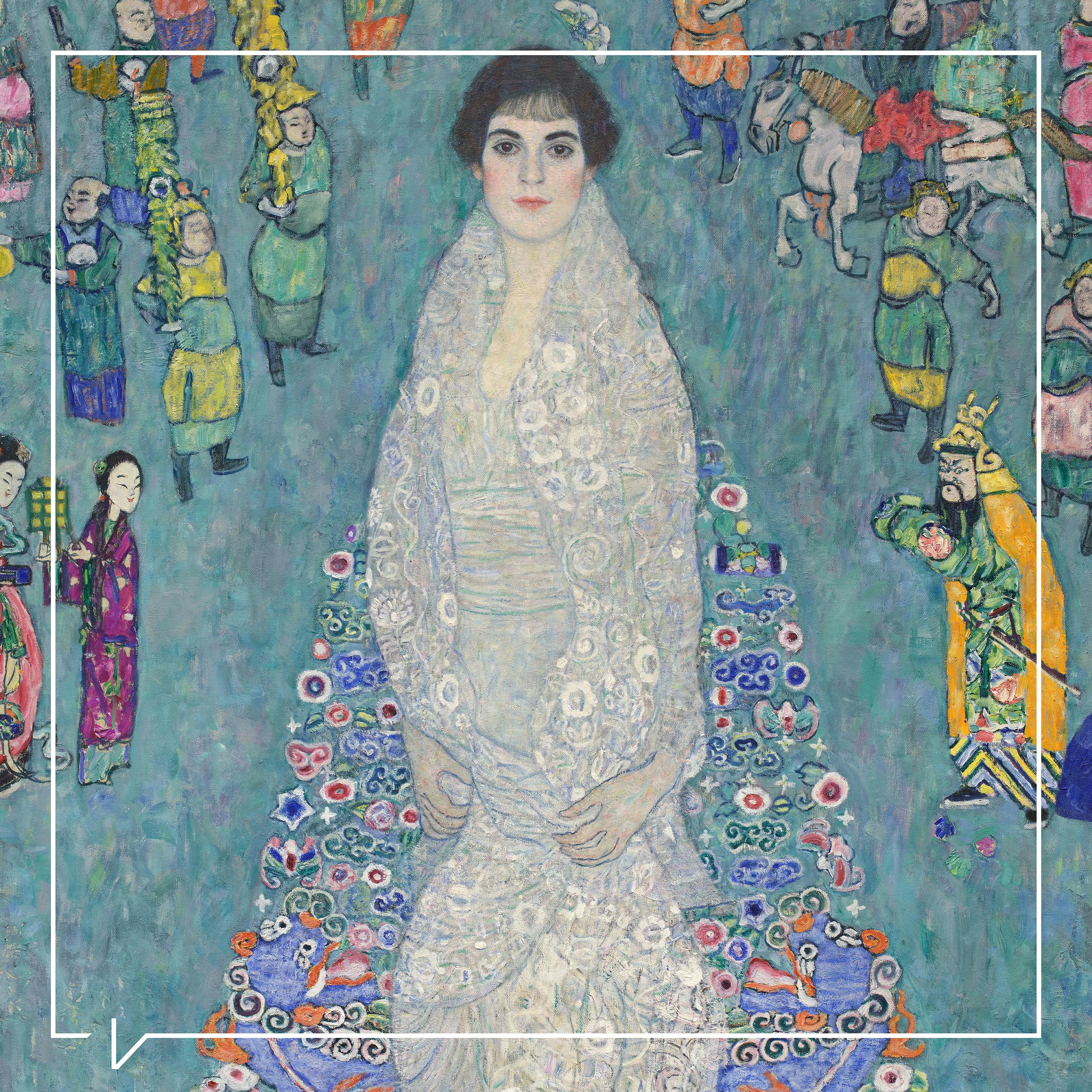
Intelligence Squared
Sotheby’s Talks | The Leonard A. Lauder Collection: Klimt and the Art of Connoisseurship
00:44:24
Loading summary
Transcript90 lines
- [00:00]
Podcast Host / Announcer
This episode is sponsored by indeed. You just realized your business needed to hire someone yesterday. How can you find amazing candidates fast? Easy. Just use Indeed. When it comes to hiring, Indeed is all you need. Stop struggling to get your job Post seen on other job sites. Indeed Sponsored Jobs helps you stand out and hire fast. With Sponsored Jobs, you your post jumps to the top of the page for your relevant candidates so you can reach the people you want faster and it makes a huge difference. According to Indeed data, Sponsored Jobs posted directly on indeed have 45% more applications than non sponsored jobs. Sometimes the hardest part of hiring is just working out where to start. Indeed makes it clear, simple and and quick to reach the right talent. Plus, with Indeed Sponsored Jobs, there are no monthly subscriptions, no long term contracts, and you only pay for results. How fast is indeed in the minute I've been talking to you. 23 hires were made on Indeed according to Indeed Data Worldwide. There's no need to wait any longer. Speed up your hiring right now with Indeed and listeners to this show will will get a $75 sponsored job credit to get your jobs more visibility@inn Indeed.com intelligencesquared just go to indeed.com intelligencesquared right now and support our show by saying you heard about Indeed on this podcast. Indeed.com intelligencesquared terms and conditions apply. Hiring Indeed is all you need it's that time of year again. Everyone knows that the holidays can become overwhelming quickly, so the sooner you get things done, the better. For both shoppers and businesses. The best time to score great deals during the holidays is Black Friday Cyber Monday weekend. Shopify is the commerce platform behind millions of businesses around the world, from household names to entrepreneurs who are participating in their first Black Friday Cyber Monday this year. This Black Friday join thousands of new entrepreneurs hearing for the first time with Shopify. Sign up for your free trial today@shopify.com promo. That's shopify.com promo go to shopify.com promo and make this Black Friday one to remember. Hello and welcome to Intelligence Squared, where great minds meet. I'm Head of Programming Conor Boyle. Coming up on the podcast, we've got something from our friends at Sotheby's that we think you'll enjoy. It's an episode of Sotheby's Talks, the podcast series that takes listeners inside the world of Sotheby's. In this episode, a panel explores the extraordinary collecting journey of Leonard A. Lauder as one of two heirs to the Estee Lauder companies and its former CEO. Lauder famously donated his Cubis collection to the Metropolitan Museum of Art, marking one of the most significant gifts in the museum's history. The panel discusses Lauder's collecting vision and the Klimts, Matisses and monks the that make up the collection's star lots to listen to more episodes of Sotheby's talks featuring the likes of Marina Abramovic, Mary McCartney, Tracey Emin and Julianne Moore. Just search Sotheby's Talks wherever you get your podcasts.
- [03:23]
James Haldane
For almost three centuries, Sotheby's has been the place to discover the greater stories of creativity. We've been the temporary custodians of some of the world's finest treasures which you can see on display in our galleries on any given day. I'm James Haldane, Executive Editor of Sotheby's Magazine. Welcome to Sotheby's Talks, the podcast that celebrates art, culture and collecting. In this episode, which was originally recorded as a live event, we were joined by curatorial and Collections director at the National Portrait Gallery in London, Flavia Frigeri, Sotheby's chairman, Impressionist and modern art worldwide, Helena Newman and award winning author James Durton. We explored the remarkable collecting journey of Leonard A. Lauder, one of the greatest collectors and benefactors of arts in America. The discussion considered Gustav Klimt's enduring allure from his luminous portrait of Elizabeth Lederer to the lyricism of the Atticy landscapes as well as Lauder's vision and insights of his once in a generation collection. Here's host Will Gompertz, Director of the Sir John Sen Museum with more.
- [04:38]
Conor Boyle
So Helena, let's just start off the conversation by establishing this portrait, why it's so special and why it stands out in Kalim's oeuve.
- [04:48]
Helena Newman
Well, we're looking, as Will said, we've got a life size reproduction here at an absolutely stunning life size, fully complete, signed, fully realized portrait. One of Klimt's great commissioned portraits from the last few years of his life. He only did about one a year, so these are huge undertakings, these portraits and when you stand in front of it, there is something so impressive about it. It's something to do with the whole aura, the composition, the frontal composition and the way that Klimt actually blends the background and the foreground and her dress all into one plane. So you've got this almost reversed imagery with her white off white sort of Whistler esque transparent lacy dress which was by the way the height of Viennese modern fashion. It's the thought to be a dress by Poiret or by a Poiret follower. And we can tell that from this very distinctive bubble skirt that she's wearing. It's almost like trousers at the bottom, but you've got this incredible dress and then behind it, the more intense colours of the robe and then the background, which is both slightly destabilizing because you don't know whether you're looking at a drink draped background with figures on it or actual figurines that have been placed on a drape behind the sitter, which Klimt has taken from his collection. It's important because of its rarity. As I said, he only did a very small number of these complete portraits. Most of them are in the great museums of the world. I'm sure many of you have seen, for example, the Golden Bloch Bower, which predates this. It's 1907. This is from the later, from the teens, completed in 1916. Some of Klimt's works were destroyed at the end of the war. So what we have here is a kind of. Really the last. Kind of the last gasp in terms of a great portrait by Klimt still left in private hands. You could say there's one other is the Adela Bloch Bauer II that we'll show later on, which is the big white one. But this is super rare and it has a kind of beauty. It's quintessential Klimt in its iconography, in its execution and its quality, in its impressive scale. It's signature Klimt, isn't it? And it has an absolutely beautiful palette. Quite an extraordinary painting. It's also steeped, of course, in. In the history. I mean that when we talk a bit more about the provenance, who she was, Elizabeth Lederer, it's a kind of marriage of Klippsch, the great artist of Vienna, just at that turning point, as the world in Europe is about to change forever, right? You know, in the years in the middle of the First World War. But painting the daughter of his great patrons, his best patrons, actually, who supported him after, you know, he was kind of out of the Vienna Academy. And so this was his private patronage and how he navigated that through those years after the Golden Bloc, Bowers produced some great portraits which we love and admire in the great museums of the world.
- [08:19]
Conor Boyle
I love the structure of the painting, you know, how he's using horizontal and vertical bands, a pyramidal shape, and then the background, when I was looking at it in New York, really reminded me of late Monet, the way he's building on that background. It's very abstract, but it's got this beautiful sort of turquoise with the reds embedded. Fantastic. Flavi give us a sense of this painting and the art world at the time in Vienna. The context in which Klimt was operating, I suppose.
- [08:47]
Flavia Frigeri
Well, it was a very interesting context in the sense that it was a moment of real creative effervescence. But also it's worth bearing in mind, you know, it was the moment he broke away from the academy quite deliberately in 1897, when he founded the Situation together with a group of other artists. But also it was a moment where there was a coming together of the arts. And I think you see it also here in terms of the style, the fashion. Basically, Klimt was very connected with designers, architects, and they were working on 360 degree projects. You can describe them. You know, the same patrons who supported Klimt would have had their homes designed by Joseph Hoffman. So there was a real sense of effervescence and people who bought into this vision were buying into the whole vision.
- [09:40]
Conor Boyle
And there's something very decorative, therefore, about what he's creating.
- [09:45]
Flavia Frigeri
I think he's always, you know, there's a degree of. To which you can describe it as decorative and then there's a degree to which he's sort of like sliding alongside the decorative, but also making it very much his own.
- [09:58]
Conor Boyle
And James, what's your take on this moment?
- [10:01]
James Durton
Well, I think it's one of the extraordinary moments when commemorative portraiture is effectively dead because of photography. Great portraiture changes from being society portraits to private vehicles of expression by artists from here on in. The great portraits really are private expressions and Klimt is absolutely on that cusp. And these portraits are much more private expressions of creativity than society portraits in the conventional sense. So it's extraordinary moment, I think, in the history of art.
- [10:35]
Helena Newman
Yeah. Because in a way she's a vehicle for Klimt design, if you could use that word, decorative. But all that, I mean, it's. You get the same thing in the golden block, but the face is somehow subsumed with everything around it. And you've got one technique for executing the face, which is this incredibly sort of beautiful, flesh toned, skin toned technique. And then everything else is almost like a different artist. And he's exactly as you say. He has this vehicle, he has these commissions which he has to fulfill. But is it really Elizabeth Ladera or is it Klimt exploring all these?
- [11:14]
Conor Boyle
Can you tell us a little bit about her?
- [11:16]
Helena Newman
Yes. So she is the. At the time. The 20 year old daughter of August and Serena Lederer, who were industrialists, great figures in Vienna, very wealthy collectors in their own right. They collected in fact Chinese and Japanese art to the point they had such an important collection that it was actually listed by the Austrian government in the First World War as being of preeminent importance. And we read about the great salons of Vienna. That was them. I mean, they hosted their salons. Clint went weekly. They were in this milieu with the writers and the philosophers and the musicians and architects. Their furniture was designed by Joseph Hoffman. And Serena was described as Elizabeth's mother, as the best dressed woman in Vienna and she wore Paris fashion. And you know, this was a moment in Vienna where they, they looked both west and East. You know, you had. It was as fashionable as Paris.
- [12:19]
Conor Boyle
It's an incredible moment of assimilation actually, wasn't it?
- [12:21]
Flavia Frigeri
Yeah.
- [12:22]
Helena Newman
And you know, and it was, it was the, in a way, it was the center. Well, I like to think it's the center. With my Viennese roots, I like to think that was the moment. It was the center. And they, you know, from the east came all the influences we know of the Japanese and the Chinese textiles which they also collected, which Klimt collected. And so this was a very happy friendship. And in fact the laborers kind of sort of took Klimt on when, as Flavia says, he was sort of ousted or left the academy and went into the Secession. So he hadn't really, wasn't really anchored anywhere. And the leader supported him and they hosted him and they introduced him and they introduced him to other patrons who also commissioned portraits. And really they were his biggest patrons. They owned at 1.8 Klimt paintings.
- [13:18]
Conor Boyle
Almost greedy, you could say.
- [13:20]
Helena Newman
Lots of drawings and many drawings. And you know, they have Serena, who was born a Pulitzer, was painted by Klimt in 1899. The beautiful portrait of her hangs in the Met. You may have seen it in white. And we put the Whistler there as that sort of interesting analogy of the white. And then you see the painting of Serena by Klimt, the early one in the Met. And then some Almost sort of 15, 16 years later, Klimt comes.
- [13:55]
Conor Boyle
I just see the Whistler. So I can't help ask Flavio, given your job at the mpg, how good is this painting as a portrait and where does it sit canonically?
- [14:06]
Flavia Frigeri
I mean, I think what's interesting about the Whistler is the idea of the vehicle. Because the Whistler, this painting at the time was seen as quite a revolution because it wasn't depicting a society lady. And it was a huge break for an artist like Whistler to dedicate like a full length picture. And the way he described it, interestingly is he quite explicitly framed her, the model, as a vehicle, and almost described it in abstract terms. And what I think is really interesting about the Klimt portraits is the close connection he has with these people. Like, it's not just a simple commission, someone walking in and saying, here, I'm giving you money. No, he knows, you know, he knows Elizabeth her entire life. And in fact, he says that that for him is a struggle because it's not that, you know, with a commission, in a sense, the artist becomes the adoring figure looking at the adored. Whereas in his case the dynamic is completely different. He is very close to them, but also because of, by virtue of being so close to them, he can make them his vehicle. So it's like really interesting.
- [15:22]
Conor Boyle
So to go back to this particular portrait, Elizabeth Laidreth, where does it sit in the canon?
- [15:28]
Flavia Frigeri
I think it's extraordinary. I mean, if I could, I would definitely take it home. It's amazing, like, and I think it brings together so many different things.
- [15:39]
Helena Newman
$50 million plus also.
- [15:43]
Flavia Frigeri
It's extraordinary because you also really see and you know, the interesting thing is I don't think we have the time tonight. But like the genesis of his portrait portraits, it's a build up to this. Like the early portraits, he's still like, they're very photorealist. He's trying to figure out his place in relationship to photography. And then he's looking at Whistler like, you know, earlier ones. He's still finding his language. Here he is klippt, undoubtedly klippt.
- [16:10]
Conor Boyle
He's come through the golden decade.
- [16:12]
Helena Newman
Yes, the golden period is like 1907. You've got the golden bloc now when you've got real flattening of the. And the surface actually in gold. And the decorative element of the Vinavec chateau and all the jewels is absolutely preeminent. And then he comes through that and at that point he's seen Matisse, he's seen the Fauves, he's been to Paris, he's absorbed that kind of language and palette. And then you get these softer works of the, like this beautiful, beautiful ledger of portrait.
- [16:47]
Conor Boyle
So there we go. It's interesting. Helen has softer works, but of course this wasn't a particularly soft time. This was in 1916. The First World War was raging. And there's been some criticism, I think, hasn't there, James, of Klimt's disengagement with global politics. And what was going on, what you've.
- [17:05]
James Durton
Just said, Helena, I would actually put it in a wider context. This is actually the golden age of European creativity. And whether it's in science with Einstein, with Freud, Vienna was the center of the world intellectually of Europe. And this extraordinary period, from 1900, of course, 1967, a critical years with art up to 1916, when it all collapses. And of course, 1916, Franz Joseph dies. It's the end of the era. Artists go on during war. They don't stop. That's a fact of life in all times and places. Artists just do what they do. And this, of course, he dies himself very shortly afterwards. So there's a great sense of mutability about this. You know, the end of Europe, in some senses, intellectual life, the end of the Habsburg Empire. You know, there's an awful lot going on here.
- [17:59]
Conor Boyle
Well, that story continues and it's told really through the Lederer family and to extend the Lauder family. What was the story? What happened to them during this period of upheaval?
- [18:09]
Helena Newman
Well, we're going forward now to the Second World War, and I want to just go back on the Schubert painting there, because this is an example of one of the paintings that didn't survive the Second World War that was in the Lederer collection. I mentioned eight Klimt paintings. And when we fast forward to 1938 and the Anscheluss, August was already dead, the father. And Elizabeth was by that time married to the Baron Bachofen von Echt, who wasn't Jewish, and her mother was still alive and her brother Erich, who you saw just pictured there by Sheila, was still alive. So there were the three of them. So you've got to imagine this is already nearly over 20 years after the portrait was painted. Elizabeth didn't actually live with the portrait. It stayed in the home of her parents, hanging. I think we've got one illustration where you see it hanging installed in the home. And when the Nazis came to Austria and there was, of course, the expropriation and the Aryanization of. Of many, many great collections, as we've read in some of these amazing books, like Sophie Lilly's, you know, what once was, this was one of the collections that was seized. And what's interesting about it is they took actually the paintings. The Elizabeth Lederer was deemed a family portrait. So although actually that's what saved it, it wasn't actually sort of classified in the same way as some of the other portraits. So that painting survived. It was impounded in storage and only returned. So whilst they didn't have possession of the family, it was only returned after the Second World War, this painting, but it was impounded during the war years in Vienna. The other works from the Lederer collection that were seized were never returned because they ended up. I think some of you may have heard that story in the Schloss Immendorf in Austria, where right at the end of the war, fire broke out in this castle. We don't know whether it was, you know, the advancing Red army or the Nazis in retreat, but it burnt. And in that were paintings of the Klimtz from the Lederer collection.
- [20:33]
Conor Boyle
So is it true when she was fleeing Austria in 39, that she said that Klimt was her father?
- [20:42]
Helena Newman
Yes. So that's. I'm sorry, that's actually probably the story you were looking for. It's really, really extraordinary, Pistis. You can't get your head around this. So Elizabeth, the Lederer, who by this time was divorced from the Baron Bachhofen von Echt, claimed, who the baron claims in an affidavit, which I think her mother signed, she was still alive at the time, that Gustav Klimt was her father and she was the illegitimate daughter. And this, in a way saved her because it gave her Aryan parentage, which saved her in the war years. It didn't save her life because she stayed in Vienna but died in her ill health in the early 40s. Her mother also didn't survive the war. She tried to escape going east and then died, was murdered. So I think the fate was pretty tragic. The only one who survived was Erich Leder. We saw his portrait younger, by Egon Schiele. That portrait's now in Bern, in the museum there, who went to Geneva after the war. And it was he who went back and got this portrait back in the middle 1940s, after the end of the Second World War, and took it with him to Geneva. And it was from him, via the great dealer Serge Sebaski, who introduced German and Austrian art to New York, that this was purchased by Leonard Lauder in 1985. So actually, this. When you say, what's so special again about this portrait is it's only had two owners, which seems like having a car, isn't it? Yes. It's only had the Lederer family right up until age 5. And then Leonard Lauder, I think we.
- [22:27]
James Durton
Ought to add that it's very plausible that she might have been his illegitimate daughter because he had 14.
- [22:34]
Conor Boyle
Without ever marrying artists. That's artists. We do.
- [22:39]
James Durton
It's quite a.
- [22:39]
Podcast Host / Announcer
Quite a.
- [22:40]
Helena Newman
That's quite a feat.
- [22:41]
Conor Boyle
But then there is that. So I suppose that final connection through geography and in terms of. The Lauders came from Australia.
- [22:49]
Helena Newman
Yes, I know. You see that. That's also because you've got Lederer and you've got Lauder and actually that isn't a country coincidence. It's all from the same root. So on both sides of the family, the Lauders had roots from the Austro Hungarian Empire and you know, and were emigres in New York. And so obviously there was a deep personal connection with collecting Klimt and, you know, we'll hear more about the broader Leonard Lauder collection. But there was obviously a deep affinity and that spirit, what, you know, what attracted Leonard and did you speak much.
- [23:24]
Conor Boyle
About this particular painting?
- [23:27]
Helena Newman
I think it was a jewel in the crown of the collection. And even when his collection evolved in different ways into Cubism and obviously the American art, this was, I think this was his sort of personal, you know, totem.
- [23:40]
James Durton
This was always in the prime place.
- [23:42]
Helena Newman
Yes, exactly.
- [23:43]
Conor Boyle
Right, let's move on from portrait to landscape and Flavia. There's two landscape paintings in this cell which I didn't know these and it was actually terrific to see them. They're beautifully painted. One's Blooming Meadow, the other is Forest Slope on the Attici. We know Klim de Course really is a portrait painter. So this to a certain extent feels like a departure. Tell us about them.
- [24:08]
Flavia Frigeri
It is, and it's very surprising in many ways. But he actually. Landscapes were a mainstay for a long time for him. They were the place where he felt he could be completely experimental because they were free from, you know, the ties that either a public or a private commission sort of gave him. So what the landscapes did were this place of like pure purity in many ways for him and also a way of really reconnecting with nature. And the landscapes were done during the summer. So during his summer holidays he would go to southeast Austria together with Emily Pflger, who was his long term platonic love of 30 years, and they would spend summers there. And the local population would describe him as the forest demon, because he would wake up at 6am, go walk around the meadows, and he would carry with him a sort of like homemade telescope, which was a piece of cardboard with a square cut out. And all of the landscapes are actually square sized, which is very interesting. And in a way, like lots of artists often say that having a limitation when it comes To a size actually enables their creativity in a complete frame way. And so he would like walk around, spot his ideal spots and then start working. And sometimes he would combine images so he would see different places and sort of combine them into one. But what they did is they enabled him essentially to be as experimental and creative in the way that he felt he couldn't be in his other production. So they're actually, to me, they're almost like a manifesto of the will of his art and where he wanted to take it. And then you can find elements of that pictorial style that he's developing in the landscapes. They come into play also in the portraits. So there's a really nice connection.
- [26:13]
Conor Boyle
I mean, one of the things obviously is worth reminding ourselves about this collection is it's a domestic collection. It's for his home, for his house to live with, not to show off or anything like that. And actually, when you look at the catalogue that is going to be coming out with the, with, with the sale, seeing those two landscapes in his house, they look absolutely amazing. They look like they were born to be there.
- [26:35]
Helena Newman
Yes, absolutely stunning. I mean, they're a meter 10 square each, the landscapes, and they kind of bookend, in a way, Klimt's mature career in landscape paintings. With the first, the blooming Meadow from 1908 coming just in, just at the end of the golden period. I think it shows the influence of his visit to Ravenna when he saw the mosaics, it's got that incredible mosaic like surface. And then the 1916, the forest slope is becoming looser and more Fauve like. And I think that shows a bit more sort of Matisse and if you think what's going on in France. But we show also this square format Monet that of course, the Matinee sur la Sens series that, you know, sets the scene for the Water Lilies series that will come into the beginning of the 1900s and you know, from nineteen four, five on. And I think just going back to the square format, and you mentioned how kind of experimental it is when you see this landscapes, he's pushed the, the horizon line right up. We've got a tiny, tiny glimpse of sky. And that, that just is incredibly innovative and really makes them, I think, work at a completely different level.
- [27:51]
Conor Boyle
When I was going around the galleries looking at some of the, some of the works, I bumped into a painting by Edouard Munch, which was quite un monk like as I got to know him. So less graphic, far more painterly. James, can you tell us a little bit about the Painting Midsummer Night Eve.
- [28:08]
James Durton
I'm afraid it was actually bought by his mother. But it's that sort of. I mean, Munch is. Everyone will have their own view on Munch, but I think he's actually a brilliant painter for about six years. He's always a very great graphic artist all his life. But this extraordinary period and again, it's this sort of 1906-13 period. He's a very great painter. I'm sure many of you have been to the Munch Museum in Oslo, but it's sort of fits very well into Leonard's collection because it's this sort of European sensibility, this Austrian German sensibility in New York, and it fits like a glove. And I think in a funny way it sort of informed so much of what he collected. So it's rather talismanic, I think, in the collection.
- [28:48]
Helena Newman
Yeah, I agree, James, because it's obviously, it's totally different from a painting like the Scream or. And it's more Fauvist. And Leonard also collected Van Gogh in the sale, is actually great drawing with reed pens. So you've got that journey of Van Gogh to Munch, then Munch to Kirchner and the German Expressionists and then on to Klimt and it's all in that. And this is actually, format wise, very similar to the landscapes. It's a similar scale, also the square format and you've got that story of Munch with a Tulla Larsen and that whole sort of, you know, circle in which he moved. But this is a quite a joyous painting, I would say. It doesn't have the angst of the. Of the, you know, the Dance of Life series and the. Yeah, it's very different, but it's more like a Fauvist monk, actually.
- [29:40]
Conor Boyle
We must press on because there's quite a lot of art to get through. And this is quite a good artist. We're going to talk about now, a chap called Matisse. And these were fascinating and she's wonderful. Are they editions of a 10 on the whole?
- [29:53]
Helena Newman
Yeah, well, they are. These are all lifetime. These are all casts from his lifetime.
- [29:59]
Conor Boyle
Yeah, he was making them in his 30s.
- [30:01]
Helena Newman
And the original models are from the Fauve period and then they're cast in the 50s in additions that are around 8. Usually depends on how many epref datistes you have. But the thing about this group group of works is there's six bronzes in the sale and no paintings by Matisse. So it's. It's sort of particular. It's A very. This is. I can't. This is very much Leonard Lauder. He was very. Quite broad ranging, but also then very focused. So he. He became incredibly obsessed with collecting one of the greatest groups of Matisse bronzes that you could get. He got three of the top models, the. The figure decorative. We just saw the Serpentine and the Aurora. And then you got the three heads of Henriette, which are also incredible, which sort of show the trajectory from sort of more naturalistic to more modern. And I think that what attracted him, because you see it in the installation photos of how he lived with these bronzes in his apartment, was that dialogue between sculpture and painting and sculpture and drawing. And of course, Matisse himself was also very interested in this and incorporated, as you can see, in this painting at MoMA, he incorporated his own sculpture into his paintings. So I think that's really. It's about the figure. They're all about the figure. And they. And they kind of add something to his exploration of figure.
- [31:28]
Flavia Frigeri
I think what I found fascinating, I mean, they're clearly exactly extraordinary works, but also in terms of, like, the journey of Lauder as a collector is the fact that he was, as you said, so obsessed, but also so obsessed with their placement. Like, he was, you know, he's a good curator. Yeah, he was a very good curator. And, like, really thinking about those relationships.
- [31:50]
Conor Boyle
And dialogues and your view on these.
- [31:54]
Flavia Frigeri
I mean, I think, personally, they're great works because, you know, again, it's a bit like the landscapes and Klimt. It's the same thing. Sculpture and Matisse. Like, you know, when you think of Matisse, the first thing generally people have in mind is painting. But actually, you know, when he started making the cutouts, he was essentially like, sculpting into paper. And even when he was making his paintings, he was thinking about the human body in a sculpture, sculptural way. So actually, sculpture was fundamental, and it was something he came back to when he was feeling like painting had almost exhausted him.
- [32:36]
Conor Boyle
And it was also part of his dialogue with Picasso, wasn't it? And then sort of pushing each other to try different things, to express sort of portraiture through modernity, through sculpture.
- [32:48]
Flavia Frigeri
And also to me, you know, back to the fact that he got really invested in the sculptures means he really understood Matisse and he got under the skin of Matisse.
- [32:59]
Conor Boyle
Absolutely. Well, we talked a lot about Lauder, but nothing about him, in a way. So, James, give us a sense of the man, his place in the world, then him as a collector and his broader role as a Collector, which is pretty significant.
- [33:14]
James Durton
Well, not very often you can say that an art collector is a perfect human being. In Lauder's case, it's true. He was loved by everybody, particularly his staff. He was a, you know, you send him off as a sort of an ambassador to the Martians for the human race. You know, he, as a collector was astounding because the quality we're looking for is discrimination and he had it in spades. But the three aspects of Lauder, the great personality, always smiling, always humane, always generous. And then the businessman who took his mother's firm and turned it into one of the great global internationals.
- [33:53]
Conor Boyle
Because it wasn't big when he inherited it.
- [33:55]
James Durton
No, it was middle sized business, I mean, remarkably signed by his mother. And he developed it, one of the biggest brands in the world and developed about 15 brands within it. He said, I want it to become the General Motors of the beauty world. Which he did. And he had the famous lipstick index, which was when everyone else was in recession or when there's something terrible happening, everyone buys lipstick. And that became a sort of generalized term and recognized in economics. Well, what did he do with his money? He became the great Maecenas, the great philanthropist of art in New York. And he, he forms really, I would say three collections, one for the Whitney, which in a sense they choose and he pays for. He's by far the biggest benefactor to the Whitney in history since Mrs. Vanderbilt Whitney founded it, did a building for them, paid for about 600 works of art. He always said my perfect job would be to be director of the Whitney. But what he buys for himself sort of comes in two parts. There's his professional art historian collection. When he, he first started with postcards when he was a kid, and then he goes to posters. So his eye is already in and he's an art historian. And when he doesn't have any money, he's reading, learning, reading, learning. So when he did have money, he knew when to pounce. He knew what he was buying. That was the point. The cubist collection, which I think is almost without compare, he was buying it, which is much, much harder in the second generation. Rather like Courtauld and Impressionists, because they're much harder to find and much more expensive. And how he formed it I simply cannot imagine. At the time he was forming it, he did of course heavily buy from the great classic collections like Douglas Cooper, but that is the Seminole collection of cubies in which he gave lock, stock and barrel to the Met, by far the biggest donation they've ever had. And you can go and see it there. Then he has what we're talking about here, his off duty collection. And like the man, it's very, very attractive and it has this wonderful sort of quality of Austrian European sensibility of the Golden Age. In New York, I think he used to sort of having his private apartments. He generally had the Klimt, the Monk, and he'd occasionally sort of slip a cubist picture in there. But then he'd occasionally take the Klimt upstairs to what he called his public rooms. But I think he's by far the greatest benefactor on the New York art scene. You have to go back to the Fricks and Morgans to find.
- [36:33]
Conor Boyle
But also, Helen, I mean, the Whitney just wouldn't be the Whitney without it wouldn't be.
- [36:37]
Helena Newman
I mean, it's two major museums where the impact, the legacy is still there. The Whitney that then moved down, but with this great, you know, gift that allowed for these incredible major acquisitions. And then the Met, the transformational gift to the Met, which was this gift of Cubism as a lifetime gift. Picasso, Gris Leger and Braque. So he focused just on those four mega cubist artists and building a collection of collage and oils by those artists that then went to the Met. And then, in fact, when he died earlier this year, there were further works that were still hanging in the apartment that went to join the rest of the gifts. So that's like two major legacies that were formed with such connoisseurship and kind of love and passion. And then as James says, the sort of private side, which is what we are actually going to be selling from the estate at Sotheby's, which is the kind of slightly more disparate because you've got, you know, Van Gogh and Matisse and then you've got Schwitter's collage. And, you know, going up to Kenneth Noland, there's a whole quite a range, but it's, it's his. These are the pieces that went along this sort of non linear journey, I would say this non linear collecting journey that starts, by the way, in 1966. His very first acquisition was at Paul Park Burnett, which became Sotheby's. It was a Schwitters he went to buy at an auction. Yes.
- [38:06]
Conor Boyle
And then you bought another one.
- [38:07]
Helena Newman
And then he bought. So in fact, he bought one. He bought two Schwitters that he then donated. And then there's a third one that we're offering for sale.
- [38:14]
James Durton
Yeah, we said collecting is meandering. You start with A coup de food, which was the Schwitters. And they really quite where you're going and then you start to order your collection. But he's being an art historian, of course, he doesn't just go collect superbly. He then sets up this foundation at the Met to study Cubism. So he really is, you know, an art historian at heart.
- [38:36]
Conor Boyle
This is the point, isn't Flavia, you know, Whitney. He also sponsored scholarship, I mean, at the Met.
- [38:43]
Flavia Frigeri
The great thing about his transformational gift is not only he gave them this incredible collection, he set up a study of, you know, a center for the study of cubist art. So enabling younger generations to keep studying Cubism. So I think that also shows you the vision. And he once, I think, said of himself, he said, I'm a museum junkie. Like he really understood the sort of need for private collecting, but also the need for sharing.
- [39:14]
Helena Newman
Yeah, totally. And talking of sharing, I mean, it was he who I mentioned before, Serge Sebastian, who was the great dealer of German Austrian art who came to New York after the war, also from Vienna. And actually it was Leonard who was the first in the family to buy a Klimt, who then introduced his younger brother Ronald to Serge Sabaski. And that of course, kicked off this sort of great further deep Klimt, you know, acquisitions. And then the Neig Gallery that they did together in New York. So that's another whole. So in a way, although that. That's because some people ask, you know, what's. They think maybe we're selling because it's Klimt. They think maybe we're selling Ronald Lauder's clip, but we're selling the Leonard Lauder estate, Klimt. But in a way there is this connection through the family that that relationship with Serge Sebaski, the dealer, brought these Klimts from Europe to America in the in in the late 70s, early 80s, which allow for these acquisitions and then the Neier Gallery.
- [40:16]
Conor Boyle
James, you spend a lot of time with collectors. You've written about collectors, and we talked a lot about Lauder as a collector and also as a human being, as, you know, quite extraordinary, generous, connoisseur, intellectual. Was he a product of his age or could there be a Lauder in this room?
- [40:31]
James Durton
I'm sure they're all Lauders money. Give them a chance. Give him a checkbook. I mean, we don't fully understand this era of collecting because a lot of it's not unveiled. We don't, you know, anyone, you know, Leon Black and Henry Kravis collect all these Other collections are unveiled. We really understand what this great golden age of collecting has been. And it is. Has been a golden age, I think, rather comparable to the Gilded Age that we talk about, the age of the Morgans and the Fricks. But I think Lauder will always come out at top of the pack because he was so focused and he had, you know, and he had such discrimination and he had such generosity.
- [41:15]
Conor Boyle
Well, there is an irony in all this, I suppose, isn't there? Because the Whitney, of course, was in the Breuer building.
- [41:21]
Helena Newman
Yes.
- [41:21]
Conor Boyle
And the Breuer building is now owned by Sotheby's. And this sale of the Lauder collection, who. The man who did so much to make the Whitney the Whitney, is happening at the Breuer.
- [41:32]
Helena Newman
Yes. It's kind of. The story goes full circle, and here it is. So this is the building that we're inaugurating on November 7th in New York, only two or three weeks away. And, you know, Leonard Lauder loved this building. Loved it. And it was. It was the home of the Whitney. It was built in 1966. It's the great Marcel Breuer kind of brutalist structure. It's only got five windows. So that's. That is going to be very exciting for our hang and our installation. But it's already looking.
- [42:03]
Conor Boyle
The Frick looked great.
- [42:04]
Helena Newman
Yeah, it did, actually. It's going to look amazing anyway. Yeah. And I. And I read that actually Leonard talks about that experience of how. I don't know how many of you know the building, but when you stand on the street on Madison, you can look into it from the sort of lower ground floor with windows, look down into the lower ground, which is where our restaurant will be when it opens in May. But there'll be pictures hanging. And I think that was something that was very important to Leonard, this idea that you could look into a museum from outside and that threshold was breached in a way, because you could see in. It's very. I mentioned, you know, it doesn't have the windows at the top, but it has this very welcoming access at street level, which I think is going to be transformative.
- [42:44]
Conor Boyle
That was so part of Breuer's vision wasn't. Was designed to feel you could flow into it, you could flow out of it. You just designed to be accessible.
- [42:51]
Helena Newman
You're walking past and you just pop in and it's there and it's just. Yeah, it's a great. It's a great full circle of the legacy. And then the sale in November.
- [43:02]
Conor Boyle
And then when you look at this collection and what's being sold from this domestic scene, really this man's personal taste, art to live with. What's your read on him as a collection?
- [43:14]
Flavia Frigeri
My read on him as a collector, as an art historian is filtered for the fact that he was a great supporter of museums, a great supporter of, you know, with the private and the public, which I, you know, from my perspective, it's the ideal world. Someone who has a real passion but also has a passion for sharing and supporting the arts.
- [43:35]
Conor Boyle
And I'm sure he would say that was his greatest contribution as well, which you can see from the gifts of the cubist works of the Met, etc. Well, we know where they're all going to be on the 18th and 19th of November. They're going to be in the Breuer Building for the inaugural Sotheby's sale in that. And it's completely appropriate, isn't it? Lauder was a New Yorker through and through, wasn't he? To have this sale in Yorkshire is entirely appropriate. It's been great fun. It's been a really good conversation. The panel been terrific. Please, could you give a warm round of applause?
- [44:05]
Podcast Host / Announcer
Thank you.
- [44:10]
Conor Boyle
James, Flavia and Helena, you've been fantastic. Thank you very much indeed and thank you for coming. It's been good fun.
- [44:15]
Podcast Host / Announcer
Thank you.
- [44:17]
James Haldane
Thank you for joining us to step further into the world of Sotheby's. You can visit any of our galleries around the world. They're open to the public. For more information, visit sotheby's.com and don't forget to follow the show on Apple Podcasts, Spotify or wherever you get your podcast.
- [44:41]
Podcast Host / Announcer
Thanks for listening. That was an episode of Sotheby's Talks from Sotheby's and Intelligence Squared. To listen to more episodes, just search Sotheby's Talks wherever you get your podcasts.
- [44:52]
Helena Newman
This is the story of the 1. As a custodial supervisor at a high school, he knows that during cold and flu season, germs spread fast. It's why he partners with Grainger to stay fully stocked on the products and supplies he needs, from tissues to disinfectants to floor scrubbers, all so that he can help students, staff and teachers stay healthy and focused. Call 1-800-GRAINGER Click grainger.com or just stop by Grainger for the ones who get it done.