← Intelligence Squared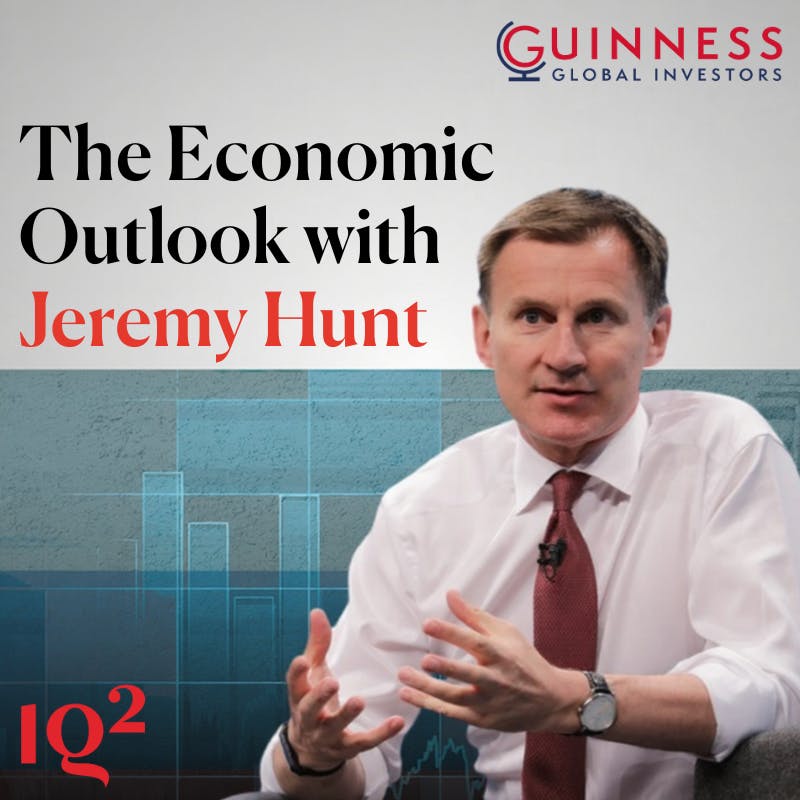
Loading summary
Transcript110 lines
- [00:00]
A
This episode is sponsored by the Planet Visionaries Podcast Planet Visionaries is back with a new season hosted by Alex Honnold, who you might know from his incredible solo climb of the 3,000 foot El Capitan in Yosemite national park this season. You can hear him in conversation with people who are not just imagining a better future, but actually building it. Here at Intelligence Squared, we love conversations that explore real solutions and real progress. In this podcast, you'll hear from scientists, explorers, activists and storytellers from around the world who are reshaping the future in practical and inspiring ways. In an upcoming episode, Alex speaks to Chris Tompkins, a conservationist and former CEO of Patagonia who has dedicated her life to preserving millions of acres of land across South America. In 2017, this vision led to one of the largest private land donations ever when her foundation gifted an area that the size of Denmark to Chile to create a new national park. What makes this show so compelling is that it highlights the human side of climate work. It's not just policy or numbers, it's people taking meaningful action to create a better world. Listen in to be part of the movement to reimagine our planet's future. In partnership with the Rolex Perpetual Planet Initiative, this is Planet Visionaries. Listen or watch on Apple, Watch, Spotify, YouTube or wherever you're listening right now. Right now, there are talented people out there who could take your company to the next level. Do you want to hope they see your job post before your competitors or do you want to match with them with Indeed Sponsored Jobs? Hiring Indeed is all you need. Stop struggling to get your job post seen on other sites. Give your job the best chance to be seen with Indeed sponsored Jobs. They help you stand out and hire quality candidates who can drive the results you need. Sponsored Jobs Boost your posts for quality candidates so you can reach the exact people you want faster and it makes a big difference. According to Indeed data, sponsor jobs posted directly on indeed are 90% more likely to report a higher than than non sponsored jobs because you reach a bigger pool of quality candidates. Join the 1.6 million companies that sponsor their jobs with Indeed. When we're hiring, we find being specific about what we need really matters. With Indeed sponsored Jobs, you can set detailed requirements such as experience level, skills, industry background and actually get candidates who meet them. Instead of sifting through applications that don't fit, we end up with people who've done the work before and can prove it. That precision is what makes the difference for us. Plus, with Indeed sponsored Jobs, you only pay for results. No monthly subscriptions, no long term contracts. Just a boost whenever you need to find quality talent fast. People are finding quality hires on Indeed. For right now in the minute I've been talking to you. Companies like yours made 27 hires on Indeed according to Indeed Data Worldwide. Spend more time interviewing candidates who check all your boxes. Less stress, less time, more results. Now with Indeed Sponsored Jobs and listeners of this show will get a $75 sponsored job credit to help get your job the premium status it deserves at indeed.com intelligencesquared just go to indeed.com intelligencesquared right now and support our show by saying you heard about Indeed on this podcast. Indeed.com intelligencesquared terms and conditions apply. Hiring do it the Right Way with Indeed.
- [03:58]
B
Hello, I'm Margarita, a producer at Intelligence Squared. Due to a technical error, some of our regular listeners might not have heard the first part of our episode with Jeremy Hunt. So today we're releasing the full episode for you. We hope you enjoy it. Welcome to Intelligence Squared, where great minds meet. I'm producer Mia Sorrenti. On today's episode, Jeremy Hunt shares his vision of how we can achieve economic renewal in Britain with former Chancellor of the Exchequer Jack Jeremy Hunt. Hunt joined us live on stage in October for the final installment of this year's Intelligence Economic Outlook series. The former Chancellor of the Exchequer, Foreign Secretary and Health Secretary reflected on his political tenure and drew on the themes of his new book, Can We Be Great Again? To share his vision of how we can achieve economic renewal in Britain. While candid about Britain's weaknesses, he argued that on issues ranging from European security to global trade and climate, migration and the future of democracy, the UK still has the potential to lead if it chooses to act like a country that matters. The Intelligence Squared Economic Outlook series is made in partnership with Guinness Global Investors. For those who don't know, Guinness Global Investors is an independent British fund manager that helps both individuals and institutions harness the drivers of future growth to achieve their investment goals. Now, let's join our host, BBC News presenter Johnny diamond, with more.
- [05:33]
C
Thank you. Thank you very much, Hannah. I'll very briefly introduce the man you've come through the rain to see, so you probably know exactly who he is. Anyways, Jeremy Hunt obviously was Chancellor of the exchequer between 2022 and 2024 and before that gained an unrivaled view of government as Foreign Secretary. Health Secretary, was it? Six years as Health Secretary. I'm sure you have the scars on your back. And Culture Secretary during the London Olympics, there is a vote that you are able to participate in and we would encourage you to, once you see the QR code, to be polled on your view on the UK economy. You can see the QR Code now. The point is that we poll you now and then we will do the same in about an hour and a half once Jeremy has persuaded you of the bright sunlit uplands to come. But please do and we will read out the results once we have those at the end of the evening, both the before and the after, I should add. You can probably see the book in front of me here. Jeremy has a book out at the moment, Can We Be Great Again? It has the benefit of being both very, very useful analysis, but also full of great stories and very well written. And he will be signing copies of that afterwards. I can't encourage you enough to take a look. Can we start with the book? I mean, the title is provocative, particularly against the background of almost French levels of pessimism. Two thirds of the UK population now think, as you say in your book, that the country is in decline. A third of young people would like to live somewhere else. Many think that we are being eclipsed or have been eclipsed on the global stage. Can we talk first of all about what you mean by great and then move on to the chances of being great again?
- [07:29]
D
Absolutely. And good evening. And I'm delighted that actually the first time I can remember in a book talk, lots of people have got a glass of wine, which is exactly the right attitude. I do want to make you a bit more optimistic tonight, but not necessarily over the next four years. That's quite a random period of time to choose. But this is the book that I wish I had been given on the day that I became Foreign Secretary. And if that happens to you, it is quite an out of body experience because, you know, obviously you meet the Prime Minister, happened to me in 2018, July 2018, on a Monday evening, and then you get shown to your office in Whitehall and it is by far the grandest office in Whitehall. It's not much smaller than this room, it's three times bigger than the Prime Minister's room. It's absolutely beautiful and it's clearly designed to impress Johnny Foreigner as opposed to Johnny diamond. And it's meant it's been doing that for sort of 200 years. And I think the same thought crosses every new Foreign Secretary's mind. I'm certain that Yvette Cooper thought exactly the same when she became Foreign Secretary a month ago. And that is. Is this all an imperial Delusion are we kidding ourselves about our role in the world? And I thought when I stopped doing the job, I'm going to do some research, I'm going to write a book to actually answer that question. And my definition of great, Johnny, I don't think Donald Trump should have a monopoly on the word great. That's the first thing. My definition of great is a country that can shape the world as well as be shaped by it. And what I do in the book is I take the seven or eight biggest challenges the world faces, from the future of democracy to security in Europe to climate change to the migration crisis, all these problems, and then I say, what role or influence do the experts say Britain has when it comes to resolving these issues? And in every single case, out of 193 countries in the United nations, they always say we are one of the top 10 most influential countries, often one of the top five. So I think that, you know, nothing can be taken for granted. But I do think that we have fallen into a big trap of losing perspective when we absorb ourselves in our own problems, which are huge. And that is to forget that other people have big problems as well. We're all. And my argument, I'd make the same argument, by the way, if it was an audience of Aussies or an audience of French or an audience of Germans or Japanese. It's not that, you know, our country is better than other countries. It is just that the world is so dangerous right now. The worst thing we can do is actually underestimate our influence. Far better to roll up our sleeves and try and sort out the problems as best we can.
- [10:46]
C
You clearly believe that the country has something to give, that it has a useful leadership role beyond the sort of self importance of, of the political class, the civil service, et cetera, et cetera. It's not just about being at top table.
- [11:03]
D
Yeah. I mean, if just look in a European context. We have the biggest and most respected military in Europe, the most respected universities in Europe, the biggest tech sector in Europe independently rated as having more soft power than any other European country, and along with the French, the most hard power of any European country. And so just in this continent we have a lot of influence. But then when it comes to climate change, we've probably done, I mean, I think we're ranked third globally behind, I think the Netherlands and Denmark when it comes to the quality of governance. We're also ranked by another think tank as third globally behind Germany and Australia, believe it or not. And this is not to minimize the problems we have. I Think the big. The elephant in the room. So I wrote. Basically, I wrote half the book after Boris didn't want me to carry on, I'm putting it nicely, as Foreign Secretary. And so I went to the backbenches and I started doing my research, and then I rather unexpectedly became Chancellor, and so I had to stop writing. And I got back, I finished it after the election defeat last year, and having been Chancellor, I had to write a slightly different book, which is how on earth are you going to pay for it? And so I do go into that in quite a lot of detail. But, you know, there is an iron link between economic strength and political clout. And how do we fare on that? Again, not as bad as everyone thinks. We're the sixth largest economy in the world. And what do the center for Economics and Business Research say we will be in the rankings in 15 years time? In 2039, they say we will still be the sixth largest economy in the world. In fact, we'll have closed the gap slightly with Japan and Germany. So I think even when it comes to our economic woes, of which there are many, and I'm sure we'll discuss those, we shouldn't underestimate our strengths. I think we've got a lot to bring to the top table.
- [13:10]
C
Can we talk about the unexpected, Chancellor? Because there's a great tale about the unexpectedness of it all. Where, What? I mean, 20 days into the Truss administration, something like that, things are clearly going horribly wrong. The markets are starting to sort of fall apart and you get a phone call.
- [13:29]
D
Yes, I was, you know, I was enjoying being on the backbenches. Action. I went for a weekend in Brussels with my wife Lucia, and we woke up in a lovely hotel in the Old Quarter on a Friday morning, and Lucia was cleaning her teeth, and I looked at my phone and there was a message saying, liz Truss here. Please call. And I shouted out to Lucia, I can't believe those idiot journalists. Apologies, Johnny. That think I'm such a sucker I'm going to fall for a hoax like this. I didn't think in a million years she would want to call me, so I ignored it. And then the phone rang and it was an unrecognized number, and I ignored that and we went down and had a lovely breakfast. And then finally a friend called me and said, look, I think number 10 really are trying to get in touch with you. So I very gingerly called the number 10 switchboard and said, look, I think this is a hoax. But I thought I got a message saying, the Prime Minister wanted to speak to me. Oh, yes, she does. She does. And the rest is history. So it very nearly didn't happen, but it did.
- [14:32]
C
Did you have any hesitation about saying yes?
- [14:37]
D
I've been around the block quite a bit. You know, I've been in the Cabinet for the most of the previous decade and. And this job. There were a few. There were some hesitations in my mind. The first thing was I didn't think Liz Truss was going to last very long, so I thought it was quite possible I would be the. The shortest serving Chancellor in history was a cause for hesitation. And then I thought, when you're offered a job by the Prime Minister, your maximum moment of leverage is before you accept. So I did think, you know, what should I ask for in return? But I knew things were such a mess, there wasn't really anything I could ask for, so actually I didn't. So I just said to her, look, can I have half an hour to talk about it with my family? Because it's a big. A big thing. And I wanted to make sure, you know, I promised Lucia for the whole of that six years I was Health Secretary, this would be my last job. And then we were going to, you know, have a life of blissful calm. And I mean, you know, that was pretty intense with things like the junior doctors strike. So I did want to make sure she was on board, but she was absolutely all in. So I actually called back after 20 minutes and. And accepted it.
- [15:54]
C
And it was your understanding that you would have effective carte blanche?
- [16:00]
D
Yes. I mean, I think Liz Truss knew that she had to stabilize the markets at that point, and to her credit, she went along with absolutely everything that I asked her to do. I mean, she sat next to me in the House of Commons as I basically tore up the entire manifesto with which she had been elected. And so that was a. That must have been a very difficult thing for her to do. But it was also quite interesting for me to see how the British state works. This was not a good moment for UK PLC after the Mini Budget, and it was obviously not our finest hour, but I think if you'd been a fly on the wall in the treasury and you'd seen the meetings that I had with treasury officials, you'd have been curiously encouraged. Actually, they are phenomenally clever treasury officials. The discussions we had were very, very open. I had no background in the City or financial markets, and there was total honesty from me about what I knew and what I didn't know, and every Chancellor that I've met, every Former Chancellor I've met says the same thing, that they think treasury officials are absolutely brilliant. That's not to say the institution doesn't need reforming in some quite big ways. I think that the lesson I draw from that incident is that the British state is actually surprisingly good at tackling really difficult issues in a crisis. But if you compare what I did, I, by the way, I had a black hole of, as you know, we're probably going to talk about black holes. It's a phrase. It's become a bit of a phrase, hasn't it? Well, I had a black hole of 72 billion that I had to deal with. It was a real one, by the way. And I sometimes think, what's the difference between me and Rachel, politics aside? And I think the truth is that when I became Chancellor, everyone knew there was a big emergency. And so I kind of had permission to do some, to think the unthinkable, to do absolutely huge things. I think the difficulty for Rachel is that it's a much more slow burn crisis. She's been in office a year. It's much, much harder to make changes in that set of circumstances. I think the challenge, if you're trying to say how do we do things better as a country, we need to find a way of being better at solving big problems when we're not in a crisis and we're not being forced to.
- [18:44]
C
You were not the shortest serving Chancellor of all time. You were kept on by Rishi Sunak and you spent a good two years at the Treasury. Looking back, what were the things that you were most proud of? What were the things or was the thing that you wished you had done either unable or unwilling to do?
- [19:06]
D
Well, I think probably the biggest thing that people will remember about that period is that I arrived and there was a huge crisis. Inflation was 11%. And I had to go through a series of, take some really horrible decisions to get things back into balance. And, you know, I had a lot of support. I had to work very closely with not just treasury officials, but with the bank of England, with First List Trust, then Rishi Sunak. So it wasn't just me. If I look back and I say, what was the big thing that I wished I'd done that I didn't do? I think it's probably welfare reform. I mean, I actually did do with Mel Stride, who was the DWP secretary. We did do a lot of. And we had a big program in place, but it was getting close to the end of the Parliament. But I think now this is the make or break issue for the British economy, because we are now signing off about 5,000 people onto sickness benefit every day, and about 1,000 people, we are saying not just you don't have to work, but you don't even have to look for work. Now, at the same time as that, we are, you know, we've got an aging population, more and more older people. It is absolutely crazy. And these people, the majority of them have mental illness, anxiety or depression. And every doctor I ever met when I was Health secretary said that if you've got anxiety or depression, the thing you need is social contact. And we are actually taking them out of the labor market. They are losing social contact. Their anxiety and depression is getting worse and we can't afford to do it, and at a fraction of the price. I mean, if we. And this is, by the way, something that has really gone wrong since and partly because of the pandemic. So the welfare rolls and the cost of the welfare bill was actually steadily falling until 2019. But something went badly wrong in the pandemic. And, you know, with the benefit of hindsight, that is something which I wish I had really got going on much sooner because I think, and I'm not planning, not proposing to be party political at all unless your questions are really nasty, Johnny, But I will say this. I think the problem with Rachel's 22 billion black hole, irrespective of whether it was true or not, and I think ask the Office for Budget responsibilities to get the best answer on that. But the problem was it deflected us away from the big argument we needed to be having, the big debate we needed to have, which was about the welfare state and the fact that it's gone badly wrong and the fact that it needs reforming. And that I think, and I know Rachel wants to do that now, and she's had her setbacks with the winter fuel allowance and the 5 billion of welfare cuts. I really, really hope she comes back to this, because if she doesn't, it's not just going to be two successive budgets of tax rises, it's going to be five budgets of tax rises, and then it's just going to be incredibly difficult for the economy to grow. And that, I think, is the big, big thing.
- [22:26]
C
I want to tuck into some of the issues that you bring up in your book. Can we start with technology? There's quite a lot in your book book about it and you mentioned it before. You argue that Britain has the potential to be, let's reach for a cliche, the next Silicon Valley Why do you think the UK is so well placed?
- [22:47]
D
Well, it's interesting you call it a cliche. I'm quite chuffed that you call it a cliche, Johnny, because no one had ever said that before until I said it. And that suggests that it's being said rather a lot. But let me just. Because it's a really interesting story. Sorry, I think it's an interesting story. You must be the judge. You're the audience. But in my first autumn statement, when I had that 72 billion black hole on the Monday before, it was on a Wednesday, the statement, and on the Monday before, William Hague wrote his column in the Time, and everyone was really worried about what I was going to say and what taxes were going to be increased and what spending was going to be cut. And he said, I hope Jeremy Hunt will give people hope. And I thought, yeah, what can I do? And I looked through and I decided, I looked for the section on growth and I said, I'm going to say that our opportunities in technology and we can be the world's next Silicon Valley. And no one had said it before, and I was fully expected to be laughed at by all and sundry, and I wasn't. And it was really interesting. And the reason I wasn't, not least I wasn't by the British tech sector, and I'm sure there are lots of people from that sector here tonight. But the reason is because after the US and China, we have the third largest tech ecosystem in the world, only the third in the world to be worth more than a trillion dollars. We have more unicorns than France and Germany put together, more venture capital funding. But it isn't just that. We have some competitive advantages that make it really hard for other people who are trying to muscle in on the AI boom to do so, particularly the French, who are very, very focused under President Macron in trying to do more in the AI space. And the reason is because outside the US we have the most respected universities and outside the US we have the biggest financial services sector. And if you're trying to nurture the unicorns of the future, and at the moment, our problem is that when they get to a decent size, they go across to NASDAQ for their listing. And that's something which both Rachel and I are trying to, have been trying to address in various measures. But there has been this, and this is. Look, if I was going to make you optimistic about the future, I'm not. As I say, four years is a little bit of a short time span. But let me just Tell you one thing that I think is really extraordinary that no one talks about and that is a revolution, it is an absolute revolution that's happened in Britain in the last decade and that is that our leading universities have now got science parks and tech parks. They are nurturing spin outs in a way that's never happened before and only used to happen at Stamford and the Ivy Leagues. And if you go to the science parks at Cambridge or the, the tech park at Oxford, it's absolutely imperial. But it's also Edinburgh, Manchester, Leeds, Sheffield. It's incredible what is happening and that, that's why I think if I was, you know, my son is 15, I've got 11 year old and a 13 year old daughter and if I was saying to them, how are we going to pay our way when you're my age and over the next, over the decades ahead, I would say that we do have real strengths in this country in the industries like life sciences, technology, creative industries, defense, which are going to be the ones that grow in the decades ahead.
- [26:45]
C
Let's get back to the gloomy stuff.
- [26:47]
D
In particular, I wouldn't take him long, would it? You see there we are a BBC journalist. Go on, Johnny, go on.
- [26:53]
C
In particular, what's been called the productivity punishment puzzle in the UK and that is the struggle to raise the level of productivity. And one of the reasons that productivity overall is so low is because public sector productivity acts as a drag on productivity generally. I mean it's thought to be around a growth of about 0.9%. You've written raise that to 2% and something magical happens. How do you raise productivity in the public sector in particular? Particular, I suppose in parts of it which are so labor intensive by their very nature that they struggle with issues like robotics and automation.
- [27:33]
D
Well, there are three letters that answer your question very precisely, Johnny. Nhs. Yeah, and that is because in, I mean, first of all, as we're trying to be positive tonight, aren't we everyone? So yeah, we are trying to be positive. Okay, so here's the positive thing on productivity. The state in this country controls is directly responsible for a quarter of our output. So we have this historic productivity problem which there are various reasons why. Some of it's a little bit overstated because we have much more of a services sector than a manufacturing sector and have for most of our lifetimes. And manufacturing tends to show up in higher productivity numbers. But some of it is real. But the government controls a quarter of our output. So Rachel Reeves has the power theoretically to sort out a quarter of our productivity problem. And around half of that quarter is the nhs. And the NHS is the most wonderful healthcare system in the world and the most inefficient, and it is unbelievably inefficient. And I say that, frankly, with an element of guilt, because I was Health Secretary for six years and I focused on lots of things. But there was one really big thing that I didn't do, because I didn't come to understand it was the root cause of the problem until the very end. So the NHS is the most micromanaged healthcare system in the world. It's the biggest in the world. It's the fifth largest employer in the world. There's only four organizations that employ more people than the NHS, which is the US army, the Chinese Army, McDonald's and Walmart. And then it's the NHS, the biggest in Europe by a long way. And despite it being the biggest, it is micromanaged ruthlessly from the center by NHS England and the Department of Health. So if you run a hospital, you have 18 monthly operational targets, you know, AE waiting times, cancer waiting times, elective care waiting times, and they're monthly and the numbers are reported back. So you and your job depends on making progress on those targets. So you're constantly looking over your shoulder to your manager at NHS England on. On whom your career depends. It is not like that if you run a hospital in France or Germany or America. And the unintended consequence of this is just as happened with Stalin in Russia, those tractor factories are incredibly inefficient because the sort of boring but essential things that are happening in a French hospital or a German hospital or a Swiss hospital, like putting in a proper IT system, tackling waste, those things just don't happen because everyone is frantically trying to get next year's numbers, next month's numbers, to move in the right direction. So I should have scrapped all those national targets. They are awful. And I've had this conversation with Wes. Unfortunately, every Prime Minister, no matter what the party tells every new Health Secretary the same three words get a grip. And when the Health Secretary is told to get a grip, that means more targets, not less targets. And this is the problem. And every Health Secretary thinks they're going to be the one that turns it around, and they aren't. So now, I want to be positive, please. We have actually done this very thing in another sector, and that is our state schools. Our state schools over the last three decades have risen in England, sadly, not in Scotland and Wales, to be some of the very best in the world. And our reading standards are now the highest in Western Europe. Our maths is behind only sort of Korea, Taiwan, Shanghai, Japan. We've done so well in our state schools and we've done it because we give heads their budgets, we tell them, you're going to have your Ofsted report, we're going to publish your exam results, but the rest is up to you. And the result is they innovate. And we have these marvelous academy chains and we have, you know, we have seen extraordinary things. And when was the last time you went into a state school and saw any waste at all? They are really parsimonious with how they spend money because, you know, every penny counts and they are responsible for it and they can find good ways to use it. So that's the model that we need to adopt in health. I started by introducing a kind of Ofsted system through the CQC into the nhs. I didn't finish. That's how you improve public sector productivity by devolving power down and allowing people who make savings to keep those savings locally so they can improve the services that they offer. And then we get a more efficient nhs. Is there.
- [32:49]
C
I mean, as I said, you have a pretty much unparalleled view of government because you have held such sort of big offices over such a long period of time. Do you sense a structural problem of an inability to take the kind of long term decisions driven by the political cycle, driven by the media cycle? Did you sense that then? Do you sense it now?
- [33:14]
D
I think there are some things that, you know, if we want to be better at long term decisions in this country, there are some things that we need to change. I don't think it's about the individuals because I think civil servants generally work really hard and are very decent people and, and they have a very strong. I mean, I never came across this sort of Sir Humphrey cliche where they were trying to frustrate me behind my back. I think they have a very strong sense of being in a democracy where the final decision has to be taken by someone who's elected. But there are, I think, one or two issues. One of them is that I talk about the NHS being micromanaged. Well, the treasury micromanages the rest of Whitehall in the same way. So, for example, if you're in the Department of Education or the Department of Defra or any government department, and you've got some money, the financial year ends at the end of March and you've got some money that you haven't spent at the end of March, the Treasury takes it back. And this is very helpful for chancellors because there's usually, you know, 5 or 6 billion at the end of every year that hasn't been spent, by the way. That's not very much money in the grander scheme of things, because we spend about a trillion pounds a year. But 5 or 6 billion can be helpful and you get it back as a Chancellor and you like that. But what that means is that over in DEFRA, or the Department for Education or the Department for Health or Department for Transport come January, you are desperately trying to get money out of the door to stop the treasury getting it back and it's incredibly wasteful. So we need to stop that. And the other thing that I think is that doesn't work in quite the right way. It should, is that when you're a Cabinet minister, I mean, it was really interesting to me. The only bit of every government department that works 24, seven, including weekends, is the media department. And they are. They work so hard. My God, if you've worked in the media department of, you know, Department of Health and then you go off and work for a FTSE 100 company, it's like a walk in the park. I mean, you know, you get this Chief executive who's all stressed out about their results coming out, and the. These Department of Health guys go, for God's sake, what are you worrying about? This is nothing. Health Secretary is getting in the neck every single day of every single morning. The media comes out throughout the year. And so those guys work really hard. But unfortunately, it's also a sense of where the government's priorities are, because this isn't the units that are actually changing the country for the better. These are the people who are managing the media. And I think that there's too much worry about things going wrong. And as a Cabinet minister, one or two things go wrong and that can be the end of your career. And so you really worry about the media and that's reflected in your very well staffed media department. But somehow we don't have the same priority going to whether you're actually changing things for the public for the better. And that, that really boils down to a Prime Minister showing leadership and saying, look, if something goes wrong in the media, I'm not going to come down on you like a ton of bricks if you are changing things for the better, for the public, because that's the thing that needs to matter the most.
- [36:53]
C
You mentioned welfare reform and a regret that you didn't tackle it. Maybe you didn't have time. Maybe there wasn't the political energy. How do you judge so far the attempts of this government to reform the welfare system?
- [37:08]
D
Well, obviously they haven't been successful, but I think this is very mission critical for the government. And I genuinely speaking as someone who's obviously not a Labour supporter, but I genuinely want them to succeed because I'm worried that they don't realize that the alternative is going to be continually having to come back and raise taxes and that will kill off growth. And that's already gone wrong for one year and heaven forbid, if we had that for another four years. The way to do it, though, is not to make this an argument about saving money, although we should be clear we do need to save that money. We simply cannot afford to carry on on the basis that we are. But it's actually about transforming on opportunities for the individuals involved. So if we got the wealth, the Working age welfare bill. Bit of Chancellor speak here, because I'm going to give you some numbers. But if we got the working Age welfare bill down to the level it was before the pandemic, by the end of the fiscal period, we'd be saving 47 billion pounds a year. That's not going back very far, that's just going back to 2019. So Rachel Reeves wouldn't have to put up a single penny of tax if you did that now. It's easier said than done. It's a very difficult decision. But I happen to know if you. The NHS is world class, very renowned for its talking therapies, which is the treatments you give to people with anxiety and depression at the moderate stage. And, you know, it's one of the areas actually where people from Sweden come and look at NHS talking therapies. It's done really, really well. That costs a billion a year, so you could literally double the number of people getting talking therapies for their anxiety and depression. And it only takes six weeks to train up the therapists that conduct it and you would be, you know, spending a fraction of the saving, the 47 billion. So if you ask me that, the way that you would sell this to Labour MPs and to the public is to say we're going to massively increase. We're going to make sure the people who have back problems get treated really quickly. The people who have mental health problems get treated much more quickly than they do, but they're not going on welfare because we've got to change the social contract. And by the way, there's something else that's completely ridiculous. Which I'm very ashamed to say I didn't know when I was Chancellor because if I had, I would have done something about it immediately. But there was a court ruling in 2021 or 2022 that said that having to apply for benefits in person had contributed tragically to a suicide. And as a result, and partly because of that, and partly because it was in the middle of the pandemic, the DWP said that everyone applying for benefits has the right to apply by phone. Now, I think that is just ridiculous. I mean, when you're making a decision about someone who is potentially being signed off, not even having to look for work. And by the way, there's a tiny number of people who ever get out of that category once they're in it. In DWP jargon, they're called lcw.
- [40:33]
C
Ra.
- [40:33]
D
Limited Capability for Work Related Assessments. I mean, it's, you know, bureaucratic jargon. But the point is, this should be a face to face discussion with someone who is working out how on earth do we deal with your issues so we can get you back into the labour market.
- [40:50]
C
Can we talk about the sort of international economic scene and in particular Britain's ability to trade freely internationally? You've written about this in the, the book. You've talked about the kind of benefits that we got from investment from companies like Nissan and that was partly due to our membership of what was then the EEC would become the EC would become the eu. Do you think that Britain should be thinking, should be considering rejoining the eu, or do you think that there is a place for a sort of nimble actor outside the big block?
- [41:29]
D
I don't think we should be having that debate. And I would go for that.
- [41:34]
C
Because you don't like the debate or.
- [41:36]
D
Certainly, God, it was a nightmare, wasn't it, to have that debate? You know, it would just completely polarize British politics for years. And it was, it was bad. But I would actually go further. I voted to remain. I'm not sure I would vote to remain if the referendum were to be had today because the world has become so dangerous and so unstable. I think there is a premium on nimbleness, which I didn't think about in 2016 because the world was a lot safer, but I think for the uk. But let's get to the heart of your question, which is, can we survive outside the EU economically? And my view is very straightforward. We're perfectly capable of surviving inside or outside the eu, but it's a totally different economic model and we have to be Very clear in our minds. Inside the EU we had a very straightforward model. We were going to be the most pro business, low tax, light regulation economy inside the single market. So all those international companies from China and Japan and America who want to invest inside the EU would choose us also the English language and respect the legal system and other advantages. So that was a very straightforward model. Outside the eu, we have to think much more like a Korea, a Taiwan, an Israeli say, what are the products which are the sectors where we're going to produce products that we're going to sell in every corner of the globe and we have to make sure that we are properly getting behind those sectors. And you know, we've talked about tech, we've talked about life sciences, which has been having a few challenges recently, but that's, you know, Cambridge is the medicine innovation center of Europe. It's about 6, 600 companies. They're extraordinary what is happening there. Creative industries is another one where we are, you know, the European hub, clean energy. You know, we have the world's largest wind farms and advanced manufacturing. We are also, you know, we do surprisingly well in things like aerospace where, you know, half the world's large airplane wings are manufactured in North Wales at the Airbus factory there. So that's the approach I think we have to take.
- [44:12]
B
This episode is brought to you by Progressive Insurance. Do you ever think about switching insurance companies just to see if you could save some cash? Well, Progressive makes it easy. Just drop in some details about yourself and see if you're eligible to save money when you bundle your home and auto policies. The process only takes minutes and it could mean hundreds more in your pocket. Visit progressive.com after this episode to see if you could save Progressive Casualty Insurance Company and affiliates. Potential savings will vary. Not available in all states. So you're about to make a trade based on a friend's text. But which u do you listen to? Is it we could buy a house in Tulum, get optioning those options. We could lose everything. Or let's do a little research, get your head in the trade and make the investment decision that's right for you. Learn more@finra.org TradeSmart Ford BlueCruise hands free highway driving takes the work out of being behind the wheel, allowing you to relax and reconnect while also staying in control. Enjoy the drive in BlueCruise enabled vehicles like the F150 Explorer and Mustang Mach E. Available feature on equipped vehicles. Terms apply. Does not replace safe driving. See Ford.com BlueCruise for more details.
- [45:48]
D
Toast the holidays in a new way.
- [45:50]
B
And raise a glass of Rumchata, a delicious creamy blend of horchata with rum. Enjoy it over ice or in your coffee. Rumchata. Your holiday cocktails just got sweeter.
- [46:01]
D
Tap or click the banner for more. Drink responsibly.
- [46:04]
B
Caribbean Rum with real dairy cream Natural and artificial flavors. Alcohol 13.75% by volume 27.5 proof Copyright 2025 Agave Loco Brands, Pojoaaukee, Wisconsin.
- [46:13]
D
All rights reserved.
- [46:16]
B
Save over $200 when you book weekly stays with VRBO this winter if you need to work, why not work from a chalet? If you haven't seen your college besties since, well, college you need a week to fully catch up in a snowy cabin. And if you have to stay in a remote place with your in laws, you should save over $200 a week. That's the least we can do. So you might as well start digging out the long johns because saving over $200 on a week long snowcation rental is in the cards book now@vrbo.com.
- [46:51]
C
Can I just ask you about government itself and whether you think there is the capacity for reform within government? You've talked about, you know, the sort of long lines of accountability into the nhs, the bedpan dropping wherever it is and resounding around Whitehall. You've talked about the Treasury's grip on departments. There's also the question of government being able to come up with the big ideas and implement them. What do you think the obstacles are?
- [47:25]
D
So I think that for very well meaning reasons we have put in place in Whitehall a lot of accountability and process which is completely justifiable on an individual level. So, you know, for example, the ability for an individual or a group of individuals to judicially review a government decision to build a nuclear power station or HS2 or a new dual carriageway is completely justifiable from the point of view of property rights and human rights law and all these different things. But what it has meant is that we are just too slow at getting things done and it's created in voters a niggle that frankly has turned into more than a niggle, that the people they send to Westminster just aren't able to grip the big problems that we face. And I thought it was rather sobering when Donald Trump came here, and hopefully we can have a bit of a discussion about Donald Trump in a minute. But I thought it was rather sobering when he came here for his second state visit and he had only been in office at the time for eight months and our Prime Minister had been in for 15 months. And illegal migration, in America's case, border crossings, down by more than 90%. Of course, Donald Trump says 100%. I've stopped every single one. That's not true. But they are actually down 90%. And in our case, small boat crossings, just as politically toxic, up by a third. And, you know, you ask yourself, well, you know, we have a Prime Minister who absolutely says he's going to do everything by the book, follow the rules. You have a president who's doing actually quite brutal things when it comes to ice and all the ways that people are being disappeared off the streets. And I would never want that to happen here and advocate for it, but he is at least persuading the people who sent him to the White House that he's getting things done. And I think if we don't want to have methods like the methods that Donald Trump is employing, then we have got to find ways to get things done more quickly.
- [49:59]
C
Here we are going to come to audience questions in a moment, but I want to throw Donald Trump at you again. You met him, didn't you? You met him. What did you make of him?
- [50:09]
D
He's absolutely formidable. I mean, I had to greet him as Foreign Secretary when he came for his first state visit, and my job was to go to Stansted and welcome him to the uk. And Air Force One landed. It was a rather blustery morning, and we waited for the doors to open and they didn't open. And I thought, well, perhaps he's freshening up after an overnight flight or something like that. But anyway, eventually they did open. And the reason for the, the delay is that he had been having a Twitter war with Sadiq Khan. And literally, you know, I said to him, welcome to the United Kingdom, Mr. President. And the first thing he said was something completely unrepeatable about the Mayor of London. His very first words. And now, how unrepeatable? I mean, completely unrepeatant. No, they were pretty unrepeatable. And. But I would say. But it's interesting because I thought about this, and initially, when you tell that story, it kind of confirms a prejudice that you have about Donald Trump. You think, you know, leader of the free world. How on earth has he got time to do something as ridiculous as have a Twitter war like that? But then think about it another way. This man spends two to three hours a day on social media or TV or watching tv. I mean, you talk to the people around him. He doesn't get into his office until midday quite Often because he's watching TV in the private quarters in the White House. Now, I think about this, I think about myself as Chancellor and I would do a media round maybe once a fortnight. I'd be coached by civil servants, they'd go through this difficult question, that difficult question. If I got through it without making a mess of it, I'd heave a side of relief for another two weeks. Now, with great respect, and I think it's the same for Rachel Reeves and Keir Starmer and Rishi Sunak and all of us in Westminster. But I think the President of the United States is marginally more busy than the British Chancellor of the Exchequer. And yet he's finding three hours a day to talk to people and he's the one that's winning elections, not people like us. So my big point about Donald Trump is that, you know, if we want to start winning elections, we have got to start communicating like he does. And let's be honest, a 79 year old American man is a whole lot better at social media than any of us are.
- [52:47]
C
Is he a help or a hindrance to Britain being great again?
- [52:53]
D
You know, he, I'm pausing there because I haven't got a sort of a quick answer. On the one hand, he has got a big soft spot for Britain and by the way, I think Keir Starmer has played it very well in terms of international diplomacy. I think it's a big achievement to be liked by the President of the United States and by Ursula von der Leyen and quite how he's managed that, I don't know. But he's got a kind of low ego style which I think has, you know, gone down well in both quarters. But so he, in that sense, I mean, Trump loves Britain. He gave that very extraordinary comment, I'm sure you heard it. Joining to Gary o' Donoghue when he did an interview just before his state visit with and Gary asked him, what do you think about Britain? And he said, you know, if America was under threat, if America was being attacked, I'm not sure that anyone would come to our rescue and fight for us, but I think Britain would. And so he feels a lot for Britain. So that's our advantage. On the other hand, he's not doing a great deal for the reputation of democracy on the global stage. And this is something that Britain is very closely identified with. And so in a way, he's making our work a bit harder. So, you know, he creates a lot of work for us too.
- [54:26]
C
Right, enough from me. Let's Hear from the audience. I see, as a gentleman here, first.
- [54:31]
D
Of all, I liked your comments about nimbleness outside of the eu. How does China fit into this nimbleness? And. And what's the future with China vis a vis our relationship with the us? Well, you know, this is actually quite topical at the moment, isn't it, how we deal with China? And I actually think we've been very naive in our approach to China. My wife is Chinese. I have very famously and embarrassingly got that wrong. But by the way, details are all.
- [55:03]
C
So hard to remember, isn't it?
- [55:06]
D
Details are in the book, if you want to know that particular one. But I. In some ways. But this is what, you know, if Johnny was interviewing Xi Jinping and he was sitting where I am now, he would say in total sincerity that autocracies are a better way of running a country than democracies because we can't get things done. So I think we have to be streetwise about the threat posed by China, but we also have to be prepared to look in the mirror and say, how can we show that we actually can get things done? I think, by the way, that he is wrong about that for another reason, which is that he doesn't have anyone around him who speaks truth to power. I mean, you know, if you are President of China and you've run it in the way Xi Jinping does, I. Are people going to speak out if they think you're making a mistake? It's like Putin's generals before Ukraine. They all told him it'd be over in 48 hours. And that's the risk you take with an autocracy. For all our faults, at least in a democracy we can have an open discussion like this.
- [56:17]
C
The lady at the front here, if.
- [56:19]
D
We can get a microphone to her.
- [56:20]
C
Thank you very much.
- [56:21]
D
Thank you.
- [56:22]
B
Thank you. Great talk so far. The devolution of the planning System and the 33 or so London boroughs creates a complete bottleneck and a catastrophe for unlocking the housing crisis of London, albeit NHS workers and private sector workers. If you had your time again with a new era, what would you do to help solve that? Because help to buy has been a huge catastrophe for first time buyers know causing negative equity and just fueled the balance sheet of house builders. What do you think could be the next thing? Could it be compulsory purchase orders with government and building in government departments or what's the big secret to that?
- [57:12]
C
Thank you.
- [57:12]
D
This is going to be really painful answer for me to give you, but I'm going to give it anyway. The answer is, well, we should copy France, because here's an interesting thing about France. And by the way, the next book I'm writing is also a positive book. It's about how to unlock economic growth. And I just want to tell you something fascinating about France. Over the last 30 years, you could not have had two countries, Britain and France, with more opposite strategies when it comes to their economy. I mean, this is like the most anti business country you could ever imagine. You know, massively high tax, very difficult labor laws, high unemployment, high regulation, lots of strikes. In Britain, we've gone totally the opposite direction. And yet our GDP and our GDP per head has virtually tracked that of France almost year by year. There's been no divergence. And if you look at why that is, the biggest single reason, I believe, is that the French have been good at building things and we haven't. And in the 1970s, we had about the same number of houses or dwellings as France, with similar populations. Now France has got 24% more than us and the single. What's gone wrong? And this is what I, I genuinely would in a very unlikely situation that my government had been reelected and I carried on as Chancellor. The big reform we need is with local government. We need directly elected mayors with full fiscal autonomy and they need to keep all the business rates that they generate in their area, all the local taxes instead of handing back to the treasury as happens here in France. All the local authorities have a direct financial incentive to improve as many planning applications as they can. They have to balance it against the wishes of local people to protect the culture of the area, which they fiercely do. But you've got parts of France with nuclear power stations where ever since they agreed to have a nuclear power station, they've had free broadband. There's a place in Loire called Kuwait sur Loire, where they've given themselves free broadband as a result of the takings from a nuclear power station. And that's the big way we need to unlock it.
- [59:41]
C
If you hold on, if you allow local authorities to hold on to their money and you don't have it redistributed by the treasury, you are also accused of entrenching inequality as well, aren't you? And you have to. That is the flip side of what you say there.
- [59:56]
D
Well, yeah, but there are lots and lots of different ways that you can redistribute opportunity. But the way we do it is actually worse because what happens is by defenestrating local authorities in Manchester and Newcastle and Cornwall, we actually make it impossible for them to pull themselves up by their bootstraps and turn their own local economies around. If Andy Burnham wants to build a ring road around Manchester, he has to bang down the door of the treasury. And that would never happen with a city the size of Manchester in the United States or in Switzerland or in Germany.
- [60:37]
C
Right, we have a gentleman here, if we could, and then gentleman here and then the lady there. Thank you very much.
- [60:44]
D
Well, thank you for your very positive messages and all of that. And I'm sorry, Certainly an optimist. Now, I'd like to raise on the migration issue. There is a critical need to keep the UK open and welcoming for investors, students and tourists. But all the noise about illegal activity, neither Conservative nor Labour made any progress on that subject. We've got to deal with that, but we must do it in a way strongly. But keep it separate from ensuring that the UK is open and welcoming. What more do you think can be done on that? Thank you. Well, it's such an important question and I actually know the gentleman who asked this question, who, like me, is married to an immigrant. And I think one of the best things about this country is that over centuries we have welcomed the brightest and best from all over the world. A third of our Nobel Prize winners. We often boast that we have the second largest number of Nobel Prize winners after the United States, but a third of them were born abroad and came to the UK to do their studies. And you go right the way back to the Huguenots, the Jews, people who came from the Caribbean, people who've come from Eastern Europe. We have always flourished by being open. And the reason that I have become a total hawk on immigration is because I'm worried that that social contract is fraying and that people are beginning to say they want zero migration, which I think would be absolutely catastrophic for this country. So it is essential, I would go as far as to say, if I hope, we might be able to reform the echr, but if we couldn't, I would leave it, because we have to give people confidence that the people that they send to Westminster as their elected representatives are able to decide who comes into the country and who goes out. And that is not an unreasonable thing for people to think about their elected governments.
- [62:59]
C
Thank you, gentleman. Here, sir.
- [63:01]
D
Thank you very much. There's so much of what you've said, Istanbul, to know where to focus a question. But I'd like to link, if I may, your comments about the NHS with broader issues about growth. And perhaps this anticipates your forthcoming book rather than this One, it sounded as if your frustration with the NHS was that essentially we, to repeat the aphorism, we value what we can measure rather than measure what we should value. But aren't we doing the same thing with gdp, which is possibly a useful instrument, but not a particularly instructive or accurate one in terms of the strength of the UK economy? It excludes a lot of things that probably ought to incorporate and it values a lot of things that we probably don't as well, society value. Is it time for us to actually look at different ways of measuring the strength of our economy, regardless of whether we're sixth or seventh or fifth? It's a very good question. That's not quite what I would say about the nhs. I would get rid of all the national targets, but the one thing I would say is there should be complete transparency in every corner of the NHS about operational performance. So we should know how well this hospital's doing compared to that hospital, because that's what happens in schools. And I think that's, you know, we have a right to know. You're right. What gets measured gets done. But I think targets, I mean, I set up and ran my own business for 14 years and I think nearly everyone in the. We had about 250 people in my company by the time I sold it. And I think nearly everyone had a target in the business, whatever side they were on, but it was one target. The problem is when you have like 18 or GPS have 44 QOF targets, then you are in the realm of micromanaging. I think that's the bit that's gone wrong. Bigger question about gdp. It's not perfect how we measure it and I'm sure we can improve it. But I'm not one of these people who says that we should put it to one side because it's not the same as happiness. It certainly isn't. But Angela Merkel had a wonderful saying. She said, growth isn't everything, it's true, but without growth everything is nothing. And I think that there is an element of truth in that.
- [65:38]
C
I've got a linked question, I think it's linked from our online audience and it's. Can growth ever be sustainable if it continues to depend on rising consumption and population?
- [65:51]
D
Well, I think the population is beginning to even out and I think the evidence is that as we become more prosperous, people tend to procreate less. And I think we do need to move to clean energy. I'm not one of these people who. And I think we do need to take our climate Change responsibilities, seriously. So, you know, that means that we need, during the course of this century, to make sure we get to a net zero global economy. I do think the climate change agenda, though, has got things slightly wrong. And I think that we have been really good on the altruism side. You know, the UK is decarbonized by more than any other major economy, and we've not been thinking enough about the economic growth impact of higher energy prices. If you cut our energy prices by a quarter, then you would probably add between a quarter to a half a percent to economic growth every year. I'm still going through the numbers for my next book, but it's really quite a staggering increase in growth that we have foregone by having the highest energy prices of any major economy. I mean, this is a question I answer to you, I'm afraid. The French, again, they've got all their nuclear power stations. Their energy price is about half of ours. That's another thing that's helped them. And I think we do need to understand that clean energy matters, but so does cheap energy.
- [67:26]
C
You believe that clean energy and the drive towards clean energy has driven up our energy costs? I mean, not clearly. The French have a very different energy mix. But there's a fair amount of argument about whether or not the drive towards clean energy is a substantial cause for our higher energy costs.
- [67:46]
D
Well, it is a cause for our higher energy costs in a very literal way that it adds about 200 quid to. To our bills every year, the levy through the levies. So it does that, but it also does it in a kind of hidden way, which is that one of the. Because dear old treasury doesn't want to give direct subsidies to people building nuclear power stations. It guarantees them a high electricity price at the end of the process for the electricity that's generated. So you are effectively paying for it through higher energy prices that we will pay in the future. I think the transition is a good thing, but I just think that we need to think a little bit about the impact on economic growth. Otherwise the risk, frankly, is that the country at large just loses all faith in the whole climate change agenda and says, look, actually, we don't want to do any of this. And the whole thing gets junked, which I think, which is kind of what's happening in America, I think. And I think that that would be the wrong place to go.
- [68:47]
C
Question from the lady here. If we can bring the microphone to her. Thank you very much.
- [68:53]
D
That's right.
- [68:53]
C
Lovely. Thank you.
- [68:55]
B
Thank you very much. Thank you. Very insightful. So far. Thank you. I think I'm just quite struck by your definition that you posited at the beginning of the great countries, and they're those that shape the world. And then, of course, the discussion becomes introspective because you have to say how and why. And I think for a consumer of the news cycle, someone on my side, it's hard to buy into that idea when you see the Crown Prosecution Service unable to pursue their aims in a prosecution because of what looks like an unease to affect a relationship, which obviously, from a pragmatic perspective, is very important, but we're not able to do that. It feels like a country that answers more than it states. So my question is really, and I suppose it's why your book is titled as a question is, are we wrong to feel, as the public, that we're not really shaping anything at the moment, we're only ever reactive.
- [69:55]
D
We are being far too reactive at the moment. I completely agree, but we don't have to be. And we've got a lot more power to influence things around us if we so choose. And, you know, I would. To people who say that we are utterly bereft of ability to shape things in the world, I would just say, well, you know, who else is in a better place to do it? I mean, obviously there are the two superpowers, China and the United States, by the way, both got really profound problems of their own. I mean, I would say, you know, for people who think China's going to overtake the world, I would recommend a brilliant book by the Swedish American academic called Johan Norbert called Peak Human, which came out this summer, in which he looks at all the great empires over human history. And he says the ones that succeed are the ones that are open to ideas and talent from around the world. And that is not China. China is closing up very, very fast. So they've got problems. America's got profound polarization, I hope. By the way, I think your employer, the BBC, the biggest job they have is to prevent the polarization that is happening in America and starts with the polarization of the broadcasting system. So outside those two, my question then is, who else? And I think that we are extremely well placed and we've got fantastic connections with Japan, Australia, Canada. We're actually getting much closer in terms of geostrategic issues with the eu, mainly because Ukraine has made everyone kind of grow up and forget all the Brexit wars. So I think we should be rolling our sleeves up.
- [71:50]
C
There was a gentleman just on the.
- [71:52]
D
Side here, Mr. Hunt, you mentioned that two potential drivers of the UK economy would be AI and the defence sector. However, those two potential origins of growth are generally reliant on external factors. For example, the AI bubble. There's no guarantee that growth will continue and there's no guarantee that NATO will be have a unified response to Russia in the defense sector. So if those two don't play out, what else do you view as something that could replace the UK finance sector as the driver of the UK economy in the long term?
- [72:28]
C
Thank you.
- [72:29]
D
Well, it's a good question and I think the answer is that we don't quite know how innovation is going to change the world, but we can be pretty confident that innovation will change the world. And, and so being good at innovation is a core strength. We're actually ranked as the fifth most innovative country in the world at the moment by the only place that does a ranking like that. And above us are countries like Switzerland and Sweden. But we score pretty highly. And that actually is because of the strength of our higher education sector, which does really well. But I, you know, we may be about to see the AI bubble burst, but I don't think that means that AI isn't going to be completely transformative. And it's a bit like the dot com bust that we had in the early 2000s. It's still, you know, Internet companies completely changed the world we live in. So, and I'm afraid, I think defense is, is another area where because of what, you know, Putin is up to, we are going to be finding, all of us going be finding, we spend a lot more. But innovation, I think, is the real answer to your question.
- [73:40]
C
I have a linked question coming from the online audience. Fairly simple one, what is AI going to do to the workforce?
- [73:49]
D
Well, I, I wish I knew. I totally wish I knew. I mean, it's a really, it's a, maybe there's a book to write there, but I think we, we don't really know, do we, what AI is going to do? My worry is if I'm allowed to make something slightly pessimistic or worried comment, my worry is that if you talk to sort of people who really know about AI far more than I do, like Demis Hassabis, the founder of DeepMind, what he says is that AI will be 10 times bigger than the industrial revolution and 10 times faster and the 10 times bigger bit I can cope with, that's potentially very exciting. An age of abundance, an age of longevity and more leisure time could be absolutely amazing. It's the 10 times faster bit that worries me. I think there could be a huge amount of social disruption. Graduate jobs are down by about a third at the moment. We don't quite know why and whether it's temporary or a permanent change, but it does seem like city firms, legal firms, management consultancies are hiring fewer graduates because they're not anticipating they'll have as many partners in a decade's time. And so I think we're going to have to be quite nimble in making sure that if wealth is constant, concentrated in a very small number of people, opportunities and benefits are spread out.
- [75:26]
C
Thank you. There's a gentleman over here. Thank you, sir.
- [75:31]
D
Hi there. There's a growing public discussion around wealth taxes as a potential antidote to growing inequality. Would you advocate for a wealth tax? No, because they haven't worked. I think that the latest numbers I saw was about 12 OECD countries had them in the late 90s and that's now just fallen to three. And I think the reality is that not only have they not worked in most countries, but they would be even more dangerous in the uk because we are the most open, large economy in the world and wealth is more mobile, as we, we're finding out with the non dom's changes. But the bigger answer to your question is we absolutely will need to find much more effective ways of spreading opportunity than we have been doing. And I think this is something which, you know, is a long standing failing in British politics, the regional disparities that we have. But we need to be absolutely, because if we don't, we're going to have big social disruption.
- [76:41]
C
Do you believe that tax is solely a revenue raising measure or do you think it has at times a social end as well? I'm thinking in particular of inheritance tax, which serves a different purpose from simply just raising revenue.
- [77:00]
D
Well, it's such a great question, actually, because tax is the most central part of the social contract between citizens and the state. We have no choice about the taxes. We pay. The people we elect decide those taxes. And traditionally we have tended to think of tax as a way of redistributing opportunity between rich and poor through the nhs, the welfare state and funding services that we need as a country, like the armed forces and the police. But when it comes to the economy, it's also sending a signal as to what we value. If you tax work, then people are going to work less. There's a direct correlation between levels of tax and the hours people work. Americans work, Americans are taxed less and they work longer than us. Germans are taxed more than us and they work fewer hours than us. And so I think we have to be really careful if you make the tax system do too much work, that you disincentivize the things that are necessary for a dynamic economy.
- [78:15]
C
To the audience making up. Yes, you, sir, thank you.
- [78:19]
D
Thank you so much. In terms of unlocking economic growth, for the big economic strategic bets we should be making, whether it's AI tech, more generally, biomedical sciences, should we be thinking about regulation in a manner more similar to the US or the eu? Definitely the us, because, you know, when it comes to regulating innovation industries, the biggest mistake we can make is to try to predict the future. We just don't know. And so what we want to do is to encourage as much risk taking as possible, as much innovation, and particularly when it comes to AI, the EU has really stifled innovation and made many companies worry about investing in the EU because of the level of regulation. So I think we need to be lighter.
- [79:08]
C
I'm going to take a question from our online audience, then come back to our present audience. If you were in charge again, what would you do to make public service jobs feel more rewarding and less bureaucratic?
- [79:23]
D
Well, this is a really interesting point because you asked me a question about public sector productivity and obviously one of the reasons why the current government has found it very difficult is because of their close relations with the unions. And so there is this perception that wanting to make public services more efficient is bad for the people who work in them. I think it is totally the opposite. I think that people really enjoy working for organizations that are lean, efficient, responsive, do a great job. And people find that if they are in an organisation where people can take the mickey, can say they're working from home, but actually not working at all, are doing their job not because they're passionate about it, but as a lifestyle choice, people find that demotivating. So I actually think the way to, you know, if we, I mean, it's strange to say this as the man who was roundly detested by doctors and nurses in the nhs, but I actually think that if we did get rid of all these national targets, doctors would be the first people to say that it was more rewarding. If you talk to, you know, if you talk to doctors who work in the NHS and in private hospitals, they often say that the private work they do is actually more rewarding because they're just working in a better run organization. So I think it's, that's the way you make it more rewarding to work in the public sector.
- [80:59]
C
Do you feel the chasm that is sometimes talked about between citizens experience of the private sector and their experience of the public sector and the responsiveness of the two?
- [81:15]
D
Sometimes, but there are some spectacular examples where the public sector gets it right. I mean, I don't know if anyone's applied for a passport recently, but the Passport Office, by the way, which used to be a total basket case. Do you remember all those stories you used to report on Johnny, you know, about the scandalous delays at the end of the pandemic and it now getting a passport. We are having delegations coming from Taiwan and the United States, two of the most high tech societies in the world, coming to see how our passport office does it. And I, I don't know this for a fact, but I bet you the people who work in the passport office are proud as punch of the work they do.
- [81:56]
C
Okay, gentleman, right at the front here, if I can get a microphone to him, thank you very much. We are coming towards the end of our session here, so if you have questions, do be prepared to put your hand up. I see you there and I'll come to you afterwards.
- [82:07]
D
Sir Jeremy, I just want to repeat the thanks of many others for the wisdom you've shared with us. Several of the questions have been about tax. And one of the things that I.
- [82:20]
C
Have been noticing is that there are an increasing number of voices around the.
- [82:24]
D
Place that say we've got into a situation where our tax system is doing.
- [82:31]
C
So many things to disincentivize growth that.
- [82:33]
D
We need to actually radically address it. And I think that Kemi Badenoch took a tiny step in the direction by saying I'll get rid of stamp duty on first home purchases. But she should have said the whole all stamp duty on property purchases should have got rid of. We should be getting rid of it.
- [82:52]
C
If we want to keep the stock.
- [82:53]
D
Exchange going on shares, we should be index linking capital gains. We should be bringing in a flatter rate of tax. There's a very interesting book by Matthew Elliott and Laffer that's coming out that's advocating that we should be reversing the BPR relief exemption, I mean, putting it back. Are you going to contribute, given that you've been Chancellor Exchequer, contribute to getting your party's tax policies right and will they include some radical improvements? Thank you, sir. Okay. We definitely, you're absolutely right to say that when it comes to tax, the issue is not just the level of tax, but the way we tax. And we have what is commonly thought to be the most complicated tax Code in the world or in the advanced world. I think when you look at tax, you need to start, you need to think about the basics. At the moment. We tax work a lot and is that really sensible when we want to have a dynamic economy where people, we want people to work hard but actually we penalise them. Whereas we tend to avoid consumption taxes because they're very unpopular. But, you know, with an aging population and an army of often quite wealthy pensioners, it is much more logical to have more of the weight of taxation on consumers consumption rather than on wealth generation. So I think we need to get back to first principles. It's very easy, by the way, to say this when you're not chance running.
- [84:37]
C
No, I was wondering about that. I mean, the radical simplification of the tax code. Presumably your civil servants and the treasury come up with 50,000 reasons why you really shouldn't go there.
- [84:47]
D
Well, I mean, you know, I will say I wanted to abolish Employees National Insurance. I still would love to abolish it. I think it's an outrageous tax and, you know, so I think there are things that I did try and do and we got timed out. But the truth is, with tax reform, you have to do it early in a parliament because there are going to be winners and there are going to be losers. And, you know, Nigel Lawson's famous 1988 budget, one of the most transformative budgets in our lifetime, bought the top rate of tax, tax down to 40%. That was the year after a general election victory. Now, that budget actually led to a recession because if you remember, we had the Lawson boom, inflation got out of control, interest rates had to be hiked, but we got through it in time for the next election and it all was fine. And he's still thought of as one of the greatest chancellors. So do it early in a Parliament if you're going to do it.
- [85:47]
C
There was a question, madam lady, just there. I'll keep pointing, thank you very much.
- [85:53]
D
So how worried are you about the.
- [85:55]
B
Current state of the Tory party and the ability to do all of these things?
- [86:02]
D
We are in a. You know, our share price is very, very low at the moment and as wise investors, you will know that is the time you need to start mopping up these shares because they are very, very good value. I don't think if you step back, it's particularly surprising given that we had our worst ever defeat just over a year ago. But the road back is tougher this time because we have competition on the right from Nigel Farage. But I Think if you are, you know, if you are optimistic, and I actually do think we will be back in the game. It is because, interestingly, and I think somewhat surprisingly, the latest polls show that we are the most trusted party when it comes to the economy. And a lot of our discussion this evening has been revolving around worries about the economy. I think when we get close to the next election, people really will be looking for the party that can offer them solutions on the economy and that's. That's how we get back in the game.
- [87:06]
C
We are coming towards the close. I'm going to ask you to vote again on your feelings towards the economy. I've been asked to read out the first poll results before you vote. You voted on whether or not you thought the economy would be in better shape or how you felt about it over four years. Optimistic, 3%. Quite optimistic. 13%. You can probably work out which way this is going. Quite pessimistic. 48% and pessimistic, 36%. So now you can see the QR code and you can vote again and we'll get those results churning through. Please do vote as that vote happens, I want to ask you a quick question. You spoke in glowing terms about Nigel Lawson. He called his memoirs the view from number 11. Memoirs of a Tory Radical. Are you a Tory radical?
- [88:01]
D
I'm actually a lot more radical than I look. And I'm always thought of as Mr. Steady Hand on the Tiller. And it. Sometimes it. Excuse me for saying this pisses me off, because I actually am an entrepreneur by background and that's not the way I think. But the truth is that there are moments when you can make really big changes and moments of when you can't, and you have to make that judgment. But as we're drawing to a close, can I just tell you about my last memory of number 11, please? Because I left number 11 Downing street, on the morning of July 5th last year after we'd lost the election. And it wasn't a great surprise to me, the election result, but I was a little bit worried about my kids because I didn't want them to think, you know, you're slightly bundled out of Downing street when you lose an election. Happens very quickly in the British constitution. There's no handover period. And I didn't want them to think it was a moment of shame for our family. And so I got permission for them to miss school and I got permission from Rishi Sunak's team to leave out of the front door of number 11, which chancellors don't normally do. And I said to them, we're going to do this properly. I rushed back from the count, had a very quick shower, got all the kids into their Sunday best. I said, right out on the street with our dog Poppy and big smiles and we are going to treat this as a moment of pride. And as we did, this extraordinary discussion opened up on social media and someone said, he's got a Labrador. Can I change the way I voted? And then there was a huge discussion. This was the most British bit of all of how the dog was going to cope with moving to a new home. Nothing about the human beings ended up being very British.
- [90:04]
C
We have a second poll result and it's good news. You'll remember we were on optimistic 3%. Quite optimistic. 13, quite pessimistic. 48%. Pessimistic 36%. Has Jeremy Hunt moved the noodle? Yes, he has. Optimistic 6%. Quite optimistic. 32%. Quite pessimistic. 40% and a savage fall in those who are truly pessimistic down to 22%. I think you've done very well, if I may say so, I'm going to draw things to a close. Thanks to Jeremy Hunt, thanks very much to Guinness Global Investors who help make these sessions happen. And they're so informative, so many, many thanks to them. To all of you here who've come through this bizarrely bad weather, I say bizarrely bad, it's not that bizarre, but it's truly bad. And to those watching live stream and to everyone at Intelligence Squared, thank you very much indeed. It's been a real pleasure. Thank.
- [91:05]
A
You.
- [91:05]
D
Foreign.
- [91:10]
B
Thanks for listening to Intelligence Squared. This episode was created in partnership with Guinness Global Investors. It was produced by Hannah Kay and it was edited by Mark Roberts. For more information on Guinness Global Investors, just head to guinnessgi.com or see the link in the episode description. You've been listening to Intelligence Squared. Thanks for joining us. The Uniswap Wallet makes it easier and safer to own and use crypto. Created by pioneers of the crypto economy, the Uniswap protocol has powered over $3 trillion in trading volume and it's trusted by tens of millions worldwide. With the Uniswap Wallet, you can discover, swap and manage your crypto all from your phone. Buy your first crypto assets in just a few taps and start exploring the freedom of decentralized finance with Uniswap. Tap the banner to get started.
- [92:18]
D
The holidays mean more travel, more shopping, more time online and more personal info.
- [92:24]
A
And more places that could expose you.
- [92:25]
D
More to identity theft, but LifeLock monitors millions of data points per second. If your identity is stolen, our US based restoration specialists will fix it, guaranteed or your money back.
- [92:35]
A
Don't face drained accounts, fraudulent loans or financial losses alone.
- [92:39]
D
Get more holiday fun and less holiday worry with LifeLock. Save up to 40% your first year. Visit LifeLock.com podcast terms apply.