← Intelligence Squared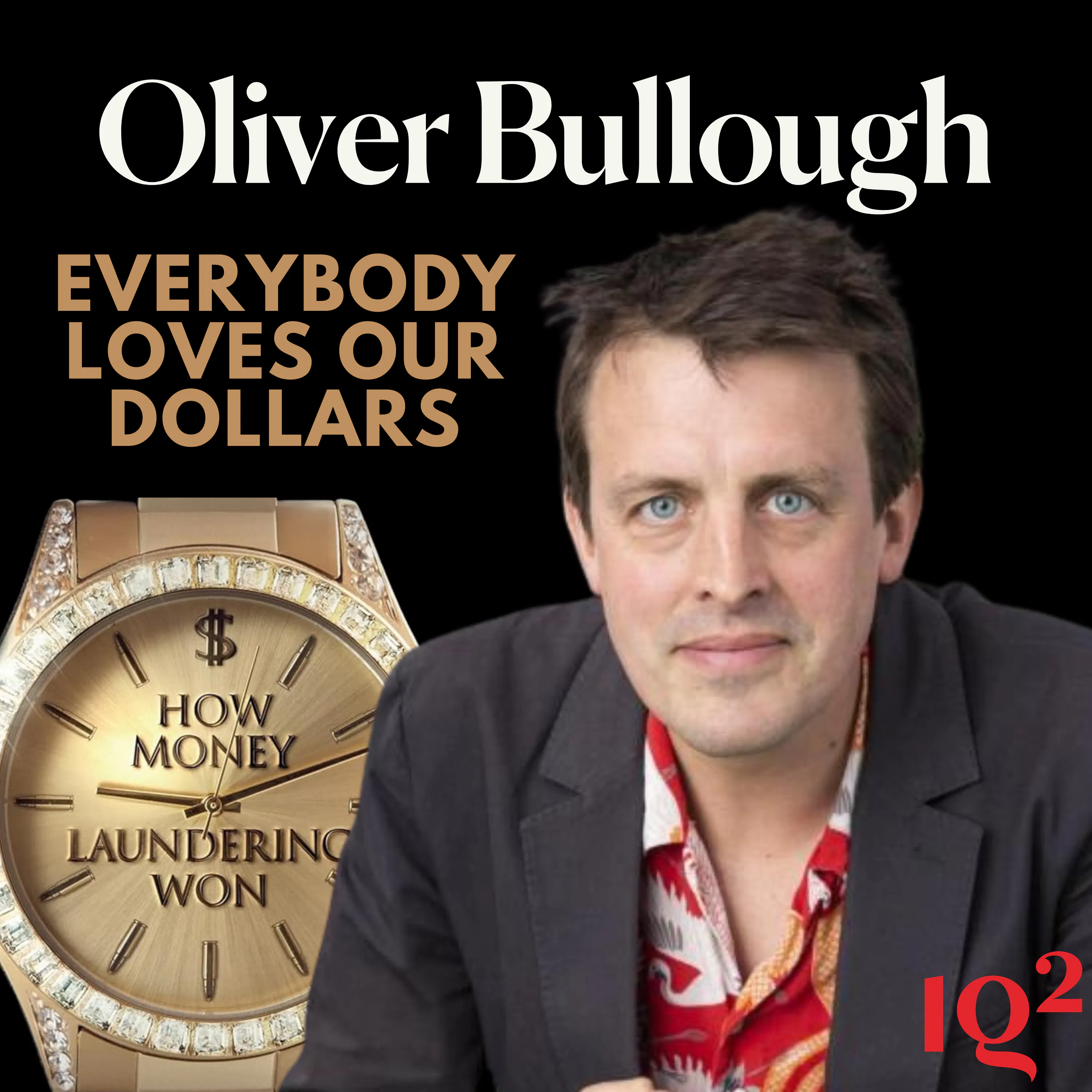
Loading summary
Transcript45 lines
- [00:01]
Alex Honnold
I'm Alex Honnl, professional rock climber and founder of the Honl Foundation. I wanted to let you know about a brand new season of the Planet Visionaries podcast in partnership with the Rolex Perpetual Planet Initiative. This is the podcast exploring bold ideas and big solutions from the people leading the way in conservation. Join me in conversation with the likes of climate champion Mark Ruffalo, biologist and photographer Christina Mittermeier, and one of the most successful conservationists of our time, Chris Tompkins. Join us on Planet Visionaries wherever you get your podcasts.
- [00:32]
Progressive Insurance Announcer
This episode is brought to you by Progressive Insurance. Most of you listening right now are probably multitasking. Yep, while you're listening to me talk, you're probably also driving, cleaning, exercising, maybe even grocery shopping. But if you're not currently operating some kind of moving vehicle, there's something else you could be doing right now that's easy and could save you money right from your phone. Getting an Auto quote from Progressive Insurance Drivers who save by switching to Progressive save nearly $750 on average. Plus auto customers qualify for an average of 7 discounts. There are discounts for having multiple vehicles on your policy, being a homeowner, and more. And just like your, ahem, favorite podcast, Progressive will be with you 24, 7, 365 days a year so you're protected no matter what. So multitask right now. Quote your car insurance@progressive.com to join over 28 million drivers who trust Progressive, Progressive Casualty Insurance Company and affiliates. National average 12 month savings of $744 by new customers surveyed who saved with Progressive between June 2022 and May 2023. Potential savings will vary. Discounts not available in all states and situations.
- [01:48]
Mia Sorrenti
Welcome to Intelligence Squared, where great minds meet. I'm producer Mia Sorrenti. In a world where most of us rarely touch cash, why is more physical money being printed than ever before? On today's episode, best selling investigative journalist and author Oliver Bullough joins us to uncover why in the criminal underworld, cash is still king. Drawing on his new book, Everybody Loves Our Dollars, he reveals the hidden financial systems that enable drug cartels, kleptocrats, tax evaders, terrorists and traffickers to move and shield vast sums of money despite decades of global efforts to stop them. In conversation with Atusa Araxia Ibrahimian, Bullo explains why so much illicit wealth continues to flow beneath the surface and what urgently needs to change. Let's join our host now with more.
- [02:35]
Atusa Araxia Abrahamian
Welcome to Intelligence Squared. I'm Atusa Araxia Abrahamian and our guest today is Oliver Bullop. Oliver Bulow is a journalist and author of the Sunday Times bestsellers Butler to the World and Moneyland, as well as two celebrated books about the former Soviet Union, the Last man in Russia, and Let Our Fame Be Great. Today I'm delighted to be talking to Oliver about his new book, Everybody Loves Our Dollars, an investigation into the world of Global money laundering. Welcome to Intelligence Squared, Oliver.
- [03:05]
Oliver Bullough
Thank you very much for that. And I'm really excited to be talking to you, Atusa. I feel like you and I write about very similar things in overlapping ways, and so I'm hoping that I might be able to ask you a few questions as well today.
- [03:20]
Atusa Araxia Abrahamian
That would be great, Oliver. I love this book. I've loved all of your books about the offshore world. You're an inspiration to me. And every time I read one of your books, I'm introduced to characters who I didn't even know existed. Can you tell us a little bit about Wright Patman?
- [03:35]
Oliver Bullough
I would be so pleased to talk about Wright Patman. I think he is a. A really unfairly forgotten American politician of a kind of very American kind who rose from pretty much nothing. I mean, he was a barefoot kid in an impoverished corner of northeastern Texas in his childhood in the early 20th century. And he rose to being a member of the US Congress, where he held his congressional district from the late 1920s all the way up into the 1970s. And he had a number of driving characteristics of which the main one was a really lifelong distrust of the financial system and what he used to say was a determination to stand up for the little man or the simple folk. He was one of those really folksy down home politicians who were called populists at a time when populists didn't mean what it currently means, but meant instead someone who actually genuinely fought for the people. In the 1960s, he got a real bee in his bonnet about what was essentially a side effect of the early stage of globalization, which was how easy it was for criminals to move their money to places like Switzerland and hide it from the authorities. And so he essentially invented the idea of anti money laundering. Before Wright Patman, the financial system was essentially just pipes through which money flowed. And where that money came from was no more the concern of the banks than it was of interest to sewage companies what you have for dinner. But Wright Patman insisted that banks had a responsibility to the society in which they exist, that they too had a responsibility to check up on the money that flowed through their system. And despite a lot of opposition from the financial system Many people, many bankers used to call him not Right Patman, but Wrong Patman. He managed to get his piece of legislation, which is now called the Bank Secrecy Act. That's not its official name, but that's what people tend to call it. He managed to get it through Congress in 1970, and that was the birth of anti money laundering as an idea, as a legislative program. And so everything that the world has done since then essentially derives from this one idea that this, you know, barefoot kid from northeastern Texas had when he rose to chair the Banking Committee in the US House of Representatives. An amazing guy. He did so much more than that. And really, he deserves a full, like, doorstep biography of his own.
- [06:08]
Atusa Araxia Abrahamian
Yeah, I didn't realize that, you know, if you go through customs, there's always a sign that says, if you have more than $10,000, you must declare it. That's also Patman's work, correct?
- [06:17]
Oliver Bullough
Yeah. So, I mean, the challenge that he faced and the challenge that everyone trying to tackle money laundering faces is that you can have this idea that you tackle money laundering, but it's essentially so easy to move money between countries that the actual genuine, concrete steps that any one country can take are severely limited. So he had these congressional hearings which are full of wonderful anecdotes about criminals moving money offshore and stuff before offshore was even a word that was used. But. But actually, in terms of what he could do was much more limited. And it was mainly about how much cash you could pay into the bank at any one time. So, yeah, the $10,000 limit, that was him. Also the limit of how much money you can take out of the country without declaring it, and a couple of other things. But. So the actual meat and bones of the legislation is pretty limited. But the conceptual idea behind it, the philosophy that actually the financial system has a responsibility to police the money that flows through it, was genuinely revolutionary.
- [07:20]
Atusa Araxia Abrahamian
So can you get into a little bit the shenanigans the money launderers got up to back in the day? I think the 70s in Florida were particularly colorful time for money launderers. What's the sort of example that you like to use to illustrate what happened?
- [07:35]
Oliver Bullough
Yeah, I mean, there's this big financial and economic boom in the sort of years after the Second World War. And that was not just good for the economy as a whole, but also really good for the criminals. You know, they boomed alongside the rest of the economy. And particularly, this was good news for drug traffickers. There was this big sudden demand for all kinds of drugs, and they were happy to satisfy that demand, particularly by importing drugs to Florida, which was very easy to reach from the kind of places that grow marijuana and cocaine. So you ended up with these unbelievable quantities of cash and which was flowing into Florida, which was distorting the entire American financial system. And the way that you used to launder this money in the good old days, before Wright Patman came along and spoiled it for everyone, was you took the money in a giant box to the bank and you paid it in. And I was talking to one of the detectives who was working on the first anti money laundering operation, which launched in 1980. Took them about 10 years to really get going, which they called Operation Greenback. And some of the stories he told me were just hilarious in terms of how crude it was. There was this one story about, you know, when they were on a stakeout on a bank and, you know, the guy turns up with his car full of cash to pay into the bank, you know, goes into the bank to get a trolley, and then when he comes out with a security guard, by the time he comes out, someone had stolen the car, right? So this car, which is full of banknotes, has been stolen, complete with all the banknotes. And he says, oh, no, someone's stolen my car. And the security guard runs in and goes, oh, I'll call the police, you know, and the cash courier just tackles them and goes, no, no, no, don't worry, just call me a taxi. I'll be back tomorrow. You know, just the volume of banknotes being moved was, you know, unbelievable. But. But then, you know, the federal authorities started enforcing Wright Patman's bank secrecy act. And it just caused, you know, complete brain melt for all of the money launderers who suddenly had to think of ways to get money into the bank without just being able to turn up with a carload of banknotes, you know, because they could only pay in $10,000 at a time. And some of the ways that they came up to get around this were sort of brilliantly ingenious. My particular favorite was done primarily in Puerto Rico, but also in other places where they would let it be known that if you won the lottery, they would buy the winning lottery ticket from you for more than its face value because they would give you the cash and then they could take the lottery ticket to the lottery company and say, there you go, I've won. And they did this very happily for ages, until one money launderer won the lottery two weeks in a row, at which point the authorities got a little bit suspicious. And that avenue for Money laundering was closed, but it became what it's become ever since. It became like an arms race between the authorities and the money launderers, which is the authorities would try and put a check in the way of laundering money, and then immediately the money launderers would just invent a way around that. And the key way that they invented at this point, when it ceased to be so easy to put money into banks in Florida anymore, was just to put your money on a plane and fly it to the Cayman Islands, Panama, Anguilla, all the other little jurisdictions which are within easy reach of Florida, of which of course, the Bahamas is right there next to Florida. So essentially, money laundering became international at that point. It ceased to be just a Florida problem.
- [10:55]
Atusa Araxia Abrahamian
Right. As you put it so nicely, money is global, but politics is local. And this creates enormous problems when it comes to enforcement. Right, because we live in a world of nations and they have their sovereignty and they like to make their own rules. And they also like to say that they respect each other. But this respect, you know, it's qualified, it's limited, and it's case by case. Can you kind of show us, or maybe walk us through where money went once it could no longer, you know, pull up these cartoonish schemes at a bank in Florida? Where, where did it go flow to next?
- [11:25]
Oliver Bullough
Well, essentially what you had instead of just corrupt banks in Florida is you ended up with entirely corrupt jurisdictions. I mean, the most amazing example perhaps is Panama, where the entire government became. Because Panama had been sort of as were hived off by the United States. And so it used the US dollar and everything. It was a very, it was connected to the US banking system. So all you had to do was fly your money down to Panama, stick it in the bank. Then it came back again. But the same was happening in lots of the British offshore jurisdictions and so on. So it remained an astonishingly crude, very cash based money laundering operation. And so obviously what you needed was a form of international cooperation to stop this happening. You couldn't do it in one country because it was so easy to move the money around. And this gave birth to, at the end of the 1980s, you know, what remains to this day the premier body in trying to coordinate anti money laundering, which is called the Financial Action Task Force, which was created at the G7 in Paris in the late 1980s. And it was sort of created almost by accident. President Mitterrand at the time had a sort of an insider trading scandal to deal with. And in order to show how serious he was about tackling Financial crime. He sort of chucked in fighting money laundering into the G7 agenda. And then we ended up with this almost by accident, this sort of international bureaucracy to do the job for us. And this has kind of expanded the US approach to tackling money laundering globally, but with a small twist, which is that they added to the US approach a little bit of a UK approach too, which kind of essentially made it useless. The UK is very good at enabling financial crime and it didn't really want to stop enabling financial crime. So essentially instead of saying that, that any transaction above a certain size had to be reported, which was the US approach, they said any transaction that you have suspicions about has to be reported. Which is to say that they're essentially bringing bankers into the policing system. And they're basically saying to money launderers, you have to blow the whistle on yourself. If you are going to have any information about money laundering being passed on to the authorities, you have to ask the money launderers to essentially report themselves. Which doesn't really work as you would imagine. Which is one of the reasons why the system that we have is so disastrously ineffective, except it does have a very good record at producing paperwork. We have an astonishingly expensive bureaucratic paperwork, heavy anti money laundering system which generates hundreds of thousands. If not, it depends on the country. In the United States, it generates millions of reports every year without actually doing anything at all to stop money laundering.
- [14:10]
Atusa Araxia Abrahamian
Yeah. So you are not a fan of money laundering, but you're also not a fan of the infrastructure that's emerged to combat it. And one of the most embracing and surprising and original parts of your book is your critique of the way that the G7 countries went after these small jurisdictions that really enabled a lot of it, but were probably not at the base of all of these problems. Can you talk a little bit about who got caught up in this enforcement and what the effects of it were?
- [14:39]
Oliver Bullough
Yeah, I mean, I think this is something that you can see in the work that you've done as well. ATUSA about small jurisdictions. You know, they are often looking for new ways of making money and you know, new ways of where to rent out their sovereignty, which is, I think, what you've been writing about. You know, so often you can get a lawyer from the US or the UK or Switzerland who will go to a small jurisdiction and say, hey, have you thought of doing this? Why not pass a law that lets us do this? And so you do end up. I'm not denying that the small jurisdictions, whether that's St. Kitts and Nevis or the Bahamas or the Marshall Islands or whatever have been a problem. They are only a problem in a very limited way when it comes to where the money goes in terms of the large amounts of money that's laundered. It's laundered through large economies because it's a large amount of money. And so you have to move it through large money flows. So the problems remain Switzerland, London, New York, as you would imagine, Singapore, Hong Kong and so on. And yet it's very difficult for an organization which is made up of places like Switzerland, the United Kingdom, the United States and so on, to punish each other. That's quite awkward and difficult diplomatically. So they prefer to. Instead of punishing each other, they prefer to victimize the kind of small countries that do small things. And the example that I chose to focus on, though I could have chosen lots of others, was the Marshall Islands, a place that's often associated with shell companies, but where the shell company registry and the shipping registry is entirely run essentially out of the United States. It was the idea of the United States, in fact, set up with a grant from the United States. So you had this mad situation whereby the United States encouraged the Marshall Islands to do something, helped them set it up and essentially ran it out of Virginia. And then once they did it, they then punished them for doing so. And that's kind of, in a nutshell, essentially what you see with a lot of the battle against money laundering that it is. In order to do something about criminal finance, what you really need are some quite significant interventions in the way money moves around in Manhattan, Switzerland, London and other big financial centres. But no one in those countries actually really wants to do that because that would be intrusive, expensive and kind of hard work. So instead of doing that, they just say, let's victimise a small country that can't push back and you don't thereby achieve anything at all, apart from dumping a load of costs on countries that can't really afford it. And you don't really make any difference to the criminals because they can always find somewhere else that would be perfectly happy to do what those small countries used to do anyway.
- [17:06]
Atusa Araxia Abrahamian
Right. So, yeah, I was going to say the criminals find another place and these small countries have to come up with another scheme. So in a way, it just perpetuates the problem in different ways.
- [17:17]
Oliver Bullough
Yeah, absolutely. I mean, you know, I think the most, in a way, I mean, sort of what the origin of the book was for me was, you know, there is this estimate of how Much money is laundered globally. That was made in the 1990s by the then head of the International Monetary Fund, Michel Candesu. And it wasn't a particularly scientific estimate, but it seems to have been in the right ballpark that between 2 and 5% of global GDP is of criminal origin. So that's how much money is being laundered. And that estimate is still used now. And as far as we can tell from efforts to refine it, it remains, broadly speaking, correct. So we've had this massive, very expensive global effort to stop money laundering that goes on year after year after year. That's involved countries like the Marshall Islands and many others being blacklisted and excluded from the global financial system. Thousands, millions of people losing their bank accounts and so on, and yet it has essentially achieved nothing. The proportion of the world economy that remains of criminal origin is the same as it was when it was first estimated back in the 1990s. And that's the, the sort of problem I was trying to unpick in the book. Why is it, if we're doing all this work, spending all this money, that we're achieving so little, and it is a massive amount of money that gets spent tackling or supposedly tackling money laundering every year. I mean, the cost of global compliance in the global financial services industry is something like, by the best estimate, we have just over 200 billion with a B. 200 billion. And that. Is that a big number? Yes, it is. For that sum of money, you could, according to the best guess of the United nations, you could solve world hunger, you could provide clean water and sanitation to everyone on earth, and you'd have about $50 billion left over to do other things with. And that's the amount of money that we're spending on an entirely broken system. And I think that that is a problem that requires far greater scrutiny than it gets at the moment, right.
- [19:20]
Atusa Araxia Abrahamian
This whole compliance world. There's a bit in your book where actually I think it's a compliance guy who puts it very poetically. He calls it regulatory pageantry, which I took note of because I thought it was quite poetic. So these compliance departments and people, they have so many acronyms, it's a whole Alphabet soup. Could you tell us about one of your favorite ones?
- [19:42]
Oliver Bullough
I mean, I got, you know, the whole three letter acronym thing, you know, begins with Wright Patman's Bank Secrecy act, or the BSA as it's always called, which of course is all engaged with Anti Money laundering, or aml, though these days it's also involved in counterterrorist financing or ctf. There are so many acronyms it's absolutely insane. If you're reading these documents, there needs to be an entire glossary of what all the acronyms mean. But there's essentially one core principle in the anti money laundering world that three letter acronyms are important. But if there's something genuinely important, it's a four letter acronym. If there's a four letter acronym, you know, it's a big deal. So the Financial Action Task Force, the lead into the governmental body for tackling money laundering, that's the FATF or the FATF or the really big mechanism used by criminals to move value around the world outside the financial system. Trade based money laundering or tbml, that's another really big one. So you know, I am, you know, if there is one acronym based lesson to take away from this book, it's that you don't, don't really need to pay any attention if it's only a three letter acronym. But if someone hits you with a four letter acronym, that's when you need to really wake up.
- [20:51]
Atusa Araxia Abrahamian
What about cya? Unofficial acronym?
- [20:55]
Oliver Bullough
Yeah, cya, cover your ass. Basically the entire system. And this is at the core of why our efforts to stop money laundering fail, is that we've essentially deputized the policing of the financial system to banks and other financial institutions. And we tell them that they have to file reports to the authorities if they see something suspicious. Now they don't really care. With the best will in the world. I mean it'd be nice if they did, but they don't really care about stopping financial crime. What they really care about is not being fined. So they're going to over report, they're going to make sure that anything that could vaguely be considered suspicious or even possibly suspicious, they're going to report to the authorities because then they've kicked the problem out upstairs. And that's what is referred to by some of the more cynical law enforcement professionals as a CYA report, a cover your ass report. And they are generated in incredible quantities, I mean hundreds of thousands of these reports which then pile into law enforcement agencies that have no one to read them because there aren't enough people in the law enforcement agencies to look at them. So I mean it's an entirely, you know, it's a paper or report generating system which essentially exists to protect the financial institutions from being fined without really doing anything at all to stop money laundering.
- [22:12]
Atusa Araxia Abrahamian
Right. And it also has unintended consequences. For a while here in New York, there was Buzz about how you couldn't send Venmo. You couldn't. Venmo. You can send cash to a friend digitally for a Cuban sandwich or for Persian food, because this would set off the sanctions CYA button. But of course, that's just the tip of the iceberg. Right. Can you talk about some of the more serious ways in which these kinds of supposed bulwarks have gotten really messed up people's lives? You talk about some charities, you talk about Muslims in particular, getting caught up after 911 in these mechanisms.
- [22:53]
Oliver Bullough
Yeah, I mean, this is where it genuinely gets really serious. It isn't just bureaucratic paperwork and sort of busywork which is being generated by the system, but it actually has really genuinely negative consequences for ordinary people who are just trying to live their lives. Particularly after 911 when anti terrorist financing, counterterrorist financing was added to the anti money laundering idea. And it's actually incredibly hard to see terrorist financing because unlike big money launderers, they're not moving huge amounts of money. At least, you know, the Sinaloa cartel is going to be moving a massive amount of money. So you can look for big transactions. Terrorist groups aren't like that. They can do stage an atrocity for thousands of dollars. They don't need tens of millions. So it's incredibly difficult. In fact, it's pretty much impossible to see terrorists moving their money. And no one's ever shown that it's possible to do this, but it's still something that banks are required to do. So what do they do instead? Well, they look for proxies for terrorists. One group that they were told to look out for were charities raising money for certain communities, which in the context of 911 meant Muslims. So you end up with Muslim charities or charities intended for Muslim beneficiaries or to benefit Islamic countries being really unfairly singled out for scrutiny, a scrutiny that's so expensive that essentially it's easier for the banks not to provide services to them at all than to run the risk of potentially being fined if anything goes wrong. And I came into hearing about this problem just by a friend of mine who lives quite near me in Wales, who has the story. I can't really go into here, but it's an incredible story. He has a family connection to Somalia because of what his father did in the Second World War. And so he was concerned about the Somalis who live in the UK losing touch with their ancestral traditions. And he created essentially on his farm, a place for them to go to sort of hear about their ancestral traditions. From their grandmothers and so on, to really get out of the cities to experience rural life again. It's a lovely, very small scale, but really lovely, very wholesome charity. And yet he faces scrutiny because he's being paid by Somalis, people with Muslim names. He faces scrutiny in his financial affairs all the time. And that's nothing to what the individual Somalis face. They are essentially trying to gather more money together to pay to take their families camping. And yet as a result of gathering the money together, they lose their bank accounts or they get summoned in for questioning. And this scaled up is a problem all over the world where we see particularly charities with Muslim beneficiaries being really unfairly targeted, unfairly excluded from the financial system. And this is astonishingly counterproductive. The anti terrorist financing system was intended to keep know the west safe from our enemies, but instead you're essentially discriminating against Muslims in the kind of way that's going to really essentially disillusion people with the idea that the west is a center of the freedom that we're supposed to be a center of. And it is I think, a really to the discredit of our political system that this has been going on now for what, almost 25 years, and yet it's never really penetrated mainstream political thought at all. It really shows how excluded these communities are in a way that it's pretty shocking considering how long this has been going on for.
- [26:24]
Atusa Araxia Abrahamian
Right. The one time I can recall this really bubbling up was when Nigel Farage got unbanked.
- [26:31]
Oliver Bullough
Yeah, it was clearly distressing for Nigel Farage. And there also have been a few prominent crypto people in the US who've also had trouble getting financial services. And it's clearly distressing for them. But what's annoying about all of these incidences is they've essentially been able to claim that the debanking problem is something that affects just right wing people, crypto people, people who are trying to do something a little bit edgy in the economy or who've got opinions that the wokerati don't like. And yeah, don't get me wrong, I actually find it alarming that the financial system can exclude someone like Nigel Farage simply because they don't. Well, they thought that his political views were a bit controversial. I think that was what it said in the reports that were released. And yet this has been going on to ordinary Muslims who don't have access to the kind of media friends that crypto people or Nigel Farage has for decades. And yet without any kind of of uproar politically at all. And it really, I mean it shows very crudely where power lies in society and the kind of people who society actually cares about. There's this saying, the purpose of a system is what it does. You shouldn't listen to what people who run a system say they're doing, but you should instead look at what they are doing. And if you judge the anti money laundering system on that basis, what does it actually do? Well, it generates a colossal amount of paperwork, it excludes very large numbers of vulnerable people from the financial system and it costs an absolute fortune and it achieves almost nothing. You know, it is, you know, it is almost impossible for me to be negative enough about how badly it operates.
- [28:12]
Atusa Araxia Abrahamian
Sure. I mean when, when you put it that way, you almost expect more people to revert back to using cash because it's so much less annoying on some level. Has that started happening? I mean, what, what does cash represent today?
- [28:25]
Oliver Bullough
I mean, this is a really amazing point. I'm really glad you brought it up because the sort of general idea about cash is that people aren't using it anymore. And that's true. If you look across the board, ordinary people use cash less and less and less in transactions. In the UK, in the most recent figures, fewer than 10% of transactions were done in cash, which is down from about 50% a decade ago. The UK is, is an unusually electronic money favored society. But still that's true in other places too. The proportion is falling. And yet if you look at the amount of cash being printed by central banks, by the Federal Reserve, the European Central bank, the bank of England and so on, it's just going up and up and up all the time. It hits a record high, the amount of cash in circulation almost every month in the United States. The Eurozone just hit one last month. You know, where's the money going? You know, who is using all this cash? Because it isn't ordinary people who are using it. I mean, if you look at what's the most printed form of US currency, it's $100 bill. Yet how often do you see $100 bill in the US? It's quite unusual. Where are they all going? It's very clear that this is being used essentially to a large extent by people to evade the system. Now some of those people, yes, they are, you know, Muslims who are being excluded from the financial system and they are using it just in order to survive. But the vast majority of the people who are using this cash are clearly criminals, money launderers who are essentially evading the checks being put in place by the banks at government's insistence. And it's particularly gross and hypocritical that the tool they're able to use to evade those checks is being produced by those same governments, because producing cash is a very profitable thing for governments to do. You know, printing $100 bill costs about 10 cents, and yet. So that's a $99.90 profit essentially every time you send one out the door. So at the same time, governments are loading these huge costs, $200 billion worth of costs on the financial system to comply with anti money laundering law, and then they're profiting massively by selling the most useful tool for evading those same laws. So, I mean, to say that the right hand doesn't know what the left hand is doing is really understating how incoherent this system that we've created is.
- [30:46]
Rocket Money Advertiser 1
Five years ago, I was paying $65 a month for my subscriptions. Today, those Same subscriptions cost $111, and I don't even use half of them anymore. That's why now I use Rocket Money to manage my subscriptions for me. The app gives you a list of all of your subscriptions and reminds you of upcoming payments so you're not hit with any surprise charges. On top of that, it also sends you alerts when subscription prices go up, so you the price you're paying. If you decide you no longer want a subscription, you can cancel it right from the app. No customer service needed. And the best part is, Rocket Money even reaches out and tries to get you refunded for some of the money you lost. On average, people that cancel their subscriptions with rocket money save $378 a year. And overall, Rocket Money has saved its members $880 million in canceled subscriptions. Stop wasting money on things you don't use. Go to rocketmoney.com cancel to get started. That's rocketmoney.com, rocketmoney.com cancel.
- [31:46]
Rocket Money Advertiser 2
Want to feel more confident with your finances this year? If you have 60 seconds, I can show you how quick and easy it is to start building healthy money habits that could last you the entire year just by using rocket Money. Step 1 Download Rocket Money. Step 2 Link all your accounts and see your entire spending. Picture your subscriptions, your upcoming bills, your due dates, everything. Step 3 Tap a subscription you don't use and cancel it. Boom. That's money back every single month. Step 4 Create a financial goal for something you want to save for, whether it be a vacation, a retirement account, or a pet's birthday. We don't judge now. Let the app automatically move small amounts of cash towards your goal. In a month, you'll see real dollars piling up. In a year, you'll be shocked at how much money you saved, similar to the over 10 million members on the app that have saved up to $740 a year with when using all of the app's premium features, use the Savings Challenge as one step closer to feeling better about your finances. Today@rocketmoney.com Cancel that's RocketMoney.com Cancel One more time, it's RocketMoney.com Cancel I didn't even.
- [32:52]
Rocket Money Advertiser 3
Realize I was wasting $415 a month until I downloaded Rocket Money. I thought I had my finances under control until the app laid out all my spending and categorized it for for me, takeout shopping and unused subscriptions were quietly draining my account, and as a result, my savings took a back seat. But Rocket Money doesn't just tell you what you're wasting money on. It takes action to save you money. First, the app looks at your income and monthly expenses and calculates how much you can safely spend each day to stay on your budget. Rocket Money also finds and cancels unwanted subscriptions for you and even negotiates better rates on your bills so you have more money in your pocket. On average, Rocket Money members can save up to $740 a year when using all the app's premium features. Users love the app with over 186,000 five star ratings. It's time to simplify your finances and take control of your Money. Go to RocketMoney.com Cancel to get started. That's RocketMoney.com Cancel RocketMoney.com Cancel let's do the 60 Second Savings Challenge. Step 1 Download Rocket Money Step 2 Link your accounts and see every subscription you're paying for. Tap one you don't use and cancel it. That's money back every month. Step three create a financial goal $50 every paycheck or let the app automatically move small amounts of cash. When you can afford it in a week, you'll forget you set it up. In a month, you'll see real dollars piling up. In a year, you'll be shocked at how much money you've saved. Bonus Challenge Upload an Internet or phone bill and let Rocket Money try to lower it. You only pay if they find you savings. On average, Rocket Money members can save up to $740 a year when using all of the app's premium features. Users love the app with over 186,000 five star ratings make saving money the resolution you actually keep start the 60 second savings challenge@rocketmoney.com cancel that's rocketmoney.com cancel rocketmoney.com cancel.
- [34:52]
Rocket Money Advertiser 1
The number one resolution for people last year was to save more money, but nearly half gave up by February. Don't let that be you. Download Rocket Money to reach your financial goals this year. Track your spending, cut waste, and automate savings in one simple app. Rocket Money shows you all your expenses and categorizes them so you know exactly where your money's going and where you're overspending. From there, the app cuts waste by canceling your unused subscriptions and lowering your bills. No customer service needed. With that money freed up, the app will automatically set some cash aside for your goals. Whether it's an emergency fund, paying off debt or saving for vacation, Rocket Money's got you covered. Users love the app with over 186,000 five star ratings, and on average, users can save up to $740 a year when using all the app's premium features. Make saving money a priority this year. Go to rocketmoney.com cancel to get started. That's rocketmoney.com cancel rocketmoney.com cancel.
- [35:56]
Atusa Araxia Abrahamian
Right One of my favorite factoids in the book, and possibly in the world, is that, well, $100 bills are very quaint compared to what Switzerland produces, which is 1,000 franc bills. And 90% of the bills in Switzerland are thousand franc bills. That's just bananas.
- [36:14]
Oliver Bullough
Well, I mean, you're Swiss, right? How often do you see a thousand franc bill?
- [36:18]
Atusa Araxia Abrahamian
I'll tell you a story. Last time I saw a thousand Frank bill, I was sitting at a cafe and eavesdropping on somebody handing another person a literal envelope full of thousand frank bills. He took it from her, started counting it in broad daylight, nodded, put it in his bag, and walked off. So that was in August, but before that it was a long time ago.
- [36:41]
Oliver Bullough
That is a wonderfully Swiss story. The combination of extreme safety on the street and also the willingness to hand someone an envelope. A thousand franc bills.
- [36:50]
Atusa Araxia Abrahamian
Yeah, it was incredible. So I've been using cash lately, unrelated to money laundering reasons. And every time I hand a cashier a large bill, they look at me like I grew horns. So there seems to be these twin perceptions of like, why is this lady paying for a coffee with with a $50 bill versus we're going to print them and print them and make it much easier for people to hide their money. Does this somehow explain the world that we live in?
- [37:17]
Oliver Bullough
Yeah, I think. I mean, it's always easy to reach for the corruption card when trying to explain things, but I do believe in the idea that we should probably explain things more by incompetence than by corruption. I genuinely think, think that people don't know what's going on, that there is a limited amount of bandwidth in politics to deal with all the issues that are out there. And this is happening. Whatever. If people want our banknotes, let them have our banknotes. I think that's the general basis of the topic. But the point I'm trying to make in the book, and the point I really, really want to get across, is that money laundering isn't just a white collar crime. It isn't just something that you can ignore and think of as being victimless. It is the support industry for the worst people in the world. If it wasn't so easy for criminals to legitimize the money that they've stolen to make it look clean so they can spend it in an undetected way, then they wouldn't commit so many crimes. There wouldn't be so much fraud, there wouldn't be so much drug trafficking, people trafficking, kleptocracy, all of the crimes that are devastating really large amounts of the world, that are driving quite a lot of our most important security challenges, whether that's the war in Ukraine. Ukraine, or terrorism in Central Africa or the Middle east or whatever. So much of this is driven by just how simple it is to move dirty money around the place, to hide it, to legitimise it and to spend it. And if we could live up to, as governments, if we could live up to our rhetoric about actually genuinely making it hard to launder this money, then so many of these problems would be, if not solved, then really significantly ameliorated. And, you know, I really would, you know, would love if some influential people, if not read the book, then to watch, you know, this podcast and just to get that message because, you know, we have been as a civilization supposedly fighting money laundering since the late 1980s, you know, in the United States for even longer since 1970, and yet we have achieved almost nothing. And that's, it's a real indictment, to be honest. It's shocking of a lack of scrutiny considering how important it is as a campaign to try and limit acquisitive crime. Few things are more important, to be honest. And yet we've just failed and failed again.
- [39:42]
Atusa Araxia Abrahamian
So we have a few minutes left. And I think we'd be remiss not to talk a little bit at least about crypto and how crypto has entered the scene. Maybe we'll put it very simply. Has there been an explosion in financial crime and in money laundering since the kind of mainstreaming of cryptocurrencies?
- [39:59]
Oliver Bullough
I mean, crypto isn't just one thing, right? There are lots of different kinds of crypto, lots of kinds of crypto, they're just not really that useful for committing financial crime. They are kind of clunky to use, expensive to use, wildly volatile. I mean, bitcoin is useful in some ways, but as an actual currency it's useful for speculating, but as an actual currency, it's not that useful. The form of crypto that I've become slightly obsessed by is called a stablecoin, a cryptocurrency, but which is pegged to a real life currency normally, but not always the US dollar. And these are a new and incredibly useful tool for money launderers, sanctions evaders, kleptocrats. I mean everyone, everyone who wants to move money easily around the world outside of the scrutiny of such as there is the anti money laundering system. Stablecoins are an unbelievably useful tool. And to be honest, it is One of the really alarming things about the Trump administration is how willing they have been to embrace cryptocurrencies. It's been very profitable for members of several of the close family members of the Trump administration. And it's also been really damaging for the attempts to limit money laundering by rogue regimes, by terrorist groups, by scam artists and so on. I mean, we're seeing the Iranian government, they're now largely using stablecoins to move money around. The Russians are using them for sanctions evaders. This the giant scam farms in Cambodia and Southeast Asia. Again, it's crypto enabled. So yeah, it is a huge problem, but it's a huge problem added on top of all the other problems. Every time the criminals invent a new way of moving money, they don't stop doing the old ones. They still do all the old ones, but then they do the new ones too, which means that the crime just expands because it becomes ever easier to launder money. And so yeah, crypto is a massive problem. It's a problem that I think most western governments have really not managed to understand properly and to confront properly. There have been isolated efforts to treat with it as a sort of law enforcement thing, but really this needs to be dealt with. At a much higher level, this is a strategic threat to what little progress we've made for tackling money laundering in the last 30, 40 years. Crypto threatens to destroy all of that and to send us right back to the beginning.
- [42:35]
Atusa Araxia Abrahamian
Yeah. So the problems are numerous, right? This stuff is complicated. It's hard to get a handle on. Crypto's technologically sophisticated. This is a hard problem to solve. But at the end of the day, you seem to think that the reason that we haven't gotten further in eradicating or at least diminishing the quantity of money laundering is a matter of will. Are we ever going to get there?
- [43:00]
Oliver Bullough
I mean, I'm an optimist. There's no point in not being an optimist. Right. As they say, if you're a pessimist, even when you win, you lose. So you have to keep hoping for the best. But it would require a degree of political commitment that I've never really seen in any country. But I do try. In the book, there is an example I tell at the end of the, you know what it looks like to win against financial crime. There was a particular crime, I mean, it's still very widespread in the European Union, but which was tackled very successfully in the United Kingdom in the early 2000s called carousel fraud, which is a form of financial crime involving defrauding of the VAT system. The crime itself is quite complicated. I don't really need to go into it. But what was valuable and instructive as an example is that it wasn't just a problem that they left to the financial system to solve. The government tackled it, and they tackled it with all of the tools they had available, diplomatic tools, law enforcement tools, legislative tools. They really went at it, and they went at it hard and they solved the problem, or they certainly managed to reduce it. So it's so small that it wasn't really a problem worth worrying about anymore. And that kind of effort, scaled up, imaginative, flexible, really well informed by intelligence, is the kind of thing that could really make a difference when it comes to denting money laundering and financial crime. And I genuinely don't understand why it's been so difficult for politicians to make the argument for doing that. It wouldn't be that expensive compared to what we're spending money on at the moment. And the rewards would be almost immeasurable in terms of the reduction in crime that you could see.
- [44:48]
Atusa Araxia Abrahamian
Well, might put lots of compliance officers out of work. They wouldn't be too happy about that.
- [44:53]
Oliver Bullough
Well, I'm sure they wouldn't mind. I'm sure they'd be. Well, maybe they would. Anyway, that is a bridge we will cross when we come to indeed.
- [45:01]
Atusa Araxia Abrahamian
Oliver, thank you so much for this interview and your wonderful book which turns the kind of obscure world of money laundering into something that's actually fun to read and actually outrageous. Everybody should read this book again. That was Oliver Bullo, author of Everybody Loves Our Dollars which is available now online and in stores. I'm Atusa Iraxia Abrahamian and you've been listening to Intelligence Squared. Thank you for joining us.
- [45:26]
Mia Sorrenti
Thanks for listening to Intelligence Squared. This episode was produced by me, Mia Sorrenti and it was edited by Mark Roberts for ad free episodes and full length recordings. Become a member and@intelligencesquared.com membership and to join us at future live events you can head over to intelligencesquared.com attend to see our full live events program. You've been listening to Intelligence Squared. Thanks for joining us.