← Intelligence Squared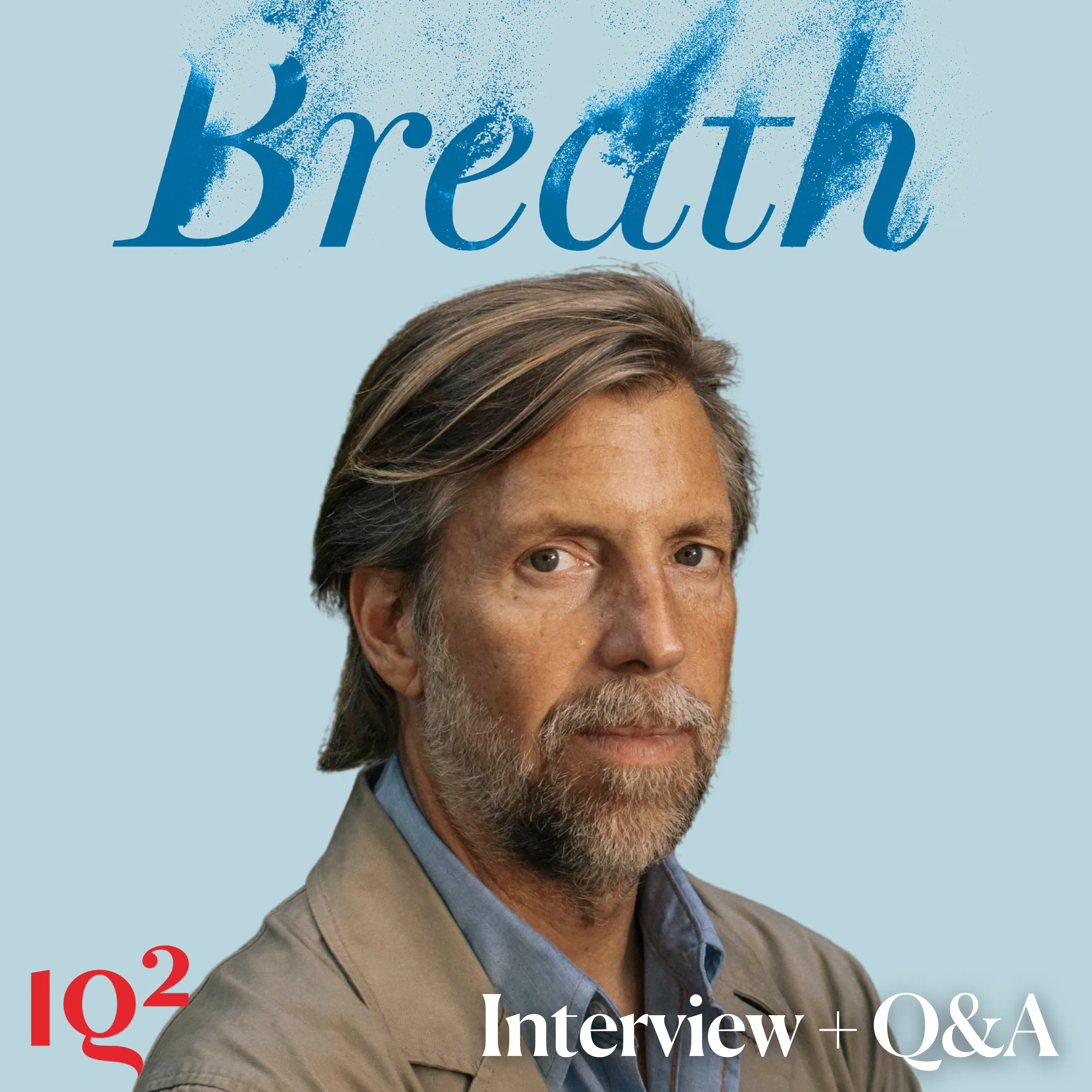
Intelligence Squared
Why Changing How You Breathe Can Transform Your Health, with James Nestor
00:38:46
Loading summary
Transcript66 lines
- [00:01]
James Nestor
Ready to relax in your dream bath retreat without the stress of figuring out every detail yourself. At the Home Depot, your bath upgrade is covered Shop fully designed rooms and curated bath collections to go from inspiration to transformation fast. Savings of up to 40% will make it easier on your budget and find everything you need from tubs to toilets and all the tile in between to bring your vision to life. The Home Depot Dream Baths built here.
- [00:31]
Mia Sorrenti
This episode is brought to you by indeed. Stop waiting around for the perfect candidate. Instead, use INDEED sponsored jobs to find the right people with the right skills fast. It's a simple way to make sure your listing is the first candidate. C According to INDEED data, sponsored jobs have four times more applicants than non sponsored jobs. So go build your dream team today with Indeed. Get a $75 sponsored job credit at Indeed.com podcast. Terms and conditions apply. Welcome to Intelligence Squared, where great minds meet. I'm producer Mia Sorrenti. Each of us takes on average 25,000 breaths a day. Yet as a species we have lost the ability to breathe correctly and this has consequences for our health. That's the argument of best selling author James Nestor, who has traveled the world to explore how ancient cultures used to use breathing as medicine to help heal the body and calm the mind. Today's episode is an extract of our recent live event on how changing your breathing can transform your health. James Nestor, who is a science journalist and author of the best selling the New Science of a Lost Art, was joined by Dr. Radha Mogul live at the Royal Geographical Society in London to answer your audience questions. Let's join the discussion now live at the Royal Geographical Society. Thank you James. Well on behalf of all of us, thank you so much because I think in this era of wellness, health and well being, I'm sure everyone in the audience can relate. Things just become so complex, they seem quite complex. I think what you've done is bring health back to the fundamentals, but also bring it back to the fact that we've all got a tool in inside us that we can use to help us every single day, which I think is absolutely fascinating. So you obviously said that you started this journey because of respiratory issues that you were having. What has surprised you the most through all your research and writing the book? What's challenged you? What surprised you? What did you not know or what really hit you when you were researching for the book?
- [02:38]
James Nestor
I think the thing that surprised me the most is so many conditions in which we have been told are incurable, including asthma, sometimes adhd, chronic congestion. They are absolutely you can at minimum reduce the symptoms and in many cases resolve these entirely. And this is not a message I think is communicated to people. I just had a friend brought his 3 year old kid in who was suffering from asthma and the doctor told him, you're going to have this the rest of your life, so get used to it. Here's your bronchodilator. And I think that's really irresponsible. I think the human body is capable of healing itself in many conditions if it has the right inputs.
- [03:20]
Mia Sorrenti
And obviously you're a science journalist, you were talking a lot about stories and people kind of picking up a few stories and kind of giving you a bit of flack for them or not, I'm assuming, obviously it's really important to you when you're writing this book to make sure the facts and the evidence were there. And you were quite skeptical, I think, when you first started on this journey about what you might find. So how did you balance sort of being open minded but also having that really core and essential part of being a journalist and making sure that it was evidence based?
- [03:47]
James Nestor
Well, it's funny because my approach is I talk to everybody. I talk to the weirdo on the street, but I also talk to the chief rhinologist at Stanford. I talk to the whole gamut because you can learn something from everybody. But what's interesting is the people very deep on the medical side say, oh, you shouldn't talk to those weirdos. And then the weirdos say, oh, you shouldn't talk to those corporate medical people. So I think that they're so at opposite ends, but the truth is almost always in the middle. You have to talk to them to see where the gauge is and then you have to fact check everything. I mean, there's. People have said, oh, you can't straighten scoliotic spines, you can't fix emphysema. But the references for all of this, if you would choose to look, there's 500 scientific references at the back of the book and you saw the images here. So it's not like I could just make something up. It's. They seem so fantastic, these stories and unbelievable that I think some people don't want to believe them. But that's their problem. Right. I want to stick with the facts and look at the data.
- [04:50]
Mia Sorrenti
Absolutely. And sometimes I find that things that are on the fringe sometimes overlap or they've got the same messaging as the science, but they're just being communicated in a different way for different audiences to hear. Sometimes, sometimes they actually meet in the middle.
- [05:03]
James Nestor
Surprisingly, I think it depends what your narrative is. And when you have these to extremes like this, people feel like you're selling out if you start to cross over. And I think that's irresponsible, too. I think you stick to what actually works, right? And what does the science support? And that can come from anywhere. It doesn't always have to come from the establishment. It can come from the weirdo on the street as well.
- [05:28]
Mia Sorrenti
Exchange of information and experience and story, human stories. The world we're living at the moment is pretty overwhelming. And I'm sure a lot of us, including myself, felt quite anxious about what's happening in the world. What did you find out about anxiety and stress in relation to how we breathe and our breathing?
- [05:46]
James Nestor
I found that those two things are extremely closely connected. What a number of researchers have found was that people that suffer from asthma and people that suffer from anxiety breathe almost in the exact same way. If you ask them to hold their breath, this is what they're going to do, because the threshold for CO2 is so low, because they've been breathing so dysfunctionally for so long that it's become a habit. And that habit doesn't mean it's normal. It's a dysfunctional habit. And so if that is what is causing so much of these underlying problems, it makes sense to me to try to fix that core issue first. Before you do something, I've talked to many psychiatrists and psychologists who have said you, you cannot fix anxiety if you don't first fix the breathing. It doesn't matter what other therapies you do, what drugs you take, what counseling you get. You have to fix breathing first. That's the foundation. And then you can do all your work on top of that. And after many years of doing these talks at medical schools, I don't see any change happening at all. I really don't. And I think people now have to start taking responsibility for themselves. And we have tools now that allow you to do your own research to see what's legitimate.
- [07:07]
Mia Sorrenti
And it is logical, isn't it? Because when we have a panic attack or we get very anxious, our breathing rate increases. In a panic attack, people's breathing becomes very out of control. So there is that link between these two conditions, our physiology and how we breathe. It's just so important. We're almost just trying to reverse that, aren't we? And trying to use our breath to help our anxiety.
- [07:28]
James Nestor
What happens in a panic attack or in an asthma attack, they're so similar, is someone's breathing and then they sense, just for a second that they're not breathing clearly enough, that causes them to breathe more. Then they take another breath. All of that over breathing exacerbates and creates the attack. If they were to do the opposite, the moment they sense that constriction in the airway, calm down, hold your breath for just a few seconds. Take some nice easy breaths, in and out, that can down regulate your nervous system, help you get control of the attack. I know so many people who have suffered from chronic panic attacks were scared to leave the house, who now are living free and open lives. You know, from something that is free, that just takes a little training.
- [08:19]
Mia Sorrenti
We've all got busy lives. You've put on some really helpful, I think, tangible kind of tips and daily practices. But I know for myself, if life gets busy, it's stressful. You know, you've got work issues, family responsibilities. You almost say to yourself, I'm just too, I'm too busy to concentrate on my breath. I've got too much to do to focus on this. What would be your advice to some of us, any of us around why you should do it? I know you've made your case very comprehensively in your talk, but how would you encourage us to just stop and actually kind of weave those practices into our daily lives when life gets a bit challenging or a bit hard?
- [08:55]
James Nestor
People thought that since I wrote this book, like all I do is sit around my house and breathe and try different breathing techniques.
- [09:01]
Mia Sorrenti
Is that not the truth?
- [09:04]
James Nestor
You'll never know, but I live a very hectic, hectic lifestyle. I do not have the opportunity to sit cross legged, you know, in the hotel rooms that I'm checking into and doing these laborious, intricate breathwork techniques. They're great, they work great, but I don't have time for that. Everything that I tried to address today, this is free and easy stuff that you can incorporate into your daily lives that you're already doing. We're breathing all of the time and you can improve it all of the time. And the point of doing these things isn't to give you another box to check every day or to feel guilty. Oh, I didn't do my breathing techniques today. Oh, I forget this. It's to develop a different habit that becomes unconscious so you never have to have to think about this again. And me personally, it took me a few months to develop to close my mouth when I was walking, when I was surfing, when I was jogging, when I was sleeping. Took me a few months. Now I never have to think about It I'm never breathing through my mouth now. Different people, it could take them a few weeks, it could take people even longer. But that's the point, is this becomes your default, not dysfunctional breathing as your default.
- [10:20]
Mia Sorrenti
I think sometimes as well, anxiety comes from a place of feeling like we don't know what to do to help ourselves, or if we're in that moment, we're feeling very panicky or anxious, we don't know what to do. And so I suppose by practicing those habits, by learning that there's something inside you that you can control, manage, practice that will help you feel better also adds on like another layer, I think, of almost self trust or resilience, that actually no matter what you come across, you've got something you can use to manage it, which I think is really powerful, but maybe not quantifiable.
- [10:53]
James Nestor
Well, it's empowering on many different levels. And to be clear, breathing better isn't going to fix all your problems. Some breathwork therapist will tell you that and they're 100% wrong. But I will say if you try to fix your problems where the underlying issue is breathing and you're doing everything else but fixing that foundational breathing issue, you're never going to get better. And this is especially true with, I think, this ADHD and sleep disorder breathing with kids thing is so huge. And nobody is talking about this, which I find shocking because it doesn't fit into anyone's bucket. The family physician doesn't have time to explain this. The pulmonologist is only looking at diseases of the lungs. The rhinologist is just looking to make sure that you are breathing, not how you are breathing. So it slipped through everything. And that's one of the main reasons I'm still coming out here and doing these talks, is because I think if this word is going to be spread, it has to be spread organically through people experimenting with this and sharing their story with other people.
- [11:59]
Mia Sorrenti
And you said that ancient practices have informed a lot of this. You went and talked to loads of people all around the world. I'm really interested to hear from you around any observations you made from different cultures, different countries, different ancient practices about breathing or how they prioritize breathing, I suppose. And are there differences between different countries and cultures with regard to that?
- [12:21]
James Nestor
I think if they didn't, many of these cultures would not have survived. I really think it was that important to them. And you can look all over the world to all of these different cultures. Foundational for Qigong means breathwork, you know, energy work, it's foundational for yoga. The number one thing is breathing and breathing properly. So to me there's no mystery to that. If you're looking at populations that were living at very high altitudes, especially in the Himalayas, they used breathing to keep themselves warm. This was a pragmatic skill. This was not a spiritual thing. Right. They're like, if I want to stay alive, I have to develop these different breathing techniques to stay warm. And there's stories, and this has been confirmed of these monks when they enter into these different stages of monkhood. They have to go outside in winter in the snow and spend all night out there breathing in this rhythmic pattern until they melt a circle around themselves by dawn. So sounds crazy. Herbert Benson at Harvard went up there and measured them, what they were able to do. So I think that we have underestimated our body's ability to do so many different things right now. And breathing is one of them.
- [13:34]
Mia Sorrenti
Since the book was published, have you noticed a change in perspective perception around breathing and breath? Do you think we're waking up to how important it is and how much focus we should give it?
- [13:48]
James Nestor
No. It's a good answer. I thought so. That would happen individually, absolutely. I've heard from so many people, but institutionally, no, I don't really see any change. I know a number of doctors who have quit and have started breathing foundations or different businesses to try to get people to breathe better because they know how important it is. But I still don't see any doctors really taking this seriously. The one group of professionals that is taking up airway health are dentists. So I know you're like, what? Dentists are into this because no one else is taking it. And who spends more time in patients mouths than anyone else? The dentist can diagnose, even just by looking at your mouth, how susceptible you're gonna be from snoring and sleep apnea. So I'm gonna backtrack. I'm gonna say yes. Dentists are really, at least in the US this is their thing. I think it's also their industry. So many people can get mail order braces now. We don't really need dentists. And so they're like, how are we going to become more useful? This is really useful. I'm really happy they're doing it.
- [15:00]
Mia Sorrenti
Well, shout out to dentists. Maybe it's also the place where we have to lie with our mouths open and kind of raise our hand when we need a break as well. Before we come to your questions in the audience, just one last question from me. How has Your research, writing this book, impacted your own personal health and well being. How has it changed your life?
- [15:19]
James Nestor
I tried not to include this in the book because I didn't want people to think what happened to me was going to happen to them. So I only flicked at this at the beginning of the book. But it has absolutely changed everything with my health. As you mentioned before, I was having. I was getting bronchitis every year. I surf, so I surf in wintertime. I was getting mild pneumonia every single year. I was told by doctors that this was normal and they would give me antibiotics and I was ignorant enough to take them. And now we know what antibiotics do to your gut microbiome. Right until around four or five years later where I was thinking like, something is off. Like their solution is to give me antibiotics. The solution should be to prevent this from happening to begin with. Once I learned those foundational steps, everything I told you here, I have not had one of those issues. Not one of them. And it's improved my athletic performance, my sleeping and more. I just want to make a huge caveat. I'm not saying this is the end all, be all for everybody at all. I hope you're not getting that message. I'm saying that if you're concerned about how you're eating, if you're concerned about your sleep, if you make sure you're exercising right and you're forgetting to breathe better, you are never going to be healthy. So it needs to be included in those pillars of health and luckily this one, as opposed to nutrition and all those other ones, it's free. And these tools, this is what you need to do these things. You can hire someone to coach you if you want, if you're into that, but you can be your own coach and you can really improve your life.
- [16:53]
Mia Sorrenti
Amazing. Thank you so much. James. Quince is really the go to place to build a timeless wardrobe that's actually made to last. Their pieces are elevated essentials that feel effortless. They're designed for layering and mixing, and they're really the kind of styles that you can wear again and again. Quince really is the place to go for quality wardrobe staples like 100% organic cotton sweaters. They have premium denim that's made with stretch for all day comfort. I'm usually pretty skeptical when it comes to ordering pants in general, but jeans, especially online. And both pairs of jeans that I've gotten from Quint, I cannot stop wearing. They're so comfortable, they're so flattering, and they're definitely the highest quality jeans that I own. Plus, they're incredibly affordable, which Quince is able to do because they work directly with safe, ethical factories and cut out the middlemen. So you're not paying for brand markup, you're just paying for that high quality clothing and everything from the stitching, the fit, the fabrics is really they're using the highest quality materials. So if you're interested in refreshing your wardrobe with Quince, go to quince.comintelligence for free shipping on your order and 365 day returns. Now available in Canada too. That's quince.comintelligence to get free shipping and 365 day returns. Quince.comintelligence New Year New Me Cute, but.
- [18:25]
James Nestor
How about New Year New money?
- [18:27]
Mia Sorrenti
With Experian, you can actually take control of your finances. Check your FICO score, find ways to save and get matched with credit card.
- [18:34]
James Nestor
Offers, giving you time to power through those New Year's goals.
- [18:36]
Mia Sorrenti
You know you're going to crush start the year off right. Download the Experian app Based on FICO Score 8 model offers an approval not guaranteed. Eligibility requirements and terms apply subject to credit check, which may impact your credit scores. Offers not available in all states. See experian.com for details.
- [18:51]
James Nestor
Experian Lifelock how can I help?
- [18:55]
Mia Sorrenti
The IRS said I filed my return.
- [18:57]
James Nestor
But I haven't One in four taxpaying Americans has paid the price of identity fraud.
- [19:01]
Mia Sorrenti
What do I do?
- [19:02]
James Nestor
My refund, though. I'm freaking out. Don't worry, I can fix this. LifeLock fixes identity theft guaranteed and gets your money back with up to $3 million in coverage.
- [19:10]
Mia Sorrenti
I'm so relieved.
- [19:11]
James Nestor
No problem. I'll be with you every step of the way. One in four was a fraud paying American. Not anymore. Save up to 40% your first year. Visit lifelock.com podcast terms apply.
- [19:23]
Mia Sorrenti
Eczema is unpredictable, but you can flare less with epglis, a once monthly treatment for moderate to severe eczema after an initial 4 month or longer DOS phase. About 4 in 10 people taking MGLIS achieved itch relief and clear or almost clear skin at 16 weeks. And most of those people maintain skin that's still more clear at one year with monthly dosing.
- [19:42]
James Nestor
MGLIS Lebricizumab LBKZ, a 250mg injection, is a prescription medicine used to treat adults and children 12 years of age and older who weigh at least 88 pounds or 40 kilograms with moderate to severe eczema, also called atopic dermatitis, that is not well controlled with prescription therapies used on the skin or topicals or who cannot use topical therapies. Ebglis can be used with or without topical corticosteroids. Don't use if you are allergic to allergic reactions can occur that can be severe. Eye problems can occur. Tell your doctor if you have new or worsening eye problems. You should not receive a live vaccine when treated with Eglis. Before starting Ebglis, tell your doctor if you have a parasitic infection.
- [20:16]
Mia Sorrenti
Ask your doctor about eglis and visit eglis.lilly.com or call 1-800-lilyrx or 1-800-545-5979.
- [20:23]
James Nestor
My day kicks off with a refreshing Celsius energy drink, then straight to the gym, pre K pickup back home to meal prep time for my fire station shift. One more Celsius. Gotta keep the lights on when the three alarm hits. I'm ready. Celsius Live fit. Go grab a cold refreshing Celsius at your local retailer or locate now@celsius.com.
- [20:51]
Mia Sorrenti
So we're going to come to you now and we want to have your questions for James. I'm going to start just over there with the lady with her arm up. Thank you. Great lecture, great book. We read it over lockdown. We've been married 30 years and you have saved our marriage because my husband is now back in my bed. He's been, he's been taping for 18 months and I can't thank you enough. It has changed your life too, right? He says he's happy. Anyway, quick question. When you talked about being with the free divers and they taught you how to breathe, how long did that take?
- [21:30]
James Nestor
Within a 35 minute training session, I was able to hold my breath for three minutes. So I went from 30 seconds to three minutes. That's how quickly this can turn on. And it got me thinking differently about what else you could do if that happened in 30 minutes. What could I do in 30 days or in a few years? And I still free dive to this day, I absolutely love it.
- [21:52]
Mia Sorrenti
Great question. Thank you. We've got just a lady there at the back. Thank you. So when you start a mouth taping, how long do you have to do it for? Like, I mean, months, years or forever?
- [22:09]
James Nestor
Great question. Some people can do it for a few weeks or just a couple months and they develop the habit to keep their mouth closed at night. I've heard from so many people that's all it takes. For other people like me, I don't have that facial structure. So no matter what, when I put my head On a pillow, my mouth goes open. So I'm stuck with this the rest of my life. But I know what a difference it makes to my sleep when I record my sleep and I have so much trouble sleeping well now without it. So that is very ambiguous answer to a very clear question. But it depends. You're going to have to try it and find out.
- [22:54]
Mia Sorrenti
Thank you for that question. I'm going to mix it up a bit in terms of error. So come to the gentleman at the front row, please. Thank you. So who's going to get to you first? It's a race. We'll just wait for the microphone. Thank you. Thank you.
- [23:10]
James Nestor
Thanks very much.
- [23:11]
Mia Sorrenti
Excellent talk.
- [23:12]
James Nestor
Thank you so much.
- [23:13]
Mia Sorrenti
When we did the exercise where we're.
- [23:15]
James Nestor
Exhaling, I opened my eyes and I.
- [23:17]
Mia Sorrenti
Thought I'd done okay, but I hadn't. When you're talking about the breath being used in elite sports, what are the most interesting things that you're seeing across sports and how the breath can be used to train athletes?
- [23:29]
James Nestor
If you think about elite competitive sports, the whole point is to last longer and be faster and stronger than your opponent. If you are wasting energy bringing in breath to your body that is never used, you are expending more energy that you could be using for other things. So a lot of football stars now are focusing on breath work and long distance runners are focusing on breathwork. If I can take 15 breaths a minute in zone four, zone five of extreme competition, rather than 50 breaths a minute, how much faster will I be able to go? How much longer will I be able to last? So it's all about efficiency, breathing fewer but richer, deeper breaths allows you to get more oxygen, more fuel for less effort. And that's what you want in sports. And if you adopt that in sports, you're able to have more energy throughout the day as well.
- [24:33]
Mia Sorrenti
Thank you. Great question. We'll just come to the lady just here, the end of the row. Thank you. Thank you very much. Do you believe breathing practice can influence brain plasticity and emotional regulation in the same way meditation does, or are they fundamentally different?
- [24:55]
James Nestor
Great question. Yes, they can, because I don't know of any meditation where you would be sitting with your eyes closed and breathing dysfunctionally. What do all meditations start with? Breathing slow, calming your respiratory rate, breathing deeply. And that allows your brain to relax and leave that alert, stressful state to sink into the meditation. Long term meditation, if you're talking about very deep meditation, has its own benefits, probably outside of breathing, but I think that's been largely unstudied but this is really peanut butter and chocolate together. These are two things that really vibe off of each other.
- [25:40]
Mia Sorrenti
I haven't tried that combination, but I'm going to.
- [25:42]
James Nestor
Yeah, it works in America. I was just right when I said it. I was like, I don't know if this is going to work.
- [25:46]
Mia Sorrenti
We're learning lots of things. I'm going to go to that person over there right at the back. So I'm just trying to mix up, make sure we get questions from everyone.
- [25:54]
James Nestor
One of my earliest memories from school is of a teacher saying, you should all be breathing through your nose. And I announced to the class that if you try to breathe through your nose consecutively, you won't be able to do it for more than three. And I remember quite a lot of people saying, like, oh, yeah, you can't do it. So I went through my life just breathing through my mouth, thinking that it was because I couldn't get enough air through my nose. And I was wondering, as you've been doing your work, if you've noticed that I still have this feeling that if I open my nose, I can breathe more easily. And your tips have helped already in this lecture. But I wonder if you've got any thoughts about this thing, about feeling like you have to, like the structure of your nose isn't set up for deep breathing. Thank you. Absolutely. I didn't have time to get into this. This gets extremely complicated. But everybody is different. Some people have real structural problems in their noses that they need to get from fixed a severely deviated septum, turbinates that are too plugged up. So this is where surgery can be very beneficial. I spent a lot of time with ENT surgeons who do these surgeries, and they said that the majority of people that came into their clinics did not need surgery, so they would refuse surgery. What they would do is to teach them how to breathe properly, because they found through their scans that it wasn't a structural issue with the bones. It was. They were so habituated to breathing through the mouth that the nose plugs up. Without getting into all of the details. One of these researchers did this study with people who had laryngectomy, so the hole in the throat. And they found within a number of months, the nose completely closed up. So this is a use it or lose it thing. This same person was slated for nasal surgery to get her turbinates reduced. She started nasal breathing using sleep tape, and all of her issues went away. So it really depends on what your core issue is, but let's do A couple little tricks here. You can take your two fingers on each hand right here. Okay. Place them on the side of your face and spread your nostrils open. If that is significantly easier to breathe this way, then you are one of the 20% of the population who suffers from something called nasal valve collapse. So your nostrils are either too thin and they flutter when you take an inhale in, or the holes, the nostrils themselves are not wide enough. There is surgery to remedy that. And there are also these strips that go above the nose. You might see sports stars wearing these strips. They aren't doing this to look cool because these don't look cool. Right. They lift the nostrils up to the position they were supposed to have been when our faces grew to the form that they were supposed to grow in. So, sorry, that's a very complicated answer. But it depends where you are on that scale. What we found is that, that the majority of people, not everybody, majority of people will respond to obligate nasal breathing. It tends to help open things up and hum more often, too. That will speed up the process.
- [29:18]
Mia Sorrenti
Thank you very much. I'm going to come to a question just here. Thank you. Hi. I've read an awful lot about breathing, including most of your book, and I come across so many different techniques for breathing, like Buteko breathing, the box breathing, Ujjayi breathing, yoga breathing. And I see what you've shown us today. But are there types of breathing that you would say, after all your research, that are less effective, that you wouldn't recommend because it's a bit of a minefield there, or are they all valid in their own way in particular circumstances?
- [30:06]
James Nestor
Almost everything that you're going to see online about breathing and breathwork is fancy, complicated stuff. Okay. Where you go on these retreats and there's a guy with a gong and they're wearing white robes and it's cool. It's all great stuff. It's very groovy. Right. But so few people are talking about the foundational elements, right? What I've told you is by far the most beneficial and important thing you can do for your breathing. Once you get up to normal, then you can do all of these fancy breathwork practices, right? So that's when you want to in yoga. They would never allow you to do yoga unless you were healthy first. And then that puts you up the next rung of potential. I think the same thing should be true about breathing. So I would focus on everything that I told you tonight. And then once you get done with that, you can start exploring wim HOF Method. How many people have done the WIM HOF method? A few people. Okay. It's amazing, right? It feels great. It gets you extremely high, you feel energetic. But it doesn't do much for people who are breathing so dysfunctionally because they go and spend 20 minutes doing this breath work and then they go back to hunching over and breathing through their mouths. So learn the boring stuff first and then get into the sexy stuff later.
- [31:23]
Mia Sorrenti
Thank you. I'm aware of it. Ignore the middle. So we'll go to the person with their hands right up there. Just right through the middle. Yep, that's you.
- [31:34]
James Nestor
Just taking a deep breath. I'm a huge fan. Been doing the mouth tape as well. So our relationship. One thing I would say is that I have been following your breathing techniques and then I took a step further and had a breathing class with someone who is a free diver and it was transformative. I do it every morning now. It is probably a bit more advanced, but I don't quite know what's happening. But what I am trying to do is do the. And then a long exhale and then I'm doing different types of diaphragm breathing on the exhale. And I'm feeling very calm after, very free of stress and anxiety. Can you speak to what's actually going on from probably more around the carbon dioxide aspect because I understand that oxygen sounds like it's everything in breathing, but actually carbon dioxide is really the secret. So all of these breathing techniques are really variations off of the same themes. And so what you're doing is a hyperventilation exercise combined with a very slow exercise. What this does, it allows you to control your nervous system. It puts you back into control. So during that breath work where you're, you are stressing your body out, but you are doing it on purpose and you are compounding all the stress from your day into that short exercise so that for the rest of the day you will be much more relaxed. It's a classic yogic technique. This is what they've been doing for thousands and thousands of years with the carbon dioxide stuff that does get quite technical. But when you over breathe there are some breathwork practices. WIM HOF Method Kundalini practices holotropic breathwork where you sit in a room with people for three hours in hyperventilate. This is a real thing. It's been around for 15, for 50 years. It's super weird if you choose to do that. So what you're doing, people say, oh, you're entering into a spiritual plane and all that that could be true, but what we actually know is happening is you are off gassing so much carbon dioxide that your brain thinks you were dying. So it sends off emergency signals to mimic death. So this is a controlled little death. So you reduce the, the amount of oxygen going to your brain when you are hyperventilating up to 40% reduction of blood flow to the brain at extreme states of hyperventilation, which causes your brain to short circuit. And it feels amazing. You can think of things in a completely different way afterwards. So physiologically that's what's happening. The more you over breathe, the more CO2 you off gas, the less oxygen is delivered because everything clamps up, which is why your hands get very cold. The slower you breathe, the more that CO2 comes back into balance, which is why when you breathe slowly after hyperventilating, you feel all that tingling in your fingers go away. You feel this warmth flooding your body. This is you taking control of your vascular system, opening up your blood vessels and closing them with your breath. And once you start playing around with this, it gets kind of addicting because you're like, if I can do that with my breath, what else can I do?
- [34:57]
Mia Sorrenti
Got a question right at the back there.
- [34:59]
James Nestor
Thank you for a stunning presentation. I'm a physician and I was around when drugs first started to be used for kids with so called adhd. I wonder if I can invite you into the dialogue a bit in relation to what must be a gargantuan task, because what you're really up against is the pharmaceutical industry. How are you handling that? Well, now you've made me extremely suspicious. Suspicious of all these dark corners in the room here. I have not heard from anyone from the pharmaceutical industries. I've actually been invited to speak at a few pharmaceutical conferences, which I thought was utterly bizarre. And afterwards I got the coldest shoulders I've ever felt in my life because I did not censor any of my talk. So I don't think they care about me. I don't think, think what I'm saying is any threat to their dominance over the world markets. I really don't. And I think when it comes to kids especially, I'm not saying that, just improving. If you have a kid with adhd, it looks like many of those symptoms could be caused by sleep disorder, breathing. But it's really in your power now to diagnose this and to treat it. So to answer your question, I haven't received any threats. If that changes and I go dark and disappear Then you'll know what happened.
- [36:42]
Mia Sorrenti
Thank you. Got time for one last question? We'll just go to Slady here. Thank you at the front. Thank you for sharing all this knowledge. It's breathtaking. When you mention about the children that snore at night, what would you do? Apart from the tape, what would you suggest to do with them?
- [37:05]
James Nestor
The easiest thing you can do is download. There's a free download. Again, I'm not associated or affiliated with any of these companies or apps. I'm mentioning to you Snore Lab or Snore Clock, and there are also other apps. And you put a phone in the kid's room and you put it next to their bed, and this provides a good general layout of how they're breathing at night. So that graph that I showed you of that kid, that was done with Snore Lab and you can go back, it records breathing throughout the night so you can hear it. And if you don't believe the graph, you can go back and listen to it. You can take that as your baseline data. Right. And then you can continue to record their sleep every night as you experiment with sleeping on the side, which can be extremely effective for people with snoring and sleep apnea, with experimenting with some of that Myotape, if you don't want to tape the kid's mouth. And there are a bunch of different things you can do. Raising the head of the bed so it's slightly tilted can help a lot of people breathe better. But you have to know if you're progressing in the right direction, which means you need to be recording every night. And once you get a signal that something is working, go deeper into that. You can also get an official sleep study. I've heard some mixed reviews about a sleep study. You can get one of these, but for some people, doing that is a big leap. And they want to be able to do something immediately that they're more in control of. And so these little hacks, I'm going to be putting all of this for free up on the website so you can. So you can follow this. But I know I threw a lot at you. Snore Lab or Snore Clock, free app. And then experiment with different things. Yeah, it trains them to. You want to train nasal breathing. If the kid is having a lot of problems breathing through the nose as you're experimenting in the day, then don't do it at night. Right. So you have to use common sense here. And you can take them if they're having severe problems. They've never been able to breathe through the nose. Take them to an ENT who can take a scan to see what the issue is and maybe there's a structural issue.
- [39:19]
Mia Sorrenti
Fantastic. Thank you so much. I'm afraid that's all we've got time for. I'm sorry to the people who haven't been able to ask their questions, but I want to say a huge thank you to you for all your questions. I want to say a huge thank you to James for his fascinating presentation and all of his answers. The good news is that James will be signing copies of Breath in the Map Room, so please join him for that. I just want to say thank you to Intelligence Squared for hosting the event and also for our venue, the Royal Geographical Society. But thank you all very much for the event. Thank you. Thanks for listening to Intelligence Squared. This episode was produced by Ginny Hooker and it was edited by Mark Roberts. For ad free episodes and full length recordings. You can become a member@intelligencesquared.com for free. And to join us at future live events, just head over to intelligencesquared.com attend to see our full events program. You've been listening to Intelligence Squared. Thanks for joining us.