Podcast
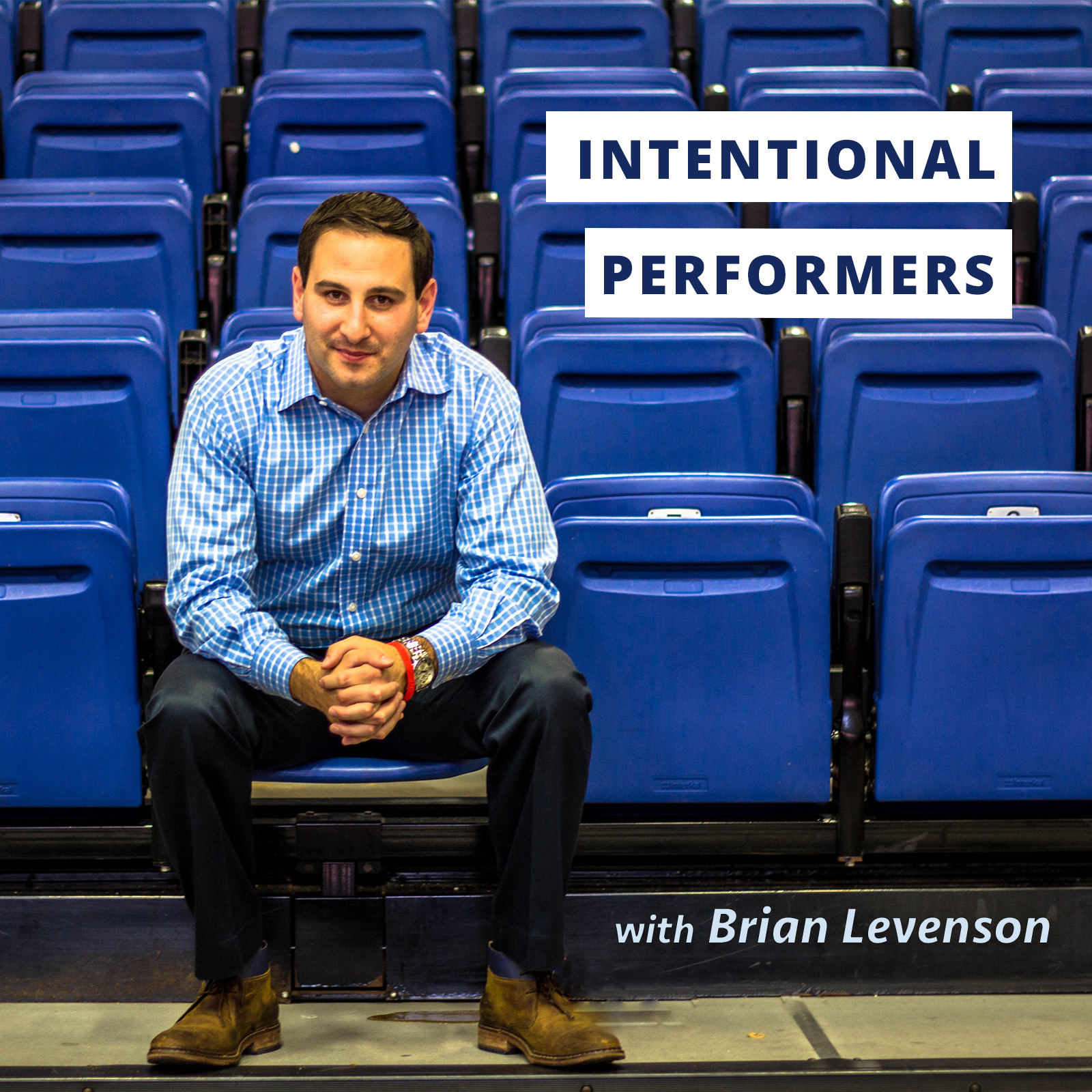
Intentional Performers
Hosted by Brian Levenson · EN
I created this podcast because I believe that much can be learned from digging deep with intentional performers. You can learn more about me and my company at www.strongskills.co.
12episodes
Episodes
Newest firstAll episodes
Emma Seppala on Finding Sovereignty
Apr 17, 2024Tap to summarizeDr. Emma Seppala is a bestselling author, she’s a Yale lecturer, and international keynote speaker. She teaches executives at the Yale School of Management and is Faculty Director of the Yale School of Management’s Women’s Leadership Program. She’s a psychologist, she’s a researcher, she is somebody who is constantly thinking and wondering about the science of happiness, emotional intelligence, and social connection. She is also an author, as I mentioned earlier, and her books are what we focus on in today’s conversation. The two we focus on are The Happiness Track, which has been translated into dozens of languages and was published in 2016, and her new book which we really dive into in today’s conversation which is called Sovereign. Dr. Seppala is also the Science Director of Stanford University’s Center for Compassion and Altruism Research and Education. Emma has been featured in just about every publication you can imagine, including The New York Times, The Washington Post, and NPR, and she also has done TED Talks all over the country. Her contributions and writings have been featured in places like The Harvard Business Review, The Washington Post, Psychology Today, and Time. She’s been fortunate to also consult and speak to organizations like Google and Facebook/Meta. Her research on breathing is also something that we talk about today. She has done amazing work with our military and their experience with trauma, so we bring that into today’s conversation. Emma had a number of amazing insights during our conversation. Some of them include: “It really doesn’t make any sense to sweat the small stuff” (7:10). “There is an inner wealth that is more precious than any external wealth you can have and any material good you can have” (8:00). “This idea of the ability that we have to have sovereignty over our mind; it is there, it is something we can have, but we forget about it” (10:20). “Through the breath you can actually shift which emotions you’re experiencing” (11:25). “Suppression [of our emotions] actually makes them stronger” (12:25). “Emotion is energy in motion. You need to learn how to move it” (14:35). “Vulnerability and authority can coexist. Vulnerability and strength can coexist” (21:50). “When you suppress the negative, you’re also suppressing the positive” (26:15). “We’ve bought into this idea of high stress all the time, and all it’s doing is burning us out” (31:00). “It’s good to question how we always do things, even if everyone’s doing it, because it may not always be the best thing we can be doing with ourselves” (33:25). “Self-criticism is different from self-awareness” (37:00). “It doesn’t make sense to have an antagonistic relationship with yourself” (38:10). “Our mind is like a mirror; it’s going to reflect whatever we put in it” (40:15). “For sovereignty, the key is discernment” (42:35). “Having the attitude of kindness is one of the greatest secrets to happiness and fulfillment over the length of your life” (46:20). “The happiest people, who also live the longest most fulfilled lives, are the ones who live lives characterized by compassion, balanced with compassion for themselves” (47:40). “The most successful leaders out there are leaders that are compassionate” (50:35). “Happiness is a very individual experience” (52:20). “Everybody, to some extent, has an addiction” (56:50). “We can get stronger and better at everything if we just force ourselves to do it over and over” (1:07:25). Additionally, you can purchase Emma’s new book Sovereign anywhere you buy books. You can also check out her website and connect with her on Facebook, LinkedIn, Instagram, YouTube, and Twitter. Thank you so much to Emma for coming on the podcast! I wrote a book called “Shift Your Mind” that was released in October of 2020, and you can order it on Amazon and Barnes and Noble. Additionally, I have launched a company called Strong Skills, and I encourage you to check out our new website https://www.strongskills.co/. If you liked this episode and/or any others, please follow me on Twitter: @brianlevenson or Instagram: @Intentional_Performers. Thanks for listening.
Transcribe →Safi Bahcall on Loonshots
Feb 8, 2023Tap to summarizeSafi Bahcall is going to come across pretty quickly as someone who is bright. Sharp. Smart. Intelligent. He went to Harvard for undergrad and then went on to get a PhD in Physics from Stanford. He’s an academic, a researcher; someone who loves studying science. After he finished up his education, he went on to work for 3 years as a consultant for McKinsey. He then co-founded a bio-technology company where they develop new drugs for cancer treatment. He led their IPO and served as their CEO for many years. In 2008 he was named Ernst & Young New England Bio-Technology Entrepreneur of the Year. In 2011, he worked with President Obama’s Council of Science Advisors on the Future of National Research. In other words, it’s not just you or me that’s going to notice Safi’s intelligence. His book, Loonshots, which is his first book, has been translated into 21 languages and was selected as a Best Business Book of the Year by Amazon, Bloomberg, Financial Times, Forbes, The Washington Post, and more. Today, Safi advises CEO’s and leadership teams on strategy and innovation, and has delivered keynote presentations at industry conferences, investor events, leadership retreats, medical meetings, and leading academic institutions around the world. Today’s conversation we dive into his work, but we also get into his mindset and how he thinks about leadership and how he thinks about invention and innovation. And certainly, he admires people that have come before him, but Safi himself is often thinking about new ways of innovating, new ways of thinking. He loves to try to think about not just how he sees the world, but how people around him see the world and how we can make teams and organizations and groups better instead of just thinking about what’s convenient for ourselves. This is an idea that is at the core of his book Loonshots. The book is a lot about learning empathy, learning how to listen, learning how to read a room and read an organization, and then figure out how you can collaborate and work together to make really big things happen. Safi had a number of amazing insights during our conversation. Some of them include: “You need to be trying a lot of things and failing” (8:30). “Artists are the people who we want to take risks and explore the unknown” (10:55). “The confusion is when you assume artists and innovators are the same” (12:30). “If you’re in the managing or leadership position, the number one thing you have to remember is that you’re always signaling. Everybody is watching your face constantly” (21:05). “If you favor one side over the other, you’re going to sink the ship” (21:30). “You’ve got to respect both your creative artist scientist-types, your innovators, and your soldiers. And you’ve got to manage them differently” (26:50). “When you’re in artist mode, if you’re not failing, if you’re not trying and things don’t work, you’re not pushing yourself enough” (28:10). “Art and science are connected by purpose. The purpose of art is the pursuit of beauty, the purpose of science is the pursuit of truth, and they’re very close. There’s beauty in truth and there’s truth in beauty” (30:15). “[To cultivate curiosity in people], just keep asking why” (32:30). “I don’t focus on what did you learn. I focus on what did you ask” (33:20). “What you want to cultivate in yourself and in your kids, if you’re raising kids, is asking good questions” (33:30). “The guy with the initial idea is the guy getting the ball from his own goal line to his own five-yard line” (43:00). “What separates the real innovators is how they go about it. Do they keep asking why?” (45:30). “They have courage, curiosity, and commitment. Those are the 3 C’s that I’ve seen across people who are really good at innovating” (46:15). “I had very little idea what I was going to be writing about when I started writing Loonshots” (52:30). “Commit to running an experiment a day” (54:30). “Just using the word ‘experiment’ gives you permission to fail” (54:45). “Write FBR early on. Fast, bad, and wrong” (55:45). “That’s the key: if and when you’re stuck, it’s to develop a personal cookie jar… your cookie jar is where you reach into when you’re struggling” (1:03:05). Additionally, you can find Safi’s website here and connect with him on LinkedIn. Thank you so much to Safi for coming on the podcast! I wrote a book called “Shift Your Mind” that was released in October of 2020, and you can order it on Amazon and Barnes and Noble. Additionally, I have launched a company called Strong Skills, and I encourage you to check out our new website https://www.strongskills.co/. If you liked this episode and/or any others, please follow me on Twitter: @brianlevenson or Instagram: @Intentional_Performers. Thanks for listening.
Transcribe →