
Podcast
Irish Tech News Audio Articles
Hosted by Irish Tech News · EN
Audio versions of the articles from our news feed.
56episodes
Episodes
Newest firstAll episodes
Astronomy student discovers second planet around young star
Mar 2400:06:47Tap to summarizeAn international team of astronomers, led by a PhD student at University of Galway, have made the groundbreaking discovery of a second planet in the same system where they discovered another planet last year. Detected at an early stage of formation in the disc around a young star, the young planet named WISPIT 2c is estimated to be about 5 million years-old and most likely ten times the mass of Jupiter. The star, WISPIT 2 is located in the constellation of the Eagle, a prominent equatorial constellation visible in the summer northern hemisphere (July-November) along the Milky Way. The study was led by PhD student Chloe Lawlor from the Centre for Astronomy at the School of Natural Sciences and the Ryan Institute at University of Galway, in collaboration with PhD student Richelle van Capelleveen, Leiden Observatory, Netherlands and postdoctoral researcher Guillaume Bourdarot, Max Planck Institute for Extraterrestrial Physics in Garching, Germany. This major find for the field of astronomy makes WISPIT 2 only the second-known young (and still forming) multi-planet system. WISPIT 2 may resemble the young Solar System with now two gas giant planets embedded in its multi-ringed dust disk. This includes the now confirmed planet WISPIT 2c and the planet WISPIT 2b, which was discovered last year by the same research team (led by Richelle van Capelleveen at Leiden Observatory and Dr. Laird Close from the University of Arizona). The new planet is a very young gas giant based on the temperature and its radius from the atmosphere spectrum. It is twice as massive as the previously detected WISPIT 2b and orbits four times closer to its host star, which makes it incredibly difficult to detect with ground-based telescopes. The study has been published in Astrophysical Journal Letters. The presence of this second planet was detected using the European Southern Observatory's (ESO's) Very Large Telescope in Chile's Atacama Desert. By linking several telescopes together to act as one giant instrument, the research team was able to observe regions very close to the star. The team detected carbon monoxide gas, a chemical that is commonly found in the atmospheres of young giant planets. Carbon monoxide leaves a strong and distinctive chemical signature in telescope data, providing the crucial evidence needed to confirm the planet's existence. Chloe Lawlor, PhD student, Centre for Astronomy, School of Natural Sciences, University of Galway, said: "After the initial discovery of WISPIT 2b, which I was also involved in, we suspected there might be another object in the system. At first, we weren't sure if it was a planet or a very large dust clump. We very quickly made follow-up observations using the Very Large Telescope Interferometer, an incredible setup where multiple telescopes can be connected to form a large virtual telescope. This allowed us to take what we call a spectrum, which is essentially a chemical fingerprint, revealing the elements and molecules in an object's atmosphere. "Carbon monoxide is one of the key signatures we are looking for in young giant planets. When we saw it clearly in the data, that was when we knew we had something significant. There was definitely an element of disbelief. I didn't expect to be the one to find a second planet in the system. When I sent the spectrum to my supervisor Dr Christian Ginski, it was a huge shock and upon further examination, he confirmed I'd found a planet! "WISPIT 2 will become an important laboratory to study planet formation." To uncover the hidden planet, the research team used the European Southern Observatory's (ESO's) Very Large Telescope Interferometer (VLTI), which captured an image of the object and allowed also for the first study of its atmosphere. The team specifically used the recently upgraded instrument GRAVITY+, which allows the light from all four of the eight metre telescopes of the ESO to be combined. This challenging technique using cutting-edge instrumentation was fun...
Transcribe →NCI commended by Research Ireland and the Education Awards
Mar 2400:10:00Tap to summarizeOn March 5th, 2026, Minister for Further and Higher Education, Research, Innovation and Science, James Lawless TD, and Minister for Education and Youth, Hildegarde Naughton TD announced that almost €6 million in funding would be used to support thirty-two projects designed to engage the public in science, technology, engineering, and mathematics (STEM) through the Research Ireland Discover Programme. The Research Ireland Discover Programme is a national initiative to widen participation in STEM. This year's projects will engage with people of all ages, from early childhood through to adulthood, through creative, community-embedded, and inclusive approaches to STEM engagement. Research Ireland Discover Programme awards NCI NCI's STEM for All: Multiple Inclusive STEM Engagements for Families, Communities project, led by Professor Paul Stynes, Dean of the School of Computing, has been awarded €60,000.00 in funding. About the project The STEM for All project builds on Research Ireland funded programming, supporting STEM identities, skills, and aspirations of children and families facing significant socio-economic challenges in Dublin's Inner City by creating multiple, accessible, inclusive opportunities for disenfranchised families to gain confidence, competence, and a sense of belonging in STEM, and the research and innovation world Professor Paul Stynes, Dean of NCI's School of Computing, shares, "This funding allows us to further advance our research into inclusive STEM education, building a stronger evidence base on what works in engaging children and families from underrepresented communities. As Principal Investigator, it enables us to evolve and scale our programmes in a way that is both research-informed and community-driven, strengthening pathways into STEM from an early age through to future study and careers. It also reinforces NCI's role in leading impactful, inclusive research that connects education, community engagement, and long-term societal outcomes." NCI's Early Learning Initiative (ELI) is a grassroots public purpose project addressing systemic inequalities; empowering at-risk children to discover their STEM identities through creative, engaging experiences that encourage scientific thinking. STEM is embedded across ELI's early intervention programmes: STEM Play & Learn (home visits, ages 4–6), weekly Coding Clubs (ages 7–12), Senior Coding Club (ages 13–16), STEM events for families. Local advocacy, accessible family learning, and parent engagement are central to inclusive education, building science capital, and resilient communities. Recognising parents' profound role in shaping children's learning outcomes and aspirations, ELI's programming expands, incorporating insights from their 2024 Parental Attitudes to STEM and Digital Technology research, including findings from in-depth case studies exploring long-term STEM engagement in disadvantaged families. To deepen impact and engagement several new elements will be introduced: Think Like a Scientist pilot, an initiative aimed at bridging a gap in children's scientific understanding through inquiry-based learning; bespoke parent technology clinics; and STEM 101 sessions demystifying core concepts, giving parents tools to support their child's learning. In parallel, ELI is developing longitudinal analysis framework exploring how sustained participation in the STEM programmes influences young people's aspirations and progression to third-level education. Brigina O'Riordan, Assistant Director of ELI's Community Services Programmes, shares, "This funding will enable children and families in Dublin Inner City to engage in high quality, accessible, and engaging STEM learning experiences, building confidence, curiosity, and awareness in the scientific method. This programme is intentionally designed to promote access, inclusion, and diversity, with strong participation from underrepresented groups, supported by NCI as a safe and welcoming community space." Researc...
Transcribe →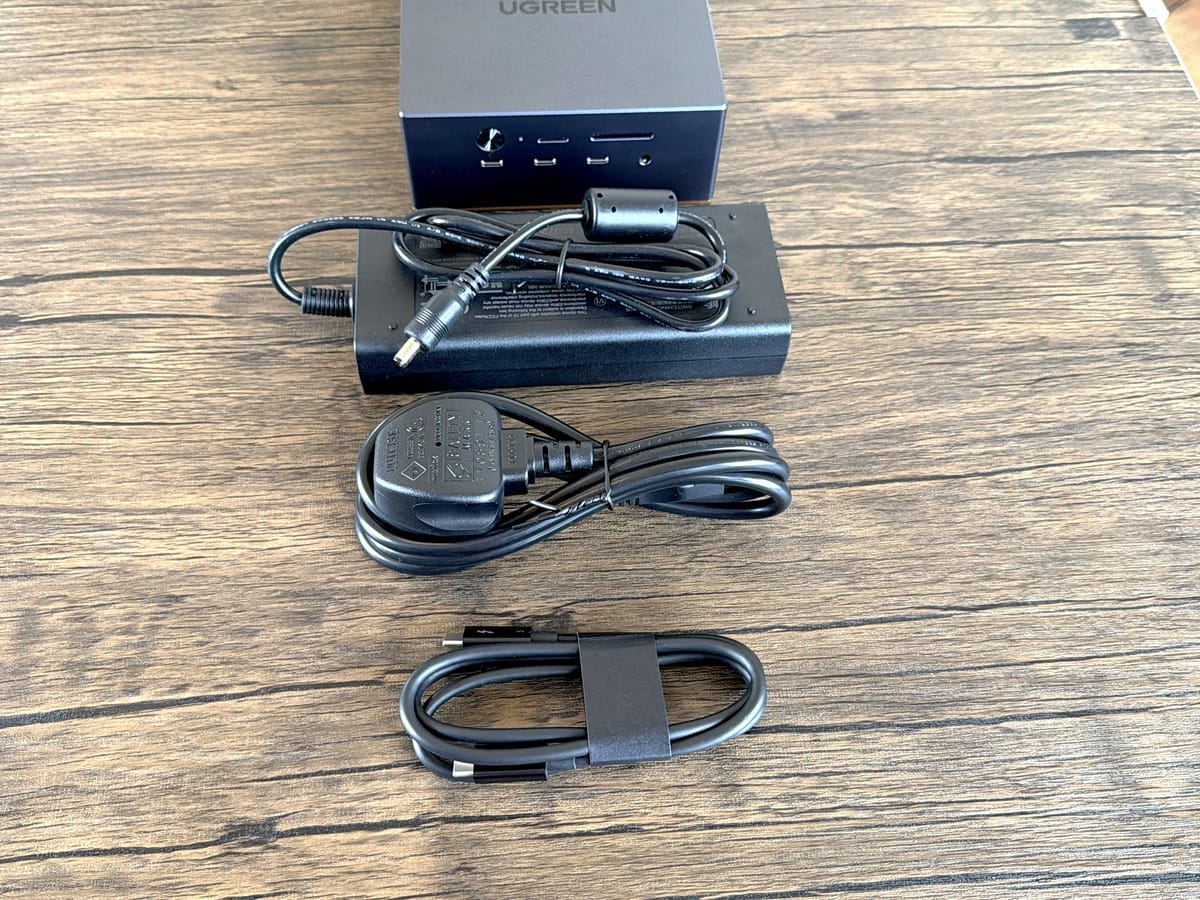
UGREEN Revodock Maxidok 17-in-1 Thunderbolt 5 Docking Station Review
Mar 2400:10:09Tap to summarizeUGREEN have launched a new series of Thunderbolt 5 compatible devices and have sent us their Revodock Maxidok 17-in-1 Thunderbolt 5 Docking Station to take a look at. This dock is jam-packed with ports, specs and features which allow you to connect and charge all of your devices, store data externally and transfer it between connected devices at blistering speeds. As this is a Thunderbolt 5 device, it caters to the higher end of the laptop and display market, but it is also backwards compatible and still works extremely well when connecting to devices with standard USB-C. If your devices support Thunderbolt, though, the convenience and speed at which you can transfer data is so fast it seems unbelievable at times! What's in the Box Along with the dock, UGREEN include everything you will need to get up and running. There is a 240-watt external power adapter to power everything. It comes with 3 different cables with plug tops to suit the main world regions. There is a heat sync for an NVME drive and a screwdriver included for installation. UGREEN Revodock Maxidok 17-in-1 Thunderbolt 5 Docking Station Design and Specs We have reviewed many UGREEN products over the years and have always been impressed with their build quality and design. With the Revodock Maxidok, though, UGREEN have really upped their game, and everything about this product has a really premium look and feel. Starting with the box, the hinged opening presents the dock front and centre of the packaging and feels more reminiscent of what you would see with a fancy watch, and it's a good indicator of the effort that has been put into the overall product. All of the accessories included are also of high quality and well packaged. Moving on to the Revodock Maxidok itself, the premium material vibe continues. The steel chassis feels solid and is finished in a two-tone space grey type colour and copper, which is diagonally split along the sides. The front face of the device has the power button, 3 x USB-C ports, a micro and full-size SD card slot, capable of 312MB/s transfer and a headphone jack. The bottom of the device has a hatch and bay for an M2 NVMe drive, with the back of the device having the remainder of the ports. These include: 2 x Thunderbolt 5 Downstream ports, 1 Thunderbolt 5 Upstream port, 1 x DisplayPort, Audio In & Out ports, 3 x USB-A ports capable of 10Gbps and a 2.5GbE Ethernet port. The device can also supply 240 watts to charge devices and power peripherals, and you can keep everything secured to your desk with a Kensington lock. Some of the other headline features include: All-in-one expansion: 17 ports for data, video, networking, storage, and charging. Ultra-fast data transfers: Supports up to 120Gbps unidirectional bandwidth and 80Gbps bi-directional bandwidth Built-in NVMe PCIe Gen4 x4 M.2 slot: Open and edit 4K assets and large files directly, with no waiting around for copying or loading. More affordable than upgrading internal device storage. Flagship multi-display support: Supports three independent displays (Windows), two independent displays (Mac), as well as single 8K@60Hz or dual 6K@60Hz outputs. Built-in 2.5GbE network port: Transfer large files such as 4K footage quickly and reliably. No need to worry about flaky WiFi connections. 24/7 stable performance: Advanced thermal engineering keeps performance stable even throughout 24/7 high-load testing, with the surface remaining under 40°C. Day-to-Day Use For a high-spec device such as the Revodock Maxidok, there are a number of consumers out there who have the right equipment chain and workflow process that will make this device seem like a "must buy", but it is also a really useful device to have outside of these scenarios. The first people who will clearly benefit from a device like this are people who are in the Apple ecosystem and mainly do their day-to-day computing on a laptop or tablet. Apple devices have been Thunderbolt compatible for some time, and as they release new d...
Transcribe →
Who owns the ip of that agent? Alexia Cambon, Senior Director of Research Microsoft
Mar 2400:02:09Tap to summarizeThe Irish Tech News Podcast is now 10 years old ,and over the years we have covered a wide variety of tech topics over 1700 episodes. To celebrate this milestone I have a very special guest, Alexia Cambon appearing on the podcast. Alexia, is a senior director of research at Microsoft and I caught up with her at the recent Microsoft AI Summit in Dublin. Alexia talks about her background, AI in the work place, intelligence work, writing for AI, copilot, and more. More about Alexia Cambon: Alexia leads research for the Future of Work & M365 team as a Senior Director at Microsoft, working to identify emerging research opportunities and delving into customers' most pressing workforce challenges. She co-leads Microsoft's cross-company research initiative examining AI's impact on productivity and performance, and is a seasoned presenter and speaker with a passion for storytelling and creative thinking. Alexia's areas of focus include AI, hybrid work design, and organisational culture. She has written for HBR and The Guardian, and has been featured in NPR, Forbes and The Times (UK). See more podcasts here. More about Irish Tech News Irish Tech News are Ireland's No. 1 Online Tech Publication and often Ireland's No.1 Tech Podcast too. You can find hundreds of fantastic previous episodes and subscribe using whatever platform you like via our Anchor.fm page here: https://anchor.fm/irish-tech-news If you'd like to be featured in an upcoming Podcast email us at Simon@IrishTechNews.ie now to discuss. Irish Tech News have a range of services available to help promote your business. Why not drop us a line at Info@IrishTechNews.ie now to find out more about how we can help you reach our audience. You can also find and follow us on Twitter, LinkedIn, Facebook, Instagram, TikTok and Snapchat.
Transcribe →Irish European Climate Pact Ambassadors to take part in Pact's Annual Event
Mar 2400:01:45Tap to summarizeIreland's European Climate Pact Ambassadors will this week be attending the Pact's Annual Conference in Brussels, held this year under the theme of 'Together in Action'. Together with Ambassadors from other member states, Ambassadors Dr Laura Kirwan and Martin Brocklehurst will be showcasing their work in driving grassroots community climate action throughout Ireland. As a Sustainability Lead at Nutritics, an Irish-headquartered global leader in food data technology, and an expert in eco-friendly food systems, Dr. Kirwan has drawn on her extensive experience to create a sustainable menu for the event using the "Footprint" software, a digital tool allowing for the analysis and creation of eco-friendly dishes. An experienced thought leader on the role of food in fighting climate change, Dr Kirwan previously spoke at COP29, and served as a delegate at last year's UN World Food Forum. Joining Dr Kirwan will be Martin Brocklehurst, whose work as an Ambassador centres on the role of citizen science in driving grassroots climate action, advocating for citizen science as a key part of implementation plans for major global environmental resolutions. A veteran of climate action, Brocklehurst has spent over four decades involved in environmental efforts in the public sector, as well as with academic and NGO clients on major EU projects. The Annual Conference represents a landmark moment in the European climate calendar, bringing together over 500 citizens, policymakers, businesses and community leaders from all 27 EU member states to connect in a shared celebration of the collective action needed to drive Europe's transition to a climate-neutral future. See more stories here.
Transcribe →
Pharma and Life Science Professionals to Meet at ISPE Ireland's Inspire Conference in Cork
Mar 2400:03:32Tap to summarizeThe ISPE Ireland Affiliate flagship event, INSPIRE, will take place on Thursday 14th May 2026 at Páirc Uí Chaoimh, Cork. More than 600 attendees from across Ireland's thriving pharmaceutical and life sciences sector are expected to gather for a day of collaboration, insight, and opportunity. INSPIRE will bring together industry leaders, innovators and emerging talent, with a strong focus on shaping the future of pharmaceutical manufacturing, digital transformation, and workforce development. A key highlight of the event is a large-scale trade exhibition featuring over 60+ vendors, showcasing the latest technologies, services, and solutions supporting the life sciences industry. Attendees will have direct access to cutting-edge innovations and technical expertise. Alongside the exhibition, ISPE Ireland will host a dedicated Careers Fair in partnership with NIBRT (National Institute for Bioprocessing Research and Training). This initiative aims to connect students, graduates, and professionals with leading employers, supporting the continued growth of Ireland's talent pipeline. The event will be hosted by well-known Irish media personality Anna Daly, guiding attendees through a dynamic programme of keynote speakers, panel discussions, and interactive sessions. A special highlight will be a motivational keynote address by comedian and broadcaster Dermot Whelan, who will share a unique perspective on performance, mindset, and resilience in today's fast-paced industry. The day will also offer extensive networking opportunities throughout the day, culminating in an evening BBQ and live entertainment session. Guests will have the unique opportunity to step pitch-side for a game or two alongside well-known Irish sports stars, adding a fun and memorable close to the day while encouraging even more informal networking. Speaking ahead of the event, Carolann Power, ISPE Ireland Affiliate said: "As one of the organisers of ISPE Ireland Inspire, we've placed a strong focus on creating networking opportunities alongside a dynamic trade show. This event will bring together professionals and providers in one space, making it easy to build connections, explore new technologies, and have the conversations that drive real progress across the industry." INSPIRE is free to attend, with registrations expected to fill quickly due to high demand. Tickets are available on Eventbrite by searching ISPE IRE INSPIRE 2026. Follow all updates through the ISPE Ireland LinkedIn Page. See more stories here. More about Irish Tech News Irish Tech News are Ireland's No. 1 Online Tech Publication and often Ireland's No.1 Tech Podcast too. You can find hundreds of fantastic previous episodes and subscribe using whatever platform you like via our Anchor.fm page here: https://anchor.fm/irish-tech-news If you'd like to be featured in an upcoming Podcast email us at Simon@IrishTechNews.ie now to discuss. Irish Tech News have a range of services available to help promote your business. Why not drop us a line at Info@IrishTechNews.ie now to find out more about how we can help you reach our audience. You can also find and follow us on Twitter, LinkedIn, Facebook, Instagram, TikTok and Snapchat.
Transcribe →HubSpot to invest €40.35M to power multi-year AI-native R&D programme in Ireland
Mar 2400:04:56Tap to summarizeHubSpot, the agentic customer platform that helps organisations grow better, has announced plans to launch an investment of €40.35 million in an AI-native R&D programme in Ireland focused on foundational AI systems engineering. HubSpot is supported by the Irish government through IDA Ireland. The programme will advance AI R&D across three core domains: AI Platform & Ecosystem, Product & Infrastructure, and AI-Native Go-To-Market Transformation. This multi-year investment anchors high-value AI systems development in Ireland and further establishes Dublin as a strategic global hub for HubSpot's AI engineering. Anchoring foundational AI systems in Ireland The programme is focused on foundational AI systems: the core infrastructure, platforms, and capabilities that will power HubSpot's AI-native growth for years to come. Key areas of work include: AI platform & ecosystem: Scalable AI platforms, tools, and interfaces to enable faster, safer deployment of AI across HubSpot's product suite and partner ecosystem. Product & infrastructure: Embedding AI into HubSpot's core infrastructure and product layers to improve performance, reliability, and customer value. AI-native go-to-market: Reimagining how HubSpot builds, ships, and supports products in an AI-native way, from internal workflows to customer-facing experiences. This work will support HubSpot's long-term goal of reaching 500,000 customers by 2028, building on its current base of more than 288,000 customers in over 135 countries globally. "This is a strong vote of confidence in HubSpot's AI-native R&D vision," said Rich Archbold, GM and SVP Business Systems, Security & BizTech at HubSpot. "With support from IDA Ireland, we can anchor more of our most advanced AI systems engineering in Ireland and accelerate the multi-year AI-native transformation of our platform. "Ireland is at the heart of that strategy, and the depth and ambition of the engineering and AI talent here gives us the confidence to take on some of our most complex technical challenges. The work we're doing will shape the foundations of our platform for years to come and unlock new ways for our customers to grow in an AI-native world." Ireland as a global AI systems engineering hub HubSpot has built a significant and growing presence in Ireland, with approximately 1,300 employees nationwide, including over 350 R&D employees. While 63% are based in County Dublin, 37% work across the rest of Ireland, giving HubSpot a national footprint with representation in almost every county. This hybrid workforce model, combining in-person and remote roles, enables HubSpot to access AI and engineering talent across the country, while contributing to regional economic participation beyond Dublin and strengthening Ireland's position in global AI development. Minister Peter Burke, Department of Enterprise, Tourism and Employment said: "HubSpot's decision to invest over €40 million in a new AI native R&D programme is a strong endorsement of Ireland's position as a global leader in advanced technology and innovation. The company's long term commitment will create new opportunities for talent across the country and support the continued evolution of our innovation ecosystem. I wish HubSpot every success as they embark on this next phase of growth." Michael Lohan, CEO, IDA Ireland added. "I want to congratulate HubSpot on the launch of their AI-native R&D programme. Artificial Intelligence is a key growth driver called out in IDA Ireland's strategy and it's encouraging to see R&D projects focussing on this area. This significant investment is a great vote of confidence in the engineering and innovation capabilities available in Ireland." See more stories here. More about Irish Tech News Irish Tech News are Ireland's No. 1 Online Tech Publication and often Ireland's No.1 Tech Podcast too. You can find hundreds of fantastic previous episodes and subscribe using whatever platform you like via our Anchor.fm page here: https://anchor.fm/ir...
Transcribe →Why Growing Companies Need Financial Leadership Before They Think They Do
Mar 2400:06:42Tap to summarizeBy Joe O'Regan, founder of Intrinsic CFO, fractional CFO to some of Ireland's most exciting startups and the current Chair of ACCA Ireland. There isn't a founder on the planet who wakes up one morning and thinks, "Today is the day I need a CFO." The realisation is always a more gradual one. The importance of Financial Leadership Numbers become more opaque to interpret. Revenues could be rising, but cash flow feels squeezed. Hiring decisions start to carry more weight. Investment conversations begin to surface. Overall, the business is moving forward, but the financial picture is becoming more complex rather than clearer. It's at this stage that bookkeeping and compliance no longer suffice for what the founder(s) need. They need financial leadership to scale up. And crucially, someone who understands not just their numbers, but how those numbers compare to other companies at a similar stage and in a similar sector. The CFO myth It's a commonly held belief that only the likes of Fortune 500 or large companies can afford a CFO. However, financial strategy becomes critical long before a company reaches enterprise size. For small and mid-sized companies, the services of a full-time CFO are not necessarily required. That said, having access to a fractional CFO on a part-time basis can make all the difference. In a nutshell, the role of a fractional CFO is to bring senior-level financial expertise to the business minus the full-time cost. Yes, spreadsheets will be present, but the real role is translating financial data into decisions that shape growth, resilience and long-term sustainability. Generally, founders don't lack ambition. But while revenue targets may be clear, that clarity doesn't always follow through into other areas of the business. The ambition is seldom matched with a structured financial roadmap. If profit margins, cash runway, funding requirements and the purpose behind spend are vague, this can be the death knell for a growing startup. A good fractional CFO doesn't just report the numbers. They challenge assumptions, join up the dots between strategy, sales, hiring and funding, and help ensure that every major cost supports a clear commercial objective. Managing cash flow before it manages you In the world of start-ups and scale-ups, "exit" or "profit" are the words everyone wants to hear. "Cash flow" just doesn't have the same allure. But cash flow is the kingmaker when it comes to growing your business. A company can be profitable on paper and still struggle to meet short-term obligations. Or just a few late payments could derail operations. That's before unexpected expenses or seasonal fluctuations create pressure. This is also where an experienced fractional CFO adds value beyond the ledger. They can help founders understand when to use non-dilutive funding such as grants. And, just as importantly, when not to. Grants can be powerful at the right stage, particularly for innovation, R&D or market expansion, but they should support strategy, not distort it or distract the team from customers. Fundraising is another area where early financial leadership pays dividends. Investors may be interested in your product or service, but they're really paying attention to how the economics function in your business. Clear financial models, realistic projections and transparent reporting build credibility. Even companies not actively seeking investment benefit from operating with this level of discipline because it strengthens internal decision-making as well as external perception. A fractional CFO also saves the founder time to do what they do best. While no one doubts their commitment, it's no use to the business for a founder to burn the midnight oil wrestling with spreadsheets. With the right financial leadership in place, founders can focus on customers, product and team with the knowledge that the financial engine is being actively managed and challenged. Why tech companies feel it sooner Growing companies across...
Transcribe →Why Growing Companies Need Financial Leadership Before They Think They Do
Mar 2400:06:42Tap to summarizeBy Joe O'Regan, founder of Intrinsic CFO, fractional CFO to some of Ireland's most exciting startups and the current Chair of ACCA Ireland. There isn't a founder on the planet who wakes up one morning and thinks, "Today is the day I need a CFO." The realisation is always a more gradual one. The importance of Financial Leadership Numbers become more opaque to interpret. Revenues could be rising, but cash flow feels squeezed. Hiring decisions start to carry more weight. Investment conversations begin to surface. Overall, the business is moving forward, but the financial picture is becoming more complex rather than clearer. It's at this stage that bookkeeping and compliance no longer suffice for what the founder(s) need. They need financial leadership to scale up. And crucially, someone who understands not just their numbers, but how those numbers compare to other companies at a similar stage and in a similar sector. The CFO myth It's a commonly held belief that only the likes of Fortune 500 or large companies can afford a CFO. However, financial strategy becomes critical long before a company reaches enterprise size. For small and mid-sized companies, the services of a full-time CFO are not necessarily required. That said, having access to a fractional CFO on a part-time basis can make all the difference. In a nutshell, the role of a fractional CFO is to bring senior-level financial expertise to the business minus the full-time cost. Yes, spreadsheets will be present, but the real role is translating financial data into decisions that shape growth, resilience and long-term sustainability. Generally, founders don't lack ambition. But while revenue targets may be clear, that clarity doesn't always follow through into other areas of the business. The ambition is seldom matched with a structured financial roadmap. If profit margins, cash runway, funding requirements and the purpose behind spend are vague, this can be the death knell for a growing startup. A good fractional CFO doesn't just report the numbers. They challenge assumptions, join up the dots between strategy, sales, hiring and funding, and help ensure that every major cost supports a clear commercial objective. Managing cash flow before it manages you In the world of start-ups and scale-ups, "exit" or "profit" are the words everyone wants to hear. "Cash flow" just doesn't have the same allure. But cash flow is the kingmaker when it comes to growing your business. A company can be profitable on paper and still struggle to meet short-term obligations. Or just a few late payments could derail operations. That's before unexpected expenses or seasonal fluctuations create pressure. This is also where an experienced fractional CFO adds value beyond the ledger. They can help founders understand when to use non-dilutive funding such as grants. And, just as importantly, when not to. Grants can be powerful at the right stage, particularly for innovation, R&D or market expansion, but they should support strategy, not distort it or distract the team from customers. Fundraising is another area where early financial leadership pays dividends. Investors may be interested in your product or service, but they're really paying attention to how the economics function in your business. Clear financial models, realistic projections and transparent reporting build credibility. Even companies not actively seeking investment benefit from operating with this level of discipline because it strengthens internal decision-making as well as external perception. A fractional CFO also saves the founder time to do what they do best. While no one doubts their commitment, it's no use to the business for a founder to burn the midnight oil wrestling with spreadsheets. With the right financial leadership in place, founders can focus on customers, product and team with the knowledge that the financial engine is being actively managed and challenged. Why tech companies feel it sooner Growing companies across...
Transcribe →SEAI announces €20.5 million in Government funding for 34 national energy research awards
Mar 2300:05:52Tap to summarizeThe Sustainable Energy Authority of Ireland (SEAI) has announced that it awarded more than €20 million in Government funding to 34 new national energy research awards under the SEAI National Energy Funding Programme in 2025. This comprises of 25 Research, Development and Demonstration (RD&D) projects and 9 Energise Fellowships. Funding for these awards is provided by the Government of Ireland through the Department of Climate, Energy and the Environment. The RD&D projects funded by SEAI span small, medium, and large-scale initiatives across critical energy areas including offshore wind, bioenergy, district heating, green hydrogen, sustainable transport, forecasting, smart buildings, carbon capture, and environmental and climate targets. The Energise Fellowships Programme supports early-career and mid-career researchers, building national research capacity, strengthening the Irish energy research ecosystem, bridging the research to policy gap and accelerating the development of future research leaders. The 2025 Energise Fellowships are supporting research across areas including energy poverty alleviation, offshore renewable energy, carbon capture, energy efficient buildings, biofuels, and green hydrogen. In 2025, SEAI collaborated with three co?funding partners in the RD&D call, each supporting strategically important research themes: Department of Agriculture, Food and the Marine – co-funding research on sustainable feedstocks for anaerobic digestion Climate Change Advisory Council – co-funding the development of low?emission and equitable transport strategies Met Éireann – co-funding a project on renewable energy forecasting in Ireland's changing climate SEAI acknowledges the value of these partnerships in scaling up national research impact and supporting evidence-based climate and energy policy. The 2025 SEAI National Energy Funding Programme awarded grants to project leads in several of Ireland's leading universities, technological institutions, and public-service and private-sector research organisations nationwide. These include University College Cork, University of Galway, Trinity College Dublin, University College Dublin, University of Limerick, Maynooth University, Technological University of Shannon, TU Dublin, Munster Technological University, Atlantic Technological University, Teagasc, the International Energy Research Centre (IERC), Tipperary Energy Agency, HeatGrid Ireland Ltd and Dowmann Limited. The programme will benefit a broad selection of organisations across all projects and fellowships with 16 receiving funding as leads or partners and 29 as collaborators. Speaking on today's announcement, Minister for Climate, Energy and the Environment Darragh O'Brien, TD said: "I am delighted to see the award of these 34 innovative energy research projects and fellowships. Ireland recently reached a landmark of 8GW of renewable energy. The best way to deliver long term energy independence and affordable costs for Irish households and businesses is to continue to deploy home-grown renewable energy at scale. Recent events in the Middle East have reiterated the importance of reducing Ireland's dependence on imported fossil fuels. These projects will explore important areas of research, that in turn can enhance the delivery of sustainable, secure, and affordable energy for all." William Walsh, CEO at SEAI, added: "These projects have the potential to transform Ireland's energy system. From floating wind, to using AI to enhance the efficiency of renewables, this research is on the cutting-edge of technology and international best practice. "Reducing our reliance on fossil fuels will mean a cleaner, healthier, more resilient and competitive future for our country. It will reduce our energy bills and put our country on a more secure footing. At SEAI, we fund the research that will make that vision a reality. Congratulations to the teams awarded this funding and thank you for the significant contribution you have made, and...
Transcribe →