← The Brian Buffini Show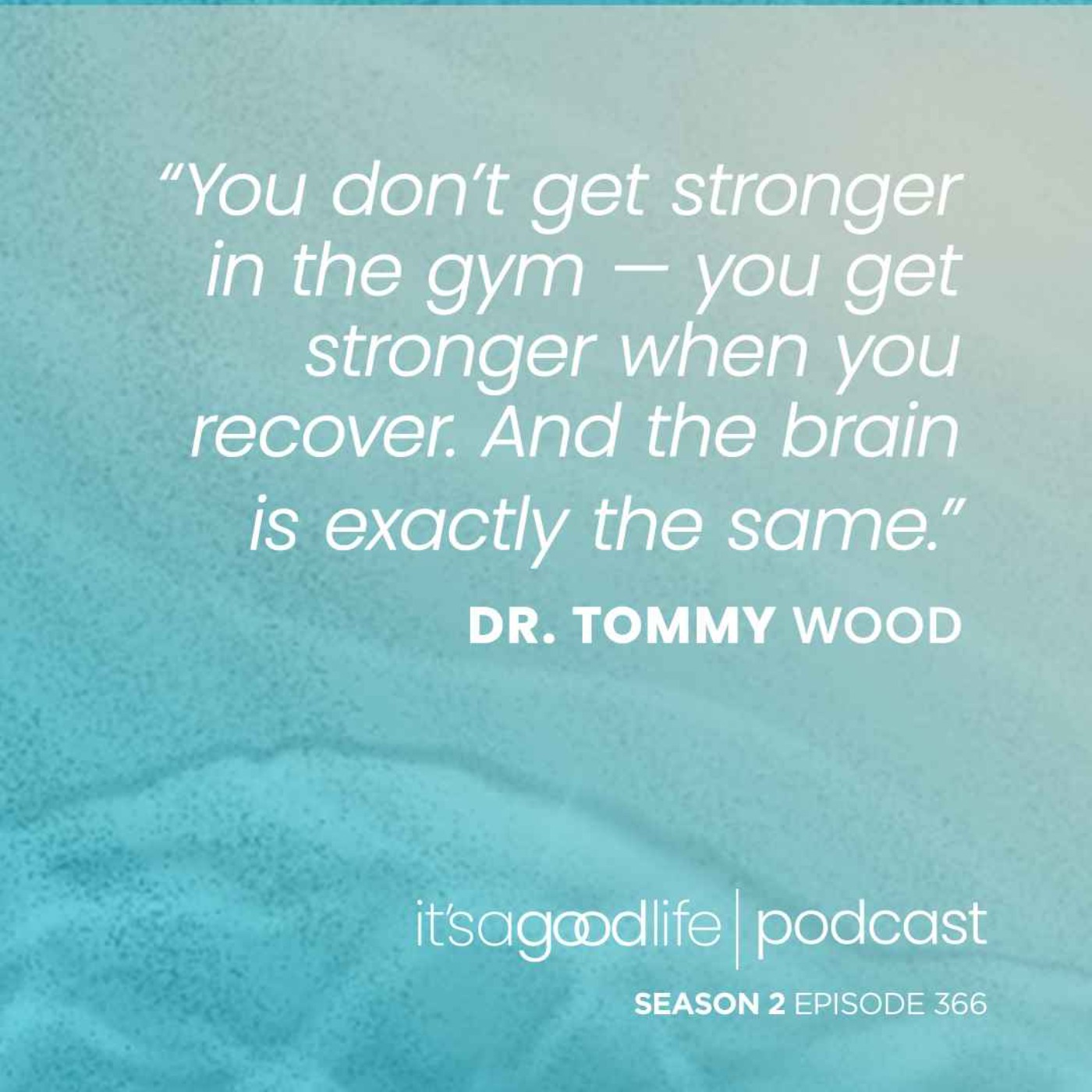
Loading summary
Transcript74 lines
- [00:03]
A
Welcome to It's a Good Life, the podcast for entrepreneurs where it's all about growing yourself and your business. Here's your host, founder of America's largest business coaching company, Brian Buffini.
- [00:17]
B
Well, the top of the morning to you and welcome to It's a Good Life. I'm Brian Buffini and we have a great guest today. His name is Dr. Tommy Wood. An Englishman by birth, Tommy is a neuroscientist. So we're going to test the bounds of reality today because an Irish non neuroscientist is going to interview an English neuroscientist. So Tommy is focused on being a performance coach. He's got a brand new book coming out. You want to take note of this. It's coming out here in the next couple of weeks. It's called the Stimulated Mind and we're going to dive into that today. And he's worked with elite performance at the highest levels, not just world class athletes, which is very helpful in that he's learned from those folks, but everyday people who want to stay sharp, focused and thriving at any age. So, Dr. Wood, we are extremely honored to have you today. Thanks for making the time and I'm.
- [01:05]
A
Honored to be here. Thanks so much for having me.
- [01:07]
B
We were actually having a little chuckle. An earlier guest of ours, James Hewitt and Tommy are great friends and our audience love James, so they're going to love you even more. So we're delighted.
- [01:16]
A
Great.
- [01:16]
B
I'm going to actually jump right in here. Jump right into the deep end if you're good with it.
- [01:20]
A
Absolutely.
- [01:21]
B
We're a coaching company. We coach tens of thousands of people and been doing it for 30 years. We often hear a lot about biohacking. That's the real hot term, biohacking. And these rigid routines. Right. And again, I love routines, but they become almost a religion. You emphasize small, consistent lifestyle choices that compound over time. If somebody could focus on just one daily habit for brain health, what would give them the biggest return?
- [01:47]
A
The problem with me being a scientist is that my answers to questions like that is always, oh, it depends. Right.
- [01:53]
B
I know.
- [01:54]
A
So I think that this is some. That hopefully each person can figure out what might be most impactful for them. And I think that that's important for many reasons. But the most important reason is that it means it's more likely that you will actually do it. Right. So if I say one thing and you're like, well, I'm never going to do that. Right. So then that immediately makes it impossible. But what we know about the brain and Brain health is that there are many things that are important. Physical activity, diet, sleep, all these other things that we can certainly dig into one by one. But we also know that they're interconnected. So if you start a new exercise habit, if you haven't done one previously, then we see that your sleep will improve and your blood pressure will improve, and all these other things that we know are important for brain health will all shift at the same time. So the most important thing that somebody should do for their brain health is the thing that they will actually do and do consistently. And it doesn't necessarily matter. It's just what's most important and consistent.
- [03:01]
B
Lay out the smorgasbord. Give me five to choose one. I got the buffet. What are the best things for brain health?
- [03:07]
A
So the way that I think about it is in three main buckets that kind of connect. So I'll give you three buckets, and there's a few things maybe within each bucket. But the way that I think about this is something that I call the 3S model. The 3S's are stimulus, support, and supply. And so something that maybe people don't realize is that probably the most important of those buckets in terms of brain function is stimulus. How we use our brains is the primary driver of how our brains function. So you have entrepreneurs and business people, they are going to have very complex, cognitively stimulating jobs, which is fantastic. So maybe they've got a lot of the stimulus bucket ticked. But you can think about some other things that kind of come into stimulus. So social connection is really important. Learning complex skills and hobbies. So that could be sports, languages, music, those things are really important. So all of that kind of fits into the stimulus bucket. Then when you stimulate the brain so that if the brain is going to respond, and the parts of the brain that you're trying to use to do this thing that you know, this new skill, say you're trying to learn this new language, then the brain needs a supply of certain things to do that. So it needs a good blood supply. And we know that heart health is a really important contributor to brain health because, like, blood supply is critical. So. So that's where physical activity can be really important. But some other things start to play a role there too, like smoking and things like that. Then we also need a good supply of energy to kind of run the cells in the brain to do the things that they need to do. And where we might focus there is risk factors for metabolic disease, because we know that that affects energy supply in the Brain. So high, high blood pressure, high blood sugar, blood lipids, things that you could test with your doctor, those are kind of important for regulating energy in the brain.
- [05:13]
B
How does high blood pressure and high blood sugar affect brain health?
- [05:16]
A
Yeah, it's a great question. So when you look at some of these things that doctors track in terms of, and those are both related to heart health and metabolic health, as we call it. And there's, you know, if you go to your, your doctor, like measuring your blood pressure and probably your blood sugar too, are some of the first things that they'll do. Those two are like two risk factors that are most consistently associated with cognitive decline and future risk of dementia. So that would be either pre diabetes or type 2 diabetes. So if you, if you measured your, your fasting blood sugar, you could do like a, a finger stick at home or at the doctor. Over 100 milligrams per deciliter, that's kind of the cutoff there. And then high blood pressure. You know, anything over, like, if you know the numbers, systolic at the top, diastolic underneath, you know, anything over like 130 over 85, that's considered high blood pressure. And we know that if we treat people with high blood pressure, we see a lower risk of dementia. A lot of it is related to the fact that both blood pressure and blood sugar affect the health of the blood vessels that go to the brain and that are in the brain. And if you want your brain to be constantly adapting and responding to the environment and doing all these complex things that we do with our brains, we need a really healthy blood supply so that our, so that the blood supply in our brain can sort of adapt and respond as needed. So it's largely negatively affecting the function of those blood vessels in the brain. Then the final piece of that is a supply of nutrients to kind of run the brain. And we know some that are very critically important, again that we can measure vitamin D, the B vitamins and B vitamin status you can assess in one way through a blood test called homo. And elevated homocysteine is associated with increased risk of dementia. Iron levels are really important. Omega 3 fats levels are really important. And those are kind of the ones that we have the best evidence for. Other things that, that come from like a varied and nutrient rich diet, like colorful polyphenols from berries and, and fruits and peppers and even like the astaxanthin makes your seafood pink. Like that is another antioxidant that seems to be beneficial for the brain. So there are some of these nutrients and vitamins will get from a high quality diet. That seems really important.
- [07:49]
B
So, you know, and it's funny, like in America, as you well know, first of all, how the food is made and how the food's digested now, the food's delivered is a fight, right? I go home to Ireland, I eat everything in sight and I lose weight and I come back to the States and I, I'm on a diet and I'm putting on weight left and right. But I think the other part of it is not just eating healthy and being healthy and getting that exercise, but also this greatly affects brain health. And brain health is not just the long term, like, hey, how to avoid dementia, but on a day to day basis, right? You know, this most significant organ in our whole body, it defines who we are more than anything else. Right. You can have a belly, but have a sharp brain. You're okay, you know what I mean? You can be lean, but your brain's in trouble. You're in trouble.
- [08:28]
A
Yeah.
- [08:28]
B
So on a day to day basis, this brain health, what does it do for us on a cognitive basis, on a daily basis?
- [08:34]
A
Yeah.
- [08:34]
B
As you talk about performance.
- [08:36]
A
So I'll fill in just if people, if you were ever to fill in the smorgasbord, I'm going to give you just like the last chunk, the final chunk. So that's my support bucket the most. And so that's like you stimulate the brain, it responds by sending a supply of those various things the brain needs. And then, then you need the support, then you need to support that, the process, right. So sleep is probably the most important one. But then we want to avoid things that kind of inhibit those processes as well. So that's where excessive alcohol, smoking, air pollution is really important. Some other things that can cause chronic inflammation, like gum disease is an increasingly noted risk factor. And then chronic stress, like stress that burdens us so much that we're never able to fully sort of respond and recover. That's kind of that bucket there. So like I said earlier, if there's something in that smorgasbord where you're like, oh yeah, that's one thing where I might like to improve a little bit. We know that if you focus on that one thing, lots of other sort of dominoes fall into place at the same time and you can kind of build from there. But sort of your next question about.
- [09:47]
B
Like, so just stimulus, supply and support, that's a great way to remember it. And I think that's a great hook. Obviously that's Outline. That's really how you built the book. Yes, but I think those are three things everybody can get, you know, no pun intended, their head around, right?
- [10:01]
A
Yeah, exactly. That's the goal is to sort of simplify it. Because when, you know, often if you're sort of interested in health or brain health and you maybe go on social media or, you know, know some other media platform, and they'll give you something like, here's 37 things to do for your brain. Right? Right. And when I think about 37 things, I will do zero of those things. Right. So I think, kind of thinking about it in these buckets where we can kind of start to unpick with, with one area, right. We, we could. It's much more likely that we'll actually do something.
- [10:36]
B
Correct me here, because I'm the amateur, but I look at this stimulus, supply and support, and I think on a day to day basis, if I commit to those three things in the short term, it's going to increase my capacity, my ability to concentrate, my ability to be fully present, my ability to think clear and operate clearly. If I think in terms of what does meaningful stimulation look like on a day to day basis, what's the most common way to supply my brain with the fuel it needs and what are the pillars that are critical to support that? I think those are things that will increase my capacity, increase my performance, but do it in a way that expands my longevity as opposed to shorten it. Right?
- [11:14]
A
Yeah. So, I mean, you've really hit the nail on the head there in terms of how I think people can approach this. And in my book I talk about this idea of something that I call headroom. Headroom being like, what's the total capacity that you have available to you? And it's kind of difficult to conceptualize that when it comes to the brain sometimes, but there's almost a direct parallel to physical capacity. Right? So it's exactly the same if we want to build physical performance. You want to get stronger, you want to get fitter. As an athlete or just as an individual, you have to apply some stimulus, which is your training. You can get the most out of your training if you then, you know, you get enough protein and other things that support that adaptation, muscle building and the recovery. The adaptation actually happens during sleep. You don't get stronger in the gym, you get stronger when you recover. And the brain is exactly the same. So if we can attend to those different areas, we can build headroom, we can build capacity. And that's important because then when you're under pressure, you're under a deadline, you've got a presentation, you've got some like big piece of work you have to do, you have more capacity available to you. But equally we know that there are times when we're sleep deprived, happens to everybody. When we're overly stressed again, that happens to everybody. When we get sick again, happens to everybody. During those periods we see decreases in overall cognitive capacity. But if you had more to begin with, you'll have less of a deficit. Those times when you're under pressure.
- [12:49]
B
When I take on the chronic stress, it shows up in my sleep. So coach me up, give me a few pointers. How can I improve the quality of my sleep, especially when I'm under the gun?
- [13:00]
A
Yes. So there's a few different ways to think about stress and how we can handle stress and then they're knock on effects onto sleep. So one way is think about how can I build my capacity to tolerate stress. And different people have different total capacities. But one of the best ways that we know to buffer stress, build our stress capacity is exercise. So there's an idea called the cross stressor adaptation hypothesis, which is a fancy way of saying that if you stress your body in one way through exercise, then you build your capacity to deal with stress, like psychological stress. So building your buffer with exercise being the best way to do it is one way. Another way, I like that.
- [13:50]
B
By the way, my nickname in Ireland, you can imagine, was buffer. So as I was playing ball, right? So build my buffer. That might be, Build your buffer. That might be a T shirt. I get here, Tommy.
- [14:00]
A
And then of course, like when you're, when you're in the moment, you might want some way to kind of down regulate or minimize the effects of stress. So then there are actually several things that we know can very quickly decrease the amount of stress that we're experiencing sort of in the moment. Very simple things like closing your eyes, right? That decreases the number of stimuli you have to deal with. That actually decreases, deactivates some of the stress networks in the brain. Breath work. So when you breathe out for longer than you breathe in, so like a long exhale we call it, that sort of activates the vagus nerve which controls sort of these sort of rest and recovery kind of processes in the body. So as you would feel if you're stressed and you just do some, some slow paced breathing, like long exhales, you'll actually feel the body calm down. And this is important because we can't actually think ourselves out of stress. That always Makes it worse. Oh, that's.
- [14:59]
B
Say that again. That is so big.
- [15:02]
A
You can't think yourself out of stress because your brain is essentially being dunked in adrenaline. And when that happens, like it's just, you know, it gets a little haywire. So you can do the opposite. What you do is you change the inputs to the body, you change your physiology and then that changes your brain sort of, it's sort of from like a top or like a bottom up kind of effect. So those, those are kind of things you could use in the moment, like calming music. Some of these other things we are calming touch, right? From comforting touch from some, from other people. Like all of those things can play a role depending on what works for you. And, and then the final way we can think about stress or like minimize some of the effects of stress is to acknowledge that stress is, can actually be a good thing. Right. When you're under the gun, it's because you've got a big deadline, you got a big deal coming up, right? There's something cool that's on the line for sure. Stressed.
- [15:58]
B
I'm a public speaker, man. I mean, I put myself thousands of times under the spotlights in front of thousands of people. There's juice to it, right?
- [16:06]
A
Yeah, yeah. And so there are some really interesting studies that show that when we think about stress in that way, that stress is enhancing. This is a work by Alia Crumb at Stanford. This idea of stress is enhancing. What we see is yes, we still get a stress response, we still get a big spike in cortisol, which is the big stress hormone. But we also get some increases in other hormones that are there for like rest and recovery and that improves cognitive function when we're under stress. Just, just acknowledging, hey, I'm stressed, but like this is cool. The thing that I'm doing, the reason that I'm stressed is actually, you know, I want to be here. Right. So all of those things can kind of add up to minimize or help you deal with stress in the moment. But then you're right. One of the ways that we can think about chronic stress is it's, we can count it as chronic once it starts to negatively affect our sleep. Because like in a day we can be stressed, but if we can sleep properly afterwards, we'll recover. We'll usually come back just fine the next day. So then some of those techniques can help a lot like breath work. Slow paced breathing before sleep in insomniacs significantly, significantly decreases the time it takes them to fall asleep. There have been studies that Shown that there are other studies that show that you can.
- [17:25]
B
And we've done work with Wim Hof, by the way.
- [17:27]
A
Oh cool.
- [17:28]
B
One of the podcasts we did and he has a great little app and I find it to be the most effective little breathwork app out there. It's very, very helpful.
- [17:35]
A
Yeah. So that sort of traditional Wim Hof style breathing works at the opposite end. Right. You use it to sort of, you can use it to amp yourself up.
- [17:43]
B
Right, but both ends.
- [17:44]
A
Yeah, it's cool that you can use both ends just based on your situation. Like what, what do I need right now? I can manipulate my breath and that manipulates how I feel. So yeah, slow paced breathing, there are other things like mental offloading. So writing notes and all the things that are running through your head, you kind of write them down. And that act of sort of offloading them means you're less likely to ruminate on them while you're, while you're trying to fall asleep. So then there's all the like the traditional stuff that we know is really important for sleep. So cool, dark room, you know, some kind of wind down routine. Often when people are like working, right, or like looking at screens, watching exciting things right before they go to bed, that's going to make it harder to fall asleep. But so like all of that's going to be important. That sort of like slow wind down towards sleep, keeping that consistent if we can. But the final piece that I think is important is that we've become so focused on sleep that for some people we've kind of gone too far in the other direction. Like we get so stressed about the fact that we're not sleeping that that additional stress has more of an effect than the sleep that we lost. And actually there are studies that show that if like one or two nights you lose a few hours of sleep, you sleep four or five hours or something, the next day you'll be grumpier. Right. So mood is affected, but performance doesn't actually change that much. So we feel more negative about what we've done. But what we've done, the quality of it hasn't actually decreased. Yes, long term. If you have very long periods where you're not sleeping properly, of course cognitive function does decline. But a lot of what happens after one night of poor sleep is based on expectation. We're like, oh, I didn't sleep well, I'm not going to perform well, I'm not going to feel good. And therefore we don't perform well and we don't feel Good. But it's literally all in our heads. And there are sort of studies where they've manipulated how people feel about their sleep and look to their performance as a result, regardless of how well they slept. So I think all of those things, and knowing those things leaves us a little bit better armed when we are stressed. And maybe it does affect our sleep, but we have some tools to sort of improve our sleep. But also just know that, hey, you know, I'm good at this. I'm going to be fine after one night of poor sleep. And then you sort of reset the next night.
- [20:04]
B
You know, one of the things we've heard the phrase, you can't teach an old dog new tricks, right? And in your talk, you have a study on owls wearing prism glasses. I'd love you to share that because that's, that's one of the more unique stories I've heard told in a seminar environment.
- [20:19]
A
Oh, thanks. It's actually, it's also, the story about the owls is also the preface to my. To my book. So if anybody's, like, really interested in the full owl story, you can find it there. But. So this is based on studies done at Stanford by Eric Knudsen and colleagues where they took barn owls and they gave them prism glasses. So they sort of attach these little goggle, these brilliant pictures of these owls wearing goggles in their papers. And for those who sort of like, don't immediately know what a prism is and think about it, it's. It's a shape of glass or plastic that diverts light, right? So when you put on these prism glasses, you sort of. When you're looking ahead, everything is shifted to the left or right slightly. So, like, where stuff where you see something is not where it actually is in space. And they did this to see, like, what's the window? Or at what age does the brain stop adapting to this new stimulus? So young owls, they adapt just fine. Within a few days, it's as if they're not wearing any goggles at all. But the older owls in the first studies, they didn't adapt. They just sat there and their brains didn't change at all. And so this is the story that we tell ourselves, right? Can't teach an old dog new tricks, like, I'm too old to learn that, too old to learn a language, too old to play an instrument, all that kind of stuff. But when you create some certain conditions, the older owls, their brains adapted just fine. So there were two specific conditions that had this effect. One was they put the owls, rather than having Them on their own in a cage, they put them in a group, so they were socially housed, and therefore they're starting to have to interact with each other. So then it's much more important that you know where your mate is in your cage and the brain starts to adapt. And then the other one was, in the first study, they just fed the owls dead mice. So you kind of sniff out where the mouse is and you can eat. Like, even if you don't, even if, like, your, your sight doesn't match up right, you can still eat just fine and you're okay. But then in a later study, they put in live mice that the owls had to hunt. And when they had to hunt, their brains adapted. So all of this is just saying that if you create necessity and you interact with your environment, the brain will change. So, yeah, the adult brain doesn't change if you don't give it a reason to. But if you give it a reason, a social context, having to hunt, to eat, then the brain adapts just, just fine.
- [23:05]
B
Now, let's say you're coaching up an individual. Let's talk about someone who's an old dog who needs a new trick. Let's take it all the way through to an example.
- [23:13]
A
Yeah. So I think that when we think about the, the adult brain and we think that we're no longer, you know, able to learn new things, the, the most important part of that is the fact that we think that we can't do it right. So the starting point is having that person understand the adult brain can learn and grow and improve just fine. We just need to give it the right conditions for that to happen.
- [23:45]
B
And that's very different to how most of us think and feel and live these days.
- [23:50]
A
Yeah, yeah, exactly. So the, the first thing is a mindset shift is helping people understand that this is possible. And yes, the owl is a nice story, but we see this in lots of studies in humans that you create the right conditions, the brain can learn, can improve, even as people get into their 60s, 70s, 80s. So the mindset set shift is the most important thing. Then you have to realize that one reason adults feel like they can't learn like they did when they were kids is not because their brain can't do it, is because they're not professional learners like they were when they were kids. Like, when you're in school, your job is learning, right? That's all you're doing.
- [24:34]
B
That's. I never thought about that.
- [24:35]
A
And you've got Spanish class three times a week, and then you've got Spanish homework and whatever. So adults mainly struggle to find the time to invest in the same amount of time. But if you can find the time, you know, even in short chunks, you know, 20 or 30 minutes at a time is actually just that process of engagement that's really important. So then the. The sort of. The final piece is creating an environment in a period of time where you can truly focus, because focus is really required for neuroplasticity, that process of. Of driving changes in the brain. So, you know, it could be a duolingo app, it could be you're learning a new instrument, whatever it is, it could be a new sport. That's where even if it's just 20 minutes, the notifications are off. You're not looking at Instagram, you're not checking your email. You're giving yourself 10, 20 minutes to actually focus on this one thing. And then that starts to get the wheels turning. And what's nice about the process of learning is that we actually enjoy it. We like feeling like we're getting better at something. So that starts to usually build up a little confidence, builds up a little bit more engagement. But the one caveat is the best way to learn something and to drive neuroplasticity is to make mistakes. And adults hate. We hate making mistakes, right? And we hate people seeing us make mistakes. So the final piece is. And we know mistakes are required for learning, so the final piece is just letting go of a little bit of that ego and being willing to risk it and being willing to fail, because that's really what drives learning.
- [26:22]
B
You know, it's wild. I mean, that is actually kind of not just refreshing. It's kind of revolutionary thinking these days. Just because you're an old dog, you can learn new tricks. In fact, you need to. I think the second thing is, I think we extend grace to younger people who make mistakes, because you're supposed to make mistakes, and we who have the experience are not supposed to make mistakes. It is impossible to learn something new without making mistakes. I took some golf lessons, and I been a pretty proficient golfer most of my career. I haven't had the time to practice, and I haven't had the time to really play. I took these lessons, so I'm kind of in no man's land. And the worst thing you can have happen in golf is a shank, right? It's off the hose. It goes straight, right? You've no control. I've never had a shank. I'm playing golf since I'm 11 years old. So I'm 47 years playing golf. I've never had a shank. And yet in the last environment, I went out and played. I played in a couple of tournaments, and I had no practice, no play. I had this lesson from months ago, and I'm hitting these shanks, and it is like the most demoralizing thing of all time. And I just kind of resolved myself the other day. I said, buffer, you got to put the time in. I want to learn this new aspect of this swing, and I've got to be willing to lean into this very uncomfortable period, which is a very embarrassing thing to do on a golf course, to get my swing to where it needs to be. And it's like, I'm experiencing this right, as you say. And it's kind of cool to go, oh, yeah, because why do I beat myself up? I'm 47 years playing golf. I shouldn't be making these kind of mistakes. And I think people can do that in business, People can do that in money. People can do that with marriage. People can do that with kids. People can do that with their careers. I think we all need to put the goggles on, and we can teach the old dogs new tricks. This stuff is great. And I just want to say, you know, I've been around this, working with the power of the brain and the power of the mind as a performance coach. The techniques are very important, but the mindset is everything. You know, it's great stuff. You know, Tommy, what we're involved in with our coaching program is helping people not just perform better and help them with their production, but ultimately do it in such a way that they add to this quality of life, and they're able to make this behavioral change. In fact, one of the things we do that's been massive, and it's a great, great thing for people who want to try something new and have a cool experience, is we developed this free business consultation, and it's like 30 minutes, and somebody sits down with one of our experts at Buffini company and we help them, you know, ask a bunch of questions so they can get clear on their vision, where they want to go, do a little analysis on what's holding them back, and then see what's working for others. So we kind of share ideas and insights on what other people are doing and then lay out some next steps for somebody. And so we've been offering this for about a year. It's absolutely blossomed. And people are finding, like, that 30 minutes alone is so stimulating and so clarifying to the brain and Then people get going, they start doing some stuff and three months, six months later, they're actually calling us up and saying, hey, I want to do this coaching for real. So it's been a fantastic thing. I think it feeds right into this whole dynamic you're talking about of how to stimulate the mind. And this is really some of the freshest stuff I've heard on the subject. So kudos to you by the way. The book is coming out in the next few weeks. It's called the Stimulated Mind. Hopefully you were stimulated by our conversation today. And I'd pre order a copy of that. It's Dr. Tommy Wood, the Stimulated Mind. And instead of watching Netflix at night, maybe stimulate your mind by reading this book before you go to bed and then shut it down. You've helped us with stimulus, supply and support, gave us a bunch of great techniques on our bodies and health and then also how to get a good night's rest. So I think that's great, Tommy. There's five questions I ask everybody who've been on the show. We're just about celebrating our 10 year anniversary. I'd love you to answer these the way we have everyone under the sun, you can imagine. So here it is. Number one, what's the single best piece of advice you've ever been given?
- [30:09]
A
Can I give you two?
- [30:10]
B
Okay.
- [30:11]
A
If I'm quick?
- [30:12]
B
All right.
- [30:12]
A
Yeah. So the first was from my dad when I was 18 years old. I got my A level results in the UK and I found out that I'd done well enough to go to Cambridge for my undergraduate degree. And of course, like as an 18 year old you get these great results. I'm going to go to Cambridge, like one of the best universities in the world. Obviously you start to feel pretty full of yourself pretty quickly. Right, of course. So like my dad, who's a very well respected academic and professor, he recently retired from the University of Oxford. The first thing he said to me, or maybe it was the second, he may have said congratulations first, but the first thing he said to me was, remember, this doesn't mean you actually know anything.
- [30:55]
B
How brilliant is that?
- [30:56]
A
Yeah, of course. And like at the time it feels a little like an affront, but like the more time I spent.
- [31:01]
B
Yeah, it's a letdown. Yeah, yeah.
- [31:02]
A
But the more time you spend out in the world trying things, doing things, learning things, you realize, of course he's right, I knew nothing. And so I think that's a really important mindset that you can take on. And then the other one, when I was Finishing medical school. I was about to start working as a junior doctor. My best mate's mum was a nurse. And her advice to me was like, be nice to nurses. And anybody who's worked in healthcare knows that the nurses work harder than the doctors. They know the patients better, they're doing much more. And not that I wouldn't have been otherwise, but that was a very important thing for me to hear. And then I've expanded that beyond that to just like, be nice to people. Right. You don't know all the amazing things that happen if you just go out into the world and you're nice to other people. So like, those are the two best pieces of advice I've ever. I've ever received.
- [31:56]
B
Some great wisdom there, Great wisdom there. What's the one talent or gift you wish you possessed that you currently don't?
- [32:02]
A
I wish I was a better dancer.
- [32:05]
B
Um, oh, I don't know. In 10 years maybe, once we got that. Normally people want to sing. So if you could dance, what kind of dance would you do?
- [32:14]
A
Ballroom, Tango. Would love to be a singer.
- [32:16]
B
Okay. Oh, I'm gonna alienate all the Americans listening. But we all grew up with come dancing. Remember that was the. And they'd have the ballroom dancing going on. I'm sure that was on in your home growing up. That's great.
- [32:27]
A
Yeah. And I'll tell you just a little bit why. So when you look at all the different types of physical activity and how they improve mental health, cognitive function, dancing seems to consistently be the one that's the best, Quote, unquote, the best for the brain. All types of physical activity are fantastic for the brain, but it includes music, complex motor skills, social activity as well as physical activity. And there's just some magic in dancing that seems to be really good, really good for the brain.
- [32:59]
B
If you think about it, there's a lot of old really with it, people who dance. I've watched a lot of couples who are great dancers and they go to a wedding and they said there's two 80 year olds out on the. Just getting it down, you know, and it's like, wow. So that's pretty cool. Proves the science. That's great. What's the book that's been most instrumental in your life?
- [33:18]
A
I think maybe two that I've really enjoyed. One is Behave by Robert Sapolsky, which is a fantastic book just about like human. Human behavior and why we behave, how we do and the timescales of things that happen to us that then cause us to behave in a certain way. Is Quite dense, but certainly super interesting read for anybody who's interested in that kind of side of neuroscience. And then a more recent one that's actually written by a friend of mine called the Neuroscience of you by Chantal Pratt. And what I really like about that one is it's all about how each of us have different brains, and that means that we're a little bit better at this thing, a little bit less good at this thing. And all of that's okay. Right? It just. It's just part of being who we are and like, these individual differences, like part of our uniqueness and give us a unique set of skills and things that we can go and do out in the world. And I think that's just like a. It was a really important and lovely book that I enjoyed, that I enjoyed reading quite recently.
- [34:21]
B
What's the movie you watch over and over again?
- [34:23]
A
So we just had Christmas, right?
- [34:26]
B
Okay.
- [34:26]
A
And every year I make my wife watch Love. Actually, it's my favorite Christmas movie.
- [34:31]
B
So you're kind of the romance one of the family, are you?
- [34:33]
A
Yeah, yeah.
- [34:34]
B
That's great. Well, actually, it's where a Brits being romantic, which is, you know, there's not too many of them, so it's great. Last but not least, what does a good life look like for Dr. Tommy Wood?
- [34:46]
A
It all comes down to having the freedom and the ability to do things that. That I enjoy and make me feel good on a daily basis. So, like, right now, it's. It's hard. You know, I would have to say. Right. I have a really good life. I do a whole bunch of varied things. I work with Formula one drivers. I run a neuroscience lab. I have lots of amazing students. I get to work with my wife at work. We collaborate on a bunch of stuff. I have two great dogs that I then get to come home to and play with. I get to train every day. You know, I very much enjoy working out. I get to then cook and have nutritious meals at home. And so, like, that's basically it.
- [35:24]
B
You're a long way from Bristol, man. That's all I got to say. Good for you. Congratulations. The book is called the Stimulated Mind. It's out in the next few weeks. The author is Dr. Tommy Wood, and it's going to be a great time. I thank you for taking the time with us today. And I want to finish this off with a little Irish blessing that my mother gave for almost 10 years of the show. She just passed recently, Tommy, so I do it for her now. And it's May the roads rise up to meet you. And may the wind always be at your back. May the rain fall soft upon your fields and the sunshine warm upon your face. And until we meet again, may God hold us out in the hollow of his hands. We'll see you next time.