← The Brian Buffini Show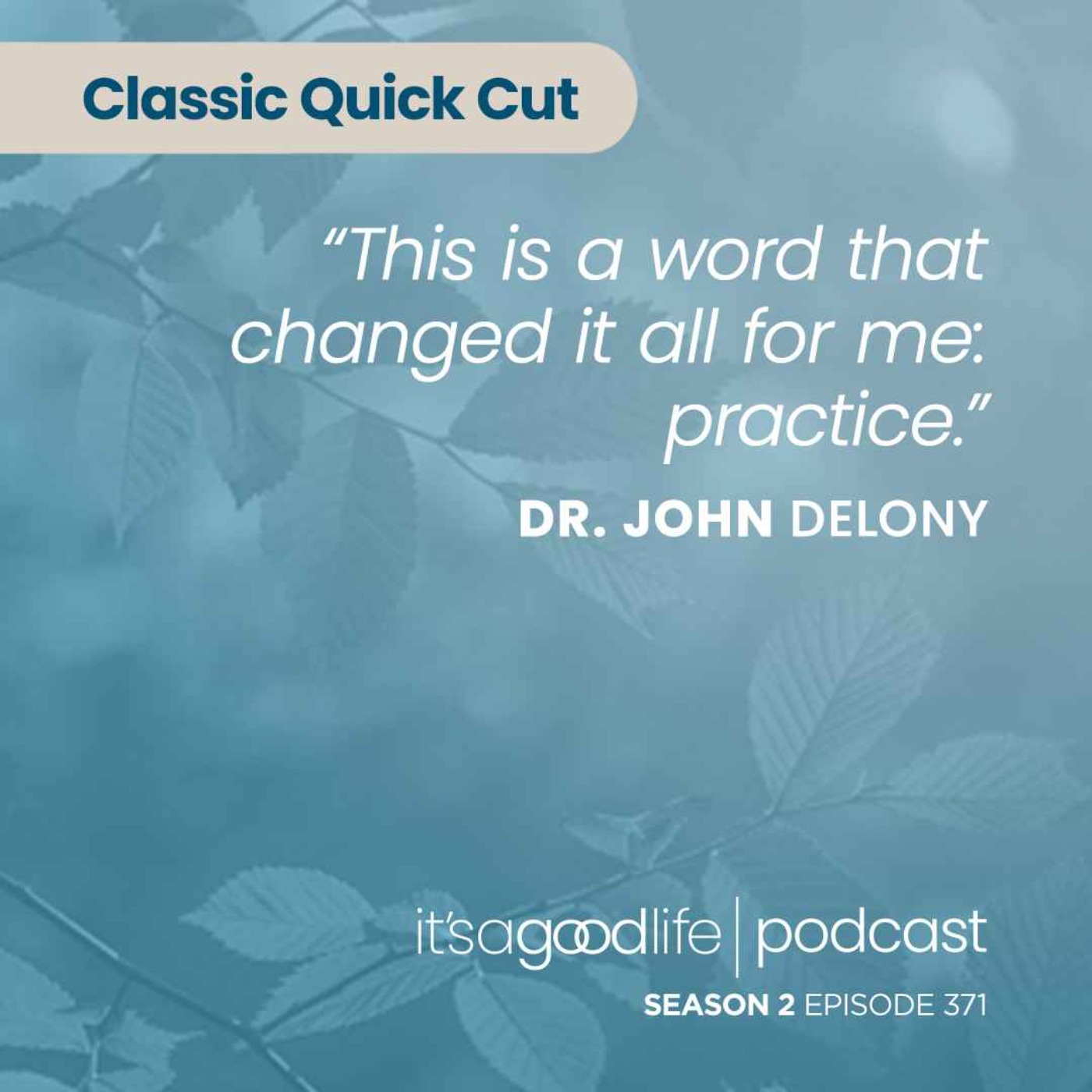
The Brian Buffini Show
Quick Cut: S2E371 Myths About Anxiety and the Life-Changing Truth - an Interview with Dr. John Delony
00:11:43
Loading summary
Transcript26 lines
- [00:04]
A
Welcome to It's a Good Life with Brian Buffini, founder of America's largest business coaching company. Here's a short classic cut from one of our all time favorite episodes.
- [00:17]
B
Well, the top of the morning to you. Welcome to It's a Good Life. I'm your host Brian Buffini and I am excited for you today. One of the little books I picked up was called and if you're watching on the YouTube, you'll see it right here. That's redefining anxiety and it's Dr. John Deloney. And we actually invited the author onto the show. He's best selling author, he's a mental health expert, which I think it's, I don't need to stress too much how much that's all needed today. He has two PhDs, which means between us, we have two PhDs on this broadcast this morning. Two decades of experience in counseling, crisis response and higher education. And John has a goal to help people navigate through tough decisions, improve relationships and help people believe that they're worthy of being well, the word I keep hearing is anxiety. It's everywhere we go. And I just think this is profound stuff and the perfect message at the right time. What are the some of the things you learned on your journey that helped you go from paranoid to kind of being where you're at today?
- [01:16]
C
If I could distill it down into one simple statement, it's that anxiety is not the problem. It is simply an alarm system letting us know that one of three things, we're disconnected. Our bodies have found ourselves alone. And if you think back 2,000 years ago, if we were to open our eyes on the plains of North America and our tribe had left us, we were probably going to die. We got wired into us that we have to have other people. And so that's number one, if you find yourself lonely. And by the way, we live in a world now we've outsourced all of our human connection to these dumb little digital boxes. And so we're exchanging communication with one another, we're exchanging information, but we are not connecting. It's either your alarm systems recognize you're alone, you're in a situation that you are out of control. You don't have autonomy. You can't control what's coming tomorrow. And that's laws are changing, social fabric is changing so fast, our body recognizes, hey, I don't know if I'm out of control here, then the third thing it looks for is safety. Am I safe? And if we look back 15, 25 years ago, the media Infrastructure shifted to go from passing along information to it became about, hey, I want to pass. I need you to click on this, not learn from this. And the way I can get you to click is if I can tap into some ancient tech in your brain that lets you feel like you're not safe. And we have just created a fear economy. And our poor little brains, our Brian, our brains are designed for this. We open our eyes in our cave and there's a tiger at the front of the cave and we look at it and it says, run, pick up a stick and hit it. Or just freeze and maybe it'll just eat your leg off and you can survive another day. It's not designed for a thousand tigers in our bed with us 24, 7, 365. And we just rattle in them. We just are melting our poor little brains. It's not designed for the world we've created for it.
- [03:12]
B
What's the first step to helping somebody get to the point that the right now action steps, as you call them, to kind of get someone on the right track to start moving things towards new stabilization of all of these things.
- [03:24]
C
The first thing is to be really graceful with yourself and just ask yourself, what do you alarms try to tell me? Where in my life have I let my friendships go? Am I sharing a bed with somebody who I love but I feel completely alone in this bed, right? Have I disconnected from my kids or they disconnected from me? Where am I alone? Where am I out of control? Where am I not safe? And that could be a toxic work environment. That could be you just quit your job to go full time as a real estate agent and you don't have enough clients and you jumped probably a little too soon off the dock and your body's letting you know, whoa, whoa. And so just be honest. This is a season of reflection. So often the greatest gift you can have for this type of reflection is community. Other people and our community. I've got a few people in my life, a few men and women in my life that have cultivated over 20 years, 30 years, that I check in with and say, am I looking at this the right way? And they'll say, deloney, you're crazy. Or you should probably go talk to somebody or yeah, you're exactly right. I often can't see it for myself. And I know that about myself. It's not a weakness, it just isn't. Is. Some people are six two, some people are five two. I, I know for me when I get stressed, I don't see things super Clear. So I have a group of people that speak into my life.
- [04:35]
B
How do we get down from tilt to being the guy that calmly and comfortably communicates this message to other people today and found his purpose and passion and is doing it inside. A pretty calm approach to things.
- [04:46]
C
I think all of it starts with the decision that I don't want to live like this anymore. And anxiety becomes an identity for us. It was for me. And there's.
- [04:57]
B
Say that again. You got to say that again.
- [04:59]
C
Anxiety is an identity. I'm anxious. I'm having to deal with all this. Can you believe what they're doing? Can you? And I've got to check the phone. I got to check all the ticker numbers. I'm trying to chase down this demon that keeps moving the goalpost on me. And so to heal from being anxious, to heal from these things, you have to first say, I'm out. I'm done with it. I don't want to live like this anymore. Ruminations, worrying. They are an absolute, utter waste of my time. You got to decide, I don't want that anymore. And then you're going to have to go through the. What are the alarms trying to tell me? You got to be real, honest. And, Brian, we. We're terrible at this as individuals and as a culture of looking in the mirror and saying, my body looks the way it does because I haven't taken care of it. My choices about exercise and about honoring sleep and about putting my phones away and about calling loved ones and having people over for dinner. You got to own it, man. Own it. Ownership is. I'm driving this thing. This is mine. Right? And I want.
- [06:05]
B
Which, by the way, puts you back in control, right?
- [06:06]
C
Yes, yes, yes, yes. Hey. And some of us. This is a biochemical fact. Physiological. You can get addicted to the cortisol and the adrenaline, the stress hormones. So some of us have to detox. It took me a year or two to detox to actually be able to look at a stock market ticker. That was one of my triggers that would send me into the spiral to see it. And my heart wouldn't take off on me. I remember laughing, Brian, as my heart would start racing as though somebody was chasing me with a hatchet. My. I would laugh and say, there's no. I'm talking to myself like a wild person in the yard. There's nothing happening. My body was responding. Run, run. Right? And it was just realigning my head and my body and my heart back together. And. And I had to detox off that stuff.
- [06:50]
B
Man, you know, I've done over 2,000 seminars, and people come to the seminar for the juice, so they come for the very thing. I've been rewarded for being an adrenaline junkie. So I've been working through that myself and trying to find a way through the other side.
- [07:04]
C
When we think of addiction, we think of drugs, we think of, you know, sex, we think of the, you know, the big vices. It was hard for me when I realized I'm an anxiety junkie. I am a workaholic. I am a performance and achievement junkie. I need to outwork you. So you will. I need your praise or I can't breathe. I was an addict, and I think if we're honest, most of us are addicts in something, whether it's food or whatever it is, exercise, the good stuff can be bad. And if you're addicted to drugs in our culture, we'll put you in jail. If you're addicted to adrenaline, we'll give you a million dollars and call you a lawyer. Right? And, hey, both of them are going to kill you. Right? Right. And so we have to be honest with ourselves. And again, I'm not saying, dude, I'm as ambitious as they come. I'm wired up. I'm an excitable guy. I love it. What I really want people to know is that achievement, success, winning those things won't heal you. And I want people to win, and I want people to win big, but I want people to win whole and win well. And that means you got people who love you. That means you're safe. That means you are in an environment where you are have some shape, form, or fashion of control. And then, dude, then you can. You can rappel off the edge of the world and go create something magical for your family and for your country and for whoever you want to be a part of. Right.
- [08:28]
B
I know this is a process, and you're going to give the right answer, which is going to be, again, a difficult thing for some folks to hear. This takes time. But let's say your best friend is in a highly anxious state, just like you. And you were kind of laying out the roadmap to get to healthy and healing and whole and getting back to just being God's kid, doing God's work, and blessing other people in their life. What advice would you give somebody?
- [08:51]
C
Number one is, I want you to write down these thoughts and stories and get them out of your head and onto paper, away from you.
- [09:00]
B
Thoughts and stories, right?
- [09:01]
C
Which is you cannot think your way to better mental health. And I know that sounds nuts.
- [09:06]
B
No, that's brilliant. You can't think that's brilliant.
- [09:08]
C
It's a. It's a body process. When your body identifies fear or betrayal, it has a cascade of chemicals. It surges through to fight something or to run for something. And if you just sit there for the next 72 hours and think about it, it just. It. It's like putting Drano on a loop in your. In your plumbing system. It'll eventually just eat through the pipes if you're just cycling that stuff through. Write them down. Demand evidence from them. Are these stories true?
- [09:34]
B
So challenge the story.
- [09:35]
C
Challenge the stories. And then I'm gonna. If it's pathological, if I'm not okay. If I'm unable to go to work, if I'm unable to connect with somebody, I'm gonna call a counselor. I'm gonna be brave. Whether you're some tough billionaire dude or you are a single mom with three kids, I'll call somebody and say, I need to walk alongside you. I need someone to walk alongside me. And then I'm gonna be about changing my relationship with my body and my environment. I'm gonna call friends. I'm gonna move. Even if it's going for a walk. People think they hear exercise. They think they gotta join a CrossFit gym. You know what I mean? It's not. That's its own pathology, right? You gotta move, you gotta walk. You gotta be intentional about what you're doing. Sleep. There is no. There is no mental health diagnostic in the world that does not include disrupted sleep. Sleep is indicted in all of it. Sleep. Sleep, sleep, sleep, sleep. So I'll say is put oil back in the car, put some gas in the car, put some air in the tires, drive a little bit slower. Find a road that people aren't shooting at you when you're driving. Right? It's all about regaining autonomy inside your own body. And it sounds crazy. Can I give you one word, Brian?
- [10:42]
B
Yes. Sure. Yeah.
- [10:43]
C
This is a word that changed it all for me.
- [10:45]
A
Practice.
- [10:47]
C
We somehow have decided that every moment, every second, every sexual encounter, every conversation with our kids is the Super Bowl. And if we miss this one, it's all over. That's false. We're practicing. And so when you're anxious and you want to be less anxious, you're going to practice being less anxious. There's no pressure. There's no. There's not a group of people booing you. And it's going to tweet negative about. You're practicing it, and we're going to slowly get better and better and better at it.
- [11:16]
A
Well, we hope you enjoyed this. Quick cut. Head to the show notes to listen to the full episode. If you'd like to elevate your business to achieve your goals, talk to one of our experts on a free business consultation. Visit it'sagoodlife.combc to schedule yours today.