Loading summary
Transcript6 lines
- [00:04]
A
Welcome to It's a Good Life with Brian Buffini, founder of America's largest business coaching company. Here's a short classic cut from one of our all time favorite episodes.
- [00:17]
B
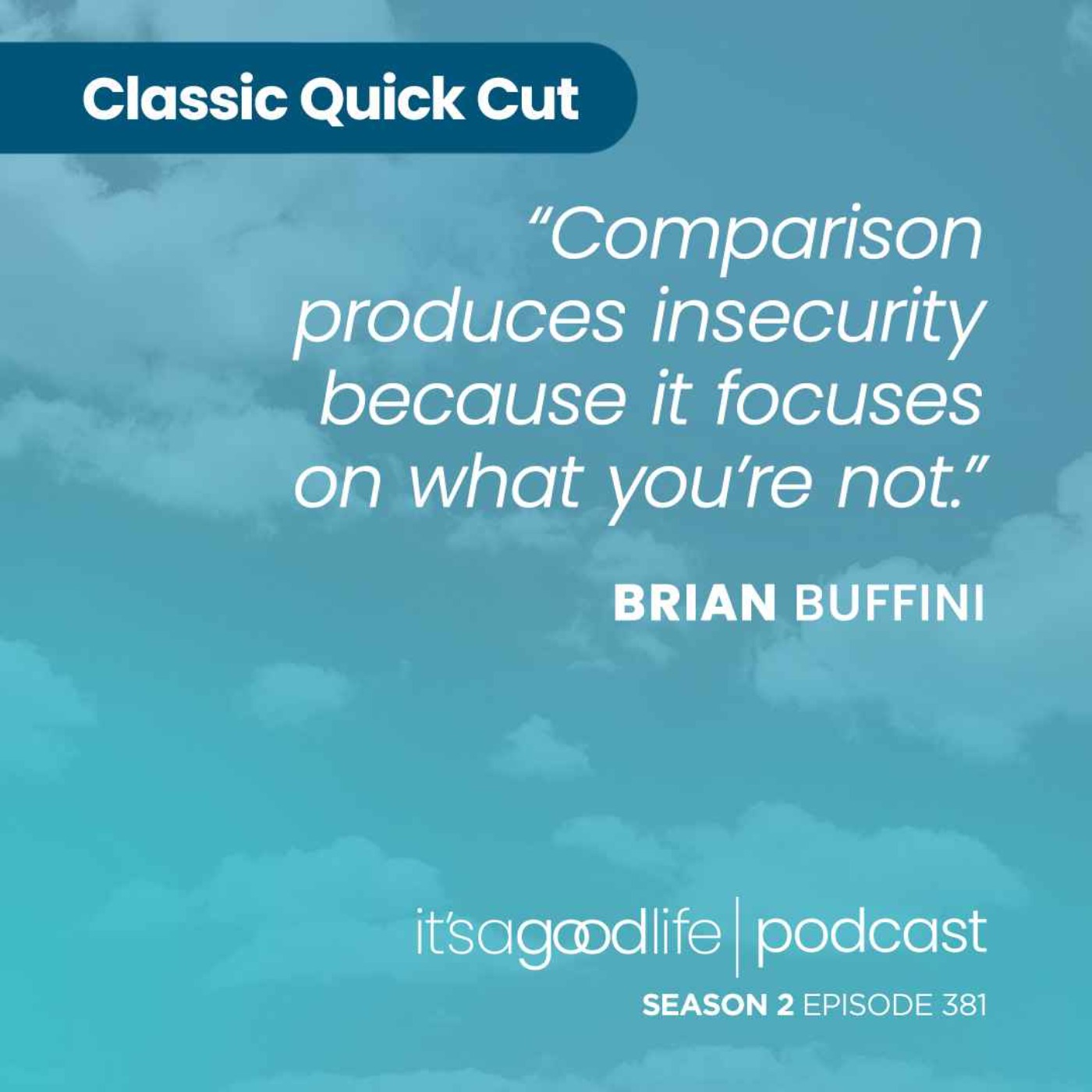
Over the past 25 years, I guess I've been involved in the coaching and training and speaking side of things. The number one thing I see that plagues people is a self doubt or the consequences of not having a sufficient self belief. So first of all we're going to talk about and ask you a question. What do you believe about yourself? Next we're going to talk about what do you believe about your abilities? And thirdly, we're going to talk about what you believe about your future. Belief according to Mr. Webster, is a state of mind in which trust or confidence is placed in some person or something. So the person we're going to talk about, the thing we're going to talk about today is us. Because if it starts with us, then we can have belief in others. So what are some of the consequences of this lack of self belief? Well, first and foremost, it shows up in low self esteem. It shows up in all walks of life. It's proven to show up in many, many interpersonal conflicts. It shows up in poor relationships. It shows up in poor performance on the job. In fact, Max Maltz, now Maximilian Maltz, wrote Psycho Cybernetics, one of the most powerful personal growth books of the 1970s. And he said that low self esteem is like driving through with your handbrake on. Have you ever felt like you weren't quite fully able to engage to the degree that your gifts and your talents and your abilities and your effort was desiring to. So I will tell you how I recognize self esteem in people. Low self esteem, first of all, I'll see it in the form of people being hypercritical. Second, and the most easy to spot low self esteem is when people are arrogant, they're trying to falsely inflate the their low self esteem. And third is, is that people of low self esteem, they are always trying too hard. How I know that one because that's the area that my low self esteem has manifested itself in my life. Years ago I developed a phrase for myself that said just being myself is good enough to be great. If you look at someone in public life, there might be a sports star, there's somebody and you really admire them. It's usually somebody you think is being extremely authentic to who they are. They're just comfortable in their own skin. And the more comfortable you become in who you are and what you are, you will Att people into your life because of that. So low self esteem is a consequence of lacking self belief. The twin brother, if you will, of low self esteem is insecurity. Insecurity kills more dreams than failure ever will. We are talking to ourselves all the time, every day. And the key is what do we listen to and what do we ignore? And so the insecurities are loud, the confidences, they're silent. We need to learn to listen to the small voice and we need to learn to grow deaf to the to the thundering jackass that is our insecurity. So first and foremost, the first question is what do you believe about yourself? Honestly, in the quietness of your own heart, what do you believe about yourself? And it's okay to believe a few good things. It's okay that there's a few things that's less than great. But what's most important is that you don't have false beliefs. So you got to look at your past experiences. You got to look at and listen to feedback from peers and family. What, what beliefs have you bought into? And it becomes a self belief. Why would we give that kind of power over to other people? We do it all the time. Very, very powerful. We can look at our past experiences and we can learn from them. And we can also get charged from them. Right. You can't go back and change the beginning, but you can start where you are and change the ending. CS Lewis said that we can learn from our past, but don't let someone else define for you who you are and what you are. And so that's the second piece that I'm leaning into here is feedback from peers and family. You can get feedback. That's not true. You can also get feedback from people. That's very true. Now how do you know the difference? Well, first, it should resonate with you at a very deep level. Second of all, you take time to think. Third of all, if a number of people come to you with the same feedback over and over and over again, and you've witnessed some of this in your own life, at some point in time, you have to believe it. Feedback is simply the scoreboard telling you how things are going. And so we need to get feedback. And I will share with you when you get feedback, you're in a healthier place. Now we want to talk about competition versus comparison. Competition is a fantastic thing. Comes from the Greek word compao, which means to bring the best out of. That's why we want to put ourselves. You know, I tell people all the time you got to put yourself in a situation to compete. For the mind to stay active, we have to put it into a place where it's challenged. You want to be in these environments so you can have and bring out the very best of yourself so you can compete. Competition when done right is beautiful. Competition when done wrong looks like this comparison. Comparison leads to low self esteem and insecurity. I guarantee you there's always somebody, if you compare yourself to them, you're in trouble. I love this quote that says the reason we struggle with insecurity is because we compare our behind the scenes with everyone else's highlight reel. It's a brilliant insight. The fact is, people think that guy's never had a bad day. That gal, she's got it all together. We have no idea what's going on in someone's mind, in someone's heart. You never know. Where we become in a form of comparison is their highlight reel. And we compare it with our behind the scenes reel. Comparison by very nature produces insecurity. Why? Because it focuses on what you're not. Bad stuff. Okay? Teddy Roosevelt said this comparison is the thief of joy. Well, I want to live a joyous life. And I know one thing that steals my joy is oh my gosh, when I compare myself to other people. So what do you believe about yourself? Past experiences, feedback, and then ultimately understanding the difference in competition and comparison. Second, what do you believe about your abilities? An ability is talent, skill, or proficiency in a particular area. So the first thing with your abilities is what are you born with? What do we want to do? We want to help people get really good at the things they're good at and then help them manage their abilities so it doesn't get them into trouble. Now once you have that established, then the goal is to add skills to your abilities. This is really how you get down the path. Now the good news is you can develop skills in the area where you don't have abilities. That's the great equalizer in life. So let's say there's people who are naturally gifted in money and you're not naturally gifted at money. You can develop skills to the degree where you can be as good or even better with the person who has the ability, who doesn't use it. Now, if you want to be great at something, you take those natural abilities and then you put the emphasis on skill development. Now you got some powerful stuff. The person with skills will outstrip the person with just ability. The world is filled with people who had less talent, who worked so hard on Their skills that they outstripped the talented people. You're listening to one today. Another dynamic of this that I want to talk to you about is ultimately authenticity. When you lean into the God given abilities you have and you have to go work to find out what they are. And sometimes you find out what they are by finding out what they're not. You have to try stuff. You have to be willing to fail at stuff. Ralph Waldo Emerson said, to be yourself in a world that is constantly trying to make you something else is the greatest accomplishment. Number three, what do you believe about your future? It's that trust or confidence in yourself for the future. Are you going to approach the future with fear or anticipation? So I'm going to share with you a couple of very, very powerful things. The first thing I want to share with you is the power of testimony. It's of someone's example. Now, there's two different ways to go with this. There are people of an example that's like, great, that's a cautionary tale. So they did this and this and this, and they ended up in that bad spot. That's a cautionary tale. Not to go and say, now I'm fearful of taking action, but this is what happened to those guys. I'm not going that route. All right, the other side is someone who's taken this action, who's been successful in a way that you want to be successful. And I want to share with you an affirmation, something that you can say to yourself as you think and look at that person.
- [08:22]
A
If you.
- [08:22]
B
If they can do it, I can do it. If they can do it, I can do it. Here's the next thing you can learn from your own personal testimony. What are the things you've done in your life that you're proud of? What are the accomplishments? You can say, yeah, I did that. Yeah, I'm proud of that. Yeah, that was something I did. Well, rarely do we actually take stock of that stuff. And when you're currently in a bad spot, let's say you've had the week from hell. Let's say you had the month from hell. Let's say you've had the whirlwind. Everything you've done has gone sideways. One of the thoughts to have I did it before, I can do it again. I've been here before and this is what I did. I did it before, I can do it again. So the first testimony is, if they can do it, I can do it. And the second testimony for yourself, go back into your memory banks find those things. What, however small it might have been a geography paper you got an A on, it might have been something you had to endure. It usually is something difficult you had to persevere through. I did it before. I can do it again. David Brooks said this Almost every successful person begins with two beliefs. The future can be better than the present. And I have the power to make it so. Very, very powerful. The great Brian Tracy we had in here for a couple of podcasts said, when you develop yourself to the point where your belief in yourself is so strong that you know you can accomplish anything you put your mind to, your future will be unlimited. So one thing I'm very excited about is our 10 year anniversary of what was the Brian Buffini show that became the It's a Good Life show. We're celebrating our 10th anniversary on St. Patrick's Day and we've been getting a lot of feedback. We brought in some super talented people to run the show. What we've heard from you guys is you want to hear some different things. So we are reimagining the show and in fact it's going to be now really heavily focused on being a show you can watch. So follow us on YouTube. So go to the Brian Buffini show on YouTube and you'll be able to see all these episodes and we're very excited.
- [10:24]
A
Well, we hope you enjoyed this. Quick cut. Head to the show notes to listen to the full episode. If you'd like to elevate your business to achieve your goals, talk to one of our experts on a free business consultation. Visit it's a goodlife.combc to schedule yours today.
- [10:46]
B
Ra.