← The Brian Buffini Show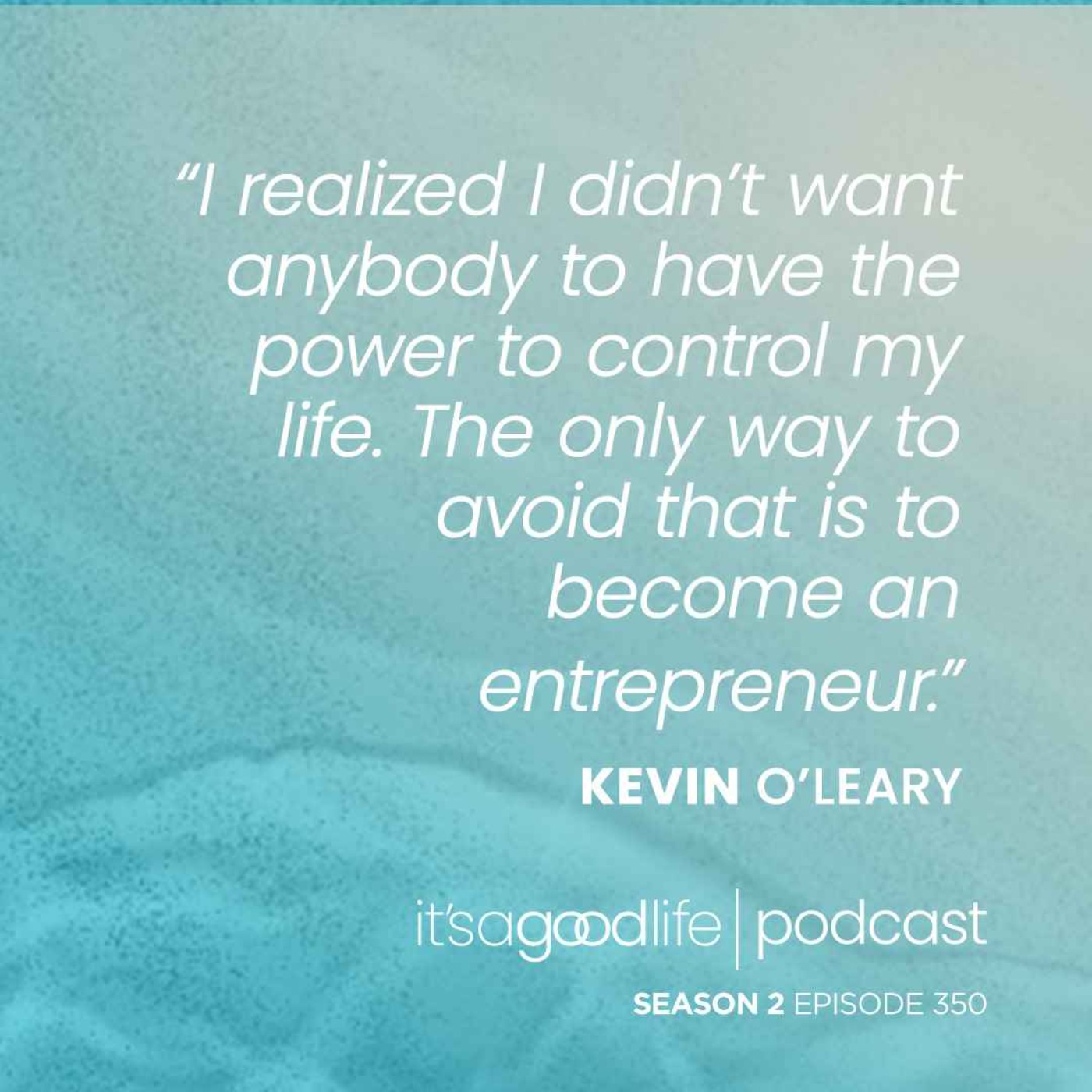
The Brian Buffini Show
S2E350 How to Build a Wonderful Business with Mr. Wonderful - Kevin O'Leary
00:30:00
Loading summary
Transcript79 lines
- [00:03]
A
Welcome to It's a Good Life, the podcast for entrepreneurs where it's all about growing yourself and your business. Here's your host, founder of America's largest business coaching company, Brian Buffini. Well, the top of the morning to you, and welcome to It's a Good Life. I'm your host, Brian Buffini, and I've often said I have a special guest today, but this guy, I'm a fan. I'm just like a fanboy. In fact, in 10 years of doing this show, I've never gone out the door. And my wife said, what watch are you wearing today? And she said, you better change your watch because you're about to interview Mr. Wonderful. And Mr. Wonderful is Wonderful. His name's Kevin O'. Leary. You know him from the Shark Tank. You know him from his many appearances on TV basically every day, who's also a practicing entrepreneur and a guy with great insight. I love his substance, I love his style, and I love his watches, which I probably can't afford. Kevin o', Leary, it's an absolute treat to have you. Thanks for joining us today, Ryan.
- [01:00]
B
Wonderful to beside a fellow Irishman, luckily by Irish to you, my friend.
- [01:03]
A
Yes, sir.
- [01:04]
B
Let's kiss that blarney stone today.
- [01:06]
A
Yep, yep. It's great stuff. And you know what? Again, a lot of people know your name, they know your face. I'd love to just kind of give us a little background because I'd love to know where you grew up and what the o' Leary household was like growing up.
- [01:17]
B
Well, you know, a lot of immigration into Canada way back in the 50s. And my dad came over with Anthony Monk, actually a guy. They were in the bottom of a ship and he got a job selling kids winter clothing. He was a salesman. Met my mother in the factory, owned. My mother's father owned the factory.
- [01:34]
A
Where did your dad come from?
- [01:36]
B
He came from Malahai, just north.
- [01:38]
A
Oh. Oh, my gosh. Right up the road.
- [01:40]
B
Yeah.
- [01:41]
A
My grandfather lived in Malahi. Yeah. Oh, my gosh.
- [01:43]
B
I mean, it's one of the most beautiful castles in the world. So, you know, I, believe me, I've had a few beer there. And then, you know, unfortunately, he passed away at a very young age. My mother remarried. We went to Champagne Urbana. My stepdad joined the United Nations. I've lived in Cambodia, Tunisia, Ethiopia, Cyprus, Denmark, Switzerland. Every two years they moved. And that's sort of my. I thought everybody lived that way. But obviously it was an interesting, eclectic. You know, I went to school in Nicosia, Cyprus, for a while. So I met a lot of people all around the world. You might be interested to know that the Irish are everywhere. Everywhere. They're everywhere.
- [02:20]
A
Everywhere we're not supposed to be, rarely where we're supposed to be.
- [02:24]
B
I'm basically half Irish, half Lebanese. My mother came from Lebanese descent. Call me a black Irishman. I'm proud to be called one.
- [02:30]
A
That's great. Well, I'm called a black Irish because of the hair that used to be very black, and that's how they worked.
- [02:34]
B
I don't have that problem, my friend.
- [02:36]
A
Well, obviously you're a citizen of the world, which also is what gives you great perspective. And you and I have another thing in common. Not just Malahide and Dublin and Irishmen by nature is. My mother played an enormous role in my life, and she just passed away this year at 94. But she was the spirit behind me, the wind behind the wings. And in fact, for the first 10 years, we would always finish this podcast with her little Irish blessing. And if you look up an Irish mom in the dictionary, her face was there. And I've often heard you talk about your mom, and it's one of the ways I really feel connected to you. What role did your mom have? She helped you shape your investment philosophy as well, right?
- [03:13]
B
Yeah. She was fiercely independent as a young woman. Didn't want to ever rely on a man for money. And so while she was even single before she got married, she started taking 15% of her salary from the factory and sticking it into a portfolio of telco bonds. They were back then yielding seven and a half percent and bought in stocks that, you know, s and P, 500 stocks that paid dividends. She had that portfolio for over 50 years. She kept it secret from both her husbands. And when she passed away, I got a call from the executor, said, you're the older brother. You got to get down here. Your mother died a very rich woman. I said, no, no, no, no, no. Wr. Wrong mother. We're middle class. He said, no, no, no. And sure enough, Georgette had only spent the interest in the dividends. That entire period, this thing had grown to a behemoth size. And she put my brother and I through school, took care of her sisters. I mean, she was just fiercely independent. And I looked at the portfolio performance, and I built whole ETF company around it. She never had more than 20% in any one sector and no more than 5%. Name one stock with the exception of one sector. During her lifetime, real estate became the 11 sector, the S and P. And I'm overweighted In real estate. It's the only one I got more than 20% in. I'm really. And I've always have been. I mean, just something out real estate I really like. I like. I like to go, you know, touch the earth, if you want to call it that.
- [04:35]
A
We just secured a new building in Colorado Springs. We're opening up an office there later in the year. And, you know, I just never met a piece of real estate I didn't like. And I think about your dad, I think about your mom, and, you know, I wrote a book called the Immigrant Edge. And it wasn't just my own story. It was studying immigrants that came here, legally pursued it, got it done. And just the enormous success rate and that kind of drive and that kind of commitment, because she. She would have never forgotten where she came from. Started in a factory and raises her kids and then leaves them with a fortune. You know, that's the American dream.
- [05:05]
B
No, it's true. You know, my kids were born and grew up in Boston. Talk about Irish. When the Irish first came over during the famine to Boston, they were treated like crap. And then they got their act together, and they became very, very wealthy and important citizens of that whole Boston community. And now you go anywhere there's Irish. I mean, Irish are everywhere in Boston. They might as well just call it paint the town green. That's it.
- [05:29]
A
No, it's good stuff. And again, they asked Bono. My sister worked for him for 20 years. And they asked Bono, why do you think the Irish are so industrious? And he said, well, when you live on an island, you're always working to get officers. In fact, they just produced the GDP numbers, the per capita production. The Irish are the number one in the world right now.
- [05:48]
B
Yeah, they've been very smart about tax policy, focusing on the talent there. By the way, I have my Irish passport. My whole family does. It's one of the. It is the most valuable passport in the world right now. And it's because everybody loves the Irish.
- [06:01]
A
That's true. Well, I love you even more myself. Here's the thing. I didn't know Malahide was in the gene pool there. That's your stock just rose today, like, boom. So I like to talk about, as we help so many people when they become an entrepreneur. They get this, like, this tuning fork moment. You get this little bong. They do something that's like, ooh, that's me. That's what I want to do. It's like this little defining moment, and they're ready to go pursue it. What was your defining moment that really helped you become an entrepreneur and the guy you are today?
- [06:30]
B
Well, it's a famous story in my history. I only got a job for one day in my life, and I got fired the same day in an ice cream parlor called Magoo's. And the woman who owned it, interestingly, if I recall, she was Irish, but she was tough. And she said to me, at the end of the day, you got to get on your knees and scrape the gum off the tile on the floor. And I said, no, you hired me as an ice cream scooper, not a scraper of gum. And she said, I don't care what I tell you to do, you're going to do it, and if you don't do it, you're fired. I said, I'm not scraping gum. Got whacked right there. And I realized that moment, you know, that moment is. It defined me forever because I realized I don't want anybody to have the power to control my life. And the only way to avoid that is to become an entrepreneur. Even though it's a harder road, obviously, with a lot more risk and ups and downs and everything, it's still, for me was the better path. And I really think that about a third of the population has the fortitude to do it, and the rest can't. And that's just the way I've learned it.
- [07:36]
A
What was your first business? What was the first thing that rang your bell that you made a few bucks out of?
- [07:41]
B
Well, I always wanted to be a filmmaker and a producer, and my stepdad said, look, you're not good enough. You're going to starve to death. At least go to business school. Get the block and tackle of business under your belt. And that kind of pissed me off. So I did what he said, and he was right for me to do that. And the first thing I did was started a business doing sports programming television for the hockey leagues in Boston, New York, Philadelphia, the original six teams. And it was very successful. And we built a bunch of shows around hockey. And one day somebody came to buy it. Because I own something called the format rights to these shows we made now. That was what I learned about ownership of formats matter. And that was my first deal. And I was still in my early 30s, and from that day on, I never stopped. I just kept starting businesses, growing them, selling them, and I still do that today, except I'm not the operator anymore. I'm kind of the investor guy.
- [08:33]
A
So we have a whole bunch of people who are in the business a lot of em in the real estate space, many of them doing well. But it has been a tough go. Okay. And it's not really covered. You know, the real estate business is covered based on the value of the market, the average price, and how it's doing for the consumer. The real estate industry is like the redheaded stepchild. And people don't really care how real estate agents are doing. In fact, the perspective the market has of real estate agents is they do nothing, get paid a fortune, and so on, so forth. The average realtor in the United States this year will make $42,000 gross commissions before expenses. Okay. Now, thankfully, our average client and we got 20,000 is in the four hundreds. But even then, it's a good living, but it's hard work. What would your encouragement be as an entrepreneur and a guy who loves real estate to people who working hard. We got jacked up with all this free money, all this low interest rates. We had an artificially created bubble in real estate and now it's kind of stuck there. We have an affordability problem, and a lot of our agents, they fought through it. One out of every seven transactions falls out. One out of every nine listings comes off the market. And so they're kind of swimming against the tide. What's your advice for people in a time like this that are swimming against the tide?
- [09:46]
B
Well, obviously the key that you mentioned in that list of litany, if you want to call it that, was the fact that rates made such a big move. There's no question about it. There's so many homes that are still sitting with 3.7, 3.8% mortgages, another two years, two and a half years, and they're not going to sell them because they're going to step into a 7% mortgage or six and a half, whatever they can get. So that's one fact of illiquidity. But you know what I've learned about real estate, and I've been playing it for a long time like you have. Let's take a woman like Barbara Corcoran. You know, I work with her on Shark Tank, and the only reason she gets anywhere is I buy her a new broom every year. Everybody should. She's a very, very smart woman in real estate.
- [10:29]
A
She is.
- [10:29]
B
And she learned a long time ago that it's about personal relationships and trust. If you look at her success, she wanted her agents, as she built her franchise out to communicate with people transparently and honestly and tell them their honest opinion, not just be selling all the time. Help them make decisions between One property and another, you gain that trust, you build a lot of franchise value with that. And the other thing that she got early on was social media. Wow, did she get that joke? And that's getting out her personal brand on every single platform that was available when she was coming up the feeding chain. And today when she talks about real estate, you know, she's a legend, everybody knows her, she's a fixture in New York, but she uses social media like crazy. And I tell every agent I meet, I'm going to check you out on LinkedIn. Before I even meet you, I'm going to go online and see what people are saying about you. I mean, why wouldn't I do that? It's free information. It takes me two seconds. So you really gotta care about what your online presence is like and what you're talking about in your local market. And of course, as you well know, real estate is local, local, local. You build a reputation, people come to you, your customer acquisition cost goes to zero. They want you because others say you're good.
- [11:46]
A
You're a fan of the referral system, you know, which was a big way to do business in Malahide, by the way, just so you know. Right. And my, my grandfather's painting business was right there in Harold's Cross. And in the early days, and we're fifth generation painters, you had to actually write him a note or knock on his door to say you were interested in working with him. He had so many satisfied customers. And so his principle was every day, when you were a kid, we all worked in the family business. He'd ask you, can you put your name to that? And if you can put your name to the work you did, you had to do it over. And the goal was to do the work in such a way we were doing higher quality work than the customers expected. Like we're doing paint jobs in Dublin. Imagine this. And at the end of the paint job, we're changing the light bulbs and washing the windows to showcase the paint job even better. And he would get referrals. For five generations, they never spent a single nickel on advertising.
- [12:35]
B
Now, well, there, that's it. This guy knew what he was doing. That's exactly. You gotta be the modern day equivalent of that guy. He did it right.
- [12:43]
A
Harry Buffaney. Today, he'd be using social media too, to showcase the paint jobs, to showcase the customers. And I love Barbara, by the way. She's, she's remarkable. I love her because she's very common sense about real estate. She really knows her stuff. And she knows this principle that no one has ever come up to her or me in their entire life and said, I'm glad I waited. You know, I'm really glad I didn't buy that property 10 years ago. You know what I mean? That just doesn't happen. You have to bite the bullet, pay the price, and over time you're going to win. Let me say this from an entrepreneurial standpoint. You're kind of an entrepreneur's entrepreneur. You're looking at all kinds of deals. I was hoping you were going to pull out the tick tock deal there. I would have felt better about my kids.
- [13:24]
B
Well, nobody's got tick tock and the deal's gone sideways again because of the China wars.
- [13:28]
A
I know, I know. But I would say this from an entrepreneurial standpoint. What would you say are like the no matter what's for an entrepreneur, if you're just, you're talking to these, you're seeing on Shark Tank, you're seeing all these people, people come to you advice all the time. If you were to give like two or three, like no matter what, if you're going to win as an entrepreneur, what would those be?
- [13:45]
B
There's the most important thing. I actually learned this from Steve Jobs when I worked for him back in 1990. Every day, every day, every 18 hour day, you're awake. There's three things you got to get done. There are always three things and that's called the signal. And you got to get the three things done. Everything that stops you from getting the three things done is the noise. And the ratio between signal and noise has to be 80%. 80% of your time has to be getting the three things done. 20% is the noise that you're wasting your time on. You do that, I don't care what kind of a business you're running, you'll be wildly successful. Most people can't do it, they can't stay focused and they worse can't discern what's noise and what signal. You have to be able to understand what matters every day. This is not big vision stuff. This is the next 18 hours and you keep doing it every single day. And same thing with real estate. There, there are three things every agent has to get done every day. I don't care, you know where you are. At minimum of three things, that's the signal. You gotta do it.
- [14:46]
A
You know, in our world it's number one. You gotta focus on lead generation. Cause we say the more leads you have, the more choice you have. Cause you can end up with quality. And everybody wants to work with quality people. But it's like if you generate 10 leads in a year, the chances of them being 10 super quality people is unbelievably low. And so what happens, agents fill up their time with the administrative stuff, the surfing online, doing the emails, you know, all of the, as you say, the noise. And our business, what we spend all our time doing is coaching people to do, number one, focus on your lead generation, number two, focus on your relationships. And then number three, manage your business like a business person. And again, I'm 30 years at this. And if, thank God, if people got it, I'd probably be back painting bridges myself. But it's hard. And in the world we live in today, it's just such a distraction world. Like, it's an ADD world. You can spend all day surfing social media and not get out and done and feel like you did do something. So how have you stayed so focused for so long?
- [15:44]
B
Because I actually do what you're saying. I mean, you know, the things. I have a very large portfolio of companies and in every single day there's the euphoria of some great thing happening in one of them. And this is actually happened just an hour ago. And somebody else calls me up, says, I'm going to go bankrupt, I'm running out of cash, and. And this happens every single day. And I've learned to control my emotions knowing that in an hour something else is going to happen, good or bad. So you're always dealing with the stuff that's coming at you, and you have to pick which ones you're going to react to. In real estate, there's no question about it, you might generate 10 leads, of which maybe three are just gold and the rest are crap. And so in the context of what you said there, you've got to determine how fast can you determine what the crap is, because you can burn all your time and waste it pursuing something of no value. That's the idea of picking out the signal and saying, those three leads are the ones I'm going to put my energy into. And even if one or two of them work out, that's going to be, you know, a fantastic outcome for me. That is the talent that somehow you've honed in these people because there's no way they'd be making that kind of income in this market unless they figured out a way to really nail down which leads to pursue.
- [16:54]
A
And again, we focus heavily on the referrals because if you go fishing for referrals, you're going to get referrals. You go fishing for Internet leads. You're going to get Internet leads. And you know, the Internet lead is probably 1/2 a 1% response. And yet our referral rate, what we see is for every three referrals, you make one transaction. So you tell me, you Want to kiss 99 frogs to find a princess, or you want to kiss three to find one? One thing I'm curious about, you know, you're this great investor. You've got this great insight, great business. You've just done a great job with your life. Where did the media personality piece, the Mr. Wonderful stuff? How have you utilized that? Because it's grown your business and your brand even further.
- [17:31]
B
Yeah, I didn't see that one coming. That's just serendipitous. I remember almost 20 years ago, Mark Burnett sat me down and he said, you know, we were out in California at a place called Shutters, and it's a restaurant, hotel thing, this. And he said to me, let's have breakfast. I want to talk to you about a new show I'm casting for called Shark Tank. So I got there and, you know, we talked about a lot of stuff. And then finally we're supposed to only have half. Half an hour for breakfast. I think it was two hours later, he finally says to me, look for this Shark Tank thing. I'm taping a pilot tomorrow. I'm looking for a real asshole, and you're it. I didn't know whether to take that as a compliment or not, but we never look back. I mean, look how big this thing. It's on in 54 countries. It's like I've become the ambassador of the American dream. Wherever I go and meet the leadership of the country, their kids watch Shark Tank. It's on everywhere. And I don't think even Burnett knew how big it was going to get. It captures the essence of the American dream, which actually the number one export of America is not energy or technology. It's the American dream. And I think we've become that major funnel of that export to around the world, and I'm proud to be part of it. My goodness. Boy, has it changed my life. There's no question about that.
- [18:49]
A
That's brilliant. Yeah. I tell people all the time, the only people who don't know how great America is are Americans. That's a fact.
- [18:55]
B
Yeah. I mean, I don't see people crawling in the river under barbed wire to get into China, Korea, or Cuba. That's not happening. But they are doing it in The US that's where I went to make my fortune, raise my family. That's the place where an entrepreneur can thrive because you got the big market and you got the capital. That's how it works.
- [19:12]
A
Well, I did a presentation for some young people here recently and it was on one hand very hopeful, but on the other hand they've been fed a lot of what I believe is garbage that, hey, the best days are over. Harvard study came out. 52% of Gen Z believe that the future will not be as bright as the past. There's not as many opportunities as the past. And again, I tell my kids all the time, I'm going to send you to college. Don't come back as communists know. Because when you send your kids to Caesar, don't be shocked when they come back as Romans. Right?
- [19:41]
B
Yeah.
- [19:41]
A
But ultimately, you know, I'd love you to speak to, because I happen to believe there's more millionaires to be made in the next 10 years, in the last hundred. I think that there's more capital, there's more market, there's more opportunity, there's more of everything. What's your stake on the future here?
- [19:55]
B
Well, I think the most interesting businesses are started in the moments of high chaos in the economy. You know, it's, it's always worth giving it a shot to become an entrepreneur because the outcome is not about the rate of money. It's the pursuit of personal freedom. You end up in a place where you get to use your time for the rest of your life in a way you want to do it and how you want to use it and pursue the things you care about, that's very, very important. But this idea that the best days are behind us, I mean, that is ridiculous. They were saying that in the 70s and the 80s with interest rates up at 18%, that real estate was over and there wasn't going to be people buying houses anymore. It was complete crap. I mean, there are people buying houses with mortgage rates of 20%. Everybody wants a house. I mean, that's just a crazy thing. But it just goes to show you. And by the way, for a very long time, over 40 years, mortgage rates were 6 to 7%. So I don't think it's going to be that bad. I think we're going to get back into a groove after all this tariff crap is over and input costs like soft lumber are worked out and everything else, that we'll get back in the groove of growth. And I'm staying long. Real estate the way I was having and I'VE always been that way, so I'm always optimistic. Kids that don't think, those are the people that are not entrepreneurs. If they think it's over, then they're not going to start a business anyway, so screw them.
- [21:10]
A
Stay long. That's a good deal. You know what? I've had all kinds of people on this show. Great characters and movie stars and sports guys and whatever else. And I always have, like, five little questions I like to ask. And it gives us a little different perspective on who our guest is. And if you're game for it, I'll do this as we finish up today.
- [21:26]
B
Yeah, please, go ahead.
- [21:28]
A
So, number one, what's the single best piece of advice you were ever given?
- [21:32]
B
Trust your gut.
- [21:33]
A
Who gave you that?
- [21:34]
B
It was a mentor named Jerry Patterson. Another Irishman was the first guy to bring over Russians to play in the NHL. That's how I met him. Oh, yeah?
- [21:44]
A
Yeah.
- [21:45]
B
And he. He said to me, there's going to be people trying to convince your stuff. Listen to your gut. You'll always be right. And he was. He was right. He was right. He's dead now, but I. He's always in my head. But would Jerry do. What would Jerry do? I always remember that.
- [21:58]
A
Like Jerry Maguire, right? He had his mentor, right?
- [22:00]
B
That's it.
- [22:01]
A
Those principles. And I have the same thing. I have people like Jim Rohn and Zig Ziglar in my corner and Lou Holtz, the coach. And they were people who just shaped me upright along with me mom and dad. Let me ask you this question. What's the one gift or talent you wish you possessed that you currently don't?
- [22:17]
B
I wish I could speak five languages. I really do. I'm dyslexic. I can barely speak English. So it's sort of. It's. It's one of those things. It's. It's just one of those things. So, you know. Yeah, if I. If I could do that, I'd like to speak more language.
- [22:30]
A
What would. What would be the first one you'd learn outside of English?
- [22:33]
B
I would probably learn Arabic.
- [22:35]
A
Yeah. You're there a lot, aren't you?
- [22:37]
B
Yeah. And that. That part of the world is on fire. It's exploding. It's just like nothing else. I mean, those guys have figured it all out, the whole region. UAE, Qatar, Saudi. Their next 30 years. Watch what happens there.
- [22:54]
A
Well, I have almost every single business partner and friend I have in England right now is in Dubai. They've all headed over.
- [23:02]
B
Yeah. There's a reason for that, though. It's One of the. It's the capital of capital. Abu Dhabi is really becoming the capital of capital. And Dubai is a great town. You can just go down the road 45 minutes. But Riyadh's no slouch. And Doha, all these places you go, there's like you're walking into the future.
- [23:19]
A
Worth the trip. Expand your horizons and also see this. America's great at inventing stuff and bringing stuff to the marketplace. And there's markets over there. Let me ask you, what book has been most instrumental in your life?
- [23:31]
B
Well, I've never. I've read many, many books, but the one that really was profound to me and I read the whole thing. It's quite a big tome is Keith Richards autobiography from the Rolling Stones. And it's not really. It's not a rock and roll book. It's. It's about, you know, perseverance and just stick to itiveness and staying focused on what matters through a tumultuous life. I mean, just. The guy did so many drugs. He should be dead, but instead, I think he's pickled. That's what. But, you know, as you go through his life and see how he picked himself up and just kept focusing on the things that matter to him, and he's built a beautiful family and he's been very successful. But there's a lot of lessons about business in that book that are worth reading and just, you know, being honest and transparent and staying focused. The guy is a remarkable character. I highly recommend the book.
- [24:25]
A
That's great. Remember, Richard Simmons ate well and exercised every day. And he's dead. And Keith Richards is alive and well and still going. I got to rethink this whole health and fitness thing. I know you're busy and you're going all the time, but if ever you're doing a bit of downtime and you're scrolling through, there's one movie. You either watch it or watch part of it over and over again. What's the one that does it for you?
- [24:48]
B
Well, I hope it's going to be the one. I just finished shooting with Timothee Chalame and Gwyneth Paltrow. You've opened up. You know, it's shameless promotion. Marty supreme comes out Christmas Day.
- [24:59]
A
Marty Supreme?
- [25:00]
B
Yeah. I play Milton Rockwell, Gwyneth's husband in it. We have a loveless marriage. It's a dark movie. You know, Josh Safdie's the director and Ronnie Bronstein the writer. Same guys that did Uncut Gems. It's a dark comedy, and I'll see. I'll let you judge how, you know, how. How my acting.
- [25:20]
A
Come on, o'. Leary. Did you ever, in your wildest dream, think you'd be opposite Glenn and Paltrow? Well, doing movies. What are you talking about?
- [25:28]
B
Last July, there I was at my lake house, and there, you know, they came up to see me, and I couldn't believe what I heard. Josh Safdie said, we got a role in this movie and we're looking for a real asshole, and you're it. So this asshole thing is really working out for me.
- [25:44]
A
Well, it's a brand. I gotta tell you, I've enjoyed the heck out of spending my time with you, and you're anything but. Let me ask you this, so. But keep the act up for the market. I say that's good. Last but not least, what does a good life mean to Kevin o'? Leary?
- [25:56]
B
I think the more, you know, the older I get, the more family. It's more family and friends for me. I don't need more money, but I really need more time, and I really enjoy what I do. So I really am focused on during the week. I mean, this week I'm going to be in seven cities, maybe eight. Maybe eight. Yeah. But I'm going to be home for the weekend for sure. And I like to hang with my kids and my wife and my immediate friends. And, you know, that's. That's how I recharge on those weekends. And so it. I think. I don't really believe in this concept of life balance for entrepreneurs. If you're going to be an entrepreneur, you're going to work your ass off. You're going to work 25 hours a day, eight days a week. There's no. There ain't no free lunch. And you just got to know that the only reason you do it is later in life. You've provided for your family, and you've got a wonderful ability to do whatever you want when you want to do it. And I've arrived there, and I'm pretty happy with that. And, you know, I protect it, but I like doing my stuff, and I do a lot of interesting. My opportunities are crazy. I mean, I get, you know, it's just so many different things. I got to pick and choose what I want to do, but I enjoy it.
- [27:07]
A
That's great. Well, that sounds like a good life to me, Kevin o'. Leary. And like I said, we won't tell anybody your little secret, that you're actually an awesome guy. We know what your brand is. Great. I won't Squeal, as they say. I can't tell you how much we're looking forward to seeing you December 3rd. You're going to love that. And when you see that technology, it's unbelievable. Like I say, it's like the Death Star.
- [27:27]
B
I've heard about this. I've heard about it and I want to see it and I want to try it. So I'm looking forward to it too.
- [27:32]
A
It's going to be great. We'll have tens of thousands of people tuning in live. We'll have a live studio audience as well. I'll get a chance to ask you a few questions that'll be really teed up around the market. A whole bunch of people who really want to do the right thing by the customer. You know what I mean? They really want to serve the customer. They really want to do a great job. But they're swimming against their tide. We're like salmon right now in the river and they're getting fit and strong. By the way, as you well know, the salmon that swim against the river get the strongest, the fittest, the fastest. We're a business that's about to lose 20% of our participants and we're going to about 10% more sales. So as they say in Ireland, more beer for us. And that's why we're so delighted, Kevin, to have you join us on December 3rd and that we're going to use this fantastic studio with this amazing technology and people who are attending for free are going to be able to ask you a question like I'm asking you right now. So that's going to be fantastic. And we're going to be given our bold predictions. We've done this for the last 17 years of what's coming for the future of the market. We have the national association of Realtors, Chief Economist Lawrence Yoon. I have my own research team, we call them Buffini Intelligence Agency. And we're going to show exactly what the market's going to do. And we've been predicting this for 17 years and we've been bang on. And on top of that, we have you coming, Dr. Yoon, myself. And we're going to give people a game plan for the year. What I love about it, it's absolutely free to attend. So for all of you listening, if you want to come and check it out here, Mr. Wonderful here Dr. Yun and myself go to it's a good life dot com. It's a good life. All one word dot com BCL and BCL is for Buffini Coaching Live. And just go and register today. Okay? It's absolutely free, and we're delighted to provide it to the market. It's going to be a great time. It's going to be, as we say, wonderful.
- [29:14]
B
Thank you. Thank you. See you soon. Take care, everybody.
- [29:17]
A
See you soon. I'm going to leave you all with our little Irish blessing again. For 10 years. My mother gave it. I'm filling her up shoes. I don't do it as well as she does, but I'll finish with this today. May the roads rise up to meet you and may the wind always be at your back. May the rain fall soft upon your fields and the sunshine warm upon your face. And until we meet again? God has us all in the hollow of his hand. We'll see you next time, Sam.