← The Brian Buffini Show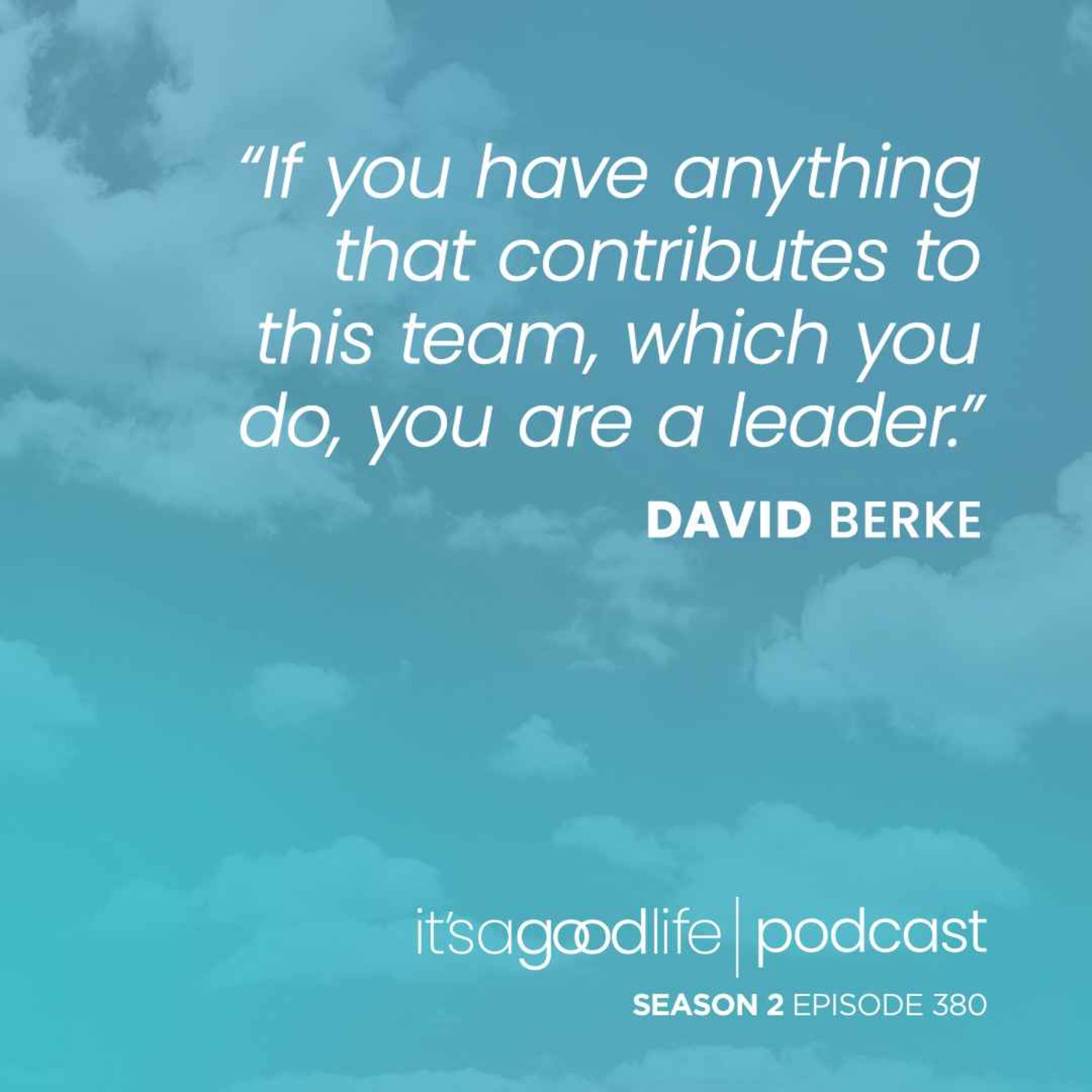
The Brian Buffini Show
S2E380 Leadership Lessons from TOPGUN Instructor and Author David Berke
00:43:44
Loading summary
Transcript195 lines
- [00:03]
A
Welcome to It's a Good Life, the
- [00:05]
B
podcast for entrepreneurs where it's all about
- [00:08]
A
growing yourself and your business. Here's your host, founder of America's largest
- [00:12]
B
business coaching company, Brian Buffini.
- [00:17]
A
Well, top of the morning to you, and welcome to It's a Good Life. We are joined today in studio with a very special guest, a local San Diegan. His name is David Burke. And let's just say my wife is very happy today. David is a Marine Corps combat leader, fighter pilot, top gun instructor. That's why we have the hat today. And a great leader. And we've been having a great chat off camera here today. This is one of my favorite leadership books I read in the last 12 months. It's called the need to Lead. And for all of you business owners out there right now, you think, what in the world does a combat fighter pilot have in common with me trying to run a small business? Well, it turns out about everything. And so, David, thanks for joining me in the studio today. Yeah. And a close by is you don't live far from us, so that's great. You know, I'd love you to kind of, before we get into the how tos here, kind of give people a little bit of a background. How does a guy end up being a combat fighter pilot and a Top Gun instructor? Where'd you grow up and how'd you end up doing that stuff?
- [01:21]
B
Yeah, a lot of it is, you know, luck and timing, a good circumstance. But I grew up not too far from here. I grew up in south Orange county in a town called El Toro. And as a kid, late 70s, early 80s, when I was living out there, there was a Marine base there.
- [01:34]
A
Yeah, El Toro used to go to the air show there.
- [01:36]
B
Exactly. And, and that's. That really is where it started. So I don't have any military family or background, but when my family moved to El Toro, we were about one mile from the flight line. So from about, I'd say probably six years old on, if I looked up, there were Marine fighter jets taken off and landing air show every year. And at some point, it just got my bloodstream and I just, I'm like, I want to do that. And it got to a point where I understood that was something I could do. And I just, by about high school, I'm like, hey, I'm going to do this. And I started to learn what you needed to do to get into the Marine Corps to fly airplanes, and I got on that path. So it really started with El Toro,
- [02:12]
A
and it wasn't in Your background, like your mom and dad weren't around the military or anything like that?
- [02:15]
B
Nothing.
- [02:16]
A
So you had a vision. You got a chance to see something. Yes. It lit a fire in you, and then you just kind of like, what do I do to get there?
- [02:22]
B
Exactly.
- [02:22]
A
And what is the path to get there?
- [02:24]
B
You know, ironically, it's not that complicated. There are things you got to do. And if I could summarize what the Marine Corps told me, to be a pilot is, got to go to college, you got to get a degree, you got to apply and enter into the Marine Corps Commissioning Program. And there was. You could do anything from the Naval Academy to ROTC to Officer Candidate School. They basically gave you a set of options. One made much more sense to me than the others. There was no way I was going to get into the Naval Academy. But the Marine Corps didn't. It wasn't the most complicated thing. And they also spelled it out, do this, this, this, and this, and you'll be eligible. It's no guarantees. It works out. But because it had such a very clear pathway, it wasn't too hard to follow.
- [03:05]
A
But you. And obviously not everybody makes it right.
- [03:09]
B
Yes.
- [03:09]
A
So the path is clear.
- [03:10]
B
Yes.
- [03:11]
A
So where does the drive come from? Where does the stick to it? I've never come from because, you know, I lay out a path for people every day on how to sell real estate.
- [03:18]
B
Yeah.
- [03:19]
A
And we have people making millions of dollars, and we have people struggling like heck.
- [03:23]
B
I think what you're highlighting, I think is oftentimes, certainly for me in my career, the difference between success and failure. Listen, you have to have the opportunities, right. And there has to be a pathway available to you. But ultimately, the responsibility and the burden falls on your shoulders. Now, the way you asked it, I was kind of thinking back as a little kid, I wanted to be a Marine. I wanted to fly airplanes. I. I applied it, got through the whole process, got accepted. And I remember, like, the first couple of days of Officer Candidate School. When I got there, I remember getting off the bus and being in a room with the other 75 candidates to be officers in my platoon. I was like, I do not belong here. I was really nervous. I was very uncomfortable. There's a thought where I maybe made a huge mistake because I felt like everybody was bigger and stronger. And I remember getting there thinking, like, holy cow, these are what Marines are
- [04:12]
A
supposed to look like. So, you know, modern parlance, they call it imposter syndrome.
- [04:16]
B
Yeah, I felt that right away. And I remember certain times during the. The process, Officer Candidate School where I was thinking, man, I. I thought about quitting. I really did. In my head, I'm like, I'm running too fast. It's too difficult for me. And something that really motivated me, and it happened very early on, is I started to notice other people that as I looked at them, they look bigger, they look stronger, they look faster, and. And they were quitting. And I remember seeing a person in my platoon fall out of a run, and I was like, that guy is way stronger than I am, and he's quitting. And I think that can put you in one of two directions. Either you follow that path, or you say, there's no way I'm going to let that happen. And other people's failure became a little bit of a motivator for me, which is, hey, I think I might be able to do this. And my confidence started to grow from there. And it really took me from a place of insecurity to, no, I think I can do this. And it made staying on the path a lot easier.
- [05:08]
A
Well, in the real estate business this year, 20% of the entire industry is leaving the business. And there's one or two ways to look at that, which is, okay, everybody's leaving. Maybe they're the smart ones, or maybe I'm the tough one. Maybe I'm actually a winner, and I don't realize it. Hey, I'm actually doing okay. And everyone else is singing the blues, and you wake up and you go. And then your confidence grows.
- [05:30]
B
Yep.
- [05:31]
A
So how do you go then? You're going through it. You get to be a candidate. How do you go from being a candidate to actually making it?
- [05:37]
B
Yeah. So the process of Marine Corps officer candidate school is tough, undeniably. But what you described is exactly what I felt. And my confidence grew, my confidence built, and I got to a place where I. To say I knew I was going to finish maybe is a bit. But I was extremely confident. Like, I knew that I had had what it took to finish. I completed that program, did the other requirement, got a degree from Cal State Fullerton just up the road, sir. There's no plaque with my name with academic excellence on it, but I did. I did finish.
- [06:08]
A
They gave you a sheepskin.
- [06:09]
B
They gave me the diploma, and off I went. And that's one of the things also is very appealing to the Marine Corps. They really don't care where you came from. They don't care about your background. You don't need a pedigree. I went to a state school. I finished what they said was the as the expectations to get in. Because the Marine Corps, once you finish the program and get selected to be an officer, they train you, they send you something called the basic school that every Marine Corps officer goes to. And that's where they really, really put their fingerprints on you and really transform you into the leader they need you to become. And that's really what sets your, your career path off from there.
- [06:41]
A
So how many Marine officers then tried to be pilots?
- [06:46]
B
A lot. You know, listen, not everybody wants to fly airplanes, which is a little crazy. But Marines, you know, they are passionate more than anything about being a Marine.
- [06:57]
A
Sure.
- [06:57]
B
And that's what I loved about.
- [06:58]
A
I got a bunch of them around here, by the way.
- [07:00]
B
You know it?
- [07:00]
A
Yeah, sure.
- [07:01]
B
So plenty of Marines want to fly. Plenty of them don't, you know, anything on the ground, from infantry to all the other jobs that are there. The cool thing about the Marine Corps is what makes us all the same as we all wanted to be Marines.
- [07:15]
A
And so how long from that time to actually being in the air?
- [07:19]
B
Yeah. So I.
- [07:20]
A
Getting your wings, the basic school, that
- [07:22]
B
six month is the course I was telling you is that six months we all go through it. And at the end of that, I was lucky enough to get selected to go to flight school, which was my dream as a little kid. So I get.
- [07:31]
A
And how many would have made it and how many didn't, would you say?
- [07:35]
B
When I got there, I was there as what's called a ground officer. So I selected Marine Corps ground knowing I had to compete for an air slot. And in my company of 250, they had two pilot. Two people are going to be selected for pilot.
- [07:49]
A
Wow.
- [07:49]
B
Now, it doesn't mean there weren't plenty that already had the selection and didn't mean everybody wanted to be a pilot. But the odds were really, really slim When I found out there was going to be two of us out how many at a.250.
- [08:02]
A
Okay.
- [08:02]
B
And in the end, you know, so you have to want to be a pilot. You have to have that ground commission. You have to pass like the aviation test, the flight physical. So it really whittles down. It doesn't. You're not competing with 250 at the end. But it had to be. I mean, I don't know the number, but it was a lot of people and there was only going to be two of us. So it was a very daunting thing to be in that six month program. I got at the end of that six month program, the second slot. So I like to say I was. I was number two of two. That's all that mattered to me, is I was going to.
- [08:29]
A
When they made the cut for the Olympic team, they had 64. I'll try out for my wife's team in 1985. And they only selected nine. And she was number nine.
- [08:40]
B
And she said, I don't care. Yeah, that's right.
- [08:42]
A
She played for the next four years.
- [08:44]
B
That's how I felt. So, and then from there, you know, you go out to flight school and. And pretty quickly you're in academics simulators. And then in an airplane, it happens pretty fast. I would say within six months of knowing I was going to go to flight school, I'm flying airplanes.
- [08:56]
A
And how long then were you a fighter pilot in the Marines?
- [08:59]
B
Yeah. So the, the flight training, there's different phases. You got to get selected for jets, then you select for fighters, and then I select for F18s. That whole thing takes a couple of years, I'd say. My recollection is flight school is about two years later I know I'm going to fly the F18. And within a year of that, I'm a fully qualified F18 pilot. And by the way, stationed back at
- [09:22]
A
El Toro right before. Come on. Yes, come on.
- [09:25]
B
I flew the very last F18 sortie as a student out of El Toro.
- [09:31]
A
Yeah, I've been there many times. I mentioned my wife as an Air Force brat.
- [09:34]
B
Yeah.
- [09:35]
A
Air shows, not only in Miramar Air show, which is one of the biggest. Every year. And we drag our six kids to. Every year still to this day, like, those dates are blocked on my calendar. You know, my wife and I would go off site every year for a week to plan the year. And the air shows, the non negotiable. It's like my birthday might not be non negotiable, but, you know, the air show is. And then we would also go to El Toro. And so I can picture it. I remember all the times they do the. The drills. They'd be dropping the bombs and doing all this stuff, and the ground attacks, and it was a great place, a great day out. But what a. What a deal where you had the dream. You're living in El Toro. It sets it up. And then years later, here you are riding the last sort of El Toro. It's hard to believe.
- [10:14]
B
A full circle moment. Just a surreal thing to have moved to El Toro. I went to El Toro High School, like, I was a local kid. Saw the planes overhead as a little kid, flew the last F18 sortie out
- [10:25]
A
of there, you know, we were turning around the building, right, and I showed you the Neil Armstrong picture. And, you know, he just said, you know, I, when I asked him about the dream of going to the moon, he said, every night, every one of us looked up and saw the goal. He said, every night we're going to put a man on the moon, bring him safely to Earth by the end of the decade. He goes, every night. We just, we saw our goal every night in front of us. And so, you know, there's just so much to that. And again, that's what translates to people. So then, okay, we got some other things here with this, you know, you're heading off to. How do you end up being a Top Gun instructor? How does that work?
- [10:56]
B
Yeah, well, I mean, again, a lot of these things, you know, it's that, it's an old adage, but it's a confluence of, you know, preparation and timing and luck. You know, things you have to do all the work, but things happen beyond your control. The thing about Top Gun that's, that's interesting is if you're in the fighter community in the Navy or the Marine Corps, and even before I knew I was going to fly F18s, I wanted to fly F18s. Like, that was the dream as a fighter pilot, you know that Top Gun's a real thing. The movie's great, but there's a real Top Gun and you know what's out there. And so I'd be lying if I didn't say way, way, way back. In the deep recesses of my mind, they're like, hey, one day I want to go to Top Gun. And the reality is so far away from the beginning, but each step, okay, I got to go to flight school, I got to get jets, I got to get fighters, got to get to F18s. And so you get closer and closer, closer to that. And at some point, every squadron, and it's the, the math a little bit rough, but they typically send one pilot a year roughly to go as a student. And when I was there, my second year there, the squadron commander said, you're going to go to Top Gun next summer for the squadron. And you're kind of like, I cannot believe this happened. You know, I did work hard. Obviously I set myself up to be successful, but timing, circumstance, things beyond my control all kind of laid themselves out that I got selected for my squadron to be the representative to go there as a student.
- [12:18]
A
Wow. Yeah.
- [12:19]
B
Pretty wild.
- [12:19]
A
And how, how long were you there?
- [12:22]
B
Top Gun now is about a 12 week course. It was Shorter when I was there, but it's one of those places you get there and like, it feels like it goes by in a blink.
- [12:32]
A
Yeah.
- [12:32]
B
And you wish it could be your whole life. It's just a school that it's. There's nothing else but flying and teaching and leading and briefing and debriefing. And there's nothing better than Top Gun. It went by pretty fast, but it was. As a student at Top Gun, it is a surreal, from start to finish, a surreal experience to be there.
- [12:49]
A
Now you get to go back there as an instructor many years later.
- [12:51]
B
No, not very. The very next year, really amazingly, I graduated from Top Gun. I was in the last graduating class from top gun before 9 11.
- [12:59]
A
Wow. So summer of 2001 changes everything.
- [13:03]
B
It did change everything. I joined the Marine Corps in 94. I got my wings, started flying F18s. 97, got my wings. 98, I'm flying F18s. I had a deployment under my belt in 2000. 2000 is when I'm told I'm going to go to Top Gun. I go in 2001. All that is essentially peacetime. There really isn't much going on in the world, very little, you know, some Southern watch, Iraq, no fly. But it's a peacetime world. I graduated from Top Gun late summer of 2001, July or August 2001, and I go back to my squadron and within maybe six weeks of me graduating, 911 happens and everything changes. We are overnight a wartime world and a wartime military. And very quickly I go on my first real combat deployment. My carrier deploys, Afghanistan, and I start flying combat missions in Afghanistan while I'm on that deployment. So less than six months after, maybe four months after I graduated, five months after I graduated, the commander of Top Gun calls me on my deployment, says, hey, will you come back after you finish your deployment? Will you come back to instruct a Top Gun? Like so the following summer, essentially a year after I graduated, and I did a seven month combat deployment to Afghanistan
- [14:09]
A
off an aircraft carrier.
- [14:10]
B
Off an aircraft carrier. The John C. Stennis here.
- [14:12]
A
Oh, yeah, sure.
- [14:13]
B
And I'm. I'm back at Top Gun as an instructor. And really the first generation of Top Gun instruct in. In combat.
- [14:19]
A
So before I get Top Gun instructing I. I do this. So I did it. We have a very close friend. I went on the USS Ranger. I did one of those Tiger cruises. Yeah. Where I was on it for a week. And then that's where they filmed Top Gun. Sure.
- [14:30]
B
The movie.
- [14:31]
A
Yeah. And so one of our All Time fans, the guy who's one of the facilitators of the tours down in San Diego for the Midway. So my family goes down there all the time. In fact, that's where I got the hat here.
- [14:41]
B
Nice.
- [14:41]
A
But you know, I will say this. The first time I was on an aircraft carrier and I'm an Irish citizen at the time with an American green card and I was paying a lot of taxes and I was on that ship for a week and I saw the crew, the kids, the flight deck, the pilots, everything. And I went, I'm glad to pay taxes. I just went, I'm glad to pay taxes. What is it like landing on an aircraft carrier? What's it like taking off an aircraft carrier? That is a frightening looking deal.
- [15:09]
B
It's a remarkable. The aircraft carrier is a microcosm of what make is, makes us so unique in more than one way. Not just the combat capability to be able to literally sail anywhere in the world, but you're bringing 5,000 people together of the most disparate and unique and, and individual personality and location and experience and forming them into a team. And what I learned about my time on a care it is, it's the leadership stuff because listen, when you're an F18 pilot you're kind of like I'm kind of the most, you feel in your brain, the most important thing in the world. And what I learned about the aircraft carrier is a. My ego was totally out of control. But I, in an F18 by myself literally couldn't do anything.
- [15:55]
A
The 19 year old kid hooking you up to the catapult, right.
- [15:58]
B
I couldn't, I couldn't even start my airplane. Forget taking off and landing.
- [16:01]
A
Right.
- [16:01]
B
Without the support of literally thousands and thousands, often anonymous, unsung, un unknown, hardworking people doing all sorts of things. I learned on the carrier. I'm like, oh wow, this there's a chapter. It's not about you, it's about the team. I learned that on the carrier.
- [16:18]
A
Yeah, we'll dive in there in a second. You know, I was on There, there was 5,000 guests and 5,000 sailors and we were having a picnic. It was going to be a steel beach picnic, right? Yep. And the seas were too high and the winds were too high. And in the case of an hour they moved 106 airplanes from the below decks to up on deck. And then I remember that like Yesterday we served 16,000 hot dogs and 14,000 hamburgers and 22,000 cans of soda. And it was just like the insanity of the logistics, the Insanity of the orchestration. It was just mind blowing. I mean, it was one of the greatest business lessons I've ever had. I want to delve in there in a second. But last but not least, you got to ask, on your career here. I've seen the movie ten times. Okay. I. At eight, at least. I wanted to the other time. Like I say, my bride, you are going to Top Gun, and you will like it. We all seen the movies. And again, Tom Cruise, he's a great character and all that stuff. Separate a little bit of the fact from fiction. How's it like the movie and how is it not like.
- [17:19]
B
Yeah, well, I'll go on record. I loved both movies.
- [17:22]
A
Great.
- [17:22]
B
Love them.
- [17:23]
A
Okay.
- [17:23]
B
I'm 14 when the first one comes out, so, you know, you know, I could see that on the movie theater. Like, I want to do that.
- [17:28]
A
We have the house here in San Diego. We have the motorcycle, pictures of the
- [17:32]
B
family on the motorcycle. So the movie, for me, the timing of that was massively influential and got also in my bloodstream. And, you know, the pop culture component of it. The second movie I loved as well, really modern and relevant to the world that I know pretty well. And in a lot of ways, there's some great things about the movie. Obviously, they have two hours to try to capture real life things they do. They did things really well. The flying is great, all that sort of stuff. Probably the biggest thing, the difference between what they get right and what they get wrong and the part they get wrong is what you see at Top Gun that's not depicted in the movies is you see a lot of humility and a lot of teamwork at Top Gun. So when I went as a student, there was nothing in the back of my mind thinking, I'm going to be better than the instructors.
- [18:18]
A
Right? Yeah.
- [18:19]
B
And they depict, like, you know, mavericks. Really?
- [18:21]
A
Sure, yeah.
- [18:21]
B
In the real time, like, the students aren't even close. And quite frankly, there is a lot of humility because when you get selected to go, and I remember. Remember this when I was told I was going to go, once you get past the euphoria and excitement, you. You're nervous, you're worried. You're representing your squadron, you're representing yourself. And your job as a Top Gun graduate is to lead your. Your. Your squadron into combat. And so that's a huge task. And one of the things that I think is important to know is, is Top Gun's a place where I learn more about humility than anywhere else. Because you see the instructors and you think, man, These guys are perfect. Like, they're doing everything right, and they're not. They're making more mistakes than anybody, but the mistakes are so tiny, and they're so refined, and they're so willing to identify even the tiniest deviation. And so it's not about.
- [19:10]
A
And they're just that much better than everybody else.
- [19:12]
B
They're so much better than everybody else and still willing to say, hey, Brian, let me tell you about a little Miss. Let me show you a little error I made here. A little airspeed excursion here, a little error here. And all of a sudden, you know, you're spending five, six, seven hours talking about things you did wrong, and it strips away the veneer that it's all about ego and arrogance. It's not.
- [19:27]
A
Yeah.
- [19:27]
B
And so they don't really capture that in the movie. Like, it's. You're really humbled there. And the instructors there are really a humble group.
- [19:34]
A
That's great. And you were all of that, and you were a student and you were an instructor and all of that. And ended up in the Pentagon.
- [19:40]
B
Yeah.
- [19:40]
A
And over this entire career, got to experience all the different aspects of leading people, driving organizations and. And seeing change. And that's what ultimately led to the book. Right?
- [19:52]
B
That's what led to the book. I had all these amazing, crazy experiences. I did an exchange with the air force flying F22s, commanded an air Force division as a Marine, Leadership Opportunities was the first operational pilot and commander of the F35 squadron. So I had all these unique things happen in my career. And what. Even though they're all very different, all very unique. Ground combat leader with Jocko and Leif and Ramadi as a Ford air controller. What made them all similar is that I made huge mistakes in every one of those settings. And I understood that capturing the mistake and the lesson I learned from it was the impetus for the book.
- [20:27]
A
So it says the lessons on how leadership solves every challenge. Right. To me, you know, I frame creativity's ability to solve a problem. I look at leadership as the ability to be able to take on challenges and do it in a coordinated fashion. We were walking around here. You said, oh, you have 180 staff. That's like a squadron. Right. Of F18s. So you have all this experience. Walk me through it. If you were coaching me up through this book, what are the most important things to know as a leader?
- [20:55]
B
Well, I think understanding that the leadership, as much as anything, is a skill to be learned a lot of times, you know, especially if you were fortunate to be in great organizations, you look up and have people that you admire, people you put up on a pedestal, you think, man, boy, must be nice. But if you have someone, and I know we even talked about this, and people that you look up to and say that's a mentor, I learned from that. Whatever is that they're demonstrating to you, whatever they're revealing is good attributes. They learn that they weren't born with that, they weren't given that genetically. And so if you can see someone that you look up to and go, man, that's that person has some great leadership attributes, you can learn those exact same attributes. And I think one of the four core beliefs that we really hold dear at Echelon front, the last one, is that leadership is a skill that you can learn. All of us can get better at that.
- [21:42]
A
Everybody I have met, especially in our profession, because a lot of us like me came from being a salesperson to then all of a sudden growing a business and being a leader and go, well, I'm great at sales, I suck at leadership. Yeah. And that may be true, but it's in a skill to be acquired.
- [21:57]
B
Yeah. Being a good salesman doesn't mean you're going to be a good sales leader.
- [21:59]
A
Right.
- [22:00]
B
You have to learn how to do that. And I think sometimes we look at the good leaders and think, well, you know, he was born with that or that's just naturally how he is, or that just something that just comes easy to him. Like, no, those are skills. And you know, you could do that with anything. Someone who's anybody good at their job, you know, athlete, a musician, it's easy. An Olympic volleyball player. Oh, must be nice. You and I both know, oh yeah, what's underneath that is a skill that had to be learned. And the work and the effort and the training and the discipline, two new
- [22:28]
A
knees 40 years later.
- [22:30]
B
But that means we can all get better at it.
- [22:32]
A
Right?
- [22:32]
B
Leadership is a skill we can all learn.
- [22:33]
A
All right, what's the next one?
- [22:35]
B
Is that every person is a leader. And that's such an important thing too, and really connects to what I just said. But especially in 180 person organization, those junior frontline individual contributors oftentimes think when they say, hey, we're going to talk about leadership, they go, oh, that's my boss, that's the supervisor, that's the manager, that's the CEO. Like, no, that's all of us.
- [22:54]
A
Our concept here has been around a long time. Servant leadership. We want to serve. And then everyone in here is a servant leader. Like everybody's got to step up and own their piece to it.
- [23:03]
B
That's right. And that piece might be small. It might be just you. It might be just you and the one customer. But you said it exactly right. Everybody is a leader, and we all own some portion of that. And that's another myth that has to be dispelled, is that leadership is about title or rank or. I don't become a leader until these things. You are on day one. If you have anything that contributes to this team, which, by definition, you do that, you're here. You are a leader.
- [23:25]
A
Yeah. So come on.
- [23:27]
B
All right, we're gonna go through.
- [23:27]
A
All right, let's go.
- [23:28]
B
You know, the other one, they all. They're all closely connected, but it's the idea that leadership exists. And I know this resonates with you. We talked about this. Leadership is not just professional pursuit. The things that make us good leaders in our business life, we say it's. It's. It's at work, it's at home, it's in our communities. And maybe the hardest part is within ourselves. So leadership is in every single capacity. It's not just being a good boss or a good manager. It's every aspect of life, personally and professionally. And probably most importantly is where it's overlooked is within our families.
- [23:58]
A
Well, let's spend some time there, because to me, I can't lead anybody if I don't lead myself. So that's the most important thing. And again, we live in a world where nobody really asks, well, what's behind the curtain? Right. You know, people can write books. There's a lot of books out there. I mean, I'm hit up every day of the week. Oh, can you interview me? And look what have you done? You know, we're sitting here today. You've been there, done that for a lifetime. And out of that experience, you speak about it. But to me, like, if I can't lead myself, I can't lead my family. You know, people ask all the time, like, my best business leadership lessons, I have six kids, if you want to figure that out. Right. I mean, otherwise, just it's the rabble doing the stuff. And I. And I say all the time, the kids don't listen to what I say. They're too busy watching what I do. And so the real thing for me is, like, you talked about this. Humility is, A, it's a skill. B, everybody is a leader. And then C, to me, it's the price to pay. To be a leader is the painful growth that we all need to do. And we need to grow in the ways we want to grow. Everybody loves personal growth. Go to the bookstore, buy a personal growth book. But it's in grown in the areas you don't want to grow. And that's the hardest thing. And, you know, that's what's brought me to the end of myself on more than one occasion. Yeah.
- [25:09]
B
I think you said it so well and that when we talk about leadership within ourselves or really living what we preach, too, you know, the. It's easy for me to tell other people, hey, what you should do. And. And you said it really well. Mike, what'd you say? My kids are too busy watching me than to listen to what I say. And I think most of us can admit that where it is the most challenging often is. Is ourselves. Do I personally do the things that I know I'm supposed to do and apply the discipline and the work and the humility when it sometimes comes a lot easier for me to tell other people or dictate to them and doing it myself. So that leadership within ourselves is oftentimes the hardest.
- [25:48]
A
You know, they say people have asked me, how'd you get your kids to be readers? I was reading one way to do it.
- [25:53]
B
Yeah.
- [25:53]
A
You know what I mean? Like, you got to shut the box off. You got to shut the scrolling off and exhibit the very behaviors that you want to see. And so otherwise, it's just more pontificating 100%.
- [26:02]
B
That's a great point. And, you know, and the segue there is that last component that we think about is that every problem in life is a leadership problem. And what you're just talking about is getting your kids to read. That's a leadership problem. You know, the way we define leadership is the influence of other people in our families. And you already connected. The concept of the solution is leadership is you want to get your kids to read, read. You wanted kids to eat healthy and exercise, eat healthy and exercise. And so oftentimes we. We connect leadership to a business pursuit, and we look at other problems like, oh, those are. Those are things beyond my control, or those are. You know, we make excuses for what they are. Every problem is a leadership problem. In your family, within yourself, in your business, whatever it is. And the attributes of good leadership apply everywhere, which means that through good leadership, you can solve all those problems.
- [26:51]
A
Okay, let's get down into a little granular. All right. Some tactics here.
- [26:54]
B
I like it.
- [26:55]
A
So I got an industry that's had three of the hardest years it's ever had that doesn't make the news, by the way. And the reason being you have a nice house around the corner, that house has only gone up in value. So from a consumer standpoint, the real estate market's great. From a business standpoint, we have the lowest number of sales since 1995, when there were 80 million less people living in the country at a minimum. So what it means is, like, if you have that many sales and you have that many more people, percentage wise, it might be the worst market in 100 years. We've had three years of that now, it looks like, because a, we got people leaving the business, and B, there's some green shoots, some lower interest rates, incomes are picking up, tax returns are gonna be good this year, so we'll have a little bit of life. But people have been beat up. And now that it's kinda like the cavalry's coming. But I'm trying to get an army of people, of tens of thousands of people listening to this today back on the horse to go, hey, you know, now's the time. So how do you turn it around? If you've been beat up, you're down a little bit, you've maybe set some goals, didn't accomplish them, and now you've got to kind of get back on the horse and win. What's your best advice there?
- [28:01]
B
I would think one of the things that's really central to the world that you prioritize in is the nature of the relationship you have with the people that you're doing it with. And some of this is just the reality of the cyclical nature of life, is that we have to play a little bit of a longer game than we sometimes might like. And I think the relationship is the linchpin of what we call the long game. So if I had. If I had maybe what winning looked like for me for the last three years, I didn't meet those goals. Your ability to be successful, my assumption would be, and you can correct me if I'm wrong, but even with these, you know, you call these green shoots, these things that are getting better, that doesn't mean things are just going to fall into your lap. And just because of the nature of the circumstances around you, like, oh, sales are automatically going up, I'm making much money, you're going to have to leverage the relationships you've been maintaining and pursuing. And even when times were difficult, and I think part of that sits underneath the lesson of life, that with six kids, you're going to know this extremely well, is those cycles are much longer sometimes than they want them to be. And if your plan is to be successful in 2026 because of these positive trends that are moving in our favor, that is still going to happen based on the leveraging of all the work that you've done to get to this point.
- [29:08]
A
Right.
- [29:09]
B
And I'll be careful when I say this, but if there are people leaving, good, yeah, 100%. And I don't mean I don't wish them ill, I don't mean good like they're failing. But for those of you that are sticking around, what you're going to get an opportunity to do now is test the value of the strength of the work that you've done, the commitment you've made, the discipline you've applied when things are at their most difficult. And if you've done that, you're going to be successful when those opportunities present themselves. But those by themselves aren't the answer. The answer is the work that you've had to do at the bleakest, darkest times. And so that's also a good life recipe because we could have had, I'm guessing, a similar, maybe not exactly the same conversation in 2008.
- [29:51]
A
Of course.
- [29:52]
B
And I'm betting that when I come back in 20 years, there'll be another wave of something.
- [29:58]
A
Yeah.
- [29:58]
B
And I think the success that you get inside of that doesn't come from like, well, when the external environment is good, I win. When it's bad, I lose. You have to work through that to get to a place to be successful.
- [30:09]
A
I love it. Because a little longer term perspective is the key. And if you could, if you could go out three years and come back today. Right. You man. If I'd be willing to pay the price. I'd be willing to pay the price in 2026 if I knew I'd be here in 2029. And it's just people have been grinding for a long time and they getting beat up. So here's another element of that is, you know, and it's kind of the wrong question, but it's a question that people have which is how do you stay motivated? Yeah, right. How do you stay motivated?
- [30:35]
B
Well, the motivation thing is a really interesting question because, you know, motivation by itself is a wonderful thing, but it isn't necessarily. Yeah. It doesn't last. It's not necessarily the thing that's going to get you through.
- [30:47]
A
Yeah.
- [30:47]
B
And listen, there's a balance. I'm not over here advocating you should. I don't care if you're motivated. I don't care if you're Miserable. That is not what I mean. But the motivation is a waning emotion. What is a sustaining thing? And I want to make a link to, back to kind of concluding my view on that and more of a final answer is, you know, working hard and being disciplined and powering through when you're not motivated. And it's true for, I mean, listen, you've raised six kids. There is no way you can tell me that every single challenge you had, you were motivated.
- [31:18]
A
Right.
- [31:18]
B
To tackle there sometimes.
- [31:19]
A
Exactly.
- [31:19]
B
Grief. Are we doing this again? Those are the moments that matter. If you can work through the lack of motivation.
- [31:27]
A
Yes.
- [31:28]
B
And then there's a connection there. What does long term winning look like?
- [31:31]
A
What is it?
- [31:31]
B
What are we trying to accomplish in the end here? Again, so many parallels to family and relationships and kids. That motivation will come back very strongly if you work through the times when you're not motivated. And then you have this confluence of opportunity which is. It sounds like that's happening.
- [31:46]
A
It is.
- [31:47]
B
And the preparation. The preparation is the work you do when you are not motivated.
- [31:51]
A
Yeah.
- [31:52]
B
If you can work through that and go, okay, this is the, this is how I build the foundation. This is the work, this is the powering through. This is a bit of a slog. This is not the most exciting and motivating thing, but I can see where this gets me. And then you get the opportunity. Now you got a recipe for success. Motivation is fleeting. You got to work through the times where it's not there. And if you do, the outcome is you can see this opportunity. This is the time to be aggressive and attack that the motivation will come from that because you worked through when it wasn't there.
- [32:22]
A
You know, the reason I asked the question, it's the question that I'm asked. But it's the wrong question to ask. And the truth that it's okay to ask it, except the answer is always this. The process is the king. Right? The process is the king. The routines are the king. The discipline is the king. You know, I got up this morning, I got in late last night. I had a long day, long day of travel. And it's 6:30 this morning, a little chilly. People don't realize it can get chilly in San Diego. And the trainer's in my garage where we have our gym. And I did not want to get up this morning and I showered, I went out there wet head and a cold morning. And I put in an hour and of course afterwards I'm like, glad I did that. And that's why I run a coaching company. Because I didn't want to do it. I was working out actually with my daughter. And she's like, he's trying to get her on the stepmill. She's like, I don't want to do that. Oh really? And she's like, go for it, girl. And it's like afterwards we're high fiving, right? So it's the routines that win, it's the process that win, it's the work that comes in. And the motivation, I believe comes in the sense of satisfaction of the goals that are being achieved and the process. And all of a sudden you're looking back and the motivation comes from when you're getting to share the story with somebody else to help them on their journey.
- [33:28]
B
That's a great summary. A summary of what? I think we're thinking the same thing. If you only worked hard when you were motivated, man, that's going to be a problem. Because the story that you had this morning is much more common than like, oh, I can't wait to get after it. But the end state of you put in the work when things are dark and difficult and hard, what you get in the end is so much more powerful.
- [33:51]
A
Well, it's funny, you know, we were talking about it, you know, the stories always sound great, right? Like from the 14 year old looking at the jets in Altaro to being a Top Gun instructor. That's what the movies are for. Yeah, but that's not what it was. And it was a, you know, the Trail of Tears and highs and lows and ups and downs and everything else.
- [34:10]
B
Indeed, it's a great example too for flying. Like we measure the, you know, if you flew two or three, I was about 3,3000ish hours of flight time. If you think about how much time I spent in a cockpit flying an airplane versus how much time out, it's not even, it's, it's, I mean, it's minuscule time there. And so to that point, I mean, those are great moments. But it's all the thousands and thousands and thousands of hours, the preparation, the work, the studying, all those things that allow that.
- [34:40]
A
And I'll say this, so my daughter Anna, who you met this morning on the Olympic selection committee for horse riding, she's a three time national champion and we live at a horse ranch right there in Rancho. So I would get up every morning after a workout, get a cup of tea and sit outside and watch her with her trainer go hour after hour, day after day for 20 years. And during that time she went to the world Championships she's been to the Aachen is like in golf and parlance, it's like the Masters. Well, her routine is about four to six minutes, depending on which one of the exercises they do. And I've watched her on occasion do three years worth of work seven days a week since she was 10 years old, up at six in the morning and finishing 11 at night because the horses and they're seven days a week done, no dates, no this, no that. Like to pursue this thing for this five, six minute ride in Germany where she's okay, there's 50,000 people and everybody's cheering and clapping and standing ovations. And here's the thing. So now she's just retired from international competition. And when we sit down and talk about it, the memories we have that are the most dear are those 7 o' clock in the morning where you can see your breath having a cup of tea, where she's doing the routines. And that was the joy of it. Not what anybody else saw, not what the accolades were, not what all the Olympic bell whistles are about. But it was actually that day to day that becomes the trophy, that becomes what you take with you.
- [36:06]
B
And that story applies to everyone. That's the story for your, for the people working with you. That. It's the work, it's the effort and the motivation meter. I hate to say, it's like it's. It really doesn't matter. It doesn't matter if you don't want to go to the gym, doesn't matter if you don't want to study for the test. It doesn't matter if you don't want
- [36:22]
A
to do the Popeyes we're asking to do.
- [36:25]
B
You got to do it.
- [36:26]
A
Yeah, that's great.
- [36:27]
B
Then you get the payoff. And that's what this is about.
- [36:28]
A
Well, I literally could do this all day. I mean, my wife is going to be so bummed that she was out of town when you're here. I mean, we're a military family. My father in law, 26 years in the Air Force, 46 years as the American Legion, and she is probably the most military of them all. And she's the Olympian herself. So we have just the highest regard for it, the highest respect, the excellence that it represents. If you were to give just somebody reading your book, what would you hope they get out of it? Like, what would you hope after reading their book, they go and do what?
- [37:00]
B
Yeah, the book, the way I wrote it was I wanted to talk about a way of thinking and a way of behaving Built on the lessons that I learned. Yeah, the lessons I learned from my biggest mistakes. So my hope is that someone can read that and see how the mistakes that I made and the lessons I learned apply to them. Doesn't matter if you're in a cockpit of an airplane. I tell stories about my wife, I tell stories about my kids. I tell stories about my personal professional lives. If they can read a story of my own failure and the lesson I learned and give them a tool, a lesson, something to apply to make their life better.
- [37:34]
A
Some hope this guy made it.
- [37:35]
B
Yeah, like you say.
- [37:38]
A
But I think the theme of this conversation today is unintentionally that we all think everybody has their stuff together. Butter would melt in their mouth. Brian never made a mistake. Every financial decision, everything you did, it's just all the straight line up and to the right. And that's how it does two things. It makes success fanciful, but it also allows us to give ourselves excuse to stay where we are. And so a lot of people, when they have a challenge and your book is about overcoming challenges, they think, oh, that's confirmation that I'm on the wrong path. As opposed to that's the greatest confirmation you're on the right path.
- [38:11]
B
Yeah, it's a great way to put it. Such a good. There's not a single flattering story in this book about me. It's all just like, I can't believe I did this. But that's where I learned those mistakes. And Brian, I am as average a human being has ever existed. And so the success that comes from the lessons that I learned, if that can help someone else get on the path to be successful in their life, then that's the success for that book.
- [38:33]
A
Charlie Tremendous Jones used to say, every day, in every way, ordinary people do extraordinary things. So one thing I'm very excited about is our 10 year anniversary of what was the Brian Buffini show that became the It's a Good Life show. We're celebrating our 10th anniversary on St. Patrick's Day and we've been getting a lot of feedback. We brought in some super talented people to run the show. What we've heard from you guys is you want to hear some different things. So we are reimagining the show and in fact it's going to be now really heavily focused on being a show you can watch. So follow us on YouTube. So go to the Brian Buffini show on YouTube and you'll be able to see all these episodes. And we're very excited it. So we've had Everybody, everyone on this show you can imagine, including your comrade, Jocko Willnick. But I always ask five questions to finish our show.
- [39:26]
B
Hit it.
- [39:26]
A
Okay. Don't know they're coming, but it kind of gives a little insight into what the people and our audience knows it. So it's just an interesting perspective into you. All right, so what's the single best piece of advice you've ever been given?
- [39:39]
B
Your ego is going to become a problem. Learn to keep it in check.
- [39:44]
A
Was that an instructor?
- [39:45]
B
It was a. It was a Marine Corps officer, a captain who was my boss.
- [39:49]
A
Wow. Early.
- [39:50]
B
Early in my. Thank goodness. Early in my career.
- [39:52]
A
What was his name?
- [39:53]
B
His name was John. Marion's call sign was Cub.
- [39:55]
A
Cub. Yep. All right, Cub. Well, we thank you and we honor you today. What's the one talent or gift you wish you possessed that you currently don't?
- [40:03]
B
God, I wish I was a good athlete. Yeah, I talked about Domino. I have all these visions in my mind about, you know, I wish I was just one of those naturally good athletes.
- [40:12]
A
Well, they call you Stick Jockey, so, you know, that's you, an athlete. What book has been most instrumental in your life?
- [40:19]
B
I know this is cliche, Extreme Ownership, the way it was written, I think. And it's a little bit longer answer, but I had it in my mind that I had a really good understanding of leadership. I read the book and I realized how many. How many ways I still needed to improve. And it was a bit. Almost shocking. Like, man, I thought I had this thing figured out. And the book was a strong reminder at a more experienced, advanced place in my career, I still had a lot more to learn. Had I not read it, I could see myself thinking, like, nah, I got it figured out. And getting very complacent. That book really changed the trajectory there.
- [40:53]
A
Yeah, I'd get into trouble with Jocko, and he probably beat me here. But I think his ability to communicate those principles were almost at a higher level than what he actually did in teams, you know, and in the service.
- [41:04]
B
I know what you mean. Yeah.
- [41:05]
A
He's got a unique ability to be able to communicate that. Extreme Ownership is a book I've given to every staff member in my company.
- [41:10]
B
Appropriately.
- [41:11]
A
So, yeah, it's great stuff. All right, last but not least, what does the good life look like for David Burke?
- [41:17]
B
Oh, man, I'm just filled with cliches, but I'm married. I'm, you know, well over 20 years of marriage. I got three kids, all trending towards what they're going to be. I have this image of My kids as adults liking me and my wife and wanting to be around us and looking back with all the trauma and nightmares of just growing up in teenagers and. And still wanting to be with us as a family. The good life to is my wife and I are with our families and our family wants to be with us.
- [41:49]
A
There you go. Well, I have six of them. They're doing it right, man, and they're connected and they're at my house. They've all live elsewhere, but they're all at my house like four times a week. That's the good life, you know, and it's the. It is the good life. I think I tell people all the time. If I. If I'd have known how well they were going to turn out, I wouldn't have worried so much. Well, listen, the book is the need to Lead. The author is David Burke. And what I got today from our time together is the humility that comes from the perspective and the work and being part of a team, so you know where credit is due. I love to feature people who've been there and done that. And it's interesting to me, in the leadership space, there's the most amount of books on leadership of all the business books out there. And most of the people who write the books have never led anything. So when I meet people who've been there, done that, excelled at it at a level of high competency, and then be able to have the humility to share so that everybody can read it and go, I can identify with that. I can identify with the failings, and I also see what he did to succeed. It's a great message. You're a great messenger and thanks for taking the time together with me today.
- [42:52]
B
This has been an absolute blast. Thank you so much, Brian. This is awesome.
- [42:55]
A
That's great stuff. Well, I'm going to finish our show today the way I have for the past 10 years with my mother's little Irish blessing. I had a chance to show David through the office here today, and I showed him the Therese Buffini boardroom that's all dedicated to her and her quotes. And I'll say what she always said. May the roads rise up to meet you. May the wind always be at your back. May the rain fall soft upon your fields and the sunshine warm upon your face. And until we meet again, May God hold you all in the hollow of his hand. We'll see you next time, Ra.