Podcast
It’s All Your Fault: High Conflict People
Hosted by TruStory FM · EN
Hosted by Bill Eddy, LCSW, Esq. and Megan Hunter, MBA, It’s All Your Fault! High Conflict People explores the five types of people who can ruin your life—people with high conflict personalities and how they weave themselves into our lives in romance, at work, next door, at school, places of worship, and just about everywhere, causing chaos, exhaustion, and dread for everyone else.
They are the most difficult of difficult people — some would say they’re toxic. Without them, tv shows, movies, and the news would be boring, but who wants to live that way in your own life!
Have you ever wanted to know what drives them to act this way?
In the It’s All Your Fault podcast, we’ll take you behind the scenes to understand what’s happening in the brain and illuminates why we pick HCPs as life partners, why we hire them, and how we can handle interactions and relationships with them. We break down everything you ever wanted to know about people with the 5 high conflict personality types: narcissistic, borderline, histrionic, antisocial/sociopath, and paranoid.
And we’ll give you tips on how to spot them and how to deal with them.
36episodes
Episodes
Newest firstAll episodes
Beyond No-Contact: High Conflict Skills for Family Relationships
Feb 500:30:51Tap to summarizeThe Evolution of Family Estrangement: Understanding Adult Children Cutting TiesBill Eddy and Megan Hunter explore the growing phenomenon of adult children severing relationships with parents, examining research, societal shifts, and potential solutions. Drawing from their experience at the High Conflict Institute, they analyze Oprah's recent YouTube conversation with Dr. Joshua Coleman about family estrangement, offering professional insights into this complex dynamic affecting millions of families.Understanding Modern Family EstrangementResearch indicates approximately one-third of Americans experience parent-child estrangement. The hosts examine how smaller family sizes, increased mobility, and social media influence these dynamics, while exploring the impact of shifting cultural values, mental health awareness, and changing approaches to conflict resolution.Questions Addressed in This Episode:What factors contribute to increased family estrangement?How do cultural differences affect family relationship patterns?When might relationship boundaries be appropriate versus complete estrangement?What impact does estrangement have on extended family relationships?How can families develop better conflict resolution skills?Key Takeaways:Family estrangement often reflects broader societal shifts in relationship dynamicsConflict resolution skills are crucial for maintaining family connectionsModern technology and social media can both help and hinder family relationshipsSetting appropriate boundaries differs from complete relationship terminationMost estrangements are temporary, with opportunities for reconciliationThe episode provides valuable insights for anyone navigating complex family relationships, offering understanding of this significant societal trend and practical approaches for addressing relationship challenges.Additional ResourcesOprah Video- Why Adult Children are Cutting Ties With Their ParentsExpert PublicationsSLIC Solutions for Conflict: Setting Limits & Imposing Consequences in 2 1/2 StepsOur New World of Adult BulliesContact Us For High-Conflict TrainingUnderstanding & Managing High-Conflict TrainingProfessional & Personal DevelopmentHCI’s courses:Conflict Influencer® - for famlies (new classes starting January 2026)High-Conflict Law Certification - for legal professionals (starts March 2026)Connect With UsVisit High Conflict Institute: highconflictinstitute.comSubmit questions for Bill and MeganBrowse our complete collection of books and resources in our online store—available in print and e-book formatsFind these show notes and all past episode notes on our websiteWatch this episode on YouTube!Important NoticeOur discussions focus on behavioral patterns rather than diagnoses. For specific legal or therapeutic guidance, please consult qualified professionals in your area. (00:00) - Welcome to It's All Your Fault (00:41) - Why Adult Children Cut Ties with Parents (04:13) - Why More Rifts (11:11) - US Experience (13:45) - Mexico and Religion (16:20) - Destabilizing for Kids (21:25) - Intergenerational (22:56) - Everyone Needs These Skills (25:30) - Setting Consequences (26:58) - How Can You Make It Better? (29:02) - Wrap Up
Transcribe →
SLIC Solutions for Limits: How to Set Boundaries That Actually Work (with Ekaterina Ricci)
Jan 2900:48:12Tap to summarizeSetting Effective Limits: A Conversation About SLIC Solutions for ConflictBill Eddy and Megan Hunter welcome co-author Ekaterina Ricci to discuss their new book "SLIC Solutions for Conflict," exploring practical approaches to setting limits and consequences with individuals who demonstrate challenging behaviors.The episode introduces the "two and a half steps" approach: establishing clear boundaries, implementing consequences, and selectively using empathy, attention, and respect (EAR) statements. Traditional empathy-focused approaches may sometimes enable rather than resolve difficult situations, particularly with individuals who demonstrate manipulative behaviors.Bill Eddy outlines five crucial questions for establishing consequences: Is it proportional? Have positive consequences been considered? Is it safe? Are you prepared to enforce it? Do you need assistance?Questions we answer: How can empathy make conflict worse? Why is advance preparation important? How does social media impact younger generations' ability to set boundaries? When should you seek help imposing consequences?Whether managing professional relationships, navigating family dynamics, or maintaining personal boundaries, this episode provides practical tools for setting effective limits while maintaining respect and safety. Learn how preparation, practice, and proper timing can help you implement boundaries with confidence.Additional ResourcesWatch this episode on YouTube!Expert PublicationsSLIC Solutions for Conflict: Setting Limits & Imposing Consequences in 2 1/2 StepsHigh-Conflict TrainingUnderstanding & Managing High-Conflict TrainingPersonal DevelopmentConflict Influencer Group Class - starts January 21New Ways for Couples: Online Class + CoachingProfessional DevelopmentFamily Law Consultation Group with Bill Eddy - starts March 2026Connect With UsVisit High Conflict Institute: highconflictinstitute.comSubmit questions for Bill and MeganBrowse our complete collection of books and resources in our online store—available in print and e-book formatsFind these show notes and all past episode notes on our websiteImportant NoticeOur discussions focus on behavioral patterns rather than diagnoses. For specific legal or therapeutic guidance, please consult qualified professionals in your area. (00:00) - Welcome to It's All Your Fault (00:49) - SLIC Solutions for Conflict (01:22) - About Ekaterina (03:23) - Why This Book? (04:07) - When Empathy Makes It Worse (06:31) - Two-and-a-Half Steps (08:29) - Consequence (11:13) - Role Play Practice (13:31) - Learning How to Set the Limit (16:56) - Younger Generations and Setting LImits (20:03) - Social Media Example (22:08) - Surprises in the Writing of It (25:36) - Something Hopeful (29:54) - Creating Space for Yourself (32:38) - The Five Questions (37:55) - The Writing Experience (38:52) - A Few Examples (43:28) - Doing What's Right (46:35) - Wrapping Up
Transcribe →
Self-Compassion and DBT: How New Treatment Approaches Transform BPD Recovery with Amanda Smith
Jan 2200:45:34Tap to summarizeIn this episode of It's All Your Fault, host Megan Hunter interviews Amanda Smith, LCSW, about her groundbreaking new book on self-compassion and Dialectical Behavior Therapy (DBT) skills for people who have borderline personality disorder traits. The discussion explores how incorporating self-compassion into treatment can enhance recovery and improve outcomes.Understanding Self-Compassion in BPD TreatmentThe conversation delves into how self-compassion serves as a vital but often overlooked component in treating borderline personality disorder traits. Amanda Smith draws on 19 years of clinical experience to explain why traditional confrontational approaches often backfire, while self-compassion can help reduce self-destructive behaviors and improve emotional regulation.Research shows that increased self-compassion correlates with better mental health outcomes, healthier relationships, and reduced anxiety and depression. This episode examines how these findings specifically apply to people working to manage borderline personality disorder traits.Questions We Answer in This EpisodeHow has treatment for borderline personality disorder evolved over the past 20 years?What role does self-compassion play in DBT skills training?How can family members support loved ones who cannot access immediate treatment?When should boundaries and limits be introduced in treatment?How does self-compassion affect recovery outcomes?Key TakeawaysSelf-compassion can serve as a replacement skill for self-destructive behaviorsDBT skills can be learned and practiced by family members to support loved onesTreatment approaches work best when starting with validation before introducing structureRecovery is possible with appropriate evidence-based treatmentEarly intervention, even before age 18, can be beneficial when approached appropriatelyThe episode provides hope and practical guidance for anyone impacted by borderline personality disorder traits, while highlighting the importance of combining clinical skill development with self-compassion practices. Listeners will gain insights into both professional and personal approaches to supporting recovery.Additional ResourcesWatch this episode on YouTube!Expert Publications by Amanda L. SmithThe Self-Compassion Workbook for BPDThe Dialectical Behavior Therapy Wellness Planner: 365 Days of Healthy Living for Your Body, Mind, and SpiritThe Borderline Personality Disorder Wellness Planner for Families: 52 Weeks of Hope, Inspiration, and Mindful Ideas for Greater Peace and HappinessExpert PublicationsSLIC Solutions for Conflict: Setting Limits & Imposing Consequences in 2 1/2 StepsProfessional & Personal DevelopmentAmanda Smith’s Family DBT courseHCI’s courses:Conflict Influencer® - for co-parents (new classes starting January 2026)Conflict Influencer® - for famlies (new classes starting January 2026)High-Conflict Law Certification - for legal professionalsConnect With UsVisit High Conflict Institute: highconflictinstitute.comSubmit questions for Bill and MeganBrowse our complete collection of books and resources in our online store—available in print and e-book formatsFind these show notes and all past episode notes on our websiteImportant NoticeOur discussions focus on behavioral patterns rather than diagnoses. For specific legal or therapeutic guidance, please consult qualified professionals in your area. (00:00) - Welcome to It's All Your Fault (00:46) - Meet Amanda Smith (03:34) - Creating a Life Worth Living (06:03) - Progression Over Time (09:45) - Other Terms (11:54) - Lack of Awareness (13:30) - Addressing with DBT (14:50) - Exceptions and Causes (16:11) - Giving Hope (17:55) - Age Groups (19:51) - When They Can’t Get Into Treatment (24:37) - Boundaries and Limits (28:32) - Amanda’s New Book (31:57) - Compassion for Self (37:11) - Trying the Opposite (41:59) - The Book (43:32) - Wrap Up
Transcribe →
Worth Repeating: Protecting Elderly Loved Ones from High Conflict Manipulation
Jan 1500:38:46Tap to summarizeIn this classic episode from the archives, Bill and Megan examine the growing challenges faced by elderly populations dealing with individuals who demonstrate high conflict behaviors. As global demographics shift toward an aging population, understanding how to protect vulnerable seniors becomes increasingly critical.The hosts explore how individuals who exhibit manipulative personality traits may target elderly people through isolation, financial exploitation, and emotional manipulation. They discuss why traditional support systems may miss these subtle forms of control, and how societal changes have created new vulnerabilities.Key Vulnerabilities Addressed:Increasing isolation in elderly populationsFinancial exploitation risksManipulation by caregivers and family membersEssential Protection Strategies:Maintaining regular, unannounced visitsAsking specific, direct questionsCreating support networks and oversightDrawing from extensive research and case examples, Bill and Megan provide practical guidance for recognizing warning signs and taking appropriate action. They emphasize the importance of balancing respect for autonomy with necessary protective measures.This episode offers valuable insights for anyone concerned about elderly loved ones or planning for their own future security. The discussion highlights how proper awareness and early intervention can help protect our most vulnerable community members.Additional ResourcesBooks & Expert Publications:Our New World of Adult Bullies5 Types of People Who Can Ruin Your LifeSLIC Solutions for Conflict: Setting Limits & Imposing Consequences in 2 1/2 StepsArticles & Resources:Protecting the Elderly in Our New World of Adult BulliesTraining & Professional Development:Custom Training for OrganizationsNew Ways Training ProgramsConflict Influencer ClassConnect With Us:Visit High Conflict InstituteSubmit questions for Bill and MeganBrowse our complete collection in our online storeImportant Notice: Our discussions focus on behavioral patterns rather than diagnoses. For specific legal or therapeutic guidance, please consult qualified professionals in your area. (00:00) - Welcome to It's All Your Fault (00:43) - Podcast Update (12:39) - The Elderly and High Conflict (24:34) - When They Deny It (27:22) - CARS Method (31:55) - Being Targeted (34:08) - Keep an Eye Out for Them (36:45) - Wrap Up (37:30) - See You Next Year!
Transcribe →
Worth Repeating: Setting Limits Without Public Exposure to Manage Difficult Behavior
Jan 800:25:41Tap to summarizeExposure and Public Shaming as Conflict Management Tools: A Critical AnalysisIn this back episode from the High Conflict Institute podcast, Bill Eddy and Megan Hunter tackle a challenging question that many face when dealing with difficult workplace situations: Is exposing someone's problematic behavior an effective strategy for creating change? While the impulse to "name and shame" may feel justified, especially when facing reputation damage or distortion campaigns, the hosts explore why this approach often backfires with high conflict personalities.When dealing with individuals who demonstrate high conflict behavior patterns, the threat of exposure frequently escalates rather than resolves situations. The hosts examine how cluster B personality traits like being domineering, vindictive and intrusive can make public confrontation particularly counterproductive.Key Questions Addressed:Does exposing problematic behavior lead to meaningful change?When might the threat of exposure be strategically useful?How should organizations balance accountability with escalation risks?Core Strategic Insights:Private criticism tends to be more effective than public shamingSkills-based coaching offers better outcomes than humiliationNatural consequences work better than intentional exposureThrough examining both legal precedents and business case studies, the hosts demonstrate why investing in skill development and structured interventions often proves more valuable than reactive exposure strategies. The episode provides concrete examples of more effective approaches, from healthcare settings to corporate environments.Drawing on Harvard research and real-world examples like the Harvey Weinstein case, Bill and Megan illustrate the complex factors organizations must weigh when deciding how to address problematic behavior. They emphasize that while public exposure may occasionally be necessary, it should typically be a last resort after other interventions have been attempted.Additional ResourcesBooks:It's All Your Fault at Work: Managing Narcissists and Other High-Conflict People5 Types of People Who Can Ruin Your LifeBIFF at Work: Your Guide to Difficult Workplace CommunicationSLIC Solutions for Conflict: Setting Limits & Imposing Consequences in 2 1/2 StepsArticles:Fire or Keep High-Conflict Employees?Should Employees with High-Conflict Behaviors Be Given a Chance to Change?Professional Development:New Ways Training Programs (workplace, mediation, divorce)Conflict Influencer Class (for personal situations)Custom Training for OrganizationsHigh Conflict Institute Consultation ServicesConnect With Us:Visit High Conflict InstituteSubmit questions for Bill and MeganBrowse our complete collection in our online storeFind all episode notes on our websiteImportant Notice: Our discussions focus on behavioral patterns rather than diagnoses. For specific legal or therapeutic guidance, please consult qualified professionals in your area. (00:00) - Welcome to It's All Your Fault (01:31) - Exposure and Humiliation as a High-Conflict Strategy (02:21) - Good or Bad Idea? (08:14) - Exposure Doesn't Necessarily Stop Them (11:08) - Good Strategies (14:53) - Get Toxic People Out of Your Life (18:10) - Conversions Through Coaching (19:57) - Thinking It Through (21:29) - Intervention (24:00) - Coming Next Week: Harry, Megan, and the Coronation
Transcribe →
Worth Repeating: Skills Over Discipline to Transform Workplace Conflict with Cherolyn Knapp
Dec 1800:35:29Tap to summarizeManaging High Conflict in Today's WorkplaceIn this episode from the High Conflict Institute archives, Bill Eddy and Megan Hunter welcome Cherolyn Knapp, a lawyer, mediator, and workplace investigator who brings fresh perspectives on handling workplace conflict. While the discussion captures workplace dynamics during an earlier phase of post-pandemic adjustment, the insights on conflict management remain remarkably relevant for today's organizations.Understanding Workplace Conflict PatternsThe discussion explores how traditional workplace conflict resolution methods often fall short with certain behavioral patterns. Cherolyn shares insights from her extensive experience, noting that while standard approaches work for 80-90% of situations, some cases require specialized skills and understanding. Though recorded closer to the initial workplace disruptions of the pandemic, the conversation highlights enduring challenges in managing high conflict situations that continue to resonate.Questions We Answer in This Episode:Why do traditional HR approaches fail with certain behavioral patterns?What makes the New Ways for Work method effective?When should organizations invest in specialized conflict coaching?Key Takeaways:Traditional conflict resolution methods work for most employees but fail with about 10-20% of casesEarly intervention with skill-building can prevent escalation to terminationConnection and empathy are crucial elements in managing high conflict situationsThe New Ways for Work method offers a structured approach that helps organizations identify when standard interventions aren't working and provides alternative strategies. This skills-based program gives both employees and managers practical tools they can implement immediately, proving just as valuable today as when this episode first aired.The episode provides valuable insights for HR professionals, workplace coaches, and leaders seeking to create healthier workplace environments. While some conflict is inevitable in any organization, understanding these patterns and having the right tools can transform seemingly impossible situations into manageable ones.Additional Resources:Books & Training:New Ways for Work® Coaching ManualNew Ways for Work® WorkbookIt's All Your Fault at Work: Managing Narcissists and Other High Conflict PeopleBIFF at Work: Your Guide to Difficult Workplace CommunicationSLIC Solutions for Conflict: Setting Limits & Imposing Consequences in 2 1/2 Steps (Pre-order)Professional Development:New Ways Training RegistrationCustom Training for OrganizationsNew Ways ProgramsConflict Influencer CertificationArticles & Resources:New Ways for Work: A New Coaching MethodWhy Can't They Get It? What to do when coworkers and employees have no idea how they behaveConnect With Us:Visit our websiteSubmit questions for Bill and MeganBrowse our complete collectionFind all episode notesFollow us on Facebook | Twitter | LinkedInNote: Our discussions focus on behavioral patterns rather than diagnoses. For specific legal or therapeutic guidance, please consult qualified professionals in your area. (00:00) - Welcome to It's All Your Fault (01:42) - Meet Cherolyn Knapp (03:42) - Questions (21:01) - New Ways for Work (29:25) - Tips (31:38) - Reminders & Coming Next Week: (33:42) - Wrap Up
Transcribe →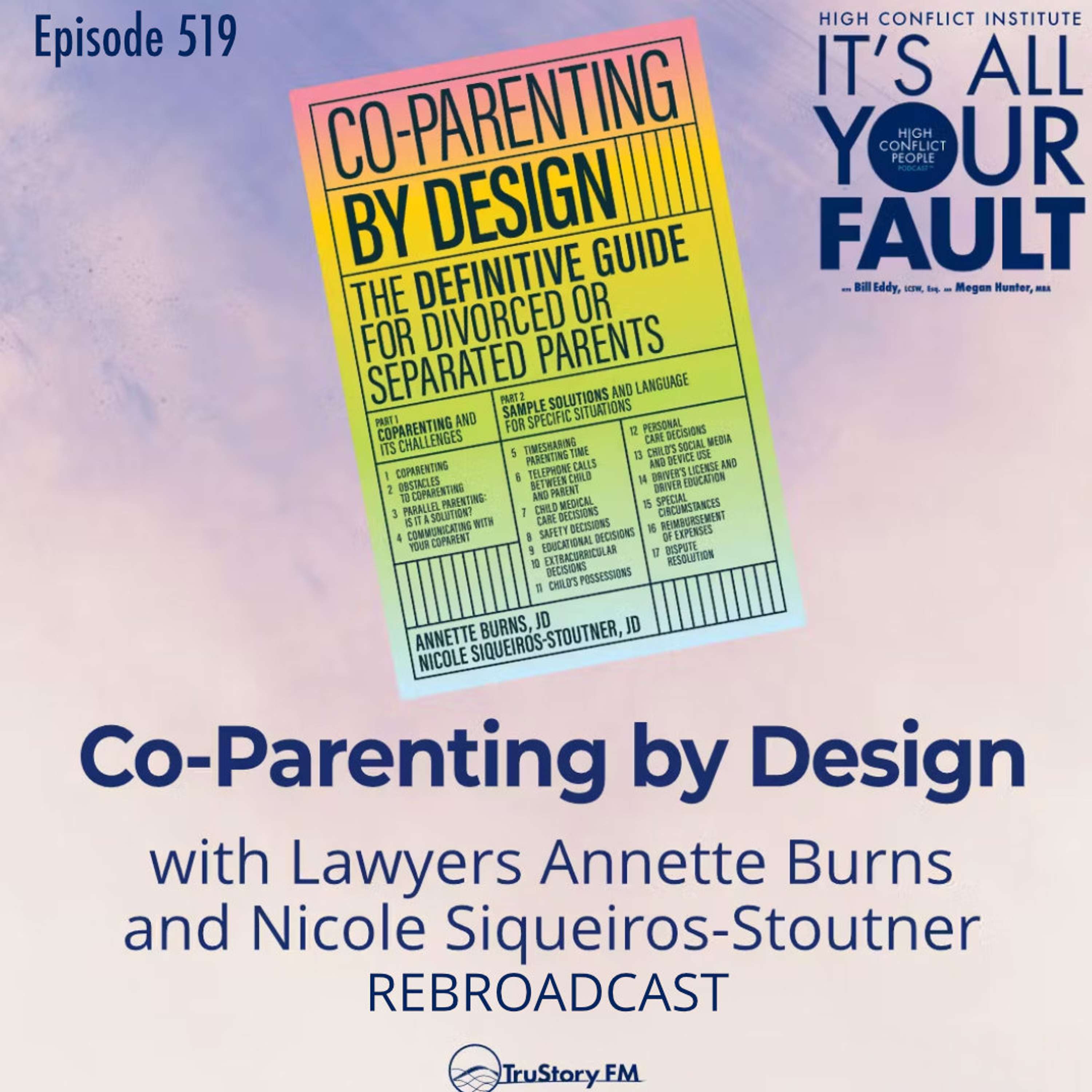
REBROADCAST: Co-Parenting by Design with Lawyers Annette Burns and Nicole Siqueiros-Stoutner
Dec 19, 202400:48:47Tap to summarizeWith the recent release of "Co-Parenting by Design: The Definitive Guide for Divorced or Separated Parents," we're excited to revisit our enlightening conversation with authors Annette Burns and Nicole Siqueiros-Stoutner. In this episode, Megan sits down with these experienced family law attorneys and parenting coordinators to discuss the challenges of co-parenting and share practical advice for navigating high-conflict situations. From understanding the role of parenting coordinators to adapting to change and prioritizing children's needs, this timely rebroadcast is packed with invaluable insights for divorced or separated parents at any stage of their co-parenting journey.REBROADCASTNavigating the Challenges of Co-Parenting: Insights from Annette Burns and Nicole Siqueiros-StoutnerIn this episode of "It's All Your Fault," Megan is joined by two special guests, Annette Burns and Nicole Siqueiros-Stoutner, co-authors of the upcoming book Co-Parenting by Design: The Definitive Guide for Divorced or Separated Parents. Annette and Nicole, both experienced family law attorneys and parenting coordinators, share their insights on navigating the complexities of co-parenting and offer practical advice for parents facing high conflict situations.Understanding the Role of Parenting CoordinatorsMegan, Annette, and Nicole delve into the crucial role of parenting coordinators in helping divorced or separated parents resolve disputes and maintain focus on their children's best interests. They discuss how parenting coordinators act as referees, mediators, and educators, assisting parents in making decisions on issues such as parenting schedules, school choice, and healthcare.Adapting to Change and Prioritizing Children's NeedsThe guests emphasize the importance of adaptability in co-parenting, as children's needs and circumstances evolve over time. They highlight the challenges parents face when adjusting to new situations, such as remarriage, relocation, and changes in parenting time. Annette and Nicole stress the significance of prioritizing children's well-being and maintaining consistency in parenting approaches whenever possible.Questions we answer in this episode:What is a parenting coordinator, and how can they help divorced or separated parents?How can parents navigate changes in their children's lives and adapt their co-parenting strategies?What is parallel parenting, and when is it an appropriate approach?How can parents handle disagreements over parenting styles and household rules?What resources are available for parents struggling with high conflict co-parenting situations?Key Takeaways:Parenting coordinators play a vital role in assisting divorced or separated parents in resolving disputes and focusing on their children's best interests.Adaptability is crucial in co-parenting as children's needs and circumstances change over time.Parallel parenting can be an effective approach for high conflict situations, but its implementation varies depending on the family's unique dynamics.Parents should strive for consistency in parenting approaches whenever possible while respecting each other's parenting time and decision-making authority.Seeking education, resources, and support from professionals can help parents navigate the challenges of high conflict co-parenting.This episode offers invaluable insights and practical advice for divorced or separated parents facing the challenges of co-parenting. By learning from the expertise of Annette Burns and Nicole Siqueiros-Stoutner, listeners can gain a deeper understanding of how to prioritize their children's well-being, adapt to change, and navigate high conflict situations. Co-Parenting by Design promises to be an essential resource for parents, lawyers, and judges alike, providing guidance and strategies for creating a healthier co-parenting dynamic.Links & Other NotesBOOKSCo-parenting by Design: The Definitive Guide for Divorced or Separated Parents GUEST BIOSAnnette T. Burns, JDNicole Siqueiros-StoutnerOUR WEBSITE: https://www.highconflictinstitute.com/Submit a Question for Bill and MeganAll of our books can be found in our online store or anywhere books are sold, including as e-books.You can also find these show notes at our site as well.Note: We are not diagnosing anyone in our discussions, merely discussing general patterns of behavior. Nor are we providing legal of therapeutic advice. Please seek the assistance of your local professionals to seek help. (00:00) - Welcome to It's All Your Fault (00:39) - Co-Parenting by Design (01:14) - Meet Annette and Nicole (04:14) - How It Came About (08:56) - Parenting Coordinators (12:58) - Agreements (16:53) - Different Rules (22:00) - Parallel Parenting (26:16) - Multiple Court Trips (30:28) - Alienation (39:40) - Advice on Family Law (44:14) - The Book (46:59) - Wrap Up (47:17) - Reminders & Coming Next Week: Co-Parenting By Design Learn more about our New Ways for Work Coaching sessions. Get started today!
Transcribe →
REBROADCAST: Holiday Harmony: Keeping The Peace at Family Celebrations
Dec 12, 202400:18:00Tap to summarizeAs we approach the holiday season, we thought it would be the perfect time to revisit one of our most popular episodes from last year. In the spirit of the season, we're rebroadcasting our timely discussion on maintaining harmony and peace during holiday gatherings. Whether you're hosting or attending a get-together with family and friends, the tips and insights shared by Bill and Megan from the High Conflict Institute are as relevant as ever. So, sit back, relax, and join us as we explore effective strategies for avoiding and defusing conflicts, ensuring that your holiday celebrations are filled with joy, connection, and understanding. Happy holidays!REBROADCASTKeeping the Peace This Holiday SeasonBill and Megan share tips for avoiding and defusing conflict at holiday gatherings. They offer insights from their work at the High Conflict Institute.In this timely episode, Bill and Megan explain how to prevent and de-escalate heated arguments that often arise when families reconnect after time apart. Listeners gain practical techniques to maintain a peaceful, enjoyable atmosphere.Avoiding Hot-Button TopicsBill notes that the high-emotion holidays can bring out uncontrolled behavior in some. He suggests posting a respectful gathering policy and having “minders” to gently redirect tense interactions.Megan explores preparation strategies like using self-talk and conversation redirection. Scheduling reminders helps you remember useful tools in the moment.Defusing TensionsBill advocates saving sensitive discussions for one-on-one talks, where polarization decreases. Groups often split into factions and fuel discord.Megan shares a touching example of connection occurring when two mothers met and shared their grief privately. Individual stories build bridges.Why It MattersBill and Megan provide simple but powerful ways to maintain self-control and model peaceful conflict resolution this season. Their advice offers pathways to joyful gatherings.Questions we answer:How can hosts set ground rules for respectful interactions?What tools can help individuals avoid unproductive fights?When and how should difficult topics be addressed?Key Takeaways:Posting expectations and having “minders” can prevent problems.Preparation and self-talk help you respond calmly in the moment.Save sensitive talks for one-on-one conversations later.Shared stories build connections between individuals.This timely episode provides useful techniques to prevent discord and promote goodwill this holiday season. Bill and Megan’s practical advice will help listeners consciously create an atmosphere of peace, joy and understanding.Links & Other NotesRESPECTFUL GATHERING POLICYDownload HCI’s Respectful Gathering Policy to hang up before your holiday gatheringsBOOKSCalming Upset People with EAR (communication technique)ARTICLESHandling High Conflict Situations During the HolidaysCalming Holiday ConflictsOUR WEBSITE: https://www.highconflictinstitute.com/Submit a Question for Bill and MeganAll of our books can be found in our online store or anywhere books are sold, including as e-books.You can also find these show notes at our site as well.Note: We are not diagnosing anyone in our discussions, merely discussing general patterns of behavior. Nor are we providing legal of therapeutic advice. Please seek the assistance of your local professionals to seek help. (00:00) - Welcome to It's All Your Fault (01:33) - Holiday Conflict (02:18) - When Someone Says Something (05:57) - If You're Hosting (08:14) - Respectful Gathering Policy (09:04) - Be Prepared (11:41) - Giving Yourself Encouraging Statements (13:29) - If You Want to Discuss the Topics (15:46) - Reason-Able (16:56) - Reminders & Coming Next Week: A New Season! Learn more about our New Ways for Work Coaching sessions. Get started today!
Transcribe →
Safeguarding Seniors: Protecting the Elderly from High Conflict Personalities
Dec 5, 202400:39:46Tap to summarizeProtecting the Elderly from High Conflict PersonalitiesIn this episode, Bill and Megan explore the challenges faced by the elderly population in dealing with high conflict personalities. As the global population ages and birth rates decline, it's crucial to understand how to identify and manage individuals who may pose a threat to the well-being of our elderly loved ones.The hosts discuss how high conflict personalities, such as those with antisocial, narcissistic, or borderline traits, can take advantage of the elderly's vulnerability through manipulation and control. They provide practical advice on recognizing red flags and supporting elderly individuals who may be experiencing abuse.Questions we answer in this episode:What makes the elderly vulnerable to high conflict personalities?How can you identify potential abuse of an elderly loved one?What steps can you take to support and protect an elderly individual?Key Takeaways:High conflict personalities often lack restraints, making the elderly more vulnerable to manipulation.Loneliness and isolation can make the elderly more susceptible to being taken advantage of.It's essential to ask specific questions about potential abuse, as the elderly may be afraid to speak up.Family members and friends should stay involved in the lives of their elderly loved ones and be vigilant in recognizing signs of abuse.This episode provides valuable insights and advice for anyone with elderly loved ones. By understanding the challenges faced by the elderly and learning to identify and manage high conflict personalities, listeners can play an active role in protecting the well-being of the older generation.Links & Other NotesBOOKSOur New World of Adult Bullies5 Types of People Who Can Ruin Your LifeCLASSConflict Influencer™ ClassARTICLESProtecting the Elderly in Our New World of Adult BulliesOUR WEBSITE: https://www.highconflictinstitute.com/Submit a Question for Bill and MeganAll of our books can be found in our online store or anywhere books are sold, including audio and e-books.You can also find these show notes at our site as well.Note: We are not diagnosing anyone in our discussions, merely discussing general patterns of behavior. Nor are we providing legal of therapeutic advice. Please seek the assistance of your local professionals to seek help. (00:00) - Welcome to It's All Your Fault (01:42) - Podcast Update (13:38) - The Elderly and High Conflict (25:33) - When They Deny It (28:21) - CARS Method (32:54) - Being Targeted (35:07) - Keep an Eye Out for Them (37:44) - Wrap Up (38:29) - See You Next Year! Learn more about our New Ways for Work Coaching sessions. Get started today!
Transcribe →
More High Conflict Questions Answered: Self-Discovery, Court Battles & Family Dynamics
Nov 28, 202400:32:40Tap to summarizeNavigating High Conflict Relationships: Your Questions AnsweredIn this ask-and-answer episode of It's All Your Fault, hosts Bill Eddy and Megan Hunter from the High Conflict Institute tackle three key listener questions about managing challenging relationships and dealing with high conflict personalities.First Question: "What do you suggest for someone who realizes they have a high conflict personality?" Bill and Megan explore self-awareness as the crucial first step toward positive change, offering practical steps for self-improvement and resources available through the High Conflict Institute.Second Question: From a professional helping a client whose "ex-wife is creating chaos with false allegations." The hosts address this challenging custody situation, offering practical advice for self-represented individuals in family court. Bill shares specific strategies for organizing and presenting evidence effectively.Third Question: Dealing with an adult brother who moved back in with elderly parents, leading to family rifts and restraining orders. Bill and Megan discuss the concept of "negative advocates" and provide strategies for maintaining relationships when family members take sides in conflicts.Questions we answer in this episode:What resources help someone identify and address their own high conflict behaviors?How can someone self-representing handle false allegations in family court?What strategies work when dealing with negative advocates in family conflicts?How can you support an elderly parent struggling with family conflict?What approaches help maintain relationships during family disputes?Key Takeaways:Self-awareness is the first step in addressing high conflict behaviorsFocus on three main patterns when presenting evidence in courtMaintain gentle, friendly communication with family members who've taken sidesProfessional local support is crucial for specific situation guidanceUnderstanding negative advocacy helps navigate family conflictsThis episode provides practical guidance for anyone dealing with high conflict relationships, whether personally experiencing these behaviors or managing them in others. Bill and Megan offer actionable advice while maintaining sensitivity toward complex family dynamics.Links & Other NotesBOOKSIt’s All Your Fault! 12 Tips for Managing People Who Blame Others for EverythingSplitting: Protecting Yourself While Divorcing Someone with Borderline or Narcissistic Personality DisorderCOURSESNew Ways for Families Course + Coaching for Co-ParentsConflict Influencer Class (for everyone)PROFESSIONAL TRAININGNew Ways for Families TrainingOUR WEBSITE: https://www.highconflictinstitute.com/Submit a Question for Bill and MeganAll of our books can be found in our online store or anywhere books are sold, including as e-books.You can also find these show notes at our site as well.Note: We are not diagnosing anyone in our discussions, merely discussing general patterns of behavior. Nor are we providing legal of therapeutic advice. Please seek the assistance of your local professionals to seek help. (00:00) - Welcome to It's All Your Fault (00:37) - More Listener Questions (02:27) - Question #1: When You Realize It’s You (13:44) - Question #2: When They’re Making Allegations (19:24) - Question #3: When It Hurts Older Family Members (31:24) - Reminders & Coming Next Week: In the Workplace Learn more about our New Ways for Work Coaching sessions. Get started today!
Transcribe →