← Jay'sAnalysis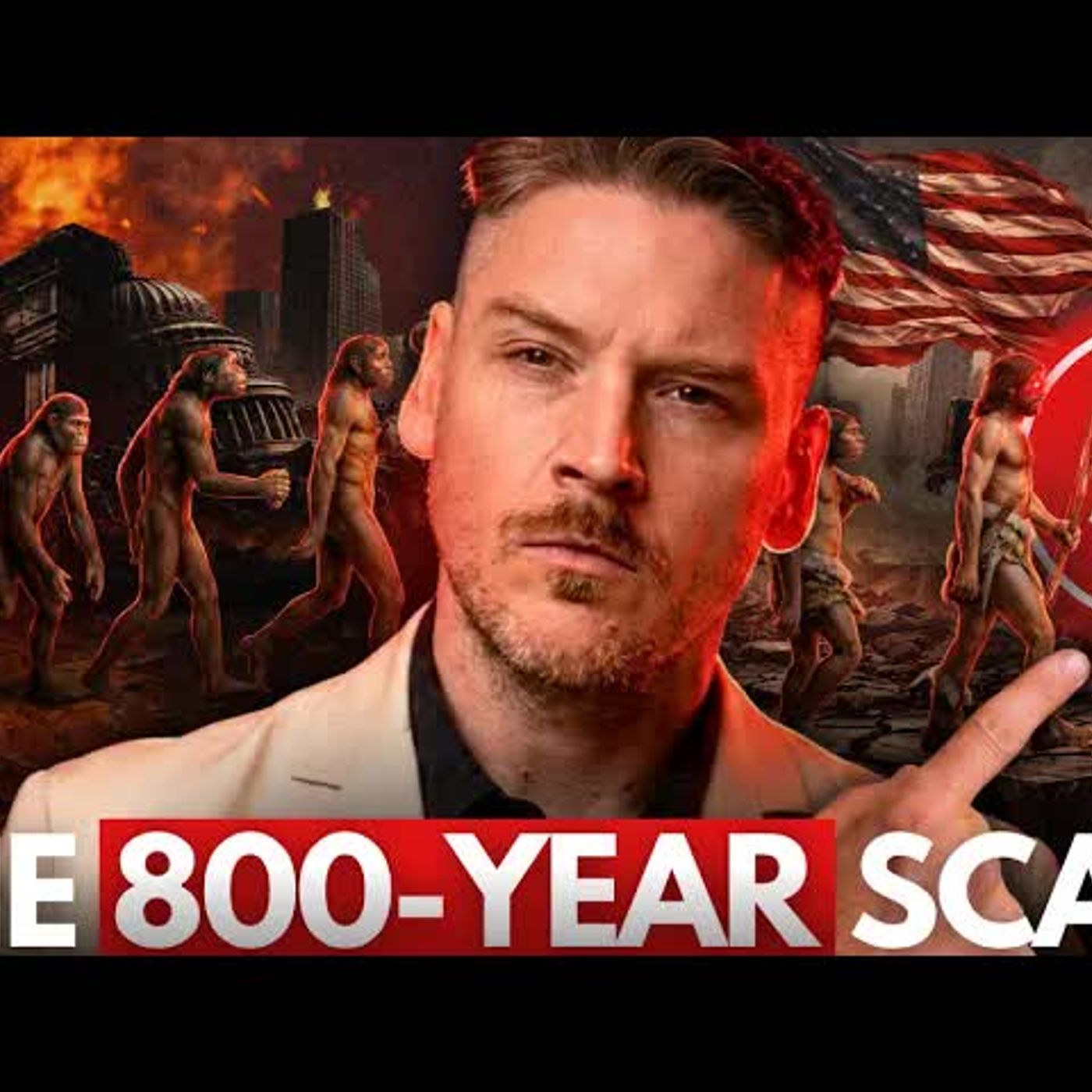
Jay'sAnalysis
Bitcoin Exposes the 800-Year Banking Scam | Jay Dyer on Bitcoin News
00:33:53
https://www.youtube.com/@bitcoinnewscom Superchats at any time here: https://streamlabs.com/jaydyer/tip Join this channel to get access to perks: https://www.youtube.com/channel/UCnt7Iy8GlmdPwy_Tzyx93bA/join Get started with Bitcoin here:...
Loading summary
Transcript50 lines
- [00:01]
Rob Wallace
Spring into deals with stay green premium 2 cubic foot mulch. 5 bags for $10 plus stay fresh with up to 35% off. Select major appliances and save an additional $100 on select laundry pairs. Our best lineup is here at Lowe's. Lowe's we help you save valid through 56 mulch offer excludes Alaska and Hawaii. See lowe's.com for more details. Visit your nearby Lowes Foreign.
- [00:32]
SpinQuest Advertiser
Quest where you can play and win from the comfort of your own home with hundreds of slot games and all of the table games you love with real cash prizes. Right now thirty dollar coin packs are on sale for ten dollars. For new users, it's all@spinquest.com that's S P I N Q U S T.com
- [00:53]
Jay Dyer
Sponsor Spinquest is a free to play social casino void where prohibited. Visit spinquest.com for more details. The fiat system is actually unethical, spiritually demonic.
- [01:04]
Rob Wallace
We have this, an all seeing eye floating on top of an unfinished pyramid. What does it tell us about who runs this world?
- [01:12]
Jay Dyer
The bankers figured this out in medieval Europe that you could loan out more money based on these infinitely imprinted notes than you actually had in your reserves. So it's a pretty wild scam. Usually what they do is they sort of capitalize on crises to further that agenda, right? Never let a good crisis go to waste. But here's the thing, like even if they're not where they want to be in some of the areas they are going to keep pushing. And the entire agenda of Bilderberg was the technocracy. And here you have the top political and corporate class colluding together at semi secret meetings saying we want to bring all this technocracy in. There may be a little bit behind, but they're going to keep pushing. Actually bitcoin is spiritually correct, ethical money. That's why bitcoin is a raft out of this game. Racism.
- [02:03]
Rob Wallace
Hello everybody and welcome back to the Bitcoin News Channel. I'm your host, Rob Wallace and today I'm very grateful to be joined by Jay Dyer. He's a philosopher, theologian and longtime bitcoiner who has spent decades studying power culture and the systems, both overt and occult, that shape our world. Jay, how you doing today?
- [02:22]
Jay Dyer
I'm doing great, Rob. Thanks for having me. I'm glad to talk about bitcoin. I don't get to do a lot of bitcoin podcasts. I've probably done maybe three or four. So I always like to do this because I get tired of talking about the same stuff over and over and over. So to branch out and talk about other interests is always fun.
- [02:39]
Rob Wallace
Yeah, absolutely. I mean, you've done some amazing work looking at our culture, the occult backings of Hollywood and how there's way more going on behind the scenes than we are meant to believe. So to hop into this conversation, I want to start with something that most people ignore. On the back of the $1 bill we have this right, an all seeing eye floating on top of an unfinished pyramid. What does that symbol mean, being on our money? And what does it tell us about who runs this world?
- [03:11]
Jay Dyer
That's a great question that actually comes from a guy, if I'm going from memory, Henry Wallace, who was a socialist, sort of a, interested in esoteric subjects as well. And he believed that that would be the perfect symbol for the kind of new era that we would go into. In terms of the progressivism of that time, that they thought that, you know, FDR and the, the, the progressivism, the socialism that FDR represented could be this sort of gateway into a completely new world. And I think there are some esoteric components to that in terms of, you know, the hermetic idea of completing the great work. So the unfinished pyramid in hermeticism is the idea that eventually mankind will perfect through the secret societies and their teachings and their secret doctrines, the work of man and the work of perfecting nature. So that includes economic perfection, which ultimately for the socialists and people like that is this sort of utopian imagined idea that we can achieve ultimate equality, ultimate fairness, egalitarianism. Again, all sort of hermetic and enlightenment era free masonic ideas, actually liberty, equality, fraternity. So I think the dollar having that on it represents what those people wanted it to become. It wasn't fully that yet. We know, of course, you know, FDR tried to, or he actually confiscated gold. So he was already in intent on moving away from a hard money standard and moving into some sort of weird, you know, probably proto social credit type of system. Because the socialists usually had that idea about in the future we can have this sort of, you know, fan again fictional, fantastical type of monetary system not based in reality. So I'm rambling, but long story short, I think that the real power behind all that was actually the banking power. And the banking power, you know, eventually did achieve the ability to have it not linked to anything hard after you know, Nixon in that period, not being linked to gold. So then we sort of got this, this infinite money machine, the infinite money printer. And that's always been the banker goal. You know, if you read Tragic Hope, which is a book that we've lectured through for many years. The first 200 pages. Quigley says that this is Bill Clinton's mentor. He's not a conspiracy theorist. He's a. An apologist for the, the Western, you know, technocratic banking system. He says at the beginning that the bankers figured this out in medieval Europe, that you could use gold notes and, you know, loan out more money based on these infinitely imprinted notes than you actually had in your reserves. And so you can then buy up money with interest or buy a property and assets with the interest that you're making on just made up money. So it's a, it's a pretty wild scam. And that's what I think ultimately that all saying I on the dollar is about.
- [06:12]
Rob Wallace
And I've heard you say that you think that money really is like the locus of control. Right? Many things. Culture is just derivative of the money. And before we dive into Bitcoin and your journey in Bitcoin, tell us about what you think is like the spiritual dimension of money.
- [06:28]
Jay Dyer
Well, that's a great question. In fact, we were just talking to Pajo and we have a mutual friend, Neil John, the Peugeot, if you don't know, he's an icon carver and a YouTuber. And we had a really good conversation about Bitcoin the other day on a podcast. He's still kind of unsure about what it is and where to go with this on trying to kind of move him in the right direction. But, you know, money is not evil in itself. A lot of people think that, you know, the Bible, the Bible says money is a root of. No, it says the love of money is root of evil. So money is just really a symbolic form of how we transact value and how we, we store and understand value. And so it's kind of, it's. You could understand it many ways. It's a, it's a medium of exchange for how we store energy as well. Like, like Michael Saylor's kind of engineering understanding of Bitcoin. And it's the same principle, principle for money too. So it's symbolically transacting value, but also, you know, money has to have certain qualities that, you know, divisibility, fungibility and all that kind of stuff needs to be hard assets. Something that, that you can not infinitely, you know, that has rarity, that has value. So all of those things go into what money is. Spiritually, though, money, I think is not a bad thing. You know, God is the author of, of reality. God's the Creator. And if you go back to the idea of the gold standard, well, God's the creator of gold. And we find all throughout scripture a lot of positive things said about gold. But the vice of, you know, loving money too much, something like that can definitely be where it. Where it becomes a sin. But we have to understand that nothing is evil in itself. And so if mankind, using the gifts that he has that God G gave him, begins to work and perfect better systems of money. And we've already seen in history that if you go from, you know, glass beads in Africa or if you're using the. What's that rock that the islanders used? The beginning of siphon. Yeah. If you use those for a while, well, there's better forms of that. Right. So then we move to silver and gold and, you know, we can, we can work to make a better type of monetary system. And I think if we understand that, then maybe people have a better bridge to understanding that actually bitcoin is spiritually correct, ethical money. And I've been making this argument for a while because the more I saw that the actual monetary system that we have that's fiat, is actually theft based. If you understand that it's theft based, and if you're, you know, inclined against usury, I mean, the whole system is really a user is type of system, then you would understand that. Well, wouldn't it be more ethical and more spiritually accurate to have a type of money that is not theft based or usury based? And that's essentially what you would get with Bitcoin, even better than gold and silver. So that's why I think, you know, to hit on the spiritual point. If you really understand that, then you would be forced to say, well, the fiat system is actually unethical, spiritually demonic. It's predatory. Right. It feeds on, you know, people's stealing people's savings basically is what inflation is. So. So that's why it's spiritually, ethically correct money.
- [09:39]
Ashley Akonetti
This is Ashley Akonetti from the Ben and Ashley I Almost Famous podcast. You know that moment when you're in your stylist chair and you're describing your dream hair like it's a Pinterest board come to life, but you have zero idea how to make it happen at home? That is my Roman Empire. But Amiga totally gets it. They're clean, vegan, cruelty free, clinically proven formulas are why stylists swear by them. I'm obsessed with the wizard detangling primer. It's like a magic spell for my hair for a limited time. Save 15% off your order with code FAMOUS15 on loveamica.com restrictions may apply whether
- [10:19]
SpinQuest Advertiser
it's slots or live dealers. Spinquest.com has the fun and action you're looking for with Spinquest exclusives. Blackjack, roulette, baccarat, and even live dice. With the craps and bubble craps, the games never stop, so you don't have to. And right now, new users get $30 coin packs for just 10 bucks. Play now@spinquest.com Spin Quest is a free
- [10:43]
Jay Dyer
to play social casino void where prohibited. Visit spinquest.com for more details.
- [10:49]
Rob Wallace
And just diving into a little bit of your bitcoin journey. You first found out about it in 2011. You are a huge Max Kaiser fan, but you were also listening to Peter Schiff and you sort of went with Peter Schiff in the early days before, while you could still stack it under $5 or so, right?
- [11:04]
Jay Dyer
One of my biggest mistakes. And yeah, I also was a little too conspiratorial back in those days. And so you have really been paying attention because, yeah, I remember I would, I would listen to Max Kaiser's RT show and I was, you know, broke college student at the time. I think I was doing grad school in like 2011, 12. And I would listen to him talking about all this stuff and I remember him mentioning bitcoin. And then I went, I spoke at a conference and some dude was like, hey, dude, I will give you two bitcoin right now. If you get a wallet, I'll send it to you right now. That bitcoin was like, I don't know, $50 at the time or a hundred dollars. And I was like, what are you talking about, a wallet? Right? So just, it never. I didn't click with me. I didn't get it. And everybody has this phase, right, where you're like, you don't, you. You're against it, you don't get it. And then it clicks, right? And it wasn't actually Max's shows that that made it click. It was because I had a friend that I was arguing with and he was trying to get me into bitcoin around the same time because he liked Max Kaiser and Alex Jones too. And Alex would have Max on and Max would mention bitcoin back then and I was too conspiratorial. I thought anything tech related just has to de facto be kind of in the domain of, oh, the technocrats are going to control it. They're going to control us through that. And so my assumption was as I see people today, like, the assumption is this is centralized money that has backdoors, right? We saw this with the Epstein stuff, which was preposterous, right? People saying Epstein put back doors into bitcoin. Total nonsense. There's no backdoors in a public ledger. It's decentralized. So it doesn't make any sense if there was backdoors, right? You have a public system of, you know, people who would have noticed this already in. Throughout the whole bitcoin network, presumably. So, yeah, I think it was. What was the big catalyst? I think actually the catalyst was my. My buddy kept putting pressure on me, and then I was like, all right, well, you know what I'm gonna do? I'm gonna disprove. I'm gonna go and I'm gonna disprove bitcoin, right? So this is what. Everybody does this too, where they go and they're like, I'm gonna find all the dirt, and I'm gonna show my buddy that you are duped. You're such a dummy, dude. I can't believe you're falling for this, obviously, scam. And so I remember reading a bunch of articles, and I remember at the time, even Mike Adams was anti bitcoin, and he had a bunch of podcasts against it. And so I wrote this big essay against bitcoin and money and all the. That form of money. And eventually I was like, all of my predictions and thoughts about it because I kind of bought into, oh, bitcoin's going to die next. You know, it'll be. It'll be a zero next year. It's a passing fat. Well, then I noticed, like, 2017, that summer, it was like, it went up to, like, 1800. There was like a bump sometime around early summer, and it went up to, like, 20. It. It went to 1800, then maybe like 2, 200 somewhere in there. And I was like, well, this is not really fitting with what I said last year, that this was going to go to zero, right? So I thought, well, you know what? I'll. I'll try this out. And I. Initially, I was like, I'll try it out as, like, a bet, you know? So I remember having to argue with my stupid ass. The bank was like, you can't buy that. I'm like, yes, you can. I had to go back and forth with these boomers that you can buy bitcoin. It's not illegal. And so I eventually started stacking bitcoin. And that was when it went that. That year, I think the peak was 19,000 20,000 before it, you know, crashed again. And then I. Everybody was like, oh, you should have sold it at 19,000, 20,000, you idiot. You could have got out. Because that was back when everybody thought, you know, oh, it's a thing you trade now, right? And you get in, you get out again. I still didn't understand the philosophy and the long term vision. I was just looking at it like people think about stock trading and being a crypto trader. So I was still uneducated, but I was beginning to learn more. And then I think I had that phase where everybody does, where you do trading, you try to trade crypto. And yeah, I want to make money on all these trades. And I did that for several years. And then I realized that at a certain point it was like, if I had just stacked bitcoin, I would have actually been a little better off than had I been spending all of this ridiculous time trying to time the trades and trying to follow the market cycle and, and all this stuff. So everybody kind of goes through that cycle too. And then I moved back into being more of a. You know what? I really think that the purpose of this was to fix the monetary system and, you know, whatever all that other stuff is in terms of, like, it's more like gambling. If you, if you're going to do mean coins and if, you know, all that other stuff, tokenization, that's another thing. And people, people want to gamble, they can gamble, but that's not what bitcoin is. It's fixing the monetary system. And that's the key point here. And that's what kind of brought me back after making the same dumb mistakes that everybody else makes, where you think, oh, I'm going to trade cryptos and make a bunch of money. And then I remember one, one trade. I remember I lost one night because I was an idiot. I didn't know what I was. I didn't really know what I was doing. I think I lost like $40,000 in one night on trades. And yeah, so that was back in 2018. But that taught me a big lesson. Like, okay, maybe I need to know what I'm doing before I start playing with all this money. And, and again after, if you get burned a couple times, I didn't ever get burned again that bad. Maybe, maybe 10,000 or something like that later on. But after you get burned a few times, you realize I should just stack the bit. Like, there's no better, like, proposition than just stacking the bitcoin. Like, it just, it's, it's like Playing the lottery with more money than you want to play the lottery with.
- [16:44]
Rob Wallace
I wanted to briefly interrupt today's interview to give a big shout out to our lead sponsor, Rhino Bitcoin. Rhino is the all in one bitcoin super app built by bitcoiners for bitcoiners. Buy or sell instantly, send sats anywhere on the lightning network, withdraw straight to cold storage, even turn sats into gift cards or link to a casa multisig all within one sleek interface. And Rhino is just warming up. Soon you'll pay bills, borrow against your bitcoin and save for retirement, all without leaving the app. Download rhino@rhinobitcoin.com or tap the link in the description below. Use promo code Bitcoin News and Rhino will drop you $10 of free Bitcoin into your account today. Secure your stack with Rhino Bitcoin and enjoy the rest of the video. And for people who don't know you from the bitcoin audience, I think you're one of the best debaters out there on the Internet, willing to take all commerce.
- [17:34]
Jay Dyer
Appreciate that, man.
- [17:35]
Rob Wallace
And so you have plenty of experience of debating people who, I mean, I. I've heard you debate people who are anti bitcoin, Right. So what advice do you have for those bitcoiners? Is our constant struggle to try to convince other people that, hey, this thing is legit. So just general debate tips that you have for getting people to understand bitcoin.
- [17:52]
Jay Dyer
What do you have? Oh, man, you're really good at these questions, man. I like. And I like when people ask good questions and not softball kind of, you know, questions that make me think, yeah. I mean, so I think everybody usually kind of. You end up beginning this debate with family members and people around you, Right? Because I remember in 2017, when I first started buying bitcoin, I was talking to like, mom, mom and my dad, and I'm like, oh, this, this, this, this. And you start trying to explain it, you start trying to be a bitcoin evangelist. And they're like, I don't know what you're talking about. Like, what do you. This sounds like some sort of. Is that World of Warcraft type of money? What are you talking about? Your video games. They think it's like video game money. And I'm like, no, it's not like that. I mean, it's a little bit like that, but not exactly. But. So usually it's the same. In my experience, because this debate has come up a lot in the last 10 years. It's almost always the same like usually four or five objections, right? So I think most bitcoiners are used to the, the usual four or five objections because people are just repeating the FUD that they heard in the news because they think that sounds kind of intellectual, right? So it's like if you repeat what Paul Krugman or Dan Pena or any of these idiots say, you think, oh yeah, well see, I sound kind of smart because Ms. Said that this was the money of criminals and psychopaths and drug dealers. Well, the dollar is the top currency for criminals and organized crime, drug dealers and you know, assassins or what like whoever's buying, you know, paying to have somebody. Assass. That's all dollars, dude. So. And then they'll say, well but this is a currency that the technocrats invented to. So I'm going to go through each one of these, right? The technocrats invented this currency because they want to control everybody's money. There's back doors into, it's a public ledger, there's no back doors. And secondly, this is antithetical to the money system that they have and they've used. So for example, if you look at Siphon Emma's book, which we did a podcast on that on my channel a couple days ago or a couple months ago, that whole book, for the first time, 70% is the history of money and critiquing the classical errors in monetary policy. The only last 30% of it is actually about Bitcoin. So he needs to go through the history of money and explain that money itself has been oftentimes a fraud in history. And the dominant system of the last century, post Bretton woods, has been the Keynesian economic system. And if you understand the Keynesian system, it's based on war, it's based on never ending expansion of the monetary supply. All these fallacies and dumb arguments. Long story short, it's antithetical to every principle that underlies Keynesian economics. So why would the elites and the CIA and the nsa, who by the way, if you go into the history of them, they actually come out of a Fabian socialist ideology. All of the early heads of the OSS and CIA, they're Fabian socialists. The idea of a centralized, you know, monetary currency, an E dollar, all of those old mit, NSA papers, that's not Bitcoin. So if you understand the nuance of the distinction there, why would they create the very thing that is the antidote to them? And you could say, well maybe it's controlled opposition. Yeah, but they don't control that opposition. So this, that argument doesn't make any sense if it was a central bank digital currency, E$, you could argue then, yes, it does make sense that that's what they would put out. And guess what? That is what they're putting out. Bilderberg just met this year, and they just. Or a couple weeks ago, and they said at Bilderberg, we got to get back to thinking about how to get a central bank digital currency out there that's not Bitcoin. So that's the next argument that I think falls if you understand that. And I'm trying to think of the other. What's another one of the. Oh, it's not a thing. This is the favorite argument of the boomers. It's not even a thing. You've got. Peter Schiff is still using this. This dumb argument, right? It's not even a thing. Well, hold on a second. Every boomer uses their banking app, and they don't actually go and transfer physical dollars to their wallet all the time from the bank, right? Boomers understand using a banking app and paying for things through wire transfers. Boomers understand stocks. Boomers understand things like Facebook is a company. That's not a thing. Right. You can't get a microscope and get the Facebook out of your phone. Right? It's. It's digital. It's, in a sense, abstract, but it still has value. And we understand this about digital things. Files, right? Files are not a thing, but they're digital. And so they're, in some sense, abstract and conceptual. So if you can understand that just not being a physical thing doesn't mean that it doesn't have value. That's a huge hurdle for people that just think of this as something kind of like ethereal and not. Not real. And they also typically think of it as, you know, it's a. Oh, it's a thing. That they could just keep making more of it. Right? One of the guys I'm supposed to go on this guy's podcast, and he's like a former. I think he's a Navy SEAL or something. His name's Chad something. But he went on Rogan, and then he's making these videos about bitcoin and why it's not a thing. And it's like he says, you don't actually know that they won't just create a million more bitcoin, right? And it's like, no, you don't understand this. This. The. It's hardware. It's hardwired into Bitcoin to not be that. That's the whole ethos and purpose of it, it's not. You can't just print a million more bitcoin. So again, so many people have just basic fudge information that they've heard and that's what they're repeating. So knowing a few of these basic. And I'm not an expert on bitcoin, I mean, I've been reading books and studying it, but I still feel like, especially if I'm in the, in the, you know, context of people who are very tech savvy, like I'm still kind of a goober boomer. I'm still trying to learn. So. But I think most of the, of the refutations are pretty low tier.
- [24:01]
Rob Wallace
Absolutely. And another one you hear is that it's made by this mysterious guy, Satoshi. We don't know who he is. And we've seen a bunch.
- [24:07]
Jay Dyer
Exactly. I shirt right here.
- [24:09]
Rob Wallace
We've seen a bunch of.
- [24:09]
Jay Dyer
It's made by me. I'm actually, I'm actually Satoshi. So I'm, I'm coming out right now telling you guys that it's me, this guy.
- [24:15]
Rob Wallace
Yeah. So we've seen New York Times just put out an article saying there was Adam back. The new documentary just came out saying that it was Len Sassman and Hal Finney. What do you, how much weight do you put into the mysterious origins of bitcoin and how important is it that it stays mysterious?
- [24:35]
Jay Dyer
I've always thought Max Kaiser had a good point about that, which is that it makes sense actually for it to be anonymous, because if it wasn't anonymous, there's a lot more problems that would come from that. Right. The person would be dissected into oblivion. Everything about him would be brought forward. And that would be a means perhaps of discrediting it. Right. So for example, let's say there were some, something bad in the past of one of the creators or the creator that would then be leveraged as a means. And I'm not saying that's the case. I'm just saying like as an example, that could then be leveraged against the system itself as if. Right. So it could be like an ad hominem. That could be. But also it, it speaks, I think, to the, the genius of it to have it anonymous because it kind of goes along with the ethos of bitcoin. Not that bitcoin is totally anonymous, it's, you know, semi private, but, but it's pseudonymous rather than anonymous. But to. For bitcoin's founder to be pseudonymous also, I think makes sense. And yeah, I, I've, you know, I've looked at those documentaries, no speculations. And it always ends up being unknown. You know, the, the, the trails never really go anywhere. So I have no idea who it is. But no, I think it is actually a feature, not a bug that we don't know the, the creator because it would be a lot more, it would add a lot more potential Fud.
- [26:02]
Rob Wallace
Yes.
- [26:03]
Jay Dyer
Were we to know.
- [26:04]
Rob Wallace
Yes.
- [26:05]
Jay Dyer
There's no CEO too, but that's actually. What do you. What do you think about that? What do you. Do you think that it's a plus or do you think that it's a. Oh, it's a huge criticism.
- [26:13]
Rob Wallace
It's a huge plus. Yeah. There's nobody to throw in jail. Especially in the early days. It would have been a very.
- [26:18]
Jay Dyer
That's an obvious one. I forgot the obvious one. Right. Yeah, yeah. And yeah, they would have assassinated. Right. Immediately like whoever was behind them.
- [26:26]
Ashley Akonetti
Yeah.
- [26:26]
Rob Wallace
And he stepped away in 2011 and the, the project has grown on its own, which is absolutely amazing to see. Right. And now it's worth over a trillion dollars, of course. And has the most influential people in the world talking about it. And your expertise is about outlying the coming technocracy, if it's not already here.
- [26:45]
Ashley Akonetti
This is Ashley Aonetti from the Ben and Ashley I Almost Famous podcast. You know that moment when you're in your stylist chair and you're describing your dream hair like it's a Pinterest board come to life, but you have zero idea how to make it happen at home? That is my Roman Empire. But Amiga totally gets it. They're clean, vegan, cruelty free. Clinically proven formulas are why stylists swear by them. I'm obsessed with the wizard detangling primer. It's like a magic spell for my hair. For a limited time, save 15 off your order with code FAMOUS15 on loveamica.com restrictions may apply.
- [27:25]
SpinQuest Advertiser
You know what? It sucks to be bored. But when I get on my phone and play real casino games on spinquest.com the time flies by. That two hour wait at the DMV seems like 10 minutes. Play your favorite slots. Live blackjack, live preps with a live dealer. New players. 30 coin packs are on sale for 10 bucks. Play spinquest.com and you'll never be bored again.
- [27:49]
Jay Dyer
Spin Quest. There's a free to play social casino void where prohibited. Visit spinquest.com for more details.
- [27:55]
Rob Wallace
And we saw novels in the past, whether it's 1984 or Brave New World Outline what they thought the future was going to look like, and now we're sort of in that world and it's less 1984 and you say it's more Brave New World. People are being suckered into this control system through convenience. And I think another thing we need to hit on is, is screen time, screen addiction. And I mean, I'm guilty of it, of myself, as you are an Internet creator. We spend a lot of looking at screens, whether they're in our hands or in front of us. How does that play into it? And how far are we into the establishment of a full technocracy control grid around us?
- [28:32]
Jay Dyer
Yeah, great question. You know, usually the. What we do on my channel is we go through the writings of the elite, as I call it. So we read the books from these, these internationalist goblin people. You know, we read Klaus Schwa. We read, we, we read, you know, H.G. wells. We read, you know, all these technocrats. To see Jacques at the lead is another big one. And in a lot of the books, they will have these sort of actuaries about where they want to be in certain decades. So they have like goals for 2030, 2040, 2050. And I would say that in, in many ways they're pretty advanced in terms of, I mean, the rollout of AI and all that seems to be on time. But there's other areas where they're not on the ball, and I think they will even admit this at times. You do have a pretty significant reaction, you know, post Covid. Covid to a lot of the moves of technocratic control, such as tracking and tracing, you know, the, the systems that they wanted to set up in terms of, you know, vaccination controls globally. Just really crazy stuff. I think they kind of were damaged from a lot of that. There was, there were several setbacks. So in, in areas, in terms of even infrastructure, I mean, the infrastructure is not actually there everywhere in the world to have a global technocracy per se. So I think they focus definitely on, you know, west and Western civilization in terms of really getting things in place. But we've not really seen a total move towards, you know, giant smart cities yet. That's, that's things that are in the, in the plans. And I'm not saying that it's inherently wrong to have something like an advanced smart city, but what these people usually want for the smart city is rationing or, you know, the 15 minute cities or the, the c. Whatever sea initiatives that they had last year where they were saying, we want these cities that have rationing for. You don't get meat and dairy that's banned. You got to eat bugs. Like all that stuff they were pushing even last year, that I think is not as far along as they would, would like. So usually what they do is they sort of capitalize on crises to further that agenda. Right. Never let a good crisis go to waste. So I think they would need, need many more crises to really get advanced. But here's the thing, like even if they're not where they want to be in some of the areas, they, they are going to keep pushing. Right. So they're not going to stop. This is not a, this is a long term plan that's been there for a century or more. And they're not going to give up or just quit. They will keep pushing because I believe ultimately there's sort of a spiritual darkness that pushes and promotes that sort of enslavement mentality that they have and they're committed to it. So, yeah, I think the good news is that there is more and more pushback. Various reasons for that. Obviously there's a lot more freedom on Twitter and even YouTube, more so than there were a few years ago, I can tell you that. But at the same time, like when they met at Bilderberg last week or the week before, nobody was there protesting it. There was like two people there, Dan Dixon, one other guy, Alex talked about it, Burma's talked about it pretty much. Nobody else talked about it. And the entire agenda of Bilderberg was the technocracy. And here you have the top, you know, political and corporate class colluding together at semi secret meetings every year saying, we want to bring all this technocracy in. Where are we at? What are we? It's like a specter meeting. Right. And James Bond Specter. So, so that's where it's at. And you know, there may be a little bit behind, but they're going to keep pushing. And by the way, it's, Trump will go away and this agenda will continue. So a lot of people I think were distracted thinking, oh well, everything's cool, we got Trump now, we don't worry about it. Well, Trump's going to be gone and then it's going to go right back towards the, you know, the push for the technocratic agenda. In fact, some of Trump's policies are even pushing it.
- [32:29]
Rob Wallace
Yeah, it's still continuing under Trump. It really doesn't matter who's, who's sitting there in that office.
- [32:33]
Jay Dyer
Exactly.
- [32:34]
Rob Wallace
This is marching forward. And I must say that I think that you did some of the best coverage on the Internet when it Comes to Jeffrey Epstein. When all the files came out a couple of months ago, you were on top of it on a daily basis, going on live stream and talking about what you found and you went deep. And this stuff is kind of scary, right? And his connections to world leaders, industry, everybody, it was way deeper than we even imagined. So what are some of your top findings from Epstein? And also address the bitcoin stuff.
- [33:03]
Jay Dyer
As you mentioned before, I think the key issue was that, you know, Epstein was throwing money at everything, right? So he was throwing money into genetics. We just did a big podcast last night that'll be on my channel today about his role in transhumanist funding projects, genetic projects, because a lot of people overlooked all that too. Like what exactly was going on with Zorro Ranch. So we went pretty deep into that last night. But, you know, he would throw money at everything. So the idea that because he put money in into early Bitcoin foundation stuff or other crypto projects, right, the idea that he controls them or creates them is preposterous. Right. That's like saying that, you know, venture capital investors, you know, that throw their money at, you know, 20 different startups. Oh, they make. They control them and there's back doors in all of them. Right. I mean, that's. I mean, everybody uses email. I'm sure that DARPA in the Pentagon had some role in the creation of email or something, you know, so. But we're not going to not use email because, you know, the Pentagon had some role in that. But yeah, so I think that with Epstein, you had basically they would throw their net to try to cast anybody in anything, right? So whether it's Peter Thiel or whether it's trying to get Elon to the island, or whether it was trying to get, you know, people in Hollywood, you know, they would try to get anybody and then they would also try to get anything, get their foot in the door for anything. So it's just kind of silly to think that the whole thing was like him controlling or programming bitcoin or something like that. And then of course, one of those emails was actually obviously fake where he's saying that he created bitcoin together with, you know, just Lane or whatever, that was obviously a fake email. So that's just silly. But yeah, the dark part of it though, that I think is relevant here is that that it's a window into the international monetary system as an actual organized crime syndicate. That's the key thing here. And understanding that the highest levels of banking and corporate interests are working on for example, separate intelligence, advanced intelligence to invest. So they invest based on insider information and intelligence. And everybody else invests on Normie Boomer news shows, right? They don't, they don't have the inside track. So it's a gamed rig system. From the outset, Epstein pushed for all these other things that are antithetical to bitcoin, all these other crypto projects that he had an interest in. So he wasn't involved in the ethos of bitcoin, the sense of freedom and, you know, controlling your own money and having a sovereignty. You obviously didn't believe in any of that. So it's not like he was part of the bitcoin philosophy or ethos. He's a transhumanist, he is a money launderer, he's a organized crime figure, he is a blackmailer. I mean, he's all intelligence agent. That's what this is. But again, the way that he's interacting with the Rothschilds is indicative of the exact same model of the Rothschild banking system and control. If you rewind, 100, 200 years ago, they were saying the exact same things about advanced intelligence at Waterloo, which allowed them to buy up the London stock exchange. So it's a game rig system. That's why bitcoin is a life raft out of this game rig system.
- [36:19]
Rob Wallace
Well, Jay, I know you gotta run. I. It's a worthy excuse you're going to Alex Jones show. So we got so much more to talk about. I gotta have you back on.
- [36:27]
Jay Dyer
I'll come back anytime. I'm so sorry. I was hard. I was hard to nail down. It's just been crazy lately. But please, I love talking about this. Come back anytime.
- [36:35]
Rob Wallace
Cheers, man. All right, I'll let you go, but check out JR J. Dyer on YouTube and X and we'll see you soon. Thanks for making it to the end of the video. If you could drop a like and a share, it would help in our mission to accelerate adoption. If you're looking for more Bitcoin Signal, join over 10,000 readers of our newsletter Bitcoin News Weekly. Every Monday morning we send out the biggest headlines of bitcoin to keep you in the know in under five minutes. Links below in the description then come hang with us live every Monday at 11am Eastern. We break it all down live on stream with a new guest and you can add your two sats in the chat. See you next week.
- [37:09]
Jay Dyer
Foreign
- [37:13]
SpinQuest Advertiser
quest where you can play and win from the comfort of your own home with hundreds of slot games and all of the table games you love with real cash prizes. Right now, $30 coin packs are on sale for $10. For new users, it's all@spinquest.com that's S-P I N Q U E-S-T.com SpinQuest is
- [37:35]
Jay Dyer
a free to play social casino void where prohibited. Visit spinquest.com for more details.
- [37:42]
Rob Wallace
Lots of places can expose you to identity theft. That's why LifeLock monitors hundreds of millions of data points a second for threats to your identity, which is way more than anyone can do on their own. If we find anything suspicious, like new loans or changes to your financial accounts, we alert you right away, all through text, phone, email, or the LifeLock applied save up to 40% your first year. Visit lifelock.com iheart Terms apply.