← Jay'sAnalysis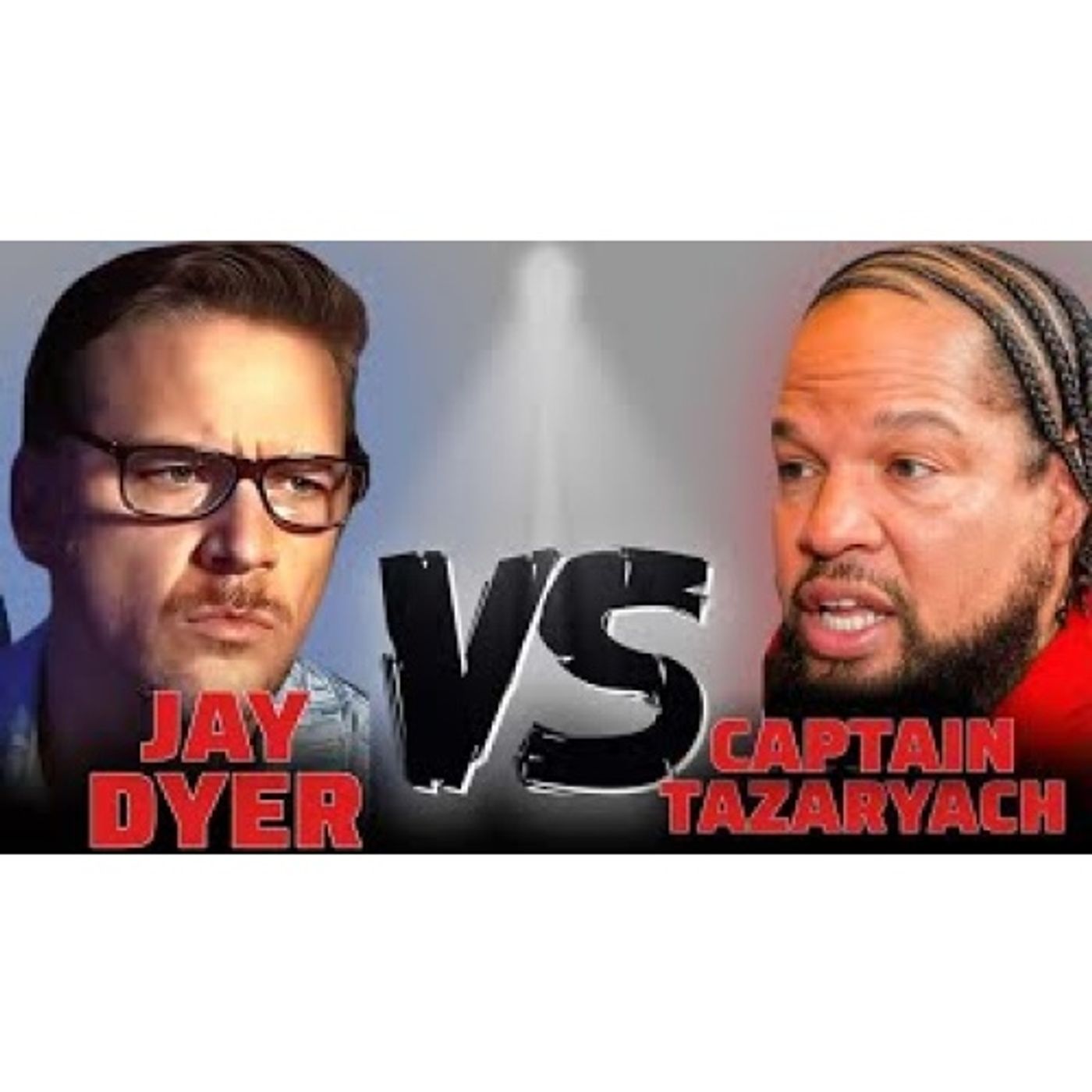
Jay'sAnalysis
Captain Tazaryach vs Jay Dyer - Is Orthodox Christianity True: Hosted By nofugazeepodcast
02:16:51
Cooley is here https://www.youtube.com/@nofugazeepodcast Send Superchats at any time here: https://streamlabs.com/jaydyer/tip Join this channel to get access to perks: https://www.youtube.com/channel/UCnt7Iy8GlmdPwy_Tzyx93bA/join Order New Book...
Loading summary
Transcript846 lines
- [00:01]
Sponsor Announcer
When you run a business, there are
- [00:02]
Jay Dyer
a lot of boxes to check.
- [00:04]
Captain Cesariac
Let's see, Payroll, Check.
- [00:06]
Cooley (Moderator)
Inventory, check.
- [00:07]
Captain Cesariac
Insurance.
- [00:08]
Cooley (Moderator)
Ugh.
- [00:09]
Sponsor Announcer
Well, good thing Simply Business makes getting small business insurance fast and easy. Just answer a few questions, review your quotes, and get covered in under 10 minutes all online. It's that simple. Check insurance off your list@simplybusiness.com support for
- [00:24]
this podcast is brought to you by Walden University. Ever catch yourself thinking, what if I could go after what I actually want and really make a difference? You're not alone. And that's exactly why I want to tell you about Walden University. For over 50 years, Walden has helped working adults like you get the W with the knowledge and skills to build the future you want and make a difference where it matters most. If you've been waiting for the right moment, this is it. Head to Waldenu. Edu and take that first step.
- [00:53]
Captain Cesariac
Walden.
- [00:54]
Sponsor Announcer
Walden University, set a course for change. Certified to operate by Chevy.
- [02:04]
Cooley (Moderator)
On both of our ends. From your microphone, Cap.
- [02:08]
Captain Cesariac
From my microphone. All right, hold on. All right, hold on one second. Let me come back over here. I don't know why my computer picked today to move a little slow. Let me show advanced options. I don't know. So right now I have noise suppression on and echo cancellation on. Let me see if I turn this on. But if you can give me a one. If y' all can hear me. I'm trying to just make sure I connect to the brothers live stream. Let me click this again. Let me bring this over here this way. And I'm. What I'm doing now is I'm just. I'm just setting up to see if. Oh, wait, I might not have had. The right speakers. Maybe that'll do it. Let's see now. Virtual background. Got my virtual background now. Let's see now. Hey, I'm good, man. Let me know if. How it's sounding now. Yeah, yeah, the output, usually it defaults to my road, but it didn't default.
- [05:06]
Cooley (Moderator)
So quick little thing for you guys. So I sent both of you guys the format of the debate. We're gonna have a four minute max opening statements. I'll be timing it. I'll give you guys a 30 second warning. When it's getting down to, you know, when it's at 3 minutes and 30 seconds, I'll let you guys know. I just say 30 seconds left, and then from there we'll do 2 minutes for arguments and 2 minutes for responses. So if captain you, you know, state a point, you got two minutes to speak. And then, you know, Jay, will get to respond for two minutes, and we'll do that for 16 minutes total. Then it's just going to be. It's going to go over to open dialogue for 45 minutes back and forth. Right after the. Right after that, then we're going to do. We're going to do closing statements for four minutes max. And if we need to extend anything, so if it gets a little hostile and stuff like that, you guys talking over one another, one of you can request for back to one minutes or two minutes statements, you know, a time. Time rebuttals. You can request that and I'll go ahead and adhere to it and we'll do it that way. You guys want to stay for super chats and things of that sort? Or. Or.
- [06:22]
Jay Dyer
No, I'm good.
- [06:24]
Cooley (Moderator)
You're good? What about you, Captain?
- [06:26]
Captain Cesariac
Yeah, I'm cool with it.
- [06:27]
Cooley (Moderator)
Okay, so we'll tackle the super chats at the end. Other than that, man, I'll start off with the. I don't have a. I'm not even playing my intro right. Forget no Fugazi intro. This. This is for you guys. So I'm just gonna open it up. I'm just gonna say, hey, welcome to no Fugazi Podcast. And. And then I'm gonna bring one of you on. I'm gonna bring both of you on a stage at the same time. So we're gonna get right down to it.
- [06:51]
Captain Cesariac
Okay?
- [06:54]
Cooley (Moderator)
All right, man. I'll go ahead and put you guys backstage and we'll.
- [07:01]
Sponsor Announcer
It.
- [07:26]
Captain Cesariac
It's. Hey, guys. So he's just. So y' all know, he's about to start the live stream. It's gonna be between myself and Jay Dyer. He's an Orthodox Christian. Should be interesting to see how this goes. Of course, make sure you thumb up the video. Be greatly appreciated. To help the algorithm, you can give your super chat. If y' all super chatted a question, I'll see if I get Fugazi to actually answer the question on his live. But if you super chat the question and it doesn't get asked on no Fugazi's podcast, I'll answer it when this debate is over.
- [08:27]
Cooley (Moderator)
Welcome to no Fugazi Podcast. I am your host, Cooley. Tonight we have a special debate. Tonight we have Captain Tzariak, a Hebrew Israelite, versus Jay Dyer, a Christian Orthodox. Let's hop right into it. We not even playing my intro. Hop right into it.
- [08:51]
Captain Cesariac
Let's get ready to rumble.
- [09:03]
Cooley (Moderator)
All right, fellas. Welcome, welcome, welcome to no Fugazi podcast. Both of you brothers, so Backstage, we went ahead and went over the format of the debate for the audience. Let me go ahead and give that to you guys as well. So the format and the title of this debate is going to be is Orthodox. Is Christian Orthodoxy true? Jay Dyer will be defending his position against Captain Cesariac, a Hebrew Israelite. The format of the debate is going to be four minute opening statements with two minutes for arguments and responses. So that's going to be timed. We're going to do that for 16 minutes. Right after that is done, we're gonna move over to open dialogue of 45 minutes back and forth bloodsport debate. And then we're gonna do four minute closing statements. After that, we'll go ahead and I'll read the super chats and get you guys perspective on the debate. So since I do believe Jay will be taking the affirmative position, we normally allow the people that takes the affirmative position to go first. But Captain, is. Are you okay with that?
- [10:17]
Captain Cesariac
Yeah. However you wanted to go, I'm fine.
- [10:20]
Cooley (Moderator)
Okay. Jay. Jay, that's cool with you.
- [10:23]
Jay Dyer
It is. Remind me explicitly what the proposition was or was it phrased?
- [10:29]
Cooley (Moderator)
Yes. Is Christian Orthodoxy true? Okay.
- [10:33]
Jay Dyer
Right. So if we want to say Christian Orthodoxy is true, then we would want to know if it lines up with the historic promises written in the Old Testament. Prophecies about a time coming when the Gentile nations would worship together with the ancient Hebrew people, the God of Israel. We have passages, for example, Isaiah 61, 3, Isaiah 60, 11 and 12. Isaiah 42, 12, Jeremiah 3, 14, 18, Hosea 1, 10 to 11, Malachi 110 to 11, Joel 3, Isaiah continues in many other passages. I'm just giving these as examples. Many of the Psalms, for example, David
- [11:14]
Sponsor Announcer
writes in Psalm support for this podcast is brought to you by Walden University. Ever catch yourself thinking, what if I could go after what I actually want and really make a difference? You're not alone. And that's exactly why I want to tell you about Walden University. For over 50 years, Walden has helped working adults like you get the W with the knowledge and skills to build the future you want and make a difference where it matters most. If you've been waiting for the right moment, this is it. Head to waldenu. Edu and take that first step. Walden University set a course for change. Certified to operate by Chev.
- [11:50]
This podcast is sponsored by Talkspace. Last year, I went through many different life changes. I needed to take a pause and examine how I was feeling in the
- [12:00]
Captain Cesariac
inside to better show up for the ones who need me to be my
- [12:04]
Sponsor Announcer
best version of myself. When you're navigating life's changes, Talkspace can help. Talkspace is the number one rated online therapy bringing you professional support from licensed therapists and psychiatry providers that you can access anytime, anywhere. Living a busy life, navigating a long distance relationship, becoming a first stepfather, Talkspace made all of those journeys possible.
- [12:26]
Captain Cesariac
I could speak with my therapist in the office. I could speak with my therapist in the comfort of my home.
- [12:30]
Sponsor Announcer
I was never alone. Talkspace works with most major insurers and most insured members have a zero dollar copay. No insurance, no problem. Now get $80 off your first month with promo code space80 when you go to talkspace.com match with a licensed therapist today at talkspace.com save $80 with code
- [12:48]
Jay Dyer
space80@talkspace.com 44 excuse me Psalm 17 or 18 depending upon which, whether using Masoretic or the Septuagint Psalm 22 Psalm 28 Psalm 56 Psalm 68, 8, Psalm 59, 9 and 10 etc dozens and dozens and dozens of passages in the Old Testament predict an era that when the Messiah comes, the Gentile nations will begin to come in and convert. In fact, latter Isaiah even prophesies that Gentile kings and queens will come and present gifts and offerings to the Messiah. In Daniel 2 we have a prediction that when the Messiah comes, it will be in the empire under which this final stage of the destruction of Jerusalem, if you compare that with Daniel 9:24 27 occurs, that the Messiah will be present when the temple administration is done, and that the Messiah will set up a kingdom at his first advent that will grow and conquer all of the other kingdoms and nations. Again, that's Daniel 2 in the prophecy of the stone that's cut out without hands that destroys all of those other kingdoms we know from the New Testament in many places, such as Matthew 1, Romans 1, those all describe the fact that Luke 1 and 2 as well that when the Messiah came, who was Jesus Christ, he is the fulfillment of all of those Old Testament prophecies and the idea that the Gentile nations will begin to pour into this newly founded Spiritual Israel, aka what Paul calls in Galatians 16 the Israel of God that it would set up that he would set up a Kingdom Matthew 16:16 to 8:18 and in Matthew 18:18 that the apostles would have a rulership in this kingdom. These apostles are also spoken of in the book of Matthew as being the progenitors of a new Israel which would open its doors to the Gentile nations. When we read the Book of Acts as The Church is empowered after Pentecost, fulfilling Joel 3. In Acts 2, we have the disciples opening it up, the kingdom again there to the Gentile nations. This is a fulfillment of all these Old Testament prophecies and the fulfillment of the fact that in Matthew, Jesus says that the Gentile nations will come and sit down with the prophets, with Abraham and Moses, and they will dine together in the kingdom. This is a covenantal meal. This is the New Testament Eucharistic liturgy and meal that is set up wherein Jesus rules in his Church through that marriage Supper of the Lamb, which is the Orthodox Divine Liturgy. That is a culmination that's written up in the Book of Revelation, that we actually celebrate on a weekly basis in the Orthodox Church. The Orthodox Church, thus from the earliest days of the 1st, 2nd, 3rd, 4th, 5th, 6th, 7th centuries, all the way through those early councils, maintains the exact same doctrine that the apostles and their immediate successors held to. Thus, if the Church, the kingdom that's set up in the first seven centuries after the advent of the Messiah, believes and teaches what we teach, and we can go verify that very easily, very quickly, when we read 30J. Post, Apostolic Fathers, like Cyprian, like Irenaeus, like Athanasius and others, they all teach the same thing as the Orthodox Church. Thus the Orthodox Church is a fulfillment of all of those Old Testament prophecies. And the Black Hebrew Israelite cult, which is a recent invention, could in no way possibly be a fulfillment of any of them.
- [16:11]
Cooley (Moderator)
All right. Time. Right on time. All right, Cap, went ahead and reset the timer for you. Once you start speaking, I'll start
- [16:20]
Captain Cesariac
Birdman hands rubbing together. Christian Orthodoxy, right? Christian or Orthodox Christians believe a lot of things that I disagree with. The gentleman spent, I think, all of his time speaking about Gentile salvation, meaning non Israelites. That's something that we, as the Hebrew Israelites or Israelites we don't use, really use the term black Hebrew lights refer to as replacement theology. The one thing that Christ said in John 8 and 32, you shall know the truth, and the truth shall set you free. And he said, he that believeth on me, as the Scriptures have said. And what we know of the Church Fathers is, number one, they did not agree. They didn't agree on the divinity of Christ. They didn't agree on circumcision, they didn't agree on the law. They didn't agree on a lot of things. So the Church fathers cannot have more authority than the Bible. And nowhere in the Bible are you going to see non Israelites are going to Be saved. In the same book of Daniel, it says the saints shall take the kingdom. In Isaiah 60, my opponent made it seem like the kings is going to be calmly and nicely bringing gifts. No, they're going to do it by force. Because in his wrath he smite us. But in his mercy he gave us power. So there's a way that you take power. In Jeremiah 51 and 20 it says, with Israel is my battle axe. With it I will break in pieces the nations. So I know Christians, they like to make it seem like Christ is coming back to bring cookies and ice cream. But he is not. He's not coming here to bring fluff. He's coming here to bring war. In Revelations, the 19th chapter says, on his head, on in his hand was many crowns. That mean he's taking crowns from kings. Christians also butcher Christ by making him God, which is also not in the Bible. When I'm saying God to be specific, I'm talking about the Most High God. Trinity is not in the Bible. Church fathers didn't even agree on that. They argued on that. When they make it seem like these councils was good things, these councils was not good things. These councils were sometimes violent. People were put in prison. All of these things took place in the council. So I have no respect for church fathers, none whatsoever. Because the disciples did not put anybody in prison. The disciples did not do anything. They reasoned, worked it out, but nobody had to be punished or cut off from it. So in this discussion that I'm going to have with this gentleman, I'll show non Israelites do not make it into the kingdom of heaven. Kingdom of heaven in the same state that the Israelites make it in. Because contrary to what people believe, Hebrew Israelite is younger than Christianity in the sense of what we know it today in America. But as far as us knowing was Israelites, that goes back to the 1800s up until now. But historically, Harriet Tubman in the family always bring that up because we have her family in our school. They always knew that they was Israelites. So to say that black people didn't know they was Israelites during slavery, that's also a lie. But that's not necessary to the subject. When they talk about Christ's birth, they'll tell you that God made Mary pregnant. I don't see a prophecy in the Bible where God is going to make a woman pregnant to deliver the king of Israel. But I can read in the Bible that it says through the seed of David that the king of Israel would come. But the Christian church, I'm pretty sure J.F. he's Orthodox Christian. That's. Those are the things that they believe. So we are diametrically opposed to everything about Christianity. When they use the word church in the New Testament, that's just a Greek word for congregation in the Old Testament, you got 30. That's just a Greek translation of congregation in the Old Testament. So what I'm assuming I'll be presenting in this argument with my opponent is that Orthodox Christian, as well as every other Christianity, does not teach the word of God.
- [20:19]
Sponsor Announcer
Support for this podcast is brought to you by Walden University. Ever catch yourself thinking, what if I could go after what I actually want and really make a difference? You're not alone. And that's exactly why I want to tell you about Walden University. For over 50 years, Walden has helped working adults like you get the w with the knowledge and skills to build the future you want and make a difference where it matters most. If you've been waiting for the right moment, this is it. Head to waldenu. Edu and take that first step. Walden University set a course for change. Certified to operate by Chev. With VRBill's last minute deals, you can save over $50 on your spring getaway. So whether it's a mountain esc city break or a week at the beach, there's still time to get great discounts. Book your next day now. Average savings, $72.
- [21:08]
Captain Cesariac
Select homes only. I land right there.
- [21:11]
Cooley (Moderator)
All right, just in time, both of you fellas. Okay, so let's hop right into the. The two minutes, back and forth. Who wants to go first? Who wants to go ahead and present their position and then have the other person give a rebound rebuttal?
- [21:28]
Jay Dyer
Well, I'll begin my rebuttal with. Because he. Okay, he gave his. His statement.
- [21:32]
Cooley (Moderator)
Got it. So I'll start your two minutes once you start speaking.
- [21:36]
Jay Dyer
All right, so first of all, I would say that he claims that what he believes is older than Christianity. I would like eventually to get some source or citation on anybody having the exact beliefs of his sect prior to the 1800s. So I want something between the time of what he thinks the Old Testament taught, or in the time of the apostles, or all the way up until the 1800s, because Jesus said his kingdom would not fail, that it would not collapse, that the gates of hell would not prevail against it. And so if there's over a thousand, almost 2,000 years, where there's nothing anywhere, anything like this cult's view, then he's failed to demonstrate that he said the kingdom of God comes as he says Jesus comes taking crowns and it's warfare. But then he said the ecumenical councils were, quote, violent. Well, you just said violence isn't bad. And then you tried to say that if an ecumenical council has people slapping or fighting, that's bad, that's violent. That's a contradiction. You said the New Testament doesn't have people being cut off, doesn't have people dying. When Peter walks up to Ananias and Sapphira, he pronounces that they died because of their heresy and they died. The kingdom of God, according to Christ, is within. It does not come with open signs and open destruction and power. In the sense of his king, of his disciples primarily being zealots that would fight. This is Jesus rebuking the zealots that he had his followers. And he said that Jesus isn't God, Even though John1 says that the Word in the beginning was the Word, the Word was with God, the Word was God. And Hebrews 1 links that to the creation of the world.
- [23:08]
Cooley (Moderator)
The song 30 seconds.
- [23:09]
Jay Dyer
The Son in Hebrews 1 is said to be the creator of all things that have beginning and have existence. Well, if Jesus is created, then he would not be classed as the thing that creates all things. And so Hebrews one is a very easy way. John one is a very easy way to see that everything he said was total nonsense.
- [23:30]
Cooley (Moderator)
All right, time, cap. I'll start whenever you start speaking.
- [23:34]
Captain Cesariac
Yeah, listening is an art. And my opponent doesn't listen. When I said the disciples did not put anybody in prison, I'm talking about amongst themselves. I'm not talking about their enemies. But in those councils that they did have wars with each other because they did not agree. Listening is an art. When he asks if anybody followed my cult. Cult is short for culture. And the culture of the Bible is exactly where we get it from. When we say that it's only for Israel because Christ said, I'm not sent, but into the lost sheep of the house of Israel. When we say it's only for Israel, Christ and his disciples to the lost sheep of the house of Israel. So unless my opponent can show that the disciples gathered all of the lost sheep of the house of Israel, they're about the same cult that I am. In the church, fathers lie and say that they went to somebody else. Christ gave direct orders. Paul said, so all Israel shall be saved as it is written. He didn't say, all nations shall be saved as it is written. And my opponent will not show a verse that says, all nations will be saved as it is written. He cannot show that in John 1 and 1. Anybody can read the Greek text and know that the last part of that, when it says in the beginning was the Word, and the Word was with God, and the Word was God. In the Greek, it would say, and God was the word emphasizing power, because a man can be God and not God in the sense of the Most High. Because we can read where God called Moses a God and then he referenced Hebrews 1, which I wouldn't have done
- [25:07]
Cooley (Moderator)
because 30 seconds, cap.
- [25:08]
Captain Cesariac
In Hebrews 1, it says, in the past he spoke to us by the prophets, but in this time, God spoke to us by the Son. So if God says he spoke to us by the sun, my opponent can't say the Son is God because God ain't talking to himself. I land right there.
- [25:25]
Cooley (Moderator)
All right. Right on time, Jay. Whenever you start, I'll start.
- [25:31]
Captain Cesariac
Yeah.
- [25:31]
Jay Dyer
So again, like, this is funny, because he does. He doesn't seem to be aware that Ananias and Sapphira were disciples. They were in the church, and they were pronounced to be of a wicked disposition. And then that thus they were considered to be worthy by divine and thus by Petrine decree, in that case to be worthy of death. So he has no idea what Acts actually teaches or says. Second, I asked specifically if he has any evidence of anybody believing his position from the time of Christ up until the 1800s. He didn't give anything. He didn't listen to what I said either, because I said specifically that in Matthew 21:43, Jesus says to the Pharisees, the kingdom of God will be taken to you and given to a nation producing the fruits thereof. What is this nation of the New Testament? Well, Peter says in First Peter 2 that you in the Catholic Epistles to the Gentile converts who had converted in the Book of Acts, chapter 10, and on that they would be called a royal priesthood and a holy nation. The church in Galatians 6:16 is the new Israel. We are told, in fact, in the pro. In the Psalms that. Excuse me. That in the Old Testament province we're told that the knowledge of the Lord would cover the earth as the sea covers the water. So that's a universal scope. In Romans 15:16, Paul quotes these same prophets to describe the church at Rome, which was Gentile and Jewish converts together as the New Israel, and the fulfillment of these Old Testament prophecies that I listed in my opening statement. So again, Romans 15 and 16 teaches this. Third, Hebrews 1 is a play on John 1 in the sense of the creation of the world. Hebrews 1 says that to the Son, the Father, as God says, you create. Sit down at my right hand. God, your throne is forever. So God is a generic reference. And black Hebrew Israelites don't understand grammar, so they understand that words can refer to different things. In the scriptures, the word God picks out deities, it picks out person, it picks out nature, it picks out energy, and it can even pick out humans and demons.
- [27:42]
Cooley (Moderator)
All right, Cap, you go. He went five seconds over, so I'll give you a little bit of time left over too. Go ahead, Cap.
- [27:48]
Captain Cesariac
No problem. I answered his questions directly. When he asked about my coat, I showed Paul was in my coat. He didn't respond. Paul said, so all Israel shall be saved. And then I challenged him to say, where does it say all nations will be saved? And he did not. James is in my coat. James letter, James, a servant of God and of the Lord Jesus christ to the 12 tribes which are scattered abroad. That's my coat. Because anybody reading the letter of James that are not the 12 tribes, that letter is not for you. First Peters 1 and 2 because he brought up Peter, elect. Excuse me, First Peters 1 and 1 rather says the addresses the letter who he's talking to. And then it says, because he's in, it says to the strangers scattered through Pontus, excuse me, Galatia, Cappadocia, age of Bethania, elect. According to the foreknowledge of God the Father and the sanctification of the Spirit unto the obedience of the sprinkling of the blood of Jesus Christ. The strangers that are in those lands are the elect. The elect are the children of Israel because God never elected another nation. Paul says this in Romans the ninth chapter. In Romans the ninth chapter, Paul says, if you're not from the seed of Abraham, Isaac and Jacob, you are not a son of God. So when he asked me to show people during Christ's time, up until now, I've shown it. What he's talking about is when the church fathers come later and then pollute it. They have polluted it up until this day because 30 lives show in the Bible, which is what I said, a direct verse that says all nations shall be saved. Like I can show a direct verse. Isaiah 45, 17 says, Israel shall be saved in the Lord with an everlasting salvation. You shall not be ashamed or confounded world. He can't show that by nation in the Bible. I challenge him.
- [29:44]
Cooley (Moderator)
All right, go ahead, Jay.
- [29:46]
Jay Dyer
Yeah, this is simple. In Genesis 12, 15, 17 and 22, Abraham has given a promise that in his seed all the nations, all the tribes of the earth would be blessed again. The knowledge of the Lord would be as vast as the sand on the seashore. Isaiah, the Psalms, I'll quote Romans again because he doesn't understand the basics of Romans. And 15, Paul says that he was an apostle to the Gentile nations to confirm both for the circumcision that's the Jews and the non circumcised, that the Gentiles might glorify God for his mercy. As is written, I will confess to you amongst the Gentiles and sing to your name. And he says again in the prophets, rejoice, O Gentiles, together with his people, the Jews, and again, praise the Lord, you Gentiles, laud him, all of you peoples. Paul is writing to a church at Rome which had a significant problem of Jew and Gentile getting together and getting along in the worship of Christ. Thus these passages show, as I said in my opening statement, that the fulfillment of the promises in the first century in example, for example, the Roman church are exactly the way that I interpreted them. So the universal scope is in Genesis 12, 15, 17, 22, the promise to Abraham, it's in Romans 15, it's in Galatians 3, where Paul says the fulfillment of of Genesis 12, 15, 17,22 is in Christ and faith in Christ. The church at Galatia was a Gentile believing church. We have a succession of bishops after that that believe all the same things that the Orthodox Church teaches now. I didn't say, I didn't ask you. At the time of Christ, do you think that James and Paul teach your cult view? I said name somebody between the post apostolic period, the time of Christ, the time of the Messiah, all the way up to the 1800s that teaches your cult view.
- [31:36]
Sponsor Announcer
Support for this podcast is brought to you by Walden University. Ever catch yourself thinking, what if I could go after what I actually want and really make a difference? You're not alone. And that's exactly why I want to tell you about Walden University. For over 50 years, Walden has helped working adults like you get the W with the knowledge and skills to build the future you want and make a difference where it matters most. If you've been waiting for the right moment, this is it. Head to waldenu. Edu and take that first step. Walden University set a course for change. Certified to operate by Chev Tyler redick
- [32:12]
here from 2311 Racing Victory Lane. Yeah, it's even better with Chumba by my side. Race to Chumbacasino.com, let's Chumba no purchase necessary. VTW Group void where prohibited by law. CTNCS21OH sponsored by Chumba Casino.
- [32:29]
Jay Dyer
I can't hear you.
- [32:31]
Cooley (Moderator)
Time cap. I'm ready when you are.
- [32:33]
Captain Cesariac
No problem. Again, I want everybody to pay attention. My challenges are not being answered as I answer his challenges, so I'll further answer the challenge. The reason why we say the 1800s and when you start seeing visual representation of black people identifying as Israelites is In Daniels, the 12th chapter, when it says, seal up the book until the end. And then when Christ said, the kingdom of will be to Matthew 24, when he says, when you see the abomination of desolation, stand When Israel fail, there was a silence of it. Daniel 12:4. But thou or Daniel, shut up the words and seal the book even to the time of the end. Many shall run to and fro. That's the church fathers. They shall run to and fro. And knowledge shall increase their knowledge. But my questions aren't answered. Going to Genesis, the 12th chapter, is not what we talking about, because we're not talking about a blessing. We're talking about the covenant. We're talking about salvation. And in the criteria of it, the criteria says, I will bless them that bless thee. So in order for another nation to even get blessed by us, they have to first bless us. And then it says, I will curse them that curse thee. So if that nation is cursing us, they can't get the blessing. That's why when Paul mentions it in Galatians, he's specific about the children of Israel, because he doesn't mention that the other nations have to bless us. He only uses the blessing example. Abraham wanted Ishmael to live. The Lord gave Ishmael a blessing, but he said, my covenant will I make with Isaac. He also didn't answer Romans the 9th chapter, 30 seconds. Answer. He hasn't answered Romans 11:26, has not answered Romans the 9th chapter, hasn't answered any of that. And at the end of Galatians, it says that you are heirs according to the promise. So nobody has received the promise except the children of Israel. So I'm gonna add another question. He still has not answered my questions. Where does it say the promise went to anybody except the children of Israel? Book, chapter, verse. Alan.
- [34:33]
Cooley (Moderator)
All right. Time. Go ahead. Jay.
- [34:36]
Jay Dyer
Yeah. This is a fundamentally uneducated person. So he's not aware that when you read the Bible, you look at who the audience is of those letters. The church at Galatia is not a bunch of Hebrew Israelites. It's Gentile converts who are struggling with whether they need to undergo circumcision. And to answer his specific question about the promise, this is the covenant promise to Abraham, which Paul says explicitly, in Christ, you're all sons of God through faith in Christ. For if you are baptized into Christ, you have put him on. Thus there is neither Jew nor Greek. Greek stands in for the nations. It doesn't matter. It's not just Greeks. It's anyone who converted to be baptized into Christ. And thus if you are baptized, you are heirs of the promise. Galatians 4. 1. So this is a fundamentally illiterate person. I did cite specifically text and verse Romans 15, written to a church of Gentiles and Jews together believing in the Messiah. The church at Rome specifically cites those psalms that I had in my opening statement and those prophecies that the Gentile nations together would worship with the Messiah. In the book of Isaiah, God says, I will put my footstool, I will make Edom, I will make Egypt, I will make Syria my footstool and my house. And they will all together worship me. There will be an altar in Egypt to worship me. So this is an expansive open. Matthew 21:43 says that the kingdom will be taken from the Jews and given to a nation producing the fruits thereof. When you read the book of acts, the first 10 chapters are about the Jews rejecting the Messiah and that opening up to the Gentile nations. So again, he has not given a single person prior to 1800s after the apostles. I know he thinks the apostles teach his view. There's nobody that teaches this cult view. So it's a restoration, a sect. And all restorationist cults are defeated by the fact that Jesus said that his kingdom, that he would set up his first advent, cannot be destroyed.
- [36:48]
Cooley (Moderator)
Time. All right, cap, he went 11 minutes over. This is the 11. 11 seconds over. Sorry about that. 11 seconds. My bad, Cap, you have. I'll give you 11 seconds over as well. But also, this is going to close out the back end, the timed back and forth right after you respond. Cap, we're going to get into open dialogue.
- [37:08]
Captain Cesariac
Okay, no problem. I just want to point out in this whole dialogue, he has not answered one of my questions with a book chapter verse. I said, show where a nation can be saved by book chapter verse. He has not shown it. I showed the show where nation is a part of this covenant outside of Israel. He has not shown it. But what he does do is what the church fathers did. They make Greek. And he said, although it says Greek, that goes to everybody. So he can give A breakdown of Greek to make everybody. But he can't show a verse that says it's for everybody. Greek and Gentile is not synonymous to the original Greeks. And Gentile just means nation by definition. Israel is a Gentile by Nation. Genesis 25 and 3, when it says two nations are in a womb, Israel is a Gentile. Genesis 48 and 18 it calls Ephraim a Gentile. Jacob in Genesis 35 and 11 is told he would be a multitude of goyim.
- [38:03]
Sponsor Announcer
Support for this podcast is brought to you by Walden University. Ever catch yourself thinking, what if I could go after what I actually want and really make a difference? You're not alone. And that's exactly why I want to tell you about Walden University. For over 50 years, Walden has helped working adults like you get the W with the knowledge and skills to build the future you want and make a difference where it matters most. If you've been waiting for the right moment, this is it. Head to Waldenu. Edu and take that first step. Walden University set a course for change. Certified to operate by Chev.
- [38:38]
Tyler redick here from 2311 Racing Victory Lane. Yeah, it's even better. Wait. With Chumba by my side, race to chumbacasino.com let's Chumba. No purchase necessary VTW group VOID where prohibited by law. CTNCS21+ sponsored by Chumba Casino which is word.
- [38:54]
Captain Cesariac
The word gentile means. So it's prophesied that Jacob would be screaming that he would become a multitude of nations or a multitude of Gentiles, or a multitude of Going. So you can't use the word gentile and make it synonymous. So if I go to Hebrews 8 and 8, New Testament, it says, I will make a new covenant with the house of Judah, with the house of Israel. Why doesn't it say with the house of everybody if my opponent says it's for everybody? So if the Bible says the New Testament is only for the house of Israel, house of Judah, then he's a liar according to the Bible. The Bible says, let God be true and every man a liar. And since he spoke about Paul, I'll take my 30 seconds. Romans 9 and 4. Who are Israelites to whom pertain the adoption, the glory? So he can't say Paul is writing anybody else because Paul said only the Israelites pertain the adoption. Romans 9 and 8 says, that is, the children of the flesh are not the children of God, but the children of the promise accounted for the seed. So if you can't show a book, chapter, verse, that another nation is the children of the promise, then they are not the children of God. I dare you to do it. I dare you. I'm done.
- [40:08]
Cooley (Moderator)
All right, that go. That closed out the two minute back and forth rebuttals. Let's hop right into the open dialogue for 45 minutes, gentlemen, one mic at a time. Try to have some decorum. I'll come in if I need to, but, you know, if not, you guys aren't going to hear from me. You guys are professionals. So let's hop right into it. I think that since Cap, you had the last response. Jay, kick it off for us.
- [40:36]
Captain Cesariac
Yeah.
- [40:36]
Jay Dyer
Can you name anybody after the time of the apostles up to the 1800s that taught your culture?
- [40:42]
Captain Cesariac
Harriet Tubman's whole family knew that they were Israelites between the 1800s. Well, slavery started in the 1600s. If you allowed me to finish, you would have heard. Thank you. So Harriet Tubman's family, when I say family, was passed down from the time that they came over here from Africa, from the Ashanti tribe. When they came over here, they had their tradition of knowing they were Israelites up until this day. I have Captain Debar Moth in my school. That's from that family. He already knew he was Israelite. So I know they like to believe that we didn't know that we was Israelites, but we knew that we was Israelites coming off of them ships.
- [41:20]
Jay Dyer
So your citation is from a family legend that Harriet tubman in the 1800s supposedly had. I'm asking for anybody from the time of the Messiah, after the apostles, up to the prior to the 1800s who taught what your cult teaches.
- [41:35]
Captain Cesariac
Well, I already, already show from the time of the Messiah by using the Bible, which trumps anything that you or I would say.
- [41:43]
Jay Dyer
Jesus said.
- [41:43]
Captain Cesariac
I just want to finish the answer in the middle of answering the question. I just want to finish in the seventh. The only person that has not laughed while the other person spoke was me. The only one that has not chuckled. What he said is hilarious. And the only person that has not interrupted the other is me. Can you answer it? No problem. So I'm glad.
- [42:07]
Cooley (Moderator)
Okay, gentlemen, let me go ahead and create a little decorum.
- [42:10]
Jay Dyer
I'm interrogating
- [42:13]
Captain Cesariac
anybody when you a, a fugazi. He can't say he interrogated. This is an open.
- [42:17]
Cooley (Moderator)
Yeah, it's, it's, it's, it's open back and forth. And he was just asking a clarifying. He was giving a clarifying rebuttal to his question. Yeah, that's all he was given.
- [42:28]
Captain Cesariac
And All I was saying, if he would have just been quiet, I would have explained because.
- [42:32]
Cooley (Moderator)
Okay, fair enough. Fair enough. Jay, do you mind yielding so Cap can just land his plane?
- [42:36]
Jay Dyer
Thank you again. I'm wanting a specific person. After the apostles up to the 1800s.
- [42:43]
Captain Cesariac
Okay, I'm giving you Harriet Tubman and her family. And I even see 1800. That is not prior to the. Prior to the 1800s, when they was in the west coast of Africa in the Ashanti tribe, they knew that they were Israelites. So when they came off the slave ships.
- [43:01]
Jay Dyer
What's the source for that?
- [43:03]
Captain Cesariac
I just told you. It's the oral tradition. We have them in our family. And if I'm not mistaken, all throughout the Bible before we got the laws of Moses, you know what they had? The oral tradition.
- [43:14]
Jay Dyer
Oh, interesting.
- [43:15]
Captain Cesariac
That's not. Is that not true? Did they not have oral tradition before Moses wrote the law?
- [43:18]
Jay Dyer
Well, the oral tradition is actually.
- [43:20]
Captain Cesariac
I'm asking a question. Yes or no.
- [43:21]
Jay Dyer
Did they have traditional tradition is what put the Bible together.
- [43:25]
Captain Cesariac
Did they have oral tradition before Moses wrote the law down? Yes or no. But that's so we. And what happens. A lot of times black people can't have oral tradition. That matters.
- [43:36]
Jay Dyer
But we do our actual historical academic sources that point to the oral tradition back.
- [43:41]
Captain Cesariac
You can go into the colleges.
- [43:43]
Jay Dyer
You can have no academic.
- [43:45]
Captain Cesariac
You can go into the colleges in Louisiana.
- [43:47]
Jay Dyer
You sign an academic. Scholarly.
- [43:50]
Captain Cesariac
I don't need.
- [43:51]
Cooley (Moderator)
Hey, fellas. For the audience purpose, can you just let us. Can you allow one another to land plane. So Jay just finished the last statement. And then Cap respond to that.
- [44:01]
Captain Cesariac
And then.
- [44:01]
Jay Dyer
Right. So again, we've not heard any actual. He asked me to finish.
- [44:06]
Cooley (Moderator)
Yeah, yeah, Cap, but let him.
- [44:07]
Captain Cesariac
Let him just question. No, I did. I wanted to ask you a question before he spoke. I wasn't trying to interrupt him.
- [44:12]
Cooley (Moderator)
Sure.
- [44:12]
Captain Cesariac
What I'm asking is because this is not him just grilling me. So after he asked the question, do I. I want to know. I want to make sure I'm not rude when I switch the question and ask him a question like, how long do we stay on.
- [44:26]
Cooley (Moderator)
That's fine. Fair question, Cap. Basically, if you guys can answer one another questions, I'm keeping track of this the best that I can. He's asking questions, a specific question. So he's just looking for an answer. This is why he keeps restating.
- [44:41]
Captain Cesariac
Yeah, I get that part. He's not satisfied with my answer. I get that part. What I'm just simply asking is, and this goes for both of us, how long do we Stay on either one of our questions before he gets to then ask me and I vice versa.
- [44:54]
Cooley (Moderator)
Yeah. So once again it's just, it's just I stopped the clock right here because we're having just the meta conversation about the debate. So once again it's just open dialogue. Cap, I'm letting you guys go. So let's just be good faith. If he asks your question. I got you, Cap. So let's be good faith. If he asks you a question, reply back, answer his question. If you then want to ask him a question, totally fine. But we have to allow one another room to reply back to questions and to give rebuttals and everything else. So let's go back to Jay. Jay, go ahead and restate your position and then Cap, you get to respond.
- [45:33]
Jay Dyer
Right. So referring to an oral tradition allegedly that Harriet Tubman said, which again I'd like some source, some academic, scholarly citation as to the, to the pedigree of this is not an answer to somebody between the time frame of the post of apostolic period to the 1800s. So he can't do that because his cult didn't exist. It's a new made up restoration as cult.
- [46:00]
Captain Cesariac
I mean that's fine to say that it's made up.
- [46:02]
Jay Dyer
And I don't have to prove debate's over then.
- [46:04]
Captain Cesariac
I don't, I don't have to prove that what a debate title is about orthodox Christianity, not about what black Israelites said. They were like the argument is that finish again, again they were Orthodox. So I. But that's not.
- [46:21]
Cooley (Moderator)
Go ahead Jay, let him just land explain.
- [46:23]
Captain Cesariac
It's not. Thank you. I'm glad somebody being unbiased. So that's not the debate title. The debate title is Christian Orthodox Christianity. True. That's the actual debate title. So when you actually look up, if you want to go scholar, anybody can look up Frank Cherry, William Saunders, you can look these people up. And they all carried that tradition. So now just name two other people. So that's three different people. Harriet Tubman, Frank Cherry, William Saunders, all from the 1800s, all had the tradition,
- [46:52]
Jay Dyer
nobody prior to that.
- [46:53]
Captain Cesariac
And the key thing about him saying 1800s because that's when they decided to put a time stamp on it. What I'm talking about is oral tradition coming off the slave ships. Even to this day you'll see people from the Yoruba tribe, the Igbo tribe, the Ashanti tribe, that would tell you that the black, excuse me, that the people taking on them slave ships were Israelites. I can't help it if Academia doesn't respect it. So that's why I yield to.
- [47:22]
Jay Dyer
There's no historians, nobody who has this.
- [47:24]
Captain Cesariac
That's right. I yield to the oral tradition. Now I will ask you a question. Do you have a book, chapter, verse? If I read Romans the ninth chapter, and Romans the ninth chapter says, this is Romans 9 and 4. Who are Israelites to whom pertain the adoption and glory, the covenants, the giving of the law, the services of God and the promises. Paul said that the Israelites pertain and own the promises and the adoption. Can you show a book, chapter, verse, where another nation by name also owns the adoption and the promises?
- [47:58]
Jay Dyer
Yeah, if you read chapter 11. He says that the Gentiles are grafted into that very promise that you just mentioned.
- [48:02]
Captain Cesariac
That's not answering my question. It is.
- [48:04]
Jay Dyer
It's a specific direct answer to your stupid question.
- [48:07]
Captain Cesariac
The answer to my question is. And again, that's. You see my opponent?
- [48:11]
Jay Dyer
You see Romans 9.
- [48:12]
Captain Cesariac
Only one person professional here. Because at the end of Romans 11 and 26, it says so all Israel shall be saved. That was not my question. My question is, the church is another nation by name that gets adopted and have the promises. Because if Paul says in Romans 9 and 4, who are Israelites to pertain. Pertain means own. So they own adoption, glory, covenants.
- [48:41]
Jay Dyer
I'm gonna answer.
- [48:43]
Cooley (Moderator)
Okay, yeah, let him answer. Go ahead.
- [48:44]
Jay Dyer
Yeah, let's give a book. In Romans 11. Stop yapping and let me answer your dumb ass question. He says he won't shut up, so
- [48:54]
Captain Cesariac
I know you're not talking about somebody shutting up. I know you're not talking.
- [48:58]
Cooley (Moderator)
I think it's fair now, Cap. I think it's fair. Y' all both had.
- [49:01]
Jay Dyer
Y' all both had it and I
- [49:04]
Captain Cesariac
expect you to stop it from him.
- [49:07]
Jay Dyer
Interrogations.
- [49:08]
Captain Cesariac
That's right. But you crying about it.
- [49:11]
Cooley (Moderator)
Come on, let's yield the floor. You asked him a question, Cap. Let them answer. Go ahead.
- [49:16]
Jay Dyer
Romans 11. Paul says, I do not desire that you would be ignorant of this mystery, lest you be wise in your own opinion. And blindness has happened to Israel until the fullness of the Gentiles comes in.
- [49:26]
Captain Cesariac
What verse you reading?
- [49:29]
Jay Dyer
Romans 11, 25. Until the fullness of the Gentiles comes in.
- [49:34]
Captain Cesariac
You said Romans 11 and 25. You're reading, right? So now the word Gentile. Because I want everybody to know. He did not answer my question. I told him to show me. Do we agree? Gentiles means nation. Yes or no?
- [49:48]
Jay Dyer
It's a general term that can refer to a specific proper nation or it can Refer to all nations. I know that grammar.
- [49:56]
Captain Cesariac
I know grammar is hard for you as well.
- [49:59]
Jay Dyer
It can be proper or it can be general.
- [50:01]
Captain Cesariac
Can it refer to Israelites as well?
- [50:04]
Jay Dyer
The word nation could refer to any nation. Israel.
- [50:07]
Captain Cesariac
It's not what I asked you. Thank you.
- [50:09]
Jay Dyer
So including Israel.
- [50:10]
Captain Cesariac
Thank you. So when we see the word gentile, we can't make that mean a non Israelite or an Israelite.
- [50:17]
Jay Dyer
In this passage. It's contrasting.
- [50:19]
Captain Cesariac
Would you also agree. Also, would you also agree with that context? Would let us know what gentile means.
- [50:28]
Jay Dyer
Because you didn't know the context of 1911
- [50:32]
Captain Cesariac
grafted into the Israeli. So when we go in Romans are
- [50:35]
Jay Dyer
grafted into the Jewish tree.
- [50:37]
Captain Cesariac
I'm gonna jump up in Romans 11.
- [50:41]
Jay Dyer
We do time. This person's too.
- [50:43]
Cooley (Moderator)
Okay, let's do time. So we spoke backstage. If someone requests time, I told him that I would adhere to it. So let's do it timed. Jay, would you want to do 1 minute or 2 minute responses?
- [50:54]
Captain Cesariac
Either one. Phone me. We should do one.
- [50:56]
Cooley (Moderator)
Yeah, one minute is fine with you.
- [50:58]
Captain Cesariac
Jay, how about asking.
- [50:59]
Jay Dyer
All right.
- [51:00]
Captain Cesariac
How about the time that.
- [51:01]
Cooley (Moderator)
Let's do that.
- [51:02]
Jay Dyer
Let's go back and like, if he asks a question, a timed response that way.
- [51:06]
Cooley (Moderator)
Yeah. And also Captain. Captain Cesariac. The other thing too. And I think. Yeah, I can hear you. I think that you know about this too. When someone is trying to run a line of argument, maybe they're asking a question, looking for your answer, asking another question, looking for your answer. That's totally fine. That's like the interrogation part. That's what Jay was speaking about. So you have to allow some room for that to happen as well. And I'll. I'll allow room for you to do the same thing for him. You get what I'm saying, right? So. So. So let's hop into the one minute response.
- [51:36]
Captain Cesariac
I just want to wait. I just want to get into clarity first.
- [51:40]
Cooley (Moderator)
All right, what's up?
- [51:41]
Captain Cesariac
What is the length of time for the asking the questions?
- [51:45]
Sponsor Announcer
Support for this podcast is brought to you by Walden University. Ever catch yourself thinking, what if I could go after what I actually want and really make a difference? You're not alone. And that's exactly why I want to tell you about Walden University. For over 50 years, Walden has helped working adults like you get the W with the knowledge and skills to build the future you want and make a difference where it matters most. If you've been waiting for the right moment, this is it. Head to Waldenu. Edu and take that first step. Walden University set a Course for change. Certified to operate by Chev Tyler redick
- [52:20]
here from 2311 racing another checkered flag for the books. Time to celebrate with Chumba. Jump in@chumbacasino.com let's shamba. No purchase necessary. BTW group void where prohibited by law. CTNC21+ sponsored by Chumba Casino.
- [52:36]
Cooley (Moderator)
Okay, we're just doing one minute rebuttals, Cap. So he's gonna go ahead and ask his question. Is gonna be. He can ask his question. I'll time it. Basically, you have one minute to speak. If you stop before one minute, then I'll just go ahead and let the person answer the question.
- [52:50]
Captain Cesariac
Gotcha. And then if there's a line of questions or follow up question, he's entitled to do that with me, and I'm entitled to do that with.
- [52:56]
Cooley (Moderator)
How about this, because I think that both of you do want to interrogate one another. After we get through a form of the 1 minute responses, see if we can create some decorum and get some understanding. Then let's allow one another to interrogate the person. So, Jay, the floor is yours.
- [53:14]
Captain Cesariac
You got a minute, Cooley. In fairness, it was my question that he cried about, not his question to me.
- [53:21]
Jay Dyer
I want to answer the question.
- [53:24]
Captain Cesariac
I'm talking to Cooley. I'm not even talking to you.
- [53:26]
Cooley (Moderator)
Okay, jj? I mean, I mean, Cap, Cap, listen though. I'm yielding the floor to Jay. Jay requested the one minute timer, so I'm just yielding it to him. So currently.
- [53:40]
Captain Cesariac
Right.
- [53:41]
Cooley (Moderator)
Hey, Cap, Cap, Cap, Cap. Let's just do one minute, Cap. You keep on saying, hold on. We agreed to one minute, Cap.
- [53:50]
Captain Cesariac
I don't have a problem with the one minute. But you're making it like he gets to ask me a question.
- [53:56]
Cooley (Moderator)
He said he wants to answer your question. That's what he wanted to do.
- [53:59]
Captain Cesariac
So I'm just quickly repeat the question. And then he answered. I'll be 10 seconds. It'll be, go ahead, Cap.
- [54:05]
Cooley (Moderator)
Sure, go ahead, Cap. Go ahead.
- [54:06]
Captain Cesariac
Appreciate it. So now in Romans 9 and 4, it says, Israel pertains the adoption, the covenant, and the promises. Can you show another nation by name that has the adoption, the covenant and the promises? That's the question.
- [54:21]
Cooley (Moderator)
All right, Jay, you got one minute. Go ahead.
- [54:23]
Jay Dyer
Right, so I'm gonna go to Romans 11. I'm going to explain the context to him and read the passage where Paul specifically answers his question. I speak to you Gentiles. He's speaking to the church at Rome. Now, this idiot thinks that the word Gentiles there means Israel because The word nation or Gentile can also refer to Israel because it just means nation. Paul is saying that he is an apostle to the Gentiles to help them get along with the Jews in the church of Rome who are now believing in the Messiah. I speak to you Gentiles, since I am an apostle to the Gentiles. Imagine how stupid this would be for Paul to say that I'm an apostle to the Jews and I speak to you Jews or just Gentiles. So he doesn't understand that grammar is determined by the context. Here it's contrasted to the Jews, who are the native olive branch and the native tree upon which the Gentiles are unnative and being grafted into. So his answer, the answer to Romans 9 about chapter 4, is that the adoption and the covenant, the promises are to all, whether slave free, male, female, Jew or Greek.
- [55:25]
Cooley (Moderator)
All right, that's time. Let's let him land his plane. We'll give him a little time over. Go ahead, Jay.
- [55:32]
Jay Dyer
That's it.
- [55:33]
Cooley (Moderator)
Okay, go ahead.
- [55:34]
Captain Cesariac
Yeah. Only because you said time is why I spoke. I'm sorry, if you would like, when you gave him the extra time before, I didn't speak. I'm the only one having decorum here. Anyway. So when he. He did not answer the question. I asked him by name to show where other nations by name get the covenant, the promises, or the adoption. He did not show it. What he did go was to Romans 11 and bring up, I am the apostle to the Gentiles. But he stopped reading when it says, for I speak to you Gentiles as much as I'm apostle to the Gentiles. I magnify my office, if by any means I may provoke to emulation them which are my flesh. His flesh is Israelites. And the Israelites in Rome were called Greek. They were Hellenized. Even when you look up the word Greek, it'll be a Hellenist, a Jew who may greet their tongue. That's why you see Greek. That's why you see Gentile. So I got a follow up question. In Romans 9 and 24, it says, Even only have called not of the Jews only, but also of the Gentiles. As he also saith in Oc I will call them my people, which were not my people, and her beloved, which was not my beloved. Who is that written to Time. Who was that written?
- [56:47]
Jay Dyer
To the church at Rome, Jew and Gentile.
- [56:50]
Captain Cesariac
So in Rome, to the church at
- [56:52]
Jay Dyer
Rome, both Jew and Gentile.
- [56:54]
Captain Cesariac
So the Gentile. So the Gentile. So the gentiles. In Romans 9 and 24 would be non Israelites to you.
- [57:01]
Jay Dyer
Again, do you not understand grammar?
- [57:04]
Captain Cesariac
Just asking the question. Would it be.
- [57:06]
Jay Dyer
The word gentile can refer to a proper noun or a general noun, but
- [57:10]
Captain Cesariac
in that verse is those Gentiles.
- [57:12]
Jay Dyer
Do you understand the difference between proper and.
- [57:14]
Captain Cesariac
They're just trying to get it. Can I get a yes or no in that verse? Are Gentiles non Israelites to you? Yes or no?
- [57:23]
Jay Dyer
Yes. The word Gentile, verse 25.
- [57:26]
Captain Cesariac
Understand it. So in verse 25, when it says, I will call them my people. Excuse me? As it also say it on C, I will call them my people, which were not my people, and a beloved which was not my beloved. It is your position that the non Israelites, who at one time would not be called God's people, would now be called God's people. That's your position.
- [57:45]
Jay Dyer
The verse does. Correct.
- [57:46]
Cooley (Moderator)
Okay, got it. Real quick, gentlemen, real quick. Cap, since you are running your line of argument perfect, let's go ahead and you can do your interrogation first. We'll do 10 minutes of your interrogation.
- [57:55]
Captain Cesariac
10 minutes. Because I only got. Okay, I only got, like, two more questions.
- [57:59]
Cooley (Moderator)
Okay, fine. After this, though, Jay is gonna run his interrogation.
- [58:02]
Captain Cesariac
Definitely.
- [58:03]
Cooley (Moderator)
Okay, got it. Go ahead.
- [58:04]
Captain Cesariac
In Romans 9:25, who is OC because it says. No, see, it's who?
- [58:14]
Jay Dyer
Oh, I'm sorry, what says it's Hosea.
- [58:17]
Captain Cesariac
Okay, so, and who is Hosea talking about when he makes that statement? I will call them my people, which were not my people.
- [58:25]
Jay Dyer
I actually referenced this in my opening statement that it's a prophecy of the Gentile Church coming into the worship the king, worship the God.
- [58:33]
Captain Cesariac
This is the problem I have with orthodox Christianity. They lie on the Bible because Hosea did not say, this is a prophecy for non Israelites. What Hosea actually said, who would not my people? 10. And Hosea 1 and 10 says, well, first of all, when you read Hosea the first chapter, verse nine, then said, God call his name lo and Mai, for ye are not my people, and I would not be your God. God is cutting off the children of Israel. He ain't got to cut off non Israelites. Don't say correct. Don't say correct. Now, because if that means from the time that he's writing this, Israelites are not his people. That's why Paul is in Rome quoting.
- [59:12]
Jay Dyer
I know you have a hard time with us.
- [59:14]
Captain Cesariac
You're the most one of the most ignorant white men I've ever debated. Out of the core. All you do is throw AD hounds. But it's not going to work tonight,
- [59:21]
Jay Dyer
so you just yell there.
- [59:23]
Captain Cesariac
Yet the number of the children of Israel shall be as the sand of the sea, which cannot be measured nor numbered. Clearly talking about Israel. And it shall come to pass where it was said unto them, the Israelites, ye are not my people. Of Judah, and the children of Israel be gathered together. So you said that.
- [59:46]
Jay Dyer
You're just sermonizing.
- [59:48]
Captain Cesariac
You just said that in Romans it's talking about non Israelites. But Paul is quoting Hosea that said the children of Israel are going to be called God's people once again. You don't know both of those things.
- [60:03]
Jay Dyer
Both of those things are true at once. Hosea in his immediate context is rebuking the idolatrous Israelites of his day. And he's saying, you people are going to be rejected. God is rejecting you because anyone who is unfaithful, even in the Old Testament, is not a true Israelite. It was always the case that the only way to be a true Israelite is to have faith in God and to faith in the coming Messiah. Jesus says, Abraham has faith in him. Moses has faith in him. That's John 5 to John 9. So the old Testament saints and prophets looked ahead to faith in the Messiah and that's how they were saved. But to answer his stupid question, both of those things can be true at once. Just because Hosea is saying to the Israelites of his day, you are not my people, it doesn't mean that it's not a prophecy of the coming era when the Messiah would bring in all the gentile nations. I'll give you an example of specific nations mentioned in Psalm 60. It says equating between 7 and 8. Gilead is mine. Manasseh is mine. Ephraim is mine. Judah is my lawgiver. Moab is my wasp pot. Edom is my shoe. Felicia will triumph because of me. Those are the historic enemies of God. And the New Testament is citing these passages like Psalm 60 and others to fulfill.
- [61:15]
Captain Cesariac
To.
- [61:16]
Jay Dyer
To point out that the fulfillment of these predictions is the gentile nations coming in. So you want specific nations listed.
- [61:21]
Captain Cesariac
There you go.
- [61:22]
Jay Dyer
The classic enemies of God are listed as equal to and amongst his people.
- [61:28]
Cooley (Moderator)
All right. All right, fellas. Jay, do you want to interrogate capped?
- [61:33]
Jay Dyer
Sure.
- [61:33]
Cooley (Moderator)
All right, let's hop right into it. I know you guys had some core disagreements on certain things.
- [61:41]
Captain Cesariac
Jesus is God.
- [61:42]
Cooley (Moderator)
Virgin earth, the virgin birth, that Jesus is God, the most high God. So, Jay, I'll go ahead and let
- [61:49]
Captain Cesariac
you do things before Jake, before you go.
- [61:51]
Cooley (Moderator)
No, no. Cat, Cat. Cat.
- [61:52]
Captain Cesariac
Cat, none of the.
- [61:54]
Cooley (Moderator)
Cap. I know. Cap, real quick. Cap, you gotta learn how to yield.
- [61:57]
Captain Cesariac
I'll be trying to help people.
- [61:59]
Cooley (Moderator)
Jay, go ahead. Floor is yours.
- [62:02]
Captain Cesariac
Yeah.
- [62:02]
Jay Dyer
So you referred a lot of times to the Scriptures and to the New Testament to these passages, but in the study of the text, the history of the text, and canonical studies, in a lot of cases, we don't know who wrote these texts. For example, we don't know that Matthew the apostle is the author of the Gospel of Matthew. And so one of the things that is central to knowing the authenticity of these texts is, in fact, their pedigree and their use amongst the church fathers. Now, you said a bunch of things early on that the church fathers all disagree. They don't all believe in the deity of Christ. They disagree on circumcision. There are no church fathers that disagree on the deity of Christ or the topic of circumcision because it was solved in the book of acts, in chapter 15 at the Jerusalem Council. So, number one, I want to know, can you cite me some of the church fathers who disagree this assertion that you made? And then how do you know that the New Testament canon that you have is the right candidate scripture?
- [62:58]
Captain Cesariac
Yeah, I'm trying to find the disagreements that they had was on what I actually said was the divinity of Christ and circumcision.
- [63:08]
Jay Dyer
You said both.
- [63:08]
Captain Cesariac
I did say circumcision, too. But you asked about the differences of Jesus being God. That's what that was your actual question. You did mention circumstances. Okay, so whichever order I choose to go, I can go.
- [63:22]
Sponsor Announcer
Support for this podcast is brought to you by Walden University. Ever catch yourself thinking, what if I could go after what I actually want and really make a difference? You're not alone. And that's exactly why I want to tell you about Walden University. For over 50 years, Walden has helped working adults like you get the W with the knowledge and skills to build the future you want and make a difference where it matters most. If you've been waiting for the right moment, this is it. Head to Waldenu. Edu and take that first step. Walden University set a course for change. Certified to operate by Chev Bubba Wallace
- [64:00]
Jay Dyer
here from 2311 Racing.
- [64:02]
Dan Morgan
You know what's slower than a pace
- [64:03]
Captain Cesariac
car waiting at the car wash?
- [64:06]
Jay Dyer
That's when I fire up Chumba Casino. It turns those slow minutes into fast fun. With new games every week, you'll never get bored. Next time you're stuck in the slow lane, speed up with Chumba Play now@chumba casino.com.
- [64:20]
Sponsor Announcer
let's Chumba sponsored by Chumba Casino. No purchase necessary. VGW group. Void where prohibited by law. 21/members and conditions apply.
- [64:29]
Captain Cesariac
Jesus Christ.
- [64:30]
Jay Dyer
Name some church fathers who disagree.
- [64:33]
Captain Cesariac
So when I say they disagreed, they disagreed on the divinity. Some believe Christ was created. Some believe.
- [64:43]
Jay Dyer
Show some disagreements. Where's the source?
- [64:45]
Captain Cesariac
Or if listening is an art, all you got to do is just. Let me respond.
- [64:49]
Jay Dyer
You don't have a source, do you?
- [64:50]
Captain Cesariac
Yeah, I do. I do.
- [64:51]
Jay Dyer
You just said it. You just asserted it.
- [64:53]
Captain Cesariac
So, for example, in the fourth century, nature of Christ, Arius and A.V. nations of Alexander, is he created. The debate. Was, is he created Arius or eternal God? Athanasius.
- [65:04]
Jay Dyer
Okay, but you said.
- [65:05]
Captain Cesariac
You just said. You just. These are all. These are all church fathers Iranians.
- [65:11]
Jay Dyer
Arius is not a. No, he's not. Arius is a heretic. So Church fathers.
- [65:18]
Captain Cesariac
Irenaeus was called a heretic because. Disagree. However you say. His name was called a heretic because he disagreed with the other people, which is what the council's for. Which is what I said from the beginning. Irenaeus and Valentine also. However you say his name, they disagree. They did not agree. Somebody.
- [65:43]
Cooley (Moderator)
Jay, when you speak. Real quick, Jay, when you speak, come closer to the mic because Captain Mike is overpowering yours a little bit when you guys are speaking over one another. Okay, so go ahead.
- [65:55]
Jay Dyer
Right. So what he's citing is the debates that were had amongst church fathers and heretics.
- [66:03]
Captain Cesariac
Fathers.
- [66:04]
Jay Dyer
You said church fathers.
- [66:06]
Captain Cesariac
And that's not arguments.
- [66:07]
Jay Dyer
Heretics are not church fathers.
- [66:09]
Captain Cesariac
They became heretics because they disagreed with the other side if they agreed with the side. Okay, well, they're not heretics.
- [66:17]
Jay Dyer
If that's the standard, then the disagreements amongst. Amongst black Hebrew Israelite cults means that your sect is disqualified. If that's your standard, you idiot.
- [66:25]
Captain Cesariac
I don't. If you can stop. Hey, Cooley, is this where we could just disrespect and call each other names? Because I haven't.
- [66:31]
Jay Dyer
So he's just gonna whine about it.
- [66:33]
Captain Cesariac
So call me an idiot.
- [66:34]
Cooley (Moderator)
You did. You did call him a white something. You know, you guys have been. You did.
- [66:40]
Jay Dyer
Cap, hold up.
- [66:41]
Captain Cesariac
You're being disagreeable.
- [66:42]
Cooley (Moderator)
Yeah, both y' all both been going back and forth.
- [66:44]
Captain Cesariac
I said he's the most ignorant white man because he kept interrupting me and calling me an idiot. I have not.
- [66:52]
Cooley (Moderator)
This was the first time he said idiot, Cat. This is the first. This is the first time I've heard it.
- [66:57]
Captain Cesariac
When you go.
- [66:58]
Cooley (Moderator)
First time.
- [66:58]
Jay Dyer
Watch this.
- [66:59]
Captain Cesariac
You're gonna. I wouldn't say it if it was the first time, but he keeps trying to avoid.
- [67:08]
Cooley (Moderator)
All right, Cap, Cap, I got you, Cap. I got you, Cap.
- [67:12]
Captain Cesariac
So I'm naming Church fathers. You're calling them heritage, which I'm not even mad at you calling them heretics. You're supposed to call them a heretic.
- [67:20]
Jay Dyer
You don't even understand that.
- [67:22]
Captain Cesariac
But before they were called a heretic, they were in agreement. So then you. Well, that. When you said.
- [67:29]
Jay Dyer
Again, that applies. No, they weren't. How do you demonstrate? How do you demonstrate that?
- [67:34]
Captain Cesariac
Well, you're calling them a heretic. I didn't call them a heretic. I said they were church.
- [67:37]
Jay Dyer
You just said before that they were in disagreement. How do you demonstrate. How do you demonstrate that Valentinus was in agreement with Irenaeus? That's your claim.
- [67:45]
Captain Cesariac
I never said that they were in agreement or you just. Agreement until. Let me say it better so you can understand. Before they had the councils, they were all Church fathers.
- [67:58]
Jay Dyer
Irenaeus wasn't in a council.
- [67:59]
Captain Cesariac
1. And then whoever won the council became. You made the argument. Same thing. Then you made the argument to say council.
- [68:10]
Cooley (Moderator)
Okay, okay, Captain. Cap, please answer.
- [68:14]
Captain Cesariac
I'm getting interrupted.
- [68:15]
Cooley (Moderator)
Yeah, I know, but. Cap, it's his interrogation. If he's gonna. Real quick.
- [68:22]
Captain Cesariac
I'm not answering.
- [68:23]
Cooley (Moderator)
No, Cap, Cap, listen. He's literally. I. I can remember the questions. He's literally asking you certain questions, and you're. I need you to answer those questions. That's why he keeps restating the question.
- [68:34]
Captain Cesariac
He said what you said.
- [68:35]
Jay Dyer
Irenaeus was in agreement with Valentinus until a council. What council was Irenaeus in? It's nonsense. It doesn't. There is no council. Uranus is in.
- [68:44]
Captain Cesariac
Gotcha.
- [68:44]
Jay Dyer
You're just saying.
- [68:45]
Captain Cesariac
No problem. So, as I've stated, I've answered every question.
- [68:49]
Jay Dyer
What council was.
- [68:52]
Cooley (Moderator)
Answer that question, Jay. What council was Irenaeus in? Can you answer his specific questions?
- [68:57]
Captain Cesariac
You mean answer that question?
- [68:58]
Jay Dyer
Cap, you know me.
- [69:00]
Cooley (Moderator)
I mean, you answer that question. Cap.
- [69:01]
Captain Cesariac
Yeah.
- [69:02]
Cooley (Moderator)
Can you do that?
- [69:03]
Captain Cesariac
So, in the second century. Excuse me? In the second century. Gnosticism versus Orthodox Christianity. The key figures of one side error.
- [69:11]
Jay Dyer
Wikipedia. Dude, you made an assertion.
- [69:13]
Captain Cesariac
This is not. This is not Wikipedia. Okay, Google, whatever you're reading at all, you'll say. All I want to point out, Cooley, I brought up the second century. I brought up the two sides. I brought up the side. Gnosticism.
- [69:33]
Cooley (Moderator)
Once again, let's just get some quick decorum. Cap, listen.
- [69:37]
Captain Cesariac
Why are you saying for me to get the quorum?
- [69:39]
Cooley (Moderator)
Cap, it's an interrogation. He's asking you specific Questions that he needs specific answers to.
- [69:46]
Captain Cesariac
You don't care. I am answering it.
- [69:50]
Cooley (Moderator)
He allowed you to interrogate him. Can you allow the same thing in good faith and answer the specific questions?
- [69:58]
Captain Cesariac
That's what you're saying. I said Gnosticism versus Orthodox Christianity in the second century. Whether he said this in assertion or not, I'm answering his question. Cooley. I'm not knocking this question.
- [70:16]
Cooley (Moderator)
Listen, listen. All right, Jay, go ahead and restate your question for the fifth time, I think. Go ahead.
- [70:21]
Jay Dyer
He said they were in agreement prior to the disagreements, which he can't demonstrate. He doesn't know that. And then he said that there was a council, and then Irenaeus and Valentinus had a disagreement. There is no council that Irenaeus is evolving with. With Valentinus. You said that. Now name the council. You're just, you're just spouting out, you're reading on the Internet.
- [70:41]
Captain Cesariac
So when you look up Valentine, when you look up Valentine and Irenius, it's Valentinus. When you look up Valentinus and Irenaeus, you'll see Valentinus was mid 2nd century Egyptian Christians. Okay, what council? You're just reading Wikipedia, philosopher. I'm not reading Wikipedia. I'm just reading the information. So again, Iranians and Valentinian. Valentinus was the leader of the Gnostics. And they were against. And they were against.
- [71:20]
Jay Dyer
So there's a council, is there? What's the name?
- [71:22]
Captain Cesariac
If you're having a battle, that is. What? Because you don't have one.
- [71:26]
Jay Dyer
You're just, you're just saying on the Internet.
- [71:28]
Captain Cesariac
I'm not saying on the Internet. Anybody can look this up online. Okay, look, and you tell me the
- [71:33]
Jay Dyer
council you got it on, you got it online right now.
- [71:36]
Captain Cesariac
The title of it says Irene. Even Irene is even wrote a book. What council Rainy is wrote against heresies. You said a council shows the competing Christianities early. We don't need Wikipedia. This is, I don't know Wikipedia. I would never use Wikipedia. I don't know why you would.
- [71:53]
Jay Dyer
You're using Google, you idiot.
- [71:54]
Captain Cesariac
I'm not using Google. Again. You're not saying nothing. Like if I start acting ignorant and name call like he just did. You didn't say nothing. Cool,
- [72:07]
Cooley (Moderator)
Cap. I got you, Cap.
- [72:09]
Jay Dyer
Moderator. He doesn't have an answer.
- [72:11]
Cooley (Moderator)
Yeah, Cap, it's very simple. Idiot is fine. You called him a white something like those things are fine. You're not making really any like true personal attacks. You're not talking about one another's family. That is fine. It's totally okay, Cap. You can do the same. You guys both been doing it, but just answer his question.
- [72:31]
Captain Cesariac
I did answer it. He just didn't. What council? I said Gnosticism versus Orthodox Christianity.
- [72:38]
Jay Dyer
You said that council condemned it. Watch.
- [72:42]
Captain Cesariac
No, I didn't say a council. Yes, you did. That's not what I said. I said they were condemned. I said they were condemned. No, I'm not. When you go back and listen, I would say they would be. I didn't even use the word. I didn't use the word condemned. Heretic. When you said. When your dumb ass said heretic. I said they became heretics because they disagreed. In a council. And Valentine, I named other people. That's why you would have the Council of Nicaea when they would debate is Jesus. It doesn't. They're all considered church fathers. In a council, all of these people are considered church fathers and none of them have the authority on the Bible. I can't help it. Like when it says listening is an art.
- [73:34]
Cooley (Moderator)
All right, fellas, listen, listen. Let's have some decorum for the audience. The audience? Yeah, yeah. The audience needs to hear exactly what's being said. I kind of let it rock because, you know, I like the blood sport. But let's have some decorum real quick.
- [73:49]
Captain Cesariac
Actually interrupts when somebody talk him.
- [73:52]
Jay Dyer
It's called an interrogation. And you got busted.
- [73:55]
Captain Cesariac
Interrogated you. I gave you the respect which I want to respond. I did not. I disagree with. With every answer that you gave. But I did not interrupt in your answer.
- [74:06]
Jay Dyer
Of course you did.
- [74:07]
Captain Cesariac
I did not. When you go back and watch it. When I interrogated you about Roman xyz. I did not.
- [74:13]
Jay Dyer
What council?
- [74:14]
Captain Cesariac
You already lost. I answered the question. You've already lost. I answered it.
- [74:20]
Jay Dyer
You don't have one. He didn't tell you.
- [74:22]
Captain Cesariac
I answered the question. You use a chat if listening is.
- [74:29]
Jay Dyer
We wouldn't know you're using.
- [74:30]
Captain Cesariac
I'm not even using chat. GPT. CPT either. I have a whole PowerPoint on the subject. I have a whole PowerPoint on THE subject.
- [74:38]
Jay Dyer
You said a council with their names.
- [74:39]
Captain Cesariac
No problem. So I'll go with the different counselors that they had. 325, 381. Excuse me.
- [74:46]
Jay Dyer
That's 150 years after Anaeus.
- [74:48]
Captain Cesariac
It doesn't matter. I'm giving you a timeline of them having consciousness agree on the deity of. Of Christ.
- [74:58]
Jay Dyer
Some believe he created in a council.
- [75:00]
Captain Cesariac
Some believe he was created. Some believe he wasn't created. That requires a council. And when the council wins that he's a deity, then the people that Believe he's created.
- [75:11]
Cooley (Moderator)
Let's go back to time. Yeah, let's go back to time for decorum for the audience. We got a lot of people watching. Thousands. Thousands of people.
- [75:19]
Jay Dyer
You got caught in a lot.
- [75:20]
Captain Cesariac
The time is for the person to respond to the question. Then the time is for me, not him. My fault that you said when he brought up time before, that was for him to respond.
- [75:29]
Jay Dyer
Now he's melting down.
- [75:32]
Cooley (Moderator)
We agreed to. Cap. We agreed prior to the debate. Whoever requests time, I'm gonna adhere to it. He requested time. So y' all want to do one or two minutes back and forth? One minute. All right, let's do one minute. So we done One minute, Cap. And guess what? For this one minute, I'm going to. You're going to go first. So you got the one minute. The floor is yours once you start speaking. Go ahead.
- [75:53]
Captain Cesariac
One minute to do what? What exactly.
- [75:55]
Sponsor Announcer
Tyler redick here from 2311 Racing. Another checkered flag for the books. Time to celebrate with Chumba. Jump in@chumbacasino.com. let's Chumba. No purchase necessary BTW group void where prohibited by law CTNCs21+ sponsored by Chumba Casino.
- [76:12]
Interviewer
I've got Dan Morgan here on the pod. Say hi, Dan.
- [76:15]
Captain Cesariac
Hey.
- [76:15]
Dan Morgan
How's it going today?
- [76:16]
Interviewer
It's going good, man. Tell us who you are and what you do.
- [76:20]
Dan Morgan
I'm Dan Morgan. I'm an attorney and a managing partner at Morgan and Morgan, which is America's largest injury law firm.
- [76:26]
Interviewer
That's pretty awesome. I think I saw a billboard of yours recently that said 20 billion. 1. 20 billion is an insane number.
- [76:34]
Dan Morgan
Yeah, 20 billion recovered. It's actually, I think somewhere north. Probably closer to 22, 23 after this year. And each year we get bigger and badder and our army grows. So the number will hopefully keep getting bigger and bigger as time goes on.
- [76:47]
Captain Cesariac
Awesome.
- [76:47]
Interviewer
So how does someone get in contact with Morgan and Morgan?
- [76:50]
Captain Cesariac
What.
- [76:50]
Interviewer
What would I do if I got into an accident?
- [76:52]
Dan Morgan
Probably the easiest way is dialing pound law. That's £529 from your cell phone.
- [76:57]
Jay Dyer
We are always open.
- [76:58]
Dan Morgan
Our call center is always waiting to take your call. 24 7. 365.
- [77:02]
Captain Cesariac
Wow.
- [77:02]
Interviewer
Dan Morgan from Morgan and Morgan, America's largest injury law firm. Thanks for coming by the show.
- [77:07]
Dan Morgan
Thanks for having me. Visit forthepeople.com for an office near you,
- [77:11]
Cooley (Moderator)
whatever you wanted to respond to into his questions. Okay. All right. So then the one minute goes to Jay. Then. Do you want to take it or you want Jay to take it? I Was trying to give it to you. Be fair.
- [77:21]
Captain Cesariac
No, he can have it.
- [77:23]
Cooley (Moderator)
Okay. Jay, the woman is yours.
- [77:26]
Captain Cesariac
Yeah.
- [77:26]
Jay Dyer
So again, he specifically said. And people can wind back a few minutes and you can hear that he said that Irenaeus and Valentinus came into disagreement and there was a condemnation at a council. And that's what led to the disagreement and the consideration of another person as a heretic. Irenaeus was not involved in a council with Valentinus. He referred to Nicaea, which is in 150 years after the time of Irenaeus, where Arius is disagreeing with Athanasius. In all academic Christian literature, even amongst people who disagree with Christianity, there's not an equivalence between patristic writers and church fathers. Those are different categories. So, for example, Origen, Tertullian, they were outside of the church and they ended up being patristic writers. Their writings are worthwhile. They have a lot of historical attestation, but they're not church fathers. And so he.
- [78:16]
Cooley (Moderator)
10 seconds.
- [78:17]
Jay Dyer
The church fathers all disagree. But you saw, when we actually go into this, he has no idea what he's talking about. He's just reading from the Internet.
- [78:24]
Cooley (Moderator)
All right, Cat 4.
- [78:25]
Captain Cesariac
George, response to Chilean. For example, 155. Maybe that's a closer timeline to him. Against praxis. There was a time when the sun was not. Why is that controversy? Because people believe that Christ always was. That's why it says against praxis. Then you have Athanasius, which comes to 96, that says the sun is eternal when it comes to the circumcision. Justin Martyr. We too should observe the fleshly circumcision if we did not know. That's 100 A.D. says Torah had a temporary purpose. Irene is 130. 202. Abraham was justified without circumcision. Emphasizes faith over the law. So there was discrepancy of you didn't have to do circumcision, or you could do circumcision. There was a question of Christ having a creation point. Christ not having a creation point. So it doesn't matter which time frame that I started. You don't have to say, yeah, shut your mouth. You don't have to talk during my time. I didn't talk during your time. There's only one professional here. So now it doesn't matter what year.
- [79:31]
Cooley (Moderator)
Time up, man. You use your time.
- [79:34]
Captain Cesariac
This whole debate, when he went over the time, you gave him extra seconds.
- [79:39]
Cooley (Moderator)
Okay, go ahead, land your plane.
- [79:40]
Captain Cesariac
Even when I spoke, you said, hey, Cap, let's let him end his plane.
- [79:44]
Cooley (Moderator)
I'LL let you do it as well, Captain. Go ahead. It's fine.
- [79:47]
Captain Cesariac
I could say something to let you. Let me do it, because now you the. Now we calling each other you the.
- [79:56]
Jay Dyer
I said you're whining and bitching.
- [79:58]
Captain Cesariac
You're why you're a. Though. Like you're the one that's unprofessional.
- [80:02]
Jay Dyer
You ready for it? You ready?
- [80:04]
Captain Cesariac
As I was closing out, you ready to get refuted? It doesn't matter what year I use. The point is, who they call the Church Fathers did not agree on everything. That's a fact. And I gave sources. That's closer to his timeline.
- [80:22]
Jay Dyer
Yeah, let's go into the first source.
- [80:23]
Captain Cesariac
How long does he get the hot seat? When is it my turn for the hot seat?
- [80:26]
Jay Dyer
Dude, stop bitching about my time.
- [80:28]
Cooley (Moderator)
So, Cap, remember, he did you. Did you. We started with you doing the interrogation, but you said you didn't need long, and you stopped your interview interrogation very quick.
- [80:37]
Captain Cesariac
Was how long. I didn't. I'm just asking how long.
- [80:40]
Jay Dyer
He mentioned against.
- [80:41]
Captain Cesariac
It had to stop. Asking how long does not mean I wanted to stop. I'm trying to get a time frame.
- [80:46]
Cooley (Moderator)
Okay. Okay, well, he got one minute, right now.
- [80:50]
Jay Dyer
Are you able to force.
- [80:51]
Cooley (Moderator)
One minute. Jay, go ahead.
- [80:53]
Jay Dyer
Are you able to pull up anything? Because he referenced the text. That's important.
- [80:57]
Captain Cesariac
You asking me that?
- [80:59]
Jay Dyer
No. Cooley, are you able to pull up anything, or is that.
- [81:01]
Cooley (Moderator)
Yeah, I can pull up some stuff for sure.
- [81:03]
Jay Dyer
Okay, so this link that I put in the private chat there, he mentioned Against Praxis.
- [81:07]
Cooley (Moderator)
All right.
- [81:08]
Jay Dyer
Okay, so you'll look at chapter two when you pull up that page and you scroll down to chapter two. He gave the impression that Tertullian was teaching the Aryan view, which is a misquotation because Sirtolian teaches. What is that in chapter two? Can you see that? What's the title of chapter two? Right there.
- [81:24]
Cooley (Moderator)
I'll go ahead and pull it up.
- [81:26]
Jay Dyer
See, I've actually read these books. He read these books. Chapter two says, in Against Praxias. Scroll down a little bit. Yeah, just. Let's just read this title, Chapter two. The Catholic Doctrine of the Trinity and Unity, sometimes called the Divine Economy or the Dispensation of the Personal Relations of the Godhead. So, notice this is 150ad, which he tried to misquote as a reference to Arianism. He doesn't even know that this book is a refutation of the modalist position, which is his Unitarian position. And he calls Praxius the modalist who believes there's only one person in the Godhead, a heretic. The very book that this idiot is citing from is a Defense of the Trinity, the Catholic doctrine of the Trinity in 150 AD, which is what he cited. So this actually refutes everything that he was arguing. He doesn't even know the sources.
- [82:18]
Cooley (Moderator)
All right, Jay, that's your time. And Cap, if you need me to pull up anything, I will.
- [82:24]
Captain Cesariac
There's a saying, I rarely shout this man out, but Garfield said you die on your source. I didn't bring this up to say whether they believed in Trinity or not.
- [82:35]
Jay Dyer
I brought it up for that again.
- [82:36]
Captain Cesariac
And dumb. The dumbass is talking while I'm talking. And again, you are supposed to shut your.
- [82:43]
Cooley (Moderator)
Go ahead, Jay. Let him get it for the minute. Go ahead, Cap. You got the minute, man. It's yours, man.
- [82:48]
Captain Cesariac
Cap, because you ain't saying nothing. The two times he interrupted. I have not interrupted him, so I can tell him to shut the up.
- [82:55]
Cooley (Moderator)
That's what I. I got you, Cap. I'm just running the time I paused
- [82:58]
Captain Cesariac
it, but go ahead, continue on your source. This wasn't about the Trinity. This is about the divinity of Christ. So when it says there was a time when the sun was not. And then he mentioned Arianism, which lets you know that there was a set of people that did not believe that Jesus was divine. They believed that he was the physical son of God that became divine when he ascended. So now that's another. Agree. A disagreement, which is my point. But you would not see the apostles disagreeing like that. But you will see them disagreeing like that. So you had some of the church fathers that said Christ had a creation point. Yes. Something that said he did not. That's what I said. I didn't say whether they believe he was God, whether they believed in the Trinity. My argument was only that they disagreed on if Christ was created or not. So your source does not help you. It hurts you because it shows how stupid you are. Because I was not talking about Trinity. We can talk about it if you want. I'm done.
- [84:04]
Cooley (Moderator)
All right.
- [84:04]
Jay Dyer
Yeah, go ahead. This is a fundamentally stupid person. I specifically said that it was ironic that you brought this up because it's a document written against both errors of the Paul of Samosata view that Christ was a mere creature. This is before Arianism. It's what would become Arianism. And he's mainly focused on Praxias and his Sabellianism. So it shows that the Trinity doctrine was taught right here in chapter two, clear as day. He doesn't teach the Son as a mere creature if he teaches the Trinity, you idiot. That's the whole point of chapter two. So you're a blasphemer and a dumb person who can't understand grammar and doesn't even know the writings that he's sourcing. So when you read this writing, this is a early, early reference to the multiplicity in the Godhead and the unity of the Godhead. That's a reputation of both the Aryan or what would become the Aryan position and the Sabellian position. That's what I said. You haven't actually read this because Tertullian consistently defends the Deity, the person of Christ. When the church fathers. Not heretics, not the time.
- [85:09]
Cooley (Moderator)
J. Time when they. Okay, you can finish the last sentence. I'll do the same thing for Cat.
- [85:13]
Jay Dyer
They speak of Christ's human nature being created. That's his human nature, not his divine personhood. It's a both. And like Romans 1 says.
- [85:22]
Cooley (Moderator)
All right, Cat, floor is yours.
- [85:24]
Captain Cesariac
So the more we talk, I want everybody to pay attention. Remember my argument was that the church fathers didn't agree. And the more we talk, the more he. Because he want to make it seem like he reads everything, the more he tells y'. All. More people that didn't agree, more people that didn't get along, more people that disagreed on the divinity of Christ. This come. That come. Which was my point. But in the Bible, Paul says he's the son of the Most High. Peter says he's the son of the Most High. The demons say he's the son of the Most High. Christ says he has a God in the Bible. So I would never believe the church fathers. Christ said, I go to my God and your God. I go to my Father and your Father. So how can Christ be God if he got a God that he's going to? Christ in John 17:3 says that they might know the one true God, the Father and the Son, whom he sent. So the superiority.
- [86:18]
Cooley (Moderator)
10 seconds.
- [86:19]
Captain Cesariac
Bible. The church fathers is ass. They are trash. They are nothing because they blaspheme every time they make Jesus the most high God. You good?
- [86:31]
Cooley (Moderator)
Want to finish your sentence? Go ahead, man.
- [86:32]
Captain Cesariac
Oh, no. That was good right there.
- [86:33]
Cooley (Moderator)
You're good. Okay, Jay?
- [86:35]
Jay Dyer
Yeah. I think he thinks that yelling and acting like a preacher is the same thing as the debate. And so he doesn't understand internal critiques. He doesn't understand when I'm showing his position to be inconsistent from his own dom argumentation. So again, as I said, when I asked him earlier, which he blew past. He never even attempted a response. I specifically said to him, we don't know the pedigree of who Matthew was. The Gospel of Matthew. And I can undercut this whole thing to point out that, guess what? The Church Fathers are the one that put the Bible together. The canon of scripture that you have comes from the oral tradition that he referred to of the Church Fathers together with the liturgical practice of the lectionaries in the early Apostolic sees. There's no way to actually know that Paul wrote Paul's Epistles, the Paul the Apostle, or that Matthew the disciple wrote the Gospel of Matthew apart from the patristic Church Father tradition. Even Protestant scholars like F.F. bruce or Lee MacDonald all admit that, that you have to have this oral tradition that comes from the Church Fathers in the apostolic succession, in the important bishoprics and sees. And so I ask him again, how do you know that you have the right canon of Scripture given that the Church Fathers put the Bible together?
- [87:47]
Sponsor Announcer
Hello, it is Ryan. And we could all use an extra bright spot in our day, couldn't we? Just to make up for things like sitting in traffic, doing the dishes, counting your steps, you know, all the mundane stuff. That is why I'm such a big fan of Chumba Casino. Chumba Casino has all your favorite social casino style games that you can play for free, anytime, anywhere with daily bonuses. So sign up now@chumbacasino.com that's chumbacasino.com no purchase necessary vgw group void where prohibited by law 21 terms and conditions apply.
- [88:19]
Interviewer
I've got Dan Morgan here on the pod. Say hi, Dan.
- [88:21]
Dan Morgan
Hey, how's it going today?
- [88:23]
Interviewer
It's going good, man. Tell us who you are and what you do.
- [88:26]
Dan Morgan
I'm Dan Morgan. I'm an attorney and a managing partner at Morgan and Morgan, which is America's largest injury law firm.
- [88:32]
Interviewer
That's pretty awesome. I think I saw a billboard of yours recently that said 20 billion one. 20 billion is an insane number.
- [88:41]
Dan Morgan
Yeah, 20 billion recovered. It's actually, I think somewhere north. Probably closer to 22, 23 after this year. And each year we get bigger and badder and our army grows. So the number will hopefully keep getting bigger and bigger as time goes on.
- [88:53]
Interviewer
Awesome. So how does someone get in contact with Morgan and Morgan? What would I do if I got into an accident?
- [88:58]
Dan Morgan
Probably the easiest way is dialing pound law. That's £529 from your cell phone.
- [89:03]
Jay Dyer
We are always open.
- [89:04]
Dan Morgan
Our call center is always waiting to take your call. 247365 wow.
- [89:09]
Interviewer
Dan Morgan from Morgan Morgan, America's large injury law firm. Thanks for coming by the show.
- [89:13]
Dan Morgan
Thanks for having me. Visit forthepeople.com for an office near you.
- [89:17]
Captain Cesariac
Thank you. One thing we finding out. It don't matter if we know or don't know who put the Bible together. What we do know is that. And it's a dumbass that. That's a dumbass right there. But what we do know, it don't matter. The church fathers don't understand the Bible. That we do know. In Daniel 7 and 9, it says, I beheld to the thrones were cast down in the ancient of days did sit no answer. Whose garment was white as snow. Then it says in verse 13, the son of man is coming to the ancient of days. So when they say that Jesus is God or Jesus is the most high, if the ancient of days is the most high and the Son of Man is being presented, there is no verse that calls Christ the ancient of days. So that means there's a time. Again, dumb talk Moderator. Look at moderator.
- [90:12]
Cooley (Moderator)
I got you J.
- [90:13]
Captain Cesariac
A response.
- [90:14]
Jay Dyer
He did not ask me questions.
- [90:16]
Captain Cesariac
I'm not asking him no question.
- [90:19]
Jay Dyer
You just asked me to try.
- [90:21]
Cooley (Moderator)
Real quick, fellas, fellas, fellas. I got y'. All. Jay.
- [90:24]
Captain Cesariac
Dumbest ever.
- [90:25]
Cooley (Moderator)
Jay, I got you. Jay, just let him because it's still being timed once we get to the time. Jay, go ahead and do your thing.
- [90:31]
Captain Cesariac
Because three times in a row he could not handle the time.
- [90:39]
Cooley (Moderator)
It was question. So Cap, real quick, he did ask a question. You did not answer the question. So he was looking for the answer to the question within the one minute time. But it's fine. What we can do is. Cap, I'm gonna go ahead and give the floor to you so you can finish responding. And then after that, let's open it up because I do think that the audience wants to hear the back and forth and wants to hear both of you ask one another questions and actually answer the questions. So Cap, you got. You actually had only 10 seconds left, but I'll give you an extra 30 seconds. Do your thing, bro.
- [91:12]
Captain Cesariac
I appreciate it, man. That time. So if the ancient of days is there before the Son of Man, then that means the ancient of days existed outside of the Son of Man. So Jesus can't be that God. If in Revelations the fifth chapter, we see that same Most High sitting on the the throne and then the Lamb, who's from the tribe of Judah being presented before that throne, he can't be that God. In Revelations the third chapter and the 12th verse. This is what Christ said. And I landed right here. I might go a little bit past the time him that overcome it will I make a pillar in the temple of my God. This Jesus talking. And he shall go no more out. And he shall. I will write upon the name of my God and the name of the city of my God, which is New Jerusalem, which come down out of heaven from my God. And that one verse, Christ said he had a God four times. So he cannot be that God if he has that God.
- [92:03]
Cooley (Moderator)
All right, got it. Time in Cap. I gave you an extra, extra 20 minutes there, but totally cool, man. Jay, I said 20 seconds. I mean. Jay, floor is yours. I know you wanted to ask him some questions and get some answers to the questions that you asked. So go ahead.
- [92:17]
Jay Dyer
Yeah, right. Well, it would have been a good idea maybe to look into the orthodox doctrine of the Trinity if you wanted to come to debate that, because you would know that we teach monarchical trinitarianism, which is the teaching that the Father is the one true God, the source fount and arcade. However, the word God. I know you have a really hard time with grammar and words, they seem to really trip you up. But the word God is a general term, just like the word nation is a general term. It can be proper or it can be non proper. I know that's really hard for you. But in the same way the word God can pick out the person of the Father, it can pick out the divine nature that the Son and the Spirit share, and it can pick out divine operations and energies. So that's monarchical trinitarianism. And all of your questions don't even deal with that because we believe that Daniel 9, Daniel 7, all of these passage teach monarchical trinitarianism. Now again, I asked you multiple times, how do you know that you have the right Bible? Given that you said the church fathers are garbage.
- [93:10]
Captain Cesariac
Can you repeat the question, please?
- [93:12]
Jay Dyer
You said the church fathers are all dumb and garbage. But the church fathers have the oral tradition that lets us know the authors, of course, of the Gospels, the authors of the epistles. And they put the Bible together centuries after the time of Christ, the apostles.
- [93:24]
Captain Cesariac
And you want to know why do I call them dumb? Is that the question?
- [93:28]
Jay Dyer
No. Do you want me to ask the question? For the fourth time, how do you know you have the right biblical canon?
- [93:34]
Captain Cesariac
Oh, thank you. Because the Church for actually, I know I have the right biblical canon because the church fathers don't know it and I do. That's how I Know, because when I look at what the church fathers are saying, when the church fathers are saying that there's a Trinity in the Bible, but when I read the Bible, I don't see Trinity. I know that the church fathers don't know what they're saying. And I know that the Lord will put his spirit just like he put his spirit. He put his spirit on Judas to do his job. He put his spirit on Saul to do his job. So having people maintain the records does not mean that you understand it. In the Book of Amos, the third chapter says he revealed nothing except to his prophets. So having the Bible in our hand, you know what they created? They created a white image of Jesus, even though the image that they have of Jesus does not matter. So just because they have the records and they portray and they give us something does not mean that it matches biblically. That's why Paul said, let God be true and every man a liar. So the Orthodox church are dumb and they're liars because nothing they teach can be substantiated in the Bible. This Jesus, this Trinity. There's even not even a verse that says Trinity, not even a verse that hints at Trinity in the Bible. But that's what the church fathers believe.
- [94:52]
Jay Dyer
Okay, I have a question. Is there a verse that says what the Bible is?
- [94:57]
Captain Cesariac
Yeah, the Bible is the. I'll use the verse. Romans 15. Oh, what?
- [95:01]
Jay Dyer
What is in the Bible? What? What? Where's the verse that tells you Bible?
- [95:05]
Captain Cesariac
I don't know if there's a verse that tells you what I would. What I would say, I would use probably Torah because it means law or instructions. And like Paul said in Romans 15 and 4, whatsoever was written a 4 time was written for our learning that the patience and comfort of the Scriptures we might have hope, but that understanding. Even Christ said, I'm glad that he kept this from the wise and prudent and gave it unto babes. Why did that matter? Because even the Pharisees during Christ's time didn't understand it. Peter, when Peter was speaking and they saw the boldness of Peter, they knew that he rolled with Christ. And what did they call them? Wait, what did they call them?
- [95:46]
Jay Dyer
Next question.
- [95:47]
Captain Cesariac
They called them unlearned men.
- [95:50]
Jay Dyer
Filibusters.
- [95:51]
Captain Cesariac
Even though they were called. That's not unlearned. That's in the Bible. Even though. Even though they were called unlearned men. They had Christ would been have. They had the power to heal. They had the power to take life. It's not sermons. Even though they were called.
- [96:07]
Jay Dyer
This is not an answer to the question.
- [96:09]
Captain Cesariac
The church fathers are dumb and you're dumb.
- [96:12]
Jay Dyer
We know you think that you're dumb.
- [96:15]
Captain Cesariac
That's why you didn't answer.
- [96:16]
Cooley (Moderator)
Right?
- [96:16]
Captain Cesariac
That's why it's funny, because that's why
- [96:19]
Jay Dyer
you can't answer a dumb person's question. How dumb does that make?
- [96:22]
Captain Cesariac
You answered the question. You said, how did they keep the record? And I asked it. I answered it. I have a question. Don't get mad. You didn't like the answer.
- [96:29]
Jay Dyer
Can you restate what my argument was about the canon?
- [96:32]
Captain Cesariac
Your argument was how can the orthodox be dumb when they, the ones that retain and restored the canon, gave identity to like Matthew, Mark, Luke and John because they didn't have an offer. So how do I know that the canon that I read is what is your answer?
- [96:48]
Jay Dyer
Right? What's your answer?
- [96:49]
Captain Cesariac
And I and my answer was them, not them teaching what they teach. And then me reading the Bible lets me know that they the Bible is true. That was my answer. And then you chuckled at it because
- [97:00]
Jay Dyer
you said, how you know you have
- [97:02]
Captain Cesariac
the right Bible because y' all don't teach it right. I just answered that. And then you laugh like you laughing now.
- [97:09]
Jay Dyer
And then I went into the again, you don't.
- [97:12]
Captain Cesariac
So how do you know that? How do I know that you don't
- [97:14]
Jay Dyer
have the wrong Bible?
- [97:15]
Captain Cesariac
And the fir. And the first thing I said was,
- [97:18]
Jay Dyer
how do you know that you don't have the right Bible?
- [97:21]
Captain Cesariac
No, I know that I have the right Bible. People.
- [97:23]
Jay Dyer
How?
- [97:23]
Captain Cesariac
Because. Okay, here's a more maybe you'll understand this how when you go. I'm about to tell you so when you go into the Hebrew or Greek that it was originally written, you don't know those languages. And compare it.
- [97:34]
Jay Dyer
You don't know those languages.
- [97:35]
Captain Cesariac
Can you speak Hebrew?
- [97:37]
Jay Dyer
I didn't claim to.
- [97:38]
Captain Cesariac
You did speak speak Hebrew.
- [97:41]
Jay Dyer
I don't claim to.
- [97:43]
Captain Cesariac
So why did you say I don't know the language if your dumb ass.
- [97:48]
Jay Dyer
You don't know English grammar.
- [97:49]
Captain Cesariac
I would have been impressed. Impressed. If you don't know English grammar, I would have spoke. I would have been impressed. Because you don't know English. Even I can say shama Yahayah. I just gave the credo here. Oh, Israel, the Lord our God, even I just speak. I just back out on your dumb ass. That's how you know he's a dumbass.
- [98:09]
Jay Dyer
That's how you a con man because
- [98:10]
Captain Cesariac
you can't even speak the language that you telling me I can't speak when I say the language and Then you respond by saying you don't know the language. You can't even speak. You asked me a question. You can't even do yourself.
- [98:25]
Jay Dyer
Why do I have to be.
- [98:26]
Captain Cesariac
I didn't claim, as I was answering your question, you don't speak these languages
- [98:31]
Jay Dyer
because you don't know basic English grammar.
- [98:33]
Captain Cesariac
Listen, so as I was saying, when you go.
- [98:35]
Jay Dyer
Are you saying that you do speak
- [98:37]
Captain Cesariac
English and Greek when you go speak English in the original language that it was written in?
- [98:41]
Jay Dyer
Do you know those languages?
- [98:42]
Captain Cesariac
The language? Do you know them? I don't believe you do English. You can compare and say, okay, I
- [98:48]
Jay Dyer
don't believe you know those languages.
- [98:50]
Cooley (Moderator)
That word, okay, fellas, let's let one another land their plane.
- [98:54]
Captain Cesariac
I just spoke Hebrew.
- [98:55]
Jay Dyer
You literally think that I just spoke Hebrew by reciting and memorized.
- [98:59]
Captain Cesariac
I didn't speak it. Then that means that I had to go somewhere to learn that. I had to go somewhere, too.
- [99:05]
Jay Dyer
This is the dumbest person I've ever.
- [99:07]
Captain Cesariac
I can't believe this dumb ass saying this right here, man.
- [99:11]
Jay Dyer
You are not a student. You don't know those languages.
- [99:13]
Captain Cesariac
Hey, cool. How long. How long before we switch, man? Because he can't speak.
- [99:18]
Jay Dyer
You don't actually know those languages.
- [99:20]
Captain Cesariac
Speak Hebrew.
- [99:20]
Jay Dyer
I agree. You know how I know? I didn't claim to.
- [99:23]
Captain Cesariac
But you said. I didn't claim to either. Yes, you did. No, I did not. I said when you go. No, I did not. I said when you go to the language. What I said was when you don't know the language. I said, when you go to the language that it was originally written in and you compare the Hebrew, that's how you compare it.
- [99:43]
Jay Dyer
You don't know the languages.
- [99:45]
Captain Cesariac
How you learn it? Excuse me? How you compare it is you would have to learn it. You don't know this. They have Hebrew. Anybody can get. And they got Hebrew for dummies that you can learn. There's ways that you can learn the language. You ain't done it, dog. I did, though. But you ain't doing. Hey, can you show what you learned in Hebrew and Greek? Can you show it?
- [100:04]
Jay Dyer
I didn't claim to know Hebrew.
- [100:05]
Captain Cesariac
Can you show you did? I never claimed it. I said, if you go look it up. I don't know. You did Spanish like that. I don't know Spanish like you. Somebody give me something in Spanish. I'm gonna go compare it to the English and back and forth and make a comparative.
- [100:19]
Jay Dyer
It doesn't mean that you know.
- [100:22]
Captain Cesariac
So right now, if I have Amos in front of me, you are the Lowest.
- [100:30]
Cooley (Moderator)
All right, all right, fellas. I let that rock. Hey, Cap, Cap, that's cool. Let's get into. Because we've been doing this debate now for an hour and a half. It just hit an hour and a half mark, so I'll leave it open to you guys. What do you guys want? Do you guys want to get into another topic? We were just going over? Is Christ the most high God? Do you guys want to get into something else, or do you want to do closing statements? Like, how much time do you guys have?
- [100:57]
Jay Dyer
Let's do close statements on Super Chat.
- [101:00]
Cooley (Moderator)
Okay. Y' all want to close it? That's cool.
- [101:02]
Captain Cesariac
That's cool.
- [101:02]
Cooley (Moderator)
Because that's right on time.
- [101:03]
Captain Cesariac
That's. The coward said that. I didn't say that. I just want to know. The coward is running.
- [101:07]
Jay Dyer
Dude, you don't got busted lines.
- [101:09]
Cooley (Moderator)
What do you want?
- [101:11]
Captain Cesariac
The virgin birth. Did Christ have a father? It was Joseph, the biological father. But this nigga's running from it.
- [101:18]
Cooley (Moderator)
Okay, that's. Cap, you want that? Yeah. You wanna. Yeah. You want to spend 10 minutes on this? You want to do 10 minutes on it or.
- [101:25]
Captain Cesariac
No, I'm the man that's shooting you.
- [101:28]
Jay Dyer
No, I don't want to do no more.
- [101:32]
Captain Cesariac
Look at that ass. You are in the university. That's what you are, Jay.
- [101:40]
Cooley (Moderator)
All right, all right, fellas, fellas, fellas.
- [101:42]
Captain Cesariac
Running like a run.
- [101:45]
Cooley (Moderator)
Fellas, fellas. Let me go ahead and just. I'm gonna meet both of y'.
- [101:47]
Captain Cesariac
All.
- [101:48]
Cooley (Moderator)
We're gonna do closing statements, and I'm going to mute the person during the closing statement. You both have four minute closing statements. Right after the four minutes of closing statements, we are going to get into Super Chats. It's so many of them. But I'll try to go ahead and read, you know, the higher amounts. So, yeah, that's what we're gonna do. So, yeah, and then if you guys want, I mean, I like to open it up to open panel, have, you know, have people come on and maybe ask a question. But who knows? If you don't have time for that, Jay, totally fine. I know you're a busy man. You're on a generational run, touring around and stuff. And, Cap, I know you got a busy life as well, so since Jay opened first, Cap, you are gonna close first, and Jay is gonna close last. So, Cap, once I take you off mute and once you start speaking, that's when I'm going to start my timer and I'm going to keep Jay muted. He cannot interrupt you at all during your closing so say whatever you want, cat. You're unmuted and your time starts once you start speaking.
- [102:54]
Sponsor Announcer
Tyler redick here from 2311 Racing, Victory Lane. Yeah, it's even better with Chumba by my side. Race to chumbacasino.com let's Chumba. No purchase necessary BTW group void where prohibited by law. CTNCs21+ sponsored by Chumba Casino.
- [103:11]
Interviewer
I've got Dan Morgan here on the pod. Say hi, Dan.
- [103:14]
Dan Morgan
Hey, how's it going today?
- [103:15]
Interviewer
It's going good, man. Tell us who you are and what you do.
- [103:18]
Dan Morgan
I'm Dan Morgan. I'm an attorney and a managing partner at Morgan and Morgan, which is America's largest injury law firm.
- [103:25]
Interviewer
That's pretty awesome. I think I saw a billboard of yours recently. It said 20 billion one. 20 billion is an insane number.
- [103:33]
Dan Morgan
Yeah, 20 billion recovered. It's actually, I think somewhere north. Probably closer to 2223 after of this year. And each year we get bigger and badder and our army grows. So the number will hopefully keep getting bigger and bigger as time goes on.
- [103:46]
Captain Cesariac
Awesome.
- [103:46]
Interviewer
So how does someone get in contact with Morgan and Morgan?
- [103:49]
Sponsor Announcer
What.
- [103:49]
Interviewer
What would I do if I got into an accident?
- [103:51]
Dan Morgan
Probably the easiest way is dialing pound law. That's £529 from your cell phone.
- [103:56]
Jay Dyer
We are always open.
- [103:57]
Dan Morgan
Our call center is always waiting to take your call. 24 7. 365.
- [104:01]
Jay Dyer
Wow.
- [104:01]
Interviewer
Dan Morgan from Morgan and Morgan, America's largest insurance law firm. Thanks for coming by the show.
- [104:06]
Dan Morgan
Thanks for having me. Visit forthepeople.com for an office near you.
- [104:09]
Captain Cesariac
Man, you should have done that this whole debate. I don't know if y' all can hear that, but we gonna get him the out of here. And when you see that scary movie with Marlon Wayans, he was like, run, run. That's Jay. Jay's the of this debate. Let that be for the record. So as I knew this debate would go, I had never really heard of Jay Dyke. And somebody reminded me that actually we debated and I wasn't aware of it. So they sent me the video. And in that video he was trying to tell me that the word Jewish was in the Old Testament. But when you went to the word it wasn't Jewish, it was a different word. And then I realized I was dealing with an ignorant bastard. So I knew it was going to come a time where he would be to me, he had a no decorum. He would interrupt, he would be rude and he would be name caller. And so I knew at a point I would have to do the same thing back. But I did not want to do that. I did not want to have the type of debate where we got to do the name calling and ad homs and all that stuff. At some point we have to be grown men to do something better. But if he wants to be a trash or white man trash, then I'll join a minute and just show how he's in the university. But this is very easy. None of the church fathers fully agreed. That's why they had the counselors. And then at the end of the councils when they would finally agree and establish what they believe is their orthodox Christianity. But when you go into the Bible, that orthodox Christianity does not line up in the Bible, in this back and forth, he did not show any nation by name that received the adoption, the covenant or the promises. He did not have an answer. When I read Hebrews 8 and 8 in the New Testament, when it says, I will make a New Testament, excuse me, new covenant with the house of Israel, with the house of Judah, he did the normal minutia that Christians do where they bring up the word Greek, they bring up the word gentile, when Gentile just means gentile in the New Testament is goyim. I'm sorry, ethnos in the New Testament is goyim in the Old Testament. And anybody can be an ethnos or goyim. So you have to look at the context. So clearly I established who the gentiles was. Then on the subject of Jesus being God and Jesus being the most high God, specifically, he did not have no answer. But if we read the Bible, Jesus says he has a God. Jesus said he's going to give you the name of his God, the temple of his God, the city of his God. So if Jesus has no problem acknowledging the God that he has, then we should not be trying to put Jesus on the level of that God because it's disrespectful to him. Especially when we could read in the Bible where God made Moses a God, in Exodus, the seventh chapter in Psalms 82 and 6, when it says ye are God. So the title of God is never. What I'm arguing. What I'm arguing is when people make Jesus the most high God, because if the ancient of days existed when nothing else existed, then that means that there was a time when the sun was not, which is what Tertullian quoted from. Whoever he got it from, who cares? So I just wanted to point that out. This was. This was spirited. I gave my audience something that they could enjoy. We knew how Cooley was going to be. We knew Cooley would be biased. That's my. Listen. Cooley giving that little face, but Cooley, you know, Cooley is Cooley. Now, I happen to like Cooley, but I. And then I don't like Cooley, I'll be liking Cooley, and I'm like, come on, Cooley. So Cooley was. Hey, my audience, y'. All give me a scale of 1 to 10, how good Cooley was a moderator, y' all let me know. But I don't need the whole four minutes. I'll land it right there.
- [107:29]
Cooley (Moderator)
All right, Cap. All right, Cap. This is not my debate. So I have no rebuttal. It's not my debate. Right. We had many debates before, so appreciate it. We'll save that for another time. All right, Jay, give me one second here. Let me restart the timer. And once you start speaking, let me take you off a mute as well. Yeah, don't you start speaking. I'll start.
- [107:53]
Jay Dyer
I have a link there, too, if you want to pull that bottom link there up just for a second.
- [107:57]
Cooley (Moderator)
You want me to pull it up now?
- [107:58]
Jay Dyer
If you get a chance. Yeah. I'll go and talk and then I'll go to. When it goes. It refutes what he said. Paul says in Romans 1 that he is an apostle called by Christ to confirm what was taught in the prophets that came before. That's the Old Testament prophets concerning the Son, Jesus Christ our Lord, who is born of the flesh according to the seed of David. That's his human nature, but was declared son of God according to the spirit of holiness. So to be a son of God means that you have the nature of your Father. I have a son. That means he's going to have my nature, human nature. So Jesus, being of his human nature of the flesh, it's not a contradiction with him being also of his divinity, the Son of his Father, according to eternal generation, which is described in John chapter one. In fact, he asked for proof of the deity of Christ. Well, it turns out there are every chapter. In other words, in every chapter of the Book of John, there is a reference either to the deed of Christ or to the Trinity. And I have a whole lecture through the entirety of the Gospel of John on my channel if you want to go check it out. But if you look at that link, you'll see right there.
- [109:04]
Cooley (Moderator)
Let me share it again.
- [109:06]
Jay Dyer
Yeah, under the. Underneath that link there. Again, this is an illiterate person. And so when we go to actual Hebrew blue letter Bible, Strong's dictionaries H3O64, which talks about the word Yahudi or Yehudite, which is where we get the word Jew. You will see that in Zechariah 8, 23, Jeremiah 43, Esther 2, etc, there are multiple references there to the word Yehudite, which is where we get the word Jew. Jesus says in John 4, salvation is of the Jews. Again, refuting what this person said who's fundamentally illiterate. Just like he didn't even understand the self own when he admitted in his talk that Moses is called a God. Yeah, that means that the word God can refer to different things. That's exactly what I argued. So Jesus having a God means that the Father is his God. That's monarchical trinitarianism. That's our position. But that's also an explanation as to why there are so many passages in the Old and New Testament referring to the Son as divine. The one who appeared to Moses, the one who appeared to Hagar, who Hagar saw God face to face. Well, Jesus says that no one sees the Father, so who was the God that appeared in the Old Testament and all those theophanies, it has to be the Son. And in fact, in John 5 through 9, Jesus identifies Himself as the Son of God, the God that appeared in the Old Testament. That's why the Jews want to stone him. So this idiot doesn't even understand grammar and that the word nation can refer to a proper noun like Israel, a specific nation, or something general, like the nations in general. He goes back and forth between not understanding words and reference, much like the rest of his cult who thinks that terms like the word Jewish means kind of Jew, but the black Hebrew Israelites are the real Jew. This is so fundamentally stupid that anyone would actually believe this. But that's like saying Kurdish means that you're kind of curd, but not really. Or if you're a king fish, you're kind of a fish, but not really a fish. These are people who don't know grammar. And so they're not actually going to be able to exegete the Scriptures, much less the church fathers, which are actually the people that put together the Bible that he uses. When I asked him that, he said they is dumb. They garbage, they dumb without actually understanding that that means that you're getting your book from garbage dumb people, you idiot. That's all I have to say.
- [111:27]
Cooley (Moderator)
All right, thank you both for that, gentlemen. So I ran a poll and the chat is asking me to bring up the poll. So the poll is simply, you know, who do you have winning the debate? We have a. Let me go ahead and end that poll right now and let's see what we got. Looks like it is unanimous. J. Dyer 1. We have 1, 400 votes in, 92% for Jay Dyer, 8% for capped. But you know, both of you are winners in my eyes. Thank both of you for coming on no Fugazi podcast. Thank both you gentlemen for joining the show tonight and and giving us all
- [112:13]
Captain Cesariac
this wonderful debate university.
- [112:17]
Cooley (Moderator)
But let me get to some of these super chats real quick. It's too many of them, so I'm not going to be able to get too do all of them. Actually let me do it on my phone because it's probably be the best way get the likes up too if you're supporting this. We got a lot of other 1v1 debates on my channel, me versus other people. And oh, I'm sure I'll be having Captain Cesariac back in Jay as well. I'll be hosting them on my platform to debate others. So go ahead and subscribe to the YouTube channel if you already aren't. And up one second. Let's pull up some of these super chats. All right, so I'm trying to get to the ones that's over 20. We got Rachel Wilson sending in $20. She says this low IQ garbage is thinly veiled black supremacy. And this guy dances because he thinks he won something when his argument actually refuted his own own position, but he doesn't even understand that. Mind boggling. Okay, thank you. Rachel Wilson. This was in regards to you, Cap. Yeah. You want to respond?
- [113:25]
Captain Cesariac
Yeah. When people say we're black supremacists, it shows that they don't do a lot of research on us because in America we're about blacks, Latinos and native Indians. So we're, you know, Puerto Ricans, Mexicans, Dominicans, Guatemalans, Haitians, Jamaicans. We're more than just about what people think are just black people. So I think that white woman is extremely ignorant and unlearned when she says that. And I don't know where my position was defeated at any point. Biblically, I can't help with people's emotions, but biblically, none of my positions were defeated.
- [114:04]
Cooley (Moderator)
Fair enough. All right. We got Ortho Joe sending in four fifty dollars. I appreciate the support, man. He says I'll be laughing at J. The Queen dive roast of this guy forever. So here's a super chat as a thank you. All right, man, appreciate the support. Who else we got in here for the and I appreciate all the ones that's, you know, that's $5 and $2 and stuff. I appreciate all of those, but I'm only trying to read the bigger chats since we've been already over the time. I'll read some of the ten dollar ones as well. Let's see here. We got BB. BB sends in ten dollars. Not sure what currency that is, but he says 3k watching 330 likes. Hit the like button and subscribe. No Fugazi podcast. Do that for me.
- [114:54]
Captain Cesariac
No food, Gazy.
- [114:55]
Cooley (Moderator)
All right, we got. Hey, Dean says I'll pay Cap a hundred dollars to take an IQ test live. Okay, Cap, you want to respond to that?
- [115:09]
Captain Cesariac
No. The Bible says if any man be ignorant, let him be ignorant. A hundred dollars would definitely not be enough for me to play puppet for you. I'm not a broke person.
- [115:18]
Cooley (Moderator)
Fair enough. Fair enough. We got BK finest says Cooley shut. Shout out to you, Cap. Can't debate, only preach false doctrine. Want to reply, Cap?
- [115:31]
Captain Cesariac
No. Well, I expect this from your audience, but nobody can refute what I said in the Bible if. I mean, I'm, you know, people were so emotional because everybody want to believe God loves everybody. If Christ coming back to take crowns. Even in Jay's opening statement when he said the kings was coming to present gifts, he didn't tell you the violence behind it. In Isaiah 60, a chapter says, the king shall be thy nursing fathers. So the kings that were once ruling are now going to be the nursing fathers of the children of Israel. So how could that be for everybody? There's going to be one in the heavenly state, one in a punishing state. But the church will have you believe that just God loves everybody and it's just not true. So I thought violence was bad. You said violence was bad. I don't know why again the this why you're in the university. Because it's not to you. You and the white man is the last person that should ask whether violence should be bad or not. I would have not said anything if you could shut me and ask the question. Now, he didn't want to talk about because the ran but the want to talk while I'm dancing.
- [116:42]
Jay Dyer
I just can't.
- [116:43]
Captain Cesariac
Let's talk about the birth. Let's talk about the virgin birth. Let's talk about the virgin birth. Let's talk about the virgin birth. Because you got time to interrupt and you got time to talk about the virgin birthday birth, right?
- [116:53]
Cooley (Moderator)
All right. All right. Captain J. Captain J. Captain J. All right, let me get. Let me Let me get to the next super Chat. Let me get to the next Super Chat. And also while I'm reading these super chats, they may be posed to one of you. If someone's gonna respond to it, I'll go ahead and allow, you know, it's okay if Jay responds as well to you and if, if there's a super chat, if no, if there's a Super jet super chat directed towards Jay and he responds and you're not, you don't like his response, you can go ahead and then make a rebuttal to what he's saying as well. It's totally fine. It's still a debate currently. Right. We got Rachel Wilson again. She says, hey guys, I can speak Japanese. Watch Domo Arighetto. Mr. Roboto. We speak Japanese in she. Fair enough. We got, let's see here. We got Yamaha.
- [117:47]
Sponsor Announcer
It is Ryan Seacrest here. There was a recent social media trend which consisted of flying on a plane with no music, no movies, no entertainment. But a better trend would be going to chumbacasino.com it's like having a mini social casino in your pocket. Chumba Casino has over a hundred online casino style games, all absolutely free. It's the most fun you can have online and on a plane. So grab your free welcome bonus now@chumbacasino.com sponsored by Chumbacasino. No purchase necessary. VGW Group Void. We're prohibited by law 21 terms and conditions apply.
- [118:19]
Interviewer
I've got Dan Morgan here on the pod. Say hi, Dan.
- [118:22]
Dan Morgan
Hey, how's it going today?
- [118:23]
Interviewer
It's going good, man. Tell us who you are and what you do.
- [118:26]
Dan Morgan
I'm Dan Morgan. I'm an attorney and a managing partner at Morgan and Morgan, which is America's largest injury law firm.
- [118:32]
Interviewer
That's pretty awesome. I think I saw a billboard of yours recently that said 20 billion. 120 billion is an insane number.
- [118:41]
Dan Morgan
Yeah, 20 billion recovered. It's actually, I think somewhere north. Probably closer to 22, 23 after of this year. And each year we get bigger and badder and our army grows. So the number will hopefully keep getting bigger and bigger as time goes on.
- [118:53]
Captain Cesariac
Awesome.
- [118:54]
Interviewer
So how does someone get in contact with Morgan and Morgan? What would I do if I got into an accident?
- [118:59]
Dan Morgan
Probably the easiest way is dialing pound law. That's £529 from your cell phone. We are always open. Our call center is always waiting to take your call. 247 365.
- [119:09]
Cooley (Moderator)
Wow.
- [119:09]
Interviewer
Dan Morgan from Morgan and Morgan, America's large injury law firm. Thanks for coming. Coming by the show.
- [119:13]
Dan Morgan
Thanks for having me. Visit forthepeople.com for an office near you.
- [119:17]
Cooley (Moderator)
Sends in some cash. He says this Cap can join the lot with Trump and Brian Shapiro with T jumping. I think he meant Trump. Okay. T jumping. Oh, T jump. Oh, who's T jump?
- [119:33]
Jay Dyer
One of the worst debates I ever had.
- [119:35]
Cooley (Moderator)
Oh, okay. Okay. T jump. Okay, so it's T jump and Brian Shapiro. Okay, fair enough. Let me see what else we got in here. We got a. Let's see here. Where we At? $10 from M L Ross says, jay, I'm the captain now. Dire. Okay. All right. Let me see what else we got in here. We got T. Waha. T. Waho. Okay. He says, okay, we are the sons of Adam. So we have all Adam's attributes, including a beginning. Jesus is. Jesus is the only begotten of God. Meaning Jesus has all God's attributes, including no beginning and no end. Okay, fair enough. All right, let me see. Did I miss anything? We got Wick, kid. He says, hey, Captain, would you like some cheese with the wine and. Okay, let me read this again. Hey, Cap, would you like some cheese with the wine you were having while your feelings were taking over because of being called a name?
- [120:45]
Jay Dyer
Okay.
- [120:46]
Cooley (Moderator)
And you reply to that, Cap, he's basically saying that you were. You were whining. Okay, fair enough. All right, let me see what else we got in here. Trying to make sure we get to all of the bigger ones. Pause.
- [121:01]
Captain Cesariac
You know, I gave up the pause game. Unless it was egregious.
- [121:05]
Cooley (Moderator)
For real. We. We got Emma. Emma Legion. Ah, man, I can't even read that name, but it says Q4. Captain, is Jesus. A question for Captain is Jesus angelic being that. Is Jesus angelic being that was created or second person of Godhead?
- [121:30]
Captain Cesariac
I would go with kind of both of them. Meaning he's. I wouldn't. I wouldn't know. I don't know if I would say angelic because he's. He outranks the angels, but his power is greater than that. As far as the Godhead goes, we're all supposed. In Colossians, we're all supposed to be a part of that Godhead. So the head of every woman is the man. The head of the man of Christ. The head of Christ is God. That's the Godhead. So Christ would be our head. Christ would be. If you go about rank, the father or the most high is number one, price is number two. Then you would have the order after that. So that's how you actually look at it from a biblical standpoint.
- [122:11]
Jay Dyer
Can I respond?
- [122:13]
Cooley (Moderator)
Yep.
- [122:14]
Jay Dyer
In Hebrews 1, it says to the Son, The Father says, your throne, O God, is forever and ever. A scepter of righteousness is the scepter of your kingdom. The Father is referring to the Son in this prophetic psalm as God. So fundamentally, again, we have a person who doesn't understand grammar and how words work. They don't always have one reference. They can refer to multiple things. Ironically, he even admitted this in his closing statement.
- [122:44]
Captain Cesariac
Can I say something? That when you read the next verse. When you read the next verse, first of all, Hebrews 1 and 8 is a quotation of Psalms the first 45th chapter in reference. In reference to David's throne, which is also the throne of God. So you can read how Solomon sat on the throne of the Lord in First Chronicles 29 and 23. But when you read. When you read. When you read the very next verse, it says, thou has loveth righteousness and hated iniquity. Therefore God, even thy God, hath anointed thee. As I said earlier, Psalms 82 says, Ye are gods at Moses, give me God. Made Moses a God. So the subject is not about being called.
- [123:27]
Jay Dyer
Thank you for making my point.
- [123:28]
Captain Cesariac
The subject is about, is Jesus the most high God? When he is not, he has a God.
- [123:36]
Jay Dyer
Again, simple. It's a both. And the Father is the most high God, and he has the same nature as his son. Because Hebrews 1:8 is about Jesus. The argument in the. In the chapter is that Jesus is above the angels because he created them. You cannot be a creature and not a creature. If you are a divine person. You have to be the. You have to be the same nature as the one that you came from. So if he came from an eternal Father, and he's not this, he's not a creature, then he is God. You can't have half God.
- [124:09]
Captain Cesariac
God. Colossians 1 and 15 says, who is the image of the invisible God, the firstborn of every creature. There is no creation for the Father, but there is a creation for the son.
- [124:23]
Jay Dyer
John 1 describes that as an eternal begetting.
- [124:27]
Captain Cesariac
He just said, you don't even understand. Christ is not created. It says the firstborn of you understand that?
- [124:33]
Jay Dyer
Hebrews one is arguing, arguing.
- [124:37]
Captain Cesariac
That's why he's the ancient, is not.
- [124:41]
Jay Dyer
It doesn't say that he's a creature.
- [124:45]
Captain Cesariac
It does not say he was created.
- [124:47]
Jay Dyer
In Colossians.
- [124:52]
Captain Cesariac
The Father is not born, right?
- [124:55]
Jay Dyer
Of course not.
- [124:55]
Captain Cesariac
Okay, then if the Father is not born, then that means there's a time when the Father, the. When the sun. No, it does not.
- [125:02]
Jay Dyer
No, because John 1, there was never a time when he was the Son. Had to be John 1 elucidated.
- [125:09]
Cooley (Moderator)
Okay.
- [125:10]
Captain Cesariac
It's just a simple question.
- [125:13]
Cooley (Moderator)
Okay, fellas? Yeah. Yep. Jay, go ahead and answer this question.
- [125:18]
Captain Cesariac
Did the sun asked me a question?
- [125:19]
Cooley (Moderator)
Dude, Captain, you asked the question. Just let him answer it.
- [125:23]
Captain Cesariac
Okay.
- [125:24]
Jay Dyer
In John 1, we have in the entire chapter a discussion of what it means to be the firstborn. What it means to be the eternally begotten Son. You cannot have a time where you come to be if you are forever in the bosom of the Father, eternally begotten. So when you read John 1, is this guy possessed?
- [125:45]
Captain Cesariac
Like, what are you even. Is the Son born? If the Son is born and the Father is not born, then there's a time when it was the Father without the Son.
- [125:51]
Jay Dyer
Because the sun begetting in John 1, it's an eternal beginning.
- [125:58]
Captain Cesariac
It doesn't say eternal beginning.
- [125:59]
Jay Dyer
Yes, it does.
- [126:00]
Captain Cesariac
Yes, it does. Where? Where? Where? Because in John 1 and 1 that you referenced, it says in the beginning.
- [126:08]
Jay Dyer
I'm talking about after that. If you get later in the chapter.
- [126:11]
Captain Cesariac
Yeah, let me see. 14 says in the Word was made flesh and dwelt among us as we beheld the glory as the only begotten of the Father, full of grace. Right there. Right. But always in the book he says we beheld, the glory was always in
- [126:27]
Jay Dyer
the bosom of the.
- [126:28]
Captain Cesariac
Where does it say the bosom?
- [126:29]
Jay Dyer
There's no such thing as a created God.
- [126:31]
Captain Cesariac
Created God. Where does we say it? Okay. When God made Moses a God, didn't he create a God?
- [126:40]
Jay Dyer
The word God, Exodus 71.
- [126:42]
Captain Cesariac
God said to Moses, behold, I have made thee and a God.
- [126:47]
Jay Dyer
You are an idiot. I've been telling you. That's my whole time.
- [126:50]
Captain Cesariac
Did God create a God?
- [126:53]
Jay Dyer
The word God has multiple references.
- [126:55]
Captain Cesariac
I've been telling you this whole time, you're telling me God can create a God, and I just gave a verse that God created God.
- [127:02]
Cooley (Moderator)
That's equivocation, Cap.
- [127:04]
Jay Dyer
It's equivocation because it's not a help.
- [127:08]
Cooley (Moderator)
I'm just. I'm trying to bridge the gap of the confusion.
- [127:11]
Captain Cesariac
Original, no gap. He said, be created.
- [127:14]
Jay Dyer
Can you tell me what equivocated.
- [127:16]
Captain Cesariac
There was a time when the Father. I don't know the definition. There's a time when the Father was.
- [127:23]
Jay Dyer
You don't know.
- [127:23]
Captain Cesariac
What I do know is that it says, Christ is the firstborn of all
- [127:28]
Jay Dyer
creation
- [127:33]
Captain Cesariac
of the Father. The Son is the first.
- [127:36]
Jay Dyer
Christ is the first John one is
- [127:39]
Captain Cesariac
a further information that the father was. Is not. Okay, we can stop.
- [127:45]
Cooley (Moderator)
No, you're good, Captain. No, you're good. And this. I think this conversation currently right here that's happening is very important, so. No, it's very important. So, Cap, equivocation just simply means that, you know, you're using the word God. He. You were speaking about one meaning of the word God, but then the reference that you made was a different meaning for God. Like, of course God isn't making Moses a God like himself.
- [128:07]
Captain Cesariac
So.
- [128:08]
Cooley (Moderator)
Go ahead, Jay.
- [128:09]
Captain Cesariac
Wait, wait.
- [128:10]
Jay Dyer
If I could just answer his question.
- [128:11]
Cooley (Moderator)
Yeah, yeah, yeah, let's just.
- [128:13]
Captain Cesariac
I just.
- [128:14]
Cooley (Moderator)
Let's have Jay answer.
- [128:16]
Captain Cesariac
No, no, that's not fair, because.
- [128:17]
Cooley (Moderator)
Okay, yeah, you can respond to me. I was just explaining what it meant
- [128:22]
Captain Cesariac
when you say you would be better if I just want to respond to Cooley first, then I'll help you out. Wait, you can say that later. Let me just respond to Cool. I was not making that equivocation. Because even when y' all call it an equivocation, that's under Yalls assumptions.
- [128:36]
Jay Dyer
Okay?
- [128:37]
Captain Cesariac
I don't believe. I don't believe that Christ was created as the most high.
- [128:42]
Jay Dyer
You didn't even know what the word meant.
- [128:43]
Cooley (Moderator)
Dude, let's. Let's yield the floor to Jay so he can go ahead and respond.
- [128:50]
Jay Dyer
Let me tell you something I've been debating for 25 years.
- [128:53]
Captain Cesariac
I could respond to.
- [128:54]
Jay Dyer
You are your own.
- [128:56]
Cooley (Moderator)
Cap. Cap, it was Jay's time to just give a reply and then I'll give it right back to you.
- [129:02]
Captain Cesariac
But you did just say I could respond to you.
- [129:04]
Cooley (Moderator)
Yeah, I know. I thought. I thought you were finished. Are you done responding to me or. No?
- [129:07]
Captain Cesariac
No, it's not, because he keeps.
- [129:08]
Cooley (Moderator)
Okay, I'm sorry. Okay, cool. You know what, Cat? Go ahead. Finish your response to me. It's totally fine.
- [129:13]
Captain Cesariac
Yeah, so when he made the statement that a God cannot be created, that's why I went to Moses had nothing to do with making an equivocation because I don't think there's nobody that compares to Christ, but I also don't think there's nobody that compares to the most High God. Y' all believe that. So I wasn't making the equivocation. I was just showing him that God created a God. Psalms 82 and 6. Ye are gods. God has created God, so he can't use their argument. I'm done now.
- [129:41]
Cooley (Moderator)
Okay, yeah, I'm. I'm not in the debate, Cap. I'm just literally telling you what happened. That. That is equivocation. But let's just have Jay reply. Go ahead, Jay.
- [129:50]
Jay Dyer
What I argued was that a son comes from a father with the same nature. And so you. If you call the Son of God the Son of the Father, and he's eternally begotten, as I'm arguing John one says, then he cannot be a created God on that definition. Because if you have the same nature, if you come from. If you. You are, you have the same nature as your dad.
- [130:11]
Sponsor Announcer
Tyler reddick here from 2311 Racing, Victory Lane. Yeah, it's even better with Chumba by my side. Race to chumbacasino.com let's Chumba. No purchase necessary VTW Group Void War prohibited by law CTNCs 21/plus sponsored by Chumba Casino
- [130:28]
Interviewer
I've got Dan Morgan here on the pod. Say hi, Dan.
- [130:31]
Dan Morgan
Hey, how's it going today?
- [130:32]
Interviewer
It's going good, man. Tell us who you are and what you do.
- [130:36]
Dan Morgan
I'm Dan Morgan. I'm an attorney and a managing partner at Morgan and Morgan, which is America's largest injury law firm.
- [130:42]
Interviewer
That's pretty awesome. I think I saw a billboard of yours recently that said 20 billion one. 20 billion is an insane number.
- [130:51]
Dan Morgan
Yeah, 20 billion recovered. It's actually, I think somewhere north. Probably closer to 22, 23 after this year. And each year we get bigger and badder and our army grows. So the number will hopefully keep getting bigger and bigger as time goes on.
- [131:03]
Captain Cesariac
Awesome.
- [131:03]
Interviewer
So how does someone get in contact with Morgan and Morgan? What would I do if I got into an accident?
- [131:08]
Dan Morgan
Probably the easiest way is dialing pound law. That's £529 from your cell phone.
- [131:13]
Jay Dyer
We are always open.
- [131:14]
Dan Morgan
Our call center is always waiting to take your call. 24, 7, 365.
- [131:18]
Captain Cesariac
Wow.
- [131:18]
Interviewer
Dan Morgan from Morgan and Morgan, America's large injury law firm. Thanks for coming by the show.
- [131:23]
Dan Morgan
Thanks for having me. Visit forthepeople.com for an office near you.
- [131:27]
Jay Dyer
So you, you come from him, you have. You share that human nature? Well, Jesus as the Son of God, if he comes from the Father, he has to have the Father's nature. That's why in John 1 it says that the true light that came into the world, it says that the fullness of grace we have from him, even through Moses that came the law, the grace came through Christ, the only begotten son, who is in the bosom of the Father. He has exegeted him is the Greek word. So that means that if he's in the bosom of the Father, when he's walking around on earth, then he's omnipresent. You can't have divine attributes and be a creature. The Son is divine, and that's why John 1 calls him God and Logos. The word God in John 1 is a reference to the divine nature that he shares with the Father. The word God that you're talking about in the Psalms when it calls Moses God proves my point. I told you at the beginning that the word God can have different reference.
- [132:23]
Captain Cesariac
So go ahead. Thank you. Appreciate it. You actually died again by using the father son analogy. Because I agree with that. I have a father. I have the same.
- [132:31]
Jay Dyer
Then you admit Jesus.
- [132:33]
Captain Cesariac
This is what I'm saying, man. Why are you talking again?
- [132:35]
Jay Dyer
Then you admit he's not.
- [132:37]
Captain Cesariac
Why are you. Why you talking again? So I have a father. I can have the same nature as my father. But there was a time when I didn't exist and just Carl existed. You just. I just want to finish. I just want to finish now. In the analogy that you gave, my father had me when he was like 27. So that means for 27 years I did not exist.
- [133:03]
Jay Dyer
You're a creature, idiot. It's an analogy.
- [133:06]
Captain Cesariac
And then my father. Well, you can't.
- [133:08]
Jay Dyer
You're 78 IQ, max. 78 IQ, max.
- [133:11]
Captain Cesariac
And then my father impregnated my mother and then I was born.
- [133:15]
Jay Dyer
I don't need a biology lesson, you understand?
- [133:20]
Captain Cesariac
I don't know why you would use the. I would. I don't know why you would use me having.
- [133:23]
Jay Dyer
You don't even know what an analogy.
- [133:25]
Captain Cesariac
Because that's the analogy.
- [133:27]
Jay Dyer
What is an analogy?
- [133:28]
Captain Cesariac
My point is, what's an analogy? There's a time when the Father existed and not the Son. Your counter to my argument was to say that I have a father and I have the same nature. Jesus have the father, which I agree. Jesus. My argument was not that Christ did not have. The same argument was that the Father existed with your analysis of the Father's nature. So now my question to you, does
- [133:56]
Jay Dyer
he have the Father's nature?
- [133:58]
Captain Cesariac
Did my Father exist without.
- [134:00]
Jay Dyer
You're a creature.
- [134:01]
Captain Cesariac
It's an analogy. So then that's true. Christ is the firstborn of every creature and he's a creature. Then that's a creature. It says he's a creature.
- [134:12]
Jay Dyer
John 1 shows he's not a creature.
- [134:14]
Captain Cesariac
Colossians 1 says, who is the image of the invisible God the first?
- [134:20]
Jay Dyer
It says, does he have his Father's nature?
- [134:21]
Captain Cesariac
Does it call him the firstborn nature? No, no. Does it call him? You won't answer I never argued.
- [134:28]
Jay Dyer
He doesn't answer because it's refute you.
- [134:30]
Captain Cesariac
No problem. He has.
- [134:31]
Jay Dyer
He have his father's name.
- [134:32]
Captain Cesariac
I'm going to answer the question.
- [134:33]
Jay Dyer
Does he have his father's nature?
- [134:34]
Captain Cesariac
Why you keep saying. I'm gonna answer.
- [134:36]
Cooley (Moderator)
Okay, Jay, let him. Give him a chance to reply.
- [134:38]
Jay Dyer
He's not gonna answer it.
- [134:39]
Captain Cesariac
I. I am going to answer it. I said he has his father's nature. Question. I answered your question. Does Colossians 1.
- [134:53]
Jay Dyer
Is the father uncreated?
- [134:54]
Captain Cesariac
No, you can't ask. I asked my question first. So does collage.
- [134:58]
Jay Dyer
You just owned yourself.
- [135:03]
Captain Cesariac
Why you can't answer the question? Because 1 and 15 call him.
- [135:08]
Jay Dyer
You admitted he has his father's nature.
- [135:13]
Cooley (Moderator)
Okay, I got you. I got you. Yep, yep, Real quick, real quick. This, I think this is very important, Captain. I'm gonna let you fully get everything out. Jay asked the qu. No, no, Jay asked the question. You did answer it. But then Jay asked a follow up question. What's your answer to that? Follow Jay, can you repeat that follow up question?
- [135:30]
Jay Dyer
You admitted that he asked his father's nature. The father's uncreated. You just owned yourself.
- [135:36]
Captain Cesariac
He didn't. You see, you didn't ask a question. So now go. He didn't ask. He just said, I just owned myself.
- [135:41]
Jay Dyer
Does he. If he has the father's nature, then is he not uncreated because the father's nature is uncreated.
- [135:46]
Captain Cesariac
No, that's not true. Because even in the answer that you. I'm gonna answer. So even in the analogy that you gave, my father created me.
- [135:55]
Jay Dyer
You're a created nature.
- [135:56]
Captain Cesariac
You said God is uncreated. I want it. Like you're a creature now. He doesn't.
- [136:01]
Cooley (Moderator)
I think he's asking, is the father's nature uncreated? That's the question, right, Jay?
- [136:05]
Captain Cesariac
Now that's three questions.
- [136:07]
Cooley (Moderator)
Yeah. Is the father's nature uncreated?
- [136:09]
Jay Dyer
Idiot, just answer it.
- [136:12]
Captain Cesariac
Is the father's if the. The Father himself is not created. For the record, there's nothing. You said Jesus has his nature, nothing about the father.
- [136:23]
Jay Dyer
The son has his nature.
- [136:25]
Captain Cesariac
There's nothing about the Father that is created. That's why he's called. And you said the son has a nature, as he's called the ancient of days. So now I want to ask him three. Cooley, you're done. I just want to ask you admitted idiots.
- [136:41]
Cooley (Moderator)
Okay, Jay, Jay, let him go ahead and get his off real quick. Go ahead. And then we're gonna finish up with the super chats. Go ahead.
- [136:47]
Captain Cesariac
He just goes 1 and 15. Does it call Christ a creature, yes or no? No. For Colossians 1 and 15.
- [136:57]
Jay Dyer
You just admitted he's not a creature, you idiot.
- [136:59]
Captain Cesariac
So who admitted he's not a creature? Once again, the Bible admitted he's not a creature, dummy. Who is the image of the invisible? Because I didn't expect.
- [137:08]
Cooley (Moderator)
Okay, follow up.
- [137:10]
Captain Cesariac
I do have three. Like, he had three.
- [137:12]
Cooley (Moderator)
Hey, hey, Jay, just let him get. Let him ask his questions real quick.
- [137:15]
Jay Dyer
Jack, he just reviewed him.
- [137:17]
Cooley (Moderator)
I know, but. Jay, just give him the time to let him ask his questions, and then you just give your answers to it. Go ahead.
- [137:23]
Captain Cesariac
Who is the image of the invisible God? Is that not Christ? Yes or no?
- [137:27]
Jay Dyer
Thought sees eternally.
- [137:28]
Captain Cesariac
Right. So I want my audience. Well, I asked my third and final question. I want the audience to understand. He's saying Christ is not a creature, but the verse just said, who is the image of the invisible God? Which he admitted was Jesus, and it calls that image of the invisible God a creature. My last question. And Daniels, the seventh chapter, it calls the Father the Ancient of Days. The Son of Man comes before the Father. Yeah. Is the Son of Man the Ancient of Days?
- [137:58]
Jay Dyer
No, the Ancient of Days is the Father.
- [138:02]
Captain Cesariac
That's how, you know, there was a time that the Ancient of Days was just him, and the Father was not. Excuse me. And the Son was not. If this. If the Father is the Ancient of Days and the Son of Man is coming to the Ancient of Days, then that means the Son has to be created to be presented to the Ancient of Days. He just died. No, that's his.
- [138:20]
Jay Dyer
That's his Ascension. That's a prediction. That's the prediction of the Ascension and his session to the full Father when he is sinning in the Book of Revelation. It's the same passage in Daniel to the Book of Revelation when he ascended and watched. Daniel is seeing what's happening in Revelation. It's the same passage.
- [138:35]
Cooley (Moderator)
Okay. All right, let me get to some of these super chats real quick. We have Johnny McVito sending in $20, man. I appreciate the support, brother. He says to Cap, in the Bible, blasphemy is defined as irreverent, slanderous speech or action against God, his name, or the Holy Spirit. You have a false interpretation of Scripture. Do you not worry about your soul regarding Jesus question.
- [139:04]
Captain Cesariac
I don't believe that. Blaspheming is what he said. Blaspheming. When he said blaspheming, that's when the. The Pharisees said that he cast out demons by the prince of demons. And Christ said, a house divided cannot stand. And then he said, blaspheming. The Holy Spirit shall not be forgiven. Because when you see a miracle and you credit it to anybody except the Holy Spirit, that's blaspheming. So I have not blasphemy.
- [139:32]
Cooley (Moderator)
Okay.
- [139:32]
Jay Dyer
This person is so in delusion. He doesn't have any. He has no idea what he's talking about.
- [139:37]
Cooley (Moderator)
All right, we got anti social. Sending in $20, man. I highly appreciate everyone donating to the channel tonight. I guess you guys are enjoying this spirited debate. He says Lieutenant Dango got beat. Okay, let's see what else we got here. I'm not even sure what's. That's a reference to. We got grits. Carlton says in $20. Appreciate the support, man. He says, cap, to help you understand with an analogy. Cooley is properly black. You are generally black. Okay, fair enough. All right, you want to reply to that, Cap? All right, let's see. All right, man, I think we appreciate all of the support, but we get in a lot of super chats that's under 20. They're popping up. So. Hey, man, fellas, I do appreciate both of you for coming out and joining us all. Thousands of people that's watching this in this debate and. Yeah, man. Until next time, go ahead and subscribe to Jay Dyer. He's tagged. Go ahead and subscribe to Captain Tzariac. He's also tagged. If you went ahead and you like Captain's position, give him a follow. Subscribe to him. If you like Jay, go ahead, give him a follow. Subscribe to him. But without further ado. Without further ado, this podcast is no fugazi. And peace, we are out.
- [141:05]
Captain Cesariac
No fugazi who gazing.
- [141:13]
Cooley (Moderator)
And y' all see the suit, too, man. Listen, new studio, new podcast by the Spirit, not by the letter, bro. We can go verse for verse all day long doing new things. Are okay with understanding the reality that we are in competition with one another. But you ladies think that you're special. We are in comfort, Miss. Are men of their word. So here's my word. I'll fly you out here. We can do it in person. And after that, we could box. I'm about my business, so remember I said, when I ask you these questions, I will dismantle your entire argument. That's the end of the debate.
- [141:46]
Captain Cesariac
My dog. I'm 39, but I don't look your typical 39 belly.
- [141:50]
Cooley (Moderator)
Yeah, you look 39. It's okay. That man isn't intimidated by a woman like You. He's annoyed by a woman like you because a man doesn't want to to date another man. He wants to date a woman.
- [142:10]
Captain Cesariac
Drew McIntyre here from WWE.
- [142:13]
Sponsor Announcer
Wielding the Claymore can be a life
- [142:14]
Jay Dyer
of chaos when I'm not dominating in the ring.
- [142:17]
Sponsor Announcer
Chumba Casino is how this warrior takes a wee break.
- [142:20]
Jay Dyer
With hundreds of online social games and new weekly releases, there's always something fresh
- [142:25]
Captain Cesariac
to try and those daily boosts next level.
- [142:28]
Sponsor Announcer
Even my free time feels like Valhalla.
- [142:30]
Captain Cesariac
So when life feels like a battle,
- [142:32]
Jay Dyer
kick up your feet, have some fun and let's Chumba.
- [142:35]
Sponsor Announcer
No purchase necessary VGW Group voidwear prohibited by law CTs and Cs 21 plus sponsored by Chumba Casino.
- [142:43]
Interviewer
I've got Dan Morgan here on the pod. Say hi, Dan.
- [142:45]
Dan Morgan
Hey, how's it going today?
- [142:47]
Interviewer
It's going good, man. Tell us who you are and what you do.
- [142:50]
Dan Morgan
I'm Dan Morgan. I'm an attorney and a managing partner at Morgan and Morgan, which is America's largest injury law firm.
- [142:56]
Interviewer
That's pretty awesome. I think I saw a billboard of yours recently. It said 20 billion one. 20 billion is an insane number.
- [143:05]
Dan Morgan
Yeah, 20 billion recovered. It's actually, I think somewhere north. Probably closer to 22, 23 after this year. And each year we get bigger and better and our army grows. So the number will hopefully, hopefully keep getting bigger and bigger as time goes on.
- [143:17]
Captain Cesariac
Awesome.
- [143:18]
Interviewer
So how does someone get in contact with Morgan and Morgan? What would I do if I got into an accident?
- [143:22]
Dan Morgan
Probably the easiest way is dialing pound law. That's £529 from your cell phone.
- [143:27]
Jay Dyer
We are always open.
- [143:28]
Dan Morgan
Our call center is always waiting to take your call. 24. 7. 365.
- [143:32]
Cooley (Moderator)
Wow.
- [143:33]
Interviewer
Dan Morgan from Morgan and Morgan, America's largest injury law firm. Thanks for coming by the show.
- [143:37]
Dan Morgan
Thanks for having me. Visit forthepeople.com for an office near you.
- [143:43]
Cooley (Moderator)
All right, we wrap. Oh, Cap, you still back here, man?
- [143:46]
Captain Cesariac
I was trying to be respectful. Hey, check your. No problem. Check your ig. I was saying earlier, you ain't never invited me to the. To the. To the joint because you in Jersey, like. Oh, I think you right outside of Jersey. Right. Okay, so maybe sometime in April, you know, we can link up in person. I know we spoke about it before, so maybe we can go in person. Right. Okay. I thought I had your number because I think we spoke on the phone before. I'm gonna see if I have it or not and then go from there. But. But yeah, you said hit your personal page up, so I'LL hit that up next time. That's what I'm talking about. Okay. Yeah, we agree. Yeah, yeah, yeah. When you go back and watch it, I think. I think.
- [145:25]
Cooley (Moderator)
Kind of keep count of everything. Doing my best because a lot was going on and also managing the chat and everything too. But I heard that, and then when he said idiot, then I'm like, okay, he, he. I like that. That's even, I'm guessing. So that's how I had it. It was like even. It was like one strike for one strike.
- [145:42]
Captain Cesariac
No, I get it. So if you didn't hear it, I can't tell you what you heard.
- [145:45]
Cooley (Moderator)
Yeah, yeah, I didn't hear because I would have. If he would have just said idiot and then you would have replaced. Replied how you replied and was like, cooley, come on out. I would have been like, jay, you did start it. But from what I've heard, I heard you say, like the white. You said white something. Yeah, right.
- [146:00]
Captain Cesariac
No, I did. And so that was like after like the fourth idiot. That's all.
- [146:03]
Cooley (Moderator)
Okay. Yeah.
- [146:06]
Captain Cesariac
God damn, man. So you know what?
- [146:08]
Cooley (Moderator)
I ain't even.
- [146:09]
Captain Cesariac
Yeah, but ain't no sweat, man. I do appreciate it, man. And I'm gonna definitely hit you up and then maybe in April or May we can link up for that because that's a different, you know, So I don't like, I'm going to Vegas Sunday. I'm gonna sit with that cat 607. Oh. So you know.
- [146:24]
Cooley (Moderator)
Yeah, yeah, yeah.
- [146:25]
Captain Cesariac
I do stuff outside of that as well. So, you know, we could do that. I think that'd be dope.
- [146:29]
Cooley (Moderator)
Yeah, bet. But. And I'm also trying to do like some in person debate. So if I could definitely set up like an in person debate with, you know, you and maybe another, you know, you know, Christian. What is it? A Christian apology. Energetic, you know.
- [146:45]
Captain Cesariac
Yeah, definitely.
- [146:46]
Cooley (Moderator)
Because that ain't me. I. I can't. Like, I'm not the scholar and stuff. Me and you spoke before I even yield and say, listen, bro, I don't know. Really, I'm not. I don't. I don't know the Bible verbatimly and stuff like that.
- [146:57]
Captain Cesariac
I could even find some people if you want. I could probably find some. The Muslims. That might be good. You give me the. You know, what you're trying to do, how you want to do it. I could probably get some people to.
- [147:09]
Cooley (Moderator)
Yeah, yeah. If you have any that you want to debate, you can always just send me their name. I'll go ahead and reach out or have my assistant Reach out to them so we can try to do exactly what we did today, right?
- [147:20]
Captain Cesariac
All right. No sweat, man. All right. You take care.
- [147:21]
Cooley (Moderator)
And also, if they're local, like, around like an hour, hour and a half, we can do it in person.
- [147:26]
Captain Cesariac
Yeah, that's my studio.
- [147:27]
Cooley (Moderator)
Which would be fire.
- [147:28]
Captain Cesariac
Yeah, that's what I'm talking about. Doing it in person. Like finding somebody local and then doing it that way.
- [147:32]
Cooley (Moderator)
Oh, yeah, yeah, for sure.
- [147:33]
Jay Dyer
Yeah.
- [147:34]
Cooley (Moderator)
Yeah, we could definitely do that.
- [147:35]
Captain Cesariac
All right. No sweats.
- [147:35]
Cooley (Moderator)
All right, man. Have a blessed one, man.
- [147:49]
Captain Cesariac
I don't know why I'm gonna just turn my camera off. I just turned my camera off because I don't know why it's frozen like that, But I believe y' all can hear me. I do appreciate y' all rocking with me. Just so y' all know, when I do these debates, I do this for y'.
- [148:05]
Cooley (Moderator)
All.
- [148:05]
Captain Cesariac
I do not understand this super chat, though. This super chat that says cap1. Oh, captain1. Cap won. The fact you paid and lied is sad. And you cheap. I don't know what. I don't know what that Super. To Glee team. I don't understand the super chat. I appreciate it, but I don't understand it. I did the other ones. This one said Cap got capped. Shout out to him for the super chat. We definitely appreciate your little funky ass. $2. Jaybird. Again. 499, Jaybird. We was kings. Appreciate that. To JD according to Romans 1, 7 and 71, who is Paul talking to? So let me look at Romans 1 and 7. In Romans 1 and 7, it says, to all that be in Rome, beloved of God. Called to be saints. So let me show you something here so you could know who he was talking to. All right? Because I'm such a good sport. So let me come over here. We're gonna go here. We're gonna share the screen. We're gonna put it on the screen. I don't know if I can make this bigger. Let me see if I can make this bigger. But when you're looking at it, it says, all that are called to be saints. So that's who it's written to. It's written to all that are called to be saints. And the only people that were called to be saints were Israelites. It says, Cap Cooney is doing this on purpose to get you to rage. Quit. Yes. I knew that he was trying to get me to rage. Crip. Oh, question for Cat. What do you see in Malachi111? And do you burn incense to God and have an altar, Hebrews 3 and 10. In Malachi 1 and 11, it says, Let me see. For from the rising of the sun, even going down to the same, my name shall be great among the Gentiles. In every place, incense shall be offered unto to my name. So when it. When it's talking about that, that's the. Every knee shall bow, every tongue shall confess. That's Isaiah, the second chapter. Every nation will obey and his name will be great, but it'll be great under the rulership of the children of Israel. All right, Cap, Debating Lieutenant Dango from Reno nine one one. Before I go. All right, before I go, if y' all don't know who Lieutenant Dango is, let me show y' all who Lieutenant Dango is. And shout out to go, you right. They only had. They only know white theology. They don't know the Bible. So I'm going to take this picture. I'm going to show y' all Hulu. Oh, let me just Google it. I could just Google it.
- [150:45]
Cooley (Moderator)
Let me.
- [150:45]
Captain Cesariac
Let me slide this over here. This was his source that he pulled up. Let's do. Where is this? Let me spell her name right. Let me see Dangle. Reno 91 1. Y' all want to see Dango this way. Let me get the horrible picture of Dango. This is Dango. I see this. Oh, it's gonna show the damn thing. I don't. I ain't. I wasn't looking for a bit. Let me go to images here. This is Dango. That's him. Let me see if I get another. This is. That's Lieutenant Dango. That's who y' all say. That's. That's Lieutenant Dango right there, y'. All. That. That's who that was. All right, man. I appreciate y' all rocking with me, man. I'm about to roll, so until next time. Yahweh. Thumb. Yahweh.
- [152:07]
Jay Dyer
Hey, it's bubble Wallace from 2311 Racing. You know what it feels like forever sitting on a plane waiting for tech golf.
- [152:15]
Captain Cesariac
Good thing I've got Jumba Casino. With daily boost and social casino games
- [152:19]
Jay Dyer
on tap, this is the kind of fun that makes time fly. Why not turbocharge your downtime play now@jumbacasino.com? let's Jumba.
- [152:29]
Sponsor Announcer
Sponsored by Chumba Casino. No purchase necessary. VGW Group voidware prohibited by law. 21+, terms and conditions apply.
- [152:36]
Captain Cesariac
This is Mike Bolough of Lexicon Valley, and I'm Bob Garfield.
- [152:41]
Jay Dyer
Are you one of those people who sometimes uses words?
- [152:44]
Captain Cesariac
Do you communicate or acquire information with, you know, language.
- [152:49]
Interviewer
Hey, us too.
- [152:51]
Captain Cesariac
So join us on Lexicon Valley to
- [152:54]
Jay Dyer
chew over the history, culture and many mysteries of English.
- [152:58]
Captain Cesariac
Plus some rice cracks. Find us on one of those apps
- [153:02]
Jay Dyer
where people listen to podcasts.