← Jay'sAnalysis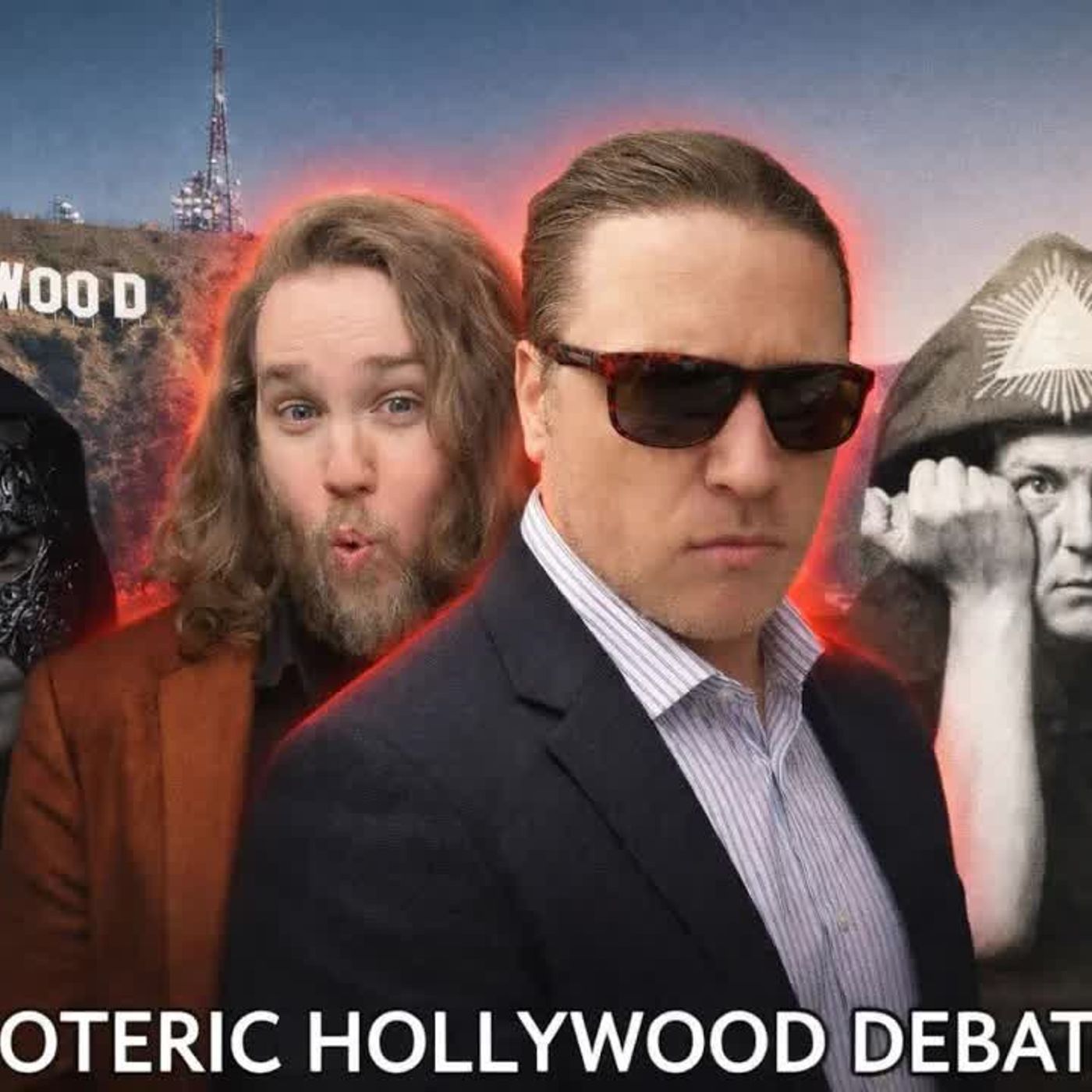
Jay'sAnalysis
FLASHBACK: Jimmy Snow vs Jay Dyer Debate Esoteric Hollywood
01:56:46
Send Superchats at any time here: https://streamlabs.com/jaydyer/tip Join this channel to get access to perks: https://www.youtube.com/channel/UCnt7Iy8GlmdPwy_Tzyx93bA/join Order New Book Available here:...
Loading summary
Transcript337 lines
- [00:00]
A
Are you really buying a car online on Autotrader right now?
- [00:03]
B
Really? I can get super specific with dealer listings and see cars based on my budget.
- [00:07]
C
You can really have it delivered or pick it up. I think kid is walking up the slide. Really? Autotrader, buy your car online? Really?
- [00:16]
D
Okay, so let me, let me try to real quickly introduce these guys somewhat formally so that you guys can know what they're doing and where they come from. We'll start with Jay from Jay's analysis. And he has grown to become one of the premier film and philosophy sites on the net, showcasing the talents of Jay Dyer, whose graduate work focused on the interplay of film, geopolitics, espionage and psychological warfare. Jay is a public speaker, lecturer, comedian, and author of the popular title Esoteric Sex Cults and Symbols in Film, which made it to Amazon's number one spot at its first month of release in, in the film and Hollywood category. Jay, thank you very much for joining us. I'm gonna go ahead and introduce Mr. Atheist real quick. Then we're gonna come back to you and let you talk about your channel and just kind of introduce yourself a little bit further.
- [01:14]
C
Sure.
- [01:14]
D
From there and let me switch over to Mr. Atheist, who is an ex Mormon and a content creator here on YouTube. His show, Dear Mr. Atheist answers the questions atheists are frequently asked. He also has a miniseries called what's wrong with Mormonism? Mr. Atheist, you've been making the rounds. How are you today, sir?
- [01:40]
B
Yeah, man, it's been crazy short, short amount of time and I feel like the prettiest girl at the dance. I do.
- [01:46]
A
We just pass them around. That's it.
- [01:49]
B
That's a bit wild.
- [01:53]
D
Okay, Jane, let's switch over to you. Kind of introduce yourself to people who aren't familiar with you and your channel and whatever else you think we need to know before we get into the meat of this.
- [02:07]
C
Yeah, my. After the book. Well, I'll mention that my grad work was on what you mentioned, but I also did another degree in philosophy and history. And then my, my grad work is also my master's thesis is what you. What you talked about, psychological warfare. But my, my graduate thesis itself is actually my master's work is actually in philosophy and lit. So there's a whole broad variety of there of what I've studied. But I'm peer reviewed, academically published. I have a second book in the work which will be the sequel to the first book. Hollywood Decoded is also the basis of a full production TV show or my book is the basis for the full production TV show Hollywood Decoded. I'm also now the co host of Warski Live with Andy Warski and, and you've seen me probably in a lot of YouTube debates with Richard Spencer, with JF Gary Epi and other atheists and thinkers and yeah, so that's what I do. I got another TV show in the works that's. We're shooting the pilot pretty soon and that's all I can think of. There's bugs in here.
- [03:13]
D
Excellent. That's quite a. That's quite an impressive resume you have.
- [03:18]
A
I will say you had me a philosophy.
- [03:20]
C
Thank you.
- [03:22]
D
Yeah, I saw that as soon as you said philosophy. I saw Steve phoning over there.
- [03:26]
B
I don't know if I'm going to be able to get between these two.
- [03:30]
D
That's like we don't need them. We don't need them. Mr. Atheist, go ahead. Same thing to you, sir.
- [03:37]
B
Everyone calls me Jimmy and that's fine. There's no need for a more formal Mr. Atheist. My CV is nowhere near as impressive. Content creator that came on the scene about four months ago. The production values were what set me apart, but are entirely because it's what I do for my day job also and as you mentioned, I answer the questions that atheists are posed over and over again. I do come from a Mormon background. I left Mormonism in my early twenties as a result of really observing Mormonism. Made my way past Mormonism slightly into Christianity, a little bit of deism and then all the way out to atheism or agnostic or philosophical agnosticism as Steve would prefer. I clarify. And I also am writing a book called Esoteric Esoteric Hollywood which the thesis is that Jay is a member of the Illuminati and has only written the first book to cover what the Illuminati is really up to.
- [04:34]
C
Yes. And this would be, this is clipped out as proof right here to do that.
- [04:41]
D
You know what just happened right there? The vigilant Christian just spazzed out when we did that.
- [04:50]
C
He puts me on his channel. I hope, I hope he exposes me and then I'll get a whole bunch of traffic. That'll work fine for me. But yeah, I should add to Mario.
- [04:59]
A
Still has a channel that's relevant. Okay.
- [05:03]
D
Go ahead, Jake.
- [05:05]
C
I was just gonna say real quick, I forgot to mention too, I do represent orthodox Christianity so I'll be distinct from Rome, Catholicism and Protestantism in my, my, my approach and my belief in apologetics is that I actually have a distinct, we have a distinct approach to that as well. So it's not going to be rehashed. Thomas Aquinas or rehashed, you know, evangelical stuff.
- [05:29]
D
Awesome.
- [05:30]
B
Yeah. Actually, can I ask then in relation to that question, what your, what your position on. In relation to the Catholic Church is? Because this is relevant for some of the stuff down. Down the way.
- [05:42]
C
Well, I was Catholic for a long time, about 10 years before I got into Orthodoxy. So I was a hardcore committed fan of Aquinas. Very much a Thomist. I attended Latin Mass pretty voraciously, pretty consistently. So, yeah, Orthodoxy is, you know, a completely distinct communion and completely distinct church. Certainly it shares a lot of similarities with the first thousand years the church. But of course, in the second millennia they split and go go their separate ways. So we're kind of in ways similar to Protestant and then in other ways similar to Catholic, depending on what the focus is. But we do not believe that Roman Catholicism is the right religion.
- [06:26]
B
Any particular or special ill will toward them over others. I, for example, certainly target Mormonism more than any others on my channel because it's specifically what I came from and find the most fun to attack.
- [06:39]
C
But people, I debated Nick Fuentes over this and he and I have had a pretty heated Catholic orthodox debate and only because Roman Catholics seem to get so mad and they're the only, the only people that have like flagged my channel and got me banned for on Twitter are Roman Catholics. So that, that is part of the reason why there's a lot of ferocity.
- [07:04]
B
So as an orthodox Catholic, is there any Vatican interaction at all or is it entirely devoid of the Vatican?
- [07:13]
C
Yeah, Orthodoxy, among other things, split over in 10:54, roughly. They split over the question of the role of the Pope. So we see all bishops as equal. We believe in the ecumenical, the council view of the Church, not in the idea of papal infallibility or papal ex cathedral. So that's one of the key central aspects of what we differ over. But then we also differ over the nature of Christ and what who God is, how we know God, how we experience God. Everything ends up being different.
- [07:44]
B
Is. Sorry, am I, am I derailing things? Is this how you did you want. Is this okay?
- [07:50]
D
This is fine. Whenever you lock my phone, whenever you get ready, I'll. I'll just throw the first question out. But if you need context, go for it.
- [08:00]
B
Yeah. So for the last question, I guess is. Yeah, go ahead.
- [08:04]
C
Well, my question is just about the process. So are we going to jump right into. And I don't care either way, but are we going to talk about I think you titled it what like, like Hollywood occultism or Hollywood Satan or whatever. Are we going to do that or.
- [08:17]
A
Satanic souls and movies?
- [08:19]
B
All of my actual recent questions have to do with your book. Yeah, yeah.
- [08:23]
D
Basically what's going to happen is he's going to get his, the context that he needs. And then what we do here is we don't like, they're not rigid structured debates where it's, you know, you get this time, he gets this time. We kind of like to have a, a free flowing kind of conversation because you get more out of it. So we're going to focus on the, the symbolism. Once he gets like what he needs context, I'm gonna throw it to you and let you kind of put out the premise with what your book's about and kind of what you're, what you're claiming and all that.
- [08:53]
B
Yep. I mean and yeah, even my first question is largely related to what you just stated. All of my questions that follow, while they may deviate from the pages here and there, it's yeah, it's all related to the book. I am curious whether or not, and this is just pure curiosity, not about to start a fight with orthodoxy. Are they young earth or are they. Or does it vary like with Mormonism? They're young Earth Mormons and naturalist Mormons who just believe in occasional intervention.
- [09:24]
C
There are plenty of orthodox who do accept evolution in both micro macro senses. There are plenty of orthodox who accept old and young Earth. So for us it's not typically something that's dogmatic. Although I do believe in creation. So I tend to argue against big scale evolution.
- [09:46]
B
And that, that part I knew, I was just curious if it. As you talked.
- [09:49]
C
But I don't have, I don't have a dogmatic. Yeah, I don't have a dogmatic, nor do I have a dogmatic argument about the specific age per se of the. Okay, cool.
- [10:02]
B
Okay, that. I think that's all I need at the moment.
- [10:04]
C
You're good.
- [10:06]
D
And, and one more little side note. I think it's, it should be put out there because it's. To me it was epic and it was just, it was just a sweet thing with you and Richard Spencer when you, you guys debated. Can you tell people what the, what you guys debated over?
- [10:24]
C
Like, I mean there's a few. But he's.
- [10:27]
B
I know which one you're asking about, so I'll, because he's done it a few times. So I'll tell Jay he's asking specifically about which political party Jesus would have been a Part of. Yeah, if that helps give a hint toward which.
- [10:41]
C
You guys cut out for a second. But, but the question was what, what political party would Jesus be?
- [10:47]
B
So he was asking you about your Richard Spencer debate and I was saying, I know which one he's specifically asking about and it had to do with political parties. So I was just trying to give you the context before you answer because I know you've done other debates with him. So the.
- [11:03]
D
Yeah, I thought it was a great premise. It was if Jesus was alt right.
- [11:10]
B
Or not would be. All right.
- [11:16]
D
Well, how was he as far as somebody that, you know, because he's a controversial figure, was that a, a decision that you kind of made lightly or did you get any kind of backlash from, you know, entertaining having a debate with somebody like that? I'm just curious. It seems like you'd get some flat.
- [11:37]
C
For that, maybe minimal. But you know, I, I think pretty clearly distinguished my positions from his. So, you know, I mean, Richard debates black. He debates black chicks on, on YouTube. So, you know, he debates all kinds of people. You know, he debates Jewish guys.
- [11:59]
D
I only bring that up because we just announced yesterday about Sargon coming on and Sargon, for some people, you would have thought the world ended. You know, you get those people who put out there. I can't believe you're giving something like that a platform. And I just wondered if you got the same thing with, with somebody like Richard Spencer. I mean, is it very minimal?
- [12:21]
C
I mean, I mean, there was some criticism, but really it was, it was hosted app based. Baked Alaska's channel. It wasn't my channel. And you know, the question. And the weird thing was that originally it was supposed to be a debate. And then the day before Richard said, let's just have an A conversation. And I was like, well, you already agreed to a debate. So then we agreed on something in between. We called it an exchange, but I think James also Baked Alaska still called it a debate, which is fine with me. And that's what it was supposed to be. But not really. Not many people me flack over it, but.
- [13:00]
B
I generally use the three words interchangeably if I'm coming on with anybody I disagree with. Debate, exchange or discussion.
- [13:07]
D
Yeah, they're all.
- [13:10]
B
So let's get debate, exchange, discussion.
- [13:12]
D
Oh yeah, I'm gonna let Jay kind of explain what his book's about and the, the premise that he's coming from. And then Mr. Atheist, you can, once he gets finished, ask whatever question that you. The only thing that I asked, guys is that you don't talk over each other so that the people who are listening can understand and get your entire thoughts out. So just that's the only rule. Just don't talk over each other and let each other finish out your thoughts and we'll have a good conversation. All right, Jay.
- [13:43]
C
Well, basically the book is just a reflection of an interest that I had for a long time in film. Around age 18, I was interested in acting and I wrote a stand up routine. I did stand up here and there on the side just for fun. And then when I went into university, I started studying a lot of history, looked into geopolitics. I was also getting into conspiracy topics online, mainly for fun. And I started noticing that a lot of the plots of films really were conspiratorial. And a lot of times the authors of both screenplays and people who worked in, say, intelligence had a lot of crossover. And then as I researched this for grad work, I noticed that there was a lot there that I thought was initially would have thought was absurd. The idea that the Pentagon or the CIA has a lot to do with telling Hollywood how to craft films, what messages to put into films. So I thought that would be an interesting subject matter to pursue at a graduate level and do a thesis on. And so I had to pick something a little more narrow. And I chose Ian Fleming. His life, and of course, he's the creator of James Bond, if you're not familiar. And the way that the films were used as kind of Western CIA propaganda, British intelligence propaganda in the Cold War especially. So what you see is that a lot of Ian Fleming's own personal exploits in Black Ops actually became a subtle undercurrent for what's in most of the Bond stories. And there's a kernel, at least of truth. You know, Fleming's famous for saying, everything I write has precedent truth. And certainly they're fiction stories, but they also include hermetic and alchemical and occultic themes. I think that Fleming spiced his novel up with those ideas, so that that became the seed for the book that I wrote, which focused on mainly big directors. So I looked at the first 80 pages are Kubrick films, Eyes Wide Shut Shining 2001. Then about 80 pages or so of Spielberg and H.G. wells and how H.G. wells was actually a master propagandist as well as a science fiction author. So I went pretty deep into the metaphysics and the philosophy of film and how it conveys meaning to us at different levels. Like, so this is a question of, in philosophy, what's called semiotics. So I go into the semiotics of film some and then I went into a section, as I said, on Bond and then a section a little bit on Hitchcock and his presentation and how he actually worked with British intelligence. How different outfits studied Hitchcock films for their psychological value as it would be useful in terms of propaganda. So what the book does is it operates on multiple levels, analyzing imagery, analyzing narratives, analyzing context, directors, and all of that in relationship to real world geopolitics, real world history, and real world conspiracies, as far as I could verify them. So it's 404 footnotes, 363 pages. Anybody who does grad research and does. If you're a research assistant, you'll have to do a lot of footnoting. So I'm very pretty anal retentive about footnoting. So I try to source everything as well, as well as, and as best as I can. Hence the library behind me. So that's what the book is. It's, it's. It's an analysis of the big directors and their films in terms of all of those levels.
- [17:14]
D
I see, I see Steve in the corner every time you make a philosophical, Philosophical word.
- [17:22]
C
What?
- [17:22]
A
I like philosophy. Why is that so bad?
- [17:27]
D
It's not a bad thing. Steve.
- [17:29]
A
You see the crap?
- [17:30]
C
I went through this.
- [17:30]
A
Jay, you see this?
- [17:32]
C
Yeah. If you do a philosophy degree, I mean, you know the dumb joke I always heard when I was doing grad school was, oh, are the philosophy factories hiring when you get out? So, you know, I mean, you're pretty limited. You can either go on and get the PhD and try to teach, or you can do what I do and, you know, go out there and write books and do what I do.
- [17:53]
A
Know, in philosophy, you have to wonder, did you really get your degree or not? Did it get my degree?
- [17:59]
D
Oh, never mind.
- [18:02]
A
Did you get that one? Okay, good.
- [18:05]
D
I'm coming around.
- [18:06]
B
Sorry.
- [18:06]
D
Okay, Mr. Atheist.
- [18:09]
B
Yeah, hello. So I'm going to treat this more as the hard start with the hello to. So first of all, thank you, Jay, for agreeing to. Come on. I think it's commendable. Anybody who has opinions that are obviously. I mean, you acknowledge that you are trying to expose conspiracies. I hope I'm not doing you a disservice in saying that. And so that's going to be a polarizing issue. And I think it's cool that you're willing to come on, have your claims be investigated and, or criticized. I think that's awesome. I don't mean this to be patronizing. I Genuinely mean. Well done. And congratulations on both getting a book written and published and on the Amazon number one for its category. I don't mean that to be like a take, take it any. That's awesome. And it's much more than I've done. Maybe I mean this compliment to be this, this comment to be a slightly patronizing. I can say that of all the books I've ever read, this one is certainly the most recent. That was my joke for the day. Okay, so the question I actually want to start out with is in reading your book, it seems like you, and correct me if I'm wrong, but it seems like you believe there is an actual underground cult behind Hollywood. But in addition, there are times in your book where you seem to talk about different and separate cults, Darwinian cults, dachinism cults, which maybe those are the same ones. So I'm actually curious to know before we get too deep into the details of the book, just how many underground cults are at work in your view as far as that have, that have a significant influence on population and via whatever pop culture or anything.
- [19:50]
C
Right. Well, now in the world of Hollywood, there are multiple cults that are pretty well known as having a degree of influence and a, a well known Hollywood retinue. Right. So I mean we can think of Scientology and all the high level Hollywood people who've been involved in Scientology. We can think of the Nexium cult recently that was in the big in the news with the Allison Mack and Keith Rainier stories of sex trafficking. We can think of, yeah, the Children of God cult. Moses Berg who was a pedophile connected to Hollywood, people who, you know, this is where we get Rose McGowan, the Phoenix family, River Phoenix and so forth. They come out of the Children of God cult. So I mean the OTO has obviously quite a few adherents in Hollywood. Kabbalism and the Kabbalah, quite a few people have been influenced by that in Hollywood. People like Roseanne talk about it pretty openly. So I wouldn't be so absurd as to say that there's only one cult. But if we were to come up with the idea of one overriding cult in Hollywood, it would be actually the CIA. And the CIA is actually treated as a, as a cult. And this goes into the history of intelligence agencies and how cults operate. So I'm not saying that every person in the CIA or in its history literally isn't a cultist or a Luciferian. But if you look at the history of Skull and Bones the way it was Set up, which is where the CIA comes from. Yale, Harvard and so forth. They do have a very occult aspect to them. And, and for me, regardless of whether you believe in anything supernatural, really, it's just a question of trafficking in secrets and secret information. So what we see in Hollywood is no different. We see a lot of people who are high profile who can be blackmailed. This actually just came out with Heidi Fleiss today. She was admitting that how much of her black book was so important. And famous whistleblowers and people from like prostitution and prominent madam positions have talked about how their work is used as blackmail, like Henry Vinson, Confessions of a DC Madam, Deborah Parfrey and so forth. And they actually tie into at times, not always, but at times cults like the Franklin cover up. So there will be a time, I think you'll notice if you research this in definitely, that a lot of these networks will connect together. So I'm not saying that everybody in Hollywood is run by a cult or that they're all put through the same brainwashing, but at the top of a lot of these groups, you'll, you'll find a lot of collusion. And ultimately I would say that the Pentagon and the CIA do have a tremendous amount of influence in Hollywood.
- [22:30]
B
I can't hear the word collusion without wanting to do my Trump impression. There is no collusion, but the huge, no, absolutely no collusion words. There you go. I know where it's the best words. And now I'm gonna actually try and.
- [22:48]
D
I think you two are my favorite guests that we've had.
- [22:50]
A
I'm loving this.
- [22:52]
B
That's good. That's good. So with the number one cult, and again, never let me straw man. I'll even let you interrupt me to prevent a straw man, even though that was the big rule with the number one cult, or at least the thing being linked altogether, this being the CIA. I guess the concern I have and the wonder I have after reading your book is, well, would you say first of all that the book is meant to expose that idea that the underlying linking, if there has to be a number one cult, it's the CIA, or is there a specific cult you would say your book is trying to reveal or just the idea that occultism is alive and well in Hollywood?
- [23:32]
C
Well, like I said, sometimes you'll have something like the oto, which has a lot of adherence in Hollywood and high level finance and things like that. I'm not saying that everybody in that group is part of, part of the exact same agenda. Right. But, but There are people who do intelligence work who are and have written many books on how to manipulate and use cults. There are a lot of white papers that have been written on how to manipulate and use cults as even an experiment at times. So the purpose might be different in different cases. But, yeah, I would say overall, it's, it's, it's easily. And I understand the skepticism because when I first came into studying this question, like in my undergrad, I thought if somebody had said the CIA and Hollywood are flip sides of the same coin back then when I was like 22 or 3, I would have thought that was crazy. But after spending a lot of time in that and looking at a lot of other academics who've actually backed this up with their research, it's like, yeah, that's obvious to me now. Right? This is why there's so there. And if you look at the history of intelligence operations, you can find so many famous people who did intelligence work on the side who were intelligence assets, like Jimmy Stewart or Cary Grant. Julia Child work for the oss. And this is. This is fairly prominent, right? Coco Chanel was a famous spy. So all these people did this kind of on the side at times. So it's not that everything is necessarily under the religious aspect of a cult. As if, like the CIA handler thinks, oh, everyone under me is under my religious hand. They can just be under him in a manipulative sense. He could just have dirt on them. It doesn't have to be religious in every time or even every case. But also, I was writing my book for a pop audience, so it's not just written for an academic audience. If you write something just academic, you're not going to sell a lot of books. So it had to be kind of also written in the language of pop culture. So at times, yeah, I'll talk about something like the Illuminati. I don't have a problem talking about that, because while there are many groups that, that embody the idea of the Illuminati today, there actually is a historical Illuminati that you can trace academically and historically in a lot of main mainline history books.
- [25:43]
D
Julia Childs, really.
- [25:46]
B
And perhaps she was.
- [25:49]
C
She was. She was in the oss.
- [25:53]
B
So perhaps this is where our first point of conflict is going to come. Because what. What I'm understanding is I read this book and I'm trying to figure out who exactly it's exposing, and that's. It's not actually easy to directly come up with that. And I certainly wouldn't have come out with that theme of if there is a conn. Entity to expose, it would be the CIA. What I see is a book that in much in a conspiratorial way, looks to all of these things and says, if you look through this lens, this becomes obvious. If you look through this lens. In fact, somewhere toward the beginning of the book, you even suggest, I'm going to teach you how to watch it the way I watch it, and then it'll become obvious. But when I see somebody actually expose a culture, expose Scientology, I see money followed. I see family lineage to some degree followed. Less important, but people are naming names and following the following them. I mean, even in. Even in non cult exposition or John. John Oliver is like my favorite person who exposes things more that we just didn't realize was going on than was necessarily a giant secret. And that's the tactic he takes. He names names and he follows the money. And while there is some name naming, it's then dependent upon what if after he got done doing this work around the time that the moon landing was supposed to be happening and NASA had access to these Hollywood sound studios. It almost seems like the leap then is, what if when he supposedly was done, all of that, he wasn't actually done? That's, I guess, one of my primary conflicts with the book. It's a little too much of a confirmation bias, masturbatory aid, if I may be crass. It's a here's how to look at it, and now if you look at it, look how obvious it becomes.
- [27:43]
C
Right? Well, let me. Let's take you. Let's take it through some specific examples. So let's take Kubrick. And I don't say, by the way, I don't make the claim that Kubrick filmed the moon landings. So that's not in my book.
- [27:54]
D
No, no, no.
- [27:55]
C
But it's very verifia, Right? But it's verifiable that Kubrick did work with NASA. That can easily be verified. He worked with Mueller of NASA because they really liked the way he shot things, and they wanted to share insight and information on how to do film work because obviously NASA is interested in camera work too, right? So whatever anybody's opinions of the moon landing are, it's very easy to verify that Kubrick collaborated with NASA. Now, again, I'm not saying that that means anything beyond that. I'm just saying that's one example where you do see a clear working together. Now, let me say, on the claim that intelligence agencies operate like a cult, okay, that has been written about by many people in a. In a mainline academic way. So one book on that is called Cloak and Gown by Robin Winks. This is a famous work on the history of intelligence agencies, and it's specifically the history of the CIA operating like a cult. Right. So I don't really care whether a person believes in the CIA being a cultic or not. The main point is that they operate like a cult. And when it comes to the way that so many people in Hollywood, especially during the Cold War, were recruited into working for the FBI, Jimmy Stewart was a famous FBI asset. He even made movies in tandem with J. Edgar Hoover. There's a famous movie called the FBI Story. And Jimmy Stewart's like playing all these different roles without throughout human history as the FBI, Jimmy Stewart, the hero, American and the FBI. Right. So you can just watch that movie and you see right there a clear example of that kind of a collusion during the Cold War. And so I understand that there's. That these are a lot of different specific examples. But what I'm saying is that when you go to something like the academic work, where is it? I've got it here with me. Operation Hollywood. Yeah. Let me show you this book. So when I started looking at the question from an academic perspective, and this is all people from various universities who study the same stuff I do. And this is put out by David Robb. And what they do is basically go through the last several decades of Hollywood's revisions of scripts. So this is at a very kind of basic, not conspiratorial, just an academic look at the different times that the Pentagon told movies, no, you can't do this. If you want to use our aircraft carrier in the background, if you want to use our tanks, you got to do this. Oh, we want this tweaked here because this doesn't portray America right, in this Cold War setting, blah, blah, blah. Countless examples. There's probably 70, 80 movies that they go through in this text written by multiple scholars. Another thing I would say that sort of backs up one side of this thesis is the famous book. This is put out by University of Texas professor Tricia Jenkins book the CIA in Hollywood. It's pretty expensive on Amazon. That's because it's like her PhD or. Yeah, I think it's her PhD thesis. And she does the same thing. She goes through the history of how many times, especially in more recent times. So she. For example, there's a whole chapter on J.J. abrams and who's the chick from Alias, Jennifer Garner, you know, working together to, to consult with the CIA on the film, the series Alias. And so when you start to look at like Chase, Brandon, Milt Bearden, who are the two well known CIA liaisons in Hollywood and how they consulted on movies like Meet the Parents, how they consult on movies like Wag the Dog, by the way, Wag the Dog is about what I'm telling you about. There's a whole movie made about the CIA consulting with Hollywood and so forth. It's satirical but it still kind of hammers the point home. So these are just kind of the beginning points where I started this journey, this question. So I didn't immediately when I looked at these texts say, oh, then that's the Illuminati that runs everything. No, I mean I'm just saying these are academic sources. If people want peer review, you want hard evidence outside of my book. And all these books are sourced of course inside of my book. You can look at that to begin your trek down this rabbit hole. But so then what happens is if you look at the cult side of Hollywood that I mentioned early on and you said Scientology, you said what I see is money, what I see is fame. I would totally agree with you. I would say many cases when people come out of Scientology and they say like Romini and she talks about it, she says oh, they were, you know, abusing us and this and that. And that's all true at one level. But I would say if you've read Edward Bernays book Propaganda, one of the things that Bernays says is that the greatest tool for propaganda, propaganda the world has ever seen is Hollywood. And so he made that a central aspect to the way that the advertising, because he actually went from working with the State Department to working with advertising and mass marketing to tell them how to manipulate human psychology so that mass advertising campaigns would be successful. Bernay said that Hollywood would be key to controlling and engineering people's perception. So long story short, there are just countless white papers, countless documents that you can very easily verify from the vantage point of the CIA, from the vantage point of the Pentagon think tanks that very openly discuss using so many movies, films in this perspective of big scale social engineering. So even if you want to say well it's not a cult, I would just say, okay, I don't care whether we use the word cult or not. I think it is like a cult, like Robin Winks book Cloak and Gown says. But at least in praxis, it functions as simply a tool to control people's perception. And that's why there's a giant machinery that goes into making pop stars as well.
- [33:54]
B
I'm certainly not going to argue that no social engineering happens in Hollywood. That would be ridiculous and ignorant to make that claim. It's more that I'm. The argument I want to have is actually what it almost sounded like you were dismissing is that this book seems to claim to expose precisely what that social engineering is geared toward. And it seems to me you only need to pick something different to do the exact same thing. And I could write a whole book on how these people who learned via through consulting with the CIA. I'll grant you every point because I'm not, I don't know well enough all about all these white papers to say you're wrong if you are. So I'll grant you all of those. It seems like all I need to do is go, okay, if. What if I wanted to change my lens to Hollywood is trying to program us all into a monogamous, not transform, but maintain into a monogamous heteronormative culture. Because that is the easiest thing for them to gear their social engineering towards, because that's what they have traditionally worked with. And then I can go through and find those themes of. Of still monogamy. I just have to choose different movies. And in fact, what I found interesting about this book too, is in trying to apparently expose this ginormous underlying plot, you chose a series of movies that a lot of people have seen, but I've seen less than half of them. So whatever this group is doing, I hope it's your new book that's going to come in with some examples of maybe what's. And I'm a little bit younger. Clearly I'm not over the age of 14. But the. I hope, I hope some more modern examples of how this is still being maintained, because otherwise it seems to me if everything comes from that sort of restricted time period, just as as feasible an idea that the reason the movies look that way is because it's what was popular in culture at the time. And even if these people learn things while doing other social engineering in these CIA plots or Cold War propaganda or whatever, I wouldn't expect them everything that I would expect to see similarities between the movies they made then and the movies they made later. I don't. Again, confirmation bias is what it feels like the whole book is about. Here's the lens I'm going to use. Here's the information that does. I mean, it's a lot to think about and there's a lot of things where it's like okay, why is that? But then it's also like, why do I need to make that jump? So why do you see the. You can respond to anything I said, but I'd love to see.
- [36:30]
C
Well, yeah, so like in the second book. Yeah, so in the second book, I bring in. In the first several. The first couple chapters, if I recall, the concept of the various Mafias that have had influence in Hollywood. So again, I feel like you're trying to push me into a position where I have to say that I'm consistently claiming there's only one single group that runs everything. No, I don't mean to. Okay, well, that's cool. I mean, I'm very. I try to be very nuanced. And in fact, what. What you're hitting on is something that I specifically did want to include in the sequel, which is the question of the Mafia. And this, before I looked into that, was an area where I was kind of unclear how it fit in, because obviously there's been a lot of mob influence in Hollywood over the decades. So what I tried to do was look at the, The. The. The tie in between how the Mafia and the CIA have actually made deals and work together at times. This is actually portrayed by the way, in Mario Puzo's the Godfather, you have the. In the initial installment, he deals with the. The way that the Mafia basically told certain directors what movies would and wouldn't be made. And I try to be fair to different mafias and their influence in Hollywood. So there's a big famous book called by Gus Russo about Sidney Korshak and his influence in the Mafia in Hollywood and Vegas. So That's a giant 600 page famous academic book. I've sourced that many times in the first few chapters of my new book. And if you know about the Mafia, you know that they operate also like a cult. And I see the CIA as a Mafia. Maybe that's a better way to put it. But you'll notice that the same kind of initiation rituals for the Cosa Nostra, for the Sicilian Mafia, for other Mafias as well, is very similar to the kind of initiation rituals that if you read about Skull and Bones at Yale, the kinds of initiation that they go through, the oaths that have to be made, it's a life or death thing. You don't leave this. This is your whole life. You're owned by the state, basically, the Mafia use it the same way. And there have been documented historical instances, declassified papers about the CIA and the Mafia making deals together. For example, the Bay of Pigs, there were mob connected people who were involved in the failed invasion the so called Bay of Pigs. So that was actually a deal between.
- [38:49]
B
Can I jump in with a question? There's a distinction that I'm now having a problem with. What is your distinction between a cult, a religion or a cult and a political party? Because again, I'm trying to not sound like a douche through this whole thing, but honestly I don't know if I can come up with an organization.
- [39:11]
A
Clarify by cult.
- [39:13]
C
Right. So I mean I believe that a cult generally, yes, it has a religious connotation of some figure, some deity that everybody has to, you know, submit to. And then the representation of the, the leader in the cult, you know, he has supreme power. This is generally what people think of when they think of a cult. And I'm saying that in practice. Again, there are many mainline academic books like Cloak and Gown that will show you that the. The functioning of Intelligence agen are just like cults and the history of Intelligence Agencies. You can read Francis Dvornick's famous book on the history of the rise of intelligence agencies out of Byzantium. These are all mainline academic works. They will make the same comparison. So the comparison is not something that I'm inventing. It's a comparison that is normative in the history of intelligence research. Alan Dulles, in his book the Craft of Intelligence, he goes back to the Israelite spies to give the earliest examples of the functioning of intelligence agencies like religious organizations. So I'm not the person who came up with that comparison. It's prevalent in the literature.
- [40:20]
B
It just seems like the way you're using the word isn't necessarily as. It certainly has its precedence in intelligence. And I think they probably had perhaps a more precise definition. I dare say it seems like you're making the comparison useless because I feel I could use your use of act like a culture to describe virtually anything, any organization. It does, it does feel like you use very broadly.
- [40:46]
C
Okay, but, but if we talk about the way, for example, agents offer operate sometimes in Hollywood, if you've read, read any biographies of people who've had to deal with an agent who, you know, kind of ran their life. And especially as you climb up the ladder, a lot of times agents have a lot of power. They can, they can, you know, basically like in the case of Elvis and his, his agent, Colonel Tom, he was who supplied Elvis with drugs. So he had a lot of influence in Elvis's life and a lot of control by extension, especially as a, you know, high level military guy. So I Mean, I think that to me, that's just a common sense kind of analysis. But so I'm not really getting what. What the point is is that you're just basically saying that I'm misusing the word cult. And. And all I was trying to do was to say that if you want to use a broad definition of psychological manipulation, then you can say that. But I don't.
- [41:46]
B
Yeah, I'm not just trying to make a silly point of like you're using the word wrong. Especially as an atheist. I hear that word abused a lot. The word atheist and the stretch is made and people will use. Or the word faith actually is a better one to use. So I can go into your realm a little bit more. The word faith is just used so broadly, but people use it interchangeably in places where you can't actually necessarily tell which power they've given that word. And so it's not just the broad use, it's then the continued use as though it has a more significant power. More significant is represented more significantly when again, it seems to be following with the next argument. Now we've got cults. Agents act like cults. I really don't know what organization with any kind of head that has more power than the people under couldn't be used so vaguely. But then when you're reading a book about exposing a cult life, that has a different level of power implied. And I don't think your use of the word cult.
- [42:50]
C
Okay, if a person goes against something, say, that's not politically correct. Right. It's not like a Hollywood agent has to stamp them out. Rather, it's known that they're not going to get the job, they get blacklisted. I mean, the idea of being blacklisted in Hollywood is very common. So. So in other words, I'm not saying that it has to be like one guy at the top of a pyramid who, you know, like, makes the calls all day about who's. Who's killed, who gets what role, what. I mean, in the sense of different studios and who gets what roles. We saw this with Harvey Weinstein. If you didn't screw the right person, if you didn't do the right stuff, you know, you didn't get the right roles. Right. And then we had all the MeToo stuff. So that's casting couch, that's well known. I don't think I'm going beyond anything public in saying that Hollywood operates like a cult. In fact, how many people from Hollywood have made this same claim? John Cusack has called Hollywood a giant Prostitution, Whorehouse. Ben Affleck says Hollywood is full of CIA agents and operates like an intelligence cult. I mean, to me it just seems obvious, like maybe just because I've been so. So enmeshed in the research that it's. It's like secondhand to me that it seems strange that somebody would have a problem with that. But I feel like you're saying, you're saying. I feel like you're saying there's no over. You're saying there's no overriding conspiracy, and I'm saying there is. No, no, but we don't have to. Okay, well, I'm still not understanding the precise critique.
- [44:23]
B
I'm saying you have come out with a precise or a more precise conspiracy that your book seems to claim to expose. I don't think the thesis of the book is at all well stated in the title. In fact, I would say esoteric Hollywood then follows with basically, here's all of the reasons why esoteric Hollywood exists. Once you already accept that it exists, here's all the things you see from it.
- [44:46]
C
No, that's not true.
- [44:47]
D
I mean, the book.
- [44:48]
C
That's not true. No, I mean, okay, but. But I think you're. Okay, maybe this is a difference in epistemology because you seem to think that there's a way to enter into investigations with neutrality. And I don't believe that there's. There's such a thing as neutrality. Like there's no way to investigate a thing from a purely neutral stance and to determine, oh, well, I have no prior experience of this thing. Let me then look at it, size it up, smell it, and through the sense data I can make my final declaration as to the truth or falsity of this thing. Now, I'm not against empirical data, but that's a very naive approach to epistemology or how we learn and study things. So again, when I started this trek, I did not believe that there was a significant amount of overriding conspiracy in Hollywood or that there were powerful cults in Hollywood. That was a later conclusion that I came to after a lot of years of reading on the subject. So I didn't come into it with that. By the way, the book's thesis is just simply that film and that art form shares a lot of similarities to ritual. That's the very first chapter in the book is film as ritual. So other artists have made that same comparison. The surrealists believe that their artworks role displayed a kind of ritual presentation. Many directors have compared their works to. To ritual. So I don't even think that in itself, just from a comparative religion stance, should. Should even be that. That outlandish. It does strike people a little strange, but that's kind of what I wanted to do. And you're right that the book doesn't have necessarily a single thesis. And that's because it's a collection of essays, so. A collection of essays.
- [46:35]
B
And I understand that. It just. It seems to me I'm not representing the idea that it. Again, because I already said at the very beginning that it doesn't name names, it doesn't follow the money. But as far as your point about.
- [46:50]
C
Remaining, I do name some names, so I'm not sure.
- [46:55]
B
Yeah, you do. Specifically, which directors were doing what or which movie creators are making for Hollywood and NASA. There are names, definitely in the book. What I'm talking about is there is no wallet implies this grander conspiracy. It doesn't T. All the conspiracy together with a bow, which I don't think you're claiming, and I'm not trying to represent what you did. You then made the point about neutral, remaining neutral. And while I agree that it is pretty difficult to approach anything without bias, it feels like that was an admission on your source or on your end that this book is written toward yourself and not toward an audience because it doesn't do a good job of establishing for the audience. It literally just kind of to me seems like you're saying presume all of this research I did. Because, man, look at the list of things I've done all resulted in this. And as long as you start here, everything that follows will be obvious. We're tying back into confirmation bias. Again, I'm also not saying that there aren't obvious symbols in these movies, but there are lots of stretches made.
- [47:58]
C
Okay, well, I mean, you've made a lot of these claims, which is fine. I'm open to criticism. But again, I wasn't conceding that the book was written from my own perspective. I was saying that I think that's a fact about human nature and experience across the board. I think everybody's in the same boat about there being no neutrality, strictly speaking. So everybody, by your definition, anyone who writes a paper could then be or tries to make a persuasive argument for their case would therefore be committing confirmation bias. And I think this just simply a misuse.
- [48:36]
B
I wouldn't say that references completely, but certainly anybody who relies on that as well as other fallacies, for example, in the intro of your book. However, as I think you will find the popularity of my film analysis will lend some Credence to the fact that I am onto something. Now we've got a new fallacy regarding popularity. So I would say with that and the other part of the intro that included the. And I can find for you because I've highlighted much of this book, if you'd like, I could find for the exact reference where it's.
- [49:03]
C
Yeah. First of all, there's different ways to write different things, right? So if I could take a Dostoevsky novel and I could pick it apart for finding fallacies in different characters or even trying to find a. Okay, so this is not strictly speaking a book. Yes, it is written to expose, but there's different types of writing, right? Prose. You're not going to investigate prose. And I use a lot of prose and a lot of satire, a lot of sardonic type, wit and goofiness in the text on purpose. And so I think to try to dissect that as if that was fallacy is a little bit absurd because that's not.
- [49:41]
B
If you're trying to call that sentence satirical. I mean, this is you literally setting up the book. Your next sentence is actually where the confirmation bias comes in. Thus, the reader will travel with me on a mental journey into the psychosphere, understand the semiotic system I use, and in turn be able to interpret the film in a deeper, esoteric sense of their own. You're setting, you're calling, you're saying it's.
- [50:05]
C
A fallacy because I said my, my book, my, my analyses are popular and it's on to something. So you're going at prosaic, popular, gave it credence.
- [50:15]
D
That's later finished.
- [50:18]
C
Yeah, yeah, but, but yeah, I'm not. When you write an introduction to a book, you're not always making an argument. Do you not understand that?
- [50:30]
B
Yes, I understand. I understand you setting yourself up for. Again, it's the intro to the book asks the reader to skip a lot and skip straight forward to here's my analysis. Now, I'm sorry if you guys are getting wind stuff, but my outside just went like crazy. But here's where I'm at now. I need you to start where I've already gone. You don't even make a quicker or a quick case for. Here's this, here's you've done more. So in this.
- [51:00]
C
Actually, actually I include. I include a film scholar at the very beginning quoting Orson Welles. So the, the, the first quote is about Orson Welles talking about genre and the way genre affects our perception. And then I go into talking about semiotics and yeah, I have no problem admitting that I have presuppositions and I come to the table with my own biases. But again, I think we all do that. And I mean, again, you could, your, your approach could pick apart any work of literature. And this is, I grant you, that my book is a little bizarre because it, it's also. And that's, that's part of the appeal, by the way, is that it's not just academic, it's not just written at a popular level. It's. It's a kind of a weird mix of all these things, and I intentionally wanted it to be that way. So you're going to find, I'm sure, a lot of fallacies. But it's also not a strict logical book. It's not a book about logical argumentation. It's a book about the arts. And I mean, the idea that you could apply that kind of approach to aesthetics and the arts is a little strained, I would say.
- [52:06]
B
Yeah, perhaps. I think you're saying that it does rely on a lot of presuppositions. So it sort of makes my point for me, which is that those pre. But I will continue that point that those presuppositions aren't justified well enough by your one quote that you were talking about at the very beginning, which precedes it by a few paragraphs to ask the reader to make those presuppositions themselves. And because it just sort of goes on, I think there are a lot of people who will read this book and naturally make those presuppositions. In fact, I think this book makes.
- [52:37]
C
The natural Neil DeGrasse Tyson. This sounds like Neil DeGrasse Tyson trying to dissect interstellar. I mean, this. That's not the context of what this is. This is not a book that's just about me trying to prove my case to you as if it was a, you know, a law setting with the judge up there. And can I prove my case to you? I mean, a lot of people are.
- [52:57]
B
Not going to find.
- [53:01]
A
That a book.
- [53:01]
B
That means to expose doesn't mean to prove.
- [53:05]
C
Are you. Are you aware that there's different ways to go about exposing things? I mean, not everything has to be done in a. A legal court case situation. And by the way, here's a little, a little advice for you. If you want to have a book, one day your editor is going to tell you this needs to be written. I'm not being a dick. I'm just saying, like, what you'll go through, your editor will say, you've got to write this in a way that is going to be fun to read and people are going to get a kick out of it. You can't. And be persuasive. You can't just write it as if it were, you know, a list of science facts or something like that. It's not going to work.
- [53:38]
B
I wonder if he would encourage me to, this future editor, if I write this future book, to not write a book based on so many large presuppositions that I won't have in common with many of my readers, but ask them to commit to that.
- [53:51]
C
You haven't specified. I mean, I'm sitting here with like 50 books around me that basically back up any claim that I've made. And you've not specifically told me anywhere that I'm wrong. You basically just said that I've had presuppositions. But we all have presuppositions. So what? So where am I?
- [54:06]
B
I haven't read the fifth. Go ahead.
- [54:10]
D
Just a second, Steve. I think. Did you want to kind of tag into what. Because I think we're kind of getting to the point where we're going just, you know, kind of going in circles a little bit with the back and forth. Steve has kind of a thing to tag on to that, I think. To Jimmy's point, I believe.
- [54:31]
A
Well, yeah, sort of. I mean. I mean, I'm actually kind of the way Jay's describing it. And again, I have not read anything by you, Jay. I don't know your book, but the way you're describing things. I'm actually siding with you at the moment on how you did a introduction to your book. I don't see an issue about how you formulated the structure of what was going to be introduced in the book because you don't make an argument in an introduction to a book. I do agree with you that obviously we all have our presuppositions. Now. I think the question though, and again, I'm not trying to ask this from Jimmy, but I'm trying to get the live feed questions posed to you. But do you think that. Did you have some presuppositions prior to the investigation of these symbols, thinking that there was something to this, which I think is fair. I mean, I don't think there's anything wrong with that. And then try to find evidence for. Against it? Because these are not scientific claims. Usually scientific claims. We try to find evidence to falsify your hypothesis. We grant that this is not that kind of case. So would you expand upon that More about how your epistemological approach was where you do have these presuppositions, but you do it in what kind of systematic way to justify those beliefs.
- [55:38]
C
Yeah, this is a book written about the arts. It's basically a culture commentary that touches on a lot of different genres. So, like, in the first chapter and in the first sections, we're dealing with specific Kubrick films. And I picked Kubrick just because he's so prominent and relevant. And he does, you know, pretty obviously pack his films full of a lot of symbolism. So when I investigate Eyes Wide Shut, I look at Kubrick's experience, what we know about Kubrick, things he talked about in interviews. I look at the way that he places the camera. I look at the colors that are used. I look at the influences that probably went into why he chose Trauma, Novella, which is a specific, you know, occult influence novel, to put into a surrealist, Jungian, dream state film. That's what the film was about, the dream state. So it's basically an essay on interpretation or semiotics. And so if you take. And I'm trying to be arrogant or condescending. I'm just saying if you go, like, if you take a class in aesthetics, like, if you do a philosophy degree, you'll have probably aesthetics. You'll have a class on art interpretation. You'll try to do interpretation, you'll do what's in literature, what's called a close reading. So if you have a class on Dostoyevsky or if you have a class on Shakespeare, you'll do a close reading of the text where you try to argue for the interpretation of the symbols that you see there. And yes, I will admit that symbols oftentimes are polyvalent, which means they can have multiple meanings based on wider context. But that's precisely because of the philosophical position I have about signs and symbols that I don't believe they operate outside of a context. I believe they're context situated, strictly speaking. And so, really, art interpretation for me, aesthetics for me, is impossible to divorce from the holistic worldview or paradigm that I come from. And that's why when I write about Eyes Wide Shut, I'm tying it into, you know, the Tom Cruise connections to Scientology. You do have the apparent, you know, reference to the sea. The sea or soldier there. In Nicole Kidman's Sex Dream, you know, there's references to the Garden of Eden in her Sex Dream, we have the orgy with, obviously, Crowley and overtones. So I try to make the case that that's what's going on in this film. And I look at a lot of comparative religion scholars who will say, this symbol tends to mean this. And I'll say, does that fit this context? Well, it does look like there's. Sorry. It does look like there's a kind of goddess symbolism going on here. It does look like, you know, when she says, I want to give myself as a ransom for. For Tom to save his life, that the cult actually operates like an intelligence agency because they're able to surveil him and so forth. So basically, again, I'm looking at the totality of Kubrick's films, and one prominent theme is sex trafficking and sex abuse. And I'm saying that's here in this film too. So is Kubrick trying to tell us something? I think so. I don't think that's much of a stretch, especially given all of the news that's coming out about Hollywood in the last several decades, that this has been a real problem in Hollywood.
- [58:49]
B
So does your book mean to. To claim that it is exposing that and it is the one exposing it? Because it sounds like where my main disagreement with this is getting lost is how it's being treated, like it's exposing something new. And then. And at times that seems to be the case. And then at times it seems to be really. I'm just summarizing the 50 books behind me. So where are. Where is it landing on the Exposing a New Truth, or is it just a summary of other exposes?
- [59:16]
C
No, I mean, I think.
- [59:17]
B
I guess I missed it.
- [59:19]
C
The fact that the book was successful and has, you know, over 100 plus five star reviews means that it's not a piece of shit book. And it's not just me regurgitating what the other people said. I mean, to be a successful writer and to have the book made into a movie or, excuse me, into a TV show, I think requires a little bit of skill. It's not just regurgitating. So that's a little bit of a low blow. But that's okay. I can take.
- [59:42]
B
Was a genuine.
- [59:45]
C
I just answered your question by saying that the book is a bunch of different kinds of things. So you keep asking me, is it an expose? And I'm saying there's an element of expose. So, no, it's not totally.
- [59:55]
B
You understand that it seems to represent itself with a title like Esoteric Hollywood, as though that is what it is and that that is what most people. By the way, are you aware that.
- [60:06]
C
You can't be an interesting cover? Are you aware that you can't. Okay, by the COVID And that too. And that to sell books, it helps to have sex in the title.
- [60:14]
B
Yes, I agree with that. I actually didn't bring up the sex part, but that part's true. So let's go beyond the COVID that the introduction seems to imply. I agree that it has. That it's going to be a book of great expose. Do you acknowledge that that is, I think, commonly among the people who are going to buy your book thinking they are going in about to read about the exposure of something that wasn't presently obvious and that that actually wasn't the intention of the book or that it's. The intention of the book was many, many things. It sounds like, well, everybody has to pick. Or do you feel you've answered that question already?
- [60:50]
C
Everybody has to pick.
- [60:51]
B
I just passed the title.
- [60:54]
A
I think we're kind of going back and forth on this a little bit. Jay, let me try to rephrase a little bit. How much of your book do you think is speculative and how much do you think is actually factual as far as your conclusion? We. I think. We all agree the symbolism in. In Hollywood. I don't think that's even a controversial thing. We all agree there's some kind book I disagree with. Yeah, yeah, that's a great question.
- [61:15]
C
I would say, again, again, I mean, I try to. Any of the times that I make a claim that I think is. Is substantiated, there's a footnote. So again, there's 363 footnotes throughout the book. And. And yeah, again, in terms of interpreting symbols, they're polyvalent. So there's always going to be an area of fuzziness when it comes to exactly what it means. Because, for example, I don't always know Kubrick's intention. I don't know the set director's intention. I don't know the cinematographer's intention. And again, I mean, I wouldn't be in a documentary with, you know, Sean Stone and Oliver Stone if there wasn't something to it. I mean, they read the book. It resonated within. And I'm not making an appeal to authority that they're. But I'm saying I've talked to a lot of people who are in Hollywood. So it's not just me speculating. It's also people who. Who are Hollywood insiders and famous in Hollywood have read the book and like the book quite a bit. So I think that speaks to its credibility which it wouldn't have if it was just like a tabloid rag or something. Something like that. So I would say probably 30% of the book is speculative and probably 70% of the book is. Is pretty solidly sourced.
- [62:23]
D
How is Oliver Stone in. In real life? I'm just curious.
- [62:27]
C
I haven't spent a lot of time with him. I've spent a good bit of time with Sean Stone. And, you know, I was in that documentary with Oliver. But I think Oliver's a smart, smart guy. I think he's. I don't agree with all of his political opinions, but, you know, I think he makes really good films at times that have been pretty conspiratorial. That's one reason I like him, is that he's not afraid to delve into Hollywood conspiracy and history. Conspiracy and actually one of the things that prompted the book was I took a college course. One of my film classes was Hollywood history. And the point of the class was to compare historical events as best we can trace them with the way Hollywood represented them. And there was a fascinating class. And quite obviously a lot of those were Stone films. So that was kind of what introduced me to the real Oliver Stone cannon of films. And I think he's pretty phenomenal in that regard. But, you know, this is a working premise that Stone has. So, you know, this wasn't all just my idea. You know, he gives a lot of interviews where he talks about the same kind of stuff, very critical of American foreign policy. That was the point of a lot of the war films. But no, I've spent more time hanging out with Sean Stone than Oliver.
- [63:46]
A
He's very good, no question about it. But you had brought something up earlier. Maybe we can dive into that a little bit. You had actually mentioned something about these symbols being from a hermetic approach. Why do you think these symbols are out there? From a hermetical approach? To what consequence? What is the goal of these symbols existing for that reason in these films?
- [64:06]
C
Right. That's another thing I would say is determined by context. So sometimes there's directors who are pretty self consciously interested in hermeticism and they're very open about it. They put in their films. I mean, Darren Aronofsky, I've done a bunch of analysis. I don't think any of his analyses made it into the first book. But you know, Aronofsky is pretty consciously influenced by Kabbalism. He talks about that. It's very clear, I would say, in most of his movies, especially something like the Fountain, I think, or his version of Noah, which was influenced by Kabbalistic tradition about Noah. A lot of other directors will talk about it, you know, Kubrick, I think, has a lot of esoteric symbolism in his films. There's a quote by Kubrick where he talks about it, and he's a little ambiguous, as always, to keep that air of mystery as to what his real views are on these things. But I would say, again, the purpose of why you would use alchemical symbolism could be manifold. So a lot of people in Hollywood are part of Freemasonry. That's pretty easily verified. And Freemasonry has a pretty wide scope of symbolism. I view it as kind of another version of, again, like, intelligence agencies. If you look at the history of Freemasonry, it's really the British Empire's extension of its. Its spy network. There's a famous book, Jacobson Builders of Empire. It's a completely academic work, not conspiracy work. And. And her whole thing is the history of the British Empire's relationship to its Freemasonic lodges. And she basically says that the whole purpose was to have a spy network throughout the Empire. And. And again, that's kind of, again, pointing to the. The whole thesis of what we were arguing in the first hour was that there's a close connection between these two entities. And then you have in Hollywood, again, a lot of. A lot of Freemasons. So when you watch movies that self consciously, I would say, are Masonic, a lot of times there's Masonic symbolism quite. You know, like, self consciously, the square encompass. This comes up in films quite a bit. It's there for a reason. And it just depends on the context as to what that reason is. But I would say, like, if you're watching a film, like something trying to think of something that's specifically alchemical, I would say. I would say 2001 is an alchemical evolutionary notion of apotheosis, that man will evolve to being star child. I don't think that's too controversial. R2C Clark, you know, that's the normal.
- [66:35]
A
Way of viewing that movie.
- [66:38]
C
Right? Right. So I would say, in that sense, alchemy could be read as the. The story of man's progress from ape to, you know, divinity. And that can be read. Alchemy. That's the great work of alchemy, according to some alchemists.
- [66:57]
D
Jimmy, do you want to go on? Yeah.
- [67:00]
B
So is the purpose of presenting the idea of ape to man to robot figure in the future is that I don't understand what the correlation is with the motivation for the conspiracy. Are we talking about trying to program people to believe in evolution, which definitely is something you reject later in Your book, in fact, you call Richard Dawkins and his cult silly, their classical notions of God silly. You talk about how that's sort of reinforced by ET is that. Is that what's going on in 2001 in your opinion, too? Just the reinforcement of the idea that evolution is true, but by cult means and not by actually rational means?
- [67:43]
C
Yeah, absolutely. I think that I argue, if I recall from that section, that people like H.G. wells have had a lot more influence in determining people's perception of their origins than any sort of scientific diatribe. Certainly scientific diatribes can have an influence, but I would say somebody like H.G. wells has had a lot more influence than somebody like Even Dawkins, because H.G. wells has just been. It's hard to believe the degree to which he influenced so many storytellers, so much science fiction, so much of Hollywood. Spielberg. Right. You know, Spielberg makes movies dedicated like, you know, he remakes War of the Worlds. I mean, obviously, yes, it's a cash cow, but. But a lot of these people are not just doing cash cow stuff. There's a famous white paper from the Brookings institute from the 60s. I can get the book if you want me to. I'll tell you what it is. But they studied the. The effects of promoting the alien myth and how that would alter. Alter culture. So, I mean, just off the top of my head, that's one white paper from Brookings Institute back in the 60s that studied the possibility of the alien myth being used to alter culture. And I actually have some interviews with people from academic background on the history of aliens, which. I don't believe in aliens at all. In fact, I always try to debunk. You made that.
- [69:06]
B
You made that point in the book as well, that you don't believe. I mean, it seems like you don't even believe in the possibility of life being anywhere on Earth. And you even. I don't know how this exactly ties into the book, because it did. It seemed to be just sort of added in. But how absurd and silly people like Dawkins seem, because they acknowledge, for example, the possibility, without actually committing to it, of something like panspermia being reasonable explanation for the origin of life on our planet or perhaps other planets, though they would also continue that whatever the origin prior to that, wherever it came from, would also be of natural origin.
- [69:44]
C
Yeah, and that's because the point I was making was that Dawkins is very hostile to the. The Christian idea of theism, generally speaking, but not hostile to the idea of aliens. And I find that laughable, personally.
- [69:57]
B
But why do you find that laughable? One of those has a natural explanation.
- [70:01]
C
Hold on. The other thing I would say is that that section is not there out of place. It's not out of nowhere. That section is there because that chapter was dedicated to talking about the influence of H.G. wells. And one of the things that H.G. wells influenced a lot of people towards was scientific naturalism. Right. And I'm very critical of that. I have countless debates and essays critiquing naturalism. So to answer what you just asked, no, I don't find that to be a more naturalistic explanation at all, because naturalism itself, I think, is philosophically indefensible.
- [70:36]
A
Can we, can we clarify, just for purposes of clarification, are you talking about ontological naturalism or methodological naturalism or both?
- [70:43]
C
I mean, in the metaphysical sense that what exists is essentially material reduction.
- [70:50]
B
So with that regard, then you would not see any distinction in how laughable the claim of panspermia is compared to the idea that some chemical process on Earth without any sort of asteroid bringing it from somewhere else resulted in a self replicating molecule that was able to adapt over time and selected for via natural selection. Those are both laughable propositions. Despite panspermia being used to almost be like, look at this absurd thing that he thinks could be possible. It's not actually any more absurd than anything Richard Dawkins is saying.
- [71:28]
C
No, I find them both laughable, okay?
- [71:31]
B
And so, and I'm not gonna. I won't bring it back to the point of the introduction because it seems like everybody was tired of talking about now later on in the book, it again seems like the way you choose to use language is to establish things without context so that they go straight to the conclusion of. Because a lot of people, when they do hear panspermia, at first, that does seem absurd and crazy. And I'm not going to fault you for not creating every distinction. But again, in this case, we're talking about presuppositions that nobody even knows which ones they're meant to have. And so I wonder if that now pointed out in two places, is a recurring theme. And if again, I really just think this book is literally confirmation bias the novel. That's what it comes down to. It's. Look at it this way, dismiss these things as silly and you get my book completely. And as long as you commit to it, it will be a super dope weed trip.
- [72:27]
C
I have a whole bunch of essays that are written from the vantage point of arguing and confirming a Case in a strict logical sense. So, for example, I have a paper on transcendental arguments in relationship to numbers. I have papers on number theory. Right. That those are strictly logical arguments. They're not written in the style of halfway satire, tongue in cheek at times. I mean, if you read the analysis I did of Labyrinth or the analysis I did of Never Ending Story, I mean, they're tongue in cheek, they're funny, but they also bring in aspects of things that are real. Like Michael Enda. You know, he was a Crowean. I think that influenced his. His writing of the Never Ending Story. So, again, I think you're. You're hung up on something that is not. This is not a book about apologetics. Yes, at times there will be things where I will make quips and I'll say I think Richard Dawkins is ridiculous. But again, that's not. You're trying to find arguments when. That wasn't the point of that essay. The point of the essay was to talk about propaganda. And, yeah, I'll admit I use my own propaganda. Sure.
- [73:35]
B
And it's largely speculative, and that part's fun. And again, I don't disagree. There's this. I don't. I'm not agreeing that lots of the claims you're making actually come to that end, but I do think that the symbols oftentimes were used purposefully, however, not for the ends of sort of brainwashing a society into being either accepting or an unaware member of this cult. Because, again, then you need only change which lens you look through to make the exact same case for literally anything. So the problems I have are the places where.
- [74:09]
C
Let me make. Let me make. Let me put this to you in an easy way. Do you know what ethnography is?
- [74:14]
B
I'm not. I'm not familiar now.
- [74:16]
C
Okay, so if you read about the CIA, what they'll do is that when they go into any culture to try to figure out what's going on, to manipulate it, they'll do ethnographic studies. This is one of the major things that the CIA does. So Margaret Mead and people like that, they're. They're classic. I'm not saying she was working with the CIA necessarily. I think she was part of other philosophical groups. But a lot of anthropologists have actually been working for the CIA, and what they do is they produce studies that are called ethnographies. And what. And what they'll do is they'll figure out everything in a people group, down to their linguistic idiosyncrasies and how they'll pronounce things in a strange way. And the reason that you do an ethnography to that extreme extent is to figure out how to engage with that culture and how to move them in the direction that you want. So again, this is something very easily verified on the part of the CIA and I think if you think about their perspective of America and how they would like to sway American opinion, you know, with so many people in media that have come out of the CIA, Robert Baer, Anderson Cooper, well known people, there's, I don't think it should be even contentious that they're going to look at film, they're going to look at those kinds of things in the same way to try to sway opinion. So when I'm making a case in the book specifically, it's that kind of a case, it's that kind of a thing to show clear collusion between two entities that we tend to think don't have any relationship together like the Pentagon in Hollywood, you know, unless you were, you know, raised in a military family or something like that. So, so again I'm just not seeing.
- [75:52]
D
Let me, let me interject.
- [75:52]
B
It's not as though that's where it stops. Go ahead.
- [75:56]
D
Because we're, we're hitting close to the, we're at the 90 minute mark and I think this will be a good time to. There's some questions that the people in the live chat have. We're going to get to those real quick. I have a couple of my, my own. Mine are always. The questions that I always come up with are silly based though. They're just had to be random questions that I, I think about as we go along since you're a conspiracy theorist person. While we get, while Steve gets the, the questions from live chat. Guys, if you're in the live chat, this is your last chance to get your questions in. Shoot those over to Steve, he will ask them. But I, I wouldn't consider myself very conspiracy theory minded but there is one that I buy into rather hard and I want to know if you have any kind of dealings with it since that's the case for you. But I am a hardcore proponent that there is a cover up with the Sphinx and how old it is and if there was a civilization prior to what they say in Egypt.
- [77:03]
A
Kyle speaks conspiracy.
- [77:07]
C
You talk about like, like I read Graham Hancock's book on that and I thought there were some interesting things, but I don't, yeah, I don't, I don't.
- [77:13]
A
Have.
- [77:16]
C
I don't have a committed opinion on that. I don't know.
- [77:23]
A
Right.
- [77:25]
C
I thought the book was interesting, but.
- [77:26]
D
But yeah, it is interesting. I don't. I don't go as far as. As he does, like, in terms of. Because he's got some out there, but, like, beliefs in terms of the Anunnaki and Nibiru.
- [77:38]
C
Yeah.
- [77:38]
D
And all that. But it's just the Sphinx that I buy into. I'm. I'm sold on these stuff.
- [77:45]
C
I thought the Pure Reyes map, the Piri Reyes map chapter was interesting and the. The ley lines are interesting, but, you know, I don't. I don't have any committed opinion on that.
- [77:56]
D
It is odd how everything is on that one line around the globe.
- [78:00]
C
Yeah.
- [78:00]
D
How every.
- [78:01]
C
Right.
- [78:02]
D
Mega structures. And my other question is, do you think that the. With the way that the CIA and FBI operated in Hollywood, do you think that had any kind of effect on what happened with Marilyn Monroe? Would you say that kind of, you know, did. Did she get caught up in something, that she was taken out? You know, because a lot of people say that she was killed. She didn't overdose.
- [78:29]
C
I think that's very likely. I mean, she did work for the Department of Defense. That's verified. You can look up her DoD badge that she used. She was a frequent visitor to Laurel Canyon Studios, which, if you're familiar with my book, I put that in there from Dave McGowan's book. So that was a secret Air Force studio, by the way, which wasn't really known about until pretty recently. That, and I went and visited this place firsthand, by the way. So I have empirical evidence. I got a picture right out in front of it with my girlfriend and I. And that's now Jared Leto's house, by the way. He owns the old Air Force studio in Hollywood, which was actually the cutting edge studio of its time. They produced the atomic bomb footage and everything. So Laurel Canyon is a good thing to look at for older Air Force, CIA collusion with Hollywood. But I would say it's very likely. I've read a couple books on the Marilyn Monroe situation, and I think that given she's with JFK and there's that tie in with the CIA and the mob and Sinatra she wrote. She claimed, you know, that she was kind of under constant surveillance and that. That they were giving her pills. I'm sure she wanted pills. I'm not saying it was, you know. Yeah, I'm sure she was addicted to drugs, but I would say probably likely. Although, you know, I don't claim to have, like, any definitive opinion on like, you know, Murder conspiracies like that. I think Brittany Murphy was probably killed.
- [79:56]
B
Kyle, do you mind if I ask a couple. Now that we're on the committed or the conspiracies topic?
- [80:02]
A
Because.
- [80:02]
B
Because you bought them up in your book.
- [80:04]
A
But sure.
- [80:05]
D
I just want to say that sounds like that's such a Jared Leto thing to do.
- [80:10]
B
Oh, yeah, yeah. It's a cool house, too.
- [80:12]
D
That's a Jared Leto thing to do.
- [80:15]
B
It's awesome.
- [80:15]
D
Okay.
- [80:16]
B
I'm curious if you have a committed opinion on. You brought it up, but you already said that that wasn't a representation of any. You weren't committing to anything on the moon landing conspiracy or the studio. I want to know if you have a committed opinion on the moon landing and the use of a studio for footage you do in the book at least mention. I'm pretty sure you say that some of the footage for sure was done from the studio. But if I'm wrong, correct me.
- [80:39]
C
I don't mention any specific studio. I say that I think it's likely that it could have been Lookout Mountain or something like that. But no, I tend to disagree or I tend to doubt the images and the photography that we've seen. I find Dave McGowan's book Wagging the Moondogie to be the most convincing. I don't really go into the. Look at the angle of the shadow on the flag, or rather what Dave does in his book is just source it from NASA's own claims over the years, the claims of different astronauts over the years. And yeah, I mean, I'm not a Flat Earther. I don't believe that satellites are fake or space is fake or anything retarded like that.
- [81:16]
A
Have we been in the moon?
- [81:17]
C
But I. But I do doubt the. The images that we've been shown.
- [81:22]
B
Do you believe we ever made it? Even if it's.
- [81:24]
A
Have we ever been to the moon? Right. That would be the simplest.
- [81:27]
C
I have not seen. I've not seen anything that. That's convincing. And I know that may sound outlandish, but when you look at the. The. The possibility of, you know, what is it, 200 and something? Thousand miles? It's been a while since I've looked at the moon. Situated 240, 200,000 and then back. I mean, have you ever. Have you ever driven 5,000 miles?
- [81:49]
B
No, but I also haven't driven at the speed of a rocket.
- [81:52]
A
Yeah, I wasn't going that fast. If we do go back to the moon, because the Chinese are planning. I know that, but would it be devastating to Your epistemological framework. If, for example, the Chinese went there and would you then say, oh yeah, we've probably been there before or would it matter?
- [82:09]
C
I'm just making my claim based on what's in Dave's book. And when I look at those images and the idea of playing golf on the moon, I think that's utterly preposterous. I mean, you have this life threatening situation. You have a life threatening situation and then, I mean that's the, that's most obvious to me. That's the most obvious drive ever, by the way. That's, that's Cold War propaganda. And I was in a tin can with my girlfriend driving 5,000 miles and the idea that, that, that you're going to be able to make that, that ride and where were the buggies by the way, or the little moon buggies stashed on the, the, the Apollo device? I would just say, I would just say.
- [82:53]
D
Wait, wait, guys, wait, guys. I think we need to, I think we need to, to table this because this, this sounds like a, a perfect. I've been wanting to have.
- [83:02]
B
I'm having fun for the first time.
- [83:07]
C
Again.
- [83:08]
A
Always kills the fun.
- [83:10]
C
I'm just going to say one thing. I, I didn't really have any commitment on this position. I believe aerospace is real, I believe rockets are real. But I find, I find Dave's book, which you can get free PDF online, wagging the Moondogie. I find it to be pretty convincing. So if anybody's read that book and they're still defending it, I think the joke's on you.
- [83:31]
B
So what about the size of the.
- [83:34]
D
Sorry, it's been a debate that I've wanted to have eventually since we started this show. I can't ever find anybody that's willing to come on to defend the position that we didn't go to the moon. So I don't know if you, if you ever want to come back and, and do that, that would be excellent. But guys, if you're out there and you, you don't think that we went to the moon, getting in contact with us because I would love to. The space debates are my favorite. Like I'd get all into those.
- [84:03]
C
So I, this is something, maybe, but this is, this is not something that, that's that important to me. Really.
- [84:08]
A
It's not. It's not. Yeah, yeah, I mean, I mean, yeah, I don't think we should put them on the spot if that's really not what he.
- [84:14]
C
But, but yeah, I mean, I'll ponder it and yeah, maybe down the road.
- [84:18]
B
Yeah, I'd like to know, I'd like to know if you have an opinion on the size of the universe and the idea that we are seeing stars that exceed millions of years to get the light to us.
- [84:31]
A
It's big, very big.
- [84:34]
C
I don't, I don't, I don't believe any. Anything. Is anything associated with flat Earth, if that's what you're asking. Do I think that they're print pin pricks in a, in a.
- [84:42]
A
No, he's more asking more young Earth? No, no, he's asking actually this is creationism.
- [84:47]
B
Is the universe as big as science ponders it to be?
- [84:52]
C
Yeah, well, I don't, I don't see that as out of accord with, with creation, personally.
- [84:59]
B
I guess the. Where we. If you believe the universe originated at the moment of, in Genesis, what would then be the explanation for, and I don't know exactly the age you believe. So I'll take a million years because that certainly covers, if it's only 6,000 or 10,000, anything that's beyond a million years of, for the amount of time it takes light to travel. What would be the explanation for that light having traveled over that time?
- [85:24]
C
The problem with that view is that it assumes that you have a fixed point in space and that light is traveling at a consistent rate over the. Over Basically you have an assumption of consistency and there's not a way to prove that the, the ratio or the rate of lights travel has been the same throughout, throughout all time. So I think that's highly speculative as well. I think it's one of the weakest arguments for the idea of the expansion of the universe. So in other words, everything has to be expanding in a certain direction and assumes that there's a fixed point and there's not. There's not a fixed point point in space.
- [86:05]
B
I mean, it's met the burden of predictive power and being able to actually say if the Big bang happened for occurred, for example, we would find this stuff in this place at this distance, as they did when they measured the background radiation.
- [86:22]
C
So yeah, I mean I had a college.
- [86:23]
B
I don't, I don't see that as good.
- [86:26]
C
Well, I mean, I've had college astronomy classes and I know about how they measure, you know, background radiation. And I think a lot of those methods are actually flawed. I don't find him to be very convincing. But that again, that's a whole other debate. I'm not opposed, I'm not opposed to having that debate.
- [86:42]
A
But yeah, I get you. And I think that probably should be tabled for another time on those types of things. It's kind of a whole off topic kind of thing. And I get that. So we do have, we do have questions from the audience. Quite a few, actually. I'm gonna try to get as many as I can. But I don't get your question. Please don't take personally. But I did want to add on your research, you know, that's, that's something that's not just among the CIA and those things. I mean, business has ethnographic research when they want to go overseas and they want to build in other places. So. And, and I can see why Hollywood wanted as well, because they want to know the demographic in the area that they're going to be releasing a movie. So I think that's pretty standard in industry that they do some kind of ethnographic research. But anyways, so these kind of questions, let's see here. I like, I like a couple of these more than others. So I'm going to be reading those first. Sorry, but they say, ask Jay why somebody should actually care about hidden symbols and how they could reasonably influence people that are not aware of their meaning. And that's a great question, actually. If people are not aware what these occult symbols, how does it influence them in some way?
- [87:37]
C
Yeah, this gets into, you know, different theories about human psychology and how the brain works and how our mind, you know, subconsciously picks things up, things up. Excuse me. So, you know, there are certain archetypal forms. And if you study something like the trivium or the quadrivium, which is the classical forms of education, which I'm a big proponent of, you'll notice that there are, there are, I believe there are archetypal forms. So things like principles in geometry, like the hexagram or the square or the Platonic solids. These are things that are very real and they're present in nature. So I would say that it's actually natural to man to be influenced by these things and interpret these things even in almost in an intuitive way without even knowing it. I think infant research has confirmed this. We've even known this since Piaget. Piaget figured out that, that infants actually pick things up and can be conditioned, so to speak. Whether you want to call it programmed or whether you want to use Maslow's terminology or B.F. skinner's terminology of conditioning. Conditioning doesn't matter to me because it's essentially operant conditioner. It's essentially training people, or it's sometimes called entrainment, where you imprint this on people. And archetypal forms and symbols have that power, I believe. But that's a whole other big, long discussion.
- [88:57]
A
But do you think they have an intrinsic meaning? Do you think these symbols literally have some kind of intrinsic meaning? That. So they're not descriptivism. It's, It's. You think it falls under prescriptivism, then?
- [89:05]
C
Absolutely.
- [89:06]
A
Prescribe.
- [89:07]
C
Okay, yeah, I believe. Meaning. Yeah, I believe in the reality of immaterial invariant objects and entities. I believe. Yeah, I believe in a kind of a psychosphere. I mean, I. I hesitate to say Platonism, because that's Platonism. Okay. I mean, I'm not a Platonist. Yeah. Okay.
- [89:33]
A
Let'S see here. Somebody. I don't know what this means, so please forgive me, but I'll ask it. Ask Jay his thoughts on number stations. Do you know what they're referring to?
- [89:43]
C
Yeah, I think. I can't remember if I mentioned in the book or not, but I have a couple essays I wrote on a number stations. And these come out of the Cold War. They were set up oftentimes by the nsa, and they were basically stations to relay information to agents out in the field. So you would have like a number station set up in, say, Norway or somewhere in the cold. A lot of these still exist, by the way, and they still put out their signals. And they would just put out something like beeps or a song just put on repeat. And the idea was that during the Cold War, the other side wouldn't know what your code was. And if you wanted to activate a cell in a certain area, then you would put the message into the relay, into whatever's being sent out. So, like, if you watch the Americans, that show on fx, which I thought was pretty good. I mean, it's obviously Hollywood, but it's based on a lot of real world Soviet Cold wars type stuff. And there's several scenes in the series where he goes and he turns the radio and he listens to the. Some little jingle and he writes down numbers, and that's how he knows what Moscow is telling him to do. So that's very real and that still exists. And number stations, by the way, play into how we got cell phones and Internet and wireless technology, because all that comes out of Cold War cryptography.
- [91:02]
D
It's a badass show too.
- [91:04]
A
Yeah, that makes sense. And maybe Jimmy can kind of weigh in this one as well if this is the case. If you answer this in the affirmative. But does Jay believe that CIA has an agenda to sway individuals into Satanism? In other words, does Jay believe that the agenda is to move people away from God in some way. Do you think there's some kind of underlying thing to move away from a. From a deity belief to promote some kind of either atheism or Satan. Satanism?
- [91:30]
C
I think that Satanic cults definitely play a role in the CIA's overall strategies and plans. I don't know that it's necessarily to get everybody into Satanism. I do think they use occult groups and occult ideologies to be. To be popularized. And I would say, yeah, overall, that does play a role in. In moving mass populations, but it's certainly not the only ideology that they peddle.
- [91:59]
B
In that scenario, would Satanism include. In that scenario, would Satanism include anything that is in direct opposition to orthodoxy? Or would other Christian. In other words, would. Would they be doing so via other Christian symbols, just not the right Christian symbols? Would that.
- [92:15]
C
I just meant it in a very. In a very precise sense. I wasn't speaking it in the sense of. Yeah, okay. Spiritually speaking. Yeah. We believe that anything that's not orthodox ultimately can be used in that way. That doesn't mean that everybody who's not orthodox is evil or Satanic. It just means that those things can fit into that agenda. I mean, for example, not every Marxist is a Satanist, but I would say at root, Marxism is, in my view, Satanic, so to speak. And that's because Marx, if you read Richard Vermbrand's book, he demonstrates that Marx was influenced by Satanism in his early days.
- [92:53]
D
Okay, I think we got two. Two more.
- [92:58]
A
Two more questions. Okay. Ask him what he thinks of Mark Hamill and Kathy o'. Brien. And I'm not sure the relevancy, but we'll ask.
- [93:08]
C
I think Luke Skywalker is an. Luke. Luke is an incel. In the new.
- [93:15]
D
Oh, no.
- [93:16]
C
Oh, no. He's on an island and he's milking. He's milk sister.
- [93:23]
A
So, yeah, I mean, he probably. I was mostly traumatized after that.
- [93:27]
C
I would be.
- [93:28]
A
Have you seen my sister, Kathy o'?
- [93:32]
C
Brien? I. I mean, I don't know. A lot of her claims are hard to substantiate, so I've never really relied on. I'm not saying she's a bad person. My girlfriend knows Kathy o'. Brien. She's friendly with her. She thinks she's sweet. But I don't have any pro or con argument about Kathy o'.
- [93:47]
D
Brien.
- [93:47]
C
I've never really paid any attention.
- [93:50]
D
Okay.
- [93:51]
C
And.
- [93:52]
D
Go ahead, Steve. Last one. You're mute. You're muted. Steve.
- [94:01]
C
My bad.
- [94:02]
A
The alarm. Illuminati didn't want me to hear this out. He said, how does Jay make the distinction between normal societal structures such as corporate culture and cult conspiracy? And by the way, if you could maybe suss out cult a little bit more, because I still am personally and I know I am confused and I know the live chat is whether you're taking cult from a theological type of perspective, whether you're talking about a. There's different categorizations of what considered to be cultish as what could be a cult group. And then there's also more of the orthodoxy approach to cultism. So if you can suss that out a bit more. But they want to know if you make a distinction between normal societal structures just as like a corporate entities or corporate cultures as opposed to the cult conspiracy, does that make sense?
- [94:44]
C
Yeah, again, I don't try to say that like everybody who, like David Rockefeller, if you read his memoirs, he will talk about conspiracies, for example, he will admit, I've got his memoirs here somewhere. Where's my. Yeah, right here. So David Rockefeller in his, in his memoirs, and I think he's a very powerful famous individual who's had a lot of influence on American culture. And then if you look at chapter I've got it marked here, chapter 27, called the Proud Internationalist, where he basically says that the people who accuse him of conspiracy are correct. And he says that I am proud to be a globalist and not a populist. So he's quite, he's quite clear about the goals. Chapter 27, Dave Rockler's memoirs of the Internationalist and their, their, their idea to create a global government and so forth. So I would say that David Rockefeller is very open. I don't have any evidence that David Rockefeller is an occultist. I've never seen anything that proves he's a Luciferian or, you know, Satanist or anything like that. He seems to be a pragmatic atheist who basically just wants to create world government and kill most of humanity. That's what he seems to say openly. So I wouldn't say he's an occultist, I wouldn't say. But I would say that he is part of an overall plan and strategy. And so what I do at my channel, for example, is I do lectures based on these books. I have about 15 or 20 that I've gone through so far, which are major globalist thinkers, geopoliticians, writers, Brzezinski, those level guys. And I just talk about what's in their books. We do like a weekly book reading thing. So what I'm getting at is that they don't necessarily have to be occultists to have the same plans and ideas. So when I say occult, sometimes I'm referring to just secret knowledge. That's what the word means. And so intelligence agencies, because they traffic in secrets, they could be called occult organizations. Sometimes I'm referring, though, to secret societies like Skull and Bones or the OTO or to Freemasonry, which are consciously secret societies that traffic in secret information and also have hermetic and occultic beliefs, the Rosicrucians and so forth. So I'm very precise, I would say, in the ways that I make distinctions. I'm well aware that Anton Lavey's Satanism is more of a humanism and it's atheism. I'm well aware of that. I'm well aware of Michael Aquino's Temple of Set being more serious about its Satanism. So I think I'm pretty fair and clear in the distinctions that I've made.
- [97:31]
A
So you don't think Kyle and I worship Satan, right? Or and Jimmy too. The three of us, we're not Satan worshipers, do you?
- [97:36]
D
Right.
- [97:39]
C
I don't know you guys, so I don't. I mean, I assume, you know, I don't know.
- [97:42]
A
Fair answer, I guess.
- [97:44]
C
I mean.
- [97:46]
D
And the last one, last question. What conspiracy theory do you absolutely disagree with?
- [97:53]
C
I hate the flat earth. Big time.
- [97:59]
A
Flat earth is silly.
- [98:01]
C
You hear that?
- [98:01]
A
Flat Earthers. Simple expert guy. He thinks flat earth is. So there you go.
- [98:08]
C
I had a, like, actually a giant band of them attack my channel one day and just like thumbed down all. And it was just. Oh boy, it pissed me off.
- [98:16]
A
Oh, they do.
- [98:17]
B
This is relevant because it's relevant to. I had a question or something along the same line that's relevant because it's relevant to CIA driven conspiracies. I'd love to know what his. If he has a Truth Risen position. The idea about September 11th being a. An inside job.
- [98:33]
C
Oh, absolutely. Yeah. I think that's unquestionable.
- [98:37]
B
Unquestionable that it was an inside job? Is that what you're saying? Okay, sorry. I've done word games before where someone asks, do you have a position? And I say, yes, I do. And that's where I left it. So I just made sure you weren't doing the same thing I've done before as a joke.
- [98:52]
C
No, I haven't. I haven't covered it. I haven't covered it in a while just because it hasn't come up. But no, I Think that was pretty clearly a. An inside job collusion between Western intelligence, the PNAC group, neoconservatives, probably Israeli intelligence and groups like that. So that's who really did it. I don't think it was bin Laden. Bin Laden was a longtime CIA asset.
- [99:11]
B
So how attached would be this? The group who. Are we out of time?
- [99:18]
D
Yeah.
- [99:18]
C
How attached would I be to that?
- [99:21]
B
No, no, not you. I want to know how attached these groups would be to these same groups that exist behind the symbology in movies. Symbolism.
- [99:32]
C
Well, I think that when I do my talks, for example, on globalist power structures, geopolitics, I'm going to cover pretty standard works that, that shouldn't really be too debatable. Like, you know, we're going to do Zbigniew Brzezinski's grand chessboard. He was obviously the guy who created Al Qaeda under Jimmy Carter. That's very easy to verify. I cover his other book, Between Two Ages, which is written in the 70s and talks about creating basically a giant technocracy. But the main sort of central work that I focus on that answers your very question about power blocks is Carol Quigley's Tragedy and Hope. So I have eight lectures on the totality of all 1300 pages. And this is one of the most famous geopolitical treatises of the 20th century. And he describes large power blocks. And for him, we live in the Atlanticist power blocks. That would be the us, the UK and Israel. And so they pretty much control the Western world and a large part of the rest of the globe. Globe. So that's how I see geopolitics shaking out. And that's who in a large part controls Hollywood. And we're gonna have to. Because the same people that created the CIA. It's like the CIA is actually a creation of the Rockefellers and British intelligence. I mean, they're not going. The Hollywood's not going to do something different than what this overall power structure wants. Which is why, for example, they demonize Russia. Hollywood across the board, demonizes Russia. Russia, collusion, Trump, all that stuff. That's all pretty much top down.
- [101:11]
A
We're gonna have to be wrapping it up. So how about we kind of let you guys.
- [101:14]
D
But I think you're gonna have to come back to. To finish that.
- [101:17]
A
Oh, yeah. Hell yeah.
- [101:20]
B
That was definitely be a conversation I'd be way more excited by.
- [101:26]
D
Two hours, but I would love to hear the rest of where you were going.
- [101:30]
C
Well, can I ask?
- [101:34]
A
Sure, yes. Oh, yeah. Oh, yeah. By the way, if you want to ask questions but we had a little bit of time for that. That's fine. Go ahead please.
- [101:40]
C
Well, no, I was just gonna say, I was just gonna say like have you guys looked at Brzezinski or like Jacques Atalie? Like what I do is basically just cover all these guys books and, and I mean they're, they're prominent. Yeah, no, honestly I didn't actually read the book. I just stuck the post it notes in there.
- [101:57]
B
Yeah, I don't actually. Yeah, I have all these tabs open.
- [102:01]
A
When I'm doing some research but I don't look at any of them.
- [102:05]
D
I haven't. But I find the, I find the, the arguments that like stuff like when I say that I'm not conspiracy, conspiracy minded. I still like to hear what everybody's side is like. I'm fascinated by the arguments that people put forth.
- [102:24]
C
What is that? Yeah, like the last book too. Yeah, that's actually going to be in my new book because there are movies that have geoengineering so I'm actually going to include that in the second book. We got to do that right now.
- [102:35]
A
I would love to have a chemistry episode.
- [102:37]
C
I'll come on and debate that. Right now I'm covering Annie Jacobson's pretty famous book on the history of darpa, which is Pentagon's Brain. And there's actually a chapter that gets into geoengineering. Now she's a mainline journalist just chronicling the history of darpa. She's not a conspiracy theorist. So, so this was actually Pulitzer nominated. So I, I always try to go from the mainline sources to make my case. That's kind of my whole, my whole bag.
- [103:01]
D
You, you do your research. Nobody can, nobody can say that you don't, don't do your research. That's for sure. But I, I find the, the, the While I don't agree with most conspiracy theories, I still like to hear the, the arguments from both sides. I think it's fascinating to have and you know, I don't see why people make such a big deal about having things like the, the chemtrail debates or the anti facts or you know, any of those kind of things. I think it's, it's important to have those kinds of discussions out in the open.
- [103:34]
C
Well, I'll tell you what challenge. Here's the challenge real quick, then I'll shut up. If you go to my YouTube page, there's a list of titled, a playlist titled globalist book series. And then that's just my arguments from the different geopolitical texts about you know, so called conspiracies that I think are real.
- [103:57]
D
Awesome and I'll, I'll look at, I'll tell you what, I'll look into one of yours if you at some point check out the Sphinx. Just go and, and read a little bit about the, the Sphinx and, and tell me what you think. I'm, I have, I have people that are. Ancient coin collector that we have come on here. All of them think that I'm just batshit crazy for, for bringing up. But I think you guys think I'm.
- [104:27]
A
Batshit crazy for thinking colors don't exist though. So welcome to my world.
- [104:33]
B
I don't think you're crazy for that.
- [104:35]
A
Yeah, I know. I agree upon this.
- [104:38]
B
Yeah.
- [104:38]
C
I want to say I appreciate, I appreciate the challenge, Mr. Atheist. I appreciate you conducting it in a very civil way that I thought was very fruitful conversation. I like the critique. I thought you do have a point there about, you know, maybe and then maybe in the second book what I'll try to do is frame it in a more like let me prove my case to you from the outset rather than assuming. So I'll take that.
- [105:03]
B
I think that would be, I think that would be important and I genuinely don't mean this in any way disparaging but I do think especially toward the end of the conversation where we started talking about other stuff now I would almost need that just to get past that. It seems the case that you have at the very least a conspiratorial brain. Not to say you embrace every conspiracy, but I have new concerns because of some of the conspiracies you do embrace. So I would want that second level of connection to tell you the truth. If you aren't willing to come to your current book and make the presupposition that the book calls for, it's not the easiest read for you because you're going to keep hitting those moments and I'm just going to call this my conclusion and let you respond to anything you want for yours that way because I feel like.
- [105:50]
A
Can I make one.
- [105:50]
B
More point on it? So the last part of my the conclusion was the other thing, the other issue I have with the book that's now been exacerbated by our discussion or debate or whatever we want to call this. This here was now a pattern that seems to be emerging of your embracing of sciences that seem to make your point or be acceptable within your perhaps orthodoxy worldview. Things about psychology, but very dismissive of the sciences and quick to conclude they themselves are cults and conspiracies if they interfere with your orthodoxy worldview.
- [106:26]
C
I mean, in fact, again, the positions that I believe now are not positions I was raised with, are not ones that I elected long ago to defend to the death. I've changed my mind multiple times in my research and academic career. So I just have a lot of different interests and I never came to any of these topics with the assumption of conspiracy per se. I think that when you look at anything like geopolitics, which is something that I got into in the latter half of my academic career, like later 20s and into grad school, is that you're forced to. This is something that if you go to grad school you'll experience, you're forced to defend your position. You can't just have a thing where you go to the professors when you have to defend your case and you just say, well, here's what I want my argument to be and I'm only going to list the sources that I want. Now the first thing that you do is you debate the other side. And so the only way that I would have ever changed my mind, I'm just given an existential experience kind of account here. I'm not saying this proves anything, I'm just saying that, that I think I've been fairly open minded. I've listened to tons of debates from various perspectives. I don't think science is bad or nor do I disregard science. In fact, one of the things that I focused on in grad school was the science of cognition and the philosophy of science. So that's actually something that's very crucial to a lot of the essays I've written over the years. I just have different views about how epistemology works, how metaphysics works. And those aren't positions that I came to to defend a conspiracy view or to defend necessarily a theological view because I've interacted with everything from Satanism to atheism to Aristotelianism to Platonism to Buddhism to different philosophies over the years. So I would say I'm pretty open minded to being corrected or critiqued, otherwise I wouldn't have come to a position that's a so called conspiracy. But, but I think when you look at big time globalist players and you read their books and I do a talk on that guy's book and what he says, I mean that's just research, that's just citing the sources. I don't see how that's even, how can you even say it's a conspiracy theory if you're looking at what Brzezinski himself says. And if you don't know Brzezinski and how important he's been, I'm not dissing you. I'm saying, theoretically, if a person doesn't know his important role, then that's really their own ignorance. It's not my fault.
- [108:55]
B
I won't stack points because I said I wouldn't. But I. I did want to say I'd love to come back and do evolution with you sometime if you're down for it.
- [109:03]
C
Yeah, we could probably fit that in eventually, if I can get free.
- [109:06]
B
Yeah, for sure.
- [109:08]
D
And we. We definitely want to have you back for the team trails, too, but I'm gonna let you guys kind of take us out with something about your. Your channel, what you've got coming up. And also, I wanted to ask Jay, when does your new book come out?
- [109:23]
C
Right now I'm in the process of finishing up the sidebars and the. The citations, so I would say that the best bet would probably be two, three months.
- [109:35]
D
Cool.
- [109:39]
A
Yeah, I just. The only thing I want to add is I think Jimmy made a good critique on that that I think that JS actually is incorporating, which I think is a brilliant thing, is that, you know, your first book had this one specific approach, which I, by the way, don't see a problem with. I don't have an issue in how you approached it at all. But I also think that the second book, if you're going to do it the way Jimmy suggested, such as, here is what my argument will be. This is what I want to prove to you. Let me see if I can make my argument. That's fine as well. It's a different way of approaching it, but it shows. You can come out, you can come at it from two different perspectives, and I think that's versatile.
- [110:12]
B
I do want to specify without rehashing the argument, my argument, more, had to do with what the book represents itself as versus what the book actually delivered in that regard. But again, not to rehash the argument. I just want to make sure that that was clear.
- [110:25]
D
Okay. And, Steve, did you want to talk about the extra real quick before I close it out?
- [110:31]
A
Oh, yeah. Before we end, our wonderful producer, who, amazingly, did such a great job on our audio levels this time, people have noticed, and they really did a lot of work prior to episode to get normalized. So kudos to you. He will be running an after show on the great Debate Community channel, which is the community channel that we all kind of just go to for various things. It will be streamed from the Non Sequitur show Discord. However, links will be in the video description. So if you want to be a part of that, anybody can join just you need a Discord. You can use it from downloading it or to go on the web. So go to the Non Sequoia Non Sequitur show Discord and be a part of it. Or just listen in. But that'll probably sometime between 15, 20 minutes after this episode ends. But we'll continue on the carry. We'll continue on the conversation there.
- [111:18]
D
Yep. Okay, Jimmy, we'll start with you just to tell everybody what you got coming up if you want to plug anything and then we'll go.
- [111:25]
B
Yeah. So obviously my page is Mr. Atheist. We talk about all the questions that atheists are asked over and over again, especially those ones that are the large misconceptions are made about. So we recently did one called why are Atheists so arrogant? We did why do Atheists hate God? Things along that that line of thinking. We have Sunday mass every Sunday, which is usually myself and up to three other YouTubers who come on and just talk about weak events, usually starting with the ones that related to atheism. And then the show usually quickly devolves into dick jokes. I highly recommend no one ever watches it.
- [112:00]
A
Ever. It's awesome. It is awesome and it's fun.
- [112:04]
B
It is fine. This weekend, some point I will post I was on Steve's show the other day and we had an awesome debate with Victor or Wotan Sara. I don't know if you guys have seen him in the flat earth stuff. I'm not wantan. Yeah, yeah, it was all about flat earth. It was awesome. I'm gonna be isolating just that part of the stream and posting it to my channel here in the coming days. And I know I have another debate coming up, but I can't think of what it is. But it will be about a topic that that is is. I'm not saying this wasn't a fun topic. It it was. And I enjoyed a lot of the symbols in the book and going I wouldn't even notice that was in the background. But it'll be something more along the normal things I do, which is evolution, flat earth, those sorts of things you.
- [112:49]
D
Said outside your box tonight, which I think is commendable though. I mean going out to a, you know, an area that you're not used to.
- [112:57]
B
I mean my goal here and so I want to make sure this is stated, my goal here was I had a book that I read that I had Questions for. I think Jay answered the questions. I don't think that means I agree with him. I wasn't bothered by a lot of his answers. There are a few things here and there, but my goal here was to ask the questions about the red flags I saw in the book. And I think we did that.
- [113:23]
C
I mean, we come from. I, I'm a, I'm a paradigm thinker. So my view is, I mean, I believe in the transcendental argument, which is obviously connected to the idea that all worldviews are paradigms. And so I don't believe in the possibility of neutrality. That doesn't mean I believe that all knowledge or, or logic or facts are relative. No, not at all. I believe in objectivity, but I just simply believe that ultimately big picture questions are solved by comparisons of paradigms. But unfortunately that also influences the way that we come to books or we write things or we do things. And so this wasn't a polemical book. This was a book that was written to be fun. It was written to be conspiratorial. It was written to be kind of sexy and that's what I wanted for it and I think I achieved that. But I'm welcome to be criticized and I appreciate the critiques that he brought and I'm definitely going to try to, to hone the skills for the next book. So I appreciate it. And in fact I think that when I read, when I look back and I look at the book, because this is actually some of these essays, you know, for things I wrote in my 20s. Some of them are years old. I kind of cringe. So I mean, I'm proud of it because it was my freshman outing. But yeah, some of the chapters are kind of weak, so. But that's what happens as you get older and you look back at stuff that you wrote when you were younger.
- [114:43]
D
Younger.
- [114:43]
C
But hopefully the second book will be a lot confirmed.
- [114:46]
B
The book was sexy. It was sexy. There were boobs.
- [114:51]
C
If I achieved that, that's cool. It's a must read now. Yeah, you win me over with boobs.
- [114:59]
B
Illustrations.
- [115:01]
C
Yeah. Second book will be out in the next couple months. I should have a new TV show, hopefully in the works. That's all I can say on that based on the non disclosure agreement. And I'll be hosting Andy Warski's Worski Live for the foreseeable future. We'll have Ryan Dawson on Friday. So he's of course a big proponent of 911 was an inside job. One of the, one of the better debaters of that topic. But I think actually we're going to be talking comic books and the influence of social justice warriors in comic books. We'll have some big comic book artists on for this Friday. So that's what's coming up with us then. My, my channel is just standard stuff. We're going to keep going through the globalist book series. We're going to finish the Pentagon Brain book by Annie Jacobson next.
- [115:49]
D
In the description you'll find the links to J channel. We'll also link to Andy Warski so that you can catch that. I think that's interesting with the. The comic book guys. I like that.
- [116:02]
A
Oh yeah, I would be totally.
- [116:05]
B
I'll be watching.
- [116:06]
A
Of course.
- [116:06]
D
Mr. His links are down there below as well. Remember guys, we'll be back tomorrow at 8 o' clock with Nightmare Fuel on Saturday at 8 with Russell Blazer from the Atheist Experience and Matt Powell. The. Our. Our favorite. What did I say? I keep forgetting what I said. Steve.
- [116:27]
A
Our favorite 22 year old pastor that wants to kill kids. And it's restaurant by the way. By the way. And you know what?
- [116:34]
B
We gotta.
- [116:34]
A
We all gotta go like this at least once. They need. Mario needs a screenshot of this. Come on everybody.
- [116:38]
D
Oh yeah.
- [116:38]
A
Mario knows a screenshot over your eye.
- [116:42]
C
Yeah, do it over your eye bro.
- [116:44]
A
There you go. Okay.
- [116:45]
B
Both Kyle. Kyle doesn't quite get it.
- [116:49]
A
Kyle, I'm gonna photoshop that screen camera stuff yet.
- [116:53]
B
I'm just gonna put binoculars in your.
- [116:55]
D
We'll see you Tomorrow at you Mr. Atheist. We'll see you tomorrow at 8 o'. Clock.