← Jay'sAnalysis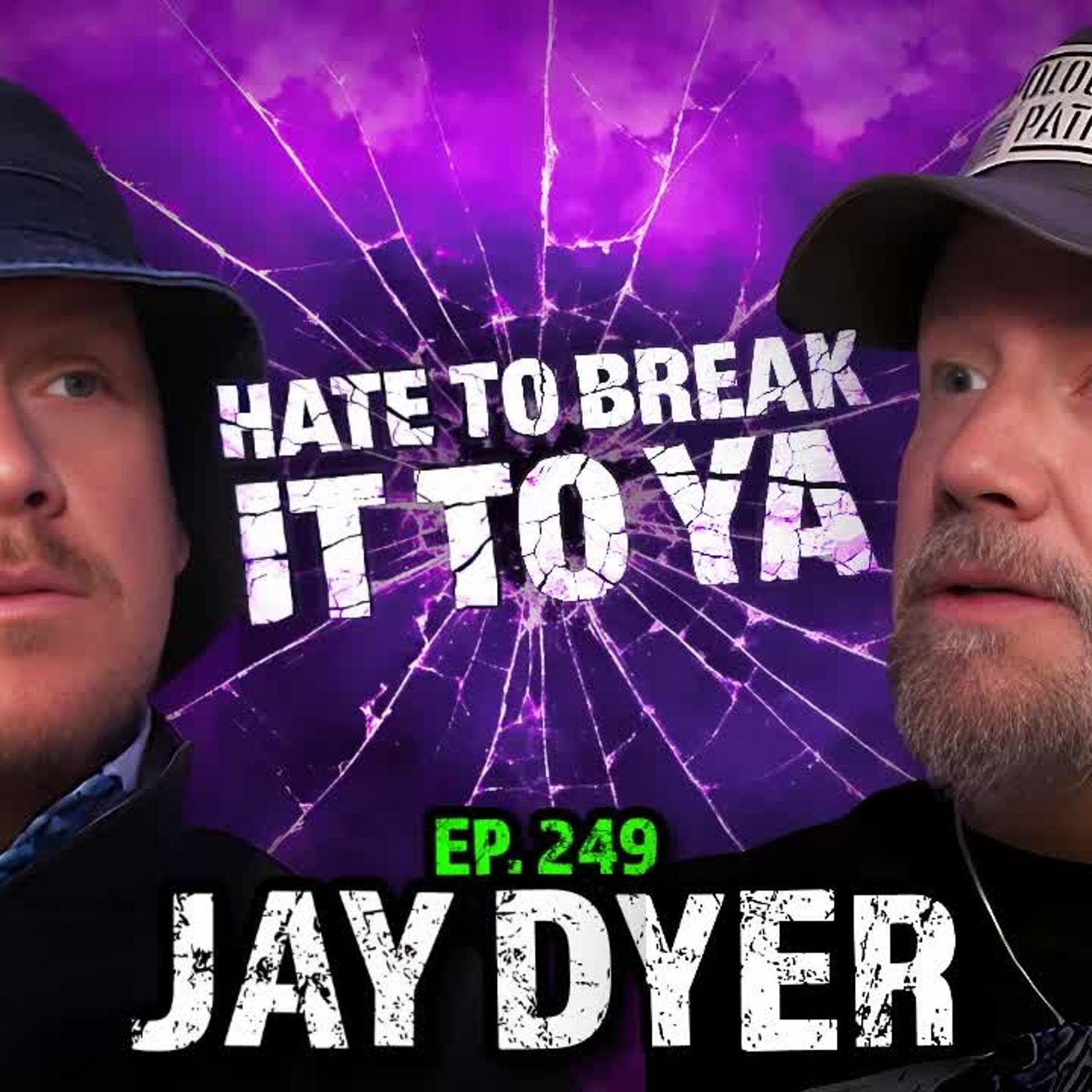
Jay'sAnalysis
Jay Dyer on The Files, Media Overload & Why Big Stories Disappear |with Jamie Kennedy
01:45:59
Jamie is Here https://www.youtube.com/@jamiekennedycomedy Send Superchats at any time here: https://streamlabs.com/jaydyer/tip Join this channel to get access to perks: https://www.youtube.com/channel/UCnt7Iy8GlmdPwy_Tzyx93bA/join Order New Book...
Loading summary
Transcript991 lines
- [00:00]
A
Tax season has arrived and doing taxes without the right help can feel overwhelming. Intuit TurboTax is here now to guide you through it with confidence. Match with a TurboTax full service expert who handles everything for you from start to finish. Your dedicated expert checks every single deduction and credit to help you get the best possible outcome so you can feel confident you're getting every dollar you deserve. And the best part? You'll see real time updates on your expert's progress right on your phone while you live your life. Plus, you get unlimited expert help at no extra cost, even on nights and weekends during tax season. Visit turbotax.com only available with TurboTax full service experts. Real time updates only on iOS mobile app. Tyler Redick here from 2311 Racing. Game night's fun until someone spends five minutes lining up one shot. Chalk. Breathe. Rechock. Still aiming. While they figure it out, I fire up Chumba Casino. I can spin anywhere, anytime. And there's always a new social casino game every week. Spin spins happen way faster than that shot. Play now@chumbacasino.com let's Chumbo. Sponsored by Chumba Casino. No purchase necessary. VGW Group voidware prohibited by law 21+, terms and conditions apply. Ladies and gentlemen, boys and girls, it's Jamie Kennedy here. You're looking at my new studio in my new crib in Hollywood, California. Jamie Kennedy, hate to break it to you, my first guest, my cherry breaker, Jay Dizzle.
- [01:38]
B
What's up, dude?
- [01:39]
A
Jay Dyer.
- [01:40]
B
Why?
- [01:40]
A
For Jay, first of all, you're dressed
- [01:41]
B
like an elderly be Rad.
- [01:45]
A
Yeah, you are.
- [01:46]
B
I've got my elderly reading glasses, so
- [01:49]
A
you know your wife is from the ie, I think.
- [01:53]
B
Inland Empire.
- [01:54]
A
Yeah.
- [01:54]
B
Yes.
- [01:55]
A
So you're dressed like a B. Rad from the ie.
- [01:57]
B
Yeah, maybe.
- [01:59]
A
Jay, you've been. He's doing a cross country tour.
- [02:02]
B
Yeah, yeah, yeah.
- [02:03]
A
Of a billion pods. How's my studio?
- [02:07]
B
Compare the best. You know what everybody else does, they. They rent them out at like Walmart and business centers. It looks like. Looks like garbage.
- [02:15]
A
Invest in yourself because this was a sitting area and I'm like, I really don't have any friends.
- [02:22]
B
The colors.
- [02:23]
A
It's hot as though. But I don't care. I'll sweat. And you're wearing it. You're crazy. It's for anyone to know. It's super hot. Can't figure out the air condition.
- [02:31]
B
The Arab dudes wear clothing in the desert. So I thought I'd try it out.
- [02:36]
A
I got you.
- [02:37]
B
Yeah.
- [02:39]
A
So, Jay, wow, this is great. I'm just taking this all in for everybody. Look at this. This is so good, dude.
- [02:47]
B
We could do it in underwear, too. Nobody's done an underwear podcast.
- [02:53]
A
I don't know.
- [02:53]
B
Cool down.
- [02:54]
A
No, I think I'm good right now, but thank you. Listen, dude, I'm taking this all in. I could have had you at night. This could be in, like, a night pod. So it's like, oh, yeah, it's too hot during the day. That's how you get people over here at night.
- [03:10]
B
What is the Lure them in the dummy head.
- [03:13]
A
Oh, but he was on Jimmy King Experiment. He was a puppet. Yes. And the puppet was hitting on women. But I was. And I kept saying, stop down.
- [03:22]
B
He's like, gotcha.
- [03:24]
A
Look at her melons. But I was like, stop it. So it was. He was doing it. Look at these nice chairs. Oh, God, everything's so good. This is all I want to do, bro. I just want to do my own thing from my own place, and I just want to make content. That's it. I want to stream. I want a pod. I want to have opinions.
- [03:46]
B
Could you imagine explaining to people in the 90s what it's like now? What? The way that media works, like, trying to explain that. Oh, you. You have a studio in your house and you talk at the computer, and there's Internet money, and it's like, people blow their minds. It would be no way to understand it.
- [04:03]
A
Dude, how I was thinking about that. You're so right. Because I would go on, I bought a House in 1998. I would go on auditions, and then I started getting some fame. So they weren't so much auditions, but meetings. And right after Scream 2, and then I would go on my meeting, and then I would wait, and then they would say, okay, you got the job. And so I would wait for, like, two weeks for it to start. So I'd go to the gym, and then I'd go to sushi that night with, like, some actress. And that's it. Like, I had just gotten my computer. There was no social media, and Amazon was just starting. But, like, it took forever to load it. So think about that. We would audition and we'd wait. I wait, call, and if I wasn't there, I'd check my voicemail. Like, you know what I mean? I couldn't even. I didn't even have a cell phone yet.
- [05:09]
B
Does it blow your mind how different
- [05:10]
A
it is now to then, well, saying what you're saying? Because here's what's. Here's what was great about it. I bought my House. And I got a big TV that was like my two treats. Right. And I got a video game. Whatever. The console is gamecast. And so I would play video games all night. Played Tomb Raider. I love that game.
- [05:33]
B
I know. I do, too. It's classic.
- [05:35]
A
And so I play it all night. And Nick Swartzen used to come over and we play, and I'd sleep, and then I would wait for the. Like, for my next audition. I go to the gym, and I had all this energy, but, like, I was trying to make stuff happen, but we didn't have the outlet now. But I could go out on dates. I could go to events. I. It'd be like, oh, you have Maxim party event or the premiere of goldeneye or whatever. I remember, like, I went to the premiere of the Bond movie. That was, like, a thing to do. Or, oh, there was a restaurant opening, or there was a team. There was a Motorola event, and you would go to that, and you go to an after party, and that was it. Like, you weren't. Now I'm so busy. The problem is doing this stuff is amazing, but everything. Everything is bifurcated. So you're getting a little piece, and you just have to get the bigger piece. And now all your time is being used. Dude, it's wild thinking about it, like you just said. But it's like, it's all your time, like, at all. I would go in, and that's why I was talking about last night. Like, I got the YouTube plaque, and I unveiled it last night. And I've done a lot of things in my career, but to get that plaque is so meaningful because it's like, from an idea to that. To real people liking. I didn't have to go to an executive and pitch it and then go to the VP of production and then hopefully get a pilot presentation and then a pilot. Like, TV is 95% failure. Brad Gray, God rest his soul, the. One of the founders of this tv, this business, really one of the rocks. He died. He said that TV is 95% failure. He said that to my face, and he was right. And so, like, now the good news is we can do it.
- [07:43]
B
Exactly.
- [07:44]
A
But the bad news is everybody thinks they're special.
- [07:46]
B
Exactly.
- [07:47]
A
There's a lot of not. Not a lot of you guys are special.
- [07:49]
B
It's a glut in the market.
- [07:51]
A
Yeah. And they're gonna go. But it's like, no. Like, I'll still audition against people, like, to prove it. Like, I'm not. Listen, it doesn't matter. I just don't like the disrespect of the new generation because they get attention thinking that that's a talent, but it is a talent for attention.
- [08:08]
B
Well, it's that exactly. But it doesn't mean that you can sustain the audience either and keep them engaged. A lot of people that popped off like Hawk Tua. There's nothing else there, though.
- [08:19]
A
That's not a real thing. That's a plant.
- [08:22]
B
I agree, but I'm saying it wasn't.
- [08:24]
A
I mean, she's a nice lady, I'm sure, don't be mad, but she wasn't
- [08:27]
B
able to sustain the podcast after, you know, the rug pulls and all.
- [08:31]
A
She probably didn't want to. No, she didn't care about it, maybe.
- [08:36]
B
Well, everybody gets a taste of fame. Wants to keep being famous, though.
- [08:40]
A
Yes. Yeah. But it's a totally different thing. But I love it and I think we all have to do our own thing from now on. Like traditional media. No, like you're, you're, you're done. And I'm not going to tell the pod. You'll see them. But you doing a run of pods on your way out here and you stopped at very big pods along the way in the country, and it's just a different model. Like I was telling you, you would go to New York and you would do Howard Stern in the morning and then you would do a good, you know, something New York and Wendy Williams in the afternoon and you do Fallon at night. And that was it. There was no other press to do because you couldn't get it. There wasn't. There was.
- [09:21]
B
You do like three in a day.
- [09:22]
A
Yeah. You would do all the morning radio.
- [09:25]
B
Oh, nice.
- [09:26]
A
Then you would do newspaper in the early mid morning. Then you would do TV in the afternoon.
- [09:33]
B
Now you go to people's houses.
- [09:34]
A
Yeah.
- [09:35]
B
And you go to their home studio.
- [09:36]
A
Yeah.
- [09:37]
B
To their bathroom.
- [09:38]
A
Yeah.
- [09:39]
B
At their house. Right next to their bedroom and their dildos and all that. And then you're doing in the studio.
- [09:44]
A
Why the dildo? Why'd you bring that up?
- [09:46]
B
I'm just saying when you go to people's houses and it's like you see all of their. Not.
- [09:50]
A
Yes.
- [09:50]
B
Not here. But I'm saying people have their home studios now. It's just, it's wild because I wasn't in the era of the 90s media, so I don't know what you went through, but it's, it's like.
- [10:01]
A
Yeah.
- [10:02]
B
So you go in the morning and you're doing this guy's podcast at his house. Then you drive over here to this other guy's house to do his podcast. It's just crazy. It's weird. But I like it better. I like it.
- [10:11]
A
I like it because it's our thing and we can do it. It's way more work.
- [10:16]
B
Yes.
- [10:17]
A
Really annoying.
- [10:18]
B
All day for me.
- [10:19]
A
Yeah. So it's like I want to get to the place where I can hire people to do everything. I don't want to even care about social media, but it is. We are our own entities.
- [10:28]
B
We just now started paying people to do clips and. And hiring people to edit and clip.
- [10:33]
A
So that's very important. Yeah, Yeah, I got to that. I got good clip people.
- [10:37]
B
Good. Yeah. That's key. But, yeah, so we did Alex and we did. We did an interview with stuff on Molyneux, and then we did Harrison Smith, and then we did Hodge Twin.
- [10:48]
A
Yeah. Hard Twins.
- [10:50]
B
You know the Hard Twins?
- [10:51]
A
Yeah, I know. Yeah, I know who they are.
- [10:54]
B
Yeah. And it's funny because I start. I always start podcasts. Except for you. Although I did this the first time. But I start the podcast talking like them, and it trips them out.
- [11:02]
A
Really.
- [11:03]
B
I'm the hardest twins. They're like, how do you do that? How are you doing? And then. Yeah, I'm gonna do Jesse Lee Peterson.
- [11:10]
A
Yeah.
- [11:11]
B
Who got onto you?
- [11:12]
A
I did it.
- [11:14]
B
Why don't you make your own laughing club? Why don't you make your own laughing club?
- [11:17]
A
Who's that? Is that Jesse?
- [11:18]
B
That's what he said to you, remember?
- [11:20]
A
What did he say?
- [11:20]
B
You said, I want to do comedy, and I don't like getting censored. He said, why don't you close your own laughing club?
- [11:26]
A
Laughing club. Jesse's where the bathroom at.
- [11:32]
B
Exactly. I was dying laughing at that podcast.
- [11:39]
A
He's the best, so.
- [11:40]
B
Well, we gotta go do him. I'm gonna do another whatever podcast debate with another feminist. We're gonna do another Crowder. We did cr Few months ago. We're gonna do that again with Gerald Tripoli, Dr. Drew. It's. It's a whole retinue of pods.
- [11:56]
A
Okay. So, yeah. That's amazing. All the best.
- [12:00]
B
By the way, I write comedy now. I don't know if you know that.
- [12:02]
A
What?
- [12:03]
B
I mimic you.
- [12:05]
A
You write. You write commie.
- [12:06]
B
Yeah.
- [12:08]
A
Where?
- [12:08]
B
For Sam Hyde.
- [12:10]
A
Oh, you writing for Sam? One year. Does he know that? Does he want you to tell people that you're doing that?
- [12:15]
B
Absolutely. I brag about it everywhere.
- [12:17]
A
You're writing for him?
- [12:18]
B
The Sam Hyde Show? Yeah, we did one whole.
- [12:20]
A
Stand up.
- [12:21]
B
No, the Sam Height Show. He does a whole show.
- [12:24]
C
Oh, yeah.
- [12:25]
B
Like Full production show.
- [12:27]
A
Congratulations.
- [12:28]
B
And it's been a blast. Yeah, we have.
- [12:30]
A
I. I told people that, like, he's one of the people that kind of inspired me because his whole house is wired.
- [12:35]
B
Yeah.
- [12:36]
A
And it's like monetized. And I think that's brilliant.
- [12:38]
B
He did it.
- [12:39]
A
So I think that's Fish Tank.
- [12:41]
B
Yeah. That was a wild idea. That was. That's its own thing.
- [12:44]
A
Yeah.
- [12:45]
B
And then he did mde. And then they paid to do the. The second season on their own. Like you're saying, create your own media when they got canceled. But then separate. This last year we've done a whole season of the Sam Hyde Show. First episode, Super Viral. 25 million views where he did Dear Elon. Calling out Elon. That was a fun one to write.
- [13:04]
A
Wow. Okay, I'm gonna have to check this out, but let's go talk about what's happening in the world right now.
- [13:10]
B
Let's do it.
- [13:11]
A
Tyler redick here from 2311 Racing. Another checkered flag for the books. Time to celebrate with Chumba. Jump in@chumbacasino.com. let's Chumba. No purchase necessary VTW Group void where prohibited by law. CTNC21+ sponsored by Chumba Casino.
- [13:28]
D
I've got Dan Morgan here on the pod. So say hi, Dan.
- [13:31]
C
Hey. How's it going today?
- [13:32]
D
It's going good, man. Tell us who you are and what you do.
- [13:35]
C
I'm Dan Morgan. I'm an attorney and a managing partner at Morgan and Morgan, which is America's largest injury law firm.
- [13:42]
D
That's pretty awesome. I think I saw a billboard of yours recently that said 20 billion won. 20 billion is an insane number.
- [13:50]
C
Yeah, 20 billion recovered. It's actually, I think somewhere north. Probably closer to 22, 23 after this year. And each year we get bigger and badder and our army grows. So the number will hopefully keep getting bigger and bigger as time goes on.
- [14:03]
D
Awesome. So how does someone get in contact with Morgan and Morgan?
- [14:06]
A
What.
- [14:06]
D
What would I do if I got into an accident?
- [14:08]
C
Probably the easiest way is dialing pound law. That's £529 from your cell phone.
- [14:13]
B
We are always open.
- [14:14]
C
Our call center is always waiting to take your call. 24. 7. 365.
- [14:18]
A
Wow.
- [14:18]
D
Dan Morgan from Morgan and Morgan, America's large injury law firm. Thanks for coming by the show.
- [14:23]
C
Thanks for having me. Visit forthepeople.com for an office near you.
- [14:27]
A
So the Epstein list comes out. I remember Alex saying, like, oh, well, we've seen all this. We've seen all this. And then I Felt like obviously the last drop was like, new for everybody.
- [14:47]
B
It was.
- [14:48]
A
So were you aware that that drop was going to be like that?
- [14:52]
B
No, dude, I was live streaming when it started, okay? Doing a podcast, doing a live stream. And I'm like, as I'm refreshing Twitter minute by minute, it's like the craziest stuff is dropping every minute, which would have been like a two, three week news cycle story like 10 years ago. And it's like minute by minute, every drop that's coming up under Mario Nefall and all the people on Twitter, I'm like, dude, this is insane.
- [15:14]
A
How is it, how. Why was it dropped like that and how is it being dropped?
- [15:18]
B
Because as soon as it went live, people just immediately started digging through it and all the biggest Twitter profiles just went crazy with it.
- [15:24]
A
So pe. It. It was. People were watching it and did they know it was going to drop?
- [15:29]
B
Well, people didn't believe it would because they've been saying forever, remember? And they gave those like fake ass binders that were. That they gave out that were fake binders like a year ago. So people didn't think they really would release this stuff. And a lot of it's obviously still redacted, but you can dig through and figure out, like, even though it's redacted, what's going on, at least I would say 60, 70% of it, you can figure it out. You know what I mean? So, bro, I, I live stream the whole week. Like I did 30 hours of live streams of this was getting like, I did a six hour podcast and I got 70, 000 views covering non stop.
- [16:03]
A
You were surprised they dropped it?
- [16:05]
B
Yeah.
- [16:05]
A
So why did they drop it?
- [16:07]
B
There was so much pressure from Massey and others to drop it. And because Trump was so adamant in the campaign that he was going to
- [16:16]
A
run release the Epstein files, it's time to have them released. We probably need to have them released.
- [16:21]
B
And then they did it.
- [16:22]
A
It's a pretty good. That's. Thank you.
- [16:23]
B
I've been working on it.
- [16:24]
A
Hold on, you're throwing me off. You're doing jokes. This is what you did last time. It's like, we're gonna talk.
- [16:28]
B
I. I like to be. I'm trying to be you, dog.
- [16:31]
C
I'm.
- [16:31]
A
You're me.
- [16:32]
D
You're you.
- [16:32]
A
You're you. Listen, people on the Internet think we're
- [16:34]
B
related too, by the way. They're like, are you guys related? Is that your cousin or brother?
- [16:38]
A
Isn't that wild? And your wife's name is Jamie. Isn't that crazy? So wait let's go back.
- [16:45]
B
Yeah. So it's dropping.
- [16:46]
A
So they release it.
- [16:47]
B
Yeah.
- [16:49]
A
And they redact so much, which just shows you how dirty and guilty they are.
- [16:54]
B
Redact the billionaires.
- [16:56]
A
Yes. So it's. It's evil, it's horrific. It's.
- [17:02]
B
This is the greatest vindication of everything. That conspiracy.
- [17:07]
A
Yeah. I know.
- [17:07]
B
Have been saying.
- [17:08]
A
I know.
- [17:08]
B
Forever.
- [17:09]
A
Pizza gates. Real and 100 and beyond.
- [17:13]
B
Oh, yeah. Bath Pizza gate and beyond.
- [17:14]
A
Yeah, it's beyond. Oh, bro, you're right. Bad. You're so right, bro. No one's doing anything. I know. This is what's sick.
- [17:26]
B
Which also confirms the conspiracy theorist perspective that the cabal run stuff.
- [17:30]
A
Yes.
- [17:30]
B
And it comes out and nothing happens,
- [17:32]
A
and people are just coming. Exactly. On their phone. Oh, March Madness. Oh, look, White Claw. And it's like.
- [17:41]
B
You're scrolling and it's like, oh, yeah.
- [17:43]
A
Well, I couldn't watch the OSC at all. Like, I didn't care, but I was like, people are just going about their day. So where are we at? What are we gonna do?
- [17:55]
B
I think the Internet desensitized a lot of people to this stuff. And then they see stuff like you're saying, and they just. It's just another thing on the scroll. It's like, oh, yeah, cool. We're ruled by elite pedophiles. Oh, yeah. You know what I mean? This doesn't register.
- [18:10]
A
People are just, like, zonked because I saw a great quote about it. A woman said, it's. It's gonna either make you. Your brain reacts with two ways where you're so crazy and you're like, yeah, yeah, yeah, and no, or you get to a place where you can't deal with it and you completely zonk.
- [18:31]
B
Exactly. Yeah. Yeah. But.
- [18:33]
A
And the. The trick is defining the ground where you take action against it, but also keep living your life, but you can't. But. So it's like. But like, we're. You know, the great term is we're not angry enough.
- [18:48]
B
Yeah. The finding that, like, balance between all this really dark stuff and processing it and handling it the right way, that's. That's a huge challenge. That takes a lot of time.
- [18:58]
A
So. But where are we at? Like, what. What? What. Who. Who. What are we doing? So, like, everyone. Like, it's. It's both. It's. Everyone's involved.
- [19:07]
B
So if you go back to, like, the 1800s, you had these elite banking families that would write about how they got advanced intelligence and then they could buy up the market, the London stock market, on advanced intelligence. Fast forward 200 years later, and your boy, Jeff Stein McEffrey is over there talking to the same types of families and people, and he says, yeah, I've got advanced intelligence and we're going to buy these things up. And when there's a crisis in this region, it's chaos. And we, you know, profit from the. From the chaos and destruction. Literally saying that in the emails. That's crazy. And then he writes to Peter's heal and he says, yes, by the way, Peter, I represent the biggest banking interests in the world. I'm their legate, I'm their attache. And so how about we do this? How about you come to the island? How about you? It's just like everything, even the bailouts, remember the bailouts, they're like, yeah, we're gonna profit from these bailouts. We can buy everything up like a fire sale. So, I mean, is everything down the line that you thought of as just this insane level of conspiracy temple hat stuff that people would call out? It's all in all of these emails, which was just blowing my mind as it was dropping live time in real, you know, while I'm live streaming.
- [20:11]
A
So you're surprised?
- [20:12]
B
Yes.
- [20:13]
A
You are.
- [20:14]
B
Because it was all there. Like, I thought they're gonna release another bunch of something that doesn't show much and it's like millions of files that show everything and there's 3 million more. You know what I mean?
- [20:26]
A
So there's 3 million more.
- [20:28]
B
Isn't that crazy?
- [20:29]
A
And how do we get them?
- [20:33]
B
I. Presumably they will continue to push for it to be released. I don't know. But everyone is. I mean, Trump has been a huge disappointment last six months. I don't know what you think about that, but I feel like he's just kind of like, it was a lot of good stuff happening and then it's kind of veered off course. I don't want to get too political. I don't know. But what.
- [20:52]
A
What else? I haven't really followed everything. I don't know, you know, like, I know the Iran war well.
- [20:58]
B
But then he also just said, like, I don't want these released.
- [21:00]
A
But then the whole. With the Epstein. Yeah, that was a huge disappointment. Like, dude, release him. This is what you. You should release.
- [21:07]
B
Campaigned on this.
- [21:08]
A
Even if you didn't campaign on it, you should just release it.
- [21:11]
B
It just really shows that the world is basically run by Bond villains. Like, we in the conspiracy world have said it's in the Bond movies. Like, that's why I wrote the first 80 pages of my first book on how the Bond movies show us like what's really going on in the world. This is literally showing that what we've been saying for so long. I know you've been a long time dabbler in the conspiracy arts yourself, so you know of these things. Well, like, and here you. Here we are.
- [21:37]
A
You know, you educated me so much, you and your wife. And then, you know, one of the things I learned is I. I underestimated my audience and I owe them an apology because I would say, well, just go slower with it. But people were like, shut up, Jamie. Like, we get it, but. But sometimes you go down this twisted rabbit hole. Not just the simplest things, but. But people really get it. But here's my take on everything. I think Sam Tripoli, he's got the greatest, simplest thing about it. Here's where it is. Everything like he says, this is Sam Tripoli 100%. This is. Everything is sorcery. And that everything is to appease this gods. There's. This is just real. I know people. I'm going to try to make it so it doesn't sound crazy that there really is these entities in other realms and these super like NASA. That's all true. And how that was started and it was partially started. Tell me how I'm wrong with literally sorcery.
- [22:48]
B
Jack parsons. Yeah, yeah.
- [22:49]
A
100 sorcery.
- [22:51]
B
Pasadena, dude.
- [22:52]
A
Pasadena. Okay. And then if you look at, you get power by doing this. You educated me on the movie with Fritz Lang, which was called Metropolis. Metropolis. And it was a child eating rapid robot. And now there's all this stuff since the Oscars of how that robot morphed into Oscar, which became Oscar. Oscar was like another version or Khazar. There's a. There's a connection to another like deity or someone that they believe is powerful and that that statue represents that. But what I'm saying is. So my whole thing is everything is run by satanistic principles. You tell me when I'm wrong. The world is run by satanic principles. And people are like. What that means is I try to break it down so people are simply understanding it. It's like if the world were run by Buddhist principles, there would be more bowls of fruit and different things as offerings. Because that's one of the tenements of Buddhism. If it was run totally by Cathol, which it is a lot of Catholicism, you would see more crosses and confessionals everywhere. But you see that stuff. Satanism is this, you know, dark thing that think people don't even think exists, which then goes back to the thing the greatest trick he ever pulled was making you think he doesn't exist. Well, in my belief more than ever, it 100% exists. It's no boogeyman. Hello, it is Ryan. And I was on a flight the other day playing one of my favorite social spin slot games on jumbaccasino.com I looked over the person sitting next to me and you know what they were doing? They were also playing Chumba Casino. Everybody's loving having fun with it. Chumba Casino's home to hundreds of casino style games that you can play for free anytime, anywhere. So sign up now@chumbacasino.com to claim your free welcome bonus. That's chumbacasino.com and live the Chumba life. Sponsored by Chumba Casino. No purchase necessary VGW Group void where prohibited by law 21/ terms and conditions apply.
- [25:03]
D
I've got Dan Morgan here on the pod. Say hi Dan.
- [25:06]
C
Hey. How's it going today?
- [25:07]
D
It's going good, man. Tell us who you are and what you do.
- [25:10]
C
I'm Dan Morgan. I'm an attorney and a managing partner at Morgan and Morgan which is America's largest injury law firm.
- [25:16]
D
That's pretty awesome. I think I saw a billboard of yours recently that said 20 billion one. 20 billion is an insane number.
- [25:25]
C
Yeah, 20 billion recovered. It's actually I think somewhere north. Probably closer to 22, 23 after this year. And each year we get bigger and badder and our army grows. So the number will hopefully keep getting bigger and bigger as time goes on.
- [25:37]
D
Awesome. So how does someone get in contact with Morgan and Morgan? What would I do if I got into an accident?
- [25:43]
C
Probably the easiest way is dialing pound law. That's £529 from your cell phone.
- [25:47]
B
We are always open.
- [25:48]
C
Our call center is always waiting to take your call. 247 365.
- [25:53]
A
Wow.
- [25:53]
D
Dan Morgan from Morgan and Morgan, America's large injury law firm. Thanks for coming by the show.
- [25:57]
C
Thanks for having me. Visit forthepeople.com for an office near you
- [26:01]
A
is a belief system that literally is no different than Catholicism or Buddhism. And there's. There's laws and commandments for it. And one of them is you have to show your hand. Revelation of the Method. And now everything starts there. So the movies. There's just too many movies that are predicting what happened. That's all. Revelation of the Method. And then there's the things that were. That are being revealed in the Epstein files are all part of that stuff.
- [26:33]
B
Yes.
- [26:33]
A
Of just like this is how you get power and Then you, you know, like I said, like in the Old Testament or whatever.
- [26:39]
B
Yeah.
- [26:40]
A
And Jacob sacrificed his only son. And I'm sitting there and I'm like, didn't think anything of it, but like, there's a lot of dead sacrifice kid talk when you're in first grade in Catholic school. And I'm like, what is that now? I never looked at it.
- [26:54]
B
It's all throughout the Old Testament, 100%.
- [26:56]
A
So I'm like, what? So basically you have all this stuff. The world's waking up. I don't know why they made the Internet, because now we're all talking, which is maybe I can't believe they made a mistake. And so right now, I think there's two types of. You know, there's more than two types, but there's people like you and me. And then there's people. There's three types. And then there's people that aren't aware at all, which is crazy. And then there's people that are aware that, but just choose not to get involved.
- [27:28]
B
Yeah.
- [27:28]
A
And they're the worst.
- [27:29]
B
Did you see.
- [27:30]
A
You're terrible.
- [27:31]
B
So you know Roger Avery that wrote Pulp Fiction?
- [27:34]
A
Incredible. Did you see him on Roger is Going off.
- [27:37]
B
Did you see him on Joe Rogan?
- [27:38]
A
Of course.
- [27:38]
B
I said that was insane.
- [27:40]
A
But I would say, no offense, but I was saying stuff that week before my pod. Certain. But he said so much of the great. He said all this.
- [27:46]
B
I just. I mean, I didn't expect him to say all that. Like on Rogan. That was pretty crazy. But. But all of what you just said, he's basically was saying that.
- [27:54]
A
Yeah.
- [27:54]
B
Which is like massive audience. So, yeah, that's what the. You know, the first book that I wrote was about that. You know, 2016 was when it came out. I gave it to Allison Weber. She gave that to you back in the day through Tripoli. So shout out to Sam Tripley. For sure. But yeah, we live in a world where, like you said, there's spiritual realities. People tap into those through various means, and some of those entities are nefarious. And I think that, yeah, you can in a way, gain certain powers by doing these heinous inverted actions. And I think when you talk to Jamie, the other Jamie, when you get into those dimensions in those realms, like, the whole idea there is that you're going to tap into and get this power, but really it's a delusion because you're just hurting and helping hurting yourself. You're preying on yourself and others. That's the tenet of Satanism is basically you're your own God and then you end up preying, being a predator on other people, energy, vampire, all that kind of stuff. And it ends up destroying you. So it's not actually freedom, it's actually slavery.
- [28:56]
A
The files are so insane.
- [29:00]
B
A lot of it, if even not even like the really sensational stuff, which seems to be accurate, like even the other stuff is pretty interesting because Epstein seems to be basically a high level Blofeld style crime consultant. He's not the top of the pyramid, but he's like recruited into by David Rockefeller to be the head of the Trilateral Commission when he was 30 in the 90s. Right. So he's put in a very high position early on, he tells Bannon, because he's able to explain fractional reserve banking to the elites, which is weird because I would have thought to be elite, you would understand that. But apparently he's a really good consultant in crimes, like a PhD in crime. So yeah, I think he's a crime consultant con man sued who was very skilled at networking and bringing people together and telling them what the elite wanted as that sort of attache type of level. Did you see he was even in the Bannon interview. He's like, yeah, I was in supermax and I was in my orange jumpsuit and I would go to get do my daily phone call and I would call up like the head of JP Morgan Chase and tell him like what to do. So he's like, remember Paulie in the Goodfellas? He's like over there cooking the meatballs and he's like running the family from the jail. So it's like Epstein was doing that.
- [30:11]
A
Are you kidding me? No.
- [30:13]
B
He says that in the interview.
- [30:13]
A
The head of J.P. morgan?
- [30:15]
B
Yeah.
- [30:15]
A
Why would he tell him?
- [30:17]
B
Because he was, he said he was giving him consultation advice during the bailout, the housing crisis and the bailouts.
- [30:22]
A
Telling him why would he know more than the head of JP Morgan?
- [30:25]
B
Because he was a crime consultant to the global elite. In fact, the second day, one of the emails that came out was his itinerary before he got arrested of where he was going and who he's going to meet with. Dude, it was like 15 heads of state, prime ministers all throughout the world.
- [30:43]
A
But I'm confused. So he's a crime consultant. So they are listening to his advice on what?
- [30:49]
B
Everything, particularly networking and well, black market criminal stuff. So making money, for example, he has to explain to Ehud Barak what Peter Thiel's company is and how to go from government service to private contracting and consulting. So it's almost like he's a high level PhD administrator of criminal operations. That exactly exists, but that it's a real thing. There's people who have. I don't mean going to university.
- [31:23]
A
Well, he's not a criminal, but. But Peter Thiel's company is not a criminal.
- [31:27]
B
No, I'm saying that he was explaining to the, the President of Israel, Ehud Barack. What Peter kills Till's company does. And then he says, for example, you as president, when you leave government service, you go to be a consultant. Does that make sense? So you're just explaining to him people. He's like telling people coming up in the ranks and who are heads of state, this is how you go to the next level. Does that make sense? So it's. He's Blofeld dude, he's a crime consultant.
- [31:58]
A
Is he the guy that lives in like the island? Yeah. Okay, I know you're talking with the,
- [32:02]
B
with the white cat and he's like a criminal mastermind, right?
- [32:07]
A
Yes.
- [32:08]
B
So we went to dinner with this dude who was a government prosecuting attorney in Brazil a long time ago when they had what's called the Brazil car wash scandal. Right. This was a huge nationwide corruption scheme that our government was involved in. Legal stuff there, Right. And this guy was tasked with studying how Brazil was co opted and compromised throughout the entire government structure. Right. And we went to eat with this guy, we were talking and he said, if you've ever read about Operation Gladio. And I'm like, yes. And I told him all about Gladio. He's like, how do you know about Gladio? I said, well, I read a bunch of books on it. He's like, it's the same structure. And he said they have a dude who's like a PhD in prime, not at the university, but like at on the street level. Dylan University.
- [32:57]
A
Villain University.
- [32:58]
B
Yes. Who organizes these things? And so Epstein was like one of
- [33:03]
A
those at a high level, 100%. Is he still alive? Tyler Redicure from 2311 Racing. Another checkered flag for the books. Time to celebrate with Chumba. Jump in@chumbacasino.com let's Chompa. No purchase necessary BT void where prohibited by law. CTNC21 sponsored by Chumba Casino.
- [33:24]
D
I've got Dan Morgan here on the pod. Say hi Dan.
- [33:27]
C
Hey, how's it going today?
- [33:28]
D
It's going good, man. Tell us who you are and what you do.
- [33:31]
C
I'm Dan Morgan. I'm an attorney and a managing partner at Morgan and Morgan, which is America's largest Injury law firm.
- [33:37]
D
That's pretty awesome. I think I saw a billboard of yours recently. It said 20 billion wonder. 20 million is an insane number.
- [33:46]
C
Yeah, 20 billion recovered. It's actually I think somewhere north, probably closer to 22, 23 after this year. And each year we get bigger and badder and our army grows. So the number will hopefully keep getting bigger and bigger as time goes on.
- [33:58]
D
Awesome. So how does someone get in contact with Morgan and Morgan, what would I do if I got into an accident?
- [34:04]
C
Probably the easiest way is dialing pound law. That's £529 from your cell phone.
- [34:08]
B
We are always open.
- [34:09]
C
Our call center is always waiting to take your call. 247, 365.
- [34:13]
A
Wow.
- [34:14]
D
Dan Morgan from Morgan and Morgan, America's large injury law firm. Thanks for coming by the show.
- [34:18]
C
Thanks for having me. Visit forthepeople.com for an office near you.
- [34:22]
A
They just saw him and surprised.
- [34:25]
B
If they could exfiltrate Maduro, they could exfiltrate him.
- [34:29]
A
Yes.
- [34:30]
B
I wouldn't be surprised.
- [34:31]
A
We took Maduro. Do you know Cuba right now is completely blacked out and they don't have any oil. That means there's no electricity. So are we going to take over Cuba?
- [34:42]
B
It seems like we're back into empire mode. What do you think? Because like the neocons it was like build an empire.
- [34:50]
A
I think so. But it's like we took out Maduro. Was that right or wrong?
- [34:56]
B
Well, I don't like socialism but like well, we immediately appropriate oil which went to certain.
- [35:04]
A
We stole his oil. Right.
- [35:05]
B
We went to. And it went immediately to certain ally countries. So the oil was a huge resource grab. So.
- [35:14]
A
So we basically just stole his oil.
- [35:15]
B
I don't know if it was actually about social fentanyl boats drifting this.
- [35:19]
A
It was about oil.
- [35:20]
B
Partly, yeah.
- [35:22]
A
What will Cuba be about?
- [35:24]
B
Strategy, Locate a strategic location. Here's another thing to think about. If we had a base in Cuba this whole time, well, why couldn't we? I've always just taken Cuba and they'll say oh well then it would make Russia mad. Ukraine made Russia mad. So like what's the logic behind in other words, I'm saying I think that they let these things be there as excuses for a while until they're neat. Until they need to have a revolution. Revolution.
- [35:55]
A
Why do we go into Iran?
- [35:57]
B
Long story short, I would say it's the repeat of 1953. It's the same strategy of color revolutions and taking out the Shaw. I mean taking out a Moza that put the Shaw in and then he failed. And then they put British intelligence, put the Ayatollah Kashani in, and then they made deals with the Ayatollah Khomeini. So the Ayatollahs are in a way opposed to the west, but they also have back room backdoor deals with the West. So the present day attempt at revolution has to do with, how can I say it? With Greater Middle Eastern project, if you know what I mean.
- [36:38]
A
No,
- [36:40]
B
the expanding of certain countries in the Middle East. Yeah, a long term project. Sort of a Netanyahu project.
- [36:48]
A
Oh, okay.
- [36:51]
B
The BB project. How about that?
- [36:54]
A
So wait, but do we go into Iran to help the people take the oil?
- [37:02]
B
Ultimately it's always been a little thing because when they took out Mozaddaq and put the Shaw in the CIA under Operation Ajax, they were working literally for what would become bp.
- [37:16]
A
Will they use a nuke?
- [37:19]
B
I don't know. What do you think?
- [37:22]
A
Well, I was always told the aliens will not let the nukes happen.
- [37:26]
B
There's a, A, a wild clip from Netanyahu. He says if you want to change, if you would like to change Iran, you should beam Melrose Place in 90210 into Iran. Have you seen that?
- [37:37]
A
It's a good impression.
- [37:38]
B
Thank you. He says cultural revolution through Hollywood would do better than actual revolution. Which is. I thought that was a funny clip.
- [37:46]
A
So. But what about the nuke?
- [37:49]
B
I mean, I would imagine with Samson Ops and all that they would have that as a last, last resort
- [37:58]
A
because they're saying that Israel is getting really hit hard.
- [38:02]
B
Yes. So Iron Dome seems to have not been as iron iron as, as they thought. Yeah. Which is crazy because I've always heard that like Israel had the most premier defense, you know, ever. But then October 7th also seems to have not gone as everyone expected.
- [38:22]
A
So there's so much convalescing now of things and like. Well, the Epstein files are real, right? They're not a distraction. No. Some people say they're a distraction.
- [38:39]
B
Are you kidding? Like the great. That would be the biggest news story of our lifetime next to like JFK assassination or the Big Bro.
- [38:45]
A
It is the biggest story now and no one's talking about it because of how is it not on the war?
- [38:49]
B
So I think that.
- [38:50]
A
Well, how is it. So is the war a distraction?
- [38:53]
B
Even though there's always been wars in the Middle east and opposition between.
- [38:56]
A
Do you think this is partially distraction?
- [38:58]
B
Yes. Partially.
- [38:59]
A
Okay, so why doesn't CNN and FOX talk about Epstein Files every day?
- [39:05]
B
Because those entities are run by and funded by the same institutions and corporations that would be implicated in terms of the elites.
- [39:16]
A
So here's what's crazy, man. This shit's out there, and it's just like people are still just lapping it up with a spoon. They're just gonna go watch March Madness. People don't care.
- [39:32]
B
It's almost like.
- [39:33]
A
It's crazy.
- [39:34]
B
Some people think that perhaps it was released as a demoralizing effect to tell the population, oh, yeah, how about we release it and then you see that nothing happens, and then that's a big middle finger in your face. Some people argue that that's the case.
- [39:50]
A
You think it's a good point.
- [39:51]
B
Demoralizing?
- [39:52]
A
Well, I mean, people. The one way it could be happening is that people could straight up just stop consuming things. That's the only way it can happen. Stop consuming things. Like March. Like, millions of people march. Not cons. Like, not watching cnn.
- [40:14]
B
Yeah, yeah.
- [40:15]
A
Like, and that's. It's crazy. Like, all the distractions. I know. There's so many of it. So it's like. I don't even know. It's like, Satanism has never been more real. Conspiracy theorists have never been more. Right. The proof of a evil cabal running our world has never been more real.
- [40:35]
B
Right.
- [40:36]
A
And yet people are just not understanding here.
- [40:40]
B
It's like, yeah, but did you see the sports whole game?
- [40:43]
A
Yeah. So it's like, what is in. In the environment here? What's gonna happen? Like, is Alex Jones is a. A real person. Correct.
- [40:55]
B
He is real.
- [40:56]
A
Like, he is. He is an actual fighter for truth. Correct. Because there's always people saying he's a controlled op and all that stuff.
- [41:05]
B
Everything that Alex.
- [41:06]
A
He seems very real to me.
- [41:08]
B
Right. I started listening in 2003, and over the years, I would hear him reference this or that book. And I'm a book nerd. So when I would hear him say something, which book? Well, he would say, if you read something like, yeah, John B. Holders, the Eco Science. Unbelievable, folks. Unbelievable. Get Eco Science. Sure enough, it says, I'll hit you
- [41:26]
A
with my Alex later.
- [41:27]
B
It says, we're gonna drug the population in the food and in the water to depopulate. Okay. Wow, that one's right. Then he says, hey, reads the big new Brzezinski's book Between Two Ages. He says, my dad worked for the Pentagon. He told me when I was young to read Brzezinski Technocratic Era. Sure enough, it's there. He says, read hd.
- [41:46]
A
Well, so over two days, he's been right about everything.
- [41:49]
B
Two decades. But I fact Checked him. I snopes him. I went and snopes all of Alex Jones's book claims, and sure enough, after 20 years reading all these books, it's like, damn, he was spot on. So even if he had bad motives, I don't think he does because he's been legit and telling the truth. Even if he got this or that thing wrong, like, he's still sincere. Like, all of this stuff, 90, 95 of what he said is right. He was talking about Epstein. He was talking about EP. Epine 15, 15 years ago.
- [42:15]
A
100%.
- [42:16]
B
So I know you spot on.
- [42:18]
A
So he's our lead truth teller, I think, along with David Ike,
- [42:28]
B
Cheetah Uri. The Chitta Uri.
- [42:30]
A
Yeah. Do you agree with that?
- [42:34]
B
I don't believe Chitta Uris.
- [42:35]
A
You don't believe in David Ike?
- [42:37]
B
Well, I'm saying he. I'm making a joke about his cheetah worries, but he's talking about demons. I mean, in that sense, he's. He's talking about the same kind of entities that you mentioned earlier.
- [42:45]
A
Well, don't you think AI is that partially.
- [42:49]
B
It could be that. Yeah. It could morph into essentially that. Yeah. Without being real, like not being a real demonic thing. It could be mimicking or like demonic activity. Yes.
- [43:00]
A
Yeah. I'm just saying that's like.
- [43:02]
B
I mean, I don't think AI itself is a demon, but it can be coded and programmed to be demonic. Like in terms of being anti. Like Skynet. Right. It could be like an anti human sky.
- [43:14]
A
Well, some people say you're summoning the demon with it.
- [43:16]
B
Well, that's what I'm saying. Like, I don't know about that.
- [43:18]
A
But you don't actually think there's demon in the. In the coding?
- [43:22]
B
I wouldn't think so, but people do say that. But it could be coded to do demonic.
- [43:27]
A
Yeah. 100.
- [43:28]
B
Yeah.
- [43:29]
A
I feel like some days something's really going to pop off, and then other days, people just trudging along.
- [43:35]
B
Yeah. I mean, it was like the Epstein thing was the biggest thing.
- [43:39]
A
And it's kind of like.
- [43:40]
B
And then like once there was Iran in the news.
- [43:44]
A
Yeah.
- [43:44]
B
No one remembers.
- [43:45]
A
And then Iran was like, supposed to be done, and now it's just like, you know, four years later, Ukraine, Jamie.
- [43:52]
B
Two weeks to flatten the Iran.
- [43:54]
A
I know, it's so true, dude. Everything is two weeks.
- [43:58]
B
You don't like any of my jokes. I'm determined. I'm determined to make Jerry Kennedy laugh.
- [44:03]
A
But you are funny, bro. But, like, when I'm. If I want you know what I mean?
- [44:07]
B
Okay, I'm gonna be serious.
- [44:08]
A
No, you don't have to be serious. It's just like there's moments. See, you're an actor, right?
- [44:13]
B
I could be.
- [44:14]
A
But do you know what the number one tenement of acting is?
- [44:17]
B
Read the room.
- [44:19]
A
Yes. So you look at your partner. Acting is not acting. It's what. Reacting. Yes. Two for two. So I like your jokes.
- [44:30]
B
Okay.
- [44:31]
A
Hello, it is Ryan. And we could all use an extra bright spot in our day, couldn't we? Just to make up for things like sitting in traffic, doing the dishes, counting your steps. You know, all the mundane stuff. That is why I'm such a big fan of Chumba Casino. Chumba Casino has all your favorite social casino style games that you can play for free, anytime, anywhere with daily video bonuses. So sign up now@chumbacasino.com. that's chumbacasino.com. no purchase necessary vgw group void where prohibited by law. 21 plus terms and conditions apply.
- [45:03]
D
I've got Dan Morgan here on the pod. Say hi, Dan.
- [45:06]
C
Hey, how's it going today?
- [45:07]
D
It's going good, man. Tell us who you are and what you do.
- [45:10]
C
I'm Dan Morgan. I'm an attorney and a managing partner at Morgan and Morgan, which is America's largest injury law firm.
- [45:17]
D
That's pretty awesome. I think I saw a billboard of yours recently that said 20 billion one. 20 billion is an insane number.
- [45:25]
C
Yeah, 20 billion recovered. It's actually, I think somewhere north. Probably closer to 22, 23 after this year. And each year we get bigger and badder and our army grows. So the number will hopefully keep getting bigger and bigger as time goes on.
- [45:38]
D
Awesome. So how does someone get in contact with Morgan and Morgan? What would I do if I got into an accident?
- [45:43]
C
Probably the easiest way is dialing pound law. That's £529 from your cell phone.
- [45:48]
B
We are always open.
- [45:49]
C
Our call center is always waiting to take your call. 247 365.
- [45:53]
A
Wow.
- [45:53]
D
Dan Morgan from Morgan and Morgan, America's largest injury law firm. Thanks for coming by the show.
- [45:57]
C
Thanks for having me. Visit forthepeople.com for an office near you.
- [46:01]
A
I'm just slowly waking up. I'm trying to get like deep answers because you're smart and then you're going into a David Icke impression.
- [46:11]
B
Every podcast I'm on, I am personally.
- [46:12]
A
But don't you see me not talking about comedy anymore? Comedy doesn't even matter.
- [46:18]
B
You just stand up all the time. What do you mean? It does matter.
- [46:20]
A
It does, but it doesn't. It's not important. As opposed to finding what the truth is, that's the most important thing.
- [46:25]
B
But you guys. You guys, as comedians have been at the forefront of saying and joking about things that change the Overton window of society.
- [46:36]
A
What's the Overton mean?
- [46:38]
B
Like, what you can't and can and can't say, what's not acceptable when comedy. That's why they had to go after comedy, to shut it down through the censorship, because the comedians are the front line of challenging sacred cows that you can't question.
- [46:51]
A
Yes.
- [46:52]
B
So that's why comedy is crucial actually, to controlling free speech and society. Don't you think?
- [46:58]
A
Yes.
- [46:59]
B
Okay. So that's why you guys matter.
- [47:01]
A
It is, but it's like, what Escapism. Comedy.
- [47:06]
B
That's true.
- [47:06]
A
Is good, but when there's so much drama. But it's like, it's not the most important. You can't just be an escapism.
- [47:13]
B
Oh, that's true.
- [47:14]
A
With all the stuff's happening. Absolutely. Like, I think the movie they Live.
- [47:18]
B
Absolutely.
- [47:18]
A
Is a documentary that's in my second book.
- [47:21]
B
Totally agree.
- [47:23]
A
Right?
- [47:23]
B
Yeah. Whole chapter on that. Yeah. Yeah.
- [47:25]
A
And I haven't even seen it yet.
- [47:27]
B
Now you're making jokes.
- [47:28]
A
And I did a movie. No. And I did a movie with Roddy Piper, God rest his soul. And I know. I've never seen it. I've only seen parts of it. And I'm good friends with Keith David.
- [47:39]
B
You're in. You're in movies. You're not a movie buff. Would you say you're a movie buff? No. Okay.
- [47:44]
A
I'm just in them. Okay. I wasn't an acting buff. I wasn't a movie buff. I liked comedy, but I wasn't a comedian buff. And I was never, like, trying to be anything. It was only because I was so people didn't know what to do with me. Either they laughed at me or they thought I was crazy. Then I was like, I got it. I like. Hollywood was kind of like the only thing. Like, I know what people say, they're misfits. But I actually was like, let me explain to you. When people do comedy, when they first start, they invite all their friends and their family and they're like, come watch me do comedy. Okay. When you do comedy, it's because you don't have any friends or support that want you to do it. You're outcast. So real comedian comedy, pain forces you into it. And comedy is the band aid. Okay. So then when George Carlin, which I used to watch when he would go and he had the whole bit about stuff and rat shit. Batshit dirty old twat. 69 assholes tied in a knot. Hooray, lizard shit. Fuck. Remember that bit, do you?
- [49:05]
B
I've heard him. My grandmother's a big fan of him.
- [49:07]
A
Okay. That was still his. I don't know if I'm allowed to comment. That's what he said. Now, see, I didn't even know how much I love Carlin that. I remember that bit. You come on HBO in the summer and you watch it. So I must be some kind of a comedy nerd. Cause I enjoyed that bit, you know that. Yeah, but he would do that and I would laugh. And then when I started getting successful in comedy, my agent, I just went for. Just for laughs. And this was like 97. And he said. And I just saw that the edgiest most greatest comedian working right now is 72 years old or 71. It was George Carlin. So he. Whenever that special came out in 97 or whenever the 1 was, it's a big club and we ain't in it. I think he saw the run of that before it was taped. And he's like the edgiest greatest comedian is like either 68 or 70 something, whatever. I don't know when George died how old he was. So I'll never forget that. So George was naturally funny. Denny was against the system. And then he became like mind blowing. So that's why he is the number one comedian of all time in terms of like piercing the veil. There's no one that can touch him. No way. I will argue with anyone, but Eddie Murphy might be the funniest. I think he's actually the, like, you'll never laugh harder than Eddie Murphy. That's for me. And I think I have a lot of people that agree that like literally his job as a comedian is the. He is literally the funniest person like, and so charming, good looking, can do any character and impression done. And then we're all babies of that, you know, Richard is amazing mix of both. People forget. People sleep on someone who is a. Who is a black version of George Carlin, which is Dick Gregory. Dick Gregory. Give him his flowers. You need. You know about Dick Gregory and you see all the clips of him when he's older. Right. So he's the dude. And then there's Joan Rivers, who is an animal. I love John. So that's what. Whatever made me up. I never wanted to be anything other than just like heard. I only started podcasting to like so people can hear my true voice.
- [51:50]
B
Gotcha.
- [51:51]
A
And try to sell tickets. But comedy somehow became truthful. And there's a lot of people in the comedic community that are. Will just put you in a box.
- [52:08]
B
Mm.
- [52:09]
A
You know, like they'll say oh, podcast pros. Or this or that or another, like middle aged white man in front of a microphone. And it's like that's just not, like, that's not. Why can't I have my opinion people? But like every, if he. Everyone's uninformed. But it's like not, you know, like I'm not just a talker of stuff. I'm like, I'm in it. I try to be entertaining, but I don't try to be if it happens naturally. But I just like to talk to people I like and find out things. So it's all just. Everything's different.
- [52:46]
B
Well, it's fun. I mean, don't you enjoy.
- [52:49]
A
I love doing this a hundred percent. But, but people will try to say that you shouldn't talk because you're not. You don't know enough. But like I've. I don't care what people say. I've learned a lot of stuff through podcast and I've tried it. And is all of it correct? No, but there's a lot more that's correct that they don't give. They don't give. They don't give the credit to.
- [53:12]
B
Dude, I've been able to speak to some of the smartest people out there and people I grew up watching like you. Like this is dream come true. So like.
- [53:19]
A
Yes, but you get facts that I wouldn't normally get.
- [53:22]
B
Yeah, no, I mean, yeah, you get to talk to like you said, like high tier people. And what's better than that?
- [53:29]
A
And educated like you. You, you educate me and you're not known. Just because you're not known doesn't mean you're not educated. Do you know what I'm saying?
- [53:37]
B
We.
- [53:38]
A
Did we talk about sex Spionage?
- [53:41]
B
No, I just told Kyle what I've been studying lately and tell me what that is.
- [53:46]
A
Well, I think I know what it is.
- [53:49]
B
Well, it's weird because I read a bunch of books on this and you know, I read Whitney Webb's book. Same publishers as me.
- [53:55]
A
Is she the most informed person?
- [53:58]
B
Well, she's the most informed on Epstein, but I think there's other areas. I think she and I would have big disagreements, but I think she's more of a left minded person. But she has a lot of information and a really good book. On Epstein. So that's classic. If anybody wants to read that, it's the volume two of one nation or blackmail. But before I read her book, I had read separately several texts on, like, how intelligence agencies and cults trap people with sexual blackmail. And it was just weird because I'd done these lectures last year on my YouTube channel. And then all this Epstein stuff comes out. And then I read Whitney's book right before that came out. And so it was like, all coalescing to be like, this is how the world really runs and people don't even realize it, right? Like, this is insider info in the sense that people don't read history books. They don't read military, you know, warfare type books, but it's part of warfare. For example, there was this Japanese dude named Kenji Doihara 100 years ago, right? When Japan was going to war with China. And he got this idea to set up a whole network of brothels throughout China, sell them opium, even before British opium stuff, right? And get all the hoes, the 300fos to be essentially spies and intelligence operatives. So he pioneered this in the modern era way before Epstein. So this is like.
- [55:23]
A
Let me comment on what he's saying, because what you're saying is so true. And I'm going to give you an example of this. The Cannes Film Festival. This is basic thing. Here's what this whole thing is. Nerd has money. Nerd spent his whole life getting money and being good at something because he's a nerd. Nerd has no social skills. Hollywood has cool, but no money. Cool attracts the women. It's the guy who's the club promoter. No. Money got the chicks. Chicks run the world. Punani runs the world. Everyone wants to be inside punani. Do we agree on this?
- [56:23]
B
That is a huge motivator in the world.
- [56:25]
A
So the guy that has the red carpet velvet rope access in the club is more powerful than nerd with money. She's gonna have sex with this guy, and then he gets her into a world where she can meet other people. Now, she's not gonna have sex with him for any other reason because she just thinks he's a sexy guy. But he has no money. His clout is that velvet rope. So that principle, if you can think of this, goes out through our whole world. You tell me when I'm wrong. The Cannes Film festival is rich. Guys who want to get into Hollywood, who buy their way in, okay? The studios don't like to spend their own money. Some are studio finance projects, but a lot of them are Nerds, and that's a compliment. And they have yachts and then they have the stars here in the projects. They put up the money there and the people put it together, the studios and stuff. But there's one thing that people are forgetting. Unknown girls, beautiful, unknown women. Let's not say girls, because you guys are weird about it. You know, 21 and above are always there and they have, you know, like, who the fuck. Listen, I used to date a woman who traveled in a circle of a lot of beautiful women. And I'm like, why are you going to this festival? She's like, oh, I just like to go, I love her, but it's like she had nothing going on there. There was never. She was never in any of the movies. She. But there was a lot of rich men and end up. This is what happens. So all of that, what you're saying goes across the same thing. I'm not gonna tell you who, but I was with a very high tech person 20 years ago. And the minute we hung out, we were put together by somebody that I was like, I wanted to get involved with this technology. He wanted to get involved with Hollywood. And he's like, yo, where are the girls? Like, where's the party? So I know this whole thing, fame is concierge for your dick. Okay? That's just the truth. And so people are more attracted to that. They love the money. So when you're saying this stuff, this is Hollywood 101. It's everything.
- [58:58]
B
Yeah. I think you would immediately understand and vibe with what I'm saying from what most people.
- [59:04]
A
But it doesn't mean it has to start that. It doesn't mean it's sexploitation. But there are a lot of people that probably are doing nefarious things.
- [59:13]
B
Right. But sexpionage specifically is when powerful entities such as nation state actors or global crime syndicate people figure out people's proclivities to then manipulate them, pushing on that. That weak point. Right. So if a person has a proclivity, you provide that and then you've entrapped them. And so it was just crazy to read all of that and then read Whitney's book and then Epstein stuff comes out and it's like 100 confirmation of all that. Even beyond just nation state actors, we're talking about international crime syndicates doing this stuff. So just part of it. That's a huge piece of the puzzle. That's what I'm trying to say.
- [59:55]
A
Yeah. So let me ask you. So they used to shoot a lot of movies in Prague Well, Prague is an Eastern bloc. That's its own thing. Whatever you want to consider that. But I consider that intense part of the world.
- [60:07]
B
Okay?
- [60:08]
A
Now they said it was cheap. Okay. There's a lot of women in Prague. So if you're doing a movie in Prague, you should probably not hook up. And if you do, you had to make sure it's just a. Now a normal hookup. You working all week on a movie and you meet some beautiful woman and you guys are hanging out. You should probably check all IDs and all this stuff.
- [60:32]
B
Yeah, right.
- [60:32]
A
Because is that an example of what.
- [60:35]
B
Absolutely. Yeah. Like, I mean, people offense Prague, people in high tier positions or even at times consulted by the government or by the FBI. Hey, you might be entrapped if you go to this, so be careful. So this is, this is a very normal thing for that level of stuff. But the only reason I'm saying that is that like the average dudes and chicks out there, they don't know that the world works this way. That that's how the world's really run. And the Epstein stuff showed that it's not just for actors and stuff like that. This is like the top of the world elite.
- [61:11]
A
Tyler redick here from 2311 Racing. The rush of racing. Nothing beats it. But Chumbuk is casino comes close. Chumba's got fast spins, fun games, daily bonuses and all the action you can handle. Now that's a ride. Ready to hit the throttle, get in the driver's seat and head to chumbacasino.com let's Chumba. Sponsored by Chumba Casino. No purchase NECESSARY VGW Group voidware prohibited by law 21 +, terms and conditions apply.
- [61:42]
D
I've got Dan Morgan here on the pod. Say hi, Dan.
- [61:45]
C
Hey, how's it going today?
- [61:46]
D
It's going good, man. Tell us who you are and what you do.
- [61:50]
C
I'm Dan Morgan. I'm an attorney and a managing partner at Morgan and Morgan, which is America's largest injury law firm.
- [61:56]
D
That's pretty awesome. I think I saw a billboard of yours recently that said 20 billion. 120 billion is an insane number.
- [62:05]
C
Yeah, 20 billion recovered. It's actually, I think somewhere north. Probably closer to 22, 23 after this year. And each year we get bigger and badder and our army grows. So the number will hopefully keep getting bigger and bigger as time goes on.
- [62:17]
D
Awesome. So how does someone get in contact with Morgan and Morgan? What would I do if I got into an accident?
- [62:22]
C
Probably the easiest way is dialing pound law. That's £529 from your cell phone.
- [62:27]
B
We are always open.
- [62:28]
C
Our call center is always waiting to take your call. 247 365.
- [62:32]
A
Wow.
- [62:32]
D
Dan Morgan from Morgan and Morgan, America's largest injury law firm. Thanks for coming by the show.
- [62:37]
C
Thanks for having me. Visit forthepeople.com for an office near you
- [62:41]
B
Run the world this way.
- [62:42]
A
So why does Les Wexner give Jeffrey Epstein his whole life again?
- [62:48]
B
It seems like Epstein had a skill set which was very unique to him, which is why he got recruited by David Rockefeller into the Trilateral Commission. Two money manage, which appears to be all kinds of things. Zorro ranch experimentations and transhumanism. Advanced intelligence, which allows you to game the stock market, buy up things ahead of time. That's what he says to Ariana de Rothschild in that email. It's black market stuff that you can't talk about. Probably it's all of those things and probably because black market stuff is quicker, easier and more profitable than on the up and up would be my guess as to why.
- [63:32]
A
So you're telling me a guy that's a multi billionaire with a. It seems like an above board brand. But is, is this is a question. Is that whole thing with the Victoria's Secret model and all that stuff, is that just one big trafficking organization?
- [63:50]
B
Could be. Could be.
- [63:52]
A
This is a question. Are we allowed to ask that question? It look it, it feels like it's dirty.
- [63:58]
B
Definitely. Brunel was using this association with the company and the brand for recruiting. So yes, there's a whole chapter in Whitney's book on that, by the way.
- [64:10]
A
And all the women are models, which they are, they're modeling. But really what the whole brand exists for is to entrap powerful people.
- [64:21]
B
It seems to be multifaceted because these things can be multi. That can be multi purpose. So. Absolutely. And that's not unique to that. There's other instances where we've seen similar, similar types of things where things are cutouts. You mentioned, for example, something's filming in Prague. Beware. Etc. Well, there have actually been entire movies and production companies and operations set up as intelligence fronts. You've seen Argo surely in Affleck?
- [64:51]
A
Argo, yes. Well, dude, I got a question about that. Go ahead.
- [64:54]
B
The movie is about the CIA using a fake movie being made in Iran as a intelligence cover. So I mean there's all types of layers to this.
- [65:06]
A
Remember that dude, you know, Alpha just sold his company conveniently for 600 million.
- [65:16]
B
Whoa.
- [65:18]
A
So my question is, come on man, everyone at the top. Since I'VE talked to you, and I believe this is control. Do you agree with that?
- [65:32]
B
It seems like even if they're not,
- [65:33]
A
you believe there's one star in movies that doesn't have some kind. They're not somewhat controlled. I'm not saying they're compromised.
- [65:39]
B
Well, you don't have to be compromised.
- [65:41]
A
Yes.
- [65:41]
B
To be controlled.
- [65:42]
A
Yeah.
- [65:42]
B
So. But there's, I think, understanding of. To go up. Like, certain things have to be understood.
- [65:48]
A
Like, and I'm in Hollywood more than you. I mean, and I've never seen it, and I think that's why I hit a certain level. And, like, people told me this. It's like they can fill you out and it's like you're not down for something.
- [66:01]
B
If you're not. Yeah. If you're not down for.
- [66:03]
A
But, like, I've never had any official offers, but maybe there's been some sly combos that they. I didn't pick up on. But, I mean, question is. Yeah, like, if you. Look, I'm not going to. I mean, the rocks.
- [66:17]
B
Well, like, in the case of, say, Ben Affleck, I don't think, like, he doesn't have to immediately be involved. Anything nefarious the way that seems to.
- [66:23]
A
No, I don't want to say that word.
- [66:24]
B
No, I know, but like, so what happens is, like, okay, you make these movies with the CIA. The movies.
- [66:31]
A
You're making a movie with the CIA openly.
- [66:33]
B
That's not a conspiracy. It's open.
- [66:35]
A
I know. So that means he was chosen.
- [66:37]
B
So you're essentially functioning kind of like
- [66:41]
A
an arm of the CIA. So it's not fair. But that's not fair. It's just like, here, we're going to use you to make this movie as opposed to, like, hey, here's a great script.
- [66:50]
B
Yeah.
- [66:51]
A
You know what I'm saying? Like, every movie I made, it just was a great script.
- [66:54]
B
Right.
- [66:54]
A
Or a project that I made, or I raised the money, or I got the studio to greet it. I just did that. It was just to entertain and tell the story. It wasn't. Or act. It wasn't like some crazy propaganda. Yeah. Like, you know, not within my eyes. So it's just crazy to me. So it's like, I think music stars, I think sports stars. Right. Am I crazy?
- [67:16]
B
No.
- [67:17]
A
Like, I don't think hockey guys are controlled. I think they're cool. I don't think baseball guys are controlled.
- [67:23]
B
Yeah.
- [67:23]
A
I only think they don't. I don't think they are. I think basketball definitely has some controlled people. Football, for sure.
- [67:31]
B
Yeah, dude.
- [67:31]
A
For sure. Yeah, yeah, like you. I'm not gonna name the name. You can tell who the fuck. He just looks like a fucking bot.
- [67:37]
B
Well, the entire super bowl was like the commercials. It's like all Psyop MK Ultra type stuff every year. Super bowl rituals.
- [67:47]
A
Yes. So in your opinion, was Bad Bunny chosen? Bubba Wallace here from 2311 Racing.
- [67:56]
C
You know what's slower than a pace
- [67:58]
B
car waiting at the car wash?
- [68:01]
C
That's when I fire up Chumba Casino.
- [68:04]
B
It turns those slow minutes into fast fun.
- [68:07]
A
With new games every week, you'll never get bored.
- [68:09]
B
Next time you're stuck in the slow
- [68:11]
C
lane, speed up with Chumba.
- [68:12]
B
Play now@chumbacasino.com let's Chumba.
- [68:15]
A
Sponsored by Chumba Casino. No purchase necessary. VGW Group voidware prohibited by Law21. Terms and conditions apply.
- [68:24]
D
I've got Dan Morgan here on the pod. Say hi, Dan.
- [68:27]
B
Hey.
- [68:28]
C
How's it going today?
- [68:29]
D
It's going good, man. Tell us who you are and what you do.
- [68:32]
C
I'm Dan Morgan. I'm an attorney and a managing partner at Morgan and Morgan, which is America's largest injury law firm.
- [68:38]
D
That's pretty awesome. I think I saw a billboard of yours recently that said 20 billion one. 20 billion is an insane number.
- [68:47]
C
Yeah, 20 billion recovered. It's actually, I think somewhere north. Probably closer to 2223 after this year. And each year we get bigger and badder and our army grows. So the number will hopefully keep getting bigger and bigger as time goes on.
- [68:59]
D
Awesome. So how does someone get in contact with Morgan and Morgan? What would I do if I got into an accident?
- [69:04]
C
Probably the easiest way is dialing pound law. That's £529 from your cell phone.
- [69:09]
B
We are always open.
- [69:10]
C
Our call center is always waiting to take your call. 24 7. 365.
- [69:14]
A
Wow.
- [69:14]
D
Dan Morgan from Morgan and Morgan, America's largest injury law firm. Thanks for coming by the show.
- [69:19]
C
Thanks for having me. Visit forthepeople.com for an office near you
- [69:23]
A
to usher in what I read.
- [69:25]
B
I don't know if this is true, but I read that it was Jay Z that chose Bad Bonnie to perform. Jay Z openly says, I follow Aleister Crowley.
- [69:35]
A
So do people realize that Jay Z's in charge of the super bowl halftime entertainment?
- [69:40]
B
Why did he. Yeah.
- [69:41]
A
And the entertainment. So the Super Bowl. So the NFL is actively, what, in your opinion, trying to.
- [69:49]
B
First and foremost, I think it's just an arm of the deep state propaganda. And that's why they were pushing like military stuff all the way back to like remember Katy Perry was doing like military promo stuff for the super bowl years ago. I mean, and doesn't mean Katy Perry has to understand all the ins and outs of the system. She probably doesn't. They just use these people to promote this overall agenda. Remember there was that amazing clip. I know they covered it. Jesse Waters and I think Gutfeld and others covered it. Maybe where Taylor Swift was chosen. I don't know if they didn't explicitly do this, but NATO had a meeting where they wanted to use Taylor Swift for quote, psyops and propaganda to promote NATO.
- [70:38]
A
Really?
- [70:38]
B
Yes, it was viral. Massive viral like year or two. Remember this was right before. Remember all that Super Bowl. It was two years super bowl drama when it was like a her, her and she was going to fly to the super bowl with her boyfriend and you know what I'm talking about. I don't forget who, who was she dating? Which I don't follow football.
- [70:57]
A
Travis Kelce, that guy. I think that that was organized. Sports are fixed.
- [71:02]
B
It's faking gay.
- [71:04]
A
And all sports are faking gay.
- [71:06]
B
I just love saying fake.
- [71:07]
A
No, but it's. I mean, I think they're fixed.
- [71:10]
B
They are. Because the World series was fixed 100 years ago and it was a huge scandal.
- [71:15]
A
I remember that.
- [71:16]
B
Which one most famously was it? 1919 World Series, I think. Really? They threw it. Yeah, it's a famous, famous case. But I mean people think everybody kind of knows about that case. But then nobody ever thinks about today's sports being thrown or co opted until there was a dude named Brian Tuohy and he was going around on podcasts 10 years ago because he put out a book about this and he was a consultant for the FBI and he would go tell the players, like organized crime is going to approach you and they're going to offer you a lot of money to throw games and also you'll be tempted to bet and throw the game. Right. So I mean they wouldn't consult on this if it wasn't real.
- [71:57]
C
Wow.
- [71:58]
B
Yeah, Ryan too. He look up his whole. He does a whole. He'd been doing this for years. Got multiple books on it. Yeah. So a lot of shit's rigged and fake and good. But also the super bowl pushes in all the halftime shows, like total ritual, satanic ritual stuff for a long time. First one I remember was like. I mean the. Remember when Timberlake was dancing and what's her face nipple titty popped out.
- [72:29]
A
Nipple.
- [72:30]
B
Nipple gate.
- [72:30]
A
Yeah, titty gate. What about it?
- [72:34]
B
Well, that one was odd. I don't know if that was.
- [72:36]
A
Is that a ritual?
- [72:37]
B
I don't know. But I'm saying, like, after that they got crazier. And then we had like. I remember Pink did a whole Masonic ritual. But that might have been the VMAs. I get them all mixed up. But we had Britney Spears doing her snake dance and licking snakes or whatever she did. And we had her making out with Madonna. But I think that was MTV Movie Awards. But then we had Gaga and she did a crazy egg thing. We had Katy Perry riding the beast. The woman rides the beast, which is Krillin stuff. So, I mean, and on and on. There's many, many, many more. But bad bunny baby bad. I always get these funny. Cash me outside. How about that? I get mixed up. That's the baby bad bunny. Was. Isn't he all about T R, A N Z type things? I think you know what I mean.
- [73:30]
A
You can't say train.
- [73:32]
B
I don't know.
- [73:33]
A
I don't know. I don't know.
- [73:36]
B
Well, it's like, yeah, that's. It's associated with that domain, so to speak.
- [73:42]
A
So I did a pod. Because you're just saying all this stuff. Because all of that. You're basically saying these are all rituals. Right? So.
- [73:50]
B
° yeah.
- [73:51]
A
So tell me if this is true. This Christmas there was like seven movies that had snakes in the poster.
- [74:01]
B
You noticed us. I didn't. This is funny.
- [74:04]
A
Do you think that's funny?
- [74:05]
B
No, I'm just. I didn't notice this, but the fly
- [74:07]
A
almost flew in your mouth. I know that was Satan telling you that's. Open your mouth. I'm gonna fly in. In your beliefs. Because you don't want to be on me right now.
- [74:15]
B
No, I'm serious.
- [74:17]
A
How do you not notice Zootopia snake?
- [74:20]
B
I just didn't see every movie post
- [74:22]
A
the bad guys snake. Anaconda snake. You think this is funny? What are you laughing at?
- [74:29]
B
You're making fly jokes because you're open.
- [74:31]
A
You're like. And that fly must flew right in your.
- [74:34]
B
But you're telling me not to laugh.
- [74:35]
A
And you're making flies.
- [74:36]
B
The flies attacking me.
- [74:38]
A
Because you said symbolism.
- [74:39]
B
I don't know whether I should laugh or not laugh in a.
- [74:41]
A
The symbolism. Do you. The snake symbolism is real, right?
- [74:44]
B
Yes, it is. Yes.
- [74:45]
A
And the Vatican looks like that. Correct.
- [74:49]
B
I know you're talking about the audience hall.
- [74:51]
A
Yeah.
- [74:51]
B
I don't know who designed that. If it was like that tended to be. But it could be. Could be.
- [74:55]
A
Well, it looks like a snake.
- [74:56]
B
It does look like it. Yeah. Yeah.
- [74:58]
A
It's insane. Yeah, see, this is what's crazy. The Vatican looks like a snake. No one's talking about it.
- [75:05]
B
Well, we've talked about it, but nobody.
- [75:06]
A
Snakes are in every like. There's so many snakes of like what that is. Whatever. What does the snake represent in Satanism?
- [75:15]
B
The bait. The lower base desires, self will. Predatory. All of those things.
- [75:20]
A
So Satan will come and get out of here. Satan. Satan.
- [75:25]
B
So now.
- [75:25]
A
Now I've never seen one moth or flying here.
- [75:28]
B
Now they're coming after you, bro.
- [75:30]
A
I haven't seen one fucking. It's crazy. You know why? But he had to get real plants. I guarantee they're in the plant. There's no way there haven't been one bug in here. I thought you had a moth from that plant. My Home Depot plant. This is why. Let's go. We've never had flies the whole career of this. Go back to the rubber plants. That guarantee that's a moth plant. That's a real moth. Me go back to the rubber plants. Okay, listen, I just lost hope.
- [76:04]
B
You don't cut that.
- [76:06]
A
Oh, that's crazy because I'm sitting there in a huge ass. Moth almost flew in my throat.
- [76:10]
B
That's revenge because you said that the devil was in my mouth. So now, now it's coming back on YouTube.
- [76:16]
A
Well, it's just like, bro, there's no way there's moths in here.
- [76:20]
B
I did a moth ritual over here and you didn't see it.
- [76:22]
A
Bro, do you know how clean this house is? And there's one moth Now. I don't want this moth to lay eggs in here back. So let's go back. I need to like do some kind of sound wave that everything can't survive. It's like a hyperbolic chamber house. Okay, so was that too much? Can I keep that?
- [76:44]
B
That's awesome.
- [76:45]
A
Wait, hold on.
- [76:46]
B
You should have all of this raw
- [76:48]
A
going out because you were doing Alex Jones. You want to hear my Alex Jones?
- [76:51]
B
Please do.
- [76:52]
A
Well, wait. Here, here. What happened is the babies. Hillary Clinton. Clay Manilater. Anyway, what's your deal? I gotta warm up. Well, what we're doing here? Hillary Clinton claim here and they got babies.
- [77:09]
B
There's babies.
- [77:10]
A
Is that right? I'm on the right way?
- [77:12]
B
Yes.
- [77:12]
A
There's a mall. My mouth is open. My God, that moth almost flew in my mouth. Wait, now I gotta work on it. The babies.
- [77:21]
B
That's good.
- [77:21]
A
I'm working on it.
- [77:23]
B
It's good.
- [77:25]
A
Here's what it is. All the frogs. The frogs are homosexual. I gotta get a better.
- [77:32]
B
Wait.
- [77:33]
A
Snakes.
- [77:34]
B
Yeah.
- [77:35]
A
Satan will come with you. Come at you with a pair of tits. And I just realized all this. Go watch Dracula again. One of the greatest movies of all time.
- [77:49]
B
Gary Almond and Keanu. Francis Ford Coppola 1.
- [77:51]
A
Yes.
- [77:51]
B
Okay. Yeah. It's great.
- [77:52]
A
It's insane.
- [77:53]
B
Yeah, I love it. We just watched it.
- [77:55]
A
You're. That's dark. And the women, the serpents are sex.
- [78:03]
B
And they. Yeah, they tempt.
- [78:04]
A
They're sex.
- [78:05]
B
Right?
- [78:06]
A
Literally sex in. In a human form. And the way they sh. I never seen that girl since Sadie Frost, I think her name was Sex. And the way she came up and. And then the girl in the movie that she was with, that's literally representation of like the temptations of the serpent.
- [78:26]
B
Well, the serpent is also a phallus, so. Yes.
- [78:28]
A
What does phallus mean?
- [78:29]
B
Venus.
- [78:31]
A
And what's that? Are you saying what I think you're saying? Without the p? Why can't you say p?
- [78:37]
B
It's an Internet thing. Venus is a joke instead of penis. Like a wee, wee bit.
- [78:41]
A
Oh, okay. So the apple logo compromised.
- [78:51]
B
It does mean and symbolize the knowledge of good and evil in the garden. So. Absolutely. I mean, that's the meaning of it. Yeah.
- [78:59]
A
So then apple is knowledge.
- [79:01]
B
Huh?
- [79:01]
A
Apple. Why is there a bite out of the apple?
- [79:04]
B
Because it's a bite of. It's like Promethean stealing the fire of the gods knowledge.
- [79:09]
A
I know, but people just think it's an apple. No, it's. It. So definitely it means that there's a plan of that. Well.
- [79:15]
B
And Steve Jobs would trip acid a lot and would say, yeah, I'm getting like, you know, inspiration ideas via.
- [79:23]
A
Who came to him? Tyler redick here from 2311 Racing. Another checkered flag for the books. Time to celebrate with Chumba. Jump in@chumbacasino.com. let's jumba. No purchase necessary. BTW Group Void, we're prohibited by law. CTNC21 plus, sponsored by Chumba Casino.
- [79:41]
D
I've got Dan Morgan here on the pod. Say hi, Dan.
- [79:44]
A
Hey.
- [79:45]
C
How's it going today?
- [79:45]
D
It's going good, man. Tell us who you are and what you do.
- [79:49]
C
I'm Dan Morgan. I'm an attorney and a managing partner at Morgan and Morgan, which is America's largest injury law firm.
- [79:55]
D
That's pretty awesome. I think I saw a billboard of yours recently. It said 20 billion one. 20 million is an insane number.
- [80:04]
C
Yeah, 20 billion recovered. It's actually, I think somewhere north. Probably closer to 2223 after this year. And each year we get bigger and badder and our army grows. So the number will hopefully keep getting bigger and bigger as time goes on.
- [80:16]
D
Awesome. So how does someone get in contact with Morgan and Morgan, what would I do if I got into an accident?
- [80:21]
C
Probably the easiest way is dialing pound law. That's £529 from your cell phone.
- [80:26]
B
We are always open.
- [80:27]
C
Our call center is always waiting to take your call. 247360 65.
- [80:31]
A
Wow.
- [80:32]
D
Dan Morgan from Morgan and Morgan, America's large injury law firm. Thanks for coming by the show.
- [80:36]
C
Thanks for having me. Visit forthepeople.com for an office near you.
- [80:40]
B
I would actually argue, you know, Philip K. Dick is right.
- [80:43]
A
Yes.
- [80:43]
B
Okay. He would say that and he had a lot of weird views, but he would say that like all of Silicon Valley is like erected as a deep state military, natural, complex thing. So I think that a lot of these tech oligarchs are not organic. They are aided and abetted by.
- [81:04]
A
So true, man. Nobody's natural.
- [81:07]
B
And they get tax breaks. So like remember Social Network, the movie?
- [81:11]
A
They're taking sand. What they're doing is. There's come coming. They're taking sand. What they're doing is compressing it and then they're putting little neurons in it. They're taking sand. That's what they're doing. But a moth just flew my mouth. See, it's coming as I.
- [81:22]
B
Wait, let's go.
- [81:23]
A
So wait, so they take sand and they put in. It's true. Dude, I thought these, these guys made a garage.
- [81:31]
B
Microchips.
- [81:33]
A
Well, Paul, the guy that was his partner, I think was a real guy. Steve. Yeah, I actually think he was a real nerd.
- [81:39]
B
No, many of them are.
- [81:40]
A
And I think Paul Allen was a real nerd.
- [81:42]
B
Many of them are.
- [81:43]
A
And then I hear Bill Gates now part of the deep state. So, so, okay, so, well, they get
- [81:49]
B
special deals and contracts with certain people. Right. Remember the movie Social Network? It's like they have mysterious investors that just show up. And a lot of those companies we know on record were in Q Tel, which was a CIA front that was funding all the Silicon Valley stuff. So basically Silicon Valley is a CIA creation in qtel.
- [82:09]
A
Why didn't the government just say we're going to create Silicon Valley? Why is that illegal?
- [82:13]
B
Because it's. There's a lot of advantages to having the facade of it being a free market creation. And you can pull from and SAP the creativity and the power of the people through that model. So think about like social media when they first came on the scene, it was all of everybody's creativity. The videos are Made by the people. Then once they build up the, you know, the platform, then they turn on the censorship and it's a top down structure. So it's kind of a scam.
- [82:51]
A
Totally amazing the way you just said that. We basically built out Facebook and yet markets all the money. You know what? I say the same thing with that is crowd work. And I like crowd work, but it's one of like the seven skill sets you can do in comedy. And it's fine. And it's a very popular thing right now. Mm. But the audience is doing all the work and so they don't get any of the money.
- [83:18]
B
Well, I will come to your next show and you can crowd work me and then you can start fanning out some.
- [83:24]
A
Well, it would be like cash, like, hey, bro, where are you from?
- [83:28]
B
Tennessee.
- [83:29]
A
Oh, so that's a popular hat there?
- [83:32]
B
No. Maybe bucket.
- [83:35]
A
It's a bucket hat.
- [83:36]
B
Correct.
- [83:36]
A
You go to BUC EE's. You know, Bucky's is people. You know, there'll be some tickles. Somebody will say something back and forth. And next thing you know, I'm doing 10 minutes and off of your hat. And so that's a little fly. So I'm wondering if that big fly out. That little fly.
- [83:52]
B
So, yes, all offspring are out, actually, scientifically.
- [83:58]
A
So hold on.
- [83:58]
B
You poop out of eight? I say that to my wife all the time.
- [84:01]
A
Oh, God.
- [84:01]
B
When are you going to poop out a baby?
- [84:04]
A
Can't say that today. So we had. Sirius is also based on the symbolism of Sirius?
- [84:13]
B
Yes, Correct. The Dog Star.
- [84:17]
A
Sirius, yes. Dog Star is the name of a band, Keanu. It's crazy how you could see all these symbolisms and the star is just on the Hollywood walk of famous star. The star is everywhere, huh? And what it means.
- [84:35]
B
Well, it has many meanings.
- [84:37]
A
Do you talk about this in your new book?
- [84:40]
B
I talk about a bunch of different. By the way, I signed this to B Rad.
- [84:46]
A
By the way, a lot of movies. Before I take that, I want to show you something. I want to tell you about the Weeknd. I think the Weeknd was a normal musician and I think either he was cloned or changed because there's no way he's a normal musician anymore.
- [85:06]
B
And why is that in your view?
- [85:08]
A
Well, first of all, he's humongous. So he's. He's Taylor Swift. He, he, he. I was in Africa, bro, and he played like 90, 000 people in like Jakarta. People are listening to this on a coconut. I mean, he was literally like fucking playing 9,000 people in Jakarta. It's just crazy. Okay. Music is very hypnotic. Super hypnotic. Girls literally derobe when they listen to it. They're like. Like, he is like a. He is like a God they gotta watch. The series he did on HBO was excellent, but it was very telling.
- [85:53]
B
Okay.
- [85:54]
A
And no one got it, which is crazy. You should watch it.
- [85:56]
B
Okay.
- [85:59]
A
The character he plays has a kind of a Luciferian vibe. And, you know, music is hypnotic. They do it to you. It's ritualistic, where they can put the beats in and stuff. Take away our bells.
- [86:17]
B
Yes.
- [86:17]
A
All that shit. But also, he had a thing at Universal. This is when I went full tin foil, which is not anymore. And there's, you know, Saw had a thing. And, you know, the Purge has a thing.
- [86:36]
B
Universal. Yeah.
- [86:37]
A
And then, like, you know. You know, Terrifier now has a thing. You know, Scream never had a thing. And the Weeknd had a thing. He had the weekends, like Scare House. And it was him and different things. And it was bloody and it was gross, and there was all types of demonic imagery. And I was like, weird. What does it have to do with your music?
- [87:04]
B
Yeah, that's weird.
- [87:05]
A
Weird. And it was a huge thing at Universal where Scream never even had that. I took video of it. Like, he's in a bloody bath. There's little versions of him. There's big versions of him. There's. It's crazy, bro. It's crazy, bro. Like, when I see red on the backdrop of a concert, I think that's all demonic.
- [87:29]
B
Could be.
- [87:30]
A
Isn't the color red just straight up like that?
- [87:34]
B
If it's used intentionally to mean that. I don't think the color red itself is bad. But, yeah, it could be used in those contexts for sure.
- [87:41]
A
So people can think I'm crazy. But, like, that's what I'm just saying. It's like controlling the masses through what you're saying.
- [87:46]
B
Right. Do you remember that movie from, like, 2000, the comedy Josie and the cast with Rachel Leacock?
- [87:55]
A
Oh, yeah.
- [87:55]
B
I remember doing that.
- [87:56]
A
And what they did was a Deep State came in. And what they did was they took a cat and they made the cat gay. Go ahead.
- [88:08]
B
See, now. Now you're doing the impressions. Well, because you did enough, okay?
- [88:11]
A
I had to like you.
- [88:13]
B
I broke you.
- [88:13]
A
So go ahead. So what about you? I read for that movie.
- [88:16]
B
Did you? Because I thought there's a couple roles.
- [88:19]
A
I think Brecken my.
- [88:20]
B
I think Seth Green is in it.
- [88:22]
A
Okay.
- [88:23]
B
And maybe it's a Seth Green role. The. The. The Deep State basically creates a pop Star Band.
- [88:31]
A
That's what the movie's about.
- [88:32]
B
And they use the music to mind control and disrobe people's mental faculties. That's exactly what you said. That is the plot of the movie isn't that crazy? And it's actually, like, government agents in the nsa, like you creating a pop band.
- [88:48]
A
Dude, my brain. I want you to think about what we're talking about. Okay, so why is that crazy?
- [88:59]
B
It's not.
- [89:00]
A
Because maybe I am.
- [89:02]
B
Do you think you're. Sometimes maybe I'm crazy. You think that?
- [89:05]
A
No, but, like, you know what? Maybe I am a dope because I'm like, a useful idiot sometimes because I'm not aware of how I'm being used. Like, I'm in the system. Right. I remember auditioning for that movie and not looking at it, not reading the script, because I'm not gonna read the whole script for a smaller part. And we need to know my size. And ended up going. It was like, they're gonna remake. They're gonna make Josie and the Pussycats. It was like a big, like to do and to get. And the plot of that movie is so crazy. It is, but it's dressed up through puff and pink and frilly things and comedy and slapstick and music and oh, my God. And then. Don't hurt it. And then. And then deep state bug. So then I just hate it because it's the first bug I've seen in my property. I guarantee it came from that plant. So the deep state fact that the deep state made something so light and airy just proves our point. It's like, that's the same thing with Satan. It comes to you in the form of pop chicks. Yeah. Or comes in the form of. Of. Of. Of. Of gummies, Gummy bears. You know, like simple, innocuous things that you don't think are anything. That's just crazy. You just told me the plot of that movie.
- [90:29]
B
I was surprised.
- [90:30]
A
That's crazy. Did you even know that?
- [90:33]
B
So that's crazy in 2000, nobody knew that. Right. Like, we were just. I mean, unless you were already kind of conspiracy awake. I'd watched a few conspiracy things and seen a little bit by the year 2000, but I wasn't really attuned to it. And then when I met Jamie, she was like, oh, you should watch Josie and the Pussycats. And I was like, why would I watch that? And she's like, because the whole plot is they mind control pop stars to mind control the audiences. I'm like, what? Are you serious?
- [91:01]
A
Is this more Your thing or your wife's thing?
- [91:04]
B
No. Well, we both do it, but we do the same thing.
- [91:06]
A
No, you have different things.
- [91:09]
B
Well, but we also do the same things. It's a both and not either or.
- [91:12]
A
Okay, what about this the Hunger Games,
- [91:16]
B
huh, ritual, what is the plot of that movie? Well, America collapses and we go into this new sort of socialist type state where every district, quote unquote, has a mandated job that you have to do. And then there's gladiatorial human sacrifice. So that's.
- [91:37]
A
How can people not look at that and go, that's a weird ass plot for a movie.
- [91:42]
B
Yeah.
- [91:43]
A
So in your opinion, let's break this down so the normies, or what we call the smooth brains, can actually understand this. So this movie will be made. Tell me the plot of it again.
- [91:57]
C
Drew McIntyre here from WWE.
- [92:00]
A
Wielding the Claymore can be a life of chaos. But I'm not dominating in the ring. Chumba Casino is how this warrior takes a wee break. With hundreds of on online social games and new weekly releases, there's always something fresh to try and those daily boosts next level. Even my free time feels like Valhalla. So when life feels like a battle, kick up your feet, have some fun and let's Chumba. No purchase necessary VGW Group voidware prohibited by law CTs and Cs 21+ sponsored by Chumba Casino
- [92:29]
D
I've got Dan Morgan here on the pod. Say hi, Dan.
- [92:32]
C
Hey, how's it going today?
- [92:34]
D
It's going good, man. Tell us who you are and what you do.
- [92:37]
C
I'm Dan Morgan. I'm an attorney and a managing partner at Morgan and Morgan, which is America's largest injury law firm.
- [92:43]
D
That's pretty awesome. I think I saw a billboard of yours recently that said 20 billion one. 20 billion is an insane number.
- [92:52]
C
Yeah, 20 billion recovered. It's actually, I think somewhere north. Probably closer to 22, 23 after this year. And each year we get bigger and badder and our army grows. So the number will hopefully keep getting bigger and bigger as time goes on.
- [93:04]
D
Awesome. So how does someone get in contact with Morgan and Morgan? What would I do if I got into an accident?
- [93:09]
C
Probably the easiest way is dialing pound law. That's £529 from your cell phone.
- [93:14]
B
We are always open.
- [93:15]
C
Our call center is always waiting to take your call. 247 365.
- [93:19]
A
Wow.
- [93:20]
D
Dan Morgan from Morgan and Morgan, America's large injury law firm. Thanks for coming by the show.
- [93:24]
C
Thanks for having me. Visit forthepeople.com for an office near you.
- [93:28]
A
The Hunger Games.
- [93:31]
B
Well, Suzanne Collins wrote three young adult novels that were very super popular at the time. Around the same time as.
- [93:40]
A
It's so hot in here. This moth is.
- [93:42]
B
He's. He's trying to get out of here because it's not here. Let him out. There he goes. He's gonna. He actually is gonna go up. He's going. He went out. Now he's coming back. I think you covered your camera there. I hope Kyle keeps all this. This is great balls. Okay, wait a minute.
- [94:10]
A
Hold a second.
- [94:13]
B
Oh, we got Godzilla versus Mothra over here. What?
- [94:20]
A
We were just saying the Hunger Games.
- [94:22]
B
So Suzanne Collins wrote that young adult thing that was popular. It becomes the big blockbuster movies, launches the careers of.
- [94:31]
A
Did she wrong. Just write it on. Just happen to write it.
- [94:34]
B
Well, that's what I'm saying. I don't know her background, her story. But my point is that by the time it makes it to blockbuster era, it's going to have some very interesting messaging. Not gonna judge her motives. I don't know if she has good bad motives. But the stories have pretty wild levels of truth.
- [94:54]
A
Wait, so. So you get. So you get a young girl who's an emerging star, who's from Kentucky. J.
- [95:01]
B
Law.
- [95:01]
A
Yeah. So it's just a perfect vehicle for her. Do I think she was cast and was, or is there a work there potentially Meaning wrestling. Right. A lot of this stuff is wrestling. I think the world is wrestling.
- [95:19]
B
What do you mean by the world's wrestling?
- [95:21]
A
Oh, I can't believe you don't know that. Okay, there's two types of things in this world. There's reality and then there is wrestling. And fake. Wrestling's not fake. That again, that's disrespectful. And you know if Jerry Lawler were here, he would body slam you. Okay? Do you understand what that means?
- [95:41]
B
WWF's fake, but there's wrestling.
- [95:42]
A
Okay? It's not fake. They hit you with a chair, but they hit you maybe half speed. Okay, so you're really getting hit. No, dude, you're still on a cage match. I'm not even a mark for it. That means a super fan. I'm not even a mark. But if you're 30ft up, you're jumping. Now, it may be a breakaway table, but you still have to jump and land. That's not fake. Now there's real blood. Okay, so this is all. But it's worked. Meaning you go in and this is a character. It's moolah, whoever the older character was, and junkyard Dog. Yeah, the Iron Sheik. And they have a thing, and they're like, all right, so iron. You'll say something like this, and then moolah will come in. The great. I think it was the great moolah. And then boom and that. And it's just kind of worked like a Larry David episode where they kind of work out a rough idea. But the actions. Internet are real. Yes. They pull their punches and stuff, but not all the way.
- [96:40]
B
Okay.
- [96:40]
A
And so it's real. They're pain, these guys. That's why they're older, walking around. They get beat up.
- [96:45]
B
I get it.
- [96:45]
A
They're incredible. There are athletes, so it's just a storyline, but the real physical is real, so. But they do love each other, and they do fall in relationships. So in it, though, if you're talking to somebody and you go like this, no, bro, I can't tell you. That means it's real.
- [97:04]
B
Okay?
- [97:05]
A
Okay. I've learned this because my boy is like a super wrestling historian, and that means. No, Jay, this is real.
- [97:12]
B
Okay?
- [97:13]
A
So the world is real. And then wrestling. Meaning do I think Jennifer Lawrence was the height and his perfect store, the. The thing. She was nominated for her award, and then that way, you take a nominated girl who's got the credit artistically, put her as a blockbuster, becomes a blockbuster, and then she's a worldwide entity. Yes. Do I think that could happen? A hundred percent. But also this. The deep state could say, we want to get this messaging out. We got this girl. Let's prop her up to get this nomination, because it's this little movie that no one really winners, Bones. Yeah, but no, I don't know. Yeah, maybe. And maybe she just was not me, because she was great in it, which I'm sure she is.
- [97:53]
B
But also, if we're talking, there could be other.
- [97:56]
A
They could be like, let's make sure she gets that nod. It's gonna sound crazy, but she wore a red dress to that Oscars. Then from there, she didn't win, but she was young. They're like the young hot new thing. Boom. Put her here. She got the Hungover, the Hunger Games, and she's the face of it. And it's like, okay, now you're in the. You're in the system.
- [98:19]
B
That's a layer. But there's also that layer of. There's a deeper layer preparing people for. If America collapses. Do we go into a Pan Am and the storyline is Pan Am.
- [98:31]
A
What's Pan Am?
- [98:32]
B
In the future, dystopian government under President Snow. It's Pan America. Pan. Pan.
- [98:37]
A
Amazing.
- [98:38]
B
Bring it together. Two words. And that means Pan, like North, South America, are all just big one glob, like a super state.
- [98:47]
A
Okay. So that. Let's tie things together. Remember Pan Am Airlines? Yeah, that's crazy.
- [98:53]
B
Well, it's the same idea. The CIA, by the way, helps set up all the airlines. So airlines connect all of the world. But also the American union has been an idea that the elite have had for a long time. To have a giant continental governmental union to do that, you would need to get rid of the United States and you would have big.
- [99:12]
A
Yeah, one world government.
- [99:14]
B
Right. But. But the one world government is. Is divided into continental unions. Okay? So we already have this with the European Union and the push for these other types of unions, which usually don't go very well, but they still would like to have that down the road. And the way you do that, by the way, is create giant mega cities in regions, and there's no longer states or state governments. It's just mega cities with giant populations around the megacities.
- [99:43]
A
So this sounds like Hunger Games.
- [99:46]
B
It's the capital city Hunger Games.
- [99:47]
A
So stay with me for a second. And also, when her phone was hacked in real life.
- [99:53]
B
Oh, J. Law.
- [99:54]
A
And all the stuff came out, that could also be a ritualistic humiliation ritual.
- [99:59]
B
Absolutely.
- [100:00]
A
Okay. That could not just be a mistake. That could just be a humiliation ritual. So there's a lot of. There a lot of stuff there. And she also did a movie called
- [100:09]
B
Mother, which was Aronofsky. Dark, kabbalistic crazy.
- [100:15]
A
Like, now you go watch Mother again, knowing what you know. Now I want to go watch it again just because how insane it is.
- [100:24]
B
Okay, Glenn Danzig, Mother.
- [100:26]
A
Why do you need to put that out?
- [100:29]
B
Yeah, it's dark, satanic. Yeah, it's gross.
- [100:31]
A
But you have to put it out if you want to show what?
- [100:35]
B
Well, brutalize the public. Deracinate, desensitize the public. I mean, those are aesthetic terrorist reasons.
- [100:43]
A
This is why I can't roll with the Oscars right now. So listen, think about it, what you just said. So basically, the satanic laws and principles are put out. Revelation in the method, Hunger Games. We're controlling the players in it who was ever in it may not know they are. Some may. Some may not. Like, I don't know if Stanley Tucci knows he is or not just an actor, because if I was ever in something that was propaganda, I never knew it. And I was in Enemy of the State, which probably was propaganda.
- [101:22]
B
It was a wild one.
- [101:22]
A
And it was, you know, a lot of people talked to me about it. And we had a ton of CIA guys on that and they were the coolest dudes and they were consulting a thousand percent, bro.
- [101:32]
B
Well, I've never heard you say that, bro.
- [101:34]
A
I've had guns, all this stuff. I had the best gun training. I don't know. They were definitely government guys. I don't know if they were exactly. They're probably CIA. Yeah. They're definitely NSA guys. There was definitely ops guys for sure.
- [101:48]
B
But they were just like consulting.
- [101:50]
A
They said, we're here to show you how to hold a gun. We're here to tell you what your motive would be. We're here to tell you. And the movie is still ahead of its time. So all of this makes sense to me. And. But I was cast because Tony Scott laughed in the audition. I don't think. Maybe my last name's Kennedy. Maybe. Maybe there's a whole thing maybe Nimrod controlling me. Maybe I'm in the Matrix. And I mean it's all part of my.
- [102:14]
B
You're a reincarnated JFK dude.
- [102:16]
A
There's a lot going on. So all I'm saying is they have all that. The Hunger Games to me is a straight up play.
- [102:26]
B
And the UN a long time ago said that we might bring back the idea of gladiatorial games because that teaches the public that humans are bad for nature. Green type stuff. Right. Alex has talked about this for a long time. Like the old Rio un Rio plans from like 1991, 92. Well, they wanted to kind of back then put all the like carbon. Carbon limitations, not just for your trash, but like human carbon limitations.
- [102:58]
A
Do you. Can we go one step further?
- [103:00]
B
Sure,
- [103:02]
A
I. Do you think New York is turning into and LA is turning into for a reason?
- [103:11]
B
Yeah.
- [103:12]
A
And what do you think the reason is?
- [103:15]
B
Those are the two culture creating centers of the country.
- [103:17]
A
Yes.
- [103:18]
B
And what happens is. So if you got the east coast and the West coast that 20 years ahead, ideology essentially trickles into the rest of the country. But they're usually about 20 years behind.
- [103:29]
A
But not now, because the Internet. So you can see.
- [103:31]
B
Internet does it fast.
- [103:32]
A
Okay, but. But let's go really simple. What do you think they're becoming?
- [103:39]
B
Socialist crazy places and Islamic.
- [103:44]
A
Tyler reddick here from 2311 Racing Victory Lane. Yeah, it's even better with Chumba by my side. Race to chumbacasino.com let's Chumba. No purchase NECESSARY VTW GROUP VOID WHERE prohibited by law CTNC's 21/ sponsored by
- [103:58]
D
Chumba Casino I've Got Dan Morgan here on the pod. Say hi, Dan.
- [104:04]
A
Hey.
- [104:05]
C
How's it going today?
- [104:05]
D
It's going good, man. Tell us who you are and what you do.
- [104:09]
C
I'm Dan Morgan. I'm an attorney and a managing partner at Morgan and Morgan, which is America's largest injury law firm.
- [104:15]
D
That's pretty awesome. I think I saw a billboard of yours recently. It said 20 billion one. 20 billion is an insane number.
- [104:23]
C
Yeah, 20 billion recovered. It's actually, I think somewhere north. Probably closer to 22, 23 after this year. And each year we get bigger and better and our army grows. So the number will hopefully keep getting bigger and bigger as time goes on.
- [104:36]
D
Awesome. So how does someone get in contact with Morgan and Morgan, what would I do if I got into an accident?
- [104:41]
C
Probably the easiest way is dialing pound law. That's £529 from your cell phone.
- [104:46]
B
We are always open.
- [104:47]
C
Our call center is always waiting to take your call. 24 7. 365.
- [104:51]
A
Wow.
- [104:51]
D
Dan Morgan from Morgan and Morgan, America's largest injury law firm. Thanks for coming by the show.
- [104:56]
C
Thanks for having me. Visit forthepeople.com for an office near you with mom.
- [105:00]
B
Donnie.
- [105:02]
A
Here's what I think. Here's what I think they're becoming what they're becoming jails.
- [105:08]
B
Oh.
- [105:10]
A
So I think Escape from New York is another documentary.
- [105:13]
B
Okay.
- [105:14]
A
And I think Escape from LA is also a documentary classic.
- [105:17]
B
Love it.
- [105:18]
A
Because. And John Carpenter has done a lot of these things they love.
- [105:23]
B
Yep.
- [105:24]
A
He also did the thing.
- [105:25]
B
The thing.
- [105:25]
A
And I'd love to talk to him because I think he's a real guy. So either he's super on the ball or people are going, hey, John. Because, dude, New York could become a prison. An island prison.
- [105:38]
B
Interesting.
- [105:39]
A
Think about it. Am I crazy? And the way they're doing la, it's in the movies and people are leaving. Travis from Uber left California yesterday. So on my dumbass, of course bought here because I still love it. But they're definitely letting the lunatics out here. And I love it and I want to fight for it.
- [106:00]
B
So, like, it'll be a purge inside of a hundred percent. The purge.
- [106:04]
A
Let's just talk about that. The purge is real. I'm seeing it more and more. What are you seeing on the streets? More than anything. What are you guys seeing on the streets? Tell me what you're seeing now. I woke the up.
- [106:18]
B
Human feces and fentanyl 100.
- [106:20]
A
But what else do you see? Here's what you see. Are you ready for this, people?
- [106:24]
B
Are you gonna do A Fentanyl man impression.
- [106:26]
A
You see people riding bikes.
- [106:29]
B
Huh?
- [106:30]
A
And what are they doing? Wheelies. These wheelies are everywhere. Now you're laughing.
- [106:37]
B
Well, didn't know you were going there.
- [106:39]
A
Because it's bizarre. Okay, so people will ride bikes.
- [106:43]
B
Yeah.
- [106:43]
A
Youthful people. And they'll do wheelies on sidewalks and they'll live stream it. How long can I do a wheelie? And they'll do a wheelie through groups of people. You're walking down, there's wheelies. And then what else do you see? Groups of motorcycles, dirt bikes, ATVs. Huge groups just come down Melrose and just fucking blow the lights. And you can't stop them. I'm talking hundreds of people I saw on Hollywood Boulevard last week. I saw it on Melrose on Sunday.
- [107:14]
B
So, like Mad Max, biker gangs, thousand percent.
- [107:17]
A
And a lot of them are wearing masks, skull things. This is a takeover. The takeover culture. They did it right over here in front of the Beverly center, where they'll have a car take over. So it's like a Fast and a Furious meets the Purge. Meets everything.
- [107:32]
B
Oh, wow.
- [107:33]
A
Listen, you can. There's. There's. There's. It's happening more and more right now because of spring break. Look what's happening in Houston. Go look up Houston right now. Houston is overrun with people doing wild. And they're calling it spring break, but it's much more than that. So when groups of people are getting together, it's wild. Hence why I'm trying to make the walls bigger and more concrete. Okay. So that's what we need to have. So do you see this?
- [107:57]
B
I understand now. Yeah.
- [107:58]
A
It's the law of. It's just. You think a wheelie.
- [108:02]
B
It's crazy in Nashville.
- [108:04]
A
There's no decorum.
- [108:06]
B
Yeah.
- [108:07]
A
And it's. People are just getting together and they're like. They'll rush the store and take it over. It starts as fun rubbing mobs. Yeah. It starts like this. Like, oh, I'm gonna do a wheelie. I'm gonna live stream a wheelie. I'm gonna do this, I'm gonna do that. More people are doing a wheelie. And the next thing you know, we're all in a store. Some people don't even know if they're committing a. They're part of a big, massive crime.
- [108:26]
B
Yeah. Okay. And I get you now. Yeah. In fact. So that's purge. Like, it's purge light in Nashville and in Atlanta. Both times I've been there recently. You have people totally just doing drag racing. Giant groups of drag racing all night. Long.
- [108:43]
A
So if you're in a. Exactly. So if you're in a city where you can go to the beach, right. And there's no laws, which is crazy because I was just in Fort Lauderdale and you can go on the beach at night. No one's. There's people on it and there's nothing weird. I don't know why. It's awesome. If you can. And there's bars open all night down there. If you can go to the beach, if you can go to the mountains, if you can just drive around sunset, if you can go to studios and. And there's less laws and laws enforced and these are worlds that you're entering that you had no idea. It's literal gta, bro. It's GTA A. And it's like, if we can. If we can get a vest together and take over la.
- [109:22]
B
Well, GTA is probably programming for that, dude, the program for.
- [109:26]
A
I know nothing about gta, but everyone tells me it's the most legit.
- [109:30]
B
Well, it's like Mad Max programming.
- [109:32]
A
Yes.
- [109:34]
B
No, and it's a great point. I'm glad you brought that up.
- [109:36]
A
So it is true.
- [109:37]
B
So massive inner city chaos which leads to the lockdown of the whole area. So prison planet or prison city, you can't. Yeah, you can't escape from L. A. Yeah.
- [109:49]
A
It's like what was once golden was taken over and it's because less and less laws are being. Here's an example. There's a CVS down the street, cute woman was running it. A young Mexican chick. I don't know why I'm saying that. I'm trying to paint the picture. And this lady walks out. I'm just going to tell you all the facts. Tall, skinny black chick, young Mexican chick, muscular black dude, guard me in there getting Bix in an old bag, getting Metamucil. And she goes, hey, don't come back here today. Don't come back here today. And I'm like, what's up? She's like, second time she get it today. And Chick was, you know, walking out with shorts. Didn't even look that much like a meth head. Just a skinny black chick walking down in flip flops, grab some shit. Security guys. Like, she's like, should we do it? She's like, no, just make sure she doesn't get in here again. So I'm painting the picture for you right outside of Hollywood of a normal cvs. I'm buying my stuff because I should. Okay. This woman was in there twice, the guard. They were like, what what should we do? And they're. They're like. They know they're not going to be prosecuted.
- [111:07]
B
Yeah. Yeah.
- [111:08]
A
They really wanted to prosecute her, so.
- [111:11]
B
Breakdown of law and order.
- [111:12]
A
Thousand percent.
- [111:13]
B
Defund the police.
- [111:14]
A
I'm not mad that I paid. I'm mad that these people weren't empowered. They don't have enough backup. And that's just. Did people just walk in? So if that's happening, bro, that's death by a thousand bics, you dig?
- [111:28]
B
But they want that to have the excuse.
- [111:32]
A
The next thing you know, you're bleeding the fuck out. But it starts like that, bro.
- [111:37]
B
Do you know the little things? Yep.
- [111:39]
A
Give a moose a muffin. Do you know what that means? Bro, I love that. I don't. You don't know this stuff? And you sing to me so far. Give a Moose a muffin. This is where we're at. And my old manager told me this. And here's Give a Moose a Muffin. You're sitting here like this right here. Moose knocks on your door, Yo. Yo, it's cold. Can I come in? Yo, God, Moose, I'm sorry. It's cold for you. You're a moose.
- [112:08]
B
Is Moose a block, dude?
- [112:11]
A
Moose goes, it's cold, bro. I'm like, okay. So the moose is standing there, and he's looking at me. In my living room, I have this chair. I'm lucky. So what do I do? I go down and I get up and say, moose, make yourself comfortable. And I let him sit in the chair. Okay. Moose is sitting there. I'm like, are you thirsty? Moose is like, well said to my. He's like, I have some water. Give the moose some water. Moose is sitting there. I'm like, hey, Moose, after an hour, can I. Can I sit there? And he's like, no, I'm still sore. I'm like, are you hungry?
- [112:49]
B
Boom.
- [112:51]
A
You give the moose a muffin. And the moose is like, this is for me. Like, yeah, this is great. And the moose is eating the muffin. So the moose is in your house. He's warm. He already has water. Now he's got a muffin. So you come back two hours later, like, all right, Moose, you feel good? Like, I gotta sit back. I gotta do my work. They're like, it's kind of cozy here, you know? Like, I know, but, Moose, I need you to go. And Moose is like, but I really like it. And I'm like, what you got? I'm like, well, I'm a moose now. How are you gonna get a moose out of Your house. See what I'm saying?
- [113:24]
B
Yeah, take over.
- [113:26]
A
That's such a good story, isn't it? Just like the scorpion, you know the
- [113:30]
B
scorpion of that one. Yeah.
- [113:32]
A
So that's what's happening.
- [113:33]
B
Yes, great point. And they say, defund the police. Then when there's a breakdown, law and order. Everyone screams for order.
- [113:41]
A
And then I'm considered a crazy right wing person for going. I pay my taxes, my credit is above 800. Yes, I'm very fortunate in life, but I've worked very fucking hard. Within that there is some luck. But there's a lot of other things that happened. And I believe in law and order. And I put back into the economy. I buy locally. I support this taco shop. I support this fucking coffee shop. I get this coffee that's out of my kitchen right now. Two little lesbians behind a truck. Why do I go there? Not because they're lesbians, not because they're in a truck, not because they're women, because I like their coffee, but it just happens to work. And they make little muffins for mooses. Yeah, but I buy it. See how that happens?
- [114:32]
B
Okay, yeah. So in other words, the lesbians are the moose in the story.
- [114:35]
A
No, the lesbians aren't moose.
- [114:36]
B
I'm joking, dude.
- [114:37]
A
Don't take that the wrong way.
- [114:39]
B
Well, you thought you said they had
- [114:40]
A
a muffin, so let's look at your. They do have a muffin. Let's look at your book really quick. It's a thousand degrees. What are we looking at?
- [114:46]
B
We're looking at. Let me put my elderly B ride outfit. Glasses on. Representing the elderly today.
- [114:52]
A
This is your new book.
- [114:53]
B
This is part three to this trilogy. This is a capstone of three. Over a thousand pages total. All three.
- [115:02]
A
Let me see your book.
- [115:04]
B
The small trickle of audience that buys my book.
- [115:07]
A
Yeah, you should buy his. It's highly knowledgeable.
- [115:11]
B
Thank you. A lot of.
- [115:13]
A
Wow, hereditary misnomer. Give an example of why. What are they? Are they CIA?
- [115:19]
B
Well, that was Human Sacrifice.
- [115:21]
A
I didn't see it.
- [115:22]
B
The both films are basically human sacrifice. So yeah, like I covered a lot of movies in that that I didn't cover before. So we, we do the first 80 pages like Marvel Kraut, which I'm not a huge Marvel fan, but people were saying, when are you going to cover all the Marvel stuff? So we did that and then we did B movies. We did a lot of stuff that we've already been talking about in this podcast today.
- [115:44]
A
So it's all that is screaming here.
- [115:47]
B
I might have referenced It. But I didn't.
- [115:49]
A
We get a clean bill of health. We're just a movie.
- [115:51]
B
Well, they're not all bad. I mean.
- [115:53]
A
So this is basically the nutshell of this is predictive programming. Revelation of the math. But are everyone who's making the movie aware of it?
- [116:03]
B
No.
- [116:04]
A
So some people are just making a movie.
- [116:06]
B
Yeah, sure.
- [116:06]
A
So even if the person created the movie from their mind, it doesn't mean they're CIA controlled. Or does that mean they're being fed the information?
- [116:15]
B
Could be either one.
- [116:16]
A
But through the. Like, an idea may not be an idea, it may be fed to you.
- [116:21]
B
Right. Yeah.
- [116:23]
A
Which I believe also.
- [116:24]
B
Yeah.
- [116:24]
A
This isn't crazy anymore, guys.
- [116:26]
B
Well, Roger Avery just did a giant interview.
- [116:28]
A
Roger Avery wrote one of the greatest movies ever. Co wrote Pulp Fiction, one of the greatest movies ever. I don't think there's any. Any CIA in that. It's just an amazing, great story. Yeah. Movie that you've never seen how a movie was made like that for and before instance. And so he was the co creator of that and he is straight up just ripping off the band aid need. And so. And you're just coasting.
- [116:55]
B
I never would have thought that somebody like that would literally say predictive programming.
- [117:00]
A
Wait, you think you would do this pod?
- [117:02]
B
I hope so.
- [117:03]
A
It's really hot, dude. I love you, man.
- [117:05]
B
Thank you. I love you too, bro.
- [117:06]
A
Thank you for coming.
- [117:07]
B
This was one of the funnest podcasts.
- [117:09]
A
Did you have fun?
- [117:10]
B
I was dying laughing.
- [117:11]
A
Do an impression on the way out. Then I'll do one.
- [117:15]
B
That's you.
- [117:15]
A
You think that's me?
- [117:16]
B
That's your laugh. Come on. That's your laugh, dude. Okay, so I didn't grind it enough, but that was. It was close.
- [117:25]
A
Do. Do your best impression. It doesn't have to be of me.
- [117:29]
B
Well, if I'm gonna do a film, I like to put a little piece of bone inside of my jacket. And for me that's called neo shamanic acting.
- [117:38]
A
All right. That's Nick Cage. It's pretty good.
- [117:41]
B
Okay, thank you.
- [117:42]
A
All right. Wait. I don't know. Somebody told me I had to do the coke. I did this whole bit about Marge Simpson doing coke at a party.
- [117:53]
B
That's good.
- [117:54]
A
I didn't know who's coke and was. Well, I just had a little bone puzzle I did. Is that a pretty good mark?
- [118:00]
B
It's great.
- [118:00]
A
Yeah. Because there's too many people doing impressions now.
- [118:02]
B
Nobody is Marge. That's great.
- [118:04]
A
And no. And so I need to start doing in the flex a little bit because I Get people forget. That I can do.
- [118:09]
B
But you're awesome. You're like a master impersonator.
- [118:12]
A
Well not. People don't realize that.
- [118:14]
B
I, I, I know.
- [118:14]
A
So you're sweet about that. So I have to start doing the me.
- [118:17]
B
I've been watching you forever since I was a kid. So I know you're.
- [118:21]
A
How old are you now? Well, I just want to say I never knew that he was a child when he was watching me. I didn't know I did what happens. Hillary Clinton. Babies. That's how you start. Alex Jones. You do two words. Hillary Clinton. Babies. Babies. Babies.
- [118:35]
B
Another thing Alex does. Huh? Unbelievable.
- [118:38]
A
Unbelievable. For the record, if you're watching Alex Jones is one of the greatest comedians of all time.
- [118:44]
B
He's hilarious.
- [118:45]
A
How hilarious?
- [118:46]
B
His actual Persona is. He's actually.
- [118:48]
A
No, he's. And I believe that's him.
- [118:51]
B
That was him.
- [118:51]
A
He's hilarious. I want to co sign him as one of the funniest people. He is a Bobby Lee type of like that. Just Bobby's hilarious as himself. And then he happens to do comedy. So I'm giving him that.
- [119:08]
B
Alex is naturally funny and just yes
- [119:10]
A
media and then says funny shit.
- [119:12]
B
Yep.
- [119:13]
A
Brother. Thank you.
- [119:15]
B
Thank you.
- [119:15]
A
So the first, the king right here. Jay Dyer. Go watch his stuff. Hate to break it to you. It's fucking hot like and subscribe, man. Peace. Peace.
- [119:26]
B
Peace.
- [119:28]
A
Anyone's talking, they're blockers. That's not why I came to Hong Kong. Bullshit. I hate to break it to you, it's tax season and by now we're all a bit tired of numbers. But here's an important one. You need to $16 billion. That's how much money in refunds the IRS flagged for possible identity fraud. But it's not all grim news. LifeLock monitors millions of data points per second and alerts the you to threats you could easily miss on your own. If your identity is stolen, they'll fix it. Guaranteed. Save up to 40% your first year. Visit lifelock.com iheart Terms apply. Tyler Redick here from 2311 Racing Victory Lane. Yeah, it's even better with Chumba by my side. Race to chumbacasino.com let's Chumba. No purchase necessary VTW group void where prohibited by law. CTNCs 21/plus sponsored by Chumba Casino.