Loading summary
Transcript3 lines
- [00:01]
A
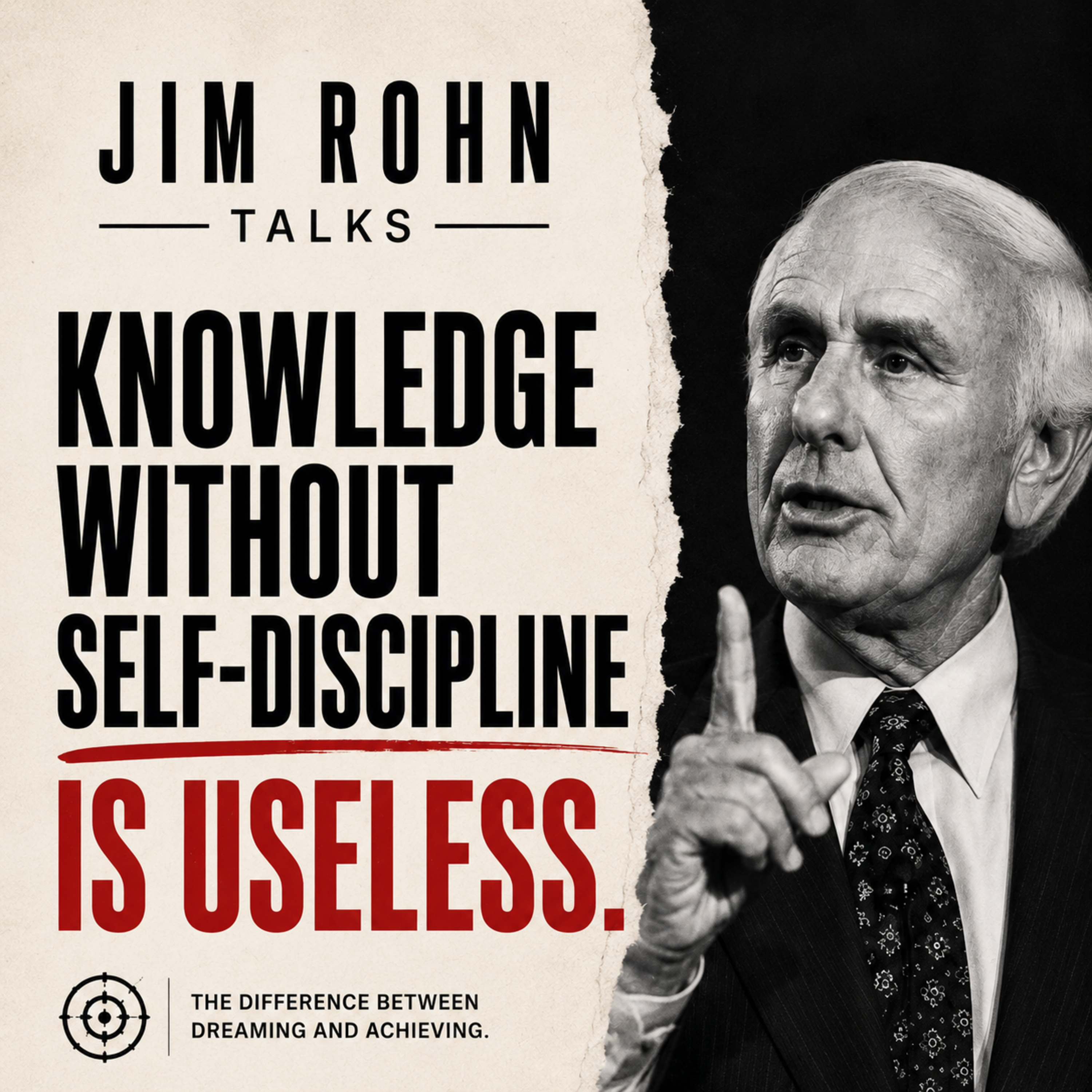
The third principle for building your ambition is self discipline. Of all the subjects we've covered so far and are about to cover, none is more important than covering the disciplines for success. What's at the core of achieving the good life? The major key to the good life, the major key is not in learning how to set goals. It is not in learning how to better manage your time. It is not in mastering the attributes of leadership. Every day in a thousand different ways, we are trying to improve ourselves by learning how to do things. We spend a lifetime gathering knowledge in classrooms, in textbooks, in experiences. Now, if knowledge is power, if knowledge is the forerunner to success, then why do we fall short of our objectives? Why, in spite of all our knowledge and in spite of our collective experiences, do we find ourselves aimlessly wandering, settling for a life of existence rather than a life of substance? There may be many answers to this question. Your answers may be different than your associates, or your spouse's or your friends. While there may be many answers to this question, the fundamental answer is the absence of discipline. Applying all that we know. That's the key word. Discipline. Self discipline. We might add one more word here. Consistent. Consistent. Self Discipline. It doesn't really matter how smart you are or how much you know if you don't use. Doesn't really matter that you graduated magna cum laude if you're stuck in a low paying job. It doesn't really matter if you attended every seminar that comes to town. If you don't apply what you've learned,
- [02:00]
B
you already know what you should be doing. But knowing is not the same as doing. The Self Discipline Hacks Playbook gives you a practical system to control distractions, build stronger habits, and consistently apply what you learn. Stop collecting advice, start applying it. Get the Self Discipline Hacks Playbook through the link in this episode's description.
- [02:22]
A
Better than knowledge is applied knowledge. And once we've applied our knowledge, we must study the results of that process, apply our knowledge, study the results, refine our approach. Finally, by trying and observing and refining and trying again, our knowledge will inevitably produce worthy results, admirable results. And with the joy and results of our efforts, we continue to apply, to learn, to observe, to fuel our ambition with the positive reinforcement of continued progress. Pretty soon we'll find that we're swept into a spiral of achievement, a vertical rise to success. And the ecstasy of that total experience makes for a life of triumph over tragedy, dullness and mediocrity. But for this whole process to work for us, we must first master the art of discipline. Self discipline Consistent self discipline. It takes consistent self discipline to master the art of setting goals, to master the art of time management, to master the art of leadership, to master the art of parenting and relationships. If we don't make consistent self discipline part of our daily lives, the results we seek will be sporadic and elusive. It takes a consistent effort to truly manage our valuable time or we'll be consistently frustrated. Our time will be eaten up by others whose demands are stronger than our own. It takes discipline to conquer the nagging voices in our minds. The fear of failure, the fear of success, the fear of poverty, the fear of a broken heart. It takes discipline to keep trying. When that nagging voice within us brings up the possibility of failure. It takes discipline to admit our errors and recognize our limitations. The voice of the human ego speaks to all of us. Sometimes the voice of ego says that we should magnify our value beyond our results. It leads us to exaggerate, to not be totally honest. It takes discipline to be totally honest, both with ourselves and with others. Be certain of one. Every exaggeration of the truth once detected by others destroys our credibility and makes all that we say and do suspect. As soon as a business colleague figures out that we tend to exaggerate, guess what? They'll always think we exaggerate. And they'll never quite hold us in the same regard again. Never. The tendency to exaggerate, distort or even withhold the truth is an inherent part of all of us. It starts when we're kids. Johnny says, I didn't do it, I didn't do it. Well, maybe Johnny didn't do it, but he probably had something to do with it. And then it continues when we're adults. Exaggerating the benefits of a product to make a sale, exaggerating our net worth to impress old friends, exaggerating how close we are to closing a deal to impress the boss. And only an all out, disciplined assault can overcome this tendency. It takes discipline to change a habit because habits are formed a little bit each day. Every day. Every day. Once habits are formed, they act like a giant cable. They act like a nearly unbreakable instinct that only long term disciplined activity can change. We must unweave every strand of the cable of habits slowly and methodically, until the cable that once held us in bondage becomes nothing more than scattered strands of wire. It takes the consistent application of a new discipline, a more desirable one, to overcome one which is less desirable. It takes discipline to plan. It takes. It takes discipline to execute our plan. It takes discipline to look with full objectivity at the results of our applied plan. And it takes discipline to change either our plan or our method of executing that plan if the results are poor. It takes discipline to be firm when the world throws opinions at our feet. It takes discipline to ponder the value of someone else's opinion when our pride and our arrogance leads us to believe that we are the only ones with the answers. With this consistent discipline applied to every area of our lives, we can discover untold miracles and uncover unique possibilities and opportunities.