Podcast
Joe Lonsdale: American Optimist
Hosted by Joe Lonsdale · EN
American Optimist, hosted by Joe Lonsdale: entrepreneur, investor, and founder of four multi-billion dollar companies and other mission-driven organizations. American Optimist is an alternative to the fear, cynicism, and zero-sum thinking in mainstream media. Learn from the innovators and leaders who are solving our nation’s most pressing challenges, and doing it in a way that will lift everyone up. Hope should dominate our discourse, and American Optimist will show you why.
blog.joelonsdale.com
blog.joelonsdale.com
30episodes
Episodes
Newest firstAll episodes
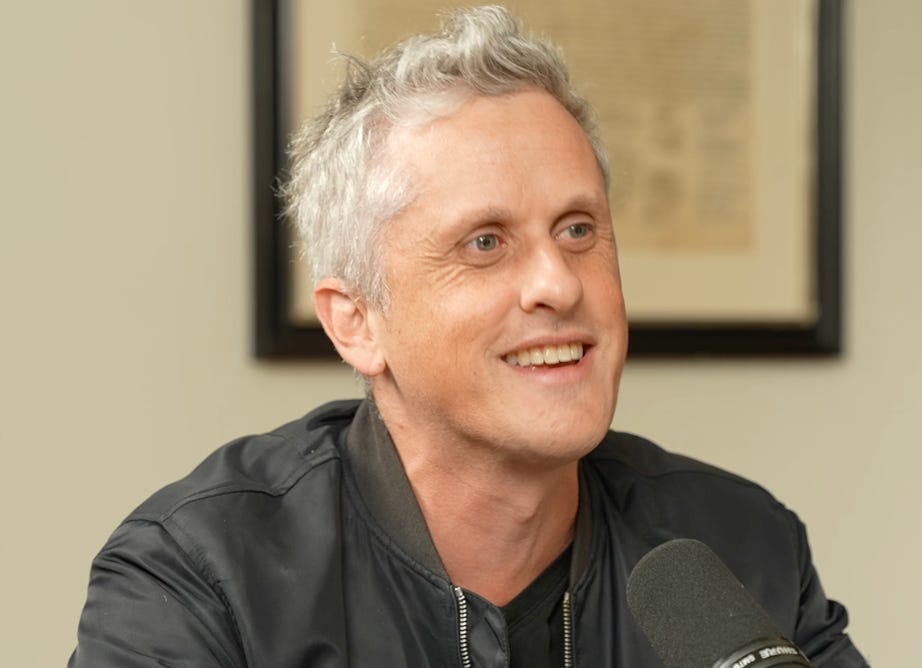
Ep 160: Box CEO Aaron Levie on Silicon Valley's AI Problem, Evidence for AI Job Creation & What Doomers and Accelerationists Get Wrong
3w ago00:43:11Tap to summarizeAaron Levie has spent two decades building Box into a cloud storage leader — and he's never been more excited for the future. What's next in the AI wave? Where is he already seeing evidence for new job creation? What do the doomers and accelerationists both get wrong? And why is Silicon Valley's biggest AI challenge self-inflicted? We discuss these topics and more in this week's episode with Aaron. Originally a college project to access his files from anywhere, Aaron dropped out of USC in 2005 to build Box. He raised his first funding from Mark Cuban and pivoted to the enterprise. Today, Box is a multi-billion dollar company serving 120,000 global customers, and Aaron has become one of tech's leading voices on AI in the enterprise.We begin our conversation with the state of model progress and the unprecedented speed of the AI era — companies going from zero to $500M in revenue in a year or two. We also discuss the Kimi K3 debate and China closing the gap on the U.S. in the AI race. Next, Aaron explains why diffusion, not intelligence, is the real rate limiter for AI adoption, and what the challenges will be at the enterprise level. Then we dive into the jobs debate: Aaron explains the 13 new types of jobs AI has created at Box, why law firms now need teams of engineers for their own custom AI models, and why mass job destruction means betting against markets themselves. Finally, we tackle Silicon Valley's self-inflicted AI crisis and why it may become the number one issue of the next presidential election.(00:00) Episode intro(01:15) AI wave / every two months is a year now(06:30) China, Kimi K3 & open-source debate(10:45) Diffusion is the real rate limiter(15:50) Agent-first startups vs incumbents(19:00) Nobody reads those contracts — AI’s new work(23:35) Silicon Valley’s AI Problem / Larry David making AI models(29:20) 13 new types of AI jobs at Box(32:20) The origins of Box / dropping out of college(37:00) Favorite angel investments right now(40:20) Optimism for America’s future This is a public episode. If you would like to discuss this with other subscribers or get access to bonus episodes, visit blog.joelonsdale.com
Transcribe →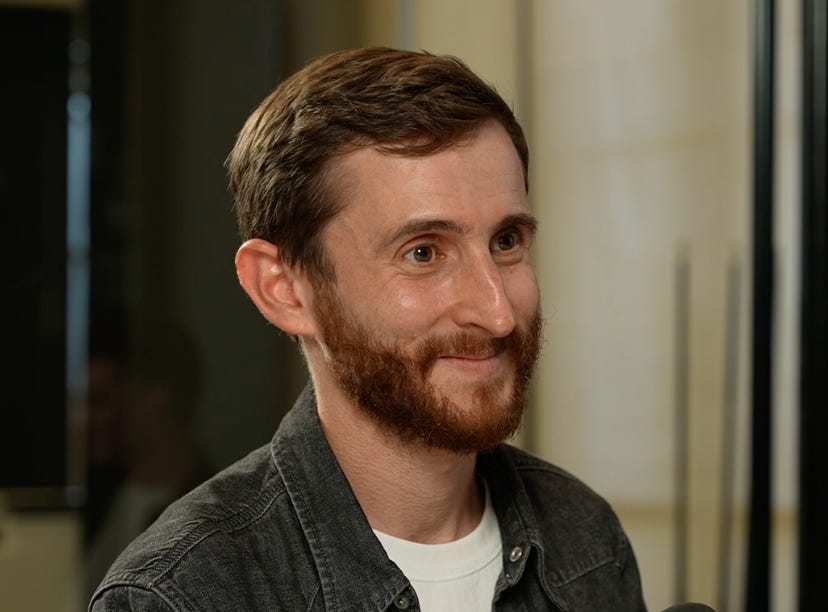
Ep 159: Aaron Cannon Is Building the Leading AI Customer Research Platform; It's About to Upend a $140B Industry
Jul 200:39:49Tap to summarizeAaron Cannon is applying AI to solve one of the oldest and most important challenges in business: understanding exactly what customers want and need. Traditional consumer surveys often provide low-quality data, while one-on-one interviews are cost-prohibitive and not scalable. But AI unlocks profound new possibilities. How is Aaron using AI to conduct deep, insightful interactions at scale? What happens when organizations have always-on customer understanding? And what are the new opportunities for incorporating real-time feedback into product improvements? Aaron Cannon is the co-founder and CEO of Outset, one of the fastest-growing, agent-led customer research platforms. Try it yourself here and help us improve American Optimist; we'll incorporate the top recommendations! Prior, Aaron was the head of product at Untapped and Triplebyte and worked in senior product roles at Tesla, Pebble, and Monitor Deloitte. He launched Outset in 2022 after seeing an opportunity with large language models to fundamentally change how organizations learn from the people they serve. For this conversation, we're also joined by 8VC Partner Jack Moshkovich, who helped lead our investment in Outset. We begin with Aaron’s path to founding Outset and the inefficiencies he saw in traditional customer research. Next, we explore how Outset’s AI-moderated interviews work in practice — from consumer studies to enterprise deployments at Microsoft, Google, and Uber. Learn how AI-led interviews can actually elicit more honest and in-depth responses than human-led conversations. Then, we dive into the explosive growth of the company — 8X revenue over the past year — and its “forward-deployed researchers" model. Finally, Aaron shares his vision for "self-driving research": AI that doesn’t just gather feedback but helps close the loop by identifying problems and even suggesting fixes — ultimately leading to improved products, experiences, and organizations.00:00 Episode intro01:10 Aaron’s entrepreneurial journey06:00 How does AI-moderated research work?09:25 Why people will talk to AI more than humans13:40 How Outset landed Microsoft, Google & Uber14:55 Are you replacing human jobs?20:56 New possibilities for real-time product improvements23:30 The pros and cons of synthetic research28:00 Insane growth / how Outset 8X’d revenue35:00 How AI is upending a $140B industry This is a public episode. If you would like to discuss this with other subscribers or get access to bonus episodes, visit blog.joelonsdale.com
Transcribe →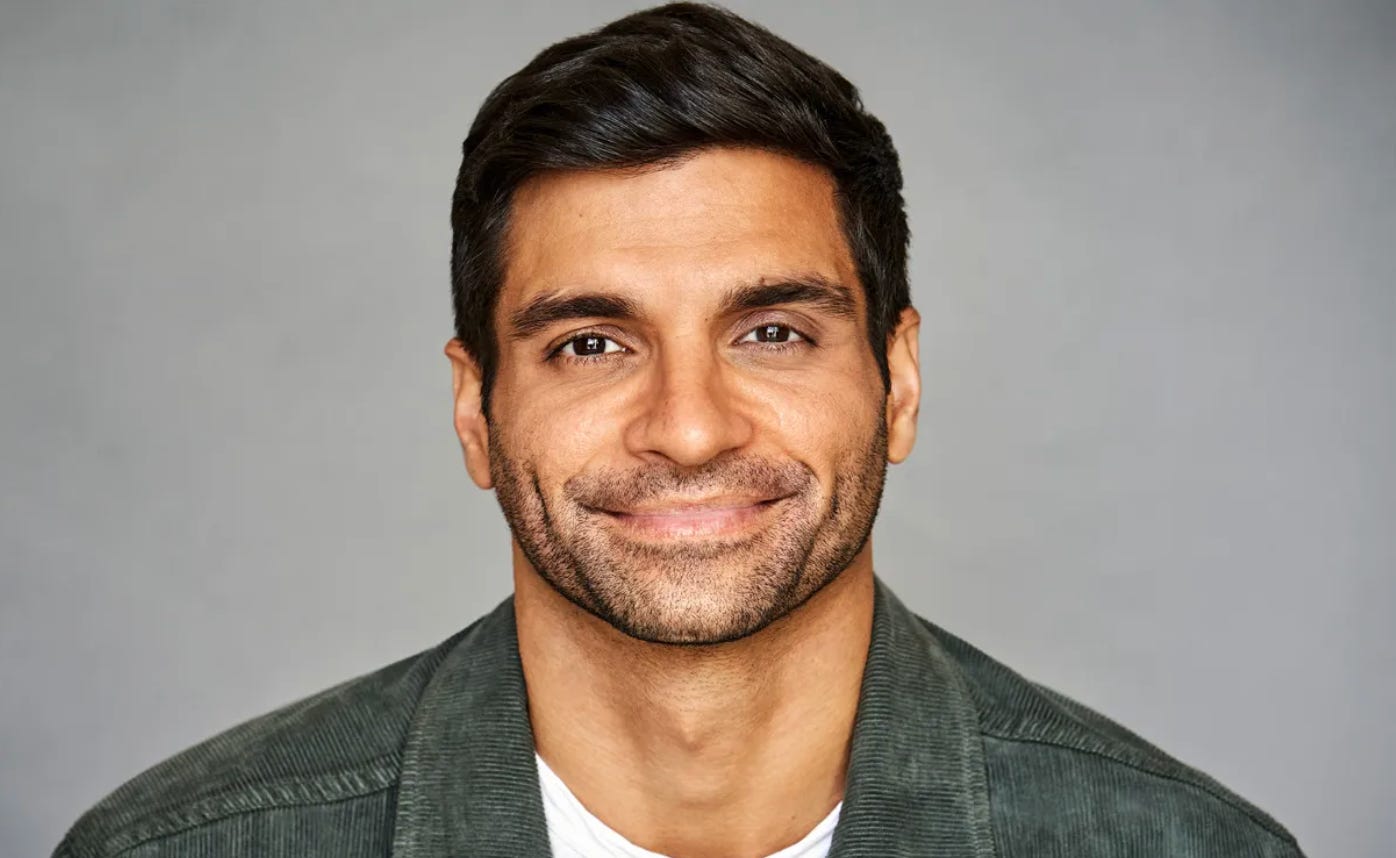
Ep 158: Nima Ghamsari on Blend's Comeback & the Power of AI Agents and Infinite Workforce
Jun 1800:39:02Tap to summarizeNima Ghamsari was a top talent at Palantir before founding Blend Labs to digitize the mortgage process. Blend became one of Silicon Valley’s hottest SaaS companies until the mortgage industry came to a screeching halt in recent years. Now, the AI wave has Blend poised for a comeback. What will the future of home buying look like? Why is Nima all-in on AI agents? And how can AI supercharge established tech companies with the will and talent to rethink things from scratch?In this episode, we’re joined by the Founder and Head of Blend, Nima Ghamsari. We begin with his parents immigrating from Iran to the U.S. in the 1980s and how Nima made his way to Stanford. He quickly made a name for himself as a talented online poker player — winning millions of dollars and famously showing up to Palantir as a new hire in an Aston Martin. Learn about the lessons Nima brought with him from Palantir into building Blend, and how he took on the ambitious task of bringing the outdated, cumbersome mortgage process online. Next, we dive into Blend’s meteoric rise and fall as the U.S. mortgage industry hit the skids in recent years. Now, Nima believes AI has the company poised for a comeback. Learn about its AI agent, “Autopilot,” and why Blend has the most deployed agents in financial services right now. On this podcast, we talk a lot about new AI-first companies; Blend is a great example of a talented SaaS company embracing AI for a powerful Act II.00:00 Episode intro01:45 Millions playing poker to joining Palantir06:00 Most important lessons from Palantir07:30 Founding Blend / understanding the mortgage industry11:25 How to win over banks and risk-averse customers 15:50 Blend’s meteoric rise and fall 19:00 Going all-in on AI agents / Blend’s Act II 22:55 Is Blend undervalued today? 26:50 Impact of AI on internal operations / increased productivity 32:00 The future of SaaS 36:20 The optimistic case for AIDisclosure: Joe Lonsdale is a principal of Eight Partners VC, LLC (“8VC”), a registered investment adviser whose funds currently hold shares of Blend Labs, Inc. (“Blend”). Joe also has a longstanding personal relationship with Blend and its CEO, having served as an early investor, adviser, and board member. The statements in this episode reflect Joe’s personal views as of the date of recording and may contain forward-looking statements that are subject to risks, uncertainties, and assumptions. Nothing in this episode constitutes investment, legal, tax, or financial advice, nor should any statement be understood as a recommendation to buy, sell, or hold any security or invest in any 8VC-managed vehicle. Listeners should conduct their own research and consult their own professional advisers before making any investment decisions. American Optimist is Joe’s personal podcast; the views expressed are his own and do not necessarily represent the views of 8VC or its affiliates. This is a public episode. If you would like to discuss this with other subscribers or get access to bonus episodes, visit blog.joelonsdale.com
Transcribe →
Ep 157: Scott Nolan on the AI Energy Crisis & America's Nuclear Renaissance
Jun 500:39:41Tap to summarizeIn 2010, the U.S. and China were at parity in electricity generation. Today, China boasts triple our capacity. We’re at the vanguard of the AI revolution but falling dangerously behind in energy production. Scott Nolan has identified a key bottleneck in nuclear energy and is at the forefront of the effort to scale nuclear power and help America achieve energy abundance.While studying at Cornell University, Scott landed an internship at Boeing. He quickly jumped to SpaceX as an early employee and worked on the Falcon propulsion systems and Dragon capsule. He later became Partner at Founders Fund, where he focuses on energy, infrastructure, biotech, and other key sectors. In 2024, he founded General Matter to rebuild America’s nuclear enrichment capacity.We begin the episode with Scott’s entrepreneurial journey, the contrast between Boeing and SpaceX, and how to build a culture that prioritizes speed and performance in a highly regulated sector. Next, Scott explains the origins of General Matter and breaks down the science behind creating nuclear fuel. In the 1980s, the U.S. produced 80% of global enriched uranium; today that number is zero. Learn how post-Cold War disarmament destroyed our capacity to the point where we are now reliant on Russia, among others, for enrichment. Scott explains how China surged ahead in electricity generation, and what it will take to jumpstart America’s nuclear renaissance. Finally, we cover exciting new possibilities, including nuclear power in space and on the moon, and what a future of cheap, abundant energy could look like.00:00 Episode intro01:20 Boeing vs SpaceX / lessons on speed & performance05:20 What made SpaceX unique? 09:05 General Matter / how to make nuclear fuel16:45 Disarmament and relying on Russia19:50 The AI energy crisis / falling behind China24:30 Founders Fund and energy investing27:15 How to scale nuclear energy32:00 How to fund the nuclear buildout36:15 Nuclear in space & new possibilities This is a public episode. If you would like to discuss this with other subscribers or get access to bonus episodes, visit blog.joelonsdale.com
Transcribe →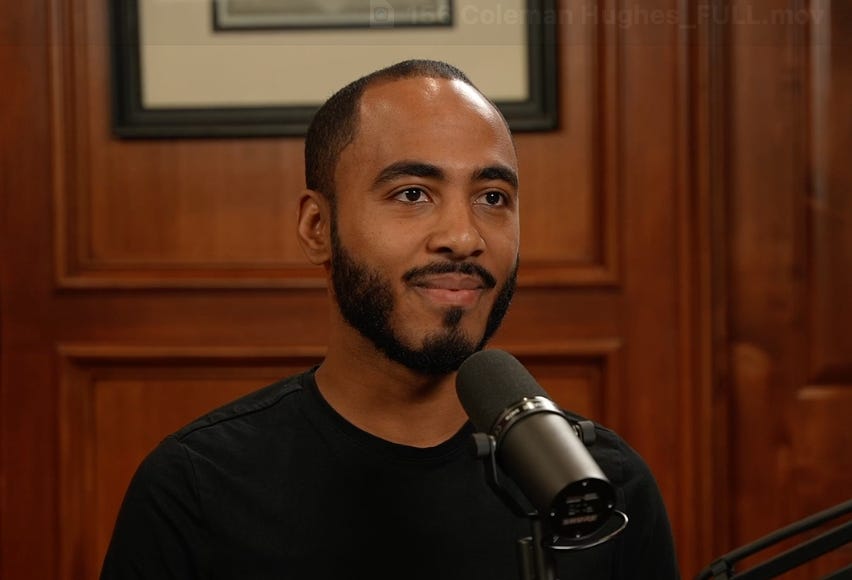
Ep 156: Coleman Hughes Takes on America's Most Contentious Debate: the Legacy of Slavery
May 2900:49:38Tap to summarizeIs America’s national wealth built on slavery? Are disparities between races today attributable to past injustices? Will we ever overcome race politics? These difficult questions are at the heart of Coleman Hughes’ new course at the University of Austin titled “The Legacy of Slavery.”Coleman is one of the clearest voices confronting race-essentialism in America today. He’s the author of The End of Race Politics: Arguments for a Colorblind America, host of the Conversations with Coleman podcast, and a visiting professor at the University of Austin.In this episode, Coleman takes us behind the scenes of his new UATX course, where he examines the two opposing philosophies that emerged from the civil rights era: Dr. King’s colorblind vision and Derrick Bell’s Critical Race Theory. He breaks these down into two camps -- minimalist and maximalist -- and explains how he equips students to weigh the merits of each side. He contrasts the UATX approach, where Thomas Sowell versus Ta-Nehisi Coates takes center stage, to his time at Columbia University and its obsession with racial grievances. Then we dive into a few legacy debates: Is America’s wealth due to slavery? Is the collapse of the two-parent black family a result of past injustice? Finally, Coleman lays out three steps toward an optimistic vision for race in America: get race out of the law (end affirmative action), stop programming children to see race, and foster a growing economy with opportunity for all.00:00 Episode intro 01:40 Teaching the Legacy of Slavery06:20 Coleman’s journey from Columbia to UATX08:30 Dr. King vs Derrick Bell11:20 Racial disparities by IQ and salary13:00 Thomas Sowell & the Real History of Slavery19:00 America’s Founding hypocrisy24:00 Will the Left cancel Dr. King?26:20 Understanding the 1619 Project30:25 Breakdown of the black family37:20 Is America wealthy because of slavery?43:50 Are you worried about woke AI?45:40 Three solutions for racial progress This is a public episode. If you would like to discuss this with other subscribers or get access to bonus episodes, visit blog.joelonsdale.com
Transcribe →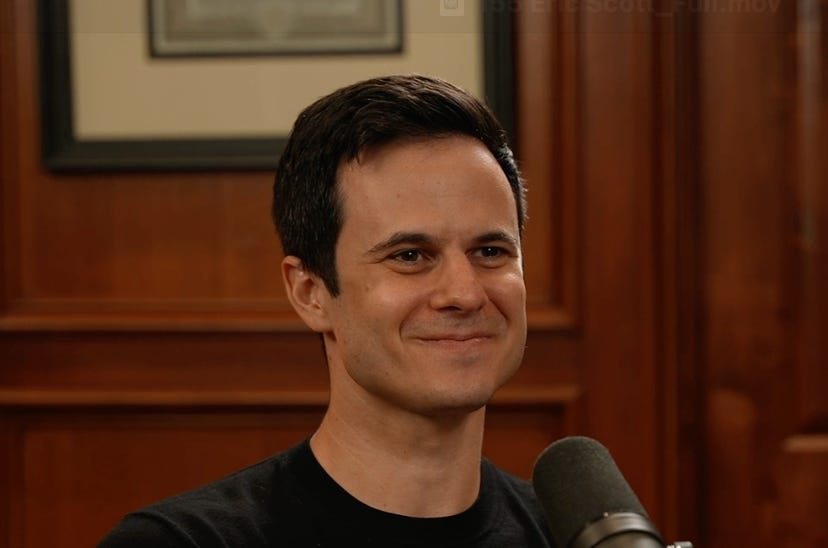
Ep 155: Eric Scott on the Biggest Missed Opportunity in Venture Investing
May 2200:30:26Tap to summarizeAs a former Principal at Founders Fund, Founding Partner at SciFi VC, and 8VC advisor, Eric Scott has invested in and helped build numerous technology leaders. He’s launching his new fund, Overlook Capital, where he sees missed opportunities in the market. How has venture investing evolved in recent years? Where does he see the dislocations? And how will AI change the game going forward?After graduating from Claremont McKenna College, Eric emailed his way into Max Levchin’s network, becoming an early employee at HVF Labs where he learned to invest and build companies. He later spun out SciFi VC as its Founding Partner, before landing as a Principal at Founders Fund. He was an early investor in Anduril, Crusoe Energy, among others, and a senior advisor at 8VC where he helped us launch Harbor Health.We begin our conversation with Eric’s journey — from persuading Max Levchin to hire him as a technical assistant to investing at HVF and launching SciFi VC. Next, we dive into the state of venture today. Learn why Eric believes that larger and larger fund sizes are concentrating capital into the hottest AI bets, creating real inefficiencies just below the top tier. He lays out the thesis behind his new firm and where he sees missed opportunities. Finally, Eric shares his optimistic vision for the years ahead and why he believes this is one of the best times in a generation to start and build important companies.00:00 Episode intro01:30 Meeting Max Levchin and learning to build 06:30 Launching SciFi VC & investment lessons12:05 How VC is changing 13:40 Biggest missed opportunity in venture 16:15 Enormous dislocations in the market21:30 How AI is changing the game24:00 Overlook Capital27:50 Optimism for the future This is a public episode. If you would like to discuss this with other subscribers or get access to bonus episodes, visit blog.joelonsdale.com
Transcribe →
Ep 154: Jacob Helberg on Pax Silica & the New Global Order in the AI Age
May 1900:33:53Tap to summarizeJacob Helberg is leading the State Department's efforts to secure critical supply chains and win the global AI race. How is the U.S. shifting from dependency on China to building new partnerships around energy, minerals, and infrastructure? Which economies will grow fastest in the AI era? Who will be left behind? And how will this impact geopolitics? We discuss these timely topics with Jacob, Under Secretary of State for Economic Growth, Energy, and the Environment. A tech policy veteran who worked at Google and Palantir before serving on the U.S.-China Economic and Security Review Commission, Jacob was confirmed last fall to help execute the administration’s economic statecraft agenda. He's the author of "The Wires of War: Technology and the Global Struggle for Power."We begin our conversation with Jacob’s mission at the State Department and the launch of Pax Silica: a new US-led economic security coalition to secure supply chains and help America dominate in AI innovation. We dive into Jacob's recent deal in the Philippines to build an AI-native industrial hub, and explore the contrast with China’s Belt and Road Initiative. Next, Jacob makes the bull case for AI drawing on lessons from history: the PC revolution displaced 3.5 million jobs, he explains, but created 19 million more with the advent of the software industry! Finally, he explains why principled, positive-sum diplomacy is delivering results where old models failed, and how the AI revolution is transforming the global balance of power.00:00 Episode intro02:30 Historic deal with Philippines 05:25 Jacob's background07:30 Why is Europe falling behind?13:00 The asymmetric power of tech15:35 Jacob responds to AI doomers & skeptics 19:15 Global Competition: China, AI, and Diverging Growth21:45 What is Pax Silica? 23:45 New Global Order in AI age29:30 Is China pushing back? 31:45 Optimism for the future This is a public episode. If you would like to discuss this with other subscribers or get access to bonus episodes, visit blog.joelonsdale.com
Transcribe →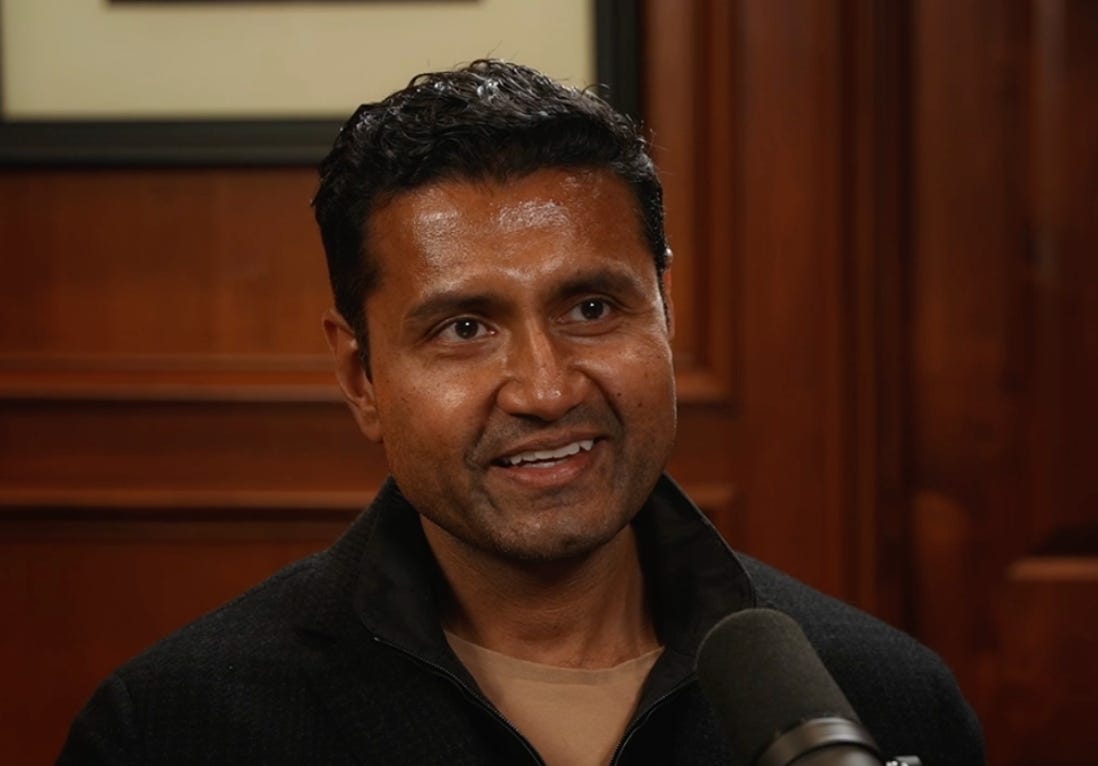
Ep 153: Palantir CTO Shyam Sankar on Heretics, AI Weapons, and Rebuilding the Arsenal of Democracy
May 800:44:04Summary readyShyam Sankar is one of my favorite American innovators. As CTO of Palantir, he's been a key leader for over 20 years and built much of what the company stands for. He's also a patriot, and recently commissioned as a Lieutenant Colonel in the U.S. Army Reserve. His new best-selling book "Mobilize" lays out the crisis of the American industrial base, how to revive what made us a global superpower, and what it will take to prevent the next great power conflict. Shyam's father was raised in a mud hut in India. He and his family relocated to Nigeria but fled to the United States after armed robbers nearly murdered them. Shyam joined Palantir as the 13th employee, where he helped shape its unique culture, develop key business strategies, and scale Palantir into a $300+ billion global software giant. In 2025, he was commissioned as a lieutenant colonel in the Army Reserve's new Detachment 201: Executive Innovation Corps, and earlier this year, he released "Mobilize: How to Reboot the American Industrial Base and Stop World War III."We begin our conversation with Shyam’s extraordinary journey to the U.S. and what this country means to him. Next, we reminisce about the early days at Palantir and what made the culture unique, from his famous Shyam-isms to living in the office for a month straight to earn free BBQ Fridays. Learn how Shyam coined the term "Forward Deployed Engineers" and proved that the best software is built shoulder-to-shoulder with the customer. Then we dive into his new book and the dangerous atrophy of America’s defense industrial base. Shyam reveals that the U.S. expended 10 years of production in 10 weeks of conflict, and explains how we can once again become the arsenal of democracy. We also discuss the culture at the Pentagon and why some heretics must be protected at all costs. Finally, we explore the clash between leading AI researchers and the Department of War, and how to bridge the gap between Silicon Valley and D.C. and secure the next great American century.00:00 Episode intro01:45 Mud hut in India to life in America05:25 Employee #13 at Palantir 09:45 How Shyam created Forward Deployed Engineers 13:05 What are Shyam-isms? 14:55 Business discipline & learning to say no 19:20 The crisis of the American industrial base24:00 Some heretics must be protected 29:00 The factory is the weapon34:00 Magical AI weapons 43:00 Optimism for America's future This is a public episode. If you would like to discuss this with other subscribers or get access to bonus episodes, visit blog.joelonsdale.com
Summary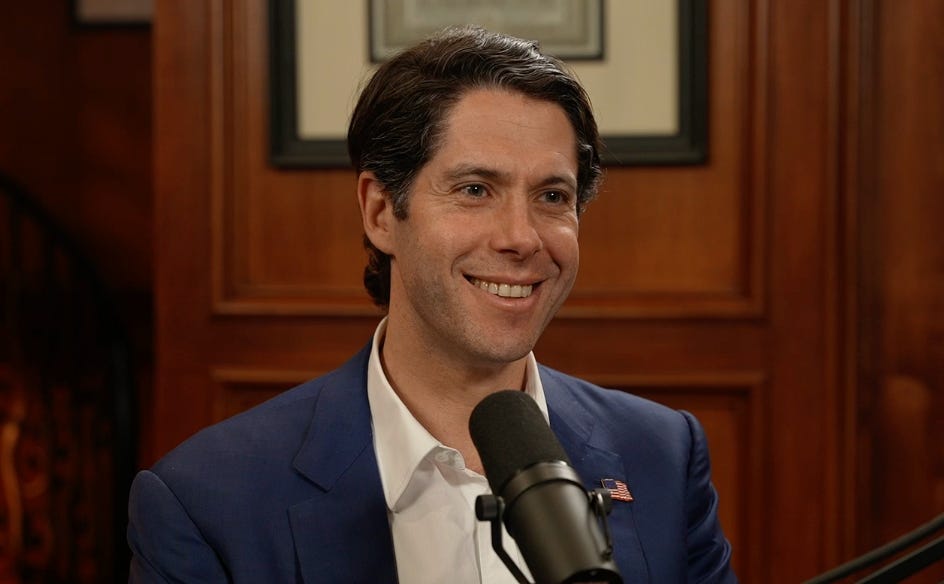
Ep 152: Ben Black Runs America's $200B Foreign Investment Fund; Here's His Plan to Counter China & Rebuild American Influence
Apr 3000:38:32Tap to summarizeBen Black is the CEO of the U.S. International Development Finance Corporation (DFC). Backed by a $205 billion budget, his mandate is to invest in U.S. strategic interests, build new markets, and deliver real returns for taxpayers. What projects is the DFC prioritizing? How is he countering China's trillion-dollar Belt and Road Initiative? And how is the Trump administration shifting from a paternalistic view of foreign aid toward investing with accountability and an expectation of returns? A history major at the University of Pennsylvania, Ben began his career in finance at Goldman Sachs before earning a JD and MBA at Harvard. He worked in private equity at Apollo Global Management before founding the investment firm Fortinbras. Last fall, he was confirmed by the U.S. Senate as CEO of the DFC. His drive to serve was shaped by his grandfather, a WWII tail gunner in the Aleutians, and by watching his father build Apollo into a global powerhouse.We begin our conversation with Ben’s entrepreneurial journey before diving into the history of U.S. foreign aid. Learn how the U.S. regressed from the Marshall Plan, which rebuilt Europe and fostered investment in America, to promoting a culture of waste and dependency in foreign aid — and how the Trump administration is reversing course (check out our essay from January 2025 on these issues). Next, Ben lays out the flaws in China's extractive Belt and Road model and explains how the DFC is developing trusted partners, promoting free-market principles, and investing strategically. From maritime insurance in the Strait of Hormuz to rare earth mining, Ben reveals some of the DFC's recent wins and where he sees new long-term partnerships in South America and Asia. Instead of showering NGOs with taxpayer dollars and creating charity cases abroad, the Trump administration is restoring discipline and accountability — and Ben is a key leader in executing this vision and generating returns for the American people.00:00 Episode intro01:25 Ben’s path to DFC08:30 $205 billion to invest abroad10:00 Rethinking foreign aid13:00 From Marshall Plan to waste and fraud18:50 The Trump administration’s new approach21:50 Countering China’s Belt & Road Initiative28:00 Post-WWII order is changing / new opportunities33:10 Maritime insurance and Strait of Hormuz37:00 Optimism for America’s future This is a public episode. If you would like to discuss this with other subscribers or get access to bonus episodes, visit blog.joelonsdale.com
Transcribe →
Ep 151: The Myth of Michael Milken with Richard Sandler
Apr 2400:41:17Tap to summarizeMichael Milken revolutionized American finance and democratized access to capital for thousands of companies that Wall Street had previously written off. Yet he was unjustly attacked in the 1980s in one of the most controversial prosecutions in U.S. history. As one of Michael’s key defense lawyers, Richard Sandler sets the record straight in his new book: Witness to a Prosecution: The Myth of Michael Milken. How did Michael transform capital markets through high-yield bonds? Why was he unfairly targeted? Why did he ultimately agree to a plea deal? And what are the lessons about government power that everyone should learn? We dive into these topics in this week’s episode with Richard Sandler, Partner at the law firm of Maron & Sandler and Executive Vice President and Trustee of the Milken Family Foundation. Richard and Lowell Milken, Michael’s younger brother, met in first grade while growing up in Los Angeles. After practicing law with his father, Richard joined Michael and Lowell’s firm -- Drexel Burnham Lambert -- to help the high-yield bond team. He saw firsthand the entire saga: the explosive rise and fall of Drexel, the unprecedented investigation, and ultimately, President Trump’s pardon of Michael in 2020.We begin with Michael’s breakthrough in high-yield bonds. Learn how he almost single-handedly transformed the “junk bond” market from $70 billion to $700 billion in a decade, and helped finance the growth of great American entrepreneurs and companies — Ted Turner, Steve Wynn, MCI Communications, among others. Next, Richard walks us through the investigation: the unprecedented use of RICO against Drexel, the targeting of Lowell as a “hostage,” and the novel charges Michael ultimately pled to (none of which had been prosecuted before or since). Finally, we explore the deeper lessons about prosecutorial power, media narratives, and Michael’s extraordinary resilience. He has pushed forward medicine, science, and education in myriad ways, while inspiring many of our great leaders today.00:00 Episode intro01:35 Richard’s career & Michael Milken’s legacy06:25 Why write this book? 08:00 How Michael Milken transformed finance 14:00 Why did they go after Drexel & Michael? 19:30 Using RICO to bring down Drexel 22:30 Prosecutorial abuse & the power of government26:30 Why did Michael agree to a plea deal? 33:25 Trump grants Michael a full pardon35:00 Lessons on government power, media influence & Michael’s resilience This is a public episode. If you would like to discuss this with other subscribers or get access to bonus episodes, visit blog.joelonsdale.com
Transcribe →