Loading summary
Transcript185 lines
- [00:00]
Ian
Jokerman podcast is brought to you by Distrokid and their new direct to fan tool. Allowing any artist to sell merch. Distrokid Direct allows artists to create a merch store in minutes without any upfront costs or any technical skills or know how they'll take care of all the logistics and the nitty gritty. And as with distribution through Distrokid, they never take a cut of the proceeds. You, the artist, keep 100% of your earnings. Once again, that's Distrokid Direct open a store today@distrokid.com direct.
- [00:40]
Evan
Welcome back to Jokerman. Today presenting you our interview with the great Bruce Hornsby recorded ahead of the release of his new record, Indigo park, which is out now. It's a really, really exciting record and the kind that can only come from an artist who's in it for the love of the game. It was a pleasure and honor to talk with Bruce about it, among other things. Without further ado, here's Bruce Hornsby,
- [01:26]
Bruce Hornsby
Memory palace.
- [01:34]
Ian
We were just saying you worked with a little. The smallest label on planet Earth, Ulyssa, on this project, Contra House. And Ulyssa, of course, is run by our friend here. And Evan's known Eric for years, Eric Dynas. Just like, how did you, how did you link up there?
- [01:53]
Bruce Hornsby
I know Eric because he used to. I think he still may, but he used to, in the late teens work for the. The vaunted indie venue, Jag Jaguar. Sure, okay. The label. And I was making this record, a very different record based on cues, film cues. I've scored a. Scored movies for Spike lee for from 2008 to 2020 or so. And I'd amassed all this, all this music. I'd written for Spike about two pieces of music for six or seven films of his in that time. And I started feeling like some of these should be, should be expanded. We're screaming out to be expanded into songs with words. So I made this, for obvious reasons, fairly cinematic sounding record. And then Justin Vernon of Bon Iver got involved called Absolute Zero. And Eric Danis was one of the guys at Jack Jaguar who was trying to sign Grandpa here to the label. And he and another one of the big shots there came to Virginia, came to right here where I am right now. It didn't end up working out, but Eric was such a devotee and stayed with it and stayed in touch and a great guy, as you guys obviously know. And he and his friend of his started this label. I didn't even know the name of the label. Until you said it there, Ian. So I got. Then he reached out to me a couple years ago, maybe toward the end of the COVID era, and said, there's these people who are making this record for this, for us, this instrumental, mostly instrumental record, and they. They'd love to have you do something. I. And so my response was, hey, we'll send it over and I'll try my hand at it. Why not? So that's how this. That's how Contra House. That's how I came to be. Be in a band named Contra House.
- [03:57]
Ian
That's right, yeah. Bruce Hornsby, member of Contra House.
- [04:01]
Bruce Hornsby
Exactly right. So it's so fun that you said that this is what you bring up because it's, as you said, it's maybe the smallest label on the planet with the least amount of resources. But anyway, I just did it for the music. I had a great time. I just took it straight out. It was very dissonant and chromatic what I played on this music. And so that was really fun for me.
- [04:25]
Ian
Yeah, it doesn't bear a whole lot of resemblance to Indigo Park.
- [04:30]
Bruce Hornsby
Well, but not. Not totally true, actually, because they're okay. On my last many records, starting with the aforementioned absolute0 of 2019, I always hold a place for adventurous music in that way, though decafonic to a 12 tone music because I'm deeply interested in the modern and the classical world. And so there were two or three songs on that record. That next record really got, really took it out about, you know, on three songs or so. Fast forwarding to this record there, I don't want to make it that easy for the listener. And so songs three, six and nine, every couple of songs. And here comes another one for you that deals advanced harmony and chromatic dissonant harmony, not white note music, almost like 97% of popular music deals in.
- [05:34]
Evan
I found it to be a thrilling listen, this record of yours.
- [05:38]
Bruce Hornsby
No, fantastic. Thank you.
- [05:40]
Evan
It's that different in terms of the raw ingredients as some of your earliest solo work and your earliest, most well known stuff on paper, anyway, it's still largely piano forward. There's guitar and bass and drums, but the way those are played and arranged and integrated is really exciting and at times unexpected.
- [06:07]
Bruce Hornsby
Well, thank you. Again, you compare it to the old. And there are certainly three or four songs on this record that would remind someone stylistically of that. But again, songs three, six and nine. No way.
- [06:24]
Ian
Right?
- [06:25]
Bruce Hornsby
Nothing. Well, you know what? Mostly three and six and track nine has some dodecahany in there. Some. Some chromatic Movement but the one, the song with. With Weir. But the first two, Rust in Peace and Alabama, they are. They bear zero resemblance to my five early music in, in really any. Certainly on a pianistic on a content level. So I slightly beg to differ, but you've actually made me tighten up my idea of 3, 6 and 9. 2 mostly 3 and 6 with a little chromatic intrusion in the ninth song.
- [07:10]
Evan
Can you talk a little about that song? About song three, Rest in Peace?
- [07:15]
Bruce Hornsby
Yeah. So this is, I guess you could call it Bruce's aging record for the most part. Not always. There are a few breaks in that idea. Breaking from that idea. Entropy here, Rest in Peace, full title. I wanted to write a song that gave me the feeling of wow, I'm in this world and it's moving so. And it's so freaking crazy and it's got me coming and going and not sure whether I'm coming or going. And I wanted to, to create that feeling that is sort of a definition of the word entropy. The measure of disorder and, and so boiling water and melting ice. Breakup, collapse, decay, decline. That's other words maybe in the definition of entropy. So, so, right, that was my attempt and so it seemed like the music needed to go there. It's, it's influenced by the great modern classical composer who died, oh, about eight, nine years ago now, one month shy of his 104th birthday, Mr. Elliot Carter, a two time Pulitzer Prize winner. But his music is very out. It's very not, it's. It's not speaking the Vulgate. It's not speaking the language of people at all. So. Right. So I, I was influenced by that. And then a little bit from the great composer, the great Hungarian composer Ligeti. If we were in my other room, I, I have a little hall of fame where I have pictures of Leon Russell, Bud Powell, Bill Evans, Liggety and Carter. Those are sort of my heroes. There are others that should be in there. Keith Jarrett, et cetera, even Elton John. So to put Elton John and Elliot Carter in the same Valhalla. I like that. I'm all for that. So that's how I would describe the song Entropy here. Rest in Peace. Does that, does that satisfy you there?
- [09:32]
Evan
It does. Although there's something stuck with me is just the first few lyrics of that song are particularly colorful.
- [09:41]
Bruce Hornsby
The bibulous lush is in his cups. Mr. Concupiscence is to mess it to the touch. Well, okay. And here's why. I have twin sons and we have a. We're sort of joined at the Hip in every way and mostly on a comedic level. And one of our sons, Russell, my youngest son by one minute, went to a prep school in his 11th grade year. For his last two years of high school. He was a great runner and he ran for the Oregon Ducks, and so that was quite fun to be a Duck dad through those years out in Eugene, Oregon, he was what we call fast ass white boy. And so Russell went to Georgetown Prep and actually well known for being home of conservative Supreme Court justices Kavanaugh and. Oh, come on, what's the guy's name?
- [10:41]
Ian
Gorsuch.
- [10:43]
Bruce Hornsby
Gorsuch. Gorsuch. Gorsuch. Thank you. Neil Gorsuch. Neil Gorsuch. Yeah. So, right, okay. Alas, there was a ninth grader. I looked at his yearbook at the end of the year and I'm scanning through the. The freshman class and I saw the name Antonin Scalia.
- [10:59]
Ian
Oh, boy.
- [11:00]
Bruce Hornsby
Yeah. Had to be his grandson. So that's. So look that Russell had very little to do with any of that, of course, what he. But what he mostly discovered was alcohol, partying, partying with alcohol. So. So he became known to us, to me. I started calling him the family lush and the bibulous boy, et cetera. So. Right, right. The bibulous lush is in his cups. Have you guys ever heard the phrase in your cup? No. No.
- [11:33]
Evan
In his cups. Yeah, that's a. That's an old timey, pretty archaic one. Yeah.
- [11:37]
Bruce Hornsby
Yes, it is in his cups, but
- [11:39]
Ian
I don't think I've heard it. Explain it to me, please.
- [11:41]
Bruce Hornsby
Well, he's in. He's in his cups. It's something I got from my dad.
- [11:44]
Evan
He's off that, as they would say today.
- [11:48]
Bruce Hornsby
He's had a few cups too many.
- [11:50]
Ian
Yeah, got it.
- [11:51]
Bruce Hornsby
Yes, he's in his cups. So, yeah, the biblical the bibulous lush is in his cups. Mr. Concupiscence is tumescent to the touch. Right? So are you guys familiar with the word concupiscence? It means lustful.
- [12:06]
Evan
That's the one. I didn't know.
- [12:07]
Bruce Hornsby
It's just a funny word. I like funny words. I love the word schadenfreude, you know, taking comfort in the misery of others. So I'm ready to receive interesting, odd and funny words. And so, Mr. Concupiscence, I would just call someone that on the bus if someone was in the back and they're looking at some pornography, which doesn't happen much in our. On our bus, but it has. And I'd go back and go, you're feeling a bit tumescent, Mr. Concupiscence. And so that was. Look, I. I like to have a lighter tone with my lyric writing quite often, and so that's. That type of tone is dotted throughout this record mostly every song. That's my apologia. When you asked me about those first few lines, which are kind of my favorite lines of the song.
- [13:04]
Evan
It's very dense. That little passage, it really stuck with me. Hit me.
- [13:07]
Bruce Hornsby
My Rob Ding nagging and friend, for God's sake. That's a little Jonathan Swift action there. That's. That's the fun of it for me. Look, I. I'm too old to care, so I just let it fly, take out the pad and write craziness. Why not? I've been doing it for years. But the average person who knows those five songs from 1986 to 1990 has no idea about that. Oh, there. There were hints of that in those records, but not much.
- [13:37]
Ian
Yeah. Entropy here. Not necessarily what the way it is fans might be looking for or expecting from a Bruce Horns.
- [13:45]
Bruce Hornsby
Well, right. But I've left that behind a long time ago.
- [13:49]
Ian
That was one of the questions I wanted to ask is like, you have been so stylistically adventurous for decades.
- [13:55]
Bruce Hornsby
Yeah. Well, that's looking to continue to evolve and grow. Yeah.
- [13:59]
Ian
From seemingly instant overnight success as a pop rock recording artist, to like the jam band world, then the jazz influences, film scores. It's kind of incredible to me.
- [14:10]
Bruce Hornsby
It's been a disparate, beautifully disparate ride in that way, because I've gotten to do. I've gotten to work with so many amazing people. I. You grow up and you have your heroes. And. And for me, when I got established with that first record, I started hearing from a lot of these heroes of mine. I would call it painting yourself into the mural you were looking at as a. As a. In my case, late teenager, because I started doing this late. 17. Age 17 was when I got into the piano. I was a. I was a jock at that point, shooting the basketball and. But then that subside that went by the wayside when I got with the piano and could not stop and could not. I just did it all the time from 11th grade on. So the first record came out, and this. And that was. It was kind of went a lot farther than anyone thought. You talk. You call it pop rock the way it is. To me, it was a total. A wonderful accident. It broke on the BBC radio, on BBC Radio 1 in England, then in Holland, then throughout Europe, then throughout the rest of the world, and then here, where the Local. The American company thought the Way It Is was a B side and I get it. It's a song about racism with not one, but two improvised solos. So it's hardly the formula. So to when it's called pop rock, I kind of blanch at that because it's so not the. The intent, you know, it's just. It's just that it's a pure intent. I was writing something based, inspired by growing up in this small southern town in which I reside. Even now, after 10 years in what we called LA. Are you guys in LA?
- [16:00]
Evan
I am. Ian's in San Francisco.
- [16:03]
Ian
We're both Los Angeles natives. But yeah, I'm up the coast at this point.
- [16:07]
Bruce Hornsby
Well now. I love it now. In my dotage, there are two great scenes in sort of indie world, indie music scenes that I'm a part of now. The Tony Berg, Blake Mills axis at Sound City and then the Ariel Rekshode, Ezra Koenig Vampire Weekend axis over in Silver Lake. And so I could move there now, I could live there now and I would just never be wanting for amazing collaborators and great friends that I've made in the last many years. So. But that's. That's okay. So back to. Right, the second record. The second record was the intent there was to sort of solidify the sound. Just the, the. The perception of my sound, which was basically a freaking Lynn drum machine and a piano and synth bass. A one man show they called. I always loved it when people. When it. When it didn't. When the range went away and it was just my name. I loved it when people say, oh, I missed the old band sound. And I. If I had a retort, I would say, well, what you're calling the old band sound is me playing along with the drum machine and then overdubbing synth bass. So it's way more of a band sound now. So that my second record stylistically was really very similar to my first. And I started getting all these nasty letters saying, how dare you change? And there was not so much change really. So my response to that was, well, you haven't seen anything yet if you think this is. And it just started from there. The third rate range record. We had Charlie Hayden on bass, we had Wayne Shorter on Sex, we had Garcia playing guitar. I was starting to get all these calls from people and then having them come in for me too. So that just continued on the. The jazz record in, in the early Odds or did odds 2007 camp meeting came about because whenever I'd run into Jack Djenette and Christian McBride, they would say to me, hey man, when's the hit? You know, Meaning when are we going to make our. We need to. I want to make a record with you. They would, they would. That was what they met. And so finally I got around to conceptualizing a way of playing the jazz of the jazz. Jazz ish music, but trying to find my own way of doing it harmonically, chords wise. So anyway, that's. So it's just been about continuing to pursue new things and be continually inspired, leading me to all these generally weird areas like now, the last 15 years, modern classical music.
- [19:01]
Ian
It strikes me that the time of your collaboration or participation or just literal, like membership in the Grateful Dead, however you want to describe it, that seems to be sort of a key points to me in the reading of your career. Especially like right up until this record, which obviously features a couple co writes with the late great Robert Hunter and then.
- [19:20]
Bruce Hornsby
Right, right.
- [19:21]
Ian
The dearly departed, recently departed Bobby Weir.
- [19:23]
Bruce Hornsby
Oh, it's so hard.
- [19:26]
Ian
I wonder if you could just maybe talk about how that experience has kind of informed the art you've gone on to create since.
- [19:33]
Bruce Hornsby
Well, so many people, when I first tried playing with the Dead and then in my subsequent records did what I did on those, people would respond, oh, wow, he's the Dead has really loosened him up. He's really improvising and. And I thought, well, you're not really listening to what I'm doing on my own because every record is looser and more improvisatory than the last. Harbor Lights, Hot House, Spirit Trail, on and on, on and on. But that's fine. I. I understand that what I was most influenced by in my time with the Dead, other than it was an amazing experience just on a spectacle level. The. The scene was amazing and beautiful. I just loved all that. But musically I think they. For years, less so now I think people are coming to in the last 10 years or so, or maybe longer, have come to understand what a deep songwriting catalog the Dead has. To me, I. I always say the same thing because I got asked, I get asked about it a lot. To me, they have fully 50 great songs that sound, that sound timeless. Sound like. Sound like they could have been written a hundred years ago. Old deep folk song tradition modality, modal music like Wharf Rat, Black, Muddy River, Broke Down, Palace Standing on the Moon, you could just keep naming them. And so I think, I think that's what I took from that. I was inspired and influenced by their songs and their interesting and adventurous sections and songs for Instance, Bob Weir had his. Bob Weir had this great song, Estimated Profit, and It was in 7, 4 time. An odd time signature. And then the chorus that goes. California. That song, that part of it, the chorus. So it's this kind of honky tonk, simple harmonic structure over an odd time signature. I thought that was just fantastic, a fantastic idea. So I. I wanted to have my version of that. So I wrote a song on our 1995 Hothouse record called Tango King. The Tango King, which is the same kind of thing in 9, 8. And when Weir heard it, he said to me, shameless. And I said, yeah, you're right. That's a total lift from you, Bobby, and thank you for it. And if you want me to give you publishing. But it's not really a copyright infringement, it's just an idea that I took and did my own version of that. So, yeah, just again, on a content level, the jamming was great. That was fun. I'm an improvising guy. I was a jazz major in college, so I'm ready for things to open up and always was. But to me, the real core, the depth of what they have created, is their songwriting corpus.
- [22:57]
Ian
Absolutely. And I mean, just to bring it back to the new record. I mean, Florinda, you know, the feature with Bob and Bobby Ware and Blake Mills, that's like maybe my favorite song on the record just lands like an uppercut there. Like, I think the second to last song on the album. Like a real heavyweight piece of music.
- [23:17]
Bruce Hornsby
I used to collect Collection back to Paycheck Sinking with a suit and a tie around my neck Then take me back to Dixie and harmony if you're looking for someone free Might as well be me.
- [23:42]
Evan
The drums in that I. I love so great. There's quite a few instances where the percussion, it'll go from being very fluid to very robotic or like sound stuck and then release.
- [23:53]
Bruce Hornsby
Yeah, yeah, right. He kind of breaks it up and. And stutter steps in a way I liken it to. It would. It's a combination of hip hop and. And Jack DeJeanette, the aforementioned lionized jazz drummer. You can name other people. Max Roach, Elvin Jones, who was a big influence on Bill Kreutzman. So it's all connected. Sure, to me. But yeah. So Chris Dave is the drummer's name, and Blake Mills and Pino Paladino and Chris Dave played on half the record. And I think those are probably the songs you're talking about. Entropy has those guys. Sliver of Time, the Silhouette Shadows. But. But it's most Intensely realized on Might as well Be Me. The. The. His kind of. Again, stutter step playing. I think that's what you're.
- [24:43]
Evan
Yeah.
- [24:44]
Bruce Hornsby
Referring to, Evan. But the whole thing, I, I. When I realized that those guys were going to play on it. You guys know Blake Mills, right?
- [24:51]
Evan
Yeah, we're fans.
- [24:52]
Bruce Hornsby
Okay.
- [24:52]
Ian
He's been on the show and I. I went and saw actually when he and Pino did their. They did a brief little tour last. Last fall. I went out and saw him in Berkeley. It's amazing stuff.
- [25:01]
Bruce Hornsby
Absolutely. Yeah. And there it was. They. They were just so interested in. In delivering for us from us meeting Tony Berg and me. They came in with great intent. Might as well Be Me was perfect for them in that way. They could be very. It's very open and very. And very loose, and that's how they played it. But I. So I created a middle section just for Blake to have a long guitar solo in this section. It comes after. There are two bridges in that song. And it comes between the bridges. And I decided to make to. It was my version of Joe Walsh's Rocky Mountain Way. Yes. Right. Who knew? Yet another disparate influence. It was a slow shuffle, just like Rocky Mountain Way. So I just decided to put three chords together. And then let. Let those guys just roar with it. And. And yeah, Blake's. Blake's guitar solo on that is next century. It's very, very modern, very different. Some people will hate it, but they could stand to open up their ears.
- [26:32]
Ian
I remember the first time I was listening to that song. I was like, all right, I see Blake Mills name in the title. Is he just playing in the background somewhere or what's going on? And then two, three minutes in, it's like, oh, nope, there he is.
- [26:43]
Bruce Hornsby
Well, actually, though, if you listen right from the beginning, he's going. Just making sounds, which is so fun. I got two friends of mine from New Orleans. There was a Keith Jarrett tribute record made in the early 2000s, and they asked me to be a part of it. I took a. I was very irreverent about it. I took this old Keith song called Backhand and turned it into a Mardi Gras Indian party song with Big Chief Bo Dulles yelling on the record. One of the Mardi Gras Indian chiefs that I knew from Robbie Robertson. And so these guys had a band called New. The New Orleans Nightcrawlers. Their name is. Names are Craig Klein and Matt Perrine playing sousaphone and trombone. So I called them up and talked to him in a few years and said hey, can I come through New Orleans? Because my oldest son, by a minute, by one minute, is a basketball coach at lsu, which is where he played basketball. And so I was. I could come visit Keith Hornsby at Baton Rouge and drive an hour to record Klein and Perrine. And so, as I'm sure you noticed, the thing starts off with. Just right off the bat, it's just wide open. And that's what I wanted and they just gave it to me so beautifully. So, yeah, there are lots of elements in this crazy stew that might as well be me. Florinda.
- [28:20]
Ian
It's a great song and just unexpected to me. Moment. Especially on this record that's got these other kind of songs, like the song that features Ezra, you know, Memory palace or Ecstatic. Like these really, like, kind of brisk, catchy electro pop numbers. In a sense, it's like electro pop.
- [28:34]
Bruce Hornsby
That's something I'm gonna start calling myself an electro pop.
- [28:37]
Ian
I mean, not to use genre terms. Are imperfect here, but, you know.
- [28:41]
Bruce Hornsby
No, I understand.
- [28:42]
Ian
It's quicker, it's lighter, it kind of moves.
- [28:44]
Bruce Hornsby
Yeah. Yes.
- [28:45]
Ian
And quick and light and moves along is certainly not how I would describe Might as well be Me Florinda in the best way possible.
- [28:52]
Evan
Musically, a lot of the songs are quite different, but I do see a kind of pretty strong connection thematically through a lot of them. There's a highly personal feeling.
- [29:02]
Bruce Hornsby
It is.
- [29:03]
Evan
There's times when it feels novelistic or like a memoir, like extremely intimate. The song Silhouette, Shadows in particular, I knew.
- [29:11]
Bruce Hornsby
Yes. Rhyme talk about that.
- [29:12]
Evan
It felt like I was reading like a Harold Brodke novel or something. These really specific childhood and adolescent memories all over the album. It feels like there's a kind of investigation of one's relationship to the past from the present and vice versa, sometimes in really direct ways, and then a lot of the times in ways that are maybe more mysterious. I'd love to know a bit more about how the record took shape and creatively how the process began for you.
- [29:49]
Bruce Hornsby
Well, I was not. I was trying to not write songs after having released four records in five or six years. 2019, 20202022 and 2024 with my great friends, the New York Chamber Ensemble. Why music. We made a crazy aquatic themed record that came out in 24 called deep sea Vents. Got a lot of nice attention over across the Pond uk. Not so much here. Our. We called it. We called our group Brim. It was an intense creative period and that can really burn me out, to be honest. And so I was trying to not write songs. But then this one. This one idea just came into my head and would not go away. And I tried to hold it off, give it to Heisman for about six, eight months, and I was not successful. It just would not go away. It had me getting up in the middle of night and thinking about this thing. So I finally. I said, okay, it. I'm going to take the deep dive and. And deal with this. This idea. And it was the title song that. What became the title song, Indigo Park. So I wrote. I took the dive and wrote this song. And it was. It was a reminiscent song at Indigo Park. I wrote it and recorded it with just piano and my Trusty Rickenbacker electric 12 string. I guess part of this record, a good chunk of it you could call my Bruce McGuinn record Birds Factor. So I recorded just the piano, 12 string, and vocal demo and started playing it around for my local brain trust, my little coterie of about four or five geeks who. Who are very knowledgeable and interested about. About music. And the. The response was so intense, and I just went, oh, my God. Okay, this is something. This is something real. You can't. You can't. You can't force chills. You either get them or you don't. And this song was giving me and my friends and my family chills. So that made me feel like, okay, all right, note to sell. Get in there and write nine more. And so that's how it started. So the subject matter here comes from. Oh, just a moment. That, in hindsight, looked a little ridiculous and idiotic to me. I was. Do you want to hear the story?
- [32:37]
Ian
Please.
- [32:37]
Bruce Hornsby
Okay.
- [32:38]
Ian
That's what a podcast is for.
- [32:39]
Bruce Hornsby
Yeah. Okay. So, yes, I. All right, I'll tell sort of an abbreviated version of the full story. So now. So. So I was. My parents shipped me off to a private school when I was in seventh grade, mostly because of my older brother going into 10th grade was scuffling my. My. My mom said to my older brother, Bobby Hornsby, who turned me onto the Grateful Dead in early years, she said, you know what? You're not learning. You're not learning a thing in public school. We're sending you off to this academy down in Newport News, Virginia. And while we're at it, you're going, too. And I'm going into seventh grade. I'm going. What? Wait a minute. I'm doing fine. Why do I have to do this? Anyway, I went there for three years, and I was deeply involved in the hoops game, and so I was a varsity Player in ninth grade. Starter in ninth grade. And then. But then I said, okay, that's it for this. I want to play basketball with the Soul Brothers. So I. I told my parents I'm going back to public school. So 10th grade, I go back to James Blair High School here in Williamsburg and where I make the varsity. And toward the end of the year, because I was. If you transfer from a private school, you had to sit out the first semester. So I had to do that. So I became eligible for just the last few games. But I had a breakout game and the newspapers, blah, blah, blah, went crazy over me. And all of a sudden that raised my profile in the school as a 10th grade kid. And now I'm being led into sort of the cool club of the old. The older crowd. So I was invited to this pool party at the Indigo Park Pool. Indigo park is a neighborhood here in Williamsburg. And so I thought I would try to make a. A grand entrance. It's just, it's. It's all this is detailed in the second verse of the song. I knew this guy. My mom was quite a. Quite a woman about town. And so we had all these crazy characters coming through our house as kids. It sounds like a bohemian existence, but it really wasn't. But kind of. What? Because William Mary was there. And there was this guy named Carter Finn who was trying to disprove Newton's second law of thermodynamics. That was his race on Detra in his life.
- [34:57]
Ian
As you do.
- [34:59]
Bruce Hornsby
As one does. Yeah, but he had a 41 Chevy. And so I asked Carter if he would show me how to drive this thing so I could make this grand entrance into the party. And. And I thought that was a fun idea with this older crowd. So as the. The second verse goes. Learned how to drive an old 41 car. First time stick shift. Carter Braxton Navarro. Finn taught me how to enter with a big, big hit. I made my great big entrance, greeted by the collective indifference of the neighborhood pool. I may be slipping, sliding back Fading away from your view. And then. So then the chorus is sort of the philosophical idea. Indigo park to me is a state of mind where as you get older, you look back on this. For a large part of my life, I looked back on this thinking, well, I was. That was kind of stupid and that didn't really work. And dumbass. And. And. But in later life, you. You have a different. You acquire a different feeling about this. And so the. The chorus of that song goes. Oh, let these days be your delight Captured in rhythm and Rhyme Watch these drawn lines Trace your life's most scintillating times Falling, flying up, down lit up like a diamond Hiding in a rough. Succeed or fail, it's all the same it's only life and life is enough. So basically. Hey, take. Take it easy man. Don't go easy on yourself. Sure you were kind of a 10th grade idiot, but it doesn't matter because it's only life and life is enough. So. Right. That was. That informed the record on a. On a musical level because of the 12 string and informed it on a content level, on subject matter level. So. So yeah, that was an important song and it. And it seems to be the fate. The favorite song. We put it out first and it's gotten quite a response in. In the world. So that's how this all happened. And that's the. That's the meat of that song. And that again, that led to Memory palace and entropy here. And Silhouette Shadows, they're all related in that sense. Different versions of the same thing. Even Sliver of Time. It's a. It's a. It's an. My eschatological song. It's a song about the end. End of times. I think I got the idea from a New York Times Science Time article about. About the end of the world. So that's another. Another version of. Okay, where are we? I'm. I'm now this old buzzard and. And what's coming. Well, what's coming for me is coming for everybody. For everybody.
- [38:25]
Ian
So some breezy light hearted material here on this album, in other words.
- [38:30]
Evan
Well, it is in a way.
- [38:31]
Bruce Hornsby
Yeah.
- [38:32]
Evan
Well, it is that attitude of letting yourself off the hook. I found it really resonant. I love the line in. I think it's in Memory palace of Is that what I look like? Ha ha ha ha. Well, I guess that's so that really hooked me on just sort of listening for those kind of things in the record.
- [38:49]
Bruce Hornsby
Oh, fantastic. Well, thank you for being interested enough to. Yeah, I'm sure if you haven't had these moments you will at some point where you're. You're seeing a picture and you happen to be in a picture and you look like this. And so. And someone will tell you, man, you know, that's. Is that. Or is that what I look like? Well, I guess that's so. I laugh but I worry about will I make it through. Make my time in solitude work so that my recall is true. So that's right. So you caught one there, Evan. That's exactly right. Again, self deprecation. Is a standard go to move for me as a writer.
- [39:35]
Ian
Seems to be a talent of yours. Absolutely. Which is much appreciated.
- [39:38]
Evan
One other thing that I'm sure Ian, you noticed as well, there's a certain sort of interpolation of a lyric by a certain songwriter on the first song. That is someone I think we would be obliged to mention. It's life and life only is. Of course.
- [39:59]
Bruce Hornsby
It's all right, Ma.
- [40:01]
Evan
I think we got to get into a little bit of your history with Dylan.
- [40:04]
Bruce Hornsby
Well, absolutely. I thought that my understanding about this time with you guys was that we were going to talk about Bob Dylan. And that's great because there are two moments, opening song and closing song. So I'll give you another one because Tony Burke calls us our Pavlovian moment.
- [40:24]
Ian
Is it the drum?
- [40:25]
Bruce Hornsby
Yes.
- [40:25]
Ian
Yes. Okay. I was gonna say this sounds like. Like a Rolling Stone. Okay. I'm so glad that. That I wasn't reading too much into that.
- [40:40]
Bruce Hornsby
Okay. Between the two of you, you got it all. You got both of them. And it just so happened there. The first song and the tenth song and the one and one, the alpha and omega include these very clear Dylan references. I love it because when I first played Take A Light Strain, which is this last song, and it comes in back on come Tony and Will McClellan, the great engineer producer over there who works with Tony, they both kind of jumped. And I said, oh, this is beautiful. You know why you just jumped? Because this is what I sampled this just to start the song on. And then Tony said, wow, a Pavlovian moment. And so. Yes, way to go between.
- [41:25]
Ian
Yeah, I was waiting for the. For Al Cooper's organ to, you know, just kind of fill in right after that.
- [41:30]
Bruce Hornsby
Well, I couldn't just go there completely. So again I used my go to move on this record. Bruce McGuin, the Rickenbacker 12. So that's what that comes roaring in after. So that's how that is so great. Thanks for noticing, you guys. You're noticing so much that's fun about this for me.
- [41:52]
Ian
You come to the right place here.
- [41:53]
Evan
You also worked with Bob on Under the Red Sky. Was that it?
- [41:58]
Ian
Yes, indeed.
- [41:59]
Bruce Hornsby
Yes. And actually, yeah, I've had. Had. I had several deep Bob Dylan moments which.
- [42:06]
Ian
Can we get some stories?
- [42:07]
Bruce Hornsby
Yeah, of course. Well, it starts out. It start off when I'm 10 years old and the first song I ever learned, so. But played it over and over so much on my little 45 playing record player. A turntable was like a rolling stone. The six and A half minute long Red Label, the classic Columbia Red Label, I can pick. Drove my parents crazy. I couldn't stop listening to it. And I got to the point where I could phrase along with every line, phrase, just right with him. And so, because I wanted to learn that. So I was a Dylan guy at age 10, kept and kept on with it all the way through the years. And then right in 1989 or 1990 or somewhere, right in there, I got a call from Don was. I've been playing. I've been. I did three sessions with Don very quickly, month after month, a Bob Seeger record. What became the iconic Bonnie Raid song. I can't make you love me, that's me on piano. And then the Bob Dylan record. I'm not sure what the order of events was, but so, yeah, I. I got to play on this record. It seemed like it was a record where they were bringing in different groups, what they were calling their different super groups. So my group was a quite a hallowed hall of cats. It was Kenny Aaronoff, the great drummer, most known for the Mellencamp records, that great era of paper and fire and all that. Robin Ford on guitar, maybe most known for having played with Joni Mitchell in the pop world. He was maybe most known for that. And Randy Jackson, the bass player, also most known for being one of the original judges of American Idols, one of the great musicians, Granny Jackson, really a great guy and again, great practitioner of the bass. So the four of us were in there and Bob came in. It was a hot day in LA, probably May of 1990 or so at Ocean Way Studios, where Don and his pal David Weiss, Don and David was, they called themselves were. Were hunkered down making these records in this one place in Ocean One Studio in Ocean Way. So Bob comes in and he comes over and introduces us, introduces himself to us. And he comes over to me and says. He looks at me kind of right above my eye and. And says, hey, come here. Hey, Bruce, come here, I want to show you a song. So we go over to the piano, we sit there together and. And he's showing me in his own inimitable fashion, showing me this song, a beautiful Bob Dylan song, not so well known, called Born in Time.
- [45:14]
Evan
Oh, great song.
- [45:15]
Bruce Hornsby
Yeah, I love it. Yeah, it's so nice to meet people who know this stuff. That's so.
- [45:23]
Evan
That's one of our favorites.
- [45:24]
Bruce Hornsby
Oh, man. Well, I got to play on that. So that was. What a gift. So there's that. But then the best part of it, the most interesting part As a story goes that after we finished recording however many takes on Born in Time, we took a break. And then it's a long break. I don't know why. I don't know who's running the show. Probably. I'm sure it was Don. But nobody's going to tell Bob what to do. You don't think so it's just sort of an amorphous feeling. Okay. We're just hanging here. So Kenny. Kenny Arnoff goes out and starts playing drums. Just starts playing them deep. And then the three, the other three of us came out and just fell in with us with him. So we're out there playing. Okay. When Bob had come in. When Bob came in two hours before this or so he came in and he basically went through every pocket that he had and maybe other orifices, who knows. And he rid his pockets of all these little pieces of paper with different lyrics sheets on. Okay.
- [46:37]
Ian
Yep, yep.
- [46:38]
Bruce Hornsby
And. And he laid them out on a table right in front of where he's. His mic was. And so probably 8 to 10 to 12 to 15 different pieces of paper right there. So we're playing this groove and Bob. Here comes Bob. He comes out and he's sort of right up right to my left. And so I notice he's there and he's looking at us and kind of Bob his head to the groove and then he goes over to the. To the table and looks around and selects one and goes back around to the mic and starts saying I was walking in London one day. And he's. And he had this lyric that. Because then that became the song. TV talking song.
- [47:27]
Ian
Incredible.
- [47:28]
Bruce Hornsby
Sometimes you got to do like Elvis did and shoot the damn thing out. So that's, that's the, that's the most memorable part. Just, just a jam. And I think there are probably songs like that on other records. There, There are several One Chord Jam Dylan songs through it throughout the records. Blonde on Blonde maybe even. And, and, and, and et cetera. That mid-60s era that was so fecund. Anyway, so that's, that's. That. That's the story.
- [47:57]
Ian
Beautiful. The scraps of paper thing is so like that's like Larry Charles tells these stories all the time about writing Mad Anonymous with Bob the Movie and apparently all the scraps of paper by then. This is about 10 years after under the Red Sky. Bob had collected them in some sort of mahogany box. And Larry Charles talks about. Bob opened the box and then all of these little scraps of paper were strewn about the table. And that's where the genesis of the screenplay came from. So I love that in under the Red sky era he's just, he's got em in the.
- [48:24]
Bruce Hornsby
He's already doing this and he's just
- [48:26]
Ian
putting them out on the table.
- [48:27]
Evan
He could have had those in his pocket for decades. Who knows when the pockets thing started.
- [48:32]
Ian
That's true.
- [48:32]
Bruce Hornsby
Yeah, exactly. Right. Maybe one day you guys, you guys are. Are singularly charged with finding that out.
- [48:39]
Evan
Yeah, I think it'll always have to be second hand or third hand. But
- [48:45]
Bruce Hornsby
this is secondhand. But I don't think it's an apocryphal story. I think.
- [48:49]
Evan
No, no, this is the real dirt.
- [48:50]
Bruce Hornsby
I think my memory is pretty, pretty clear because look again, I. That was so such a moment for all of us. At least for me. I can speak for myself. I was freaking Bob Dylan. Hell yeah. I'm so happy about it.
- [49:07]
Ian
So this was just so. I understand, like this was the first time you met Bob was when you just got brought into the studio and then all of a sudden he shows up and you guys are about to crack out. Born in Time.
- [49:17]
Bruce Hornsby
Well, that's right. But then I started seeing him quite a bit through the years in enjoyable situations and then very sad situations. The next time I saw him was Robbie Robertson. And I had written a song for his second solo record called Storyville. We had a great run with that. We did it on Saturday Night Live. We made a video. We recorded it with the Meters down in New Orleans. It was just a fantastic time with Robbie. Just cherished that time, just like I cherished anything with. With Bob or whomever. So Garcia, so many. So we also went and went to play the. A great festival in Seville, Spain called the Legends of a Guitar. I'm sure I'm saying that terribly. But anyway, we're, we're there and. And Bob shows up. I think he was playing maybe the next night and he came up to me and he says to me, hey man, I hear you're playing with Jerry and the boys. Because I guess he figured after we'd done that session together that I was, you know, one of his friends. And so what could be better? Anyway, that was funny. It was very collegial. And you're just having a great time just talking there. And then, alas, the next time I saw him was at Garcia's funeral. So that was a sad thing. And we just nodded and didn't speak because it was so difficult. This was just a. Two or three or four days after Garcia passed. So he was in Marin County In a shirt. And so that was tough. But then the next. My next Bob Dylan moment is quite a scream. He was playing in Portsmouth, Virginia, at a amphitheater there. And so I decided to go down. And they'd hooked me up. And I was sitting on the side of the stage watching their gig. And by this time, Bob's playing a little guitar, but he's mostly playing a keyboard, what I call a toy keyboard, some sort of synth keyboard. Sure. And he was just having the best time, just looking his band mates with great glee, joy and gleeful countenance. Just. I just loved seeing this. So then when the gig's over, Tony Garnier, his bass player, Garnier, I don't know, he came over to me and said, hey, Bob would like you to sit in. So, yeah, okay, sure. I guess it was beneath Bob to come ask someone himself. He said, no need to do it. So I go over there and Bob sort of intercepts me. As we're walking back on stage to do this encore song. He says to me, hey, we're going to do all along the Watchtower. I'll start it off and show you how to do it. I'm thinking, well, one. I know the song. It's only two chords or three chords max, but okay, of course, you go. So he's playing away. I'm sort of standing. Standing on stage watching him do it. And song was getting further along, and he didn't seem like he was ready to see the spot, you know, relinquish the piano chair. So I kind of moved closer to him, and he kind of got the picture. And so he. Then he moved on. They had moved his guitar mic over to right beside the piano. I guess at his behest, he. They did. So. So I start playing, and Bob's. Right now, he's on guitar. He's singing his guitar mic, which is right by me. And at every break, you know, and the wind began to howl down and somebody's soloing. You know, there's probably three or four moments like that. He would come over and he just started humping me every time. It was just a total scream. I left my way all the way home. It was. I think he was just with me, really. And I mean, clearly, but it was. I'm just. I don't think I really started humping him back, but I was definitely sort of trying to get in his rhythmic groove with him. And that was quite fun. You know, we opened for him last year, Outlaw Festival for. We opened for Bob and Willie Nelson in Blossom Music center outside Cleveland. I didn't never saw him, nor did I see Willie, but, but I'd always wanted to do that. They'd asked early in earlier years, but the schedules never aligned. So this was so fun and I would do it anytime.
- [53:54]
Ian
Yeah, the Outlaw Fest stuff was great.
- [53:56]
Evan
He played under the Red Sky. He broke that song out for a lot of those outlaw shows.
- [54:01]
Ian
That's true.
- [54:02]
Bruce Hornsby
Well, okay, that leads me to my last Bob moment, which is you probably know this because you guys are serious. Dylan O Files, but I guess. But he about seven times in the year 2000 or 2001, he played the End of the Innocence those a bunch of times. Maybe you're not aware of that.
- [54:24]
Ian
Maybe I'm not.
- [54:25]
Bruce Hornsby
Actually, you know the song I wrote with Henley, of course.
- [54:27]
Ian
2000, 2001.
- [54:28]
Bruce Hornsby
Oh, you should see it. It's the best.
- [54:31]
Evan
I don't know that we've gotten to that on our program.
- [54:33]
Bruce Hornsby
Oh man, it's some, it's a screen.
- [54:37]
Ian
Yeah, I see it looks like it's looks like there's a lot of 2002 ones, which makes maybe okay, this is, this 2002 was the year he was doing. He was doing like Brown Sugar. He was doing all those Z Von covers. He was doing Old man by Neil Young. So he was covering a lot of, a lot of great favorite songs.
- [54:53]
Bruce Hornsby
Yeah, doing some Hunter covers of Silvio is one, I think he did. So. Right. So that was the best. When we heard, we, we heard he was doing that. I'm not sure how Don felt about it, but I was, of course I was completely mad for it. And so I have kept that YouTube. There are a couple of YouTube versions, captures of him doing Innocence. So those are my probably six or seven or eight Dylan highlights through the years.
- [55:24]
Ian
That's quite a few Dylan highlights.
- [55:26]
Evan
That's great.
- [55:27]
Ian
That's an incredible one.
- [55:28]
Bruce Hornsby
From age 10 to age 70 last year.
- [55:32]
Ian
Yeah, I'm looking, I'm looking at the set list right now. He played innuminocence nine times between October 8, 2002 and November 20, 2002. Just that like six week span of time. He busted out nine times and then just put it away. So we got to find one, one
- [55:51]
Evan
of those shows for our, we, we have another show where we cover live Dylan gigs just from all throughout time.
- [55:59]
Ian
And yeah, we just listen to bootleg tapes. So we're gonna put one of these on the, on the docket. Because I gotta hear that.
- [56:04]
Bruce Hornsby
Yeah, yeah, yeah. Well, well, I, I, I thanked him when I saw him probably in Portsmouth. I said, hey, thanks for playing End of the Innocence. And he looked at me with wide eyes and a grin and said, we're poisoned by those fairy tales. Which is one of the lyrics, of course. Don's very strong. L. Yeah, that's what I thought we were going to talk about. But I appreciate so much you guys dealing with the new Indigo park record and noticing those two Dylan homage moments.
- [56:36]
Ian
If there is any sort of media outlet to have that conversation, notice those. This is it. So stars are aligned here.
- [56:43]
Bruce Hornsby
Absolutely.
- [56:44]
Evan
Before we let you go, I did have one other question. Just on the note of another artist that might be important to you. I noticed that there's. This is, as far as I can tell, the second Edward Hopper album cover that you have.
- [56:59]
Bruce Hornsby
Yes, yes, yes, yes, yes.
- [57:01]
Evan
It's a great cover and a great image. I'm just curious about what your history is there.
- [57:06]
Bruce Hornsby
Well, it's a serious history. Edward Hopper and my grandfather grew up together in Nyack, New York. They were childhood friends.
- [57:17]
Evan
Wow.
- [57:19]
Bruce Hornsby
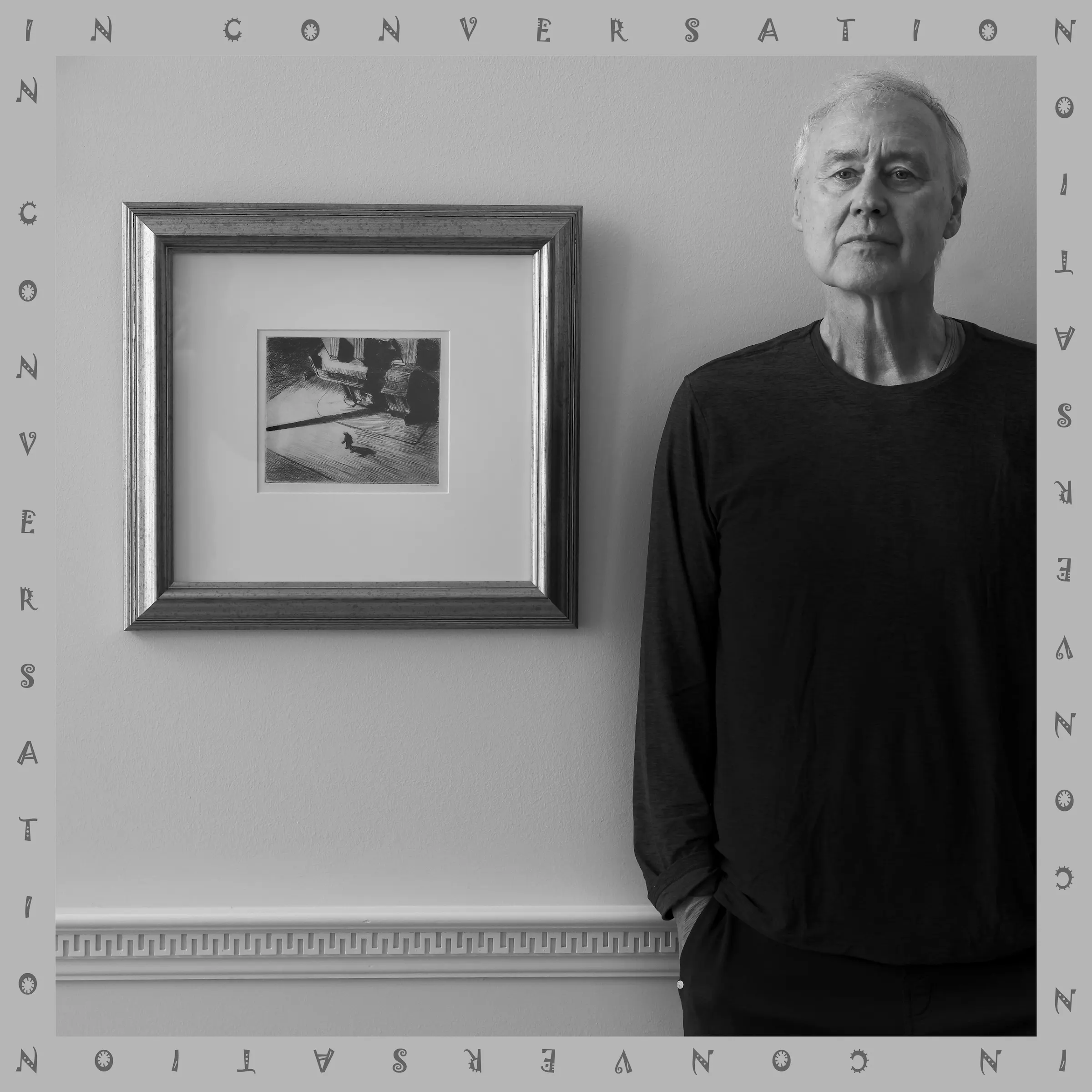
And so we always thought that the family lore that he was a cousin of my grandfather, whose name was Pierre Paul Saunier or Saulnier. Saulnier means salt farmer in French. New York people, the Hopper Museum is in Nyack. Blah, blah, blah. So because of that, we. We were very aware. We had the big Hopper collection with Hopper book with nighthawks on the COVID It was. This is from back in the 60s. We had this book and he was still alive maybe. So I made this record, Harbor Lights. And I. I knew of this beautiful Hopper oil called Rooms by the Sea, and I thought it was an oblique take on the title. And hence I wanted it for a cover. Found out that the Yale. It resides in the Yale University Art Gallery, and they gave us permission only to use it for a cover. They were very tough about it. We couldn't make Harbor Lights Hopper rooms by the seat. Shirts or merch was not allowed. But I didn't care about all that, so I just wanted the image for the COVID So that was the reason for the first one. And so I did all these interviews on the Harbor Life's record. The great Timothy White, who's a Billboard guy, was a great writer, great pop music, rock music writer. He wrote a beautiful, glorious piece about the. The album. And he had always quoted saying, yes, Edward Hopper, our cousin. Well, then we found some letters. Subsequently we found these letters where they called his mom Auntie Hopper. That was another reason why people thought that they were related. Oh, yeah, yeah. Here's Auntie Hopper refere in some old letter that was saved. Then we Found this note. It was accompanying a clipping of Edward Hopper when he was starting to really blossom as a known artist in the world, at least in America at the time. So the notes said something to the effect of a wonderful article about our dear friend Edward. And then I realized we'd had it wrong all this time. We're not related at all. So, yeah, okay, there you go. Here's Dumbass putting his footage. Not that anyone noticed, probably no one cares. But it was a little. We were a little crestfallen by that. But it did again in the end, it didn't matter. But so, so right, that's Harbor Lights. Then. Then at this point, we. There's a famous Hopper etching called Night Shadows. There are about 250 of them made printed at the time, maybe in the late 20s. And we bought one of them. We've had. We have a Hopper collection. If you ever come to Virginia, you can come over to my house. And we have a bit of a de facto Hopper museum in our house. Yeah. For watercolors and a bunch of studies, for oils and finished drawings and this etching, Night Shadows. So I just thought this depicted the, this record of this about the aging process and about the. The idea that, hey, down toward the end, you realize you're all alone. You're really alone. You know, sure, you might have great love around you and you're with your family, etc. But. But yeah, you're alone. It just, it just. So this guy walking around at the night in this urban scene, which is the. Which is how I'm describing the. The etching Night Shadows just seemed to be just right for. It depicted the feeling of this record that I had had made. So luckily it was in public domain. And I think that we could have used it because we own one of them. I don't know the legalities of all that, but that's why that's our second Hopper image used on a cover.
- [61:31]
Ian
That's fantastic. I feel like Hopper and you. I don't know. To me, so much of what I love about Hopper is the sort of compassion and dignity that he seems to afford to the subjects of his paintings. Just standard men on the street, people on the street, normal everyday people. And I feel like I get so much of that. That from your songwriting too. I think on a mental and kind of thematic level, the use makes a ton of sense.
- [61:59]
Bruce Hornsby
I've always felt a kinship with his art. And so that's it. Uncle Ed, who is not. Who ended up being our good friend Ed.
- [62:11]
Ian
There's that if I could just tug you for two more seconds. This episode's not going to come out for a little while, so I don't want to get too in the weeds for specific focus on where we're at at this moment in the season, but I know you're a bit. You've referenced it several times in the interview as well. Big hoops head.
- [62:29]
Bruce Hornsby
Well, not so much. I used to be more so. I'm not. But. But yeah. I have no choice with my son, which is fine.
- [62:37]
Ian
NBA teams, at least. Do you got allegiance with any particular squad?
- [62:41]
Bruce Hornsby
Not at all. I'm lucky enough to have had for years and still do have. Have friends in the world of professional basketball and college basketball. So I root for my friends and wherever they go, I'm rooting for them. That's for instance, one of my great friends, dear friends is Rick Carlisle.
- [62:57]
Ian
Oh, sure. Okay. So you're a Pacer fan.
- [62:59]
Bruce Hornsby
Yeah. So I root for the Pacers, and before that I rooted for the Mavs.
- [63:04]
Ian
Yeah. That was. Yeah. So 2011. That must have been an exciting time.
- [63:10]
Bruce Hornsby
That was a big deal. Rick Carl is a very good pianist.
- [63:12]
Ian
Interesting.
- [63:13]
Bruce Hornsby
Rick Carl is actually pretty good at playing the song Indigo Park.
- [63:16]
Ian
You've had Rick Carlisle play Indigo Park?
- [63:19]
Bruce Hornsby
He can. Wow. He spent a lot of time with it. He was. He was here spending the night with us about last summer sometime, and. And I played that, played that for him. He said, love this man. Can you show me how to do it? Because it's a series piano song. So. So, yeah.
- [63:37]
Ian
Wow.
- [63:39]
Bruce Hornsby
So. Right. No, no. No fan. No serious fandom. I root for LSU basketball. They're having a tough year, and my son Keith, again, is a grad assistant there where he played.
- [63:50]
Ian
Sure.
- [63:51]
Bruce Hornsby
In college. So as I said before. So I root for them. Of course, they have Alabama later today, and that'll be really hard for them. They're scruffed, they're struggling. And then they lost to two of their best players after injury for the year. So they're really depleted, really undermanned. So, yeah. Not. Not so much, though.
- [64:12]
Ian
I.
- [64:14]
Bruce Hornsby
But again, I have a lot of friends in that world. The great Thad Mata, who coaches Butler now, is a friend of mine.
- [64:21]
Ian
Sure.
- [64:22]
Bruce Hornsby
But lots of these friends I made through my son. Thad Mata was a big fan of Keith Hornsby, and when Keith decided to transfer is because Thad made a little entreaty. Keith had hit 26 on Ohio State in his sophomore year at UNC Asheville, and everyone was telling me he ought to transfer, which he did to lsu but so fed kind of got that started. Anyway, that's. That's enough of that. But that's so. Yeah, we've. We've been deeply in the world. Look ecstatic. The song on this record is. Is about AAU basketball. Did we talk about that?
- [64:59]
Ian
No, I didn't realize that.
- [65:00]
Bruce Hornsby
Yeah, it's when. When. When Keith was playing AAU at a high level. Boo Williams. The Boo Williams summer league program. He was from age 10 all the way to the end he was in that league. And it's a high end league. There are three NBA players on his 17U team. Blah blah, blah. So I and my wife Kathy as. As parents, we're up in the stands with the other parents and there were these great chance that these parents would throw out there. You fouled. You did it. Raise your hand, Edmond.
- [65:33]
Ian
Wow.
- [65:33]
Bruce Hornsby
You fouled. You did. And there's another one. Great one. That's right. You walked, you traveled and got caught. They're the best. So I always said to myself someday I want to put that in a song, those chants. And so I did. And so watch for this you guys. Because. Because of my son's ties there at lsu we got Kim Mulkey to have his. His LSU Lady Tigers killer women's basketball team. They're the video doing those chants in their gym. I get chills thinking about I went down there for a day. We call it Bootleg Productions Incorporated. Just a couple of. Couple of schmendricks with a. With an iPad filming this stuff. But so we have the great Flage Johnson doing these chants with her teammates Malaysia Folwalli. These killer players who are be at the WNBA next year. And so that's the video coming out in a couple of weeks.
- [66:35]
Ian
Wow. Okay.
- [66:36]
Bruce Hornsby
So ecstatic. Featuring again, Bunny Raid, my big sister in music man. And that's enough. I bored you guys enough. So there you have it.
- [66:45]
Evan
This was great. Thank you so much.
- [66:47]
Ian
I can't imagine another instance in which we would get to talk modern classical composers and Blake Mills and. And Rick Carlile and Bob Dylan and Jerry Garcia. I mean this is. You've taken us all over the world, Bruce. So truly honor is all ours. Thanks again.
- [67:03]
Bruce Hornsby
Great to be with y'. All. Thanks a lot. Happy never left the field. We've been blinded by this I just clean up all. Too hard
- [67:40]
Evan
I know a place where
- [67:41]
Bruce Hornsby
we can go and touched have been in Watch the Gl and the tall grass W in the wind Back on the ground me I'm your best defense
- [68:10]
Evan
this is the angel the.