Loading summary
Transcript164 lines
- [00:00]
Ian
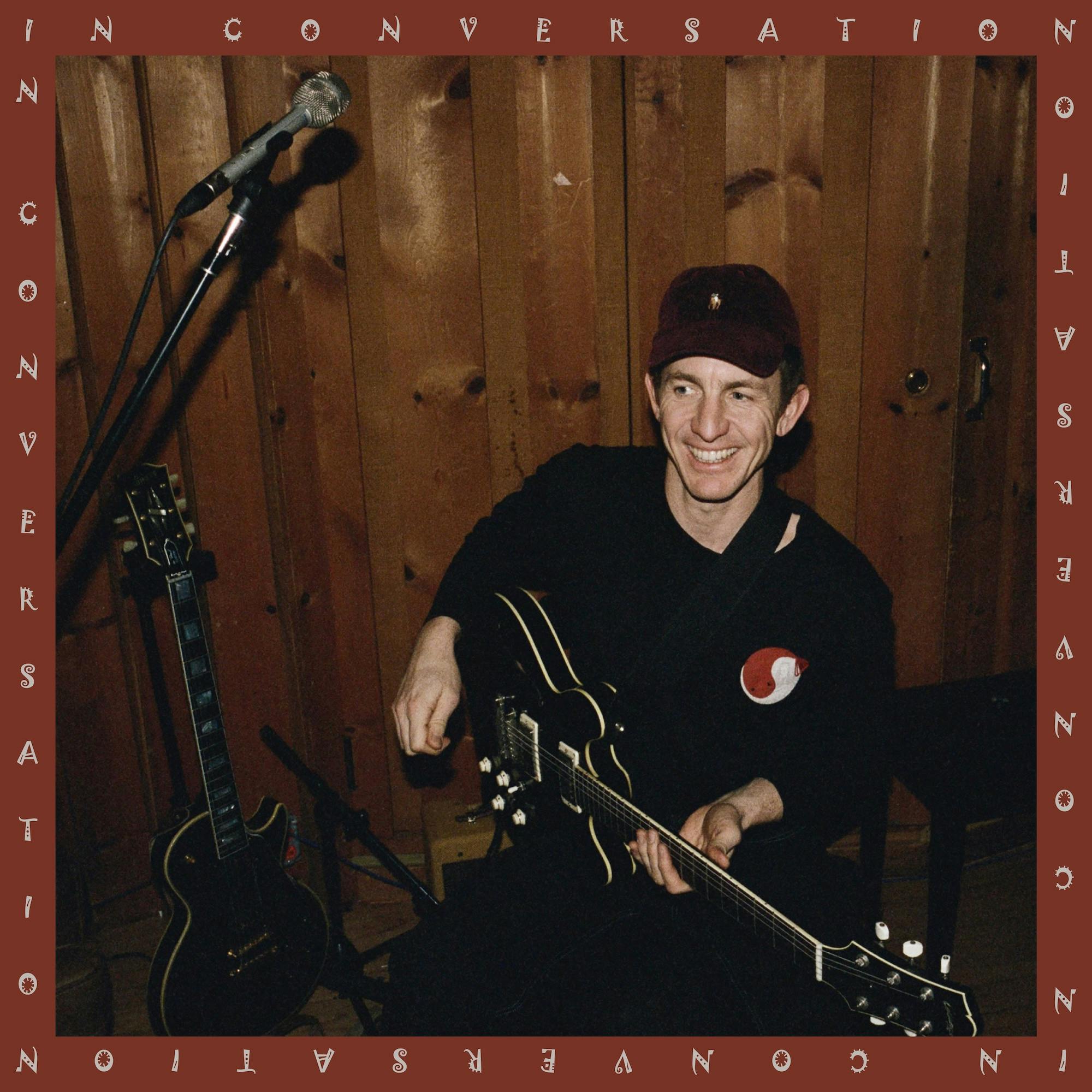
Welcome back to Jokerman In Conversation, I'm Ian. Today both me and Evan are rapping with the great Buck Meek who is back on the program actually for his second in conversation conversation. He was one of the first to come through when we started running this series a couple years ago talking about his solo record this time here to discuss the first Big Thief record in some some years. Actually going on three years. They are back with Double Infinity, which is both an evolution of everything they've been up to up until this point as well as sort of a, you know, reinvention of a lot of what works and has worked. That stuff still continues to work, should be no surprise. But there's also some new liveliness, busyness, droniness injected into the magical mixture that is a Big Thief song. Anyone who listened to Buck's first appearance with us a couple years ago probably remembers the man is just as talented at talking about music as he is at making it. And that holds just as true on today's conversation which like Double Infinity, the record is dense and busy and hopefully enjoyable all throughout. Really is one of the records of the year. You know, any Big Thief record is one of the records of the year, but that goes double for this one. Can't stop listening to it. Let's hear all about it from Buck. Buck, wanted to start with you here because I think I remember, you know, I spoke to you a couple years ago when your solo record came out, Haunted Mountain. Great record, but I think I remember. You're welcome. You were talking to me from somewhere in the general Topanga vicinity, if memory serves, and you may be speaking to me from such a place again today. I won't ask you too many questions, but obviously the fires were a pretty profound experience in that area. Evan's parents actually live in Malibu. I wonder, you know, before we get into the music if you could just kind of talk about what that like going through. Going through that was like for you.
- [02:57]
Buck Meek
It was pretty intense. The town where I live up here in the Santa Monica mountains definitely came together in a way that was pretty moving. A lot of the like local surfers put together a little brigade to help out the firefighters and day behind just putting out spot fires and helping older folks and helping move animals and stuff and turning propane tanks off and locating pools and getting water pumps up here to help out. And so that was pretty cool to see the community come together. And in the wake of the fire it's been pretty sweet seeing the, the native fire resistant plants come back super quickly. There was Some rain after the fire, but it's been incredible seeing all the. The manzanita and a lot of the native plants that actually, like, kind of proliferate after a fire like this. The hills are going pretty crazy. And also seeing how. How the. The native oak trees, like the live oak, live coastal oak here, so many survive the fires. It's like they have a force field around them almost.
- [04:02]
Ian
Wow.
- [04:03]
Buck Meek
That's pretty cool.
- [04:04]
Ian
That's amazing. What's the general kind of, I don't know, like, mental energy vibe? Like, these days?
- [04:12]
Buck Meek
It's calmed down. I mean, the. The old timers up here are. They've seen so many fires come and go. I mean, this is definitely one of the worst I think they've ever seen, but, you know, they. They stick it out. I think a lot of the. The newer folks took off, like, packed up and left after such a big event. But, yeah, it's. It's coming back to normal, though.
- [04:33]
Ian
That's. That's great to hear. And I mean, you. I think from what I know about the record, which, on that note, Double Infinity, fantastic record. Which we'll get into more here in a minute. Thank you. Please. I've been, you know, just thrilled listening to this for the last couple months at this point. But I think you decamped to New York to actually, you know, cut this record or cut the version of this record that is coming out just a couple weeks after that. Right.
- [05:02]
Buck Meek
Actually, we were. We were rehearsing and starting to record while the fires were still blazing here.
- [05:06]
Ian
Oh, wow.
- [05:07]
Buck Meek
They were still putting them out up here in Topanga. So it was definitely an emotional time for me to leave home. I evacuated my spot and was in New York starting to record Double Infinity, like, not knowing if my house was still there.
- [05:20]
Ian
Jesus.
- [05:21]
Buck Meek
And kind of trying to figure that out through, you know, a bunch of random social media posts from the fire department, trying to piece together footage from the air and the maps and everything, trying to figure out if my house was still around, but our. My house didn't. Didn't end up making it through. So.
- [05:37]
Ian
Yeah, I'm sorry to hear that.
- [05:40]
Buck Meek
But in a way, it was. I was really grateful to have the recording session to focus on during the time. It gave me, I think, some good perspective that, you know, I mean, it would have been tragic to lose my house for sure. But at the same time, like, the material was far less important to me than the opportunity to make music with my friends and create something more permanent.
- [06:04]
Ian
Sure. Yeah. I imagine that's kind of like a Double edged sword in that. Like, you know, on one sense, I can't imagine a more stressful weight to be carrying while making a record with my band. And yet on the other side of it, like, I can't imagine something better to take my mind off of the potentiality of losing all of my earthly possessions than making a fantastic new record.
- [06:28]
Evan
Like, especially on a record that seems. It seems like it's a very. It's very much of healing. Like, that's like a theme that seems to be like central to this particular album, like of sort of acceptance and healing and dealing with change in some kind of a positive way. So I definitely. I can only imagine that that was a boon. It's not like you were like getting through this by making like the angry record or like the totally, you know, trauma record.
- [07:04]
Buck Meek
That's a good. That's a really good perspective because. Yeah, on the plane over to New York from la, I literally flew out watching. I could see all the fires blazing from above. It was crazy because there was still so many fires around the whole city at that time when I was flying over to New York. And I was worried that it would distract me for sure. But it ended up being a really deep release for me going into the studio with such a collective of people that we put together for this. And you're right, like, the lyrics of these songs, I think, often touch upon acceptance and change and kind of transcendence. And then also just the way we structured the session around playing in a room with 10 people that we really admire and kind of creating this critical mass of improvisation to respond to. It just kind of. It felt like just jumping into a river or something. And there was. There was no space or time to second guess ourselves or even really look inward because there was just so much to respond to in the room. And I think that was really healing for me at that time, for sure.
- [08:09]
Ian
Can you talk a little bit about those sessions? Because I know from what I understand about the record, the story behind the record, I think you and Adrian and James had sort of tried to make this record or recorded some material at least elsewhere earlier in very different circumstances, and then ended up kind of, I don't know, going back to the drawing board and going in a kind of different direction.
- [08:33]
Buck Meek
Totally. Yeah. We wrote these and we put these songs together over the course of a couple of years leading up to the session. And in kind of parallel with letting go of our bass player of 10 years max, we were meeting up, the three of us, James and Adrian and myself. We Were meeting up to write and we had this. We had built this collection of 50 or 60 songs that we narrowed down to 15, I think. And we originally set out to record this album on our own in kind of in the woods, like as we always have, in isolation in our own studio. And just the three of us. And we had just let go of Max and I think we were still kind of grieving that and processing that. And our first instinct was to go into isolation and really self reflect and just make a trio record. I was playing bass at first, but we were feeling a little stuck in that isolation. And so I think we were called to the city, put ourselves in community and like in a room full of people that we really admire. People from like our community 10 years ago when we started in Brooklyn, and also some folks that we've always looked up to, like Laraji and Michael, Patrick Avery and Joshua Crumbley and stuff. And so, yeah, it just felt like really healthy for the transition to kind of feel our own reflection in a community like that. Feel like who we are now, I guess.
- [10:00]
Ian
Yeah. And I think you can hear that, hear the circumstances in the product. It's a very, you know, I say, like, if I call it a busy sounding record that, you know, sounds, you know, like potential pejorative, but I mean that in like a really positive way. There's even a couple tracks, I think, like Los Angeles, for instance, starts with just like people like kind of laughing and like clearly, you know, just. Just chatting and hanging in the studio. There's a. I don't know, there's a. There's a density, I think, to this record, even though it's shorter, you know, certainly than Dragon from a couple years ago. And I was listening to that record earlier today to revisit it and there's. I mean that. Another amazing record. You don't need me to tell you that. But the. I don't know, it sounded more spare and more kind of austere, I think, than I even recognized it to be initially, if that makes sense compared to what Double Infinity sounds like now.
- [10:53]
Buck Meek
Totally. Yeah. I mean, Dragon or Mountain was four of us playing together and this is nine to 12 people playing together in a room. Yeah. As we were writing these songs for the last few years, we kind of had this idea that we were. We were going to record like this super heavy rock and roll album and with screaming and just like heavy guitars and super loud. That was. That was like. I worked in concept for Double Infinity and something about that was amused. Even though simultaneously we were writing these songs, Adrian was writing these songs, and we were writing these songs together. And it kind of slowly became what it wanted to be over the course of these years. And we just let it be what it wanted to be in the long run and decided, I guess that's what like, rock and roll is to us right now. It's what it wants to be. And just kind of letting the spirit of like, rock and roll be amorphous. And. And what felt radical to us at the time was to again, like, put ourselves in a room with all these incredible musicians to create a lot of drones and to improvise arrangements from scratch. We didn't send anybody the music ahead of time and we. We showed them the songs like in front of the microphones. And we're just capturing their first reactions to the songs and also to each other's first reactions. So it was this kind of simultaneous capture of everyone's first instincts. And we essentially just jammed. We would just loop the tune for like an hour until we ran out of tape and then pick a take from. From that and like literally cut it out. In some cases. I think no Fear was an hour long jam that we boiled that we like cut down to seven minutes.
- [12:27]
Ian
I can't wait for. I can't wait for the bootleg series. Release the full hour long tape of no Fear. I can groove on that all day.
- [12:35]
Evan
Well, the end of no Fear has that. It kind of just.
- [12:40]
Ian
It just kind of like evaporates or something.
- [12:42]
Evan
Yeah, yeah. Like goes into a wormhole. It has like this crazy sort of. Yeah. Abrupt, but sort of in. In a kind of magical.
- [12:55]
Buck Meek
Yeah.
- [12:55]
Evan
Cutting off.
- [12:56]
Ian
It's sort of like a song that you enter into and then exit out of as opposed to like, you begin the song and then end the song, if that makes sense.
- [13:04]
Buck Meek
And that's what it. I mean, that's truly what it was because we. The format was that Adrian would go into the lobby of the studio with three background singers. Hannah Cohen, June McDoom and Elena Spanger. She would teach them the lyrics and they would kind of rough out some loose harmonies. And then the. James and I would show the band the song and we would just loop. We just kind of like improvise a groove and loop that until the girls came in and they would just jump on the microphones and kind of jump into our groove. And. And so that. That. That's recording is very much that, like, we just started looping the song and then we literally ran out of tape. And so the end of the reel is it going all right. And it was. It was so. It was kind of like a such a sudden ending. I think what we did was maybe we like chop the beginning of the tape off and then flipped it in reverse and splice it onto the end of the song or something like that. So I think that ending is just like a moment of the song in reverse or something like that.
- [13:59]
Ian
Wow.
- [14:00]
Buck Meek
Kind of creating like a palindrome thing.
- [14:03]
Ian
It sounds to me kind of like, I mean, we can't help but relate it back to Bob Dylan on a program like this. But the way a lot of those, you know, the early 60s, mid-60s records, I should say, were recorded like Highway 61, for instance, where it was just like, let's round up some people, bring them into the room, and like, here are the songs for the first time. And let's just get like the first take of Like a Rolling Stone on the tape. And then that's, you know, for sure, goes on to become one of the immortal documents of rock music.
- [14:29]
Buck Meek
Yeah. Which is how so many of my favorite records were made in those times. You know, all the Stack stuff, all the sun stuff, all the, you know, all the Wrecking Crew stuff, it was just people kind of reacting to the songs, you know, for the first time in front of microphones, more or less. And everyone is just so hot and they're just so dialed in from doing that all day long every day that their first instincts are really good. And so, yeah, I think that we put a lot of intention into picking the right players with that in mind, you know, with those singers who are all songwriters in their own right and they really understand, like, how to bring a song to life with a voice. And then our friend Mikey Bush was creating live tape loops in the room. So he had his eight track task and a microphone and he was sampling, you know, elements from the live performance and then feeding it into a tape loop. He had made like a 10 foot long tape loop around and reversing that. And he had eight tracks of tape loops going simultaneously for every song so he could create drones from the room. And then we had Laraji creating drums with his zither and his iPad. And then Michael Patrick Avery was playing additional percussion with this electronic drum set. He. He like soldered himself with all these wild parts. And then our friend John now was playing percussion as well, and Joshua Crumbley on bass. And so we put a lot of intention into bringing these people in who we trusted to listen and be really present and be able to respond quickly. But once they were in the room. We gave them no direction whatsoever. Just let them do their thing.
- [16:02]
Evan
Starting to get the name of the record. I'm starting to feel, like, very reflected in the way it was made, having, like, literally sampling itself and droning itself and interpreting itself. The COVID is of a. Well, it's of. Let me see if I can get this right. A lime with concentric strips of lime around it.
- [16:29]
Ian
Little twist.
- [16:30]
Buck Meek
Yeah, twist the lime. Yeah.
- [16:34]
Ian
Man, I love Laraji on the zither and the iPad. That's a very powerful combination. Can you just talk a little bit? I mean, that's, like, one of the coolest things that I can imagine. Can you just, like, how you guys hooked up with him and, like, kind of what his presence was like in the studio.
- [16:51]
Buck Meek
We've always really admired Laraji's approach to music and his laughter therapy as well. If you've ever. If you've ever chance, look up Laraji's laughter therapy on YouTube and. And just love his ambient records and his songs as well. And I think Adrian had met Laraji at the Kerbal Folk Festival during a solar eclipse. He gave her his. Like. He gave her his business card under a solar eclipse.
- [17:19]
Ian
Wow.
- [17:21]
Buck Meek
On the hill up there. Michael Hurley was. Was painting the solar eclipse with, like. With, like, blacksmith glasses on. He was, like, staring at the sun and paint, doing, like, a blind contour painting of solar eclipse. He was hanging out. So they met in this kind of charged moment. And when we were talking about putting the album together, he was the first person that came to mind because we wanted drones, but we also wanted them to be organic and not. Not super electronic, necessarily. And, yeah, his. He was so cool. He. He just held court in the studio. He didn't speak a word. He never asked a single question within about any kind of creative direction. He just was so open and, like, just centered and kind of neutral and with just open eyes and open ears and was responding to everything that was happening in the room with very simple ingredients. He had a zither and an iPad with a couple of patches, a violin and a flute patch, and was mostly responding to everything with those ingredients, but somehow just always in the cut, somehow lifted everybody else up, you know?
- [18:28]
Ian
That's so sick. Yeah, I get the sense. I mean, because, like, his singing, I think, is really on grandmother. That's, like, kind of what makes the song. I get the sense that, like, I guess it makes sense that he wasn't asking questions about creative direction or anything. Cause that, like, what he does to that song makes the Song. But it doesn't seem like the kind of thing that, like, you or Adrian could have been like, we want you to do this.
- [18:48]
Evan
We want you to do the most beautiful, soulful wailing.
- [18:52]
Ian
Exactly.
- [18:53]
Buck Meek
Yeah. No, that was completely unexpected. We had. I don't. We had never even asked him to. To vocalize. He. Yeah, I think he was. We were. Again, we were looping that song for, like, an hour when we had this groove that just felt so good. And he started singing into his zither mic and kind of just like, made the hair stand on art, you know, stand on end. It just happened. I just got chills again thinking of it, because he just started singing, and suddenly it all came into focus and just played the song a couple more times with him vocalizing, and that was it.
- [19:27]
Evan
There's a little moment where it sounds like Adrian is, like, surprised and laughing, where it's actually audible during that.
- [19:35]
Buck Meek
Yeah, you can. You can hear a lot of reaction. And, I mean, I love hearing Elena at the end. All the singers, but especially Elena is, like, really high in her register, kind of responding to him with these beautiful melodic lines. And they're playing. And also, I think Alyssa June McDoom was as well. They were really just, like, totally improvising these incredible melodies together as a choir.
- [19:59]
Ian
Sounds like a very, I don't know, powerful, soulful recording experience, I imagine. Distinct from, you know, as great as basically every other Big Thief record has ever been. This feels like something, you know, wholly unique to me.
- [20:13]
Buck Meek
It was really fun. It's hard to, like, go back from experience like that. It makes us want to just record like that more, I guess, do it all over again. It's also just extreme. It's so efficient, too, to record in a room with 10 people. I mean, we didn't do any overdubs on this record, essentially. Maybe we threw, like, a harmony here and there, but you get it all done in, like, one fell swoop because everybody's there. Yeah.
- [20:35]
Evan
It's a gesture. It's just like when the human element is at the center and then it works. It's like, what else do you need to do? You don't need to, like, really think about. You don't need to twiddle knobs so much. It's, like, all kind of present.
- [20:49]
Buck Meek
Yeah. And it's, like, impossible to recreate that. I think it's impossible to synthesize that simultaneity of people responding to each other at the speed of sound.
- [21:00]
Ian
It's like the exact antithesis of, like, the Steely Dan Steely Dan. Exactly. Like, as great as, like the Jay Graydon guitar solo on Peg might be. Like, you know, you can never actually kind of summon up this just magical alchemy, basically. It sounds like what you're describing in the studio.
- [21:17]
Buck Meek
That's true. One of my favorite parts of that is like, how it kind of encourages everyone to play very simply in order, you know, like, it. It makes it very clear that there's. There's a lot going on and there's not a lot of space for you to fill, you know, and so you just kind of have to find your one little spot, your. The right range on your instrument and a rhythm that sits in the. In the pocket with everybody else and just kind of repeat that and let it evolve slowly. And everybody just kind of sinks into these very simple parts that add up to something greater than the sum.
- [21:46]
Evan
That's something in music that I think is underutilized, or I should say that some of my favorite music is, especially records where it feels like every piece, every part is really given respect. Like each component part itself has a lot of a sense of purpose because of. Yeah, it's kind of the opposite of like hot dogging. Everybody's just sort of listening to each other.
- [22:18]
Buck Meek
Absolutely. Yeah. And which is often at the root of most music, like even. Even jazz, which is in some cases becomes such a, like, soloist form in root was just like this equal part orchestra orchestration, like improvised orchestrations, where everybody's soloing all at once together and responding.
- [22:36]
Evan
Yeah.
- [22:38]
Guest Vocalist or Reader
Los Angeles, 3:33. Nothing on the stereo Dirty tear like Mona Lisa smiling in half life mysteriously but seriously I'd follow you forever Even without looking you call, we come together Even without speaking you say to me you sang for me the picture box is full and we are kissing in a fistful of fragments falling down I throw them up and I watch them hit the ground like snow amputated dimension of the physical melting image without sound Park Avenue, 8:38. Waving to my best friend.
- [23:28]
Ian
Do you feel like that's something? I mean, because Big Thief, you know, has a reputation as one of the. One of the primo live acts going these days. You guys are just able to put on incredible shows night after night and in this kind of exploratory, adventurous, spontaneous fashion, as opposed to just kind of going out there and running through the set list 1 through 15 and hitting all the same notes night after night. I don't know. Do you feel like the skills and the muscle memory perhaps that you've kind of built up with everyone over the course of however long is like, that's kind of paying off now in this recording process?
- [24:05]
Buck Meek
Definitely. Yeah. I think that we've practiced that for 10 years together as a four piece, as three piece. Just active listening and adjusting your expectations on stage. Like being, you know, being present instead of. Instead of at, you know, at the will of your expectations. And that's really. It's really hard to do, especially when you're on stage and there's the pressure of an audience or whatever to really be present and be able to move with the changes. It takes a lot of trust, I guess. And, yeah, we've practiced that enough. I think it really served us in this session, for sure.
- [24:42]
Evan
Well, yeah, I'm just really interested having seen you live with the group and having seen moments where really, really unexpectedly heavy and shredding performances are part of a show that. Abandoning that initial concept or just sort of letting it drift and go into the direction it was going. Like, the idea to do that heavier album, it seemed like maybe if from the outside that would have been inevitable. Like, there were a couple. At least a couple singles that I think really.
- [25:22]
Ian
Yeah. Was that. I was going to ask was that heavier sound? Because, like, Vampire Empire, I think it was like my favorite song of the year when it came. I think it was a 2023 release, but it was just a. I think it was a double A side single. Like, was that kind of. When you say, you know, we had the concept to make this heavier, harder sound, you know, Adrian's like, almost screaming in that song. Was that kind of the direction that you had in mind?
- [25:43]
Buck Meek
Totally. That's like a. That's a channel that we have. You know, there's. There's so many aspects to Adrian's songs into our band. We kind of have all these different modes and that we're just fluttering between constantly on stage, in the studio, and we all come from such different musical backgrounds and everything is kind of free. And yeah, I think songs like not. And yeah, not especially Vampire Empire and. And even Dragon to Our Mountain, the way that we've developed that song live, it's very quiet on the record, but it's become like pretty heavy song live. And yeah, there's a bunch of tunes that are. That, especially on the live show, have become, like, pretty heavy. I think just in response to, like, the adrenaline and the rooms getting bigger and, you know, the Saturday night. Itis just getting in your blood and, like, wanting to blow it up. Like, it makes so much sense in the live setting. And yeah, I think That's. That's what led to that. And I'm sure, I mean, we have so many songs. Like I said, it's bound to happen at some point.
- [26:51]
Evan
Is Dragon New or Mountain? I think right when I. That there's like a really, really heavy drum part that was the live version for sometimes, and it was almost like. Yeah, yeah. That was like heavy metal shit. Killed me. I loved that when I saw it. But I. Yeah, it just brings me back to thinking about this record and how it's not, you know, for lack of ability, obviously, that, you know, this record could have gone more in that direction. It's.
- [27:26]
Buck Meek
Oh, yeah.
- [27:26]
Evan
I just wonder, like, what. What do you feel like were points maybe where it became clear this new record had its own identity. And, like, where. Where do you think back on that identity emerging?
- [27:41]
Buck Meek
Yeah, I think it came from just the songs emerging as they did. Like, it all starts with the songs, really. And. And also maybe the fact that a lot of these songs were written off of tour. You know, they were. They were written in our homes in the woods and, like, in quiet spaces. Maybe that has something to do with it versus they. You know, there's sometimes songs that are written on the road and we're. We're playing them for the first time on big stages through our big amps, and like, maybe they lean more into, like, a heavy direction out of the gate because of that. But then there's also examples of writing songs in isolation that are super heavy. So, I don't know, there's no, like, rhyme or reason to it, really. But for whatever reason, the songs came out this way and we just followed them as always. Like, there's so much information in a song to respond to. It tells you. The song kind of tells you what it wants to be and, like, the parts that it. That it wants to frame it and the production and everything. And so we were just trying to listen to the tunes, I guess.
- [28:44]
Ian
I think you mentioned a few minutes ago that you guys tracked maybe 15ish songs and then end up, you know, realizing that this is the record, these nine songs in this order, I guess. What is the. What's the process there? Because, I mean, I'm sure the other songs, you know, whichever other songs were tracked, they might show up in live shows or they might show up on, you know, expanded editions or something down the road or whatever, but, like, deciding that such and such a song just doesn't have a home on this. On this album. I don't know, is it a collaborative, you know, kind of decision that you and James and Adrian all arrive at together, or is there. Is it almost like a. I don't know. Do you guys, like, debate? Like, this song belongs here and this one doesn't type of thing.
- [29:28]
Buck Meek
It's. It's definitely very collaborative. And the process is. We're a band that really believes in the album structure, and at least we work within that model as a vessel or as a limitation. We love albums, we're inspired by albums. And it's also just like a healthy limitation. I think it's enough duration to. To tell a story, but it's also short enough to, you know, for some decisions. And of course, we've made really long albums in the past, but we knew we wanted to make a shorter album. With Dragon, I mean, with Double Infinity, in response to Dragon, it just felt like the natural ebb and flow. But to answer your question, the sequence and the. The songs, it's. It's an alchemic thing. Like, to some degree, it has to do with, like, how the songs actually go down in the studio. Some. Some songs are, you know, for whatever reason, on that given day with those players with, you know, sometimes the song just like, happens so naturally in the studio and arranges itself and the recording just falls into place. And then other times, it's for whatever reason, harder to. To arrive at a place where we feel really good about a recording. So that. That will eliminate a couple of them. Typically, you know, like, oh, we just. We just didn't get it this time. You know, we'll save it for the next time. But essentially, with whatever songs that we're left with, in this case, let's say we started with 16 and we ended up with like, 13 recordings that we felt really good about at that point. It's kind of like once it's recorded, we take a step back and look at the collection and try to find the alchemy or, like, the story that wants to be told with. With that collection and just kind of like what songs work together as. As a collection, I think to, you know, to make the. The clearest picture. And it's a conversation. There's some debate, but honestly, in this case, it was pretty unanimous. Like, the decisions were made very quickly. Sure, yeah.
- [31:29]
Ian
I mean, the. The first. I mean, this whole record is just that it's all killer, no filler. But I mean, I think the first four songs in particular just kind of sail by. Just effortless one, one after the other, incomprehensible. Such a fantastic album opener. And then into Words. Los Angeles, all Night. That's just.
- [31:46]
Buck Meek
Thank you. Yeah, it's all about, like, sequencing. A record is such a. It's a cryptic art form. It's its own art form.
- [31:55]
Ian
Yes.
- [31:56]
Buck Meek
We learn more about it every time we attempt it. But, you know, so much of it is about momentum and. And the attention span and like, it's. It's. So much of it is like rhythm and the fluctuation of tempos and creating adrenaline to the point of like a boiling point and then sometimes then falling into like a very slow song from there that provides like a breath and then easing back. Like it's just all about rhythm, I guess. Totally. And so again, it's like you kind of have to have the whole collection to know where. What the ingredients that you have are, you know?
- [32:29]
Evan
Yeah. Like, which one is an ending for this particular group of songs? Which one is the beginning. I think that this record, I mean, I love hearing that you as a band, love albums because we here at Jokerman Podcast, we love albums, we love albums. And I think that that's. I'm always happy to hear that, like the album as an art is being considered because it's kind of. Sometimes feels arbitrary these days. Like there's big releases that are just kind of made to just be chock full of stuff but don't really have an identity. And this record, I felt like, really has an identity that. In that you can put it on, as we say sometimes on this show you can just put this record on. And it, like Ian was saying, has this kind of natural flow to it. There isn't anything really starkly, ominously like stuck in there where, you know, that can be great on a record, but it's almost like what I think of as like the. The Astral weeks aspect of something.
- [33:40]
Ian
Yeah, it's just such an easy listen, you know, and. And I say easy and again, that might sound like pejorative in some senses, but like, it just, it. It. It's one that I found myself just like I've been listening to it like walking my dog through like, you know, the parks and, you know, the wind blowing these beautiful natural environments up here. I've also been listen in the grocery store and like, I just. I always want to listen to this record pretty much any circumstance that I.
- [34:04]
Buck Meek
Thank you.
- [34:05]
Ian
I'm glad that myself in.
- [34:06]
Buck Meek
Thank you. I'm glad that's coming through because that was definitely our intention was this. With this one, you know, dragon or mountain was really long and winding and we recorded in four different studios over the course of like A year and a half and however many something. And this one, we wanted it to just be very concise and high energy and just for it to just feel good. And then also as a bit of a Trojan horse, obviously, for like, a really wide dynamic of lyrics. As always, Adrian's narratives are really deep, but at the very least, we wanted the album to feel good.
- [34:40]
Ian
Can you. I mean, on the note of lyrics and stuff, or, you know, dense narratives that Adrian tends to weave, the perhaps least dense one here might be my favorite, I think, out of the whole thing. Happy with youh, which, on the note of sequencing, perfect penultimate track here, fantastic note. I mean, can you just kind of talk about how that song came together?
- [35:05]
Buck Meek
Totally. Well, I know it's. It's a bit of an anthem for just like loving the person you want to love so great and relinquishing shame and. But yeah, I think that the song has a mantra quality, of course, which is something that we wanted to explore on this record both lyrically and sonically, I think, bringing in drone artists like Laraji and Mikey, creating live tape loops, et cetera. Just creating this kind of element of constant drone like this. These rivers of sound and repetition, I guess, with the idea that with repetition of a theme like Happy with you, your. Your relationship to that, like, static point kind of evolves over time.
- [35:53]
Ian
That. Yeah, I just. I. I can't get enough of that one. Why do I need to explain myself? I think it's such a great, like, kind of stinger, you know, after the kind of mantric quality, like you said.
- [36:06]
Buck Meek
Yeah.
- [36:07]
Evan
Speaking of mantras, the. The song before, it has a big old mantra in it about one of our favorite things.
- [36:15]
Ian
That's right. Rock and roll.
- [36:18]
Evan
Yeah, I just, like. I don't remember the last time I heard a song that was so. So directly about rock and roll. Like, that doesn't happen.
- [36:29]
Ian
Rock and Roll by the Velvet Underground.
- [36:32]
Evan
Yeah, it's actually in our podcast. It's still rock and roll to me. Talk me to about Billy. But, yeah, that. That just like, struck me. I felt like there was a really insistent. There's something insistent about how profound that is. Like turning everything into rock and roll feels kind of like an ethos for this. This. This record and maybe even the group or.
- [37:01]
Buck Meek
Oh, thank you.
- [37:03]
Evan
The way that it can contain everything.
- [37:06]
Buck Meek
Yeah. I think that that lyric is a bit of an analog for our process, you know, even with. For. With this record and having this idea of making a super heavy rock album, this kind of working muse, and then seeing that just naturally Evolve into whatever this is. And letting it be actually felt more radical to us than forcing this preconceived idea of rock and roll onto it. And. And also as like a bit of an analog for our band as a whole, as you mentioned, I think just like, that's kind of always been our thing, just letting be what wants to be. And. And yeah, we really believe in rock in the spirit of rock and roll. We really believe in the spirit of records. And people say that, you know, the record is dead and rock and roll is dead, but it's just. It's our responsibility to make good, good albums and good rock and roll. So, you know, amen, brother.
- [38:01]
Ian
Listen to this record. You're not going to think rock and roll is dead.
- [38:04]
Buck Meek
Exactly.
- [38:06]
Ian
Speaking of rock and roll, is that. Is that on words? Is that solo that's you ripping that?
- [38:12]
Buck Meek
That's actually Adrianne singing through a dime. A dimebag Darrell preset in Pro Tools.
- [38:18]
Ian
What? So not even a guitar.
- [38:20]
Buck Meek
The dimebag Darrel up plug in, like, amp mod emulator that she's singing through.
- [38:26]
Ian
Okay. That's wild, because that's like kind of the one or not the one, but one of the kind of standout, like, moments of that you talk about, you know, making a heavier, harder sound like that. That is one of those moments that that kind of spirit still shines through. I love that. That's not the guitar.
- [38:44]
Buck Meek
Yeah, it's. It's her just ripping. And that's Joshua Crumbley shredding Face under on the bass. That was his improvised solo in the room. Just ripping. What a beast.
- [39:16]
Guest Vocalist or Reader
The only subconscious. Subconscious.
- [39:33]
Ian
What? Can you maybe talk a little bit? You know, obviously part of the. The change that's gone on with the band here is. Is the departure of Max since, you know, the previous record. I'm not going to ask you to go into details or anything. I think you all have shared about as much of that as you want to share. But I wonder just, you know, I get the sense or I would have to imagine that there's. There's a. That that's a process. It's something that kind of happens, you know, to reach sort of a new state of equilibrium in the band. Can you talk a little bit about what that has been like and kind of where you're at at the moment?
- [40:06]
Buck Meek
Totally, yeah. It's been a deep transition. We were a band for 10 years with Max, and, you know, I mean, a band is such a multifaceted thing. Everyone has multiple roles in the band, mostly off stage, you know, and on stage, of course, it's a creative entity, but 23 hours out of the day, in most cases, we're, we're off stage just trying to keep this thing alive and keep our friendships alive and keep our, our morale and, you know, just navigate the world together as a collective. And everyone has their, their roles in that. And, and so I think in the absence of Max, it's been, it's been a, a process, but a beautiful thing to witness how we've had to kind of like adapt our roles and, you know, in order to compensate for, for the lack of Max's presence there. Max had such a childlike, has such a childlike way about him. He's so playful and was always reminding us to just like, play and for instance. And so it's been beautiful to see how in, you know, in absence of that, we've all kind of had to step forward and maintain that.
- [41:24]
Ian
Are you. I mean, the band is going out on tour, you know, soon, which I think is going to be first big one in a while. I think you. I mean, some shows last year, but I think it was two years since.
- [41:38]
Buck Meek
Like a proper long tour.
- [41:39]
Ian
Yeah, since like what, what a big thief tour is. What, what is the, what is the, the unit going to look like?
- [41:47]
Buck Meek
We're going out as a four piece with our friend Joshua Crumbley on bass, who played on the record, incredible bassist. And we're hoping to do at least one show. I think we're going to try to do the New York City show, the Force Hill show, with the full band, but beyond that, mostly a four piece. So we're, we're gonna, we're gonna improvise these songs as a four piece.
- [42:10]
Ian
And you're playing like big. I know here in the Bay you're doing, I think the Greek here. You might be doing the Greek in Los Angeles too. Like those.
- [42:16]
Buck Meek
We're doing Hollywood bowl here in Los Angeles.
- [42:18]
Ian
Hollywood Bowl. Jesus.
- [42:20]
Evan
Wow.
- [42:20]
Ian
So that four people up on, you know, I, you know, the Beatles. Does that feel like a, you know, a lot? I don't know. Is that just four people on stage for the Hollywood Bowl? Is that, is that, is that a challenge? Is that exciting? Is that, you know, nerve wracking? All of the above.
- [42:41]
Buck Meek
That's what we do. So we've always done so just fish.
- [42:45]
Evan
And water, no fear. They have a whole song about no fear.
- [42:49]
Ian
That's a good point. Yeah. I was thinking that song was inspired by the great clothing brand.
- [42:57]
Buck Meek
I am really thrilled to tour with Joshua Crumbley. He is Such a phenomenal musician person. So it's going to be pretty incredible to get to play with him every night. He holds a lot of power.
- [43:08]
Ian
What does he bring? What does he bring?
- [43:11]
Buck Meek
He brings so much melody. He has so much low end earth power as a bassist, you know, but simultaneously, somehow is constantly playing these beautiful melodies way up on the neck, kind of moving between those two ranges, those two worlds. He writes hooks. Like, he's just a hook machine, like Carol K level hook writer. Like the, like the bass line on Happy with you, for instance, a beautiful example of that. And Double Infinity, that beautiful little solo. And yeah, he's just creating counter melodies left and right while somehow also just holding it down. So heavy, man.
- [43:51]
Ian
Yeah. You say the baseline. I'm happy with you. I just immediately started like, you know, that just popped into my head, you know, immediately. So that's. I. I totally get it.
- [44:00]
Buck Meek
He's such a cat. He, like, grew up playing jazz with his dad in la. Great saxophone player father. And went to Juilliard and then like, has been making ambient music for a long time, but still, like, studies privately with Ron Carter in New York. And like, when we sent him the songs he just sent, we were like, yeah, try it. You know, write a bass line and send us. Send us something back. And he just sent us like a solo performance of Incomprehensible with him just playing these, like, really long, slow notes, no backing track, which we weren't expecting. Just so much space and intention with every note and like, so simple in a way that like, only, like a great master can play. Simply, you know, to be able to fill so much space with that.
- [44:42]
Evan
Yeah, I'm seeing on his solo record from 2021, it, for example, he's playing with people like Shazad Ismail and Sam Gendel, like, people who are. Who I also associate as this, like, kind of like sweet spot, like, rare breed of people who can kind of play anything but seem always to lean into this more spiritual tradition in jazz. And like, totally. And yet there's also like a taste of. Of restraint. Like, there's. It's not. It's kind of everything you'd want, I mean, in a. And especially in a rhythm section, in a bassist. I mean, there's so much delicacy that that kind of a player can bring.
- [45:24]
Buck Meek
Definitely. Yeah. And I think that really, that. That works very well with. With Adrian's songs and like this just the spiritual quality for lyrics and the, you know, the delicacy there. Yeah, he's. He's been like turned With Kamasi Washington a bunch too. And like, so it's pretty cool.
- [45:42]
Ian
He's got some heavy duty bona fides.
- [45:45]
Evan
Thinking about like the Fair, like the Pharaoh Sanders kind of direction of things. And, you know, I think that there's more and more I'm happy to see, like, I think there's more and more respect and appreciation of that kind of music of. Not to say it's like a genre, but.
- [46:04]
Ian
Well, it's cool that it's like. Yeah, it's like jet, you know, jazz, rock, fusion, but like, not in the sense that.
- [46:11]
Evan
Not that way.
- [46:12]
Ian
Fusion. Like, it's a totally different. Exactly. Approach to that in that has virtually zero relationship to what you think of as, you know, jazz rock or fusion. Jazz fusion music. But like, you know, the skills and kind of the approach and the mentality kind of turn, you know, turn the rock and roll into something else entirely.
- [46:33]
Buck Meek
Totally.
- [46:36]
Ian
Can you talk a little bit about. I want to just like about James in the band because I feel like, you know, maybe unfairly or this might be just my own personal thing, but when I think of Big Thief, I do tend to think of you. And Adrian is kind of the co, you know, captains of the ship. But now you're really a three piece and James is the third leg of the stool. I wonder if you could just, I don't know, talk about him.
- [47:01]
Buck Meek
It would. Yeah. Could never have been Big Thief without James. James is absolutely essential. His spirit is wild. And James. James had. He's had bands since he was five years old. His uncle Bob worked at the Artist to Chicago and, like, had access to these. These like, crazy. They're like metal workshops and stuff and had, like, made all this recording equipment. And I think for James's fifth birthday gave James, like, the opportunity to record an album. He's like, put together a band, James. We're gonna make an album. And so James put together a band of his friends. They named it Broken Parasite. And they essentially just like, I think, put a bunch of acoustic guitars on their laps and like, just. We're just strumming open strings and like, twisting the tuners.
- [47:48]
Ian
Very sick.
- [47:48]
Buck Meek
And just like inventing lyrics like bluegrass kicks ass and stuff. And then every year for his birthday, Bob would record another album and they would just get a little more, like, refined. Eventually they became the Dogs, a little more punk rock. And so, yeah, he's just had like this really creative relationship with recording and with rock and roll. He had tons of rock and roll bands coming up at Chicago. And when we met him, he had A few bands in Brooklyn and just. Just bonafide rock and roller and simultaneously really experimental recording engineer and ambient musician, electronic musician. He's always sampling constantly as we're traveling the road and just playing with sound, making really bizarre, beautiful albums of his own. And so, yeah, he brings a lot of. Of that. That experimentation to. To our band and always has a pulse on what's like, raw and what's real. It's always been kind of like a constant reminder of like, just keeping it as. As real as possible and vital and dangerous.
- [48:55]
Evan
The record seems to have. Aging is also like a really prominent theme and focus of the lyrics. And I mean, our. Our whole program is kind of centered around the aging of the rock star in a positive way. And yeah, I just would be curious to hear your thoughts on. On what. Who you look up to, like elders in the field and how. How you see the. The future of working as a. As a rock musician today.
- [49:33]
Buck Meek
Totally. Yeah. Oh, there's so many elders that I look up to in the field, of course. Neil Young, Michael Hurley, I would consider to be one of the great rock and roll musicians. And yeah, so many. But yeah, I think the thing that I love about one of the things that I love about rock and roll is that it to me, it feels like the music of the young spirit. But at least myself, I feel like the older I get, the more I'm able to. To relinquish fear and control in the pursuit of music and in the pursuit of, you know, creativity. I think at least my. My own personal path with it was like, has just been shedding a lot of the programming that I've been given around. Like, what. What good music is, what virtuosity is, what, you know, commercial music is all this stuff and just slowly chipping away at that and getting closer to just like, what is my instinct? What. What do I want to play? Who like what, you know, what what's like my first thought and intuitive thought and just letting that be. And to me that's like the spirit of rock and roll. And I. I see a lot of musicians get closer and closer to that as they get older, so. Feels like a fountain of youth to me, I guess.
- [50:56]
Evan
Agreed.
- [50:58]
Ian
Keeps you rock rock music, keeps you young, even old.
- [51:01]
Evan
Well, they say it's like a young man's game or that was the line forever. That's what they said it's for young people. But like, yeah, it was when the only people doing it could. The oldest you could be was like 35. Just because of the.
- [51:14]
Ian
How Old.
- [51:15]
Evan
The thing was, you know, the medium was. Yeah, we are at the point where there's, you know, the first. We haven't gotten the first 90 year old rock stars, to my knowledge.
- [51:25]
Ian
Depends on how you, you know, if you would qualify. Like a Willie Nelson, you know, he's.
- [51:29]
Evan
He'S, he's a, that's actually, you know. Sure. He's probably in the Rock and Roll hall of Fame alongside him.
- [51:35]
Buck Meek
A rock star. For sure.
- [51:37]
Evan
He's in there with Ice Cube and who else? Whoever else is in the Rock and Roll hall of Fame.
- [51:42]
Buck Meek
Yeah, but yeah, I mean to me it's like, it's beyond genre, it's beyond fame. Like the heaviest rock stars I've ever known and been inspired by were just like all the bar bands, you know, across the country, across the world, like just the people who are just. I remember there was this bar in Boston I used to go to, there was this bar band there. The drummer was this like big guy and whenever there was a baseball game on, like in the Red Sox were playing and he like, he would just be cruising on the drums playing blues or whatever, and then every time the Red Sox would hit the ball, he'd like play faster and louder for a second, you know, and like just having the time of his life. And then like, of course in Austin, growing up, seeing bands like Red Wolkart and I mean they're like country musicians or whatever, but just the way that they approach their instrument, the way they approach music, to me is the spirit of rock and roll. Like Red Ball. I used to go see Red Wolkard at the Jenny's at a Longhorn Saloon where they do chicken chip bingo every Sunday. And Red would be on stage with like a plate of fried chicken, just like eating chicken in the middle of his songs and stuff, you know. And I mean, it doesn't get any more rock and roll than that.
- [52:50]
Ian
Maybe that's the. Maybe that's the way you get the Hollywood bowl audience on their feet. Do the Big Thief, Chicken Shit Bingo. That'd be a good time, no doubt. I mean, I guess sort of along these lines, I wonder, you know, the concept of aging, growing, time passing, you know, the band, the band has been a band for. I mean, I guess you've been releasing records for a decade basically at this point, and you've been working together for even longer than that. But obviously there was, I guess it's been close to three years, you know, in between releases. By the time this record comes out in September, I think dragon was early 2022. I wonder, I don't know, just how do you get the sense? And obviously in that period of time, it's not like you went away, you released a record, Adrian released a record, and then I think, like another record. And there were, you know, singles and stuff and lots happening, I guess. I wonder just how you get the sense that, like, all right, it's time to make the next big Thief lp.
- [53:53]
Buck Meek
Well, the songs are just always piling up. Adrian writes so much and. And then we've been writing more and more together as a collective. Mostly. I just as like a way to evolve our friendship and just. It just feels new and exciting and I guess rock and roll to write together because it's something we've never done before as a band, like writing the song grandmother together from scratch for the first time. And so, yeah, we just. Eventually the. The. It's just it over. The songs start to overflow to the point where they have to do breaks. Yeah, yeah, the damn breaks. And. And also it's just like a matter of when we have time, because for years we were touring so hard, and as soon as we'd have a little break, we'd go into the studio and record. But for this album, we. We intentionally tried to take a couple of years off the road. We did a little tour last summer to get through it, but we took a couple years off to just go fully into the writing process and amass, like 60 something songs. So. Yeah, but it's just what we. We're our happiest when we're working. You know, as soon as we finish one album, it feels like we're just at the beginning again.
- [55:04]
Ian
Time to start. Time to start the next one.
- [55:06]
Buck Meek
Yeah.
- [55:07]
Ian
Do you imagine a future in which. I mean, I guess it sounds like the answer to this question is yes, so I barely even need to ask it, but, like, you know, when you release UFOF and Two Hands, like in this. In six months or something, it sounds like something like that is completely plausible. Again, not that you need to necessarily script it out or plan it, but, you know, it doesn't seem like you're necessarily taking your foot off the gas when it comes to just like, existing as a functional kind of collective at this point.
- [55:36]
Buck Meek
No, we're just picking up steam for sure.
- [55:39]
Ian
Hell, yeah.
- [55:40]
Buck Meek
Yeah. I hope to be doing this with these people till the day I die.
- [55:44]
Ian
Well, you're. Y' all are getting. Getting better and better with each passing. As hard as it is to believe that, you know, it just keeps getting.
- [55:53]
Evan
Better and it's Also just great to see how, honestly, just how successful the group is and how popular. Because that was, like, when I first became aware of Big Thief and continued to. I was just, like, really happy that it. It's being received the way it. It deserves to be received. And I think that, yeah, it's proof of everything that you've said so far about the. The point of doing this in the spirit of doing it is there's also people who really want it to be done.
- [56:31]
Buck Meek
Amen. I feel really encouraged by that as well. It's been so encouraging to see our audiences get younger and younger, you know, like, in the face of whatever, social media and et cetera. Like, the kids just get younger and they seem to want something real even more than ever, which is super encouraging to me.
- [56:53]
Ian
It gives you a little hope, you know, in this era of, you know, AI bands on Spotify and, you know, just generally pretty shitty music out there. Like now, actually, there is a, you know, kind of thirst and hunger for the good shit, the real shit that still exists.
- [57:10]
Buck Meek
Definitely. It gives me hope for sure.
- [57:14]
Ian
Okay, well, I think we've. We've definitely. I feel like. I feel like this is like the first interview I taped with you. I just. Like a lightning round. You're just, you know, you're a machine with this stuff, which is great. As someone who, you know, tapes a lot of interviews where it, you know, it's like pulling teeth sometimes.
- [57:33]
Buck Meek
Oh, yeah.
- [57:33]
Ian
That's the opposite of the experience here. I do. I want to just, you know, one last question, because I do know a couple years ago, our buddy interviewed you and he asked you a couple questions about Shadow Kingdom. And I know that you mentioned you couldn't really talk about that for fear of a cowboy. This cowboy's existence has actually been expanded on recently. I don't know if you are aware of this at all, but Alexander Burke, who was, I think, on the accordion, gave a pretty detailed interview where he also went, you know, explained something about this cowboy and actually gave us, you know, or not us, but he spoke to our friend Ray Padgett about. About the whole process in general. Just, you know, feel free to say no, I'm still holding true, but wanted to just give you the opportunity, if there were any other statements on that experience, to lodge.
- [58:27]
Buck Meek
At this point, Alex is on his own. I'm not messing with that cowboy, man.
- [58:35]
Ian
I wouldn't either. Thanks so much, Buck.
- [58:38]
Buck Meek
You got it.
- [58:42]
Guest Vocalist or Reader
Grandmother. My mother. Tell me about the lake. It's been strange. Dancing, kissing in our car, standing in the state.
- [59:16]
Ian
Thanks again to Buck Meek. The band is Big Thief. The album is Double Infinity, the label for ad available now wherever music is listened to, sold streamed, any all of the above. Yeah, stay away from Spotify if you can and catch the band out on out on this tour. That sounds like they're pretty stoked for kicking off. I think here in just the next week or two in North America promises to be another thrilling set from one of the one of the great rock acts of our day. Someone that presumably whoever is doing niche rock music podcasts, you know 50 years from now will be looking back and running through episodes all about ufof, Dragon and certainly this record, Double Infinity. It is good music. Jokerman.
- [60:15]
Buck Meek
We are.
- [60:41]
Guest Vocalist or Reader
Year I can roll.
- [61:06]
Buck Meek
SA.