Loading summary
Transcript338 lines
- [00:00]
Ian
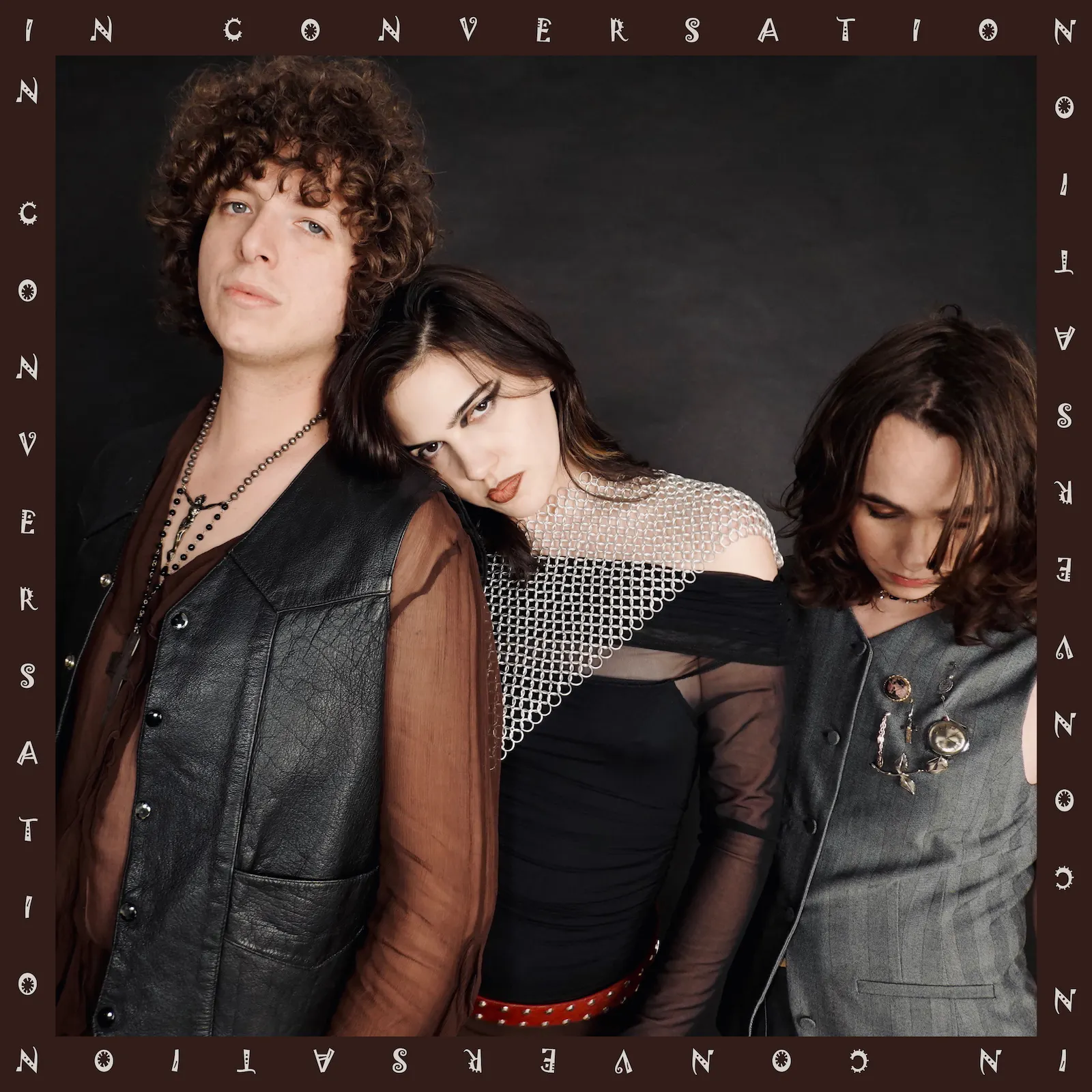
Welcome back to Jokerman In Conversation. I'm Ian. Today trio, here on an In Conversation episode, we've got Julia Cumming and Nick Kivlen from Sunflower Bean, who are stopping by the pod on the occasion of their excellent new record, Mortal Primetime, which Julia describes as Belle and Sebastian meets Alice in chains. An accurate descriptor, sort of a confounding descriptor, but one that I think totally nails the sound. Fantastic record. One of honestly, just like kind of the most ass kicking, hard rocking listens I've had in quite some time. But at the same time, you know, beautiful melodic classic rock songs. Anyways, great chat with both of them here today. Julia's a huge Brian head. We love to see that anytime. And Nick, as you'll hear, Nick knows a lot about our friend Bob Dylan. Maybe doesn't think quite so fondly of him these days. We got to hit plenty of conversation about our Jokerman faves, as well as of course, themselves. And this excellent new record. Here are Julia and Nick.
- [01:31]
Julia Cumming
I'd be drowning all my sorrows in the dirty hollows of my fantasy Where I used to think my suffering made me.
- [01:48]
Ian
Julia, Nick, thank you guys both so much. What's up?
- [01:51]
Julia Cumming
Woohoo.
- [01:52]
Nick Kivlen
Hi.
- [01:53]
Ian
Wow, that is the most excitement I think anyone has ever had to be on this podcast. That's how everyone should be coming in hot.
- [02:01]
Olive
It was, it was a. In the, in the scheme of all woos, I think it was pretty tame.
- [02:05]
Ian
So I'm hoping that we don't get many woos, unfortunately.
- [02:10]
Olive
Oh no. Well, let's woo. All right, now we have two big ones.
- [02:15]
Ian
Amazing. That's all I can ask for where you both. I can see here in our zoom call that you're not in the same physical location. Unless you are and you're just literally in different rooms in the same building. But I get the sense different, different space. Where are we coming from today?
- [02:30]
Nick Kivlen
I'm home in Los Angeles. I moved here about a year ago just in my apartment.
- [02:37]
Olive
I am also in Los Angeles in a different space than Nick physically. But metaphysically we're always connected.
- [02:47]
Nick Kivlen
Yeah.
- [02:48]
Olive
So you know. No, but I'm very glad to be here on the West Coast.
- [02:53]
Ian
That's how, you know, that's how a great band should be metaphysically connected, even if not physically connected. I know you know, Sunflower Bean began as a New York, you know, a New York band. And now we have two. I don't know if all of his. You can tell me where, where she's located these days, but it's it's New York to Los Angeles. You know, a tale as old as time. Can you just maybe tell me what that has been? Because I'm speaking this as a born and bred Angelino, born and raised in Southern California.
- [03:23]
Nick Kivlen
Okay, cool. So you're. Do you still live in la?
- [03:26]
Ian
I live in San Francisco these days, so I moved up the coast, but I did, I went LA to New York and then left New York, came back to San Francisco. So I've been on, you know, both sides of the coin. I always like to hear a, you know, a New Yorker's opinion of the wild west coast, though.
- [03:41]
Nick Kivlen
Well, I grew, I grew up in Long island, so it was very suburban. And I would take the train or drive in with my older friends to play shows in Brooklyn. And that's where I met Julia when we were teenagers in the DIY scene in Brooklyn. And Julia's from the East Village, so I'll let her speak on that.
- [04:02]
Olive
Yeah, I mean, I think, you know, I think Los Angeles has always been. I mean, it's. If you're interested in music, it is, you know, kind of or at least interested in where music is, being like, made sure. Which is, which is, you know, I think it's unfortunate how challenging New York has become for artists on every level. But, you know, we all, we all kind of know that story. And I'm definitely kind of. I'm really happy to be here also because we went straight into working. Like when the band started with my senior year of high school and Nick and Olive's first year of college, and none of us went to college, all of us went straight into the band. So kind of moving here, it almost felt like choosing a college or something. Like I've never, I've never picked a place to go or most people are like, oh, you know, I'm doing college in Chicago. And then they like get to have that era. I've never, none of us, you know, or Nick and I never got to have got to kind of have that self defining moment. Yeah, I feel like that's, that's a big part of what this is as well is it's like, it's a little bit of like a developmental move to like change things up. Also, since I'm from New York City, I kind of feel like I'm never not gonna be a New Yorker.
- [05:32]
Nick Kivlen
Like for better or for worse, 100.
- [05:35]
Olive
Like, I wear, I wear my like boots to the beach. You know what I mean?
- [05:39]
Nick Kivlen
Like, I feel a little bit foreign in la.
- [05:42]
Olive
Yeah.
- [05:43]
Nick Kivlen
So it's nice Actually, I love Los Angeles. We've always loved it since the first time we came here. And it's comparatively. It's very cheap to live here compared to New York. And just the way the music community moves out here is like, instead of going to a loud bar and yelling in each other's ears, like, everyone just, like, hangs out and writes together and jams. And it's been really nice to get to know people well through that rather than just going out all the time. So that's been the major thing for me.
- [06:15]
Ian
Hell, yeah. Like a little artists colony type of aspect almost. It sounds like even within the biggest fucking city or the second biggest city in the country.
- [06:24]
Nick Kivlen
Yeah, definitely. I mean, there's like the big industry and then there's the small communities, too. So it's kind of got both.
- [06:31]
Ian
Where in. I just. You don't need to get too overly specific and dox yourselves by any means. But I'm just curious. Neighborhoods in Los Angeles because, like, I, you know, a lot of different ones, a lot of very different vibes across the city.
- [06:42]
Nick Kivlen
I'm in the Hollywood Hills.
- [06:44]
Ian
Yeah.
- [06:45]
Nick Kivlen
Julie's in Pasadena.
- [06:46]
Ian
Pasadena, okay. All right. So you're both, you know, kind of up there. Kind of up there. Were either you affected by the fires earlier this year? Because those are both not super close, but kind of.
- [06:56]
Nick Kivlen
Yes.
- [06:57]
Olive
Yes, we were.
- [07:00]
Ian
We were stressful.
- [07:02]
Olive
Yeah.
- [07:02]
Nick Kivlen
Well, we were together and it was, you know, not as bad as a lot of other people had it. So we.
- [07:08]
Olive
We made the best of it. And I think it was also like, a lot of people. We were. We were getting ready to go back to New York for some rehearsal. That's the other thing. Like, we're back and forth between New York all the time.
- [07:19]
Ian
Bicoastal.
- [07:20]
Olive
Yeah. And like, our manager and everyone was like, once the fire started, it was like, do you want to come to New York and leave and just get a head start on that work? And I think Nick and I both felt. I mean, I definitely felt this way where it's like, I'm not going to move to a city and even partially claim that city and then, like, bounce when there's a disaster, you know, like, A, I need to know if my house is going to stay standing, but B, like, I think the, you know, I was so, like, I was so impressed with the way that the community came together and, you know, and just how Mutual aid became this real, like, source and this really important thing. And so, I don't know, I wanted to stay on the ground and stay close and also Kind of just stay connected to the city because everyone was hurting a lot.
- [08:13]
Nick Kivlen
And you know what's kind of funny is that in New York, I was always. I had a phobia of my apartment building burning down. And I was always really afraid of fires in New York because I just imagined, like, having to either jump out, like, a fourth story window or, like, running down a fire escape. At least in la, it's like you can just run out your front door.
- [08:34]
Ian
It's true. Don't need to break your knees leaping.
- [08:38]
Nick Kivlen
Out of a flat on the pavement.
- [08:42]
Ian
Well, it sounds like you guys handled it, you know, handled it well. I just. I remember when I was in New York, you know, for a couple years and telling people, you know, about Los Angeles and coming from the west coast, people were always like, aren't you. Like, weren't you worried about all the natural disasters in California? Earthquakes and fires and, like, I'd rather.
- [08:57]
Nick Kivlen
Be in LA on fire than live in Bushwick at this point.
- [09:02]
Ian
All right, we're on the same wavelength there.
- [09:04]
Julia Cumming
I wanna love so hard it chokes me and it marks me with its teeth and I pass out from the pressure Ecstasy from the relief I want that Eiffel Tower love so high that you can't see the peak I don't need forever after I need one good fantasy I want your picture in my locker and your name inside my books I wanna make at his staircase Feeling all the dirty looks from every golden child who only ever wanted to be good who wants to come to pure obsession and Cupid's bloody hooks look what you've done to me look what you've.
- [09:43]
Olive
Done Can I. I'm sure we're probably going to get into it, but can I briefly interject to talk about Brian Wilson for a second?
- [09:52]
Ian
Absolutely, yeah.
- [09:53]
Nick Kivlen
We need to just get straight into it. Let's do it.
- [09:55]
Olive
I had a feeling Had a feeling that's the kind of interjection that. That's welcome here, that would be acceptable within this crowd. So I just wanted to put it forward that I am like a. Like a Brian Wilson super fan. I used to have a smile shrine in my. Which I'll get you a photo of later. In high school, I had, like. I had a shrine of Brian and then I had lips cut out all over my walls for magazines.
- [10:24]
Ian
Oh, my God.
- [10:24]
Olive
And specifically, my favorite era is from 1967 until 71. So basically, Smiley smile until Surf's app.
- [10:35]
Ian
Hell, yeah.
- [10:36]
Olive
So that's kind of like. That's like my bread and butter. That's like My, like, lifeblood. And I've. I saw. I've seen Brian perform twice. Once doing Brian Does Gershwin in New Jersey, which was a crazy era for him.
- [10:53]
Ian
That looked amazing. I did not get to one of those shows, unfortunately, but I've heard they were fantastic.
- [10:58]
Olive
Yeah. And the other was playing with the rest of the band. And I've seen the Mike Love Beach Boys many, many times. And actually, we played on the same stage as them.
- [11:07]
Ian
No way.
- [11:09]
Olive
Last September, it was like we were playing a festival.
- [11:12]
Nick Kivlen
Was that. It was on the Jersey Shore. It was like. It was at Asbury Park.
- [11:17]
Olive
Yeah. And we were. Maybe. We were opening the state. It was like a crate. It was like, us and then maybe one or two other people. And then, like, the Foo Fighters and then the Beach Boys.
- [11:30]
Ian
Jesus.
- [11:30]
Olive
All on that. All on that stage. Or it might have been Beach Boys and Foo Fighters, because we left after the food fight is.
- [11:37]
Nick Kivlen
Yeah.
- [11:37]
Ian
So.
- [11:38]
Olive
But I got to actually jump on stage and sing Help Me Rhonda with.
- [11:45]
Ian
With the quote unquote, the Beach Boys.
- [11:47]
Olive
With the Beach Boys. So what was going on was basically, I think that what they. You know, I think they. They have sometimes in the festival setting, like, other band members come up and sing on that one. And the stage, of course, was a sausage fest, you know, it was like, dude, bands everywhere. And I remember hearing backstage, I'm there with my dad, and it's like, like, oh, they asked such and such band to come sing and this and that. And me and my dad were like, they don't know how bad I want to get up there. And they don't. They don't know how much they've picked the wrong band. Someone tell them. And so basically, when the time came, I just sort of, like, stayed really close to the stage, and I got to bring my dad up with.
- [12:32]
Ian
Oh, my God.
- [12:34]
Olive
Yeah.
- [12:35]
Nick Kivlen
I think, gosh, that was such a great show, too.
- [12:39]
Olive
That was a really great show.
- [12:41]
Nick Kivlen
John Stamos is amazing.
- [12:43]
Ian
I've never seen the Stamos version. I'm so. I've got to. I hear he just has a magnetic stage performance.
- [12:50]
Nick Kivlen
He really does, honestly.
- [12:52]
Olive
We made eye contact on stage, so he was like. I found myself in the middle of the stage, and he was, like, in the middle of the formation. He just, like, looked back, and I looked at him, and I was like, I'm on stage with the Beach Boys, briefly locking eyes with John Stamos, with.
- [13:07]
Nick Kivlen
Uncle Jesse for some reason.
- [13:11]
Olive
So I just. Yeah, I just wanted to kind of lay that groundwork a little bit. Just, like, incredible. You know, this is a safe space for Brian heads.
- [13:23]
Ian
I had no idea. I knew you guys were generally, you know, aligned with the Jokerman mindset, but I had no idea the actual bona fides that you brought to this is.
- [13:32]
Nick Kivlen
That's fucking incredible. I mean, am I not the closest you guys are ever going to visually come to having Bob Dylan on the podcast?
- [13:39]
Ian
Yeah, you do. You know, the 66 hair. Is that. Are you doing that based on the Timmy Chalamet complete. Everyone's, you know, it's in the culture these days.
- [13:51]
Nick Kivlen
No, I feel I was just, you know, born this way.
- [13:55]
Olive
For better or for worse. That's just what he looks like.
- [14:00]
Ian
Did you. Well, I gotta ask, I mean, with your dad, Julia, did he get you, like, deep into Beach Boy, like, from a young age? Is that sort.
- [14:11]
Olive
Sort. My dad and I definitely have a very musical relationship. And he's also. He's. He loves bass and he's a bass player. So obviously if you also love bass, you know that. That brings you closer to Brian.
- [14:23]
Ian
Sure.
- [14:25]
Olive
But I think a big part of it was I went to a public performing arts school for kids who were already working in New York called Professional Performing Arts School.
- [14:37]
Ian
Sure.
- [14:37]
Olive
I had a major there, which was vocal music. So I was studying singing and I was studying a lot of classical repertoire, which I really loved learning about, but it wasn't really, you know, I was also already in bands and like, I was way more inspired by what bands were doing or the Velvet Underground or Led Zeppelin or. But also like, you know, Simon and Garfunkel just like all, you know, all that stuff and getting into. Getting into Brian, I think made me kind of feel like there was a path forward, like, as far as liking really complex music or choral music or orchestration and like, how that connected with pop music, even though it was obviously time specific and it's not, you know, the Sound of the 2000 and tens onward per se. But it made me feel like there was a path. And so I really clung to it as sort of like, as my own. And then I think also. And I know, you know, I know that you probably also. This is something that we, the whole me, Nick and. And Olive have always loved about. Like Lou Reed is. I really love when you are hearing artists, like, genuinely trying to succeed, you know, they're not. They are like, they are doing their. Their best to do what they think they should be doing or like the height of that. And for better or for worse, like, the humanity of who they are is like, forever intertwined and I think that was what made me fall in love with Smiley Smile, was like, how distressed it felt. And that also, like, as a depressed teenager, that just made me feel. It was like kind of like my.
- [16:41]
Ian
Punk rock hell yeah.
- [16:43]
Olive
You know, like, and I felt very at home in, like, the energy that was being put forward by a lot of the records that I know for the band, you know, it was a challenging time, but I still love, you know, so many of those songs.
- [17:02]
Ian
I mean, that's. Smiley Smile is such a crazy record. And we. We did that a couple months ago. We had Av Tehran from Animal Collective to talk to us about because. Yeah, exactly. And, like, you know, he was telling us about how, like, you know, just that record, you know, you don't necessarily hear that record in lots of indie rock, you know, quote unquote. Indie rock. It's a very imperfect term, but, like, so, like, for Animal Collective, like, so clearly informs, you know, what they went on to do. That record just seems like a one that doesn't really hit for most people, but, like, for the people that it hits for and sounds like all, you know, all of us include it. Like, it really, you know, it really says something to. Really speaks to that.
- [17:40]
Nick Kivlen
Yeah, it's funny, I never heard that era the Beach Boys until I met Julia. But I was like, oh, it sounds like Animal Collective or Pun Starts Bandit or like the Wave song on King of the beach that were not rock songs.
- [17:55]
Ian
Yes. Oh, man. Shout out to the. The, you know, 2010 era waves. That was some classic.
- [18:02]
Olive
But it's like, you know, I think with. With, you know, like, I always. I also always think about, you know, one of the first artists I ever nerded out about myself was Elliot Smith. And reading the biography about how he got his first record deal and then, you know, passing around the cassettes of Roman Candle and everyone kind of passing on it until, like, someone went through a breakup and then they put it on and then they felt it. I feel that way about Smiley Smile where, you know, you kind of.
- [18:32]
Nick Kivlen
It really hits when your first mental breakdown.
- [18:37]
Olive
Yeah. When you're going. When you're going through something that, like, you kind of need that companion where you're sort of. You're hearing like a musical force feeling very, like, neutered, but still powering through and creating something that, you know, is actually served by, I think, where it's. Where it's minimal. You know, that's why I, you know, But I get it. It's not. It's not the first thing that people listen to.
- [19:17]
Julia Cumming
Silken hair, more silken hair.
- [19:21]
Ian
Lay near her pill box down at first she been on a tiger.
- [19:29]
Olive
I.
- [19:29]
Julia Cumming
Saw she'd lost her hair I thought I would he saw her shining forehead.
- [19:39]
Ian
Didn'T stop she swoon to the grill well, this is great. I can't. We should definitely come back to Beach Boys because I've got a bunch of other shit to ask you guys about, but I. I do want to spend a little bit of time talking about, you know, yourselves and, and things. Fantastic new record, by the way. I haven't. I don't think I've said that yet, but Mortal Primetime available now, at least when this episode is running. The. The press packets, you know, paints sort of a. I don't know, dramatic, semi dramatic background for this record. Can. Can one of you, both of you just kind of walk me through the process of, you know, shepherding this thing to where it's at?
- [20:21]
Nick Kivlen
The long story. I want you to start.
- [20:25]
Olive
Yeah. I mean, it's funny, I think we all, we all have slightly different interpretations of how it all went, but it gets us to the same place.
- [20:35]
Ian
So it's like Rashomon. Everyone's got their own. It's like one story, but everyone's got their own different vantage point on it.
- [20:42]
Olive
Yeah, I mean, I think a lot of it kind of comes back to what I was saying in the beginning of the interview, where I think we got to a point where we. Everyone kind of needed their own space to develop a little bit. And I think that came out of us working really intensely in this direction together for so long that everyone, everyone just kind of needed a little bit of space. And I don't think it was necessarily what. What we wanted, but it was kind of like happening and I think basically like finding out that, you know, we were going to. We could work with Lucky Number, who was our label in the UK previously, and they had done really, really great work for us. They just really. They were just really. They did what, like, a good ANR should do, you know, which is, like, make you feel, you know, understood. And obviously the record label is never going to be the place where you're going to for validation. But they were like, you know, they believe in us and they believed in us and they were like, you know, you guys should be doing what you want to and need to be doing as artists, and that's what's going to be resonating with your fans, you know, and that was very different. We had come out of kind of a puzzling few pandemic years where we were adjusting to TikTok and kind of like all this, all this stuff that I think made us feel really, really disconnected to the process of releasing music. So that's a big part of it. That and our manager, Krista, who is also like our creative director, who, who also knew, you know, sometimes you just. You need those people that can see what you can't see.
- [22:49]
Ian
Sure.
- [22:49]
Olive
You know, you know, Brian and his wife, you know.
- [22:55]
Ian
Totally. Absolutely. Just someone kind of outside of the future. But it makes perfect sense. Just like someone outside of the tunnel vision of like crazy creative but like slightly manic, at least in Brian's case, you know, energy.
- [23:09]
Olive
And I think we also. We were a lot more aligned than we even thought we were. Like, we were all being inspired by similar things, which, you know, which was these. We had come out of making something really, you know, heavy, which is Shake, which comes out of our love of DIY and, you know, heavy rock music. And we, we kind of wanted to sometimes, like I call this record, like, like I call it Alice in Chains mixed with. Oh God, why am I forgetting the name Sebastian?
- [23:46]
Ian
I saw that line in the, in the press release. That's fantastic.
- [23:49]
Olive
Yeah. I wonder, I wonder if you. I wonder if you. If. If that comes across like on a song like Waiting for the Rain, you know, where you have like these really baroque verses and then you have, you know, this, this kind of distorted chorus. Like I. It was just. It was like the stuff that Nick was, was playing and putting forward felt really original. And we wanted. We all found ourselves leaning towards recording in a really natural way. Like watching a lot of Sonic Youth, like live performances and just thinking about kind of getting rid of any of the clutter, just getting in a room together, playing live, overdubbing it, doing it ourselves. Like that just. That was, that was working for us. And it felt like let's, you know, let's come together and do this with everything that we've learned and like put something, put out, something that feels really real. That's kind of the story, Nick.
- [24:54]
Nick Kivlen
I mean, yeah, I mean, it's funny, we've been a band for over 10 years now and right around when we hit like that 10 year point, it just felt like everything started to kind of fracture and fall apart. And it was a painful and scary experience to sort of put a pause on stuff and go out on your own and be away from your bandmates for a while. But it was so healthy and so positive and the growth and that experience was absolutely necessary in that moment. So even though it was very hard to do it ultimately. Like, usually doing hard things is the right thing. Right?
- [25:44]
Ian
So, totally. Yeah. You guys both kind of mentioned or like, edged around this. This topic in some of just things you've said already, but the concept of, like, starting. Starting the band, like, from such a young age, and I would imagine without, like, it's not like everyone got together, you know, however long ago, 10, 12 years ago, and was like, we want to be, you know, a successful, you know, international rock band in 10 years. And, like, we're working towards this goal. You know, it's something that just at a certain point you're working in that direction. Right. But, like, there is an element of, like, happenstance and chance and, like, you're getting into it just because you want to make art and be in a rock band with your friends. And then like, eventually it turns into this, like, you know, commercial enterprise that is still, you know, a rock band and like, you know, an art project, but, like, there's this whole other aspect to it that didn't exist there at the beginning. It sounds to me like, particularly combined with Pandemic, like, the road to this record was like kind of reckoning with some of just the extra shit that comes on with being, you know, a successful touring rock band that's been running since, you know, high school or early college.
- [26:50]
Nick Kivlen
Yeah, definitely. And that's kind of the cool thing about this album is that, like, I feel like none of that was considered and it was just. Yeah, like Julia said, we. It was insular in a cool way.
- [27:07]
Ian
Sure.
- [27:09]
Olive
I also, you know, it's like one thing about us that was. What was. Was really special, I think, is that we all, you know, we wanted. We wanted to do something great together, you know, even. Even pretty early on, you know, we were not. We were not casual about it. And I always say that to people starting bands or asking for advice. The hardest part is to find someone as crazy as you that wants. That wants to do it.
- [27:38]
Nick Kivlen
You know, there's a lot of hard parts.
- [27:39]
Olive
You know, in our case, we got really lucky because, you know, it's a lot.
- [27:45]
Nick Kivlen
Four of us.
- [27:45]
Olive
There's four of us with Krista, but it's. It's a lot of sacrifice. And also, none of us came from showbiz families in a way. Like, my. My parents met in a band and they're very, very musical.
- [27:59]
Ian
Sure.
- [27:59]
Olive
And they're. And they're very musically excited. And they definitely made me feel like when I was growing up, being around music, ending up close to music would be really Cool. But there was no, you know, everything about the business, everything that we built, we were sort of finding it out and doing it together at the time. So.
- [28:23]
Nick Kivlen
Yeah, and it was really gradual, so it never was like a huge, like, what the fuck Moment.
- [28:28]
Ian
Right.
- [28:29]
Olive
But, yeah, I think that. I think, like, I mean, I really do believe with all this is, you know, our. Our best songwriting ever on this record. Without a doubt.
- [28:40]
Ian
Totally.
- [28:41]
Nick Kivlen
Yeah. It's also funny because it. In a way, once we actually got together to make the album, it was, in my experience, the easiest record ever in the recording process. Like, we did almost all of it in 14 days, just in person.
- [28:56]
Ian
Wow. And, like, you were saying, like, a lot. Just, like, live to tape. Like, not really.
- [29:01]
Nick Kivlen
You know, it wasn't a tape. But we tried to treat Pro Tools like it was tape.
- [29:06]
Ian
Like, it was tape.
- [29:06]
Nick Kivlen
Like, we didn't. Yeah, we didn't do any copying and pasting. We didn't do, like, any flying choruses. Like, everything is, like a full take. Like, all we played together, we tracked together.
- [29:17]
Ian
You didn't go Steely Dan with it, where you're doing the same solo 50 times again and again.
- [29:23]
Nick Kivlen
No, no, no, no. We wanted to, like, make the record like the way you would make a record in 1965, rather than the way we made our third album, which is, like, drum loops and samples and everything.
- [29:34]
Ian
Right. Was that a. I mean, was that a difficult. I mean, on the last record, was that challenging or like, just sort of not productive or.
- [29:43]
Nick Kivlen
No, it was fun. And we were just more influenced by stuff that was going on around us and, like, music. And it was also kind of like the Pandemic, and we were just like, experimenting for a long time.
- [29:57]
Ian
Right. We have time to just fuck around, so let's just fuck around.
- [30:00]
Olive
Well, we were. We were. We were also working in a. In a process with our producer where we would, you know, make stuff and then send it his way and then come back. And he was. He was. He is. Jacob Portrait is an amazing artist in his own right. And so there's, you know, he was really as open as we were about exploring all these. All these different styles. I kind of think of Headful. I'm also, like, a Devo super fan. Like, a huge New wave person.
- [30:30]
Ian
Hell, yeah.
- [30:31]
Olive
So I think of Headful as kind of like a pop art record. And it was a little bit of our statement on, like, genres, basically, and how. And how they're used in the. Basically in playlisting world, in Spotify world, you know, like, that was. There was, like, I had this.
- [30:52]
Nick Kivlen
That's our Mental Breakdown record, though.
- [30:55]
Olive
I had this dream that.
- [30:56]
Nick Kivlen
Driven mad by the Internet.
- [30:59]
Ian
We've all been there.
- [31:00]
Olive
I wanted every song on Headful to be on a different playlist on spot.
- [31:05]
Ian
Sure.
- [31:08]
Olive
And then everyone's like, you can't. That's not how it works.
- [31:11]
Ian
It's not going to work.
- [31:12]
Olive
It's not going to work.
- [31:12]
Nick Kivlen
I think that's what Drake said that he wants to do with his album. But then we realized we were like, oh, like, the actual, like, most special, like, insane thing about us is that we've been playing together for over 10 years. And, like, no, like, there's very few artists that are bands for real like that, and we need to capture that magic. And that's way more what people want from us and, like, what we can, like, deliver more. So is, like, that's the special thing is, like, you know, that organic sound that we have together. Because even when we were, like, the most dysfunctional in the studio, like, right before we took a break, we could still, like, play amazing shows together. So it was very confusing because we were like, maybe we should be doing something else with our lives. But then we'd get on stage and we would still just, like, effortlessly, like, rip every time. And that was, like, kind of a funny, like, just dichotomy.
- [32:11]
Olive
Also, music being our livelihoods. It's not like anyone. It's not like any of us could afford to stop, you know, the whole time.
- [32:18]
Julia Cumming
Oh, no, it's not the same when we used to play innocent games Waiting for the rain.
- [32:43]
Ian
One of you mentioned a few minutes ago something about TikTok. Just like, TikTok being, you know, I, I. And, you know, Spotify. You were just saying, like, you want to have one song on the, like, Chill Beach Vibes playlist and another one on, like, the, you know, like, lo fi, you know, homework beats or whatever. I just, I'm. I'm curious how you feel your relationship with the Internet has grown, evolved, gotten worse, over. Because, like, over the last 10, 12 years, like, that is really the social media, you know, like Ascent. And now it feels like we're kind of. I don't know, to me, like, in the shit these days. Just wonder what it's like to be a, you know, a rock band, but also trying to cut it with all these awful digital tools.
- [33:29]
Olive
I really don't like complaining about the times because I think that it is a. There's a lot to complain about.
- [33:37]
Ian
Sure.
- [33:38]
Olive
And I think it's a. It can. It can kind of really Pull, pull you down And. And I think that the. The situations that we're dealing with in this era, streaming, and also the way that social media is used in the relationship between musicians and fans, I think it's really challenging and complex and not really great for anyone involved for the fans or for the artists. But with that being said, I do believe in fighting forward. I do believe in adapting. I do believe that that's like something that we've. That's part of how we've been able to survive. And I think more than my relationship with the Internet deteriorating or kind of sort of thinking about how I. Thinking about how it detracts from my life, I think I'm thinking more about the areas in my life, like, what kind of means more like spending more time writing poetry, more time creating rather than consuming. Like, I think. I think my relationship to that has gotten deeper. And that's the kind of stuff that made this record.
- [34:59]
Nick Kivlen
Yeah, I think. I think that that's kind of what our album is about. It's about offering an alternative to that. Like, you know, we're not a band from the Internet. Like, we're from a real tradition, a folk tradition of people meeting in real life and playing together. And sure, when we were starting out, we were so influenced by all just like the local bands that were playing in Brooklyn at the time. And I think that, yeah, like, I think that community and real connection and local scenes are going to become cool in a way. Like that will be. The thing that people aspire to do is to be offline and be with people in real life and have your own small town scene or big city scene where you guys are developing and having real life experiences rather than just the schizophrenia of online.
- [35:55]
Ian
Yeah. I feel like the era that you guys came out or came out of there and maybe there was not. There's a little bit of overlap, not entirely, but that was kind of the end of what existed as the DIY, like 285 Kent type of thing in Brooklyn.
- [36:10]
Nick Kivlen
Yeah, we literally. We played there the last month. It was open.
- [36:13]
Ian
Really?
- [36:14]
Nick Kivlen
Yeah.
- [36:15]
Olive
I also, also, like, I. I don't know if Nick and Olive counted it, but. But I'm technically a zillennial, so I was born in 96. Aha. I was also doing bands really, really start starting from when I was 13. So I spent most of my teenage hood being like, all the millennials, like.
- [36:36]
Nick Kivlen
Little sisters are the coolest people in the world. We idolize the millennials.
- [36:41]
Olive
We idolize them. Like, and. And I. Nothing I could ever do would be cool enough and then. Or. Or because really just I was just not old enough. And then once I got old enough, there was like no generation. And Gen Z didn't really start like, speaking until TikTok times, until the pandemic. And now I feel like the grandma of Z. So I'm just gonna go for like an kind of ageless thing, sure. And just claim any period. But I think that's part of. That's part of why we suffer. It's like we.
- [37:21]
Nick Kivlen
At the time, though, I didn't even know what a millennial was like. I never was like, oh, all these people are like, you know, a different generation than me or whatever. Like, it was like, not even spoken of.
- [37:31]
Ian
It's. It's tough. It's tough out there and. But I mean, frankly, I think that's why a lot of people choose to move to Los Angeles. Because, like, I'm, you know, I'm in San Francisco these days and like, there used to be a great San Francisco scene up here 10, 15 years ago with girls and Ty Siegel and OCS John Dwyer, and that's all gone too. And Los Angeles, for whatever reason, kind of seems to be the place. And it does still exist in New York to some extent because there's always going to be some sort of scene in New York, always. But Los Angeles just kind of has become the default repository of anyone in rock music that is making anything interesting. And it seems like a great place to be, but at the same time, you know, for other little micro scenes around the country, like, it's kind of sapping a lot of that energy out of there, you know, and not like an active thing like people, you know, behind the scenes are trying to do that. It's just like, you know, forces of capital and consumption are kind of forcing people to make difficult decisions like this. Anyways, back to the music. Belle and Sebastian meets Alice in Chains. I think that's a great way to describe it. I'm struck kind of by how, like, pretty the record is in many cases, but at the same time, like, kind of like kicks ass and like, you know, powerful, you know, And I feel like those two, you know, they aren't necessarily two ends of a spectrum, but oftentimes it's like, you know, one song is going to be a little more pretty and then another one is going to be a little more, you know, kind of punch you in the mouth. But, like, you guys seem to be able to manage to, like, weld both of those into the same song, you know. Even from like verse to verse, something like, you know, take out yout Insides, for instance, I think is. That's like probably my favorite song on the record. Does that perfectly. I wonder just. And maybe you don't even have an answer to this question, but like, how. How do you do that?
- [39:24]
Nick Kivlen
I think that is part of being in a band and having three members and we all have different influences and the way we play together is dynamic. I'm not sure.
- [39:43]
Olive
I mean, I. I feel like. Nick, if you don't mind me saying, I feel like you've had. You've had a little bit of a hyper fixation with kind of like drop C, drop D, like. Like kind of the alternate tunings world since kind of a little bit before we started putting huh Together. Like it kind of started on Headful. And I think that is sort of a part of it where, you know, there was this heaviness we wanted to bring forward. But a lot of other influences were coming up as well that we were sort of placing in what I would call like more like the baroque file, like the Left bank and things of that nature. And so that, I think, is where a lot of the prettiness comes from and kind of the idea of this natural influence. And I mean, I also. I feel like on this record I got to redefine my relationship to being a bass player, you know, in the band, where I felt like on Headful, that was not something that I kept forward. Like, I had spent so much time crafting the bass on even just I Was A Fool. Like, I remember when we wrote that song and sitting there and that's like one of my favorite bass moments in the band. And I was like, I want every single moment of the bass in this song to be like, really special. And I think I was able to carry that spirit over to this record. And so I'm not sure if you heard. If you. If it comes across, but there's like every bass moment is really, really considered and I'm really proud of that in the songwriting.
- [41:33]
Nick Kivlen
Yeah, also I think it's kind of this like we all like, really. We all love heavy music and it's sort of like. Like we're not as a band. We've never done like a post punk song really, where it's like an angular guitar line and like shouty vocal, a dive song. Like, we've never really done like that kind of, I think, pause.
- [42:01]
Olive
I think that's why people don't know what to do with us. Because when they think about rock, they think about post punk. And then they hear us.
- [42:07]
Nick Kivlen
Yeah. Which.
- [42:07]
Olive
What is that?
- [42:08]
Ian
Right?
- [42:09]
Olive
Is it like.
- [42:10]
Nick Kivlen
I think. Yeah, I think I kind of feel like we're a power. Like, we're the heaviest power pop band. Like, that's kind of like. I mean, that's the lineage of, like, you know, Kurt and Nirvana wanting to be like the Beatles. And now here we are, we want to be like the Beatles, but also want to, you know, have really distorted guitars and aggressive performances. And Alice in Chains is, like, one of those bands that I don't think comes up a lot in conversations about, like, 90s artists that are considered cool, but they are such a phenomenal band to us, you know, because they had that, like, you know, harmony arrangements and, like, you know, extremely cool chord progressions that often shifted key and used a lot of borrowed chords and, like, tonally, like, went all over the place. While also being, like, insanely, like, sludgy and heavy and within, like, aggressive music. I really like when it is, like, groovy and sexy and sludgy rather than thrashy and frantic.
- [43:14]
Ian
Sure, I'm with you on that. Yeah. I get a lot of, like, heart and, like, Cheap Trick out of this and, like, that shit fucking rocks, man. But as, like, a reference point for. Again, I use this term in enormous quotation marks. Indie rock, like, that's not typically, like, the lineage that you tend to see. And so what you said, Julia, I think that totally makes sense. People just kind of don't really know what to do when you don't just fit neatly into one of three predefined little checkboxes.
- [43:47]
Olive
Yeah, yeah, totally. I mean, what are you going to do but be yourself?
- [43:52]
Ian
Amen.
- [43:53]
Olive
Born this way Born this way.
- [43:59]
Ian
I know you're about to set off on a big tour, I think a series of tours, actually, throughout the year. I wonder, though, because, like, I think, like, you've played. You've. We already were talking about. You're on the. On stage with the Beach Boys earlier. And, like, I know you guys have toured with or opened for, like, Interpol and I think even the Strokes. Like, I kind of just wonder what has it been like to be in such close proximity to, like, the fucking. The. The bands of the last, however long, just as a successful band yourselves, obviously, but, like, Interpol was, like, Interpol, you know, I'm pretty.
- [44:33]
Olive
I'd be curious to how other people respond to this, because I think most musicians find the. The job and the work and the career, like, extremely humbling, even at the highest levels, because, you know, one night you're playing in front of 10,000 people. The next night, you're playing in front of 10 people and you're sitting in a chair, you know, by the dumpster. You know, like, it's. There's, you know, the next night you're playing at a conference where you might as well be, like, a clown for a bunch of corporate people. Like, the realities of.
- [45:15]
Julia Cumming
Of.
- [45:16]
Olive
Of really doing it in the way that, you know, even. Even. Even the heights of what we can. Of the careers that we know. It's like, I think everyone. There's a certain. There's a certain roughness that I think, you know, that makes it possible to really keep your ego in check if. If you're willing to do that. So I think that we've been extremely lucky. And we've also, like. We've toured with bands who are not only iconic, but they've always, you know, like, when you're picking bands to open for you or when, you know you're being chosen, it's like, it is a very sacred thing to share the stage, and it's like a sacred thing to be let into their world. It's not something. It's not something that we take lightly. And so, I don't know, we've been very lucky in that sense and just to have the opportunities.
- [46:20]
Nick Kivlen
It's funny, I actually find, like, the tours that we've done with people who are more. Our contemporaries have been more special in a way. Like, our first ever full US Tour was opening for Dive.
- [46:35]
Ian
Sure.
- [46:35]
Nick Kivlen
And they were a band that, like, we, you know, like, were really influenced by on a local level. And then we went on tour with Cherry Glazer, and they were our age, and that just felt like, you know, like we were all like, the same age and doing something like. Like contemporary same. When we toured with the Lemon Twigs and, you know, they became some of our closest friends.
- [46:59]
Ian
Michael and Brian.
- [47:00]
Nick Kivlen
Yeah, that's how I found you guys. Because Brian, Michael were on the early episodes.
- [47:05]
Ian
They've been on several times.
- [47:06]
Nick Kivlen
Yeah, they were very funny.
- [47:08]
Ian
They are very funny.
- [47:10]
Nick Kivlen
But, yeah, like, touring, like, with people your age is, like, been the most special tours for me.
- [47:20]
Olive
And we're going to tour with the upcoming tour. Most of the band that's on most of the dates is with our friend's Gift from New York. And they're just like. They're like a true. I mean, I hope if I. If they heard me call them, like, a true psych rock band that they would. That they would be happy with that, but it's cool because, you know, you know what I love? I love when psych bands have a whole bunch of people in there. I love bands with a whole bunch of people, especially because our band is so minimal and I know how much it requires for each person to be there.
- [47:52]
Nick Kivlen
You're like, I'm getting my money's worth with this performance. They got like, thank for your buckle.
- [47:57]
Olive
You get six people. It's like, oh, my God. This is like I'm at a show, real show. So. Yeah. So gift. They're amazing people. They're amazing musicians, amazing friends and I love that. I love that they are. They're just like, they're just true rockers. And we're going to have to. There's five of them and only three of us. We're going to have to turn up our amps really loud.
- [48:19]
Ian
Sick. Do you guys. I mean, does it feel, I guess, I wonder, does it feel like a. I don't know, like, like more of a real, like, tour or like what you would think of as a real tour when it is someone like Dive, Cherry Glazer, the Twigs Gift, hopefully, versus, like, you know, huge name brand rock bands that are playing like enormous arenas full of people that maybe have never even heard of you and are like, just trying to get a pretzel.
- [48:46]
Nick Kivlen
Yeah, definitely. I would think so. It feels like, you know, you're like, oh, we're like Nirvana and Tad in Europe right now in 1989. Just waiting until we're, you know, until stadium size.
- [48:58]
Ian
Yeah, until exactly. You're the name brand.
- [49:00]
Nick Kivlen
We're in our late 30s, early 40s and like, you know, going on tour with a bus and Merch Sellers.
- [49:09]
Ian
Totally. What. How. How long has it been since. Since the last tour.
- [49:16]
Nick Kivlen
We did Europe with Cage the Elephant in February, but we haven't done a full US tour headlining as a band since 2022.
- [49:27]
Ian
Wow. Okay. So like three. Three years, basically.
- [49:29]
Nick Kivlen
It's been the longest time. Yeah.
- [49:32]
Ian
How are you feeling going into it?
- [49:34]
Nick Kivlen
Excited. We all like touring. We. We have a good time on the road together. Yeah.
- [49:41]
Olive
I think these songs are going to be really. I think they're going to be really special to play live. And you know, I think, because I feel, because there is that kind of sweetness, I think that, that to me is enticing about, you know, developing the vocals for those shows. And it's just, it's just once you're, you know, once you're in the. You're just kind of rolling into it and you keep going. It's. You're you just sort of. It just feels really, really natural. And I think my favorite. One of my favorite things is getting to meet people who care about the music, I guess, or, you know, who are at the shows. Just because like, a little bit about like, what we were saying earlier, it's like the only way that we can really have a relationship with fans is like, digitally. Not that it should be this big relationship, but like a day, a release day is mostly like reposting stuff on your phone. And that's, you know, there's the most.
- [50:45]
Ian
Rewarding part of being an artist.
- [50:47]
Olive
Yeah, there's like. You don't. There's just like. Everything is so separate. There's just not a good way to, like, feel what that is. And, you know, to see kids at the shows and to see people and, you know, people talk about how the songs have been there for them in a certain part of their life. That is like, that's the kind of stuff that, you know in. When you're at the airport in. In the middle of the night or you're like, really cold in some weird part of the world. That's the thing that at least I hold on to because if is. It's grounding. And I. I like that about being on Taurus, having access to something that. That feels real. Like that.
- [51:29]
Ian
Hell yeah. That's. Yeah. I mean, that's what you do. It all.
- [51:49]
Julia Cumming
Nice to be held at night when you know it isn't right.
- [51:56]
Ian
I don't want to make you get. You know, I'm sort of a firm believer that, like, at least our show is supposed to be, you know, like a release from the, like, just awful hellhole that this planet and countries are sinking into at this point. And, you know, there are plenty of other outlets that will talk about that bullshit that. So I don't need to foist it on to any listeners or to you two as subjects here, but I can't help but, you know, wonder and ask, you know, identity, representation. These seem to be sort of core elements of, you know, of what makes Sunflower Bean. Sunflower Bean. You don't need to get into specifics necessarily, although feel free to if you want to. But I just. I wonder what it's like to be making music, making your music specifically, you know, under. Under the current less than ideal climate that we seem to be living in.
- [52:50]
Olive
Having. Like. Like, I. I grew up in the East Village, and one thing that was a part of that was being around local musicians and. And basically my dad would offer to play base for songwriters that he liked in the scene. And that brought, you know, so I could see a lot of shows that way. And that brought me close to a lot of, like, working and living artists. And they. What I learned from them or the way that that scene worked was that you. Everyone was political. You know, everyone. Everyone was going to protests every week. You know, everyone was. If you kind of weren't staying on top of what was going on or you weren't fighting for something like that, you just weren't doing enough. And like, that sort of thinking got really intertwined with me and what I thought about being, how I felt about being an artist. And I think that's how it felt for all of us. I mean, we opened for Bernie Sanders, my man. I. I started an activism project in 2017, and I actually gave AOC her first ever interview.
- [54:11]
Ian
Whoa.
- [54:12]
Olive
Which is really great.
- [54:14]
Ian
I realize that that's wild.
- [54:17]
Olive
So as. As a band and as individuals, we've, you know, and what we stand for, we've always tried to keep. We've tried to keep that in line and in line and not have our. None of our heads buried in. In the sand, personally.
- [54:34]
Nick Kivlen
Yeah.
- [54:35]
Olive
And. And the way that we represent ourselves. And I definitely 100 feel that when you have a platform and when you have the opportunity to speak on things that you should. You should use that to be brave. But. But I also feel like I never. I never could imagine a time where I. Where I feel like that work. Like, I even feel like I was. I. I now understand how much I was taking for granted the fact that I could feel safe and still be protesting. And I. I don't know. I really don't know the way that things are going, but I know that the. I know that love and connection and, you know, the human spirit of. Of wanting to fight against evil is. Is. Is just as. As strong as what we're fighting against. So I'm not. I'm keeping. I'm. I'm. I'm staying on edge constantly and trying to find ways to understand what. What can be done. And I also feel very sick and in pain for everyone that is less. Less fortunate and that is on the, you know, receiving end in this moment of such hatefulness. It's really, really heartbreaking.
- [56:09]
Nick Kivlen
Like, just in. In terms of, like, our thinking or like, my thinking is that, like, I identify as a Marxist, and I think socialism, to me is like a religion. And I think that money really is like, the most. The root of all evil. And the more money you have and the more money takes on a role in a society, the more it dehumanizes everyone involved. And we are like on. On like a level of like resistance. It's like they're basically. Is no left. It's like hard to find ways to organize and, you know, it's like I feel lost on a personal level in terms of what to do as a leftist in America when the Democratic party is like a far right party and then the Republican party are fascists.
- [57:08]
Ian
Right.
- [57:09]
Nick Kivlen
So it's tough.
- [57:11]
Ian
It's either right or far right now.
- [57:13]
Nick Kivlen
Yeah. And it. I don't know. I mean, I have no answers for anyone.
- [57:18]
Ian
You're not. You're not the only one.
- [57:20]
Olive
It's like it's. It's both. Like when you're promoting a record in a moment like this, you know, it's kind of like, what am I doing? And then there's also this thing of, you know, I'm. I'm putting forward like my little drop in the ocean of something like you said, that is like a. A place for people to come to, you know. I also think about this album very much like. Like it's a love record. You know, every record could kind of be a love record, but this one in particular, I feel is so deeply connected to love in our own attempts to understand it and also in the way that we came together to make it and the love that we received in order to come together to make it. Like the belief from the label and Krista that was love and like the belief of. Of us in each other to do this. Like that's love. And that some. That really feels often like the only thing that I can count on or the only thing that I can move from is. Is this connectedness. And yeah. Having the opportunity as an artist to have an alternative way of life because most people don't get the chance to define themselves outside of their accomplishments and often their financial accomplishments.
- [58:57]
Ian
Sure.
- [58:57]
Olive
And I feel like it's privilege to have had the opportunity to build my life around something that isn't that. And I wish that. I wish that more people could.
- [59:08]
Ian
Probably would be a better world if. If. If that were the case.
- [59:12]
Olive
Yeah.
- [59:13]
Ian
Well, thank you both for, you know, going. Going through a difficult line of questioning with me. I don't mean to put anyone on the spot, but I can't just, you know, because I wake up and fucking log onto my phone and just read a hundred tweets, just about the worst news imaginable, all interrupted by like the most racist ads you've ever seen in your life. And it's just like, what is going on in this world?
- [59:36]
Nick Kivlen
It is insane. I remember two years ago, when traumazone, the Adam Curtis documentary Soviet Union came out like that. That film is just like. It's like watching it happen in America is insane. Watching, like, the parallels of those histories.
- [59:55]
Ian
TraumaZone 2025. Yeah.
- [59:57]
Olive
Yeah.
- [59:57]
Nick Kivlen
It's crazy.
- [59:59]
Ian
Well, let's make. We did some, you know, swimming out there in choppy waters for a moment. Let's end on end on a fun one. Fuck, marry, kill. Bob Dylan, Lou Reed, Brian Wilson, Julia.
- [60:13]
Nick Kivlen
Have you ever asked this to people before?
- [60:14]
Ian
No, but I've had this on my list of interview questions.
- [60:18]
Olive
Can I. Can Nick go first? Fuck Mary, kill, Lou, Brian, Bob. Bob, Nick go first. I need to think through this.
- [60:26]
Nick Kivlen
That is so hard because those are three people who I don't want to know. You know what I mean? Like, I don't really want to know any of those people.
- [60:35]
Olive
My answer. My answer is easy. My answer is easy.
- [60:39]
Ian
Okay?
- [60:40]
Olive
It's super easy. Actually. Kill Dill, Volume one and two, Lou, because that would be fantastic.
- [60:55]
Nick Kivlen
That's probably a good answer.
- [60:56]
Olive
And then Mary, Brian.
- [60:59]
Ian
Mary, sweet Brian.
- [61:00]
Olive
Because he's the love of my life. No, I mean, being married to Brian would be a nightmare. Absolutely. But my chances of getting. My chances of being amused and, like. And like, you know, like, puttering around.
- [61:15]
Nick Kivlen
Like, you know, being amused. You're gonna be, like, micromanaging his record, Julia.
- [61:20]
Olive
Like, be flat.
- [61:22]
Ian
What are you doing?
- [61:23]
Olive
Yeah, no, that's. That's exactly how it would go. And.
- [61:26]
Nick Kivlen
And Kill Dill, Volume one and two.
- [61:29]
Ian
That's per.
- [61:29]
Nick Kivlen
I love that.
- [61:31]
Ian
Nailed that one.
- [61:33]
Olive
That's why I needed Nick to go first so I had time to formulate, you know, formulate my joke. Now, Nick, you have to go.
- [61:40]
Nick Kivlen
I think that you're. I think you're right. I think Kill Dylan.
- [61:43]
Olive
You're.
- [61:45]
Ian
Wow.
- [61:46]
Nick Kivlen
Yeah, I think so.
- [61:47]
Ian
Even with the Dylan hair, I have.
- [61:49]
Nick Kivlen
To be honest, I have turned on Bob so hard in my.
- [61:54]
Ian
Okay, well, this interview is over. So why do you. I wonder. What?
- [62:00]
Nick Kivlen
What?
- [62:01]
Ian
Why?
- [62:01]
Nick Kivlen
Because, I mean, the whole Timothee Chalamet thing has, like, turned him into, like, the Marvel Cinematic Universe. Like.
- [62:09]
Ian
Sure.
- [62:09]
Nick Kivlen
And the way Timothy's, like, memed all this stuff about him really annoys me because I'm like, life is more than memes. Like, you can take Dylan seriously. You can meme him into a parody like that. That rubbed me the wrong way. I haven't seen the movie yet.
- [62:29]
Ian
You don't need to.
- [62:30]
Nick Kivlen
I'm gonna. Once. It's on streaming. I don't really watch it on a plane movie.
- [62:34]
Ian
Watch it on the plane. You guys are gonna be touring all over the place. You know the little six inch screen, that's the perfect.
- [62:39]
Nick Kivlen
You know, I, I have. I have a joke about that is that me and Timothee Chalamet are the same age. Were both 29.
- [62:46]
Ian
Okay.
- [62:47]
Nick Kivlen
And what Dylan looked like when he was 29, that's like Bob with the tiny glasses and like the white linen suit. Right? Like in Woodstock, bouncing on the trampoline with the late 60s.
- [62:58]
Ian
Yeah. You know, you're Bob.
- [63:00]
Nick Kivlen
Like I, I know. I know a good amount about Dylan. I'm a big fan. But I just. I find. I find it so funny that it's like, you know, like have. Have that movie be made. Like make that movie.
- [63:13]
Ian
Like, listen, brother, you're. You're preaching to the choir.
- [63:16]
Nick Kivlen
I was like, I'll play Bob Dylan in like. I had an idea where it was like a Bob Dylan movie and I'll be Dylan. I'll play him at the age of 30. But it's an adaption of the song Day of the Locust and it's just like a two hour black comedy about going to a graduation out of college and having a panic attack.
- [63:37]
Ian
That would be great.
- [63:37]
Nick Kivlen
And then at the end of the movie, everyone's heads actually explode. Like it would kind of be like a Gus Van Zant movie. You know what I mean?
- [63:47]
Ian
Sounds like a slightly more esoteric approach to the subject matter than Timothee Chalamet took for. For Better, for Worse.
- [63:54]
Olive
I will also say Jokerman is on the. Is. Is in heavy rotation right now in Central World.
- [64:02]
Ian
Wow.
- [64:03]
Olive
Yeah, Nick. Nick started. Nick started playing it backstage.
- [64:09]
Nick Kivlen
Backstage or in the van?
- [64:11]
Olive
In the, in the, like in the green room.
- [64:13]
Ian
Oh.
- [64:14]
Nick Kivlen
Oh, you mean the song.
- [64:15]
Ian
The song.
- [64:16]
Olive
I mean the song.
- [64:18]
Ian
Joker Man. Singular. As opposed to Joker.
- [64:20]
Olive
Yeah. Joker Man.
- [64:21]
Nick Kivlen
Oh, sorry. I've never heard that song until this year.
- [64:26]
Ian
Wow.
- [64:27]
Nick Kivlen
That made me like Bob again. I was like, oh, I actually do like Bob Dylan.
- [64:31]
Ian
It sounds. It sounds to me like your hang ups, Nick, are more with more with Timothee Chalamet and the Sony. No, no, it's not motion picture marketing department than Mr. Bob Dylan.
- [64:39]
Nick Kivlen
No, no, it's with him because I just find him as being like the ultimate symbol. Like he is the voice of his generation, but not in the way that people want. Wanted him to be. Where he is kind of like the ultimate boomer. Where he started out like in this like leftist movement with like politics and he appeared to want to change the world. And then he had this inward turn towards himself and embracing, like, an ultimate, like, narcissism. And then I feel like Joan Bayes is like the peril of that, of the person who never abandoned community and never abandoned her ideals and continued with that, you know, movement for the betterment of society. And then in comparison, has become a footnote or has faded into obscurity while, like, you know, in 2020, when Dylan released that song Murder Most Foul. And it was kind of just like going through the 20th. The, you know, the 20th century history. Like, it was like fan fiction. And he was like, I can imagine the end of the world before I can imagine myself dying. I was like, that's the ultimate boomer fantasy. Like, he has become the uber boomer.
- [65:54]
Ian
Harsh words for Bob Dylan. You know, I. I'm sorry. No, it's okay. I dig. I was gonna say, like, I. I think I was at where you're at on a lot of that stuff. At one point in my Bob, you know, journey, I've come back around and, like, you know, I think a lot of the causes that he was associated with in the early 60s, like, he sort of fell into by happenstance, you know, kind of asked back.
- [66:17]
Nick Kivlen
I mean, that's a nice way to put it. I think it was opportunistic.
- [66:20]
Ian
It was absolutely opportunistic, definitely. But at the same time, he wasn't like a dyed in the wool, like, you know, Trotskyist or anything. So, you know, I think that it. It ends up being, you know, you can see it either way. I agree with your take on a lot of things. At the end of the day, I still think he's like, the great American artists beyond all that. But, like, you know, I think that's true. I can't debate against, you know, a lot of your reading on the historical ledger.
- [66:43]
Nick Kivlen
No, no, I think that's true.
- [66:45]
Olive
Is there any room in this crew for a Lay Lady Lay Dylan?
- [66:49]
Ian
Hey, yeah, that's one of my favorites.
- [66:51]
Nick Kivlen
That I'll listen to the most is, like, the early 70s, like, hangout albums, man.
- [66:55]
Ian
National Skyline was huge for me.
- [66:57]
Olive
That's. That's how I. That's how I. It's a quick way for me to tell, like, where I'm at with someone with, like, how they feel about Dylan or how I feel about Dylan. I'll be like, Lay Lale is my favorite song. And they'll be like, Lay Lady Lay is my favorite song. And I'm like, okay, great.
- [67:14]
Ian
So we're both on the same.
- [67:16]
Olive
We're on the same.
- [67:17]
Nick Kivlen
I feel like the man in me needs to be, like, the second favorite.
- [67:19]
Ian
That's another great one.
- [67:21]
Nick Kivlen
The counterpart.
- [67:22]
Olive
Yeah. Oh, my God.
- [67:24]
Ian
Yeah.
- [67:24]
Nick Kivlen
The 64, 65 albums don't hold up for me at all anymore. It's crazy. I loved them when I was a teenager.
- [67:32]
Ian
Well, you know.
- [67:33]
Nick Kivlen
Sorry. Is this the most Bob Dylan slander ever on the pod?
- [67:36]
Ian
It honestly might be. Yeah.
- [67:38]
Nick Kivlen
So. But this is coming from within the house. Like, you know, I love Bob. I did not be critical. I know I look so much like him. It's, like, fucked up.
- [67:49]
Ian
Listen, if you were. If you come in and just slinging all of this. This shade and, like, didn't. Didn't know your ass from a hole in the ground when it came to Bob, I'd be like, all right, settle down. But, like, clearly you. You've done your research on the subject, so, you know, while I don't agree with all the takes necessarily, I can respect it.
- [68:04]
Nick Kivlen
Thanks. Well, yeah, I'm glad I still love him. I'm gonna probably get into his 90s records at some point.
- [68:12]
Ian
Oh, yeah. If you've never listened to it, there's.
- [68:13]
Nick Kivlen
Way too much music that I need to check out before that.
- [68:16]
Ian
Yeah, you know, there's. There's a lot. There's a lot there with Bob, but I'll just put in a word for. For love and theft. That's the 2001, so if you never spent any time with that, that's some good stuff. All right, I think we can leave it there. Thank you both for this fantastic, rollicking conversation that has gone all over the place. Hopefully this wasn't too. Too schizophrenic of an interview for you too, but I deeply enjoyed it myself, so.
- [68:42]
Nick Kivlen
No, it was fun. I'm actually scared. I'm like, did I talk too much shit about Bob Dylan on the podcast?
- [68:47]
Ian
I dig it.
- [68:48]
Nick Kivlen
If anyone's angry. If anyone's angry with me, just Google my name and look at my face and maybe you'll see I have a complex or something.
- [68:55]
Ian
I'll put. Send me your email address after this. I'll put your email direct in the episode notes and just say all complaints direct to Nick at this email address.
- [69:03]
Olive
I think. I think. I think that your rant speaks to the. The comfortable space that has been created by the Jokerman podcast where you've been. You've been allowed to. You've allowed yourself to air your grievances while being a very deep fan who was conflicted by, you know, conflicted by parts of your relationship to it?
- [69:31]
Nick Kivlen
Yeah, I think so. Maybe there's elements of self hatred within.
- [69:34]
Olive
It, you know, So I think if, you know, I think you. I think you said your piece. You can't regret it. And a lot of good things have also been said about my sweet baby boy Brian.
- [69:44]
Ian
That's right. That's. That's the important thing. There's no Brian. We're not. We're not gonna take any Brian hate on this program. We can take the Bob.
- [69:51]
Nick Kivlen
Absolutely not. He would never deserve any of that.
- [69:54]
Ian
Precious Angel.
- [69:55]
Nick Kivlen
Yeah.
- [69:56]
Olive
Sweet angel.
- [69:58]
Ian
Julia, thank you so much. Fantastic.
- [70:02]
Olive
Thank you.
- [70:03]
Nick Kivlen
All right. Yeah. Thank you guys.
- [70:16]
Ian
Thanks again to Julia Cumming and Nick Kiblin from Sunflower Bean. You know, even. Even if we got into a little bit of choppy waters with some Bob Dylan takes there towards the end. No, it's all. It's all good stuff. Joker and podcast, a safe space for conflicting opinions. New record, Mortal Prime. Time out now on Lucky Number Music. And like we talked about a little bit there, Sunflower Bean heading out on tour over the next couple months all across the states. I have some links in the episode description for those dates. Give it a spin. Check them out. It's good music, folks.
- [71:07]
Julia Cumming
I would never judge you for what I see. Take out your insides in front of me Take out you Take out all of these place and trees make me wanna die don't you know why? Just wanna beat your soul could you make me whole you could you make me home? Because I don't want to know Where I end and you begin could you let me.