Loading summary
Transcript192 lines
- [00:00]
A
Jokerman podcast is brought to you by Distrokid and their new Direct to fan tool. Allowing any artist to sell merch. Distrokid Direct allows artists to create a merch store in minutes without any upfront costs or any technical skills or know how they'll take care of all the logistics and the nitty gritty. And as with distribution through Distrokid, they never take a cut of the proceeds. You, the artist, keep 100% of your earnings. Once again, that's Distrokid Direct. Open a store today@distrokid.com direct.
- [01:01]
B
Another Saturday. With the leaves on the ground like the calendar pages all flowing away in the sun golden hour out of the crystal blue from around the corner of my street Arises this vision of you? You were walk with your best friend? You were waving hello? And you turned back with a look that made my heart pound till it broke. Oh, oh, no. I could see. I could see.
- [02:04]
A
Thank you, Michael. I'm Ian.
- [02:08]
C
I'm Evan.
- [02:09]
A
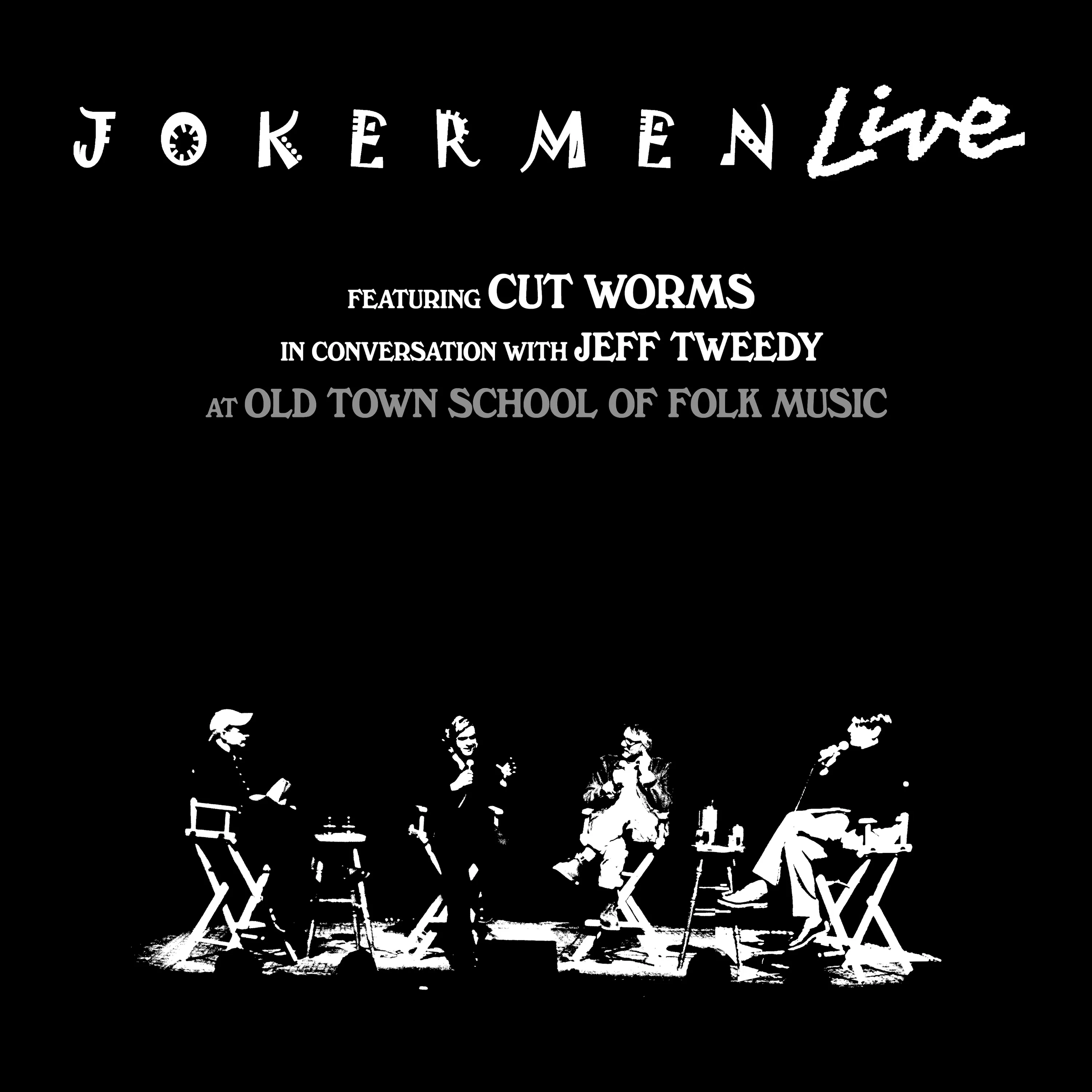
And this is Jokerman Live. So thank you all for coming. Thank you to. You can clap if you want to. It's cheap heat. Thank you to everyone for coming out. Thank you to the old Town school of folk music. Thank you to Jack Jaguar. Hope everyone dug the fantastic new record from Max Clark. Yeah, clap. Let's get some clap in. I heard Michael plugging it, but again, transmitter out next week, Friday the 13th, so keep that one in mind. Yeah, a little spooky, I think. On that note, let's just get right to it. Max Clark and Jeff Tweedy, come on. Welcome, gentlemen.
- [03:13]
D
Hello.
- [03:14]
E
Hello.
- [03:17]
A
We're gathered here, obviously, to talk about this fantastic new record that everyone just heard here for the first time. I'm always curious, just looking from the outside, you know, I don't do this myself. I do this. I talk about this stuff. Max, like, how do you know? Like, when you're writing a new record? Like, when is just a errant thought that drifts through your head. When do you know that that is the beginning of a song and that song is the beginning of a new record?
- [03:44]
C
Do you know?
- [03:45]
D
No.
- [03:46]
A
Okay, next question.
- [03:48]
D
When I have enough, like, enough a number of them, and I say, hey, that's a record right there.
- [03:55]
A
And so just kind of accretes over time. Yeah, I know. The Bob Dylan thing is he just, like, writes little scraps of, like, phrases on pieces of paper and then puts them in a box, like a wooden box. And then eventually those get turned into songs somehow. You got a. Do you have a. Like, a box Writing approach to song.
- [04:14]
D
Not familiar with the box method.
- [04:16]
A
Not familiar with the box.
- [04:17]
C
You made a whole record without having the box. That's pretty impressive.
- [04:21]
A
It's pretty impressive.
- [04:22]
E
But you have to bury it. You have to bury it in the woods and you go back a year later and there's songs in there.
- [04:30]
C
So this record was one of those records that was produced by another musician who's remarkable in their own right. I was wondering if you, either of you, both of you, have examples of that. Like records where you love the artists in question and then also love the person who produced it.
- [04:53]
D
Yeah. John Cale producing. Patty Smith.
- [04:57]
A
Horses.
- [04:58]
E
Hell, yeah.
- [04:58]
A
Absolutely.
- [04:59]
E
Legendary Modern Lovers or the Stooges or. Yeah, he's pretty. He had a pretty good track record.
- [05:05]
A
John Cale's the Goat for that.
- [05:09]
E
Nick Lowe with Elvis Costello. Yeah, yeah. I'm in pretty good company, Max.
- [05:18]
C
How about examples where it's a bad thing that it was produced by somebody else?
- [05:23]
E
I don't think that's ever happened.
- [05:26]
D
I can't think of any.
- [05:27]
C
Well, there's that one issue with. Not to bring up Bob Dylan again and again, but, you know, that time when Bob Dylan had that album and he later de. Produced it with Daniel Lanois production was he drained the swamp, they say. Took all that echoey stuff out. Are you anticipating some day far from now when you're like, yeah, transmitter was good, but it would be better if I just kind of took off some of that Jeff stank. That's all over.
- [05:58]
E
Yeah, you have my blessing. We started there, I think. Yeah.
- [06:04]
D
Yeah.
- [06:04]
E
We started in the austere end of the swamp.
- [06:10]
D
No, I don't. There's not much to take off in that way,
- [06:17]
E
is there?
- [06:17]
D
Crickets.
- [06:18]
A
Crickets.
- [06:19]
D
Who brought the crickets?
- [06:20]
E
There's literal crickets. That's really rude. And now I have a great new idea for heckling somebody.
- [06:32]
C
How did it come to pass that you ended up working together on this record as producer and artist? Was there a moment where you felt like, okay, this is. We want to take our relationship to the next level?
- [06:46]
D
Became Facebook official.
- [06:48]
A
That's right.
- [06:49]
D
No, I mean, we were lucky enough to open for Wilco on tour, and then towards the end, they invited us to go on stage at the last show, and we had to do, like, a quick rehearsal thing for that. And we were talking. I mentioned that I was, you know, working on a record, and Jeff kind of offhandedly said that he, you know, if I wanted to record at the loft sometime that I could, and. And then Glenn, the Wilco drummer later, was like, yeah, you should do that. Because he doesn't, like, always say that.
- [07:25]
E
I say that to everybody.
- [07:28]
D
I know, I figured that.
- [07:30]
E
But no, I don't.
- [07:31]
D
No. Then I. Yeah, I don't know. I reached out and I didn't really think that he would necessarily want to produce or anything like that, but I
- [07:41]
E
think we set up like a play date.
- [07:44]
D
Yeah.
- [07:46]
E
Test the waters and see. I mean, if I can speak for you, I think that there was like a period where you were trying to find out what the right path was for the record and what kind of studio. And. And I think it's always smart for somebody. If they're thinking they want to record at the loft, I think they should try it because it's not like any other studio. It doesn't have a lot of the amenities that other studios. It doesn't have walls.
- [08:15]
D
Yeah, no, it worked out great, I thought. And no walls was not an issue.
- [08:24]
A
I wonder, like, produced is the. Is the credit on the. On. On the record, obviously. But, like, you played a ton of the music on this album, Jeff. I guess what was the working relationship like with you guys in the studio? You know, it seems like it was almost kind of like a duo, you know, effort in some places.
- [08:44]
E
I mean, I listened to the record today and I couldn't remember all the things that I played on it. It seemed like a fair amount of stuff, but I don't think we planned to do it that way. It's just. I don't know, I just. The songs are so good. I wanted to get in on them, I guess.
- [09:03]
D
Well, thanks. Yeah, I mean, I think. Well, you wanted. It seemed like you were into playing bass and I liked what you were coming up with, so I wasn't going to stop you.
- [09:16]
E
You did stop me a few times.
- [09:18]
C
That brings me to my next question. Are there disagreements that you can remember from working together in the studio, even if they were small and unrelated to music?
- [09:28]
E
None that I. None that I remember. I mean, I don't think you should be that precious in the studio or like, kind of ever working on music. I think it should. You know, I would audition ideas and Max would shoot them down until I came up with something that I could still tell was into in the world where you were wanting it to be, and, you know, that's fine.
- [09:53]
D
Yeah, I mean, I've. Other people have asked me this question. I have said that it. My experience with, I guess, being produced and like we're working with other producers and stuff. It was like almost like the opposite of this one where it Was like, usually it's like me just like banging my head against the wall, like, trying to come up with something and then them being like, okay, like, no, that was good. But then this time we kind of let you do that.
- [10:29]
E
My pleasure.
- [10:31]
A
I wonder, like, the name Cutworms or the fact that you have the band Cutworms, it's also sort of like a stage name in a way, you know, in that it's like it's you what does. But there is the band, of course, also that tours with you, but in this case, you know, mostly didn't play on the record, I guess. I wonder what. What is operating behind the name Cut Worms afford you that if you were just putting out records as Max Clark, maybe you wouldn't get.
- [11:06]
D
I don't know. I think maybe when I started, yeah, it was like. It had the advantage of being like an external thing that you could. You know, it expands your person bigger than.
- [11:25]
A
A little more flexibility, right?
- [11:27]
D
Yeah, that's a better way of putting it. Some people don't like the name. I think they.
- [11:35]
C
All right. Who doesn't like the name? I didn't know until. I mean, I think some people know and some don't. The origin of the name is from a. Is a William Blake verse. And so it is, if I can remember, it's the Cut Worm Forgives the Plough, which is very profound when you think about it. William Blake is pretty good at that. But I was wondering about, like, the idea of forgiveness seems to be very baked into that, into the name. Like, once you know that about it, it feels very integral. And I was kind of curious if that concept factors. Figures into your concerns as a lyricist.
- [12:18]
D
Like, forgiveness. I don't know. I mean, I think when. When I chose that name and, you know, I was getting it. I was pretty young. I was like 19 or 20 or something. And I was getting into all those. What my friend calls like, rock and roll poets like William Blake and Rimbo and Beaudelaire.
- [12:43]
A
The Bob. The Bob stuff.
- [12:45]
D
Yeah.
- [12:46]
C
And the television. Tumberland.
- [12:49]
A
Well said.
- [12:50]
C
Rock and roll poets.
- [12:51]
D
Right? So I don't know. On one hand, it's. You could say that's like a pretty pretentious way to name your group. But it's also like, I don't know, it's like Worms, you know, it's like the lowest life form. So I thought, you know. And it Cut. It's like a dead worm, too.
- [13:10]
E
Doesn't sound good much.
- [13:13]
A
You're selling it. Names are always tough. I mean, sometimes you start a Bob Dylan podcast. And then you finish talking about Bob Dylan after two years, and then here you are six years later, and you're still known as Jokerman, which is a Bob Dylan song.
- [13:25]
D
But it's too much marketing money to redo it.
- [13:27]
A
Yeah, exactly. Yeah. We're pot committed at this point back to the band concept. Like, with. With the band, you know, you're going out on tour soon. Do you feel like it's becoming more of a band at this point? I'm just. I'm always curious about this. Cause, like, again, to continue to use Bob as a comparison point so many times, at least earlier in his career, he would just round up whatever random guys, like, happened to be in town and then go into the studio and say, all right, we're gonna make this record and you're on this album. You know, he hasn't done that so much the last couple years, but they
- [13:59]
D
were usually the best guys.
- [14:01]
A
They were usually the best guys.
- [14:03]
D
I was.
- [14:04]
E
How are you gonna find somebody that can play my parts?
- [14:08]
D
I mean, I thought you might just have to, you know, phone them in.
- [14:13]
E
I mean, I'm not really that busy.
- [14:18]
A
Maybe there's. Is there room in the budget for, like, a Jeff Tweedy hologram type situation?
- [14:25]
E
I have one.
- [14:27]
A
Does it feel like it's becoming more of a band at this point?
- [14:31]
D
I mean, I don't really know what that means.
- [14:33]
C
Is the band in the room with us right now?
- [14:36]
D
It's a band. I think it's always been a band in my head. But I've had a touring band for a while now that was, like, pretty solid. But even that has kind of changed personnel recently, too, because, you know, it's hard to make money in this industry, and, you know, everybody's got to be doing a lot of different things.
- [15:02]
A
Hustling.
- [15:03]
D
Yeah. But I guess in the sense that, like, the project used to. I used to be like, pretty white knuckle, like, it's all mine kind of thing, and do everything myself. But recently I've, like, opened it up more to having other people, like, on the record before this. You know, I actually, like, allowed other people to play on it. And then this time, like, having Jeff play a lot. And I co wrote one of the songs with Noah, my drummer, and, like, it's actually, like, turns out good to involve other people.
- [15:39]
C
All right, which song is that?
- [15:42]
D
The first one on the. On the record.
- [15:44]
C
That's a good one.
- [15:45]
D
Yeah, that's one of my favorites on the record. And, yeah, I didn't come up with it.
- [15:50]
C
You sort of did Yeah, I know.
- [15:52]
D
I finished it.
- [15:54]
C
What do you hope to offer when you're producing? What do you think about, like, you go into that situation, is there something that you're kind of like, if I can bring this, or do you kind of take that as something that is discovered as you go?
- [16:15]
E
I've only produced a few records, like, over the last 15 years or so, starting with Mavis Staples. That's all I wanted to say. Just wanted to get. But in a lot of cases, I think I just want to help them make a record where you don't hear a producer. I like working with people that sound like themselves when the room is empty and it's not coming through the speakers, you know, Most of the people I've worked with have been like that, including Max. I think over time, I've grown a little bit more confident in what? Not just in the studio, not just as a producer, but just as a person that's a little bit older than a lot of other people playing music these days. I try and be what I wanted other people to be to me and weren't sometimes, you know, I wanted, like, make somebody feel comfortable and validated and encouraged and seen and not treat somebody like they're not worthy of, like, having all the kind of stuff that, you
- [17:26]
D
know,
- [17:28]
E
I also want to. I just want to share the space that we've made, too. And that's, like, something really gratifying for me. But to answer your question, I wanted Max to feel great about his record, the bottom line, and if I could make it what he wanted it to be and then maybe showcase some idea of what I thought would make it even better, I would do that. But otherwise, it just was happy to be making him happy.
- [17:55]
A
Max, I wonder, like, you know, having that line on the record produced by Jeff Tweedy that, you know, kind of brings along with it some. Maybe I hate to break it to
- [18:05]
E
you, but has historically not affected sales,
- [18:13]
A
But it does, I think, maybe bring along with it some expectations of some sort or, you know, other people are going to be dialed into it who might not have been as dialed into it. Right. Were you concerned at all about, you know. You know, doing. Doing that?
- [18:31]
D
About the haters?
- [18:32]
A
Yeah.
- [18:33]
E
Having my take on it, his many
- [18:36]
A
enemies that are out there.
- [18:37]
D
I don't know. Not really. I mean, for one, I guess. I don't know. I don't. Wouldn't really know what to expect from. From that other. Other than. I mean, Jeff and Wilco have made a lot of great records. Like. Yeah, I mean, I don't know, at least in my experience, like, either working with different people or, like, I mean, maybe when I was a lot younger, I would have thought, like, if I could just, like, open for this one person, then, like, I would make it, you know, but, like, after playing in this world for, like, you know, over 10 years now, you know, you know that that's not how it works really. So, like, the only thing that's gonna make it good is if it's already. If it just speaks for itself, if it's good.
- [19:25]
E
Yeah.
- [19:25]
C
To that point, I'm just kind of curious for both of you, your histories with each other musically. Like, what. What was the first time that you heard each other's music or do you have particular memories of.
- [19:37]
D
Yeah, I mean, well, I mean, I first heard Wilco when I was probably in high school. Like, I'm pretty sure, like, one of my
- [19:48]
A
great school.
- [19:50]
E
Yeah, my dad was really into Wilka.
- [19:54]
D
No. You know, he didn't let me finish. My cool older friend, who is a
- [19:58]
E
skateboarder,
- [20:00]
D
showed me this.
- [20:01]
E
Not helping.
- [20:04]
D
I had been aware of Wilco for a long time, and I also, like, lived in Chicago for six years, and by that time, like, they loomed pretty large in this city. So I wouldn't have thought at that time that I would, like, you know, be in this position and, like, work together. So that was, you know, cool for sure. But I kind of forget what the question was.
- [20:30]
C
Favorite Wilco songs.
- [20:32]
E
Don't. Don't put him on the spot for that.
- [20:34]
D
All right.
- [20:34]
C
Favorite Cut Worms song. Where did you first hear Max's music? How did you become aware of. Of Cut Worms?
- [20:41]
E
I don't really remember. I mean, I was in high school. Yeah, I was in high school. I was in high school.
- [20:47]
A
Actually.
- [20:48]
E
I think I was in grade school. And no, I like checking out bands. I listen to a lot of music. I'm always excited on every. I don't know, every Friday, all the records come out. And now compared to when I was a kid, I can pretty much go online and listen to almost anything that comes out. And if I had that when I was a kid, it would have blown my mind because I could only buy a couple records every week. So I don't remember specifically. I just remember associating this really, really unique voice and unique songwriting flavor with the name Cut Worms. That's my memory of it is, like, just going, oh, I like that. I like that. You know, Max has a singular thing. And when I think of Cut Worms, it sounds. My memory of it sounds like what Max sounds like. I keep. I keep circling around this one idea, but I just think that that's, you know, that's hard to do. It's hard to have, like, a voice that's recognizable, even regardless of what voice you're given physically being. Allowing yourself to sing like yourself. And I notice always that's, you know, your voice is the main thing I was really drawn to. And the songs are all so well crafted and lovely. And I think that you. I don't know. I covered one of your songs on the Tweety show one time. I can't remember the name of it, but I know that we did one. And that was probably the first time I'd ever really learned one of your songs like that. Yeah, it was a new song, I think, at the time.
- [22:32]
A
On the note of the songwriting, I think you mentioned that, like, Jeff intuitively kind of understood the narrator, like, you know, who the narrator was of these individual songs. And that word narrator kind of interested me. How do you distinguish between yourself? Do you distinguish between yourself as the songwriter and any narrator in the song? Is that a solid line? Do you understand where one ends and the other begins? Do you find yourself crossing it?
- [23:02]
D
Not really. I don't know. I mean, like, obviously, anything that you make is like, you.
- [23:09]
A
You're.
- [23:10]
D
You know, you're. There's a good amount of yourself in it. But a lot of what I write, too, is, like, trying to. If I can, you know, look. See things through, like, somebody else's eyes or something, or, like, whether or not that's, like, how it actually would be or not. It's like, if you go down that, like, rabbit hole, you can cut. You can at least, like, trick yourself into thinking that that's how someone else would see something. So, like, I don't think it's one or the other. You know, I don't. I don't, like, necessarily do, like, topical things, but I feel like, at least for my own personal sense, if I go back and listen to one of my things that I've written, sometimes it'll have, like, some essence of. When it's because they're like, you know, they're like postcards kind of. And that's also, like, kind of a hard thing, too, because, you know, it takes so long to make a record and put it out. And then I've had the experience of, like, having to then go, like, tour it a lot and play the songs, and I don't, like, feel that way anymore. But I try to just, you know, I try to avoid that if I can I think the most. Most of the songs that I like have, like, enough space in them for other people to, like, bring themselves to them, which I. I don't know, I feel like, in my opinion, most of the great songs have that, or there's a fine line between, like, a certain level of specificity and vagueness. I try to walk that line, but I don't. I don't know if I do.
- [25:03]
C
I think you do. I think you both do, frankly. And I think that I see some kind of affinity in not like specific lyrical style stuff, but a kind of. Maybe I think you put it well. The way of using very specific moments, very specific images, and then kind of balancing them out with things that are the big questions, the big, mysterious, larger picture things.
- [25:32]
E
I think of it like this. If I'm reading a book by, say, Kurt Vonnegut, he can tell whatever story he wants to tell, but when I'm finished with it, I miss his voice. And, you know, he's not necessarily talking from himself. But I feel that way about Max's songs. Whatever story he's telling, I still feel him at the center of it. And that's what's appealing to me. And I think that that's what's appealing to songs in a lot of ways. And art in general. Compared to what we're looking at on the horizon with AI Art. I think that there's nothing wrong with Van Gogh. Nobody gave any cares at all whatsoever. Can I say shit nobody gave a fuck about.
- [26:22]
A
You're Jeff Tweedy.
- [26:23]
E
Come on. No, Van Gogh. I think until they hung the paintings up with the stories and the letters he wrote to his brother, they weren't as interesting. And they were more interesting when people had some story behind it and some sort of sense of a person making these things and struggling to create them. And I, you know, without wanting to embarrass you, I hear that. I hear a struggle with connecting with the world. I hear a struggle with, like, making yourself visible and not being necessarily comfortable with that, but having this internal voice that I think is really strong. And yeah, when the record's over, it's the same feeling. I say, like, I want to spend more time with that voice.
- [27:08]
D
Thank you.
- [27:14]
A
I wonder, you know, on Jokerman, we think about artists in their decades long careers, you know, prolonged periods of time and the way that those careers.
- [27:25]
E
This one's for me, Max.
- [27:27]
A
Well, but the question actually is for Max to begin with, like, how do you conceive of the Cut Worms Journey? Because it's been like a decade at this point, this is your fourth big record. And, you know, I feel like there's. There's a real sense of momentum at this point. I don't know what just. Are you aware of the journey or is it just one foot in front of the other each day?
- [27:50]
D
I don't. I don't know.
- [27:51]
A
Okay, next question.
- [27:53]
C
It's one foot for the other, I guess.
- [27:56]
A
Well, I mean, when did you become aware of development of these discrete periods of time, you know, throughout. I mean, obviously even before Wilco. You know, is there a point at which you become aware of that or is it just sort of you wake up one day and you realize, oh, wow, that period of life is over and now I'm here.
- [28:19]
E
There was a period in my life where I realized that I was living my dream. And that was when we got our first record deal and we had a van and we had shows to go play, and I swear to God. And everything since then has been, wow, I can't believe I get to keep doing this. And then eventually I became conscious of the fact that there were choices to make that would not allow me to keep doing it. And there were choices to make that would allow me to keep doing it. And some of them were counterintuitive. Like making more money wasn't necessarily going to make me be able to keep doing it.
- [28:58]
A
Sure,
- [29:00]
E
I want to. I made some choices that I don't think look good on paper at the time. But I do think that whatever it was has led me to a point in my life where I look around and I still feel like that was my life, my dream, but now my dream is to keep it and feel. But also to feel like I deserve it and work to keep it. And, you know, so I don't answer your question. I don't think I could have ever. I don't think anybody could set out to have a career like Wilco or even Uncle Tupelo and, you know, have that one thing lead to another and end up in a place where you, you know, have like, I don't know, like a. A small business that's kind of thriving in a way and a great bunch of people to work with and love and collaborate with and, I don't know, you can't just snap your fingers and make that happen. But the only thing I can attribute to it is willingness to work and then a desire to make the decision that allows me to do it tomorrow. And that's what I would recommend to you.
- [30:12]
A
Well said.
- [30:17]
C
Well, I'll just speak for myself and I Think probably others. It's nice to see this kind of thing happen. I mean, we. I think everybody's here because that's exciting and beautiful to witness, is that there's this multi generational. Forgive me, this kind of. It feels like rock and roll music sometimes is, you know, constantly dead or dying. And it's not. And it's not very often that you can actually see and talk about and be in the room with people who are the reason. It's not. This was not a question. I'm just overcomplicating a question.
- [30:58]
A
Well, I mean, I'll pick up on that and say, like, I think the physical location also, like, you know, I am always thinking about, like, scenes or the lack thereof at this point. San Francisco, again, had the most beautiful rock scene in the world 15 years ago. Shout out, you know, girls and that whole world. That's right. And that's all gone now, you know, for any number of reasons, many of which are, you know, macroeconomic and political. But to have such a beautiful and flourishing, literal, physical scene here in Chicago. You come back to Chicago. Yeah. Where you live for six years. And we were talking at dinner before, you know, before the show tonight, you were saying that some things feel like they haven't changed, you know, since I was here. And then other things feel like they're completely. It's like a whole different city. I don't know. I just. I think that's really valuable and important, particularly at this time when just everyone is on the phone and the screen so much. Just like people in a room together making it happen, whether it's in a hall like this, in the loft at a club. Like, that's. That's what it's all about. So salute to that.
- [32:01]
C
Yeah.
- [32:02]
D
Yeah.
- [32:02]
E
I mean, I didn't grow up here, but I feel like we. I inherited it. I think Max inherited certain amount of this ethos from this city. And part of it is because of places like the one we're sitting in right now. Sure. Like old time. You know, the city invested in its. In its. In its culture, invested in its, you know, sharing music as an activity, as a way of life versus just, you know, entertainment.
- [32:38]
A
A way to make money.
- [32:39]
E
To make money. And, you know, when I first moved here, my wife had a club called Lounge Acts. And that. That. And. And that. That club in that environment, the encouragement that all the different bands were, you know, pretty. Pretty friendly with each other. And I think even more so now. Like, I think that the young bands I see, it's like. It's like, idyllic to me, that there are young bands playing country music but also doing free jazz improv, and they're the same musicians hanging out. And that's like. It's like a continuation of this kind of blurring of the line and support for wherever people want to go and do that. So it's managed to maintain quite a few clubs that still cater to smaller bands. And I think that that's one of the things that we inherited here. Not necessarily. We developed.
- [33:34]
A
Absolutely. I mean, I've been amazed. This is my first time here at Old Town, but just literally walking around tonight, like, when we got in, there were, like, little kids coming out of, like, violin practice. Before we came on stage, there was, like, a drum circle, like, dance class, like, literally down the hall.
- [33:51]
E
Like, and then that we don't. We don't want to have. Trying to get rid of that.
- [33:58]
A
Well, that's what. That's what we're doing after this. Max is gonna bust out the drum and lead the whole room in a drum circle. No, I just. I'm amazed at the variety and the. Just different types of people, different walks of life, all in, you know, one room together. And this is just, what, a random Thursday night in early March.
- [34:18]
E
It's a miracle. It's a miracle, you know, like. Like, yeah, it's. A guy gets off work as an accountant and comes and learns harmonica. And, like, that's. That's exactly what it's for. That's why people. Back to Kurt Vonnegut. It just reminded me of one of the things he said is, like, you know, I don't think being good at something is the point of doing something. And that's the. That's the folk ethos. That's it that his should be a democracy activity, and it shouldn't be that we just throw Frisbees when we want to be bad at something and allow ourselves to do it and give ourselves permission to do it. But, you know, like, singing together and learning music together is a really strong foundation for community.
- [35:05]
D
We're.
- [35:06]
C
I mean, I've not spent more than two days at a time in Chicago ever. I've been here a few times, and. And it does feel like Chicago to me. Just the impression I get is, like, it's a city that doesn't rest on the laurels of, like, something like Los Angeles and New York, kind of, sorry to say. Like, it feels that way sometimes, where it feels like, oh, we're the cultural cities, so we don't have to really invest in that. We can Afford to tear shit down. We can afford to bleed money out of these things. And it feels like there's somehow that didn't happen here. Doesn't happen here. At least not in the same way. And you can feel it and see it, and I am charmed, to say the least. Like, it's great.
- [35:51]
E
Yeah. I always thought that, like, one of the things nice about the Midwest in general is, like, you have time to develop, you can suck for a lot longer, you know, And I think that's really good. I think that actually makes bands better. The bands that you love are the ones that, like, went through sucking longer, I think.
- [36:11]
D
I think that's true. Yeah. I mean, this feels like a weird segue because. But not to say that these bands sucked, but here we go. I played in bands when I was here and stuff, and, like, you know, there was a lot of DIY shows and the house shows and, like, you know, shows in, like, a weird abandoned warehouse, like. And when I moved to New York, it was sort of like. I mean, I think it was kind of a product of just the changing times a little bit, but, like, there was just none of that there. And I feel like it's cool that that still existed here. I got to experience it at least. And, you know, it wasn't even necessarily like, this place is amazing, but it's like it didn't even have, like, that level of organization. It was just like people in basements.
- [37:06]
A
Natural, spontaneous. Oh, yes.
- [37:07]
E
Like, I think that's economics. And, like, there being more spaces available.
- [37:13]
D
Well, yeah, you know, for sure.
- [37:14]
E
Even. Even though it's not like, the cheapest city, but, you know, still, compared to a lot of places you can. I mean, 20 something years ago, Wilco found a. An empty warehouse where they were renting out floors. And we've been there for 20 years, and I don't think we couldn't have afforded that space anywhere else, I don't think.
- [37:39]
C
Yeah. And I think also of electrical audio and the great work that happened there still can. And Steve Albini, like, there's an ephemeral thing about the character of the city that just seems so. To be, like, rare and special in that particular way.
- [37:58]
E
Yeah. Steve was a really solid North Star for a lot of the music scene here. I mean, an iconoclast and definitely controversial in some regards, and admittedly so made mistakes and stuff like that. But his core beliefs were absolutely altruistic, and he adhered to them in a way that you want, you know, would want anybody to be. That's a hero of yours to adhere to those ideals. And I think that guided a lot of the way that other people in this city, you know, proceeded to interact with the capitalist side of it.
- [38:45]
D
Yeah.
- [38:45]
A
How do you feel, Max? Do you feel like Chicago shows up in the new record?
- [38:51]
D
I mean, I think it does. It would kind of be impossible for it not to. Sure. I mean, it wasn't like something I like consciously thought about at the time or doing it or even leading up to it really, but like just the process of coming back to Chicago and then like, you know, just staying at a hotel by myself in like the like downtown kind of and just being. Having like as I've come back through to visit and on tour and stuff. But didn't. Hadn't really had a lot of time to just like wander around down like memory lane or whatever. But you know, coming back and actually doing that, it did, you know, it was kind of affecting because it was like just about 10 years ago that I moved and then. It's just striking when you. I kind of see what transpires, I guess.
- [39:53]
A
Yeah, it adds up over time. I mean, I would imagine it's gotta be like really kind of. I would imagine that you would feel proud about it. Like you were saying a moment ago, you know, the bands that you played in before here, not to say say they sucked, but, you know, maybe. Maybe referring to my band that was here, yes, they might have sucked a little more than Cut Worms does, we could say. But to leave Chicago then and you know, 10 years later to be returning and under these circumstances with this fantastic new record, you know, in the bag and about to go out on tour across the country, like, it's just. It kicks ass. And like that's. That's the story that we love to see, we should continue to see with rock music.
- [40:38]
C
Has Chicago ever appeared in any form in one of your records? I'm sorry, should we. You're plugging the tour. Should we lead into that aspect of things?
- [40:51]
A
Well, yeah, I mean, I think that we. Well, we definitely wanted to say that you've got your Chicago show coming up, maybe ninth, I believe, at Lincoln Hall.
- [41:01]
D
Right.
- [41:01]
A
So everyone here buy ticket at your earliest convenience. And I think on that note, unless anyone has other comments to lodge, we can turn things over to you, Max, to give everyone a sneak peek of the new record live.
- [41:19]
D
Sure.
- [41:19]
E
Knock em dead.
- [41:21]
A
Thanks again. Thank you to the old town school.
- [41:26]
E
Thanks for having me.
- [41:27]
A
Thank you.
- [41:28]
D
Thank you all. Ready.
- [42:04]
B
Another Saturday with the leaves on the ground like the calendar pages of love going away in the song Golden Hour out of the crystal blue. From around the corner of my street arrives a vision of you. You were walking with your best friend. You were waving hello. Let me turn back before the made my heart bow till it grow. Oh, I know. How could it be? How could it be? You're looking right through me. I woke up in the backseat of a speeding car. With my head up against the window glass in the full moon in my arms I could break from the spell anytime I want. I can feel you coursing inside of my skin like a heavenly song. And we're walking just like bears friends out to far worlds unknown. And I died to get the chance to have you off on my own. Oh no,
- [44:29]
C
Me.
- [44:31]
B
You're looking right through me.
- [44:54]
E
Thank you.
- [45:00]
D
Thanks so much. That's the first song on the record that when we were talking about my drummer wrote with me. I really like that one. I'm going to play a couple more from the new one. New record? I know. Nobody wants to hear the new stuff ever.
- [45:22]
A
Just kidding.
- [45:24]
D
Well, here's another one. One second. I want to thank Jeff Tweedy for letting me borrow his guitar. Also, though. It's way nicer than mine.
- [46:04]
B
What can I do if you won't help me out? Spend the night alone at the bar? Give you half of a real conversation. If I just didn't have to try so hard and live a life of great renown. Doesn't everyone you see? Does it seem like it's getting crowded out there? Or is it, is it just me? I get tired all of the time now. Feel like sleeping in the middle of the day. Can't remember my thoughts when it really counts so I just end up walking away. You can't argue with a true believer. Well, there's no one. All my days are numbered I know but I thought I was doing okay tonight. But I can't handle the truth I can't handle the truth. Can't stand the side of anyone. But I feel alright with you. I don't believe in a single word of it. I don't care what anyone said that can't be all. There must be more to this. You can't tell me there's nothing left. I can hear them in the parlors talking say that love is just a mirror. Well, if they really believe that's true then I like to know what they do. Yeah, but I can't handle the truth. I can't handle the truth. Can't stand the sight of anyone. But I feel alright with you. I feel alright with You. You. I feel all right with you. I feel all right with you.
- [49:18]
A
Thank you.
- [50:00]
B
Locked in my old saloon Nine o' clock in the afternoon. Dead calm, three floors down, nobody ever comes around. I don't mind passing time I'll leave it up to someone else. I'll leave it all for someone else. I wouldn't bother. Just leave it alone. Ages that wander past Wind from the western sky but in your tearful eyes. How long has it been I've been standing? You must be thinking of something. Someone else? You must be thinking of someone else. I'm doing just fine all on my own. Light from the open door Drain in the killing floor. Some are born to have it done. Some are born to have all they want. Could you not laugh it all? I wasn't invited
- [52:22]
D
out.
- [52:24]
B
Suppose. How would I know? How would I know? You must be thinking of someone else. You must be thinking of someone else. I just like the comfort zone.
- [53:27]
D
Thank you. I just want to say. Say thanks again so much to all of you and to Jeff Tweedy and the Jokerman guys and everyone who made this happen. Means a lot to me. So. I think we've. We have a few. The record comes out next Friday, but we have some here tonight if you want to come by and say hello. But thanks again.