Loading summary
Transcript25 lines
- [00:01]
A
What are we doing here today? We're talking. We're closing it out. We've danced around it long enough. We've edged right up until we're ready to burst.
- [00:10]
B
Burst.
- [00:12]
A
It's the end of Summer of Joel once and for all, which we're actually ending here in summer, I'm proud to say. I'm looking at the schedule right now. This episode is set to run on the 18th of September, which is just four days before the actual literal end of summer. So we call it Summer of Joel. It is the Summer of Joel.
- [00:35]
B
Summer.
- [00:35]
A
Summer is made, promises kept.
- [00:37]
B
Summer Joelman Falls.
- [00:40]
A
Yes.
- [00:40]
B
Joel Kerman Falls.
- [00:41]
A
How about that? Yeah. And we're going to do. We're going to do what we did at the end of the Randy series, what we do at the end of all of our series and countdown, our top collective favorites from the man, which we'll have available in a playlist for your enjoyment as well. And just kind of, you know, put a cap on it. Put a. Put a period here at the end of this sentence. Do you have any statements about the man in general or the music to lodge before we kick this off? Famous last words, perhaps.
- [01:15]
B
I feel sorry for my. Some of the things I've said in. On some level, I don't know. When I was. When we. When we had our conversation with Jake and Ezra, I think some important points were made. Ezra pointed out some things that I thought, you know, I maybe wasn't giving enough credit to, like the. The difficult position that Billy Joel is in, in terms of being hated and beloved in equal, equally compelling measure. And the fact that he's kind of found himself at the top of the heap. He made it in old New York and yet also is sort of not at the top of the heap when it comes to artistic respect. It's a complex and difficult place to be. And I think that maybe in music there is less of an a history, less example, less precedent of that happening than there is with maybe cinema. Like, seems like there's a lot of directors who, you know, are big successful movie directors and they're not necessarily considered artistically great, but it doesn't bother them or it's. It somehow it just works because movies lend themselves to, like, a kind of enjoyment that is more forgiving. Maybe. Like there's. We understand there's different types. There is, you know, big stupid movies that people love. There's big smart movies that people. Whatever, you know, there's different kinds. And I don't know that there is that much in music that or Especially at the point that Billy came up, like, I don't know that there's, There's. There was definitely less of a precedent for just a. A successful songwriter working in rock and pop mode simultaneously. I feel like we live in a world now where maybe he would be received differently and more with more grace on all fronts. And it does seem to be like, retroactively that that's the case on some level, with the children embracing him at least the 30 second snippets of him that they are introduced to on the Internet.
- [04:00]
A
Yeah, I think that, that, that's. That's well said. I'm glad to hear that you're, you know, a little more gracious about the man here at the end of our. End of our journey with him. And I do think that that is a good point about, you know, were he working today. Obviously, the last 10, 15 years of music criticism has been in large part dominated by or directed by poptimism as a reaction, you know, probably overdue reaction to the rockist, the vile rockists of the 1970s, 1980s, 1990s. And I think. But I do think that Billy, you know, kind of suffered based on that. And if he were working today, I mean, Lord knows the poptimism wave is, in my impression, gone far too far in the course correction at this point where basically anything that any pop star does is fetid the world over and cannot ever be even lightly criticized. But I do think that Billy would. He'd have a different reputation if this general critical approach had been taken towards music when he was an active recording artist. You know, instead of the. The critical approach that was in mind back then, who's to say, you know, if he would be some sort of, like, you know, God among men? Benson Boon, Beyonce. Okay, well, Benson, I think Benson Boone is maybe, you know, illustrative of the limits of poptimism. Fortunately, I haven't seen too many fawning reviews of him, even from that rag pitchfork.com. but, you know, don't vote.
- [05:40]
B
Pitchfork is holding up the. You know, I think they. They fancy themselves the last bastion of a kind of raucous, which is like.
- [05:52]
A
They'Re not, but they're not. He's like, I'm. I literally. I almost tweeted this the other day, and then I was like, who cares about this? But, like, I went. I just found myself on the Pitchfork homepage for the first time in a while, and the top stories were like, like Sabrina Carpenter, Taylor Swift and Lana Del.
- [06:09]
B
Like, all right, so, okay.
- [06:12]
A
I mean, all that is to say, you know, when you say last bastion of rockism, you know, not so much.
- [06:20]
B
Well, I guess, like, certain people who work there anyway want to make their mark. I don't know. It's. It's impossible to even get to the bottom of all this. And it's also possible that, like, you know, had he been around now or if, like, young people knew more about him, they would just, you know, he avoided being called Cringe. Like, that word didn't even exist.
- [06:41]
A
Billy.
- [06:42]
B
Billy did. Like, and today, I don't know, maybe if he were, like, active, he would be called cringe, and it would have all hurt even more. But basically, he's. He. He is what he is. And I think that he. He seems to defy the kinds of critical appraisal that the rockism of it all, it just doesn't really work. Like, it doesn't. It kind of rolls off of him as much as it might hurt him. It doesn't seem to stick because you can't really criticize something as an artistic object that is lacking when the thing itself isn't trying so much to be so artistic. Like, if it is, it's. It's not like he's trying to. And I don't know, he's. He literally said it himself, like, I am literal. Like, I'm writing, or he said, I was just writing, literally, like on the Bill Maher thing. So I do feel like it's kind of like everybody gets confused when. When we try to think too much about him in that context. It. It is kind of like rating candy like it's wine. You know, it's kind of like there's not the range of stuff, like the richness, the depth, the history, like, it's not there. It doesn't mean that there isn't a place for this, but it's. It's just a little. It throws everyone off, makes everyone crazy. When you, like, put these songs against songs that are trying to innovate the form.
- [08:34]
A
Right, right. Yeah. No, I think that that's. I think that's by and large true. He's neither. He's neither no more than what he.
- [08:43]
B
Appears to be, nor any less.
- [08:46]
A
Nor less. Exactly. He is what he is. And what he is is great pop songwriter and performer with, you know, many fantastic songs, a couple pretty good records, and then a whole lot of just.
- [09:03]
B
Like, you know, annoying bullshit.
- [09:06]
A
Exactly.
- [09:07]
B
Cue the speech at the end of Planes, Trains and Automobiles.
- [09:12]
A
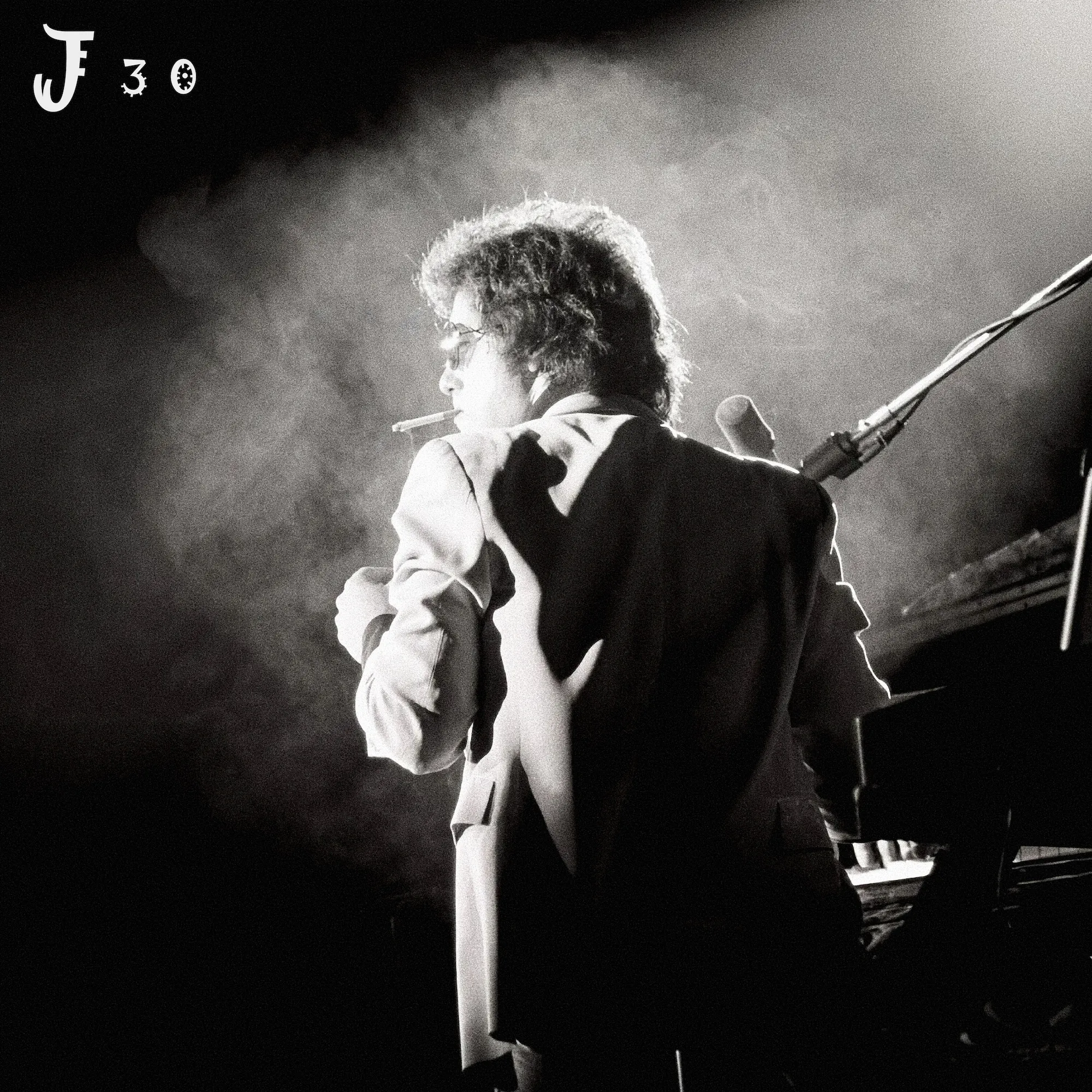
I'm not changing. I like me. Well, I think we've cleared our throats plenty here at the beginning. Let's get to it. Counting down. The Jokerman 30 Billy Joel edition.