Loading summary
Transcript23 lines
- [00:00]
A
This is a great record. This is a thrilling record. When I say it's the filet mignon, I just mean it's. It's. It's the. The delicious, you know, prime cut that we. That for Jokerman. This is Jokerman filet mignon. This is the real good stuff that we get to enjoy and talk about. And it is funky and weird and you know, maybe it's like a, you know. You know when they have like to just completely muddle the metaphors even further with food like, like mold aged, like ahi steaks and stuff like that.
- [00:32]
B
A dry aged fish.
- [00:34]
A
Yeah, exactly. Where you're, you know, you're. And it gets like a crust of mold on the outside, but then you slice that off.
- [00:41]
B
I like the whole. I think my analogy works, but I guess it's just so disgusting to you that you don't even want to entertain it. But that's what I always order at Musso and Frank's is the lamb's kidneys with bacon. It was Charlie Chaplin's favorite.
- [00:56]
A
Well, you know, if we end up.
- [00:59]
B
Going before that Bob show, you're going to see me eat some kidneys.
- [01:03]
A
I think I've seen you eat kidneys at Musso's before, years ago, you know, when we. Before we even did the show. And it is impressive to me. I just, you know, wouldn't say no to a steak in that situation.
- [01:14]
B
The point stands that this is the stuff that only the real heads know is. Is actually they. You have to know how to enjoy it. Like, I really do think that when you say this is inspired that you're correct. And I think that the reason why is that I think it's the highest place that you can hope to achieve as an artist. Really is. Is that place where anything is on the table, everything is on the table. Where you can see and understand the depth of any situation, any circumstance. Or that no matter how bizarre or shallow or prosaic can lead you to the profundities of musical ecstasy, to song. I think that that's where Brian is at this point. Like for better for or worse, both the barriers have been broken down. I mean he really is at a point here where like, he doesn't. If he ever was somebody with like a sense of oh, well, this isn't good and. But that is that this is appropriate. That's not. This record is a complete refutation of that. It's an. It's a total embrace of everything. And the title is, I think, literally trying to express that.
- [02:49]
A
Right.
- [02:49]
B
It is about how There is within you two, two wolves. One that's an adult and one that's a child. And you don't get to pick which one wants what at any given time. And that's. That's really true about life.
- [03:07]
A
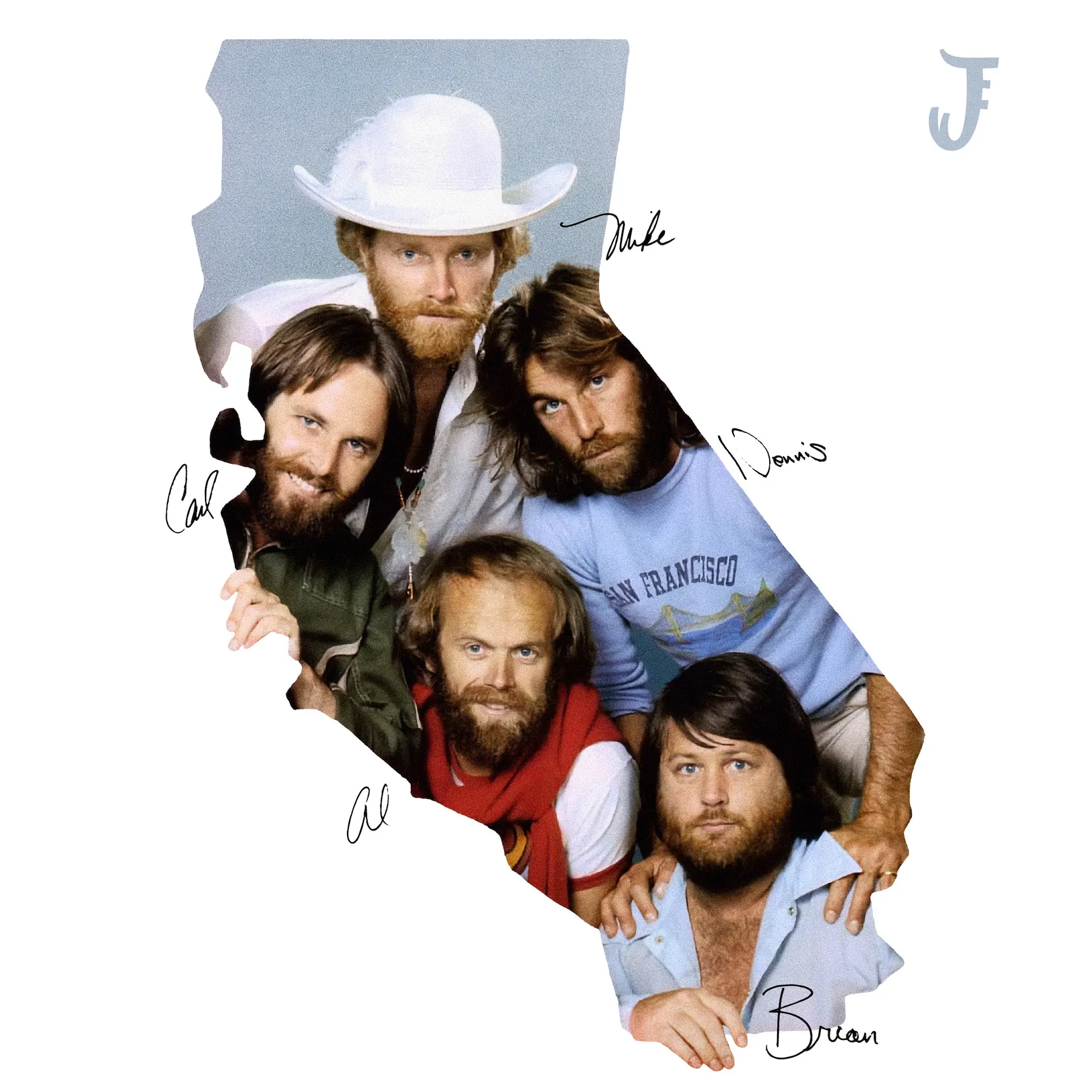
Well, and I think he. He's also, I mean, with that title, he's, he's aware of. He's expressing an awareness of himself here, which, you know, there's the constant hobby horse of, you know, the naivete of Brian Wilson, you know, his childlike sense of wonder, whatever. And like here he actually is. I mean, the record's called Adult Child and it's basically another semi solo record. It's a little more of a full band effort compared to Love youe, but it is clearly the product of Brian Wilson's mind. And so I think we talked on Love U a little bit about how in on the Joke is Brian at certain cases, like what exactly is going on with like Roller Skating Child and other songs like that. And here I think he makes it clear, like, oh, he's totally aware of it and he knows exactly what he's doing and always has been. And I think with the title Adult Child, like he's making that as clear as he possibly can at this point.
- [04:01]
B
I mean, sort of. I think that he is by default in on the Joke because I do really think that to a degree that's unusual. He's in on everything. Like he. He does transcend, I think the point where it's like, oh, is this ironic or is he in on it? I think it's like he's cast such a wide net creatively that even that both of those scenarios are contained. Like everything is kind of within his impossible range of what he is going to sing or talk about. And it's kind of a really unexpected. You can't expect what he's going to do within that. It's such a wide perspective that the most bizarre and uncanny subject matter can sit right next to something that feels like a very wise and profound and elemental type of subject. And there is no discernment between what is okay to do and what's not and what's okay to put on a record next to something else. It's really, I guess, you know, for lack of a better term, I guess you could say that's like a psychedelic thing. I think that that's. That's sort of the state that maybe you get by being what. What might be called mentally ill, but also I really believe the state that you get by being completely sane, like profoundly Sane?
- [05:54]
A
Yeah.
- [05:55]
B
Yeah.
- [05:56]
A
I mean, he. I guess, whether you want to call it sane. Mentally ill, somewhere in between both. I think this record is marked by a clear lack of inhibitions and just the same way that Love U was in many cases. Like whatever bounds someone might think of as, you know, the bounds that you might need to stay within, particularly as a professional recording artist. Brian is not. If he is aware of them, and I think that he probably is. He doesn't care about them here because this record would not be made, in many ways, could not have been made had he been. And ultimately those bounds end up being the downfall of this album because it never ends up coming out, at least in the state that it was originally envisioned as. Obviously, some songs end up leaking out here and there over the years, but it. I mean, as weird as Love U was, I think, and Love U was fucking weird, and that's why we love it. I mean, this record almost kind of puts that. It's hyperbole to say it puts it to shame, but, like, this record is, like, fucking even weirder, man.
- [07:04]
B
Yeah, it's the kind of weird that forces you to question why you thought anything was weird. Like, it actually kind of gets under the skin. Like, if you. If you engage with this record in any kind of earnest, sincere way, I don't think that you can come away from it without sort of questioning what you think a record should be like, you know, and questioning that impulse to be like, no, that's not right. And then really kind of being like, well, why do I think that? Like, why do I think a record can't include this thing? Like, it kind of short circuits the usual. The received wisdom, those critical faculties that are the sort of bedrock of even, like, a societal approach to talking about a record at this point. You know, it's a relatively new form, and there's not that many examples on the scale of the Beach Boys in terms of renown that have somebody who just doesn't care, doesn't even. Doesn't occur to them to limit.
- [08:26]
A
What.
- [08:27]
B
Goes on a record in the way that Brian is just unlimited here. He's limitless. He's taken the limitless pill.
- [08:36]
A
That's right. He certainly is. I think this whole idea is best summarized by the genre classifications of this record on Wikipedia, which. It has two. You know, that's typically where it says, like, singer, songwriter, or like, you know, folk rock or whatever. The two genre tags this record has on the Wikipedia page are outsider and big band. That's crazy.
- [08:58]
B
That's so big.
- [09:02]
A
Outsider, big band music.
- [09:05]
B
Outsider big band is like the crazy. That is, like, honestly, the coolest possible genre.
- [09:11]
A
Exactly.