← Julian Dorey Podcast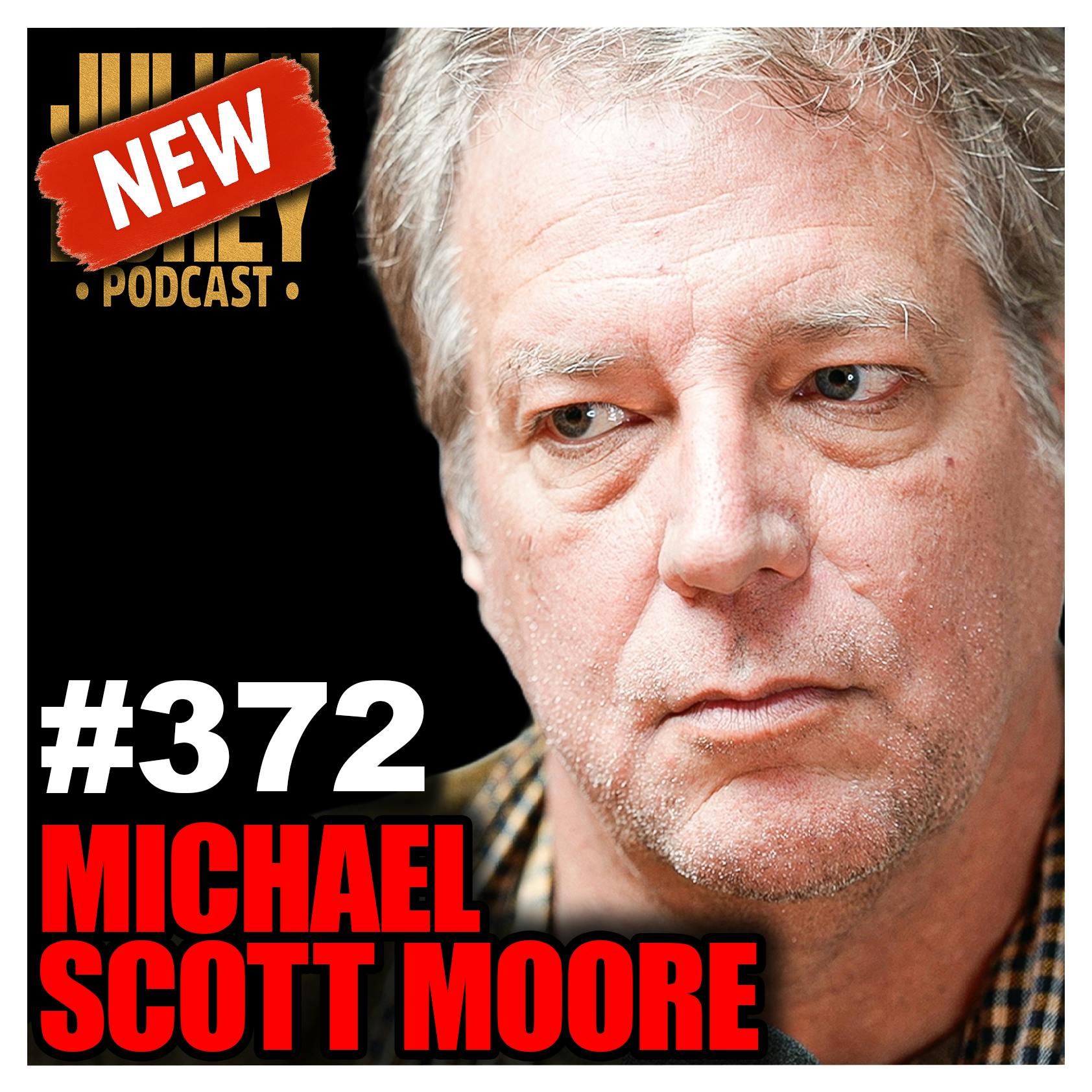
Julian Dorey Podcast
#372 - “NIGHTMARE!” - Somali Pirate Hostage on 977 Days Inside HELL HOLE | Michael Scott Moore • 372
02:58:27
Loading summary
Transcript720 lines
- [00:00]
Michael Scott Moore
When I went to Somalia, I went on my own. But that was our first indication that something was wrong. At the time, the pirates were in charge. We got into the car, headed for the hotel, and about halfway there was a battle wagon. We agreed on a price for security, but the guard team didn't show up for work that morning. And then they fired into the air. I'm like, oh f. It's going to be horrible. I was captured alone. They pulled me out, they beat me on my scalp. They broke my wrist. A week after my kidnapping, Mohammed Garfanji, kind of a legendary pirate boss, said, you have to demand $20 million or we'll start to starve you in 24 hours. And I said, that's insane. And after that, the Somalis said, stop the phone call. For a year and a half, I didn't hear from the outside world at all. That night. They took us to kind of a cave at the top of a valley when a ship appeared on the horizon. It was a hostage ship. The captain had been killed and his body was in the freezer.
- [00:43]
Julian Dory
How long are you on this boat for?
- [00:45]
Michael Scott Moore
6 months.
- [00:45]
Julian Dory
Oh my God.
- [00:46]
Michael Scott Moore
That was a feeling of death on the ship.
- [00:48]
Julian Dory
Did you try to escape again?
- [00:49]
Michael Scott Moore
This is my chance.
- [00:50]
Julian Dory
There's some sharks in there.
- [00:51]
Michael Scott Moore
There are sharks. And either I was going to die or with any luck, get free.
- [00:55]
Julian Dory
So what happened?
- [00:57]
Michael Scott Moore
Foreign.
- [01:01]
Julian Dory
What'S up guys? Just a quick note about this episode. There is going to be about 35 to 40 minutes that you are not going to see from this. You'll hear about it when we get to that point. It has to do with a long tangent we went on that was awesome but was unrelated to the title of the video. So I'm going to put that content on my Patreon. That link is in my description below. And if you do not want to join Patreon fully understand that it will probably also go out on on my third channel, the one hour podcast channel called Julian Dory Daily, which is also linked in my description below. We will probably put that out there in a month or two so you can check it out there. In the meantime, if you're watching on Spotify right now, please make sure you hit that follow button and leave a five star review. Thank you to all you guys and enjoy the episode. If I had a name like Michael Scott Moore, I would say the full name every single time. Yeah, Michael Scott Bar, right?
- [02:01]
Michael Scott Moore
I do, yeah. Michael Scott Moore. Yeah.
- [02:02]
Julian Dory
Have you just been saying that your whole life? Walking to a bar? Michael Scottmore?
- [02:05]
Michael Scott Moore
No. When I. When I go through life, I call myself Mike.
- [02:09]
Julian Dory
Just Mike.
- [02:09]
Michael Scott Moore
Just Mike. Yeah. That's.
- [02:11]
Julian Dory
Scott Moore is like.
- [02:12]
Michael Scott Moore
Well, I don't want. People get to get confused. Scott is just the middle name.
- [02:15]
Julian Dory
You know, Listen, it all flows together.
- [02:18]
Michael Scott Moore
People say Michael Scott or whatever. No, no, no, no.
- [02:21]
Julian Dory
You need the. More on the end now.
- [02:22]
Michael Scott Moore
Yeah, but I. I've used all three names just because there's already a director named Michael Moore.
- [02:28]
Julian Dory
That's right. And there's a character named Michael Scott.
- [02:30]
Michael Scott Moore
Michael Scott. And a singer named Mike Scott. I'm a big fan. Water boys.
- [02:34]
Julian Dory
Oh, yeah, yeah, yeah.
- [02:36]
Michael Scott Moore
That's all. That's the Scottish.
- [02:37]
Julian Dory
That's why you need all three. That's what we're saying.
- [02:39]
Michael Scott Moore
That's right.
- [02:39]
Julian Dory
But thank you so much for being here. From California.
- [02:41]
Michael Scott Moore
Good to talk to you.
- [02:42]
Julian Dory
It's great to talk with you. We're just having a nice conversation outside. I love hearing about things that I should have heard about before and haven't. So my producer Alessi hit me up and he said, yo, you gotta talk to this guy who's abducted by Somali pirates. I was like, what? Like Captain Phillips? He's like, no, no, no, no.
- [02:59]
Michael Scott Moore
Oh, yeah. Worse than Captain Phillips.
- [03:01]
Julian Dory
No, this is worse and longer in the whole bit. And you were on Joe Rogan back in the day. I somehow missed that.
- [03:06]
Michael Scott Moore
TRevor Noah and NPR. I mean.
- [03:07]
Julian Dory
Oh, that's awesome. So you got the story out some years ago, but this is the book. This is the book right here, by the way. Let me see this bad boy real quick. The Desert and the Sea. And I know you're actually finishing up another book right now.
- [03:20]
Michael Scott Moore
I'm working on my fourth book now.
- [03:21]
Julian Dory
That we'll talk about. But, you know, before we get to 977 days in the Captivity of Somali Pirates, where I picture someone saying, he's the captain now every single day. You know, how did you even. How did you end up in Somalia in the first place? What was going on?
- [03:37]
Michael Scott Moore
So I was working as a journalist in Berlin, and I worked for Spiegel Online in Berlin, which is the online component of Spiegel magazine. And for that English service, I was writing about a trial that was very famous in Europe at the time, of 10 Somali pirates. This is in about 2011.
- [03:53]
Julian Dory
Oh, wow.
- [03:54]
Michael Scott Moore
And it took the whole year. So I was going back and forth. The trial was in Hamburg. So I was going back and forth from Berlin to Hamburg every couple of weeks. And it was an interesting story. The trial itself was, you know, was taking too long. But the story was 10 guys boarded a ship and they got essentially arrested by the Dutch navy. And it was the first time any pirate had been in front of a German judge in four centuries. Well, so I don't think people realize how new Somali piracy was.
- [04:22]
Julian Dory
Right.
- [04:22]
Michael Scott Moore
It was this new old crime. And so that was really interesting to me. And I had been writing, you know, news stories from my desk about what was going on. I, even when Captain Phillips got, got held for three days, I wrote that from my desk, I mean, just from wire services. So I was aware of what was going on down there. But once I was covering this trial and seeing these 10 guys from Somalia in the courtroom all the time, I realized that there was a book in it on a story that an American audience wouldn't have known so well. So it was well known in Europe, Historic trial in Europe, in America, not so much interesting story behind it. And so I did a little more research and realized that first of all, through connections at the trial, I could find someone who could bring me to central Somalia to a place where other journalists had been. I mean, I wasn't, you know, I wasn't doing something that no one else had done. And not only that, but he knew he, he was from the same city that half of that team was from. So five of the ten pirates were from Galkayo, which is the city in central Somalia, where we eventually went.
- [05:32]
Julian Dory
Galkai, can we pull that up on a map just so people have some bearings?
- [05:35]
Michael Scott Moore
Thief.
- [05:36]
Julian Dory
But you said, you said a phrase back there where you were saying at this time, which, you know, you're talking in the 2011, 2012 period, Somali piracy was like new and back or something like that.
- [05:47]
Michael Scott Moore
Well, they were the first pirates on earth. I mean, speaking very broadly, it was the first large scale phenomenon of piracy in over 200 years. So the, the last time that there was a proper threat from, from, to shipping, from pirate, from pirates on a very large scale was from North Africa and the Strait of Gibraltar when America was a new nation. That's why we founded the navy, because Europeans were used to just sort of paying a tithe to make a crossing here and there where they might encounter Moroccan pirates or something going in and out of the Mediterranean. The Americans were new and had to send ships over to Europe all the time. And they said, actually, we can't keep paying this shit. We're going to establish a proper navy and go over there. And in 1805, that was the first mission. And by 1815, that's when the Marines sort of famously landed in Tripoli and took care of the, the, the bosses who were running it took care of them. Yeah. Oh, yeah. No, it was a Marine invasion. It was the first time that we landed people in a. For on a foreign shore.
- [07:02]
Julian Dory
Wow. That was over piracy.
- [07:04]
Michael Scott Moore
The Marines especially were. Were established over piracy. But the Navy really. I mean, of course we had ships to fight the British Navy, but we. And there was just an anniversary that goes back before 1805 that they celebrated in Washington or something. But the proper foundation of the Navy was in 1805. And that was the reason.
- [07:21]
Julian Dory
So you were saying we'd really. We saw a dying down of piracy around the world until the early 2000s when the Somali pirates.
- [07:30]
Michael Scott Moore
Exactly. I mean, of course, there are exceptions. There have been pirates through the straits near Hong Kong for a long time, but they weren't such a reliable threat to shipping that people would avoid the route. You know, it. Pirates were as much of a. Almost as much of a threat to shipping as. As the Houthis just in these last few years. And in fact, they know each other. So Yemenis and Somalis are just across the water from each other. So because of the Houthis, there's been more Somali piracy in the last couple of years.
- [08:03]
Julian Dory
So there isn't.
- [08:04]
Michael Scott Moore
There's a survival again.
- [08:06]
Julian Dory
Yeah, there's some sort of organized.
- [08:08]
Michael Scott Moore
You know, there's a relationship. The relationship is probably closer between the Houthis and Al Shabaab, which is the terrorist network in, in Somalia. But because there's human trafficking across the Gulf of Aden, across the water between Somalia and Yemen, they know each other.
- [08:24]
Julian Dory
Now, what. When you say the human trafficking going on there? I don't, I don't know.
- [08:28]
Michael Scott Moore
A ton of labor trafficking. So Somalis don't have jobs. That's why they became pirates. A lot of them feel like they could or need to go across the water to Yemen or to Saudi Arabia. There's no, there's no jobs in Yemen, but in Saudi Arabia.
- [08:43]
Julian Dory
And they get trafficked.
- [08:44]
Michael Scott Moore
They absolutely get trafficked there. And, and they need skiffs. So who has the skiffs? So pirates are involved in human trafficking too, and I've, I've written about that. In the meantime, does that mean.
- [08:55]
Julian Dory
This is just where my head goes when you say that? Does that mean that when, you know, they utilize these resources, the pirates and the skiffs, to be able to get there under the promise that they're going to have labor when they get there, but perhaps when get there, they're forced into indentured servitude and stuff like that?
- [09:10]
Michael Scott Moore
Oh, yeah. For Sure. I, and I don't think that the Somali bands, the Somali gangs that run this stuff have any way of guaranteeing a job or anything. It's not like that.
- [09:20]
Julian Dory
Right.
- [09:21]
Michael Scott Moore
But they know how to cross the river, the. Cross the Gulf of Aden. They know how to. Where to land. Yeah. Which, which bits of the coast are friendly to them and that kind of thing.
- [09:30]
Julian Dory
Now, Captain Phillips, can we just pull that up deep? That was what, like 06 07. Okay, so Captain Phillips, like you said, was about three days.
- [09:38]
Michael Scott Moore
And that was when it was an intense three days. I don't want to. Oh, yeah, he went through.
- [09:42]
Julian Dory
Yeah, no, I, I've, I've had guys sitting in that seat right there who were involved in that mission to end that thing. I had one Navy SEAL here.
- [09:50]
Michael Scott Moore
Oh, yeah, those guys.
- [09:51]
Julian Dory
And then, and then my friend Jim Diorio also was, he was at the FBI, was a former Special Forces guy, but he was the FBI at the time. And he was like coming up for some of the negotiation or whatever.
- [10:01]
Michael Scott Moore
But.
- [10:02]
Julian Dory
So it was 09. Right. That was like the first time that I bring that up because that was like the first time where the Somali pirate thing got into the public ether sphere in America that we were having that conversation. But the case that you were tracking, what that was afterwards, maybe a year.
- [10:21]
Michael Scott Moore
Later, probably a year and a half, it was at the end of 2010. It was a German vessel, so it probably didn't make headlines in the United States, but it was one of the first. It was one of the only fully successful arrests of a whole pirate team, let's put it that way. The. It was a relatively new ship. So. And this. Something similar just happened. It was a relatively new ship. So they had a citadel, they had a lockbox where the crew could go. I think they had that on Captain Phillips ship too, but he didn't make it in there. And the whole crew got in there. The, the pirates couldn't find them for a while. That gave the navies, the EU Navy force that's down there, a lot of time to respond. And while the pirates were on board frantically looking for their hostages, the Dutch Navy rappelled in on, down onto the ship and arrested everybody. They didn't kill anybody. There's a great deal of gunfire. Wow. But they arrested these 10 men from Somalia and then they get to the courtroom and they say they're all, they're.
- [11:24]
Julian Dory
All fishermen, just ended up on the wrong boat. And where was the boat when they seized it?
- [11:31]
Michael Scott Moore
Where was. Was off north, the northeast coast of Somalia. So I Think off puntland. I can't remember exactly. I mean the, the gang hunted to the northeast where my gang hunted to the north. To the southeast. Yeah.
- [11:48]
Julian Dory
Did you know that there's an online cannabis company that ships federally legal THC right to your door? And that they found a way to combine THC with carefully selected functional ingredients to create gummies, baked goods and flour for whatever type of buzz you. The company I'm talking about is mood.com and their incredible line of cannabis gummies. And you can get 20% off your first order today@mood.com by using promo code Julian at checkout. Forget one size fits all supplements that only get you high. Mood's functional gummies are optimized to kick in in as little as 15 minutes and take you directly to the mood you're looking for. Mood has a bunch of different gummies, but I like the Mind Magic gummies the most. Right thief?
- [12:27]
Michael Scott Moore
Oh yeah.
- [12:28]
Julian Dory
Mind Magic gummies are for deep work and enhanced creativity and they get you right in the zone to get some good done. And also I've talked to you before about the sexual Euphoria gummies. They're going to turn every touch into a full body experience. Beyond gummies, Mood also has a selection of flour, pre rolls, bakery treats and beverages. Listen, you can find gummies that just get you high pretty much anywhere these days. But Mood's functional gummies combine premium federally legal THC with targeted botanicals to help you get into the perfect mood, usually in as little as 15 minutes. Best of all, not only is every Mood product backed by a 100 day satisfaction guarantee, but as I mentioned before, our listeners are going to get 20 off their first order using code Julian at checkout. So head on over to mood.com that link is in my description below. Find the functional gummy that matches exactly what you're looking for and let Mood help you discover your perfect mood. And once again, don't forget to use promo code Julian at checkout to save 20% off your first order. Mood.com link in description below. Now how to. You know this is, this is where it gets like a little beyond my understanding of, of how this all works. But you have a big ship, you got crew on there. How many people were on that German ship at the time?
- [13:36]
Michael Scott Moore
Approximately that crew was probably about 12. It tends to be between 12 smaller one? Well no, it was an enormous ship, but they only need, I mean the big work is moving the, the cargo containers on and off, right? So to run it you need what, 12, 15 people really?
- [13:51]
Julian Dory
So Is, So that's standard for, for a boat like that.
- [13:54]
Michael Scott Moore
Yeah.
- [13:55]
Julian Dory
Wow. I would, see, I wouldn't know that. I wouldn't, I wouldn't have guessed that. So you got 12, 15 guys on there. That makes more sense. They, they could be overrun.
- [14:01]
Michael Scott Moore
But the, they don't have weapons either.
- [14:03]
Julian Dory
They don't have any weapons.
- [14:04]
Michael Scott Moore
So the thing that made a difference with Somali piracy is sometimes you hear people say it's, oh, it's the navies. Not really because the navies take a while to respond. What, what really worked was getting private mercenary gang groups. I mean, so a little team of three or four people with proper weapons to be on the merchant ship while it makes that passage through the pirate zone. Basically, they, that ship didn't they. Normally getting shot at is enough to scare off a skiff, you know, normally. And I've seen video evidence to the contrary. But. So that's what made the difference. That would, that's what started to cut down attacks. But attacks were really a serious problem for a few years before the shipping as an industry decided that was going to be a good idea. Because for, you know, merchant crews, they don't have anything to do with guns. Right. I was eventually held on a, on, on board a fishing vessel off, off Somalia. And all those guys, they didn't, they had nothing to do with guns. They didn't want to see a gun. They did. And they certainly didn't want to hear the guns when they got, when they got fired. So for a while there was this debate about whether to put a mercenary team on a, on a merchant vessel was a good idea. Whether that might lead to an arms race on the water. Because the, the, I mean the pirates can just go to an arms bazaar and get a heavier weapon. Right. And put that in the skiff.
- [15:38]
Julian Dory
More guys too.
- [15:39]
Michael Scott Moore
More guys, you know, you know, bazookas. But how do you fire bazooka from moving skiff? So eventually that didn't happen. You can imagine it. Somebody might try, but the arms race didn't happen. And the, the mercenary teams, although they're, they're expensive, were, that's, that's what helped.
- [16:01]
Julian Dory
So. Yeah, that's what I was thinking too as well. It's also a big expense. Yeah, you hire like a bunch of trained dudes from a private company. This isn't, this isn't a small government contract or something. These guys charge.
- [16:12]
Michael Scott Moore
Yeah, right.
- [16:13]
Julian Dory
And now you're doing that on every.
- [16:14]
Michael Scott Moore
Merchant ship and you're paying more for insurance too, to make that passage. But, but this is just to make it clear to everybody, this is the northeastern corner of Africa where ships have to round the corner and go down the Gulf of Aden into the Red Sea to go through the Gulf, to go through the Suez Strait and the Suez Canal. So that's a major, major shipping check checkpoint. It's, it's, it might be the busiest one on earth. The only one that's busier might be Panama. So imagine that Panama was suddenly off the map for shipping unless you did something about pirates. Yeah, this has not been a, this is what I'm saying. This had not been a problem for 200 years. So all of a sudden, and for me, it was an example of increasing chaos in the world. I mean, it was order breaking down in some way that was not quite definable. But all of a sudden we have to deal with pirates again. Come on.
- [17:13]
Julian Dory
Yeah, it's crazy. So what? So they start obviously sometime in the early 2000s, before Captain Phillips, like going, I know you've gone back through the history of where this all comes from and you just mentioned, like, there was chaos and breakdown in society and like, obviously people are having trouble getting jobs in Somalia and whenever you have a bad economy, that's where crime increases and everything. But what did the, you know, you mentioned Al Shabaab. What did the infrastructure look like of it? Was it literally like you had some sort of mandate where Al Shabaab is like, hey, you know, we can start fucking taking ships down or.
- [17:48]
Michael Scott Moore
Right, yeah. No. So first of all, pirates are not Al Shabaab.
- [17:51]
Julian Dory
They're contracted to them.
- [17:53]
Michael Scott Moore
No, not at all. Not at all.
- [17:54]
Julian Dory
Nothing.
- [17:55]
Michael Scott Moore
So Somalia is a mess. It barely has government. It's been essentially in a state of anarchy since 1991 when their strongman got toppled by the clans. The, the clans within Somalia, like the clans within Libya put this in if you got sick of it after a while and rose up against their strongman and just like Gaddafi got rid of them and faced chaos for, I mean, to this day, the, the clan regions are self governing. There's lots of conflict about which region and, you know, which piece of land belongs to who and that kind of thing. So they fight. So that low level state of civil war is what is the basic condition in Somalia since 1991, which means, and this is important, there's no navy, you know, there's no proper federal government. They used to call after Black Hawk down, they used to call the guy who, call who presented himself as the, the president or the prime minister in Mogadisha, the mayor of Mogadishu So that's how, that's how broad his power was. So after a while in the, in the 90s, foreign fishing vessels would come in to Somali waters and just help themselves because there was no navy to ward them off. And for a long time in the, in the 90s, this was a problem. Somali fishermen were feeling, you know, bullied out of their own waters. And what the clans had to do was send out men in little skiffs with, with weapons and say, look, you need a license to fish here. And the foreign fishing crews would be like, what do you mean, a license? Well, you know, this little piece of paper that we're about to sell you for $50,000. And so it was not the most legitimate transaction, but it was a fishing boat dead in the water for maybe 24 hours and maybe if $50,000 changed hands and that was it. So when people say that the roots of Somali piracy were in fishing and illegal fishing, that's true. It's true to that extent. It's not true that every Somali pirate is a frustrated fisherman, because all that was going on in the 90s. And then at some point, those bands, they became more organized. They became proper organized criminal bands. And starting in 2005, they decided they can go further out and hit not just fishing vessels that were coming into Somalia waters, but merchant vessels that were sliding past Somalia on the way to the Suez Canal.
- [20:35]
Julian Dory
Now, fasting forward to today for a second, how does this look on a day to day basis? Because you mentioned now there's a lot of these vessels will have private security, and it sounds like that decreased a lot of it. But it still exists, right? Like, they still try to do it.
- [20:49]
Michael Scott Moore
It still exists. And they've, they've made two pretty good attempts in the last two weeks. So one. Yeah, one. One ship had to ward them off. So they got approached and the, the armed, the mercenary team fired in the water and they went away in the water. Another, another ship got boarded by pirates, but everybody went into the citadel and eventually a navy came and said, they didn't shoot him and they didn't arrest him, but they probably made a lot, a lot of noise and said, get off the fucking ship.
- [21:24]
Julian Dory
So the navy comes and they don't arrest them. They're like, just get off the fucking ship. Scram.
- [21:29]
Michael Scott Moore
That's what happened last week.
- [21:30]
Julian Dory
Must be nice to be a pirate out there. You don't have to get arrested. All right, EU and in here we go. EU and Indian navies take over Ship used by Somali pirates to seize Malta flag tanker, Is that the one?
- [21:41]
Michael Scott Moore
Yeah. Let's see.
- [21:41]
Julian Dory
Somali piracy in the region cost the world's economy 6 billion in 2011 with 130 fucking business.
- [21:48]
Michael Scott Moore
Yeah, the Hellas Aphrodite, that was the.
- [21:49]
Julian Dory
One with 138 million euros paid out in ransoms. These are in euros? 6 billion euros. According to the Oceans Beyond Piracy Monitoring Group, the European Union and the Indian navies have taken over a ship used by pirates off the coast of Somalia that was used to seize the multi flag tanker, the Iranian fishing vessel, the Issahoma Madi.
- [22:08]
Michael Scott Moore
Sorry to Dao. Yeah. So they first they get a smaller ship, often a dao, which is a kind of a small wooden ship. That's the reason they took over. And they used. No. And they used. Well, yes. So that tanker is the one they would have taken over. But the dao is this small thing that they can use. It's not quite a skiff, it's not a speedboat, but it can tow a speedboat. So they can take the dao or they're, you know, the first hijacked ship and use it as a mothership to go deep into the ocean. Yeah. And then when they come near a vessel like that, I mean a massive tanker, they can get in their speedboats and head over.
- [22:43]
Julian Dory
Wow.
- [22:43]
Michael Scott Moore
With ladders and AKs.
- [22:45]
Julian Dory
Yeah. Here we go. A team from the ESPs Victoria, Spanish frigate boarded the dhow on November 7th and said the ISSO Hamadi's 24 strong crew on board were in good condition, safe and free. Iran has not acknowledged the seizure of the ship.
- [23:03]
Michael Scott Moore
Wow.
- [23:05]
Julian Dory
So they go into the citadel and they were good.
- [23:08]
Michael Scott Moore
And then the crew, the crew on that gasoline tanker, they went into the citadel and then they just waited for the navy and Yeah, a lot of governments don't want to try the pirates. They don't even want that hassle. So when the Dutch navy came to get this German ship that was the center of the trial in Hamburg, the Dutch said to the Germans, okay, we're going to get these guys, but you try them. So that's why the trial was in Hamburg, because that's where the merchant ship was based on.
- [23:34]
Julian Dory
Oh, that's interesting. So they didn't want a piece of it?
- [23:36]
Michael Scott Moore
Nope. Why? Well, first of all, the legal systems aren't set up for piracy. Spain's is, America's is, because we have laws that go back that far.
- [23:47]
Julian Dory
Okay.
- [23:48]
Michael Scott Moore
Actually, it's a capital crime in America.
- [23:50]
Julian Dory
Yeah. Can you explain that a little more? They're not set up for it.
- [23:55]
Michael Scott Moore
Germany was founded in 1949. Right. The current government, the democracy that exists in Germany was established in 1949. Constitution was written by the Allies in 1949. Piracy was not a problem. So there was some language about, you know, what, what was the language of Holland? I mean, you know, crimes on the high seas, but they weren't that strong.
- [24:27]
Julian Dory
That's interesting because the only thing I'm thinking of in my brain is like, oh, well, where are jurisdiction boundaries and stuff like that?
- [24:33]
Michael Scott Moore
Oh, no. In international waters, that's when it gets tricky.
- [24:36]
Julian Dory
Right. But what you're getting at more is the crime itself. And that surprises me because whether someone's boarding a ship with armed weapons to take people hostage and kidnap people for a ransom, or walking into a house on land to do it, I don't understand why that's different.
- [24:53]
Michael Scott Moore
Well, because. Because outside your national waters, different laws are going to apply. The law in Germany is obviously any. Anything. Any crime on the high seas against a German interest. But also the way ships are flagged, the way ships are owned and flagged makes it really difficult sometimes to know who's really in charge of the ship. So this happened to be a ship that was flagged in Hamburg. Flagged in Germany and based in Hamburg very clearly. But many ships are flagged in Panama, but they're owned by Omanis or something like that, you know. So which law applies becomes very complicated. And some people just don't want to deal with that. I think in the case of the Dutch, they didn't want to deal with eu, not just Dutch, but also EU regulations about what could happen to the pirates afterwards. And in fact, that was a problem in Germany. They, the. All the guys that got sentenced in Hamburg spent less than seven years in.
- [26:00]
Julian Dory
Jail and then they're sent back.
- [26:03]
Michael Scott Moore
Nope.
- [26:04]
Julian Dory
No.
- [26:04]
Michael Scott Moore
Because Somalia is such a mess there. There were humanitarian laws that said we can't just deport people even if they've been convicted of piracy. So that's kind of screwed up.
- [26:17]
Julian Dory
All right, so that's why. So they, they don't have a good system.
- [26:20]
Michael Scott Moore
The Dutch didn't want to deal with them.
- [26:22]
Julian Dory
Oh my. I don't blame the Dutch for not wanting to deal with that. That's fucking crazy.
- [26:27]
Michael Scott Moore
I.
- [26:27]
Julian Dory
So I don't know, maybe this is just the world I live in. Like. Like we're a nation of immigrants here, right? We let in people who are coming from places under asylum all the time. I think that's great. If someone is like. If they're like a murderer or, you know, like someone. An armed Robber or something. I don't give a. If you're from North Korea, go the.
- [26:47]
Michael Scott Moore
Seriously? No, seriously. I. I wouldn't expect any different treatment if I were living in a different country. Yeah.
- [26:53]
Julian Dory
That's crazy. So that was a problem even then. All right, so you're working at. Is it Der Spiegel or Spiegel?
- [26:59]
Michael Scott Moore
Der Spiegel.
- [27:00]
Julian Dory
Der. Der.
- [27:01]
Michael Scott Moore
You can. You can call it Spiegel.
- [27:02]
Julian Dory
All right. Yeah, let's make that easier for everyone out there.
- [27:06]
Michael Scott Moore
It is not Der.
- [27:07]
Julian Dory
All right, sorry. My bad. But so you're working for Spiegel. What was your. Were you on, like, the Crime Beat or, like, international? What was. What was your official, like, lane there?
- [27:19]
Michael Scott Moore
I. So I was an editor and reporter in the Berlin office. Okay. For the English website. But I was. I was going to the. Going to Hamburg to do, you know, independent features about what was happening in the. In the courtroom. And when I went to Somalia, I went on my own because I knew that it was research for a possible book. But I wasn't under contract for a book, and I wasn't going as a reporter for Spiegel either. I made all my arrangements independently. And I went with another journalist, actually an Indian guy named Ashwin Rahman, who does very good TV documentaries in Germany. So he had been to Somalia before. When I met him, I was in Djibouti. I was doing some early sort of field reporting on the whole topic. And I got on a NATO ship, too, actually, in the Gulf of Aden for a few days. But that was very early. I met him there. Djibouti is run by the Navy, and we talked to the admiral in charge. We both got interviews, and we both realized that we wanted to do projects in Somalia. So once at first I thought, no, I'm not going to go. And then once the trial started, I started talking to Ashwin about a possible trip.
- [28:34]
Julian Dory
What. What really put you over the. I mean, you're in there in the courtroom. You get to see this up close. It's obviously a pretty wild story. And you're seeing the pirates in person, too. They've been extradited here to stand trial. Like, what put you over the top to go. I want to go see this in person.
- [28:49]
Michael Scott Moore
The. The story behind it was interesting. I wanted to know how. How these guys got recruited, because they were all defending themselves by saying they were fishermen who got forced and stuff like that. I didn't quite believe that, but I did believe that they had no jobs, and I wanted to know the backstory. And then when I realized that I could. That there was a Somali elder in Berlin who I got in touch with who had taken journalists to the same part of Somalia before and brought them back safely. That he was from the same town where half of these guys were from. I thought this, this is actually sounds like it could work.
- [29:25]
Julian Dory
How old were they? A range of ages. The guys who were arrested?
- [29:28]
Michael Scott Moore
Yeah, the guys in, in Hamburg, they ranged from 20 or younger. Actually, one was probably a teenager to 40 or 50. Okay.
- [29:37]
Julian Dory
So, yeah, so you're talking multi generational. So it's, it's just kind of in the culture. And also you. I forgot you and I were talking in the kitchen, which was not on the podcast. Yeah, people didn't have this background, but. But for people out there who didn't hear our conversation out there, how did you end up in Germany in the first place?
- [29:53]
Michael Scott Moore
Oh, I'm part German, so I moved to Berlin ages ago now, but. And I live in the States again, but I moved to Berlin to be a journalist. I mean, to change the kind of journalism that I was going to do.
- [30:09]
Julian Dory
Change the journalism you were going to do?
- [30:11]
Michael Scott Moore
Well, while I wrote my first book, I was a theater critic in San Francisco. No kidding?
- [30:16]
Julian Dory
You went from theater critiquing to Somali Paris?
- [30:20]
Michael Scott Moore
That is. Well, no, no, that took years. But, I mean, I'm kidding. The. You know, I don't think I. I didn't have a job at Spiegel when I moved, but that happened fairly quickly. It was an election year. They needed help and they. Then, Then I wrote my second book, which was a travel book. It was a book about surfing called Sweetness and Blood. And that took me to places that I had never been before, never thought I would go to. I mean, I surfed in Gaza. We didn't really get to talk about that.
- [30:48]
Julian Dory
You were telling me that. So, yeah, I, I love little tangents in podcasts. This is a great tangent because I don't know a ton about surfing, but it's really, it's a great sport. Alessi, who used to be my producer in here and runs my content like he's obsessed with it. My buddy Danny, he's a surfer.
- [31:02]
Michael Scott Moore
I don't think I made that connection.
- [31:03]
Julian Dory
Yeah, Danny Jones, who's another big podcaster, loves surfing. So you've been a lifelong surfer. Yeah, growing up. Because you grew up in California. In California, on the beach. So. Hey, guys, this next part right here. Normally I absolutely love tangents in podcasts and Michael Scott Moore and I got into an awesome conversation about all the places he surfed around the world and the cultures that he learned about through surfing there. And it was great, but it lasted about 40 minutes. And I know what the title of this episode is going to be, be. And so I want to make sure we don't drag it out too much so that people aren't getting to what they came here on the video for. So normally I don't do this, but I'm putting this 40 minutes or so on Patreon. I think it's 35, 40 minutes. And I may put it out on my third channel, the one hour podcast channel, in a month or two. So you might be able to see it there. But in the meantime, you can check it out on Patreon. Now, back to the episode and the story about Michael being taken hostage by Somali pirates. Yeah. But his history is complicated, so it's. It's always good to talk about it and kind of get all the different perspectives. I just like to, you know, I don't like to see narratives just get run with without, you know, significant evidence and stuff like that.
- [32:15]
Michael Scott Moore
Right.
- [32:15]
Julian Dory
That's neither here nor there. Anyway, back to your Somali pirate story. That was a nice little tangent right there. It's a long tangent, but yeah. So you were, as we said, you were covering this trial where the 10 guys ranging from age 17 to 40 are arrested after boarding a. Was it a German vessel or Danish vessel?
- [32:34]
Michael Scott Moore
Yeah, a German vessel.
- [32:35]
Julian Dory
German vessel. So they're brought into German court, you cover the trial and you're like, I want to go down there to Somalia and see this myself. You meet a fixer in Germany, in Berlin, who takes people there. And that's where we left off.
- [32:52]
Michael Scott Moore
Yeah, his name was Mohammed Gerlach. He had married a German woman, so he took a German and last name. But he was born in Galkao, which is the city that I was interested in. And so. And Ashwin, my Indian journalist friend, documentary maker friend, who I'd met down in Djibouti a couple years before, he just wanted to go down there and make a documentary about piracy in general. So we agreed that Galkaya was a good place to go. And we spent a few months talking to Mohammed Gerlach about how what the route would be. We would go not just to Galkayo, but also out to the coast to Hobio, which really is a pirate town. And that's. That's one that people have probably seen on a map or heard about, but that was on the coast. They actually launched skiffs from, from Hobyo. And at the time, the pirates were in charge. And so we agreed about more or less how the trip was going to go. We agreed on a price for security, and Mohammed got that arranged. And then we went in the first part of 2012, first part of January.
- [33:58]
Julian Dory
In 2012, what did security look like?
- [34:02]
Michael Scott Moore
A bunch of somali guys with AK47s, all clan soldiers from the same clan as Muhammad. And the idea was that I was a guest of the clan in Galkayo, is the capital of Gal Mudu, which is a region. I think the regions have changed a little bit now, but the Saad clan was in charge and I was a guest of the Saad clan.
- [34:22]
Julian Dory
Now, was Muhammad given you intel on just how strong a grip the pirates or groups related to them had in these communities you were going into, Meaning even if you're the guest of a specific clan and stuff like that, the types of risks you were running against to potentially be captured?
- [34:42]
Michael Scott Moore
Yeah, he made it clear that we should have security anytime we left the hotel, but that we could go around in Galkajo and have interviews, which is what we did, and that we needed proper security if we were going to leave Galkayo and go into the sort of wilds of the Galmudig State. Because again, just like the former president of Somalia being called the mayor of Mogadishu, the regional governor of Galmudug, who had his office in Galkayo in the city, he only had power out to a certain point in the countryside. And then beyond that, it was basically pirate gangs of the same clan or a related clan, actually a related family, a sub clan, but they didn't get along. And in fact, we had one guy in our caravan or convoy of SUVs that went out to Hobby. He was technically the mayor of Hobbyo, but he couldn't be there because he wasn't a pirate. And so he. He was going to take advantage of the fact that we were going there with strength to come with us and to show his face in hobio. So that was a little political maneuver on his part. So that's how unstable it was and that's how confusing it was.
- [36:01]
Julian Dory
So you. What was your plan when you went there? Like, did you have a length of time you were planning on being there in.
- [36:08]
Michael Scott Moore
In Somalia itself or in Hobby?
- [36:10]
Julian Dory
Well, let's start with Hobio and then Somalia itself.
- [36:12]
Michael Scott Moore
Yeah, we had 10, well, two weeks in in Somalia. And during that time we. We went out to Hobio for a night for two days. Okay. So we. And the goal there was just to interview a pirate. So through these Clan connections. Muhammad could make sure that a pirate boss would come to a neutral place and sit with us and be interviewed on Ashwin's camera and take questions from both of us.
- [36:38]
Julian Dory
What a boss?
- [36:39]
Michael Scott Moore
Yeah. Pirate boss, yeah.
- [36:42]
Julian Dory
You weren't concerned about that, of course?
- [36:44]
Michael Scott Moore
No. I mean, yeah, we were. We were worried about it. So we, we made sure that the. The security was going to be okay. And we thought this was the most dangerous part of the trip. Right. Going to Hobyo was the. Was the riskiest bit. So that's, that's what we did. And it didn't. It didn't go off smoothly, but it went off safely. So we, We. We came back to Galkayo and we were fine.
- [37:08]
Julian Dory
What was it like talking with the pirate boss? Are you talking through an interpreter as well?
- [37:11]
Michael Scott Moore
Yeah, through interpreters, yeah. He wasn't very forthcoming. I mean, he. He did, you know, say some things that were interesting. Like what? Well, he. At one point, he looked at me and he said that he considered himself at war with European ships that were coming down from, you know, not just the Navy, not just the fishing vessels that everybody knew about, but the navy ships that by that point were in Somali waters to guard against pirates. So, you know, that, first of all, that was uncomfortable. But second, that was something he didn't have to say. Right? He didn't have to. He. He could have just posed as a defender of the Somali coastline or a defender of Somali fishing, which is essentially a line. But like I said, the roots of piracy were in illegal fishing back in the 90s. But by the time the gangs were powerful enough to take over a tanker, they were no longer just defending the coastline against illegal fishing. So they had grown into these sort of mafias. And so this was a mafia boss telling me that he was. He was essentially at war with Europeans.
- [38:25]
Julian Dory
How long were you in there with.
- [38:26]
Michael Scott Moore
Him when you were talking? A couple of hours. So. And surrounded by, you know, our, Our team. I mean, Muhammad was in there. Our. All our people from Galkayo, plus a few gunmen were all. All there.
- [38:40]
Julian Dory
His people come, too, or just him?
- [38:42]
Michael Scott Moore
Just him. Although his people were probably outside.
- [38:44]
Julian Dory
Right.
- [38:44]
Michael Scott Moore
Okay.
- [38:46]
Julian Dory
When you go to. Because again, there's a language barrier, too. But the guy walks in, like you.
- [38:51]
Michael Scott Moore
Said, you're meeting him, his face was covered. He was very quiet and sort of portentous. I mean, a little bit, you know, he was putting on an act too.
- [38:58]
Julian Dory
Portentous?
- [38:58]
Michael Scott Moore
Yeah. He acted like he was the most important. Shit, a mob boss acting like he's important, pretentious. Yeah, come on.
- [39:09]
Julian Dory
So you, you sit down with him, you're talking with him for a couple hours. Did he get, I mean, he says he considers himself at war with European ships. It's kind of like a pretty bold statement. But did he get frustrated with you at all? Did he get, you know, bulldog in your face at all or.
- [39:28]
Michael Scott Moore
No, he stared at me. He, he stared at me more than he stared at Ashwin. But even though he was on Ashwin's camera. Right, but there was there. No, it was not like he, he got aggressive with me or anything like that.
- [39:47]
Julian Dory
A lot of people are kicking off the new year, trying to level up. New routines, better habits, big goals. But if your sleep is garbage, none of that sticks. That's why Ghostbed focuses on the one upgrade most people overlook, your mattress. Ghostbed is a family run brand built by people with decades of mattress making experience. Not marketers, not investors. Real manufacturing experts who know how to build a bed that's comfortable, durable and consistent night after night. Every Ghostbed mattress is made with premium materials, cooling technology and their pro core support layer to reinforce the center of the mattress where your body is the heaviest. To put that in English, it means better spinal alignment, less tossing around and sleep. That actually helps you recover. And unlike a lot of big name brands who use hype to justify their prices, Ghostbed keeps things smart and efficient. They partner with factories across North America, keep operations lean and pass the savings on to you. That's why their mattresses cost up to 50% less than comparable brands without cutting quality. With Ghostbed, you also get a 101 night sleep trial, a 20 to 25 year warranty, and fast free shipping. Most orders are going to show up in two to five days. So your better sleep doesn't gotta wait. As a Julian Dory listener, you're gonna get 10 off Ghostbed's already great prices. Just go to ghostbed.com Julian. That link is in my description below. And use promo code Julian at checkout. Once again, that's ghostbed.com Julian link in my description below. Promo code Julian. Some exclusions apply. C site for details. So you finish, he leaves, right?
- [41:16]
Michael Scott Moore
What happened was. This is in the book too. What happened was that he, he left. And then the, the family that had hosted us in this building in Hobio gave us a bill for lunch. So this was all around lunchtime and the bill got passed from hand to hand. And Ashwin and I know both knew very well that money problems could lead to security problems, right? We had already paid a bunch of Money up front for security. And then all of a sudden, the guys who were hosting us and the gu had driven us to hobio were saying, oh, we're getting stuck with this enormous bill from our relatives who were hosting essentially the pirate. And what are we going to do about the bill? And I'm like, you guys are going to pay the bill. We don't have, you know, we're not. We're not about to hand over cash right. Right here in the field. We can talk about it later or whatever. But Ashwin and I both knew that that was a tense moment. But I think the sub clan that was closer to the pirates were stiffing the sub clan that was hosting us. And we couldn't tell if that was on purpose, if that was drama or what was going on, but that was our first indication that something was wrong. But nevertheless, the bill was paid. We drove back. We drove to another part of the. Of the coast and spent the night basically on the beach. And then the next morning we drove back.
- [42:44]
Julian Dory
You spent the night on the beach just like camping out.
- [42:46]
Michael Scott Moore
Camping out? Yeah, there was, it was. It was a known place to camp out, so truck drivers or whatever might. Might stop there.
- [42:53]
Julian Dory
Now, it's hard to, like, imagine this because even in the context of this conversation, we're talking about Somalia in such economic disarray, political disarray, violent criminal gangs basically in charge, terrorism going on. It's all awful silent stuff. But. But, you know, it's in a. Interesting part of the world. Like, is it beautiful on the beaches?
- [43:16]
Michael Scott Moore
It's dark, it's desert, so it's stark. We, I mean, anybody would have driven past where we were supposed to go down for the beach, but some guys with flashlights came out after being contacted on the phone, sort of led us down the trail and then at the. So it was lots of rock bluffs around a sort of sandy bay. And we stayed at the. Up in the head of the bay, where there was, I mean, not buildings, but there were amenities. There was a big thatch umbrella and there was a little sort of lockbox that opened. And all the guys that were all our guards bought cigarettes from a girl who opened the lockbox so you could get treats and snacks and cigarettes. So it was a known place for people to stay if they were going from one place, one part of the coast to the other. But, you know, it wasn't a motel or anything like that.
- [44:12]
Julian Dory
Did any of the guards. Did any of the guards speak English at all?
- [44:18]
Michael Scott Moore
Yeah, a few of them.
- [44:19]
Julian Dory
So did you get to Talk with them, you know, during this time about like, hey, where are you from? What's life like? Like, what were their thoughts on Somalia and what was going on at the time?
- [44:28]
Michael Scott Moore
Well, I mean, they were very, they were full of a lot of self pity about the chaos in Somalia. I mean, when it's chaos, nobody can do anything about it. That's right. They, and one of them told me, he asked me how much I thought his bullets cost because he was there to guard us. He was, you know, he had two bandoliers over his shoulders and he was carrying a gun. And he said, how much do you think these cost? I said, I'm not sure. He said, guess. I said, a dollar a bullet? He said, yeah. And I said, how many bullets? He said, 500. And that's an unbelievable amount of money that he's walking around with on his body. Yeah. You know, and he was bragging about it because average, I had these numbers in the desert, in the sea, but an average yearly salary for a Somali was something like half that. Yeah. So less than the amount that he was walking around with in terms of bullets.
- [45:26]
Julian Dory
Now, another place I learned about, I don't know how much you, I talked to you a little bit off camera about this, but I don't know how much you had any conversations about this at the time. But my friend Eric Zolliger, who I was telling you about, who became the ambassador to Somaliland for Libra land, which, that's a whole separate story right there. But you know, Somalilands there, it's supposed to be a part of Somalia, but they have a disagreement. They want to be their own country. There's like 2 million people that live in Somaliland. Similar terrain, some similar chaos and stuff like that. Did you go there at all or did any of the guys, whether it be the guards or people coming into contact, have like an opinion on what.
- [46:06]
Michael Scott Moore
The relationship was on Somaliland? No, not really. But the tensions are the same everywhere. So the tension is always, do we agree with what the federal government wants from us or not? So the, the, the main government in Mogadishu has power over the rest of the Somalia to the, to the extent that it can convince the clans and the regions to get along with it because they are most of the country and they're, they're armed. In the meantime, you know, they've, they've been organized into this kind of gang or another kind of gang. They all seem to make money from smuggling of one kind or another or some kind of ill. Ill. Illegitimate. I mean, how do you say that gray market activity? So it might be smuggling sugar across the country. It might be smuggling weapons into Somalia or over to another country, normally into Somalia. It might be smuggling khat, which is a drug because there are no laws or no enforceable laws. It's hard to call that an illegal economy or an illegitimate one. But all those organized businesses don't want their action infringed on by the federal government. So, you know, a place like Galmudug had one dominant clan called the Saad, but had more than one clan and, and members of Al Shabaab to fight with and some border disagreements to fight over with Puntland to the north. In Somaliland, most of that is taken care of by the fact that one. One clan runs it and they're more stable and more prosperous than most of the other regions in Somalian. So that's why they want independence. I think a lot of the regions would. The, the other regions are on different levels of agreement that they belong in the federal government. Some want more independence, some are, you know, more. Galmorg was technically part of the, the central government and allied with the Fed, with the Federation, but they, you know, they didn't have that much money, they didn't have that much to offer. And the, the legitimate government that was allied with Mogadishu didn't have that much power. Like I said, there was a point in the countryside where the power just gave.
- [48:32]
Julian Dory
Right.
- [48:33]
Michael Scott Moore
Gave up and it was the criminals or the pirates who were in charge.
- [48:36]
Julian Dory
Now, you mentioned something very early on in the conversation. I think I kind of misunderstood you. So I'd love some context here. When you brought up Al Shabaab, which I'm familiar with as a terror group in Africa, I misunderstood you as, like me thinking that the pirate groups were working directly with them or whatever. And that's not necessarily what it was. But like on the ground in Somalia, we're not talking about on the seas right now. What, what is the presence or at the time, what was the presence of Al Shabaab like and how much did you know about it?
- [49:06]
Michael Scott Moore
So Al Shaba. So the pirates would be also fighter. So here's the thing about pirates. They were not fishermen. They were not ex fishermen. Maybe the occasional skiff pilots that had some fishing background.
- [49:18]
Julian Dory
They probably own a pole or two.
- [49:19]
Michael Scott Moore
A few of them, yeah. A few of them. A few of them were former fishermen. Yes. Most of them were clan soldiers. They were just like the guys that we hired for security. They were young men who had been trained to work in AK47. That's it. So those young men also fought Al Shabaab. So wherever Al Shabaab was encroaching on Galmudug, these same guys, the pirates would go and fight Al Shabaab. And while I was being held in the countryside, they would listen to Somali radio reports about where the front was us. And they would listen very carefully because that was a, that was an active problem.
- [49:52]
Julian Dory
Wow.
- [49:53]
Michael Scott Moore
Not that we. I think they threatened to bring me to Al Shabaab territory, but I don't think we ever, we ever came close to that. But I was, especially in the first few days or weeks, I was very conscious of whether the, the SUV I was in was headed south or not, because that's where Al Shabaab was. I did not want to get sold to Al Shabaab. You know what?
- [50:14]
Julian Dory
I don't think I would have either. Can we pull up Al Shabaab real fast just on, just on Wikipedia? Because they're, they're like a widespread group.
- [50:23]
Michael Scott Moore
Yeah. And they're an Al Qaeda related group. And that's, that's the whole business with Al Shabaab is that they were a branch of Al Qaeda. In fact, the, the pirates didn't make any distinction between them and Al Qaeda. They were just, just Somali Al Qaeda members. To the pirates, the. They have existed in strength since about 2006 when we and Ethiopia tried to get rid of something called the Islamic Courts Union, which did. Also had connections to Al Qaeda, but was less violent and was stabilizing the country. Islamic courts refers to how things get settled. So there's clan justice and there's Sharia law. And the Islamic Courts were settling things according to Sharia law, which was more strict than most Somalis prefer. Most Somalis like to smoke cigarettes, listen to music and that kind of thing. And the, the Islamic courts were more conservative, but they kept the peace until the Ethiopians, until after 2001. And George Bush and the Ethiopians decided, we can't have this in Somalia. There was an embassy bombing in Nairobi in Kenya around the time of 2001. Yeah. In Kenya that was related to those Al Qaeda connections. And so George Bush II decided should probably sweep up the Islamic Courts. But that was a bad idea, partly because they were stabilizing the country. And second, because. And this is a risk for Israel now in Gaza, you get rid of the terrorist group and a worse one comes up in its place. And that's what happened with Al Shabaab. So Al Shabaab was also taking over territory and essentially in instituting Sharia law. And most Somalis, especially my pirates, didn't want to stop smoking, didn't want to stop listening to music. And they're, they're actually technically speaking. So most Somalis are. Sorry, most, most Somalis belong to the Sufi tradition, which is a mystical tradition. You can't say that a whole population is a population of mystics. Right. That doesn't work that way. But Sufism tends to be open to other, other ideas and other traditions more than hardline orthodox Islam. And that's one point to the title of the desert and the sea. There's, there's a, there's an Islam of, of the desert, which is a, an Islam of the people who are, who don't encounter the rest of the world and who tend to be very strict and an Islam of the sea. The rivers in the sea. That.
- [53:09]
Julian Dory
I love that title, by the way.
- [53:11]
Michael Scott Moore
That. So of course it's about how I was held on land and on the water, but it's, it's also about the distinctions within Islam.
- [53:18]
Julian Dory
Double entendre.
- [53:19]
Michael Scott Moore
I love it. And then that's one. Very broadly speaking, that's one thing that we're fighting over.
- [53:26]
Julian Dory
All right, so I guess the 10 million dollar question here is. Or should I say like 50 million question? 20 million. Yeah. They were putting high words on you, I'll give you that.
- [53:36]
Michael Scott Moore
But I was worth a ship. That's what they were asking for. Ships.
- [53:39]
Julian Dory
Yeah. So how, how did it go down? How did you, you, you sleep on this beach? You had finished the interview with the mob boss pirate. The plan had been you're going to be spending two weeks total in Somalia to get this content and research for you to be able to work on the full story here and maybe write a book about it. But, like, what, what happened to where you were actually abducted?
- [54:01]
Michael Scott Moore
We went back to Galka safely. Ashwin felt like he was done after that. We spent a couple more days in, in Galkayo and I still had some work to do to talk to the families of the guys that were in, in talk to the families of some of the families of the five men who were being held in Hamburg. And our original agreement, Ashwin and I was to go in and out of Galkao together from Nairobi in Kenya. It's still a significant flight, but the flights don't go every day. The, the airport in Galkayo is essentially like a bus station. And at some point Ashwin decided that he wanted to go for more material to Mogadishu. And because Al Shabaab had more of a presence down there. I didn't want to go. We both stood out, by the way, in Galkayo. I mean, outsiders are very visible in provincial Somalia and everyone knew that foreigners were in town, right? So. But I, I, as a Westerner would have stood out even more. Not in Mogadishu itself, but wherever I might encounter Al Shabaab, you know, you become a target. So I didn't want to go to Mogadishu. Ashwin decided to fly to Mogadishu on a Saturday morning. I still had two or three days in Galkayo. There was not going to be a flight to Mogadi to back to Kenya that day. But we decided to stay together because we had one guard team and the hotel was not necessarily secure without the guard team. So I was going to go to the airport.
- [55:41]
Julian Dory
My pops is always telling me that he wants to feel energized again instead of so worn down. Whenever I've been home, we've been going through workouts together and he does pretty well, but he could use that extra bump. So I decided to keep it simple and give him something natural that supports his body when he needs it.
- [55:55]
Michael Scott Moore
It.
- [55:55]
Julian Dory
And that is of course, Mars Men, which helps your body unlock usable testosterone so you can feel like yourself again. When you really start looking into the science of testosterone, there's a lot going on there, but essentially a lot of it gets locked up and can't be used. That's because there's this protein called SHBG which basically handcuffs your testosterone. So even if your body's making testosterone, SHBG locks it up so you can't access it. It's like having money in the bank, but your check bounces. Makes no sense. Mars Men is designed to help free that lock testosterone that my dad's body can actually use it. There's no synthetics, no needles, just real ingredients that help optimize energy, focus and strength. Within a couple weeks of using Mars Men, my dad was telling me that his workouts felt stronger. And on what might even be a more important note, the recovery so he could work out effectively the next day was drastically improved. Now get this. For a limited time, our listeners are going to get 50% off for life. You heard that right. For life. Plus you're also going to get free shipping and three free gifts when you go to Mengo. That link is in my description below. It's a perfect way to help kick off your new year strong once again. That's mengotomars.com link in description below for 50% off and three free gifts at checkout. After you purchase, they're going to ask you where you heard about them. Please support me and tell them I sent you New Year same extra value meals at McDonald's.
- [57:21]
Michael Scott Moore
So now get two snack wraps plus.
- [57:24]
Julian Dory
Fries and a medium soft drink for.
- [57:26]
Michael Scott Moore
Just $8 for a limited time only. Prices and participation may vary.
- [57:29]
Julian Dory
Prices may be higher in Hawai, Alaska and California.
- [57:32]
Michael Scott Moore
And for delivery, how.
- [57:33]
Julian Dory
Now, how long approximately did that take? This sounds like a minute fast, right to you though? I mean, this is like, I can't.
- [57:41]
Michael Scott Moore
Even fathom time slowed down.
- [57:43]
Julian Dory
Exactly what is going through your mind? I mean, obviously you're like fight or flight, trying to defend yourself.
- [57:48]
Michael Scott Moore
But. Well, I mean, I. Again, it was seconds, but for the first two seconds or something, I was in denial because I thought, okay, never mind. It's a checkpoint, right? There's always checkpoints in unofficial checkpoints in Somalia. So I thought, no worries. I've got my German passport with me in my backpack. We'll. We'll flash some ID at the men with guns and we'll go on our way. And then they fired into the air. I'm like, oh, oh. But no, the first thing I thought was, you know, my family there, nobody's gonna know what I'm doing or what happened or how I am. Right. It's going to be horrible. And I want you to rewind my life to some time before I was in that situation. Right? Yeah, that's what was going through my head.
- [58:35]
Julian Dory
Now you. So they, they get you into their truck, basically, and they start driving away.
- [58:40]
Michael Scott Moore
Yeah, they bundled me into an SUV and they had my backpack and for some reason we went into town first. So we went to a house on the edge of Galkayo and there was a very unpleasant looking man there who came out and he looked really angry and unhappy to see these guys. They handed him my backpack and he went, you know, he waved the truck away, waved the SUV away. He was probably thinking about surveillance and he was probably happy to have my backpack, but he didn't really want to be seen with those guys. I'm not sure it was the same guy, but I, I. A very unpleasant looking guy who I later met was named Ali Dulai and he was the, the active commander of those pirates.
- [59:26]
Julian Dory
And you later met him while you were in captivity?
- [59:28]
Michael Scott Moore
Yeah, within days of my capping, if not the same day.
- [59:31]
Julian Dory
Was there anyone else who was kidnapped as well?
- [59:33]
Michael Scott Moore
It wasn't the same. I'm not sure. No, I think they wanted Ashwin they kept asking me about my partner over the days and weeks, you know, what happened to the other guy. But they, I was captured alone. I was my own case, but I was with other hostages almost right away. So they, they drove me, they drove me across the bush.
- [59:54]
Julian Dory
And your wrist is broken?
- [59:56]
Michael Scott Moore
Yeah, my wrist is not broken in.
- [59:58]
Julian Dory
Half, but on the radius like, like there.
- [60:00]
Michael Scott Moore
So it's still rearranged. Right. Most people have a lump here, have a knob on their wrist. Mine is not there. So I could feel bone moving around in my wrist. And we're bouncing, we're bouncing across. So, you know, I've got a bloody scalp, I've got a broken wrist. And we're bouncing across the bush, not driving on any roads. My, my head hit the top of the SUV and left a blood stain. So that's how I identified that car on, on subsequent days, you know, are we still in the bloodstain car? But we drove maybe three hours and then we came to a campsite and there were other pirates, other young men with guns, and there was an empty mattress for me to sit on. And I was somehow aware that there were other hostages.
- [60:52]
Julian Dory
Who were the other hostages?
- [60:53]
Michael Scott Moore
What, that exactly. They were fishermen. They turned out to be fishermen from the Seychelles. But I met them the next morning. I spent the night on that mattress and then woke up in the morning. And the first thing the pirates wanted to do was drive us away. It was a beautiful morning, I remember, I mean, in the middle of nowhere, there was just an incredible sunrise, but they put me in the back of the same suv. I noticed the blood stain, but there were two other men in there and I had never seen them before. And I had heard, while I was a free journalist, I had heard rumors of other hostages kind of around in the countryside. When we drove out there, it did take us a night. Night to get to Hobio, so we spent the night somewhere nearby There, most likely. I now know the locations.
- [61:39]
Julian Dory
Can we back up one second, Michael? I'm just really curious about this because this is happening so fast. You took a three hour ride after getting kidnapped, you get to this place, you see these other hostages?
- [61:49]
Michael Scott Moore
Didn't see them yet, but yeah, where, Where's.
- [61:51]
Julian Dory
Once you have had three hours, first of all, in the car, are you asking anyone anything? Are you just like, no, I'm kidnapped, I'm silent.
- [62:00]
Michael Scott Moore
One guy took my cell phone away. He, I think he threw the SIM card out the window. Otherwise nobody wanted to talk to me in that, in that particular car.
- [62:12]
Julian Dory
That's got to be the longest Three hour car.
- [62:14]
Michael Scott Moore
I think I started to swear. I think when I. When I, you know, when my head hit the top of the car, I started to say, and the guys in the front seat turned around and said, no problem, no problem. They tried to calm me down.
- [62:28]
Julian Dory
Jesus Christ. But like, I. I've broken this wrist three times I played in there, I feel. Yet, yeah, I got treatment after each getting broken of a wrist immediately, right? You're sitting. I'm trying to imagine this. You're sitting there for how long, days without any treatment, right?
- [62:45]
Michael Scott Moore
Well, eventually weeks, but, yeah, eventually weeks.
- [62:47]
Julian Dory
That's crazy.
- [62:49]
Michael Scott Moore
So they. I didn't get treatment that first night for sure. I mean, they didn't even listen to me about. About my broken wrist. Right. Most of them didn't speak English.
- [62:57]
Julian Dory
That's got to be hurting like a mother.
- [62:58]
Michael Scott Moore
It hurt, yeah. The first thing they did when we got to the campsite was somebody gave me a totally new guard. Somebody who was there squatted and gave me a bottle of water and a can of tuna. Thanks. Thanks. I. My first worry was where we were. I mean, by that point, I had no idea of which direction, which direction we had driven in, but I was trying to decide based on where the sun was going down, how far north or south we had driven. Because if we had just gone due east towards the coast, we were still in the same territory. Which meant that I had been captured by the same clan that had welcomed me, you know, that had hosted me, or had I been sold to a pirate gang from Puntland, which was to the north, or to actually Al Shabaab to the south? So that's what I was worried about. And I had no way, you know, it was meaningless worry, but the only thing I could focus on, because I had no way of knowing. But the next day they put us in a car and drove us to a house that I was pretty sure it felt like Hobyo. It could have been another. They kept mentioning a different town, Haridere, which really would have been Al Shabaab territory. I couldn't tell which town we were in, but, you know, I knew that I was not yet in terrorist hands. But it was a. It was a shitty, rundown prison house. All the guards sort of sat around in the courtyard and chewed khat, which is their leaf drug that they like to eat every day. And that was it. They brought some food, some oatmeal and stuff into my room. The other two hostages were in the next room. And very slowly I got to know who they were. But one of Them became my friend for the next nine months. And his name was Roli Tambara.
- [64:52]
Julian Dory
One of the hostages.
- [64:53]
Michael Scott Moore
Yeah. And he and his friend Mark were taken on the open sea in Roly's little boat. And they were just fishermen, artisanal fishermen from. No one even knew they were there. Probably their family knew when they didn't come home. How did they learn? I think they must have learned about the kidnapping only when they. When they phoned home. How do you.
- [65:15]
Julian Dory
Yeah. Oh, so they did get the phone home. Yeah, because they. They're looking for a rent. Okay, got it, got it. You know, how many days in. Are we now?
- [65:26]
Michael Scott Moore
When.
- [65:26]
Julian Dory
When you're there.
- [65:27]
Michael Scott Moore
When you get there. We're on day two right now.
- [65:29]
Julian Dory
On day two.
- [65:29]
Michael Scott Moore
Oh, sorry. I. I had been in the country for 10 days.
- [65:32]
Julian Dory
Right.
- [65:33]
Michael Scott Moore
But we're.
- [65:33]
Julian Dory
We're on day two.
- [65:34]
Michael Scott Moore
Day two of my kidnapping.
- [65:35]
Julian Dory
Kidnapping. So you're just over 20, 24 hours in.
- [65:37]
Michael Scott Moore
Right.
- [65:38]
Julian Dory
Are you, like, walking around like. Like, I'm. I'm trying to imagine. Is she, like, walking around just holding your arm?
- [65:42]
Michael Scott Moore
Yeah, I think I asked, and it must have been within the first day. I. I asked for something like a sling, and they. They gave me a piece of cloth that I could rig up like a sling.
- [65:54]
Julian Dory
Did you get some sort of stint to.
- [65:57]
Michael Scott Moore
No. By day two or three, a translator came in and said, what happened? They said, you're complaining about your hand. I said, what? Yeah, no, my wrist was broken. He said, was it broken before you came to Somalia? I said, no, I'm in the habit of walking around poor countries like yours with a fucking broken wrist. I said, no, it happened during, you know, when I got kidnapped. He said, oh, during the operation? I said, yes.
- [66:28]
Julian Dory
Oh, the operation. That's what he called it.
- [66:30]
Michael Scott Moore
I said, can you bring a doctor in? And he said, I'll see what I can do. And within the first four days, it had to be a doctor came in at night, and he actually had a splint made of very small slats of bamboo, which he sewed by hand onto my wrist. But he told me that my wrist wasn't broken. So, I mean, he might have just been a. A. A goat veterinarian.
- [66:57]
Julian Dory
Yeah. Ask him for his degree.
- [67:00]
Michael Scott Moore
But that splint and. And the sling was all I had.
- [67:04]
Julian Dory
Did that end. Didn't. So fasting forward for a minute, did you end up having to get, like, work done on that after this, years later?
- [67:10]
Michael Scott Moore
No.
- [67:11]
Julian Dory
So it said. It.
- [67:13]
Michael Scott Moore
Wow. The pieces eventually fused, and they fused in a way that still gave me full motion so when I started to feel better, I knew that it was a break because it didn't feel better until six weeks later. Right. Which is standard for a break break. But after six weeks, the pain started, was receding and it wasn't, you know, there wasn't bone sort of clicking around in there. And I, I made sure that I, you know, did wrist stretches and everything because I wanted to be able to type again.
- [67:44]
Julian Dory
Oh, yeah, yeah. No, it looks, it looks great, minus what you were saying with you don't have the month there.
- [67:48]
Michael Scott Moore
It looks right.
- [67:49]
Julian Dory
Normal and great. That's wild.
- [67:51]
Michael Scott Moore
Cheapest treatment probably for an injury that I've probably ever received.
- [67:59]
Julian Dory
Yeah, you got the old school. You got the old school method, if you will. But so you get to this place, they set your wrists, you're over 24 hours in. The adrenaline, I would imagine, has subsided. At this point, it's more like what the. How do you, you know, you don't know an end point on something like this. You have no idea how this is going to go. You could be here another hour, you could be here another 15 years. You could be dead in fight. You don't know. But what, like, is there something, a moment you get to yourself where you're quietly, you know, taking some time to collect thoughts and saying, okay, this is my reality. Here's what I can control, here's what I can't control. Here's how we're gonna act moving forward. Did you get a moment like that at this point?
- [68:49]
Michael Scott Moore
No. I knew that the first thing that had to happen was a phone call because I knew it was a hostage situation.
- [68:56]
Julian Dory
You like your joke? I just want my phone call.
- [68:57]
Michael Scott Moore
That's all I knew. And it took a week. So, you know, day after day I have to deal with these guys who are not, you know, who don't particularly care how I'm feeling, just for water and food. And after four days in that prison house, one morning, I think the day after, the morning after the doctor came in, but I don't think it was planned. As a matter of fact, before sunrise, a truck came in, an SUV came in and sort of rumbled in the courtyard. And anytime that happened, you knew something was up. The sound of an idling motor still bothers me because that meant that I, my, I was going to get moved and that. That always meant something was going to change, normally for the worse. So we went out with. Packed into this SUV by armed pirates, and we just drove around at random in the bush. And then finally, at some point after this, the sun came up. One of the pirates turned around and said, are you in the US Army? I said, no. A Marine? No. Colonel? No. Why? Then they told me this wild story, completely in Somali that seemed to involve helicopters, gunfire, and dead pirates.
- [70:14]
Julian Dory
Did you understand any of it?
- [70:16]
Michael Scott Moore
No. It sounded very bad, but I didn't understand it, and they seemed to be blaming me.
- [70:21]
Julian Dory
How did you know it involved those things if you didn't? I guess there's universal hand motions.
- [70:30]
Michael Scott Moore
There's some sign language that you can't mistake. But I was now in the. In the SUV with one of the Seychelles. So Roly, who became my very good friend, was also in the back of the suv, and we were just driving around at random, and we're like, what? We didn't know what was going on, and we drove around. We did stop for lunch somewhere, and then lunch got delivered. Lunch had a way of getting delivered. So pirates had a support network and. And they could get on the phone and order food for themselves and for the hostages. So pasta and. Or something else.
- [71:08]
Julian Dory
Doordash before. Doordash.
- [71:10]
Michael Scott Moore
Doordash for lamb. Pirate. Doordash for pasta or lamb. And we probably just had pasta that day. And I remember going to the bathroom, and the bathroom in that little compound was just a bathroom that was open to the sky. Right. You could close a door maybe.
- [71:31]
Julian Dory
Right.
- [71:31]
Michael Scott Moore
But it was just a dusty chamber.
- [71:34]
Julian Dory
Yeah, it's a hole.
- [71:35]
Michael Scott Moore
No toilet paper. Right. And what the. What the pirate did behind me when I complained about toilet paper was roll a rock in, like, let's this. So eventually they learned to have toilet paper any place we went to.
- [71:53]
Julian Dory
Oh, they. They. They ordered your toilet.
- [71:55]
Michael Scott Moore
Oh, yeah. They knew. They knew that most people outside Somalia did. Did seem to need. Rolled a rock, and that. That went for the seychellois as well as. I mean, they didn't just do it for white people. Holy.
- [72:05]
Julian Dory
Now, you said you were, like, asking some of the guards early on for like, a sling and stuff like that, and these guys don't speak English, so you're like, you know, making motions and stuff. Did you. Outside of the hostages you were making friends with, who were there with you? Did you encounter any of the captors who spoke some English or that you got to have any sort of back and forth with?
- [72:26]
Michael Scott Moore
Eventually, yes. But in these first few days, no.
- [72:28]
Julian Dory
No. Okay, so where'd they take you next?
- [72:31]
Michael Scott Moore
By the end of that day, which, like I said, was a response to some sort of military action, they brought us to a wooded valley. So we had been driving around up to that Point just in the very dry savannah. Right. The bush essentially desert, but not quite. And that night they took us to kind of a cave at the top of a valley, and we. We woke up to this magnificent kind of view of a valley full of trees. And then we. We walked down into the valley, and then we spent maybe the next 10 days under a tree. Not the same tree. We moved from one tree to another tree one night when there was a fear of a helicopter, of it.
- [73:16]
Julian Dory
Like a helicopter looking for you.
- [73:17]
Michael Scott Moore
American helicopter. Yeah. And now the reason for all that was. I learned. So this is still January in 2012. The reason for all that I learned in February was that a. I got the full story in February was that there had been a US Military operation to rescue two other hostages in another part of the same state.
- [73:42]
Julian Dory
Was that where the Navy SEALs got involved or something?
- [73:44]
Michael Scott Moore
They got Jessica Buchanan and Paul Tisted, an American and a European, while they were camping out under the moon somewhere else in Galmoduk. So it was the same region of Somalia. Maybe not the same pirate gang, but, you know, maybe some clan relationships. I'm trying to. That's what was claimed anyway.
- [74:02]
Julian Dory
I'm trying to think of the timeline, though, when you're going under this tree. This is within days if you.
- [74:07]
Michael Scott Moore
Yeah, so this is still within the first week. And the. Jessica got rescued on day four of my captivity.
- [74:15]
Julian Dory
So people didn't even necessarily. You hadn't made your phone call yet. People didn't even necessarily know that you were abducted.
- [74:20]
Michael Scott Moore
At this point, they did because Ashwin, when Ashwin landed, he heard from our fixer that I was. Because our fixer, Mohammed Gerlach, was in the car when I got taken out. So Muhammad called Ashwin, and Ashwin had good connections in both the German and American governments. So once he. You know, word got around in Washington, the FBI sent five agents to my mother's door. So she was informed within 12 hours of my kidnapping.
- [74:49]
Julian Dory
Oh, wow.
- [74:50]
Michael Scott Moore
It happened really fast.
- [74:51]
Julian Dory
I. I forgot about that. So they didn't. They didn't even take your driver. They just took you. And then he was just like, oh, so he could go back and report it. I'm right.
- [74:59]
Michael Scott Moore
There were a bunch of people in the car. Mohammed wasn't driving, but. But, yeah, I was the only person who got kidnapped.
- [75:04]
Julian Dory
Yeah, you would just think. I mean, you know, I'm glad they didn't, but you would just think they just, like, kill the people.
- [75:09]
Michael Scott Moore
They take everybody or take everybody. The story was that if. If Muhammad. If I was taken from Muhammad, essentially, then There would be a clan war, you know, so I was supposedly protected by especially this family of Saads. And if the pirates got involved, then there was going to be real trouble. And I think there was, as a matter of fact, within the first few weeks or months. They probably settled it before I left Somalia, but there was friction.
- [75:37]
Julian Dory
Well, when they're.
- [75:38]
Michael Scott Moore
And we were part of it.
- [75:39]
Julian Dory
When they're dragging you over this 10 day period, you know, from like tree to tree to hide under a loan, I mean, it's kind of crazy to hear about, but, you know, it seems like the way you're explaining it, for lack of a better way of putting this, you've like settled in to being, you know, hopeless in a way. Like this is where I'm at, that.
- [76:00]
Michael Scott Moore
I had not, I mean, I. Rolly, my friend from the Seychelles, had been a hostage for about three months at that point, and he was much better at it than I was. I, I would, I would mouth off and he would say, shh.
- [76:12]
Julian Dory
Oh, you were still talking.
- [76:14]
Michael Scott Moore
I was mouthy.
- [76:15]
Julian Dory
Good for you.
- [76:15]
Michael Scott Moore
Yeah.
- [76:16]
Julian Dory
Wow. And they weren't like hitting you with the butt end of the AK or nothing?
- [76:20]
Michael Scott Moore
I got beaten a couple of times in those first few days. Yeah. So Ali, July, the bus, the, the boss I mentioned, he hit me upside down. That.
- [76:26]
Julian Dory
And you were still mouthing off them?
- [76:29]
Michael Scott Moore
Not always to him.
- [76:30]
Julian Dory
You got some guts, though.
- [76:31]
Michael Scott Moore
Wow.
- [76:32]
Julian Dory
I mean, you can't, you know, it's not like you're getting out of there. I, I don't, I mean, I don't think anyone knows how they would react to that.
- [76:38]
Michael Scott Moore
Well, I mean, that's what you think too, in those first few days is how do I get out of here? Where, if, if I leave this camp, where do I go? And so the first thing that happened in that valley under the trees was we did a phone call. So a week after my kidnapping, some other Somalis came to the top of a bluff and we got walked up independently, rolling I to the top of the bluff. And we talked to bosses. I mean, a couple of bosses. Probably Ali. In fact, I know Ali Dulai was one of them. The other was Mohammed Garfanji, who was a kind of a legendary pirate boss. I didn't, I don't think I knew it was him at the time. I think I pieced it together after. But anyway, one of them held a pistol, the other held a phone. And they said, call somebody. And I said, well, you guys took my backpack, give me my backpack. That's where my, my phone numbers are, you know, I had a. I had a grant from the Pulitzer center on crisis reporting. So I was going to call them in Washington from the Pulitzer Center. They're a foundation that funds journalism, sometimes risky journalism in the field.
- [77:39]
Julian Dory
Okay. So they, you know, because.
- [77:41]
Michael Scott Moore
Because I got some. Some store. It's just a basic problem for freelance journalists. But sometimes you have a good idea, but the magazine balks at the expense before they get a story. So the Pulitzer center can offer grants for good ideas that. Where the magazine doesn't have to worry about your. Your travel before you come home with us with a story. So this was a perfect project for them. They don't always. In fact, they're more cautious since I was kidnapped. But they don't always do, you know, things in risky areas. But they always do fund good ideas. And they're still. They're doing great, by the way. They do good work.
- [78:22]
Julian Dory
That's awesome. But you call them up, like, hey, guys.
- [78:25]
Michael Scott Moore
Well, exactly. And a week was enough time that the FBI had shown up at my mother's door, had shown up at their offices in D.C. the German authorities had showed up at Spiegel. Had shown up at Spiegel. And everybody was ready for a phone call. But when I was up there on a bluff, I wanted to call the Pulitzer Center. I'm like, give me my stuff, right? Where's my backpack? Give me my notebook. Give me my glass. My glasses were probably gone. Give me my things. And they're like, no, just call someone. So I called Mom. I didn't know any other phone numbers. Did you.
- [79:00]
Julian Dory
Did they mention anything about, tell them we want 20 or something like that at this point or.
- [79:06]
Michael Scott Moore
Yes. Before I called on the phone, they said, you have to demand $20 million or we'll start to starve you in 24 hours. And I think I laughed. I think I smiled or laughed and they said, we are serious. I said, $20 million is not a serious request. But I knew that it was an opening gambit. But I. It was much higher than I expected the opening gambit to be.
- [79:30]
Julian Dory
Now, the way you're talking now, I'm surprised you didn't go. You mean 20,000, right?
- [79:35]
Michael Scott Moore
Like, well, and my mom, she was, you know, blown away by the demand. I don't think she had any idea what to expect either.
- [79:42]
Julian Dory
20 million.
- [79:43]
Michael Scott Moore
She's like, where are we gonna get. I don't know where we're gonna get that. I don't know. I have no idea what we're supposed to do in this situation, Mom. But her response a few weeks Later. So there were phone calls, but it went in at a very slow pace. Sometime in February was $8,000 was what her counteroffer was $8,000, which I rounded up and translated to 12 to 10. She said eight, but not more than 10.
- [80:12]
Julian Dory
Your mom's on the phone with her. It's like, listen, he wore a 20 mil.
- [80:15]
Michael Scott Moore
10. 10 grand, maybe 10 grand. So I still on the phone with her. This is now during the day again with Mohammed Garfanji, but in a different part of the bush. I said, she says, $10,000. And Mohammed goes, oh, now she's joking. I said, she THINKS you're joking. 20 million. So it went like that for a while.
- [80:35]
Julian Dory
That's how you're having that conversation too? Like kind of.
- [80:38]
Michael Scott Moore
It was actually like that. Not joking, but I mean, a little more bitter than that, but yeah. Oh, I, I, oh, I said, I said, she thinks you're joking.
- [80:46]
Julian Dory
And it's not like you're standing there shackled or anything. You're like talking with them in the middle of this group, kind of like.
- [80:51]
Michael Scott Moore
Surrounded by men with guns. I was not shackled. No, right. I was wearing, they, they gave me new clothes, so I was wearing cotton shorts, sandals and some kind of stupid shirt. Okay.
- [81:05]
Julian Dory
And this is still. We're, we're like a week in, two weeks in, three weeks in while we're doing the back and forth negotiations.
- [81:11]
Michael Scott Moore
The first phone call was after a week. By the time mom gave a reply, it must have been weeks after. So in February. And then.
- [81:19]
Julian Dory
What's the name of your buddy again that you met who have been in?
- [81:22]
Michael Scott Moore
That's Rolly. Rolly, Rolly. He. And so he went up first to the bluff on that first day of my first phone call one weekend. And he, I saw him leave. I didn't know what was happening. He came back down from the bluff and he was all despondent. And he said, he laid on his mattress next to me. He said, I just talked to my family on the phone. They said, we don't know how we're going to get money. We don't know how we're going to buy you out. And I said, how much have they, you know, demanded? He said, 20 million for the two of us. So 10 million each. And I said, that's insane. I know, I know. My family doesn't know what to do. And it was a, you know, hopeless phone call. But he got to talk to his son or son in law and his wife. And so he got to talk to some family and that was Nice. But, you know, completely desolate about the negotiations. I can only imagine. And that was how phone calls went for me within the first year. I mean, there was no movement within year one.
- [82:19]
Julian Dory
No even. But this is what's crazy. When we talk about stuff like this that's now, you know, getting farther and farther in the past. I mean, this was 977 days of your life. You talk about a year, like. Yeah, you know, so we went from three weeks, and for the next year, it just was slowing back and forth. Right, but you're living in captivity, right, for a year now. You get, you know, not voluntarily, but you get used to it. Like, what was life like? What. You know, they were moving you around the beginning days. Did they take you somewhere eventually? And you're just kind of chilling there. What were you doing?
- [82:54]
Michael Scott Moore
Well, it was boring.
- [82:56]
Julian Dory
Yeah, I can imagine.
- [83:00]
Michael Scott Moore
Within those first few days, like I said, we were just out under a tree. And then because they got afraid of some helicopters coming kind of close, which made them, I imagine, made them think about Jessica Buchanan and dead Somalis, they panicked in the middle of the night, and we moved, you know, in sandals down some dirt gully until we found another place where they wanted to camp. I think they were making it up as they went along. So, I mean, we finally found a place that was more secluded and more hidden because of tree cover, and they kind of stuffed us in there. But one day after we had moved there, you know, we would wake up, we'd get breakfast. I think. I can't remember if we had two meals or three. I think only two meals. And like I said, it would be pasta in a plastic bag that would arrive in a plastic bag by SUV from somewhere.
- [83:58]
Julian Dory
African pasta. They cook it al dente. Like, what are we talking?
- [84:01]
Michael Scott Moore
The Somalis cook pasta because they were colonized by the Italians. They love spaghetti. But. But this would be spaghetti cooked somewhere by, you know, somebody's wife, a pirate wife, with chopped onion and maybe salt every day. Maybe not even salt. Actually, what they did was they stewed the onion in, you know, a little fragment of bullion cube or something. So salt was really hard to come by. I kept saying, can't we salt the food? Can't you? And they. They would say, no, we have to buy a big sack of salt like this. We're not going to do that for you. That. That conversation was later.
- [84:42]
Julian Dory
But, I mean, could you. Did they give you a Quran or something? Like, something to read?
- [84:46]
Michael Scott Moore
Like what? No. I asked for books at one point, and because I had Heard this on the radio. Another prisoner talking about it on the BBC. And I'm not sure who it was now, but he drew the colophon of penguin books. He drew a little penguin, and he said, go find any book with this on it and bring it to me. So I did that. I said, if you find one of these, it's probably in English, bring it to me, and it's probably a good book. Look, bring it to me. And that didn't work in Somalia. It worked for the guy on the BBC. I don't know where he was being held.
- [85:15]
Julian Dory
So what was a day like, you.
- [85:17]
Michael Scott Moore
Woke up, you got pasta. After a few hours, I started to do yoga regularly. And the pirates would sometimes try and talk to you in some obnoxious way. And then you would wait for the sun to go down and then you would sleep.
- [85:34]
Julian Dory
That's it.
- [85:35]
Michael Scott Moore
It. That was it.
- [85:36]
Julian Dory
Did you walk around anywhere or.
- [85:39]
Michael Scott Moore
No, but I guess it. Something was significant. So after we moved under the second tree, we were staying up on a ledge, and to pee, you had to go down from the ledge and then down the gully a little bit. And so that was an opportunity from my point of view, to run. So I walked down the gully a little bit further than the guard's sight line, right? Stood there, peed, looked around, tried to imagine what would happen if I ran. I think that spooked the pirates because we had already had. Rolly and I had both had some friction with the guy who was the. The boss of that band, that immediate group of guards. And what was the friction? He was just an. He. He, you know, sort of switched us with a little. Little branch to wake us up that night when we had to move. And I think he hit me. And I yelled when everybody was trying to be quiet. So they. They blamed him for me making noise, right. And then within a few days, here I was scoping escape routes while he peed, and they replaced the. That guy, and a new guard boss came in who became a pirate that I, you know, started to know. His name was Muhammad Talil. And after that, we got better food. Not on the regular, but we got, like, a full goat that they slaughtered. And then we had goat meat.
- [87:14]
Julian Dory
How's goat meat?
- [87:16]
Michael Scott Moore
It's like mutton. It's not that good. I mean, it needs seasoning. It needs salt.
- [87:20]
Julian Dory
Yeah, I kind of like. Like goats, too.
- [87:22]
Michael Scott Moore
Like goats. Goats are nice, but they literally. I mean, they. They decapitated the goat. They put the goat's head in us in their own soup. Not for Us, I don't think. But we had. We had cubed goat for a couple of days. No, it's not that great. But every now and then, they did seem to realize we needed protein.
- [87:40]
Julian Dory
Are you. Are you, like, losing weight? Because.
- [87:43]
Michael Scott Moore
Oh, yeah, yeah. I'll tell you about that. But, you know, it's subsistence food.
- [87:51]
Julian Dory
Right.
- [87:51]
Michael Scott Moore
They're feeding us and. But when we got a new sort of guard boss, there was a watermelon, a goat, and a couple of other things. And a radio. Somebody slipped me a radio. So all of a sudden.
- [88:04]
Julian Dory
Oh, wow.
- [88:05]
Michael Scott Moore
And coffee, I think. So all of a sudden I was waking up and we could have coffee. There was goat and watermelon for a day or two. And I could listen to the BBC. So I could listen to.
- [88:17]
Julian Dory
Oh, you got the BBC.
- [88:18]
Michael Scott Moore
Well, it was shortwave radio, so I just searched for anything I could understand. Most of it was in Arabic. There were a couple of Chinese stations. And my whole time in Somalia, whenever I had a shortwave radio, BBC World Service was the best thing that. That I could tune into. The second best in terms of reception. Right. Was Vatican Radio, which is not that interesting with. With one major exception. I can talk about that, too. And I think now and then I got. Was it Deutsche well in English or maybe something like.
- [88:51]
Julian Dory
Said the Vatican Radio was interesting when the Pope died?
- [88:54]
Michael Scott Moore
No, I did. So I talked about. I think before we started, I talked about a hole, a news hole that I'm still subject to. Right.
- [89:03]
Julian Dory
Yeah. This guy hasn't seen Interstellar. I'm so excited for you.
- [89:05]
Michael Scott Moore
I haven't seen Interstellar. I haven't seen. I was, like I said on my own podcast, which is called Radio Free Mic, I was talking to Jonathan Letham. When I invited him and told him the name, he said, oh, is that like Philip K. Dick, Radio Free Album Month. I said, what? And that was his last novel. But more importantly, it was made into a film that came out in 2013. I'm like, oh, that's why he expected me to know what it was, because it was a film within living memory. Right? Not for me. So there was a year and a half within these two and a half years. Years or two years and eight months where I had no radio, no news, nothing. That's when the Pope changed.
- [89:45]
Julian Dory
Yeah, he didn't die.
- [89:46]
Michael Scott Moore
That's when moved out Benedict. And so imagine my confusion when I started to tune into the BBC again in late 2013, I seemed to realize that there was a new Pope, but I also realized that the old Pope wasn't dead. I'm like, what happened? That's never happened in my lifetime. And there was new. New president of France, there was a new president in Russia. That was kind of planned. I kind of knew. Knew what was going on there.
- [90:12]
Julian Dory
Oh, the Medvedev thing or Medvedev.
- [90:15]
Michael Scott Moore
I knew, but. But I knew that that was planned. And a number of people had died, and I. I had to learn. For example, not until I got free and had been in. Back in society for a while did I realize that Gore Vidal had died. I think I learned when I first got my radio back in late to late 2013, the first death I learned about was Lou Reed. So I heard about that in real time and that that hit.
- [90:41]
Julian Dory
Did you miss Whitney Houston, too?
- [90:43]
Michael Scott Moore
Yeah. When did she die?
- [90:45]
Julian Dory
I think 2012, I want to say. Can we check?
- [90:47]
Michael Scott Moore
I probably had to learn that afterwards. That might have come up on the BBC, like, in hindsight. So a few things I. I got filled in on. But there is a special. I mean, I think I'm caught up on the deaths, but I am not. I am not caught up on movies. Movies.
- [91:01]
Julian Dory
That's. Well, you're with the right guys here. We got you. Yeah. I was explaining for everyone out there. We're talking about, like, Chris. The production Chris Williamson just did with Matthew McConaughey, where he took him back to Cooper's Farm on Interstellar. And Michael was like, oh, I haven't seen that. I'm like, oh, that was when you were in captivity.
- [91:19]
Michael Scott Moore
Right.
- [91:19]
Julian Dory
All timer. You're gonna.
- [91:21]
Michael Scott Moore
Absolutely.
- [91:21]
Julian Dory
Very, very good storytelling.
- [91:23]
Michael Scott Moore
Normal story around me.
- [91:24]
Julian Dory
Yeah. So you're getting the BBC. What was the.
- [91:26]
Michael Scott Moore
The.
- [91:27]
Julian Dory
What was the interesting thing on the Vatican Radio, though, if it wasn't when the Pope was being turned over?
- [91:32]
Michael Scott Moore
It was a homily that the new Pope gave. And this was very late my captivity. So this was in 2014.
- [91:39]
Julian Dory
What was so fascinating, Matt?
- [91:40]
Michael Scott Moore
He talked about forgiveness, and at that point, I was just at my wit's end. I mean, I was ready to pick up a gun. So what.
- [91:48]
Julian Dory
What month are we in?
- [91:49]
Michael Scott Moore
Like. Like, that would have been the. The spring of 2014. And I got out in the fall.
- [91:54]
Julian Dory
I was living in Rome in the spring.
- [91:56]
Michael Scott Moore
Really?
- [91:56]
Julian Dory
14. About a half a mile from there.
- [91:58]
Michael Scott Moore
Yeah.
- [91:58]
Julian Dory
Was it an Easter homily?
- [92:00]
Michael Scott Moore
It was an April homily. I don't think it was Easter.
- [92:03]
Julian Dory
Easter was in April that year.
- [92:05]
Michael Scott Moore
Yeah, I don't think it was strictly about Easter. I. I looked it up because I quoted it in. In the desert, in the sea. It was. It was a very affecting Story. I mean, he. He just talked about, you know, you can imagine. You think when you sit there alone, you think about yourself, everything you've done wrong. Right? I mean, you think about what you did to get into this situation. First of all, all the misjudgments. And I also tried to escape from the ship, so I was on a ship that didn't go well. So I. I was sitting there, you know, full of things that I had done wrong and also full of hate for these guys who were walking around with guns around me, and the guns were littered on the floor. And occasionally I was left alone with them. I mean, very occasionally, the guards just left me alone in the room and carelessly left a gun behind. And every time that happened, I went through the paces in my head. Okay, a couple of steps to the gun safety. Hope it's loaded with real bullets, not blanks or loaded at all. There's a magazine's there. How many men are in the house? Not sure. You know, some calculations, but every time I was left alone within a few paces of a gun, I did think about that. I mean, your. Your mind constantly thinks about what it can do to get out.
- [93:24]
Julian Dory
What stopped you from doing that each time?
- [93:30]
Michael Scott Moore
Caution. And then after I heard the Pope, I had a completely different mindset.
- [93:34]
Julian Dory
But that's late, so let's. Let's come back to that. It's interesting. So. So where we kind of left off here was still pretty early. Like, we were going through that first year where you're getting used to just waking up, and then eventually you have the luxury of coffee and a radio. I put that in huge air quotes. And you're passing the time for the sun to go down. They're moving. You spot the spot tree to tree, staying away from things. And you're with Rollie this whole time?
- [94:00]
Michael Scott Moore
Yeah.
- [94:01]
Julian Dory
Is. Are there any other hostages as well with you Consistently?
- [94:04]
Michael Scott Moore
No. He. They. They. They split up. Rolly and Mark, they left. Maybe because Mark was a little more frail and possibly not. I mean, Rollie was in his 60s, but not up for, you know, a hike through the woods or whatever. But also, it was probably strategy. They decided to split up the tous e wa and Roli and I became great friends. And it was only when I think we got a very warm rainstorm in February that they. We packed up really quickly at night and drove back into town.
- [94:37]
Julian Dory
February 2012.
- [94:39]
Michael Scott Moore
Yeah.
- [94:39]
Julian Dory
So that's only like a month in.
- [94:41]
Michael Scott Moore
Yep. Okay.
- [94:42]
Julian Dory
Now, by the way, that kind of friendship that you're where there's no one else around, and there's only one person there that can relate to you in a way. You know, obviously you've had plenty of friendships in your life, but if there's like a silver lining and stuff like this, you don't get. Get much closer of a bond, I would imagine, than you.
- [95:03]
Michael Scott Moore
No, that was great. Terrific. Yeah. Yeah.
- [95:06]
Julian Dory
And you guys are still friends to this day?
- [95:07]
Michael Scott Moore
Well, he's died in the meantime, but I went to see him twice in the Seychelles, so I got to know his family. His family's terrific.
- [95:13]
Julian Dory
That's cool.
- [95:13]
Michael Scott Moore
Yeah, no, it was great.
- [95:14]
Julian Dory
That's really cool.
- [95:15]
Michael Scott Moore
At some point when, you know, they kept us together, even when they put me on a ship. So they put us both on a ship that they had captured. When was that? In the spring. So two in April of 2012. And at that point Roli were in. So I just said that we went because of a rainstorm into town when we. We went to stay in a ruin, basically a ruined house that I suspected was an Italian colonial house. We were still staying there, although we'd probably gone out in the countryside a couple of times, but we were still based in that house when a ship appeared on the horizon, or closer in, I mean, really a mile out in the water. You could see it from the house. It was parked maybe just outside Hobby harbor, if Hobio can be described as having a harbor, doesn't really have one. And we saw. We'd go out of the house to pee at night, see lights. We saw the ship in the morning. It looked pretty large, 50 meters long. I mean, not a warship. But I didn't have glasses, so what did I know whether it was a small warship or not. So, you know, what kind of a ship is it? And eventually one of the pirates told Rolly, it's a ship that we've captured. And he said it was Chinese. You know, I was looking for a. I thought very possibly there's gonna be a flag on it. And the. And the pirates were getting pressured by the navy or something. No chance. But it was. Yeah, so it was a hostage ship and they put us on board two or three weeks later.
- [96:50]
Julian Dory
And were there other hostages on there already?
- [96:52]
Michael Scott Moore
Almost 30 of them. So all together we were 30. And they were from all parts of east Asia. So 10 of them were Chinese. In fact, it was a Taiwanese run ship and Omani and everybody else was from Vietnam, Cambodia, the Philippines and so on.
- [97:09]
Julian Dory
Any English speakers?
- [97:11]
Michael Scott Moore
The Filipinos.
- [97:13]
Julian Dory
Okay, so five guys, so you have at least some people to talk to now.
- [97:17]
Michael Scott Moore
We. And I Mean, our first morning, you know, we. I think we slept up on a top deck or something. So getting to the boat was, you know, alarming and. And dangerous on its own. But we. We went over on a skiff at night and went over the gunwale.
- [97:32]
Julian Dory
Is Muhammad still your guard at this point? The guy that they replaced?
- [97:36]
Michael Scott Moore
Oh, my, my.
- [97:38]
Julian Dory
The guy that you hated that they replaced. And then you said the guard they replaced him with, it was nice. Or was Muhammad.
- [97:43]
Michael Scott Moore
Yes, Muhammad Talil. He was the. The guard team leader until this point. Okay. I saw Muhammad twice more on the ship, so.
- [97:53]
Julian Dory
And you got along with him?
- [97:55]
Michael Scott Moore
I got along with him, yes. Because that's. At one point, Roli and I were separated, and I was living in what we called Muhammad's house. And Muhammad would talk to me. He didn't have very good English, but he would talk to me anyway. And he told me, you know, Somali words, words and things and that kind of thing.
- [98:09]
Julian Dory
Did, did you let, like, he was.
- [98:11]
Michael Scott Moore
Amenable, you know, he was talkable, too.
- [98:14]
Julian Dory
Even though he's your captor and guarding you. Did you find yourself, like, in that chair, die. Hey, I have to talk to this person. I'm here, he's here. Like, there's.
- [98:22]
Michael Scott Moore
Yeah. Who else do you talk to?
- [98:24]
Julian Dory
Yeah, but did you find. I don't want to say. Did you find yourself liking him, but you guys got along? Like, was there a weird moment where.
- [98:32]
Michael Scott Moore
You'Re like, man, that happened with a few guards where you, you know, in a different circumstance, you can be friends? Yeah.
- [98:40]
Julian Dory
Yeah. Now, did you see. I can't imagine how I would just be pissed, but, you know, I was.
- [98:48]
Michael Scott Moore
Pissed most of the time. But you can't be pissed 24 hours a day, right?
- [98:50]
Julian Dory
You know, I can't. I. I'm always careful I say this. Obviously, people make up, they grow up, they make their own decisions. They can make good decisions or bad decisions. Some environments for force more good decisions than bad. Others force more bad decisions than good. But people have to kind of live with the decisions they make. That said, did you ever, like, in. You're going around the country, like, you see, you've seen how this place is. You've seen how people are. You see some of the destitute nature of it. Did you ever find yourself thinking about even some of the guards you didn't like and saying, you know, don't like them. Bad guy feel bad for where he came from.
- [99:30]
Michael Scott Moore
I knew that before I went to Somalia. I mean, I knew everybody was poor. I knew that the reason people became Pirates was not necessarily because they were frustrated fishermen, but because they were. Had no other job opportunities. We talked before about the difference between Al Shabaab and pirates, but what they had in common was that they were hierarchical structures. They were basically the only companies in Somalia. Right. If you're a young man with gun skills and you want to make proper money instead of eking out a living for your family, what you can do is sign up with the pirates or sign up with Al Shabaab. And with Al Shabab, of course, you have to pretend to be devout, but that's not a religious organization. Right. Those guys are hypocrites just as much as anybody else. They're. They're an organized criminal outfit. That's right. And so are the. So the pirates. What's the difference? You. But you have an opportunity to move up in a hierarchy. You know, everything else is in ruins, but these two sort of pyramid structures exist. I knew that. I knew that it would be very.
- [100:34]
Julian Dory
Hard for me to be present with that, though. I know you're there for a long time, so maybe you finally have a minute where you calm down. But, you know, that's like radical empathy in a situation like that.
- [100:45]
Michael Scott Moore
It wasn't radical empathy. It's just. Just. Just a fact I knew. I. I don't think it changed my feelings until, you know, that. That spring in 2014. Right. All right.
- [100:57]
Julian Dory
So you get taken this boat. There's 30 other dudes on there. Five of them are Filipinos. They speak some English. So how long are you on this.
- [101:03]
Michael Scott Moore
Boat for six months, the full summer of 2000. I'm the only Western journalist to see a boat that was hijacked. So, of course, we have reports like. Like from Captain Phillips about what it's like to be on a ship that's been hijacked in all kinds of languages. But one thing you couldn't do as a journalist was get on one of those boats and live it. Yeah.
- [101:29]
Julian Dory
What was it like? I mean, you're on a boat in the middle of the water for six months.
- [101:34]
Michael Scott Moore
It was better than being on land because there were no insects. Flies and mosquitoes were a constant problem on land. It was nice being on the water. I like the water most of the time. The swells rocking the boat were kind of nice. Water was calm most of the time. There were a couple of storms, but, you know, there are worse ways to spend your captivity. And the food that came out of the kitchen was decent compared to the slop we got paid on, fed on land. The food Stocks were still up on in that ship. You know, the ship had gone out from. With months worth of food in the kitchen and in the freezer. So there were two cooks who went back to the kitchen, one Chinese and one Filipino who would come out three times a day with a pile of rice and some, some stewed vegetables. And it was a, it was a tuna fishing boat. So every now and then they would haul up a frozen tuna and carve that up with a power saw and make either tuna soup, which is what we had most of the time, or sushi.
- [102:43]
Julian Dory
Nice.
- [102:44]
Michael Scott Moore
So every, I don't know, three weeks, they left a brick of frozen tuna that they had carved up to defrost in the freezer or in the fridge or whatever it is. Warmer part of the freezer, I suppose. They let that thaw and then they brought, that, brought out the rice for, for dinner with some, You know, some other vegetables and some other things. And we could all take a few slices of tuna. I mean, that's what, that's what the ship was doing. The ship was catching tuna for, for sushi in, in Japan. Now what that was, this main market. It wasn't a Japanese ship.
- [103:23]
Julian Dory
Did the, did the type of day change here? Is it still kind of like you wake up and you have your coffee, listen to radio.
- [103:29]
Michael Scott Moore
Yeah. Talk with the boys and maybe some fry bread out of the wok. So coffee and donuts, that's what we had the first morning. So we were, we had been sleeping on the top deck and then they brought us down to this bottom deck. And the ship had only been captured three weeks before. I mean, we saw when it arrived. So all these guys were new at being hostages too. Nobody was particularly happy. But they were all very young, curious guys who, who stood around in a circle, 28 of them and stared at us. And when the pirates put, put us under this conveyor belt that was used on the ship for tuna, so that was our place, that was our position. We sat there and everybody sort of stood around the edges of the work deck and looked at us. And the, the Filipinos got to work on coffee and basically donuts. So fried dough in a wok. And very slowly that stuff made the rounds. Everybody got some fried. So that morning, for the first time, first time, this is now four months after my captivity, I'm served coffee and donuts.
- [104:30]
Julian Dory
That's got to be heavenly, right?
- [104:32]
Michael Scott Moore
And I. We can talk to strangers who speak English. And they, and they told us about how they got, got hijacked. The, the captain had been killed oh, and his body was in the freezer. Oh, yeah. That's bad.
- [104:47]
Julian Dory
Oh, my God.
- [104:49]
Michael Scott Moore
Yeah. So you can imagine the mood on the ship. Ship towards the end of the summer when the pirates were trying to pressure the owners and they cut off the power.
- [104:59]
Julian Dory
Wait, what. What happened?
- [105:01]
Michael Scott Moore
They cut off the power because they wanted everybody to be afraid for the survival of the ship. And then get on the. Then get on the phone to their families and to the. Whoever else, their embassies, and they're cutting the power.
- [105:14]
Julian Dory
So that means the refrigerators and freezers go out too.
- [105:16]
Michael Scott Moore
Everything starts to thaw. Oh, yeah. But they. Only the pirates did that for a total of one day. Or, you know, basically the bright part of a day that brings it. That brings it home, which is bad enough, but. But as long as we were on the ship, typically there was one motor going for. For a generator. And not to have that sound in the background and not to have water flowing, which we, you know, we always had hoses that we could. They were saltwater hoses, but that's how we showered. Not to have all that flowing. The bathroom was just a corner of the deck where that washed out into the sea. Not to have water flowing and not to have electricity. So we couldn't use the walk. That was stark. That was a feeling of death on the ship. And everybody knew about the captain and everyone was thinking about the tuna.
- [106:04]
Julian Dory
Oh, my God. So now are you. Are you phoning home at all during this time? Are you talking with anybody?
- [106:13]
Michael Scott Moore
Yeah, I made a few phone calls from the ship, and my mom said she could always hear the wind, so she would ask, like, where I was. And I wasn't supposed to tell her where I was, but it was clear that I was on a ship.
- [106:22]
Julian Dory
Yeah. Now what? You know, after the fact. Fasting forward for a second, just, like, looking back on it. You're going for 977 days. What. What is. How did your mom adjust to that back at home? Obviously, she's not a captive, but, like, her son is halfway around the world, God knows where, with some most dangerous people. She can't get them home. I mean, what's that? How did she stay present? I don't know. Like, I don't even know how to ask that question.
- [106:50]
Michael Scott Moore
No, she. She said that she went to bed every morning worried about what would be in her email the next. She went to bed every night worried about what she would read in her email the next morning. Jesus Christ.
- [107:00]
Julian Dory
Yeah, so she was getting constant updates that were basically like, status quo.
- [107:07]
Michael Scott Moore
Well, yes, the Updates weren't that constant, but when, when they came, they weren't that interesting, I imagine. I think the FBI came over for phone calls only. Every so often, every couple of months. They would not be on the phone. They would sit and listen to the phone call, and because she could handle herself on the phone, they let her be the voice. But they told her what to say or they gave her tips to negotiate.
- [107:36]
Julian Dory
Every time that you were on the phone with her, were you on speaker with the pirates around or did you ever talk to her privately as well?
- [107:45]
Michael Scott Moore
I think that changed every now and then. The first few times there was definitely a speaker fund situation and the top pirate boss, Mohammed Garfanji, was there. They did give. There were a couple of phone calls that were done from a prison house and the negotiator was actually somewhere else in Somalia. So it was a sort of triple connection that they had set up. So the negotiator and a boss would be over here and they would talk to my mom without me on the phone. Then they would include me and my mom and I would talk. And it was not quite clear if somebody was on the other end. You had to assume they were. But we did manage to say a few things in German that the Somalis didn't pick up on.
- [108:31]
Julian Dory
Oh, I forgot you guys had that in the back pocket.
- [108:34]
Michael Scott Moore
Exactly, yeah.
- [108:35]
Julian Dory
Now what, what were you saying in German?
- [108:39]
Michael Scott Moore
I can say this now, but at that, at that point, during a phone call from a prison house sometime in 2013 or whatever, I actually described where I was and said that every now and then I send my very bright colored clothes out to, to be dried in the courtyard. Guard. So I described the clothes. Yeah. Because I knew there was aerial surveillance. Everybody knew there was aerial surveillance.
- [109:03]
Julian Dory
Now, did they tell you after this whole ordeal, if there were similar plan, like Navy SEAL type missions that they had had for the other abductees that you mentioned four days in, were they trying to do that with you as well during this time but just weren't able to pull it off?
- [109:19]
Michael Scott Moore
They were, yeah. Yeah. I know more about it now than I did when I wrote the Desert in the Sea. But I. I think the most advanced plan was to get me off the ship. And I understand that that went wrong because of some trouble with the drone.
- [109:35]
Julian Dory
What kind of trouble with the drone?
- [109:37]
Michael Scott Moore
Not sure. So everything has to be perfect.
- [109:40]
Julian Dory
Yes.
- [109:41]
Michael Scott Moore
If they're going to send in seals and everything wasn't perfect.
- [109:44]
Julian Dory
Yeah.
- [109:44]
Michael Scott Moore
The early thing I heard was that they were planning to go on a cloudy night and the moon came out. That's what an Irish guy in the security industry said to me. That was not, apparently not quite the case. But it doesn't matter. All the intelligence, all the, all the predictable things for an operation like that have to line up. And for whatever reason, they didn't and they called it off.
- [110:05]
Julian Dory
That's what the guys I've talked to about, Captain Phillips and that situation have said. Like it all was just boom, boom, boom, boom, boom, boom, boom.
- [110:12]
Michael Scott Moore
Done.
- [110:12]
Julian Dory
Like they had it everything to a T. Because you're on the high C.
- [110:16]
Michael Scott Moore
It's like, you know, you're on the high seas. But I mean, they, they had, they really had a controlled situation once. They had the, the, the small safety boat, the. Whatever it is, the small boat that he was in tethered to a navy ship. So that's a great advantage. Unfortunately. He was in there with gunmen. Yeah. And those three seals had to shoot at exactly the same time.
- [110:38]
Julian Dory
Exactly.
- [110:39]
Michael Scott Moore
Get rid of three guys at once. That's, that's an incredible kind of.
- [110:42]
Julian Dory
I'm trying to remember, I don't want to say this wrong. I had Daniel Corbett in for episode 241. He was on that team.
- [110:54]
Michael Scott Moore
Yep.
- [110:55]
Julian Dory
I can't remember if he was one of the shooters or not. Badass.
- [110:59]
Michael Scott Moore
Badass. Yeah.
- [111:00]
Julian Dory
Yeah, that's.
- [111:01]
Michael Scott Moore
That's a crazy mission. A few of these guys have sort of come out to introduce themselves to me. So the guys who would have come get, come to get me. So that's how I know a little bit more than I used to.
- [111:12]
Julian Dory
What's that conversation like where they're like.
- [111:13]
Michael Scott Moore
No, they're such great people because if, if everything's in line, they're happy to do it.
- [111:20]
Julian Dory
You're right.
- [111:20]
Michael Scott Moore
That's the job. But, and one guy, the first guy to do it, he wasn't a seal, but he was a, a Green Beret, Army Special Forces. And he was ready. He was waiting in Djibouti. So he had had, you know, dossier on me and he just happened to be in the audience when I gave a Talk for Hostage US. This is back in to Hostage US is a non profit I work for in 2019. I gave a talk and afterwards he came up to me and said, you know, I would have suited up to come get you. I didn't realize it was you who was going to be speaking tonight. But after a minute I noticed, oh, I know who this guy is. And yeah, we, we, we know each other now.
- [112:02]
Julian Dory
That's so cool after the fact. But yeah, that's crazy. So you're on that boat for six months. This is spring into fall, I guess.
- [112:11]
Michael Scott Moore
2012 until September. Yeah.
- [112:13]
Julian Dory
And then how does that end? They just come one day and take.
- [112:16]
Michael Scott Moore
You off the boat five or six months? Well, no, I tried to get. I tried to escape. So I was thinking, first of all, I was thinking, on the ship, we're only a mile from shore, right? The waves go into shore.
- [112:31]
Julian Dory
I know there's some sharks in that.
- [112:33]
Michael Scott Moore
There are sharks. There's a lot. There was a lot of fish, actually. We were anchored over a coral reef, so we did a lot of hand fishing. And we got extremely beautiful and large fish. Yeah, sea bass and snapper and stuff like that. So a target for sharks. I knew that. But at some point, our anchor chain broke. So the rusted old chain that we were sort of relying on all the. All this time actually just snapped in the middle of the day. And within 20 minutes, one of the aerial surveillance planes that we were used to seeing turned up. And I thought, well, that's interesting. And that night, we were moving along the coast. The crew got the ship under control because we had started to spin in the water. So the crew got the motor running and got us under control and moving, I think, to the south. And I thought, we're just going to get on. We're just going to go on to land in a matter of days. I didn't know what the plan was, but I thought, this is, you know, this time on the ship has come to an end. But I had tried to. Already tried to arrange like, a helicopter visit where I would jump off the ship and stuff like that, and that didn't work. But I thought the fact that this plane showed up within 20 minutes, that's interesting. Maybe there's an aircraft carrier nearby. At the very least, we're being followed by a drone. There's no other way that the Navy would have let that happen because they knew I was on board. So I thought, if I can. I was thinking, Captain Phillips, if I can separate myself from the ship and be recognized by a drone, which had to be following the ship because the ship had no anchor. I mean, by that point, hours afterwards, after. After the anchor, bro, everybody had to know what the situation was. So I found a way to get out of my cabin that night. I think I asked for. To go get more toilet paper, went down to the. To the work deck where a bunch of people were still awake, said hi to the Filipinos, pretended to get some toilet paper. And I noticed that the guy who came Downstairs with me was not armed with a gun, so I thought, this is my chance. Kicked off my sandals, made a running leap for the side and jumped 20 minutes, 20ft into the water. It was the best swim of my life. It was great.
- [114:52]
Julian Dory
How far did you make it?
- [114:55]
Michael Scott Moore
So I was worried about gunfire. I had looked at the direction of the swell. We were going like this, the swell was going like that. So towards the rear of the ship at an angle to the shore. I thought, I can swim with the swell just under the surface like a dolphin. I'd watched dolphins swim while I was on board thinking about it. And I got within a minute, I was 100 yards away from the ship. That all that went brilliantly well. Not a shot was fired, not one. There was a. There was a lot of yelling.
- [115:28]
Julian Dory
I was going to say, you hear, like screaming in the background.
- [115:32]
Michael Scott Moore
But from the sound of the motor, which sounded terrible, I didn't think they could turn the ship around. I just thought, thought, they're going to have to try and rustle up some pirates to come find me from land. And either I was going to die or with any luck, the military was going to be able to send a helicopter before the pirates got to me.
- [115:49]
Julian Dory
So what happened?
- [115:52]
Michael Scott Moore
I had looked at the swell. I swam with this. And the swells were big. So half the time when they had searchlights out looking for me, I could kind of hide behind a mound of water and I could kind of submerse myself. The Indian Ocean is also a lot saltier than I was used to, so I was more buoyant and it was warm, so I wasn't worried about hypothermia. I wasn't really worried about sinking and drowning, but I didn't think. And I, you know, when I did it, I thought I would swim to shore. What the guy running the ship did, I think it was one of the engineers of the hostage crew, was. He stalled the motor and let the ship come rolling in on that same swell. And I knew from surfing that a larger craft was going to be faster than the smaller craft. So it got close to me and it was going to overtake me if I just tried to swim in the same direction. So I swam this way, that way, tried to evade and then thought, forget it, that's not going to work. Because I. I was out there for about half an hour. I tried to be quiet and listen for helicopter blades or something. Oh, my God. Right. But. And I had jumped with a little cigarette lighter that had an LED on on the end. I had wrapped it in plastic, hoping, because I had been. I had spent the summer flashing SOS out my porthole window. So I figured if I could escape maybe with this thing intact, the lighter with an led, maybe I could flash it from the middle of the water. And that. That was hopeless.
- [117:31]
Julian Dory
And then you see it. So you give it. Do you just like, hold your hands up and wait for them to get you?
- [117:36]
Michael Scott Moore
The ship came very close to me. By then. The crew had taken out a rope with a life preserver, and I had seen that done too, because they had done some work on the. On the anchor chain before. So these guys lined up with the rope, they flung out the. The preserver, I grabbed it, and they hauled me up the side of the ship.
- [117:54]
Julian Dory
You get the. Kicked out of you when you got up there?
- [117:56]
Michael Scott Moore
Surprisingly, no. The first thing they did was ask me why I had done it. And I was not planning to come back on the ship, so I had not worked out a cover story. But the fact was that a few weeks before, a few weeks, a couple months before, they had brought me and Rollie to shore to do a. They actually, they tortured Rolly. They tortured him. They strung him up by his feet and they. They beat him with a bamboo pole. And then they kind of threatened to do the same to me. And then they put us both on the phone and we were supposed to yell for mercy and, and order, you know, a delivery of $20 million or whatever it was. The. The negotiations had not proceeded right at this point, nine months into my captivity, the demand was still $20 million. If negotiations had been underway, I also would. Wouldn't have done it. But what the. The pirates, the main boss, promised me on land that day, which was in May, was that they were going to sell me to Al Shabaab on the next occasion that they brought me on shore. So in September, when I jumped, I had a story. I said I was afraid of getting sold to Al Shaba Bob. I did one, and they're like, oh, yeah, okay, that's kind of.
- [119:12]
Julian Dory
You're forgiven.
- [119:13]
Michael Scott Moore
The. The same. The. The boss I've been talking about, Ali Dulai, he came on board the next day and he did beat me. I mean, he took a. A full water bottle and beat me while I was lying in my bunk. But it could have been worse.
- [119:26]
Julian Dory
Jesus Christ, what a roller coaster. And then that. So that was after that. Then they took you on land because you were on the boat for six months. And I said, like, how did that end? You tried to escape. So after this escape, they take you back on land somewhere?
- [119:41]
Michael Scott Moore
Yeah, I think they left me in my cabin in solitary confinement for a few weeks, two weeks, maybe three. And then sometime into September, a bunch of pirates I recognized from land came out to the ship and we piled into a skiff and then rode onto land, I think near Haradi, where I. I had been afraid of being before. But they drove. We drove far enough that I think we were probably in Hobio again for a couple of nights. There was gunfire. I don't know why, but somebody seemed to figure out that I was there and tried to, I don't know, threaten the pirates. So we left in a hurry again. And then pretty soon I was back in Galka. And they tried to tell me that I was not in Galka. They. They tried to tell me I was in Harider. But I knew the difference between those two towns. Haraderia is a very small town. They tried to say, we're surrounded by Al Shabaab. Don't try and go anywhere. You're going to get caught by terrorists if you go anywhere. But the first morning. First of all, I woke up to the sound of a plane landing. And I knew that from being in Galkao that Galkayo had caught flights. Flights full of leafy drug that landed every morning around sunrise. That's the first thing I heard. And then they brought some breakfast over from a restaurant and actually had a sticker that said Galkao on it.
- [120:57]
Julian Dory
Nice job, fellas.
- [120:58]
Michael Scott Moore
And they were telling me they were actively, that morning trying to convince me that I was in Haradi. And I knew Haradari had no airport.
- [121:06]
Julian Dory
Did you try to escape again once you knew?
- [121:09]
Michael Scott Moore
No. I mean, I thought about it plenty of times, but I didn't have. I didn't have my glasses and I couldn't see well enough to make. I. I imagined. I'm thinking of one moment when I was still. I was in a different part of Galkayo. No, it was the same compound where they put me for the first week. They put me in a different building in that compound. And I knew where the bathroom was and I knew how high the bathroom wall was. And I thought that if I was quick I could get around to the bathroom and over the wall. Because the last time I had been to the bathroom, there was some junk in there that I could use to climb over. I'm glad I didn't try, but it's possible that if I had better eyesight, I would have that day.
- [122:03]
Julian Dory
Why are you glad you didn't try?
- [122:05]
Michael Scott Moore
It probably wouldn't have worked, I probably would have gotten. Because what that plan would have depended on was a friendly person in a car outside on the road. Because the first person I met was going to be the deciding factor about whether I was returned to the pirates or whether I could be taken to, like a UN compound or something. I had been to a un what was the branch, the un, whatever it is, for displaced persons. I think the UN had a presence around Galkao, and as a free journalist, I'd gone to one of them. So I knew where friendly people were. You know, I mean, as a guaranteed matter not. You never know the average person on the street, whether they're allied to pirates or have a relative in the pirate pirate gangs or not. But I did know that if I did think that if I got to one of those UN compounds, then maybe there would be enough time for a friendly person to be on the phone to someone official. But, you know, UN guys aren't armed. You know, that's not really fair to put those. Someone like that in that position because the first thing the pirates are going to do is track me, to track me there with their rifles. So all that was going through my head that, like that afternoon. And I. And there were two stories. So I'd heard one story on the radio either before or after this about a guy, I think, being held by Boko Haram, a Frenchman who got out in a similar fashion. I think he was behind locked doors, but he found a way to get out while his guards were sleeping. And my guards slept in shifts, so that was never a possibility. And he got out and he got on. He flagged down a moped and got on the back of a friendly moped, and that's how he escaped. And that was a magnificent story to hear on the BBC while, you know, you're like. While I was there. And another story I was. That was on my mind was David Rhode, who's now a good friend of mine, but he's. He was a New York, New York Times reporter who was held by the Taliban. And he got out of where he was thanks to his fixer, who was also being held hostage. And they went. I think they were being held just inside Pakistan and by moonlight, which happened to be bright that night. Night they got down from a second story, I think, down out a window with a rope and then away from the Taliban guards while they were sleeping again. And far enough away and over the border into Afghanistan. Well, either way, they went towards a military base that they knew the fixer knew was nearby. So without the fixer to navigate, he wouldn't have done it. But. But magnificent story. And I knew that before I went to Somalia, so David was on my mind. And this story I heard afterwards was. And then this was a direct result of me jumping off the ship. One of the more adventurous Chinese guys, towards the end of the lifespan of the ship which broke down in mid 2013.
- [125:15]
Julian Dory
The same one you were on, Same.
- [125:17]
Michael Scott Moore
Ship, the Naham 3. He. When he knew that the ship was going under and. And everybody was going to have to get moved to land, he saw a ship in the distance and hoping it was a military ship, he swam for it. And I think he got to land. He. He made it to shore. But the first family he found was a, you know, poor nomad family with a clan connection to the pirates. So he was. Was collected in short order and beaten.
- [125:48]
Julian Dory
Jesus.
- [125:48]
Michael Scott Moore
Yeah.
- [125:50]
Julian Dory
Now when you are thinking about it in that bathroom, about making that run and you don't end up doing it, this is still like end of 2012, right?
- [125:56]
Michael Scott Moore
No, that's probably more like 2013.
- [125:58]
Julian Dory
Okay, so. But you still have, you know, you didn't get out. You were there for two and a half years.
- [126:02]
Michael Scott Moore
Yes, once they moved me off the ship and then back to Galkayo, I stayed in Galkayo the rest of the time. Another two years. No, they kept moving me from prison house to prison house and sometimes just to shake things up out into the countryside. But I was based in Gal Kaew for the rest of the time.
- [126:20]
Julian Dory
Besides hearing some radio reports and, you know, walking in a circle around where you are talking with Roli and, you know, maybe sometimes with the guards and whatever, for a little humanity. How. How did you keep your.
- [126:37]
Michael Scott Moore
Your.
- [126:37]
Julian Dory
Your mental intact for that long without going nuts?
- [126:41]
Michael Scott Moore
That's a good question. So let's see. I had tried to take notes during the period before going on the ship and had the notes confiscated once, I think. Then I found a notebook on the ship, kept doing, you know, kept my mind stable by writing in that notebook. Those got confiscated when I got off the ship. And then. At some point I got notebooks again and started to fill them up. And by then I knew not to keep a journal. I started to write fiction. And you had written a fiction book before? Yeah, my first book was a novel.
- [127:27]
Julian Dory
Yeah.
- [127:28]
Michael Scott Moore
And this was the beginnings of the book that I'm finishing up now. So this is a book I even mentioned on Joe Rogan, but I've been working on it for a long time. But this is a book about a police chief who starts a drone program? So drones were on my mind.
- [127:40]
Julian Dory
Yeah, I was going to say I.
- [127:41]
Michael Scott Moore
Was translating it to an American, an American context. And it happens to be more relevant than ever. So I started to fill up notebooks again and that helped. The other thing I did was yoga. Right. So when we moved into a prison house almost immediately, I mean, a comfortable prison house, the first place we went to in Galkai was a pit. We returned there a couple of times too. But when we went to, when we settled in, in what I realized was probably a pirate boss's house that was still under construction. So probably a boss within my case who was just wanted more ransom money. No furniture, concrete floors, mosquitoes, camping out on concrete, basically flickering lights. I mean, barely any electricity. There was lots of floor space. And so I asked for a mat and they said, a mat. Okay, I knew the word for mat. They brought me a mat the next day. And so I started to do yoga. I was looking for the right moment to do it where nobody was looking. But because I had jumped off the ship, there was always a guard in the doorway looking at me. So after a while, I'm like, it, I started to do yoga. Then all of a sudden there were seven guards looking at me, you know, through the, through the doorway and Michael, what are you doing? Oh, yeah, no, I had a routine memorized. So then they started to come in with like flats from cardboard boxes for their, for their mats. It was a dusty floor, right. Dirty floor. And they're doing it with you. So they started to do it with me.
- [129:18]
Julian Dory
Oh, my God.
- [129:18]
Michael Scott Moore
So first it was sarcastic, but after the jokesters sort of fell off after the first couple of days, for two weeks, there were guys who were coming in to do it with me because they realized they needed exercise too because they were also locked into the compound. And they're like, yeah, I'm wasting away here too. I'm going to do some exercise with Michael.
- [129:38]
Julian Dory
Are you still?
- [129:38]
Michael Scott Moore
Are you still?
- [129:39]
Julian Dory
I mean, that's. I guess that's really cool, but how often are you phoning home? Or I should say, are they having you phone home to continue negotiations?
- [129:50]
Michael Scott Moore
We did one phone call almost right away when I was back in Galkao. We drove a long way into the bush to do it. So they were always looking for a different cell phone tower to connect to, I think. But then not very often. I think we did three phone calls between that fall and the next January. Wow. And so the January, which was the one year anniversary, I thought, okay, now, you know, now there's going to be some movement. There was movement only after the ship. And I thought by January they're going to have it figured out. My mom said, no, we're still millions and millions of miles dollars apart. And after that, the Somalis to pressure us. So they said, stop the phone calls. So for also about a year and a half, I didn't hear from my mom, didn't hear from the outside world at all.
- [130:46]
Julian Dory
Did you ever lose hope?
- [130:48]
Michael Scott Moore
Yes.
- [130:49]
Julian Dory
What's that like?
- [130:51]
Michael Scott Moore
So people say, how did you maintain hope? And the answer is, I didn't. I stopped trying to hope. So that's a different thing. I did consider suicide a couple of times again. Grabbing a gun. I wondered if things had stalled altogether or whether people were even still working with the pirates trying to figure it out. I thought that suicide might just be the best solution. And then I heard the Pope and I decided to just approach it in a completely different way. Meaning I'll forgive my guards. I'll just forgive the guys immediately in my face every day.
- [131:36]
Julian Dory
You're hearing the Pope, though, over 800 days in. This is April 2014.
- [131:41]
Michael Scott Moore
Yeah, yeah.
- [131:42]
Julian Dory
So you were there for nine. This is towards the end.
- [131:44]
Michael Scott Moore
Towards the end in the final year.
- [131:45]
Julian Dory
And you. So you turn on the radio one day on the Vatican radio, you hear.
- [131:49]
Michael Scott Moore
Tomoing told a story which I think turns out to be a very old story that's not totally divorced from Christian mysticism. He said that, you know, sometimes at night you see all your sins. You think about all your sins like you see all the stars. And he said, but in the morning, the sun rises and does away with the stars. And he said, the mercy of God is like that. And the point is to pass it on. The point is to apply that mercy to other people. I said, well, I can probably do that. You know, that was a very emotional thing to hear for a captive. And this is Pope Francis, right? And he's. The homily was in Italian. You could hear him in the background speaking Italian. And there was a translation on the radio. And I thought, well, I can try that. I can apply that to, at least to the guards, maybe not to the bosses, but to the guys who, who were walking around with guns. And it worked. I mean, it. It settled my mind. What it did was it eased the constant tension. You know, I thought it was my job to be resentful every day and angry and. And high strung and. No, there was another way to approach it. And that was a simple shift in my own mind. And that made it made an enormous Difference. Wow.
- [133:12]
Julian Dory
Also is like a huge. You want to talk about taking the high road?
- [133:18]
Michael Scott Moore
I didn't have a choice.
- [133:20]
Julian Dory
Yeah, but still, you say you didn't have a choice. I understand what you mean by that, but.
- [133:26]
Michael Scott Moore
But that's the only thing I did have. As a matter of fact, that was the only form of freedom I had. That's what I'm saying. That's true.
- [133:30]
Julian Dory
I think you. I think you just made a really difficult choice, one that would be very hard for any other human being to make. And ironically, in forgiving them in the midst of still captivity, it's not like you suddenly walked out of there right after this, but you got your own freedom in that way, just in your mind.
- [133:50]
Michael Scott Moore
Right.
- [133:51]
Julian Dory
And that might have been a symbolic first step to what ended up actually solving itself. I. I don't know. But sometimes I believe, like, the universe lines up in a weird way.
- [134:00]
Michael Scott Moore
That's how it felt. And it was certainly the first moment, the first small step towards freedom right that year. Then the next. The next thing that happened is that somebody tried to come get me, kind of unofficially. The. The State Department, the FBI. My mom knew about him. I did not. And he seemed to. The. The whole arrangement sort of happened quickly, and. And all of a sudden, one of the translators came into the compound where I was staying into the prison house with a text. And he said, this is from somebody who's going to come get you, and I want you to respond to this text in a notebook, and then I'll go away and write your answer to the text. Probably go somewhere into the bush to use a different cell tower. But the text said, tell Michael we will bring him back to Dunkerstrasse. So basically, my correct address at the time in Berlin, and it's not easy to spell. Dunkerstrasse has a C that most Americans miss. Didn't think a Somali could have written that. And I. I thought, oh, well. So that was my first moment of realizing that people were still working on my freedom, that my apartment was still intact, that, you know, people were still thinking about me. And that was. That was profound. And so I wrote, scribbled out an answer. And. That night, I think they expected money to land, and it didn't. We definitely heard drones overhead. And then the next morning, the guards were so frustrated that they were very tense. They didn't even let me go to the bathroom. I got angry, and I raised my voice, and we switched prison houses.
- [136:00]
Julian Dory
What month is this?
- [136:00]
Michael Scott Moore
Like, June, July, maybe June 2014. And I found out later that a guy who had worked as a SEAL during Black Hawk down and had good connections to this particular clan. The Saads had found a way to try to pay off just part of the guard team or part of the. Part of the pirate group that was holding me, not the entire coalition of pirates. And that's what made negotiations so hard, was that there were a bunch of pirates in the larger network that wanted to be paid off. There were two large groups, one that was holding me on the boat and one that was responsible for me on land. And I think his idea was to shave off the immediate corner of the gang that was holding me on land for less money. And he landed. He thought everything was straight. They told him they needed twice as much money, and he. The meeting was in a hotel room, and he almost killed the guy. He almost killed the Somali who was trying to screw him over. How did this end? Eventually, the. A larger ransom was paid through a fund that my mom set up, up 1.6 million that a lot of people had piled into. I'm eternally grateful for everyone who helped.
- [137:16]
Julian Dory
That's unreal.
- [137:17]
Michael Scott Moore
And at the end, another negotiator came on the phone. His name was Bob. I didn't know who Bob was, but all of a sudden I was talking to Bob on the phone, and he had successfully freed some. Some Kenyans who were being held by the same pirate gang. I think they were Kenyan medical workers who were captured on land in Somalia by. By essentially the same bosses. And so he was used to negotiating with them. So he stepped in after they were freed to help my mom.
- [137:45]
Julian Dory
And it's the FBI helping.
- [137:48]
Michael Scott Moore
Yeah, they knew him. Okay. The. So they. They brought him in, essentially, and Bob, you know, sealed the deal. So.
- [137:56]
Julian Dory
And what was the. What was the actual, like, D day like where there's a.
- [138:01]
Michael Scott Moore
That morning, I was lying on a mattress in a filthy prison house, as usual, in Galkayo. And around six, when I first woke up, a pirate came in with a cell phone. And he said, there's a phone call. Said, okay, Michael, it's Bob again. Do you know what's going to happen? I said, no. I thought Bob. Honestly, I thought Bob worked for the U.N. i thought Bob maybe worked for the Pentagon. I thought Bob was trying to find me for a violent rescue, something. I thought it was a flip of a coin whether I was going to die in a violent rescue or. Or get free, you know, peacefully or whatever. Tried to try to indicate to Bob where I was in German, thinking there would be a recording and somebody could translate it. No, I Had done that on a previous phone call. This phone call lasted all of 30 seconds. I said, no, I have no idea what's going to happen. The pirate went, proof of life only, and took the phone away. So I was still in the dark. I still had no clue. But. But that pirate later said, you're going free today. I'm like, okay, yeah, whatever. Oh, you know, I'd heard that so many times, there's no way I was going to believe it was. They had bluffed a bunch with that all the time. That's one reason I had to sort of give up hope, is that they had given me hope a few times by saying, you're going to go free in two weeks, Michael. Michael, just one more month. Don't worry. And so the first few cycles, I was stupid enough to believe them, and I got my hopes up and then dusted, right? I mean, I was in worse emotional shape afterwards. So I had to think of. Of hope and despair as a. As a wheel, right, That I had to detach from. So that's what I had. And I've. I haven't heard anyone else say that they detach themselves from hope like that. But you do hear a lot of hostages saying they no longer believe they're captives when they say they're going free, because you hear that a lot. And so that afternoon, I was like, whatever. You know, don't believe it. But a car showed up that afternoon when I went to the bathroom, and the guard outside the bathroom said, michael Gotti, which means your car, your car is here. I mean, I can hear the Gotti. Who cares? Some Somalis came in with a sack of money, like hundreds bundled, and it probably amounted to $10,000, which was probably the payment for the guard team. I still didn't believe in it. I still thought, largest chance is that I've been sold to Al Shabaab or some other. All my guards started to shake my hand and say goodbye. I'm like, okay, whatever, you guys, you know? But they had packed up their things, so that was real. They told me to pack my. My stuff. Okay, I did. And then they said their story changed. First they said they were going to drive me to the airport. Like, okay, that sounds good. That's the first positive thing I've heard. And then I got into the car with two Somalis who did not blindfold me. No armed guards. Normally I was packed into a car by men with Kalashnikovs. This were two guys who may or may not have had a pistol on them. I got to Sit in the open back seat and no blindfold. This is positive. This is not bad. And they said. Said, we're not going to take you to the airport. We're going to take you just out of the city, and we're going to give you to another Somali. Like, you just sold me to another guy. I was ready to bite someone's head off. They did that, and they basically put me in another car with a driver. And another guy got out of that car and into the. So the pirates drove away.
- [141:33]
Julian Dory
Where's Roly, by the way?
- [141:35]
Michael Scott Moore
Oh, Rolly was left. I left him on the ship.
- [141:38]
Julian Dory
Oh, that's way ago.
- [141:39]
Michael Scott Moore
Okay, okay. All right. So I had no news of Ry. I had heard a rumor that. That he and Mark got free, but I didn't believe those rumors either. That's a good question, though, because I got in the car, and this. This guy in the car, a driver. He's not armed. He said, you should probably lean back your. Your seat in case people are looking for you. Just make sure you're not being seen through the window. I'm like, okay, whatever. He said, I'm going to take you to a hotel, and your mother should be here. Like, damn it, will somebody just tell me the truth? My mother is not in Somalia. My mother did not come to Galka. What is going on? He said, whatever. He, you know, dialed a number on his phone. So talk to her yourself. That's something. My mom and Bob were on the other end of the line, and they said, michael, you're going free. And my mom, who listened to both phone calls, both the one that morning and now the one in the car, she said the difference in my voice was like, night and day. So that was the first moment that I truly believed I was going to go for.
- [142:37]
Julian Dory
What is that? What is like, does your whole body have, like, that rush happen where you're like, holy?
- [142:44]
Michael Scott Moore
I didn't feel it that way, but for the first time, I. It was. I got good news, right? And for me, it was a steady lightning during the day. It didn't happen all at once. But that was the first big moment. That was the first important moment. And, you know, there were good indications all along the way, and that was the moment where I knew for sure that I wasn't being sold on. And. But, you know, there were still some steps. And so they. That guy brought me to a hotel, and that's where I changed drivers. I think I had to go upstairs in the hotel and make a phone call. Some mayor of North Galkayo I think Galka is a divided city. Shook my hand. Thanks for your stay, Somali elder.
- [143:25]
Julian Dory
Hope you enjoyed. Thanks. Thanks Leave a 5 star review.
- [143:28]
Michael Scott Moore
And then I got into another car and then this guy had better English. So it's getting closer, right? This guy turned out to be. He turned out to work for a hostage working group. And my mom and Bob told me that I was eventually going to go to the airport, the same airport where it said goodbye to Ashwin.
- [143:49]
Julian Dory
They weren't. Was your mom. Actually, she wasn't. They were lying about that.
- [143:52]
Michael Scott Moore
They were calling me from Long Beach, California and. Which is not where I'm from.
- [143:56]
Julian Dory
Mom's like that flight's a little long.
- [143:58]
Michael Scott Moore
I'll see you. Yeah, no, we're staying here. You get to fly. I didn't fly back to California. I flew back to Berlin. But we from the hotel we went to the airport and my mom and Bob had told me that my pilot's name would be Derek. So the SUV drove right up to a plane. This is an airport. I recognized no other planes except this little Cessna. And a sort of bantam man steps out, takes a picture of me and says, for your mother. I said, you must be Derek. And he was a very well spoken South African. Not, I think he'd spent time in South Africa, but Kenyan, white Kenyan who had spent time in the Special Air services of the.
- [144:44]
Julian Dory
All right, so you made sure he.
- [144:45]
Michael Scott Moore
Could fly uk okay, it was a former. I mean he's a mercenary, but he was a former soldier. And he told me all this once we were in the plane. He got the plane ready. He maintained some kind of pattern just to make me feel better. He gave me a backpack, you know, full of things that some people had put together for I think from a navx, a Navy exchange, which I also recognized. You know, I recognize the tag. Fresh shoes, fresh pants that I could use some glasses that didn't work and some Dramamine, which is really important for the flight. And he said, we'll just get going here in a minute. But he was sweating. He was there alone. He had weapons in the back of the plane. He didn't tell me that the sun, I mean it was only 1pm but he was worried about the sun going down while we were flying because there were no lights in the where we were going, going. And he flew me to Mogadishu. And while we were up in the air, he said, yeah, I'm, you know, former Special Air Services, sas. And he said, you have to use the training. And by that he meant that he was. I mean, I know in the meantime.
- [145:54]
Julian Dory
But he's flying you to Mogadishu. He told you that, right? That's where we're going?
- [145:58]
Michael Scott Moore
Yes.
- [145:58]
Julian Dory
So you didn't feel totally free yet because you're like, I'm still in.
- [146:01]
Michael Scott Moore
Right.
- [146:01]
Julian Dory
Still in the hot zone here?
- [146:03]
Michael Scott Moore
Well, right. One flight, and I'm still in Somalia. But he said, we're going to land in a part of the. The airport that's secure for. For foreigners. I knew that there was a place like that in Mogadishu. He said, you don't have. You won't have anything to worry about. But he was telling me in so many words that he was a form. That he was a mercenary, you know, that he was a. A military guy. And he said, I know a couple of your friends. I said, derek, I don't know you. What are you talking about? He said, the fisherman. Rolling mark. I flew them out a couple years ago.
- [146:37]
Julian Dory
Oh, my God.
- [146:38]
Michael Scott Moore
So they spent about a year in captivity, and it was Derek's job to fly them out.
- [146:42]
Julian Dory
Oh, that's got.
- [146:43]
Michael Scott Moore
And that was wonderful. That was good. The first time that I knew that they were alive for sure, you know.
- [146:48]
Julian Dory
Wow.
- [146:49]
Michael Scott Moore
So that was very moving.
- [146:50]
Julian Dory
Was that a moment where you had. Again, you're not gonna feel it until you're on the ground in Berlin and kissing it and knowing we're out of here. But when you hear that and you're in the air with them, you know, you're going to a place in the airport that's probably going to be secure. You find. Is it setting in?
- [147:05]
Michael Scott Moore
Yes. Then I start to. Then I really started to relax. I took some Dramamine because I didn't want to get motion sick, right? And then after whatever it was, two and a half hours, three hours, we landed, and 20 minutes later, so there were some bearded men on the. On the Runway, sort of guided the plane. And a couple of them took me out of the. Out of the plane and put me into an suv. Derek watching it, said, that's going to give him nightmares. No, I knew it was. It was all cool. They were. One was an FBI agent and one was probably a seal.
- [147:41]
Julian Dory
Okay. Oh, okay, so they're American guys. Got it.
- [147:44]
Michael Scott Moore
They were Americans. And they, you know, gave me. They questioned me, how are you doing? I said I was sick, had a skin infection.
- [147:54]
Julian Dory
How are you doing? Been in captivity for three years, pal.
- [147:57]
Michael Scott Moore
Well, I'm better than I was two years, two hours ago. But I still feel rotten. You know, I had a lot of beard growth I was filthy. I really was coughing for some reason. And I had. It turns out I had a staph infection just because of the filth in my skin. But they took my vital signs and they said, well, C130 is going to land and you're going to go to Nairobi week. And sure enough, after only 20 minutes, one of those big military transport planes landed in the same. On the same Runway. They had been following us. I mean, no question, they had been. And Derek had told me the story about being in the Special Air Services and parachuting, I think, in yemen in the 70s, and landing on a rock with his knee. With his kneecap. Breaking his kneecap. Like that's a hazard, right? And so when we took off again on the C130 and I noticed the crew was wearing these jumpsuits with padded knees, I was like, are you guys ready to jump out of this plane for me?
- [148:56]
Julian Dory
No.
- [148:57]
Michael Scott Moore
Just in case. No, no. I mean, nobody would tell me anything. But I think that's what was happening. I think it was probably circling Galkao while Derek landed and made sure that they. They tagged me on the way out.
- [149:11]
Julian Dory
And then from Nairobi, did you go straight to Berlin?
- [149:16]
Michael Scott Moore
Sort of. That was a long flight. We had to go to Djibouti first and take some more people on the C130 and then landed in Nairobi. And then they had to make sure some Germans had to be there so that I could have a German passport. For some reason, I had left my American passport behind in Nairobi, but they had that, too. I mean, the paperwork went surprisingly well, and I was admitted into Nairobi, and I stayed there for about three days in the home of a German officer, basically an FBI agent. But for Germany, do you feel comfortable and free? And that's when I felt. Started to feel really good. That's awesome. Everyone sort of stood around me in a circle in his kitchen, and he said, what would you like? I said, do you have a beer? And he had a fridge full of German beer. You know, he said, good stuff. Men, when they come out of captivity, that's what they ask for. Yeah. I said I didn't have the presence of mind to ask what women ask for. But he said men were predictable.
- [150:14]
Julian Dory
That had to be the best beer he ever had.
- [150:15]
Michael Scott Moore
I have a feeling that women have. You know, it's not as easy to predict. But men, if you have a beer for somebody who's been. For a man who's been a hostage, you're not going to go wrong. So that dude saw me coming From a mile away.
- [150:27]
Julian Dory
And then you were telling me you started right in the. This book within weeks of this.
- [150:32]
Michael Scott Moore
Well, yes, Draft. So what notes were a constant source of drama, right? I, I, like I said, I had my notes confiscated at least twice, and they were confiscating them, I was made to realize, because I was taking notes about them. Right. I was trying to keep a journal. I was writing down conversations with the guards, and I was naming the guards, and I was naming locations where I was held. And they didn't want that, that. So when I started to write again in the journals, I was mostly writing fiction. But I learned to write down important conversations, first of all in German, not use names, not use place names, and use a really small hand. So they went through my. I wound up with six notebooks full of writing. They went through those notebooks and they were looking for their own names and that kind of thing. And finally they're like, you can take this. When I got home, I was like, okay, now I have to write a book about this. But I have this, you know, this ridiculous, you know, small corners of certain pages that are, that are actual notes that I took from. From Somalia. What am I going to do? So I sat down to write the journal that I had not written. I sat down to write as much as I remembered from All Fresh. And I thought, if I'm lucky, I'll have enough remembered. And I had more than enough remembered. I had. That's. That's the condensed version of what I remember.
- [152:00]
Julian Dory
Yeah. This is 460Some pages.
- [152:03]
Michael Scott Moore
Right. And I didn't put, I didn't put anything in the book that I wasn't absolutely sure about.
- [152:07]
Julian Dory
Wow.
- [152:08]
Michael Scott Moore
Right. If the, if my memory petered out, then I just left, I left that part out.
- [152:12]
Julian Dory
Now you had for. At the 800 day ish mark, you had had that, that moment where you hear the homily from the Pope and you forgive these guys. Now let's fast forward a few months after you're out. You know, you're, I guess, somewhat back used to freedom and making some of your own decisions during the day and being in a place where you're not a prisoner.
- [152:34]
Michael Scott Moore
But.
- [152:36]
Julian Dory
Was there residual anger, PTSD or those types of things?
- [152:41]
Michael Scott Moore
Yeah, I, So I was in bad shape when I got out. I, I was easily overwhelmed just by my friends and family.
- [152:51]
Julian Dory
Sure.
- [152:52]
Michael Scott Moore
I had not. And nobody ever mentions this when they talk about coming out of captivity. I was held basically in solitary confinement. So the only people I had to socialize with for the last couple of years Were pirates. Yeah, I got along with a couple of them, you know, had great conversations with one guy named Bashka, who's named in that book a lot, but he was still a pirate. I mean, when it came down to it, he would pick up his gun and threaten me. Right, if something went. Went south. So we knew our roles, and I kept my conversation to a minimum. If I had to pee, I said piss in Somali. If I wanted to eat, I said chum, chum, which was slang from the ship for food. There was never any vagary when I tried to talk to them. And it turns out that interpreting that and being able to understand that in your own language, at least in my case, is a. There's a level of the brain. It's a. It's an aspect of the mind that can atrophy, just like your muscles. And so when I was in a room full of people who I loved and who loved me, speaking either German or English, I had so much to process that I wasn't good at it anymore. So I didn't have a party until two weeks after I got back. I could, you know, six people. I could handle. Maybe three people was better. And I was just easily overwhelmed, and I was in terrible shape physically. I couldn't run. I. I didn't even know I couldn't run. So I'm glad I didn't try late, you know, in Somalia. But. But, you know, yoga doesn't. Doesn't build up your muscles.
- [154:29]
Julian Dory
No, not alone.
- [154:31]
Michael Scott Moore
Or, you know, some, but not enough of them. And I tried to run for a tram in Berlin, and I just didn't. Couldn't. I had no stride. So. And my. I think I did one normal day in Berlin, which involves a lot of walking, and I felt like I'd played a soccer game. My. My knees hurt like hell. And my. It turned out most likely to be ligaments around the knee that were just protein deprived. So I saw a specialist, and what I realized is that everything, or so it seemed from some. Some of the research I did, everything that was wrong with me had something to do with either proteins or amino acids. And to build up muscle mass, you know, you have to take protein. You can't eat that much protein. You can't eat enough protein in a day if you really want to put on muscle. And I had to put on muscle. So one. One doctor said, don't follow a vegetarian diet. And when I actually looked into it, I started to buy protein powders. Yeah, but yoga, exercise, being careful about what I was eating. I mean, Eating really properly and thinking about protein put me to a pretty good position Within a month, I mean, I started to feel better physically really fast. And like I said, I, I went home to California within a couple of months and I went surfing.
- [155:58]
Julian Dory
Wow.
- [155:59]
Michael Scott Moore
I would say I was not, it was great to be in the water. I, I remember I had to get out in the middle of the session to breathe because I, I was so easily winded. I was not back to full physical strength until a year later there. And mentally, I, who knows? I just didn't take anything for granted. I think I'm fine now, but I, I, for a long time it wasn't, I wasn't sure.
- [156:24]
Julian Dory
So what about the reunion with your mom?
- [156:27]
Michael Scott Moore
Oh, that was. Well, so the one question they asked me when I was on, in, at the airport in, in Mogadishu, the FBI agent in the seal, well, they said, well, so your mom wants to know, do you want to come to California or do you want to go to Berlin? Like what? I'm going to Berlin. I'm going to. So the, that question was crucial because if I was going to Berlin, they were going to fly her out. So she flew to Berlin and I saw her in her hotel room and it was fantastic. I mean it was, you know, it was great.
- [157:01]
Julian Dory
I can't even imagine that.
- [157:03]
Michael Scott Moore
Yeah.
- [157:04]
Julian Dory
Seeing someone you love after so long.
- [157:06]
Michael Scott Moore
Her brother and sister came over too. And so we started to have breakfasts, you know, every morning. Breakfast.
- [157:12]
Julian Dory
That's cool.
- [157:12]
Michael Scott Moore
It was nice.
- [157:13]
Julian Dory
How, how did you deal like, or as the weeks and months set in, you know, do you still have flashbacks and nightmares to this stuff? Did you have PTSD from it or.
- [157:29]
Michael Scott Moore
PTSD is hard to define. I, I had nightmares in the first year. I definitely had PTSD symptoms. And in fact, one of the people who was with me flying back, in fact he got on the plane before we landed in Nairobi, was a psychologist and he was great. But he's an FBI psychologist who sees every American captive or did at that, at that time and before he really introduced himself to me, he was talking in my ear about what I might be going through. I'm like, what, who is this guy? He was a very well built black guy and he former special Forces of some kind, I think. But what his expertise was was ptsd. It was, it was, I mean, ordinarily for soldiers, right? But he took an interesting approach, I think in the airport in Nairobi. Going back to Berlin, I noticed that whenever strangers came close to us, there was a group of us, maybe four people, two Germans Two Americans and me five. We were all getting on the same commercial flight. And when people came close to us, total strangers, I noticed that I started to freak out. So I turned to Carl, Dr. Carl, and said, am I hyper vigilant? He said, maybe. And then we stopped over in Abu Dhabi and, you know, met up again and talked. And I said, are you here because I might have ptsd? He said, we don't like to put a label on anything. And he was extremely helpful because he knew exactly what I was going through and he was not. I think that that approach, that idea, that of not putting a label on something when everyone knew that I was screwed up was the right approach. So in other words, PTSD has such a reputation and it has so many connotations in English or in the west that for someone to sit there after an experience like that and think on top of it, oh, my God, I might have ptsd, see, is an extra layer of something to recover from. And Carl was important because he guided me in a way that avoided that writing about it was very helpful and more or less the same as talk therapy. I did see a talk therapist for a little while, but there was a, there was a moment a few months afterwards where I talked to Carl. I said, I, I, I haven't seen a therapist. You know, do I need to? So you don't need to know if you want to. Yeah. But also, you can call me if there's anything. The most important thing for me in terms of recovery was physical. And what I tell people now, because nobody tells you this either, is to do something that, that thrills you. So surfing has been become extremely important in the meantime. I still remember the first time I got on a bike in Berlin. Because your body and your mind stopped remembering what it means to be joyful, what it means to feel that kind of thrill.
- [160:57]
Julian Dory
It's like being a kid again when you do that.
- [160:59]
Michael Scott Moore
Exactly. And that's really important for recovery. All kinds of other things are also important for recovery. And a lot of them are independent, they're individual. But those, for me, were the most important things. And nothing happens overnight. It simply doesn't. So, so surfing. I've actually written a big essay about what's called surf therapy in the Surfers Journal this year. Because also, I mean, you know, my, my dad died when I was 12. My dad committed suicide. So I had been through this before, in a sense, and I, I know that, that surfing will help. I know what that does. And the reason it helps is not just that it's Fun. It's a sport. Of course, lots of sports can help, but surfing is unique in the sense that whenever you're on a wave, you have to be totally present. So there's a meditative aspect as well as the physical thrill and all that, apart from just being in the ocean is really helpful to someone who likes to be in the ocean. To someone who doesn't like being in the ocean, you got to find something else.
- [162:02]
Julian Dory
Yeah, yeah, but there's. There's plenty of things. I see exactly what you're saying. Did you, you know, you mentioned the times where you considered committing suicide while you were in captivity and the opportunities and obviously you never did. I'm glad you never did.
- [162:17]
Michael Scott Moore
Me too.
- [162:18]
Julian Dory
Was that. Did the thought of your dad come into your mind?
- [162:22]
Michael Scott Moore
Oh, yeah.
- [162:24]
Julian Dory
Stop you from doing that?
- [162:26]
Michael Scott Moore
It actually did stop me because I thought that was, that was enough. Enough for, you know, my mother to endure.
- [162:30]
Julian Dory
Right.
- [162:31]
Michael Scott Moore
She didn't need two people to do that. Yes. And it's interesting that, you know, I had. I didn't know he had committed suicide for a long time, and so I had sort of moved my life in a way that was. I thought he had a heart attack, so I tried to be heart healthy.
- [162:51]
Julian Dory
Wait, they didn't tell you?
- [162:52]
Michael Scott Moore
I know.
- [162:53]
Julian Dory
When did you find out?
- [162:55]
Michael Scott Moore
In 2010.
- [162:57]
Julian Dory
Wait, you didn't find out that you were a full blown long time adult that your father had.
- [163:02]
Michael Scott Moore
Yeah.
- [163:02]
Julian Dory
Whoa. What's that like?
- [163:04]
Michael Scott Moore
That was rough. I write, I write about it in the desen. That's a. That was an important moment.
- [163:08]
Julian Dory
Who was it your mom that told you that?
- [163:10]
Michael Scott Moore
No, I. I ordered his death certificate. Yeah.
- [163:17]
Julian Dory
Now, what's that conversation like with your mom afterwards?
- [163:19]
Michael Scott Moore
Yeah, she said yes as if she'd been meaning to tell me.
- [163:24]
Julian Dory
It's a tough spot.
- [163:25]
Michael Scott Moore
Yeah.
- [163:25]
Julian Dory
It's a tough spot for both of you.
- [163:27]
Michael Scott Moore
Yeah.
- [163:27]
Julian Dory
Because you're young, you know, you're 12.
- [163:29]
Michael Scott Moore
I was 12. Yeah.
- [163:30]
Julian Dory
It's like I could see that going both ways with whether you tell or not. Of course it's your father, you'd want to know.
- [163:38]
Michael Scott Moore
But I don't blame her for stalling a little bit. But that's a long time not to say anything.
- [163:44]
Julian Dory
Yeah.
- [163:46]
Michael Scott Moore
You know, I, before I found out, I was reading, I was already reading a novel by David. David Van. What is it called? Anatomy of a Suicide Chronicle. Can we look that up? David Van, novel about suicide. Very good. But, you know, he knew at about the same age and he grew up as a teenager in the shadow of this idea that his father had considered Killed himself. And I'm. And I was reading, reading it, going, I'm glad that didn't happen to me. I mean, you know, I'm glad I didn't grow up with that shadow. And then only then, only later did I learn what had actually happened. I'm like, oh, I didn't grow up with that shadow simply because I wasn't told.
- [164:32]
Julian Dory
Did you forgive your mom?
- [164:33]
Michael Scott Moore
Legend of a suicide. Excuse me. Yeah, it's a very good novel.
- [164:36]
Julian Dory
Did you forgive your mom for.
- [164:37]
Michael Scott Moore
Not at that point. What are you gonna do? That's not.
- [164:40]
Julian Dory
Not.
- [164:40]
Michael Scott Moore
Wasn't from a bad place or anything. Right. It's not. It's not a. A question of anger at that. At that point.
- [164:48]
Julian Dory
Yeah. Why'd you order his death certificate?
- [164:50]
Michael Scott Moore
There were hints. There were hints. Yeah. I. I knew that there was something odd. A couple of things didn't add up. And then the Internet was new, or the idea that I could order something like that on the Internet was new. And I'm like, here's the service that can order me the. The certificate. And I don't have to go, you know, present myself to any American bureaucracy. I can have it sent to me. 50 bucks. I can do that. I. You had to prove who you were and everything like that, but that was the first time that kind of thing was available just remotely over the Internet, and so seemed easy.
- [165:24]
Julian Dory
Did your mom know why? Did she ever know why he did it?
- [165:27]
Michael Scott Moore
We both know why. I mean, he was an alcoholic. There was all kinds of drama in the family. So he was a recovering alcoholic at that point.
- [165:39]
Julian Dory
Well, looking back on all this, the way you tell the story is amazing. And, you know, it's. It's hard to do too, because, like, you, every time you tell it, you gotta relive it. So I appreciate you. You doing that very much. And obviously we're gonna have the book linked below. Everyone, if you've enjoyed this, you'll definitely enjoy the book. But looking back on it now, obviously no one ever wants to be taken hostage and have almost three years of their life taken. But seeing as you've also, like you said, gotten involved with a lot of organizations to help people who have been through similar events.
- [166:13]
Michael Scott Moore
I'm on the board for Hostage Us, which is a great organization that helps the families of people who are captive. It doesn't help with their cases, it doesn't help get people out, but it helps support the families because a lot of what they go through is predictable.
- [166:27]
Julian Dory
So seeing as you've been able to, like, pay the. I don't know, like, pay that forward in a way. And also now clearly have such an appreciation for so many great things in your life and the fun things you do, whether it be surfing or just hanging out with family and friends. You know, I don't really know how to ask this, but do you forgive me if this isn't the right way to ask it?
- [166:53]
Michael Scott Moore
But.
- [166:53]
Julian Dory
But after the fact, are you appreciative of having had to go through something like that?
- [166:59]
Michael Scott Moore
I mean, what can you say about that? No, I wish it hadn't happened. But at the same time, you don't. You can't go back and redo it. Yes. So there probably was a process of accepting that it was part of my life. Life. But honestly, it didn't take that long. I wasn't in denial about that. Right. Writing about it really helped. I did start another book, which is on ice right now, but about recovery and about what trauma and recovery mean or how they're talked about in other cultures. Because I was on a ship with guys from completely different cultures.
- [167:45]
Julian Dory
For me, I think people need this book.
- [167:47]
Michael Scott Moore
Thank you. You.
- [167:48]
Julian Dory
Yeah.
- [167:49]
Michael Scott Moore
Convince the New York publishing industry of that.
- [167:51]
Julian Dory
Okay.
- [167:53]
Michael Scott Moore
I went to Cambodia and I met three. Three of the guys I was held with on the ship who were from Cambodia. I got the scarf.
- [168:00]
Julian Dory
Oh, that's cool.
- [168:01]
Michael Scott Moore
One of the families. That was wonderful to see them again. But I. I think it was obvious that those three guys hadn't been able to sit down and write about what they'd been through. You know, they were still sitting on, and I. When they got out. So the guys from the Nahum Three got out after I did. They were still held on land for another two years in just dire circumstances, close to starvation for another two years. When they got out in 2016, I had dealt with negotiators, tried to help them with a little bit of insight. And so the negotiators flew me down to Nairobi to see them come out. They landed in Nairobi from Galkayo, came out, you know, with lots of media on them, lots of people around them that they didn't know. Lots of officials, embassy people and cameras. This group of kids. And I was there. They didn't even see me. They weren't expecting to see me. So I tapped one of them on the. On the shoulder. He was one of the Cambodians. His nickname for me was number one. He goes, face lights up, he goes, number One. Everybody notices. They all erupt. Jumped. And everyone starts to jump and yell. And that's on video. AP Camera. Cameraman got that along with a couple of other.
- [169:18]
Julian Dory
Oh, that's so cool.
- [169:19]
Michael Scott Moore
It's a beautiful moment. Yes. But I noticed that all of those guys were in the same physical and mental place that I was when I got out, which is you're sitting on a mountain of anger. You're resentful, you're half starved. You don't know what, you know the next few days or years is going to be like. And at the same time, you've had to hold in all that anger and you haven't been able to lash out on anybody. You know, those guys, when I saw them, they got out in 2016 and I, I traveled only to, only to Cambodia. And when we thought Covid was lifting at the end of 2021, there was a window where you could do that. Vietnam was not yet out open, so otherwise it would have gone to Vietnam. Philippines, I think, was impossible. But anyway, I made a quick trip to Cambodia and wrote about it for the New Yorker. Those guys still needed help. They were having, they. Every one of them had had a kid. They were all having marital trouble. They were all still trying to, you know, make it work financially because they had gone, gone out to be. They had actually been labor trafficked. And that's part of what I wrote about. They, they had gone out because they, they're poor, they're working people in Cambodia. And they were trying to do it without being fishermen at this point. And I think you could notice the fact that they had not sat down to just remember everything consciously in some way. There's very little therapy culture in Cambodia. I wanted to find out what, what it was in their own language. Right. Because the Khmer Rouge is a very recent nightmare. Lots of people died during the Cambodian civil war in the 70s. So they do have a language for inward hurt. And the most eloquent term that I learned was bakspat, which means broken courage. And that's the kind of poetry I wanted to hear from various different cultures. But I'm not sure that they had a new way of getting over it. I think they have old ways which are music and sort of every. I was there during a water festival, and it seemed to me that it's based on the river, that the Mekong that goes through Cambodia, that these rituals that happen every year are also about getting over old traumas and old resentments. There was a lot, a lot of stuff just built into the river festival that was about letting go of things like that. But you have to do that consciously. And I think they were really happy to have someone to talk about Somalia for a week. I would have dinner every night at. In one of their houses, and afterwards, we would drink beer and talk about Somalia. And they can't do that with their wives. You know, it's like talking about Mars. Right. So that was. That was extremely interesting. And I would like to visit maybe not everyone, but as many people as I could get to and. And write about the differences. Oh, yeah.
- [172:37]
Julian Dory
That's a book.
- [172:38]
Michael Scott Moore
I would think so. I would think so. I. I think I was not able to predict the nature of the book without actually going on the trip, but I need someone to pay me to go.
- [172:51]
Julian Dory
I think we should.
- [172:51]
Michael Scott Moore
I need a publisher to give me the advance, so I'm finishing my novel at the moment. But that was a. That. That book is on a back burner.
- [173:01]
Julian Dory
Okay. We got to figure that out.
- [173:03]
Michael Scott Moore
That sounds so interesting.
- [173:04]
Julian Dory
Michael, we've been talking for damn near three and a half hours. This has been.
- [173:09]
Michael Scott Moore
This was.
- [173:10]
Julian Dory
That did not feel like three now.
- [173:11]
Michael Scott Moore
It didn't. Is it really?
- [173:12]
Julian Dory
This was riveting, man. I mean, your story obviously is. I'm sorry it happened to you. It's. It's a unbelievable story in every way. I'm glad it ended up being that you got free.
- [173:22]
Michael Scott Moore
Me too. Thank you. Like I said, for a while, it was a coin flip.
- [173:26]
Julian Dory
Well, we're gonna have the book link below. You guys can check it out down there. Also, you're gonna have. Have the novel coming out about the American drone program.
- [173:35]
Michael Scott Moore
Yes. That you were working on a fictional drone program. It's slightly speculative, but it's becoming less and less speculative.
- [173:40]
Julian Dory
That's right. Art imitating life.
- [173:43]
Michael Scott Moore
It's not going to be science fiction anymore.
- [173:45]
Julian Dory
Well, thank you so much.
- [173:47]
Michael Scott Moore
Thank you.
- [173:47]
Julian Dory
Sharing your story today. This was. This was really incredible.
- [173:49]
Michael Scott Moore
Thank you, Julie.
- [173:50]
Julian Dory
All right, everybody else, you know what it is. Give it a thought. Get back to me. Peace. That is why I podcast right there, man.