← Julian Dorey Podcast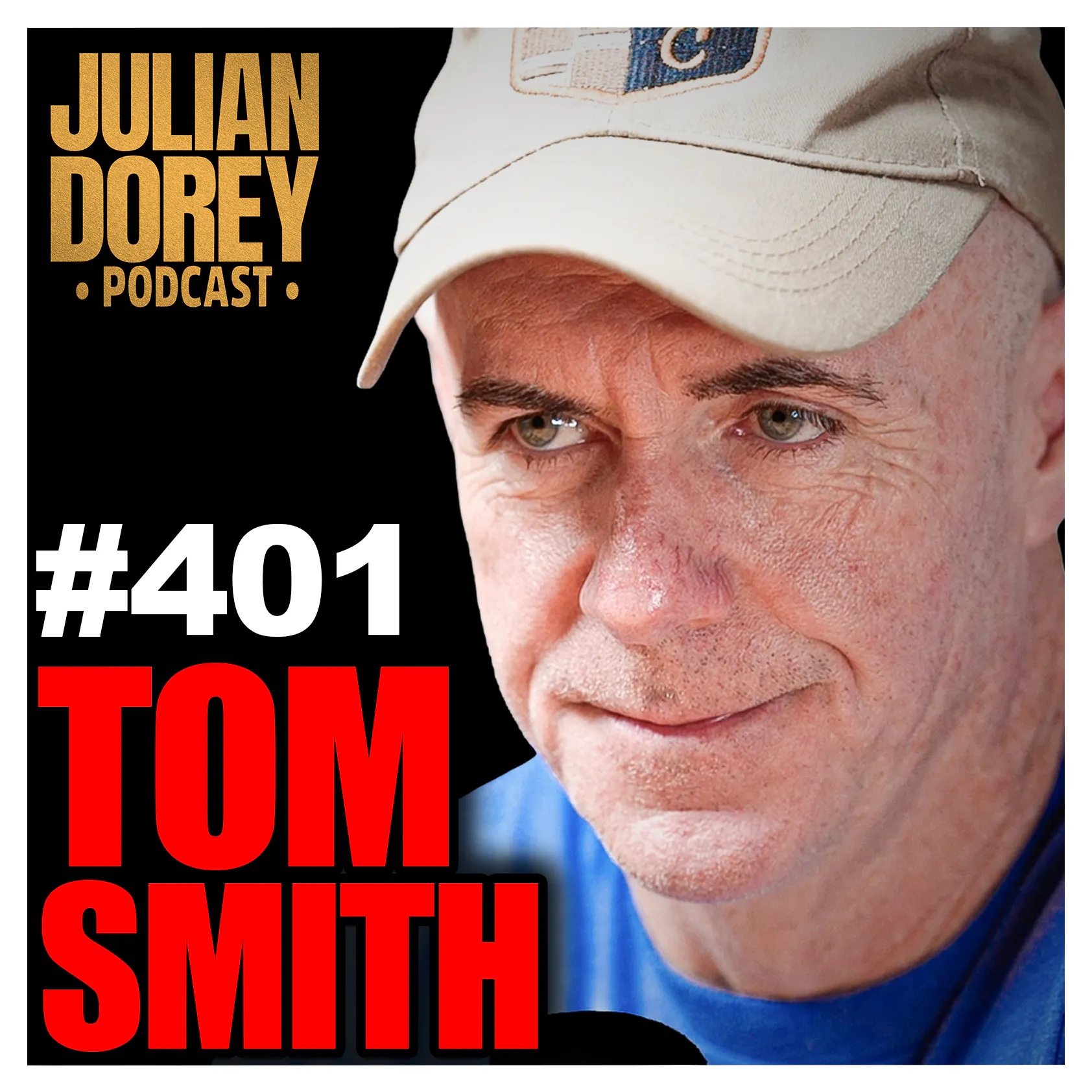
Julian Dorey Podcast
#401 - “Haunts Me!” - NYPD Terror Detective on 9/11, Epstein & Interrogation Mastery | Tom Smith
03:10:45
Loading summary
Transcript764 lines
- [00:00]
A
This message comes from NPR sponsor Paramount and the new original series the Madison. Taylor Sheridan's most intimate story yet. The Madison follows a family raised in a world of digital distraction, forced by tragedy to truly see one another and come together. Starring Michelle Pfeiffer and Kurt Russell, the Madison new series, streaming now only on Paramount.
- [00:35]
B
Well, Tom Smith, it is great to have you here. Our mutual friend Jesse Weber said I had to talk to you. And if these last 30 minutes off camera, any preview, this is gonna be a lot of fun, man. Thanks for coming.
- [00:45]
A
No, thank you for having me. It's a privilege to be here, honestly.
- [00:49]
B
Well, it's my pleasure. But it also looks like, you know, you retired a few years ago. You look like you still take those pythons out and beat the, out of someone on the streets of New York.
- [00:57]
A
Not, not like just beat the heck out of the gym. That's about it. That's about it these days. The other, the other part. Let the young kids do that. Yeah.
- [01:06]
B
I don't know if they make them like your generation anymore. Now it seems to be a whole different kind of culture. When you talk to guys who are in NYPD or in, you know, any of these major, major league, like police departments around the country, like, it's different with the millennials and Gen Z's kind of coming on board now.
- [01:24]
A
It's very different. The mindset's different, policies are different, laws are different, you know, and the way the public looks upon the police are different. And that's because of the media. You know, you get villainized, you know, in being this kind of figure out there that people believe back in the day, and I hate using that term, I'm sorry, I just did. But when I started, it was different. You know, cops were respected because of upbringing that went on with their families, you know, of respect the police. If you get in trouble, it's on you. It's not the police fault, it's your fault, you know, and that's the way it was viewed back then. Whereas today it's reversed. You're just picking on me because. No, I'm just enforcing the law. You screwed up and that's it. But back then it was, it was easier to be a cop. It's harder today because of social media, because of phones, because of videos. You know, you see cops out there today and it drives me crazy when I see videos of cops getting in fights because they're allowed to defend themselves. They're allowed to get in a fight and you're allowed to win a fight. But you see these videos and they kind of step back a little of just kind of holding on to people they're fighting, waiting for someone to show up and help them. Whereas the mindset that you do get in fights and you're allowed to, and you're allowed to win a fight, and we got told back in the Academy in 1990, you're not allowed to lose a fight under any circumstances. You cannot lose a fight. So you do everything you can to win that fight. And does that include using your weapon if necessary? Sure. You know, there were, you know, that's very strict and that's a different level, you know, of a force. But you were allowed to get in fights and win fights. And we did a lot back then. You know, you got to remember back back then, you know, New York City was in the midst of a absolute crime epidemic back in the late 80s, you know, with crack and the beginning of the 90s with, you know, 3,000 homicides, you know, and 2800 homicides and 115,000 robberies.
- [03:43]
B
115,000, like, per year.
- [03:46]
A
Yep. And 88, 000 sexual assaults. You know, that's what was going on in New York City at the time. And we were thrown in the middle of it. Go ahead, go clean it up.
- [03:56]
B
What, what do you think caused that? Because I, I hear about this sometimes, but I'm a little hazy on what it all was like. The 70s and 80s, New York, for some reason, there were just certain areas that were Mad Max, Fury Road, absolutely 100.
- [04:10]
A
And a lot of it was drugs. You know, in the 70s, it was, it was coke and heroin. And the 80s was crack. And crack took over New York. It absolutely ravaged it. And every part of crime led back to drugs. So the robberies happened because of getting money to go buy drugs. The shootings happened because of, you know, one spot wanted another spot. So those shootings happened. So everything always came back to the drug epidemic in, in New York.
- [04:43]
B
Hey guys, if you're not following me on Spotify, please hit that follow button and leave a five star review. They're both a huge, huge help.
- [04:50]
A
Thank you.
- [04:51]
B
Also, like crack, it was wildfire because it was also so cheap. So suddenly you had these drugs that, you know, previously, if, like cocaine was coming in before that, I assume it was a little bit more focused on where it might be. And now you have crack. It's available to everyone in every neighborhood.
- [05:07]
A
Oh yeah, it was five bucks and an immediate, an immediate high.
- [05:10]
B
Right.
- [05:11]
A
You know, you didn't have to wait and sit on a Couch. And for it to hit you like heroin did or cocaine did, it was immediate. And that was, you know, the worst part of it, you know, when it came to what it became and how it just ruined New York at the time, that ruined people's lives.
- [05:28]
B
So when you came onto the force in what, 1991.
- [05:32]
A
1990.
- [05:33]
B
Okay, 1990. Right there you're seeing the continued effects of that from the 70s and 80s. But you grew up in New York, right?
- [05:41]
A
Yeah, and in Wood, which is the northern part of Washington Heights in Manhattan.
- [05:45]
B
Okay, so what was it like growing up in New York and say the 70s back then?
- [05:48]
A
It was, it was interesting. My dad was an NYPD detective. Of course. So. So, you know, I grew up in that world and grew up. I mean, he was my hero. He was everything. He was the prototypical. Having your mind. Irish cop. He was 6, 3, 2, 30, you know, white hair. That's just, that's what he was.
- [06:11]
B
I'm picturing Michael Corleone at the restaurant right now, blowing your dad away.
- [06:16]
A
Just a big Irish cop. And he was everything. We, we would go to his old precincts on the way to a Yankee game, you know, and I'm, I'm seven, eight years old, hanging out in the 44 squad and a 41 squad and meeting all his partners and hearing stories. Driving around the Bronx or Manhattan with my dad was a history lesson. Every street was a story, every alley was a story.
- [06:44]
B
Any stick out ones he would tell you.
- [06:46]
A
Oh God, we had, I mean, there were some in the Bronx that we would drive past. Oh, we had a triple homicide in that hotel and, and that happened, you know, just particulars about, I forget. But. Oh, we would drive any street in the Bronx, pick one, there'd be a story that I would hear. So that was just more of fuel in me to want to just follow in what he did. It intrigued me. It just, it's all I ever want to do. We would sit and watch the news at six o'. Clock. Now back, back then, the six o' clock news was like a TV show that you had no choice. You sat on the couch and you watched the news. And I did that every night with my dad every night to see what was going on in the city, the sports, whatever it was, that was part of the day, part of the night. So if there was a story that came out of, of a murder or something, I would literally ask my dad. Okay, how would you do it? I'm, I'm 8, 9, 10 years old. Okay, how would you do that? Case okay, you'd start with this. You need to start with that. So I grew up learning how to do an investigation when I was a kid. How to start it, where it would go, who do you talk to? And that's what. I mean, he was so great to be around, knowing what I was going to end up doing in my life.
- [08:05]
B
Obviously, I mean, that's like, you're getting an education way earlier than everyone else.
- [08:10]
A
Yep.
- [08:10]
B
But, like. So he started in a precinct like everyone else and then became a detective.
- [08:15]
A
Yes.
- [08:16]
B
And so what he did, he had. Was he a specific unit as a detective, or did he do.
- [08:20]
A
Yeah, he was. He started in the 3 4, which in Washington Heights as a cop in 1950, and then sometime in the 60s, he got promoted to detective, which was not. Not many of them in the city at the time.
- [08:34]
B
Really?
- [08:34]
A
Yeah, detectives were a. I mean, a revered. Which it still is, don't get me wrong. But back then, that was a big deal, being an NYPD detective in the 60s and 70s to get your shoulder. Then he even got promoted from there to second grade, which was unheard of back then. So he did, you know, he did narcotics, he did homicide, he did Major Case, and then he retired out of the Bronx DA's office.
- [09:01]
B
What's the most important thing that goes into being a great detective, other than being able to spot clues? Like, I'm not trying to be too
- [09:08]
A
obvious, but, you know, you know what I tell people? I speak at the NYPD Academy a lot in a criminal investigation course. I speak in colleges, and I tell young detectives all the time, if there's one thing that you have to do and have to learn is your communication skills. If you can't talk to people, you're not going to be successful. If you can't have a dialogue and understand them and understand what you want to say and get where they are in their lives, you're not going to be successful. You should be able to, as a detective, talk to the CEO of the biggest company in New York or the worst crackhead sitting on a corner.
- [09:48]
B
What ties them both together besides the fact they're both humans and communicate Humans,
- [09:53]
A
humanity, and just treat them with respect, no matter who they are. You know, I never went into an interrogation or an interview disrespecting someone because it's not going to work. You know, you're not going to get what you want if you walk in now. Were there interviews and interrogations that had to be done a certain way because of an imminent thing going on? Yes, without a doubt. But the Disrespect part. People will pick up on criminals even though they know the game. They know you're there to do a job and you need some information. All right. To personally disrespect them, they're going to shut down. So I never went that route. I went towards what I needed, and a lot of times it worked.
- [10:39]
B
It's interesting because people always hear about, like, the good cop, bad cop routine.
- [10:43]
A
That is a thing. That, that. That is certainly a thing. And that does work at times. You know, does every situation work with that? No. But me, one of my old partners, Carlos Perez, who is still. Still a dear friend of mine, we were together in narcotics and in a robbery squad together. He's still, like I said, very close to me. We would do that quite often, and we would go back if I was usually the good cop. A lot I was going to say, because it just. It fit. You don't want to. You don't want to act like something you're not. You know, could I be the bad guy? Yeah. You know, there were times that. That. That was necessary, but a lot of times when he would start off on a rant, I wouldn't say anything. I just sit there.
- [11:30]
B
How do you. So if you go into an interrogation, though, and. Well, I guess my first question is, how do you suspend your belief in the outcome? And what I mean by that is, if you walk in there and you're already thinking, say, this person who might be a suspect did it, how do you suspend that to actually determine if they did?
- [11:54]
A
That's a great point. And you should never walk into a situation with a predetermined thought in your head. You can't. You have to just keep everything open because you don't know what that person's going to say. So you have to keep an open mind, because if you. If you have a closed mind of this person did it, that's the only person I'm going to think of. You're not going to listen to what they're saying.
- [12:18]
B
Right.
- [12:19]
A
Because you already have it in your head what they should say. So you're not going to actually listen to what they are saying. And that can skew an investigation, but badly.
- [12:29]
B
Ste, did you know that there's an online cannabis company that ships federally legal THC right to your door? And that they found a way to combine THC with carefully selected functional ingredients to create gummies, baked goods, and flour to get you whatever kind of buzz you want.
- [12:44]
A
Get the hell out of here.
- [12:45]
B
Well, luckily there is, of course, I'm talking about mood.com and their incredible line of functional gummies. And you can get 20% off your first order@mood.com by using promo code Julian today. Forget one size fits all supplements that only get you high. Mood's functional gumm are optimized to kick in in as little as 15 minutes and take you directly to the mood you're looking for. Mood's mind magic gummies are the best because they get you focused, clear and on task for whatever it is you're working on. And if you're looking to get a little freaky at night, lucky for you, they got their sexual euphoria gummies as well, which are going to turn every touch into a full body experience. Listen, you can find gummies to just get you high pretty much anywhere these days. But Mood's functional gummies combine premium federally illegal THC with targeted botanicals to help you get into the perf perfect mood, usually in as little as 15 minutes. And everything ships discreetly right to your door. No dispensary lines, no awkward conversations, just better days and nights delivered straight to your doorstep. Best of all, not only is every Mood product backed by a 100 day satisfaction guarantee, but as I mentioned, our listeners are going to get 20% off their entire order by using code Julian at checkout. So head over to mood.com, link in my description below, find the functional gummy that matches exactly what you're looking for and let Mood help you discover your perfect mood. And once again, don't forget to use promo code Julian to get 20% off your first order. Try it today@mood.com when I do this job, it's easy because it's just like a conversation that goes on YouTube. There's not life and dust stakes to it. It's not, you know, someone going to a courtroom, you know, to plead for their life or something like that afterwards. But in your business, when you, if you can even call it a business, but in your line of work, when you go to do that, these are the highest stakes. So how do you, when you're sitting in an interrogation room, stay present listening to what they're saying and not think about what you want to say next or where you want it to go?
- [14:40]
A
You know what, it's, it's experience. You know, it just, it builds up to that Julian. You get to a point where you get good at it. You, you become honed in on the skills that you have and you, you know, you bring those out. When you first start off, you're thinking like, you know, you're a little nervous. You don't want to say the wrong thing. You don't want to lead something, you know, or miss something. But then as you do it, more and more, you. You learn how to just listen, focus, get everything else out of your mind, and just listen to what this person's saying. When you're trying to get a confession is different than, like, solving a crime. It's different than getting information. Each interview or interrogation has a different kind of mindset to it, depending on what your goal is. So there's different questions and different mannerisms. You would go through. One of the things, you know, when I was trying to get a confession from someone, I would never walk in there talking about the case. My thing. I would walk in and talk about sports for 20 minutes and not even talk about why we were there. I would get in and immediately start with a joke, like, all right, Yankee fan or Met fan? You're a Met fan? Are you talking to you? And they go, oh, no, I like the Yankees. Okay, cool. And I would talk about the game before the game that night, their roster, whatever, for 15, 20 minutes.
- [16:06]
B
How often did they know what you were doing?
- [16:09]
A
Not a lot, because you have to remember they're there thinking they're getting ready for what they think is coming. So now I come in with the complete opposite effect, and it catches them off guard, and it gets them, like, very relaxed. We'll start laughing. And then I would never just jump into why we're there and be like, we talk about the Yankees. I go, listen, let's just get this out of the way while we're here, you know. You know why we're here. Let's just. Let's just kind of just get this out of the way, and we'll go back to having a good time laughing and joking about the Yankees the other night. Where were you? And just lead it right into that.
- [16:48]
B
That is a little bit of a left turn right there. But I see what you're saying.
- [16:52]
A
Well, it wouldn't be immediate. Like I said, it would be 15 minutes or so into. And then just go, hey, you know what? I'm really having a good time with you, but I do have to do my job.
- [17:00]
B
Right?
- [17:00]
A
You know, I. Commercial. Right. And then by that time, a lot of times, they were like, okay, this is what happened. This where it was. Okay, cool. Thanks, man.
- [17:12]
B
And then do you get up and say, gotcha.
- [17:14]
A
Oh, outside? Yeah. You know, you get a high five from, you know, your partner, like, oh, awesome. You know, you Know, there were a couple of times that I would talk about, you know, basketball or whatever, and there was one in particular have this individual in the back of a car, go up to him, start talking about a basketball tournament that he was at, blah, blah, blah. And then out of nowhere, he just went, well, you want to know how I was going to do something? Yeah, sure. What do you got? And he would lay out, like, a plan of. Of what he was going to do that night with. With a crime that he was planning. And I go, okay, thanks, man.
- [17:55]
B
What is that psychologically that makes someone get right there. Is it. Is it part of, like, their criminal makeup that they're. They almost want to. I don't know if this is the right word, but, like, boast about.
- [18:07]
A
Yes, they want to be famous. They want to listen. You know, you've heard it probably before. Serial killers aren't famous until they get caught.
- [18:16]
B
Yeah, they're a different. I wasn't.
- [18:18]
A
But even criminal. Yeah, but they don't. You know, you're not famous until you get caught. So if you're. If you have that mentality of wanting to be famous, you're not going to be until you get your story out there.
- [18:32]
B
You said your dad investigated narcotics when he was. So did he do Frank Lucas?
- [18:38]
A
He knew Nicky Barnes.
- [18:40]
B
Oh, all right. Well, that's.
- [18:42]
A
He knew. He used to. I. I knew who Nicky Barnes was before some of the New York Yankees, Honestly. I mean, I. I knew the name Nicky Barnes when I was a. A kid, before I really realized what Nicky Barnes, you know, who he was.
- [18:57]
B
For people out there who don't know. Can you explain?
- [18:59]
A
Nicky Barnes was. Frank Lucas and Nicky Barnes were like the two biggest drug dealers in Harlem at the time in the 70s. And although they kind of knew each other and were friends, they really weren't, but they were. But they weren't, you know, kind of relationship. And then each of them got arrested. Nikki, I think, flipped pretty quick when he got grabbed about some things, but my dad used to. Used to see him all the time. And he told one story. He'd always tell me a story about Nikki, where he'd see him. And he always said that Nicky Barnes was very intelligent like Frank Lucas was, you know.
- [19:39]
B
You know what? Correct me if I'm wrong here, Tom. You usually don't get to top spot in a criminal crazy syndicate organization if you are not as. As crazy as that sounds. Sometimes if you're not really smart.
- [19:51]
A
You're right. Right. Absolutely right. You know, you have to be articulate. You have to Plan, right? You have to. You know, all that stuff. And he always said he was very much. And he would tell, ask him all the time, like, nikki, what are you doing this for? You know, you have. You know, you're smart. You could do this. You could have a business. And my dad would always say, nicky, always. Nicky Barnes always looked on. Detective Smith, it ain't about the drugs. It ain't about the money. It's about the power I can get and do anything I want in the city. Now, what do you say to that? Okay.
- [20:28]
B
I mean, I guess my retort would be like looking at the biggest example maybe of all time in New York. Bigger than Nicky Barnes, you think? Lucky Luciano, Right. I mean, part of the skyline went up with his. Okay, right. And you're talking about a guy who was totally not educated in school. I don't think he finished eighth grade, was raised in. In basically the Italian ghetto, who, to the average person, if they went to talk to him at first, would assume he's dumb, which is probably a very good asset for a guy like that because he was brilliant. And he ended up being this, you know, sadistic mobster to use that brilliance. But I always looked at guys like that or even, like a more quiet, subtle guy, like a Carlo Gambino, another legendary, infamous mobster. I looked at guys like that, and I said, they could have had that same power being the CEO of a Fortune 10 company.
- [21:20]
A
John Gotti. Yeah, John Gotti. You know, he used. John Gotti was so smart. Yes. Ruthless gangster, murderer, the whole nine yards. But John Gotti used his celebrity to his advantage. He became more of a celebrity in the 90s than he was a mob guy. You know, he's on the COVID of magazines, he's getting interviewed on shows. That was unheard of in that world. You know, no mob boss sat down for an interview or walking down the street talking to a reporter. No one did that. You know, but he had this. This aura about him. I mean, he would have. He would have a Fourth of July fireworks show that the NYPD would send a detail to. That's. You know, that's what. Right, exactly. That's what he was. And just getting to your point, you know, Powers. Powers everything.
- [22:17]
B
New York City is my favorite city in the world. I'm definitely biased, but it's this amazing place where so much of the world has come together, and it's got a lot of symbolism for, like, America itself, for good reasons and bad reasons. But the word power, of course, is something that comes to mind when you look at a skyline like that and take in, like, everything that happens here. What you're talking about in these examples, though, are people who found that power through criminality. On the other end, there are people. I alluded to the example. There are people who find that power in business. There are people who find that power maybe getting to the top of the political sphere, maybe come up through the police ranks even along the way or something like that. Like, to me, though, it's a complicated thing to kind of describe because power can be found in all different ways. Ways that are viewed as on the wrong side of the law and ways that are viewed as on the right side of the law. But the lines between what is right and what is wrong, I'm not talking drugs or something obvious, but the lines between what is right and what is wrong to get power can sometimes get really blurred. Like, I guess what I'm asking is, do you sometimes look at the guys like the Nicky Barnes or the Lucky Luciano or, you know, guys that. That were powerful that you arrested and then look at people on the right side of the law who are powerful and maybe, you know, you couldn't pull up a crime sheet on them right now, but you go, they're just as bad.
- [23:38]
A
Yeah, yeah, because it's a different. It's. I understand one. And you are on target 100. And it's just a different way of going at something, you know, of criminality. I'm gonna do it this way through violence, through intimidation. Whereas powerful in. In the business world is being smart, being articulate, being, you know, knowing your field, where you can tap into what's going to strengthen you. But it all, you know, it comes back to. To understanding having a target, having what you want in your kind of crosshairs and where you are, you know, in that in life is going to get you there.
- [24:25]
B
Yeah. Human nature never changes either. You know, we get overall, statistically more civilized as a society. Not to say we don't still have our problems, but. But, you know, it's not like the Middle Ages or something with people just fucking swinging swords at each other over a beer. But, you know, like, I was recently watching Game of Thrones for the first time. Dee finally got me to do it. And the moral ambiguities that you see in that, this is supposed to be, you know, 2,000 years ago in a
- [24:53]
A
fake world or whatever.
- [24:54]
B
But the moral ambiguities, I started to realize, like, what seemed crazy, like, what the fuck are they doing? I started to think about it in today's Times I'm like, okay, we wouldn't do this or that, but we would do this or that. And that's the same pattern.
- [25:08]
A
Right.
- [25:08]
B
As that thing right there.
- [25:10]
A
So it's just different actions. Right.
- [25:11]
B
Whether it be your dad's era or your era, do things ever really change or is it just immediate?
- [25:17]
A
It's just. It's just a me, and it's just doing it a different way. It's just having a different game plan for the same game. That's all it is. And how you get to your objective a certain way. You. You know, there was, you know, back then, they didn't have the technology that we had. We certainly don't have the technology they have today.
- [25:35]
B
Right.
- [25:36]
A
So you're still going after the same criminals, same crimes. You just have different resources and ways to do it today.
- [25:42]
B
How did, like, so let's talk about, like, where you started before we get to when you became a detective. That was a nice preview there. But you. You start as a regular cop, right?
- [25:52]
A
Yep.
- [25:52]
B
And so doing the beat cop thing.
- [25:54]
A
Yep. And graduated the academy, was assigned to the 30th Precinct, which is up in the west side of Harlem, and Washington heights, which in 1990, 1991, was one of the busiest precincts in the city. We had one square mile. That's what we were. And in one year, I think it was 1993, in one square mile had 88 homicides. That's what it was.
- [26:19]
B
One square mile.
- [26:20]
A
Yep. That's what it was like, you know, because you got to remember, in the early 90s, Washington Heights was the drug capital of the northeast. The I95 corridor from the south came right into Washington Heights, and that's where all the tremendous amount of kilos of cocaine were delivered and then dispersed from there.
- [26:42]
B
Where was it coming from?
- [26:43]
A
Usually down South Florida. Yeah, it would come from, you know, some of the South American countries into Miami, then up. Up that 95 corridor up to New York, and then dispersed from there into the Northeast, New England. Everything came out of Washington Heights.
- [27:01]
B
Interesting alliances, though, too. Right. Because it's not necessarily like it may start with Pablo Escobar, but it may end up with, like, the Crips selling it.
- [27:09]
A
Oh, yeah. I mean, it was just. I mean, they were so organized. It was, you know, it was an organized crime just the way they. They had. They had a boss, they had lieutenants, they had runners, they had enforcers. Same exact way. And it was a business. It was 100% business and how they did it, you know, so when we were up There, you know, in, in the 3 0, like I said, was, was drugs, guns, robberies. That's what the 30th person was at the time. And we were busy every night and I did 4-12s so we were rolling every single night.
- [27:42]
B
So you're just doing patrols and stuff?
- [27:44]
A
Yeah, up until 1994 and then I got into the anti crime unit. Okay.
- [27:51]
B
Before we get there on these patrols though, because this is why there's only a one square mile neighborhood with all this going on. So you, you know every alleyway like the back of your hand. Probably within a week.
- [28:01]
A
Yeah.
- [28:02]
B
You know, when you have that much of a crime infested area to where so many people that live there are, are quite literally just mathematically maybe in on the crime. How do you make relationships with the community who's not in on the crime?
- [28:16]
A
You know what, even with the criminals, you had a relationship. It was very odd. We had a very odd relationship with the bad guys. They knew we had a job to do, we knew who they were. Just don't do it in front of us, you know, don't, don't disrespect us and do, doing your deals in front of us. Don't hang out in the corner. Don't invite the problems. Don't do it. And we would a lot of times roll up to a corner and they turn around and see us and they didn't move quick enough and they were. Apologized to us, all right, sorry. And they'd walk because they. It was a weird dynamic up there at that time, but a lot of. I just had this conversation with someone not too long ago. A lot of the problems that happened there weren't from the people that were there. They were people that were coming into that neighborhood to buy drugs, to take over a drug spot, to rob a drug spot, weren't people from the neighborhood, they weren't robbing each other. It was other people that were coming in that were causing these problems. So a lot of the really violent stuff that was going on was from outside, people that didn't live there. You know, the people that lived there were stuck, you know, they weren't going anywhere. And those are the ones you concentrated on helping and not getting in the middle of this, you know, and, and playing with the kids on the corner, throwing a football around with them and maybe keeping them away from, you know, what, maybe their destiny was, you know, in, in keeping them away from the drug trade because, you know, it. What do you see? Nice cars, jewelry, watches, girls, the whole, all of that is all wrapped up into a kid watching it and you did what you could to try to keep them away from that. Did we? Sometimes, sure. You know, but a lot of times it just fell into it because there was nothing else to do.
- [30:08]
B
How do you not get cynical? Throwing a football around with a kid, knowing, you know, let's say throw around 10 footballs with 10 kids over a 10 day period, you know, eight of them are fucked.
- [30:17]
A
Right? Yeah, it's, it's hard. But you have to, you have to keep a mindset of, of what you're there for. Yeah. You're there to, you know, keep everyone safe and whatever, but you also have to be realistic into you only have so much time or effort to put into trying to save. You can't save everyone. Like I said, some people are just destined to fall into that of who their bigger influences were other than us.
- [30:45]
B
Yeah, I'm pretty obsessed in all different capacities with the idea of like the environment that you are born into and how that affects everything you do. Like, you know, I'm always open to changing my mind on stuff, but I don't, I don't think anyone's born evil or born bad. There might be some people with a few things in their DNA that might make it easier to get there. I could see that for sure. I think even scientifically that's backed, but like born that way. No. Which means that it's not to take away the decisions they make as not being their fault or something like that, but people get put in an environment and then they have decisions to make. And some environments create way more emphasis on good decisions being made and other environments create way more emphasis on bad decisions being made.
- [31:34]
A
Yeah.
- [31:34]
B
And so, you know, it's just so hard whenever I have a conversation with someone like you, who I kind of had to see that like evolve.
- [31:42]
A
Right.
- [31:42]
B
You see a three year old and then he's six, he's still nice. He's nine, he's still nice. 11, now he's not going to school anymore. 13, he's on the corner and it's like, what other opportunities did he have? You know, it's not to say, therefore it's okay that he's doing that, but it is to say like, put yourself in their shoes. Like, did you ever wonder that like you had an amazing dad, you had all these police officers to look up to, people who were trying to do the, the right things and keep the streets clean. So you had like a great environment like that. But do you ever think, like, damn, if I Had this environment, I might, I might be that too.
- [32:17]
A
Oh, sure. Oh God, yeah. You know, and that's why when you, when you look at stories in sports, I'm a huge sports guy, if you didn't notice, couldn't tell. So when you hear these stories about, you know, these, these top level athletes getting into college, getting an approach, who came from that, that's why it's such a successful story.
- [32:37]
B
Yes.
- [32:38]
A
And it's such a needed story that has to get out there to the different generations that are still stuck there. You can do it. How many athletes have you heard say, if I could get out of here, you can too. You just have to have the will to do it and you have to, you have to be strong. It is not hard or is very hard, I should say, to tell the influence in your life. No, I'm doing this. That's hard to do.
- [33:04]
B
It's very hard.
- [33:04]
A
That's very hard to do. But when you hear these athletes and what they went through, they did that. No, I'm not hanging out in the corner. I gotta go to the gym.
- [33:12]
B
Right.
- [33:13]
A
I'm not going to that party. I have practice.
- [33:16]
B
I don't want to take away from that at all. I'm a huge sports guy myself and I love those stories. I'm right there with you. And I don't want to take away from the guys who successfully do that and work their ass off and get there. The reality is when it comes to like being a pro athlete or something, the percentage of people that make it is so minuscule. And it is a combination of things including God given talent and you know, like, I wasn't born six foot nine, you know what I mean?
- [33:40]
A
I'm six one.
- [33:41]
B
I ain't going to be power forward. And so what? Sometimes I'm just like, how do we fix the system so that in places like that the only hope isn't just like, oh, let's go be an athlete. Like, how do we fix the system so that there's, there's hope to be able to see people make it out and in doing all different pursuits, not one thing, just like a million things. Again, not to take away from athletes, but you know, create more diversity with that. What would you do to be able to fix those generational cycles if you were in charge?
- [34:12]
A
Schools, education. Absolutely. That's where it starts.
- [34:16]
B
But how would you fix that? Because we fucked it up for so long.
- [34:19]
A
I know. And it's hard and like you said, you're trying to, you're trying to fix something that's decades and decades and decades old. But you have to give it a shot. Into school, after school programs, coaches, you know, get these community leaders to be a coach somewhere doing a sport or an activity, whatever it might be. But you have to tap into. Kids are a flat, clean slate. You can go anywhere with them. So it's a matter of, of that teacher, that coach going, what do you like?
- [34:55]
B
This is worth knowing. TikTok shop helps you discover good value
- [34:59]
A
products and surprise deals fast.
- [35:01]
B
No endless searching, just smart finds. Download TikTok now.
- [35:10]
A
This episode is brought to you by Nordstrom. Spring calls for a wardrobe refresh, and Nordstrom has the best styles of the season.
- [35:18]
B
From dresses and denim to standout tops and accessories. Find the trends and essentials that feel right for you.
- [35:24]
A
Discover new arrivals from brands you love,
- [35:26]
B
like Waif, Princess, Polly Mango, Adidas Leaders and free people.
- [35:30]
A
Plus free shipping and returns and freestyling appointments.
- [35:33]
B
Make everything so easy.
- [35:35]
A
Shop in stores@nordstrom.com or download the Nordstrom app. Not everyone can play sports. Got it. What else do you like?
- [35:43]
B
What do you like? I love. Right.
- [35:45]
A
What else do you like? Oh, I love. I, you know, I can sing. Cool. This is who I'm hooking you up with down the road. And you have to just have a network of different things that kids can tap into in a community. Don't just focus on sports because like you said, it's about, I think it's. It's 2 or 3% that get into professional sports, 7%, I think, get into college, which if you look at the grand schema is nothing with the amount of athletes that are out there.
- [36:17]
B
I think it's even actually way lower.
- [36:18]
A
It might be, it might be. They, they might have been, you know, older stats that I'm coming up with. But, but you can't just stick to that. Like I said, I can sing, I can draw. I. Nowadays, I'm a computer geek on this. You have to have people who are available to get that person into the right spot.
- [36:39]
B
Yeah, I think we have to find in. In all schools, anywhere. I think we have to find a better balance between, like, structure of this other day goes with periods and classes. The same fucking thing. And also, like, kids finding their interest to, like, tap into their creativity, whatever that might be, that their creativity could be math or it could be music, but, like, being able at an early age to be like, I want to do this. And it's not just off or something like that. You know what I mean? Like, there has to be a way for us to Blend those systems educationally so that, you know, there's a level of fun associated with education.
- [37:13]
A
Think about what you just said and think about the way schools are set up. You're 18 years old, graduating high school before someone says, hey, what do you want to do in college? No, that's crazy. And most of the time, a lot of kids get into college and start a major and change it because their brain starts to kick in about what they can do, you know, where. Why are you starting that conversation about what interests you and what do you want to do with your Life when you're 18 and not 10?
- [37:45]
B
And I'll even go one level up and say, I think it's okay if a kid hasn't figured it out when he's 18. But to have what you're saying is brilliant because it's like, get the conversation started. Because as they learn more and their ideas change and thoughts of the world change, they have. They've already had a broader scope of thinking about things they might want to do.
- [38:05]
A
Absolutely.
- [38:05]
B
Where the possibilities, for sure. But, you know, do you think it's fair to say that a lot of our tax dollars kind of get wasted?
- [38:15]
A
You think?
- [38:17]
B
I mean, it's. It's basically rhetorical.
- [38:19]
A
Oh, yeah. I mean, it's, you know, it's. It's. We just laid out right here a great game plan for a community or city, and they don't. And they're just focused on other garbage where, you know. Because kids get ignored. Because why? They're easy to ignore. Why? Because they don't speak up. So they're easy to get pushed to the side. No, we're going to. We're going to do these projects.
- [38:43]
B
They don't vote.
- [38:44]
A
We're good. And that too. Right. And they don't matter. You know, and these politicians can sit up on stage in front of a camera, go, oh, we care about this. We can. No, you don't. If you did, you change it. The New York City educational system has been the same since God knows when. Nothing's changed. And then they wonder why things are a mess. Oh, why is. Why can't, you know, a. A kid in high school read, okay, what'd you do? What'd he do his whole life in the same education system, Right? Ask yourself that question. Don't ask other people why they're failing. Ask yourself. Ask your administration. Ask school counselor chancellors. Ask them, what are you doing? Nothing's changed. Because it's easy to push that aside and go to other things.
- [39:29]
B
I, unfortunately, before I say this feel like we don't live in a world where they would make this possible. But you know, for me, I, I always think like the kids and starting there, that's the future of any country and what it is. And that's something I would be thrilled to invest in. So if I had to pay a little higher taxes and I knew exactly me, you, all of us knew exactly where that money was going in education such that, let me just start at high level, we could create real incentive programs, not like, you know, teachers union type whatever, but real incentive programs for teachers to actually make good money based on the performance of their kids where they couldn't game the system and stuff like that. In all different schools around the country, across our public schools, I would be perfectly down to pay more in my taxes for that because guess what? My kids will benefit from it. Your kids will benefit from it. If I had had that, I would
- [40:25]
A
have benefited from it too. Right?
- [40:26]
B
You know what I mean? But that requires like also like a social collective, like across us as a society, all agreeing that this is a huge issue, which I don't, you know, I don't understand why not all of us will look at that, right?
- [40:40]
A
And then you get into big companies wanting to, I mean, let's just use a term that we all know in this world that we're in. Sponsors. Now you get big companies to sponsor programs, all right? I'm not going to completely fund it because someone will screw it up, but I will sponsor X amount towards this, right? X amount towards that. And you get these enormous billion dollar companies to sponsor a program. What does that do? It makes it legitimate, you know, where the money's going. And more people will, hey, I like that idea. Oh, they're involved in it. Okay, I'll put myself out there to be a coach, be a teacher, be this, be that.
- [41:22]
B
The other pattern we always talk about with tough neighborhoods like the one you were policing is that you have consistent statistics of them being single parent households all the time. And this is where it's like kind of a catch 22 for guys like you because you know, your job is to enforce the law. But in enforcing the law, naturally, you know, if dads are committing crimes and stuff and then they go away for a long time, the kid now only has the mom at the house. A lot of the moms have to sacrifice and work 2, 3 jobs just to pay the bills and then they're not around and the pattern kind of continues. And this has happened over and over. What do we do about that? Because it's not like you can just say, well, because you're a father, you don't have to go to prison. But at the same time, it's like recreating it.
- [42:07]
A
Yep. And you know what? Why, like we just said and we just stated, programs for kids. Why make it just kids, make it adults. What do you like to do, man? You know, go to these corners where guys are just hanging out parks. What do you like to do? This can't be what you like doing. Okay. You can't wake up in the morning, go, I'm going to put on the same crap I put on last night. Okay. Same clothes, and go hang out with the same people I do every day and just stand there. You can't like that. All right, what do you like to do? Well, I'm a great drawer. Then what are you doing? And set up again programs that are sponsored by these companies to get these fathers, these men into positions that they can be a role model that they can add to their family, support them, and have their kid look at their dad the way I did. I mean, what's wrong with. With putting programs out there to young adults or adults? Why not?
- [43:04]
B
Nothing. Yeah, I agree. I think whenever you leave any part of society ignored, it festers into cancer very quickly.
- [43:14]
A
No doubt.
- [43:15]
B
Right. And we do that all the time with all groups of people, the people that don't get in order, whoever's going to be the most important voting block for the next election.
- [43:22]
A
Yep. Because that's all politicians care about is the next election.
- [43:25]
B
Right. And, like, politicians are about some number that can be put in a commercial for some Tuesday in November for them to be able to say that this statistic did that. But, like, what's the old quote? Like, 80% of statistics are statistical bullshit or something like that, you know, like, you can make numbers do whatever they want and have a win here. You know, maybe homicides go way down, but don't pay attention to the fact sexual assaults went way up.
- [43:50]
A
Right. You know, there's. I've said this before. Knowing a problem, when you're a politician, knowing the problem is easy. Understanding the problem is what's important. Knowing it's easy, you know, because if you understand something, you want to learn more about it and you want to fix it if it's broke or keep going in the right direction. If you understand it, if you just stand up there, go. And you hear politicians say it all the time. Oh, I know. That's a problem. Okay, great. What's your understanding of the problem? Well, we're not doing abcd. That's understanding it. To just say, yeah, I know there's a problem. And they won't have an answer to that. That's why that mindset has to change, of just knowing something and understanding it and putting your, your power, the, you know who you are in politics and the resources that you have into fixing that problem.
- [44:49]
B
How do you, like when you were, when you were telling me the first four years, when you were doing patrols and going through a neighborhood and you know, you had to make relationships with everyone, like you said, including the criminals, and it would be like you'd say to them, I just don't do it in front of me. Or something like that was part of that also because you weren't the detective. So it wasn't your job to make the case on them. Your job was to police the day to day safety of the actual a little bit.
- [45:14]
A
And, you know, it was a respect thing and that's what it was back then. Like you asked in the beginning of this, the difference between like now and then. Yeah, that was a major respect thing of don't stand on a corner, don't make me move. You don't get me out of my car. You know, have enough respect of just, okay, hey, I'll move for now, come back in 10 minutes, I don't care, just don't show me up and do that. And I think, you know, the drug trade back then was so big that there weren't a lot of stuff on the street going on. There was, it was mostly inside because there was a lot of weight. It was major weight that was going on in that neighborhood. And it wasn't to blow it off or just, okay, just don't do it in front of me. It was, we all know what's going on, you know, and you had narcotics in the area, you had street crime in the area, and you wanted to try to make their job a little easier, you know, in what they were doing as well. So it all kind of came together.
- [46:19]
B
Right. But then in 94. What was, what was the name of the first unit you were in again?
- [46:24]
A
Anti Crime unit. Which was, which was a plainclothes unit within the precinct. And we dealt with all the robberies, robbery patterns, shots fired jobs, gun runs. All that is, we responded to all those gun runs. Yeah. So if there was a 911 call of someone with a gun, we would always go first and patrol would know when we were working. So they would wait till we got on the scene because we had unmarked cars we were in plain clothes, you know, we had taxi cabs, you know, all that. Livery cabs, mostly livery cabs up where we worked that were decked out looking like a livery cab. But it was us.
- [47:00]
B
It was halfway undercover. This work. Did you get any extra training for that or was this just like.
- [47:06]
A
It was experience. It was, you know, guys went into anti crime after, you know, you made a lot of arrests or you were involved in, you know, different situations. You know, in 93, I was involved in a very large big shootout.
- [47:20]
B
Oh, what happened?
- [47:21]
A
So after that? A couple of. About a year after that, I went into anti crime.
- [47:25]
B
What happened in 93?
- [47:27]
A
We were on patrol and came across a robbery crew that robbed a supermarket. While we were sitting across the street waiting for one of our other cops to come out of the bank, cash his check, and a couple people ran up to the cars like, hey, something's going on across street in the supermarket. Now I'll preference it with this. The guys in the supermarket used to chase people for like stealing an apple. So when, when people would come up to us go, hey there, something's going on. You're like, okay, like, what? So we went down, grabbed one of the guys who was running back up the street, grabbed him, was like, hey, what's up? He's like, there's three guys, they all got guns. They tied the, the security guard up. They're coming up 144 street in a cab they just carjacked.
- [48:14]
B
Whoa.
- [48:15]
A
Okay. So we pull up and meet them, like head on right at the intersection. So they lean out of the car, they start shooting at us. We shot back a little at that point, but then the car started going north on Broadway and one of the officers who was in the bank cashing his check ran out, stopped the car. They leaned out of the car and shot him. He got shot in the leg about 10ft from me. And then we had a just gun battle with them in the backseat of the car and us in the rear part of the car in the middle of New York City at 1 o' clock in the afternoon on a Friday on 145th street and Broadway.
- [48:52]
B
All right, before I get to what that's like, like, you know, this isn't like some fucking desert or something like that or a war zone. This is a middle of a functioning United States city. When you don't have much time to react here, because suddenly it goes from not someone just stealing an apple to like, oh, this is legit. You're in the car going, go, go, go. And then Pretty soon the guns are out and you're shooting. You hadn't been involved in something like this before to that point?
- [49:17]
A
Nope.
- [49:17]
B
All right, so. And you're still young, you know?
- [49:20]
A
Yeah, three years.
- [49:22]
B
What are you, 24? Okay, so you're young. Does your mind slow down? Do you freeze? Like, what happens?
- [49:30]
A
You know what the training that you get kicks in. And it's. It's wild how much you don't think. It's just strictly, you know, your training instincts just kick in immediately of what you were taught. Get behind something, you know, cover where you are. Get the Kabush injured out of there. Cover for him. The problem at the time was we were having a gun battle with three guys in a car. And we had. 30 eights. We didn't even have nine jet. So we had six shots dealing with three guys that we were having a gun battle with.
- [50:09]
B
What did they have again?
- [50:11]
A
They had one had a nine, a.357. And I think a. I think a.44 or another or. Or another 357, something like that is what they had. And we had our little.38. So the whole notion, the one thing that's different and. And it was very. It's a very odd situation to go through because stuff you see on TV and in the movies of everything slowing down actually happens.
- [50:43]
B
It's like that.
- [50:44]
A
It's very weird. You know, we had. I think there were 40 something shots fired in that situation.
- [50:52]
B
In an intersection right here?
- [50:54]
A
Yeah, basically. Whoa. So I heard maybe two of the shots and the rest were like. Like you're in a pillow. Just like. So the whole counting your rounds thing, that. That's not happening.
- [51:07]
B
Does it literally, like. I don't mean to over, like, simplify this, but is it literally somewhat like you're. You're moving like.
- [51:14]
A
Oh, it's slow motion. Yeah, it. It was very. It was just bizarre. You know how it was. Now we go through this. They get out of the car, they start running. Now a kind of running gun and battle happens. And I chase one guy down the subway. The one of the three guys who wasn't shot, I get him down the subway. Now I could run, you know, you
- [51:37]
B
look like you can still run.
- [51:38]
A
I could. We'll see. But we'll go down Park Avenue after this. But I could run. And running up Broadway after him felt like I was in quicksand. Like, I couldn't run. It was just, like, forced. I was probably moving as quick as I always did, but the feeling of it was like I was running in Quicksand.
- [52:00]
B
Like, your legs are heavy, just not
- [52:01]
A
moving, but you're getting to where you need to get to. And then we get down the subway. Get him down there, tackle them, handcuff them. And as soon as I handcuffed him all the time kicked in again.
- [52:13]
B
Wait a second. So you got him right down. This. This was the one that wasn't shot, right? You caught. You go down into the subway in the middle of all the fucking people. What street is this approximately?
- [52:23]
A
145th and Broadway.
- [52:24]
B
Okay.
- [52:24]
A
Yeah.
- [52:25]
B
It's a Friday afternoon. There's a lot of people around, right?
- [52:27]
A
Yeah.
- [52:27]
B
And you just, like, nail him? Yeah, from behind.
- [52:31]
A
I kind of. Yeah, he got down to the bottom, and I kind of jumped a couple of the steps and just got on.
- [52:37]
B
That's badass.
- [52:38]
A
And just got him down there.
- [52:39]
B
But then time. Suddenly.
- [52:40]
A
And then it just kicks in again. Yeah.
- [52:43]
B
What's your. Like. Do you have prior to that? Is it like goosebumps coming down?
- [52:52]
A
Like, what. What's the. You have no idea what's happening, what's going on? There's no feeling. There's no. Not even. And I don't mean this to be a. Like, sound like a badass or whatever. I. I really don't. But there's not even a fear of what you're doing. Like, I'm firing my weapon. They're firing back at me. Oh, my God. Don't get shot. That never entered my head. It never. Because it's too fast. You're thinking of too many things going on, of getting behind something. Do I have any more bullets in my gun? I got to reload now. I got to watch them to make sure they're not getting out of the car, coming towards me. It's a whole array of things that go on that you don't have a feeling until later. Then, you know, then reality sets in. Especially when I know one of our guys was shot. You don't know his condition. You know, we. Because by the time we all finished what we were doing and came back to the scene, they had taken him to the hospital already. So we didn't even know his condition. Like, when. When he first got shot, I thought. Because I was so close to him, I thought he got shot, like, under his vest because of how he fell.
- [54:03]
B
Did you have a vest on, too?
- [54:04]
A
Oh, yeah.
- [54:04]
B
Okay.
- [54:06]
A
And then I. I found out later he got. Actually got shot in the leg, which ended his career, because it blew out his hamstring and it just missed his artery, which thank God that happened. But the thinking Comes in later of the, wow, this could have happened. Wow, that could have happened.
- [54:27]
B
How long was the time period from when someone came to your car and you saw them running out to you tackling the guy? Do you know it all?
- [54:33]
A
Three minutes, maybe. Fast. Yeah, I remember. And funny you asked that, because when the trials started and two of them pled, one of them, the actual shooter that shot the officer, he was a absolute career criminal, so he had to fight it in court. When I listened to the radio transmission for the first time in the. In the DA's office of our radio transmission of the shooting, it was over. And I looked at, went, where's the rest of it? It's like, that's it. Like, what do you mean, that's it? Where's the rest of the radio show? She's like, that's it.
- [55:11]
B
Was it you or one of your partners?
- [55:12]
A
Yeah, okay, yeah, it was me and. And a couple other people because it went on for. For a little while. But it was weird that it was that quick because he had no idea how fast it was. And then I heard it and, yeah, that blew my mind.
- [55:26]
B
Were you married yet at the time?
- [55:29]
A
For a month. Yep. For a month.
- [55:34]
B
So there wasn't, you know, you get into gear, your training comes into play, things slow down, bullets start flying. You're obviously not looking at the surroundings of all the people. This is an intersection. I get that, that makes sense. But there was never the thought of, like, ooh, what if this is it?
- [55:52]
A
No, no. And I. And I honestly, honestly can say that it just. It never entered my mind. But you know what? There was a part, you know, not. Not jumping forward, but in my career, I never thought that, like, doing a search warrant, I never went, oh, my God, I could hit this door and someone could be behind it with a shotgun. Because I never allowed myself to get caught up in that and get that, oh, crap. Because that's when you screw up. That's when bad things happen. So I never allowed myself to think and listen. All honesty, all young cops. We're all bulletproof. We're all, nothing's going to happen to us. We can take on the world. We can. We can fight anybody. We're all part of that. And that I'm sure had. Had a part of me, you know, like, I'll be fine. I'll be fine. Nothing's going to happen. But I never allowed myself to get caught up in what could happen.
- [56:47]
B
Were you fearless or did you ever feel fear?
- [56:51]
A
I don't want it to sound like I was Fearless, you know, it's a great question, but I just. I don't want to say. I must feel it. I knew. Listen, I knew what this job was and I knew what could happen on any given day at any moment when I went to work. But when you're in the middle of it, you don't. When you're in the middle, in the middle of it, it's not a conscious thought of, oh, wow, if I'm chasing this guy and he turns around, I could get shot. No, trust him, catch him, tackle him, done.
- [57:24]
B
Because this one also happened to you, wasn't planned. You didn't know you were going somewhere dangerous to execute some crazy search warrant silently or something like that. So it's not the best example for me to ask that question. But for like, maybe a hardcore search warrant, you did at some point in your career, if you weren't thinking about, at least at one point, the worst that could happen or something like that, or. What if I don't make it out here? What does fear look like to you then? Like when you actually felt fear if you weren't total?
- [57:55]
A
Well, I had. Okay, great question. It was. It was more, okay, we made it. We got through that without getting hurt. My. My thing in my life was nightmares. I would have horrific nightmares.
- [58:12]
B
When did they start?
- [58:13]
A
Oh, who knows? Probably real early.
- [58:15]
B
Oh, when you were like a kid?
- [58:17]
A
No, no, no, no. With the job, with being a police officer, I had. That's when my, like my whatever subconscious thing went on of me not thinking about it during work would hit me when I slept well, and I would have really, really nasty nightmares.
- [58:33]
B
Was it like the same kind of boogeyman every time or all different?
- [58:36]
A
All different. And, you know, my wife went through a lot. Grabbing her in the middle of the night, grabbing her by her hair grab. I mean, it was, you know, some were bad. And she would learn. She would learn by my breathing that one was coming. You know, she would wake up if I would start breathing heavy. And it got worse and worse and worse and worse. And it got to a point where she would actually get out of bed and, like, try to push me to wake up.
- [59:04]
B
Would it always be some related to something recent you did and, like a version of what could have happened or.
- [59:12]
A
Somewhat. Yeah. You know, in. In my. A lot of my dreams, my gun never worked. That was a big. That was a big thing with a lot of my nightmares. My gun never worked. It just. The trigger didn't work or there was a couple. I distinctly remember that I'd fire it and the bullet would just fall out of the gun. You know, just things like that. Fights, you know, just, just. Yeah, things like that. Just random, you know, something I might have never went through, but subconsciously got in my head and I dreamed about it.
- [59:49]
B
Was this something that was strictly a problem with your sleep or did it manifest as, like, some PTSD in your life?
- [59:57]
A
No, just sleep.
- [59:58]
B
Interesting.
- [59:59]
A
Nope. I never, you know, I never stressed out about the job. I never. Oh, my God, I can't go to work today because how to drink. No, that was never, never a thing. It was just strictly. I never drank. I don't smoke, you know, so that wasn't a New York cup.
- [60:20]
B
Well, the good kind.
- [60:21]
A
So. So I never, you know, it wasn't. Oh, my God, I had a nightmare. Let me go to the bar. It wasn't. You know, and it was never even. All right, maybe I should go have. No, it just. It never got to that. Played sports. I. You know, and family was like a big deal. I coached all the time, you know, so that was all something other than the job. And I say that all the time to young cops, to young detectives. You need an outlet. You need a release from this madness.
- [60:52]
B
And yours was, like, coaching kids and stuff like that. Okay.
- [60:55]
A
Softball and baseball.
- [60:56]
B
How many kids do you have?
- [60:57]
A
Three.
- [60:58]
B
All right, great. So also, like being a dad and being present in that.
- [61:01]
A
Yeah, I mean, I coached softball. My oldest daughter played in college. You know, I coached her from the time she was five till she was 23.
- [61:09]
B
Wow, that's awesome.
- [61:11]
A
And my son played baseball, so I coached him, you know, so that was always, always a thing.
- [61:17]
B
Yeah.
- [61:17]
A
Which I loved, love doing.
- [61:19]
B
And obviously we're still going along here. So for people out there, this is extra impressive to hear from me because I know all the places you ended up going. I mean, you became one of the only people with the NYPD that ended up doing, like, international work post 9 11. We're going to talk about that. Some stuff we actually can't even talk about.
- [61:36]
A
Correct. Crazy.
- [61:38]
B
But, like, you know, the fact that you're able to deal with that that well is interesting. Have you ever heard of Balon Jalal, the Harvard neuroscientist?
- [61:48]
A
No.
- [61:48]
B
He's been online a little bit now. He was on my show and. And I just had him on a second time. But his. It. I love the guy. He's amazing. But his main area study is sleep and dreams and. And everything behind that. He studies a lot with the brain, but that. That's like his area of expertise because he was a Kurd who then grew up as an immigrant in Europe and suffered from severe sleep paralysis and had all kinds of issues with that. Where then, like, the dreams would turn into nightmares and they would wake up and he couldn't move and stuff. And it would just be really interesting, I think, for him to kind of like, my brain.
- [62:27]
A
Yeah.
- [62:27]
B
Here you're. Because, like, it didn't. It wouldn't manifest then in your life. It was, like, very relegated to just the nightmares now. I mean, how often would they happen?
- [62:38]
A
Not. It wasn't like a steady thing. It would. They would pop up here and there. You know, it never. And I never was worried about going to sleep. I never went. You know, I just had one last night. I don't want to have. No. I'd go to sleep.
- [62:53]
B
Interesting.
- [62:54]
A
You know, I. It never. It never found a way into my regular. Regular life. It was just something that I. I was experiencing while I was sleeping, and I'd wake up in the morning go, all right, that one sucked. And work Savage.
- [63:11]
B
Moving on. But when. So you have this whole shootout thing. That's a wild story, by the way. And tackling a dude in the subway, it's pretty cool. Pretty badass. But you said later, that's when you actually could process some of the things that happened and all that. So you were just. You find out your buddy's okay. I'm sure that was a big help. So he's not dead. And, you know, I guess you guys got the bad guys, too.
- [63:35]
A
Yeah, we got. We got. We shot two of them. Caught all three. One pled to 25 years. One pled to 20 plus, and then had to go to Boston to serve out like a. He got locked up for. And the shooter got 125 years in jail. 120 because he was a absolute career criminal. So every. Every charge that we had against him was maxed.
- [64:02]
B
Wow.
- [64:02]
A
So he did 125 years.
- [64:04]
B
Right. So you're. But basically, you're able to just look back on and be like, wow, that was some wild.
- [64:09]
A
That's it. You know, it was. It's just, you know, I. I don't know where I learned it or how I learned just to compartmentalize it into not everything being an avalanche on your head, because you can't. If you do that in the police, in police work, you're in for a lot of problems. That's where alcoholism and domestic problems pop into play when you just have a cork on your life and don't open it, you know, and it Just. It's going to blow one day, and I just found that the other things I was doing and not dwelling on a dream or what happened yesterday at work worked for me. Yeah, everyone's different, you know, that's just something that worked for me.
- [65:01]
B
Did your dad, when you were growing up, talk with you about how he dealt with not bringing the job home?
- [65:06]
A
Yeah, you know, not. Yes, talked a little bit, but I mostly saw it. You know, I would watch it. He never drank. You know, he didn't drink or smoke either. You know, sports was our complete lives, you know, with. With me playing and him being at every game and you.
- [65:24]
B
Baseball guy.
- [65:24]
A
Yeah, I pitched all right.
- [65:27]
B
Very cool.
- [65:29]
A
There's a whole nother decision I made in my life. But you were gonna be a Yankee,
- [65:35]
B
but you became a cop.
- [65:37]
A
Yes.
- [65:37]
B
Wow. So you were good.
- [65:41]
A
And it was while I was. I was actually on the job, still playing, and just got asked by a guy who actually was at one of the games that I was pitching and came up to me after the game and just went, what are you doing? And I'm like, huh? He's like, what are you doing here? I'm like, I just. You know, I'm just playing. And he's like, you know, what do you do? I said, I'm a cop in the city. He's like, all right, how do I get you down to Florida to. You know? And I'm like, a couple years ago, I would have jumped at it, but at that point, you know, just said, thank you, though. You know, I appreciate it.
- [66:16]
B
You really wanted to be a cop. That's. That's amazing.
- [66:18]
A
Well, it was. You know what? It was a decision of. It was a decision of timing. It was, all right, if I go down there and it goes, well, what am I doing? Like, I'm gonna leave the police department and roll the dice on something. Now something happens in my arm, I get hurt. Now what. You know, now what am I doing? Now I lose both, you know, so it was. It was just a. It was a timing thing. It was where I was in life. It was nice to be asked, but, you know, then I look at the timing of it and who was on the team at the time. It would have been interesting. So it is the Yankees talking.
- [66:59]
B
Son of a.
- [67:00]
A
It would have been.
- [67:01]
B
It would have been very interesting, but might have been a New York legend, homegrown.
- [67:06]
A
I'm happy with the decision.
- [67:07]
B
Imagine setting up for Mariano.
- [67:10]
A
He's like, yes, yes.
- [67:12]
B
I thought about that right before Sandman comes on.
- [67:15]
A
Yeah. But, like, I Said it was. It was a. It was a point in my life. It was. It was fun to be asked. I loved it. Playing ball, I mean, you know, and that's why I got into coaching so much and the kids started playing. It all worked out for you. It was just. Like I said, I. I don't. It's not a regret. It's more one of those conversations of a what if. Right. You know? But it's not a regret at all. I would do. I would make the same decision again right now. I would go back and be a cop again tomorrow. You know, that's how much of a good time I had.
- [67:46]
B
I believe it. I. You light it. Like, you know, I sit across from enough people who do all different kinds of shit, and you can see the people whose eyes light up talking about what they do or what they did. And it's like, you can't really fake that.
- [67:58]
A
No. And then I just did. I loved. I loved what I did. I absolutely loved it. I woke up every day like, cool, let's go.
- [68:06]
B
Was it everything that you would imagine, like, when you kind of had your first heroes being your dad and the guys you worked with? This is like this. This is the other version of the Yankees, in a way.
- [68:16]
A
Yeah. Because, you know, and I. And I tell this. And not. Not as an embarrassing thing, but I'll explain why. My dad was my number one thing. And what really influenced me to be a cop is Starsky and Hutch. Because here's why. Because Starsky and Hutch was a different cop show. It was. It was made different. The relationship between the two of them really caught my eye. So not only did I always want that excitement and that adrenaline rush and chase the bad guy, I wanted a relationship with my partner that they had, because that's what I watched. And it was them goofing around and them joking around and them relying on each other and them knowing each other's moves and having their back and all that was a big part of what I wanted in the police department. Not just the whole action thing. I wanted that bond with a partner that I watched growing up my whole life. So that was always a big part of it. And I saw that with my dad. I still, to this day, okay, honest to God, one of my dad's closest partners from the 60s and early 70s. I still, to this day, talk to his family.
- [69:33]
B
Oh, that's really cool.
- [69:34]
A
All the time. And Joe actually just passed away a couple of years ago, and I still talk to his son. Me and him are still good Friends, the daughters, we all just. And that is a relationship that started in probably the late 50s and 60s, and I still talk to them. And that's what I learned about what a partner is like.
- [69:58]
B
Did you have siblings growing up, too?
- [70:00]
A
Four older sisters.
- [70:02]
B
Okay. All right.
- [70:03]
A
All right.
- [70:04]
B
It's clocking now. You needed that brotherhood or something? Yep, I gotcha. That's pretty cool, though, because it's like that was. They don't really make good, like, you know, buddy cop movies or anything anymore. But those that. When you see those, like, even you think, like, bad boys like Martin Lawrence and Will Smith, there's just like a. You know, it's a thing.
- [70:24]
A
Right, right. And it. And it is a thing, you know, when you have that guy and, you know, Carlos and I had that. George Figueroa was my partner on patrol. We had that. You know, it was just. It's. Something clicks and you don't think where each other's going to be. You just know. You know, when I would go through a door, you know, doing a search warrant in Narcotics, and I was a RAM guy, so I hit the door. I knew Carlos was right behind me when I went in that door. And if I still have the RAM in my hand and there's a guy in front of me, I know he's got it.
- [70:58]
B
Just duck.
- [70:59]
A
It's kind of sucked to the side a little bit. We had. We always had a plan. It was great doing them not to jump ahead. I'm sorry. No, it's all right. It's good. We all. They knew I hit a door differently. I would actually hit the door and go through it. I wouldn't hit it and back up because of the way I would kind of approach the door. So we always had a diagram of the apartment we were hitting. And they knew what room I was going into, so I never hit the door and then continued into the apartment. I would hit the door and get in to, like, the first part of it and then get into the bathroom or loop into the kitchen and let the rest of the team go ahead of me.
- [71:39]
B
Wow.
- [71:41]
A
You know, so that was always set up and they always knew where. What room I was going in, which was always important. Unless one or two times I would hit the door and the guy start running, like, right. You know, just drop the ram and chase him. And then I'd get yelled at by the guys, like, dude, you know, like, you drop the ram on our feet. But, you know, those are just reactions of. Of what, you know, encounters you. You deal with when you hit a
- [72:07]
B
Door takes a while, though, to build up that kind of trust. You know, it's something you could do on day one or day five or something. I mean, you got it. You kind of got to live through all those. A bunch of those types of situations to actually be like, all right, this dude gets it.
- [72:20]
A
Yeah. And we had. And we had a great team. We had a very tight team. We did a lot of warrants, so we knew each other where we had the same stack every. Every search warrant. It wasn't, hey, you want to do this this time? Nope. Everyone did the same exact thing each time, which helped because everyone job. Yep, yep, yep. And so you knew where everyone was.
- [72:43]
B
Real quick. I'm going to come back to that in a second. But one other question I didn't ask you because you mentioned you were married for a month in that night when that 93 shootout happened. You know, were you getting any from your wife after that? Like, are you. You know, this is new. Are you going to keep doing this?
- [72:59]
A
You know, you know what? And I give. And I'll preference it with this. I give so much credit to her because we started dating before I got on the job. You know, we. We got together before I got in the academy. So high school or. No, no, no, later, in our early, early twenties.
- [73:19]
B
Okay.
- [73:21]
A
And she knew what the rest of her life was going to be, and she took it and just went, okay, this is you. You're not going to change. I know how you are. I got it. You know, so I don't want to say once I called her from the hospital that we just got in the shooting, and the guy, the cop who got shot was at our wedding, you know, he was one of our guests, so that we were all, you know, tight. So when I called her from the hospital and told her what happened, it was more of, okay, like, are you all right? Like, not expected, you know, she got upset over it, but not to the point of, like you said, like, what are you doing? It wasn't that because she knew. She knew how the city was. She knew how I worked. And it wasn't anything like, you know, in action I did. It just. It fell in front of us. But she always just looked at it like, hey, you're okay. You're good. And she says it. She always said it throughout my career and even now when she has conversations with people of saying, I just trusted him. I knew we knew what he was doing. So I was okay.
- [74:33]
B
That's the same wife, right?
- [74:35]
A
Same wife, I think 33 together, 36 years.
- [74:40]
B
That's amazing.
- [74:41]
A
You know, so that's what I mean. You know, she just. That was her big thing, that she understood what I did and how I worked and trusted me.
- [74:49]
B
That's. I mean, what more can you.
- [74:51]
A
No, you can't.
- [74:52]
B
That's pretty fucking amazing.
- [74:53]
A
Yeah.
- [74:54]
B
All right, so you mentioned it. You got your way to narcotics.
- [74:56]
A
What.
- [74:57]
B
What year did you first start in that?
- [74:58]
A
96 was in anti crime for two years.
- [75:03]
B
Same precinct.
- [75:04]
A
Well, in anti crime was in the three. No, then I went to the Bronx.
- [75:07]
B
You went to the Bronx. All right, so this is, you know, this is post 70s and 80s, obviously. This is post Nicki Barnes and Frank Lucas era. It's also post John Gotti at this point as well. He's. He's away.
- [75:19]
A
Yep.
- [75:20]
B
What was. What was the. The issue at that time?
- [75:24]
A
Heroin was coming back in a big way, and the cocaine was still relevant. Crack diminished because they were making more money doing the kilos and doing the heavier weight than taking the time busting, you know, busting it out, making crack and crack kind of, you know, was still there, but nothing like it was. They were more. The Bronx was more into. Into some heavyweight. And heroin was making a big comeback. We ended up doing it. Pretty big heroin case in. We covered the 44 precinct, which is where Yankee Stadium is.
- [76:01]
B
Oh, that's.
- [76:02]
A
That was the precinct. That was a precinct that we covered on our. On our narcotics team. And so there we. We busted up a big heroin ring which ended up being.
- [76:14]
B
Running it.
- [76:15]
A
Just street kids, but it was set up pretty well. They had about three or four different stamps that they were controlling on a three block area on 167th Street. And we started that case, we were doing buy and bust, which everyone does. You know, that's how you kind of develop your bigger cases. Just doing undercover, go out hand to hands, locking people up, you know, a little bit. Right?
- [76:41]
B
Yeah.
- [76:42]
A
Oh, we had the best undercovers. Oh, my God. They were.
- [76:44]
B
So you never did that part?
- [76:45]
A
No. Nope.
- [76:48]
B
I feel like you could have pulled that off.
- [76:49]
A
No. You know what? I was good being one of the investigators. That was fine. The undercover world. Nah, that's. That's a. You know what? It's a different. It's a different kind of person. Yeah. It is a different breed. It is a different mindset. And I was. There was enough stress sitting in a car, listening to everything on a Kel on the recording, being stressed out about that.
- [77:10]
B
What makes someone a great undercover? Like, when you would spot a guy and be like, all right, he's gonna Be our next. Like, what made you think that
- [77:17]
A
being themselves. Like, we've talked to a lot of undercovers. The best undercovers that I've spoken to, that I worked with and even spoken to on, you know, with interviews on the show and stuff, all were themselves. Trying to create a character is when you get into trouble because you not forget. But things can get weird with trying to be someone you're not and becoming this character. So a lot of their personalities were them just acting, you know, as a drug dealer or drug buyer. But we had to. Two of the best in the Bronx was on our team, and we could, hey, we got this going, you know, go hit it. And they would. And they were. They were great. They were fun to. To be part of our team.
- [78:08]
B
So a good buddy of mine is this guy, Jim Diorio, who was special forces and then ended up 25 years in the FBI. And the first 11 of those, a lot of it was undercover. And he describes two types of undercover work, Main cast and guest appearances. So main cast is he did at least two of those that I know of. There might have been a third. But main cast, obviously is exactly what it sounds like. You create a whole new Persona, documents and everything. And you go undercover was a dangerous organization or a target, whatever it is, for a year or two years. And then guest appearances are, you know, you're regular in the FBI, but a phone call comes in on that burner phone, and you got to just quickly turn into this guy, or you got to do some quick undercover bust or something like that. And, you know, do you think that there's a difference between, like, the guys you're talking about? It sounds like they would just be consistent guest appearance guys, like, oh, we got this one, so do your thing. Go grab this, right? So they got to be themselves. But if someone has to go, let me come up with an example right now. That's not one Jim did. Let's say someone like Donnie Brasco, right? So Donnie Brasco had to go undercover with the Italian American mafia as a jewel thief for, I think it was like three or four years or something like that. In that type of situation, do you think you have to at least create a little something while still maintaining your actual main mannerisms and stuff like that so that you don't lose that?
- [79:39]
A
Yes, you do, for obvious reasons, because you're getting backed up with so much information, IDs, cars, phones, and all that to, you know, not give up who you are. The one thing that speaking to so many undercovered, especially on the show. They all always use their real first name because if they were somewhere and someone yelled a different name, not reacting to it would mess things up.
- [80:04]
B
Yeah.
- [80:05]
A
So they would change their last name, but they always kept their first name the same.
- [80:09]
B
Interesting.
- [80:10]
A
That was one thing for sure. But it is a. It is a commitment that I can't picture. I. I can't even. Anything I've done in my career and the good fortune I've had in my career could never do what they do. It is a different person. It's a different discipline of what they're doing, and you have to be all in. It's got to be 24 7. And that is grueling when you're going on, like you just said, over a period of time. That is a grueling process to go through.
- [80:50]
B
Yeah, Yeah. I can't really fathom it because it's like acting where you never get a take. It's all.
- [80:56]
A
Every.
- [80:57]
B
Every single thing.
- [80:58]
A
There's no do overs is one take.
- [81:00]
B
It's not like, all right, cut. No, I'm gonna give a little more.
- [81:02]
A
Can I just do this again?
- [81:04]
B
Right.
- [81:04]
A
He's not right. You know, and the stories I've heard of, you know, one of the. One of the things that when we interview undercovers, I'll always ask every undercover we've interviewed the same question. What's your oh, crap moment? And all of them have one. Yeah, all of them. Of getting launched off a balcony of a. Of a building, getting handcuffed to a pipe above the ceiling, getting launched off the balcony.
- [81:32]
B
And he's on the show now.
- [81:34]
A
He. He. Yeah, he was. He was an undercover.
- [81:37]
B
Can he fly?
- [81:38]
A
And. No, the way he tells it is he's. He's pretty sure they know who he is. And he actually goes over to the balcony and looked down and went, this is going to hurt. Like, when they actually do this, this is going to hurt. You know, maybe I can reach the tree, you know, or something. But the mindset that he had until the show was hysterical. Just like, yeah, this is going to hurt is going to suck. But then they didn't, and it got all worked out, you know, and so forth. But. But other things that you have to be prepared could happen at any minute, any moment. They could just say, come here. And they all know when that moment is. And I'm not. No, I'm good.
- [82:28]
B
I had. I've had several guys in here who did extensive undercover work, all in different capacities, whether it be military, CIA, whatever. But there's. There's one guy who Stands out more than any other. I had this dude, Matthew Hedger in for numbers 275 and 290 last year, and he was a knock in the CIA non official cover, which is like the deepest undercover you can be. And he spent, I believe it was 11 or 12 years straight undercover. His job was to be an international money launderer. He, he did like three to four years in a one of the four major biker gangs and then did like six or seven in the cartels. And there, you know, he's this, you can see what made him great. He's this unassuming, kind of laid back guy. He's wearing crazy ice on his fingers.
- [83:23]
A
I wasn't expecting that.
- [83:24]
B
Like, had rocks on there, but like, you know, kind of dogs like this, like a little shy, like just autistic enough to be dangerous, you know what I mean? And he's so unassuming. And you're like, okay, so he could be a wallflower if he needed to be. That definitely helps in that world. But there was a point, like in the first sit down, I really had to pull from him.
- [83:46]
A
Like, I was doing a lot of
- [83:47]
B
lifting for the first, like, hour because he had never talked on a podcast. The only reason that he had that he was even talking to me is because his cell got leaked on the dark web by a foreign intelligence service. So they literally had to pull him from the field, which was crazy. So there's a lot of countries he can never go to.
- [84:08]
A
Right?
- [84:09]
B
But, you know, I, at one point I asked him, I'm like, your guy, the person you were, did he talk like you? And he just goes, he talked a little faster. And I was like, all right, how would he talk? And. And like there was almost this like, little. I thought it was panic for a second in his eyes, but then I just realized he was like, oh, I get to do this again. And he like kind of plays with the mic for a sec and then like leans forward and he doesn't, you know, put his body like this or anything, but he's. I'm like, all right, so it's a, it's a deal. And I'm telling you that you got to go move these drugs for me or something like that. Like, why didn't you move my drugs? Why didn't they get there? And he's like, listen. And he just fucking goes into it. And me and Alessi at the time, who's sitting in the studio are like, looking at each other like, oh, shit. Like, he's there. And I was like, Almost laughing, trying to get him out of it. And it was. Whatever that method, Daniel Day Lewis thing is. Like, it was on. And I was like, all right, cut.
- [85:08]
A
You're good. Go back to it. Right?
- [85:10]
B
But I was like, that's a different.
- [85:11]
A
Yeah, it is. It's completely different. And it's a skill. It's a calling to do it. And not everyone can do it now. And to just have that switch, which they need. Yeah. You know, we talked to so many that. And the biggest thing, and I always ask them, this is how the adrenaline dump. How is that on you? And that is always a big deal with undercovers. With, you're jacked up, you're about to maybe get killed because they know who you are. You just did a, you know, 25 kilo deal. You have a million dollars in your pocket, you know, in. In a bag now. Okay, it's over. Go home. You don't go home for the night.
- [85:58]
B
How.
- [85:59]
A
How do you.
- [85:59]
B
What's the most common way they deal with it?
- [86:01]
A
It should. You know what? I've heard so many different ones of taking a walk, going to the gym, playing music, playing. Taking the long. The long ride home. You know, getting home, going to coach, go to a movie. Go. You know, there's all different. I've heard so many different ways that. That guys and girls have dealt with that, with that adrenaline dump. And that's. And they'll all say, that's the dangerous part. Yeah, that's the dangerous part.
- [86:30]
B
Yeah, I. I got the sense Matt. Matt's a really good guy, actually. You know, I used to talk with him a little bit. He kind of has gone dark in, like the last eight, nine months. I don't know what's going on there.
- [86:42]
A
Don't try to figure it out.
- [86:44]
B
I'm wishing you all the best, Matt. But you could definitely tell. And he talked about it, you know, you could definitely tell the reverb because he was also pulled from the field suddenly, and he did it for so long. The reverberating effects of not being that guy anymore.
- [87:00]
A
Oh, God.
- [87:01]
B
With him.
- [87:01]
A
Yeah.
- [87:02]
B
You know, because it's like, even at that point, like, who am I, really? I had to do these things. You know, he was the dude that flipped, and he told the story like he might have not been the only one, but he's one of the only ones who literally flipped a top 10 banker to top 10 bank to launder money for the cartels on behalf of the United States government.
- [87:23]
A
He's like, that's awesome. That's great.
- [87:25]
B
Yeah. But it's like, oh, moral boundaries.
- [87:29]
A
Absolutely. Right, yeah. You know, you know, and then a lot of them, when you get that, hey, we need to do this tonight and it's against law and now you have to either come up with a great story or whatever. Those are dangerous ones too. And they have to be so articulate with getting that answer or that action out there like this. I mean, it's not, they can't think, well, let me know. That's not that world, you know, so that again, just another skill.
- [88:00]
B
You can't react.
- [88:01]
A
No, absolutely not.
- [88:03]
B
He told, he told a story in 275 that will stick with me till the day I die where he, you know, because he's a money launderer, he's not, you know, the shoot him out gun guy with the cartels. But he gets taken, you know, he's meeting with one of his guys and they take him into like a warehouse. He gets into the warehouse, there's, I don't know, a lot of cartel guys. And in the middle there's a dude tied up and bloodied and beat up on the ground, weeping and like screaming and pleading uncontrollably. And on the table is like a nine year old boy tied down and it's the guy's son. And this guy allegedly stole from someone in the cartels. And the cartel members start taking their turns taking a carrot peeler to the kid's face. And he had to stand there and, and it was a test. It was like to see like, can he deal with something like this? And he not only had to stand there and kind of assume it's, I don't want to say normal, but you know, another day at the office here. But he also had to think in his head, what am I going to do if they hand me the carrot peeler? Sure. And he's very convinced that he knew exactly how he wasn't going to have to do it. But I'm like.
- [89:12]
A
Right, yeah. And you know, like I said before when you asked me, I'm good. You think of any, any crazy crap I did on the job? Yeah, I'm. That's fine with me. All that. No, because it's, it's just a different, It's a different person.
- [89:29]
B
Yes.
- [89:29]
A
A different world.
- [89:30]
B
But even with the stuff you did, everything across your career, some of which we definitely start to talk about, but like, you know, you, as you said, you do really well. You know, you don't suffer with PTSD and stuff like that, but you can't un. Download the Hard Dr. Some of the. Yeah, you have to see.
- [89:46]
A
Right. You can't unsee stuff.
- [89:48]
B
So how do you compartmentalize that? So. Well,
- [89:53]
A
a lot of it was. A lot of it was just not. Not forgetting it, but. And there were some things you just couldn't. You just the. I think one of the good things that I started my career at the beginning, I had a probably hour ride home from where I was living at the time. So all the craziness you saw on patrol with, you know, kids who were. Who were killed or, you know, crime scenes that were just incredible, you know, to look at at the time, especially the drug hits, you know, executions, car wrecks. You know, all that. That hour plus ride home in the beginning of my career kind of set it in motion of getting it out of my head before I got home, you know, and there were some nights, you know, and I. And I give my wife a lot of credit with this, too. There were a lot of nights I would get home and it. Whatever happened didn't get out of my head by the time I get home. And she would go, what's up? And being able to just talk it out. This happened tonight. This happened tonight. And get it out and go, okay, let's go to bed.
- [91:02]
B
You got a great wife, man.
- [91:03]
A
No, she's the best. No doubt. I mean, and I've said it. I've said it for years, you know, God knows where, because of stuff I've done, where I be, where I would be if I didn't have that outlet of her. It helps. She's a guidance counselor. That helps.
- [91:22]
B
That's clocking.
- [91:23]
A
That does that. That. That plays into it.
- [91:27]
B
What first drew you to her when you first met her? Like, what first drew you to her?
- [91:31]
A
Oh, she was gorgeous. I mean, you know, it was. You got to remember, it was 89, so she had the 80s hair.
- [91:42]
B
I don't remember that.
- [91:43]
A
Oh, but the 80s, big perm, big hair, you know, denim jacket. When I met her, and just, you know, and it was just immediate. It was just. It was right off the bat. And from that moment was 30. Yeah. 35 years ago.
- [92:01]
B
Like the universe line you two up.
- [92:04]
A
Yeah, it was. Yeah, it was kind of that way. And then her. Her knowing what I was gonna do, you know, where I was gonna go. And the good thing about. About her was having the relationship she had. Still has with my sisters and my mom when. When my parents were alive and talking to them of, how did you do it? You know, Terry, how did you deal with John being in the job you know, going through the crap in the 70s, you know, that went on in the city. So she got a real big education on what it was going to be like, how it was going to be. And I. The one thing I promised her was, if I have the opportunity, I'll. I'll call you, you know, so don't ever think, you know, oh, he's not calling me. Something drunk, whatever. I tried all the time. We didn't have cell phones, and, you know, there. There was none of that. So you had to find a pay phone to make a phone call. To make a call, you know, And I remember one story, if I can, that one night, she got upset, she got scared. And it was the only time where I worked she knew because I ended up there a lot. The hospital that was near us where I worked was Columbia Presbyterian Medical center up on 188th Street. And she knew that hospital because, like I said, there were times I ended up there hurt for whatever reason. So one night we're on patrol, and a cop in the 44 in the Bronx gets shot, gets ambushed, gets shot multiple times. They put him in the car, and the quickest and closest hospital was in Manhattan. So they go over 145 Street Bridge and up to Columbia Press. So it comes over. Now, we were working, so we go up to the hospital. We're shutting streets down. We actually got to the car first and got him out of the back of the police car, you know, onto a stretcher and into. Into the. Into the er. And so there was no time, obviously, to call her for whatever reason. And it came over the news that a young cop was shot and taken to Columbia Press. They didn't say he was from the Bronx. They just said they took him to Columbia Press. And she knew that's where the hospital that we would go was. And she didn't hear from me. And it was being reported was a young cop. It was, you know, all that. So I eventually got to a phone and called her, but that was the only night she literally got really worried.
- [94:49]
B
And it's like, always call me.
- [94:50]
A
And then. Yeah. So it was like, okay, gotcha. You know, I call from Afghanistan.
- [94:56]
B
You learn your lesson. That's good. But you used to call for you, go find a phone booth.
- [95:00]
A
Oh, yeah.
- [95:01]
B
And call.
- [95:02]
A
Yeah, they just took.
- [95:03]
B
Joe and I were just talking about. They just took the last phone booth out of New York, like last year.
- [95:07]
A
Really?
- [95:07]
B
Yeah. I think in New York City, they're gone.
- [95:11]
A
What a shame.
- [95:12]
B
I know there's, you know, you just leave them There.
- [95:15]
A
What's the debt? What's the big deal? It's like a big deal. Just leave them there.
- [95:18]
B
Deep made an amazing point because Deep's like, a writer and filmmaker and actor and all. All that, like, really unbelievable what he does. And he's. He's all into, obviously, knowing movie history even better than I do. Like, his library is incredible. But he's like, think of all the scenes in the history of movies that happened in phone booths. Or someone had to get to the phone booth to make the call and how incredible that was. And now we're gonna have to come up with some other medium to create that same effect.
- [95:46]
A
Just in movies, you know, Just movies. I mean, you're right. You know, that call or that. I mean, Superman, you know, let's just start there.
- [95:53]
B
Yeah. What's he gonna do, like, power up the iPhone now?
- [95:57]
A
Nanotech. Right. Just swipe.
- [95:59]
B
Oh, my God. Swipe up.
- [96:01]
A
Swipe up. And he becomes, you know. But it is. It's just part of New York. And that's the thing, you know, I said it so many times. I had the honor, you know, fortune. Good fortune, to travel around the world, you know, and see different countries, see different cities and around this country, and there's no place like New York. There's no place you can try. You can try to make a comparison, and there's no way doing it that you can walk out of your apartment at three in the morning, go get a pizza. You can't do that anywhere.
- [96:34]
B
No,
- [96:37]
A
you can't. You can't do that anywhere.
- [96:39]
B
Even when it's, like, at its worst, it's the best.
- [96:41]
A
It's still.
- [96:42]
B
I love. I'm addicted to the chaos of it.
- [96:44]
A
It's still this place. And that's what it is. It's a controlled chaos. Yes. You know, and I used to tell people all the time, we would have visitors come in, you know, from other countries and other security services or departments or whatever, and they'd say, you know, oh, you know, we're staying at this hotel. What should we do tonight? And on top of telling them, like, what restaurant to go to, where to hang out, I would tell them, go get a Dunkin or Starbucks and find a wall and sit there and watch people for an hour. And you will have the best show you'll ever have in your life.
- [97:16]
B
Yes.
- [97:17]
A
Just sit there.
- [97:18]
B
Yes.
- [97:18]
A
Get comfortable. Get on a little ledge somewhere on the sidewalk and just watch everyone in New York for an hour. And you will lose your mind, Right?
- [97:27]
B
Yep.
- [97:28]
A
And you won't be able to Keep up. And a lot of them did it. And we'd see him the next day, like, oh, my God. You know, I saw, you know, this woman having a conversation with a light bulb. And I saw, you know, these people walking backwards, you know, just. And I'm like, I told you, stuff happens in this city that doesn't happen anywhere. And the best part, people just walk past it. It doesn't phase anybody.
- [97:55]
B
It doesn't. You know what's crazy? So you. I just thought of this earlier when you said, I didn't stop you. But, you know, you were talking about when your dad would take you through every street on the Bronx and there was a story on every block. And I've always talked about that, like, just in general with New York, because it's like, you look at this. Every single block you walk down has a piece of unbelievable positive history and some of the darkest shit ever, no matter where you go. I don't really know what to think of that. But people will walk, like you said, they'll walk right past it. I. I do the most demented tour in New York when people come in. So, you know, I. They're like, what do you want to say? Well, we're going to go to 9 East 71st street, and we walk up there and I show them. I get. I get in front of the fucking mansion. They're like, what's this? I'm like, that's Jeffrey Epstein's boy place. You know, and every time we're there, first of all, people are like, whoa. Because then they, like, kind of feel it. I mean, it's a creepy, creepy place to be. But apparently they're doing a spiritual makeover. I don't know if you heard that. Okay, yeah, yeah, I. I say bulldoze the building. But, you know, you stand there, and while you're standing there, I notice this every time, normal people just walk right past it, like it's nothing.
- [99:13]
A
Absolutely.
- [99:14]
B
And it's like, I mean, look at.
- [99:17]
A
Hey, here's an example. As. As horrible as it was, ground zero, New Yorkers, you know, it is a great place, you know, and. And tourists play, you know, and all that, but New Yorkers just walk past it, you know, even ones that live that, oh, no, we can't, because, you know, we're different, you know, and. And hits us a different way. I can't, obviously, but the people like walking. You know, working down on Wall street, they walk past it every day. It's just. All right, it's part of it. And other parts of the City, too.
- [99:47]
B
In my old career, I used to have clients at Brookfield Place, and I'd actually go over there all the time to see them. Didn't matter. Every single time.
- [99:57]
A
When.
- [99:58]
B
When I get out, usually, like, from the train right there at that. What do they call that again?
- [100:02]
A
The Oculus. Yes.
- [100:04]
B
Right. Beautiful kind of thing. You come up out a good job with that. They did an amazing job. But, like, you're walking right by those fountains, and you're like, you got to stop. I got to walk over there for two minutes.
- [100:13]
A
Yep.
- [100:14]
B
And every. And it's just a solemn. Like, if people have not been there, I always. When. When people come into town and then they have an extra day or something, they're like, what should I do? One of the things I tell them is I'm like, just go there.
- [100:24]
A
That's all I do. I. I tell people all the time, just walk. You know, you don't necessarily have to go to the museum, but just walk around the fountains and just walk around and just see and feel it. And, you know, me having a different perspective of it being there when everything happened and then seeing it now, you know, is. Is a different feeling.
- [100:47]
B
Yeah. I want to bookmark that for a minute, because that's going to get into, like, what you did afterwards, which is. Which is wild. We alluded to that. But, you know, bringing up the Epstein thing, it is a New York story. Right. This is a guy who operated all over the world, to be clear, but, like, his home base was here. And, you know, a lot of powerful people obviously had to be able to let this happen. Things that are far beyond the reach of anything you can do on your job. But we hear these stories about the NYPD guys who were. Had the unfortunate job of being thrown in to, like, bulldoze the house and then go through everything was in there. And I don't know what to believe with all this stuff. I don't know if, you know, some guys who were involved with that, but, like, a lot of these guys, for whatever they saw in there, which I'm sure was some of the most disgusting known to mankind. Like, committed suicide.
- [101:38]
A
Yeah.
- [101:39]
B
And couldn't even. Like, how does something like that in a city that is so patrolled happen with such freedom for that long?
- [101:52]
A
Oh, man. There's. That's the one thing about New York that. And we just said it. How many people just walk past stuff that. It's just. I don't want to say expected, but expected. You know, it's just part of New York. There's so much. There's so much dark stuff that is in the city that is unexplainable, that shouldn't be, but it is, you know. You know, it's one of those things that the moniker of New York, you know, if it happens here, you know, it happens anywhere, whatever it might be. And it's just, it's part of the mystique of this. But I think it's just the blinders of New York and there's so much going on. Listen, there's no one in New York that walks down the street with one thing on their mind. Right. Everyone's got 10 things going on in their life, 10 different opinions of what they're going to deal with at work, what happened on the news, what happened this. And that's all filling them like that building. I don't care, you know, and that's, that's just the, the coldness maybe if you want to say coldness of New Yorkers, of there's so much that goes on here and there's so much that we just don't care about and it might be horrible, it's a terrible thing that went on. But I have 10 other things I need to worry about. Not him.
- [103:21]
B
You were still in the NYPD when he got arrested, right?
- [103:25]
A
Yes.
- [103:25]
B
You hadn't retired yet. Do you remember that day where that was going down and what your initial thoughts were when you heard what this guy was, what he was alleged to have done? Because I obviously, I assume you weren't ever involved in that investigation to that point.
- [103:39]
A
Yeah, I mean you heard, you know, what, what was being reported. Reported. I didn't know anyone at the time. And I'll tell you something very interesting in a second, but I didn't know at the time anyone who was involved in anything to do with him, you know, so I didn't, I wasn't getting any first hand accounts of, of anything. But then last year, to start our last season off, we had Lisa Phillips on. Lisa Phillips is one of the survivors of Jeffrey Epstein now. Lisa is a very, very good friend of mine now.
- [104:12]
B
Yeah, she was just on my friend Dalton Fisher show too.
- [104:15]
A
Amazing. She's unbelievable when you start to hear her stories and then kind of break that or, or peel that onion apart of what he was. He's one of probably the most maniacal brainwashing people of our time. Yeah. What he did to people and how he manipulated, just mind manipulated everybody that was involved in him with no conscious whatsoever. Zero.
- [104:47]
B
How do you think he developed that?
- [104:51]
A
Wow. That, that might be the million dollar question. Yeah, you know, and, and that was, that would have been one of the. If he didn't die, what do you dive into? You know, the, the origins of it? You know, we, we have the ability to go back with serial killers with all this to, to find origins of things and it would have been really interesting to find that. It's probably so complex. You only. I, I don't even know if, you know, I could do it justice with, with kind of picking one or two things out that, why it might have happened because I think he was, I think he was a just multi leveled complex person in his brain. That one thing didn't even mean something that all of us might think it meant.
- [105:37]
B
The New York Times just did somewhat. I, I don't really know what to call it. I, I guess I'll call it some sort of like investigational piece of like his quote unquote origins, like the come up story, if you will. There were some things in there. I'm like, all right, are you gonna pull on that a little more? And they didn't. But then there were other tidbits. I'm like, wow, that's really, really interesting. And one thing that comes across is that this guy from a very young age had absolute delusional confidence from a sociopathic level. It wasn't from a level of like having a dream and wanting to know. It was strictly about power. And so I mean the Most obvious fudgeing 500 pound elephant in the room is that he was obviously involved with intelligence, most likely with multiple. And you know, it's so easy to see how someone like that would have been targeted earlier early as like someone who could do the unspeakable job. Because he had the mental, obviously he had the personal sickness as well, but he had the mental makeup of someone who unfortunately in a situation where like people are gonna crack, he was really good at not.
- [106:51]
A
Yeah, that's, that, that's, that's short switch. Yeah, he had that switch.
- [106:55]
B
Now I haven't seen Dalton's podcast with Lisa. I know he did one. I haven't seen your podcast with Lisa. I'm a little bit unfamiliar with her story. When did she first encounter Jeffrey and how did that happen?
- [107:07]
A
She was, they were down doing a photo shoot hing another girl and the other girl had. Had known him already and said hey, after we're done tonight, we're going to go visit a friend of mine. He's got his own island. It's pretty cool. And you know, they got picked up and they Went there and. And, you know, the. The parties that went on and the people she saw there. And then.
- [107:31]
B
How old was she?
- [107:33]
A
Roughly? Early. She had to be early 20s. Okay. And, you know, then the massages started, and then her going, what am I doing? Like, what is this? And then. But Jeffrey getting his claws into her of what she wanted to do with her career and helping out and having the contacts to do that. And the one thing that she said was him, like, kind of not being in touch with her for a while, and then also, boom, hey, by the way, I got that job you wanted. Oh. You know, and then it's starting all up again. But she is a really, really special lady with the strength she has to do what she's doing now and being an advocate for all the survivors and not just herself, but everybody and wanting this to go in the right direction with the people who should be held accountable, held accountable for empowering him to become what he became.
- [108:39]
B
Obviously, he was a master of brainwashing and getting people under his thumb. And it's. You know, it's not a. It should never be a source of shame for any of these victims. Like, that's.
- [108:49]
A
That's what he did.
- [108:50]
B
So he was able in. In some facets to, like, brainwash her into, like, oh, maybe this guy is helping me. And then.
- [108:56]
A
Right.
- [108:56]
B
Eventually.
- [108:58]
A
Right, Right.
- [108:58]
B
Like, later, she's like, wait, wait a minute.
- [109:01]
A
But this meant this, and this meant this, and this meant this. And then replaying it.
- [109:05]
B
Yeah.
- [109:06]
A
In your head is when, like, reality hit her. Like, there was a reason. See, I think she said. And I'm gonna paraphrase it. Everything was for a reason. There was nothing random about him. Oh, yeah, let's go to a party. No, there was a reason. It was at that location with those people on that date at that time. It all meant something.
- [109:31]
B
Yes.
- [109:32]
A
And that's what she, like, ended up, like, kind of replaying in her head, going backwards, going, wow. I went through all this looking back
- [109:41]
B
on it now, because now, like, she has that understanding. It's like you come out of the vortex, and you're like, oh, holy.
- [109:46]
A
Whoa.
- [109:47]
B
Whoa. But, like, at the. Is she able to put herself back in the shoes of, like, at the time, saying to herself, like, oh, I kind of like this guy?
- [109:55]
A
Like, like, she says. She said it on our show. She loved him because he was just, you know, it was that person that was helping her and his personality, and he would know when to kind of be just the normal guy, friend, hang out, cool, and then lead to what he wanted Right. And that was the whole manipulation part. And you know, she said, you know, when, when his demise happened, she got upset, you know, because he was part of her life, but looking at it from one angle and then hating him at the same time you know, of what he did. It was just. That's how much control he had over these women in their brains of. On this monster. But you're gonna feel something for me.
- [110:44]
B
Was she around him? Not that she would have been following along with this. The average person wasn't. But like, was she around him after that initial conviction back in the day?
- [110:55]
A
I think at that time she wasn't. I think she was out. So it was before. Yeah.
- [111:00]
B
But even all those years later when she first hears about it, she hasn't stepped out of it yet. And she was like, oh, yeah, Jeffrey died.
- [111:07]
A
Yeah. Oh yeah.
- [111:08]
B
That's so sad. Whoa.
- [111:10]
A
Yeah. Yep. And she's a, again, a remarkable, articulate. Just I, I mean, I'm like, good friend. Not like, yeah, I know her. We talk all the time.
- [111:23]
B
What did it. What her pulled her out.
- [111:26]
A
Oh, what polar.
- [111:27]
B
What made her go whoa?
- [111:28]
A
I think the reality of it, or seeing other girls going through certain things or having enough sense of where that road was, was heading, I think had a lot to do with it. But yeah, she's. She's pretty special.
- [111:46]
B
That's crazy. You wonder like if there's things you don't like at the time, you see, and it doesn't. Like not involving you and it just doesn't clock. Like maybe I'm just pointing, I'm making this up right now. But maybe at some point, you know, you're. You're Lisa and you're down on the island and it's normal enough. And then you see like a couple 15 year old girls and in your head you don't think like, or 14 year old girl, whatever it might be. You don't think like, oh, they're being trafficked here and that's pedophilia. You kind of like explain it away like, oh, maybe they're here helping the gardener or something. And then later you're like, wait a minute. Yeah, like I just can't even. I, I can't.
- [112:31]
A
Yeah, but it's just like, I mean, take it out of the whole Epstein thing and just take it of an everyday abusive relationship. It's the same thing, you know, you're getting beat up every day. But yeah, I spilled the milk, right. You know, or I didn't come home on time. And you start doing the same exact thing. You know, and just a normal. And that happens a trillion times a day in, you know, relationships that are abusive.
- [112:59]
B
Yeah. You were telling me before. Camera. The most dangerous calls to go on are domestic calls.
- [113:04]
A
Oh, the worst. They're.
- [113:05]
B
Yeah. Why do you say that?
- [113:06]
A
Because they can change in an instant. And who. Sometimes you'll walk into a situation where the victim is the victim until you go to lock up the husband. That shit becomes the perp. It. It's. You know, I've had situations that will walk into an apartment, the wife will, you know, get her teeth knocked in, and you're like, okay. And you go to lock up the husband, she'll jump on your back. You're not locking them up. It's. That's what I mean. They are like this. The circumstances of domestic calls can change in an instant because of what that mindset and manipulation and lifestyle is to some people. And that's why they are the most dangerous jobs. I mean, I lost, you know, guy that I graduated high school with was a cop in a five zero and got killed at a domestic because the lunatic husband picked up a mirror and throw it at him and slices his artery in his leg. You know, that's what I mean. You know, it's just.
- [114:15]
B
Yeah. To your point, sometimes, like, somehow they're still.
- [114:18]
A
Yeah.
- [114:18]
B
In love with them.
- [114:20]
A
Yep.
- [114:21]
B
You know, and I want to be really careful how I say this, because I do not want to minimize this at all. That is not my intention. I'm just getting at a psychological facet. You ever seen the divorce lawyer with the. With the. With the dress fest who goes on all the podcasts? He's awesome. What's his name? Joe. Do you remember? I can't remember the guy's name. That's terrible. He's been on like, a million podcasts. James Sexton.
- [114:47]
A
Okay.
- [114:47]
B
Right. Really, really impressive guy.
- [114:49]
A
Like, just fucking.
- [114:50]
B
You know, he's seen all the shit, being a divorce lawyer, but he said something, and it's just like, damn it. Fuck, he's right. He's like, look, I don't make the rules. Argue with a fucking wall. This is just how it is. Every guy secretly wants a good girl that only he can make bad, and every girl secretly wants a bad boy that only they can make good. And when I think of these domestic incidents where you see stuff like that, there is some sort of, like, toxicity. Sometimes it's not all women, but, like, there's a biological wiring there in that direction to where for some reason, they're like, no, I can fix him.
- [115:30]
A
Yeah.
- [115:30]
B
And that's got to be so hard to deal with while you're walking in on them, having the kicked out of them.
- [115:37]
A
Right. And you walk in and there's no way to know that. So cops are walking into a situation. You have no idea of the dynamic, how long it's been going on, what their relationship is, you know, who does what, whatever. You have no idea until it's, it's go time. And the wildest crap can happen in an instant that you weren't thinking, you know, oh, victim, bad guy, lock the bad guy up. Nope. Now she's grabbing a knife, telling you to get away from him. Now it shifts now, you know, and that happens, that happens a lot.
- [116:15]
B
This is why we got to put social workers in there.
- [116:18]
A
Yeah. Until, you know, until one walks in that's 25 years old, 110 pounds, it gets thrown out of a four story window, you know, and then they'll go, all right, maybe not. Might not be a bad idea. And, and I said it before, you know, you have professional police officers who have years of experience who train, who do all this, they get hurt.
- [116:40]
B
Right.
- [116:40]
A
And one, I just said get killed.
- [116:42]
B
Yep.
- [116:43]
A
Now you're going to send someone in that. Okay, good luck. Now you're going to run into assaults, you're going to run into hostage situations where cops gonna come anyway. But now it's a dramatically different thing and the whole nonsense, you know, what the mayor's is proposing and that's your guy, right?
- [117:04]
B
You endorsed him?
- [117:05]
A
He's my guy.
- [117:06]
B
Yeah.
- [117:08]
A
Anyway, it's like, you know, one of the things he's, he's proposing is sending, you know, social workers on, on certain calls and all that. But the thing that gets me, you know, being a cop and knowing how the NYPD works, well, it'll free up cops to do other stuff.
- [117:26]
B
No won't. Like what?
- [117:27]
A
Like what? Right, what? Like what? You know, you're not, I'm not going to this job and then going to serve ice cream on the corner. Oh, thanks, bro. So I can go back to the kids on the corner. No, there's no other. Well, they'll have other things to do. We got other things to do anyway, you know, so I'm not going to that job that you're sending a social worker to, but in 12 seconds I'm going to be on another job. So what's the difference? You know, it just, the, the, the, the explanation of it makes absolutely zero sense. And like everything when, when politicians make bad decisions, okay, it's going to take someone's losing their life. For them to realize it was a
- [118:13]
B
bad idea when they already have examples that should show that.
- [118:16]
A
And I've said it all the time there, there's certain jobs, professions in this country that if politics gets into it, disaster happens. Law enforcement, medical field, education, politics gets into those, it gets wrecked. There's no example of anything good happening. Yes, could you get that one good politician at Rudy Giuliani, who changed New York and changed the NYPD because of getting Bill Bratton and Louis Animal and all that in 1994? Yes, sometimes it does work. But the majority of the times, the mindset that they have with pushing policies that impacts cities and police departments is always a disaster.
- [119:05]
B
You know, I try to study, like, great leaders across all different things in history or now and what makes them great. And there's different things that go into it, and there's different variables depending on what kind of leader they are and what they do. But one thing that I think is synonymous with a great leader that I've seen everywhere is not only are they unafraid to, but they prioritize asking the people who actually know how to do something what to do, right? Meaning they don't step out of their lane and try to be the fucking expert on everything. They bring in the best people and they say, tell me what to do. And the idea that is presented with the best evidence that looks like to them, they're able to make a quick, swift decision to put that into place and try to make it work.
- [119:56]
A
Why did. Here's a perfect example of that. Why in 1994, in 1990, 91, 92, 93, we had 2800 homicides, you know, like I said before, 115,000 robberies. Then in 1994, Rudy Giuliani becomes mayor of New York and says, I was never a cop. I was a. I was a prosecutor, you know, in the US Attorney's office. Cool. But I was never a cop. I'm going to get the best team of cops to deal with the NYPD and deal with crime. Go right, Go. And they got Bill Bratton, who developed the dream team, as we always called it, of guys who were old school, who knew what the problems were, identified the problems, understood the problems and addressed them. And the city dramatically changed. Every aspect of New York city, starting in 1994, changed in 92, 93. You didn't walk through Times Square. You didn't go to Central Park. You hardly went to a Broadway show. You didn't just go out to dinner. It was a mess. Then it changed. Times square. Businesses came. You know, people put money into it. Central park, you were able to go jogging again. Why? Because he knew enough to go get the right people, like you just said, to do that job.
- [121:18]
B
Yeah.
- [121:18]
A
And to just compartmentalize it into an area of why is crime. This. This is why. Let's get it fixed. Yeah.
- [121:27]
B
It's kind of. It's also kind of crazy to look back on Giuliani, too, because in a lot of ways, he was like an amazing mayor. And then he was America's mayor after 9, 11 and was like, you know, if he had just gone out there, he would have, like, gone up out on top. But, you know, you see like, whatever happened to him and kind of the stuff he does now, it's like, what the. I mean, I've had people sitting there. He tried to sell a pardon to John Kiriakou, and. And it's like, there's no way. I mean, maybe there is, but I look at that, I'm like, what happens to get you to that point when you just seem like you weren't that guy 25 years ago? You know, is it just like you get too much power and suddenly you get drunk on it?
- [122:12]
A
It could be. You know, and. And we've seen other examples of that. Not just him, of course. You know, that there's a time to just go, thanks, athletes. You know, not. Not retiring when they should. You know, it's kind of the same thing.
- [122:29]
B
I've never heard that parallel with it, but, wow, that's good.
- [122:32]
A
You know, same thing.
- [122:34]
B
It's like, I used to talk about this with athletes specifically. Not about, like, using as a parallel, but it's like, it really sucks when they're the last one to know.
- [122:43]
A
Yeah.
- [122:43]
B
When they're the last one to know that.
- [122:45]
A
You know, especially when you like them and they end up getting hurt. And then you're like, dude, you know, or they just have, like, that crappy Last season.
- [122:53]
B
Yeah.
- [122:54]
A
And they think they can still do it. Yeah.
- [122:56]
B
You know?
- [122:57]
A
Yep. You know, that's why you give so much credit to, like, a Barry Sanders who's just like, I'm good. Peace out. Later. Run all my reels on YouTube all day and you can see what I did. Yep. But I'm walking straight, my head's intact, I'm good.
- [123:11]
B
And never see a season where suddenly he didn't have that step.
- [123:15]
A
No, he was. I mean, you can. You can list, you know, great running backs.
- [123:20]
B
The best of all time.
- [123:21]
A
I agree.
- [123:22]
B
His best of all time.
- [123:23]
A
I used to just you would just watch a game if the, if it didn't matter who the Lions were playing. Just watch it because he's, he's playing. Yeah. And just wait for that, you know, those two or three, you know, breaking someone's, you know, ACL because he's cutting, you know, sideways on him. He was that good. You know, he was incredible.
- [123:43]
B
No one can name the quarterbacks you play with. No one can name the fucking wide receivers on the team. He, they would, they would load the box.
- [123:49]
A
Yeah.
- [123:50]
B
And he was still that great.
- [123:51]
A
Lt. Same thing.
- [123:52]
B
Yeah.
- [123:53]
A
Lt, you know, Lawrence Hale. Same thing.
- [123:55]
B
Yep.
- [123:55]
A
You know, change the game, revolutionize the game. And I, and I, you know, was fortunate enough to watch that, you know, and watch that player, you know, every week and just go, oh, my God, freak. The absolute, just pure talent. And the stories of, of him sleeping through defensive meetings and then waking up at the end of the meeting going, no, we're not doing that. We're doing this. And having a whole game plan for, for Sunday.
- [124:26]
B
And you got billboard. And they all went, that sounds good.
- [124:29]
A
And they went, okay, fine. They spent two hours game playing in a defense. And he would just go, no, no, no, I'm lining up here because. But he would know it wasn't. No, I'm just doing this. He would, like, rewind the tape. No, I'm lining up here because watch how they work. And I can get through there. And I'll say, I'll have four sacks tomorrow.
- [124:53]
B
Now picture a guy with all those physical skills, all those mental skills as well. He's built like a Greek God, works his ass off. And he was living through the 80s where he might have.
- [125:05]
A
Oh, God, were like every. I mean, the amount, the amount of stories I heard of, you know, having to get woken up on the side of the road in his car like, dude, you have a game in like five hours.
- [125:17]
B
Yeah. Oh. Scary enough seeing Lawrence Taylor coming at you, seeing coked out Lawrence Taylor running straight downhill at you. That's like watching a fucking man bear pig running the wild.
- [125:28]
A
Yeah. Yep. And it's so, you know, it's kind of the, you know, not, not to the drug part, you know, but it's the, it's the Mickey Mantle comparison, you know? Look at Mickey Mantle with the drinking he did and he had. What if he didn't drink and was healthy? What that guy could have accomplished? You look at Lawrence Taylor, what could you have done if you were just straight up maybe.
- [125:51]
B
Although he might not have been that bad.
- [125:53]
A
He might not have been that good. I Should say, right.
- [125:55]
B
More than alcohol, like, actually pulls you down. That's.
- [125:59]
A
There is a difference there.
- [126:00]
B
I will say that. But he was. I mean, you watch that tape, it still don't even look real all these years later.
- [126:05]
A
Absolutely.
- [126:06]
B
Greatest linebacker, greatest defensive player to ever
- [126:09]
A
play the game, no doubt. Right? Absolutely.
- [126:11]
B
All right, so one. One thing I did want to tie back with the Epstein thing, and then we'll move on, because I want to talk about 911. You obviously, like, saw that that day and everything, but, you know, as a long time law enforcement, literal detective, and someone who's done so many serious cases across all different kinds of crimes, horrific, and everything in between. When you see someone like this, especially someone who is operating out of your own city, getting cover later after he's dead, and the truth not being obfuscated by the most powerful people, regardless of who they are, how much does that piss you off?
- [126:49]
A
It's infuriating. It's infuriating because here's why. Because both sides. Both sides will. Will yell at their highest level, the opposite. And yet there they are. And that's what's infuriating. You know, you let you. You get up there, you profess, you. You preach, you scream, you yell, you come up with, you know, bills and law and all this, but yet look what you did on both sides. Because it depends who's where. Right? Where the conversation is, oh, you didn't do this. Well, you could do it now. No, we're not gonna do that now. You know, so there's so much. It's infuriating, and it's never. I mean, I'll make. I don't think it's never gonna come out. What the whole realm of him was not.
- [127:44]
B
I hate it, but I agree, right?
- [127:45]
A
It's not names, books, ledgers, you know, whatever. You know, all that crap is not going to come out.
- [127:52]
B
Does the NYPD still have anything to do with that case whatsoever?
- [127:58]
A
Oh, I don't know. I don't know where, you know, I don't know. The. The. The problem with him was there were so many different jurisdictions that his cases hit, which ended up having multiple agencies work together. You don't know what was focused here or just took place here that didn't take place on the island or in Florida or something. So to say what they just had here or what they still have open, I don't know.
- [128:27]
B
All right, real quick, I gotta go to the bathroom. When we come back, I want to talk.
- [128:31]
A
Cool.
- [128:32]
B
We'll be right back. All right, so September 11, 2001. You're obviously active in the NYPD. Were you in. Officially in narcotics at that time or that day?
- [128:45]
A
I was actually in a robbery squad in the Bronx.
- [128:48]
B
Interesting. Okay, so before we get to the context of that, I assume you remember exactly where you were.
- [128:55]
A
Oh, yeah.
- [128:55]
B
You either saw it or heard the first.
- [128:57]
A
I was actually off that day, and I was in the car. It was normal day, gorgeous, you know, not a cloud in the sky. And I was in my car with my daughter, who at the time was about 19 months old. And my parents were coming up to the house that day just to visit, have lunch. So we were running out to get, you know, some food and rolls, you know, just normal, normal morning. And I stopped at a red light, and it was weird that the. The radio was down because me and my daughter were goofing around and, you know, laughing and stuff. And I didn't hear any music on the radio, and I turned it up, and it was a DJ interviewing this woman, and she's upset, and I'm like, what's up? And she starts talking about a plane that hit the World Trade Center. And the very first thing I did, I leaned out and looked out my windshield and went, how'd they screw that up? Because it was gorgeous. It wasn't a cloud in the sky. Just thinking it was a prop plane or a sightseeing, you know, plane, because there wasn't any report of anything different yet. And I'm like, oh, all right. And I actually called a friend of mine who I knew was working down there and got his white. A friend of mine got his wife on the phone, said, no, he's not even there. He's up in a different building. He's. And I was like, okay, cool. You know, that was the end of it. And I pulled into the parking lot of the store we were going to, and a woman on the radio starts hysterically screaming just uncontrollably. And I'm like, you know, you're looking. Not, like, laughing, but you're like, what's up? You know, what. What's going on now? And she got the words out that another plane hit the other building, the other tower. And I immediately got out of the parking lot. Now I know what's up. Something's, you know, going on. And I called my partner Carlos, who I mentioned before, and he gets on the phone. He goes, where are you? And I said, well, I got Nikki in the car. What's going on? He goes, we're under attack. He goes, we got to get in. I'm like, okay, let me get settled. He knew my wife, he knew my family, he knew, you know, we were very close. And my wife at the time was working in the city. And I called her, I said, listen, I don't give a crap if you get fired, get in your car and get home. You know, just leave because you're not going to be able to get out of the city. This is going on, this is an attack. You know, you're in your, your school, where you are in between two bridges. Get out of the city right now. And she did. And I got the kids all together, dropped them off at my sister in law's. Grab Carlos and then we went into the city in between that time is, is when the buildings fell.
- [131:42]
B
Both of them.
- [131:43]
A
Yeah, the Pentagon got hit. All as we're getting down to the city and we went right down to ground zero. We didn't go to the precinct, we just, we drove right down there and we ended up parking on the FDR before the loop onto the west side because you couldn't get near there. So we just left the car and, and ran up there. And it was the wildest scene you could ever imagine. It looked fake. It was something you just, you couldn't believe you were looking at. We were in those buildings all the time. I would, I've been to the restaurant, you know, up there, you know, just. It was part of New York. It was part of everything with New York. And now to watch seeing 210 story buildings just a pile of rubble and the buildings around it just gone. And figuring out how, well, like what are we doing? What are we gonna do? And making your way through a maze, kind of get to get up on the pile. Took a while too. And just coming up with what are we doing? And just peak, you know, picking pieces of rock and moving it to see if you can see something or, or whatever.
- [133:03]
B
What time is this? Like how? Because it was 102 minutes. They fell. They were both down by playing one hits. 8:46. They're both down at what like 10,
- [133:13]
A
10, 10:12 or something somewhere around there. Yes, I actually have the, I had the time somewhere each day.
- [133:19]
B
I think it's 1032.
- [133:20]
A
Yeah, yeah. So like what, so we got down there probably, I'm going to say probably around 1, 2 o', clock, 3 o', clock, you know, like around there.
- [133:34]
B
So it took, yeah, all this has taken a while to get to that point.
- [133:37]
A
Yeah. Because, well, first of all there was no way into the city.
- [133:40]
B
Right.
- [133:41]
A
So we had to come up with this out of the way through Connecticut down to, you know, just a totally different way to get into the city because every highway and every bridge was. Was closed. So we.
- [133:54]
B
You drove up through Connecticut?
- [133:56]
A
Yeah, we. We figured a way out to get down like 684 through Connect, you know, just a way to get into, like, Yonkers, I was gonna say. And then made our way. Yep.
- [134:07]
B
Wow.
- [134:08]
A
And then made our way down there.
- [134:12]
B
That's a long time to be in the car with your partner once you know, your family's safe, like, yeah, that's all been taken care of. So now it's just the thought of. It's chaos. Were you guys radioing into the precinct? No. What guys were doing?
- [134:24]
A
We did nothing. We just went.
- [134:26]
B
Nothing.
- [134:26]
A
We just went.
- [134:28]
B
So in this three hour, four hour car ride or whatever, you're listening to the radio, I assume.
- [134:34]
A
Yeah, yeah. And you're just getting, you know, reports of. Of what happened. And then you hear about, you know, and then you can, you know where we are. You can see, you know, the skyline. So you see the smoke.
- [134:44]
B
What's going through your head? Because it's a long time to process the.
- [134:48]
A
It probably wasn't that long. By the time I got the family situated and got to Carlos and all that. It probably wasn't a three. You know, it was probably a couple hours that we were in the car making our way down there by the time we got everything settled at home and then. Then picked them up. But it was just realizing the world changed and the reason and the one thing that really solidified that, and I've said this so many times on other interviews, watching military planes fly around New York City, was looking up and watching these things bank around New York going, all right, this is not the same. The world's not the same anymore. Everything just changed. What? Seeing no commercial airlines and seeing military just flying all over Manhattan, that was a. Holy crap. You know, what really happened? And then the impact of it, obviously, then, you know, more things start settling in of. Of what happened that day. And. And then we are mostly in the car. And then the rumors. The rumors were horrible. Like the entire First Precinct of the NYPD are all dead. You know, this is gone and that's gone. And we just grabbed a truck full of explosives on the GW Bridge. The rumors were wild that day.
- [136:06]
B
Is it so much noise that it almost. It's just like you're numb.
- [136:09]
A
Oh, yeah, yeah, yeah. You just like you're listening to kind of half of it of what's coming through but the rumors of. Of other things that were going on that day were pretty wild. And then we didn't hear, obviously, because we were in the car, we couldn't see it until, like, kind of the next day of, like, the jumpers and. And what people were really going through in the buildings at the time while they were still up, you know, didn't really resonate with anyone until, like, the next day, you know, who. Who didn't have access to a tv. People who were home watching it, saw it all, and it was just, you know, it was a day you'll. You'll never forget. Just like anyone who's, you know, the JFK assassination, the challenge of blowing up Pearl harbor, you know, all those historical events that people will never forget, where they were, what they were, and who they were with. And then I think we went down the next day, we went down there again to do whatever you could do. And then we started. Then things kind of settled down, and NYPD kind of got control of. All right, we got to send a group here. We got to do this. We got to do that. And we got detailed to different things that were going on. You had the morgue, you had the landfill, which was in Staten island, which was worse than ground Zero. Going out there was worse than being downtown.
- [137:37]
B
Why?
- [137:38]
A
Because downtown was two. Ground zero was two piles. To really see what was there when you went out to. To the landfill is when everything was being taken out of Ground zero, putting on barges and brought out there, and you had to go through it all. So now the reality of victims and the reality of the devastation of bodies and body parts and all that hit you where you didn't see that at Ground zero because of just the area and now having to go through it and having, you know, you're on a line and you have, like, three buckets next to you, you know, and certain things go in one bucket, certain things go in another, and. And dealing with that, on top of the air quality issue that went on.
- [138:29]
B
Yeah.
- [138:30]
A
Breathing in the crap that, you know, that was at the landfill and being dressed like you're going to the moon, you know, and going through everything.
- [138:40]
B
Were you all masked?
- [138:41]
A
Everything?
- [138:41]
B
Everything.
- [138:42]
A
Not the first time we were out there. You know, when I got out there, I think the first day I was out there was September 14th, and we were dressed like this, you know, because no one really said anything to us. And then we came back, like, a week later, and everyone's dressed like astronaut. You're like, what just happened? Oh, well, there's an issue Great. What about the other day?
- [139:04]
B
You get checked all the time.
- [139:06]
A
All the time.
- [139:06]
B
Yeah, y.
- [139:07]
A
All the time. You know, so that was. Yeah, that was a. That was a rough day.
- [139:12]
B
When. When you first get there, though, arrive that afternoon on the 11th, on the scene, and you're just. You know, the city just got blown up.
- [139:21]
A
Yeah.
- [139:21]
B
And you're a lifelong New Yorker growing up on the island at that point. Many, many years. You know, a decade. Over a decade in the nypd. Like, you're a New Yorker's New Yorker, and you can't even process the fact that all this just happened. But you see, you know, the two staples, along with the Empire State Building of the skyline of your city, gone. Dust, pieces, rubble. You know, is it similar to the shooting in 93, where everything's just kind of moving and you don't have time to process it right there? Or is there a moment where you're standing on the rubble because there's nothing to do it at that moment where you're just like, holy.
- [140:13]
A
Was the second. It was. You know, it wasn't anything you could prepare for. Obviously, when you get into the NYPD and you have the. You know, you go to the range, so you do fire your weapon, so that's a possibility. You go through tactical stuff, so that's a possibility of maybe happening one day. The majority of time it doesn't. But that's out there. This. No, you couldn't. You couldn't have thought of this on your worst day of. Of planning something that could have happened to New York City. So there was a point in time where you get angry, mad, sad, upset, back to angry, back to pissed off, back to, what are we doing? Like, how we. How we. You know, what's the response to this? And then starting to hear who did it. You know, Bin Laden's name came up pretty quick, you know, in. In the conversation, you know, so, all right, what are we doing? When. When are we getting them? You know, all that. And like you said, it. It wasn't something you saw in the news, it wasn't a book you read. It happened to our city. Right. And that was. That was the. The impact part.
- [141:25]
B
You knew a lot of people who died that day, I assume?
- [141:28]
A
I knew a few. Good friend of mine from high school died in there. A lot of the cops I didn't know personally, but especially one of the ESU trucks that was from Manhattan north, where we were, so three or four or five of them. We've been on jobs together, you know, so I knew their faces you know, had conversations with them, you know, and things like that. But everyone, you know, then you start talking. Everyone knew somebody or knew someone who knew someone, you know, from that day.
- [142:04]
B
A lot of brave people that day who went up when things were, my God, quite literally like going down.
- [142:11]
A
Yeah. You know, and, and again, not, not having that, though we talked about before. Not having that. Oh my God, what if happened? I would just do it. Just do it.
- [142:20]
B
Yeah.
- [142:20]
A
You know, and so many heroes and, and civilian heroes that grabbed, you know, people they worked with and got them downstairs. You know, all firemen, cops, you know, so many, so many stories. Yeah.
- [142:38]
B
It's just, it's also nuts to think about that it only took the time it did for both of the buildings to come down. I mean those were monstrosities.
- [142:50]
A
Oh yeah. You know, I even just the course of, of the entire attack, I, I've, I've spoken in colleges and I'll ask students, hey, how long, how long did 911 transpire? Oh, a day, 12 hours, 10 hours. Like 102 minutes. They're like, what are you talking about? 102 minutes from beginning to end.
- [143:13]
B
Didn't even United 93 crash before the towers were done going down. I think that was even before.
- [143:20]
A
Yeah, it might have been.
- [143:22]
B
That was meaning pentagon's hit. United 93 is down, towers down all 102. I think you're right.
- [143:28]
A
Two minutes.
- [143:28]
B
Yeah, yeah.
- [143:30]
A
I mean, listen, there were so many bad things that happened that day too, response wise that, you know, we all wish could have, could have been done better.
- [143:41]
B
Like what?
- [143:42]
A
The military response, you know, where to send jets, where to, how to intercept, what, you know, the, the visa, the, the problem, you know, and learning this from doing, you know, related cases to 9 11, you know, the visa program was exploited by the hijackers because they knew it was a, you know, easy to exploit in the United States and they just walked in here, you know, literally the, the problem with the information sharing.
- [144:17]
B
FBI, CIA.
- [144:19]
A
Yep, yep. You know, in the days or months, year, a year leading up to it was historically bad and devastating because it's my football you can't play type of crap when the ramifications of the consequences never entered anyone's head. And I say that all the time. You know, they all thought of the moment, the instant and not all right, if we don't, this could happen or if this happens, you know, A, B and C didn't get done. You know, things like that. No one thought of that. Which again is, is another infuriary, infuriating Part of, of that day, yeah.
- [145:10]
B
The. The head of the counterterrorism unit in New York at the FBI, John o', Neill, you know, was famously somewhat of a controversial guy. People either loved him or hated him, and he pissed some people off. But you know, if people haven't read the book the Looming Tower or seen the miniseries on it, this is the guy who was pounding the table for years that they were coming and this was going to happen. And this bin Laden guy was a huge problem. And no one listened, including the CIA and Alex Station, who actually might have agreed with him but just hated him so much that they let the personal aspect get in the middle of it to the point that they didn't, as you said, they didn't share any information and things that could have been stopped or people that could have been tagged that ended up being involved in the hijacking weren't. And probably the coldest and worst post 9 11, quote, I heard from one of our guys involved with the situation was at the, I believe it was at a 911 Commission hearing. They had Michael Shore, who was, I think, the head of Alex Station, officially at CIA. They had him in the testimony. And for people that don't know, John O' Neill was fired or retired from the FBI about three or four weeks before 9 11, very ironically, and in a sinister nature, as it would turn out, was took the job as the head of security at the World Trade Centers. And so the very thing that he had predicted for so long, he died in the towers that day trying to help people. And so fast forward to Michael Shore being in front of what I believe was the 911 Commission. He was asked about John O', Neill, who he didn't like. They didn't get along. But he had, like, he had been asked about whether he liked him or not or something like that. And he was like, well, no, and all that. And then he piped in and corrected the record because they said, they, they just said, like you said you didn't like him. And he goes, no, actually I said the only good thing that came out of that day was that the two towers fell on him. And when I heard something like that said after the fact, just like the lack of respect is, that's one thing, but the fact that there was a hatred that deep and that bad of people who are supposed to be on the same team reeks to me of a culture that was so rotten that a million heads need to roll for that. And the fact that someone would be that egotistical to say Something like that in that moment. I mean, fuck you, dude.
- [147:53]
A
Yeah. Yeah, it was gross. You know, and the more information that that came out in the years later made it that much, you know, made everyone that much more angry with what could have been done. And when you look at it at the time when it could have been shared, it would have been easy. They knew where they were. I mean, it wasn't, you know, they had their names in the phone book. Cars are registered in their names. Bank accounts were in their names. They didn't hide anything. They didn't hide a thing. You know, there was. This wasn't. See, this is, this is one thing I've, I've told people. This was not a clandestine plan. It wasn't. They didn't cover anything up. They. They went online. They research flights. They went to, you know, flight training schools. They didn't do it in a cover darkness or with different names. They were themselves. There was nothing that was hidden. You know, so if you backed it up with the information that they had, especially, you know, with the koala poor part, and then, you know, getting into LA and San Diego would have been. Would have been easy. Would have been easy. But it was. So like you said, no, my ball. We're gonna, you know, we got this right? Crap. Which is. Never works out when you hear that line.
- [149:15]
B
No, but when you see it that open. That's why so many people at home go, yeah, of course there's people who wanted this to happen.
- [149:23]
A
Right?
- [149:23]
B
And I, and, and I get that. But you. So if you're there that afternoon, by the way, were you there like when Building 7 went down? Did you see that?
- [149:30]
A
We know we. That was afterwards we got there.
- [149:33]
B
What do you think of that?
- [149:35]
A
It's another one that's, you know, I don't get, you know, I didn't spend a lot of time thinking of it because it's, it's. I don't know. And, and you know, I, I'll be completely honest. I don't know how, why, when that all took place. That's one of those, you know, moments of, of it. The thing that. Here's the problem with, with just. With that you're just building seven and you just said it. When you have organizations, entities, agencies, whatever, that just don't tell you the damn truth. Unfortunately. Hey. Yeah, we blew it. We blew it up. So we. It didn't fall. That's all you. That's all you had to say. I mean, if that's what you did, then just say you did that. Yeah, yeah. We got, we got a tech team in there. We blew it down before it fell and killed more people. Yeah, done.
- [150:34]
B
That would be too easy.
- [150:35]
A
Done. That's what I mean, you know, instead of, oh well, no, it's this. No, it says then you get the COVID up. You know, like, you know, is always worse than, than the crime and if you just did something that led to that falling down and just tell everyone when, when secrets are. Are told and non truths are told is when conspiracies lose their mind and just take on a life of their own instead of just telling the truth.
- [151:01]
B
Yeah. And to people at home, like we've seen real conspiracies play out on a massive scale, especially over the last 10 years, that then people just openly lie to you about whether it be some of the stuff with COVID or, you know, which was on a global scale or the stuff with Epstein. So it's hard not to think that way about, well what, you know, what else are they lying about?
- [151:22]
A
Well, right. And that's the very first question that comes up. I mean, look at, you know, even go back to jfk, why did. That's where the, the term conspiracy theory starts. Right. And why? Because no one's sending. So people's imaginations just go and go and go. And now in this day and age, it's. It's 10 times worse. Because now what you gotta do is get on TikTok and say one thing and it's over.
- [151:49]
B
Yep.
- [151:50]
A
10 million views, that's it. Hey, this is what I think because blah blah, blah for 35 seconds on a clip and that's it.
- [151:59]
B
I think it's also. Unfortunately it creates the opposite effect because the way you can drown out truth of conspiracy is by flooding the zone with a lot of noise. Yeah, just every fucking thing.
- [152:10]
A
Right.
- [152:11]
B
It's the worst possible thing you can think of. And then, you know, people just get exhausted and move to the next thing.
- [152:16]
A
Right. And then it gets to a point where you can't tell the truth.
- [152:19]
B
That's right.
- [152:20]
A
You know, and that's what they get jammed up with. You know, oh, let's see how this play, whatever the conversation is, it gets to a point where you can't now go, well, this is what really happened because no one's going to believe you.
- [152:35]
B
You had a very interesting post 911 though, with what ended up happening with your career.
- [152:40]
A
I did.
- [152:41]
B
Because, you know, obviously, and thank you for covering like what it felt like in that moment. It's always a pretty hollow thing when. Or not hollow. What's the word I'm looking for. Like, I just blanked out. I hate when I do that. I had a good word for that, but it's always like. Like a harrowing. That's what I wanted to say. It's always a harrowing thing when I have people from different perspectives that day who saw it in different ways, describe how they process that. You know, it's. It's. It definitely still hits years and years later. It's not stuff you can unsee, but at some point there. I don't know if it's a week, a couple weeks, month or something. There is this task force set up that involves at least some aspects of nypd, and you're one of the few guys who are chosen to be a part of this. So what was it and what did this look like?
- [153:30]
A
So how the Joint Terrorism Task Force is actually, you know, was in existence started in 1981 when a series of bombings would take place around the city by a group falny, you know, targeting police stations and, you know, a whole ton of stuff. So. And bank robberies that were taking place. So that's when it started. And then after. When 9, 11 happened, it became this enormous monster. And the Joint Terrorism Task Force in New York City ended up becoming the largest in the country. You know, each. Each FBI office has jttf, but depending on the manpower, it is what it is. You have 10 guys, you have 20 guys. You could have 3,000 guys, like in New York, where you have 65 different agencies that are on one task force, three different branches, international branch, domestic branch, and intel branch. You know, that's how large this became. And the way I got down there was actually I got a call from a sergeant I used to work with on patrol, who is a sergeant down in the task force. And. And, you know, we stayed in touch. He knew where I was working, you know, over the years. He was a great guy. And called the 52 one day while I was there and just said, hey, you know, what are you doing? And I said, you know, we were doing something. He's like, you need to get down here tomorrow. Meet me on the corner in front of 26 Fed. I'm going to give you a packet. Fill it out, get it all done, and get it back to me. And of course, I was like, all right, why, Mike? What's up? He goes, no, you need to get down to his air source. And you got to remember, think at the time, JTTF was not a place you put in to go. It was very elite it was very. Not a lot of guys were there. You didn't even ask to go there. Like, hey, how do I get there? There was no applications. There was, you know, there was none of that. That's how, like, revered it was. So when Mike said task was. I'm like, which one? Like, what do you mean? I didn't even think of it. And then he's like, no, jttf, you. You know, you need to get down here. So I said, okay, great. I met him down there the next day, did all the paperwork, did everything, did the interviews, you know, and all that, and then got down there and to be asked to go down there, especially after 9, 11 and I. Knowing what we were going to be doing, doing not only, you know, doing a worldwide, you know, investigative teams, you know, that we had. Your job was to make sure that day didn't happen again.
- [156:10]
B
Right?
- [156:11]
A
You know, that was our biggest. That was our biggest calling. That's not to happen again. And you're gonna do everything in your power to make sure it doesn't happen again. And all your investigative knowledge and experience and all that is, is why everyone was down there with cases you did and investigations you did. And now you're going to make sure this doesn't happen again. And that was our goal.
- [156:34]
B
What. What was the first role you were given there?
- [156:36]
A
Like, what.
- [156:37]
B
It. What specifically was, like, your job?
- [156:39]
A
I think the very first thing when we all got down there was. Was running down the leads that were coming in. Because after, you know, even a year or so after 911, you were still getting. This car is parked here. This guy's taking a picture of this. This guy, you know, so you were running down leads like crazy all day.
- [156:59]
B
What kind of tech were you working with back then? I mean, now we know.
- [157:03]
A
No, not a lot, right? There wasn't. I mean, you know, still. 2001, 2002, 2003, it wasn't where we are now, you know, by any stretch, you know, so you were still having people take, you know, physical pictures of the Empire State Building, which a million people did a day, just because it's the Empire State Building and had no nefarious actions to it at all. But they're calling people, calling the FBI, saying, you know, oh, my God, someone's taking a picture of the Empire State Building. Okay? But that generated a lead that you had to go, you know, get, get. And then, then as you started going, you got on specific teams with specific missions and specific areas of the world or groups that you were in, into, you Know, Al Qaeda, Al Shabaab and Al Qaeda 2 team. You know, there were all different teams that, that you got assigned to with different groups that were out there.
- [157:53]
B
Was the purpose of being assigned to them, tracking them down to track back towards the 911 greater 911 investigation or was it all, was it also or more to track down from a, from a preventative measure the things that you were finding out from an intel perspective that they might be trying to do?
- [158:15]
A
Yeah, preventative. It was, it was, you know, making sure that group. And listen, every group, every terrorist organization, even today New York's the number one target. Of course, you know, so was it going to be. We had to make sure it wasn't a. They're outdoing us, we need to, you know, outdo them. We need to do something bigger than 9 11, you know, so it was more a preventative thing and keeping track of, of these groups that were all over the world.
- [158:44]
B
World.
- [158:44]
A
I mean it was. The number of terrorist organizations that were operating around the world was mind blowing. You know, and not knowing and not being in that world until you got down there and learning on the fly, you know, all these groups and what they were all about and what they did, you know, you had to get caught up to speed pretty quick with everything they were doing, depending on what team you were on.
- [159:08]
B
It's kind of like, you know, it's constantly looking at a million haystacks and trying to find the needle though. Like you're dealing with the biggest city in the world. Yes. It's got a lot of resources around it now to try to protect it. But you know, breaking through, breaking the seal and someone getting in there to do. Yeah, you know, one dirty bomb.
- [159:28]
A
Right.
- [159:28]
B
Or something like that. Like you don't have like a magnetic force field around it that can stop that.
- [159:34]
A
How do you, you don't have borders, you don't have. I mean you could drive, you fly into somewhere, drive to New York. You know, there was no.
- [159:40]
B
Do you not lose your mind like thinking about all the possibilities all day? Yeah.
- [159:44]
A
I mean, and that was part of it. It was, you know, and that's why so many people were so on top of their game because you couldn't make that mistake. You couldn't have a bad day, you couldn't overlook whatever getting, you know, people in the right places and source information was, was big too, but a bigger part became, you know, became part of the everyday work force as opposed to before 911 was the information sharing got much better and agencies started to work together and Share information, have group meetings and. And, you know, teams that were put together with interagency communications and coordination. And that made it much better. It was maybe something you had, I didn't have, and now we both have it.
- [160:35]
B
Right.
- [160:36]
A
You know, so that was really, really important.
- [160:38]
B
How did you manage, like, jurisdiction with stuff? Because you're dealing with FBI, maybe in some cases, you're dealing with CIA. You know how it is?
- [160:45]
A
It's like. I mean, we were. We were unique because we were. We were still all NYPD detectives, but we were, you know, given federal status under the marshals. So we had federal powers, but we're still NYPD detectives.
- [161:02]
B
Wow.
- [161:02]
A
You know, so we had the same powers as an FBI agent, you know, to get information, to receive information, to read it, to. To be in briefings, you know, all that. We all had top secret clearances, you know, and even some above that, depending on what you're working on at the time. So getting the information wasn't something that we were excluded from because we all had, you know, the proper clearances. It was. It was finding out the right information and getting the right information to. To be actionable to something. Maybe you had working or something you heard or whatever. But the information sharing in the group work workload was much better than it was, and we were able to go, you know, and then you got to know people. You got to have relationships with people in. In the agency or whatever, say, hey, I need this, or. Or. What do you got on this? Oh, Tom. Okay. It's you. You know, and it became easier to get information. And the. The good thing was the way the FBI worked and the NYPD worked, if you had something going somewhere you went, there was no, let's get this, you know, briefed, and let's get this cleared. And no, if I had to get on a plane and go to California, go. Just go.
- [162:26]
B
What was it like suddenly? I mean, you had spent your whole career basically, like, in the city, cracking down on all different stuff. What's it like to suddenly be like, you know, we're going to Somalia tomorrow.
- [162:37]
A
Yeah, it was. That was bizarre. It was. It was inviting. It was great because we didn't. I mean, a day. Listen, if you went to Jersey for a day, that was a good day. You know, if you. If you worked in the Bronx and had to go to a Jersey department for a day, okay, great, go over the bridge, go get something to eat in Jersey and have a meeting. Awesome. You know, and now you're. You're getting on a plane, you know, going Overseas and working in an embassy and, you know, dealing with high level people of power and influence and political figures and, you know, ambassadors and, you know, all that. And you had to, you had to be on top of your game. And here's why. And I don't mean it. I don't mean it that the NYPD is the end all, be all, and I don't want it to come across that way at all. But the NYPD detective is, is looked upon as. All right, you better know your crap. You better know what you're talking about. Don't walk in here and say, I don't know. And all of us believed in that and lived by that. So we were able as detectives to go overseas and brief an ambassador.
- [163:49]
B
How many, like NYPD detectives were doing that?
- [163:52]
A
We had, we had about 100 detectives assigned to JTTF.
- [163:57]
B
But actually going overseas, it depended on
- [164:00]
A
what team you were. I mean, there were, there were guys who did a lot of stuff. There were, there was a, you know, there were certain guys who did a lot more than others. I mean, you know, let's be honest, you know, JTTF isn't any different than any place else.
- [164:14]
B
Sure.
- [164:14]
A
You know, you know, people that have the opportunity to do other things that others don't, whether they make it themselves or it's just the case that they're working on. But, you know, that's when I said before, you know, in the earlier part of the interview, Julian was your communication skills. You know, you can't walk in somewhere and say, I don't know, you know, hey, Detective Smith, what's this? In this group. Let me get back to you. No, you, you can't do that. So I just made it a point to just make sure I had everything I had, no matter. And I never. The good thing about me, I never got. Oh, my God about someone I was talking to. I didn't care who you are. You could be an ambassador, you could be the undersecretary of state, the director of the FBI, director of the CIA. To me, you were just a guy that. I'm just telling you.
- [165:07]
B
I love that that was your kind of answering this question. Because what I was going to ask you is, was there ever, you know, you got thrown right into this and it's a whole different literal environment, you know, overseas stuff, whatever. Did you ever have a moment where there's like imposter syndrome? Like, what the fuck am I doing? Like, that guy's in the CIA, you know.
- [165:26]
A
Oh, you had, Listen, you know, there were moments. Don't get me wrong, that. That you took a step back and went, whoa, like, all right, this. I'm not in the Bronx, right. I'm not dealing with. I'm not dealing with the crackhead on the corner. You know, this is. This is someone, you know, a group wants to blow the world up.
- [165:43]
B
Yeah.
- [165:44]
A
And you can't be wrong. And the delicate thing about what we were doing is what you say has a tendency to become policy somewhere. So you better be right with the information you have. And when I say you can't walk in and say, I don't know, I mean that in a. In a certain way. If you didn't know, you had to say you didn't know. Right. You didn't make stuff up or. Or think or, hey, this is what I kind of think. No, you know, I'll let you. I'll get that info for you in the next 10 minutes.
- [166:18]
B
How?
- [166:19]
A
How would.
- [166:19]
B
From, like, a source, developing perspective in all these different countries, just in general, you know, you spent your career developing sources on the streets of the city that you knew. You knew every thing that was going on, especially within your precinct and stuff. So you knew who people were. You kind of knew where they stood, and you knew how to build that relationship. To say nothing of the fact they all spoke your same language. Most of them did. You know, now suddenly you're in all these different countries, in all these different cultures, wherever the investigation may lead. How are you, an NYPD detective, successfully developing sources and winning their trust? Like, what did you have to change up to do that?
- [166:56]
A
Exactly the opposite of what you just said. I didn't change a thing. I didn't look upon. See, I never made. And. And that was one of the things I made sure of. I never made something out to be more than it was. And I looked at everything as. And I honestly, I looked at every case I did as a narcotics case in the Bronx. What would I do? What would I do then? What would I do with that case here? And I just did it the same way. I never. Oh, my God, this guy wants to. Whatever. I didn't. It was a bad guy. I need to get.
- [167:28]
B
Humans are humans.
- [167:29]
A
That's it. And it was the case. And I never, you know, and that's why I kind of, to this day, kind of pride myself, I guess, you know, to a point of not getting stressed out about stuff. And I didn't then because I just thought of it as what it was. It's a case. It's a bad guy. We gotta stop him from Doing this just like I would stop a guy from killing a family in the Bronx. Okay, same thing. I'm gonna go about it the same way. And a lot of times, maybe with an exception here and there, because of the amount of resources we had in the federal government, as opposed to just doing something in a precinct in the Bronx, but always kind of like, okay, we need this. Obviously we need this, and we need this. Let's just get this and. And see what else we need to stop this, you know, so that's kind of just the way I did it. I didn't make more of it than. Than it was.
- [168:25]
B
Now, there's a lot you did in these years that remains classified that you're not allowed to talk about publicly to this day. Is there one kind of story or investigation that you are allowed to talk about that stands out?
- [168:41]
A
Well, going. I mean, not to get into the operational weeds of it, but going over to Afghanistan as an NYPD detective was odd.
- [168:53]
B
In 09, right?
- [168:54]
A
In 2009, this is like the. Afghanistan was going on crazy. Yeah, it was. It was going on and, you know, got sent over there on a. On a case we were doing, a kidnapping case. We were doing that. Someone got grabbed over there, a U.S. citizen that we had to go get.
- [169:13]
B
Was it in New York? Well, I don't know if I'm allowed to ask that. Were you getting it because it was a New Yorker in your Jersey.
- [169:19]
A
It was a New York area based.
- [169:20]
B
Okay.
- [169:22]
A
Situation. How's that? That's good. You know, and as. As different as it was, it was, that took a lot of, you know, if I ever thought a lot about a case and the ramifications of it and what was really going on, it was that because it wasn't normal. You know, like I just said before, I wasn't going to the Bronx, I wasn't going to Brooklyn. I'm going to a war zone, and I'm a detective. I'm not in the military. You know, I was in the military. Am I tactically okay in what I can do? Yeah, I was comfortable with my tactics and all that, but it was mentally. It was mentally getting ready for it and mentally saying, all right, stuff can go bad in an absolute blink and I'll never know it.
- [170:17]
B
Right.
- [170:18]
A
You know, I'm not going to know if something blows up right next to me, because I'm going to be gone in a millisecond, and that's going to be it. So to get mentally prepared for that was a challenge. But I remember we landed in a Country stay there for. For like a day, because it was. We couldn't take a direct flight to Afghanistan. Then we had to take a, like, kind of a commercial flight.
- [170:44]
B
US Air wasn't going right there.
- [170:46]
A
No, they just. Now there was like. And then, like, a contracted flight into. Into Kabul. And on that flight is when I just said, okay, I'm good. I'm good. We're ready. I got this. I have a game plan. I know what I want to do. I'm going to run it like every other case I've done in my career. I'm not going to do it any different. I'm good. Let's go.
- [171:09]
B
Any of the military guys on the ground in these places ever, ever, like, kind of give you trouble or.
- [171:14]
A
No, they loved it. They're like, oh, you know, you're dealing with special operators who don't. Who do the most wildest crap in the worst situations in the worst places of the world you can imagine. And for. For them to stand in front of you and you tell them, yeah, I'm a NYPD detective. Like, holy crap. Hey, what are you doing? And they're, like, all into it. You're like, really? Like, do you know what you do? You're like. You're like, you know, your team is like the New York Yankees to me, and you're worried about me. You know, it's just. You know, it is. You know, and. And that's what I mean by understanding what you represent as a detective in the nypd, you know, and how revered you are and how people look at you. You can't overlook that, because if you do, then you're. You. You just. You're gonna look like an idiot, you know, and. And people aren't gonna respect you. You have to understand what you represent. And when you have someone that's a tier operator going, oh, my God, dude, like, tell me a story. Like what? Like, I'm going to tell you a story of, like, you know, doing a search warrant and bus and. And they love that. That's cool. You know, so those relationships that we. We got to, you know, talk to a few of the guys and then realizing who, you know, where I worked was, was pretty cool. And, you know, we take for granted that just because I'm from New York doesn't mean everyone else is. Here's a serious badass tear guy who's from a, like, town somewhere in America with 600 people in it.
- [172:50]
B
Right.
- [172:51]
A
You know, who's seen NYPD on TV.
- [172:53]
B
Yeah.
- [172:54]
A
You know, and now one standing in front of them, you know, so that's. That was kind of cool.
- [172:59]
B
And you're. And like you said, in all these different countries, you're working with all different types of special forces operators, Deltas, seals, stuff like that.
- [173:08]
A
Yep. And combined, you know, on certain task forces they had set up, you know, and all that.
- [173:12]
B
And how many years did you spend on this task force, by the way? I didn't ask.
- [173:17]
A
17.
- [173:18]
B
17. So you. From 01 to 18, you were doing this?
- [173:22]
A
Yeah. No, from. I got in. In 2003-2020. I got. When I retired, 17 years, which was not the norm. There were like, I think three or four of us that were left there with that amount of time.
- [173:37]
B
That's why.
- [173:37]
A
So 17 years.
- [173:41]
B
Gotta take some years off your life doing shit like that.
- [173:44]
A
It did. And you know what? It got to a point. And you're. You're exactly right. It got to a point where I had. I just had enough of the traveling. And in a particular case I was doing that, I was all over the world and just traveling a lot and down to D.C. and it was a lot. Not that. Not the case. I just talked about another thing, right, that was really, really heavy on me. I mean, I. I didn't know what time it was anymore. I didn't know what time zone I was in. My watch was always different. I look, you know, when you get to a point where. Where people at work would look at you and go, yo, Smitty, you're right. I'm like, yeah, why? Well, you look like you haven't slept in four days. You know, that adds up. And, you know, it got to a point where I was like, you know what? Time out. I need to stop doing this. Go to a different team, you know, who didn't do as much stuff because it was, it was. It was a lot. The kids were getting older. You know, I had other responsibilities with coaching and all that. Like, we discussed that I was not going to stop doing for anything. I mean, I would. I would fly home from overseas, land, and go do a tournament like that weekend.
- [175:03]
B
17 years of it being your primary job, literally at like the tip of the spear for your own city to prevent another nine. Eleven is a lot to carry around in your head every day for that long. Like at any point, but for that long. That's wild. Yeah, it's impressive you did that for that long.
- [175:23]
A
And it. You know what? But the thing was, the thing about is I loved it. It wasn't like that comes, you know, it. Can you get to a point, like, I just explained, like, hey, I need a break. I can't do. This is different than not loving what I was doing anymore. Two different, two totally different things. You know, your body's. Your body, you know, and there's only so much you put your body through, you know, after a while where before it starts going, dude, you know, you need to take a break or I'm going to fall apart. You know, just physically not, you know, nothing bad. I never again never looked to do anything else or, you know, it was just, it was just time. And then, you know, then the same thing with retiring, you know, you did
- [176:09]
B
that a couple years later.
- [176:09]
A
20. 20.
- [176:12]
B
Oh, so you retired right when you got out of this? Pretty much, yeah.
- [176:15]
A
I retired from that unit.
- [176:16]
B
And then you retired from the NYPD as a whole.
- [176:18]
A
Yeah.
- [176:19]
B
All at once.
- [176:19]
A
Yeah. Yeah, I can see why it's a
- [176:23]
B
lot of years in there, but, Yeah, I mean, 30 from 100 to 30
- [176:26]
A
was a nice round number. It was, you know, when you, you, you hear it all the time. You've heard it probably a million times on your show, you know, when, you know, you know, it's just, you know, when. All right, enough. I'm still healthy, I still got my brain. I'm still, you know, I could still do stuff, you know, so get out now. Before, again, we talked athlete. One more year, right? One more year that something stupid happens, you know, so it was just, it was a good, it was a good time to go.
- [176:59]
B
Did you have some high octane moments in some of these countries where it was like, oh, shit, something's going to go down right now? Over the years?
- [177:06]
A
Yeah, there was a, there was a couple in Afghanistan that were eye openers that I'm glad we got out of,
- [177:15]
B
and he cannot talk about that.
- [177:18]
A
And wild stories. I heard a couple, yeah. But just, you know, thankful for who I was with, you know, because if you're not with the right person, those situations could have went dramatically in another direction and bad. So I, I just, I was so fortunate to be with people I was with over there and some I still talk to all these years later. That's cool, you know, and stay in touch with, you know, about trips up to Bagram and car rides and, you know, again, not thinking too much of it. Let's just get there, you know, Hilo rides, you know, all stuff like that. You know, we had one that I could tell you it was, you know, we took a small plane when we were going down to Kandahar. And it's a small, like, it's like, four seats in the thing, you know, and that guy who's operating a plane kind of looked at us, went, listen, if there's an emergency, dude, don't mind the duct tape on that kind of. Right. You know, if something bad happens, that's the door. That's all we got, you know, and you're like, okay, you know, that's about it. You know, so things like that. But. But the crew and the people I got to meet, especially over there, are still special. I still talk to. But throughout my career, I was just absolutely blessed with people I got to work with. Right. I mean, you know, the list is endless of. Of the. The good people who had the same mindset as me, the same drive, the same energy, the same, you know, a. Either, you know, in the task force, we're not gonna let this happen again, or, hey, we're not going home until we catch this bad guy. You know, just things like that.
- [179:11]
B
And.
- [179:12]
A
And guys I. I stayed up with for. For two days, you know, chasing guys for a double homicide around Scranton, Pennsylvania. You know, Sounds interesting stories like that. Yeah. Twice. There were two. Two occasions I stayed up for two days, because you know what? That was my drive. And I. And I tell this all the time. You want, like, visuals of what drives people. Whenever I was chasing someone, like, I knew they did it, and we just had to find them. I never stop. And my partner Carlos, used to get pissed at me all the time. I wouldn't eat. I wouldn't sleep. I wouldn't stop because I had this vision of the bad guy sitting on his couch, watching tv, laughing at me. The. I couldn't find him. I had that absolute vision in my head that this guy was sitting there watching tv, going, you don't know where I am. And that used to get me, man.
- [180:10]
B
You. You've seemed like a guy all day. Like, I mean, this is a compliment. Like, you enjoy the rush of, like, the chase.
- [180:17]
A
Oh, God, for sure. Oh, adrenaline junkie to the end. Absolutely.
- [180:22]
B
How do you. How do you go from doing that, though, for 30 years to turning it off?
- [180:29]
A
It took a little while to get used to. And I. And I tell this story. I. I equate it all the time to people that. It's like walking forwards for 30 years, and then someone telling you, you got to walk backwards, right? You'll. You'll stumble and you'll fall, but you'll eventually get it. And that's kind of what it's like, you know, just, nope, walk backwards now. Like, oh, crap. You know, it's going to take a little while. And it did. You know, when, when you see stories or you hear stories on the news or, you know, you hear stories from guys you worked with, you're like, throw
- [181:03]
B
the cape on your tire.
- [181:07]
A
But then, you know, then. Then you kind of just take a breath, go, you know what did that and. And had a blast doing it. And I had to time my life. Like I told you, man, I'd do it. I'd do it again tomorrow.
- [181:17]
B
That's awesome. Well, your storytelling is amazing. And you have your own podcast as well, the Gold Shield Show.
- [181:23]
A
Yes.
- [181:24]
B
Which we'll link down below. And then you also have a product that is basically like a replacement for pepper spray too, right?
- [181:31]
A
Yes, we do. It's called. It's called Impact. And Dan and I, my partner on the show on Gold Shields, who is my partner in the gang unit and in terrorism task force, and he was my sergeant. So that's how we hooked up doing the show. But we came up with this idea of an alternative to pepper spray because no one uses pepper spray. Cops on the street hate it. It's horrible to use on people because it has an impact on your respiratory system. You're spending hours trying to drain their eyes of crap. So we came up with Impact. And what that does is it's the opposite of pepper spray. It is a extreme eye irritant. Spray it in your eyes. You cannot open your eyes. You can't see and it burns. But there is no cross contamination. I can spray you and jump right on you. Nothing's getting on me. I can use it inside a car, in an elevator, in this room. And the only person that's affected by is the person you're spraying.
- [182:33]
B
So it's just more targeted.
- [182:35]
A
It's a targeted stream. And.
- [182:37]
B
And people can buy this?
- [182:38]
A
Absolutely. Online. Carry impact.com, okay. Is our website.
- [182:42]
B
Let's link that down below for sure.
- [182:45]
A
And there's the. On the law enforcement side, you know, like I said about the cleanup, once you get the person under control, you had a half a bottle of water poured over their eyes and about 30, 40 seconds, you're fine, completely back to normal.
- [182:57]
B
Wow.
- [182:58]
A
With no impact on anything. There's an invisible UV dye marker in it, so you can hit someone with it and find them later with a black light.
- [183:09]
B
That's such a cop thing.
- [183:10]
A
They'll be covered in it, but you'd be amazed how many don't have that, you know. So we put it in hours and it's making its way around the country in different departments, security services, hospitals love it because they can use it in an emergency room or a waiting room, and no one's being affected by it except the person you're spraying. And our bottles are nitrogen propelled, so it's not air. So our smaller cans can hit you from like 12 to 14ft away.
- [183:39]
B
Oh, that's nice.
- [183:40]
A
Yeah, we have a keychain, you know, for the public that, you know, joggers and runners can have right in their pocket that they can use. And it's. It hurts. It works. That's for sure. I've had it done to me many, many times.
- [183:55]
B
Unfortunately, the dummy on it.
- [183:57]
A
Oh, I had to. You know, it's ours. You know, we have to. You had to test it out and. But it's focused. It hits. It's a hard stream. Like, I could. I could walk around here and spray it all over this room and you wouldn't even know.
- [184:10]
B
Whoa.
- [184:10]
A
Until it hit your eyes. And it's. It's working, you know, and departments are going to it and loving it. And like I said, it's making its way around and we're pretty proud of it.
- [184:23]
B
That's awesome. All right, well, we'll link it down below. I appreciate all the stories today. You're an amazing storyteller. Hell of a career, man. That's an interesting pathway you took.
- [184:32]
A
It was fun, but thank you so much. It was. It was really a privilege to be here and being asked to be here. Thank you so much.
- [184:38]
B
My bedroom is right there. It's not that serious, you know what I mean? It's seven feet outside the studio, but I'm honored that you're happy to be here and so everyone can check out the product down below as well as the Gold shield show. And that said, give it a start. Get back to me. Peace. What's up, guys? Thanks so much for watching the video. If you have not subscribed, please hit that subscribe button before you leave. As well as leaving a like on the video. It's a huge, huge help. You can join my Patreon via the link in the description and you can also join my clipping community via the Discord link down below. See you for the next episode.