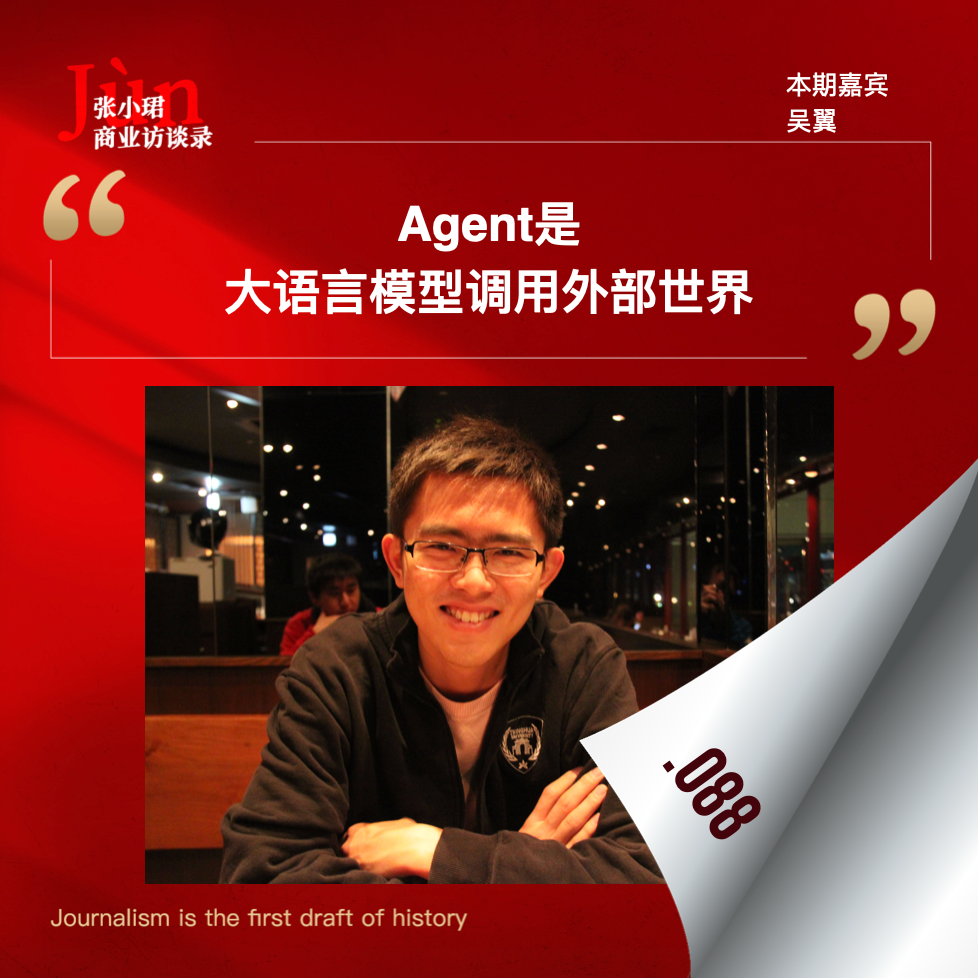
Podcast Summary: Episode 88 - 和吴翼技术解读OpenAI Operator:推理从抽象世界走向物理世界的开端
Podcast Information:
- Title: 张小珺Jùn|商业访谈录
- Host/Author: 张小珺
- Episode: 88
- Episode Title: 和吴翼技术解读OpenAI Operator:推理从抽象世界走向物理世界的开端
- Release Date: January 24, 2025
- Description: 努力做中国最优质的科技、商业访谈。
Introduction
In Episode 88 of 张小珺Jùn|商业访谈录, host 张小珺 engages in an in-depth conversation with Wu Yi, a leading technologist, to explore the intricacies of the OpenAI Operator. This episode delves into the transition of AI inference from the abstract digital realm to tangible physical applications, marking a significant milestone in the evolution of artificial intelligence.
Guest Background
Wu Yi is a renowned expert in artificial intelligence and machine learning, with a focus on developing scalable AI solutions that bridge the gap between theoretical models and real-world applications. With a rich background in both academia and industry, Wu Yi has been pivotal in advancing OpenAI’s technologies and their practical implementations.
Understanding OpenAI Operator
张小珺 opens the discussion by asking Wu Yi to elaborate on what the OpenAI Operator entails.
[02:54] 张小珺: “Can you explain how the OpenAI Operator functions within the current AI ecosystem?”
[03:52] 吴翼: “The OpenAI Operator is designed to facilitate seamless integration of AI models into various physical systems. It acts as an intermediary, translating abstract AI inferences into actionable commands that can interact with hardware and real-world environments.”
Technical Deep Dive
The conversation progresses to dissect the technical components of the OpenAI Operator.
**1. Architecture and Design
吴翼 explains the modular architecture of the OpenAI Operator, highlighting its ability to interface with diverse hardware platforms through standardized APIs.
[29:17] 吴翼: “At its core, the Operator employs a microservices architecture, allowing each module to handle specific tasks such as data preprocessing, inference execution, and result interpretation. This design ensures flexibility and scalability across different applications.”
**2. Inference from Abstract to Physical
One of the central themes is the process of transitioning AI inference from abstract models to physical actions.
[35:00] 吴翼: “The pivotal aspect is the translation layer. Here, abstract inferences generated by the AI models are converted into precise instructions that can control actuators, sensors, and other hardware components. This enables AI systems to interact meaningfully with the physical world.”
**3. Real-World Applications
The discussion highlights several applications where the OpenAI Operator is making an impact.
-
Robotics: Enhancing the decision-making capabilities of robots in manufacturing and service industries.
-
Smart Devices: Enabling smarter home appliances that can adapt to user behaviors autonomously.
-
Autonomous Vehicles: Improving the situational awareness and response mechanisms of self-driving cars.
[38:54] 吴翼: “In robotics, for example, the Operator allows AI models to process sensory data in real-time and execute movements with unprecedented precision, thereby increasing efficiency and safety.”
Challenges and Solutions
张小珺 probes into the challenges faced during the development and deployment of the OpenAI Operator.
**1. Latency and Real-Time Processing
Ensuring low latency is critical for applications requiring real-time responses.
[39:22] 吴翼: “One of the main challenges is minimizing latency. We've implemented edge computing solutions to process data closer to the source, reducing the delay between inference generation and action execution.”
**2. Security and Reliability
Maintaining the security and reliability of AI-driven physical systems is paramount.
[47:31] 吴翼: “Security protocols are integrated at every layer of the Operator to prevent unauthorized access and ensure the integrity of the commands being executed. Redundancy mechanisms are also in place to handle failures gracefully.”
Future Directions
Looking ahead, Wu Yi shares insights into the future developments planned for the OpenAI Operator.
**1. Enhanced Learning Capabilities
Incorporating continuous learning mechanisms to allow the Operator to adapt to new scenarios without manual intervention.
**2. Broader Integration
Expanding compatibility with a wider range of hardware and software platforms to foster greater adoption across industries.
[52:35] 吴翼: “Our roadmap includes enhancing the Operator’s learning capabilities, enabling it to autonomously adapt to evolving environments. Additionally, we aim to broaden its integration scope to support emerging technologies and platforms.”
Notable Quotes
-
Wu Yi on the Importance of the Operator:
“The Operator is the bridge that transforms AI's abstract potentials into concrete actions, enabling machines to interact seamlessly with our physical world.”
[03:52]
-
On Overcoming Latency Challenges:
“By leveraging edge computing, we significantly reduce latency, ensuring that AI-driven actions are both timely and reliable.”
[39:22]
-
Future Vision:
“Our goal is to create an Operator that not only understands but anticipates the needs of the physical systems it interacts with, fostering a new era of intelligent automation.”
[52:35]
Conclusion
Episode 88 of 张小珺Jùn|商业访谈录 offers a comprehensive exploration of the OpenAI Operator through Wu Yi’s expert lens. The discussion underscores the Operator’s pivotal role in bridging the gap between AI's theoretical advancements and their practical, real-world applications. As AI continues to evolve, tools like the OpenAI Operator will be instrumental in realizing the full potential of intelligent systems, driving innovation across various sectors.
For listeners seeking to understand the future trajectory of AI integration into physical systems, this episode provides valuable insights and a clear vision of what's to come.