Loading summary
Transcript27 lines
- [00:01]
A
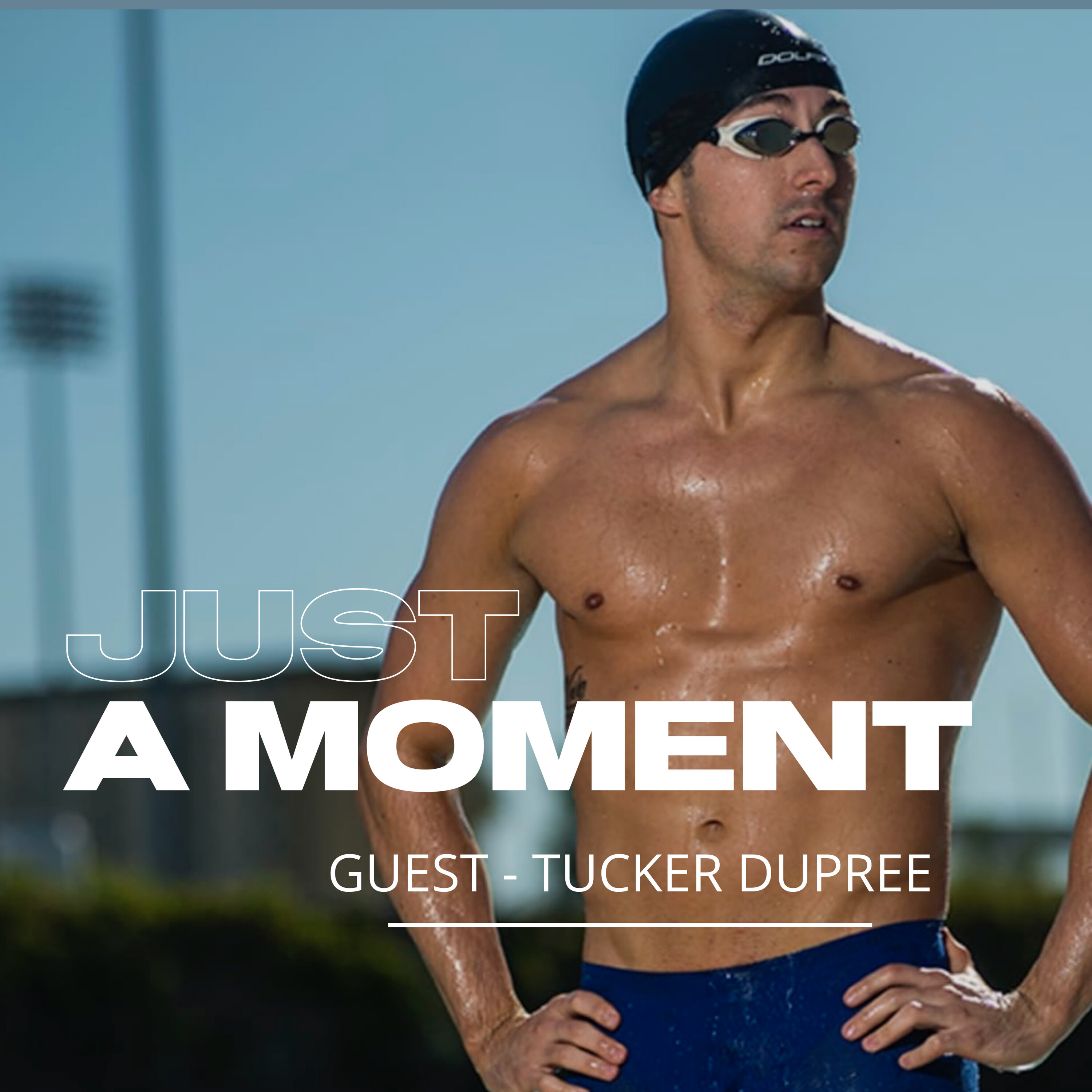
Hi, I'm Brant Menzwar and welcome to my show, Just a moment. As a former world touring musician turned keynote speaker and author, I've experienced my share of life altering moments that have both broken me and propelled me forward. How you leverage those moments or push through them will define your destiny. Each week on my show, I'll provide tools on how to maximize those moments, as well as interview some of the most successful entrepreneurs, entertainers and athletes on how the power of a single moment changed their life. Join me to learn how to change what's possible for your life. It'll take just a moment. Today we get our story from Tucker Dupre, a world record swimmer and three time Paralympic medalist. His moment, while unexpected and life changing, may have altered his course, but didn't send him astray of his destination. This is a story of how setbacks become strengths and shut doors become open windows. This is Tucker's moment.
- [01:03]
B
I'm Tucker Dupre and this is my moment. I'm originally from North Carolina. Growing up, my parents realized at a very young age that they needed to put me into some type of sports to keep me busy, but also out of trouble. So I had very supportive parents and making sure that I got to experience different sports. Whatever I said, oh, I'm interested in this. My parents are like, cool, let's do basketball or, oh, soccer or marching band or music or whatever that was. I was always trying to get my hands into everything. I was also fortunate to have my mom as an educator. So my mom was a teacher my whole childhood life as well as into my adult life. She always made sure that school was always the beginning and the end of every day. My mom was actually my first, second and third grade teacher. Having my mom as my teacher was. I couldn't come home and be like, oh, I don't have homework. And she'd look at me like, yes, you do. I assigned it. Go sit down. My dad was in construction. He was somebody that did electrical work and did all of that and was going to break off and do his own business. I think my mom was definitely the constant where she was again, having that regular job, I would say, where my dad was trying to stand up a business and get leads and do construction for other people because he wanted to do his own thing. And some of the time was my dad looking at me being like, hey, we're going to go to the flea market and hand out flyers. We're talking like analog solutions, figuring out ways to get the word out there. So I think for all of us it was just kind of trial and error, as well as just making sure that my dad was getting the business healthy enough to sustain. So there was that level, too. It was a blend. But again, it did make our household just a different environment.
- [02:42]
A
Though his interest ranged from team sports to marching band, swimming captured Tucker's attention from the moment he got into the pool. It quickly progressed from a way to pass time to a genuine passion.
- [02:56]
B
Early on, my dream was to be on TV for swimming. The moment I caught the swimming bug in high school, I dropped everything, jumped into swimming. Like, I really enjoyed the fact that swimming immediately showed me that incremental improvements yield massive results. Little tiny movements of putting your hand in front of you, just the tiniest micro movement out to the right or to the left is a huge difference over the course of a race. And I liked the fact that immediately you made that change and it made a difference and you got faster. I think that really pushed me at the beginning. I remember one time saying that to a lifeguard, actually, and just being like, I would love to swim in the Olympics. And they looked at me and they're like, you better be at the pool more than are now. And I was like, yeah, that's probably true. That was something my dad was very adamant about as a kid. Growing up was like, hey, if you want to do something and do it to the best ability, look at the people that are doing it, what you think you know is the best possible way, and ask questions, be curious, and say, like, how can I do what they're doing? Or simulate or emulate what they're looking at doing? So I was really interested in making sure that my dream was something that I never put limitations on and letting that work ethic and curiosity kind of guide that journey.
- [04:10]
A
But how did it all get started? As with many people's extracurriculars, Tucker's sister had an indirect influence on what her brother wound up doing with his after school hours.
- [04:21]
B
My sister was older than me by three years, and she decided her senior year of high school that she was going to join the swim team. She said it was for fitness. I think it was for guys in speedos, but who's to say that it was, right? She was a senior in high school when I was a freshman. And so the biggest thing was I rode to school with her every day. So when she decided to join the high school swim team, I was in the car, I had to sit in the stands and watch swim practice. And so as a freshman, the swim coach would come up to me Every day and kind of heckle me like, you're here. Just get in. You might as well. You need to join this team and meet some new people. After just countless days of him saying, get in, I was like, all right, fine. If it will get you to be happy and stop asking me to get in, I'll try it. So one day I showed up with swim trunks in hand, got in, and it was the closest thing to control drowning as possible. Probably where I swam to the other end of the pool and the lifeguards looking at the coach being like, is he going to survive? He gave me a couple pieces of advice. He said, hey, do this and change your hand position here. And it was immediate. And that was the thing that I really gravitated towards. Again, of, no, that does happen when you do this. It is true. You get faster. So I really liked that. Where my other hobbies or interests weren't giving me that satisfaction until I would say, fast forward to my senior year. I went from the slowest person on the swim team to being one of the fastest people on the swim team with school records and being the team captain. And again, that idea of swimming in college was coming true.
- [05:51]
A
Despite the certainty that his skill with swimming gave him, life suddenly changed for Tucker, who when an out of the blue medical event occurred, that certainty was shattered. And Tucker had to learn not only how to continue to pursue his passion, but how to live his daily life with a new set of obstacles in place.
- [06:10]
B
October 18, 2006. It's literally tattooed on my arm. And that is a big part of my life. And I have it visible for a reason, because I have a lot of people that will see that I have tattoos and they see a date and they're like, oh, what's that date? And that day is the day I Woke up in 2006, rubbing my right eye, looking out of my left eye, and I noticed that I couldn't see a sticker on my closet door. I got out of bed, went into the bathroom, took out my contact lenses, put in new contact lenses, and I still couldn't see for some reason, out of the center of my vision in my left eye. And so I went into the kitchen. I was eating breakfast, getting ready for school. My mom, as I mentioned before, is an educator, and so she was getting ready for her school day, and I just threw it past her. I said, hey, just as a heads up, for some reason my left eye is blurry just in the center. It doesn't hurt. It's just for some reason, I Just can't see out of the center of my left eye. And my mom was like, okay, that's interesting. I'll call your eye doctor and see if we can get you into the eye doctor. But go to school. Call me during lunch and let me know. So I literally grabbed my keys, got in my car, drove to school, went throughout my whole day, and got back in the car after school was over and did a quick visual field test for myself. I just covered my right eye with my right hand and I noticed that I still couldn't see the emblem in the middle of the steering wheel out of my left eye. So I picked up my flip phone, called my mom, and I said. I was like, hey, I need to go to the doctor. So that day kicked off about two and a half months of testing when I was later on diagnosed with a very rare condition called Lieber's hereditary optic neuropathy, or LHON for short. Um, and when I was diagnosed, I was very rare condition. I was the first patient the doctor had seen when I got my diagnosis ever in her career. And she just said, this is really rare. It's not something that there's a big community, but it's something that you need to monitor and just be prepared that with it being so rare, you could wake up tomorrow morning and be completely blind. So that was a very big out of body experience for me. I remember that moment of being diagnosed and when she was telling me all the things that were going on, and I remember sitting there in front of this person thinking, like, who are you to tell me what my life is going to be like? She was explaining I was going to become depressed. And in my mind, I'm sitting there thinking, no, I'm going to go swimming college. Like, I have all these goals that I have to go after, and right now it's only affecting one eye. So it started with my left eye. Unfortunately, four months later, it did go to my right eye. So both of my eyes are 70 to 80% vision loss in the center of my vision. But that moment in October of 2006 started all of this. And it has unlocked a lot of great things as well. So I think that there was that one period of my life where I sat there and had a very big moment of, is this gonna define who I am or am I gonna do the right thing and leave a legacy? At the time when I was starting to have the vision loss kind of take place, I had to start to figure out as well, how do I share this information with my community? Whether that's my teammates on my swim team or my swim coach. And I actually sat down with my swim coach and we had this conversation because I'm losing my vision. I need to talk to her about how is practice going to look now because I can no longer read the clock. I can't read the whiteboard when they're writing the workout. So there's a lot of things that I had to immediately figure out how I was going to share this new version of myself. And so when I started to have those conversations, I had to also think about, okay, I am just now discovering, discovering what this is going to be for me. And I actually was immediately thinking, the last thing I want to do is go away to college and be in a dorm room and wake up in the morning and be completely blind. Doctors were telling me that was a possibility. So I really did look at my parents and say, hey, like, until this is stabilized and we have a good kind of grasp on what we're doing, I kind of want to sit at home for a little bit and figure out what this new version of me would be with this vision that I do have left feeling lost in the noise of social media, Inspo cuts through the clutter, connecting you directly with real insights from real experts and industry leaders. It's a new social network dedicated to knowledge sharing, industry insights and thought leadership. Get the latest from top minds in your field or build your own thought leadership portfolio on inspo, already trusted by thousands of professionals worldwide. Be part of the conversation and download Inspo Experts today on the App store or visit www.inspo.expert.
- [10:44]
A
Tucker, welcome to Just a moment, brother. It is so good to have you here.
- [10:48]
B
Yes, thanks for having me. This is awesome. Super excited.
- [10:52]
A
Listen, fast friends we've become and this moment for you, it's hard for a lot of people to imagine, right? You just wake up and your literal entire life gets thrown into a bit of a tornado. You push pause to see what this is going to be for you as you are in this pause at home after high school, I want to know, are you going back to that conversation with the doctor who was like, you're going to be this, you're going to be that. Is that sort of back in the forefront of your mind? Like, how are you battling that?
- [11:28]
B
I wish I could go back to my younger self and tell her that she was 100% right. My life was not going to be ordinary at all. My life has been extraordinary. And that is a choice that I make every day as a person with A disability in society, you have a platform to showcase to the world that this doesn't have to be the end of it. You can do a lot of great things. There's a lot of amazing people in the world that have done great things with disabilities. And I think that was my mission. After I was told that this is the new version of me, I wanted to show the world that just because I have a little less vision than you, I've done more without vision than I would have ever dreamed of doing sighted. I would love to go back and tell that doctor in that moment of, hey, I'm going to do great things. I'm going to go stand on the world stage and I'm going to do it my way.
- [12:16]
A
You just like having known what you've accomplished, it's so fricking unbelievable. And this is. I want to make sure people understand you've gone on to do extraordinary things. So you stay home for a year trying to figure things out. Talk to me about your early 20s now. Like, what does this look like for you? And how do you make this shift to decide you really want to get competitive now with your swimming?
- [12:44]
B
So I was actually introduced to a blind rehab program in North Carolina, where I lived, where they were really focused on making sure that I had the right pieces of technology and things in my life that would give me some level of autonomy within the classroom, within society. So through that journey of figuring out, how am I going to go into the grocery store by myself with 75, 80% of your vision gone, how are you going to do that? How do you see far away when you're looking at a crosswalk, when you're walking across traffic? Those are things that we were talking about of just going again, back to the basics. And so for me, in that process, someone kind of found out that I was an athlete. And while I was in that program, they looked at me and they're like, hey, do you know what the Paralympics are? And I was like, I have no idea what that is. And they're like, it's the same thing as the Olympics, but it's for people with physical disabilities. We compete in the same venues that you see your Michael Phelps, your Katie Ledecky. It's just a couple weeks later so they can shut everything down, clean the village, thankfully, change all the signage, and then we would come in and do our competition. And so I was really interested in that. And I actually got introduced to another athlete at that time that was also a Paralympian. We went to lunch and he's completely blind and runs track and field. And I was like, how do you do that? And so he started explaining to me his accommodations that he uses on the tracker and long jump. And so did some research, found out that there was a Paralympic Swim meet that summer. So we reached out to the organization, found out how I could get classified to compete. And then I went up to my first Paralympic Swim meet, and I was the fastest blind swimmer the United States had in over 30 years. And so every time I dove in, it was a new American record. Every time I dove in, new Pan American record. And I started to become this, like, fast blind swimmer that just popped up out of the woodwork. So it was one of those things that it started to catch some steam, and then it was like, all right, no, next year is 2008. We're going to Beijing. We're going to go swim in the water Cube. And so it really hit the accelerator, and I became this new person where I was like, all right, I'm going to put on the Team USA uniform and represent Team USA in the Paralympics. And I was able to do that at three different Games. And it was one of those things where I got to win medals for our country and have the opportunity to stand on the podium, break world records, see the United States flag, or envision the United States flag being raised for us, for our country, and hearing the national anthem, all of those things. Whether it was World Championships or the Paralympic Games, I got to take this sport all over the world and represent not just athletics, but people with disabilities doing athletics. So I think that was just one of those things that I'm so glad that I got that opportunity for someone to ask me that question of, have you heard of the Paralympics? Because I hadn't. And it really did start that conversation and that journey of figuring out, how can I get involved and how can I make this into a career?
- [15:47]
A
So knowing your story, hearing about the type of kid you were, it seems to me you've always been someone who is looking to better themselves. Right? And so no matter what you decide you're going to focus on when you lost your sight, was it, I need to relearn my life with that same fervor that I would want to be the. The best at what I'm trying to do? Or did you go through feeling like, God, everything that I had planned for my life has now just been blown up in front of me? Did you have that phase? How long did you stay in that phase? And what was it that clicked in? You to say, this is another choice I can make and this is the path I'm going to choose.
- [16:28]
B
I would say there's actually two moments that would happen with that for me because one, my mom, being an educator, she was very interested in making sure that I had as many resources as possible and really going to the end of the earth to make that happen. She was getting people to come over to our house to teach me how to use the microwave. And I know that sounds simple, but if you close your eyes and use a microwave, there's no buttons that are raised, it's all one flush surface. So this lady came over and she handed me these stickers, a triangle sticker, a circle, a square. And she was like, we can put these on the microwave. And then that way you know that whenever you're looking for one, you press the circle or you press the square. And as a high school kid sitting there being lectured on how to use a microwave, I'm sitting there thinking like, I'm using a BlackBerry. What do you mean microwave? Like, I can go text my butt off over here, what's a microwave? So my mom literally sat me down afterwards because I literally said to her, I was like, this is crazy, like, why are you teaching me how to use things that I already know? She said, listen, we want you to have every tool in your toolbox, especially the fact that we have no idea where this is going to go. If you go completely blind, I would much rather, you know, that you've had experience and exposure to things that can help your life. And it really shook me because I remember thinking like, you know, that adolescent mind of, oh, I can use technology, why are you teaching me the simple things? But that moment of having a toolbox of all the resources I will need just in case I go completely blind, was really helpful in that moment. And the woe is me moment was the last day I drove a car because all of my vision loss was very gradual, but also it was painless. And I didn't really notice I was losing vision until I went to do something and I couldn't see it. And so I always tell people my moment of acceptance of this new version of me was that last day that I drove because I was driving home from school, going to pick up my stuff for some practice. And I remember sitting outside my parents neighborhood at a stoplight, looking up at the traffic signal, noticing that I couldn't see if it was red, yellow, green out of either eye. And I looked to my right and I noticed that the car next to Me was stopped. So that was good. And then when they drove, I went and then I was like, this is not safe. And thankfully I was right outside my parents neighborhood, drove into their neighborhood, drove into our driveway, put my car into park, reached back and grabbed my wallet, pulled my driver's license out, took the keys out of the ignition. And I remember sitting in that seat for about five minutes, holding my keys, thinking that this is probably the last time I'm ever going to sit here. And so I got out of the car. My mom was at home at that time and I remember walking up to her in the kitchen and literally sliding my keys across the counter. And I said, that's it. And she looked very confused and she what do you mean that's it? I was like, I can't see enough right now and I don't want to hurt someone else or hurt myself. And it is this choice right now. And I just know that is the right decision for me to not drive anymore. And as a high school kid, where driving is your main form of independence, that was a really big moment for me of this is real. And thankfully my mom was very flexible in her job at school because I went to her school as a kid. So the principal knew me, everyone at that school knew me. And my mom was able to talk to them and say, hey, like I need to adjust my schedule now to go pick Tucker up from school. And so that was how we did it is I stopped driving my mom. Then as a senior in high school, I would go stand out in the carpool line, get picked up, go to practice. And that was our new kind of ritual. But I do think that one minute of sitting there in that seat knowing that this is my independence and I'm giving that back was really hard. But it also was that inflection point for me to say, like, this is real. I need to make sure that I am receptive to the tools that are being shown to me. I do need to make sure that I am independent. And to your point, do this to my best ability and make sure that I'm leaning on these resources and also getting as much knowledge as I can and giving back to the people that are also on their journey now and helping them find out how they can be independent is also a thing that I'm very passionate about.
- [20:50]
A
This is going to sound like probably a weird question to ask you. I want to know, what is your relationship with water now after you lose your vision, does water become almost like a second home for you? Is it like the place you feel most safe. You've gotta be craving some sense of normalcy in your life at that point. Is water the closest thing to normal that you can get to?
- [21:18]
B
Absolutely. Absolutely. I would say the best part about my swimming journey and when this was going on is that the pool was always a constant. And also the great part about our sport is you don't talk to a lot of people while you do it. It was very cathartic, actually. I was in the pool and faces in the water, you're pushing your body as hard as you can every single time you push off the wall. It was a little bit of, like, my temple almost where I was able to be in the pool and really understand, like, how will I have that conversation with that next person of, hey, I need your help with this and how valuable relationships are to me now because there are going to be times where I'm going to have to be vulnerable and say, hey, I need your help. I really do look back at swimming and say that it's what kept me sane because I was able to get in the pool. There were a couple different things that had to change, but it wasn't to the level that I would say made it so I couldn't do the sport anymore. So it really did become that constant thread throughout my journey where I could always go back to swimming. It's still my favorite type of cardio. Even now. I hate running. Unless I'm being chased. That's the only time I run. So for me, it's easy for me to just say, I'm going to go first one and just grab it, throw some tunes in, walk next door to our pool that's next to our house, and jump in and swim. That is something that is always my cathartic moment of the day to make sure that I'm always getting in. I'm keeping my body healthy, but it keeps my mind healthy as well.
- [22:47]
A
As you know, in this show, we always like to finish by talking about a moment that if given an opportunity, we'd like to revisit. With everything you've learned now and where you are in life today, is there a moment in your past that you would like to go back to and consider, gosh, if I just would have known this or done this, maybe I would have had a different result from something that I wasn't necessarily happy with the result that it was. Is there a moment like that for you?
- [23:19]
B
Absolutely. I'm not going to say don't have regrets. There are moments, but I would definitely go back and do Them again, one of those would be nutrition. I wish I could tell my younger self that food is medicine and that you can use food to really drive your success in sports. Food is something that I wish I could go back and stress to my younger self that the better you eat, the better you'll swim. And I know that sounds very easy, but again, that's something that looking back on my career, I wish I would have done a little bit more in that space. And then I also drive home to myself about relationships and how valuable those are, just because again, as a person with a disability, keeping relationships healthy and people in your life that you know really are part of your community and making sure that you keep those relationships healthy is really important because again, there's times where I'm going to have to pick my head up and even though I've exhausted all of my resources and put my pride aside, there will be times where I need to say, hey, I need help. Really, it comes down to the value of relationships and making sure that you surround yourself with people, that one are a good reflection of you and to really try and elevate you every day and challenge you to be the best version of yourself that you can be.
- [24:32]
A
Yes, I listen. I couldn't agree more with you. Listen, as we say thank you, brother, I just, I want to say this before you let us know how we can stay in touch. There are some people in life who, you know, they experience a tragedy and then they love to profess how thankful they are for the tragedy. Right. And how it's done, this and that. I. It's semantics for me. I don't think anyone is thankful for tragedy. I think for those of us, for yourself, losing your vision, for me, losing my son. When you experience a life altering change in your life, I'm thankful for the courage of how to turn that tragedy into impact. And you have done that at a level that is extraordinary. And I just want to say thank you for finding the courage to do that because you could have easily taken a different path and chosen something different, but that courage to face that tragedy, to turn it into impact, not just the personal accolades of being a literal medal winning Olympic athlete, but the impact that you continue to have every day at work of being a voice for those who need help in whatever way they need it, is just incredibly inspiring. And so I just want to say thank you so much for finding that.
- [25:51]
B
Courage and thank you for creating a platform for us to share our stories. I think that's the other side of this as well, is that these stories need to be heard. And you're giving everyone that space to do that and really create that community and make sure that people realize you're not alone. You're going through different things that happen in your life, and this community is really here to help support and realize, hey, you're. You've got people that have gone through that as well. You're helping us create that space and make sure that people know that you're able to have people to lean on. And that's okay. It's not a weakness. It's just actual strength of your community.
- [26:25]
A
Couldn't agree more, brother. I'm thankful to be part of your community. If people want to follow your journey as you continue to impact the world, what's the best way for them to do that?
- [26:34]
B
Personal life. Instagram. Tucker USA1 is my Instagram. I probably live on there the most. And then professionally, LinkedIn is probably the easiest way to find me. And again, like, reach out. I love kind of chatting with people and having conversations about whatever you're going through. I think that's the biggest part of this and making sure that you build your community around you because it takes that to be successful. So, yeah, come find me online and let's keep the conversation going.
- [26:57]
A
You're amazing, brother. Thank you so much for joining us on Just A Moment.
- [27:01]
B
Thank you.
- [27:03]
A
Thank you for joining us on this episode of Just a Moment. Make sure to subscribe to our podcast and and tell a friend or two about it to help spread the word so everyone can find a moment that inspires them. Don't forget to leave us a review and check us out on the web@justamomentpodcast.com Just a Moment is produced by Natalie Von Rose and Brandt Menzoir. For more inspiring shows like this, visit surroundpodcasts.com.